Hubbry Logo
1,4-Benzoquinone1,4-BenzoquinoneMain
Open search
1,4-Benzoquinone
Community hub
1,4-Benzoquinone
logo
8 pages, 0 posts
0 subscribers
Be the first to start a discussion here.
1,4-Benzoquinone
1,4-Benzoquinone
from Wikipedia

1,4-Benzoquinone
Skeletal formula
Skeletal formula
Space-filling model
Space-filling model
Names
Preferred IUPAC name
Cyclohexa-2,5-diene-1,4-dione[1]
Other names
1,4-Benzoquinone[1]
Benzoquinone
p-Benzoquinone
p-Quinone
Identifiers
3D model (JSmol)
773967
ChEBI
ChEMBL
ChemSpider
ECHA InfoCard 100.003.097 Edit this at Wikidata
EC Number
  • 203-405-2
2741
KEGG
RTECS number
  • DK2625000
UNII
UN number 2587
  • InChI=1S/C6H4O2/c7-5-1-2-6(8)4-3-5/h1-4H checkY
    Key: AZQWKYJCGOJGHM-UHFFFAOYSA-N checkY
  • InChI=1/C6H4O2/c7-5-1-2-6(8)4-3-5/h1-4H
    Key: AZQWKYJCGOJGHM-UHFFFAOYAR
  • O=C\1\C=C/C(=O)/C=C/1
  • C1=CC(=O)C=CC1=O
Properties
C6H4O2
Molar mass 108.096 g·mol−1
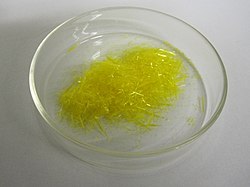
Appearance Yellow solid
Odor Acrid, chlorine-like[2]
Density 1.318 g/cm3 at 20 °C
Melting point 115 °C (239 °F; 388 K)
Boiling point Sublimes
11 g/L (18 °C)
Solubility Slightly soluble in petroleum ether; soluble in acetone; 10% in ethanol, benzene, diethyl ether
Vapor pressure 0.1 mmHg (25 °C)[2]
−38.4·10−6 cm3/mol
Hazards
Occupational safety and health (OHS/OSH):
Main hazards
Toxic
GHS labelling:
GHS06: ToxicGHS07: Exclamation markGHS09: Environmental hazard
Danger
H301, H315, H319, H331, H335, H400
P261, P264, P270, P271, P273, P280, P301+P310, P302+P352, P304+P340, P305+P351+P338, P311, P312, P321, P330, P332+P313, P337+P313, P362, P391, P403+P233, P405, P501
Flash point 38 to 93 °C; 100 to 200 °F; 311 to 366 K[2]
Lethal dose or concentration (LD, LC):
296 mg/kg (mammal, subcutaneous)
93.8 mg/kg (mouse, subcutaneous)
8.5 mg/kg (mouse, IP)
5.6 mg/kg (rat)
130 mg/kg (rat, oral)
25 mg/kg (rat, IV)[3]
NIOSH (US health exposure limits):
PEL (Permissible)
TWA 0.4 mg/m3 (0.1 ppm)[2]
REL (Recommended)
TWA 0.4 mg/m3 (0.1 ppm)[2]
IDLH (Immediate danger)
100 mg/m3[2]
Related compounds
Related compounds
1,2-Benzoquinone
Except where otherwise noted, data are given for materials in their standard state (at 25 °C [77 °F], 100 kPa).
☒N verify (what is checkY☒N ?)

1,4-Benzoquinone, commonly known as para-quinone, is a chemical compound with the formula C6H4O2. In a pure state, it forms bright-yellow crystals with a characteristic irritating odor, resembling that of chlorine, bleach, and hot plastic or formaldehyde. This six-membered ring compound is the oxidized derivative of 1,4-hydroquinone.[4] The molecule is multifunctional: it exhibits properties of a ketone, being able to form oximes; an oxidant, forming the dihydroxy derivative; and an alkene, undergoing addition reactions, especially those typical for α,β-unsaturated ketones. 1,4-Benzoquinone is sensitive toward both strong mineral acids and alkali, which cause condensation and decomposition of the compound.[5][6]

Preparation

[edit]

1,4-Benzoquinone is prepared industrially by oxidation of hydroquinone, which can be obtained by several routes. One route involves oxidation of diisopropylbenzene and the Hock rearrangement. The net reaction can be represented as follows:

C6H4(CHMe2)2 + 3 O2 → C6H4O2 + 2 OCMe2 + H2O

The reaction proceeds via the bis(hydroperoxide) and the hydroquinone. Acetone is a coproduct.[7]

Another major process involves the direct hydroxylation of phenol by acidic hydrogen peroxide: C6H5OH + H2O2 → C6H4(OH)2 + H2O Both hydroquinone and catechol are produced. Subsequent oxidation of the hydroquinone gives the quinone.[8]

Quinone was originally prepared industrially by oxidation of aniline, for example by manganese dioxide.[9] This method is mainly practiced in China where environmental regulations are more relaxed.

Oxidation of hydroquinone is facile.[4][10] One such method makes use of hydrogen peroxide as the oxidizer and iodine or an iodine salt as a catalyst for the oxidation occurring in a polar solvent; e.g. isopropyl alcohol.[11]

When heated to near its melting point, 1,4-benzoquinone sublimes, even at atmospheric pressure, allowing for an effective purification. Impure samples are often dark-colored due to the presence of quinhydrone, a dark green 1:1 charge-transfer complex of quinone with hydroquinone.[12]

Structure and redox

[edit]
C–C and C–O bond distances in benzoquinone (Q), its 1e reduced derivative (Q), and hydroquinone (H2Q).[13]

Benzoquinone is a planar molecule with localized, alternating C=C, C=O, and C–C bonds. Reduction gives the semiquinone anion C6H4O2}, which adopts a more delocalized structure. Further reduction coupled to protonation gives the hydroquinone, wherein the C6 ring is fully delocalized.[13]

Reactions and applications

[edit]

Quinone is mainly used as a precursor to hydroquinone, which is used in photography and rubber manufacture as a reducing agent and antioxidant.[8] Benzoquinonium is a skeletal muscle relaxant, ganglion blocking agent that is made from benzoquinone.[14]

Organic synthesis

[edit]

It is used as a hydrogen acceptor and oxidant in organic synthesis.[15] 1,4-Benzoquinone serves as a dehydrogenation reagent. It is also used as a dienophile in Diels-Alder reactions.[16]

Benzoquinone reacts with acetic anhydride and sulfuric acid to give the triacetate of hydroxyquinol.[17][18] This reaction is called the Thiele reaction or Thiele–Winter reaction[19][20] after Johannes Thiele, who first described it in 1898, and after Ernst Winter, who further described its reaction mechanism in 1900. An application is found in this step of the total synthesis of Metachromin A:[21]

An application of the Thiele reaction, involving a benzoquinone derivative.

Benzoquinone is also used to suppress double-bond migration during olefin metathesis reactions.

An acidic potassium iodide solution reduces a solution of benzoquinone to hydroquinone, which can be reoxidized back to the quinone with a solution of silver nitrate.

Due to its ability to function as an oxidizer, 1,4-benzoquinone can be found in methods using the Wacker-Tsuji oxidation, wherein a palladium salt catalyzes the conversion of an alkene to a ketone. This reaction is typically carried out using pressurized oxygen as the oxidizer, but benzoquinone can sometimes preferred. It is also used as a reagent in some variants on Wacker oxidations.

1,4-Benzoquinone is used in the synthesis of Bromadol and related analogs.

Structure of Cp*Rh(para-quinone).[22]
[edit]

2,3-Dichloro-5,6-dicyano-1,4-benzoquinone (DDQ) is a stronger oxidant and dehydrogenation agent than 1,4-benzoquinone.[23] Chloranil 1,4-C6Cl4O2 is another potent oxidant and dehydrogenation agent. Monochloro-p-benzoquinone is yet another but milder oxidant.[24]

Metabolism

[edit]

1,4-Benzoquinone is a toxic metabolite found in human blood and can be used to track exposure to benzene or mixtures containing benzene and benzene compounds, such as petrol.[25] The compound can interfere with cellular respiration, and kidney damage has been found in animals receiving severe exposure. It is excreted in its original form and also as variations of its own metabolite, hydroquinone.[9]

Safety

[edit]
The bombardier beetle sprays 1,4-benzoquinone to deter predators

1,4-Benzoquinone is able to stain skin dark brown, cause erythema (redness, rashes on skin) and lead on to localized tissue necrosis. It is particularly irritating to the eyes and respiratory system. Its ability to sublime at commonly encountered temperatures allows for a greater airborne exposure risk than might be expected for a room-temperature solid. IARC has found insufficient evidence to comment on the compound's carcinogenicity, but has noted that it can easily pass into the bloodstream and that it showed activity in depressing bone marrow production in mice and can inhibit protease enzymes involved in cellular apoptosis.[9]

See also

[edit]

References

[edit]
Revisions and contributorsEdit on WikipediaRead on Wikipedia
from Grokipedia
1,4-Benzoquinone, also known as p-benzoquinone or simply , is an with the molecular formula C₆H₄O₂ that exists as a yellow crystalline . It represents the simplest member of the 1,4-benzoquinone class, formed by the oxidation of (1,4-dihydroxy), and features a conjugated cyclohexadienedione structure with two carbonyl groups positioned para to each other on a ring. This compound exhibits distinct physical properties, including a of 115–116 °C, sublimation around 180 °C, and limited in (approximately 10 g/L at 25 °C), though it dissolves readily in organic solvents such as and . Chemically, 1,4-benzoquinone serves as a strong owing to its moiety, which facilitates reversible reduction to and participation in reactions like Diels-Alder cycloadditions and dehydrogenations. It is typically synthesized industrially by oxidizing with agents like in or, historically, from via oxidation. 1,4-Benzoquinone finds broad applications as a versatile in , acting as a hydrogen acceptor, oxidant, and dehydrogenation agent for constructing aromatic systems and natural products. Commercially, it is employed in dye manufacturing, photographic chemicals, as a inhibitor, in tanning agents, as an intermediate for production, and in pharmaceutical synthesis including , while derivatives also show potential antimicrobial activity against pathogens such as . However, it poses significant safety concerns as a toxic irritant, with an oral LD50 of 130 mg/kg in rats, potential mutagenicity, and risks of skin/eye damage and respiratory issues upon exposure.

General Properties

Nomenclature and Molecular Structure

1,4-Benzoquinone bears the systematic IUPAC name cyclohexa-2,5-diene-1,4-dione and is commonly referred to as p-benzoquinone, benzoquinone, or simply . The compound has the molecular formula C6H4O2 and a molecular weight of 108.09 g/mol. The molecular structure consists of a six-membered carbon ring with carbonyl groups (C=O) at the 1 and 4 positions and localized alternating double bonds between carbons 2-3 and 5-6, resulting in a planar geometry that facilitates conjugation within the ring. Bond lengths in the molecule are characteristic of this arrangement, with C=O bonds measuring approximately 1.22 , C=C bonds around 1.34 , and intervening C-C single bonds about 1.46 . This structure reflects the diketone nature derived from the oxidation of , positioning 1,4-benzoquinone as the parent compound in the class of 1,4-benzoquinones. Resonance structures of 1,4-benzoquinone depict partial π-electron delocalization across the ring, where the carbonyl oxygens contribute to the , stabilizing the through contributions from forms with quinoid and biradicaloid character. In the crystalline form, the molecules pack in a monoclinic lattice with P21/c and parameters a = 7.25 , b = 6.11 , c = 9.60 , and β = 112.0°. The compound exhibits notable sublimation behavior near its of 116 °C, which allows for effective purification by vacuum sublimation without .

Physical and Spectroscopic Properties

1,4-Benzoquinone is a yellow crystalline with a pungent, irritating resembling . It has a of 115 °C and sublimes readily above this temperature, though it can be distilled at reduced pressure with a of approximately 172 °C at 10 mmHg. The of the is 1.318 g/cm³ at 20 °C. It exhibits limited in , approximately 10 g/L at 25 °C, but is readily soluble in organic solvents such as , acetone, and . The ultraviolet-visible (UV-Vis) spectrum of 1,4-benzoquinone in shows characteristic absorption maxima at 245 nm, attributed to a π-π* transition, and a weaker band at around 350 nm due to an n-π* transition. The (IR) spectrum features prominent carbonyl stretching vibrations in the range of 1660-1680 cm⁻¹, with a specific peak at 1663 cm⁻¹ observed for the C=O groups in solution. In the ¹H NMR spectrum, the four equivalent aromatic protons appear as a singlet at δ 6.8 ppm in CDCl₃. These spectroscopic features arise from the compound's planar structure, which facilitates conjugated π-electron delocalization.

Synthesis and Production

Historical Preparation Methods

The discovery of 1,4-benzoquinone, commonly known as p-benzoquinone or , occurred in 1838 when Alexander Voskresensky isolated it through the oxidation of using in . This marked the first preparation of the compound from a derivative, highlighting its yellow crystalline nature. In the , an alternative preparation method emerged involving the oxidation of in acidic media, typically with or , yielding p-benzoquinone as a key product. This route, developed as advanced, became a standard and early industrial approach, reflecting the compound's accessibility from aromatic amines and its role in dye chemistry explorations. By the early 20th century, laboratory-scale methods shifted toward the direct oxidation of , using mild agents such as or Fremy's salt (potassium nitrosodisulfonate) to achieve selective conversion to p-benzoquinone. These developments were advanced by Richard Willstätter, whose studies on imines and related oxidations in the 1900s–1910s elucidated structural relationships and synthetic pathways in quinone chemistry. Around the 1920s, preparation methods evolved from reliance on natural precursors like to fully synthetic routes, particularly the aniline oxidation process, enabling larger-scale production and broader applications in .

Modern Industrial and Laboratory Synthesis

The primary industrial synthesis of 1,4-benzoquinone involves the catalytic aerobic oxidation of using air or molecular oxygen, often employing (Pd/C) or catalysts, achieving yields exceeding 95%. This method emphasizes scalability and efficiency, with the reaction typically conducted in continuous-flow reactors to minimize energy input and maximize product purity for downstream applications. An alternative industrial approach can produce 1,4-benzoquinone as a during production via the diisopropylbenzene process, where oxidative cleavage intermediates or over-oxidation contribute to formation. This route integrates with broader phenolic and production chains, leveraging existing infrastructure for cost-effective recovery. In laboratory settings, 1,4-benzoquinone is commonly synthesized by oxidizing with (CAN) in aqueous or organic media, providing high selectivity under mild conditions. Alternatively, silver(II) oxide serves as an effective heterogeneous catalyst for this oxidation, often paired with for quantitative conversions at room temperature. Another versatile method involves the retro-Diels-Alder reaction of cycloadducts, such as those formed with derivatives, thermally decomposing to liberate 1,4-benzoquinone in high purity. Purification of 1,4-benzoquinone typically employs vacuum sublimation at approximately 115 °C to separate it from quinhydrone impurities formed during oxidation steps. This technique exploits the compound's volatility, yielding bright yellow crystals suitable for analytical and synthetic use. Global production of 1,4-benzoquinone was valued at approximately USD 316 million as of 2023, with major manufacturing hubs in and driving output through integrated chemical facilities.

Chemical Reactivity

Redox Chemistry

1,4-Benzoquinone undergoes a one-electron reduction to form the semiquinone radical anion, with a midpoint potential (Em) of approximately -0.074 V versus the normal hydrogen electrode (NHE) at pH 7. This radical species is paramagnetic and can be readily detected using electron paramagnetic resonance (EPR) spectroscopy, which reveals characteristic hyperfine splitting patterns due to the unpaired electron delocalized over the ring. A subsequent one-electron reduction of the semiquinone leads to the overall two-electron reduction product, , with Em ≈ +0.434 V vs NHE at 7. The overall two-electron process at standard conditions ( 0) has E° ≈ +0.70 V vs NHE and follows the equation: C6H4O2+2H++2eC6H6O2\text{C}_6\text{H}_4\text{O}_2 + 2\text{H}^+ + 2\text{e}^- \rightarrow \text{C}_6\text{H}_6\text{O}_2 The reverse oxidation of to 1,4-benzoquinone is highly reversible in aqueous media, enabling efficient cycling between the oxidized and reduced forms under physiological conditions. The electrochemical behavior of 1,4-benzoquinone in exhibits diffusion-controlled reduction waves, as evidenced by the linear dependence of peak currents on the of the scan rate, indicating mass transport limitations rather than kinetic barriers. This versatility positions 1,4-benzoquinone as a model for quinone-mediated in biological systems, where it facilitates proton-coupled transport in metabolic pathways.

Addition and Substitution Reactions

1,4-Benzoquinone serves as an excellent dienophile in Diels-Alder reactions due to its electron-deficient double bonds, reacting with various dienes to form bicyclic adducts. For instance, its reaction with 1,3-butadiene proceeds under mild thermal conditions to yield 1,4,4a,8a-tetrahydro-1,4-naphthoquinone, a versatile intermediate in . This [4+2] highlights the compound's conjugated π-system, which activates the C=C bonds for concerted pericyclic addition, typically occurring with high and endo stereochemistry when applicable. In addition to cycloadditions, 1,4-benzoquinone participates in 1,4-Michael additions as an α,β-unsaturated dicarbonyl , where nucleophiles attack the β-carbon of the enone system. Thiols, such as , and amines readily add under physiological or mild basic conditions, forming substituted hydroquinones after and tautomerization; for example, undergoes conjugate addition to yield a thioether-linked . These reactions are kinetically favored due to the compound's high (1.91 eV), which stabilizes the anionic intermediate formed upon nucleophilic attack. The selectivity for 1,4-addition over 1,2-addition to the carbonyl underscores the extended conjugation in the quinone moiety. Nucleophilic aromatic substitution in 1,4-benzoquinone occurs under harsh conditions, often requiring activated derivatives or strong bases, where nucleophiles displace potential leaving groups or add followed by elimination. For example, treatment with leads to methoxyhydroquinone through initial addition and subsequent rearomatization, though this is more pronounced in halogenated analogs like chloranil. The mechanism involves nucleophilic attack at the electron-deficient ring carbons, forming a Meisenheimer-like complex that expels a proton or to restore . The Thiele-Winter reaction exemplifies an acid-catalyzed rearrangement of 1,4-benzoquinone, involving sequential 1,4-additions of acetic acid or anhydride to the quinone, followed by acetoxy migration and hydrolysis to polyhydroxybenzenes. With sulfuric acid catalysis, p-benzoquinone yields 1,2,4-trihydroxybenzene (hydroxyhydroquinone) after deacetylation, providing a classical route to resorcinol derivatives. This transformation proceeds via dienol intermediates, emphasizing the compound's susceptibility to proton-assisted nucleophilic additions under acidic media. Photochemical excitation of 1,4-benzoquinone enables [2+2] cycloadditions with alkenes, generating oxetane adducts from its triplet n,π* state. Simple alkenes like ethylene derivatives react upon UV irradiation to form 2,2'-bi(1,4-benzoquinone) oxetanes or ring-fused products, with the reaction proceeding via a biradical intermediate that cyclizes efficiently in nonpolar solvents. These photocycloadditions are stereospecific and regioselective, influenced by the quinone's excited-state polarity, distinguishing them from thermal pathways.

Applications

Role in Organic Synthesis

1,4-Benzoquinone acts as an excellent dienophile in Diels-Alder cycloadditions due to its activated double bonds, facilitating the synthesis of polycyclic quinone frameworks essential for construction. This reactivity is particularly valuable in the of anthraquinones, where 1,4-benzoquinone reacts with dienes such as 1,3-butadiene or substituted variants to form bicyclic adducts that, upon dehydrogenation or , yield the characteristic fused ring systems of anthraquinones. For instance, the cycloaddition with 1-acetoxybutadiene provides access to anthracyclinone precursors, highlighting its role in building complex polycyclic architectures with high stereocontrol. Seminal applications include the preparation of benzanthraquinones, where sequential Diels-Alder reactions with 1,4-benzoquinone derivatives enable regioselective assembly of the tetracyclic core. As a mild oxidant, 1,4-benzoquinone supports palladium-catalyzed transformations, notably in the Wacker-Tsuji process for converting allylic alcohols to α,β-unsaturated carbonyls. In this protocol, Pd(II) coordinates to the allylic alcohol, facilitating β-hydride elimination with reoxidizing the catalyst, thus avoiding over-oxidation and enabling high yields under aerobic or anaerobic conditions. Representative examples include the oxidation of to geranial, demonstrating selectivity for enal formation without affecting isolated double bonds. In the Thiele-Winter reaction, 1,4-benzoquinone undergoes acid-catalyzed addition with to produce 2,5-diacetoxy-1,4-benzoquinone intermediates, which hydrolyze to derivatives useful as precursors for acrylic acid-based polymers and resins. This transformation leverages the quinone's properties to introduce acetoxy groups at vicinal positions, providing a route to functionalized aromatics from diene-derived adducts in broader synthetic sequences. 1,4-Benzoquinone is used in the synthesis of the synthetic Bromadol and related analogs, acting as an oxidant.

Industrial and Emerging Pharmaceutical Uses

1,4-Benzoquinone serves as a key industrial intermediate, primarily in the production of through selective or reduction processes. , in turn, is widely employed as a developing agent in black-and-white and as an to prevent oxidative degradation in rubber products. Additionally, 1,4-benzoquinone functions as a precursor in the dye industry, where it is used to synthesize azo dyes for vibrant colorations and known for their fastness properties on fabrics. It is also utilized as a polymerization inhibitor, in tanning agents, and in the synthesis of pharmaceuticals such as . The industrial demand for 1,4-benzoquinone is driven by its role in chemical intermediates and antioxidants, with major production concentrated in regions. In emerging pharmaceutical applications, derivatives of 1,4-benzoquinone have garnered attention as potent 5-lipoxygenase (5-LOX) inhibitors, targeting biosynthesis to mitigate inflammatory conditions. Quantitative structure-activity relationship (QSAR) studies in the late and early have optimized benzoquinone scaffolds, revealing compounds with IC50 values in the nanomolar range for 5-LOX inhibition, supporting their potential in therapies. Recent research from 2020 to 2025 has focused on anticancer hybrids combining 1,4-benzoquinone with moieties, which exhibit selective against cancer cell lines such as lung (A549), breast (), and (Colo-829), with IC50 values as low as 0.03 µM, while demonstrating reduced toxicity to normal human fibroblasts (IC50 >10 µM) compared to standard chemotherapeutics like . These hybrids act as substrates for NAD(P)H:quinone oxidoreductase 1 (NQO1), promoting mitochondrial in NQO1-overexpressing tumors for .

Biological Aspects

Metabolic Pathways

In nature, 1,4-benzoquinone is produced by bombardier beetles (Brachininae subfamily) as a key component of their defensive spray. This quinone is generated via the enzymatic oxidation of hydroquinone with hydrogen peroxide in specialized pygidial glands, resulting in a hot, irritant ejecta that deters predators. 1,4-Benzoquinone is formed as a of through sequential oxidation primarily mediated by enzymes, such as , which first convert to benzene oxide and then to phenol, with further oxidation yielding the quinone. This pathway occurs mainly in the liver and contributes to 's as a . In cellular , 1,4-benzoquinone undergoes reduction by NAD(P)H: 1 (NQO1), also known as DT-diaphorase, which catalyzes a two-electron transfer to produce the form, thereby preventing the formation of reactive semiquinone radicals. Alternatively, one-electron reduction by enzymes like NADPH- reductase can generate the semiquinone intermediate, which may lead to through cycling. Detoxification also involves nucleophilic addition of glutathione (GSH) to 1,4-benzoquinone, forming glutathionyl conjugates that are further processed via the mercapturic acid pathway to yield N-acetylcysteine adducts for urinary excretion. This conjugation, often catalyzed by glutathione S-transferases, mitigates the electrophilic reactivity of the quinone. Within mitochondria, 1,4-benzoquinone interferes with cellular respiration by dissipating the mitochondrial membrane potential and affecting electron flow, potentially leading to reactive oxygen species production. Recent studies from 2020 to 2025 have explored how gut microbiome interactions transform dietary polyphenols, such as those in , into quinone derivatives under oxidative conditions, potentially influencing host metabolism and bioavailability. For instance, microbial in the presence of pro-oxidants like N-nitrosamines yields products from catechins and , underscoring the microbiome's contribution to polyphenol-derived quinone formation.

Biological Activity and Toxicity

1,4-Benzoquinone exhibits significant cytotoxicity primarily through the generation of semiquinone radicals during its one-electron reduction, which react with molecular oxygen to produce reactive oxygen species (ROS). These ROS cause oxidative damage, including alkylation of proteins and DNA, ultimately leading to apoptosis in affected cells. This mechanism is particularly relevant in hematopoietic cells, where it contributes to genotoxicity observed in benzene-exposed populations. Exposure to 1,4-benzoquinone causes acute health effects such as severe irritation to the skin, eyes, and , including discoloration of the , nosebleeds, , and chest tightness. The oral LD50 in rats is 130 mg/kg, indicating moderate . Regarding carcinogenicity, 1,4-benzoquinone is classified by the IARC as Group 3 (not classifiable as to its carcinogenicity to humans), though as a key metabolite of , chronic exposure is linked to benzene-induced through formation and hematotoxicity. Recent research from 2020 to 2025 highlights the anticancer potential of 1,4-benzoquinone , which demonstrate selective at low doses against cancer cell lines, such as values of 5.2 μM for HCT-116 colon cancer cells, while exhibiting higher (8.4 μM) against normal peripheral blood mononuclear cells (PBMCs). Additionally, certain inhibit enzymes, contributing to effects by suppressing . 1,4-Benzoquinone has low potential in aquatic organisms, with a log Kow of 0.2 suggesting limited uptake, though its poses risks to aquatic ecosystems.

Other Benzoquinones

1,2-Benzoquinone, also known as o-quinone, is the ortho of 1,4-benzoquinone and exhibits lower stability due to reduced and greater tendency toward dimerization or under ambient conditions. It is primarily generated through the enzymatic or chemical oxidation of s, serving as an intermediate in biochemical pathways such as those catalyzed by catechol oxidases, which convert catechols to o-quinones using molecular oxygen. Unlike the para , 1,2-benzoquinone's reactivity is heightened by its electrophilic nature, making it prone to rapid reactions with nucleophiles like thiols in biological systems. Toluiquinones represent methyl-substituted analogs of 1,4-benzoquinone, with 2-methyl-1,4-benzoquinone (toluquinone) being a prominent example isolated from various natural sources including fungi such as solitum and Hydropisphaera erubescens, as well as insects like Uloma tenebrionoides. These compounds retain the core structure but display modified potentials and solubility due to the , influencing their roles as semiochemicals in chemical communication within insect species. Chloranil, or tetrachloro-1,4-benzoquinone, is a halogenated that acts as a stronger oxidant than unsubstituted 1,4-benzoquinone owing to the electron-withdrawing chlorine atoms, which lower its and enhance its dehydrogenation capabilities in . It finds application in reactions, particularly for introducing into aromatic substrates or facilitating oxidative chlorinations in the preparation of dyes and pharmaceuticals. Benzoquinones also occur naturally in polyprenylated forms, such as ubiquinone (), a 2,3-dimethoxy-5-methyl-6-polyprenyl-1,4-benzoquinone essential for mitochondrial electron transport and found across aerobic organisms from to humans. This lipid's extended isoprenoid side chain, typically 6-10 units long in mammals, confers membrane solubility and distinguishes it from simpler benzoquinones by enabling efficient in respiratory chains. In terms of reactivity differences, the 1,4-benzoquinone isomer benefits from greater , which stabilizes its planar structure through effective π-conjugation across the ring, rendering it more resistant to decomposition compared to the asymmetric 1,2-benzoquinone. This symmetry in 1,4-benzoquinone also promotes balanced delocalization, contrasting with the localized reactivity at adjacent carbonyls in the 1,2-isomer, which accelerates nucleophilic additions and reduces overall stability.

Key Derivatives and Analogs

Hydroquinone, the reduced form of 1,4-benzoquinone, is obtained through electrochemical or catalytic reduction processes and serves as a key derivative in polymer chemistry, particularly as a polymerization inhibitor for polyester resins and vinyl monomers to prevent premature curing during storage and transport. Duroquinone, or 2,3,5,6-tetramethyl-1,4-benzoquinone, represents a lipophilic analog of 1,4-benzoquinone where the four hydrogen atoms on the benzene ring are replaced by methyl groups, enhancing its solubility in lipid environments and utility as a model substrate in studies of quinone reductases in biological membranes. Recent developments from 2020 to have introduced hybrids of 1,4-benzoquinone with moieties, linked via oxygen atoms, exhibiting promising anticancer activity against human cancer cell lines through interaction with DT-diaphorase (NQO1) and disruption of cellular balance. Additionally, C-H methods have enabled the functionalization of para-quinones, allowing regioselective introduction of aryl, alkyl, or groups under , which expands their applicability in synthetic chemistry while maintaining the core scaffold. Further, in , 2,3,5,6-tetraamino-1,4-benzoquinone (TABQ) has been developed as a high-capacity material for all-organic proton batteries, benefiting from intermolecular hydrogen bonding for and performance. Moreover, series of low molecular weight 1,4-benzoquinone derivatives bearing or substituents have been assessed for diverse biological activities, highlighting their potential in therapeutic applications. Naphthoquinones, such as 1,4-naphthoquinone, function as extended cyclic analogs of 1,4-benzoquinone by fusing an additional benzene ring, and derivatives like atovaquone have been pivotal in antimalarial therapies due to their inhibition of parasite mitochondrial electron transport. Synthetic halogenated derivatives, including 2-bromo-1,4-benzoquinone and 2-iodo-1,4-benzoquinone, are employed in cross-coupling reactions such as Suzuki-Miyaura or Sonogashira couplings with arylboronic acids or alkynes, respectively, facilitating the construction of complex aryl- or alkynyl-substituted quinones for materials and pharmaceutical applications.

References

Add your contribution
Related Hubs
User Avatar
No comments yet.