Hubbry Logo
Parker FlyParker FlyMain
Open search
Parker Fly
Community hub
Parker Fly
logo
8 pages, 0 posts
0 subscribers
Be the first to start a discussion here.
Parker Fly
Parker Fly
from Wikipedia

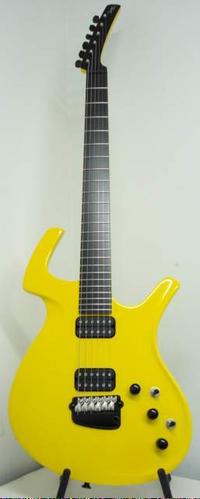
The Parker Fly was a model of electric guitar built by Parker Guitars. It was designed by Ken Parker and Larry Fishman, and first produced in 1993. The Fly is unique among electric guitars in the way it uses composite materials. It is notable for its light weight (4.5 lb; 2.0 kg) and resonance. It was also one of the first electric guitars to combine traditional magnetic pickups with piezoelectric pickups, allowing the guitarist to access both acoustic and electric tones. In 2003, Parker Guitars was acquired by U.S. Music Corporation (which in 2009 was sold to Jam Industries). Production ended in 2016 and the company has not released a new model of any kind since.

Key Information

Inspired by earlier musical instruments like the lute, Ken Parker began experimenting with hardwood exoskeletons to provide rigidity to the instrument but hardwood was too difficult to work with and did not achieve satisfactory results. Inspired by a friend who used carbon fiber to build speed boats, Ken Parker started experimenting with the material.[1] Flys were built with an exoskeleton along the back and around the neck of the guitar. It was made from a carbon fibre/glass/epoxy composite material that is thinner than the paint finish. The same composite also comprised the fretboard material.[2]

The exoskeleton supposedly provided the guitar with strength and rigidity, as well as increasing the guitar's sustain. It also possibly gave the added benefit of allowing a smaller, more efficient body. One of Ken Parker's primary goals in designing the Fly was to build a guitar with less mass than a traditional electric guitar but with the same or even more rigidity.[1] The composite exoskeleton was one of the primary reasons why such a design is possible, he claimed.

Frets

[edit]

The frets on the Parker Fly were constructed of hardened stainless-steel, they had no tangs, and were instead attached using an adhesive. Parker Fly guitars typically had twenty-four frets.

Vibrato system

[edit]

The Parker Fly had a vibrato system that allowed the player to select from a fixed-bridge mode, a bend-down-only mode, and a free-float mode. The vibrato system used a flat spring allowing the user to easily adjust the tension. The spring's natural tension was selected according to the gauge of strings used by the guitar player. The original Fly design incorporated a wheel on the face of the guitar to adjust the spring tension, while more recent models have moved the tension adjustment to inside the guitar. The bridge had been designed to stay in perfect tune, even with heavy use of the vibrato bar.

Pickups

[edit]

Most versions of the Parker Fly featured a set of two magnetic Humbucker style pickups and a Fishman developed piezoelectric pickup designed to emulate acoustic guitar sounds. The piezoelectric pickup was aided by an onboard active pre-amplifier that required the use of a 9 volt battery. The magnetic pickups were passive, but sat within the active circuit path. Fly guitars featured a stereo output jack, allowing the piezo and magnetic pickups to be sent to different amplifiers, or blended into a mono signal. Some Fly models had only magnetic pickups, for traditional electric guitar sounds, while some models had only piezo pickups, for use as solid-body acoustic-electric guitars.

The Parker Fly's magnetic pickups are based on the traditional humbucker design, but feature a proprietary mounting system which eliminates the need for pickup rings and mounting brackets. The pickups are instead mounted via two extended pole pieces that screw into bushings sunk into the pickup cavities of the guitar. This mounting system produces a cleaner looking interface between the pickups and the instrument. The first humbuckers used for the Fly were produced by Dimarzio based on their Air Norton (neck position), and ToneZone (bridge position) designs. These pickups are commonly referred to as "Gen 1 Dimarzios". Responding to complaints about their non traditional hi-fi sound, Dimarzio introduced a new set of humbuckers in the spring of 1999. Commonly referred to as "Gen 2 Dimarzios", these new pickups were custom designed for the Fly's unique voicing. Featuring ceramic magnets, the Gen 2 design had more mid range focus, and higher output than their predecessors, and were still used on many of the last Fly models.

Sperzel tuners

[edit]

The Parker Fly guitars are equipped with Sperzel tuners, which allow the string to be locked into place at the pole in which it winds. This feature allowed the string to remain fastened into the pole without requiring more than one wind.

Refined Fly

[edit]

Shortly before Parker Guitars was acquired by U.S. Music Corporation, the Fly was changed to make it more production-friendly and less expensive to produce. The biggest change was moving the tension wheel, which adjusts the spring tension of the bridge, from its original through body position to behind a cover. The battery compartment was made more accessible and the 3 way vibrato arm switch was moved. The stereo button was removed and replaced with a smart switch. Additionally the ribbon wiring harness was replaced with the less expensive Nite Fly wiring.

Notable users

[edit]

Fly models

[edit]
5-string Fly bass
Fly Deluxe
The Fly Deluxe has a solid poplar body, basswood neck, and Dimarzio pickups.
Fly Classic
The Fly Classic has a mahogany body, basswood neck, and Dimarzio pickups.
Fly Mojo
The Fly Mojo has a body and neck of solid mahogany, and Seymour Duncan pickups.
Fly Artist
The Fly Artist has a solid Sitka spruce body, basswood neck, and Dimarzio pickups.
Fly Supreme
The Fly Supreme has a solid big leaf maple body (earliest production, 1 piece; later, 2 pieces), basswood neck, and Dimarzio pickups.
Fly Concert (later called the Fly Bronze)
The Fly Concert/Bronze has a solid spruce body, basswood neck, light-gauge acoustic-style bronze strings, hardtail, and no magnetic pickup. Color: transparent butterscotch (natural); also (rare) in Ebony (a grand piano-like black). The Fly Artist is similar, but has magnetic pickups and tremolo bridge.
Spanish/Nylon Fly
Designed to appeal to classical guitar players, this is strung with nylon strings, and has no magnetic pickups.
Nite Fly
Constructed of a variety of different tone woods and featuring various pickup combinations, the Nite Fly uses a bolt-on neck, and lacks the intricate sculpting found on the Fly body.
Fly Deluxe, Adrian Belew Edition
This is a Fly Deluxe with a Sustainiac pickup, Variax components, and a specialized piezo pickup that allows for guitar synthesizer applications.
MIDI Fly[3]
Based on a Nite Fly body and made between 1999 and 2002, the MIDIFly has a mahogany body and Parker's TurboTone neck (also constructed of mahogany) with Virtual DSP Corp.'s MidiAxe guitar-to-MIDI converter system.[4] It has custom DiMarzio pickups plus an active Fishman piezo system. The MIDIFly's Fishman piezo circuit triggers the internal MidiAxe DSP, resulting in a MIDI guitar controller. A MidiAxe editor program for Windows PC was provided on CD-ROM.
Fly Bass
The Fly Bass was made as a 4 or 5 string model. It has a sitka spruce body made from 21 pieces of spruce sandwiched between quilted maple veneer top and back, with the headstock made of curly maple. The mahogany neck was originally made of 15 layers of laminated mahogany but was later changed to a solid mahogany neck to lower production costs. The neck is wrapped in a skin of carbon fiber with a 10" to 15" conical section fretboard[5] radius. It has two custom DiMarzio Ultra Jazz humbucking pickups with an active Fishman EQ and a Fishman piezo system. Sperzel locking machine heads and a GraphTech nut are standard. It was available in three colour tobacco sunburst, natural, transparent red and transparent blue.

References

[edit]
[edit]
Revisions and contributorsEdit on WikipediaRead on Wikipedia
from Grokipedia
The Parker Fly is an innovative model introduced in 1993 by , designed by Ken Parker and pickup specialist Larry Fishman to revolutionize traditional solidbody guitar construction through lightweight composite materials and enhanced playability. , founded in 1993 as a subsidiary of USA in , produced the Fly under Ken Parker's leadership until 2003, shipping approximately 30,000 units. After Korg's divestment around 2000, the company was acquired by U.S. Music Corp. in 2003 (later by Jam Industries in 2009), which continued limited production until around 2016. The guitar's core innovation lies in its hybrid structure: a wooden neck and body—often using lightweight tonewoods like Western red cedar, , or poplar—integrated with a carbon fiber, , and skeleton for rigidity and reduced weight, typically around 5 pounds, allowing for greater string energy transfer and acoustic-like responsiveness in an electric format. Key features include a conical compound-radius with bonded frets, a self-lubricating nut, locking tuners, and an optional multi-function system inspired by classical lutes; pickup options ranged from humbuckers and single-coils to piezo saddles for versatile acoustic emulation, with some models supporting via hexaphonic pickups. The Fly's futuristic aesthetic, with its double-cutaway body and minimal headstock, challenged the dominance of designs like the and , earning acclaim for ergonomic comfort and tonal clarity while influencing modern guitar engineering. Notable users included , who played it for six years; of , who recorded much of (1999) with the model; and guitarist , who endorsed a signature version. Prototypes and production models have been exhibited at prestigious institutions, such as the and the , underscoring its cultural significance. Ken Parker, who passed away on October 5, 2025, at age 73 after a battle with cancer, left a legacy of hyper-engineered instruments that prioritized innovation over convention, though commercial challenges limited widespread adoption. Variants like the Nitefly, , and Spanish models expanded its lineup, blending electric versatility with unorthodox finishes that accounted for up to 80% of production costs due to mixed-material complexity.

History

Development and Origins

The Parker Fly electric guitar emerged from a design collaboration between archtop Ken Parker and electronics expert Larry Fishman, which began in 1984 following their initial meeting. Parker's background in crafting high-end acoustic archtops in New York during the and directly influenced the project's ergonomic priorities, emphasizing comfort and responsiveness akin to his earlier instruments. At its core, the Parker Fly was conceived as a lightweight weighing under 5 pounds, incorporating composite materials to achieve exceptional balance and reduce musician fatigue during extended play. The design sought to enhance playability while delivering acoustic-like sustain, allowing the instrument to respond dynamically to the player's touch much like an . The debut prototype appeared in 1993, marking the launch of full production by in . This innovative approach blended traditional tonewoods with modern composites, enabling hybrid tones that bridged electric versatility and acoustic warmth.

Production Timeline

, founded in 1990, became a subsidiary of USA, which facilitated the Fly's market entry in 1993. Korg divested its interest in 2000. The entered production in 1993 as a hand-built instrument under the direct oversight of founder Ken Parker in , where the company maintained a small-scale operation focused on craftsmanship and innovation. This initial phase lasted until 2004, yielding an output of several thousand units across all Fly variants. In September 2003, Parker Guitars was acquired by U.S. Music Corporation, with the deal officially announced in March 2004; this transition marked Ken Parker's departure from daily operations, shifting production to a larger facility outside and enabling expanded manufacturing to meet growing demand. While output increased significantly—potentially reaching several thousand units annually—the era introduced variability in build quality due to scaled-up processes and cost efficiencies, diverging from the original artisanal approach. U.S. Music Corporation itself was sold to Jam Industries in August 2009, which continued production in the same plant, incorporating further modifications to streamline assembly and reduce expenses amid fluctuating market conditions for electric guitars. This period sustained the line through evolving consumer preferences toward more affordable imports, but rising labor costs and declining sales volumes ultimately led to the official discontinuation of the Fly in November 2016, closing the factory and halting all new manufacturing. Following the 2016 shutdown, no official Parker Fly models were produced under the brand, though Ken Parker maintained a personal workshop in , crafting limited custom archtop guitars influenced by his earlier Fly design principles until his death on October 5, 2025, at age 73.

Design and Construction

Materials and Ergonomics

The Parker Fly guitar employs an innovative construction featuring an exoskeleton of carbon fiber, , and resin that encases a lightweight wood core for enhanced durability and resonance. This core uses lightweight woods such as basswood, poplar, , or for the one-piece body and in most models, with some using , balancing tonal warmth with structural efficiency. The one-piece flowing body-neck design integrates seamlessly without a traditional , enabling full access to all 24 frets, while a contoured upper horn improves balance during upper-fret playing. The carbon fiber reinforcement in this design also contributes to exceptional stability over time. Thin construction and minimal material use throughout result in an overall of approximately 4.5 lbs (2.0 kg), substantially reducing player fatigue during long performances or practice sessions. Ergonomic considerations are central to the Fly's appeal, with an asymmetrical that offers a natural arm rest and superior strap balance for comfortable play in both seated and standing positions. These contours, featuring offset lower bouts and angular horns, promote fluid movement and reduce strain, drawing from principles of traditional guitar to enhance overall playability.

Neck and Fretboard

The Parker Fly guitar employs a set reinforced with a carbon fiber , which enhances rigidity and minimizes warping without the need for extensive internal supports in its initial designs. Early production models omitted a traditional , relying instead on the inherent stability of the to maintain neck straightness across varying environmental conditions; later iterations introduced an adjustable to provide players with fine-tuning options for action and . This design contributes to the instrument's reputation for consistent playability. The profile is a slim C-shape, with dimensions of approximately 0.80 inches deep at the first and 0.90 inches at the 12th , promoting speed and comfort during extended play. Complementing this, the thin allows for ergonomic access to the upper s, integrating seamlessly with the body's contoured design. The scale length measures 25.5 inches, aligning with standard proportions while optimizing string tension and intonation. The fretboard consists of a , delivering a sleek, low-friction surface that resists the effects of and fluctuations for reliable performance. It features a compound radius of 10-13 inches and accommodates 24 tangless stainless-steel frets, glued directly to the board in a patented configuration that eliminates the traditional tang, enabling smoother bends and reduced buzzing. Over time, the these frets can degrade, occasionally necessitating professional re-gluing to restore optimal contact and sustain.

Hardware and Electronics

Bridge and Vibrato System

The Parker Fly's bridge and system features a patented design co-developed by Ken Parker and Larry Fishman, incorporating Fishman piezo-electric transducers embedded in the saddles to capture acoustic-like tones from the bridge position. This system allows for three distinct operational modes, selectable via a step-stop mechanism on the bridge: fixed hardtail mode, where the bridge is locked in place for maximum stability and no vibrato effect; dive-only (bend-down) mode, permitting pitch drops while preventing upward bends; and full floating mode, enabling bidirectional pitch variation for classic effects. Tension and balance between string pull and the system's flat compression spring are adjusted via a rear knurled in early models or internal screws in later iterations, ensuring precise intonation across the saddles. The individual saddles, constructed from or to promote sustain, integrate directly with the guitar's output routing, allowing the piezo signal from the bridge to be separated from magnetic pickups for dual-amplifier setups or blended outputs. The design's locking step-stop and high spring compression mechanisms, detailed in US Patent 5,637,818 (issued 1997), minimize tuning instability even during aggressive use by preventing unintended bridge movement. This pivots on ball bearings for smooth action, complemented briefly by the guitar's Sperzel locking tuners, which further enhance overall tuning stability.

Pickups and Preamp

The Parker Fly employs a hybrid pickup system designed for versatile tonality, combining traditional magnetic pickups with a piezo acoustic . The magnetic section features two humbuckers—typically DiMarzio's Parker Fly Custom Neck (PHWP1) and Parker Fly Custom Bridge (PWHP2) models, or equivalents based on the '59, Jazz, and JB designs—positioned in the neck and bridge. These humbuckers are splittable to single-coil mode via a push-pull tone pot, while a dedicated single-coil configuration is achieved by selecting the parallel inner coils of both humbuckers, providing six magnetic pickup combinations overall. A Fishman piezo pickup is embedded in the bridge saddles, capturing string vibration for an acoustic-like response that emulates hybrid electric-acoustic sounds with low noise. The onboard active preamp, powered by a 9V battery with approximately 300 hours of life, utilizes Fishman circuitry to buffer and mix the signals from the magnetic and piezo pickups, minimizing hum and enabling clean headroom through voltage-doubling technology. This setup supports stereo output jacks for separate magnetic and piezo amplification or mono blending, with a 3-way blend switch selecting piezo-only, magnetic-only, or combined modes; a smart-switching automatically detects the cable type to route signals accordingly. Individual controls include dedicated volume knobs for the piezo and magnetic sections, plus a treble-cut tone knob for the magnetics (with push-pull coil-splitting), allowing precise balancing of the hybrid response. The wiring configuration delivers over 10 tonal combinations by integrating the 3-way magnetic pickup selector (bridge humbucker, neck humbucker, or both inner coils in single-coil mode), coil-tap functionality, and piezo blend options, supporting clean articulate tones to overdriven sounds; phase reversal is available in select setups for enhanced versatility. This electronics design integrates seamlessly with the vibrato system to maintain stable piezo signal integrity during pitch modulation.

Models

Core Fly Variants

The Parker Fly debuted in 1993 as the company's flagship , introducing a radical lightweight constructed from a poplar body core encased in a carbon-fiber and exoskeleton for enhanced and , weighing approximately 4.5 pounds. The original model featured a basswood , a carbon-glass-epoxy composite fretboard with 24 tangless frets glued directly to it, and basic including dual humbucker pickups blended with a six-element Fishman piezo for versatile electric and acoustic-like tones. Lacking a in its initial iteration, the guitar relied on the rigid composite structure for stability, paired with an innovative internal system that allowed fixed, floating, or dive-only modes via a rear access panel. This setup prioritized playability and tonal flexibility, with the piezo preamp enabling stereo output for amplified acoustic simulation. In the mid-1990s, Parker refined the Fly design to address early production challenges, particularly improving adhesion by enhancing the gluing process to prevent loosening over time—a common issue in pre-refined models where frets could detach due to inadequate bonding on the composite fretboard. Internal adjustments were also optimized for better tuning stability and intonation, incorporating finer spring tension controls and a more robust locking mechanism to minimize backlash during aggressive use. These updates maintained the core architecture shared across all Fly variants, which unified the body and for seamless transfer and resistance to environmental changes. Throughout the 1990s and into the 2010s, Parker expanded the core Fly line with variants differentiated primarily by selections, configurations, and aesthetic finishes, all retaining the signature lightweight exoskeleton and 25.5-inch scale length for consistent ergonomics. The Fly Classic served as an entry-level option with a solid body and basswood neck, featuring piezo-blended using custom-wound humbuckers for versatile electric and acoustic tones, often finished in natural or translucent colors to highlight the wood grain (non-piezo variants like the FCVST were also produced). In contrast, the Fly Supreme elevated premium aesthetics with a carved figured body and basswood neck, options for or transparent honey finishes, and a custom cast aluminum bridge, while incorporating the full magnetic-plus-piezo setup for broader sonic palette. The Fly Artist emphasized acoustic resonance with a solid Sitka spruce body and basswood or redwood neck, paired with pickups and the Fishman piezo for hybrid electric-acoustic performance, typically in natural finishes that showcased the spruce's tight grain. Similarly, the Fly Concert (later rebranded as Fly Bronze) utilized a one-piece Sitka spruce body with basswood neck and bronze-wound acoustic-style strings, forgoing magnetic pickups entirely in favor of piezo-only electronics to deliver uncolored classical and folk tones through a hardtail bridge. The Fly Mojo, introduced in the early , adopted a solid body and neck for warmer sustain, with standard piezo-blended electronics and versatile hardware options like locking tuners, available in solid colors or bursts. For classical applications, the —later known as the Spanish Fly—adapted the Fly platform as an acoustic-electric with nylon strings, featuring a Sitka spruce body, basswood neck, and tie-block bridge without magnetic pickups, relying on an advanced six-channel piezo preamp with individual string EQ trim pots to capture nuanced and classical timbres in a or finish. These core variants collectively showcased the Fly's modular evolution, balancing in materials and hardware while prioritizing the exoskeleton's in uniform tone production across electric and acoustic domains.

Specialized and Signature Models

The NiteFly, introduced in the as a more affordable variant of the Parker Fly, featured a matte black finish designed to evoke a darker, more subdued aesthetic compared to the standard models. It was available in multiple configurations, including versions with three single-coil pickups alongside a Fishman piezo bridge for blended acoustic-electric tones, and later iterations equipped with setups such as Jazz and JB models for enhanced output and sustain. These evolutions incorporated an active Fishman NiteMix circuit to mix piezo and magnetic signals directly on the guitar, allowing for versatile tonal options suited to rock and alternative genres. The MIDI Fly, produced in the early 2000s, integrated capabilities into the Parker Fly design through a GK-3 divided pickup system mounted at the bridge, enabling direct connection to devices like the GR-20 for real-time synth triggering and modeled sounds. It retained the ergonomic but added dedicated controls, including a 13-pin output, patch scrolling buttons, and a mini-toggle for switching between divided pickup, magnetic, and blended signals. Magnetic pickups varied by model, with options like two humbuckers ( in the , JB in the bridge) complemented by a Fishman six-element piezo for hybrid guitar-synth performance in applications. An active Fishman stereo preamp handled signal processing, supporting altered tunings and sampler integration without external converters. The Fly Bass series extended the Parker Fly's composite build to bass guitars, with the FB-4 four-string and FB-5 five-string models featuring a 34-inch scale length for standard playability and a lightweight core topped with quilted for . Both utilized active , including a 9-volt preamp with three volume controls, concentric bass/treble and knobs, and a Fishman piezo pickup that could blend with DiMarzio humbucking pickups for versatile acoustic and electric tones. The carbon-reinforced mahogany neck and 24 stainless-steel frets on a carbon-glass fingerboard provided rigidity and smooth action, adapting the core Fly ergonomics to a double-offset body shape while maintaining the series' emphasis on reduced weight and enhanced sustain. Black hardware, including a custom Ibanez Mono-Rail II bridge and Sperzel locking tuners, contributed to its modern, high-performance profile. The Signature Fly, developed in collaboration with the King Crimson guitarist during the 2000s, customized the Parker Fly platform with a distinctive Belew Berry finish and innovative switching inspired by Belew's experimental style. It featured three pickups—a humbucker, a Sustainiac sustainer humbucker, and a Fishman piezo—for expanded sonic possibilities, including infinite sustain effects and blended outputs tailored to . The model included specialized controls for pickup selection and signal routing, reflecting Belew's input to Ken Parker for a guitar that supported complex tonal shifts in live performances.

Notable Users

High-Profile Endorsements

, the guitarist for , has been a longtime user of Parker Fly guitars since the and played a key role in the creation of his signature model, the Adrian Belew Signature Fly Deluxe, which he has described as his favorite guitar ever due to its balanced feel and versatility for extended stage use. Belew praised the instrument's lightweight construction, noting its comfort during long performances, such as on his 65-date Beat Tour. Brian May of Queen utilized a Parker Fly in studio recordings, notably on the track "Mother Love" from the 1995 album Made in Heaven, where its hybrid magnetic and piezo pickups allowed for blended tones that complemented his Vox AC30 amplifier setup. Early adopters of the Parker Fly included Joni Mitchell and Trent Reznor of Nine Inch Nails, who were drawn to its innovative sustain from the composite construction and piezo acoustic capabilities for experimental sounds. The NiteFly model, in particular, appealed to experimental players like Belew for its modern ergonomics and tonal flexibility. Mitchell received a custom version in 1996, designed to be lightweight and easy to hold amid her physical challenges, which she used in performances including her 2022 Newport Folk Festival appearance. Reznor employed the guitar extensively on Nine Inch Nails' 1999 album The Fragile, using its piezo pickup for about 80 percent of the guitar parts to achieve detuned, acoustic-like textures.

Usage in Performances

, guitarist for , integrated the Parker Fly into the band's live tours starting in the mid-1990s, where he leveraged the guitar's piezo pickup to craft sharp, percussive funky rhythms that complemented the group's fusion of rock, , and metal. The instrument's lightweight carbon fiber construction and dual pickup system allowed Reid to switch seamlessly between magnetic tones for leads and piezo-driven acoustics for rhythmic accents during extended sets. Reeves Gabrels prominently featured the Parker Fly in his live collaborations with during the 1990s, including tours supporting albums like (1997), employing the guitar's innovative system to generate swirling ambient effects that enhanced Bowie's experimental soundscapes. Gabrels' setup often paired the Fly's GK-3 synth interface with effects processors, enabling real-time textural manipulations during performances of tracks like "," where the 's smooth pitch bends created ethereal, otherworldly sustains. Gustavo Cerati showcased the black Parker Fly during Soda Stereo's tours in the mid-1990s, including the 1995 promotional shows for Sueño Stereo and the band's 1997 performance, where its sleek, futuristic aesthetic provided striking visual stage presence amid dynamic lighting. Cerati utilized the guitar's versatile electronics to blend clean piezo tones with overdriven magnetic pickups, creating layered textures for hits like "Disco Eterno" that defined the band's arena-filling sound. Jeff Cook of Alabama employed the Parker Fly in country performances during the 2000s, such as his appearance at the 2009 CMA Awards and live sets with the band, adapting its hybrid pickup configuration for twangy leads and acoustic-infused hybrids that bridged traditional country with rock elements. The guitar's bright piezo response proved ideal for Cook's multi-instrumental style, enabling fluid shifts to pedal steel-like bends in songs like "Jordan's Banks" during festival and award show appearances. The Parker Fly's shared hardware, including its piezo and magnetic pickups, enabled these musicians to configure versatile setups tailored to their performance demands across genres.

Legacy and Influence

Innovations and Impact

The Parker Fly pioneered several key innovations in design, including tangless frets that eliminated traditional barbs for a smoother surface and reduced drag, enhancing playability and intonation stability. These frets, bonded directly to the fretboard, were part of a patented system that contributed to the guitar's exceptional sustain by minimizing disruptions in the path. The instrument's carbon fiber/glass/epoxy composite provided without added , allowing for a lightweight body—typically around 5.5 pounds—that improved resonance and reduced fatigue during extended play. Complementing this was a hybrid pickup system integrating traditional magnetic humbuckers with piezoelectric transducers in the bridge, enabling players to blend electric and acoustic-like tones for greater sonic versatility. This on-board active preamp processed the signals separately or summed, influencing modern approaches to multi-timbral guitar sounds. Despite modest production volumes that limited mainstream adoption, the Parker Fly cultivated a dedicated among progressive and experimental musicians who valued its ergonomic advantages over heavier traditional designs like the . Its slender neck profile, contoured body, and balanced offered superior comfort and speed, attracting players seeking an alternative to conventional solid-body without sacrificing tonal depth or sustain. The Fly's innovations have had a lasting impact on guitar luthiery, inspiring contemporary manufacturers to explore lightweight, headless, and composite constructions. Models such as the Strandberg Boden and 060 draw from its emphasis on carbon-fiber reinforcements and ergonomic headless formats, prioritizing portability and in high-performance instruments. Key patents, including the adjustable system (US Patent 5,637,818) that allowed seamless switching between fixed, dive-only, and floating modes, continue to inform advancements in bridge design for enhanced tuning stability and expressive control in ergonomic guitars. Ken Parker's background in crafting lightweight archtop guitars informed these forward-thinking elements, bridging acoustic principles with electric innovation.

Recent Developments

Following the discontinuation of Parker Fly production in 2016, the for the guitars has remained active, supported by enthusiast communities dedicated to , repairs, and cloning efforts. The Fly Clone Project, an ongoing initiative to preserve and recreate Parker guitar designs, has facilitated the development of replacement parts and DIY kits, helping owners sustain these instruments amid limited original availability. In the 2000s, Ken Parker shifted his focus from electric guitars to crafting custom archtop models, beginning with the release of the in 2006, while occasionally drawing on composite materials reminiscent of the Fly in select designs. This transition emphasized playability across genres and culminated in a series of hand-built instruments produced until his final years. Ken Parker passed away on October 5, 2025, at the age of 73, after battling cancer. Obituaries in and celebrated the Fly as his defining electric guitar innovation, praising its lightweight construction and influence on musicians like , who credited it with transforming his playing. These tributes, along with endorsements from high-profile users, have sustained demand and sparked fresh appreciation for the model's enduring design. Throughout 2025, retrospectives in publications such as Stringjoy and MusicRadar reaffirmed the Fly's lasting impact on guitar innovation, even as Jam Industries, the brand's owner since 2009, has shown no plans to revive production.

References

Add your contribution
Related Hubs
User Avatar
No comments yet.