Hubbry Logo
Personal web pagePersonal web pageMain
Open search
Personal web page
Community hub
Personal web page
logo
8 pages, 0 posts
0 subscribers
Be the first to start a discussion here.
Personal web page
Personal web page
from Wikipedia
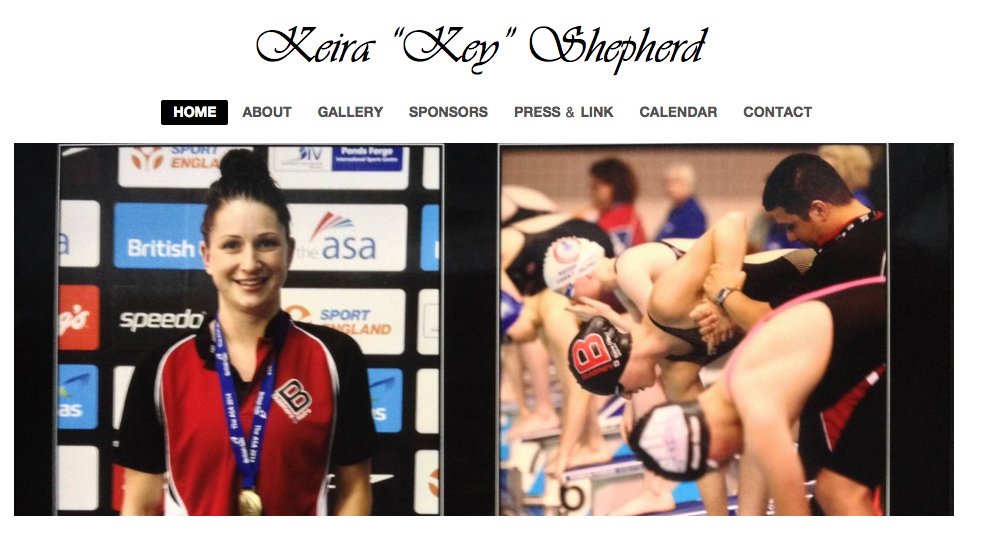
The personal web site of athlete Keira Shepherd. The navigation bar on the top of the page contains links to additional content, such as more digital photos, information about her sponsors, press clippings and news links, a calendar of her appearances at athletic competitions, and contact information.

Personal web pages are World Wide Web pages created by an individual to contain content of a personal nature rather than content pertaining to a company, organization or institution. Personal web pages are primarily used for informative or entertainment purposes but can also be used for personal career marketing (by containing a list of the individual's skills, experience and a CV), social networking with other people with shared interests, or as a space for personal expression.

These terms do not usually refer to just a single "page" or HTML file, but to a website—a collection of webpages and related files under a common URL or Web address. In strictly technical terms, a site's actual home page (index page) often only contains sparse content with some catchy introductory material and serves mostly as a pointer or table of contents to the more content-rich pages inside, such as résumés, family, hobbies, family genealogy, a web log/diary ("blog"), opinions, online journals and diaries or other writing, examples of written work, digital audio sound clips, digital video clips, digital photos, or information about a user's other interests.[1] Many personal pages only include information of interest to friends and family of the author. However, some webpages set up by hobbyists or enthusiasts of certain subject areas can be valuable topical web directories.

History

[edit]

In the 1990s, most Internet Service Providers (ISPs) provided a free small personal, user-created webpage along with free Usenet News service. These were all considered part of full Internet service. Also several free web hosting services such as GeoCities provided free web space for personal web pages.[2] These free web hosting services would typically include web-based site management and a few pre-configured scripts to easily integrate an input form or guestbook script into the user's site. Early[when?] personal web pages were often called "home pages" and were intended to be set as a default page in a web browser's preferences, usually by their owner. These pages would often contain links, to-do lists, and other information their author found useful. In the days when search engines were in their infancy, these pages (and the links they contained) could be an important resource in navigating the web.[citation needed] Since the early 2000s, the rise of blogging and the development of user friendly web page designing software made it easier for amateur users who did not have computer programming or website designer training to create personal web pages. Some website design websites provided free ready-made blogging scripts, where all the user had to do was input their content into a template. At the same time, a personal web presence became easier with the increased popularity of social networking services, some with blogging platforms such as LiveJournal and Blogger. These websites provided an attractive and easy-to-use content management system for regular users. Most of the early personal websites were Web 1.0 style, in which a static display of text and images or photos was displayed to individuals who came to the page. About the only interaction that was possible on these early websites was signing the virtual "guestbook".

With the collapse of the dot-com bubble in the late 1990s, the ISP industry consolidated, and the focus of web hosting services shifted away from the surviving ISP companies to independent Internet hosting services and to ones with other affiliations. For example, many university departments provided personal pages for professors and television broadcasters provided them for their on-air personalities. These free webpages served as a perquisite ("perk") for staff, while at the same time boosting the Web visibility of the parent organization. Web hosting companies either charge a monthly fee, or provide service that is "free" (advertising based) for personal web pages. These are priced or limited according to the total size of all files in bytes on the host's hard drive, or by bandwidth, (traffic), or by some combination of both. For those customers who continue to use their ISP for these services, national ISPs commonly continue to provide both disk space and help including ready-made drop-in scripts.[3]

With the rise of Web 2.0-style websites, both professional websites and user-created, amateur websites tended to contain interactive features, such as "clickable" links to online newspaper articles or favourite websites, the option to comment on content displayed on the website, the option to "tag" images, videos or links on the site, the option of "clicking" on an image to enlarge it or find out more information, the option of user participation for website guests to evaluate or review the pages, or even the option to create new user-generated content for others to see. A key difference between Web 1.0 personal webpages and Web 2.0 personal pages was while the former tended to be created by hackers, computer programmers and computer hobbyists, the latter were created by a much wider variety of users, including individuals whose main interests lay in hobbies or topics outside of computers (e.g., indie music fans, political activists, and social entrepreneurs).

Motivations

[edit]
The personal webpage of surfer Sean O'Brien that opens with a splash screen

In a study done by Zinkhan, participants had four main reasons to create personal web pages. First, people use personal web pages as a portrayal of self, in a sense marketing themselves, since creators have the freedom to portray their own identities. Second, personal web pages are a way to interact with people who have similar interests as the creator, possible employers, or colleagues. Third, personal web pages can gain social acceptance with groups that the creator is interested in depending on the information that the creator reveals about themselves. Fourth, personal web pages can give creators a sense of connection to the world since these web pages are public and a way to introduce oneself to other people around the globe.[4]

People may maintain personal web pages to serve as a showcase for their skills in professional life,[5] creative skills or self promotion of their business, charity or band.[6] The use of personal web pages to display an individual's professional life has become more common in the 21st century. Mary Madden, an expert researcher on privacy and technology, did a study that found a tenth of American jobs require Personal web pages that advertise an individual online.[7] Personal web pages have become a source of initial impression of possible employees used by employers. It can also be used to express opinions on issues ranging from news and politics to movies. Others may use their personal web page as a communication method. For example, an aspiring artist might give out business cards with their personal web page, and invite people to visit their page and see their artwork, "like" their page or sign their guestbook.

A personal web page gives the owner generally more control on presence in search results and how they wish to be viewed online. It also allows more freedom in types and quantity of content than a social network profile offers,[8] and can link various social media profiles with each other. It can be used to correct the record on something, or clear up potential confusion between you and someone with the same name.[9][10][11]

In the 2010s, some amateur writers, bands and filmmakers release digital versions of their stories, songs and short films online, with the aim of gaining an audience and becoming more well-known. While the huge number of aspiring artists posting their work online makes it unlikely for individuals and groups to become popular via the Internet, there are a small number of YouTube stars who were unknown until their online performances garnered them a huge audience.[citation needed]

Sites of academics

[edit]

Academic professionals (especially at the college and university level), including professors and researchers, are often given online space for creating and storing personal web documents, including personal web pages, CVs and a list of their books, academic papers and conference presentations, on the websites of their employers. This goes back to the early decade of the World Wide Web and its original purpose of providing a quick and easy way for academics to share research papers and data.

Researchers may have a personal website to share more information about themselves, about their academic activities and for sharing (unpublished) results of their research. This has been noted as part of the success of open-access repositories such as arXiv.[12]

See also

[edit]

References

[edit]
Revisions and contributorsEdit on WikipediaRead on Wikipedia
from Grokipedia
A personal web page, often referred to as a personal homepage, is an individually created and maintained website that serves as a primary online entry point for expressing one's identity, sharing personal interests, experiences, and information through customizable content such as text, images, and links. Emerging in the mid-1990s alongside the rapid expansion of the World Wide Web, personal web pages represented one of the earliest forms of user-generated content on the internet, enabling non-technical users to establish a digital presence without advanced programming skills. Pioneered by services like GeoCities, founded in 1994, these pages allowed individuals to organize their sites into thematic "neighborhoods" mimicking real-world communities, fostering a sense of virtual belonging and non-commercial expression. Early examples, analyzed in surveys from 1996, commonly featured elements like email contacts (present in 92% of pages), personal names (79%), favorite links (56%), and photographs (35%), with purposes ranging from professional self-promotion (45%) and product announcements (20%) to experimental exploration of web technologies (29%). Over time, personal web pages evolved from static, text-heavy designs on gray backgrounds in the late —characterized by simple hyperlinks and functional layouts—to more visually dynamic and interactive formats influenced by technologies in the 2000s, including images, navigation bars, and multimedia integration. By the , they shifted toward condensed, responsive designs optimized for mobile viewing, while their role expanded from standalone expressions of to integrated components of broader online profiles, often complementing but retaining value for in-depth self-presentation and professional branding. As of 2025, platforms like and Pages continue to support the creation of personal web pages, emphasizing accessibility and customization for individuals seeking control over their beyond algorithm-driven social networks.

Overview

Definition

A personal web page, also known as a personal homepage, is a created and maintained by an individual to express personal interests, share about oneself, or promote personal endeavors, typically for non-commercial purposes, though often including elements of promotion or personal endeavors that may have commercial aspects. These pages typically consist of one or more interconnected web pages hosted on a server, allowing the creator full control over content, design, and structure to reflect their unique identity and voice. Unlike corporate sites, which represent businesses or entities with branding and marketing goals, personal web pages prioritize individual authorship and are not tied to broader institutional agendas. What distinguishes personal web pages from blogs or social media profiles is their emphasis on standalone ownership and extensive customization by a single person, free from the constraints of third-party platforms. Blogs, while often personal, generally focus on chronological narrative entries and are hosted on specialized services like or Blogger, which offer built-in commenting and syndication features but limit design flexibility compared to fully custom sites. profiles, such as those on or , operate within proprietary ecosystems that dictate layout, algorithms, and data usage, reducing user control compared to the independent hosting of a personal web page. This enables creators to experiment with , hyperlinks, and layouts tailored to their vision, without reliance on platform-specific tools or policies. The concept of personal web pages emerged as a key democratizing force in web publishing during the early days of the , empowering non-experts to broadcast their thoughts and creations globally without needing traditional gatekeepers like publishers or broadcasters. By the mid-1990s, as web technologies became more accessible, individuals could readily establish these pages, fostering a culture of open self-expression that contrasted with the elite-controlled media of the pre-digital era. This shift marked the web's initial widespread experiment in participatory content creation, laying groundwork for later developments in user-generated online media.

Key Characteristics

Personal web pages are typically structured around core elements that facilitate self-expression and basic information sharing. A standard layout often includes a homepage serving as the entry point, an "about" section detailing the owner's background or interests, and a contact form or link for visitor interaction. Optional components, such as embedded photos, image galleries, or external links to or portfolios, enhance the page's visual and connective appeal. These structural choices prioritize simplicity and direct communication, allowing owners to present a cohesive without overwhelming complexity. Customization is a hallmark of personal web pages, enabling owners to tailor the design extensively to reflect their individuality. Using for content markup and CSS for styling, creators can experiment with layouts, color schemes, , and visual motifs, often resulting in unique that range from minimalist to eclectic. This flexibility contrasts with more rigid templates on commercial platforms, as personal pages allow full control over elements like background images, custom fonts, and responsive grids to ensure cross-device compatibility. Such not only fosters creativity but also reinforces the page's role as a digital extension of the owner's identity. In terms of , personal web pages generally feature low-to-moderate levels of , distinguishing them from highly dynamic commercial sites. Basic functionalities include static forms for visitor feedback, guestbooks for comments, or simple counters tracking visits, often implemented via server-side scripts like or client-side . While early personal pages were predominantly static—comprising fixed files without real-time updates—modern iterations may incorporate lightweight dynamic elements, such as embedded feeds or basic animations, yet they avoid complex databases or user to maintain ease of management. This balance ensures accessibility for non-technical users while keeping the focus on personal storytelling over advanced user experiences. Accessibility and usability in personal web pages emphasize straightforward navigation and inclusive design practices, particularly in contemporary examples. Simple menu structures, such as horizontal or vertical links to key sections, facilitate quick orientation, often adhering to principles like the WCAG guidelines for alt text on images and for screen readers. Modern personal pages increasingly prioritize mobile responsiveness through CSS , ensuring readable layouts on smartphones and tablets without requiring separate mobile versions. These features promote broad reach and user-friendliness, aligning with the ethos of personal as an open, approachable medium.

Historical Development

Origins in the Early Web

The origins of personal web pages trace back to the inception of the itself, with creating the first in 1991 while working at in . This page, hosted at http://info.cern.ch and made publicly available on August 6, 1991, served as an informational resource about the Web project, including instructions for accessing and setting up the system, and is widely recognized as the inaugural example of a personal web presence authored by an individual to share knowledge and facilitate collaboration. As the Web's inventor, Berners-Lee's site exemplified the medium's potential for personal expression and information dissemination within a scientific community. The adoption of personal web pages surged between 1993 and 1995, particularly among academics and students who leveraged university-provided server space on .edu domains to host individual sites. Early examples include Ranjit Bhatnagar's "HTTP Playground" in 1993, a personal page on a university server that began with simple lists of daily activities and evolved into humorous personal narratives, and Justin Hall's "Links from the Underground" in 1994, hosted from his Swarthmore College dorm room, which featured links to underground culture and personal reflections. Universities such as Stanford and Swarthmore facilitated this growth by offering free web hosting to faculty and students, resulting in thousands of ~personal or ~username subdirectories under .edu domains; by the end of 1994, the total number of websites worldwide had reached approximately 3,000, with a significant portion being personal or academic in nature. This period marked a rapid expansion from just 623 websites at the close of 1993, driven by increasing access to internet infrastructure in educational institutions. Initial creation of these pages relied on basic HTML authoring tools, which were rudimentary text editors, as the technology emphasized simplicity and accessibility for non-experts. The release of the Mosaic browser in April 1993 by the National Center for Supercomputing Applications revolutionized this process by introducing graphical user interfaces and inline images, making the Web more visually appealing and encouraging individuals to experiment with multimedia elements in their personal sites. Mosaic's user-friendly design lowered the barrier to entry, inspiring hobbyists and early adopters to craft pages beyond plain text. This early proliferation was underpinned by the Web's foundational open ethos, established when released the underlying software into the on April 30, 1993, allowing free use and modification by anyone. This principle empowered hobbyists, researchers, and enthusiasts—often without formal institutional backing—to publish personal content, fostering a culture of decentralized sharing and individual creativity that distinguished the Web from more controlled digital networks.

Evolution Through Web Technologies

In the early , personal web pages transitioned toward greater accessibility through the proliferation of free hosting services and simplified publishing tools. , launched in 1994, exemplified this shift by providing free web space to millions of users, enabling the creation of themed "neighborhoods" for personal sites until its acquisition by Yahoo in 1999 and eventual shutdown in 2009. Complementing this, Blogger emerged in August 1999 as one of the first dedicated blog-publishing platforms, allowing users to create and update personal content without deep technical knowledge, which democratized online expression and contributed to the surge in user-generated sites. The advent of around 2005 further transformed personal web pages by introducing technologies that enhanced interactivity and content syndication. RSS feeds enabled easy subscription and distribution of updates from personal blogs and sites, while AJAX facilitated dynamic elements like real-time commenting and partial page refreshes without full reloads, making standalone pages more engaging. However, this era also marked the decline of traditional personal sites, as the rise of platforms post-2005—such as and —shifted user focus toward centralized networks for sharing, reducing the appeal of independent pages. From the onward, personal web pages experienced a revival driven by static site generators and no-code platforms, emphasizing simplicity, speed, and control. Tools like Jekyll, introduced in 2008 by , and Hugo, launched in 2013, allowed developers to build fast, secure sites from files, appealing to those seeking alternatives to dynamic systems. No-code builders, including Wix (founded 2006) and (2003), gained traction in the by offering drag-and-drop interfaces for non-technical users to create polished personal sites without coding. This resurgence was bolstered by growing privacy concerns following data scandals like in 2018, prompting individuals to favor self-hosted pages for greater data ownership over platforms. Statistically, personal sites peaked in the early with services like hosting tens of millions of pages, but their numbers dwindled to a niche status amid dominance; today, platforms like Pages sustain hundreds of thousands of enduring personal sites, reflecting a dedicated but smaller community.

Creation and Technical Aspects

Tools and Platforms

Creating a personal web page involves a range of authoring tools, from simple text editors to sophisticated visual builders, catering to users with varying levels of technical expertise. Text editors like (VS Code) are widely used for coding , CSS, and directly, offering features such as , auto-completion, and extensions for . Developed by and released as under the , VS Code supports cross-platform use and integrates seamlessly with systems, making it accessible for beginners and professionals alike. Other lightweight options include Vim and , which prioritize speed and minimalism for efficient code editing. For users seeking a no-code or low-code experience, What You See Is What You Get () builders simplify the process through drag-and-drop interfaces. Platforms like Wix provide intuitive templates and AI-assisted design tools, allowing non-developers to create responsive sites without writing code. Similarly, offers premium templates focused on aesthetics, ideal for portfolios and , with built-in tools for image optimization and mobile responsiveness. , while primarily a (CMS), includes a block-based visual editor that functions as a WYSIWYG tool, enabling easy page assembly from pre-built components. Advanced users often turn to frameworks and static site generators for greater customization and performance. Hugo, a Go-based static site generator, excels in speed and simplicity, compiling sites from Markdown files into static HTML in seconds, suitable for blogs and portfolios. Eleventy (11ty), a JavaScript framework, emphasizes flexibility with support for multiple templating languages like Nunjucks and Liquid, appealing to developers familiar with Node.js ecosystems. For dynamic elements, such as user comments or newsletters, CMS platforms like Ghost provide a streamlined backend for content publishing, with themes that can be customized via Handlebars templating. These tools prioritize open-source accessibility, with Hugo and Eleventy available under permissive licenses like Apache 2.0 and MIT, respectively, fostering community contributions. The spectrum of free and paid options reflects the , from zero-code platforms to custom coding environments. Free tools like VS Code and Hugo lower barriers for entry-level developers, with no licensing costs and extensive documentation. GitHub Pages integrates free static site building using Jekyll, another open-source generator, for users leveraging . Paid platforms such as Wix and , starting at around $16 per month, offer advanced features like integration and priority support, reducing the need for manual coding. This range ensures open-source options democratize access, while premium services streamline workflows for those prioritizing ease over customization.

Hosting and Maintenance

Hosting a personal web page involves selecting appropriate services to deploy and keep the site accessible online. Free hosting platforms like and are popular for static personal sites, offering unlimited deployments, custom domains, and support at no cost for hobby projects. In contrast, traditional web hosts such as provide shared hosting plans starting at around $2.95 per month, including features like one-click installation, unlimited bandwidth, and 24/7 support, which are suitable for dynamic personal sites requiring more resources. Domain registration is typically handled separately through registrars like or , with annual costs for a .com domain ranging from $10 to $15. often edges out in affordability and privacy features, such as free protection, making it a preferred for personal users seeking value without upsells. Security practices are essential to protect personal web pages from threats. Implementing via free certificates from ensures encrypted connections, a standard recommended for all sites to prevent data interception. Basic firewalls, such as those offered by Cloudflare's free tier, can filter malicious traffic and mitigate DDoS attacks. For sites with dynamic elements like databases, avoiding vulnerabilities such as requires using prepared statements and parameterized queries, as outlined by guidelines. Maintenance tasks include regular updates to software and plugins to patch security issues, automated backups to prevent , and monitoring for using tools like UptimeRobot. These activities ensure reliability, with basic costs for domain and hosting typically totaling $10-50 per year for personal sites. Although personal web pages rarely experience high traffic, scalability can be addressed by integrating content delivery networks (CDNs) like to handle occasional spikes efficiently without major overhauls.

Purposes and Content

Common Motivations

Individuals create personal web pages primarily for self-expression, allowing them to share hobbies, art, opinions, and aspects of their identity in a controlled environment free from the algorithmic curation typical of platforms. This motivation stems from the desire for authentic self-presentation and identity , where creators can curate a "patchwork" of personal elements without external interference on visibility or reach. Unlike , personal sites enable full ownership of content and design, fostering genuine expression of one's narrative and creative pursuits. Professional networking drives many to build personal web pages as digital resumes or portfolios, particularly for freelancers, job seekers, and academics seeking to showcase work and expertise. These sites serve as hubs for self-promotion, enhancing contact opportunities with employers, collaborators, or peers by providing detailed insights into skills, projects, and career achievements beyond standardized profiles. For instance, professionals use them to demonstrate initiative and thought leadership, making them memorable in competitive job markets. Archival purposes motivate the preservation of personal history, family narratives, or digital legacies through structured online collections of photos, diaries, and milestones. Personal web pages function as enduring digital repositories, safeguarding memories and experiences against loss, much like traditional egodocuments but accessible globally. This approach ensures long-term control over one's historical record, often integrating to create comprehensive personal timelines. Community building inspires the creation of niche forums or fan sites, predating modern , to connect with like-minded individuals and foster belonging among shared interests or marginalized groups. These pages facilitate and social networks, enabling creators to build supportive online communities around hobbies, causes, or subcultures. By hosting discussions or resources, they promote engagement without the transient nature of platform-based interactions.

Typical Content Types

Personal web pages commonly feature biographical elements that allow creators to introduce themselves to visitors. These often include "" pages detailing personal background, , career history, and interests, as well as timelines of life events or photo galleries showcasing family, travels, or milestones. In early surveys of personal homepages from the , such elements were prevalent, with over 79% including the creator's name and 31.6% highlighting educational background, reflecting a focus on self-presentation akin to digital resumes or yearbooks. Thematic sections expand on specific interests or expertise, providing depth beyond basic introductions. Common formats include blogs for sharing writings on topics like daily reflections or opinions, project showcases such as repositories for developers or portfolios for creatives, and resource lists like book reviews or curated links to favorite sites. These sections serve to demonstrate skills or passions, with research indicating that 13.2% of early personal homepages included content on professional capabilities. For instance, hobbyist sites might feature personal journals or fan-related writings, while professional ones prioritize work samples. Multimedia integration enhances engagement by incorporating visual and auditory elements directly into the page. Creators often embed videos of personal projects or interviews, host podcasts on niche topics, or display custom graphics and animations to illustrate ideas. Historical analyses show that 35.1% of homepages included photos, primarily self-portraits, with emerging use of icons and motion elements in 78.9% and 33.3% of cases, respectively, to add despite technical limitations. Modern examples extend this to interactive embeds, aligning with creators' goals of or skill demonstration. Content variations reflect the diverse goals of users, with hobbyists tending toward casual formats like travel logs or hobby documentation, and professionals favoring structured elements such as CVs or client testimonials. This distinction stems from underlying motivations, such as self-expression for hobbyists versus career advancement for professionals, as noted in studies of homepage utility. Overall, these types evolve with technology but consistently prioritize personal narrative and interactivity.

Notable Examples and Impact

Academic and Professional Sites

Personal web pages have long served as essential tools for academics, particularly professors, to disseminate their curricula vitae, scholarly publications, and teaching resources. These sites often function as centralized hubs for professional information, allowing researchers to share peer-reviewed papers, preprints, and datasets that might not be fully represented on institutional profiles. For instance, Tim Berners-Lee's page on the W3C website details his academic roles as Emeritus Professor at MIT and Professor at the , alongside listings of his book Weaving the Web and ongoing blog posts on issues. Such pages enable easy access to course syllabi, lecture notes, and from seminars, fostering student engagement and collaboration among peers. In professional contexts beyond academia, personal web pages act as dynamic portfolios for developers, artists, and entrepreneurs, showcasing code repositories, creative works, and thought leadership to attract opportunities. Developers frequently link these sites to platforms like , displaying projects, contributions, and technical blogs to demonstrate expertise. Artists use them to curate galleries of digital or physical works, often with interactive elements like embedded videos or high-resolution images, to build a professional brand. A prominent example is Paul Graham's independent site, which hosts essays on startups and programming—such as "What I Worked On"—that have influenced the tech industry and his role at , serving as a CV for his entrepreneurial ventures. Many academic personal pages are tied to institutional hosting, where universities provide subdomains like people.stanford.edu or berkeley.edu variants, offering free space and a credible .edu domain that enhances legitimacy for faculty. These setups integrate with university directories, ensuring seamless updates to contact information and affiliations during career transitions within academia. In contrast, independent domains (e.g., myname.com) allow greater customization and portability, enabling professionals to maintain their online presence across job changes without relying on institutional IT support. This flexibility is particularly valuable for early-career researchers or freelancers who prioritize branding over institutional endorsement. The primary benefits of these sites include heightened visibility for outputs, which can lead to citations, invitations to conferences, and funding opportunities by making scholarly work discoverable beyond paywalled journals. For professionals, they facilitate job prospects; students in fields like social sciences often include links in applications to provide deeper insights into their projects, giving an edge in competitive markets. Overall, such pages promote networking and public engagement, allowing academics and professionals to control their digital narrative and connect with global audiences effectively.

Cultural and Social Influence

Personal web pages played a pivotal role in shaping early by enabling the formation of vibrant online subcultures through platforms like , which launched in and organized user-generated sites into thematic "neighborhoods" such as Hollywood for entertainment enthusiasts and Area51 for and fantasy fans. These neighborhoods fostered communities around shared interests, including fan sites dedicated to in the district and in other themed areas, where users connected via webrings and directories to share content like and memes. Additionally, personal pages often emulated digital zines, with diary-style entries and creative expressions that amplified niche voices, such as communities in the West Hollywood neighborhood, contributing to a sense of digital homesteads that mirrored suburban community building and peaked with millions of users by the late 1990s. The legacy of personal web pages extends to the modern web as a precursor to the indie web movement, which gained momentum after 2010 through initiatives like IndieWeb.org, advocating for individuals to own and control their online identities via independent sites rather than relying on corporate platforms. This movement builds on the self-publishing ethos of early personal pages, promoting principles such as publishing content on one's own domain first (POSSE: Publish (or Post) Own Site, Syndicate Elsewhere) to distribute posts to social networks while retaining primary control. It counters the dominance of centralized social media by encouraging decentralized tools like Bridgy for retrieving interactions back to personal sites, influencing a resurgence in user-owned content that echoes the creative autonomy of 1990s homepages. In the social media era, personal web pages highlight a shift in and from the open, public sharing of the early web—where sites were freely accessible and unmonetized—to growing concerns over control and exploitation on platforms that collect and commodify . Early personal pages emphasized transparent self-expression without algorithmic mediation, but the rise of introduced risks like excessive harvesting for and third-party sharing, prompting ethical debates on and user autonomy. The indie web movement addresses this by enabling individuals to reclaim through self-hosted sites, where users dictate usage and avoid platform lock-in, fostering a more ethical online presence amid scandals over breaches and surveillance. Personal web pages have contributed to the of expression in developing regions by leveraging affordable hosting options, which lower barriers to global participation and empower marginalized voices through accessible web technologies. Services offering free or low-cost hosting, similar to ' model, have enabled users in low-income areas to create sites for , , and cultural sharing, bridging the despite challenges like unreliable infrastructure. This global reach amplifies local narratives, as seen in the World Wide Web's role in eradicating illiteracy and generating economic opportunities in regions with expanding , where personal pages serve as tools for social inclusion and knowledge dissemination.

References

Add your contribution
Related Hubs
User Avatar
No comments yet.