Hubbry Logo
Philip BergPhilip BergMain
Open search
Philip Berg
Community hub
Philip Berg
logo
8 pages, 0 posts
0 subscribers
Be the first to start a discussion here.
Philip Berg
Philip Berg
from Wikipedia

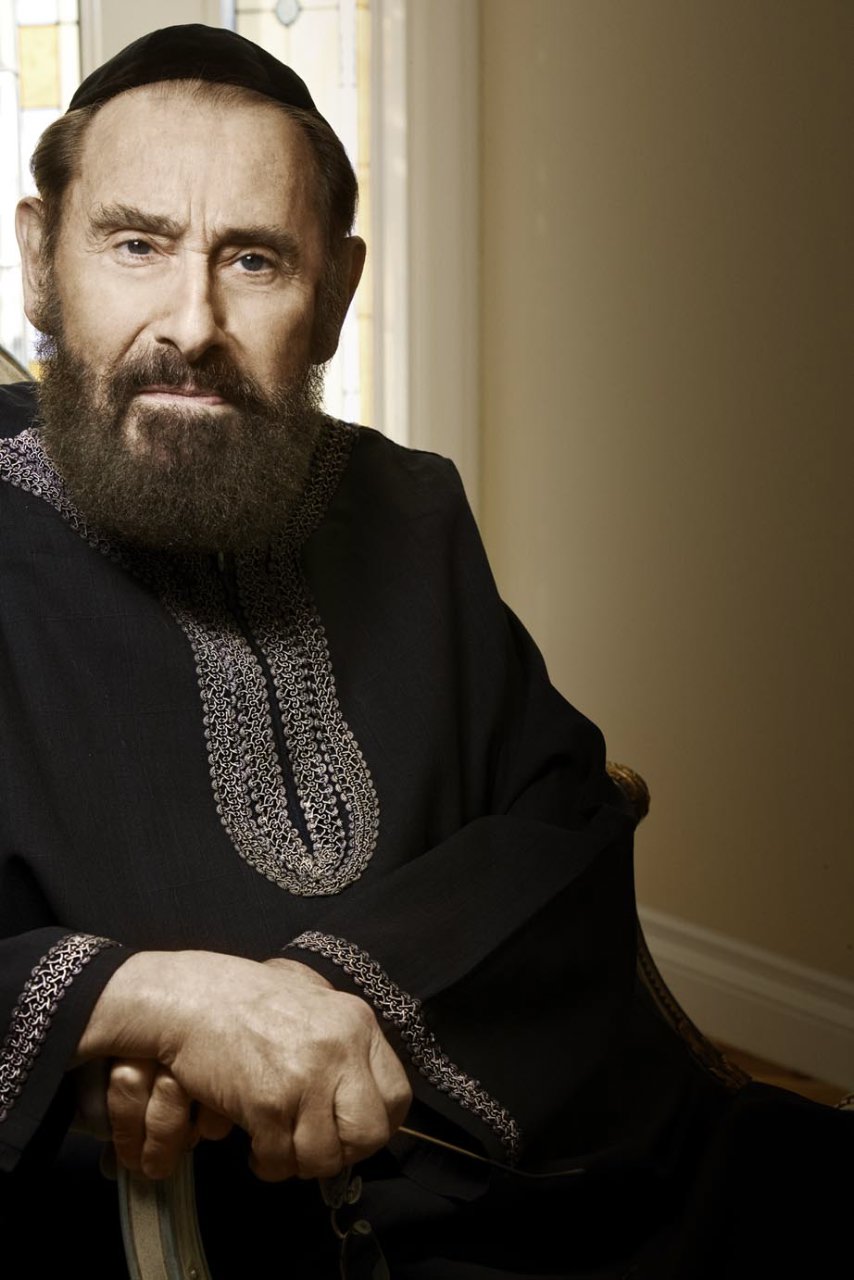
Philip S. Berg (original name Shraga Feivel Gruberger, Hebrew: שרגא פייבל; August 20, 1927 – September 16, 2013)[1] was an American rabbi and dean of the worldwide Kabbalah Centre organization.

Key Information

Berg was a great populariser of Ashlagian Kabbalah. Having written a number of books on the subject of Kabbalah, Berg expanded its access to a greater audience than traditionally permitted, one which included secular Jews, non-Jews and women.[2] Berg initially aimed at returning alienated Jews to their heritage through the teachings of Yehuda Ashlag;[3] he later adopted a more universalistic approach.

There is disagreement about whether Berg's teachings, as relayed through the Kabbalah Centre, have sufficient grounds and/or genuine authority according to halakha (Jewish law), as they include some dogmas and translations differing markedly from those of more-traditional Kabbalists. Some Jewish scholars emphatically reject such teachings, deeming them as foreign to both the Kabbalah in particular and to Judaism in general.[4]

In poor health following a stroke in 2004, Berg died on September 16, 2013.[5]

Biography

[edit]

Berg was born as Shraga Feivel Gruberger in 1927 in Brooklyn, to an Orthodox Jewish family.[6] His father, Max Gruberger, immigrated from Nadvorna, Galicia (now in Ukraine), and worked as a clothes presser in Williamsburg.[7] In his youth, Berg underwent Talmudic education at Lakewood Yeshiva under Rabbi Aharon Kotler.[8] He later returned to Williamsburg, where in 1951 at age 22 he received ordination from Yeshiva Torah Vodaas.[9] Berg went into the business world and worked as an insurance agent for New York Life. He also became involved in real estate, and by 1962 it is claimed he was a millionaire.[10] It is likely that he began to be called Philip during this time, as it is not unusual practice among Jews with Yiddish names to use an English equivalent while working in a secular environment.

Berg's first wife, Rivkah Brandwein, had an uncle named Yehuda Brandwein, whom Berg first met on a trip to Israel in 1962. Brandwein, a Hasidic rabbi from the Stretiner Hasidic dynasty and a close student in the Kabbalistic circle around Yehuda Ashlag, would become Berg's Kabbalistic mentor. Brandwein was the head of the Religious Department of the Israeli national workers union, Histadrut, and established Yeshivat Kol Yehuda (named after Ashlag) as a continuation of his mentor's yeshiva/publishing house "Beit Ulpana Itur Rabbanim". The uniqueness of Kol Yehuda was that students focused on kabbalistic study. The students would receive a salary to cover their living expenses so they could devote themselves to full-time learning. However, Brandwein faced difficulty in finding funds for the yeshiva and publishing. Berg had become Brandwein's book distributor and fundraiser in the United States, and it is likely he was encouraged by Brandwein to establish the National Institute for the Research in Kabbalah in New York in 1965 to aid the yeshiva.[11]

After Brandwein's death in 1969, Berg returned to the United States and began working again with his former secretary (and future wife) Karen, on the condition that she let him teach her Kabbalah, a discipline he claimed was reserved exclusively for men. In 1971, Philip and Karen married and traveled to Israel. It was there that they changed their surname from Gruberger to Berg, as it was a common practice to shorten a European Jewish surname upon moving to Israel.[3] In 1973, the Bergs returned to Queens, New York, where they established their full-time headquarters during the 1980s.[6]

Philip Berg's grave in the Safed Jewish Cemetery

Berg, who had been ill since suffering a stroke in 2004, died on September 16, 2013. He was generally reported to be 86 (although the Los Angeles Times reported that according to public records he was 84). He is survived by his wife Karen and two sons, Yehuda and Michael,[5] who have led the Kabbalah Centre since his stroke.[12] Besides these two children Berg also had eight children from his first marriage that renounced Berg and his teachings.[13][failed verification]

The Research Centre of Kabbalah

[edit]

In July 1965, Berg was initially involved in the founding of a publishing house called "The National Institute for the Research in Kabbalah"[14] along with Ashlag's American student Levi Krakovsky, who died the following year. The institute was most likely a fundraising branch of Brandwein’s Yeshiva Kol Yehuda, as books published by the institute have Brandwein named as the senior figure, while Berg was listed as its president.[15]

Rabbi Brandwein's Yeshivat Kol Yehuda, Ha-Yehudim St. in the Old City of Jerusalem

Krakovsky was an emissary of Ashlag’s yeshiva "Itur Rabbanim",[16] and had translated some of Ashlag's writings into English to support the yeshiva. He also wrote his own English introductory books to Kabbalah, and in the 1930s established his own yeshiva in the United States for the purpose of teaching Kabbalah in English. Krakovsky’s writings were also published by the new Institute.[15]

In 1970, Berg legally changed the name of the National Institute to "The Research Centre of Kabbalah", establishing it as an independent centre and publishing books of his own.[17] His writings ranged from a basic introduction and explanation of Lurianic and Ashlagian Kabbalah to astrology and reincarnation. In 1971, Berg moved to Israel where he strengthened the centre, gave lectures and disseminated his books. In 1980, he established a yeshiva, "Or Hozer le’Limud ha-Nigleh ve ha-Nistar" (Returning Light for the Study of the Revealed and the Concealed) in Tel Aviv, which circulated various kabbalistic works. On his return to the United States in 1984 with a number of Israeli students called the Hevre (friends), Berg expanded the centre to more locations.[15]

The aim of the now independent research centre was to resolve a widespread spiritual crisis affecting Jews, where many found traditional Judaism dry and unfulfilling. Large numbers of young Jews were seeking Eastern spiritual practices, involving themselves in dangerous cults or resorting to atheism. Berg, who believed Judaism was being taught dogmatically, was determined to show inquisitive soul-searching Jews that the answers could be found in Kabbalah.[3]

Controversy

[edit]

There is some disagreement over who succeeded Brandwein as dean of the 80-year-old Yeshiva Kol Yehuda in Jerusalem. Berg has claimed to have replaced Brandwein, his ex-uncle-in-law by his first wife, in that role; that claim was disputed by Brandwein's son Avraham, who served as dean until his death in 2013.[6] The Los Angeles Task Force on Cults and Missionaries claimed Berg was not affiliated with the yeshiva,[18] although a letter sent to him by Brandwein in July 1968 indicated he was President of the yeshiva.[19]

In 2010, the Internal Revenue Service launched an investigation, reportedly investigating whether funds were directed to the personal enrichment of the Berg family and subpoenaed financial records of the organization and two affiliated charities connected to Madonna. The centre called the allegations "merit-less" and said it "intends to defend the case vigorously".[12]

Publications of Berg and the Research Centre of Kabbalah

[edit]
  • Philip S. Berg, The Wheels of a Soul. Research Centre of Kabbalah, 1984. ISBN 0-943688-13-2
  • Philip S. Berg, Astrology, the Star Connection: The Science of Judaic Astrology. Research Centre of Kabbalah, 1987. ISBN 0-943688-37-X
  • Philip S. Berg, Kabbalah for the Layman, Vol. I. Research Centre of Kabbalah, 1981. ISBN 0-943688-00-0
  • Philip S. Berg, Kabbalah for the Layman, Vol. II. Research Centre of Kabbalah, 1988. ISBN 0-943688-83-3
  • Philip S. Berg, Kabbalah for the Layman, Vol. III. Research Centre of Kabbalah, 1988. ISBN 0-943688-70-1
  • Philip S. Berg, Kabbalistic Astrology Made Easy. Research Centre of Kabbalah, 1999. ISBN 1-57189-053-X
  • Rav P. S. Berg, Kabbalistic Astrology: And the Meaning of Our Lives. Kabbalah Publishing, 2006. ISBN 1-57189-556-6
  • Philip S. Berg, Power of Aleph Beth, Volume 1. Research Centre of Kabbalah, 1988. ISBN 0-943688-10-8
  • Philip S. Berg, Power of Aleph Beth, Volume 2. Research Centre of Kabbalah, 1988. ISBN 0-943688-57-4
  • Philip S. Berg, Time Zones. Research Centre of Kabbalah, 1990. ISBN 0-924457-01-5
  • Yehuda L. Ashlag, Compiled and edited by Philip S. Berg, An Entrance to The Zohar. Research Centre of Kabbalah, 1974. ISBN 0-943688-34-5
  • Yehuda Ashlag, Compiled and edited by Philip S. Berg, An Entrance to The Tree of Life. Research Centre of Kabbalah, 1977. ISBN 0-943688-35-3
  • Philip S. Berg, The Kabbalah Connection. Research Centre of Kabbalah, 1983. ISBN 0-943688-03-5
  • Yehuda L. Ashlag, Translated by Rabbi Levi I. Krakovsky, Ten Luminous Emanations, Volume 1. Research Centre of Kabbalah, 1969. ISBN 0-943688-29-9
  • Yehuda L. Ashlag, Compiled and edited by Philip S. Berg, Ten Luminous Emanations, Volume 2. Research Centre of Kabbalah, 1973. ISBN 0-943688-09-4
  • Rabbi Levi I. Krakovsky, The Light of Redemption. Research Centre of Kabbalah, 1970. ASIN B0006F83A8
  • Rabbi Moses C. Luzzatto, General Principles of The Kabbalah. Research Centre of Kabbalah, 1970. ASIN B0006C9K1W

See also

[edit]

Notes

[edit]

References

[edit]

Further reading

[edit]
[edit]
Revisions and contributorsEdit on WikipediaRead on Wikipedia
from Grokipedia
Philip S. Berg (born Shraga Feivel Gruberger; August 20, 1927 – September 16, 2013) was an American rabbi who founded and served as dean of the Kabbalah Centre, an organization aimed at teaching Kabbalistic principles to a broad, non-elite audience regardless of religious background. Born in Brooklyn to an Orthodox Jewish family, Berg received early Torah education and later pursued advanced studies, including ordination, before encountering Kabbalah through Rabbi Yehuda Brandwein, whom he succeeded upon Brandwein's death in 1969. Under Berg's direction, the Kabbalah Centre expanded globally from its origins as the Research Centre of Kabbalah, offering practical tools like the Zohar, protective red strings, and spiritual scans, while authoring books such as Kabbalah for the Layman to demystify ancient texts. His mission to unveil and apply Kabbalistic wisdom attracted millions, including celebrities, fostering personal transformation but sparking contention among traditional Jewish scholars who accused the Centre of commercializing esoteric traditions and deviating from orthodox interpretations.

Early Life and Orthodox Background

Birth and Family Origins

Philip Berg was born Shraga Feivel Gruberger on August 20, 1929, in , New York. He was raised in a devoutly Orthodox Jewish family during the era. His father, Max Gruberger, had immigrated from Nadvorna in Galicia, a region then part of and now in . Little is documented about his mother or siblings in primary records, though the family's adherence to traditional Jewish observance shaped Berg's early religious exposure. Berg later adopted the name Philip Berg, reflecting a shift from his original Ashkenazi .

Religious Education and Ordination

Berg was born Shraga Feivel Gruberger into a devout Orthodox Jewish family in , where he began studying the at the age of three under traditional tutelage. His early religious training emphasized rigorous Talmudic scholarship, reflecting the Orthodox emphasis on halakhic mastery and textual analysis. Berg pursued advanced studies at the in , under the guidance of , a leading figure in Lithuanian-style scholarship. He later continued his education in , receiving rabbinic ordination (semicha) in 1951 at the age of 22 from , a prominent Orthodox institution known for producing scholars in Jewish and ethics. Some accounts attribute the ordination directly to the Lakewood Yeshiva, though primary institutional records align with Torah Vodaas as the conferring body. This credential qualified him to officiate in Orthodox religious capacities, though his subsequent career diverged from conventional rabbinic practice.

Pre-Kabbalah Career

Business Ventures in Insurance

Berg, born Shraga Feivel Gruberger, transitioned from religious studies to a secular career in insurance after his ordination as a rabbi around age 22 in 1951. Disillusioned with Orthodox religious life, he took a position selling life insurance policies for the New York Life Insurance Company, initially peddling them door-to-door in working-class neighborhoods of Queens and Brooklyn. Berg proved successful in the role, earning a reputation as a high-flying salesman capable of closing deals through persistence and charisma. His work involved direct client outreach and building a network of policyholders, reflecting the competitive nature of mid-20th-century insurance sales in urban New York. By the early , Berg had advanced to operating from his own insurance office, where he later began integrating early explorations of by hosting informal study sessions. The business provided Berg with financial stability and experience in , though he did not found a separate firm; his activities centered on brokerage and sales commissions rather than corporate ownership. He abandoned the profession around 1965 following his marriage to Karen Berg (née Mulnick) and relocation to , shifting focus entirely to mystical studies.

Initial Jewish Outreach Efforts

Following his 1962 trip to , where he began studying under Yehuda Brandwein, Philip Berg returned to and repurposed his insurance office for evening classes on the , attracting Orthodox Jews interested in Kabbalistic study. These sessions represented his first structured attempts to introduce esoteric Jewish texts to a select audience, emphasizing practical spiritual insights over conventional rabbinic observance. By 1965, Berg expanded these informal teachings into the National Institute for Research in , established as a publishing house in New York to translate and distribute Kabbalistic works, including commentaries by . The institute's mission centered on rekindling Jewish engagement among those distanced from traditional practice, positioning as a tool for personal transformation and heritage reclamation rather than elite scholarly pursuit. This phase prioritized Jewish participants, contrasting with Berg's later broadening to non-Jews, and involved producing accessible materials amid limited institutional support for such in mainstream Orthodox circles.

Initiation into Kabbalah

Encounters with Rav Yehuda Ashlag and Successors

Philip Berg had no personal encounters with Rav , the influential 20th-century Kabbalist who died on October 7, 1954, in . Berg's connection to Ashlag's lineage developed indirectly through Rabbi Yehuda Tzvi Brandwein, Ashlag's brother-in-law, disciple, and collaborator in editing Kabbalistic texts. In 1962, Berg met Brandwein during a trip to , where Brandwein served as dean of Kol Yehuda, an institution focused on Kabbalistic study. As the uncle of Berg's first wife, Rivkah, Brandwein accepted Berg as a close disciple, and Berg assisted in efforts to translate and promote Ashlag's writings, including his commentary on the . Brandwein died in 1969, after which Berg asserted that he had been appointed Brandwein's successor, citing a will that entrusted him with unpublished manuscripts and the mission to universalize . This claim positioned Berg as a continuation of Ashlag's interpretive tradition through Brandwein. Brandwein's son, Avraham Brandwein, who assumed the deanship of Kol Yehuda, disputed Berg's succession, denying any formal appointment or inheritance of authority. Ashlag's descendants and other Kabbalistic heirs similarly rejected Berg's lineage claims and the Kabbalah Centre's adaptations of Ashlag's teachings as deviations from orthodox interpretations.

Claims of Exclusive Knowledge Transmission

Philip Berg maintained that Yehuda Brandwein, a disciple of Yehuda Leib Ha-Levi Ashlag and dean of Yeshivat Kol Yehuda in , had personally appointed him as successor to transmit and expand the esoteric Kabbalistic knowledge originating from Ashlag's interpretations. Berg asserted this designation occurred during his studies under Brandwein in starting in the early , positioning himself as the authorized custodian of teachings traditionally restricted to select Jewish scholars over age 40. After Brandwein's death on , , Berg claimed exclusive rights to the lineage based on a secret will that named him heir to Brandwein's role and the associated Kabbalah Research Centre, enabling him to reinterpret and disseminate Ashlag's works—such as the Sulam commentary on the —to a broader, non-traditional audience. This purported transmission emphasized Berg's role in unveiling "" tools like the for personal transformation, which he presented as guarded revelations passed solely through this chain. These assertions faced immediate contestation from Brandwein's son Avraham, who succeeded as dean and denied Berg's appointment or any secret will, while Orthodox Kabbalists broadly rejected Berg's authority due to his lack of formal rabbinic and deviations from halakhic norms. Berg's background and American origins further fueled among traditionalists, who viewed his claims as unsubstantiated bids for legitimacy amid efforts to commercialize the teachings.

Founding and Growth of the Kabbalah Centre

Establishment as Research Centre of Kabbalah

In 1965, Philip Berg established the National Institute for Research in (NIRK) in , initially functioning as a publishing house dedicated to translating and disseminating Kabbalistic texts, particularly those associated with Yehuda Leib Ha-Levi Ashlag and his successors. The organization emerged from Berg's collaboration with Levi Krakovsky, an elderly Kabbalistic scholar, and reflected Berg's stated mission to research and make esoteric accessible beyond traditional Orthodox boundaries. NIRK's early activities centered on producing English translations of foundational works like the , positioning the institute as a scholarly endeavor to revive and study Ashlag's interpretations of , which emphasized practical spiritual tools over purely theoretical study. The institute's founding followed Berg's purported receipt of authorization from Yehuda Brandwein, Ashlag's designated successor, to continue transmitting Kabbalistic knowledge, though Brandwein's death in shifted leadership fully to Berg. Operating from modest beginnings, NIRK combined with outreach, attracting a small following among disillusioned with conventional religious structures, and it served as the direct precursor to the broader network. By framing itself as a , the organization sought legitimacy through claims of authentic lineage and textual scholarship, despite criticisms from traditional rabbis who viewed such public dissemination as a dilution of Kabbalah's restricted nature. Over the late and early , NIRK expanded its scope to include study groups and lectures, laying the groundwork for the Centre's transformation into a global entity, though its core identity remained tied to Berg's vision of as a researchable, applicable system for personal and cosmic correction (tikkun). This establishment marked a pivotal shift from Berg's prior insurance career to institutionalizing study outside established yeshivas, with the institute publishing key texts that Berg edited or annotated to emphasize non-sectarian principles.

Global Expansion and Organizational Structure

Under Philip Berg's leadership, the Kabbalah Centre began its international expansion in the late 1980s, establishing branches beyond its initial U.S. bases in New York and . By the early 2000s, the organization had grown to approximately 50 branches across 11 countries, including locations in , , and Asia, facilitated by Berg's emphasis on accessible teachings and outreach to non-Jewish audiences. This proliferation was aided by the Centre's marketing of as a universal spiritual tool, leading to study groups and full centers in cities such as , (where a dedicated Kabbalah Learning Centre opened in 1988), and . By 2011, the network had reportedly expanded to 77 centers and study groups worldwide, reflecting sustained growth under Berg's direction until his death in 2013. The operated as a family-led with Philip Berg serving as its spiritual dean and de facto head, overseeing doctrinal content and global operations from the headquarters established in the early 1980s. His wife, Karen Berg, played a key administrative and teaching role, co-managing the Centre alongside their sons, Yehuda and Michael Berg, who handled regional coordination and instructor training. The structure emphasized a hierarchical model: at the apex was the Berg family, providing authoritative interpretations; below them were ordained teachers (often trained directly by Berg) who delivered courses and lectures; and at the base were volunteers known as "Hevre," dedicated lay members who facilitated local events and outreach without formal spiritual authority. This setup centralized decision-making in the U.S. while allowing semi-autonomous branches to adapt teachings to local contexts, supported by a network of publications and scanned texts distributed globally. Financially, the organization relied on tuition from introductory courses (typically $100–$500 per level), sales of red string bracelets and other talismans, and donations, which funded expansion without traditional congregational dues. Berg's model avoided conventional structures, positioning branches as educational hubs rather than religious institutions, which enabled rapid scaling but drew scrutiny for its commercial elements. Despite this growth, the Centre maintained a unified curriculum rooted in Berg's interpretations of , disseminated through standardized teacher certification to ensure consistency across locations.

Teachings and Philosophical Framework

Core Doctrines and Practical Applications

Berg's core doctrines centered on a metaphysical framework derived from Lurianic Kabbalah, positing that the universe originated from an infinite divine light, or Or Ein Sof, which underwent a primordial contraction (Tzimtzum) to create space for finite existence. This process led to the formation of vessels intended to contain the light, but due to their inability to hold it, the vessels shattered (Shevirat HaKelim), scattering divine sparks into the material world trapped within klipot (shells of impurity). Humanity's purpose, according to Berg, is tikkun—the repair or elevation of these sparks through ethical actions and spiritual practices that facilitate the revelation of the light, ultimately restoring cosmic harmony. Central to this is the Etz Chaim (Tree of Life), comprising ten Sefirot—emanations or attributes of divine energy such as Keter (crown), Chochmah (wisdom), and Binah (understanding)—interconnected to channel the infinite into the finite realm. Berg interpreted these as dynamic principles applicable beyond ritual observance, framing Kabbalah as a "technology of the soul" for personal and global transformation, often analogizing it to scientific laws like quantum mechanics to appeal to secular audiences. In practical applications, Berg emphasized accessible tools over scholarly study, teaching that non-Hebrew speakers could access the Zohar's power by "scanning"—visually passing over the text without comprehension—to draw down spiritual light and mitigate negative influences. This daily practice, recommended for 10-15 minutes, purportedly activates protective energies and fosters inner change by connecting to the text's mystical frequency. Another key tool is the red string bracelet, woven from wool circumambulated seven times around the tomb of in , worn on the left wrist to ward off the ayin hara () by reflecting harmful intentions back to their source—a practice Berg popularized as a simple shield against envy and misfortune. He also promoted meditation on the 72 Names of God, derived from Exodus 14:19-21, as combinatorial Hebrew letter sequences used to reprogram for outcomes like , , and relationship repair, presented in structured courses and booklets. Berg integrated these into a self-help paradigm, advocating "sharing the light" through acts of kindness, (charity), and ethical behavior to elevate sparks and reduce chaos, with applications extending to astrology-influenced timing for decisions and as a mechanism for rectification across lifetimes. Courses at the , such as introductory levels on the and advanced studies, aimed to equip practitioners with these methods for tangible results in career, family, and health, positioning as proactive rather than passive faith. While Berg claimed these derived from ancient transmission, traditional Kabbalists critiqued them as diluted, emphasizing Berg's focus on efficacy over prerequisite mastery.

Universalization and Adaptation for Non-Jews

Philip Berg, through the Kabbalah Centre, promoted Kabbalah as a universal spiritual technology applicable to all people, irrespective of religious or ethnic background, marking a departure from traditional restrictions limiting its study to observant Jewish males over age 40. He argued that the current era demanded widespread dissemination of Kabbalistic wisdom to facilitate global redemption and soul rectification, positioning non-Jews as essential participants in this process alongside Jews. To adapt teachings for non-Jewish audiences, Berg simplified esoteric concepts, emphasizing practical tools such as scanning the (a key text) without requiring Hebrew proficiency or deep Talmudic knowledge, and introduced accessible rituals like wearing a red string bracelet to ward off negative energies. Courses at the Centre begin with introductory levels that de-emphasize Jewish-specific contexts, framing as a non-sectarian path to personal empowerment, prosperity, and connection to a singular force underlying reality. This approach encouraged proselytization among followers, attracting celebrities and secular seekers who integrated practices into frameworks. Berg's universalization rationale drew on interpretations of Kabbalistic , claiming diverse types—including those in non-Jewish bodies—require exposure to these teachings to achieve collective elevation and avert calamity, a view he contrasted with historical esotericism by asserting technological and cosmic shifts necessitated openness. The Centre's global branches thus served mixed demographics, with non-Jews comprising a significant portion of students who accessed materials through English translations and multimedia, bypassing orthodox prerequisites. This adaptation prioritized experiential benefits over doctrinal fidelity, enabling Kabbalah's commodification via books, scans, and talismans marketed as universally efficacious.

Publications and Dissemination

Major Books and Texts

Philip Berg authored and co-authored several books under the auspices of the Research Centre of and the , focusing on adapting Kabbalistic teachings for contemporary audiences through simplified explanations, practical tools, and integrations with concepts like and . These publications, often self-published via his organizations, prioritize accessibility over scholarly , presenting as a universal technology for personal transformation rather than an esoteric Jewish tradition. Berg's texts frequently draw on the and but reinterpret them to emphasize ego transcendence, sharing secrets previously restricted to initiates, and applying them to modern life challenges. Among his earliest major works is Kabbalah for the Layman, released in multiple volumes starting in the late 1970s or early 1980s, which outlines fundamental Kabbalistic structures like the and the for non-experts, arguing that ancient wisdom can resolve contemporary spiritual voids. A follow-up, Kabbalah for the Layman Volume II (1988), expands on meditative practices and the role of Hebrew letters in altering reality. The Wheels of a Soul (1984) represents a key text on (), positing that souls cycle through lifetimes to rectify past errors via Kabbalistic awareness, blending Lurianic ideas with Berg's assertion of proactive spiritual engineering. Similarly, The Kabbalah Connection, written over 25 years prior to its 2009 reissue, serves as an introductory manifesto linking to quantum-like principles of interconnectedness and . Later publications include Kabbalistic Astrology: And the Meaning of Our Lives (2001), which fuses zodiac signs with the 72 for predictive and corrective purposes, claiming empirical validation through client outcomes at the Centre. The Essential Zohar: The Source of Kabbalistic Wisdom compiles annotated selections from the , positioning it as the foundational code for decoding existence, with Berg's commentary emphasizing its non-sectarian applicability. Other notable texts, such as To the Power of One and Secret Codes of the Universe, further explore unified field theories inspired by , though specific publication dates for these remain less documented in primary sources. Berg's oeuvre totals over a dozen titles, distributed globally via the Centre's network, contributing to its commercialization of .

Marketing and Media Strategies

The under Philip Berg emphasized accessibility and commercialization in its outreach, promoting as a universal spiritual tool rather than an elite Jewish esoteric tradition, which facilitated broader . Berg's entrepreneurial background as an insurance salesman informed an aggressive sales-oriented model, including the distribution of translated texts with proprietary commentaries and beginner courses marketed to non-Jews, secular individuals, and diverse demographics through promises of practical life benefits like receiving wisdom and averting negativity. A of promotion involved high-priced merchandise, notably red string bracelets sold for $26 to $36, purportedly tied around sacred sites like and worn to deflect the —a tactic amplified by celebrity visibility that turned the item into a pop culture emblem. The Centre attempted to the red string in 2003, though unsuccessful, and bundled it with other products like scanned portions and ritual water to create entry-level consumer engagement. Media strategies leveraged celebrity affiliations for organic publicity, with adherents like — who enrolled in 1996 and donated millions—publicly endorsing teachings via personal testimonies, jewelry displays, and event participation, drawing mainstream coverage and accelerating global expansion from the 1990s onward. Figures such as , , and further boosted cachet through associations like Centre-officiated weddings and visible adherence, positioning as trendy Hollywood mysticism while minimizing religious exclusivity in promotional narratives.

Controversies and Criticisms

Disputes Over Lineage and Authenticity

Philip Berg, born Shraga Feivel Gruberger in , New York, in 1929, claimed rabbinical in 1951 after studies at yeshivas including and Mir Yeshiva. However, Orthodox Jewish authorities have disputed the legitimacy of this , labeling Berg a fraud whose credentials did not meet traditional standards for rabbinic authority in transmission. Prior to his involvement in , Berg worked as a salesman in the and chemical industries, a background critics cited to question his scholarly depth and full-time commitment to . Berg asserted a direct lineage in instruction from Rabbi Yehuda Tzvi Brandwein, whom he met in in 1962 and described as a distant relative through to Brandwein's niece. Brandwein, in turn, had studied under Rabbi Yehuda Leib Ashlag, the 20th-century disseminator of via his commentaries. Following Brandwein's death in 1969, Berg declared himself the successor, founding the as the continuation of this chain. This claim faced rejection from Brandwein's son Avraham, who denied Berg's replacement role, and reports indicate Brandwein later distanced himself from Berg's approaches. Critics from traditional Jewish circles, including haredi rabbis, argued Berg lacked the requisite esoteric preparation—typically requiring decades of mastery and restricted to elite male scholars over 40—and misrepresented his peripheral connection to Brandwein as authoritative succession. Berg's of the name "Philip Berg" from his birth name Gruberger was also scrutinized as an effort to obscure his unconventional path, diverging from norms where Kabbalistic lineages emphasize verifiable, unadorned pedigrees within Orthodox frameworks. Academic analyses of the highlight these disputes as emblematic of broader tensions between authentic esoteric transmission and Berg's popularized, commercialized version, which Orthodox sources deem a dilution incompatible with Ashlag's intent.

Commercialization and Financial Practices

Under Philip Berg's leadership, the Kabbalah Centre transformed traditional Kabbalistic study into a commercial enterprise by offering paid introductory courses, advanced seminars, and proprietary materials to a global audience, diverging from the historically non-monetary transmission of within Orthodox Jewish communities. Basic courses were priced up to $270, with ongoing memberships providing access to lectures and events, generating significant revenue streams that funded the organization's expansion. The Centre marketed physical products such as red-string bracelets—promoted as protective talismans against the ""—alongside candles, , and annotated editions of the , positioning these items as essential for spiritual practice despite their roots in folk customs rather than core Kabbalistic doctrine. Financial growth accelerated under Berg, with the organization's assets expanding from approximately $20 million in 1998 to $260 million by 2009, bolstered by contributions, course fees, and merchandise sales that reportedly yielded profits such as $285,693 from books and tapes alone in 1996. By 2000, annual revenue reached $5.6 million against assets of $14.6 million, reflecting a that leveraged celebrity endorsements from figures like to drive enrollment and product demand. However, this approach drew accusations of profiteering, including claims that Berg sold texts at inflated prices to non-Hebrew readers incapable of comprehending them unaided. Critics highlighted aggressive fundraising tactics, such as pressuring donors to contribute "until it hurts" to purportedly unlock spiritual "light," leading to multiple lawsuits alleging fraud and misuse of over $1 million in funds by Centre staff. The U.S. launched an investigation into the non-profit's finances around 2011, amid reports of familial control over affiliated businesses and discrepancies in tax-exempt activities. Berg's defenders, including Centre affiliates, maintained that such practices democratized esoteric knowledge, but detractors from rabbinical authorities argued they commodified sacred traditions for personal gain, with proceeds reportedly funneled into a network of Berg family-controlled entities.

Theological Deviations from Traditional Kabbalah

Philip Berg's interpretation of , disseminated through the , diverged from traditional by prioritizing universal accessibility over established prerequisites for study. In classical , particularly Lurianic traditions, engagement was restricted to pious Jewish men over the age of 40, married, and versed in and , to ensure spiritual maturity and prevent misinterpretation of esoteric concepts. Berg, however, opened teachings to all individuals regardless of background, , or religious observance, framing as a non-sectarian tool for personal empowerment available to non-Jews without conversion or halakhic commitment. Orthodox critics, including Schochet, a authority on , condemned this as a distortion, arguing it bypassed the foundational role of mitzvot (commandments) and required for authentic Kabbalistic insight. A core deviation lay in the methodological approach to sacred texts like the . Traditional demands rigorous linguistic and conceptual analysis of the original, integrating it with Talmudic scholarship to grasp metaphysical structures such as the and . Berg promoted "scanning" the —visually passing over pages without comprehension—as a mystical shortcut conferring protection from the or negative energies, a practice rooted in selective segulot (remedies) but elevated to doctrinal centrality absent in normative traditions. Rabbi Adin Steinsaltz, a leading Orthodox scholar, labeled such adaptations "pseudo-religion," contending they reduce profound to superficial rituals detached from intellectual depth and ethical observance. Berg's theology further strayed by integrating predictive , horoscopes, and psychic forecasting, elements minimized or contextualized in traditional as subordinate to and , not tools for personal prognostication. He asserted "predates and transcends" and other faiths, positioning it as an ancient, pre-Torah wisdom system independent of "rote obedience" to laws, which contrasts with Kabbalah's self-conception as an interpretive layer deepening halakhic practice rather than supplanting it. Critics like Rabbi Tzadok, drawing on Orthodox perspectives, described this synthesis of Lurianic ideas with influences and Berg's innovations as inauthentic, diluting Kabbalah's Jewish theological framework into a generic . These shifts, while drawing mass appeal, prompted Orthodox rebuttals that Berg's version constituted a "distorted knock-off," undermining the tradition's emphasis on covenantal fidelity and scholarly rigor.

Reception and Impact

Positive Assessments and Achievements

Philip Berg is recognized by proponents for significantly expanding the reach of , an esoteric Jewish mystical tradition historically restricted to elite scholars, by founding the (initially the Kabbalah Research Centre) in on July 26, 1965, and reorienting its teachings toward practical, universal applications for personal and spiritual development. Under his direction, the organization grew from a small study group to an international network with branches established across multiple countries by the late , facilitating classes, seminars, and resources that drew participants from diverse religious and cultural backgrounds. Berg's publications played a key role in this dissemination, including Kabbalah for the Layman (1982), which introduced foundational concepts like the and the role of desire in spiritual ascent to non-expert readers, and The Essential Zohar (2002), a condensed edition of the 13th-century text with annotations emphasizing its relevance to modern life challenges such as relationships and prosperity. His involvement in English translations of the and Yehuda Ashlag's commentaries further enabled direct engagement with primary sources, previously limited by linguistic and interpretive barriers. Adherents and the Kabbalah Centre itself attribute to Berg the achievement of revitalizing Kabbalah amid 20th-century secularization trends among Jews, with the organization claiming to have provided tools like Zohar scanning and the 72 Names of God—sequences derived from Exodus 14:19-21—for proactive transformation, reportedly benefiting millions through self-reported improvements in resilience and decision-making. Celebrity endorsements amplified this impact; for example, Madonna, who began studying under Berg in the late 1990s, credited the teachings with fostering her personal growth and donated at least $18 million to Centre-affiliated initiatives by 2011, including funding for educational and aid programs that extended Kabbalah's principles into humanitarian efforts. This visibility spurred broader cultural awareness, positioning Berg's approach as a bridge between ancient mysticism and contemporary self-actualization.

Orthodox and Scholarly Rebuttals

Orthodox Jewish leaders have repeatedly condemned Philip Berg's for disseminating interpretations of that deviate from traditional , viewing them as distortions of sacred texts through commercialization and adaptation for non-Jewish audiences lacking observance. The has issued warnings against the Centre, classifying its practices as a spiritual hazard that undermines authentic Jewish esotericism. Jonathan Omer-Man, a scholar of , characterized Berg's teachings as "an inferior product" disconnected from genuine , emphasizing their superficiality and divergence from historical sources. Similarly, Jacob Schochet, an authority on , declared the Centre's version unrelated to traditional , attributing its content to modern inventions rather than authoritative transmissions. The successors and family of Rabbi , whose disciple Berg claimed as his teacher, have explicitly renounced the Centre, criticizing its exploitation of Ashlag's legacy for profit-driven, non-traditional dissemination. Orthodox critiques further highlight Berg's absence of formal Kabbalistic study during his yeshiva training, as such esotericism was reserved for advanced scholars and excluded from standard curricula until later rabbinic approval. These authorities argue that Berg's emphasis on tools like red string bracelets and scanned texts prioritizes material over rigorous textual fidelity and ethical prerequisites, rendering his system heretical in halakhic terms. Scholarly analyses reinforce these rebuffs by framing Berg's methodology as a politicized reinvention that prioritizes and over textual accuracy, blending Kabbalistic terminology with universalism detached from Judaism's normative frameworks. In examinations of authenticity debates, researchers note how Berg's claims of direct lineage—via figures like Yehuda Brandwein—fail scrutiny against documented transmissions, positioning the Centre as a cultural rather than a legitimate heir to Lurianic or Ashlagian traditions. Critics in academic underscore that Berg's rejection of conventional religious observance in favor of mystical mechanics ignores causal prerequisites in Kabbalistic causality, such as mitzvot observance, thereby diluting empirical fidelity to primary sources like the . These evaluations portray the Centre's output as motivational rhetoric masquerading as mysticism, lacking the philological depth required for credible .

Death and Posthumous Legacy

Final Years and Health

In 2004, Berg suffered a debilitating stroke while staying at a hotel in Las Vegas, which severely impaired his ability to speak clearly and walk, marking the onset of prolonged ill health. Following the stroke, leadership of the Kabbalah Centre transitioned primarily to his wife, Karen Berg, and their sons, Yehuda and Michael, as Berg's condition limited his active involvement in the organization's operations. Berg's health deteriorated over the subsequent decade, with reports describing a decade-long battle against complications stemming from the stroke. He remained in during this period, though the Centre maintained his symbolic role as spiritual authority despite his physical limitations. On September 16, 2013, Berg died in from and at the age of 84, according to public records, though the Kabbalah Centre reported him as 86.

Succession by Family and Centre's Continuation

Following the death of Philip Berg on September 16, 2013, operational and spiritual leadership of the passed to his immediate family, with his wife Karen Berg assuming the role of primary spiritual leader and his sons and Michael Berg serving as co-directors. This familial succession aligned with the organization's prior structure, as the Berg family had increasingly managed daily affairs since Philip Berg's debilitating stroke in 2004. Karen Berg, who had co-founded and expanded the Centre's global outreach alongside her husband, emphasized continuity in teachings and programs, including online courses and in-person lectures focused on applications. Michael Berg, in particular, took on formal directorial responsibilities starting in 2013, authoring books, hosting podcasts, and overseeing digital platforms like Kabbalah.com to disseminate the Centre's materials. Yehuda Berg contributed as a teacher and author until approximately 2014, after which his involvement diminished amid personal and legal matters unrelated to core succession. Karen Berg's death on July 30, 2020, from prompted no abrupt restructuring; Michael Berg maintained directorship, ensuring the Centre's persistence with its network of over 50 branches worldwide and emphasis on through red string bracelets, scanned texts, and student-initiated study groups. Under this family-led continuity, the organization has sustained revenue from course fees, donations, and merchandise, reporting stable operations despite external criticisms of its practices.

References

Add your contribution
Related Hubs
User Avatar
No comments yet.