
.JPG/250px-Margriet_der_Nederlanden_(2019).JPG)


.JPG)
Community hub
Recent from talks
Contribute something
Nothing was collected or created yet.
Princess Margriet of the Netherlands
View on Wikipedia
Key Information

.JPG)
| Dutch royal family |
 |
|
|
| * Member of the Dutch royal house |
Princess Margriet of the Netherlands (Margriet Francisca; born 19 January 1943) is the third daughter of Queen Juliana and Prince Bernhard. As an aunt of the reigning monarch, King Willem-Alexander, she is a member of the Dutch Royal House and currently eighth and last in the line of succession to the throne.[1]
Princess Margriet has often represented the monarch at official or semi-official events. Some of these functions have taken her back to Canada, the country where she was born de facto, and to events organised by the Dutch merchant navy of which she is a patron.
Birth and Canada
[edit]Margriet was born to Princess Juliana of the Netherlands and Prince Bernhard of Lippe-Biesterfeld. Her mother was heir presumptive to Queen Wilhelmina.[2]
The Dutch royal family went into exile when the Netherlands was occupied by Nazi Germany in 1940, and went to live in Canada. Margriet was born in Ottawa Civic Hospital, Ottawa. The maternity ward of the hospital was temporarily declared to be extraterritorial by the Canadian government.[3][4][failed verification] This ensured that the newborn would not be born in Canada, and not be a British subject under the rule of jus soli. Instead, the child would only inherit Dutch citizenship from her mother under the principle of jus sanguinis, which is followed in Dutch nationality law. Thus, the child would be eligible to succeed to the throne of the Netherlands. This would have applied if the child had been male, and therefore heir apparent to Juliana, or if her two older sisters died without eligible children.
It is a common misconception that the Canadian government declared the maternity ward to be Dutch territory. That was not necessary, as Canada follows jus soli, while the Netherlands follows jus sanguinis. It was sufficient for Canada to disclaim the territory temporarily.
Princess Margriet was named after the marguerite, the flower worn during the war as a symbol of the resistance to Nazi Germany. She was christened at St. Andrew's Presbyterian Church, Ottawa, on 29 June 1943. Her godparents included US President Franklin D. Roosevelt, Queen Mary (Queen dowager of the United Kingdom), Märtha, Crown Princess of Norway, and Martine Roell (lady-in-waiting to Princess Juliana in Canada).[5]
Princess Margriet has continued to visit Canada over the years in an official capacity, as recently as 2017 (Stratford, Ontario and Goderich, Ontario) and 2022 (Ottawa).
After the war
[edit]
It was not until August 1945, when the Netherlands had been liberated, that Princess Margriet first set foot on Dutch soil. Princess Juliana and Prince Bernhard returned to Soestdijk Palace in Baarn, where the family had lived before the war.
While she was studying at Leiden University, Princess Margriet met her future husband, Pieter van Vollenhoven. Their engagement was announced on 10 March 1965, and they were married on 10 January 1967 in The Hague, in the St. James Church.[6] It was decreed that any children from the marriage would be titled Prince/Princess of Orange-Nassau, van Vollenhoven, with the style of Highness, titles that would not be held by their descendants. Together, they had four sons:
- Prince Maurits Willem Pieter Hendrik of Orange-Nassau, van Vollenhoven (born on 17 April 1968, Utrecht, Netherlands). He married Marilène (Marie-Helène) Angela van den Broek (born on 4 February 1970, Dieren, Rheden, Netherlands) on 30 May 1998. They have three children:
- Anastasia (Anna) Margriet Joséphine van Lippe-Biesterfeld van Vollenhoven, (born in Amsterdam on 15 April 2001).
- Lucas Maurits Pieter Henri van Lippe-Biesterfeld van Vollenhoven, (born in Amsterdam on 26 October 2002).
- Felicia Juliana Bénedicte Barbara van Lippe-Biesterfeld van Vollenhoven, (born in Amsterdam on 31 May 2005).
- Prince Bernhard Lucas Emmanuel of Orange-Nassau, van Vollenhoven (born on 25 December 1969, Nijmegen, Netherlands). He married Annette Sekrève (born on 18 April 1972, The Hague, Netherlands) on 8 July 2000. They have three children:
- Prince Pieter-Christiaan Michiel of Orange-Nassau, van Vollenhoven, (born on 22 March 1972, Nijmegen, Netherlands). He married Anita Theodora van Eijk (born on 27 October 1969, Neuchâtel, Switzerland) on 27 August 2005. They have two children:
- Prince Floris Frederik Martijn of Orange-Nassau, van Vollenhoven, (born on 10 April 1975, Nijmegen, Netherlands). He married Aimée Leonie Allegonde Marie Söhngen (born on 18 October 1977, Amsterdam, Netherlands) on 20 October 2005. They have three children:
The Princess and her husband took up residence in the right wing of Het Loo Palace in Apeldoorn. In 1975 the family moved to their present home, Het Loo, which they had built on the Palace grounds.
Interests and activities
[edit]
Princess Margriet is particularly interested in health care and cultural causes. From 1987 to 2011 she was vice-president of the Dutch Red Cross, who set up the Princess Margriet Fund in her honour. She is a member of the board of the International Federation of National Red Cross and Red Crescent Societies.
From 1984 to 2007, Princess Margriet was president of the European Cultural Foundation, who set up the Princess Margriet Award for Cultural Diversity in acknowledgement of her work.
She is a member of the honorary board of the International Paralympic Committee.[7]
Titles and styles
[edit]- 19 January 1943 – 10 January 1967: Her Royal Highness Princess Margriet of the Netherlands, Princess of Orange-Nassau, Princess of Lippe-Biesterfeld[8]
- 10 January 1967 – present: Her Royal Highness Princess Margriet of the Netherlands, Princess of Orange-Nassau, Princess of Lippe-Biesterfeld, Mrs Van Vollenhoven
National honours
[edit]- Knight Grand Cross of the Order of the Netherlands Lion
- Royal Silver Wedding Medal of Queen Juliana and Prince Bernhard, 1962 (7 January 1962)
- Royal Wedding Medal 1966 (10 March 1966)
- Queen Beatrix Investiture Medal (30 April 1980)
- Royal Wedding Medal 2002 (2 February 2002)
- King Willem-Alexander Investiture Medal (30 April 2013)
Foreign honours
[edit] Belgium: Grand Cross of the Order of the Crown
 Cameroon: Grand Cordon of Order of Merit
 Chile: Grand Cross of the Order of Merit[9]
 Finland: Grand Cross of the Order of the White Rose of Finland[10]
 France: Grand Cross of the Order of National Merit
 Germany: Grand Cross 1st Class of the Order of Merit of the Federal Republic of Germany
 Italy: Knight Grand Cross of the Order of Merit of the Italian Republic[11]
 Ivory Coast: Grand Cross of the Order of the Ivory Coast
 Japan: Grand Cordon (Paulownia) of the Order of the Precious Crown
 Jordan: Grand Cordon of the Supreme Order of the Renaissance[12]
 Luxembourg: Grand Cross of the Order of Adolphe of Nassau[13]
- Luxembourg: Grand Cross of the Order of the Oak Crown[14]
- Luxembourg: Commemorative Medal of the marriage of TRH Prince Henri and Princess Maria Teresa of Luxembourg
 Mexico: Grand Cross of the Order of the Aztec Eagle
 Nepalese Royal Family: Member 1st Class of the Order of the Three Divine Powers[15]
 Norway: Grand Cross of the Order of Saint Olav
 Portugal: Grand Cross of the Order of Christ
 Socialist Republic of Romania: Grand Cross of the Order of 23 August
 Senegal: Grand Cross of the Order of the Lion
 Spain: Dame Grand Cross of the Order of Isabella the Catholic[16][17]
 Suriname: Grand Cordon of the Order of the Yellow Star
 Sweden: Member Grand Cross of the Royal Order of the Polar Star
 United States: Honorary Fellow[18] of the College of William & Mary
 Venezuela: Grand Cordon of the Order of the Liberator


Ancestry
[edit]| Ancestors of Princess Margriet of the Netherlands | |||||||||||||||||||||||||||||||||||||||||||||||||||||||||||||||||||||||||||||||||||||||||||||||||||||||||||||||||||||||||||||||||||||||||||||||||||||||||||||||||||||||||||||||||||||||||||||||||||||||||||||||||||||||||||||||||||||||||||||||||||||||||||||||||||||||||||||||||||||||||
|---|---|---|---|---|---|---|---|---|---|---|---|---|---|---|---|---|---|---|---|---|---|---|---|---|---|---|---|---|---|---|---|---|---|---|---|---|---|---|---|---|---|---|---|---|---|---|---|---|---|---|---|---|---|---|---|---|---|---|---|---|---|---|---|---|---|---|---|---|---|---|---|---|---|---|---|---|---|---|---|---|---|---|---|---|---|---|---|---|---|---|---|---|---|---|---|---|---|---|---|---|---|---|---|---|---|---|---|---|---|---|---|---|---|---|---|---|---|---|---|---|---|---|---|---|---|---|---|---|---|---|---|---|---|---|---|---|---|---|---|---|---|---|---|---|---|---|---|---|---|---|---|---|---|---|---|---|---|---|---|---|---|---|---|---|---|---|---|---|---|---|---|---|---|---|---|---|---|---|---|---|---|---|---|---|---|---|---|---|---|---|---|---|---|---|---|---|---|---|---|---|---|---|---|---|---|---|---|---|---|---|---|---|---|---|---|---|---|---|---|---|---|---|---|---|---|---|---|---|---|---|---|---|---|---|---|---|---|---|---|---|---|---|---|---|---|---|---|---|---|---|---|---|---|---|---|---|---|---|---|---|---|---|---|---|---|---|---|---|---|---|---|---|---|---|---|---|---|---|---|---|---|
| |||||||||||||||||||||||||||||||||||||||||||||||||||||||||||||||||||||||||||||||||||||||||||||||||||||||||||||||||||||||||||||||||||||||||||||||||||||||||||||||||||||||||||||||||||||||||||||||||||||||||||||||||||||||||||||||||||||||||||||||||||||||||||||||||||||||||||||||||||||||||
Notes
[edit]- ^ Princess Margriet was born in an area temporarily declared extraterritorial for the moment of her birth by Canada.
References
[edit]- ^ Current line of succession Archived 25 January 2011 at the Wayback Machine – Official website of the Dutch Royal House
- ^ Princess Margriet Archived 12 December 2013 at the Wayback Machine. koninklijkhuis.nl
- ^ "Proclamation". Canada Gazette. Vol. 76, no. 232, Extra. 26 December 1942. Retrieved 18 March 2022.
- ^ "1943: Netherlands' Princess Margriet born in Ottawa". CBC. 23 January 1992. Retrieved 2 February 2024.
- ^ The Gift of Tulips. canadascapital.gc.ca
- ^ Orange Wedding 1967 (video). britishpathe.com
- ^ "Honorary Board". IPC.
- ^ Royal decree of 8 Januari 1937: Besluit betreffende den naam, te dragen door de kinderen van Hare Koninklijke Hoogheid Prinses JULIANA. angelfire.com
- ^ State visit of Chile to Netherlands
- ^ "ANP Historisch Archief Community – Amsterdam, 24 oktober 1972". anp-archief.nl. Archived from the original on 23 September 2015. Retrieved 6 June 2022.
- ^ S.A.R. Margriet Francisca Principessa dei Paesi Bassi. Quirinale.it. 23 October 1973
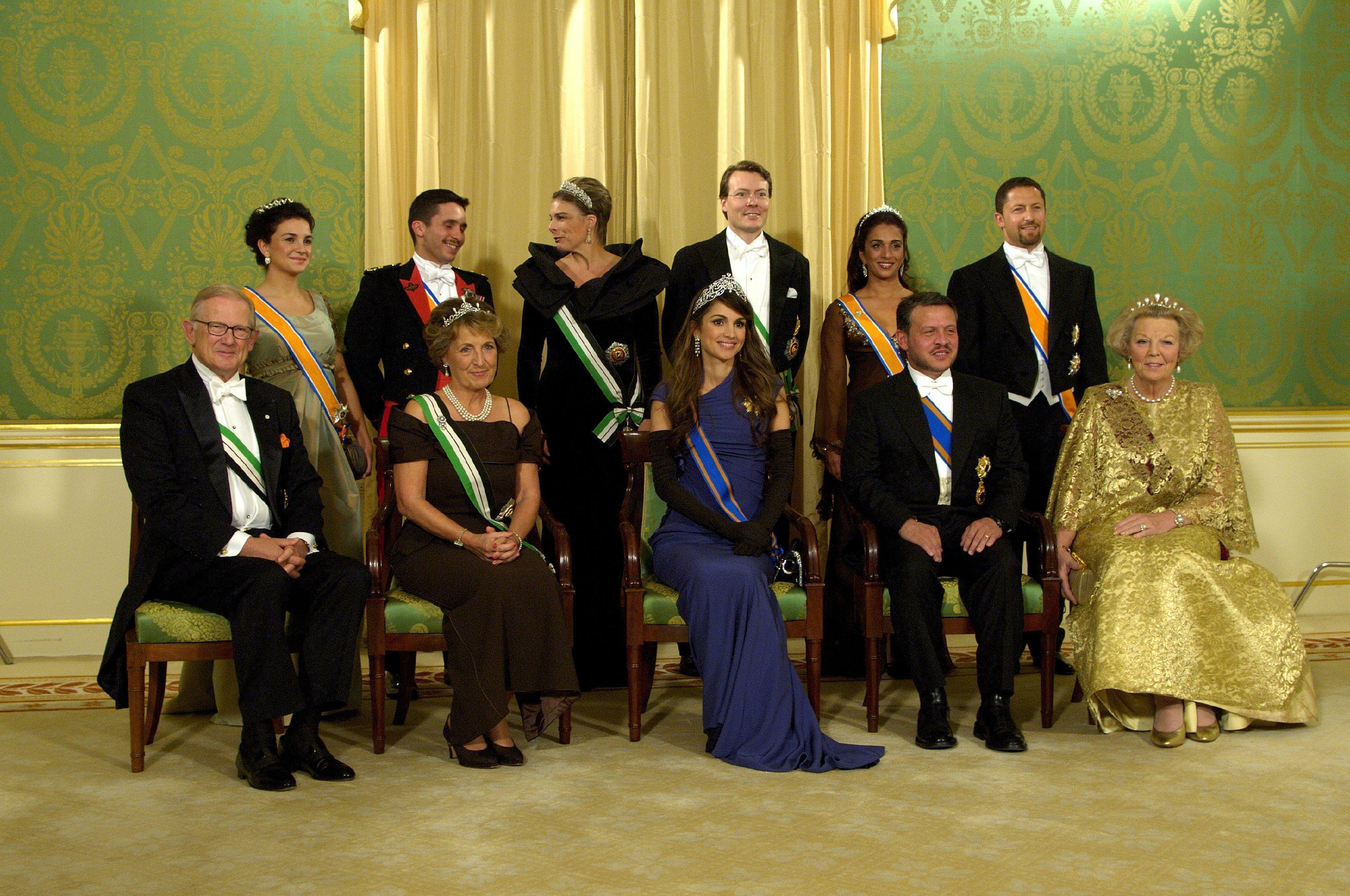
- ^ "Photo (front row, l to r): Pieter van Vollenhoven, Princess Margriet, Queen Rania, King Abdullah II and Queen Beatrix". Who2. 2013. Retrieved 15 June 2024.
- ^ Getty Images, State visit of Luxembourg to Netherlands, 2006
- ^ www.geheugenvannederland.nl
- ^ Group Photo of the members of the Nepalese and Dutch Royal Family during the state visit
- ^ "Photo: (standing, in black) Pieter van Vollenhoven and Princess Margriet; (front row, l to r): King Willem-Alexander, Queen Sophia, King Juan Carlos I, Princess Beatrix". Alamy. 2013. Retrieved 15 June 2024.
- ^ Boletín Oficial del Estado
- ^ "Honorary Degree Recipients - William & Mary History". College of William & Mary. Retrieved 5 May 2025.
External links
[edit]
- Biography on the website of the Royal House of the Netherlands
- CBC Archives – A look at Princess Margriet's birth in Ottawa (from 1992).


Princess Margriet of the Netherlands
View on GrokipediaPrincess Margriet Francisca of the Netherlands, Princess of Orange-Nassau, Princess of Lippe-Biesterfeld (born 19 January 1943), is a member of the Dutch royal family as the third daughter of the late Queen Juliana and Prince Bernhard of Lippe-Biesterfeld.[1] Born at the Civic Hospital in Ottawa, Canada, while the Dutch royal family was in exile during the Second World War, she is the only foreign royal born on Canadian soil under special diplomatic arrangements to preserve her Dutch nationality.[1] She married professor of law Pieter van Vollenhoven on 10 January 1967 in The Hague, with whom she has four sons—Princes Maurits, Bernhard, Pieter-Christiaan, and Floris—and eleven grandchildren.[1] Princess Margriet has undertaken extensive humanitarian work, notably with the Netherlands Red Cross, where she began as a trained nurse in 1966, served as vice-president of the national board from 1987 to 2011, and continues as honorary chair.[1][2] From 1995 to 2003, she chaired the Standing Commission, the highest governing body of the International Red Cross and Red Crescent Movement.[1] In recognition of her contributions, the Netherlands Red Cross established the Princess Margriet Fund in 2011 to finance innovative projects for sustainable disaster prevention and community resilience against natural calamities exacerbated by climate change.[2] Beyond humanitarian efforts, she frequently represents the Dutch monarch at official and semi-official events, including commemorations in Canada, and serves as patron for various cultural, arts, and health-related organizations, such as the Princess Margriet Award for cultural diversity and a research chair in her name at the University of Twente focused on safety and security sciences.[1]
Early Life
Birth and wartime exile
Princess Margriet Francisca, the third daughter of Crown Princess Juliana and Prince Bernhard of the Netherlands, was born on 19 January 1943 at Ottawa Civic Hospital in Ottawa, Canada.[3] [4] Her birth occurred during the Second World War, amid the Dutch royal family's exile following the German invasion and occupation of the Netherlands on 10 May 1940.[5] [6] Queen Wilhelmina, Juliana's mother, remained in London to lead the government-in-exile, while Juliana and her two elder daughters, Beatrix and Irene, relocated to Ottawa in late 1940 for greater safety from aerial bombardment risks faced in Britain; Prince Bernhard joined them periodically between military duties.[7] [8] The family resided at 21 Lisgar Street and later Rockcliffe Park, maintaining a relatively normal life under wartime constraints, with Juliana engaging in Red Cross work and public duties to support Allied efforts.[7] To preserve Margriet's Dutch nationality under then-applicable laws—avoiding automatic Canadian citizenship from birth on foreign soil—the Canadian Parliament passed a special resolution on 24 December 1942, temporarily declaring the maternity ward of Ottawa Civic Hospital as extraterritorial Dutch territory for the duration of the birth.[4] [8] [3] This arrangement, proposed by the Dutch embassy and approved unanimously, ensured the infant's legal status aligned with her parents' nationality, reflecting the close wartime alliance between Canada and the Netherlands.[4] The family returned to the liberated Netherlands in August 1945, after the war's end in Europe.[7]Childhood in Canada and return to the Netherlands
Princess Margriet spent the first two and a half years of her life in Ottawa, Canada, alongside her parents, Princess Juliana and Prince Bernhard, and her elder sisters, Princess Beatrix and Princess Irene, during the Dutch royal family's exile amid World War II. The family initially resided at 120 Lansdowne Road in the Rockcliffe Park neighborhood before relocating to Stornoway House shortly before her birth, a residence provided by the Canadian government to accommodate their needs.[9][10] On 29 June 1943, Margriet was baptized at St. Andrew’s Presbyterian Church in Ottawa, with godparents including U.S. President Franklin D. Roosevelt and representatives of the Dutch Merchant Navy, reflecting the international support for the exiled Dutch royals.[1] This event underscored the close ties forged between the Dutch family and their Canadian hosts, who provided sanctuary and resources throughout the war years. The family returned to the Netherlands following the country's liberation from Nazi occupation, with Margriet first setting foot on Dutch soil on 2 August 1945. They established residence at Soestdijk Palace in Baarn, marking the end of their wartime exile and the beginning of her upbringing in the restored homeland.[1]Education and Formative Years
Formal education
Princess Margriet attended primary and early secondary education at De Werkplaats, a progressive school in Bilthoven, before transferring to the Nieuwe Baarnse School in Baarn.[11][12] She completed her secondary education at the Baarns Lyceum, obtaining her diploma in 1961.[12][13] Following secondary school, Margriet spent one year at the University of Montpellier in France, focusing on French literature, history, and art.[11][13] She then enrolled at Leiden University in the Netherlands, where her curriculum included elementary jurisprudence, constitutional law, Roman law, and elements of social sciences.[1][12] During her studies at Leiden, she met her future husband, Pieter van Vollenhoven, a law student there.[1] No records indicate that she obtained a formal degree from Leiden University prior to her marriage in 1967.[1]Early influences and family dynamics
Princess Margriet, born as the third daughter of Crown Princess Juliana and Prince Bernhard of Lippe-Biesterfeld on 19 January 1943, grew up alongside sisters Beatrix (born 1938), Irene (born 1939), and Christina (born 1947).[1] The family's exile in Ottawa, Canada, during World War II—from 1940 until their return on 2 August 1945—exposed the young princess to a temporary but formative environment of wartime displacement, where her birth at Civic Hospital occurred under special arrangements declaring the room extraterritorial Dutch territory to preserve her nationality.[1] [14] Upon resettlement at Soestdijk Palace in Baarn, the family dynamics emphasized royal duty within a structured household, influenced by Juliana's deep religious faith and commitment to post-war reconstruction, alongside Bernhard's military leadership and internationalist outlook developed through his wartime roles, including as commander of Dutch forces.[1] This parental blend fostered in the sisters a sense of public service, with Bernhard's engagement in European cooperation initiatives and Juliana's focus on social welfare shaping early familial discussions on governance and humanitarian needs, though Margriet, not in direct line for the throne, experienced relatively less scrutiny than heir Beatrix.[1] The siblings' close-knit upbringing, marked by shared experiences of exile and repatriation, contributed to Margriet's adaptable character, as evidenced by her later multilingual education and nursing training, reflecting the family's prioritization of practical skills over rigid protocol.[1] Primary schooling at the experimental De Werkplaats in Bilthoven, selected by her parents, introduced progressive educational methods emphasizing creativity and social awareness, aligning with Juliana's interest in child-centered development amid the Netherlands' post-liberation recovery.[1] These dynamics instilled a lasting appreciation for cross-cultural ties, particularly with Canada, where godparents like U.S. President Franklin D. Roosevelt symbolized broader Allied influences during her infancy baptism on 29 June 1943.[1]Marriage and Family
Courtship and marriage to Pieter van Vollenhoven
Princess Margriet met Pieter van Vollenhoven in 1963 while both were studying law at Leiden University.[15][1] Van Vollenhoven, born on 30 June 1939 to a family of modest means—his father operated a bakery—had enrolled at the university in 1959 and graduated with a law degree in 1965.[16] Margriet, who did not complete her degree, found in van Vollenhoven a partner outside royal circles, marking a departure from the tradition of European royals marrying foreign nobility.[15] Their courtship, spanning approximately two years, culminated in the announcement of their engagement on 10 March 1965.[1][16] The union faced scrutiny due to van Vollenhoven's commoner status, as no Dutch princess had previously married a non-aristocratic Dutchman, though Queen Juliana approved the match after evaluating his background and character.[17] The engagement period extended longer than initially anticipated, partly aligning with royal protocol that deferred the wedding of younger siblings until after that of the heir apparent, Crown Princess Beatrix, who married Prince Claus on 10 March 1966.[18] The marriage occurred on 10 January 1967 in The Hague, beginning with a civil ceremony at the City Hall as required by Dutch law, followed by a religious service at St. Jacob's Church.[19][20] Margriet, aged 23, wore a white silk gown with a veil held by the Pearl Button Tiara, a family heirloom, while van Vollenhoven, 27, opted for formal attire.[21] The event drew significant public and media attention, underscoring the novelty of the match and the couple's commitment to a partnership blending royal duty with personal choice, without van Vollenhoven receiving a title beyond his inherited "van Vollenhoven" name.[17] A gala dinner and reception followed at the royal palace, attended by Dutch royalty and select dignitaries.[22]Children, grandchildren, and family life
Princess Margriet and Pieter van Vollenhoven have four sons, each titled Prince of Orange-Nassau, van Vollenhoven: Maurits (born 17 April 1968), Bernhard (born 25 December 1969), Pieter-Christiaan (born 22 March 1972), and Floris (born 10 April 1975).[1][23][24][25] The eldest, Prince Maurits, married Marilène van der Broek on 10 October 1998; their three children—Anna (born 2001), Lucas (born 2002), and Felicia (born 2005)—bear the surname van Lippe-Biesterfeld van Vollenhoven by royal decree.[26] Prince Bernhard married Annette Secrétan on 6 July 2000; their three children are Isabella (born 14 May 2002), Samuel (born 25 May 2004), and Benjamin (born 12 March 2008).[27][28] Prince Pieter-Christiaan married Anita van Eijk on 25 August 2005; they have two children, Emma (born November 2006) and Pieter (born 19 November 2008).[29][30] Prince Floris married Aimée Söhne on 20 October 2005; their three children are Magali (born 9 October 2007), Eliane (born 5 July 2009), and Willem Jan (born 2013).[25] These eleven grandchildren represent the next generation, with the family emphasizing privacy and professional independence for the sons, who have pursued careers in business, advisory roles, and international organizations rather than full-time royal duties.[31] Margriet and van Vollenhoven raised their family in Apeldoorn, initially residing in a wing of Het Loo Palace before constructing a private home on its grounds, fostering a stable environment that balanced royal heritage with everyday normalcy.[13] The couple's approach prioritized education and self-reliance, as evidenced by the sons' diverse paths, while maintaining close familial ties through occasional public appearances and support for Margriet's charitable engagements.[1]Public Duties and Representation
Role as royal representative
Princess Margriet fulfills representational duties for the Dutch monarch, attending official ceremonies, state functions, and diplomatic engagements both in the Netherlands and abroad.[1][32] These roles often involve strengthening bilateral ties, particularly with Canada, where she was born during the royal family's wartime exile.[33] She has represented the Royal House at international commemorative events, such as delivering a speech at Liberation Park in Goderich, Canada, on May 14, 2017, honoring the Netherlands-Canada historical bonds.[34] In 2022, she visited Rideau Hall in Ottawa, meeting Canadian officials to underscore ongoing relations.[33] A planned official visit to Canada from May 9-13, 2025, including troop inspections and speeches, was canceled due to unspecified reasons.[35][36] Domestically, Princess Margriet participates in ceremonial duties, exemplified by her visit to the tall ship Oosterschelde during Rotterdam's World Port Days on September 4, 2025, where she cast off the final mooring line before its departure.[37] She also represents the crown at openings and conferences, such as the 2021 inauguration of the Centre for Disaster Resilience in Enschede and the 2019 ministerial conference on antimicrobial resistance.[38][39] Additionally, as head of the Dutch delegation, she has attended international Red Cross conferences, advancing humanitarian diplomacy.[1]Official engagements and state visits
Princess Margriet undertakes official engagements in the Netherlands as a senior member of the royal family, including attendance at state banquets and receptions for visiting foreign dignitaries hosted by the sovereign. For example, she attended the state banquet during the visit of King Felipe VI and Queen Letizia of Spain on 17 April 2024.[40] She has also represented the royal house at domestic ceremonies and events related to her patronages, such as Red Cross activities.[1] Internationally, Princess Margriet has led official visits primarily to Canada, reflecting the historical ties from her birth in Ottawa during the Dutch royal family's World War II exile. These visits often commemorate wartime connections and include participation in events like the Canadian Tulip Festival. In May 2022, she and Professor Pieter van Vollenhoven conducted a five-day official visit to Ottawa from 12 to 16 May, attending Tulip Festival activities and visiting Rideau Hall on 16 May.[33][41] Earlier, she visited Stratford and Goderich in Ontario in 2017 for official engagements.[1] In 2012, she received an honorary doctorate from McMaster University in Hamilton, Ontario.[42] A planned official visit to Ottawa and Toronto from 9 to 13 May 2025 was canceled on 29 April 2025.[43] Princess Margriet has also headed Dutch delegations to international Red Cross conferences abroad, advancing humanitarian objectives.[1] Her engagements emphasize diplomatic and commemorative roles, strengthening bilateral relations without leading full state visits equivalent to those of the monarch.Patronages and Charitable Contributions
Humanitarian and health initiatives
Princess Margriet commenced her humanitarian involvement with the Netherlands Red Cross in 1966 as a nursing auxiliary first class, later serving as vice-president from 1987 until 2011.[1] Her work emphasized practical aid, including international engagements starting in 1967, where she participated in Red Cross conferences and advocated for preemptive disaster response.[44] In 2011, the organization established the Princess Margriet Fund in her honor to finance innovative projects for sustainable disaster prevention, enabling at-risk communities to build resilience before crises, such as agroforestry and community empowerment initiatives in Haiti aimed at restoring environmental stability.[2] [45] [46] In health-related patronage, she has focused on global and preventive care, acting as honorary chair of the Master's in Global Health program jointly offered by Maastricht University and partner institutions since at least 2017.[47] This role supports interdisciplinary training in addressing worldwide health challenges, including through funded internships like the Heersink Family Global Health Internship Fund, which enables students to gain practical experience in international health projects.[48] She also serves as patron of VISION 2020 Netherlands, an organization dedicated to eliminating avoidable blindness, and opened their Vision 2017 conference in The Hague, highlighting the need for coordinated global efforts in eye health amid rising demands from aging populations and underserved regions.[49] Her broader charitable efforts include patronage of SOS Children's Villages, providing long-term care for orphaned and abandoned children; in October 2024, she undertook a working visit to their programs in Ghana to assess and support family-based care models.[2] These initiatives reflect a consistent emphasis on evidence-based, community-level interventions rather than reactive aid, drawing from her foundational nursing training and Red Cross experience.[1]Cultural and arts advocacy
Princess Margriet served as president of the European Cultural Foundation from 1984 to 2007, during which she advocated for cultural initiatives that bridged European societies and promoted artistic exchange.[1] Following her tenure, the foundation established the Princess Margriet Award for Cultural Diversity—later known as the Princess Margriet Award for Culture—in her honor, with her ongoing role as patron and namesake.[1][50] Launched in 2008 in partnership with the Dutch Ministries of Education, Culture and Science, and Foreign Affairs, the annual award provided €25,000 to European artists, intellectuals, and organizations demonstrating courage in reimagining Europe's cultural landscape to strengthen democracy and social cohesion; it ran for 11 editions before evolving into the Culture of Solidarity Fund.[50] As patron of Introdans, the modern ballet company based in Arnhem, Princess Margriet has supported contemporary dance through regular attendance at performances and events.[1] Notable engagements include her presence at the 2024 premiere of a contemporary Nutcracker adaptation, the company's 50th anniversary show in 2021, and a 2022 jubileum performance benefiting the Princess Beatrix Muscle Foundation.[51][52] She also contributes to musical development as a member of the advisory committee for the Prinses Christina Concours, an annual competition for young classical musicians in the Netherlands that fosters emerging talent through national auditions and performances.[1]Later Years and Recent Developments
Retirement from major roles and ongoing involvement
Princess Margriet retired from several executive positions in her later career. She concluded her presidency of the European Cultural Foundation in 2007, a role she had held since 1986.[1] Her vice-presidency of the Netherlands Red Cross, spanning from 1987 to 2011, ended with the close of her final term that year.[1] She also stepped down from the governing board of the International Federation of Red Cross and Red Crescent Societies in 2013.[1] She retains honorary and patronage roles focused on humanitarian aid, health, and culture. As Honorary Chair of the Netherlands Red Cross, she supports its global and domestic initiatives.[53] The Princess Margriet Fund, launched in 2011 upon her Red Cross retirement, finances innovative projects for disaster preparedness and resilience in vulnerable regions.[1] In recognition of her long association with the organization—dating to 1967—a dedicated research chair was established in her name at the University of Twente in 2018, with a professor appointed to it in 2023 to advance studies in humanitarian logistics and health crises.[54] Princess Margriet serves as patron for entities including SOS Children’s Villages Netherlands, the Introdans modern ballet company, and Vision 2020 Netherlands, which promotes blindness prevention.[1] She continues selective public engagements, such as representing the royal family abroad; in 2025, she planned a visit to Canada for commemorative events tied to her 1943 birth there and Red Cross activities, though it was canceled.[43] These activities reflect a shift toward advisory and symbolic contributions amid her advancing age.Health challenges and commemorative events
In March 2025, at the age of 82, Princess Margriet sustained a fracture in her upper arm after falling on the ice during a charity skating event at Thialf Stadium in Heerenveen, aimed at raising funds for lymphoma research.[55] [56] She was promptly transported to a hospital by ambulance for treatment, with her son Prince Bernhard arriving at the scene shortly thereafter.[57] The injury necessitated the cancellation of an official visit to Canada planned for May 2025, which was intended to mark the 80th anniversary of the Netherlands' liberation from Nazi occupation in 1945 and the symbolic ties forged during World War II, including her own birth in Ottawa in 1943 while the Dutch royal family was in exile.[43] [35] The itinerary included opening the annual Canadian Tulip Festival on May 10, featuring displays of tulips donated by the Netherlands to Canada as a post-war gesture of gratitude for sheltering the royal family and aiding liberation efforts.[58] In her absence, commemorative activities proceeded in Ottawa, including a tulip planting and event at the Civic Hospital—site of her birth—to honor the historical connection, with organizers noting her intended presence would have highlighted the enduring Canada-Netherlands bond.[3] Princess Margriet has long participated in such WWII-related remembrances, reflecting her personal link to the era through her family's exile and Canada's role in providing sanctuary and extraterritorial status for her delivery.[59]Titles, Styles, and Honours
Official titles and styles
Princess Margriet Francisca holds the official titles of Princess of the Netherlands, Princess of Orange-Nassau, and Princess of Lippe-Biesterfeld.[1] Following her marriage on 10 January 1967 to Pieter van Vollenhoven, she is styled as Mrs. van Vollenhoven in addition to her princely titles, which she retains as a member of the extended Dutch royal family.[1] [60] She is formally addressed as "Your Royal Highness" (Dutch: Uwe Koninklijke Hoogheid), consistent with the protocol for female members of the Dutch royal house excluding the sovereign and former queen.[61] In written correspondence and official documents, her full style is "Her Royal Highness Princess Margriet of the Netherlands, Princess of Orange-Nassau, Princess of Lippe-Biesterfeld, Mrs. van Vollenhoven."[1] These titles derive from her birth as the third daughter of Queen Juliana and Prince Bernhard of Lippe-Biesterfeld, with no substantive alterations following the abdications of 1980 and 2013 that affected the core line of succession.[60]National and foreign honours
Princess Margriet holds the Knight Grand Cross of the Order of the Netherlands Lion, the preeminent chivalric order in the Netherlands reserved primarily for the sovereign, royal family members, and select foreign dignitaries; this distinction was conferred via royal decree on 19 September 1961.[62] Her wearing of the order's sash and breast star during formal occasions, such as the 1999 Prinsjesdag ceremony, underscores its prominence in her insignia.[63] Foreign honours awarded to Princess Margriet reflect her extensive diplomatic representations and leadership in international organizations like the Red Cross, with grand crosses or equivalent high classes from the following countries:| Country | Honour |
|---|---|
| Belgium | Grand Cross of the Order of the Crown |
| Cameroon | Grand Cordon of the Order of Merit |
| Chile | Grand Cross of the Order of Merit |
| Finland | Grand Cross of the Order of the White Rose |
| France | Grand Cross of the Order of National Merit |
| Germany | Grand Cross 1st Class of the Order of Merit |
| Italy | Grand Cross of the Order of Merit |
| Ivory Coast | Grand Cross of the National Order |
| Japan | Grand Cordon of the Order of the Rising Sun |
| Jordan | Grand Cordon of Al-Hussein Bin Ali |
| Luxembourg | Grand Cross of the Order of the Oak Crown |
| Mexico | Grand Cross of the Order of the Aztec Eagle |
| Nepal | Grand Cross of the Order of the Gurkha Right Hand |
| Norway | Grand Cross of the Order of St. Olav |
| Portugal | Grand Cross of the Order of Christ |
| Romania | Grand Cross of the Order of the Star |
| Senegal | Grand Cross of the Order of the Lion |
| Spain | Grand Cross of the Order of Isabella the Catholic |
| Suriname | Grand Cross in the Order of the Yellow Star |