Hubbry Logo
Protaetia cupreaProtaetia cupreaMain
Open search
Protaetia cuprea
Community hub
Protaetia cuprea
logo
8 pages, 0 posts
0 subscribers
Be the first to start a discussion here.
Protaetia cuprea
Protaetia cuprea
from Wikipedia

Protaetia cuprea
Protaetia cuprea ignicollis
Scientific classification Edit this classification
Kingdom: Animalia
Phylum: Arthropoda
Class: Insecta
Order: Coleoptera
Suborder: Polyphaga
Infraorder: Scarabaeiformia
Family: Scarabaeidae
Genus: Protaetia
Species:
P. cuprea
Binomial name
Protaetia cuprea
(Fabricius, 1775)
Synonyms[1]
  • Cetonia cuprea Fabricius, 1775
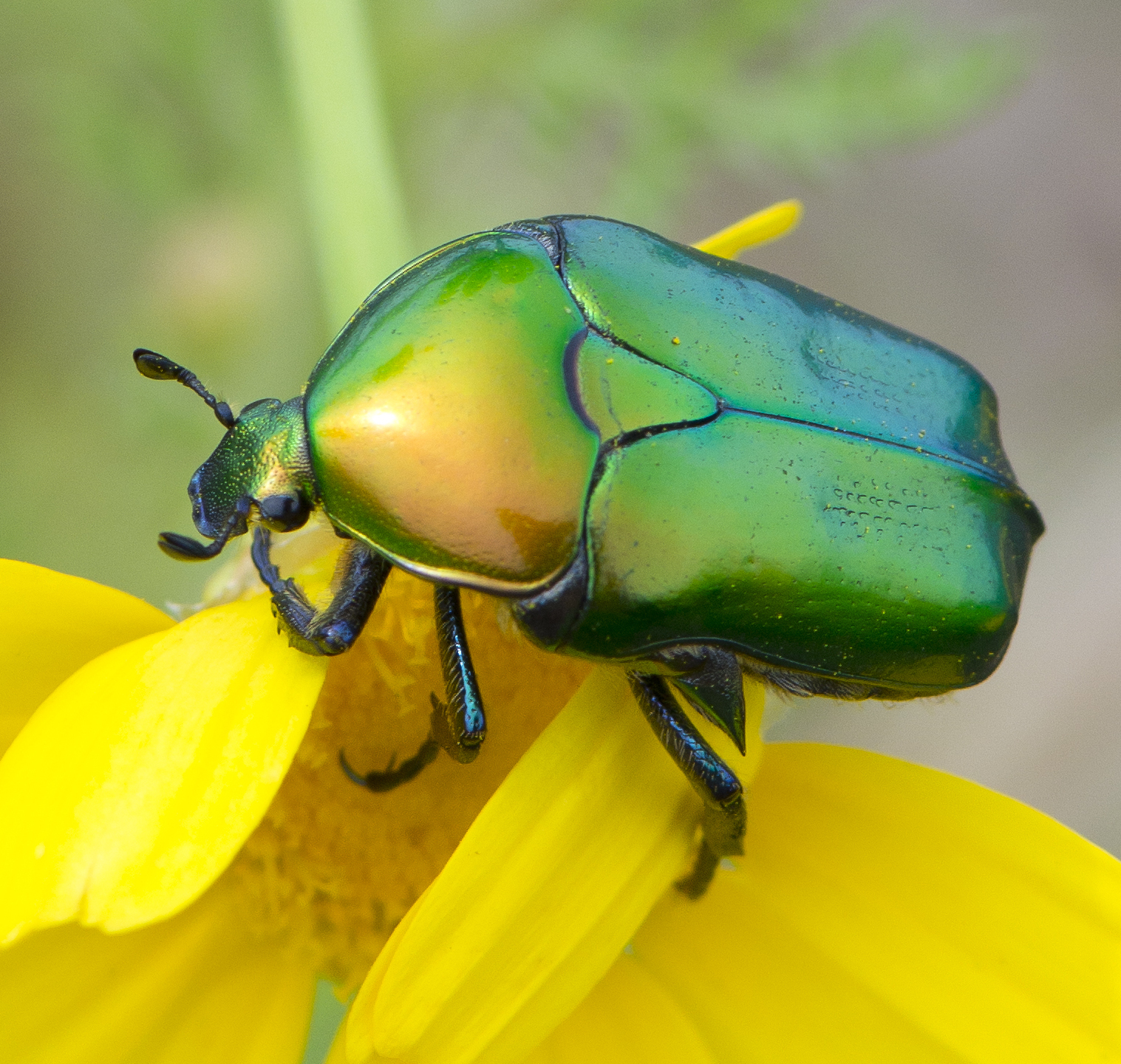
Copper chafer in Israel

Protaetia cuprea, also known as the copper chafer, is a species of chafer in the family Scarabaeidae.[2] This species is also known as the rose chafer and has a wide geographic distribution, extending from Canary Islands, Portugal, and Spain to the west towards Vladivostok in the Russian Far East, Mongolia, and North China.[3] This species forages for pollen from flowers and fruits, such as apples, from trees. However, since fruit is scarce in the spring and winter, they only transition from a diet of pollen to a diet of fruits in the summer.[4] Since pollen is richer in proteins and lipids than carbohydrates, while fruit is richer in carbohydrates, they are able to travel longer when on a fruit diet; this is due to their increased aerobic performance when fueled by high-carbohydrate content.[4]

This beetle is well-known for its flight ability, a skill that supports its foraging behavior. It has swift maneuvering ability and strong precision when landing on flowers and plants; it is able to do this due to the elasticity and mechanisms this beetle's wings possess.[5]

Geographic range

[edit]

The beetle species P. cuprea has an extensive geographic distribution across various regions, showcasing its adaptability and diverse habitat preferences. P. cuprea is found all over Europe and Asia. From the Canary Islands, Portugal, and Spain, the beetle's range extends eastward to Vladivostok in the Russian Far East and further encompasses Mongolia and North China. Its presence in the Middle East is notable, with populations in Turkey, the Levant, northern Egypt, and Iran. Further, the species is also documented in South Asia, specifically in Pakistan and Nepal.[3]

Copper chafer in Bulgaria
Protaetia cuprea in Bulgaria

The diversity of subspecies within P. cuprea highlights its evolutionary complexity and geographical spread. The subspecies Protaetia cuprea obscura is notably absent in Germany but is found across Central and Eastern Europe, including the Czech Republic, Slovakia, Austria (lowlands), Hungary, Italy (near Venezia), Bosnia and Herzegovina, Croatia, Romania, Bulgaria, and Greece.[6] This subspecies is known to hybridize with P. cuprea metallica in Slovakia and Romania, indicating a rich interspecies interaction. The distribution of P. cuprea bourgini, as well as closely related P. cuprea brancoi, in Spain, separated by the natural barrier of the Pyrenees Mountains, showcases the influence of geographic features on species distribution.[6]

The subspecies P. cuprea metallica is present in Northern Europe, with evidence from Norway, Sweden, northern England, and southern Scotland.[6] In the southeast regions, spanning areas from Turkey to the Caucasus, new subspecies, including obscura, cuprina, ignicollis, caucasica, and hieroglyphica, are found, further enriching the distribution profile of this species.[6]

Habitat

[edit]

The ecological adaptability of Protaetia cuprea is as remarkable as its geographical spread. This species thrives across various environments, from dense forests to the more open and arid steppe regions, indicating its broad ecological tolerance. Such adaptability extends to a wide altitude range, with P. cuprea populations established from sea-level shorelines to the more challenging conditions at elevations up to 2000 meters. This altitude range encompasses various environmental conditions, highlighting the species' capacity to adapt and thrive in varying climatic and geographical landscapes.[3]

Food resources

[edit]

Research indicates that P. cuprea primarily feeds on decaying organic matter, such as fruits, flowers, and plant debris. Studies investigating the feeding habits of larvae revealed that they predominantly consume rotting wood and plant material.[7] Additionally, adult beetles are known to feed on ripe fruits and sap exudates from damaged trees.

Furthermore, P. cuprea has been observed to exhibit opportunistic feeding behavior, consuming a wide range of organic materials depending on its availability in their habitat. This adaptability in food preference suggests a generalist feeding strategy, which may contribute to its ecological success in diverse habitats.

Parental care

[edit]

Parental care primarily concerns the provisioning and protection of offspring during the larval stage. Female P. cuprea lay their eggs in decaying organic substances, such as compost, dung, or decaying wood which is an ideal environment that influences survival and development of larvae.[7] Upon hatching, female beetles demonstrate maternal care by actively tending to the larvae, ensuring they have access to suitable food resources and protection from predators, parasites, and environmental stressors.

Life history

[edit]

Life cycle

[edit]

The life cycle of Protaetia cuprea is typically one year. However, under certain conditions, this beetle can develop more rapidly, growing into adults within the same year the eggs were laid by the parental generation.[3]

In their larval stage, P. cuprea is primarily sapro-xylophagous. They have a particular affinity for deciduous trees, with oaks (Quercus spp.) being a favored habitat. Despite this preference, the larvae can also transition to pure saprophagy, evidenced by reports of larvae developing in compost heaps or forming associations with ant colonies.[3]

Morphology

[edit]

The Protaetia cuprea species complex exhibits high morphological variability. The chromosome number across the genus Protaetia, including P. cuprea, is consistently 2n = 20. Despite this genetic stability, minor variances in X-chromosome morphology have been observed among some subspecies.[3]

The extensive morphological variability does not align with the phylogenetic insights from mitochondrial DNA studies. Morphological features traditionally used for taxonomical classification, such as coloration, body structure, and reproductive organ shapes, show significant variation that does not neatly correlate with genetic relationships. Traits like the elytra's distal sculpture and white "knee" markings emerged as clade-specific, yet their taxonomic significance remains ambiguous. Geometric morphometry has highlighted that variations in certain morphological traits are more gradual than discrete across the complex, further complicating the relationship between morphology and genetic data.[3]

The observed high color variation within the species complex also does not mirror mitochondrial DNA (mtDNA) structures. This suggests that color polymorphism might be influenced by factors beyond genetics, such as environmental conditions and biotic interactions, including mimicry and aposematism. This implies a multifaceted regulation of morphological diversity in the P. cuprea complex, with genetic, environmental, and possibly other biotic factors contributing to the species' phenotypic plasticity.[3]

Wings

[edit]

The wings of Protaetia cuprea are structurally intricate to adapt to the flight mechanisms. The average wing length for this species is reported to be approximately 2.08 cm. No significant sexual dimorphism regarding wing deflection under similar forces is identified.[5][8]

Like most insects, the wings are characterized by their thin, membranous structure, supported by thicker and stiffer veins. These veins are mainly concentrated towards the wing's leading edge and base, enhancing the flexural stiffness in these areas. This structural design fosters gradients in both lengthwise and chord-wise flexural stiffness, critical for achieving the wing twist and camber essential for flight, facilitating the complex aerodynamic performance of the wings.[5]

The stiffness of the wings scales with size, with larger wings tending to be stiffer. Quantitatively, the wing span scaling with the cubic power for span-wise deflections and the square power of the wing chord for chord-wise deflections. On the other hand, aerodynamic force increases with wing size due to wing loading, impacting flight dynamics.[5]

Moreover, Protaetia cuprea's wings are also characterized by resilin within the connections between some veins. Resilin is a rubber-like protein that contributes to the wings' elastic deformation capabilities during flight, enhancing their aerodynamic efficiency and adaptability to various flight conditions.[8]

Elasticity

[edit]

Despite lacking intrinsic musculature for active shape control during flight, insect wings undergo significant elastic deformations that play a crucial role in flight dynamics. The deformation of insect wings, specifically the twisting and cambering during the flapping cycle, is primarily facilitated by their mechanical properties and elastic structure rather than direct muscle action. This elasticity allows for wing twist in both directions, enabling lift generation during both upstrokes and downstrokes of flight. Furthermore, these adaptations help manage the angle of attack across the wing span, improve flow attachment, increase lift, and delay flow separation during dynamic movements, which is essential for aerodynamic efficiency. During low-speed flight, wings experience pronounced chord-wise elastic deformations, especially near the proximal trailing edge, contributing to significant twists and enhanced camber.[5][8]

Genetics

[edit]

The phylogenetic complexity of the Protaetia cuprea species group is underscored by its high degree of polymorphism and extensive distribution range. Recent research conducted utilized two mitochondrial DNA markers (COI and CytB) alongside morphological, coloration, and geographical distribution analyses to assess population divergence within this species complex. This multifaceted approach aimed to clarify the taxonomic status of several clades within the P. cuprea complex, including the P. cuprea metallica and the Sicilian P. hypocrita.[3] Despite various approaches by different groups to investigate the P. cuprea complex, the taxonomic resolution of these clades remains ambiguous, with contradictory findings across studies.[3][9]

Subspecies

[edit]
Protaetia cuprea subsp. obscura in Athens

Protaetia cuprea contains the following subspecies:[1]

  • Protaetia cuprea subsp. adelheid Mitter, 2017
  • Protaetia cuprea subsp. alainilerestifi (Montreuil & Legrand, 2010)
  • Protaetia cuprea subsp. algerica Motschulsky, 1849
  • Protaetia cuprea subsp. bourgini Ruter, 1967
  • Protaetia cuprea subsp. brancoi Baraud, 1992
  • Protaetia cuprea subsp. cuprea
  • Protaetia cuprea subsp. daurica (Motschulsky, 1860)
  • Protaetia cuprea subsp. ferreriesensis (Compte-Sart & Carreras-Torrent, 2013)
  • Protaetia cuprea subsp. hesperica (Motschulsky, 1849)
  • Protaetia cuprea subsp. hypocrita (Ragusa, 1905)
  • Protaetia cuprea subsp. ignicollis (Gory & Percheron, 1833)
  • Protaetia cuprea subsp. ikonomovi (Miksic, 1958)
  • Protaetia cuprea subsp. levantina (Schatzmayr, 1936)
  • Protaetia cuprea subsp. mehrabii (Montreuil & Legrand, 2008)
  • Protaetia cuprea subsp. metallica (Herbst, 1782)
  • Protaetia cuprea subsp. obscura (Andersch, 1797)
  • Protaetia cuprea subsp. olivacea (Mulsant, 1842)
  • Protaetia cuprea subsp. viridiaurata (Fuente, 1897)
  • Protaetia cuprea subsp. volhyniensis (Gory & Percheron, 1833)

Physiology

[edit]

Flight

[edit]

The Protaetia cuprea, both pollinator and agricultural pest, exhibits a remarkable flight mechanism that supports its day-to-day foraging activities. These beetles are adept at accurate maneuvering and precise landings on flowers and fruits, which is essential for their feeding habits.[4][5]

Effect of body size

[edit]

Within the species, Protaetia cuprea, a significant intraspecific variation in adult body mass was observed, with individuals displaying more than a threefold difference in mass, ranging from 0.38 to 1.29 grams. This considerable variance in body mass necessitates adaptations in the structural properties of the wings to adequately support the beetle's weight during flight.[5]

In Protaetia cuprea, larger beetles show a decreased flapping frequency, yet the fundamental kinematics of wing flapping are consistent across all sizes. The Meresman and Ribak (2017) study observed that wing deflection varies, greater at the proximal edge than at the distal edge during both downstroke and upstroke. This pattern, scaling with the wing chord to the power of 1.0, indicates a consistent wing twist and camber regardless of body or wing size, suggesting adjustments in wing stiffness to maintain these aerodynamic features. Despite initial hypotheses predicting a more significant increase in wing camber with beetle size, actual deflections scaled less steeply with body mass. It is found that the wing increases rigidity in larger beetles. This rigidity ensures a constant wing camber across varying body masses, with the wing aspect ratio remaining the same, indicating isometric growth in the wing area. This adaptation allows P. cuprea to maintain efficient flight dynamics across individuals of different sizes.[5]

Maneuvering dynamics

[edit]

In analyzing the flight dynamics of these beetles, observations reveal a mean flight speed of approximately 0.41 m/s with a mean wingbeat frequency of 110 Hz. Notably, the wingtip velocity during flapping reached an average of 9.13 m/s, significantly surpassing the beetles' three-dimensional flight speed. Additionally, the vertical component of their flight speed was relatively low, averaging only 0.1 m/s. Regarding maneuverability, the beetles demonstrated an ability to rotate around their axis by an average of 39 degrees at a turn rate of approximately 1429 degrees per second.[8]

Metabolic cost

[edit]

One study found that P. cuprea converts chemical (metabolic) energy to mechanical flight energy with a mean efficiency of 10.4%. Larger beetles have higher energy conversion efficiency. Seasonal dietary shifts, from pollen in early summer to fruits later on, impact their energy budget for foraging. An interesting observation was that starved beetles increased their body mass by 6% after feeding on apples for two hours, providing enough energy for a 630-meter flight, assuming a carbohydrate assimilation efficiency of 90%. Low in water and carbohydrates but high in proteins and lipids, pollen offers a higher caloric content and different assimilation processes for converting food to flight energy. The energy-intensive foraging behavior of P. cuprea is compensated by prolonged feeding after a short flight, ensuring energy efficiency for aerial locomotion.[4]

Interactions with humans and livestock

[edit]

Agricultural use

[edit]

The study by Babarabie et al. (2018) highlights the possible agricultural benefits of utilizing P. cuprea larvae in composting organic materials, including kitchen waste and various types of leaves. Specifically, it examines how compost produced by P. cuprea larvae compares with traditional vermicompost in terms of nutrient content and physical properties. The findings reveal that compost derived from kitchen waste processed by these larvae contained higher levels of essential nutrients such as nitrogen, potassium, and phosphorus. Compost from lawn clippings also showed improved pH levels and uniformity, which is crucial for agricultural use. This indicates the potential of P. cuprea larvae to improve compost quality and usability, thereby supporting more sustainable agricultural practices.[10]

Pest

[edit]

Adult P. cuprea has a detrimental impact on fruit trees and ornamental plants by feeding on reproductive parts and ripening fruits. The application of insecticides is restricted during phases such as flowering and just before harvest to protect beneficial insects like honeybees and to avoid health hazards. As an alternative, mass trapping, contingent upon an efficient trapping system, is proposed as an effective pest management strategy. The development of selective floral attractant-baited traps aimed at P. cuprea is in progress, opening up a potential solution for their control.[11]

References

[edit]
Revisions and contributorsEdit on WikipediaRead on Wikipedia
from Grokipedia
Protaetia cuprea (Fabricius, 1775), commonly known as the copper chafer or rose chafer, is a highly polymorphic species of chafer beetle in the Cetoniinae of the family . It features an iridescent metallic body sheen varying from copper to green or bronze tones due to . This diurnal insect inhabits diverse environments across the Western Palearctic, including forests, steppes, meadows, gardens, and forest edges from sea level to 2000 m elevation. The taxonomy of P. cuprea remains complex, as it forms part of a species group including closely related taxa such as P. cuprina and P. hypocrita, with several recognized subspecies like P. c. metallica and P. c. brancoi whose boundaries are debated based on molecular phylogenetics, geometric morphometry, and traditional morphology. Originally described in the genus Scarabaeus and later placed in Protaetia (sometimes subgenus Potosia), the species exhibits significant variation in body size, coloration, setation, and punctation, complicating delimitation without clear diagnostic traits. Phylogenetic analyses reveal three distinct lineages in the Western Palearctic, suggesting potential cryptic diversity and polyphyly within the nominal species. Geographically, P. cuprea has a broad distribution spanning the , Iberia, and eastward to , , and northern , extending southward through the (including , the , , and ) to and . Its ecological flexibility allows occurrence in open vegetation, woodland edges, and anthropogenic areas like parks. Adults are agile fliers with flexible wings enabling hovering, precise maneuvering, and low-speed flight for on flowers. In terms of biology, adults feed on pollen, nectar, tree sap, and ripe fruits such as apples, contributing to pollination while occasionally damaging blossoms or fruit crops. The life cycle generally lasts one year, though it can extend to two or three under cooler conditions; eggs are laid in soil or organic matter near decaying wood, where C-shaped larvae develop as saproxylophages, consuming humus and wood from deciduous trees like oaks, or occasionally in compost or ant nests. Pupation occurs in the soil, where third-instar larvae overwinter in the field. Larvae of subspecies like P. c. brancoi feature distinctive mandibular stridulatory ridges and raster patterns adapted to their detritivorous habits.

Taxonomy

Classification

Protaetia cuprea (Fabricius, 1775) is the accepted binomial name for this species of beetle. It is classified within the family and subfamily Cetoniinae, known collectively as flower chafers for their association with floral resources. Higher taxonomic ranks include order Coleoptera, class Insecta, phylum Arthropoda, and kingdom Animalia. Historically, the species was originally described as Cetonia cuprea by Fabricius in and subsequently placed in the genus Potosia due to similarities in morphological features with other Palearctic cetoniines. Taxonomic revisions in the late 20th and early 21st centuries, incorporating detailed morphological analyses (such as body coloration, setation patterns, and genitalic structures) alongside genetic data from mitochondrial markers like COI and CytB, supported its transfer to the genus Protaetia. These studies highlighted the polyphyletic nature of Potosia and justified the broader Protaetia as a more accurate placement based on shared synapomorphies within Cetoniinae. The genus Protaetia Burmeister, 1842, encompasses over 300 species primarily distributed in and the Palearctic region, distinguished by diagnostic traits including iridescent metallic coloration ranging from to , a relatively elongated and body shape, and elytra featuring regular rows of punctures or striae. These characters, particularly the pronotal and elytral macrosetation and the form of the , aid in delimiting Protaetia from related genera like Cetonia.

Synonyms and subspecies

The rose chafer beetle, Protaetia cuprea (Fabricius, 1775), has undergone several nomenclatural changes since its original description. Key synonyms include Cetonia cuprea Fabricius, 1775, the established in Systema Entomologiae, and Potosia cuprea (Fabricius, 1775), reflecting an earlier generic placement before transfer to Protaetia subgenus Potosia. Another is Protaetia (Potosia) cuprea, emphasizing the subgeneric affiliation commonly used in modern . Approximately 16 subspecies are currently recognized within P. cuprea, primarily distinguished by geographic distribution and subtle variations in coloration, though these distinctions are not always clear-cut. The nominal subspecies P. c. cuprea is distributed in , serving as the type form. P. c. obscura (Andersch, 1797) occurs in , often exhibiting darker coloration. P. c. metallica (Herbst, 1782) is found in , characterized by a metallic sheen. P. c. brancoi (Baraud, 1992) represents southern forms, primarily in Mediterranean regions. Taxonomic debates persist regarding the status of certain , with P. c. metallica occasionally proposed as a full based on morphological differences, though this elevation is not widely accepted due to overlapping traits and genetic continuity. Older literature often provides incomplete coverage of these variants, reflecting limited sampling from peripheral ranges. Recent phylogeographic studies using reveal cryptic diversity within the P. cuprea complex, suggesting unresolved evolutionary lineages that challenge traditional boundaries, particularly in the Western Palearctic. Chromosomal uniformity across supports their close relatedness, though full resolution awaits further genomic analysis.

Description

Adult morphology

Adult Protaetia cuprea beetles measure 14–23 mm in body length and exhibit body masses ranging from 0.38 to 1.29 g. The body is oval and convex, typical of cetoniine chafers, with a robust providing protection during on flowers and fruits. The coloration is highly polymorphic, featuring a metallic hue with coppery reflections that can vary from vivid to blackish tones across different body regions, including the head, pronotum, and elytra; this arises from structural properties in the . Elytra often display white markings or pubescence, contributing to among foliage, while the pronotum is punctate and shows variable shine. Legs are strong and adapted for clinging to floral surfaces, with white markings commonly present on the "knees" (meso- and metatibiae) in certain populations. The head bears large compound eyes, lamellate antennae, and chewing mouthparts. is limited, with no significant differences in body mass, wing morphology, or overall size between males and females.

Immature stages

The larvae are C-shaped, with a white body and light yellow cranium; they pass through three s, with the third instar featuring a head capsule width of up to 4.3 mm and fused abdominal segments IX-X covered in dense setae. The raster consists of a pair of palidia forming two parallel rows of 14-17 short, acute spines each, aiding locomotion and burrowing in or wood, while the asymmetrical mandibles possess stridulatory areas with 24-25 transverse ridges for sound production. Mouthparts are adapted for detritivory, with the maxilla's mala bearing apical and subterminal unci for grasping decaying plant material. Larvae burrow in rotting wood, , or ant nest debris, promoting through their feeding activity.

Distribution and habitat

Geographic range

Protaetia cuprea is a species with a broad distribution across the Palearctic region, extending from the and the in the west to in far eastern , as well as and northern in the east. This range encompasses much of , where the species is widespread from and eastward through central and eastern regions to , including presence in northern via the subspecies P. c. metallica. In , the distribution spans Central Asian steppes and extends southward to the Himalayan foothills, with records in countries including , , and . The species also occurs in the , including , the , and northern . Elevational distribution ranges from to altitudes of up to 2000 meters, allowing adaptation to diverse topographic conditions within its geographic limits. Subspecies such as P. c. obscura are primarily found in , contributing to regional variation across the overall range.

Preferred habitats

Protaetia cuprea primarily inhabits forests, woodlands, gardens, and edges of steppes where flowering are abundant, favoring areas rich in rotting wood and decaying . This species demonstrates broad ecological tolerance, occurring from coastal shorelines to montane elevations up to 2000 meters. Adults prefer sunny clearings and open areas within these habitats for activity and mating, while larvae develop in microhabitats such as humus-rich , heaps, and cavities within decaying wood of deciduous trees, particularly oaks (Quercus spp.) and occasionally beeches. Larvae are also myrmecophilic, often found in active or abandoned nests ( spp.) and similar substrates like piles. The species shows adaptability to urban environments, commonly observed in gardens and parks alongside natural woodland settings. Habitat use varies seasonally, with adults active from spring through summer, utilizing flowering meadows and edges in early seasons and shifting toward fruit-bearing areas later.

Ecology

Feeding habits

The larvae of Protaetia cuprea function as saproxylophages, consuming and decaying wood from trees such as oaks (Quercus spp.), or occasionally developing in or nests. Adult P. cuprea are herbivorous, shifting their diet seasonally to meet nutritional needs. In spring, they feed predominantly on and from various flowers, which supply proteins and essential for maintenance and early reproductive activities. By summer, as fruit becomes available, adults transition to consuming ripe fruits such as apples ( spp.) and tree sap, to obtain carbohydrates that fuel extended flight and energy demands. Foraging in P. cuprea is diurnal, with adults actively seeking sources during daylight hours and being attracted to floral scents and visual cues from blooming . This facilitates their role as pollinators, as they inadvertently transfer between flowers while feeding, contributing to in their habitats.

Reproduction and parental care

Mating in Protaetia cuprea occurs during the adult activity period from May to August. In Cetoniinae, chemical cues such as aggregation s facilitate mate location and species recognition, as documented in related species like Gnorimus nobilis, where both sexes produce 2-propyl (E)-3-hexenoate, attracting males but repelling females. However, specific pheromone chemistry remains undescribed for P. cuprea. Local male-male for access to females has been observed in saproxylic Cetoniidae, suggesting a female-biased where males actively seek out feeding or resting females on flowers or vegetation. Oviposition follows mating, with females selecting moist, nutrient-rich sites such as soil or near decaying wood in trees (particularly oaks), or occasionally in or nests to ensure larval survival and development. Eggs are laid in batches within these substrates. is influenced by adult diet, particularly access to and , which supports reproductive activities during the short adult phase. Parental care in P. cuprea is absent, with eggs and subsequent larvae developing independently in the chosen substrate.

Life cycle

Developmental stages

The life cycle of Protaetia cuprea (synonym Potosia cuprea) involves complete , progressing through egg, three larval instars, , and adult stages in a typically univoltine pattern, with one generation per year under natural conditions. Eggs are laid by females in or near decaying , sometimes in nests or hollows, providing a -rich environment for initial development. occurs in warm conditions, marking the transition to the larval stage after 1–2 weeks. The larval stage consists of three s, during which the C-shaped, white-bodied larvae feed on and grow within organic substrates like rotting from trees (e.g., oaks) or , contributing to recycling. This phase dominates the life cycle, lasting several months and often comprising the majority of development time, with larvae often overwintering in the third . Following larval growth, the mature third-instar constructs a protective cell in the or substrate for pupation, where occurs over 2–4 weeks during summer months. Adults emerge via eclosion from the pupal cell in the , with timing synchronized to the flowering season to align with and availability.

Duration and environmental influences

The life cycle of Protaetia cuprea typically spans one year under natural conditions in its Palearctic range, encompassing egg, larval, pupal, and adult stages, though it can extend to two years in cooler conditions or northern populations. However, development can accelerate to 2–3 months in settings with optimal resources like ripe fruit, highlighting the ' plasticity in response to favorable environments. Overwintering primarily occurs as third-instar larvae in the field, entering diapause within moist organic substrates such as decaying wood or soil to endure cold temperatures. In some laboratory-reared populations and potentially certain wild groups, adults may overwinter instead, suggesting variability across conditions or subspecies like P. cuprea brancoi. Temperature exerts a strong influence on developmental speed, with optimal larval growth observed at 20–25°C (night/day cycle), promoting faster progression through instars compared to cooler field averages. Moisture levels are critical for egg survival and larval development, as eggs require humid substrates to prevent desiccation, while moist accumulations of organic matter support overall larval feeding and growth. Photoperiod cues, such as a 15:9 light:dark regime, further regulate transitions to pupation, aligning development with seasonal changes. This flexible diapause mechanism allows P. cuprea to adapt to regional climates, potentially enabling shortened cycles or extended overwintering in northern latitudes, though bivoltinism remains rare and undocumented in primary sources.

Genetics

Chromosomal characteristics

The karyotype of Protaetia cuprea consists of a diploid chromosome number of 2n = 20, comprising 18 autosomes and an Xyp sex chromosome system. The autosomes are predominantly meta- or sub-metacentric, while the X chromosome is sub-metacentric and the Y is punctiform, a configuration typical of many Cetoniinae species. During , the chromosomes form stable bivalents, with the exhibiting a characteristic parachute association at diakinesis and I; no heteromorphic have been observed beyond subtle variations. This remains uniform across most , including P. c. cuprea, P. c. metallica, and P. c. brancoi, differing only slightly in P. c. obscura due to additional on the short arm of the —contrasting with the more pronounced karyotypic variations seen in certain other Cetoniinae genera. Such consistency underscores the of the Protaetia genus by indicating limited chromosomal divergence despite morphological polymorphism.

Phylogeographic patterns

Phylogeographic studies of Protaetia cuprea have primarily utilized mitochondrial DNA markers, including the cytochrome c oxidase subunit I (COI) gene (779 bp) and cytochrome b (CytB) gene (382 bp), to assess genetic variation across its Western Palearctic range. These markers reveal high polymorphism, particularly in European populations, with haplotype diversity elevated compared to other saproxylic beetles, reflecting historical demographic processes such as Pleistocene expansions from southern refugia. Analysis of these sequences identifies distinct clades within the European mainland ( 6), including a western Iberian lineage ( 6D, associated with subspecies P. c. brancoi), a central lineage encompassing Alpine regions ( 6F, including southern ), and an eastern lineage ( 6A, linked to P. c. volhyniensis in ). Divergence among these sublineages occurred approximately 1–2 million years ago during the Pleistocene, consistent with vicariance events driven by glaciation and postglacial recolonization. An eastern (Clade 4) extends into and the , while a Sicilian lineage ( 5, P. hypocrita) diverged earlier (2.35–4.00 Mya). Evidence of hybridization and gene flow is indicated by shared identical haplotypes across subspecies, such as between nominate P. cuprea and P. c. obscura (an eastern form), as well as P. c. metallica, suggesting ongoing or recent despite morphological distinctions. This aligns with the species' broad distribution, which correlates with recognized patterns. The highly polymorphic nature of the P. cuprea complex, coupled with its extension into (e.g., , , ), points to potential cryptic diversity in unsampled Asian populations, where faces challenges due to low inter-clade genetic divergence (1.27–2.31%) and lack of diagnostic morphological traits. Recent meta-analyses highlight the need for expanded sampling beyond to resolve these taxonomic ambiguities, building on 2018 findings with no major contradictions in diversity patterns.

Physiology

Flight mechanics

The hindwings of Protaetia cuprea are membranous structures approximately 2.08 cm in length, featuring a network of veins that provide varying flexural stiffness, with thicker veins concentrated near the leading edge and base to support elastic deformations during flight. The elytra are shortened and serve primarily as protective covers, while the hindwings fold in an accordion-like manner when at rest, allowing compact storage beneath the elytra. This vein pattern enables the wings to bend chord-wise, particularly at the proximal trailing edge, which has lower rigidity due to thinner membrane regions enriched with resilin, a rubber-like protein that enhances flexibility. In terms of , P. cuprea exhibits a wingbeat of approximately 110 Hz during free flight, enabling both hovering and forward . The mean forward flight speed is 0.41 m/s, with wingtip velocities reaching about 9.13 m/s, and amplitude averaging 114 degrees in a near-horizontal stroke plane tilted at around 30 degrees. Wingbeat varies slightly with body , ranging from 99 to 129 Hz across individuals, decreasing modestly as mass increases. Maneuverability in P. cuprea is influenced by body size and mass distribution, with larger individuals (up to 1.29 g) demonstrating greater flight stability due to scaled deformations that maintain consistent aerodynamic profiles. During turns, asymmetric occurs, where the inner shows higher and leads the outer at stroke reversals, resulting in mean turn rates of 1429 degrees per second and turn magnitudes of 39 degrees; mass distribution affects by altering . The elasticity of the wings allows for dynamic deformations during each wingbeat, with chord-wise deflections scaling linearly with local chord length to preserve twist and camber across body sizes ranging from 0.38 to 1.29 g. These passive deformations mitigate asymmetry during maneuvers, enhancing generation and overall flight control without requiring active muscular adjustments.

Metabolic efficiency

The metabolic cost of flight in Protaetia cuprea was measured using the stable isotope ¹³C Na-bicarbonate bolus injection method combined with high-speed to track free-flight trajectories in a controlled arena. This approach quantifies CO₂ production to estimate chemical power input, revealing a mean flight metabolic rate of 339 ± 98 mW (assuming respiratory quotient = 0.9) for beetles with an average body mass of 0.91 ± 0.23 g. Mass-specific chemical power thus approximates 373 mW/g, with no significant to body mass (r = -0.09, P = 0.78). Mechanical power output, calculated from wing kinematics and an induced k = 2, averages 32.90 ± 12.37 mW, or about 36 mW/g. Aerobic efficiency, defined as the ratio of mechanical power output to chemical power input, reaches a mean of 10.4% ± 5.2% under these conditions (RQ = 0.9, k = 2), with efficiency ranging from 6.5% to 15% depending on RQ (0.8–1.0) and k (1–3) assumptions. Larger individuals exhibit higher efficiency, scaling positively with body mass (η_aero ∝ M^{1.43}), likely due to improved muscle mechanics and reduced relative drag. Total energy expenditure per flight bout varies with distance; for example, a 50 m flight requires approximately 11.3 J (2.7 cal), while a meal of apple equivalent to 6% body mass gain (about 0.055 g for a 0.91 g beetle) can fuel up to 630 m of flight, assuming 90% assimilation efficiency from fruit carbohydrates (0.60 kcal/g wet mass). Flight is primarily powered by carbohydrates derived from fruit and pulp, supporting sustained aerobic (RQ ≈ 1.0). Lipid and protein reserves from consumption (5.89 kcal/g dry mass) contribute to overall stores but play a lesser role in immediate flight demands. Experiments were conducted at 27°C, aligning with the ' active temperatures, though specific Q_{10} coefficients for metabolic rate remain unquantified.

Human interactions

Agricultural benefits

The larvae of Protaetia cuprea (synonym Potosia cuprea) serve as effective agents in composting organic waste, accelerating processes and producing nutrient-enriched that enhances . In controlled experiments using kitchen waste, the larval exhibited total (N) content of 2.35%, (P) at 1.40%, and (K) at 1.53%, with overall at 4.33%. These levels surpass those typically found in traditional , demonstrating superior nutrient retention and availability for agricultural use. The larvae achieve up to 100% conversion of materials like cut lawn waste into uniform pellet within experimental timelines, promoting faster breakdown of recalcitrant compared to conventional methods. Adult P. cuprea contribute to services by foraging on floral resources, transferring among trees such as apples and wildflowers like during their active season. This incidental supports orchard productivity, as the beetles' mobility allows effective dispersal between plants in agroecosystems. Their role aligns with broader functions in European , where diverse including scarabs aid in maintaining yields amid declining populations. In sustainable farming practices, P. cuprea larvae are integrated into systems to generate high-quality organic fertilizers, supporting eco-friendly . This application promotes reduced reliance on synthetic inputs, aligning with principles in modern .

Pest status and management

Protaetia cuprea adults are recognized as agricultural pests due to their feeding on flowers, , and ripening , which can lead to economic losses in orchards and ornamental gardens. In regions such as and , the species has caused increasing damage to by chewing irregular holes and consuming the flesh, often in groups that target already damaged or ripening produce, rendering affected fruits unmarketable. Similar feeding damage has been reported on apricots, corn, roses, and flowers of other fruit trees, where adults aggregate on blossoms and soft plant tissues. Management of P. cuprea emphasizes integrated pest management (IPM) strategies to minimize chemical use while effectively reducing populations. Monitoring with floral attractant-baited traps, such as those using methyl eugenol (ME) blends, allows for early detection of adult activity and population assessment in orchards. Mass trapping represents a key non-chemical control method; funnel traps baited with synthetic floral volatiles (e.g., 3-methyl eugenol, 1-phenylethanol, and (E)-anethole combinations) placed on a 10-15 m grid in peach orchards from late April can capture significant numbers of adults, reducing feeding pressure on crops. These traps exhibit high selectivity for cetoniine scarabs like P. cuprea, with baits lasting 2-3 weeks before replacement. In cases of severe outbreaks, supplementary measures target the soil-dwelling larvae, which feed on decaying but can be controlled to prevent . Preparing artificial egg-laying sites with , hay, or and applying targeted to young larvae effectively reduces overwintering populations without broad environmental impact. Chemical controls for , such as contact , are used sparingly due to the beetles' role as pollinators, with lure-based alternatives showing promise for replacing broad-spectrum pesticides in monitoring and suppression. Overall, combining , cultural practices like removing damaged fruits, and judicious application sustains effective long-term management.

References

Add your contribution
Related Hubs
User Avatar
No comments yet.