Hubbry Logo
Ramadan ShalahRamadan ShalahMain
Open search
Ramadan Shalah
Community hub
Ramadan Shalah
logo
8 pages, 0 posts
0 subscribers
Be the first to start a discussion here.
Ramadan Shalah
Ramadan Shalah
from Wikipedia

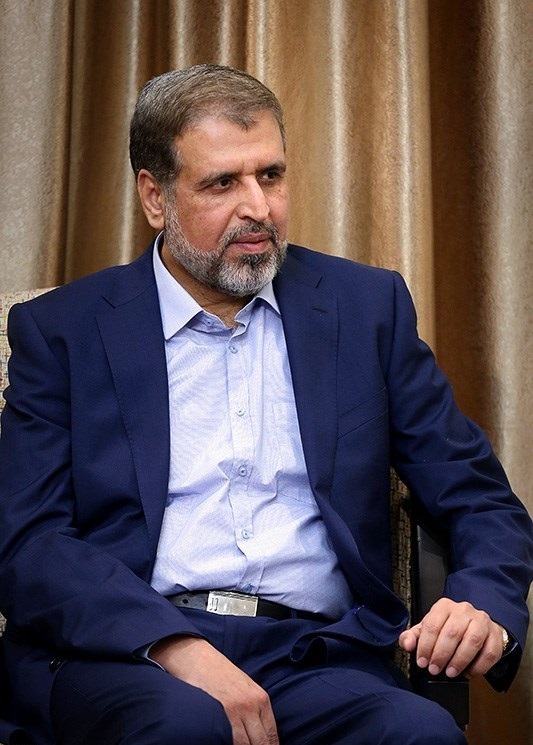
Ramadan Abdullah Mohammed Shalah (Arabic: رمضان عبد الله محمد شلح; 1 January 1958[1] – 6 June 2020) was a Palestinian militant and politician who served as the leader of Palestinian Islamic Jihad (PIJ) from 1995 to 2018.

Key Information

On becoming secretary-general of PIJ, Shalah was designated a Specially Designated Terrorist (SDT) by the United States on 27 November 1995.[2] In 2006, he was placed on the United States FBI Most Wanted Terrorists list.[3]

In April 2018, Shalah suffered a series of strokes, and on 28 September 2018 was replaced by Ziyad al-Nakhalah as PIJ leader.

During the 23 years of his leadership of PIJ, the group undertook numerous attacks on Israeli civilians, including suicide bombings; and has suffered extensive operations against its infrastructure carried out by the IDF, which resulted in severe losses to the group, and it appeared significantly weakened by 2004.[4][5]

Early life

[edit]

Shalah was born in Shuja'iyya, a neighborhood in Gaza City.[6] Shalah earned a Ph.D. in banking and economics from the University of Durham in England.[3][7]

Professor Sami Al-Arian helped bring Shalah to the University of South Florida, in Tampa, Florida, where Shalah taught as an adjunct professor.[citation needed] Al-Arian and Shalah founded an Islamic think tank, World and Islamic Studies Enterprise (WISE). Shalah left the organization in 1995 to head Palestinian Islamic Jihad (PIJ).[8]

In February 2003, al-Arian, Shalah and five others were indicated by the United States Department of Justice for supporting the PIJ and relatives of operatives who committed attacks against civilians in Israel.[8] Al-Arian pled guilty to helping PIJ and was sentenced to 57 months in prison. Al-Arian said he was shocked to learn Shalah was "anything other than a scholar."[9]

Palestinian Islamic Jihad activity

[edit]

Shalah became PIJ secretary-general 1995 after the assassination of its previous leader Fathi Shiqaqi in Malta. On becoming secretary-general of PIJ, the United States named Shalah a Specially Designated Terrorist and offered a $5 million reward for information leading to his arrest or conviction on 27 November 1995.[6]

In 2003, Shalah, Abd Al Aziz Awda, and six others were indicted in a 53 count indictment in the United States District Court for the Middle District of Florida on Racketeer Influenced and Corrupt Organizations Act (RICO) charges of alleged involvement in racketeering activities for PIJ, a US-designated international terrorist organization, which had conducted suicide bombings that killed Israeli and American civilians.[6][10] Shalah was wanted for conspiracy to conduct the affairs of the PIJ through a pattern of racketeering activities such as bombings, murders, extortion, and money laundering.[3]

For that indictment, Shalah then became one of six alleged and indicted terrorist fugitives among the second and most recent group of indicted fugitives to be added to the United States FBI Most Wanted Terrorists list on 24 February 2006,[3] along with Abd Al Aziz Awda.[6]

Death

[edit]

In 2018, Shalah was transferred from his home in Damascus to a hospital in Beirut. He died on 6 June 2020 in Lebanon after a long illness that included two years in a coma.[6] His funeral was held in Damascus and was attended by Ziyad al-Nakhalah, who had replaced him as head of the PIJ movement.

Books

[edit]

His writings include:[11]

  • Iqtiṣādīyāt al-mālīyah al-ʻāmmah wa-al-niẓām al-mālī fī al-Islām, al-Jāmiʻāt al-Islāmiyah, 1984, 359 p. On Islamic economics, particularly public finance.
  • al-Gharb wa-al-ṣirāʻ ʻalá Filasṭīn fī al-qarn al-ḥādī wa-al-ʻishrīn, Markaz Filasṭīn lil-Dirāsāt wa-al-Buḥūth, 1999, 35 p. On the West when it comes to the Palestinian struggle.
  • Fī ʻayn al-ʻāṣifah : al-ḥiwār al-hāmm wa-al-shāmil alladhī ajratʹhu ṣaḥīfat al-Ḥayāh al-Landanīyah maʻa Amīn ʻĀmm Ḥarakat al-Jihād al-Islāmī fī Filasṭīn al-Duktūr Ramaḍān ʻAbd Allāh Shallaḥ, Bisan, 2003, 112 p. Interviews.

References

[edit]
[edit]
Revisions and contributorsEdit on WikipediaRead on Wikipedia
from Grokipedia
Ramadan Abdullah Mohammad Shallah (1 1958 – 6 2020) was a Palestinian designated as a terrorist by the who led the Palestinian Islamic Jihad (PIJ), an Islamist organization committed to the destruction of through armed , as its secretary-general from 1995 until 2018. Born in Gaza, Shallah received higher education abroad and taught at the in the early before returning to the region in to assume leadership of PIJ following the assassination of its founder, . Under his direction from exile in —and later possibly or amid the —PIJ carried out dozens of bombings and launched thousands of rockets targeting Israeli areas, contributing to major escalations such as the –2009 Gaza War, the 2012 conflict, and the 2014 war. He rejected negotiations or a , emphasizing perpetual resistance, while securing funding and arms primarily from to bolster PIJ's military capabilities, including longer-range strikes reaching by 2012. Shallah's tenure drew international condemnation; the U.S. designated him a in 1995, placed a $5 million bounty on him via the FBI's in 2006, and indicted him in 2003 under charges for facilitating PIJ's terrorist operations, including attacks that killed American citizens. In 2018, he entered a due to a and retired, succeeded by ; he died two years later in a hospital from related complications. Despite alliances with groups like and participation in joint operations against , PIJ under Shallah remained ideologically distinct, prioritizing jihad over governance or political compromise.

Early Life and Education

Birth and Upbringing in Gaza

Ramadan Shalah was born on January 1, 1958, in the Sajaya neighborhood of , within the , then under Egyptian administration following the Arab-Israeli War. He came from a large Palestinian , described as consisting of 11 children, many of whom were refugees displaced by the 1948 events. His siblings remained in Gaza throughout their lives, reflecting the familial ties to the region. Shalah's upbringing occurred amid the socio-political conditions of Gaza in the 1950s and 1960s, a densely populated area marked by , limited opportunities, and Egyptian governance until Israel's capture of the territory in 1967. During his high school years, he became involved with the , an Islamist movement that had established a presence in Gaza through educational and social outreach, influencing his early ideological development toward religious activism. This period laid the groundwork for his later engagements, though specific details of his childhood experiences, such as family occupation or daily life, remain sparsely documented in available accounts.

Academic Pursuits and Time in the United States

Shalah earned a PhD in from in the in 1989, with a dissertation titled Islamic Banking in an Interest-Based Economy, which examined the compatibility of Islamic financial principles within conventional economic systems. This academic work reflected his early scholarly interest in integrating Islamist with economic theory, drawing on primary Islamic texts and comparative analysis of banking practices. In 1993, Shalah relocated to the United States, where he took up a position as an at the (USF) in , teaching courses related to and . During his approximately two-year tenure from 1993 to 1995, he also served as director of the World and Islam Studies Enterprise (WISE), a USF-affiliated established in 1991 that conducted research on global Islamic movements and their political implications. WISE, funded partly through academic grants and donations, produced publications and hosted events analyzing Islamist strategies, though it later faced scrutiny for ties to Palestinian militant networks. Shalah's time in the US coincided with his involvement in academic circles connected to figures like Sami Al-Arian, a USF professor who co-founded WISE and shared ideological affinities with Palestinian Islamist groups. His scholarly activities emphasized undiluted interpretations of jihadist thought within geopolitical contexts, but verifiable records indicate no formal degree pursuits in the US; rather, his role centered on teaching and administrative leadership in Islamist-oriented research. In late 1995, shortly after the October assassination of PIJ founder Fathi Shaqaqi, Shalah abruptly departed the US to lead the organization from Damascus, Syria, marking the end of his American academic phase.

Entry into Militant Activism

Initial Involvement with Islamist Groups

Shallah's initial engagement with Islamist militancy occurred through support networks for (PIJ), an organization founded in 1981 as an offshoot emphasizing armed jihad against . While residing in the United States, he became associated with PIJ activities dating to at least 1984, facilitating operations such as fundraising, recruitment, and communication under civilian covers. In , Shallah served as executive director of the World and Islam Studies Enterprise (WISE), an entity U.S. authorities identified as a PIJ front used to mask terrorist support, including financial transfers and propaganda dissemination. He also maintained ties to the Islamic Committee for Palestine (ICP), another Tampa-based group alleged to have provided material aid to PIJ, such as funding for operations in the and . These roles positioned Shallah within PIJ's Shura Council, the group's governing body, prior to his relocation to the . During the early 1990s, Shallah lectured as an instructor at the , leveraging academic platforms to advance PIJ's ideological outreach while evading detection. U.S. federal indictments later charged him in absentia with and conspiracy to provide material support to PIJ from 1984 to 2003, highlighting his foundational contributions to the group's extraterritorial infrastructure.

Founding Role in Palestinian Islamic Jihad

Ramadan Shallah joined the (PIJ) during its formative years in the early 1980s, shortly after the group's establishment in 1981 by , a Gaza-based physician influenced by Iranian revolutionary ideology and disillusioned with the Muslim Brotherhood's non-violent strategies. Shallah, who had studied in and absorbed Islamist thought there, aligned with PIJ's core tenets of immediate armed to eradicate and establish an in historic Palestine, distinguishing the group from more pragmatic Palestinian factions. Shallah's contributions to PIJ's early infrastructure focused on ideological propagation and external support networks. From the late 1980s, while pursuing a in the and later teaching at the , he co-authored publications outlining PIJ's rejection of peace negotiations and emphasis on operations as religiously mandated resistance. These writings, including analyses of global jihadist models, helped solidify the organization's doctrinal framework, prioritizing military confrontation over social welfare programs pursued by rivals like . In the United States, Shallah collaborated with , whom U.S. federal indictments identified as a key PIJ operative directing activities from onward, to build , , and media arms that sustained operations in Gaza and the . This expatriate cell, active by 1988, channeled resources—estimated in court documents as supporting dozens of attacks—and disseminated via outlets like the Tashbih journal, evading detection while expanding PIJ's reach amid the . Shallah's low-profile academic role masked these efforts, enabling PIJ to claim responsibility for early bombings, such as the 1989 killing of Israeli policeman in Gaza, without compromising its nascent structure. These foundational activities positioned Shallah as Shaqaqi's trusted deputy by the mid-1990s, ensuring organizational continuity despite Israeli targeting of core leaders. U.S. authorities later designated the network under RICO statutes for racketeering tied to over 100 deaths from PIJ attacks, underscoring its role in the group's survival and growth.

Leadership of Palestinian Islamic Jihad

Ascension Following Fathi Shaqaqi's Assassination

Fathi Shaqaqi, founder and secretary-general of (PIJ), was assassinated on October 26, 1995, in , , by gunmen riding a scooter who fired multiple rounds into his vehicle; the operation has been attributed to Israel's intelligence agency based on subsequent investigations and claims by Israeli officials. Ramadan Abdullah Shallah, born in Gaza in 1958 and holding a doctorate in from the University of Durham, succeeded Shaqaqi as PIJ secretary-general later in 1995 without apparent internal contest, leveraging his prior role as a senior operative in the organization's international apparatus. At the time of Shaqaqi's death, Shallah was based in , where he had engaged in PIJ-linked activities including ideological promotion, recruitment, and support networks tied to figures like , a professor indicted for conspiring to aid PIJ through entities such as the Islamic Concern Project. These U.S.-based efforts focused on fundraising and disseminating PIJ's rejectionist ideology, though Shallah avoided direct operational command from American soil to evade scrutiny. Shallah's ascension prompted his rapid relocation to Damascus, Syria, by early 1996, where PIJ established its primary headquarters under Syrian regime protection, enabling coordination of militant cells in Gaza and the while shielding leadership from Israeli targeting. This shift consolidated Shallah's authority amid U.S. indictments against PIJ affiliates in , which named him as a co-conspirator in and material support charges related to over 100 deaths attributed to the group. From , Shallah reaffirmed PIJ's core tenets of perpetual against , vowing intensified attacks in retaliation for Shaqaqi's killing, which helped stabilize the organization during a period of potential disruption.

Strategic Direction and Organizational Expansion

Under Ramadan Shallah's leadership from October 1995 to September 2018, (PIJ) pursued a of exclusive focus on armed against , rejecting any form of political negotiation, recognition of Israel's existence, or participation in electoral processes as incompatible with its foundational ideology of Islamist militancy. Shallah emphasized sustained terrorist operations, including bombings during the Second (2000–2005) and subsequent rocket barrages from Gaza, as means to inflict maximum casualties and disrupt Israeli security without diluting efforts through social welfare or governance activities, distinguishing PIJ from larger rivals like . This approach aligned with PIJ's Iranian patrons, who viewed the group as a dedicated proxy for exporting revolution through rather than . Organizationally, Shallah oversaw the maturation of PIJ's military wing, the , transforming it from a nascent structure into a force capable of executing dozens of bombings and thousands of rocket attacks on Israeli civilian and targets, particularly escalating after Israel's 2005 Gaza disengagement. Iranian funding and technical assistance, estimated at tens of millions annually, facilitated this growth by enabling local production of unguided rockets with ranges extending to 40–70 kilometers by the mid-2010s, allowing strikes on major Israeli cities like and . PIJ's operative base expanded primarily in Gaza, where recruitment drew from Islamist networks disillusioned with Hamas's political compromises, though cells in the and persisted despite Israeli counteroperations that killed key commanders. Shallah's tenure navigated external pressures, including the 2011 , which prompted partial relocation of PIJ's external leadership toward while preserving operational autonomy in Palestinian territories to avoid over-dependence on any single sponsor. This pragmatic maneuvering sustained PIJ's estimated 1,000–8,000 fighters (varying by conflict phase) without the bureaucratic bloat of , prioritizing elite commando units for cross-border raids and tunnel-based logistics over mass mobilization. The strategy yielded tactical successes, such as coordinated attacks during escalations in 2008–2009, , and , but relied heavily on external validation from , limiting independent innovation.

Key Terrorist Operations and Suicide Bombings

Under Ramadan Shallah's leadership from 1995 to 2018, (PIJ) conducted dozens of suicide bombings, primarily from the late through the mid-2000s, targeting Israeli civilians in urban areas to maximize casualties and disrupt peace processes. These operations often involved bombers infiltrating from the or Gaza, detonating explosives laden with shrapnel in buses, restaurants, and public spaces; PIJ frequently claimed responsibility to highlight its commitment to violent against Israel's existence. A prominent example occurred on October 4, 2003, when a PIJ suicide bomber, , detonated explosives at the Maxim restaurant in , killing 21 Israeli —including four children—and wounding 51 others. PIJ explicitly claimed the attack as retaliation for Israeli killings of its operatives, underscoring the group's tactic of responding to targeted strikes with indiscriminate assaults. On April 17, 2006, a PIJ operative carried out a bombing at a shawarma stand, killing 11 civilians and injuring over 100; the group described it as part of "non-stop efforts" to dispatch bombers from the into proper. This incident exemplified PIJ's operational focus under Shallah on high-profile urban targets during a period of heightened infiltration attempts. PIJ under Shallah also claimed all six bombings targeting Israeli civilians within from late 2005 to early 2006, contributing to a pattern of attacks that inflicted dozens of deaths and hundreds of injuries annually during the Second Intifada's later phases. In 2004 alone, the group executed at least two such bombings amid broader shooting and rocket assaults on settlements and cities. These operations declined after Israel's security barrier construction and Gaza withdrawal reduced successful infiltrations, prompting PIJ to increasingly rely on rocket fire from Gaza by the late 2000s.

Funding and Alliances, Particularly with Iran

Under Ramadan Shalah's leadership of (PIJ) from 1995 to 2018, the organization received substantial financial and material support primarily from , channeled through the (IRGC) and affiliated entities. provided annual funding estimated at approximately $30 million prior to regional crises in the mid-2010s, escalating to $70 million allocated specifically to PIJ's military wing, the , following a 2016 reconciliation agreement. This support included direct cash transfers via Iranian state-linked charities such as the Martyrs Foundation and the Imam Khomeini Relief Foundation, as well as payments to families of PIJ operatives (e.g., $600 quarterly for families of married "martyrs" and $300 for single ones, distributed to around 9,000 beneficiaries). In 2002, 's Supreme Leader pledged a 70% increase in aid to PIJ, reflecting Tehran's strategic investment in the group as a proxy against . Shalah played a direct role in cultivating and sustaining these ties, including multiple visits to to negotiate funding and operational support, and personally bridging a 2015-2016 funding crisis triggered by PIJ's reluctance to fully align with Iran's Yemen intervention; the dispute was resolved through meetings involving IRGC-Quds Force commander , restoring full financial flows. By July 2012, amid Syria's civil war straining PIJ's headquarters, Shalah and other senior leaders relocated operations to , where he publicly praised the "strategic depth" provided by . This alliance extended beyond funding to , including of rockets and anti-tank missiles via Sinai tunnels and maritime routes (e.g., a 2014 intercepted shipment), as well as IRGC training for PIJ operatives in on rocket production and explosives. While dominated PIJ's patronage network, provided secondary hosting and logistical support until the 2012 shift, with facilitating Iranian transfers during Shalah's early tenure. Coordination with enhanced PIJ's capabilities, particularly after 2000, when Hezbollah operative Imad Mughniyah shared expertise in suicide bombings and asymmetric tactics, though financial reliance on remained limited compared to . These alliances enabled PIJ's operational expansion, with viewing the group as an ideologically aligned tool for sustained pressure on , independent of broader Palestinian Authority dynamics. U.S. assessments during Shalah's era consistently designated PIJ as an Iranian proxy, underscoring the funding's role in sustaining attacks despite .

Ideological Framework and Public Statements

Rejection of Israel's Existence and Commitment to Jihad

Ramadan Shallah, as secretary-general of (PIJ) from 1995 to 2018, articulated an ideological framework that categorically rejected Israel's legitimacy as a state. In a December 15, 2009, , Shallah stated that he would "never recognize ," emphasizing that PIJ viewed any form of acknowledgment of the as incompatible with the group's foundational principles of Islamist resistance and Palestinian liberation. This position aligned with PIJ's platform, which denies 's right to exist and seeks the establishment of an over the entirety of historic , including areas comprising modern . Shallah dismissed the as unviable, arguing in subsequent statements that 's expansion through settlements and military control rendered negotiated partitions illusory, and that true liberation required unconditional freedom from occupation without forfeiting claims to all Palestinian land. Shallah's rejection extended to peace processes like the , which he criticized as a strategic error by the for prematurely recognizing before achieving —a move no successful liberation movement undertakes. He maintained that "recognizing is unacceptable regardless," framing the state as an illegitimate settler-colonial entity imposed on Islamic land with profound religious significance, particularly and . Under his leadership, PIJ consistently opposed diplomatic concessions, viewing them as capitulation that perpetuated occupation rather than dismantling it, and prioritized military deterrence to counter 's actions in Gaza and the . Central to Shallah's ideology was an unwavering commitment to —defined by PIJ as armed struggle against —as both a religious and the sole effective means to alter the balance of power. He described resistance as an "incumbent duty" to liberate , rooted in Islamic tenets that mandate defense of sacred territories, and argued that only sustained military pressure, including rockets and tunnels, could compel to withdraw. Shallah envisioned Gaza as a forward base for broader liberation efforts across historic , coordinating with allies like to escalate operations that inflicted costs on Israeli forces and civilians alike. This jihadist orientation, influenced by Iranian revolutionary thought, rejected passive or political alternatives, insisting that "the only thing that will produce change is maintaining the military pressure on " until occupation ends unconditionally. During his tenure, PIJ under Shallah claimed responsibility for numerous attacks, including suicide bombings and rocket barrages, as fulfillment of this doctrinal imperative.

Positions on Peace Processes and Palestinian Unity

Shallah consistently rejected peace negotiations with , viewing them as inherently futile and serving Israeli interests rather than Palestinian liberation. In a 2014 interview, he argued that is "unable to vanquish the resistance or negotiate peace," emphasizing that diplomatic processes like the have only facilitated Israeli expansion by creating what he described as "two states, both theirs," while the Palestinian Authority functions as a " for the occupation." He dismissed the as unfeasible, given 's control over more than 50% of the , and predicted no resolution to the conflict short of 's defeat, stating in 2009, "I see no end to the struggle until is defeated" and refusing under any conditions to accept 's existence. Shallah opposed long-term truces () with , permitting only short-term ones for humanitarian purposes, as he believed would exploit any pause to strengthen its position. Regarding Palestinian , Shallah advocated for it as an existential "duty" in the struggle for national liberation, but insisted it must center on armed resistance rather than compromise with negotiation-oriented factions. He maintained constructive coordination with , including joint operations during Israel's 2014 Operation Protective Edge, while positioning Palestinian Islamic Jihad (PIJ) as equidistant from both and to avoid entanglement in their rivalry. Shallah criticized 's endorsement of as a "grave mistake" that recognized and divided , exacerbating the - split where each views the other as an enemy, and called for unity efforts to revisit commitments, prioritize resistance strategies, and foster a nationalist consensus transcending . He urged a shift from tactical reconciliations to strategic alignment against the "Israeli peril," warning that internal divisions undermine the broader resistance project.

Controversies and Criticisms

Designation as Terrorist Leader and Sanctions

The United States Department of the Treasury's (OFAC) designated Ramadan Abdallah Shallah as a (SDGT) pursuant to , owing to his position as secretary-general of the Palestinian Islamic Jihad (PIJ), an organization committed to violent attacks against Israeli civilians and designated as a foreign terrorist organization (FTO) by the U.S. Department of State on October 8, 1997. This SDGT status, which blocks any assets Shallah holds in U.S. jurisdiction and prohibits U.S. persons from engaging in transactions with him, reflects his direct leadership of PIJ's terrorist operations, including suicide bombings and rocket attacks. Shallah's designation also carries secondary sanctions risks under amendments to EO 13224, targeting entities providing material support to him or PIJ. In February 2003, a U.S. federal in , indicted Shalah alongside seven other PIJ members under the Racketeer Influenced and Corrupt Organizations (RICO) Act for operating a criminal enterprise from 1984 onward, involving multiple murders, kidnappings, extortion, and bombings targeting Israeli civilians to advance PIJ's aim of destroying through . The indictment charged Shalah specifically with overseeing PIJ's international and operational coordination from bases in , , and Gaza, underscoring his role in sustaining the group's terrorist infrastructure. On February 12, 2007, the U.S. State Department added Shalah to its Rewards for Justice Most Wanted Terrorists list, offering a reward of up to $5 million for information leading to his capture or conviction, in recognition of his oversight of PIJ attacks that killed hundreds of Israeli civilians. This designation aligns with broader U.S. efforts to dismantle PIJ's leadership, as Shallah succeeded in 1995 and directed the group from , , evading extradition through Syrian protection. The designated PIJ as a terrorist on December 27, 2001, subjecting its assets and funding channels to freezes and travel bans, measures that implicitly extend to senior leaders like Shalah for their role in planning and inciting attacks. In January 2024, the established a dedicated sanctions regime against PIJ, enabling targeted asset freezes and prohibitions on resources for individuals facilitating the group's terrorist acts, though Shalah's prior Damascus-based operations predated some listings. , which classifies PIJ and its commanders as terrorist entities under domestic law, has pursued Shalah through targeted operations and intelligence, viewing his leadership as central to ongoing threats from Gaza and . No sanctions specifically target Shalah individually, as PIJ lacks a UN-wide assets-freeze regime comparable to Al-Qaida or .

Human Cost of Operations: Civilian Casualties and Israeli Perspectives

Under Ramadan Shalah's leadership of (PIJ) from 1995 to 2018, the group conducted dozens of bombings and other attacks deliberately targeting Israeli civilian areas, resulting in the deaths of at least 120 Israeli civilians and injuries to hundreds more during the Second Intifada (2000–2005) alone. Notable examples include the January 22, 1995, Beit Lid junction bombing, where a PIJ bomber killed 22 —mostly soldiers waiting for transport—and wounded 69 others. Another was the June 1, 2001, discotheque attack in , claimed by PIJ, which killed 21 civilians, primarily teenagers, and injured over 100. PIJ also fired tens of thousands of rockets and mortars from Gaza at Israeli population centers throughout Shalah's tenure, causing additional civilian fatalities and widespread . These unguided projectiles, often launched from densely populated areas, inflicted direct hits on homes and schools; for instance, PIJ-claimed rocket barrages in the early and during escalations in killed several Israeli , including children, and prompted mass evacuations in southern . The group's tactics, including explosive belts and vehicle bombs, were designed to maximize civilian casualties, as evidenced by PIJ's public claims of responsibility for attacks on buses, markets, and cafes. From an Israeli perspective, PIJ's operations under Shalah represented deliberate that prioritized the murder of non-combatants to undermine Israel's security and derail efforts, imposing a heavy human toll justified only by the necessity of defensive countermeasures. Israeli officials, including those from the IDF and , have described these attacks as war crimes that exploit Palestinian civilians as shields while endangering Israeli lives, arguing that the resulting stems from PIJ's rejection of coexistence and its Iranian-backed strategy of perpetual confrontation. Targeted operations against PIJ leaders, such as attempts on Shalah himself, were framed as essential to prevent further indiscriminate killings, with the human cost attributed primarily to the group's ideological commitment to Israel's destruction rather than mutual .

Internal Palestinian and Arab Critiques

The Palestinian Authority (PA), dominated by , has long regarded the Palestinian Islamic Jihad (PIJ) under Ramadan Shalah's leadership as a disruptive force that undermines PA governance and diplomatic initiatives through uncoordinated militancy. PA security apparatus conducted regular arrests and operations against PIJ operatives in the , framing their activities as threats to internal stability and triggers for Israeli incursions that inflict disproportionate harm on Palestinian populations. These measures reflected a broader critique that PIJ's exile-directed operations from —where Shalah was based until 2017—lacked accountability to local Palestinian needs and prioritized perpetual confrontation over pragmatic . Rivalries within Gaza's Islamist spectrum also generated internal friction, with Hamas periodically clashing with PIJ over , media narratives, and operational primacy during escalations. Under Shalah, PIJ's insistence on independent suicide bombings and rocket campaigns was seen by some elements as competitive posturing that fragmented unified resistance efforts and invited retaliatory destruction without commensurate gains. Such tensions underscored accusations that PIJ's rigid ideological commitment to , unyielding to factional , exacerbated divisions in Palestinian ranks. From wider Arab perspectives, particularly among Sunni states wary of Iranian influence, PIJ's deep financial and logistical dependence on —estimated at tens of millions annually during Shalah's tenure—drew rebukes for subordinating Palestinian agency to proxy warfare dynamics. Critics in and Gulf monarchies argued that this alignment prolonged conflict cycles, deterring normalization prospects and economic recovery while advancing Iran's anti-Israel axis over endogenous Arab-Palestinian solutions. These views portrayed Shalah's strategic direction as entrenching PIJ as a sectarian , isolated from mainstream Arab consensus favoring de-escalation post-Arab Spring.

Resignation and Decline

Health Complications Leading to Withdrawal

In early 2018, Ramadan Shalah experienced severe health deterioration, including complications from heart and that led to him slipping into a . He underwent surgery in around April 2018, with (PIJ) attributing his condition to natural causes rather than , as speculated in some reports. These issues, compounded by his long-term residence in and subsequent relocation amid regional conflicts, rendered him unable to continue leading the organization effectively. Shalah's medical condition prompted his formal withdrawal from the PIJ secretary-general position in September 2018, after over two decades in the role. He was succeeded by Ziad al-Nakhalah, marking a transition influenced directly by Shalah's incapacity due to ongoing health decline. The severity of his illnesses—chronic and renal failure—left him and dependent on medical care, ultimately contributing to his death on June 6, 2020, at age 62, following prolonged hospitalization. PIJ statements emphasized his resilience despite these ailments, but no evidence suggests recovery sufficient for resumed leadership.

Succession and Transition Within PIJ

In September 2018, the Palestinian Islamic Jihad (PIJ) transitioned its leadership from Ramadan Shalah to following Shalah's stroke in April 2018, which left him incapacitated. Nakhalah, who had served as PIJ deputy secretary-general since 1995, was elected without a reported challenger, ensuring a seamless internal handover. The selection process, typical of PIJ's opaque decision-making among its senior cadre, prioritized continuity in the group's operational and ideological commitments. The official announcement came on , , via PIJ spokesman Daoud Shihab, confirming al-Nakhalah's role as secretary-general. Born in 1953 in , , al-Nakhalah had a long history within PIJ, including founding its initial military wing under Fathi al-Shiqaqi and participating in the 1987 ; he faced multiple Israeli detentions, including a life sentence commuted in a 1985 . His prior roles as PIJ representative in and positioned him as a key figure in maintaining external alliances, particularly with and . The transition reinforced PIJ's rejection of peace initiatives with and its reliance on Iranian funding and support for attacks and other operations from Gaza. Al-Nakhalah's re-election for a second term in February 2023 indicated internal stability, with no public factional disputes emerging during or after the 2018 changeover. This shift occurred amid PIJ's smaller scale compared to , limiting broader Palestinian factional ripple effects while sustaining its focus on armed jihad against .

Death and Legacy

Circumstances and Cause of Death

Ramadan Shalah, who had resigned as secretary-general of (PIJ) in September 2018 due to deteriorating health, slipped into a coma around that time from complications related to heart and . He died on June 6, 2020, at the age of 62 in a hospital in , , where he had been receiving treatment for his prolonged illness. The official was attributed to the progression of his chronic heart and kidney conditions, with no reports of foul play or external involvement from adversaries such as . Shalah's body was subsequently transported to Damascus, Syria, for burial on June 7, 2020, in a ceremony attended by PIJ members and representatives from allied groups, reflecting his long exile in Syria prior to regional shifts.

Assessments of Impact on the Israeli-Palestinian Conflict

Under Ramadan Shallah's leadership of Palestinian Islamic Jihad (PIJ) from 1995 to 2018, the group conducted dozens of suicide bombings and thousands of rocket attacks targeting Israeli civilians and infrastructure, contributing to heightened cycles of violence that undermined diplomatic initiatives such as the . These operations, including claimed responsibility for multiple suicide bombings in during 2005 alone, resulted in numerous Israeli fatalities and prompted robust Israeli military responses, exacerbating Palestinian civilian hardships without advancing territorial or political concessions. Shallah's ideological rejection of 's existence and opposition to a , as articulated in interviews, positioned PIJ as a consistent spoiler of negotiation processes, prioritizing Islamist over pragmatic state-building. Israeli security assessments viewed Shallah's tenure as entrenching PIJ's role as an Iranian proxy, with enhanced and weaponry enabling sustained operations from Gaza that destabilized border regions and deterred economic normalization efforts. This alignment amplified tactics, such as indiscriminate rocket fire, which Israeli officials linked to over 20 years of disrupted civilian life and security operations that inadvertently increased Palestinian casualties through collateral effects of targeted strikes. While PIJ under Shallah occasionally coordinated with for intra-Palestinian pragmatism, its independent escalations—such as intensified Gaza launches in the —often dragged the broader conflict into avoidable confrontations, per analyses from Israeli think tanks. From a causal standpoint, Shallah's emphasis on armed resistance over governance or unity initiatives perpetuated factional divisions within Palestinian politics, weakening power against and fostering dependency on external patrons like , whose strategic interests prioritized regional proxy conflicts over . U.S. indictments against Shallah for material support to underscored how his operational directives sustained a terrorist that prioritized ideological purity, yielding no measurable gains in Palestinian while entrenching mutual and . Post-resignation assessments noted a temporary operational dip in PIJ capabilities due to leadership vacuum, though Iranian backing mitigated long-term decline, indicating Shallah's personal influence amplified but did not solely drive the group's persistence in violence.

Views from Adversaries and Supporters

Israeli security officials and Western governments regarded Ramadan Shallah as a central architect of Palestinian Islamic Jihad's (PIJ) campaign of violence against civilians, attributing to his during 1995–2018 numerous suicide bombings, rocket attacks, and other operations that killed scores of and foreigners, including at least two . The designated him a in 2003, indicting him on 53 counts of and for overseeing PIJ activities, including from a U.S.-based cell, and offered a reward of up to $5 million for information leading to his capture. These entities emphasized PIJ's ideological commitment under Shallah to Israel's destruction, funded and directed by and , viewing his tenure as a period of sustained aggression rather than legitimate resistance. In contrast, PIJ affiliates and aligned Islamist groups portrayed Shallah as a principled mujahid and unifying figure in the resistance, crediting him with strengthening capabilities that enabled strikes deep into Israeli territory, such as during operations like Pillar of Defense in 2012. Iran's Supreme Leader extended condolences to PIJ and fighters upon his death, framing it as a loss to the "mujahids" advancing the cause against occupation. Supporters within factions highlighted his efforts to foster unity among resistance groups, including mediation between and , while upholding demands for full liberation of historic Palestine, the , and as capital, depicting him as an intellectual patriot steeped in ist ideology and cultural refinement. These eulogies, echoed in outlets sympathetic to the Axis of Resistance, mourned him as an enduring symbol of steadfast confrontation with , downplaying civilian targeting in favor of narratives of defensive .

References

Add your contribution
Related Hubs
User Avatar
No comments yet.