Hubbry Logo
RecaRecaMain
Open search
Reca
Community hub
Reca
logo
8 pages, 0 posts
0 subscribers
Be the first to start a discussion here.
Reca
Reca
from Wikipedia

Reca (Hungarian: Réte) is a village and municipality in western Slovakia in Senec District in the Bratislava Region.

Key Information

Geography

[edit]

The municipality lies at an altitude of 124 metres and covers an area of 9.921 km². It has a population of 1420 people.[4]

History

[edit]

Pagan tomb-mounds excavated in an around Reca confirm the presence of Magyar mounted border guards from the 10th century.[citation needed]

In historical records the village was first mentioned in 1256, and was part of the dominion of Matthias Csák, the magnate of Trencsén. Documents confirm that before Csak, during the reign of the early Árpád kings, the settlement was inhabited by castle warriors (jobagiones castri) and controlled by the Count of Pozsony. The castle warriors of Reca developed into landowning lower nobility and Reca was a characteristic curial village of Pozsony County until the mid-20th century.[5][6]

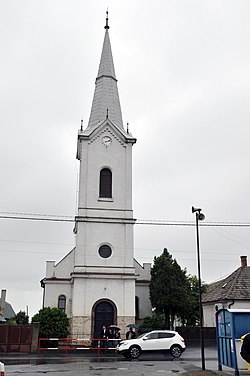
During the Counter-Reformation in the 16th and 17th centuries, Reca (or Réthe, as it was then known) became the shelter of Bohemian and Moravian Protestants after the Battle of the White Mountain, because the Reca gentry was not subject to Catholic Habsburg religious laws. An estimated five-sixths of the Bohemian nobility went into exile soon after the Battle of White Mountain, and their properties were confiscated.[7] This period has left a Unity of the Brethren Chapel in the village, containing pieces of rare ecclesiastical plate. After the city of Skalica, Reca was one of the most significant locations in Royal Hungary for Czech exiles, with approximately 30 families settling there in the 17th century.[8]

In 1878 Reca briefly became known as Nemes Réte, in line with some other curial villages (e.g. Nemes Dedina. It also adopted a peculiar coat of arms consisting of the Royal arms of Hungary).[citation needed]

The 1892 Directory of Hungarian Merchants (which covers roughly 10-15% of the working populace of the Hungarian part of Austria-Hungary) lists the heads of families in Reca engaged in trade. It mainly covers Jewish families living in Reca as craftsmen and shopkeepers, and heads of gentry families engaged in horse-breeding which they subsequently sold in nearby Senec, Bratislava or Vienna.[9] The largest families in the list are the Doka (7 [and long-serving representatives of the noble commune of Reca]), Fadgyas (3), Karátsonyi (4), Klebercz (3), Pomichal (6) and Prikkel (3).[10]

During the First Vienna Award in 1938, Reca once more became part of Hungary, during the regime of admiral Miklós Horthy. In 1945 it was recovered by Czechoslovakia. A number of residents were affected by the Benes Decrees and tenthousands of Hungarian families were forced to move to Hungary and Czechia in 1947 as part of the colonisation of Slovaks in the region.[11]

Notable figures

[edit]

The first individual known to documented history is Petrus Magnus de Réthe, a descendant of the original castle warriors, recorded in 1256 as a castle warrior of Bratislava Castle.[12]

A 1395 document records John and Peter of Reca as having been homini regi (or royal judges) during the reign of Louis I of Hungary (1326-1382).[13]

In 1485, another John of Reca is recorded as judge (iuidex nobilium) of Pozsony County.[14]

Nicholas of Reca was canon and vice-dean, and from 1489 to 1499 dean of the Chapter of Bratislava.[15]

Between 1504 and 1540, Andreas de Réthe was viscount (vice-comes) of Pozsony County (Bratislava).[16]

In the 17th century Péter Réthey was a familiaris (a Hungarian type of vassalage) of the Báthory family, whose members were Kings of Poland and Princes of Transylvania at the time. In 1620 he gained the manor of Füzérradvány from Elisabeth Báthory and her husband Ferenc Nádasdy. Péter Réthey constructed a large fortified seat which today remains one of the largest in Hungary.[17]

A notable 18th-century historical figure of Reca was György Réthey, a former Imperial cavalry officer who fought for Francis II Rákóczi, Prince of Transylvania and leader of the last major uprising of the Hungarian nobility against the Habsburg dynasty (see Rákóczi's War for Independence). Both György Réthey and his brother János defected from Imperial service and commanded hussar regiments under Rákóczi. In 1706, György Réthey led 3,000 men on an infamous attack on Styria, designed to plunder and pillage the local populace. 92 villages, two towns, and several castles were burned during the raid.[18] He also commanded his regiment at the Battle of Trencsén in 1708.

Ferenc Réthey, another eminent supporter of Rákóczi, was, amongst other activities, captain of the medieval Szécsény castle (which was destroyed after the uprising), captain of Sirok castle and, towards the end of his career, captain of Eger fortress and Heves County.[19] On 8 December 1710 Ferenc Réthey and Miklós Perényi capitulated Eger to the Habsburg field-marshal Count Johann Pálffy.[20] It is unclear how closely Ferenc Réthey was related to György Réthey, as prior to the 19th century members of Reca nobility often used only their predicate of "Réthey" or "de Réthe" (meaning 'of Reca') in correspondence and identification, and not their original family names which distinguish individual family lines.

László Dóka was főszolgabíró (Chief Constable) of Pozsony County from 1837 and deputy Judex Curiae Regi (the Lord Chief Justice of Hungary) in the first half of the 19th century, and Sándor Dóka was acting Governor of Pozsony County at the beginning of the 20th.[21]

Marián Réthei Prikkel (1871-1925), a cleric, compiled the first substantial collection of Hungarian folk dances.[22] He also published one of the first monographs on the important early medieval Hungarian manuscript, the Pray Codex.

Ferenc Réthey (1880-1952), a jurist and academic, was Count (Lord Lieutenant) of Moson County.[23]

Richárd Pomichal (1951-2010), was a well-known and popular Hungarian writer, teacher and biologist, who published widely on the ecology of the Csallóköz (Rye Island, Inselschutt) region, as well as writing on Hungarian history and the effects of the Trianon Treaty.[24][25]

István Pomichal (1965, Reca), an agriculturalist, is a member of parliament and the autonomous Bratislava region for the Party of the Hungarian Coalition, a party for the Hungarian minority in Slovakia[26] Pomichal's pedigree cattle, bred on an estate in Tomášov, has won a number of national and international gold prizes in Slovakia and Hungary.

Historical descriptions

[edit]

Matthias Bel: The inhabitants are Hungarians, and not rustics: indeed, they are people both of noble birth and character (manners). They bread they eat is excellent and hospitality takes the first place there. They are proud of their ample herds and satisfied with the fruit of their farming. [27]

Vályi, András (1796): Hungarian village in Bratislava Castle County. Lord County Pálffy is the greatest landowner. The inhabitants are Catholics and Protestants, and the village is occupied by a number of nobles. It is half a mile from Puszta Födémes. The burghers of Bratislava send their young children to the village to learn the Hungarian language.[28]

Fényes, Elek (1851): Réthe, a populous Hungarian village in Bratislava Castle County, one hour east of Szencz. 491 Catholics, 49 Evangelical, 337 Reformed, 149 Jews. With a Reformed and Catholic church, and a synagogue. Large limits boundaries and beautiful expanse of fertile meadows, vast pastures, famous for sheep and cattle market. Many landowning nobles. One street leads to Cseklesz.[29]

Liszka, József (2003): The squires of Reca formed an individual group in the Matyusfold region. This social class of the village, which consisted of both Reformed and Catholics, was wealthier than the average. Their wealth was clear because their dwellings looked like manor houses, they employed liveried coachmen and they sent their children to schools in Bratislava from the 19th century. Reca noble families were also distinctive for their behaviour and mentality. "The necessary honourable elegance and a keeping of a certain distance" remained alive even after there was no longer any justification of property, i.e. in the second half of the 20th century.[30]

[edit]

References

[edit]
[edit]
Revisions and contributorsEdit on WikipediaRead on Wikipedia
from Grokipedia
RecA is a multifunctional protein primarily found in , such as , where it facilitates homologous DNA recombination, repairs double-strand breaks, and activates the response to DNA damage by forming nucleoprotein filaments on single-stranded DNA (ssDNA). Discovered in 1965 through genetic screens identifying recombination-deficient mutants, RecA binds ssDNA in an ATP-dependent manner to search for homologous sequences, invade double-stranded DNA (dsDNA), and promote strand exchange, thereby restoring genome integrity during replication fork stalling or lesions. Structurally, RecA is a 38 monomer composed of 352 , featuring a conserved core domain (residues 34–269) with ATP-binding Walker A and B motifs, an N-terminal domain for dsDNA interaction, and a less conserved, negatively charged C-terminal domain that modulates dsDNA binding and autoregulates activity. In its active form, RecA polymerizes into right-handed helical filaments with approximately six per turn, a 95 pitch, and three bound per , extending ssDNA by 150–160% to facilitate homology recognition via transient base-flipping and minor groove interactions. This filament structure enables RecA's activity, which powers dynamic assembly and disassembly in a 5' to 3' direction, ensuring efficient DNA pairing without requiring for the strand exchange step itself. In , RecA initiates repair by loading onto ssDNA exposed at replication forks or breaks, often mediated by accessory proteins like (which recognizes Chi sites for loading) or the RecFOR pathway (which nucleates filaments on single-strand binding protein-coated ssDNA). The presynaptic filament then performs a homology search, forming a via 3' end invasion, followed by branch migration to create a resolved by resolvases like RuvABC. Beyond recombination, RecA's coprotease function is pivotal: ATP-bound RecA-ssDNA filaments facilitate the autocleavage of the LexA repressor, derepressing over 40 genes—including those for error-prone polymerases like Pol V—to enable translesion synthesis and mutagenesis as a last-resort repair mechanism. RecA activity is tightly regulated at multiple levels to prevent inappropriate recombination or excessive . Transcriptionally, recA expression is SOS-inducible, with basal levels sufficient for routine repair. Post-translationally, the C-terminal domain inhibits spontaneous filament formation, while proteins like DinI stabilize filaments during , RecX limits extension to prevent off-target effects, and UvrD disassembles them post-repair. Single-strand binding protein (SSB) competes for ssDNA but is displaced by RecA nucleation, and inhibitors like RdgC block dsDNA access to fine-tune specificity. Homologs like RadA in and Rad51 in eukaryotes share structural and functional similarities, underscoring RecA's evolutionary conservation in maintenance.

Discovery and historical context

Initial identification

The initial identification of RecA arose from genetic screens for recombination-deficient mutants in Escherichia coli K-12 during the mid-1960s. A. J. Clark and A. D. Margulies employed a assay, in which an Hfr donor strain transferred chromosomal markers to an F⁻ recipient, followed by penicillin enrichment to select against non-recombinants. This approach isolated several rec mutants that exhibited recombination frequencies reduced by over 1,000-fold compared to wild-type strains, indicating a critical role for these genes in . These recA mutants also demonstrated pronounced sensitivity to ultraviolet (UV) light, with survival fractions dropping to less than 10⁻⁴ after a 20 J/m² dose, in contrast to wild-type cells that retained over 10% viability under the same conditions. Complementation tests using partial diploids confirmed that the recA locus was responsible for both the recombination defect and UV sensitivity, establishing an early link between RecA function and DNA repair. In the 1970s, genetic mapping positioned the recA gene at approximately 58 minutes on the E. coli chromosome, and complementation experiments with cloned DNA fragments restored wild-type recombination proficiency in mutant backgrounds. The gene product was identified as a 38,000 Da protein, initially termed protein X, through radiochemical labeling of proteins induced after UV treatment in strains carrying a recA-transducing phage. Purification from overproducing strains via ion-exchange chromatography yielded a homogeneous protein that complemented recA defects in vivo. Early biochemical assays in the late 1970s revealed that purified RecA binds single-stranded DNA with high affinity in the presence of ATP, forming nucleoprotein filaments essential for recombination. In recombination-deficient strains, addition of exogenous RecA restored ATP-dependent DNA renaturation activity, where complementary single strands formed duplex aggregates at rates exceeding 10 times background levels when Mg²⁺ and ATP were provided. These findings solidified RecA's direct involvement in ATP-coupled DNA strand exchange.

Nomenclature and evolutionary conservation

The recA gene in derives its name from "recombination," reflecting its identification as the first locus (denoted "A") associated with recombination-deficient mutants in early genetic screens. In initial studies, mutations in this gene were characterized for their defects in conjugal recombination and sensitivity to DNA-damaging agents. Early literature also referred to recA and its mutants by alternative designations, such as tif (for thermal induction of filamentation), lexB, or sbcA, highlighting its multifaceted roles beyond recombination, including in the response and filamentation under stress. RecA exhibits strong evolutionary conservation across prokaryotes, being nearly ubiquitous in where it serves essential functions in and , with a single recA per in most eubacterial species. Core domains, including the DNA-binding L1 and L2 loops, are highly preserved, featuring conserved acidic and glycine residues that facilitate monomer interactions and DNA engagement during filament formation. However, recA is absent in some with highly reduced minimal genomes, such as certain obligate intracellular parasites like species, which rely on alternative recombination pathways. Phylogenetic analyses frequently employ RecA as a reliable for , as its sequences reveal deep evolutionary relationships and enable subclassification of major groups. For instance, within the gamma-proteobacteria, RecA proteins share sequence identities often exceeding 50%, supporting distinctions between ecologically divergent subgroups like those associated with hosts versus environments. Key conserved residues, such as those in the Walker A and B motifs for ATP binding and , have been pinpointed through multiple sequence alignments, underscoring their functional invariance across diverse bacterial lineages.

Structural features

Monomer architecture

The RecA monomer from Escherichia coli is a single polypeptide chain of 353 amino acids with a molecular weight of 37.8 kDa (approximately 38 kDa). It adopts a compact fold comprising three distinct domains: an N-terminal domain spanning residues 1–33, which plays a regulatory role in protein interactions; a central core domain encompassing residues 34–269, responsible for ATPase activity; and a C-terminal domain covering residues 270–353, which facilitates interactions with DNA and accessory proteins. The central domain exhibits a characteristic RecA fold, featuring a seven-stranded β-sheet flanked by α-helices and an α-helical bundle that contributes to nucleotide binding. Two prominent flexible loops extend from this domain: loop L1 (residues 157–164) and loop L2 (residues 195–209), which are disordered in the crystal structure but are crucial for gripping single-stranded DNA through direct contacts. These elements position the monomer for assembly into higher-order structures while maintaining functional versatility. The atomic structure of the RecA monomer was first determined in 1992 by Story et al. using X-ray crystallography at 2.3 Å resolution (PDB: 2REB), revealing the nucleotide-free (apo) form with a modeled ADP-binding site in the core domain.

Filament assembly and dynamics

RecA monomers assemble into a right-handed helical nucleoprotein filament on single-stranded DNA (ssDNA), a process essential for homologous recombination. This assembly begins with nucleation, where cooperative binding of 3-6 RecA monomers to ssDNA overcomes an initial energy barrier, facilitated by the protein's core domain interactions that promote multimerization. Once nucleated, the filament extends directionally, with monomers adding primarily to the 3' end relative to the ssDNA polarity, forming a continuous helix comprising approximately 6 monomers per turn and a pitch of 95 Å. The polymerization involves the central core domain of RecA monomers interfacing with adjacent subunits, as briefly noted in structural descriptions of the monomer architecture. The filament exhibits structural transitions between active and inactive states tied to binding. In the ATP-bound conformation, the filament adopts an extended structure (pitch ~95-100 Å), which is competent for DNA binding and recombination activities. In contrast, the ADP-bound state compresses the (pitch ~74 Å), rendering it inactive and prone to disassembly. These transitions occur dynamically, with filaments reversibly interconverting between states, and the compressed form occasionally exhibiting variable , including a roughly 50% occurrence of left-handed configurations in certain conditions. Filament dynamics involve , where RecA monomers dissociate from the 5' proximal end while adding to the 3' end, maintaining filament length under steady-state conditions despite . This process is influenced by single-stranded DNA-binding protein (SSB), which initially coats ssDNA but is displaced by incoming RecA during and extension, with SSB diffusion aiding RecA access to binding sites. In vivo, RecA filaments can reach lengths corresponding to up to 10 kb of ssDNA, enabling efficient homology search across large genomic regions. Recent cryo-electron microscopy (cryo-EM) studies have provided high-resolution insights into the presynaptic filament structure. For instance, the 2023 structure of the Streptococcus pneumoniae RecA-ssDNA filament (PDB: 8AMD) reveals the helical arrangement at 3.9 Å resolution, highlighting how the L1 and L2 loops of RecA protrude to engage ssDNA in the active extended state, consistent with earlier E. coli models but refined for bacterial diversity. Similarly, 2023 cryo-EM structures of E. coli RecA filaments in complex with SOS regulators like DinI and LexA (e.g., PDB: 8F0R) illustrate how these proteins modulate filament assembly and stability.

Biochemical mechanisms

DNA binding and strand exchange

RecA exhibits two distinct DNA-binding sites that facilitate its role in homologous recombination. The primary binding site interacts with high affinity to single-stranded DNA (ssDNA), with a dissociation constant (K_d) of approximately 10 nM, primarily through the flexible L1 and L2 loops located in the core domain of the RecA monomer. These loops enable cooperative binding, encircling the ssDNA in a right-handed helical nucleoprotein filament with a stoichiometry of about three nucleotides per RecA monomer. In contrast, the secondary binding site shows lower affinity for double-stranded DNA (dsDNA), typically in the range of 10- to 100-fold weaker than for ssDNA, and is mediated by the C-terminal domain, which initially captures dsDNA during homology search. This differential affinity ensures preferential filament formation on ssDNA as a prerequisite for subsequent interactions. The strand exchange mechanism promoted by RecA involves a three-strand exchange process where the RecA-ssDNA filament invades a homologous dsDNA molecule. In the presynapsis phase, the nucleoprotein filament assembles on ssDNA, stretching it to a 1.5-fold extended conformation suitable for homology recognition. Synapsis follows, during which the secondary site binds incoming dsDNA, and the L2 loop inserts into the duplex to unwind it base-pair by base-pair, allowing the homologous ssDNA strand to pair and form an initial 10-12 base pair heteroduplex while displacing the non-complementary strand to create a displacement loop (D-loop). Branch migration then extends the heteroduplex region unidirectionally, driven by sequential ATP binding and hydrolysis, propagating the exchange over thousands of base pairs. Key intermediates in this process include paranemic joints, where the ssDNA and dsDNA align in parallel without interwinding or base pairing, facilitating initial homology sampling, and plectonemic joints, which form as the strands intertwine during branch migration, stabilizing the exchanged structure. The transition from paranemic to plectonemic configurations involves a 5'-directed tilt in the invading strand initially, shifting to 3'-directed progression for termination. In vitro assays reconstitute RecA-mediated strand exchange using circular ssDNA (e.g., phage ) coated with RecA and linear homologous dsDNA, yielding or intermediates detectable by . Post-exchange, these require RuvAB for efficient branch migration and RecA filament disassembly, followed by RuvC resolution to produce recombinant products, achieving up to 65% yield in optimized systems.

ATPase activity and energy coupling

RecA exhibits DNA-dependent activity, hydrolyzing ATP to ADP and inorganic (P_i) in a manner tightly coupled to its role in . In the absence of DNA, RecA displays a low basal rate of approximately 0.02 min⁻¹ per , with a K_m for ATP around 60 μM under neutral conditions. This activity is dramatically stimulated by single-stranded DNA (ssDNA), increasing the (k_cat) to 20–30 ATP hydrolyzed per minute per RecA , representing a roughly 1000-fold enhancement. The Michaelis-Menten parameters under these conditions show a K_m for ATP of approximately 20–50 μM, indicating high affinity, and the reaction follows cooperative kinetics with a Hill coefficient of about 3, reflecting the multimeric nature of the RecA filament. The cycle is integral to RecA's functional dynamics within the filament. ATP binding to RecA monomers promotes assembly into an active, extended helical conformation that enhances ssDNA affinity and facilitates presynaptic complex formation, as well as initial strand invasion during homology search. Subsequent , stimulated by ssDNA binding, powers the unidirectional branch migration phase of strand exchange, where the invading strand extends through the homologous duplex at a rate of approximately 20 base pairs per ATP molecule hydrolyzed. This also drives partial filament disassembly, allowing dynamic turnover of RecA monomers to prevent stagnation and support processive recombination over long DNA stretches. The simplified reaction for filament-associated can be represented as: RecA6n+n ATP+ssDNARecA6nssDNA+n ADP+n Pi\text{RecA}_{6n} + n \text{ ATP} + \text{ssDNA} \rightarrow \text{RecA}_{6n} \cdot \text{ssDNA} + n \text{ ADP} + n \text{ P}_i where the subscript denotes the hexameric repeat unit of the filament, and n scales with filament length. Nucleotide analogs modulate this ATPase activity by trapping specific conformational states. The non-hydrolyzable ATP analog AMPPNP binds tightly and stabilizes the active filament conformation, promoting DNA binding and presynaptic filament formation but inhibiting hydrolysis-dependent steps like branch migration. In contrast, ADP favors the inactive, compressed filament state, reducing DNA affinity and ATPase stimulation, thereby acting as a competitive inhibitor with respect to ATP. These regulatory effects underscore the energy coupling that links nucleotide state to RecA's mechanochemical cycle.

Biological roles in bacteria

Homologous recombination and DNA repair

RecA plays a central role in bacterial homologous recombination, particularly in the repair of double-strand breaks (DSBs), which arise from replication fork collapse, ionizing radiation, or other genotoxic stresses. In Escherichia coli, the primary pathway for DSB repair begins with the RecBCD helicase-nuclease complex binding to the broken DNA ends. RecBCD unwinds and resects the duplex DNA in a 5' to 3' direction, generating a 3' single-stranded DNA (ssDNA) tail, until it encounters a Chi (crossover hotspot instigator) sequence, typically 5'-GCTGGTGG-3'. At Chi sites, RecBCD's nuclease activity attenuates, and it facilitates the loading of RecA onto the ssDNA, forming a right-handed helical nucleoprotein filament. This RecA-ssDNA filament then searches for and invades a homologous duplex region, often on the sister chromosome, initiating strand exchange to restore the broken chromosome through gene conversion or other outcomes. Beyond DSBs, RecA contributes to the repair of other replication-associated lesions. In post-replication gap repair, UV-induced or other blocks stall the replication , leaving ssDNA gaps in the strand. RecA binds these gaps, often with assistance from the RecFOR pathway, and promotes recombination with the continuous duplex to fill the gap via template-directed synthesis, preventing fork collapse into a DSB. Similarly, interstrand crosslinks (ICLs), formed by agents like or , block replication and transcription; initial unhooking by (e.g., UvrABC) generates a DSB-like intermediate, which RecA resolves through recombination-dependent bypass, ensuring continuity. These processes highlight RecA's versatility in tolerating and repairing replication stress without triggering error-prone alternatives. Genetic studies underscore RecA's essentiality in these pathways. Mutations in recA result in a dramatic reduction (often >1,000-fold) in homologous recombination frequency, rendering cells hypersensitive to DNA-damaging agents like UV light and ionizing radiation. Furthermore, recA mutants exhibit severe synthetic sickness when combined with recBCD mutations under genotoxic conditions, as the absence of RecBCD prevents ssDNA generation for RecA loading, leading to unrepaired DSBs and poor viability. These phenotypes confirm RecA's indispensable role in recombination-mediated repair. Two main models describe RecA-dependent DSB repair in : the double-strand break repair (DSBR) model and synthesis-dependent strand annealing (SDSA). In DSBR, after RecA-mediated invasion by one DSB end, the second end is captured to form a double , which is resolved by RuvABC, potentially yielding crossovers that exchange flanking markers. In contrast, SDSA involves only one end invading the homolog, with extending the invading strand before it anneals back to the original DSB end, favoring non-crossover gene conversion and avoiding crossovers, which is predominant in mitotic-like bacterial growth. The core strand exchange step in both models relies on RecA's ability to align and pair homologous sequences.

SOS response induction

The SOS response in bacteria, such as Escherichia coli, is triggered by DNA damage that generates single-stranded DNA (ssDNA), which serves as a signal for RecA activation. Upon binding to ssDNA in the presence of ATP, RecA forms a nucleoprotein filament that adopts an extended conformation, enabling its coprotease activity. This activated RecA filament, often denoted as RecA*, facilitates the autocleavage of the LexA repressor protein, a key regulator that normally binds to SOS box operators in promoter regions to repress transcription. The seminal discovery of RecA's role as a coprotease in promoting LexA cleavage was reported in 1980, establishing the mechanism by which DNA damage induces the SOS regulon. The interaction between RecA* and LexA positions the repressor's cleavage site—a specific Ala84-Gly85 within its C-terminal domain—adjacent to LexA's own catalytic Ser119-Lys156 dyad, accelerating the intramolecular hydrolysis reaction by several orders of magnitude compared to unstimulated LexA. This self-cleavage inactivates LexA dimers, leading to their dissociation from DNA and derepression of over 50 genes involved in , cell division inhibition, and . Efficient coprotease activity requires an extended RecA filament of sufficient length, typically involving multiple RecA protomers (with studies indicating that filaments spanning at least several hundred of ssDNA are optimal for robust LexA stimulation, corresponding to over 100 RecA monomers given the ~3 covered per ). , this threshold ensures that induction occurs only when significant ssDNA accumulation signals substantial DNA damage, with full activation typically observed 5-10 minutes post-damage in UV-irradiated cells. A major outcome of LexA cleavage is the upregulation of error-prone DNA polymerases, such as DNA polymerase V (Pol V, encoded by umuDC), which enables translesion synthesis across damaged templates but at the cost of increased mutation rates. Pol V activity is particularly dependent on RecA*, as the polymerase incorporates RecA as a subunit in its mutasomal complex (Pol V Mut = UmuD'₂C-RecA-ATP), facilitating replication bypass and contributing to SOS-induced mutagenesis. This mutagenic pathway enhances survival under genotoxic stress but promotes genetic variability, including adaptive mutations. The SOS response includes on RecA expression, as the recA itself is under LexA repression; upon induction, RecA protein levels increase 10- to 20-fold within minutes, amplifying filament formation and sustaining the response until DNA damage is resolved. This autoregulatory loop ensures rapid and proportional escalation of repair mechanisms proportional to damage severity.

Involvement in genetic exchange

Natural competence and transformation

Natural competence is a physiological state in certain bacteria that enables the uptake of exogenous DNA from the environment, typically as single-stranded DNA (ssDNA), which is then integrated into the genome through homologous recombination. In species like Bacillus subtilis, this process occurs primarily during stationary phase in a subpopulation of cells, where the incoming ssDNA is protected and loaded with RecA to form nucleoprotein filaments that search for homologous sequences on the chromosome, initiating strand invasion and D-loop formation for stable integration. RecA is essential for the recombinational integration step, as it polymerizes on the ssDNA to facilitate homology recognition and strand exchange; without RecA, the incoming DNA is degraded rather than incorporated. In Streptococcus pneumoniae, recA mutants exhibit transformation efficiencies reduced by approximately 30-fold compared to wild-type cells, demonstrating strong dependence on RecA for producing transformants. Similarly, in B. subtilis, chromosomal transformation efficiency in ΔrecA mutants drops to less than 0.01% of wild-type levels, a reduction exceeding 10,000-fold, while plasmid transformation remains largely unaffected, highlighting RecA's specific role in homologous chromosomal integration. The requirement for RecA varies slightly across species but is universally critical for transformation. In S. pneumoniae, RecA is upregulated as part of the competence regulon, ensuring sufficient levels for efficient recombination during transient competence induced by stress or high density. In contrast, Neisseria gonorrhoeae maintains constitutive competence without RecA induction, yet recA mutants show substantially reduced transformation efficiency, underscoring RecA's indispensable role in ssDNA integration even in continuously competent cells. Experimental evidence from transformation assays confirms these dependencies. In S. pneumoniae, competence assays using recA knockout strains and fluorescence microscopy reveal no formation of RecA-DprA foci at replication forks upon ssDNA addition, correlating with abolished transformation; wild-type cells show rapid filament assembly and substantially higher integration rates. In B. subtilis, marker rescue assays with ΔrecA strains demonstrate blocked chromosomal recombination, with efficiencies below detection limits for homologous markers, while heterologous DNA uptake proceeds but fails to integrate without RecA-mediated strand exchange. These studies collectively establish RecA's promotion of D-loop formation as the key bottleneck in transformation success.

Conjugation and plasmid transfer

In bacterial conjugation, the Tra machinery of conjugative plasmids, such as the , exports single-stranded DNA (ssDNA) from the donor cell to the recipient through a type IV secretion system. Upon arrival in the recipient , the ssDNA is initially bound by single-stranded DNA-binding protein (SSB) to prevent degradation. If homologous sequences are present in the recipient , RecA polymerizes onto this ssDNA to form a helical filament. This RecA-ssDNA filament promotes single-strand invasion, initiating that allows the transferred DNA to pair with homologous regions, such as resident plasmids or the chromosome. The RecA-mediated strand invasion is critical for resolving cointegrates that arise during plasmid transfer when homology leads to recombination, forming multimers. These cointegrates are subsequently resolved by the host's XerCD site-specific at dif sites, restoring monomeric or chromosomal structures for stable replication and segregation. Without RecA, is impaired, leading to unstable intermediates in cases of homology, though non-homologous plasmid establishment via autonomous replication can still occur. RecA's activity couples energy to filament dynamics, ensuring efficient invasion and exchange during this process. RecA's role in conjugation contributes to (HGT) by facilitating recombination-dependent stabilization and dissemination of plasmids carrying factors and resistance genes. Studies with recA mutants demonstrate defects in recombination and integration of transferred DNA when homology is present. This underscores RecA's contribution to the evolutionary success of conjugative plasmids in promoting adaptive genetic exchange, particularly in homologous contexts. In the F-plasmid system, RecA facilitates the RecE recombination pathway, an alternative RecA-dependent mechanism encoded by the Rac that enhances strand exchange during transfer. Although the encodes the PsiB inhibitor to modulate RecA activity and suppress response induction by the incoming ssDNA, RecA remains essential for homology-directed integration and establishment in the recipient when recombination is required. experiments have produced RecA variants (e.g., V79L, I102L) that increase F-plasmid conjugation efficiency by 2.5- to 3-fold through improved filament stability and reduced sensitivity to regulators like RecX, confirming RecA as a key factor in recombination-limited steps of this process.

Homologs and comparative biology

Eukaryotic counterparts (Rad51 family)

In eukaryotes, the primary functional counterpart to the bacterial RecA protein is Rad51, a recombinase that shares approximately 30% sequence identity with Escherichia coli RecA in its core ATPase domain. Both proteins assemble into right-handed helical nucleoprotein filaments on single-stranded DNA (ssDNA), with each monomer binding about three nucleotides, to search for homologous sequences and promote strand invasion during recombination. However, Rad51 filaments are more dynamic and exhibit irregular pitch and subunit rotation compared to the highly ordered structure of RecA filaments, reflecting adaptations to the complex eukaryotic chromatin environment. Unlike RecA, which binds ssDNA autonomously, Rad51 requires mediator proteins such as BRCA2 to displace replication protein A (RPA) and nucleate filaments on RPA-coated ssDNA, ensuring efficient presynaptic assembly. Functionally, Rad51 drives double-strand break (DSB) repair and meiotic recombination via the (HR) pathway, invading homologous duplex DNA to form displacement loops (D-loops) that enable error-free repair using the sister as a template. This process is tightly regulated in the S and G2 phases of the to maintain stability. Rad51 activity is inhibited by anti-recombinases like RADX, which binds ssDNA and caps Rad51 filaments to prevent excessive extension and promote timely disassembly, thereby balancing recombination with replication fork progression. Key differences from RecA include the absence of coprotease activity in Rad51, which in bacteria facilitates LexA cleavage for the response but is not conserved in eukaryotes, and enhanced in strand exchange due to Rad51's preference for unidirectional invasion from the 3' end of ssDNA overhangs. Additionally, Rad51's activity is significantly lower (0.16–0.21 ATP/min) than RecA's, supporting controlled filament dynamics rather than rapid turnover. Mutations in RAD51 compromise HR efficiency and are linked to genomic instability and disease. Heterozygous dominant-negative variants cause Fanconi anemia complementation group R (FANCR), characterized by defective DSB repair, bone marrow failure, and cancer predisposition due to impaired filament stability and fork protection. RAD51 also interacts with and , and its dysregulation exacerbates breast and risk, as seen in variants that disrupt mediator recruitment and HR fidelity. These links highlight Rad51's critical role in suppressing tumorigenesis through precise recombination.

Archaeal and viral RecA-like proteins

Archaeal RecA homologs, primarily known as RadA proteins, play essential roles in homologous recombination and DNA repair, sharing approximately 20-30% amino acid sequence identity with bacterial RecA while exhibiting higher similarity (around 40%) to eukaryotic Rad51 proteins. In hyperthermophilic archaea such as Sulfolobus solfataricus, RadA catalyzes ATP-dependent DNA strand exchange, forming joint molecules between single-stranded and double-stranded DNA substrates at elevated temperatures (e.g., 65–90°C), which supports repair in extreme thermal environments. These proteins assemble into right-handed helical nucleoprotein filaments on single-stranded DNA, with a pitch of about 10.6 nm and one monomer binding every three nucleotides, facilitating homologous pairing analogous to RecA's mechanism. RadA filaments in like Sulfolobus exhibit structural adaptations for stability in hyperthermophilic conditions, maintaining activity across a broad temperature range (37-90°C) and showing enhanced compared to bacterial RecA. In halophilic , such as those in the genus Haloferax, RadA variants tolerate high intracellular salt concentrations (near saturation levels of KCl), enabling function in hypersaline habitats through acid-enriched surface residues that prevent aggregation under ionic stress. These adaptations underscore RadA's role in preserving genomic integrity amid environmental extremes, with knockout studies in Sulfolobus islandicus revealing increased sensitivity to DNA-damaging agents like UV radiation. A key accessory to RadA is the paralog RadB, found predominantly in euryarchaea, which functions as a recombination mediator by stimulating RadA's strand exchange activity without possessing significant or strand exchange capabilities itself. RadB interacts directly with RadA to load it onto single-stranded DNA, analogous to bacterial accessory proteins like RecFOR or eukaryotic Rad52, and genetic analyses in Haloferax volcanii demonstrate that RadB mutants exhibit recombination defects that are suppressed by RadA overexpression. Viral RecA-like proteins, such as UvsX in bacteriophage T4, share approximately 23% sequence identity with bacterial RecA and are critical for recombination-dependent DNA replication during infection. UvsX forms helical filaments on single-stranded DNA, promoting homologous pairing and strand invasion, while displacing the phage single-stranded DNA-binding protein gp32 to initiate replication forks; this process is essential for generating concatemeric genomes from terminally redundant ends. In T4, UvsX-mediated recombination supports rapid progeny production, contributing to high burst sizes (up to 200-300 virions per cell) by enabling efficient repair and replication under host stress. These archaeal and viral RecA homologs highlight evolutionary divergences from bacterial RecA, with RadA and Rad51 forming a distinct from RecA, suggesting their common origin in the (LUCA) through ancient events that predated the split of bacterial, archaeal, and eukaryotic lineages. This ancestral likely facilitated primordial , with subsequent adaptations enabling specialization in extremophiles and viral life cycles.

Applications and significance

Clinical relevance in antibiotic resistance

RecA plays a central role in the development of resistance through its activation of the response, which promotes error-prone and in bacteria exposed to DNA-damaging antibiotics. When antibiotics like fluoroquinolones induce DNA double-strand breaks, RecA filaments form on single-stranded DNA, facilitating the autocleavage of the LexA repressor and derepressing SOS genes, including those encoding low-fidelity polymerases such as Pol V. This leads to hypermutation rates, enabling the rapid evolution of resistance mutations in target genes like gyrA and parC, which encode and topoisomerase IV, respectively. In specific pathogens, RecA contributes to resistance via mechanisms like gene amplification. For instance, in , RecA-dependent tandem amplification of the gene blaSHV-5 generates heteroresistant subpopulations with elevated enzyme copy numbers, conferring high-level resistance to beta-lactams such as ceftazidime; deletion of recA abolishes this amplification under pressure. Similarly, RecA inhibition has been shown to reduce bacterial , the tolerant subpopulation that survives treatment without genetic resistance, by disrupting SOS-mediated survival pathways in P. aeruginosa biofilms. Therapeutic strategies targeting RecA aim to sensitize bacteria to antibiotics and prevent resistance evolution. Small-molecule RecA inhibitors, such as iron(III) phthalocyanine-4,4′,4″,4‴-tetrasulfonic acid (Fe-PcTs), block RecA filamentation and ATPase activity, synergizing with fluoroquinolones and beta-lactams to potentiate killing in Gram-negative bacteria including P. aeruginosa; in murine models of infection, Fe-PcTs co-administration eliminated resistant subpopulations. Other compounds, like 2-aminoimidazole derivatives, similarly inhibit RecA and reduce mutagenesis rates, though as of 2025, no RecA inhibitors have advanced to clinical trials for multidrug-resistant (MDR) infections, with efforts focused on preclinical optimization for synergy against MDR pathogens. RecA-mediated resistance exacerbates the global burden of (AMR), which is attributable to bacterial AMR caused over 1.20 million deaths annually as of 2019, with projections estimating up to 1.91 million by 2050 if unchecked. This impact underscores RecA's role as a for interventions to curb the spread of MDR infections.

Biotechnological and uses

RecA plays a pivotal role in biotechnological applications, particularly in recombineering techniques for bacterial genome engineering. In Escherichia coli, the lambda Red system, which facilitates RecA-independent homologous recombination, has been augmented by transient co-expression of RecA to enhance recombination efficiency, especially for editing large constructs like bacterial artificial chromosomes (BACs). This approach improves host cell survival during transformation and increases the yield of successful recombinants using either double- or single-stranded DNA donors, enabling precise insertions, deletions, and modifications with minimal off-target effects. In , RecA-based genetic circuits serve as sensitive DNA damage sensors within biosensors for detecting genotoxic agents. Engineered promoters from the RecA regulon, such as the Vibrio natriegens P_VRecA variant redesigned with an AT-rich spacer (P_VRecA-AT), exhibit ultrasensitive responses to stressors like UV radiation and , achieving up to a 128-fold induction of reporter genes over extended periods. These circuits incorporate amplifiers and feedback loops for robustness against environmental variations, allowing applications in and cellular diagnostics. Additionally, the UV-inducible nature of RecA filament formation enables optogenetic-like control, where spatial activation via targeted light exposure triggers responses in engineered cells without chemical inducers. For industrial applications, RecA's eukaryotic homolog Rad51 has been overexpressed in yeasts like Pichia pastoris to boost efficiency, facilitating . Overexpression of PpRAD51 increases the success rate of seamless gene deletions and multi-gene integrations to approximately 12.5%, compared to near-zero in wild-type strains, by enhancing strand invasion during repair. This has enabled the construction of pathways for producing high-value compounds, such as fatty alcohols at yields of 12.6–380 mg/L, by integrating enzymes at neutral genomic loci under optimized promoters. Recent advances include CRISPR-Cas9 fusions with RecA or its homologs to promote precise while minimizing (NHEJ). For instance, Cas9-RecA fusion proteins have been shown to enhance single-strand annealing (SSA), a form of HR, by 2.5-fold in human HEK293T cells, improving targeted edits for applications.

References

Add your contribution
Related Hubs
User Avatar
No comments yet.