Hubbry Logo
Reticular fiberReticular fiberMain
Open search
Reticular fiber
Community hub
Reticular fiber
logo
8 pages, 0 posts
0 subscribers
Be the first to start a discussion here.
Reticular fiber
Reticular fiber
from Wikipedia

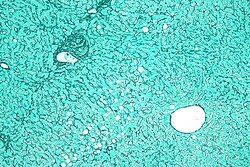
A liver biopsy stained with a reticulin stain demonstrating a normal hepatic plate thickness and mild steatosis.

Reticular fibers, reticular fibres or reticulin is a type of fiber in connective tissue[1] composed of type III collagen secreted by reticular cells.[2] They are mainly composed of reticulin protein and form a network or mesh. Reticular fibers crosslink to form a fine meshwork (reticulin). This network acts as a supporting mesh in soft tissues such as liver, bone marrow, and the tissues and organs of the lymphatic system.[3]

History

[edit]

The term reticulin was coined in 1892 by M. Siegfried.[4]

Today, the term reticulin or reticular fiber is restricted to referring to fibers composed of type III collagen. However, during the pre-molecular era, there was confusion in the use of the term reticulin, which was used to describe two structures:

  • the argyrophilic (silver staining) fibrous structures present in basement membranes
  • histologically similar fibers present in developing connective tissue.[5]

The history of the reticulin silver stain is reviewed by Puchtler et al. (1978).[6] The abstract of this paper says:

Maresch (1905) introduced Bielschowsky's silver impregnation technic for neurofibrils as a stain for reticulum fibers, but emphasized the nonspecificity of such procedures. This lack of specificity has been some confirmed repeatedly. Yet, since the 1920s the definition of "reticulin" and studies of its distribution were based solely on silver impregnation technics. The chemical mechanism and specificity of this group of stains is obscure. Application of Gömöri's and Wilder's methods to human tissues showed variations of staining patterns with the fixatives and technics employed. Besides reticulum fibers, various other tissue structures, e.g. I bands of striated muscle, fibers in nervous tissues, and model substances, e.g. polysaccharides, egg white, gliadin, were also stained. Deposition of silver compounds on reticulum fibers was limited to an easily removable substance; the remaining collagen component did not bind silver. These histochemical studies indicate that silver impregnation technics for reticulum fibers have no chemical significance and cannot be considered as histochemical technics for "reticulin" or type III collagen.

Structure

[edit]

Reticular fiber is composed of one or more types of very thin and delicately woven strands of type III collagen. These strands build a highly ordered cellular network and provide a supporting network. Many of these types of collagen have been combined with carbohydrate. Thus, they react with silver stains (argyrophilic) and with periodic acid-Schiff reagent but are not demonstrated with ordinary histological stains such as those using hematoxylin. The 1953 Science article mentioned above concluded that the reticular and regular collagenous materials contains the same four sugars – galactose, glucose, mannose, and fucose – but in a much greater concentration in the reticular than in the collagenous material.

In a 1993 paper, the reticular fibers of the capillary sheath and splenic cord were studied and compared in the pig spleen by transmission electron microscopy.[7] This paper attempted to reveal their components and the presence of sialic acid in the amorphous ground substance. Collagen fibrils, elastic fibers, microfibrils, nerve fibers, and smooth muscle cells were observed in the reticular fibers of the splenic cord. On the other hand, only microfibrils were recognized in the reticular fibers of the capillary sheath. The binding of LFA lectin to the splenic cord was stronger than the capillary sheath. These findings suggested that the reticular fibers of the splenic cord include multiple functional elements and might perform an important role during contraction or dilation of the spleen. On the other hand, the reticular fiber of the capillary sheath resembled the basement membrane of the capillary in its components.

Because of their affinity for silver salts, these fibers are called argyrophilic.

References

[edit]
[edit]
Revisions and contributorsEdit on WikipediaRead on Wikipedia
from Grokipedia
Reticular fibers are thin, branching fibers composed primarily of type III collagen that form delicate, net-like networks providing and in various soft tissues and organs. These fibers, also known as argyrophilic fibers due to their affinity for silver stains, differ from thicker type I fibers by their finer diameter and branching structure, which creates a loose, supportive rather than dense bundles. In , reticular fibers are not visible in routine hematoxylin and (H&E) preparations but can be selectively demonstrated using silver impregnation techniques, appearing as fine, dark fibrils. Functionally, reticular fibers serve as a delicate framework that anchors and supports individual cells, particularly in hematopoietic and lymphoid tissues, while also contributing to the underlying epithelia, , and . They are prominently located in organs such as the lymph nodes, , liver, , and the stroma of endocrine glands, where they facilitate cellular organization and without impeding flexibility. Unlike elastic fibers, which provide , reticular fibers emphasize tensile strength in a networked form, playing a key role in maintaining tissue integrity during dynamic physiological processes.

Overview

Definition

Reticular fibers represent a specialized subtype of collagenous fibers, distinguished by their primary composition of , which assembles into a delicate, branching network that provides structural support in soft connective tissues. These fibers are secreted by reticular cells, a type of , and form an intricate meshwork that underpins the architecture of various tissues. Key characteristics of reticular fibers include their thin diameter, typically ranging from 0.2 to 1 μm, which contributes to their fine, thread-like appearance. They also possess an argyrophilic nature, reflecting their affinity for silver-based impregnation due to the biochemical properties of their components. This association with reticular cells ensures their localized production and integration into supportive frameworks. In distinction from other fibers, reticular fibers are finer and exhibit greater branching than the robust, rope-like fibers, enabling a more flexible, net-like arrangement rather than rigid, parallel bundles. Unlike elastic fibers, which incorporate for reversible deformation and , reticular fibers lack this elastic component and instead offer a stable, non-extensible scaffold.

Tissue Distribution

Reticular fibers are predominantly distributed in hematopoietic tissues, including the , , and lymph nodes, where they form the supportive framework for blood cell production and immune cell organization. In lymphoid organs such as lymph nodes and the , these fibers create a delicate meshwork that underpins migration and function. They are also prominent in the liver, particularly surrounding the sinusoids to provide structural integrity to the hepatic . Additionally, reticular fibers occur in the kidney's peritubular spaces, enveloping renal tubules within the , and in endocrine glands like the , where they separate cords of secretory cells. These fibers characteristically form a reticular stroma that supports parenchymal cells in soft organs and facilitates the movement of immune cells through delicate networks, enabling efficient cellular interactions and exchange. In contrast, reticular fibers are absent or present in minimal amounts in dense connective tissues, such as tendons and ligaments, which rely instead on thick bundles of for tensile strength. This distribution pattern highlights their role in loosely organized, highly cellular environments rather than rigid, load-bearing structures. Specific examples illustrate their localization: in the , reticular fibers form sheaths around capillaries known as ellipsoids, which house macrophages and aid in blood filtration. In the , they create a supportive stroma that anchors hematopoietic stem cells and promotes sites of production. Similarly, in the liver, they outline the sinusoids to maintain the organ's vascular architecture, while in the kidney's peritubular interstitium, they provide a resilient network around tubules to support tubular function and interstitial . In the , fine reticular fibers delineate zones of epithelial cell cords, enhancing vascular access for hormone secretion.

Composition and Structure

Molecular Components

Reticular fibers are primarily composed of type III , synthesized as a procollagen consisting of three pro-α1(III) chains that assemble into a homotrimer (or occasionally heterotrimers with other collagen types). This homotrimeric structure is encoded by the COL3A1 gene and features a central triple-helical domain flanked by N- and C-terminal propeptides, which are cleaved post-translationally to yield mature tropocollagen approximately 300 nm in length. The high and content in type III collagen—approximately 20-25% of , with about 145 of 239 residues hydroxylated to 4-—provides thermal stability and rigidity to the fiber through hydrogen bonding and steric effects. The core repeating structural motif of type III collagen is the triplet sequence (Gly-X-Y)_n, where n ≈ 343, glycine occupies every third position to enable tight packing, X is frequently proline, and Y is predominantly hydroxyproline, facilitating the formation of a right-handed triple helix from three left-handed polyproline II-like chains. This triple-helical conformation allows the molecules to self-assemble laterally and end-to-end into thin fibrils (20-60 nm diameter) characteristic of reticular fibers, distinguishing them from thicker type I collagen fibrils. In addition to type III collagen, reticular fibers incorporate associated molecules that enhance their biochemical properties and integration within tissues, including such as , which contribute to charge-based interactions and hydration. Proteoglycans, often bearing these glycosaminoglycan side chains, bind to the collagen fibrils and modulate fiber assembly and mechanical resilience. Microfibrils containing are also integrated, providing elasticity and structural templating, particularly in networks like those in lymph nodes. The overall composition reflects a high content relative to other collagens (up to 10% by weight), with carbohydrates primarily from glycosaminoglycans and proteoglycans, supporting the fibers' delicate, branching architecture.

Microscopic Appearance

Under light microscopy, reticular fibers appear as thin, anastomosing threads that form a delicate, lace-like meshwork supporting cellular elements in various tissues. These fibers typically measure 0.2–2 μm in diameter and exhibit branching at acute angles, creating an intricate network that is often indistinct in routine hematoxylin and eosin preparations due to their fineness. In electron microscopy, reticular fibers are resolved as consisting of small collagen fibrils with diameters of 20–40 nm, arranged individually or in loose bundles and coated with an amorphous rich in carbohydrates. Reticular fibers exhibit a banding pattern similar to fibrils, with a periodicity of approximately 64-68 nm, though it may appear subtler due to their thinner diameter and looser arrangement. This coating and finer organization distinguish them morphologically from other components. Comparatively, reticular fibers display a more irregular and highly networked arrangement than the straight, parallel bundles of fibers, emphasizing their role in forming supportive scaffolds rather than rigid structures. Under , periodic cross-striations are discernible along the fibrils, reflecting their collagenous basis primarily from type III collagen.

Formation and Synthesis

Cellular Production

Reticular fibers are primarily produced by reticular cells, which are stellate or fibroblast-like stromal cells characterized by long, slender processes that extend to form an interconnected network within . These cells, often referred to as fibroblastic reticular cells (FRCs) in lymphoid contexts, synthesize the thin collagenous fibers that constitute the reticular framework, providing structural support in loose connective tissues. Their morphology enables them to ensheath cores, creating a delicate scaffold essential for tissue organization. In addition to reticular cells, fibroblasts contribute to reticular fiber production in various non-lymphoid tissues, such as the and , where they deposit components including , the predominant form in reticular fibers. Reticular cells differ from typical fibroblasts in their preferential location within loose stromal environments and their enhanced phagocytic capacity, allowing them to engulf debris and pathogens in addition to matrix synthesis. Developmentally, reticular cells originate from mesenchymal stem cells of mesodermal lineage, which differentiate into specialized forms during embryogenesis. In lymphoid organs, these progenitors mature around embryonic day 19.5 from periarterial precursors, adopting FRC phenotypes that integrate structural and immune-supportive functions. This maturation process ensures the establishment of organ-specific reticular networks critical for tissue .

Biosynthetic Pathway

The biosynthesis of reticular fibers, primarily composed of type III collagen, begins intracellularly with the transcription of the COL3A1 gene located on chromosome 2q32.2, which encodes the pro-α1(III) chain precursor. This mRNA is translated on ribosomes associated with the rough endoplasmic reticulum (ER) to produce pre-pro-α1(III) chains, from which a signal peptide is cleaved to yield pro-α1(III) chains. Post-translational modifications follow, including hydroxylation of approximately 145 proline residues to 4-hydroxyproline by prolyl-4-hydroxylase enzymes, which requires ascorbic acid (vitamin C) as a cofactor, and hydroxylation of select lysine residues to hydroxylysine by lysyl hydroxylase. Additionally, hydroxylysine residues undergo glycosylation with galactose and sometimes glucosylgalactose units, mediated by galactosyltransferase and glucosyltransferase. These modifications stabilize the structure, after which three pro-α1(III) chains associate via their C-terminal propeptides, forming interchain disulfide bonds that nucleate the folding of a right-handed triple helix in the rough ER; this process is chaperoned by proteins such as HSP47 and protein disulfide isomerase. The assembled procollagen molecules are transported through the Golgi apparatus and secreted into the as soluble precursors. Extracellularly, N- and C-terminal propeptides are proteolytically cleaved by specific procollagen peptidases, such as bone morphogenetic protein 1 () and ADAMTS2, converting procollagen to tropocollagen monomers. These tropocollagen units then spontaneously self-assemble in a quarter-staggered to form thin characteristic of reticular fibers, with lateral associations and end-to-end staggering; cross-linking via lysyl oxidase, a copper-dependent , further stabilizes the by forming covalent bonds between residues. Glycosaminoglycans integrate into these through interactions with the O-linked glycosyl groups on hydroxylysine, contributing to the fiber's fine network structure and interaction with other matrix components. The biosynthetic pathway is tightly regulated, with transforming growth factor-β (TGF-β) signaling playing a central role by upregulating COL3A1 transcription in fibroblasts and reticular cells via Smad-dependent mechanisms and stabilizing mRNA through binding proteins like hnRNP A1. Disruptions in this pathway, such as affecting or chain assembly, are associated with disorders involving type III .

Functions

Structural Support

Reticular fibers primarily function as a flexible scaffold in connective tissues, enabling cellular attachment and supporting the migration of various cell types, such as fibroblasts and immune cells, through their branched network structure. Composed mainly of type III collagen, these fibers form a delicate, three-dimensional that provides mechanical stability while accommodating tissue deformation. This architecture allows reticular fibers to withstand tensile forces, distributing loads, and simultaneously permits the of essential molecules like nutrients, oxygen, and signaling factors across the . The biomechanical properties of reticular fibers derive from the molecular arrangement of type III collagen, which features intermolecular cross-links that confer tensile strength through intermolecular cross-links, though with greater compliance than due to thinner and branching, enabling them to withstand stretching without rupture. However, due to their thinner (typically 20-60 nm) and higher branching compared to fibers, reticular fibers exhibit greater compliance and elasticity, allowing tissues to flex under physiological stresses without permanent deformation. This balance of strength and pliability is crucial for maintaining tissue architecture in dynamic environments, where the fibers' interwoven networks facilitate uniform load distribution and minimize stress concentrations. Reticular fibers interact directly with cellular , such as α1β1 and α2β1 receptors, which bind to specific domains on type III to anchor cells and transduce mechanical signals that regulate processes like proliferation and . These fibers also associate closely with membranes, integrating with components like and to delineate tissue compartments and enhance overall structural cohesion. Such interactions ensure that reticular fibers not only provide passive support but also actively contribute to the organizational framework of extracellular matrices.

Role in Specific Organs

In lymphoid organs such as s, reticular fibers form a delicate network that constitutes trabeculae and sheaths, providing essential structural support for the organization of immune cells. This framework, produced by fibroblastic reticular cells, ensheathes cores to create conduits that facilitate the trafficking of lymphocytes through the , enabling efficient migration and contact between immune cells. By serving as a scaffold for T and interactions, these fibers play a critical role in coordinating immune responses, including and formation, where the of reticular fibers modulates follicle boundaries to enhance activation and production. In the , reticular fibers contribute to the reticular stroma, forming specialized niches that harbor hematopoietic stem cells (HSCs) and support their maintenance and differentiation into mature . These fibers, associated with CXCL12-abundant reticular cells and nestin-expressing mesenchymal progenitors, create a perivascular environment that promotes HSC quiescence and proliferation while preventing premature differentiation, thus ensuring steady-state hematopoiesis. The reticular network integrates with endothelial cells to regulate HSC homing and release, adapting to physiological demands such as stress-induced production. In the liver, reticular fibers line the sinusoids and space of Disse, forming a supportive meshwork around cords that facilitates filtration and nutrient exchange between sinusoidal and parenchymal cells. This arrangement enables Kupffer cells, embedded within the fiber network, to perform of pathogens and debris from portal and systemic , contributing to the liver's in immune surveillance and detoxification. Similarly, in the , reticular fibers outline the sinusoids and Billroth cords in the red pulp, creating a filtration barrier that traps aged erythrocytes and particulate matter for macrophage-mediated and iron . The density of these fibers increases with organ maturity; for instance, in developing , reticular fibers are initially sparse but proliferate to form a robust ellipsoidal network by two weeks post-hatch in avian models, enhancing filtration efficiency as the organ matures.

Identification and Staining

Histochemical Methods

Histochemical methods for visualizing reticular fibers primarily rely on their argyrophilic properties, which allow these fibers to reduce silver ions to metallic silver, resulting in black staining against a lighter background. Silver impregnation techniques, such as Foot's ammoniacal silver method, involve treating tissue sections with an ammoniacal silver nitrate solution followed by reduction, enabling the selective deposition of silver on reticular fibers. Similarly, Wilder's reticulin stain uses a similar ammoniacal silver preparation but incorporates uranium nitrate for sensitization and gold chloride for toning, enhancing contrast and specificity for the fine, branching network of reticular fibers. Gomori's method represents another widely used silver impregnation approach, particularly valued for its relative simplicity and reliability in demonstrating reticular fibers in paraffin-embedded tissues; it employs oxidation with (0.5% aqueous), followed by methenamine silver impregnation and reduction with , yielding black fibers with minimal background. These silver-based stains exploit the fibers' ability to bind and reduce silver due to associated glycoproteins, though the exact mechanism lacks strict chemical specificity. In addition to silver methods, the periodic acid-Schiff () stain targets the carbohydrate-rich components of reticular fibers, oxidizing with to generate groups that react with Schiff reagent, producing a coloration; this is especially effective in frozen sections where silver methods may be less optimal. Despite their utility, silver impregnation techniques exhibit limitations, including non-specificity not limited to type III -based reticular fibers, as they can deposit silver on other argyrophilic structures like basement membranes or immature . Over-impregnation often leads to artifacts such as diffuse background or silver droplets, which can obscure fine details and require careful control of solution pH and exposure time to mitigate.

Diagnostic Techniques

Reticular fibers play a crucial role in pathological assessments, particularly in evaluating through liver biopsies where reticulin staining reveals architectural changes such as collapse of the reticular framework in , aiding in the diagnosis of advanced fibrotic stages. In bone marrow biopsies, quantification of reticular fiber networks using standardized grading systems, such as the European consensus scale (grades 0-3), helps stage hematologic malignancies like by correlating increased with disease progression and prognosis. Advanced diagnostic approaches include employing anti-type III antibodies to specifically target and visualize reticular fibers in tissue sections, providing enhanced specificity over traditional silver-based stains for identifying -rich networks in fibrotic lesions. Electron microscopy further enables examination of ultrastructural defects in reticular fibers, such as alterations in assembly or ensheathment by cellular processes, which is valuable in diagnosing disorders and confirming pathological remodeling at the nanoscale. Quantitative analysis of reticular fiber density is increasingly facilitated by image analysis software applied to stained histological sections, allowing automated of fiber distribution and thickness to track disease progression, as demonstrated in models of myelofibrosis where heterogeneous fiber patterns correlate with advancing severity. These digital tools, often integrated with , enable precise correlations between fiber metrics and clinical outcomes, such as reversibility in .

History

Early Discovery

The initial observations of reticular fibers emerged in the late as histologists explored the fine structure of connective tissues using emerging staining techniques. A pivotal advancement came in 1873 when developed the first silver impregnation method, which enabled the visualization of thin, branching reticulum fibers in various tissues by reducing to metallic silver along their paths. This technique revealed the argyrophilic properties of these fibers—their affinity for silver staining—allowing for their differentiation in histological preparations. However, the specificity of such methods was debated, as silver deposition could occur nonspecifically on other structures. In 1892, Max provided the first chemical and naming of these structures in his Habilitationsschrift, coining the term "reticulin" to describe the insoluble proteinaceous residue obtained after enzymatic and extraction from reticulated , primarily derived from intestinal mucosa of pigs and dogs. Siegfried's analysis emphasized reticulin's resistance to common solvents and its distinct composition, including high content and the presence of like , setting it apart from gelatin-yielding . This work formalized reticulin as a unique component of fine networks, though early studies often conflated it with components due to limitations in light microscopy resolution before the advent of electron microscopy. During the 1890s, Santiago Ramón y Cajal refined silver impregnation techniques, originally inspired by Golgi's method, to study nervous tissue. Cajal's adaptations, including variations in fixation and reduction times, enhanced contrast and specificity for neural structures, establishing argyrophilia as a hallmark property and influencing subsequent applications to connective tissue histology. These efforts underscored the fibers' role in providing structural support while highlighting ongoing uncertainties about their relationship to collagen and basement membranes in the pre-electron microscopy era.

Terminological Evolution

In the mid-20th century, the terminology surrounding reticular fibers underwent significant refinement as histochemical techniques revealed their relationship to . By the post-1950s period, the term "reticular fiber" became standardized in histological literature to describe the fine, argyrophilic networks observed in connective tissues, distinguishing them from coarser fibers while acknowledging their structural similarities. This standardization followed advances in electron microscopy and staining methods that highlighted their fibrous architecture, moving away from earlier vague descriptions of "" as an amorphous network. A pivotal came in 1978 when Puchtler and colleagues re-examined silver impregnation methods traditionally used for reticulum fibers and reticulin, demonstrating that silver deposition occurred primarily on an easily removable, non-collagenous coating rather than the underlying themselves. Their work emphasized the lack of specificity in these stains and firmly distinguished "reticulin"—previously thought to be a unique substance—from true components, reinforcing the collagenous nature of reticular fibers and prompting a terminological shift toward more precise, fiber-centric . During the molecular era of the 1960s and 1970s, biochemical analyses, including composition studies, identified reticular fibers as primarily composed of type III collagen, a homotrimeric form distinct from the more abundant in other connective tissues. This identification was first achieved in 1971 through pepsin digestion and chain separation techniques by et al., with subsequent studies linking type III collagen specifically to reticular fibers. By 1993, Miyata et al. further clarified the fibril composition in the pig spleen using , revealing reticular fibers in the splenic cord and sheathed arteries as consisting of fine type III collagen fibrils intermingled with microfibrils and glycosaminoglycans, providing ultrastructural evidence that supported the collagen-centric terminology. This evolution—from "reticulin" implying a distinct, non-collagenous substance to "reticular fiber" emphasizing its collagenous, networked structure—reflected broader advances in understanding components, ensuring terminological consistency in subsequent histological and biochemical research.

Clinical Relevance

Associated Pathologies

Reticular fibers, primarily composed of type III , are implicated in several genetic disorders, notably the vascular type of Ehlers-Danlos syndrome (vEDS), also known as type IV. This condition arises from in the COL3A1 gene, which encodes the alpha-1 chain of type III , leading to defective fiber assembly and reduced tensile strength in vascular walls. Consequently, affected individuals exhibit fragile blood vessels prone to rupture, manifesting as , aneurysms, and organ perforations, with reticular fiber fragility directly contributing to these life-threatening complications. In acquired conditions, reticular fibers play a central role in fibrotic processes during . Increased deposition of , a key component of reticular fibers, predominates in early , forming delicate networks that bridge portal tracts and disrupt normal lobular architecture as the disease progresses to . Similarly, in , a , excessive reticulin —characterized by proliferation of -rich fibers—obliterates architecture, impairing hematopoiesis and leading to , cytopenias, and . This is graded histologically, with advanced reticulin staining correlating to disease progression and poor . Aging-associated decline in reticular fibers contributes to immune , particularly in lymphoid tissues. In secondary lymphoid organs, such as lymph nodes, there is a progressive reduction and disorganization of fibroblastic networks, which produce these fibers, resulting in collapsed stromal scaffolds that hinder T and . This structural deterioration correlates with diminished adaptive immune responses to pathogens and vaccines in older adults. In the , reticular fibers within the stroma facilitate cancer invasion; a shift toward reticular phenotypes in pancreatic tumors, for instance, enhances metabolic between stromal and cancer cells, promoting epithelial-mesenchymal transition and metastatic dissemination.

Research and Applications

Current research explores the role of reticular fibers, composed primarily of type III collagen, in scaffolds for . These scaffolds mimic the fine, elastic structure of native reticular networks, promoting organized (ECM) deposition and reducing scar formation during . For instance, recombinant human type III collagen (rhCol III)-enriched scaffolds enhance proliferation, via VEGF upregulation, and ECM remodeling in 3D porous structures with over 90% , facilitating softer, regenerative healing in and vascular tissues. In applications, collagen-based hydrogels replicate lymphoid tissue microenvironments, incorporating fibroblastic reticular cells (FRCs) and reticular fibers to support immune and transport in mimics. Therapeutic strategies target reticular fiber components to address fibrotic disorders and genetic defects. Inhibitors of type III synthesis, such as those disrupting post-translational modifications like prolyl 4-hydroxylases (e.g., lufironil) or formation via lysyl oxidases (e.g., PXS-5505), show promise as anti-fibrotic agents in models, reducing excessive ECM deposition in carbon tetrachloride-induced . For defects underlying vascular Ehlers-Danlos , allele-specific siRNA therapies selectively silence mutant alleles (e.g., targeting G252V variants), restoring normal assembly and reducing unfolded protein response in patient fibroblasts without affecting wild-type expression. Emerging investigations leverage advanced imaging and niche biology to elucidate reticular fiber functions. (SHG) microscopy enables label-free, visualization of reticular dermal fibers, with texture analyses like revealing age-related structural changes and correlations with elasticity in facial tissue. Reticular fibers contribute to hematopoietic niches through CXCL12-abundant reticular (CAR) cells in the , which produce and to maintain quiescence and support regenerative hematopoiesis.

References

Add your contribution
Related Hubs
User Avatar
No comments yet.