Hubbry Logo
Richard ThomallaRichard ThomallaMain
Open search
Richard Thomalla
Community hub
Richard Thomalla
logo
8 pages, 0 posts
0 subscribers
Be the first to start a discussion here.
Richard Thomalla
Richard Thomalla
from Wikipedia

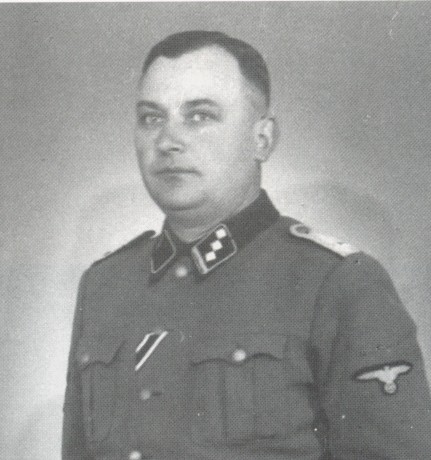
Richard Thomalla (German: [toˈmala]; 23 October 1903 – 12 May 1945)[1] was a German war criminal and SS commander of Nazi Germany. A civil engineer by profession, he was head of the SS Central Building Administration at Lublin reservation in occupied Poland. Thomalla was in charge of construction for the Operation Reinhard death camps Bełżec, Sobibor and Treblinka during the Holocaust in Poland.

Key Information

Operation Reinhardt

[edit]

Born in Sabine in the former Upper Silesia region of the German Empire (now, the village of Sowin, Opole Voivodeship, Poland). Thomalla became a member of the Nazi Party in 1932: (no. 1,238,872) and Schutzstaffel (SS no. 41,206).[2]

The first death camp to be constructed under Thomalla's supervision was Bełżec. Construction started on 1 November 1941 and was completed in March 1942. He then proceeded to design and supervise the construction of Sobibor in March 1942. Workers employed for building the camp were local people from neighboring villages and towns.[3] These workers consisted of about eighty Jews from ghettos within the vicinity of the camp. A squad of ten watchmen trained at Trawniki concentration camp guarded these workers. Upon completion of the camp, these Jews were shot.[4] When Thomalla completed his building assignment in Sobibor he was replaced there as commandant by Franz Stangl in April 1942. He then proceeded to Treblinka which copied the design of Sobibor, with some improvements.[2]

SS commander Erwin Lambert who had previously been assigned to the Action T4 euthanasia program and had constructed the new gas chambers in Treblinka, testified about Thomalla:

I and Hengs – euthanasia man – went to Treblinka by car. SS-Hauptsturmführer Richard Thomalla was the camp commander. The Treblinka camp was still in the process of construction. Thomalla was in Treblinka for about four to eight weeks. I was attached to a building team there. Thomalla was there for a limited time only and conducted the construction work of the extermination camp. During that time no extermination actions were carried out. Then Dr. Eberl arrived as camp commander. Under his direction the extermination Aktionen of the Jews began. — Erwin Lambert [4]

Between July 1942 and October 1943, around 850,000 people were murdered in Treblinka.[5][6] Thomalla was reportedly executed by the NKVD (Soviet secret police) in Jičín, Czechoslovakia on 12 May 1945; he was formally declared dead in absentia by a court in Ulm in 1957.[4][7]

References

[edit]
Revisions and contributorsEdit on WikipediaRead on Wikipedia
from Grokipedia
Richard Thomalla (23 October 1903 – 12 May 1945) was a German civil engineer and SS-Hauptsturmführer who oversaw the construction of the Bełżec, Sobibór, and Treblinka extermination camps as part of , the Nazi plan to systematically murder Jews in occupied Poland during . Born in Sowin (then Sabine-bei-Annahof) in , Thomalla trained as a and joined the SS, rising to serve as head of the SS Central Building Administration in the district of the General Government. In this role, he directed the rapid erection of killing facilities designed for mass gassing, beginning with Bełżec in late 1941, followed by Sobibór in 1942 under his direct supervision as temporary commandant during its buildup phase, and Treblinka shortly thereafter. These camps facilitated the extermination of over 1.7 million people, primarily , through industrialized murder methods including and later gas. Thomalla's technical expertise enabled the efficient design and concealment of these sites, incorporating rail access, structures, and crematoria to dispose of bodies, though he was transferred from Sobibór in April 1942 before full operations commenced under . Captured by Polish forces near the war's end, he was executed on 12 without facing formal trial for his crimes. His contributions to the infrastructure of underscore the role of bureaucratic and personnel in enabling the scale of the Holocaust's atrocities.

Early Life and Pre-War Career

Birth and Family Background

Richard Thomalla was born on 23 October 1903 in Sabine-bei-Annahof, a locality in the Falkenberg District of Upper Silesia, then part of the German Empire (now known as Sowin in Poland). The region, characterized by its industrial character and mixed German-Polish population, lay in the Prussian Province of Silesia, an area with longstanding ethnic German settlement amid tensions over language and identity that foreshadowed post-World War I plebiscites and border changes. No detailed records of his parents, siblings, or immediate family origins have been documented in available historical accounts.

Education and Engineering Training

Richard Thomalla trained as a , qualifying him professionally as a Bauingenieur (construction engineer) responsible for building and projects. This technical background, developed prior to his entry into the and SS in 1932, encompassed expertise in site management, structural planning, and labor coordination, skills that positioned him as a specialist in large-scale within SS administrations. His proficiency derived from common in interwar , emphasizing practical application over academic theory, though precise institutions or completion dates remain unspecified in historical records. Thomalla's bilingual capabilities in German and Polish, stemming from his Upper Silesian origins, further complemented his training by facilitating oversight of operations in multilingual regions. By the early , this foundation enabled his initial roles, including drafting in Falkenberg and Oppeln, before transitioning to SS engineering duties.

Professional Experience as Civil Engineer

Prior to joining the SS on 1 July 1932, Thomalla worked as a builder in , his region of birth. His professional experience in during this period centered on activities, though specific projects or employers remain undocumented in surviving records. Bilingual in German and Polish, a skill advantageous in the ethnically mixed Silesian border area, he likely applied his training to local building works before formal military draft service in Falkenberg and Oppeln. This early career laid the groundwork for his later specialization in SS construction oversight, but pre-1932 details are limited, reflecting the scarcity of personal archives from non-prominent civilian roles in interwar Germany.

Entry into Nazi Organizations and SS Service

Joining the Nazi Party and SS

Richard Thomalla, a civil engineer from Upper Silesia proficient in both German and Polish, joined the Schutzstaffel (SS) on 1 July 1932. One month later, on 1 August 1932, he became a member of the National Socialist German Workers' Party (NSDAP). These early affiliations occurred amid the Nazi Party's electoral gains in the early 1930s, following its breakthrough in the September 1930 Reichstag elections and preceding its plurality in July 1932. Following his entry into the SS, Thomalla completed his mandatory service period in units stationed in Wohlau (now Wołów) and Breslau (now Wrocław), locations in the Polish Lower Silesia region that had been part of Germany until the post-World War I borders. His professional background as a builder facilitated integration into SS construction and administrative roles, though initial assignments remained tied to regional duties rather than higher-level operations. Thomalla's NSDAP membership number was recorded as 1,238,872, indicative of enrollment during the party's rapid expansion phase.

Initial Assignments and Rise in Rank

Following his entry into the on 1 July 1932, Thomalla served in initial assignments within Allgemeine-SS units in , stationed at Wohlau (Wołów) and Breslau (). These early postings involved routine duties in the organization, leveraging his bilingual capabilities in German and Polish due to his regional background. Thomalla's expertise as a facilitated his progression to technical and administrative roles within the structure. Over the pre-war and early wartime years, he advanced steadily through the ranks, benefiting from the organization's expansion and demand for skilled personnel in projects. By 1941, he had attained the rank of SS-Hauptsturmführer, positioning him for supervisory responsibilities in construction operations. This promotion reflected the SS's emphasis on utilitarian competence in assigning officers to critical logistical tasks amid escalating wartime demands.

Deployment to Occupied Territories

In September 1940, Thomalla was transferred to the General Government in occupied Poland, initially serving in Częstochowa and Radom as part of the SS-Hilfspolizei auxiliary police force. Between August and October 1940, under the direction of SS and Police Leader Odilo Globocnik, he held the position of section leader in the SS Border Defence Construction Service based in Bełżec, where he oversaw fortification and infrastructure projects along the border areas. During this period, Thomalla also established a Waffen-SS construction depot in Zamość, centralizing materials and labor for SS building operations in the Lublin district of the General Government. These assignments leveraged his civil engineering expertise for the rapid expansion of SS administrative and defensive infrastructure amid the ongoing occupation and pacification efforts. By late 1940, his role had evolved to include leadership within the SS-Zentralbauleitung (Central Construction Office) framework in Zamość, coordinating forced labor details comprising local Poles and Jews for regional projects such as roads, barracks, and depots. This deployment marked Thomalla's transition from domestic SS duties to frontline occupation responsibilities, aligning with the broader Nazi strategy of exploiting occupied territories for logistical and militarized construction needs.

Involvement in the Holocaust Infrastructure

Role in Operation Reinhardt Overview

Richard Thomalla, an SS-Hauptsturmführer and civil engineer, headed the Central Building Administration of the SS and Police in Lublin, directing the construction of extermination camps integral to Operation Reinhardt. This operation, authorized by Heinrich Himmler in July 1941 and implemented from March 1942 under SS and Police Leader Odilo Globocnik, targeted the systematic murder of approximately 1.7 million Jews in the General Government of occupied Poland through gas chambers and mass shootings. Thomalla's responsibilities included site selection, rapid assembly using forced Jewish labor, and installation of gassing facilities, enabling the camps' operational efficiency. Thomalla initiated camp construction at Belzec in late October 1941, overseeing the erection of initial barracks and a provisional structure from November 1 to December 22, 1941, before its handover to . In March 1942, he supervised Sobibor's development near the Lublin-Chelm rail line, completing the killing center by May 1942 with assistance from engineers like , after which assumed command. By late May or early June 1942, Thomalla directed Treblinka's buildup, finalizing extermination installations including by mid-June, again employing forced labor and Lambert's expertise for airtight engine-exhaust systems. These efforts under Thomalla ensured the camps' swift functionality, contributing to the murder of over 1.5 million victims by late , with designs emphasizing secrecy through forest and narrow-gauge rail tracks for deportee . Following Treblinka's completion in July 1942, Thomalla was reassigned from Operation Reinhardt to other SS construction projects, reflecting the operation's peak implementation phase.

Construction of Belzec Extermination Camp

Richard Thomalla, an SS-Hauptsturmführer and heading the SS-Zentralbauleitung (Central Construction Office) in , was assigned in late 1941 to oversee the construction of the as the initial site under Operation Reinhardt, the Nazi plan to annihilate in the General Government. This followed his prior establishment of a construction depot in , approximately 40 km north of Belzec, which facilitated logistical support for camp building in the region. Construction commenced on November 1, 1941, at a site near the Belzec railway station in the district, southeast of occupied , selected for its remote location and rail access to enable mass deportations. Under Thomalla's supervision of the later stages into early 1942, the camp layout included undressing barracks measuring approximately 50 m by 12.5 m and 25 m by 12.5 m, alongside gas chambers disguised with showerheads and measuring 12 m by 8 m, divided into three sections for efficiency in using from tank engine exhaust piped into sealed rooms. Initial work involved about 20 local Polish laborers for basic structures, completed by December 22, 1941, with subsequent forced Jewish labor and SS oversight, including adjutant handling on-site details under camp commandant , appointed in late December 1941. The gas chamber complex was finalized by late February 1942, enabling trial gassings with Soviet prisoners of war and local victims before full operations began in March 1942, during which approximately 450,000 were murdered by December 1942. Thomalla's engineering expertise, drawn from pre-war civil projects and SS assignments, ensured rapid assembly of camouflaged facilities designed for secrecy and high throughput, with mass graves—such as one 50 m long, 20 m wide, and 6 m deep—prepared by 70 Soviet POWs in six weeks to handle remains. Upon completion of Belzec's infrastructure, Thomalla transferred oversight to operational SS staff and proceeded to supervise construction of the subsequent Reinhardt camps at Sobibór and Treblinka.

Construction of Sobibor Extermination Camp

The construction of the Sobibor extermination camp commenced in March 1942 as part of Operation Reinhard, under the direct supervision of SS-Obersturmführer Richard Thomalla, a civil engineer heading the SS construction administration in Lublin. Thomalla, who had overseen the rapid erection of the Belzec camp weeks earlier, directed a team that included SS personnel and Ukrainian auxiliaries, utilizing approximately 150 Jewish forced laborers initially drawn from nearby ghettos such as Włodawa. The site, a remote forested area adjacent to the Sobibór railway station in occupied eastern Poland, was chosen to enable efficient rail deportations while maintaining secrecy through natural camouflage and barbed-wire fencing topped with branches. Initial infrastructure included administrative barracks, reception areas with undressing facilities, and the core extermination zone featuring three provisional gas chambers—each roughly 4 by 4 meters—designed for via engine exhaust from captured Soviet tanks. Thomalla's team prioritized speed and functionality, constructing watchtowers, minefields, and "roads to heaven" pathways lined with trees to deceive arrivals, all completed within about six weeks. By late April 1942, with basic operations feasible, Thomalla handed over the site to SS-Obersturmführer , departing to initiate Treblinka's construction, as Sobibor's first gassings occurred in May. This phase under Thomalla established the camp's capacity for industrialized murder, ultimately claiming around 250,000 victims before its 1943 uprising and demolition.

Construction of Treblinka Extermination Camp

Richard Thomalla, as SS-Obersturmführer and head of the construction sub-section under the SS and Police Central Construction Board in Lublin, directed the design and building of Treblinka II extermination camp as part of Operation Reinhardt. Having completed the Sobibór camp earlier, Thomalla shifted focus to Treblinka in late May or early June 1942, overseeing a special SS construction team supplemented by two German engineering firms from Legnica and Warsaw. Labor was provided primarily by Jewish prisoners from the Warsaw Ghetto and inmates from the nearby Treblinka I penal labor camp, with materials sourced from Warsaw, Sokołów Podlaski, and Kosów Lacki. The camp site, spanning approximately 17 hectares and located about 500 meters from line near Maḷkinia station, was fenced with a 2.5-meter double barbed-wire barrier camouflaged by branches for secrecy. Under Thomalla's supervision, initial construction prioritized the extermination facilities, including three provisional gas chambers each measuring 4 by 4 meters and 2.6 meters high, connected to a exhaust system for gassing; these were operational by mid-June 1942. Additional infrastructure encompassed a rail spur for deportee transports, a disguised reception area, a sorting barracks, and mass burial pits roughly 50 by 25 by 10 meters in size, along with a covered pathway dubbed the "tube" or "Street to Heaven" leading victims to the gas chambers. Construction concluded by July 11, 1942, after which Thomalla handed over the site to command for operational use, with the first mass gassings commencing on July 23, 1942. , a specialist from the earlier T4 euthanasia program, assisted Thomalla in installing the systems. Subsequent expansions, including a larger building with ten rooms totaling 320 square meters capacity for up to 4,000 victims, occurred in August–September 1942 under different oversight after Thomalla's departure.

Later Assignments and War's End

Transfer from Reinhardt Camps

After completing the construction of the in late July or early August 1942, following approximately four to eight weeks of oversight starting in late May or early June, Richard Thomalla was transferred from his role in Operation Reinhardt. During this period, he served as the temporary commander and chief builder, directing Jewish forced laborers under the supervision of , the inspector of Reinhardt camps. The camp became operational under Dr. , who replaced Thomalla as commandant, marking the shift from construction to full extermination activities. No documented evidence indicates dismissal for incompetence; Thomalla's departure aligned with the completion of building tasks across Belzec, Sobibor, and Treblinka, after which the camps transitioned to routine operations managed by permanent staff. By September 1942, further structural expansions at Treblinka proceeded without his direct involvement, confirming his reassignment from the Reinhardt infrastructure. In 1943, Thomalla was appointed head of construction offices in , , and , White Russia (now Mahilyow, ), focusing on fortification and infrastructure projects in occupied eastern territories. He also participated in SS and police "pacification" efforts in the district of occupied from 1943 to 1944, involving anti-partisan operations and resettlement activities that included the displacement of local populations. These assignments reflected a return to broader SS engineering duties outside the specific extermination framework of Operation Reinhardt.

Additional Construction Duties

Following the dismantling of the Operation Reinhardt extermination camps in late 1943, Thomalla was assigned to oversee construction offices in , , and , in occupied White Russia (present-day ). These postings involved directing engineering and building projects for SS infrastructure in the eastern front regions, amid ongoing military occupations. Subsequently, from 1943 to 1944, Thomalla contributed to and police pacification efforts in Poland's district, a region targeted for ethnic German resettlement and anti-partisan operations. His expertise supported these activities, which included fortification and logistical builds to secure the area against resistance. He was last recorded in in June 1944, shortly before Soviet advances displaced German forces from the district.

Circumstances of Death

Richard Thomalla was captured by advancing Soviet forces in the final months of and subsequently executed by the on 12 May 1945, four days after Germany's . The execution took place in Karthaus-Walditz (also rendered as Kartouzy-Vladice), a location near Jičín on the Czechoslovakian side of the Czech-Polish border. Thomalla's last confirmed sighting prior to capture was in Zamość, , in June 1944, after which he appears to have continued limited duties amid the collapsing Eastern Front before Soviet forces apprehended him. He was detained in a special facility reserved for high-ranking SS and officials, where prisoners were held pending interrogation or . On the day of his death, Thomalla received an order to collect his belongings and leave his cell—a standard protocol signaling imminent execution, typically by firing squad. No formal trial or documented charges preceded the execution, consistent with practices toward captured Nazi personnel in the immediate postwar chaos, where vengeance executions of suspected war criminals were common amid the Red Army's advance. Thomalla's death precluded any postwar accountability through Western Allied or German proceedings, leaving his role in Operation Reinhardt unadjudicated in court. Historical accounts derive primarily from Soviet archival references and Thomalla's personnel file at , cross-verified in postwar analyses of staff fates.

Historical Evaluation

Attribution of Responsibility

Richard Thomalla, as head of the SS Central Building Administration for the , held primary responsibility for selecting sites, organizing labor, and overseeing the engineering design and construction of the Belzec, Sobibor, and Treblinka extermination camps between late 1941 and mid-1943. These facilities, purpose-built for mass gassing under , enabled the murder of an estimated 1.7 million through in rudimentary gas chambers he helped engineer, including adaptations from earlier T4 designs. His role extended to ensuring operational readiness, as he remained on-site as a senior officer until each camp began systematic killings—Belzec by March 1942, Sobibor by May 1942, and Treblinka by July 1942—after which command transferred to dedicated killing specialists like . Evidence indicates Thomalla possessed full awareness of the camps' extermination function, beyond mere construction orders; for instance, during Sobibor's build, he reportedly quipped to a Polish forced laborer about anticipating a "good laugh," suggesting cynical knowledge of the impending . As an SS-Hauptsturmführer and long-standing party member since , he operated within the Reinhard hierarchy under , where secrecy masked but did not obscure the genocidal intent, evidenced by the rapid conversion of provisional wooden gas chambers to more efficient models under his supervision. No records show him questioning orders or mitigating designs to hinder killings, aligning his actions with voluntary complicity in the Nazi regime's causal chain of destruction. While Thomalla did not personally conduct selections, shootings, or gassings—roles reserved for camp personnel like Ukrainian guards and operators—historians attribute to him direct culpability for due to the indispensable nature of his technical expertise in realizing the camps' lethal capacity. This assessment, drawn from survivor testimonies, perpetrator interrogations, and architectural analyses preserved post-war, underscores that without his infrastructural contributions, the scale of Reinhard deaths—Belzec (~450,000), Sobibor (~250,000), Treblinka (~900,000)—would have been infeasible on such accelerated timelines. His pre-Reinhard experience building T4 killing centers in further implies deliberate application of euthanasia-derived methods to Jewish annihilation, rejecting claims of ignorance or detachment.

Post-War Investigations and Lack of Trial

Thomalla was captured by Soviet forces near Jičín on the Czech-Polish border shortly after the German capitulation on , 1945. He was detained in a special prison at Karthaus-Walditz before being executed by the on May 12, 1945. This summary execution by Soviet security forces occurred without judicial process, reflecting the NKVD's practice of immediate retribution against captured Nazi personnel in Soviet-occupied areas rather than awaiting international tribunals. As a result, Thomalla faced no formal post-war trial, such as those conducted by the Allies at Nuremberg (beginning November 1945) or subsequent national proceedings. His role in constructing Operation Reinhardt extermination camps was referenced in later West German trials of camp personnel, including the 1965–1966 Sobibór trial, where survivor and perpetrator testimonies indirectly illuminated construction oversight but yielded no direct prosecution of Thomalla due to his prior death. No dedicated investigations into Thomalla's actions appear to have been initiated by Polish, Soviet, or Western authorities post-1945, likely owing to the chaotic immediate postwar environment in and the prioritization of living suspects. Soviet archival records, if extant, remain largely inaccessible, limiting verification of any informal inquiries.
Add your contribution
Related Hubs
User Avatar
No comments yet.