
.svg/250px-Flag_of_ZOB_(Jewish_Fighting_Organization).svg.png)


.svg/2000px-Flag_of_ZOB_(Jewish_Fighting_Organization).svg.png)
Community hub
Recent from talks
Contribute something
Nothing was collected or created yet.
Jewish Combat Organization
View on Wikipedia | This article needs additional citations for verification. (August 2020) |
| Żydowska Organizacja Bojowa ייִדישע קאַמף אָרגאַניזאַציע | |
|---|---|
| Jewish Combat Organization | |
.svg) | |
| Active | 28 July 1942 |
| Country | Nazi occupied Poland |
| Engagements | World War II |
| Commanders | |
| Notable commanders | Mordechai Anielewicz Yitzhak Zuckerman Marek Edelman |
| Insignia | |
| Military eagle[dubious – discuss] |  |
| Part of a series on the |
| Polish Underground State |
|---|
 |
The Jewish Combat Organization (Polish: Żydowska Organizacja Bojowa, ŻOB; Yiddish: ייִדישע קאַמף אָרגאַניזאַציע Yidishe Kamf Organizatsie; often translated to English as the Jewish Fighting Organization) was a World War II resistance movement in occupied Poland, which emerged from the merger of five Jewish political and youth organizations: Hashomer Hatzair, the Polish Workers' Party, Habonim Dror, Poale Zion, and the Bund,[1] and was central in organizing and launching the Warsaw Ghetto Uprising.[2] ŻOB took part in a number of other resistance activities as well.
Offshoot of Jewish youth groups
[edit]The ŻOB was formed on 28 July 1942, six days after the German Nazis under SS General Jurgen Stroop began the Grossaktion Warsaw, started on 15 July on the same year, and sealing the fate of the Jews confined in the Warsaw Ghetto: "All Jewish persons living in Warsaw, regardless of age and gender, [would] be resettled in the East."[3][4] Thus began massive "deportations" of about 254,000 Jews, all of whom were sent to the Treblinka extermination camp. The Grossaktion lasted until 12 September 1942. Overall it reduced the once thriving Warsaw Jewish community of some 400,000 to a mere 55,000 to 60,000 inhabitants.
The youth groups that were instrumental in forming the ŻOB had anticipated German intentions to annihilate Warsaw Jewry and began to shift from an educational and cultural focus to self-defense and eventual armed struggle.[5]
Unlike the older generation, the youth groups took these reports seriously and had no illusions about the true intentions of the Germans.[citation needed] A document published three months before the start of the deportations by Hashomer Hatzair declared: "We know that Hitler's system of murder, slaughter and robbery leads steadily to a dead end and the destruction of the Jews."[6]
A number of the left Zionist youth groups, such as Hashomer Hatzair and Dror, proposed the creation of a self-defense organization at a meeting of Warsaw Jewish leaders in March 1942. The proposal was rejected by the Jewish Labour Bund who believed that a fighting organization would fail without the help of the Polish resistance. Others rejected the notion of armed insurgency saying that there was no evidence of a threat of deportation. Moreover, they argued any armed resistance would provoke the Germans to retaliate against the whole Jewish community.[7][8][better source needed]
In November 1942, ŻOB officially became part of and subordinated its activities to the High Command of the Armia Krajowa. In return the Home Army (Armia Krajowa) began providing ŻOB with weapons and training, with the first shipment of guns and ammunition being provided in December 1942.[9] The organization was spied upon by Jewish collaborators which the Nazis called the Society of Free Jews (Towarzystwo Wolnych Żydów).[10]
ŻOB resistance to the second deportation
[edit] |
On 18 January 1943, the Nazis began a second wave of deportations. The first Jews the Germans rounded up included a number of ŻOB fighters who had intentionally crept into the column of deportees. Led by Mordechai Anielewicz they waited for the appropriate signal, then stepped out of formation, and fought the Nazis with small arms. The column scattered and news of the ŻZW and ŻOB action quickly spread throughout the ghetto. During this small deportation, the Nazis only managed to round up about 5,000 to 6,000 Jews.[4]
The deportations lasted four days during which the Germans met other acts of resistance from the ŻOB. When they left the ghetto on 22 January 1943, the remaining Jews regarded it as a victory, however Israel Gutman, a member of the ŻOB who subsequently became one of the leading authors on Jewish Warsaw wrote, "It [was] not known [to the Jews] that the Germans had not intended to liquidate the entire ghetto by means of the January deportations." However, Gutman concludes that the "[January] deportations... had a decisive influence on the ghetto's last months."
Final deportation and uprising
[edit] |


"All people are equal brothers;
Brown, White, Black, and Yellow.
To talk of peoples, colors, races -
Is all a made-up story!"
The final deportation began on the eve of Passover, 19 April 1943. The streets of the ghetto were vacant; most of the remaining 30,000 Jews were hiding in carefully prepared bunkers including their headquarters located in Ulica Miła 18, many of which had electricity and running water, however they offered no route of escape.
When the Germans marched into the ghetto, they met fierce armed resistance from fighters attacking from open windows in vacated apartments. The defenders of the ghetto used guerrilla warfare tactics and had the strategic advantage not only of surprise but also of being able to look down on their opponents. This advantage was lost when the Germans began systematically burning all of the buildings of the ghetto forcing the fighters to seek cover in the underground bunkers. The fires above consumed much of the available oxygen below ground, turning the bunkers into suffocating death traps.
On May 8 in the bunker at 18 Mila Street, Jurek Wilner called on the fighters to commit mass suicide to avoid falling into Germans' hands. As the first one, Lutek Rotblat initially shot his mother and then himself. In the bunker most of the members of the Combat Organization found their deaths, including Commander Mordechaj Anielewicz.[11]
By 16 May 1943, the German Police General Jürgen Stroop, who had been in charge of the final deportation, officially declared what he called the Grossaktion, finished. To celebrate he razed Warsaw's Great Synagogue. The ghetto was destroyed and what remained of the uprising was suppressed.[4]
Epilogue
[edit] |
Even after the destruction of the ghetto, small numbers of Jews could still be found in the underground bunkers on both sides of the ghetto wall. In fact, during the last months of the ghetto some 20,000 Jews fled to the Aryan side. Some Jews who escaped the final destruction of the ghetto, including youth group members and leaders Kazik Ratajzer, Zivia Lubetkin, Yitzhak Zuckerman and Marek Edelman, would participate in the 1944 Warsaw Uprising against the Nazis.[4]
While many members and leaders of the youth groups perished in the Warsaw Ghetto, Zionist and non-Zionist youth movements remain active. One can still find the left Zionist youth groups Hashomer Hatzair and Habonim Dror in countries such as Argentina, Australia, Austria, Belgium, Brazil, Bulgaria, Canada, Chile, France, Germany, Hungary, Israel, Italy, Mexico, the Netherlands, Poland, South Africa, Switzerland, Ukraine, the United Kingdom, the United States and Uruguay. There are still remnants of the non-Zionist Jewish Labour Bund's S.K.I.F. in Australia, the United Kingdom, France and the United States. The right youth group Betar operates in Australia, Brazil, Western Europe and the United States, and Bnei Akiva, a religious Zionist organization, operates worldwide.
Similar organizations
[edit]A second Jewish resistance organization called the Jewish Military Union (Polish: Żydowski Związek Wojskowy, ŻZW), formed primarily of former officers of the Polish Army in late 1939, operated side by side with ŻOB & was also instrumental in the Jewish armed struggle.[12]
Gallery
[edit]-
 Mordechai Anielewicz
 -
 Mira Fuchrer
 -
 Yitzhak Zukermann
 -
 Zivia_Lubetkin
 -
 Marek Edelman
 -
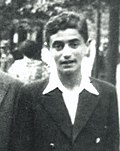 Izrael Kanal
 -
 Itzhak Katzenelson
 -
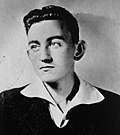 Michael Klepfisz
 -
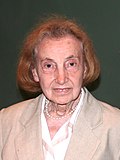 Vladka Meed
 -
 Symcha Ratajzer
 -
 Yitzhak Sukenik
 -
![Dawid Wdowiński [ZZW]](//upload.wikimedia.org/wikipedia/commons/thumb/8/84/Dawid_Wdowi%C5%84ski.jpg/120px-Dawid_Wdowi%C5%84ski.jpg) Dawid Wdowiński [ZZW]
Dawid Wdowiński [ZZW]


.jpg)


.jpg)
.JPG)

![Dawid Wdowiński [ZZW]](https://en.wikipedia.org/wiki/File:Dawid_Wdowi%C5%84ski.jpg)
References
[edit]- ^ "Levana Frenk, historienne de la résistance juive – Nonfiction.fr le portail des livres et des idées". www.nonfiction.fr (in French). Retrieved 2025-05-21.
- ^ "Jewish Fighting Organization – Polish history". Retrieved 20 October 2018.
- ^ Paulsson, Gunnar S. (20 October 2018). Secret City: The Hidden Jews of Warsaw, 1940–1945. Yale University Press. ISBN 978-0-300-09546-3. Retrieved 20 October 2018 – via Google Books.
- ^ a b c d "The Warsaw Ghetto Uprising". www.ushmm.org. Retrieved 2018-05-03.
- ^ (in Polish) 23 IV 1943, Warsaw: Odezwa Żydowskiej Organizacji Bojowej z pozdrowieniami z walczącego getta i wezwaniem do walki o wspólną wolność Żydów i Polaków. Archived 2008-10-20 at the Wayback Machine Polska.pl Skarby Dziedzictwa Narodowego; Nask, 2008
- ^ Call to Armed Self-Defense, from Ha-Shomer Ha-Zair newspaper in the Warsaw Underground Jutrznia ("Dawn"), March 28, 1942.
- ^ "The Kibbutz Artzi Federation". www.jewishvirtuallibrary.org. Retrieved 20 October 2018.
- ^ Hashomer Hatzair World Movement Archived 2008-09-12 at the Wayback Machine
- ^ Korboński, Stefan. Jews Under Occupation. pp. 123-124 and 130. Archived from the original on 2011-09-27. Retrieved 2008-09-14.
- ^ Kochanski, Halik (2012). The Eagle Unbowed. Harvard University Press. p. 306.
- ^ Krall, Hanna. Shielding the Flame. ISBN 0-03-006002-8.
- ^ Wdowiński, David (1963). And We Are Not Saved. New York: Philosophical Library. ISBN 0-8022-2486-5.
Note: Chariton and Lazar were never co-authors of Wdowiński's memoir. Wdowiński is considered the single author.
{{cite book}}: ISBN / Date incompatibility (help)
External links
[edit] Media related to Jewish Combat Organization at Wikimedia Commons
- The Warsaw Ghetto Uprising on the Yad Vashem website

| International | |
|---|---|
| National | |
| Other | |

Jewish Combat Organization
View on GrokipediaHistorical Context
Establishment of the Warsaw Ghetto
The German occupation authorities in Warsaw issued an order on October 2, 1940, to create a designated Jewish residential district, which was formally established and sealed on November 16, 1940, confining the city's Jewish population within a walled area of approximately 1.3 square miles (3.4 square kilometers).[5][6] By mid-1941, this enclosure held over 400,000 Jews, representing about 30% of Warsaw's pre-war population, with densities reaching up to nine people per room in many buildings.[7][8] The extreme overcrowding, combined with deliberate resource deprivation, resulted in approximately 83,000 deaths from starvation, disease, and related privations between November 1940 and the onset of major deportations in mid-1942.[9] Typhus epidemics and malnutrition exacerbated mortality, with official ghetto records documenting over 5,000 typhus cases in early 1941 alone, though containment efforts by Jewish physicians temporarily curbed spread through isolation measures.[10] Nazi-assigned food rations averaged around 184 calories per day for Jews—less than 10% of subsistence needs—contrasted with 2,613 calories for Germans and 699 for Poles, enforcing systematic starvation that halved average body weights and spurred informal smuggling operations across the ghetto walls, often involving children, to supplement supplies.[8] These networks, while sustaining some, highlighted early informal defiance amid collapsing health infrastructure, where 20-30% of residents suffered from edema due to protein deficiency by 1941.[11] The Judenrat, or Jewish Council, appointed by German authorities in October 1940 under chairman Adam Czerniaków, was tasked with internal administration, including labor allocation, welfare distribution, and enforcement of Nazi decrees such as registration and quarantine, which deepened internal schisms between compliance advocates seeking to preserve some autonomy and those viewing such cooperation as complicity in self-destruction.[12][13] Czerniaków's diaries reveal his resistance to certain orders, yet the council's role in maintaining order inadvertently facilitated German control, sowing seeds of distrust that later influenced resistance sentiments.[14]Early Deportations and Jewish Council Dynamics
The Grossaktion Warsaw commenced on July 22, 1942, when German SS and police units, assisted by Ukrainian and Latvian auxiliaries, initiated mass deportations from the Warsaw Ghetto to the Treblinka extermination camp, disguised as resettlement for labor in the east.[15] Over the following two months until September 21, approximately 254,000 to 300,000 Jews were deported and systematically murdered upon arrival, primarily in gas chambers, representing the vast majority of the ghetto's remaining population and marking a decisive escalation from prior confinement to outright extermination.[5] [15] This operation systematically targeted the weak, elderly, children, and entire institutions, with daily quotas enforced through roundups at the Umschlagplatz assembly point, where deception about temporary relocation initially subdued widespread panic but soon gave way to rumors of death camps confirmed by escapees and returnees.[16] The Judenrat, led by Adam Czerniaków, played a facilitative role under duress, compelled by Nazi threats to furnish daily lists of deportees and organize compliance to avert immediate ghetto-wide reprisals, including the roundup of orphans from care institutions such as Janusz Korczak's orphanage on August 5-6, 1942.[17] Czerniaków, protesting the demand to personally select children for transport—which he viewed as complicity in infanticide—committed suicide by cyanide on July 23, 1942, leaving a note stating, "They demand that with my own hands I should kill my nation's children. There is nothing for me to do but to die."[18] Following his death, the Judenrat's remnants, facing collective punishment for non-cooperation, continued partial assistance in selections and logistics, a dynamic rooted in the Nazi strategy of exploiting internal Jewish administration to minimize direct German manpower needs while fostering divisions that undermined unified resistance.[12] These events eroded prior Jewish reliance on Judenrat-mediated negotiations for survival, as empirical evidence of betrayal—manifest in the deportation of sheltered vulnerable groups—coupled with causal imperatives of self-preservation amid revealed extermination intent, radicalized younger elements toward rejecting passive accommodation. Initial responses remained disorganized, featuring isolated acts such as sporadic shootings by civilians or smuggled weapons against roundup units, which, though ineffective in halting the Aktion, signaled a perceptual shift from hopeful compliance to recognition that only armed defiance could counter inevitable annihilation.[19] This realization, driven by firsthand observations of mass abductions and corroborated intelligence on Treblinka's operations, progressively invalidated institutional authority and prioritized clandestine armament over appeals to external saviors.[16]Formation and Internal Structure
Origins from Zionist Youth Groups
The Jewish Combat Organization (ŻOB) originated as a coalition of Zionist youth movements responding to the escalation of Nazi genocide in the Warsaw Ghetto. On July 28, 1942, six days after the initiation of the Grossaktion Warsaw on July 22—which deported over 265,000 Jews to the Treblinka extermination camp—representatives from Hashomer Hatzair, Dror, and Akiva met to establish the group, marking the first coordinated Jewish armed self-defense effort in the ghetto. [20] These movements, operating clandestinely amid the deportations' eyewitness horrors, initially comprised a core of dozens of activists drawn from their pre-war networks, prioritizing immediate organization against further roundups.[21] The ideological foundation of ŻOB stemmed from the socialist-Zionist ethos of its constituent groups, which had emphasized physical conditioning, agricultural training, and defensive preparedness since the interwar period as preparation for pioneering Jewish self-sufficiency in Palestine. Hashomer Hatzair, with its Marxist-influenced advocacy for collective defense and rejection of diaspora passivity, Dror (rooted in Gordonia's communal ideals), and Akiva (focusing on Hebrew revival and militant youth culture) contrasted sharply with non-Zionist approaches, such as the Bund's urban labor focus or orthodox groups' reliance on spiritual endurance, enabling these movements to adapt their doctrines rapidly to ghetto conditions for militarized resistance.[22] [23] This formation reflected a deliberate shift toward armed defiance, informed by accumulating evidence of extermination sites like Treblinka—gleaned from escapees and smuggled reports—over illusions of resettlement or bargaining with ghetto authorities. The founding members explicitly resolved against flight or compliance, viewing deportation as irrevocable death and aligning with Zionist principles that valorized combat dignity amid annihilation, thus laying the groundwork for rejecting assimilationist hopes of negotiated reprieve.[24] [21]Leadership, Membership, and Armament Acquisition
Mordechai Anielewicz served as the primary commander of the Żydowska Organizacja Bojowa (ŻOB), leading the organization from its formation in July 1942 until his death in May 1943.[25] Yitzhak Zuckerman acted as his deputy commander, coordinating activities on the Aryan side of Warsaw and facilitating external contacts.[26] Marek Edelman also held a key leadership role within ŻOB, representing the Bund faction and commanding operational units during preparations for resistance.[27] The organization's membership comprised approximately 500 fighters by early 1943, drawn predominantly from Zionist youth movements such as Ha-Shomer Ha-Tzair and Dror, with members typically aged 18 to 25.[28] To enhance security amid infiltration risks, ŻOB operated through decentralized small cells, each aligned with specific political affiliations to limit damage from potential arrests.[29] Women played critical roles in intelligence and logistics, serving as couriers who smuggled information and supplies; Zivia Lubetkin, for instance, was among the highest-ranking female members, contributing to command decisions.[30] Armaments were acquired through a combination of black-market purchases, extortion from ghetto smugglers, and limited smuggling from Polish underground contacts, yielding around 100 pistols, several rifles, and improvised grenades by the uprising's outset.[31] Funds for these acquisitions were often seized from wealthy collaborators or the Judenrat, reflecting the scarcity of reliable external support.[32] Due to chronic shortages, ŻOB manufactured explosives and Molotov cocktails in clandestine ghetto workshops, underscoring the improvised nature of their preparations despite overtures to groups like the Armia Krajowa.[4]Pre-Uprising Resistance
Actions During the Grossaktion Warsaw
The Grossaktion Warsaw, initiated on July 22, 1942, involved the systematic deportation of approximately 265,000 Jews from the Warsaw Ghetto to the Treblinka extermination camp over the following weeks, reducing the ghetto population from around 400,000 to roughly 55,000–60,000 by its conclusion on September 12.[33] In direct response to these mass roundups, Zionist youth organizations formed the Jewish Combat Organization (ŻOB) on July 28, 1942, marking the inception of coordinated Jewish armed resistance within the ghetto.[34] This nascent group, initially comprising small cells with limited weaponry such as a handful of pistols and grenades procured from Polish underground contacts, focused on disrupting the deportation machinery through targeted sabotage as a proof of concept for defiance.[35] ŻOB's early actions included grenade assaults on German personnel and vehicles near the Umschlagplatz—the central assembly point for deportees—and attacks on guard posts, which occasionally inflicted casualties on Nazi forces and briefly interrupted transport operations amid the chaos of daily roundups.[35] Fighters also conducted assassinations of Jewish collaborators, particularly Order Service (Jewish police) members complicit in herding victims to trains, aiming to undermine the auxiliary apparatus enforcing compliance. These operations, executed by inexperienced but adaptive units, resulted in the loss of an estimated 5–10 ŻOB members to German reprisals, yet they established a pattern of tactical evasion using the ghetto's dense terrain and demonstrated that organized violence could impede, if only momentarily, the efficiency of the extermination process.[35] Parallel to combat efforts, ŻOB disseminated propaganda leaflets throughout the ghetto, exhorting residents to resist deportation and exposing the true fate awaiting transports to Treblinka, thereby bolstering morale among survivors and fostering a collective resolve against passive submission.[35] The organization simultaneously initiated preparations for fortified bunkers and fighting positions, leveraging smuggled arms to transition from sporadic interference to sustained defense, even as the overwhelming scale of the Grossaktion underscored the existential stakes of such resistance.[34]January 1943 Deportation Clashes
On January 18, 1943, German forces under SS and police command entered the Warsaw Ghetto to initiate a limited deportation operation, aiming to round up approximately 8,000 Jews for transport to Treblinka as a probe toward full liquidation.[36] The ŻOB, anticipating the action through scouts at ghetto gates, mobilized fighters who erected barricades at key streets, ambushed patrols with small arms fire, grenades, and improvised firebombs, and emerged from prepared hiding places including bunkers and sewer access points to launch coordinated attacks.[37] This marked the first organized armed resistance by the ŻOB against German forces in the ghetto, catching the SS units off guard and inflicting initial casualties, which compelled the Germans to fight street-by-street rather than conduct a swift roundup.[38] Over the next four days, until January 22, ŻOB units operated from decentralized positions with a central coordination hub, directing small groups to disrupt German advances by targeting officers and vehicles, demonstrating the effectiveness of urban guerrilla tactics against superior firepower.[37] Fighters, armed primarily with pistols, a few rifles, and homemade explosives acquired through prior smuggling efforts, held key areas long enough to prevent mass deportations, with only about 5,000 Jews ultimately seized instead of the planned number.[37] The Germans, unaccustomed to such defiance after the largely passive compliance during the 1942 Grossaktion, withdrew after sustaining roughly 20 casualties, while ŻOB losses among fighters were estimated at about half that figure, though total Jewish deaths including civilians reached around 1,200 from crossfire and reprisals.[38] The clashes concluded with German forces sealing the ghetto gates and falsely proclaiming its liquidation complete, but the ŻOB's success in repelling the probe boosted internal morale and validated their strategy of active defense.[39] Couriers from the ŻOB, including figures like Yitzhak Zuckerman, smuggled detailed reports of the fighting to the Polish underground on the Aryan side, which disseminated accounts of Jewish armed resolve to Allied contacts, marking an early alert to global audiences about organized ghetto resistance beyond passive endurance.[32] This event prompted intensified ŻOB preparations for future confrontations, including expanded armament acquisition and bunker fortification.[39]The Warsaw Ghetto Uprising
Prelude and Initial German Assault
Following the failed German deportation attempt in January 1943, the Jewish Combat Organization (ŻOB) anticipated a final liquidation of the Warsaw Ghetto and intensified preparations for armed resistance. Fighters constructed bunkers, stockpiled smuggled weapons including pistols, grenades, and a few rifles, and mined strategic streets and buildings to hinder German advances.[4][32] Mordechai Anielewicz, ŻOB commander, directed operations from the central command bunker at Miła 18 Street, coordinating approximately 500 ŻOB members alongside around 200 from the Jewish Military Union (ŻZW) for a total resistance force of about 700.[40][4] On April 19, 1943—the eve of Passover—German forces under SS Major General Jürgen Stroop launched the ghetto's total liquidation, deploying over 2,000 troops including Waffen-SS, Order Police, and Ukrainian auxiliaries to deport or kill the remaining 50,000 Jews.[41][4] Himmler's prior order for complete evacuation triggered the assault, but ŻOB intelligence had foreseen it, positioning fighters in fortified areas rather than allowing passive roundup.[42] Initial German incursions met fierce ŻOB resistance as fighters ambushed advancing units with small arms fire and improvised explosives, forcing a temporary withdrawal after several hours of combat on the first day.[43] In the opening clashes through April 20-21, ŻOB actions reportedly inflicted up to a dozen confirmed German casualties, with higher estimates from resistance accounts reaching around 100, though official German records minimized losses to preserve morale.[41][44] This early success disrupted the deportation plan and bought time for further entrenchment in bunkers and sewers.Combat Operations and Tactics
The Jewish Combat Organization (ŻOB) adopted guerrilla warfare tactics tailored to severe resource limitations and the confined urban terrain of the Warsaw Ghetto, focusing on ambushes against German patrols rather than conventional battles. Fighters, organized in small groups of 10 to 20, employed smuggled pistols, a few rifles, hand grenades, and improvised weapons such as Molotov cocktails to attack from concealed positions in windows, rooftops, and barricaded streets, often withdrawing immediately after inflicting casualties to avoid direct confrontation with heavily armed SS and police units supported by tanks and artillery.[2][42] These hit-and-run operations targeted advancing forces in key sectors, exploiting narrow alleys and multi-story buildings for defensive advantages while conserving ammunition through precise, opportunistic strikes.[4] ŻOB divided the ghetto into operational zones, with the central district—including the brushmakers' area around Miła 18—serving as a primary stronghold where command bunker networks provided refuge, storage for arms, and basic sustainment like electricity and water supplies.[42] Coordination with the Jewish Military Union (ŻZW) proved challenging due to pre-existing ideological tensions and divergent territorial focuses, resulting in parallel but largely independent actions that hindered unified strategy despite occasional informal contacts.[46] Emphasis was placed on prolonging resistance to exact a psychological toll on German forces, compelling SS Brigadeführer Jürgen Stroop to deploy arson, explosives, and systematic building clearances, which extended the fighting from April 19 to May 16, 1943—approximately 27 days—far beyond initial expectations of a swift liquidation.[9] Utilization of the ghetto's sewer system facilitated tactical mobility, supply relays, and escapes for select fighters to the Aryan side, disrupting German cordons and enabling repositioning amid escalating blockades.[42] Bunkers, numbering over 600 by German estimates, were fortified with traps and interconnected passages, forcing invaders into time-consuming searches and countering the asymmetry in manpower and firepower by turning the ghetto into a labyrinth of defensive positions.[42] This approach prioritized symbolic defiance and morale sustenance over territorial control, as ŻOB aimed to demonstrate Jewish resolve against annihilation despite inevitable defeat.[4]Suppression and Ghetto Destruction
Following the initial clashes in late April 1943, German forces under SS-Major General Jürgen Stroop escalated their counteroffensive in early May by systematically razing the ghetto block by block. They employed flamethrowers, dynamite, and incendiary devices to set fire to buildings and sewers, forcing hidden Jews—including ŻOB fighters and civilians—out of bunkers and cellars where an estimated 50,000 remaining ghetto inhabitants had sought refuge after the uprising's outset.[4][2] This brutal method of destruction, which turned the ghetto into a "sea of flame and rubble," aimed to eliminate all resistance pockets without direct assaults, minimizing German exposure while maximizing psychological and physical pressure on the defenders.[2] ŻOB fighters mounted final guerrilla stands from fortified bunkers, using smuggled explosives and small arms to ambush advancing units, but the overwhelming German superiority in heavy weaponry and manpower rendered sustained combat untenable. On May 8, 1943, German troops located and assaulted the ŻOB central command bunker at 18 Miła Street (Mila 18), where over 100 fighters, including commander Mordechai Anielewicz and his staff, committed suicide by poison or gunfire to avoid capture and interrogation after gas was pumped in.[4][2] Sporadic resistance continued from isolated positions, but by mid-May, the Germans had systematically destroyed the ghetto's infrastructure. According to Stroop's official report, the operation resulted in approximately 7,000 Jews killed—either in combat, burned alive in bunkers, or executed on capture—with the remaining roughly 50,000 ghetto residents seized and deported to Treblinka for immediate gassing or to labor camps like Majdanek and Poniatowa, where most later perished.[4] German losses, as tallied in the same report, were 16 dead and about 101 wounded, reflecting the lopsided resource disparity despite the fighters' determined defense, which nonetheless compelled the Nazis to deploy reinforced units and prolong the suppression beyond initial expectations.[4] On May 16, 1943, Stroop declared the action complete, ordering the dynamiting of the Great Synagogue as a symbolic finale, leaving the ghetto area reduced to rubble and marking the end of organized Jewish resistance there.[4]Immediate Aftermath
Casualties and Survivor Escapes
During the suppression of the Warsaw Ghetto Uprising from April 19 to May 16, 1943, German forces reported killing approximately 7,000 Jews in combat or while hiding in bunkers, though historians estimate the true figure reached 13,000, including those burned alive or suffocated in sealed structures without opportunity for retreat.[4] [47] Over 50,000 remaining ghetto inhabitants were captured and deported, with around 7,000 sent directly to the Treblinka extermination camp and the rest to labor camps such as Majdanek and Poniatowa, where most later perished.[4] The ŻOB, comprising 200–300 fighters, suffered near-total attrition, as their strategy emphasized holding positions with scant ammunition and no fallback options, leading to the deaths of most members in close-quarters engagements or while defending central command bunkers.[31] A critical breakout occurred on May 8, 1943, when ŻOB courier Simcha Rotem (known as "Kazik") guided about 40–50 surviving fighters through the ghetto's sewer system to the Aryan side of Warsaw, utilizing maps procured from Polish underground contacts.[48] [49] This escape, one of the few organized evacuations amid the ghetto's destruction by fire, relied on pre-arranged entry points and navigation aids to evade German patrols, enabling a small core of combatants—including figures like Yitzhak Zuckerman and Marek Edelman—to continue operations outside the ghetto.[48] Additional survivors hid in the smoldering ruins of the razed ghetto for days or weeks post-suppression, scavenging for sustenance before attempting individual flights to join partisan groups in surrounding forests or linking with resistance networks on the Aryan side.[4] These ad hoc efforts yielded fewer than a dozen long-term survivors from the initial escape cohort, underscoring the perilous conditions and high recapture rates faced by those not immediately extracted.[48]Fate of Key Figures
Mordechai Anielewicz, commander of the Jewish Combat Organization (ŻOB), died by suicide on May 8, 1943, in the central command bunker at 18 Miła Street during the final German assault on the Warsaw Ghetto.[4][50] Accompanied by several staff commanders, including Mira Fuchrer, his deputy and romantic partner, Anielewicz chose death to evade capture and interrogation by SS forces who had located and breached the bunker.[4] Fuchrer, a key courier and fighter, perished alongside him in the same act of defiance.[51] Captured ŻOB fighters faced immediate public execution by German troops, with bodies often displayed or left in the streets to demoralize remaining resistors. No organized high-level escapes occurred during the uprising's peak, underscoring the leadership's commitment to holding positions within the ghetto despite overwhelming odds.[4] Among the few who evaded annihilation, vice-commander Marek Edelman escaped through the sewers in early May 1943, subsequently integrating into Polish underground units. Similarly, Yitzhak Zuckerman, ŻOB's chief arms procurer and external liaison, surfaced from the Aryan side after a clandestine exit, continuing coordination with Polish resistance networks. These individual survivals highlighted tactical withdrawals rather than abandonment, as primary accounts emphasize resolve to fight from within until positions became untenable.Intergroup Relations and External Support
Coordination and Tensions with ŻZW
The Jewish Combat Organization (ŻOB) and Jewish Military Union (ŻZW) maintained limited coordination during the Warsaw Ghetto Uprising, constrained by profound ideological divisions rooted in pre-war Jewish politics. ŻOB drew primarily from socialist-Zionist youth movements and the Bund, emphasizing collective resistance aligned with leftist principles, whereas ŻZW was organized by the Revisionist Zionist Betar network, which rejected Marxism and socialism in favor of militaristic nationalism.[52] These clashes prevented full unification, even as both groups participated in the Jewish National Committee and a Coordinating Committee formed in late 1942 to streamline resistance efforts against deportations. Pre-uprising appeals for armaments from Polish underground networks represented rare collaborative gestures, including joint entreaties to the Home Army, though ŻOB secured the primary official channel while ŻZW relied on independent transactions with the National Armed Forces (PLAN). Tensions escalated over resource allocation, with ŻZW leaders refusing subordination to ŻOB command or donations of weapons and funds raised through ghetto expropriations, fostering accusations of hoarding amid scarce supplies. This factionalism mirrored broader inter-Jewish rivalries, exacerbated by duress, and resulted in few joint combat actions; operations remained parallel, with no integrated strategy.[53] During the fighting from April 19, 1943, ŻOB concentrated defenses in central sectors along Nalewki and Gęsia streets, while ŻZW held the northern Brushmakers' District at Muranowski Square, site of intense clashes noted in German reports for barricade warfare and flag-raising defiance.[52] ŻZW, with an estimated 150–260 fighters—though some Revisionist accounts claim up to 500—sustained heavier proportional casualties, including 44 killed in a Michalin skirmish on April 30 and the deaths of all senior commanders like Paweł Frenkel by June 19, leaving no primary narrators to counter ŻOB-dominated testimonies.[53] Post-war, Polish communist-era historiography and ŻOB survivor memoirs, such as those by Marek Edelman, systematically minimized ŻZW's contributions, attributing this to ideological bias against right-wing elements and the absence of ZZW voices.[52]Limited Aid from Polish and Allied Forces
The Armia Krajowa (AK), Poland's principal underground resistance, extended minimal material support to the Żydowska Organizacja Bojowa (ŻOB) despite entreaties for weaponry ahead of the April 1943 uprising. Accounts indicate that the AK delivered around ten pistols to the ŻOB in early 1943, alongside negligible quantities of grenades, far short of the rifles, submachine guns, and explosives requested to equip hundreds of fighters.[54] This sparsity stemmed from the AK's own armament shortages—prioritizing preparations for a national revolt—and internal debates over allocating scarce resources, with some historians attributing hesitancy to prevalent antisemitism within AK ranks that viewed Jewish pleas skeptically, though AK documents emphasize logistical constraints over ideological refusal.[55][56] Western Allied powers provided no airdrops, bombing runs, or other direct intervention for the ghetto fighters, even as couriers relayed urgent appeals via the Polish government-in-exile to London in April 1943, prompting BBC radio announcements of the resistance on April 26. Feasibility was curtailed by Warsaw's remoteness from Allied airfields—over 1,000 miles from Britain—and competing imperatives like the ongoing Tunisia Campaign and strategic bombing of Germany, rendering precision support improbable without diverting assets from decisive fronts.[4] Soviet forces, positioned across the Vistula, similarly abstained from diversionary actions, prioritizing their eastern advance over localized aid. Żegota, the Council for Aid to Jews, facilitated sporadic smuggling of arms and funds into the ghetto through Polish intermediaries, endorsing Jewish purchases on the black market to bolster defenses, yet these inflows remained inadequate for matching German ordnance, numbering mere dozens of pistols against SS armored units.[57] Individual Poles risked execution to tunnel or bribe guards for weapon transfers, but such ad hoc efforts underscored the ŻOB's dependence on self-procured and improvised munitions—like incendiary bottles and nail-studded grenades—highlighting the perils of overreliance on external allies amid pervasive occupation-era distrust.Legacy and Controversies
Symbolic Impact on Jewish Resistance Narratives
The Warsaw Ghetto Uprising, led by the Jewish Fighting Organization (ŻOB), marked a pivotal shift in Holocaust historiography by demonstrating Jewish agency against Nazi extermination efforts, challenging earlier perceptions of passive victimhood. Prior to the uprising, global and Jewish narratives often emphasized helplessness in the face of systematic deportation and murder, as seen in the unresisted Great Deportation of 1942 that reduced the ghetto population from over 400,000 to about 60,000. The ŻOB's armed resistance from April 19 to May 16, 1943, using smuggled weapons and improvised tactics, reframed Jews not merely as victims but as combatants willing to die fighting, influencing post-war accounts that highlighted spiritual and physical defiance.[4][9] This symbolic elevation gained traction through survivor testimonies and captured Nazi documents, such as the Stroop Report, which detailed the unexpectedly fierce opposition encountered by German forces, thereby publicizing the event's scale beyond the ghetto's isolation. Escapes by ŻOB leaders like Yitzhak Zukerman and Zivia Lubetkin disseminated firsthand accounts to Polish underground networks, inspiring the subsequent Warsaw Uprising in August 1944 and boosting morale among non-Jewish resistors by proving that sustained combat could disrupt Nazi operations. Furthermore, the uprising's repercussions extended to death camps, where news of ŻOB's defiance encouraged revolts at Treblinka in August 1943 and Sobibór in October 1943, embedding the narrative of replicable Jewish resistance across occupied Europe.[58][59][60] In Israeli and diaspora collective memory, ŻOB's stand became emblematic of inherent fighting spirit, countering tropes of inevitable submission encapsulated in phrases like "like sheep to the slaughter." Post-1948 Israel integrated the uprising into state identity, portraying it as ancestral proof of martial resolve amid existential threats, with commemorations emphasizing the empirical toll on Nazis—over 100 German casualties and diverted resources during Eastern Front pressures—over mere martyrdom. This reinterpretation, drawn from declassified reports and veteran memoirs, solidified ŻOB's legacy as a cornerstone of active resistance, influencing educational curricula and memorials to prioritize agency in Holocaust remembrance.[61][2][4]Debates on Effectiveness and Historical Interpretations
Historians generally concur that the ŻOB's actions constituted a tactical failure, as the Warsaw Ghetto was systematically razed by German forces by May 16, 1943, following the organization's coordinated ambushes starting April 19, yet this outcome is juxtaposed against assertions of strategic value in upholding Jewish dignity and imposing unforeseen operational costs on the SS, including an estimated 16 German deaths in the initial clash and broader disruptions requiring over 2,000 troops and heavy artillery.[9] Critics, drawing on survivor accounts and armament inventories, contend that the ŻOB's overreliance on improvised explosives, pistols, and scant rifles—often limited to two or three per five-person cell—precluded effective sustained engagements, favoring hit-and-run tactics over fortified defense and contributing to rapid dispersal after the central command bunker's fall on May 8.[62] In contrast, analyses highlighting the ŻZW's parallel operations attribute greater positional longevity in northern sectors to superior smuggling networks yielding rifles and light machine guns, underscoring how pre-existing military training among Betar-affiliated fighters enabled more conventional infantry maneuvers despite similar numerical disadvantages.[63] Interpretations of these events have been shaped by post-war political agendas, particularly in communist Poland, where state-sponsored historiography privileged the ŻOB's Bundist and leftist factions—aligning with Marxist narratives of proletarian struggle—while systematically marginalizing the ŻZW's revisionist Zionist contributions, often omitting their independent arms procurements and sectoral battles from official memorials and textbooks until the 1980s.[64] This selective emphasis, evident in publications from the Polish Workers' Party era, reflected ideological imperatives to portray resistance as ideologically congruent with Soviet-aligned socialism, downplaying non-leftist elements and fostering a unified "people's uprising" mythos that obscured intergroup tactical divergences.[52] Declassified Armia Krajowa records from the 1990s onward have prompted reassessments, revealing disparities in external aid—such as the delivery of approximately 50 pistols and grenades to ŻOB via official Home Army channels in late 1942, contrasted with anecdotal ŻZW claims of unofficial rifle supplies through Polish scout networks—attributable less to antisemitism than to fragmented command structures and mutual distrust amid ghetto intelligence leaks.[52] Such disclosures challenge earlier causal attributions of Jewish isolation, emphasizing instead how political factionalism within the ghetto compounded armament shortages, though they affirm the resistance's core limitation: no configuration of light infantry weapons could offset German mechanized superiority, rendering debates on armament efficacy secondary to the act's demonstrative defiance against total extermination.[65] These archival insights, prioritized over ideologically laden memoirs, underscore a realist view that while the uprising affirmed agency, it inadvertently escalated destruction for remaining non-combatants by provoking methodical block-by-block burnings rather than averting deportation.[64]Post-War Commemorations and Reassessments
The Monument to the Ghetto Heroes, dedicated on April 16, 1948, in Warsaw's Muranów district, stands as one of the earliest major post-war tributes to the Warsaw Ghetto Uprising fighters, including those of the Jewish Combat Organization (ŻOB), inscribed with references to the 1943 revolt against deportation.[66] The Mila 18 site, headquarters of ŻOB commander Mordechai Anielewicz, features a memorial mound established in 1946 containing remains of uprising participants, later incorporated into Poland's POLIN Museum of the History of Polish Jews exhibits on resistance.[67] Yad Vashem, Israel's Holocaust memorial, documents ŻOB's formation on July 28, 1942, and its armed actions, honoring fighters through archival records, exhibitions, and survivor testimonies preserved in its collections. Annual commemorations of the uprising's start on April 19, 1943, persist globally, with ceremonies at Warsaw's Ghetto Heroes Monument drawing Polish officials, survivors, and descendants to emphasize Jewish defiance amid Nazi liquidation efforts.[68] These events, observed consistently since 1946, have evolved from state-controlled rituals in communist Poland—often aligning with anti-fascist propaganda that highlighted select leftist groups—to more pluralistic recognitions post-1989, incorporating diverse resistance factions.[69] Historiographical reassessments gained momentum in the 1980s and 1990s through survivor publications, such as Yitzhak Zuckerman's A Surplus of Memory (1993 English edition, based on earlier Hebrew drafts), which detailed ŻOB operations while acknowledging coordination challenges with the rival Jewish Military Union (ŻZW), prompting broader inclusion of ŻZW contributions in scholarly accounts previously dominated by ŻOB-centric narratives.[70] This shift, supported by declassified documents and memoirs, countered earlier marginalization of ŻZW—attributed by some analysts to ideological preferences in Israel for socialist-aligned groups over revisionist ones—fostering evidence-based views of multifaceted Jewish resistance.[52] Critiques of post-war memory highlight politicization, particularly in Soviet-influenced Poland, where 25th-anniversary events in 1968 were subordinated to regime propaganda amid antisemitic purges, sanitizing complexities like Judenrat collaboration in deportations to promote a unified "heroic" archetype.[69] Such selective emphases, echoed in some early Israeli commemorations, overlooked internal ghetto divisions and ŻZW's independent arms procurements, as later evidenced by cross-verified survivor testimonies; recent scholarship urges integrating these nuances for causal accuracy over monocultural heroism.[71]Comparable Resistance Efforts
Other Jewish Fighting Organizations in Occupied Europe
In Warsaw, the Jewish Military Union (ŻZW), a right-wing Revisionist Zionist group formed in November 1942, served as an ideological counterpart to the more left-leaning ŻOB, emphasizing military discipline and nationalist goals over socialist principles.[72][4] Unlike the ŻOB's broader coalition of youth movements, the ŻZW drew primarily from Betar and maintained separate command structures during the 1943 uprising, though limited tactical coordination occurred against German forces.[72] It reportedly fielded up to 500 fighters equipped with smuggled rifles and grenades, focusing on fortified positions like the Brushmakers' area, but suffered heavy losses with few survivors escaping to Aryan districts.[72] The Białystok Ghetto's Anti-Fascist Fighting Organization, unified under Mordechai Tenenbaum in July 1943 from various youth groups, mounted a similar urban revolt on August 16, 1943, during the ghetto's final liquidation, employing improvised explosives and small arms against SS units.[73] Approximately 300 fighters resisted for several days, setting fire to buildings and delaying deportations to Treblinka, but the action ended swiftly with the ghetto's destruction by August 20, contrasting the Warsaw revolt's longer duration due to Białystok's smaller scale and fewer external supplies.[74][73] Forest-based units like the Bielski partisans in Nazi-occupied Belarus prioritized collective survival over direct confrontation, establishing camps from 1942 that sheltered over 1,200 Jews, including non-combatants, through foraging, sabotage, and selective engagements with collaborators.[75] Led by Tuvia Bielski, the group focused on rescuing ghetto escapees rather than holding urban positions, amassing light weapons via raids while avoiding the high-casualty stands typical of ghetto defenses.[76] In Vilna, the United Partisan Organization (FPO), established on January 21, 1942, by Zionist youth under commanders like Yitzhak Wittenberg and later Abba Kovner, emphasized intelligence gathering, arms smuggling, and ghetto escapes to forest units over sustained urban fighting.[77][78] The FPO conducted sabotage, such as derailing trains, and facilitated hundreds of fighters joining partisan otriads by September 1943, reflecting a strategic shift toward mobility amid the ghetto's liquidation, distinct from Warsaw's fixed barricade tactics.[77] Across these groups, youth-dominated leadership from pre-war movements, reliance on homemade or smuggled weaponry like pistols and petrol bombs, and a commitment to dignified death over passive deportation formed recurring motifs, yielding symbolic affirmations of agency despite near-total annihilation.[79][75]References
- https://encyclopedia.ushmm.org/content/en/article/warsaw-ghetto-uprising