Hubbry Logo
Multistage rocketMultistage rocketMain
Open search
Multistage rocket
Community hub
Multistage rocket
logo
8 pages, 0 posts
0 subscribers
Be the first to start a discussion here.
Multistage rocket
Multistage rocket
from Wikipedia
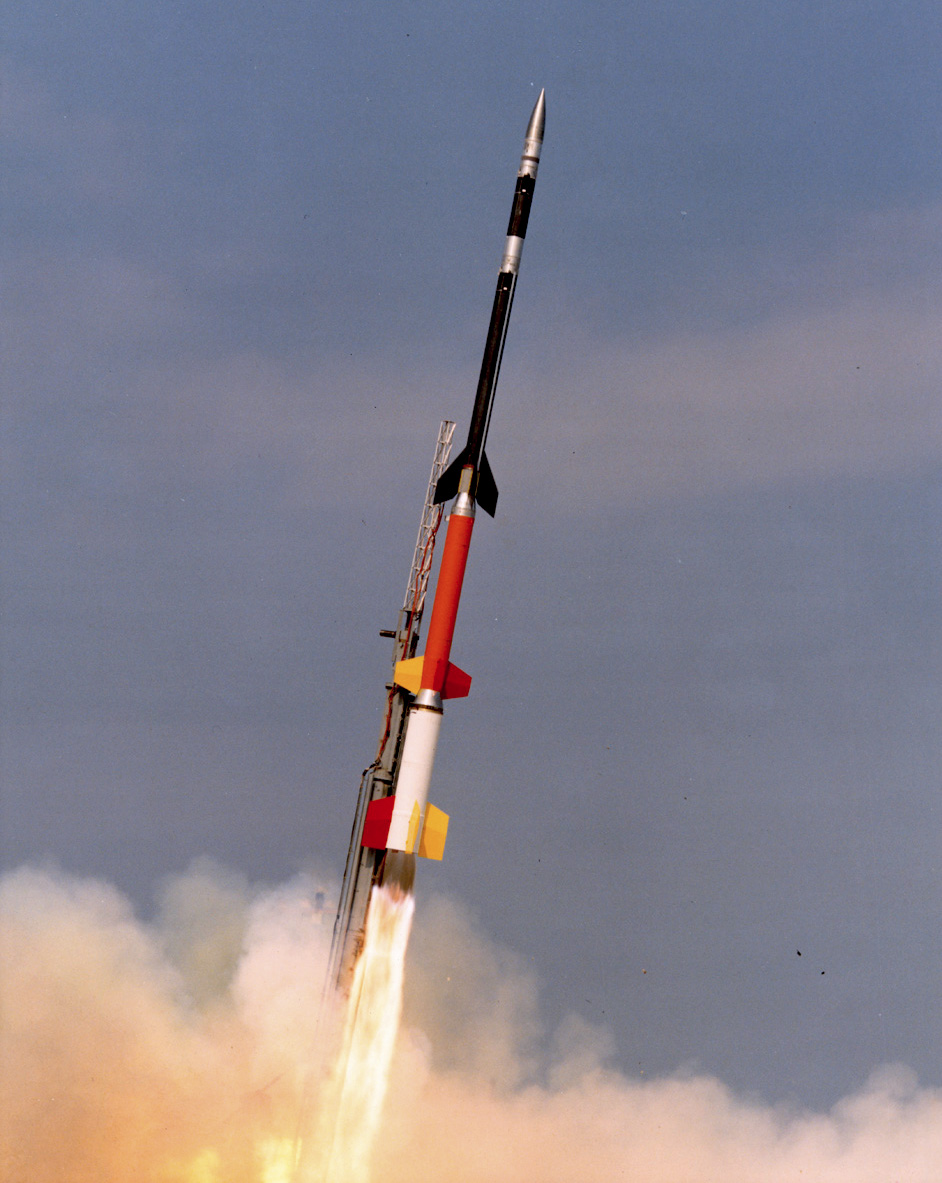
Each stage of the Black Brant 12 sounding rocket has its own set of tail fins.
The second stage of a Minuteman III rocket

A multistage rocket or step rocket[1] is a launch vehicle that uses two or more rocket stages, each of which contains its own engines and propellant. A tandem or serial stage is mounted on top of another stage; a parallel stage is attached alongside another stage. The result is effectively two or more rockets stacked on top of or attached next to each other. Two-stage rockets are quite common, but rockets with as many as five separate stages have been successfully launched.

By jettisoning stages when they run out of propellant, the mass of the remaining rocket is decreased. Each successive stage can also be optimized for its specific operating conditions, such as decreased atmospheric pressure at higher altitudes. This staging allows the thrust of the remaining stages to more easily accelerate the rocket to its final velocity and height.

In serial or tandem staging schemes, the first stage is at the bottom and is usually the largest, the second stage and subsequent upper stages are above it, usually decreasing in size. In parallel staging schemes solid or liquid rocket boosters are used to assist with launch. These are sometimes referred to as "stage 0". In the typical case, the first-stage and booster engines fire to propel the entire rocket upwards. When the boosters run out of fuel, they are detached from the rest of the rocket (usually with some kind of small explosive charge or explosive bolts) and fall away. The first stage then burns to completion and falls off. This leaves a smaller rocket, with the second stage on the bottom, which then fires. Known in rocketry circles as staging, this process is repeated until the desired final velocity is achieved. In some cases with serial staging, the upper stage ignites before the separation—the interstage ring is designed with this in mind, and the thrust is used to help positively separate the two vehicles.

Only multistage rockets have reached orbital speed. Single-stage-to-orbit designs are sought, but have not yet been demonstrated on Earth.

Performance

[edit]
Cutaway drawings showing three multi-stage rockets
Apollo 11 Saturn V first-stage separation
The second stage being lowered onto the first stage of a Saturn V rocket
A diagram of the second stage and how it fits into the complete rocket

Multi-stage rockets overcome a limitation imposed by the laws of physics on the velocity change achievable by a rocket stage. The limit depends on the fueled-to-dry mass ratio and on the effective exhaust velocity of the engine. This relation is given by the classical rocket equation:

where:

is delta-v of the vehicle (change of velocity plus losses due to gravity and atmospheric drag);
is the initial total (wet) mass, equal to final (dry) mass plus propellant;
is the final (dry) mass, after the propellant is expended;
is the effective exhaust velocity (determined by propellant, engine design and throttle condition);
is the natural logarithm function.

The delta v required to reach low Earth orbit (or the required velocity of a sufficiently heavy suborbital payload) requires a wet to dry mass ratio larger than has been achieved in a single rocket stage. The multistage rocket overcomes this limit by splitting the delta-v into fractions. As each lower stage drops off and the succeeding stage fires, the rest of the rocket is still traveling near the burnout speed. Each lower stage's dry mass includes the propellant in the upper stages, and each succeeding upper stage has reduced its dry mass by discarding the useless dry mass of the spent lower stages.[2]

A further advantage is that each stage can use a different type of rocket engine, each tuned for its particular operating conditions. Thus the lower-stage engines are designed for use at atmospheric pressure, while the upper stages can use engines suited to near vacuum conditions. Lower stages tend to require more structure than upper as they need to bear their own weight plus that of the stages above them. Optimizing the structure of each stage decreases the weight of the total vehicle and provides further advantage.

The advantage of staging comes at the cost of the lower stages lifting engines which are not yet being used, as well as making the entire rocket more complex and harder to build than a single stage. In addition, each staging event is a possible point of launch failure, due to separation failure, ignition failure, or stage collision. Nevertheless, the savings are so great that every rocket ever used to deliver a payload into orbit has had staging of some sort.

One of the most common measures of rocket efficiency is its specific impulse, which is defined as the thrust per flow rate (per second) of propellant consumption:[3]

=

When rearranging the equation such that thrust is calculated as a result of the other factors, we have:

These equations show that a higher specific impulse means a more efficient rocket engine, capable of burning for longer periods of time. In terms of staging, the initial rocket stages usually have a lower specific impulse rating, trading efficiency for superior thrust in order to quickly push the rocket into higher altitudes. Later stages of the rocket usually have a higher specific impulse rating because the vehicle is further outside the atmosphere and the exhaust gas does not need to expand against as much atmospheric pressure.

When selecting the ideal rocket engine to use as an initial stage for a launch vehicle, a useful performance metric to examine is the thrust-to-weight ratio, and is calculated by the equation:

The common thrust-to-weight ratio of a launch vehicle is within the range of 1.3 to 2.0.[3] Another performance metric to keep in mind when designing each rocket stage in a mission is the burn time, which is the amount of time the rocket engine will last before it has exhausted all of its propellant. For most non-final stages, thrust and specific impulse can be assumed constant, which allows the equation for burn time to be written as:

Where and are the initial and final masses of the rocket stage respectively. In conjunction with the burnout time, the burnout height and velocity are obtained using the same values, and are found by these two equations:

When dealing with the problem of calculating the total burnout velocity or time for the entire rocket system, the general procedure for doing so is as follows:[3]

  1. Partition the problem calculations into however many stages the rocket system comprises.
  2. Calculate the initial and final mass for each individual stage.
  3. Calculate the burnout velocity, and sum it with the initial velocity for each individual stage. Assuming each stage occurs immediately after the previous, the burnout velocity becomes the initial velocity for the following stage.
  4. Repeat the previous two steps until the burnout time and/or velocity has been calculated for the final stage.

The burnout time does not define the end of the rocket stage's motion, as the vehicle will still have a velocity that will allow it to coast upward for a brief amount of time until the acceleration of the planet's gravity gradually changes it to a downward direction. The velocity and altitude of the rocket after burnout can be easily modeled using the basic physics equations of motion.

When comparing one rocket with another, it is impractical to directly compare the rocket's certain trait with the same trait of another because their individual attributes are often not independent of one another. For this reason, dimensionless ratios have been designed to enable a more meaningful comparison between rockets. The first is the initial to final mass ratio, which is the ratio between the rocket stage's full initial mass and the rocket stage's final mass once all of its fuel has been consumed. The equation for this ratio is:

Where is the empty mass of the stage, is the mass of the propellant, and is the mass of the payload.[4] The second dimensionless performance quantity is the structural ratio, which is the ratio between the empty mass of the stage, and the combined empty mass and propellant mass as shown in this equation:[4]

The last major dimensionless performance quantity is the payload ratio, which is the ratio between the payload mass and the combined mass of the empty rocket stage and the propellant:

After comparing the three equations for the dimensionless quantities, it is easy to see that they are not independent of each other, and in fact, the initial to final mass ratio can be rewritten in terms of structural ratio and payload ratio:[4]

These performance ratios can also be used as references for how efficient a rocket system will be when performing optimizations and comparing varying configurations for a mission.

Component selection and sizing

[edit]
The Saturn family of multistage rockets carrying Apollo spacecraft

For initial sizing, the rocket equations can be used to derive the amount of propellant needed for the rocket based on the specific impulse of the engine and the total impulse required in N·s. The equation is:

where g is the gravity constant of Earth.[3] This also enables the volume of storage required for the fuel to be calculated if the density of the fuel is known, which is almost always the case when designing the rocket stage. The volume is yielded when dividing the mass of the propellant by its density. Asides from the fuel required, the mass of the rocket structure itself must also be determined, which requires taking into account the mass of the required thrusters, electronics, instruments, power equipment, etc.[3] These are known quantities for typical off the shelf hardware that should be considered in the mid to late stages of the design, but for preliminary and conceptual design, a simpler approach can be taken. Assuming one engine for a rocket stage provides all of the total impulse for that particular segment, a mass fraction can be used to determine the mass of the system. The mass of the stage transfer hardware such as initiators and safe-and-arm devices are very small by comparison and can be considered negligible.

For modern day solid rocket motors, it is a safe and reasonable assumption to say that 91 to 94 percent of the total mass is fuel.[3] It is also important to note there is a small percentage of "residual" propellant that will be left stuck and unusable inside the tank, and should also be taken into consideration when determining amount of fuel for the rocket. A common initial estimate for this residual propellant is five percent. With this ratio and the mass of the propellant calculated, the mass of the empty rocket weight can be determined. Sizing rockets using a liquid bipropellant requires a slightly more involved approach because there are two separate tanks that are required: one for the fuel, and one for the oxidizer. The ratio of these two quantities is known as the mixture ratio, and is defined by the equation:

Where is the mass of the oxidizer and is the mass of the fuel. This mixture ratio not only governs the size of each tank, but also the specific impulse of the rocket. Determining the ideal mixture ratio is a balance of compromises between various aspects of the rocket being designed, and can vary depending on the type of fuel and oxidizer combination being used. For example, a mixture ratio of a bipropellant could be adjusted such that it may not have the optimal specific impulse, but will result in fuel tanks of equal size. This would yield simpler and cheaper manufacturing, packing, configuring, and integrating of the fuel systems with the rest of the rocket,[3] and can become a benefit that could outweigh the drawbacks of a less efficient specific impulse rating. But suppose the defining constraint for the launch system is volume, and a low density fuel is required such as hydrogen. This example would be solved by using an oxidizer-rich mixture ratio, reducing efficiency and specific impulse rating, but will meet a smaller tank volume requirement.

Optimal staging and restricted staging

[edit]

Optimal

[edit]

The ultimate goal of optimal staging is to maximize the payload ratio (see ratios under performance), meaning the largest amount of payload is carried up to the required burnout velocity using the least amount of non-payload mass, which comprises everything else. This goal assumes that the cost of a rocket launch is proportional to the total liftoff mass of the rocket, which is a rule of thumb in rocket engineering. Here are a few quick rules and guidelines to follow in order to reach optimal staging:[3]

  1. Initial stages should have lower , and later/final stages should have higher .
  2. The stages with the lower should contribute less ΔV.
  3. The next stage is always a smaller size than the previous stage.
  4. Similar stages should provide similar ΔV.

The payload ratio can be calculated for each individual stage, and when multiplied together in sequence, will yield the overall payload ratio of the entire system. It is important to note that when computing payload ratio for individual stages, the payload includes the mass of all the stages after the current one. The overall payload ratio is:

Where n is the number of stages the rocket system comprises. Similar stages yielding the same payload ratio simplify this equation, however that is seldom the ideal solution for maximizing payload ratio, and ΔV requirements may have to be partitioned unevenly as suggested in guideline tips 1 and 2 from above. Two common methods of determining this perfect ΔV partition between stages are either a technical algorithm that generates an analytical solution that can be implemented by a program, or simple trial and error.[3] For the trial and error approach, it is best to begin with the final stage, calculating the initial mass which becomes the payload for the previous stage. From there it is easy to progress all the way down to the initial stage in the same manner, sizing all the stages of the rocket system.

Restricted

[edit]

Restricted rocket staging is based on the simplified assumption that each of the stages of the rocket system have the same specific impulse, structural ratio, and payload ratio, the only difference being the total mass of each increasing stage is less than that of the previous stage. Although this assumption may not be the ideal approach to yielding an efficient or optimal system, it greatly simplifies the equations for determining the burnout velocities, burnout times, burnout altitudes, and mass of each stage. This would make for a better approach to a conceptual design in a situation where a basic understanding of the system behavior is preferential to a detailed, accurate design. One important concept to understand when undergoing restricted rocket staging, is how the burnout velocity is affected by the number of stages that split up the rocket system. Increasing the number of stages for a rocket while keeping the specific impulse, payload ratios and structural ratios constant will always yield a higher burnout velocity than the same systems that use fewer stages. However, the law of diminishing returns is evident in that each increment in number of stages gives less of an improvement in burnout velocity than the previous increment. The burnout velocity gradually converges towards an asymptotic value as the number of stages increases towards a very high number.[4] In addition to diminishing returns in burnout velocity improvement, the main reason why real world rockets seldom use more than three stages is because of increase of weight and complexity in the system for each added stage, ultimately yielding a higher cost for deployment.

Starship during hot-staging

Hot-staging

[edit]

Hot-staging is a type of rocket staging in which the next stage fires its engines before separation instead of after.[5] During hot-staging, the earlier stage throttles down its engines.[5] Hot-staging may reduce the complexity of stage separation, and gives a small extra payload capacity to the booster.[5] It also eliminates the need for ullage motors, as the acceleration from the nearly spent stage keeps the propellants settled at the bottom of the tanks. Hot-staging is used on Soviet-era Russian rockets such as Soyuz[6][7] and Proton-M.[8] The N1 rocket was designed to use hot staging, but none of the test flights lasted long enough for this to occur. Starting with the Titan II, the Titan family of rockets used hot staging. SpaceX retrofitted their Starship rocket to use hot staging after its first flight, making it the largest rocket ever to do so, as well as the first reusable vehicle to utilize hot staging.[9]

Tandem vs parallel staging design

[edit]

A rocket system that implements tandem staging means that each individual stage runs in order one after the other. The rocket breaks free from the previous stage, then begins burning through the next stage in straight succession. On the other hand, a rocket that implements parallel staging has two or more different stages that are active at the same time. For example, the Space Shuttle has two Solid Rocket Boosters that burn simultaneously. Upon launch, the boosters ignite, and at the end of the stage, the two boosters are discarded while the external fuel tank is kept for another stage.[3] Most quantitative approaches to the design of the rocket system's performance are focused on tandem staging, but the approach can be easily modified to include parallel staging. To begin with, the different stages of the rocket should be clearly defined. Continuing with the previous example, the end of the first stage which is sometimes referred to as 'stage 0', can be defined as when the side boosters separate from the main rocket. From there, the final mass of stage one can be considered the sum of the empty mass of stage one, the mass of stage two (the main rocket and the remaining unburned fuel) and the mass of the payload.[original research?]

Upper stages

[edit]

High-altitude and space-bound upper stages are designed to operate with little or no atmospheric pressure. This allows the use of lower pressure combustion chambers and engine nozzles with optimal vacuum expansion ratios. Some upper stages, especially those using hypergolic propellants like Delta-K or Ariane 5 ES second stage, are pressure fed, which eliminates the need for complex turbopumps. Other upper stages, such as the Centaur or DCSS, use liquid hydrogen expander cycle engines, or gas generator cycle engines like the Ariane 5 ECA's HM7B or the S-IVB's J-2. These stages are usually tasked with completing orbital injection and accelerating payloads into higher energy orbits such as GTO or to escape velocity. Upper stages, such as Fregat, used primarily to bring payloads from low Earth orbit to GTO or beyond are sometimes referred to as space tugs.[10]

Assembly

[edit]

Each individual stage is generally assembled at its manufacturing site and shipped to the launch site; the term vehicle assembly refers to the mating of all rocket stage(s) and the spacecraft payload into a single assembly known as a space vehicle. Single-stage vehicles (suborbital), and multistage vehicles on the smaller end of the size range, can usually be assembled directly on the launch pad by lifting the stage(s) and spacecraft vertically in place by means of a crane.

This is generally not practical for larger space vehicles, which are assembled off the pad and moved into place on the launch site by various methods. NASA's Apollo/Saturn V crewed Moon landing vehicle, and Space Shuttle, were assembled vertically onto mobile launcher platforms with attached launch umbilical towers, in a Vehicle Assembly Building, and then a special crawler-transporter moved the entire vehicle stack to the launch pad in an upright position. In contrast, vehicles such as the Russian Soyuz rocket and the SpaceX Falcon 9 are assembled horizontally in a processing hangar, transported horizontally, and then brought upright at the pad.

Passivation and space debris

[edit]

Spent upper stages of launch vehicles are a significant source of space debris remaining in orbit in a non-operational state for many years after use, and occasionally, large debris fields created from the breakup of a single upper stage while in orbit.[11]

After the 1990s, spent upper stages are generally passivated after their use as a launch vehicle is complete in order to minimize risks while the stage remains derelict in orbit.[12] Passivation means removing any sources of stored energy remaining on the vehicle, as by dumping fuel or discharging batteries.

Many early upper stages, in both the Soviet and U.S. space programs, were not passivated after mission completion. During the initial attempts to characterize the space debris problem, it became evident that a good proportion of all debris was due to the breaking up of rocket upper stages, particularly unpassivated upper-stage propulsion units.[11]

History and development

[edit]

An illustration and description in the 14th century Chinese Huolongjing by Jiao Yu and Liu Bowen shows the oldest known multistage rocket; this was the "fire-dragon issuing from the water" (火龙出水, huǒ lóng chū shuǐ), which was used mostly by the Chinese navy.[13][14] It was a two-stage rocket that had booster rockets that would eventually burn out, yet, before they did so, automatically ignited a number of smaller rocket arrows that were shot out of the front end of the missile, which was shaped like a dragon's head with an open mouth.[14] The British scientist and historian Joseph Needham points out that the written material and depicted illustration of this rocket come from the oldest stratum of the Huolongjing, which can be dated roughly 1300–1350 AD (from the book's part 1, chapter 3, page 23).[14]

Another example of an early multistaged rocket is the Juhwa (走火) of Korean development. It was proposed by medieval Korean engineer, scientist and inventor Ch'oe Mu-sŏn and developed by the Firearms Bureau (火㷁道監) during the 14th century.[15][16] The rocket had the length of 15 cm and 13 cm; the diameter was 2.2 cm. It was attached to an arrow 110 cm long; experimental records show that the first results were around 200m in range.[17] There are records that show Korea kept developing this technology until it came to produce the Singijeon, or 'magical machine arrows' in the 16th century. The earliest experiments with multistage rockets in Europe were made in 1551 by Austrian Conrad Haas (1509–1576), the arsenal master of the town of Hermannstadt, Transylvania (now Sibiu/Hermannstadt, Romania). This concept was developed independently by at least five individuals:

The first high-speed multistage rockets were the RTV-G-4 Bumper rockets tested at the White Sands Proving Ground and later at Cape Canaveral from 1948 to 1950. These consisted of a V-2 rocket and a WAC Corporal sounding rocket. The greatest altitude ever reached was 393 km, attained on February 24, 1949, at White Sands.

In 1947, the Soviet rocket engineer and scientist Mikhail Tikhonravov developed a theory of parallel stages, which he called "packet rockets". In his scheme, three parallel stages were fired from liftoff, but all three engines were fueled from the outer two stages, until they are empty and could be ejected. This is more efficient than sequential staging, because the second-stage engine is never just dead weight. In 1951, Soviet engineer and scientist Dmitry Okhotsimsky carried out a pioneering engineering study of general sequential and parallel staging, with and without the pumping of fuel between stages. The design of the R-7 Semyorka emerged from that study. The trio of rocket engines used in the first stage of the American Atlas I and Atlas II launch vehicles, arranged in a row, used parallel staging in a similar way: the outer pair of booster engines existed as a jettisonable pair which would, after they shut down, drop away with the lowermost outer skirt structure, leaving the central sustainer engine to complete the first stage's engine burn towards apogee or orbit.

Separation events

[edit]

Separation of each portion of a multistage rocket introduces additional risk into the success of the launch mission. Reducing the number of separation events results in a reduction in complexity.[23] Separation events occur when stages or strap-on boosters separate after use, when the payload fairing separates prior to orbital insertion, or when used, a launch escape system which separates after the early phase of a launch. Pyrotechnic fasteners, or in some cases pneumatic systems like on the Falcon 9 Full Thrust, are typically used to separate rocket stages.

Two-stage-to-orbit

[edit]

A two-stage-to-orbit (TSTO) or two-stage rocket launch vehicle is a spacecraft in which two distinct stages provide propulsion consecutively in order to achieve orbital velocity. It is intermediate between a three-stage-to-orbit launcher and a hypothetical single-stage-to-orbit (SSTO) launcher.[citation needed]

Three-stage-to-orbit

[edit]

The three-stage-to-orbit launch system is a commonly used rocket system to attain Earth orbit. The spacecraft uses three distinct stages to provide propulsion consecutively in order to achieve orbital velocity. It is intermediate between a four-stage-to-orbit launcher and a two-stage-to-orbit launcher.

Examples of three-stage-to-orbit systems

[edit]

Examples of two stages with boosters

[edit]

Other designs (in fact, most modern medium- to heavy-lift designs) do not have all three stages inline on the main stack, instead having strap-on boosters for the "stage-0" with two core stages. In these designs, the boosters and first stage fire simultaneously instead of consecutively, providing extra initial thrust to lift the full launcher weight and overcome gravity losses and atmospheric drag. The boosters are jettisoned a few minutes into flight to reduce weight.

Four-stage-to-orbit

[edit]

The four-stage-to-orbit launch system is a rocket system used to attain Earth orbit. The spacecraft uses four distinct stages to provide propulsion consecutively in order to achieve orbital velocity. It is intermediate between a five-stage-to-orbit launcher and a three-stage-to-orbit launcher, most often used with solid-propellant launch systems.

Examples of four-stage-to-orbit systems[citation needed]

[edit]

Examples of three stages with boosters[citation needed]

[edit]

Other designs do not have all four stages inline on the main stack, instead having strap-on boosters for the "stage-0" with three core stages. In these designs, the boosters and first stage fire simultaneously instead of consecutively, providing extra initial thrust to lift the full launcher weight and overcome gravity losses and atmospheric drag. The boosters are jettisoned a few minutes into flight to reduce weight.

Extraterrestrial Rockets

[edit]

Stage-and-a-half

[edit]

The stage-and-a-half launch system is a rarely used rocket system to attain Earth orbit. A half-stage only jettisons booster engines, compared to a full stage where both fuel tanks and engines are jettisoned.[30]

The concept is found in some rockets of the Atlas rocket family where all three engines are ignited on the ground and during flight two of the three engines are jettisoned. This was done because of reliability issues with engine ignition in the 1950s. Ignition of all three engines on the ground allowed for confirmation of the functionality of the engines before lift-off.[31]

Examples of stage-and-a-half rockets

[edit]

See also

[edit]

References

[edit]
Revisions and contributorsEdit on WikipediaRead on Wikipedia
from Grokipedia
A multistage rocket is a type of consisting of two or more discrete stages, each containing its own engines, , and structural components, stacked sequentially to propel a into . The first stage provides initial from the launch site, burning until its fuel is depleted, at which point it is jettisoned to shed mass; subsequent stages then ignite in turn, each optimized for the changing conditions of flight, ultimately delivering the to its target or . The concept of multistage propulsion originated in the early 17th century with German fireworks maker Johann Schmidlap's invention of the "step rocket," a multi-stage device designed to elevate fireworks to greater heights by successively igniting upper sections after lower ones burned out. In the modern era, American engineer advanced the idea through theoretical work and patents; in 1914, he received U.S. patents for a multi-stage rocket design and a system, laying foundational principles for . The first practical liquid-fueled multistage rocket launch occurred on May 13, 1948, at White Sands Proving Ground in , where a captured German V-2 served as the first stage boosting a as the second stage to an altitude of 127 kilometers (79 miles). Multistage designs address the inherent limitations of single-stage rockets, which struggle to achieve the high velocities required for —around 7.8 kilometers per second—due to the accumulating "dead weight" of empty fuel tanks that reduces overall efficiency as dictated by the , Δv = v_e \ln(m_0 / m_f), where Δv is the velocity change, v_e is exhaust velocity, m_0 is , and m_f is final . By jettisoning spent stages, multistage rockets improve the effective across phases of flight, greater total Δv while also allowing lower peak accelerations for crewed missions (typically under with three stages versus over 6g for a single stage) and optimization of engines for specific environments, such as sea-level for boosters and performance for upper stages. Most operational employ two to four stages; examples include the four-stage Taurus launcher for deployment and the two-stage main engines combined with rocket boosters.

Fundamentals

Definition and Purpose

A multistage rocket is a composed of multiple discrete stages, each equipped with its own system, including engines and tanks, arranged in a stacked configuration. These stages operate sequentially, with the lower stages providing initial thrust and the upper stages continuing the ascent after separation. The primary purpose of multistage s is to overcome the inherent limitations imposed by the , which governs the maximum velocity change (Δv) achievable by a system. According to Tsiolkovsky's , Δv = v_e \ln\left(\frac{m_0}{m_f}\right), where Δv is the change in , v_e is the exhaust , m_0 is the initial , and m_f is the final after expulsion. This highlights the "tyranny" of requiring exponentially increasing for higher velocities in a single-stage design, as the structural of empty tanks and engines becomes a significant deadweight. By jettisoning expended stages, multistage s reduce the overall for subsequent , enabling greater efficiency and the attainment of orbital or interplanetary velocities that would be impractical with a single stage. In operation, the first stage ignites at launch to provide the initial against and atmospheric drag, burning until its is depleted. At burnout, the stage separates from the vehicle, and the next stage's engines ignite to continue , with this repeating until the final stage achieves insertion into the desired . The coordinates these events, ensuring precise timing for ignition, separation, and .

Advantages Over Single-Stage Rockets

Multistage rockets provide key advantages over (SSTO) designs by enabling higher fractions to (LEO), typically achieving 3-5% compared to less than 1% for chemical SSTO vehicles. For instance, conceptual SSTO designs using chemical propulsion have demonstrated fractions as low as 0.23% or 0.43%, limited by the rocket equation's constraints on ratios. In contrast, the multistage attained a fraction of approximately 3.9% to LEO, delivering 118,000 kg from a gross liftoff of 3,038,500 kg. A major limitation of SSTO vehicles is the need for extremely high propellant mass fractions—approaching or exceeding 87% of gross liftoff weight—to generate the total delta-v of about 9.3 km/s required for , including and atmospheric drag losses, which demands near-perfect structural that is impractical with current materials and . Multistage rockets overcome this by jettisoning depleted stages, reducing the mass that subsequent stages must accelerate and allowing attainment of the 7.8 km/s orbital for LEO. This approach also permits completion of missions in a single launch, avoiding the need for complex orbital docking or assembly. This staging approach also enhances scalability for heavy-lift missions, as seen with the Saturn V's ability to place 44,500 kg on translunar trajectories, a capability unattainable by SSTO systems without prohibitively large sizes. Additionally, multistage designs permit (I_sp) optimization tailored to each stage's environment, with lower stages using sea-level-optimized engines for high thrust in dense atmosphere and upper stages employing vacuum-optimized engines for greater efficiency, thereby maximizing overall delta-v beyond single-stage limits. Despite these benefits, multistage rockets introduce trade-offs, including greater design and manufacturing complexity from staging mechanisms, added potential failure points during separations, and elevated development costs relative to a simplified SSTO . Traditional multistage designs are non-reusable, with discarded stages increasing recurring manufacturing and launch expenses. For deep space missions, the additional delta-v requirements demand exponentially larger vehicles, resulting in development costs often exceeding tens of billions of dollars and constrained payload capacities.

Design Principles

Performance Metrics

The performance of multistage rockets is fundamentally governed by the applied iteratively across stages, yielding the total change in velocity () as the sum of contributions from each stage: Δv=ive,iln(m0,imf,i)\Delta v = \sum_i v_{e,i} \ln \left( \frac{m_{0,i}}{m_{f,i}} \right) where ve,iv_{e,i} is the exhaust velocity of stage ii, m0,im_{0,i} is the initial mass of that stage (including propellant), and mf,im_{f,i} is the final mass after propellant burnout. This equation derives from the conservation of momentum for each stage, assuming instantaneous separation between stages and neglecting external forces initially; the full form incorporates losses such as gravity, approximated as Δvtotal=ive,iln(m0,imf,i)gtburn\Delta v_{\text{total}} = \sum_i v_{e,i} \ln \left( \frac{m_{0,i}}{m_{f,i}} \right) - g t_{\text{burn}}, where gg is gravitational acceleration and tburnt_{\text{burn}} is total burn time. Key metrics for evaluating multistage efficiency include the payload ratio λ=mpl/(mp+ms)\lambda = m_{\text{pl}} / (m_p + m_s), which measures the fraction of non-propellant mass that is (mplm_{\text{pl}}) relative to (mpm_p) and structural (msm_s); higher λ\lambda indicates better payload delivery. The ratio per stage, m0,i/mf,im_{0,i} / m_{f,i}, typically ranges from 3 to 10 for efficient chemical rocket designs, balancing load against structural constraints to maximize Δv\Delta v. The structural coefficient ϵ=ms/(mp+ms)\epsilon = m_s / (m_p + m_s) quantifies inert inefficiency, with ideal values below 0.1 for liquid- stages (e.g., 0.07–0.10 for expendable designs). Overall velocity budgets for chemical multistage rockets often allocate 2–3 km/s per stage, depending on stage position and mission, to achieve totals exceeding 9 km/s for . Performance is influenced by propellant selection, such as kerosene-based / (specific impulse ~263 s, higher for boosters) versus cryogenic /LH₂ (specific impulse ~450 s , suited for upper stages but requiring larger volumes). The overall of the must exceed 1 at liftoff, typically 1.1–1.5 for first stages to overcome and drag, with upper stages achieving higher ratios (around 1.5–3) for efficient in . further refines Δv\Delta v by adjusting staging events and ascent paths to minimize losses.

Component Selection and Sizing

Component selection for multistage rockets begins with evaluating engines based on required levels, (I_sp), and operational capabilities such as restart functionality. Engines are chosen for their ability to deliver appropriate —sea-level optimized nozzles for initial stages to counter atmospheric drag and losses, and vacuum-optimized expansions for upper stages to maximize . Typical I_sp values range from 200 to 450 seconds for chemical propulsion systems, balancing performance with practical constraints like chamber pressure and cooling requirements. Restart capability is particularly essential for upper-stage engines, enabling multiple burns for orbital insertion, circularization, or trajectory corrections after coast phases. Propellant selection prioritizes and alongside storage and handling properties. High-density propellants like kerosene-liquid oxygen (kerolox), with densities around 0.8-1.0 g/cm³, are favored for first stages to minimize tank volume and structural mass under high dynamic pressures. In contrast, high-performance, low-density combinations such as hydrogen-liquid oxygen (hydrolox), offering I_sp up to 450 seconds in but with densities near 0.3 g/cm³, are selected for upper stages where efficiency outweighs volume concerns. Sizing of components follows from mission-derived delta-v (Δv) requirements using the Tsiolkovsky rocket equation, where propellant mass is calculated as m_prop = m_dry × (e^(Δv / v_e) - 1), with v_e as the effective exhaust velocity (v_e = I_sp × g_0, g_0 ≈ 9.81 m/s²). Tank volumes are then determined by dividing propellant mass by the mixture's density, ensuring adequate ullage for zero-gravity settling. Structural mass is scaled using the structural coefficient ε, defined as ε = m_struct / (m_struct + m_prop), typically 0.05-0.15 for modern stages, to estimate inert hardware like tanks and interstages while minimizing overall dry mass. First stages emphasize high thrust-to-weight ratios and robustness against aerodynamic loads, often incorporating multiple engines for and control. Upper stages focus on minimizing through lightweight composites and precise attitude control systems, with engines tuned for vacuum operation and ignition reliability. Trade studies in design balance these factors; for instance, using nine engines on the first stage enhances reliability through compared to a single large engine, reducing single-point failure risks while distributing .

Staging Optimization

Optimal staging theory seeks to determine the ideal number of stages and their mass distributions to achieve a required velocity change (Δv) while maximizing payload efficiency, often treating the problem as a continuous optimization via the calculus of variations. This approach derives the functional form for propellant allocation and burnout conditions across stages by minimizing the total initial mass subject to the rocket equation constraints, assuming constant exhaust velocity and structural factors. A continuous approximation yields the ideal stage count as noptΔvvelnRmaxn_\text{opt} \approx \frac{\Delta v}{v_e \ln R_\text{max}}, where vev_e is the exhaust velocity and RmaxR_\text{max} is the maximum practical mass ratio per stage, typically 10–20 due to structural and propulsion limits. For discrete cases with a fixed number of stages nn, optimization employs Lagrange multipliers to allocate masses such that the total initial mass is minimized for the given Δv, enforcing equality in velocity increments adjusted for structural efficiencies across stages. Restricted staging incorporates practical constraints, such as requiring an integer number of stages, predefined engine types with fixed thrust and , or minimum masses, which necessitate iterative numerical methods like or to converge on the minimum gross liftoff mass. These methods iteratively adjust loads and structural masses while satisfying and separation constraints, often integrating the for each stage: Δvi=ve,iln(m0,imf,i)\Delta v_i = v_{e,i} \ln \left( \frac{m_{0,i}}{m_{f,i}} \right), where m0,im_{0,i} and mf,im_{f,i} are initial and final masses for stage ii. Key results indicate that 2–3 stages are optimal for liquid chemical rockets targeting (), balancing achievable mass ratios against added complexity from more stages, whereas solid or hybrid systems typically require higher stage counts (4 or more) due to their lower specific impulses and higher structural mass fractions, which reduce per-stage Δv efficiency. Historical trajectory-integrated optimization has relied on specialized software like NASA's Program to Optimize Simulated Trajectories (), which couples staging parameters with six-degree-of-freedom ascent simulations to refine mass distributions under aerodynamic, gravitational, and atmospheric constraints.

Staging Configurations

Tandem Versus Parallel Staging

In tandem staging, also known as serial staging, rocket stages are stacked linearly one atop the other, with each subsequent stage ignited only after the previous one has expended its and separated. This configuration offers advantages in structural simplicity, as the axial load path aligns directly with the vehicle's vector, minimizing lateral stresses during ascent. Tandem staging is employed in the majority of orbital launch vehicles, such as the , which utilized three sequentially fired stages to achieve lunar missions. Parallel staging, or clustered staging, involves multiple boosters attached alongside a central core stage, typically ignited simultaneously at liftoff or in a staggered sequence to provide augmented . This arrangement enables significantly higher initial levels, essential for overcoming Earth's and atmospheric drag during the early ascent phase. A representative example is the (SLS), which incorporates two solid rocket boosters strapped parallel to its liquid-fueled core stage for enhanced liftoff performance. Comparisons between tandem and parallel staging highlight their complementary roles in launch vehicle design. Tandem configurations are particularly suited for upper stages, where lower overall mass and higher engines optimize velocity increments in the near-vacuum environment. In contrast, parallel staging excels for first stages, delivering superior -to-mass ratios to accelerate heavy payloads from the ground. Hybrid approaches, such as the , combine parallel core stages for initial boost with subsequent tandem upper staging to balance and . Design implications differ markedly between the two geometries. Tandem staging requires interstage structures—cylindrical adapters or frangible joints—to facilitate clean separation while maintaining structural integrity during axial loading. Parallel staging, however, involves more complex booster attachment and jettison mechanisms, often necessitating or release to reduce drag post-separation. Additionally, parallel configurations can experience more pronounced effects due to the dynamic interactions among multiple engines, potentially exacerbating issues like pogo oscillations in liquid-propellant systems.

Hot-Staging Techniques

Hot-staging is a staging technique in multistage rockets where the upper stage's engines ignite before the lower stage reaches burnout, allowing separation to occur while both stages' systems are active. This process maintains continuous acceleration, avoiding the brief interruption in typical of cold-staging methods. Separation mechanisms often include pyrotechnic fasteners to release structural connections, combined with the upper stage's vector to actively push it away from the lower stage, or pneumatic pushers for additional to ensure clearance and prevent recontact. The advantages of hot-staging center on efficiency gains by eliminating the "dead time" during stage transition, which reduces velocity losses and can save small amounts of delta-v by avoiding gravity losses during the separation phase (typically 10-30 m/s in cold staging). It also simplifies upper stage ignition in vacuum conditions by forgoing ullage motors or settling thrusters, thereby reducing system complexity, mass, and potential failure points. This approach has been a hallmark of Soviet and Russian launch vehicles, notably the Soyuz rocket family, where it enhances reliability for orbital insertions. Despite these benefits, hot-staging presents challenges such as exposure of the lower to the upper stage's exhaust plume, requiring reinforced materials or protective interstage structures that may increase overall . Precise timing is essential, often confined to a narrow window of about 2 seconds in systems like Soyuz, to synchronize ignition, separation, and trajectory divergence and avoid structural damage or collision. Modern implementations, including SpaceX's with its full-flow staged combustion Raptor engines, address these issues through and automated sequencing for safer, more efficient operations. Historically, hot-staging originated in during the late as a reliable alternative to systems, first applied in the Block-E upper stage of the R-7-derived Luna rocket, powered by the RD-0105 , to ensure consistent settling and ignition without additional motors. This innovation addressed early reliability concerns in upper stage performance and became standard for subsequent designs like Proton and Soyuz, influencing global practices in high-thrust, vacuum-optimized staging.

Separation Events

In cold staging, the primary separation process for multistage rockets begins with the shutdown of the lower stage engines through thrust termination, such as depletion or closure for engines or controlled "chuffing" for , ensuring no residual interferes with separation. The stages are then decoupled using specialized mechanisms, followed by ignition of the upper stage engines once a safe distance is achieved, typically after a brief thrust lapse to prevent structural damage or ignition anomalies. This sequence contrasts with hot-staging techniques by prioritizing post-separation ignition to minimize immediate dynamic loads. Separation mechanisms commonly employ linear shaped charges (LSCs), which detonate to slice through structural interfaces with high precision but generate shock and potential fragments; frangible joints, utilizing mild detonating fuse (MDF) to fracture pre-weakened notches for cleaner breaks; or clamp systems like V-band couplings released by point-severing devices. To impart relative velocity and prevent recontact, push-off systems include pyrotechnic bolts or nuts that provide explosive release with non-fragmenting designs for reliability; pneumatic pistons, delivering controlled gas impulses of 0.15–0.3 m/s; or spring-loaded pushers, achieving velocities from 0.06–1.8 m/s while matched to minimize induced rotation. The entire event is sequenced via redundant firing trains and monitored by onboard , including rate gyroscopes, to verify alignment and detect anomalies in real time. Key risks during cold separation include interstage collisions from insufficient clearance or aerodynamic interactions, and debris propagation that could damage sensitive upper stage components like avionics or nozzles. Collisions are mitigated by designing for adequate linear separation velocity (typically 0.5–2 m/s) and controlled tip-off rates (often limited to under 1°/s per axis for precision missions), ensuring angular divergence to avoid recontact paths. Debris risks from LSCs or early pyrotechnics are addressed through fragment shields, redundant non-contaminating joints like zero-failure-tolerant frangibles, and dual-initiator circuits for . Validation occurs via drop-table tests simulating zero-gravity dynamics, wind-tunnel evaluations for atmospheric effects, and computational simulations using tools like to predict debris trajectories and structural responses. The performance impact of cold staging arises from the thrust gap during shutdown, separation, and reignition, resulting in additional losses that reduce overall velocity increment (). Typical losses range from 10–30 m/s, depending on the duration of the unpowered phase (often 1–3 seconds). This can be approximated by the equation for gravity drag during coast: Δvloss=gΔtsep\Delta v_\text{loss} = g \cdot \Delta t_\text{sep} where gg is the local gravitational acceleration (approximately 9.8 m/s² near Earth) and Δtsep\Delta t_\text{sep} is the separation time.

Orbital Configurations

Two-Stage-to-Orbit Systems

Two-stage-to-orbit (TSTO) systems provide a streamlined approach to achieving low Earth orbit (LEO) by employing just two propulsion stages, minimizing complexity while meeting the delta-v requirements of approximately 9.4 km/s total, including atmospheric and gravitational losses. The design rationale emphasizes simplicity through fewer staging events, with the first stage typically providing 3-4 km/s of delta-v to propel the vehicle through the dense lower atmosphere, where high thrust-to-weight ratios are prioritized over efficiency. The second stage then delivers the remaining 4-5 km/s in the near-vacuum environment, utilizing higher specific impulse engines to optimize fuel efficiency for circularization and payload insertion. This allocation arises from the rocket equation, where early mass discard improves overall performance, making TSTO suitable for medium-lift missions delivering 10-20 metric tons to LEO. Representative examples include the in its baseline 401 configuration, a fully liquid-fueled tandem TSTO vehicle with a first stage powered by a single engine burning and for high-thrust ascent, paired with a upper stage using one engine with and oxygen for precise orbital maneuvers. This setup achieves payloads of up to 9,800 kg to LEO at 28.7° inclination, with an overall vehicle of approximately 34 (gross liftoff weight around 334 metric tons). Similarly, the Delta II in its 7320 two-stage variant features a first stage with an RS-27A liquid engine augmented by three solids for initial boost, and a second stage powered by an AJ10-118K hypergolic engine for restartable insertion burns, supporting payloads of about 2,200 kg to LEO with an overall near 50. These configurations exhibit typical TSTO mass ratios of 20-30 for the combined vehicle relative to , reflecting efficient structural and propellant fractions. The advantages of TSTO designs lie in reduced operational risks from fewer interstage separations—typically one event managed via pyrotechnic or pneumatic mechanisms—and simplified integration, where shared fairings (e.g., 4-meter diameter on ) and systems streamline assembly without additional booster interfaces. However, these systems face limitations for heavier payloads exceeding 20 tons to LEO, as the fixed first-stage thrust constrains scalability without auxiliary propulsion. Overall, TSTO prioritizes reliability and cost-effectiveness for medium-class missions, with enabling autonomous separation and trajectory corrections.

Three-Stage-to-Orbit Systems

Three-stage-to-orbit systems extend the capabilities of two-stage designs by incorporating an additional stage or parallel boosters, enabling the delivery of heavier payloads to (LEO) or (GTO), typically in the range of 10-20 metric tons depending on the configuration and mission profile. These systems balance thrust requirements during atmospheric ascent with efficiency in vacuum, often partitioning the total velocity change () across components to optimize ratios and performance. Boosters handle initial high-thrust phases for liftoff, while core stages focus on sustained acceleration and orbital insertion. The predominant configuration features a core two-stage augmented by parallel strap-on boosters, which can be - or liquid-fueled to provide supplemental without enlarging the core diameter. This approach allows the core stages to remain optimized for upper-atmosphere and conditions, avoiding excessive structural and aerodynamic drag associated with a wider body. Boosters are typically jettisoned after approximately 2 minutes of flight, once their is expended, reducing overall for the remaining ascent. In contrast, pure tandem three-stage configurations stack three sequential stages without parallel elements, though these are rarer for heavy-lift applications due to challenges in achieving sufficient initial thrust-to-weight ratios. A representative example is the , which uses two solid- boosters (EAP) strapped to a cryogenic liquid core first stage (EPC powered by a Vulcain 2 engine) and a cryogenic upper stage (ESC-A with an engine). The EAP boosters, each with 240 tons of solid , ignite at liftoff and burn for 130 seconds before separation, providing the high initial needed for heavy payloads. This setup delivers up to 10 metric tons to GTO (defined as 250 km perigee, 35,943 km apogee, 6° inclination). The design rationale emphasizes scalability for dual satellite launches while maintaining a compact core for cost-effective production and transport. The exemplifies a tandem three-stage liquid-fueled configuration, consisting of three / stages without parallel boosters in its baseline LEO variant. The first stage employs six RD-276 engines for high , followed by the second and third stages with progressively fewer engines for vacuum optimization. This arrangement achieves approximately 23 metric tons to LEO, with optional upper stages like Briz-M added for GTO missions (up to 6.3 metric tons). Optional booster variants have been explored for enhanced performance, but the core tandem design prioritizes reliability for large payloads.

Four-or-More-Stage-to-Orbit Systems

Four-or-more-stage-to-orbit systems are employed when missions demand significantly higher total delta-v than can be efficiently achieved with fewer stages, particularly for escaping Earth's gravitational well at approximately 11.2 km/s or pursuing interplanetary trajectories that require additional velocity increments beyond . These configurations leverage the rocket equation to distribute delta-v across multiple increments, with upper stages typically contributing 0.5 to 1 km/s each for precise orbital insertion, , or fine trajectory corrections, thereby optimizing overall propellant efficiency and payload fraction. Such designs are essential for deep space probes or high-energy orbits like , where the cumulative delta-v exceeds 10 km/s including atmospheric and gravitational losses. Prominent examples include the Scout rocket, a four-stage all-solid-propellant vehicle developed by and operational from 1961 to 1994, which delivered small payloads of up to 210 kg to LEO for scientific and reconnaissance missions across 118 launches. Similarly, the , produced by using repurposed Peacekeeper intercontinental ballistic missile components, features four solid stages—including an Orion 38 upper stage—and can place 1,735 kg into a 500 km , as demonstrated in missions like the 2017 ORS-5 launch. The European Space Agency's launcher, introduced in 2012 and retired after its final flight in September 2024, employs three solid-propellant stages topped by a restartable liquid-propellant upper stage (AVUM), enabling payloads of up to 1,500 kg to LEO or polar orbits for satellites. Historical five-stage systems, such as the Indian (ASLV) tested in the and early , extended this approach for small payloads but faced reliability issues due to the added complexity. These systems predominantly use (serial) staging with propellants in upper stages for their long-term storability, simplicity, and high thrust-to-weight ratios in vacuum conditions, allowing reliable ignition without cryogenic handling. The Proton rocket, in its four-stage variant with the Briz-M upper stage, exemplifies this for heavy-lift GTO missions, lofting up to 3,000 kg using hypergolic liquids in the upper stages for multiple burns. Key challenges include the accumulation of separation risks across multiple events, where failures in pyrotechnic devices or spring mechanisms can cascade and jeopardize the mission, as seen in early Scout tests. Precise alignment of stages is also critical to minimize off-axis and structural loads during ascent, requiring advanced intertank structures and guidance systems to maintain accuracy over the extended burn sequence.

Hybrid and Specialized Designs

Stage-and-a-Half Configurations

A stage-and-a-half configuration, also known as a 1.5-stage , involves a core stage that provides sustained throughout much of the ascent, supplemented by detachable booster engines or modules that ignite simultaneously at launch but are jettisoned mid-flight to reduce mass, while retaining the core's tanks and . This hybrid approach contrasts with full staging by avoiding complete separation of the initial stage's tanks, allowing the core to continue burning after booster dropout, and differs from single-stage designs by shedding dead weight for improved efficiency. In some variants, cross-feed from boosters to the core enables more balanced consumption. Prominent historical examples include the American missile and its derivatives, such as the Atlas D used in , where two outboard booster engines flanked a central sustainer engine, all firing from the pad; the boosters were dropped about two minutes into flight, leaving the core to propel the payload toward orbit. Similarly, the Soviet family, basis for the Soyuz launcher, employed four strap-on boosters around a central core, with all engines igniting at liftoff; the boosters separated early, and the core continued as the second stage effectively. A modern parallel is seen in SpaceX's , where for certain missions or in the variant, side boosters jettison while the central core stage persists to suborbital or orbital velocities, facilitating partial reusability. This configuration offers advantages in reliability and performance, as ground-level ignition of all engines allows immediate and shutdown, mitigating risks of in-flight starts, while jettisoning boosters—such as the 3.05 metric tons in Atlas D—boosts payload capacity, enabling 1.48 metric tons to a 200 km , whereas without dropout the sustainer alone cannot reach orbit with any payload. It also supports reusability by preserving the core for recovery and refurbishment, as demonstrated in operations, and with cross-feed, it enhances delta-v efficiency over pure parallel staging by optimizing propellant use across the cluster. However, drawbacks include engineering complexity in separating engines or modules without disrupting the core's burn, such as the precise pyrotechnic or pneumatic systems required, and potential for uneven thrust if cross-feed plumbing fails, leading to asymmetric loading on the vehicle.

Upper Stage Innovations

Upper stages in multistage rockets have seen significant innovations aimed at enabling precise orbit insertion, multiple burns, and extended mission durations. A key advancement is the development of restartable engines, which allow for multiple ignitions during a single mission to perform sequential maneuvers such as initial insertion, coasting, and final circularization. The engine, a hydrolox ( and ) design first operational in the 1960s, exemplifies this capability with its that supports unlimited restarts in advanced variants like the RL10C-X, far exceeding the seven restarts demonstrated in early missions. These engines facilitate long-duration coasting phases, often lasting up to 10 hours or more, during which the upper stage maintains stability in space before subsequent burns. upper stage, powered by engines and in use since the , supports such extended coasts while managing cryogenic propellants to minimize losses. Attitude control during these periods is provided by reaction control systems (RCS), typically using small thrusters arranged in clusters to enable three-axis stabilization and fine adjustments without relying on the main engine. Innovations in cryogenic management have further enhanced upper stage performance by reducing boil-off during coasts. (MLI) blankets, consisting of multiple reflective layers, significantly limit heat ingress to tanks, while zero-boil-off (ZBO) systems integrate via cryocoolers to maintain near-constant temperatures and pressures for missions exceeding weeks. stage employs advanced MLI to preserve its hydrolox s, enabling reliable operation over extended durations. Additionally, electric pump-fed systems improve efficiency by using battery-powered pumps instead of complex , reducing dry mass and enabling simpler, restartable designs for small upper stages. Performance metrics underscore these advancements: the achieves a (I_sp) of approximately 444 seconds, approaching 450 seconds in optimized configurations, which maximizes delta-v for upper stage burns. Upper stages like maintain low dry mass fractions below 10%, with goals for advanced designs under 5% through lightweight composites and efficient insulation, allowing more mass to reach . These features are critical for circularization burns in two- or three-stage-to-orbit systems, where precision is essential for geostationary or high-energy transfers. Looking ahead, nuclear thermal propulsion (NTP) represents a transformative innovation for upper stages in Mars missions, offering an I_sp of around 900 seconds—roughly double that of chemical engines—by heating propellant via a . As of 2025, NASA's ongoing NTP development, including the program with planning a demonstration flight in 2027, aims to enable faster transits and heavier payloads for human exploration beyond .

Extraterrestrial Applications

Multistage rocket designs have been adapted for launches from the , where the low of approximately 1/6 that of enables simpler staging configurations compared to terrestrial launches. The (LM), developed by for , exemplifies this with its two-stage architecture: the descent stage served as a landing platform and initial , while the ascent stage provided the propulsion for liftoff and rendezvous with the command module in . The absence of an atmosphere eliminated aerodynamic drag and heating concerns, allowing the ascent stage's single hypergolic engine to achieve the required delta-v of approximately 2 km/s from the lunar surface to low lunar orbit with minimal structural complexity. This delta-v is significantly lower than the roughly 9.4 km/s needed to reach , highlighting the propellant efficiency gains from reduced gravitational and atmospheric losses. On Mars, the thin atmosphere (about 1% of Earth's density at sea level) and lower escape velocity of 5 km/s further simplify multistage requirements, though challenges like surface dust storms necessitate specialized designs. NASA's Mars Ascent Vehicle (MAV) for the Mars Sample Return mission is a two-stage, solid-propellant rocket, approximately 3 meters tall and 0.5 meters in diameter, designed to launch a sample container into Mars orbit at 4 km/s within 10 minutes. The thin atmosphere reduces drag but offers limited aerodynamic stability during ascent, requiring precise attitude control to avoid dust contamination of engines or sensors. Conceptual designs, such as hybrid rocket-based MAVs, incorporate solid boosters to provide initial thrust through dusty conditions, minimizing erosion on upper stages. For crewed missions, SpaceX's Starship vehicle plans to use methane-liquid oxygen (methalox) propulsion with in-situ resource utilization (ISRU) to produce propellant from Martian CO2 and water ice, enabling reusable multistage ascents without Earth-sourced fuel. Launches from airless bodies like asteroids demand vacuum-optimized multistage systems due to negligible (often microgravity) and no atmospheric interference, though actual implementations remain limited. Japan's mission demonstrated sample return from the asteroid Ryugu via touch-and-go operations using the spacecraft's chemical thrusters for brief surface contact and lift-off, avoiding staging due to the low delta-v requirements (typically under 0.1 km/s). Hypothetical multistage concepts for larger or sample return propose lightweight, vacuum-optimized stages to incrementally build velocity in microgravity, leveraging high engines without drag losses. Key challenges for extraterrestrial multistage rockets include adapting to reduced requirements in low , which allows for lighter structures but demands precise control to prevent excessive acceleration damaging payloads. of and materials is essential, as cosmic rays and solar flares pose greater risks beyond Earth's , potentially causing single-event upsets in during extended surface operations. These adaptations yield substantial delta-v savings, such as the Moon's 2.4 km/s versus Earth's 9.4 km/s, enabling more efficient mission architectures.

Operations and Safety

Assembly and Integration

The assembly and integration of multistage rockets involve meticulous fabrication of individual stages followed by precise stacking and comprehensive testing to ensure structural integrity and operational reliability. Stage fabrication typically begins with the construction of propellant tanks using advanced welding techniques, such as friction stir welding for aluminum-lithium alloys, which allows for seamless, high-strength joints without filler materials. Engines are then integrated into the aft structures of the stages, often mounted directly to reinforced thrust structures to transmit loads efficiently during flight. For example, in the Space Launch System (SLS), core stage tanks are fabricated at NASA's Michoud Assembly Facility using the world's largest vertical welding tool, enabling the production of large-diameter cryogenic tanks up to 8.4 meters in diameter. Stacking occurs either horizontally in integration hangars or vertically in specialized buildings like the (VAB) at NASA's . Horizontal stacking, as employed by for the , facilitates easier access for technicians during mating of stages and payload fairings, with the entire vehicle rotated to vertical only for transport to the . Vertical stacking, used for the , involves hoisting stages sequentially onto a within the VAB's high bays, where the first stage is erected first, followed by upper stages secured via interstage adapters. Interstage mating requires high-precision alignment, with tolerances typically maintained below 1 mm to prevent structural misalignments that could compromise separation events or load distribution. Testing protocols are rigorous, encompassing stage-level and full-vehicle evaluations to verify performance under simulated launch conditions. Individual stages undergo hot-fire tests, where engines are ignited while the stage is secured to a test stand, as demonstrated by NASA's program for the SLS core stage at , which included an 8-minute full-duration firing to assess propulsion and structural responses. Integrated vehicle testing incorporates vibro-acoustic simulations to replicate launch vibrations and noise, ensuring components withstand acoustic loads exceeding 140 dB; these tests, governed by standards like MSFC-STD-3676B, involve shaker tables and reverberant chambers to qualify the entire stack. Modern multistage rockets incorporate reusability features during assembly, such as integrating landing legs and grid fins on the first stage booster. For the , these elements are added during at the launch site, allowing for post-flight recovery and refurbishment without full disassembly. 's system advances this further with modular assembly at the Starbase facility in , where stainless-steel ring segments are welded into tank sections and stacked into full vehicles, emphasizing rapid iteration and scalability for reusable operations; as of 2025, this approach has supported multiple integrated flight tests demonstrating stage recovery capabilities. Key challenges in assembly and integration include maintaining contamination-free environments for upper stages, which house sensitive and payloads, necessitating facilities with ISO Class 5 or better standards to prevent particulate interference. Handling hazardous materials, such as hypergolic propellants or cryogenic fluids, requires specialized protocols and facilities to mitigate risks of leaks or reactions during integration, often involving isolated hazmat zones and automated loading systems.

Passivation and Debris Mitigation

Passivation is a critical procedure in multistage rocket operations, involving the removal of stored from spent stages to prevent unintended explosions or fragmentations that could generate orbital . This process targets residual propellants, pressurized systems, and other sources that, if left unaddressed, might mix or ignite due to thermal stresses, impacts, or electrical faults, particularly in hypergolic fuels common to upper stages. In multistage designs, passivation occurs sequentially after each stage's burnout and separation, ensuring that lower stages are inert before jettison and upper stages are depleted post-mission. Common passivation methods include burning residual propellants to depletion, venting tanks and lines to , and isolating electrical systems to prevent recharging or sparking. For hypergolic propellants, which ignite on contact, venting is prioritized to avoid mixing in fuel lines, while solid rocket motors may require venting of inert pressurants. In the case of the Delta program's second stage, implemented since 1981 (Delta flight 155), passivation involved disabling ordnance, depleting propellants via thruster burns, and venting nitrogen jets, reducing breakup rates from 9% to 1% across 227 post-mitigation flights (Delta flights 155–381, excluding ) and limiting cataloged debris to just 2 pieces from those stages still in orbit as of 2018. These steps render the stage inert, minimizing the risk of high-velocity fragment generation. Debris mitigation extends beyond passivation to encompass disposal strategies tailored to each stage's and . Lower stages, typically suborbital, are directed toward controlled reentries over remote areas to ensure without surviving fragments reaching populated regions. Upper stages in () are maneuvered for atmospheric reentry within 25 years, often via deorbit burns that lower perigee for natural decay, while those in geosynchronous transfer orbits are placed in "graveyard" orbits above geostationary altitude. These practices align with the Committee on the Peaceful Uses of (COPUOS) Mitigation Guidelines, which mandate limiting debris release during operations, passivating all energy sources post-mission, and disposing of objects to achieve a 90% probability of reentry or relocation within the 25-year lifetime limit for . In multistage rockets, these procedures require coordinated passivation events per stage, amplifying complexity but also necessity due to the cumulative potential from multiple bodies. Unmitigated explosions, such as those in pre-passivation Delta upper stages, generated up to 1,786 cataloged fragments across 10 events, contributing significantly to the estimated 9,000 metric tons of total mass. Reusability in modern designs, like the Falcon 9's first stage, further mitigates by enabling propulsive landings and recovery instead of uncontrolled disposal, reducing the net addition of mass to per launch.

Historical Development

Early Concepts and Theoretical Foundations

The theoretical foundations of multistage rockets emerged in the early as scientists grappled with the limitations of single-stage propulsion for achieving significant velocities. In 1903, published his seminal work, "Exploration of Outer Space by Means of Reaction Devices," deriving the ideal rocket equation that relates a rocket's change in velocity to its exhaust velocity and the ratio of initial to final mass. This equation underscored the impractical mass ratios required for chemical rockets to reach orbital or escape velocities in a single stage, implicitly necessitating designs that discard empty tanks to improve efficiency. Tsiolkovsky's analysis focused on liquid propellants to maximize exhaust velocity, laying the groundwork for staged architectures without proposing specific hardware. Building on this, contributed key insights into mass ratios in his 1913 lecture, "L'Exploration par Fusée des Régions Interplanétaires," presented to the Association Française de Navigation Aérienne. He expanded on the rocket equation by emphasizing the exponential impact of mass ratios on performance, calculating that velocities exceeding 10 km/s would require mass ratios over 100 for chemical fuels, further highlighting the theoretical imperative for staging to make interplanetary travel feasible. Esnault-Pelterie's work remained purely mathematical, prioritizing conceptual optimization over details and influencing subsequent European rocketry theory. In 1919, advanced these ideas toward practical designs in his Smithsonian publication, "A Method of Reaching Extreme Altitudes." sketched multi-stage rockets using solid or propellants, where upper stages ignite sequentially after lower stages burn out and are jettisoned, reducing overall and enabling higher altitudes—up to 245 miles in his theoretical calculations. His designs drew directly from Tsiolkovsky's equation, demonstrating that staging could achieve the necessary velocity increments for . Hermann Oberth's 1923 book, "Die Rakete zu den Planetenräumen" (The Rocket into Interplanetary Space), synthesized these foundations into a comprehensive proposal for staged liquid-fueled rockets capable of manned . Oberth detailed multi-stage configurations to overcome atmospheric drag and gravitational losses, calculating fractions and structural requirements for orbital insertion. In the , the Group for Investigation of Reactive Motion (GIRD), founded in 1931, conducted early experiments with liquid propellants, launching the single-stage GIRD-09 hybrid rocket in 1933 using and a paste, which reached 400 meters and demonstrated early liquid-fueled propulsion concepts. Following , ballistic missile programs in the United States and accelerated the adoption of multistage concepts, adapting captured German V-2 technology to develop two-stage vehicles like the 1948 Bumper rocket for extended range testing. These efforts shifted theoretical staging from academic papers to engineered systems, prioritizing reliability for military applications.

Key Milestones and Modern Examples

The development of multistage rockets began with precursors like the German V-2, a single-stage liquid-fueled first launched successfully in 1944, which demonstrated key technologies such as gyroscopic guidance and high-thrust engines that influenced later multistage designs. Although not multistage itself, the V-2's post-war adaptations, including the 1948 Bumper project combining a V-2 first stage with a upper stage, marked the first successful two-stage liquid-fueled rocket flight, reaching an altitude of 79 km (49 miles). In the late 1950s, the Space Race accelerated multistage innovations. The Soviet R-7 Semyorka, a stage-and-a-half configuration with four parallel liquid-fueled boosters around a central core, debuted in 1957 and launched Sputnik 1, the first artificial satellite, into orbit. The United States followed with the Vanguard rocket, a three-stage vehicle that successfully orbited Explorer 1 in 1958, America's first satellite, using a solid-fueled upper stage for precise payload insertion. The Soviet N1, a four-stage super-heavy launcher intended for crewed lunar missions, suffered four consecutive failures between 1969 and 1972 due to complex engine clustering issues, ultimately leading to the program's cancellation in 1974. The Apollo era highlighted the pinnacle of expendable multistage rocketry with the , a three-stage vehicle that powered 13 launches, including nine crewed lunar missions starting with in 1968, delivering over 100 tons to through staged separation of its kerosene-fueled first stage and hydrogen-fueled upper stages. In the 1980s and 1990s, parallel staging emerged prominently in the U.S. , which used two solid rocket boosters burning in parallel with the orbiter's main engines and an external tank, achieving 135 missions from 1981 to 2011 despite the loss of two vehicles in accidents. Europe's Ariane series advanced reliability, with (a three- or four-stage rocket with liquid strap-on boosters) conducting 116 launches from 1988 to 2003, and (featuring two solid boosters, a cryogenic core, and restartable upper stage) debuting in 1996 to support heavy payloads like the components. Post-2010 developments emphasized reusability and commercialization. SpaceX's , a two-stage with a reusable first stage, first flew in 2010 and achieved the first orbital-class booster landing in 2015, enabling over 560 launches by November 2025 and reducing costs through rapid turnaround. NASA's (SLS), a three-stage heavy-lift vehicle with twin solid boosters and a core stage derived from Shuttle technology, debuted with Artemis I in 2022, lofting the uncrewed Orion capsule on a lunar trajectory. China's series evolved with the three-stage , first launched in 2016 for heavy-lift missions like the , and subsequent variants like Long March 7A and 8, incorporating more efficient engines for increased cadence post-2010. Contemporary examples include United Launch Alliance's , a two-stage with optional boosters that debuted in January 2024, succeeding the for payloads. SpaceX's , a fully reusable two-stage system using methane-fueled Raptor engines, remains in development as of November 2025, with 11 integrated flight tests (6 successful) demonstrating progress toward rapid reusability goals for Mars missions. Blue Origin's , a two-stage heavy-lift with a reusable first stage, achieved its inaugural launch in January 2025 and a second flight in November 2025, targeting commercial and payloads. A dominant trend since 2010 is reusability, pioneered by , which has lowered per-launch costs by factors of 3-10 compared to expendable predecessors through first-stage recovery, enabling the private sector's rise and approximately 55-60% of global orbital launches by count (over 80% by payload mass) as of 2025.

References

Add your contribution
Related Hubs
User Avatar
No comments yet.