Hubbry Logo
Rollo MayRollo MayMain
Open search
Rollo May
Community hub
Rollo May
logo
8 pages, 0 posts
0 subscribers
Be the first to start a discussion here.
Contribute something
Rollo May
Rollo May
from Wikipedia

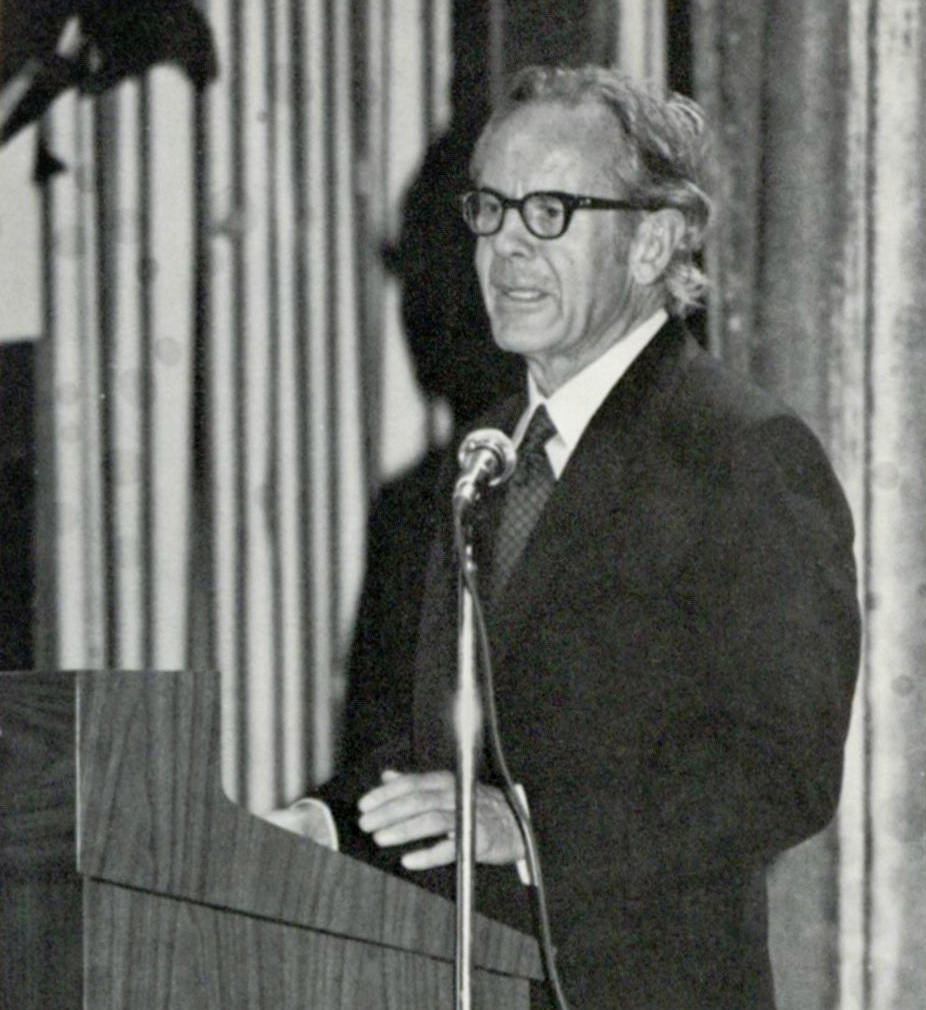
Rollo Reece May (April 21, 1909 – October 22, 1994) was an American existential psychologist and author of the influential book Love and Will (1969). He is often associated with humanistic psychology and existentialist philosophy, and alongside Viktor Frankl, was a major proponent of existential psychotherapy. The philosopher and theologian Paul Tillich was a close friend who had a significant influence on his work.[1][2]

Key Information

May's other works include The Meaning of Anxiety (1950, revised 1977) and The Courage to Create (1975), named after Tillich's The Courage to Be.[3]

Early life

[edit]

Reese May, otherwise known as 'Rollo' May, was born in Ada, Ohio, on April 21, 1909 to Matie Boughton and Earl Tittle May, a Men's Christian Associations Field Secretary, as the first son and the second eldest of six.[4]

His namesake 'Rollo', or, as his Mother called him, 'Little Rollo', was the title character from a series of children's' books.[5] written by Jacob Abbott in the 19th century.[6] Rollo was reported to have an intense dislike for this nickname; however, he made his peace with the moniker after learning about Rollo the Conqueror, a tenth century Norman.[5]

Some may describe Rollo's childhood as difficult due to the divorce of his parents and to his oldest sister's struggle with mental health that resulted in frequent hospitalizations.[6] His mother often left the children alone, and with his sister suffering from schizophrenia, he bore much of the burden.[7] At Michigan State University he majored in English, but was expelled due to his involvement in a radical student magazine. After that, he attended Oberlin College and received a bachelor's degree in English. He spent three years teaching in Greece at Anatolia College. During this time, he studied with doctor and psychotherapist Alfred Adler, with whom his later work shares theoretical similarities. He was ordained as a minister shortly after coming back to the United States, but left the ministry after several years to pursue a degree in psychology. He was diagnosed with tuberculosis in 1942 and spent 18 months in a sanatorium. He later attended Union Theological Seminary for a BD during 1938, and Teachers College, Columbia University for a PhD in clinical psychology in 1949. May was a founder and faculty member of Saybrook Graduate School and Research Center in San Francisco.[8]

He spent the final years of his life in Tiburon on San Francisco Bay. May died of congestive heart failure at the age of 85,[9] attended by his wife, Georgia, and friends.[7]

Writings

[edit]

Earlier years (1940s–1950s)

[edit]

When beginning his first books, May's topics focused on more practical uses regarding patients and mental health. His first book, The Art of Counseling (1939)[10] talks about his experience of counseling. Some of the topics he looks at are empathy, religion, personality problems and mental health. May also gives his perspective on these and also discusses how to handle those particular types of issues should a counselor encounter them (May 1965). He followed with a more theoretical book, The Springs of Creative Living: A Study of Human Nature and God (1940) presenting a personality theory influenced by critiquing the work of others, including Freud and Adler. He claims that personality is deeper than they presented. This is also where May introduces his own meaning for different terms such as libido from Freudian Psychology (May, 1940).

His writings were interrupted in the 1940s due to being diagnosed with tuberculosis and having to work on his PhD.

His later books in the 1950s all focus on mental health. The Meaning of Anxiety (1950) explores anxiety and how it can affect mental health. May also discusses how he thinks that experiencing anxiety can aid development and how dealing with it appropriately can lead to having a healthy personality. In Man’s Search for Himself (1953), May talks about his experience with his patients and the recurring problems they had in common such as loneliness and emptiness. May looks deeper into this and discusses how humans have an innate need for a sense of value and also how life can often present an overwhelming sense of anxiety. May also gives signposts on how to act during these periods. (May, 1953). May's final writing in the 1950s Existence (1958) is not entirely by May, but he examines the roots of Existential Psychology and why Existential Psychology is important in understanding a gap in human understanding of the nature of existence. He also talks about the Existential Psychotherapy and the contributions it has made. (May, Ernest, Ellenberger & Aronson, 1958)

Psychology and the Human Dilemma (1967)[11]

[edit]

May uses this book to reflect on a lot of both his ideas so far and those of other thinkers and also mentions some contemporary ideas despite the book's publication date. May also expands on some of his previous perspectives such as anxiety and people's feelings of insignificance (May, 1967).

Love and Will (1969)[12]

[edit]

One of May's most influential books. He talks about his perspective on love and the Daimonic; how it is part of nature and not the superego. May also discusses how love and sex are in conflict with each other and how they are two different things. May also discusses depression and creativity towards the end. Some of the views in this book are the ones that May is best known for (May, 1969).

Power and Innocence: A Search for the Sources of Violence (1972)[13]

[edit]

May uses this book to start some new ideas and also define words according to his way of thinking; such as power and physical courage and how power holds the potential for both human goodness and human evil. Another idea May explores is civilisation stemming out of rebellion (May, 1972).

Paulus: Reminiscence of a Friendship[14] (1973)

[edit]

May identified Paul Tillich as one of his biggest influences and in this book May episodically recalls Tillich's life trying to focus just on the key moments over the eight chapters, taking a psychoanalytic approach to the tale (May, 1973)

The Courage to Create (1975)[15]

[edit]

Listening to our ideas and helping form the structure of our world is what our creative courage can come from; this is the main direction of May in this book. May encourages that people break the pattern in their life and face their fears to reach their full potential (May, 1975).

Freedom and Destiny (1981)[16]

[edit]

As the title suggests, May focuses on the area of Freedom and Destiny in this book. He examines what freedom might offer and also, comparatively, how destiny is imposing limitations on us, but also how the two have an interdependence. May draws on artists and poets and others to invoke what he is saying (May, 1981).

The Discovery of Being: Writings in Existential Psychology (1983)[17]

[edit]

May draws on others' perspectives, including Freud's, to go into more detail on existential psychotherapy. Another topic May examines is how Psychoanalyses and Existentialism may have come from similar areas of thinking. There is attention paid to searching for stability with strong feelings of anxiety (May, 1983).

My Quest for Beauty (1985)

[edit]

Serving as a type of memoir, May discusses his own opinions on the power of beauty. He also asserts that beauty must be both understood and also valued in the world (May, 1985).[18]

The Cry for Myth (1991)[19]

[edit]

Argued in this book is May's idea that humans can use myths to help them make sense of their lives, based on case studies May uses from his patients. May discusses how this could be particularly useful to those who need direction in a confusing world (May, 1991).

The Psychology of Existence (1995)[20]

[edit]

Two days before May's death, he edited an advanced copy of this book. It was co-authored by Kirk Schneider and was intended to bring some life back into existential psychology. Like some previous books, this talks of existential psychotherapy and targets scholars (May & Schneider, 1995).

Accomplishments

[edit]
  • In 1970, May's most popular work, Love and Will (1969), won the Ralph Waldo Emerson Award for humane scholarship and became a best-seller.[21]
  • In 1971, May won the American Psychological Association's Distinguished Contribution to Science and Profession of Clinical Psychology award.
  • In 1972, the New York Society of Clinical Psychologists presented him with the Dr. Martin Luther King, Jr., Award for his book Power and Innocence (1972).
  • In 1987, he received the American Psychological Foundation Gold Medal Award for Lifetime Contributions to Professional Psychology.

Influences and psychological background

[edit]

May was influenced by North American humanism and interested in reconciling existential psychology with other philosophies, especially Freud's.

May considered Otto Rank (1884–1939) to be the most important precursor of existential therapy. Shortly before his death, May wrote the foreword to Robert Kramer's edited collection of Rank's American lectures. "I have long considered Otto Rank to be the great unacknowledged genius in Freud's circle", wrote May.[22]

May is often grouped with humanists, for example Abraham Maslow, who provided a good base for May's studies and theories as an existentialist. May delves further into the awareness of the serious dimensions of a human's life than Maslow did.

Erich Fromm had many ideas with which May agreed relating to May's existential ideals. Fromm studied the ways people avoid anxiety by conforming to societal norms rather than doing what they please. Fromm also focused on self-expression and free will, on all of which May based many of his studies.

May was Irvin D. Yalom's therapist.[23]

Stages of development

[edit]

Like Freud, May defined certain "stages" of development. These stages are not as strict as Freud's psychosexual stages, rather they signify a sequence of major issues in each individual's life:

  1. Innocence – the pre-egoic, pre-self-conscious stage of the infant: An innocent is only doing what he or she must do. However, an innocent does have a degree of will in the sense of a drive to fulfill needs.
  2. Rebellion – the rebellious person wants freedom, but does not yet have a good understanding of the responsibility that goes with it.
  3. Ordinary – the normal adult ego learned responsibility, but finds it too demanding, so seeks refuge in conformity and traditional values.
  4. Creative – the authentic adult, the existential stage, self-actualizing and transcending simple egocentrism

The stages of development that Rollo May set out are not stages in the conventional sense (not in the strict Freudian sense) i.e. both children and adults can present qualities from these stages at different times.[24]

Aspects of the world

[edit]

May's ideas about world aspects influenced his developmental theories. In total, there are three aspects:

  1. Umwelt
  2. Mitwelt
  3. Eigenwelt

The first, Umwelt, describes “the world around us.” This defines the biological or genetic influences of an individual, such influences are not conscious. Therefore, Umwelt teaches us about concepts like fate and destiny.[25] Next, the Mitwelt, describes “the world.” This includes the physical world where meaning is derived from constantly shifting relationships. This aspect of the world starts to influence us as children when we learn to manipulate others and are taught about the role of responsibility.[25] Finally, the Eigenwelt, describes our “own world.” This references the psychological realm where individuals related to themselves. This is where self-exploration, self-knowing, self-reflection, and self-identity are created. This aspect of the world is conscious, and it teaches us self-awareness.[25] Altogether, these aspects work together to shape our individualistic perception of the world and our environment.

Perspectives

[edit]

Anxiety

[edit]

In May's book The Meaning of Anxiety, he defined anxiety as "the apprehension cued off by a threat to some value which the individual holds essential to his existence as a self" (1967, p. 72). He quoted Kierkegaard: "Anxiety is the dizziness of freedom". May's interest in anxiety as a result of isolation grew while he was placed in a sanatorium for tuberculosis treatment. There, he saw patients exhibiting fear and anxiety that seemed to be linked to depersonalization and isolation.

From that experience, May concluded that anxiety is essential for individual growth. It is something that we cannot escape, thus we must use anxiety to develop our humanity and freely live a life of dignity.[26]

He thought that the feelings of threat and powerlessness associated with anxiety motivated humans to exercise freedom to act courageously instead of conforming to the comforts of modern life. Ultimately, anxiety created the opportunity for humans to live life to the fullest (Friedman). Additionally, May proposed that internalizing anxiety as fear could reduce overall anxiety because, “anxiety seeks to become fear”. He claimed that shifting anxiety to a fear incentivized avoiding a feared object or removing the fear of the object.[26]

Love

[edit]

May's thoughts on love are documented in his book Love and Will, which addressed love and sex in human behavior. He asserted that society separated love and sex into two different ideologies when they should be classified as one. May identified five types of love:

  • Libido: Biological function that can be satisfied through sexual intercourse or some other release of sexual tension.
  • Eros: Psychological desire that seeks procreation or creation through an enduring union with a loved one.
  • Philia: Intimate non-sexual friendship between two people.
  • Agape: Esteem for the other, the concern for the other's welfare beyond any gain that one can get out of it, disinterested love, typically, the love of God for man.
  • Manic: Impulsive, emotionally driven love. Feelings are very hot and cold. The relationship transitions between thriving and perfect, or bitter and ugly.

May investigated and criticized the "Sexual Revolution" in the 1960s, when individuals began to explore their sexuality. The term Free Sex replaced the ideology of free love. May postulated that love is intentionally willed by an individual; love reflects human instinct for deliberation and consideration. May then explained that giving in to sexual impulses did not actually make an individual free; freedom came from resisting sexual impulses. Unsurprisingly, May thought that Hippie counterculture as well as commercialization of sex and pornography influenced society to perceive a disconnect between love and sex. Because emotion had separated from reason, it became socially acceptable to seek sexual relationships while avoiding the natural drive to relate to another person and create new life. May thought that sexual freedom caused modern society to neglect important psychological developments such as the importance of caring.

Guilt

[edit]

According to May, guilt occurs when people deny their potentialities, fail to perceive the needs of others or are unaware of their dependency on the world. Both anxiety and guilt include issues dealing with one's existence in the world. May mentioned they were ontological, meaning that they both refer to the nature of being and not to the feelings coming from situations. (Feist & Feist, 2008)[26]

Feist and Feist (2008) outline May's three forms of ontological guilt. Each form relates to one of the three modes of being, which are Umwelt, Mitwelt and Eigenwelt. Umwelt's form of guilt comes from a lack of awareness of one's existence in the world, which May presumed to take place when the world becomes more technologically advanced, and people are less concerned about nature and become removed from nature.

Mitwelt's form of guilt comes from failure to see things from other's point of view. Because we cannot understand the need of others accurately, we feel inadequate in our relations with them.

Eigenwelt's form of guilt is connected with the denial of our own potentialities or failure to fulfill them. This guilt is based in our relationship with the self. This form of guilt is universal because no one can completely fulfill their potentialities.

Criticism of modern psychotherapy

[edit]

May thought thought that psychotherapists towards the end of the 20th century had fractured away from the Jungian, Freudian and other influencing psychoanalytic thought and started creating their own 'gimmicks' causing a crisis within the world of psychotherapy. These gimmicks were said to put too much stock into the self where the real focus needed to be looking at 'man in the world'. To accomplish this, May pushed for the use of existential therapy over individually created techniques for psychotherapy.[27]

May thought that modern psychotherapy in the late 20th century was branching away from its original founders: Freud, Jung, Rank, and Adler. May thought that modern psychotherapy isolated and ‘cured’ specific patient symptoms, called gimmicks. Typically, gimmicks are minor problems, not deep psychological issues, that emphasize the self. Ultimately, treating gimmicks puts the patient at a disadvantage by giving them a short-lasting fix, while distracting patients from their real problems. May also speculated that therapists become bored after two to three years of treating gimmicks which lead them to create more gimmicks. Dramatically, May asserted that gimmicks were designed to destroy modern society. In fact, May postulated that the work of many great philosophers is no longer relevant because they focused on gimmicks.[27]

Thus, May postulated that existential psychotherapy was the future of therapy. Existential psychotherapy aligned with the ideas of Freud, Jung, Rank, and Adler, who sought to bring the unconscious to the conscious. The conscious developed between age one and two, with the unconscious lying at the outer reaches of the conscious. Thus, existential psychotherapy helped patients to hone their mental capacities, allowing them to internalize their experiences; typically, in a more sensitive and intellectual manner. Existential psychotherapy also emphasized natural concepts like death, love, fear which relates to how individuals can fit into the world around them.[27]

[edit]

In 1961, approximately two years after existential psychology became a recognized domain of psychology, Rollo May voiced his critiques of the ever-growing field. He identified concepts that he presumed would hinder the profession as it developed, he called these unconstructive trends. May identified five unconstructive trends:

  1. The idea the existential psychology could not be specialized to a particular group
  2. Existential psychology is not a form of therapy
  3. Existential psychology is not the same as Zen Buddhism
  4. The anti-scientific tendencies of existential psychiatry
  5. The widespread “wild eclecticism” would ruin modern therapy

First, May disliked the idea that existential psychology could be specialized to a particular school or group, namely the Ontoanalytic Society. This society analyzed what it meant to be human, or at least they tried to, which May thought would damage existential psychology. Not only was it empirically impossible to quantify, but it was also immoral to attempt. This analysis technique rationalized individual guilt so that the individual could feel relieved from whatever was troubling them; ultimately, May posited this process was removing the humility from the human experience. May's second unconstructive trend, which builds on first, emphasized that existential psychology is not a system of therapy. Rather it is an attitude towards human beings. Existential psychology seeks to understand the structure of human beings and their experiences.

Third, May thought the association of existential psychology with Zen Buddhism downplayed the significant differences between these two practices. Existential psychology brings awareness of existential problems like anxiety, tragedy, guilt, and the reality of evil.  Attempting to bypass these problems using Zen Buddhist techniques would cause loss of the sense of self and loss of confidence in capacity for free will. May asserted that if we face problems head on, using existential psychology, then we make peace with them and assign them meaning.

Fourth, May detested the anti-scientific tendencies of psychologists practicing existential psychiatry. Such tendencies became popular alongside America's anti-intellectualism; a time period when distrust of reason was widespread. May argued against this, stating that science is a part of the universe, therefore, we must accept it.

Finally, May suggested the increase in “wild eclecticism” would ruin therapeutic practice. May thought wild eclecticism overemphasized therapeutic techniques (gimmicks) leading other existentialists to conclude that therapeutic techniques were unimportant to the therapy process. Conversely, May advocated for therapeutic techniques, as long as they held clear presuppositions, and were administered in an undogmatic manner because therapy was meant to be objective.

[edit]

May also evaluated constructive trends in existential psychology, which May thought would further the understanding of existential psychology. May identified five constructive trends in existential psychology:

  1. Science's new approach to the study of man
  2. The central role of decision making in the human experience
  3. The problem of the ego
  4. How the senses are recognized as connecting man and the material world
  5. The concept of normal anxiety and normal guilt

First, May criticized science's new approach to the study of man. At that time, science focused heavily on the drives and forces that motivated human beings. Existential psychology, on the other hand, sought to evaluate whole human beings and their experiences. May asserted existentialists should focus on the man to whom a drive or force is happening and the subsequent experiences of acting willfully. In this manner, May hoped that existentialists would better understand anxiety, despair and other existential problems which rely on the totality of human experiences.

Second, May appreciated the central role of decision making in human experience. May perceived decision making as an inherent act of the centered self. Decisions cannot be made without consciousness, thus creating the experience freedom of choice. The act of assigning value was a distinct human characteristic.

Third, May evaluated the problem of the ego. Many psychologists assumed that the existential ego was associated with the psychoanalytical ego, which was false. May theorized that the existential ego worked alongside two other aspects, known as the aspects of the existing person. These aspects identify the self, the subjective center where personal bias is shaped by experience; the person, the social center where we can relate with other people; and the ego, our individual perception of how the self relates to the person.

May's final two constructive trends were less developed than his other trends. Simply, May agreed with two shifting paradigms within the psychology world. First, May liked how Dr. Erwin Straus identified the senses as a relationship between man and the world. Up until Dr. Straus's work, Pavlovian and Freudian ideologies of the western world insisted that the sense separated man from the natural world. Next, May praised the acceptance of normal anxiety within psychology. May, however, also emphasized the need to accept normal guilt. May thought that normal guilt heavily contributed to feelings of worthlessness. If not treated, neurotic guilt could occur.

Bibliography

[edit]

See also

[edit]

References

[edit]

Sources and further reading

[edit]
[edit]
Revisions and contributorsEdit on WikipediaRead on Wikipedia
from Grokipedia
Rollo Reece May (April 21, 1909 – October 22, 1994) was an American existential psychologist, psychotherapist, and author who pioneered the integration of existential philosophy into American psychotherapy. Born in , and raised partly in amid a turbulent family background, May pursued studies in and , earning a divinity degree from and later a Ph.D. from under influences like and . May's seminal contributions emphasized human anxiety, freedom, and the search for authentic meaning in a fragmented modern world, distinguishing his approach from Freudian by prioritizing subjective and personal responsibility. His key works, including The Meaning of Anxiety (1950), which reframed anxiety as essential to growth rather than mere , and the bestseller Love and Will (1969), explored themes of , power, and eros, achieving widespread influence in clinical practice and popular discourse. Alongside figures like and , May co-founded the movement, advocating for a holistic view of the psyche that countered and psychoanalysis's . Throughout his career as a Manhattan-based therapist and occasional academic, May edited Existence (1958), a foundational text that imported European existential ideas from thinkers like Kierkegaard and Heidegger to U.S. audiences, fostering a psychotherapy attuned to ontological concerns such as death, isolation, and meaninglessness. His emphasis on the "courage to create" and critique of technological dehumanization in later works like The Courage to Create (1975) underscored a commitment to individual agency amid cultural conformity, leaving a legacy in existential-humanistic therapy that prioritizes confronting life's paradoxes over symptom alleviation alone.

Biography

Early Life and Family Background

Rollo Reece May was born on April 21, 1909, in . He was the second oldest of six children and the first-born son, with his father serving as a organizer and his mother devoting herself primarily to raising the family. The family lived in small towns in before relocating to Marine City, Michigan, where May spent his formative early years and later recalled feeling like a lonely boy on the shores of the . May's name derived from the fictional character "Little Rollo," and his childhood involved periods of , including instances where his mother frequently left the children to fend for themselves. These early experiences in a modest Midwestern setting shaped his initial worldview amid familial responsibilities and isolation.

Education and Formative Experiences

May began his undergraduate studies at Michigan State College of Agriculture and Applied Science (now Michigan State University) in the fall of 1926, majoring in English and co-founding a student newsletter, The Student, which reflected his early interest in writing and social critique. He transferred to Oberlin College in the fall of 1928, earning a B.A. in English in 1930; there, a course on ancient Greece deepened his appreciation for classical culture, which later informed his existential perspectives. Following graduation, May taught English to adolescent boys at Anatolia College in , , from 1930 to 1933, an experience marked by cultural immersion and personal isolation that heightened his sensitivity to human existence amid unfamiliar settings. During summers in 1932 and 1933, he attended seminars led by in , where Adler's emphasis on and overcoming inferiority complexes ignited May's lifelong commitment to counseling and personality development. In 1933, May enrolled at Union Theological Seminary in New York City, obtaining a Bachelor of Divinity degree cum laude in 1938; he was profoundly shaped by theologian Paul Tillich, whose lectures introduced him to existential thinkers like Søren Kierkegaard and Martin Heidegger, fostering a synthesis of theology and psychology that rejected deterministic views of human nature. Ordained as a Congregational minister that year, May briefly practiced pastoral counseling before a severe bout of tuberculosis in 1943 confined him to Trudeau Sanatorium for 18 months, where isolation and confrontation with mortality—while reading Kierkegaard and other existentialists—crystallized his understanding of anxiety as an ontological condition essential to authentic living. This illness, reducing him to 130 pounds and requiring lung surgery, marked a pivotal rupture, redirecting his path toward clinical psychology over pure ministry.

Professional Career Milestones

May received his Ph.D. in from Columbia University's Teachers College in 1949, earning summa cum laude honors; his dissertation, examining anxiety as an existential phenomenon, was published as The Meaning of Anxiety in 1950, marking his entry into psychological literature. This degree was the first Ph.D. in awarded by . Following a brief tenure as a Protestant minister at the First Congregational Church in , from 1938 to 1940, May transitioned to psychological practice. In 1943, he joined the William Alanson White Institute in as a counselor, advancing to faculty member and fellow roles, where he provided and supervision through the mid-1940s and beyond; by 1958, he served as a training and supervisory analyst there until his retirement in 1974. He established a private practice in 1946. From the 1950s to 1975, May lectured in at for Social Research in New York, influencing generations of students on existential themes. In 1958, he co-edited Existence: A New Dimension in and with Ernest Angel and Henri F. Ellenberger, a seminal anthology that introduced European existential ideas to American clinicians. His 1969 publication Love and Will achieved bestseller status, exploring the interplay of eros, will, and human freedom. In 1975, May relocated to the area, where he continued private , supervised clinicians, and wrote until his death. His career culminated in the 1987 American Psychological Association Gold Medal Award for Professional Contributions, recognizing his pioneering theoretical work and teaching in humanistic-existential psychology.

Intellectual Foundations

Philosophical Influences

Rollo May's philosophical framework was rooted in , drawing primarily from European thinkers who emphasized human freedom, anxiety, and the confrontation with existence. Central to his influences were , whose exploration of subjective truth, despair, and the "" informed May's views on individual authenticity and the ontological anxiety inherent in human finitude. May encountered Kierkegaard's works intensely during his recovery from in the early 1940s, a period that deepened his engagement with existential themes of dread and personal responsibility. Friedrich Nietzsche's concepts of the , eternal recurrence, and critique of herd morality also shaped May's understanding of human striving and the dangers of in modern society. May integrated Nietzsche's affirmation of life amid into his psychological theories, viewing it as a counter to passive rather than a justification for unchecked dominance. This influence is evident in May's emphasis on creative will as essential for overcoming existential voids, though he tempered Nietzsche's with relational . Martin Heidegger's phenomenology, particularly notions of Dasein (being-there), thrownness into the world, and authentic existence in the face of death, provided May with a structural lens for analyzing human temporality and being-in-the-world. Introduced to Heidegger through Paul Tillich during his Union Theological Seminary studies in the 1930s, May adapted these ideas to psychotherapy, stressing the need to reclaim "being" from technological abstraction. Paul Tillich, a theologian and personal associate, bridged existential philosophy with Christian , influencing May's synthesis of secular and spiritual dimensions in human . Tillich's "ultimate concern" and ground of being resonated with May's rejection of dogmatic religion in favor of existential faith as courageous encounter with the unknown. May's 1950 book The Meaning of Anxiety exemplifies this fusion, citing Kierkegaard alongside Freud to argue anxiety as a call to authentic rather than mere pathology. These influences collectively oriented May toward a that prioritizes ontological realities over deterministic or behaviorist models.

Key Psychological and Theological Contributors

Rollo May's psychological framework drew substantially from early 20th-century psychoanalytic traditions, particularly the works of , , , and , though he critiqued their deterministic tendencies in favor of emphasizing human freedom and responsibility. Freud's exploration of the unconscious influenced May's understanding of anxiety as an ontological condition rather than merely a neurotic symptom, yet May rejected Freud's reduction of human behavior to instinctual drives. Adler's emphasis on and the courage to face life's challenges shaped May's early counseling approach; May attended Adler's seminars in during the early 1930s, which instilled in him a focus on social interest and overcoming inferiority through purposeful action. Rank and Jung contributed to May's views on the creative will and archetypal dimensions of the psyche, informing his later integrations of mythology and symbolism in . In the 1940s, May's training at the William Alanson White Institute exposed him to interpersonal , primarily through , , and . Sullivan's theories on personality development through interpersonal relations influenced May's conception of as rooted in authentic human connections, countering isolation in modern society. Fromm highlighted the cultural shaping of personality, distinguishing productive love from self-destructive tendencies, which resonated with May's critiques of and alienation. Fromm-Reichmann's insights into as a core psychological dynamic further informed May's existential emphasis on encountering the "other." These influences helped May bridge with existential themes, prioritizing subjective experience over objective diagnostics. Theologically, Paul Tillich profoundly impacted May during his studies at Union Theological Seminary in the mid-1930s, where Tillich served as a mentor and introduced him to existential theology's confrontation with human finitude and the "ground of being." Tillich's correlation method—linking existential questions with theological answers—guided May's synthesis of psychology and faith, viewing therapy as a space for ultimate concerns like death and meaning. Søren Kierkegaard emerged as a pivotal figure during May's recovery from tuberculosis in the early-to-mid 1940s; Kierkegaard's analyses of anxiety, despair, and the leap of faith provided foundational concepts for May's existential psychology, framing anxiety not as pathology but as essential to authentic existence and decision-making. Through Tillich, May also engaged Martin Heidegger's phenomenology, adapting notions of "being-in-the-world" (Dasein) to therapeutic practice, though he prioritized Kierkegaard's subjective passion over Heidegger's ontology. These theological contributors underscored May's view that psychology must address spiritual dimensions without reducing them to empirical mechanisms.

Core Theoretical Framework

Existential Human Development Stages

Rollo May delineated four existential stages of human development in his work Man's Search for Himself, framing them not as strictly sequential phases akin to Freudian psychosexual stages but as ontological modes of confronting , anxiety, and the forces of the self. These stages—in , , the ordinary, and the creative—highlight the progressive (yet potentially regressive or overlapping) awareness of one's will and responsibility, rooted in rather than empirical . May argued that healthy development involves navigating these toward authentic being, where failure to advance risks stagnation in or destructive . The stage of innocence represents the pre-egoic, non-reflective existence of infancy, where the individual acts instinctively without or intentional will, much like a prelapsarian state devoid of choice's burdens. Here, stems from biological imperatives—hunger, comfort—unmediated by awareness of alternatives or consequences, yielding a passive with the world but no genuine . May viewed this as ontologically prior, free from anxiety yet limited, as the infant "does only what he must do" without . In the stage of rebellion, emerging in childhood and , the awakening will asserts itself against authority and limits, demanding without grasping the responsibilities it entails. This phase manifests as oppositional defiance or hedonistic pursuit of desires, often destructively, as the individual rejects innocence's constraints but evades constructive freedom's with others. May likened it to a "Promethean" revolt, potent for growth if channeled but prone to or tyranny if unchecked, exemplified by adolescents' impulsive assertions of power devoid of ethical reflection. The ordinary stage typifies conventional adulthood, where individuals conform to societal norms and roles—"the man in the crowd"—suppressing authentic will to mitigate anxiety through other-directedness and routine. May critiqued this as pseudo-security, where freedom is abdicated for approval, leading to and "vacuum " amid material success, as people prioritize adaptation over self-confrontation. Empirical observations of mid-20th-century American informed this view, with May positing it as a defensive retreat from existential dread rather than maturity. Culminating in the creative stage, authentic integrates prior modes through courageous will, yielding constructive where one shapes destiny amid anxiety, fostering , love, and responsibility. Unlike rebellion's chaos or the ordinary's stasis, this involves dialectical engagement with the —inner creative-destructive urges—transcending self via intentional acts, as in artistic or ethical innovation. May held this as the of development, achievable by few, requiring confrontation with and nonbeing for true , not humanistic optimism but gritty existential resolve.

Central Concepts: Anxiety, Guilt, and

Rollo May posited that anxiety, guilt, and constitute core ontological experiences in , arising from individuals' confrontation with their potentialities and the inherent uncertainties of being. These concepts, drawn from his existential framework, underscore the tension between human and the responsibilities it entails, influencing psychological health and authentic living. Normal manifestations of these experiences foster growth, while pathological distortions lead to alienation and . May distinguished normal anxiety from neurotic anxiety in his 1950 work The Meaning of Anxiety, defining the former as a proportionate apprehension triggered by a to a cherished value or to one's itself, serving as a signal for adaptive response rather than . This existential anxiety, influenced by Kierkegaard, represents the "dizziness of freedom"—a ontological response to the possibilities and non-being inherent in choice—essential for and when confronted directly. In contrast, neurotic anxiety is disproportionate and overwhelming, often rooted in unresolved childhood conflicts or repressed freedoms, prompting maladaptive defenses that exacerbate isolation from one's potential. May argued that modern society's denial of normal anxiety contributes to widespread and emptiness, as individuals evade the vital confrontations it demands. Existential guilt, for May, emerges from the failure to realize one's inherent possibilities, manifesting as a profound sense of incompleteness or the "call of the unlived life" when individuals deny their to actualize potentialities. This guilt is not merely moral or superego-driven but ontological, tied to the human condition's "groundlessness" where choices lack preordained justification, echoing Heidegger's notions of lagging behind one's being. May linked it to anxiety, as evading potential triggers both emotional distress and a awareness of untapped capacities, often explored in to restore relational and creative responsibility. Unlike neurotic guilt, which fixates on past transgressions, existential guilt propels forward toward authenticity, though its repression in conformist societies fosters destructive patterns like overcontrol or withdrawal. Freedom, in May's view, is the capacity to pause amid competing stimuli and deliberately commit to a response, enabling agency over one's destiny rather than reactive . Articulated in Freedom and Destiny (1981), this pause allows reflection on , fostering of both personal possibilities and inevitable limits, but it inherently generates anxiety as the "mother of " since unchosen paths imply loss and responsibility for outcomes. Guilt arises when this is abdicated, leading to inauthenticity; conversely, embracing —through confronting anxiety—mitigates guilt by aligning actions with potential, promoting integration via , will, and . May emphasized balancing with destiny's constraints, warning that technological and cultural forces erode this capacity, resulting in pseudo-freedom marked by rather than genuine choice.

Dynamics of Will, Power, and Violence

May conceptualized will as the human capacity for intentional organization of the toward deliberate action, interdependent with and essential for authentic , as elaborated in his 1969 work Love and Will. This will enables the exercise of power, which May defined in Power and Innocence (1972) as "the ability to cause or prevent change" in one's being and environment, emphasizing its creative potential when aligned with conscious choice. Distortions arise when will is fragmented or repressed, leading to misuse of power and eruptions of . May argued that violence stems not from power itself but from its pathological inversion, often through "pseudo-innocence"—a of personal agency and power under the guise of purity or victimhood, which breeds and powerlessness. Powerlessness, in turn, corrupts by fostering compensatory destructiveness, as individuals lash out to reclaim a sense of potency absent in constructive channels. Central to these dynamics is the , a neutral force representing innate urges with the potential to overwhelm the if not integrated via will. May viewed the daimonic as capable of manifesting as —through rage, , or societal eruptions like —when will fails to channel it creatively, but as a source of , , and when harnessed responsibly. He outlined five developmental levels of power expression, progressing from the infant's passive power to be, through and assertion for and expansion, to participatory and ultimate via ; blockages at any stage, often from cultural denial of will, precipitate violent regressions. May critiqued modern society's "flight from power," attributing rising violence to technological dehumanization and therapeutic emphases on adjustment over willful confrontation of existence, which erode the capacity for constructive power and invite demonic eruptions. Authentic resolution, he proposed, demands reclaiming will to affirm power ethically, transforming potential into creative participation without abdicating responsibility. This framework underscores as a symptom of existential estrangement, resolvable through deliberate integration rather than suppression.

Major Writings and Ideas

Pre-1960s Foundations

Rollo May's earliest publications emerged from his experiences as a counselor and , laying groundwork for integrating psychological practice with existential concerns. In The Art of Counseling (1939), May emphasized as central to therapeutic effectiveness, drawing on Alfred Adler's influence to advocate for holistic that counters societal cynicism through interpersonal connection rather than mere technique. This work reflected his pastoral background, blending with counseling for personal growth. Subsequent writings expanded into and . The Springs of Creative Living (1940), subtitled A Study of and , explored psychological and theological dimensions of creativity, incorporating ideas from Adler, , and to argue for innate human capacities stifled by conformity. May posited that creative living requires confronting inner conflicts, foreshadowing his later existential themes of authenticity over . May's doctoral dissertation, published as The Meaning of Anxiety in 1950, marked a pivotal foundation by synthesizing psychoanalytic and perspectives on human dread. He distinguished normal anxiety—proportional responses to real threats—as ontologically necessary for growth and freedom, from neurotic forms distorted by denial or overreaction. Influenced by Sigmund Freud's signal theory of anxiety and Søren Kierkegaard's ontological dread of nothingness, May viewed anxiety not as pathology to eradicate but as signaling threats to core values and identity, essential for authentic self-awareness. This text introduced to American audiences, critiquing reductionist views that ignore anxiety's constructive role in confronting freedom. In Man's Search for Himself (1953), May addressed modern alienation, diagnosing widespread apathy, loneliness, and emptiness as symptoms of inauthentic living amid cultural flux. He advocated through courageous engagement with personal dilemmas, echoing Martin Heidegger's in calls for integrated, value-driven existence over conformist escape. Drawing on Kierkegaard and , the book offered practical guidance for reclaiming agency, positioning the self as dynamically formed through choices rather than fixed traits. May co-edited Existence in 1958, compiling essays that formalized existential psychotherapy, including his contributions on anxiety's role in therapy and the limits of empirical psychology. This anthology bridged philosophy and practice, influencing figures like Abraham Maslow and Carl Rogers by highlighting subjective experience over behaviorism. Collectively, these pre-1960s works established May's framework: human beings as freedom-bound agents navigating anxiety toward creative, responsible selfhood, distinct from deterministic models.

1960s Turning Points: Love, Will, and the Human Dilemma

In 1967, Rollo May published Psychology and the Human Dilemma, a work characterized by its academic tone that delved into the ontological conflicts of human existence amid modern societal pressures. The book examines anxiety as a fundamental response to existential threats, the application of existential psychotherapy to restore authentic being, and the progressive loss of traditional values in Western civilization, which May viewed as contributing to widespread alienation. Central to its arguments is the question of whether individuals fulfill or betray their inherent potentialities through engagement with personal needs, powers, and sensitivities, thereby critiquing psychology's tendency to reduce human experience to objectifiable data and advocating for an approach that bridges subjective depth with objective analysis. May's 1969 publication, Love and Will, marked a broader cultural intervention, becoming a that synthesized existential insights with critiques of contemporary American attitudes toward intimacy. He contended that the essence of the human dilemma lies in the failure to grasp the authentic sources and interdependence of and will, processes through which individuals intentionally reach out to form, mold, and influence meaningful connections with others. Distinguishing eros (appetitive ) from superficial , May emphasized will's role in channeling energies—innate drives toward union and creation—into deliberate, courageous acts of bonding, while decrying the era's emphasis on transient romance devoid of commitment or depth. These texts represented pivotal shifts in May's oeuvre, transitioning from earlier foundational explorations of anxiety and freedom toward integrated analyses of relational dynamics and cultural pathology, thereby elevating existential psychology's relevance to everyday ethical and psychological challenges. By foregrounding will as an active force against passive conformity and love as requiring vulnerability amid finitude, May challenged deterministic psychological models, urging practitioners and lay readers alike to confront the dialectics of power and care in human flourishing.

1970s-1990s Explorations: Creativity, Myth, and Destiny

In The Courage to Create (1975), May posited that genuine emerges from confronting profound anxiety and the fear of the unknown, rather than evading it. He emphasized as a dialectical involving , where the artist or innovator must tolerate the tension between familiarity and novelty to produce something original. May drew on existential themes to argue that creative acts require "" not as fearlessness, but as action amid dread, linking this to the forces—natural powers like eros or rage—that can overwhelm if not integrated consciously. May extended his inquiries into destiny through Freedom and Destiny (1981), where he examined the paradoxical interplay between human and inevitable constraints. He defined as the capacity to pause amid stimuli and deliberately choose a response, distinguishing "existential " (action-oriented) from "essential " (rooted in being, yielding values like courage and love). Destiny, for May, encompasses biological, historical, and cultural limits that imbue with vitality, asserting that true liberation arises from embracing this tension rather than illusory absolute . He viewed despair over destiny not as defeat, but as a potential gateway to authentic joy and . Addressing myth's role in human , May's The Cry for Myth (1991) critiqued modern society's myth-deficit amid technological and cultural upheavals. Myths, he contended, function as narrative frameworks that confer significance to , helping individuals navigate and foster communal bonds. May called for constructing new myths attuned to contemporary realities, warning that their absence fuels alienation, , and pseudomyths like , which fail to satisfy deeper existential yearnings. These explorations reinforced May's broader existential framework, prioritizing subjective over empirical in understanding .

Critiques of Contemporary Psychology

Rejections of Reductionism and Scientism

May contended that reductionist paradigms in , such as those reducing human motivation to instinctual drives in Freudian theory or to stimulus-response conditioning in , inevitably fragment the totality of human being by neglecting the integrated dimensions of existence—physical environment (), interpersonal relations (Mitwelt), and (Eigenwelt). These approaches, he argued, treat individuals as passive products of deterministic forces rather than active agents capable of and , thereby undermining the phenomenological essence of . In works like The Meaning of Anxiety (first published 1950, revised 1977), May illustrated how such evades confronting anxiety as an ontological condition inherent to human finitude and potentiality, instead pathologizing it as a mere symptom amenable to mechanistic intervention. He extended this critique in Love and Will (1969), where he rejected explanations of love and will as derivative of biological or behavioral mechanisms, insisting that true union and agency arise from deliberate engagement with one's energies—the creative, destructive impulses at the core of psyche—rather than their dissection into quantifiable parts. May's opposition to stemmed from its elevation of empirical quantification and controlled experimentation—methods suited to inanimate objects—as the sole arbiters of psychological truth, which he saw as distorting the subjective, value-laden nature of human phenomena. While acknowledging science's contributions to observable data, he warned that an exclusive scientistic lens fosters "therapeutic gimmicks" focused on symptom alleviation, sidelining deeper inquiries into meaning, guilt, and destiny that demand qualitative, dialogic methods akin to those in . This stance positioned existential psychology not as anti-science but as a complementary that restores the "I-Thou" relational depth eroded by objectifying techniques.

Challenges to Humanistic Optimism and Naïveté

May argued that humanistic psychology's emphasis on inherent human goodness, as exemplified by Carl Rogers' client-centered approach, constituted a form of naïveté that ignored the inherent potential for evil in human nature. In a 1982 open letter to Rogers published in the Journal of Humanistic Psychology, May contended that such optimism functioned as a "reaction formation to... hopelessness," fostering narcissism by flattering individuals with an overly simplistic path to healing while evading the tragic dimensions of existence, including destructiveness and social responsibility. He insisted on confronting evil directly—"we must include a view of the evil in our world and in ourselves, no matter how much that evil offends our narcissism"—to avoid reducing therapy to self-indulgent affirmation devoid of deeper struggle. Central to this challenge was May's concept of the , outlined in Power and Innocence: A Search for the Sources of (1972), which he described as the primal, instinctual energies underlying both and , neither wholly good nor evil but requiring conscious integration to prevent pathological outburst. May faulted humanistic psychology's focus on for promoting a shallow that denied these forces, potentially leading to and an underestimation of human capacity for harm, as it prioritized positive potential over the realistic burdens of freedom, anxiety, and power dynamics. This positioned existential awareness—embracing life's paradoxes and "" undercurrents—as essential for authentic growth, contrasting with humanism's purported evasion of existential dread and ethical complexity. By advocating a "tragic optimism" that balanced with unflinching realism, May sought to temper humanistic naïveté, urging psychologists to affirm the not through repression or denial but through willful engagement, thereby fostering resilience against and despair in clinical and cultural contexts. This perspective underscored his broader existential integration into , warning that unexamined positivity risked superficiality amid 20th-century evidences of human atrocity, such as world wars and totalitarian regimes, which demanded reckoning with innate destructive drives rather than innate benevolence alone.

Reception, Controversies, and Empirical Scrutiny

Academic and Therapeutic Impact

May's introduction of existential philosophy to American psychology profoundly shaped academic discourse, positioning him as the foremost proponent of existentialism in the field and influencing the integration of concepts like anxiety, freedom, and authentic being into personality theory and clinical training. His collaboration with figures such as Abraham Maslow and Carl Rogers helped establish humanistic psychology as a distinct paradigm, emphasizing subjective experience over behaviorist or psychoanalytic reductionism, which permeated graduate programs and theoretical texts by the mid-20th century. Scholarly works citing May often reference his analyses of cultural hostility and intentionality as frameworks for understanding human pathology beyond empirical quantification. In therapeutic settings, May's existential approach has informed practices aimed at confronting clients' existential dilemmas, such as the daimonic forces of will and power, to foster greater self-awareness and responsibility rather than symptom suppression alone. Therapists drawing from his model, as outlined in Existence (1958), prioritize the therapeutic encounter as a dialogic process that unveils hidden potentials and resolves paralyzing guilt, influencing existential-humanistic modalities still used in counseling for issues like meaninglessness and isolation. This orientation encourages clients to transcend deterministic views of the self, aligning therapy with philosophical inquiry into freedom and destiny, though applications remain more interpretive than protocol-driven. Empirically, May's legacy manifests in the sustained citation of his ideas within qualitative studies of outcomes, where existential interventions correlate with enhanced client authenticity and resilience, albeit without the randomized controlled trials typical of cognitive-behavioral paradigms. His framework has indirectly bolstered hybrid therapies addressing 20th-century crises like alienation, with practitioners adapting concepts of "creative encounter" to modern existential concerns in clinical practice. Despite limited quantitative metrics, May's influence endures in training programs that value phenomenological depth over positivist metrics, as evidenced by ongoing references in journals on humanistic and existential .

Criticisms of Abstractness and Lack of Empirical Rigor

Critics within mainstream psychology, particularly those aligned with empirical paradigms such as and , have argued that Rollo May's existential theories prioritize philosophical abstraction over testable hypotheses and quantifiable evidence. Concepts central to May's work, including the —described as an innate drive fusing eros and destructive power—and the three modes of existence (, mitwelt, and eigenwelt), were often characterized as metaphorical and vague, resisting for experimental scrutiny or replication. This abstractness, rooted in influences from Kierkegaard, Nietzsche, and Heidegger, rendered May's framework ill-suited for generating falsifiable predictions, a of scientific methodology. A recurrent charge is the absence of rigorous empirical support, with May's writings relying predominantly on clinical anecdotes, personal introspection, and philosophical exposition rather than controlled studies or statistical validation. For example, his analyses of anxiety, will, and creativity in works like The Meaning of Anxiety (1950) and Love and Will (1969) draw from subjective human experiences but offer limited data-driven mechanisms to explain or treat psychopathology. Critics, including those evaluating existential psychotherapy broadly, have highlighted this gap, noting that approaches influenced by May compound a "lack of empirical support" through insufficient outcome studies or comparative efficacy trials against evidence-based alternatives like cognitive-behavioral therapy. John Norcross, a prominent psychotherapy researcher, has referenced this deficiency in existential methods, underscoring their challenges in meeting standards of replicability and generalizability. Furthermore, detractors contend that May's deliberate rejection of reductionist —evident in his critiques of 's overemphasis on measurable phenomena—ironically undermined the theory's credibility within academic and clinical communities demanding scientific rigor. Theoretical inconsistencies, such as fluctuating definitions of key constructs and inadequate causal models for , exacerbated perceptions of unfalsifiability and limited practical utility in therapeutic settings. While May's ideas resonated in humanistic circles for addressing existential voids overlooked by positivist models, this philosophical orientation has been faulted for hindering integration with or longitudinal research, perpetuating a divide between existential and empirical .

Debates on Existentialism's Practical Utility

Critics of existential psychotherapy, including approaches influenced by Rollo May's integration of existential philosophy into clinical practice, have argued that its emphasis on abstract concepts like freedom, anxiety, and authenticity renders it insufficiently practical for measurable therapeutic outcomes. Unlike empirically driven modalities such as cognitive-behavioral therapy, existential methods often prioritize phenomenological exploration over standardized protocols, leading to concerns about replicability and generalizability in treatment settings. A review of existential psychotherapy practices highlights limitations in systemic theorizing and empirical validation, noting that efficacy claims frequently rely on anecdotal or qualitative reports rather than randomized controlled trials. Existential therapists themselves express reservations toward experimental research paradigms, viewing them as reductive and misaligned with the subjective, non-quantifiable nature of human existence, which May championed in works like The Meaning of Anxiety (1950) as essential for addressing modern alienation. Despite these critiques, emerging empirical scrutiny suggests potential practical utility for existential interventions in specific contexts, particularly where patients grapple with meaninglessness or —issues central to May's framework of confronting destiny and the "" forces of the psyche. A of existential found moderate to large effects on reduction and positive meaning enhancement, especially in structured meaning-centered variants, though based on a limited pool of low-quality studies involving fewer than 500 participants across key outcomes like . Another synthesis indicates benefits for psychological and physical in populations facing existential givens such as and isolation, aligning with May's advocacy for that fosters authentic will rather than symptom suppression. These findings counter pure dismissal but underscore the need for higher-quality trials, as uncontrolled variables in existential work complicate causal attribution of improvements to the approach itself. The debate persists amid broader tensions in between philosophical depth and -based standards, with May's legacy—evident in his role popularizing in America since the —defended for equipping therapists to handle non-pathological human dilemmas overlooked by manualized treatments. Proponents argue that dismissing existential utility due to evidential gaps ignores its causal role in patient self-confrontation, as seen in qualitative reports of increased life attitude and among participants. However, skeptics, including those prioritizing randomized , maintain that without robust comparative data, risks remaining an intellectual exercise rather than a reliably deployable tool, potentially biasing academic reception toward more quantifiable paradigms despite existential themes' prevalence in clinical distress. This reflects deeper methodological divides, where empirical may undervalue 's alignment with first-person experiential realities that quantitative metrics struggle to capture.

Enduring Legacy

Influence on Modern Psychotherapy and Culture

Rollo May's introduction of existential philosophy to American psychology profoundly shaped modern psychotherapy by emphasizing human freedom, responsibility, and the confrontation of existential anxiety over deterministic or behaviorist models. As a co-founder of humanistic psychology alongside Abraham Maslow and Carl Rogers, May advocated for therapies that prioritize authentic self-awareness and meaning-making, influencing existential-humanistic approaches that integrate psychoanalytic, Jungian, and phenomenological elements. His seminal 1958 book Existence, co-edited with Ernest Angel and Henri Ellenberger, established existential psychotherapy as a viable framework in the United States, promoting techniques focused on the therapeutic relationship, presence, and clients' subjective experiences rather than symptom reduction alone. This legacy persists in practices addressing alienation and purpose, as seen in the work of successors like Irvin Yalom, and earned May the American Psychological Association's Distinguished Professional Contribution Award in 1971. May's concepts, such as the ""—the dynamic force of human drives including creativity and destructiveness—challenged reductionist views in , urging clinicians to engage patients' full existential dilemmas, including , isolation, and meaninglessness. In Love and Will (1969), he delineated mature love as interdependent with willful intention, categorizing it into eros (passionate union), (friendship), and (selfless care), which informed relational therapies emphasizing over mere technique. His distinction between normal anxiety (a signal for growth) and neurotic avoidance influenced interventions, particularly in humanistic circles, while The Courage to Create (1975) highlighted creativity as essential to , impacting art therapies and programs for . These ideas bridged and clinical practice, fostering resistance to over-reliance on or cognitive-behavioral protocols in favor of holistic encounters with . Culturally, May's work resonated during the 1960s-1980s countercultural shifts, with bestsellers like Love and Will and features in Psychology Today popularizing existential themes of autonomy, wonder, and the perils of technological dehumanization among lay audiences. He critiqued Western competitive societies for amplifying anxiety and hostility, linking them to somatic ills like ulcers and heart disease, which anticipated discussions on cultural malaise in self-help and philosophical literature. In The Cry for Myth (1991), May argued that modern secularism erodes archetypal narratives, urging a revival of myth for societal coherence, influencing interdisciplinary fields like cultural psychology and narrative therapy. His emphasis on personal agency amid crumbling structures remains relevant to 21st-century discourses on alienation, with growing global interest in existential therapy in regions like Europe, Asia, and Latin America.

Relevance to 21st-Century Crises

May's conceptualization of anxiety as an ontological condition inherent to human freedom and finitude offers a framework for understanding the 21st-century mental health epidemic, where pathological avoidance of existential dread contributes to widespread disorders rather than resolution through confrontation. In The Meaning of Anxiety (1950), May argued that anxiety signals the individual's encounter with nonbeing and potentiality, serving as a catalyst for authentic choice and creativity when engaged directly, rather than medicated or suppressed. This perspective counters contemporary biomedical models that treat anxiety primarily as a neurochemical imbalance, amid empirical evidence of surging prevalence: the World Health Organization documented a 25% global increase in anxiety and depression during the COVID-19 pandemic's first year (2020), while U.S. Centers for Disease Control and Prevention data indicate 29% of adults report lifetime depression diagnoses as of 2023, with adolescent rates rising over 50% from 2017 to 2021. May's insistence that true psychological health demands integrating anxiety—rather than pathologizing it—resonates with critiques of over-reliance on pharmacotherapy, which empirical reviews link to incomplete recovery in existential voids of meaning. May's analysis of alienation as a hallmark of , stemming from fragmented communities and loss of , directly illuminates digital-age isolation, where amplifies estrangement despite superficial connectivity. He described alienation as a dissociation from , others, and world, exacerbated by societal shifts toward and , leading to " and " as core complaints in therapeutic encounters. This anticipates current trends: use correlates with heightened , per cross-national studies showing heavier engagement predicts greater isolation, particularly among navigating identity in virtual spaces. , per May, prescribes reclaiming authentic participation through creative acts and relational depth, countering the "superficial ties" of platforms that foster performative existence over genuine encounter—a dynamic evident in rising existential reports, defined as fundamental separation from humanity and . In addressing crises of and responsibility, May's emphasis on balancing destiny's limits with willful agency critiques victim-oriented narratives prevalent in polarized societies, urging individuals to forge meaning amid uncertainty like geopolitical instability and technological disruption. He contended that psychological maturity requires owning choices in a world of "," rejecting deterministic excuses for inaction, as explored in Freedom and Destiny (1981). This applies to 21st-century phenomena such as declining personal agency amid algorithmic control and , where May's call for " to create" values anew aligns with empirical needs for resilience training beyond cognitive-behavioral protocols. His warnings against scientistic —viewing humans as mechanistic inputs—remain pertinent to AI-driven diagnostics and big-data , which risk dehumanizing by prioritizing quantifiable outcomes over subjective depth.

References

Add your contribution
Related Hubs
Contribute something
User Avatar
No comments yet.