


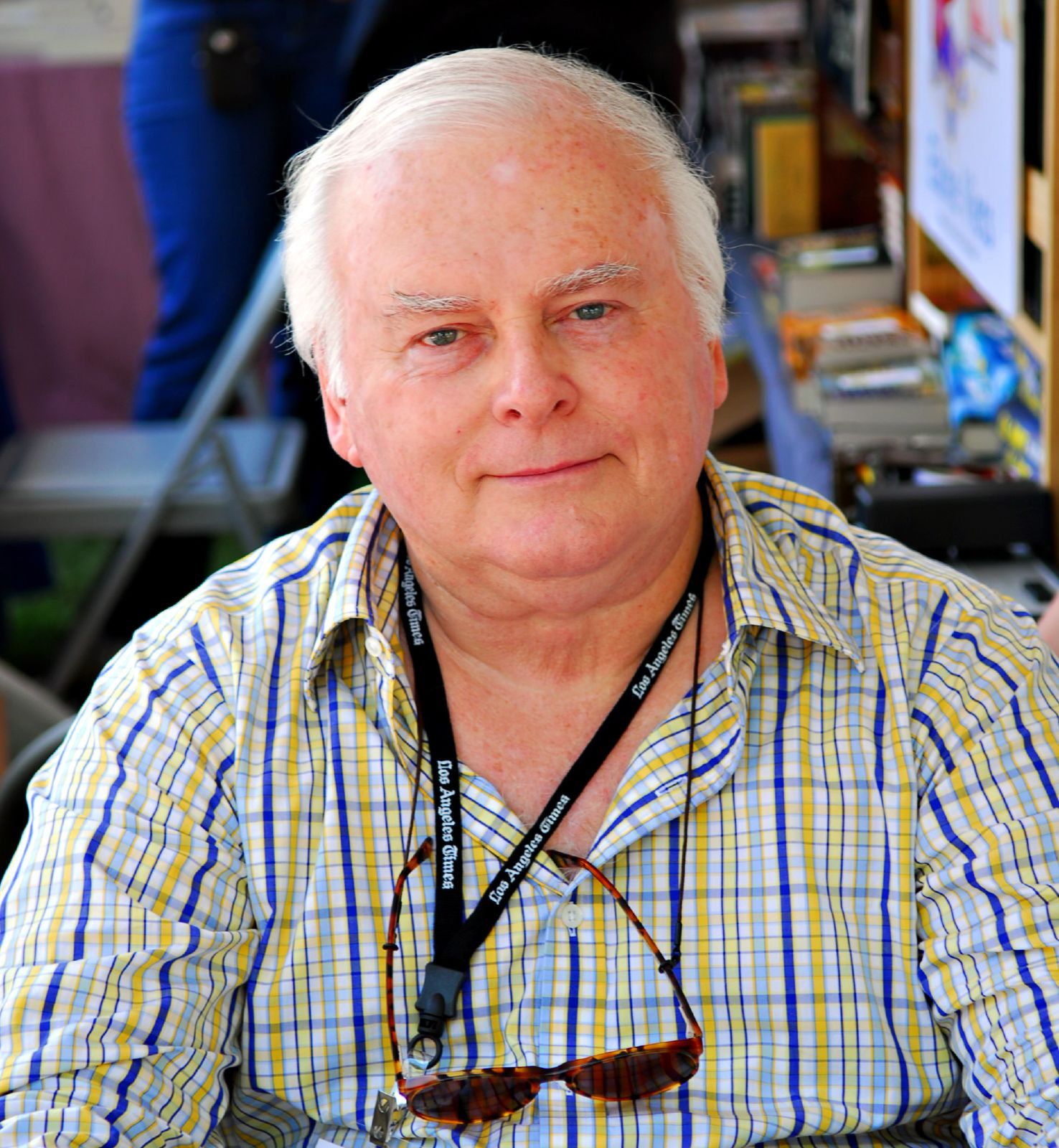
Community hub
Recent from talks
Contribute something
Nothing was collected or created yet.
Stuart Woods
View on Wikipedia
Stuart Woods (born Stuart Chevalier Lee; January 9, 1938 – July 22, 2022)[1][2] was an American novelist,[3] known best for his first novel Chiefs and his series of novels featuring protagonist Stone Barrington.
Key Information


Woods was a Georgia native, entered the advertising business after college graduation and lived in England and Ireland for almost a decade. He became an accomplished and competitive sailor. His interest in this pastime and his need for financing it provided the incentive to write for publication.
Woods’ initial literary efforts focused on sailing and expanded to include reviews of numerous British restaurants, inns and hotels. His seminal work Chiefs, inspired by his grandfather, a police chief, was adapted for television. Woods’ prolific Barrington series features the detective-lawyer, aided by a recurring cast of supporting characters, who handles lucrative cases which his law firm otherwise would rather not be associated with.
Woods broadened his pastimes to include piloting and yachting, and maintained residences in several states.
Early life
[edit]Stuart Woods was born in Manchester, Georgia, and graduated in 1959 from the University of Georgia, with a Bachelor of Arts in sociology. After graduation, he enrolled in the Air National Guard, spending two months in basic training before moving to New York City, where he began a career in the advertising industry.[4] Towards the end of the 1960s, Woods emigrated to England and lived in Knightsbridge, London while continuing to work in advertising. After three years in London, Woods decided to write a novel, based on an old family story that had been told to him when he was a child, and moved to Ireland.[4] He moved into a converted barn on the grounds of Lough Cutra Castle near Gort, County Galway, and lived a near-solitary existence, except for spending two days a week in Dublin writing television commercials and print advertisements.[4]
Sailing
[edit]Soon after settling in Ireland in 1973, Woods took up a new hobby of sailing, an activity that had interested him since the summer of 1966 in Castine, Maine, when friends had taken him on their boat.[4] He joined Galway Bay Sailing Club, and learned to sail in one of the club's Mirrors.[5] Woods purchased a Mirror for himself and named it Fred, after his dog.[6] After tiring of cruising around bays, he entered novice competitions around Galway Bay. Unable to find a reliable person to form his crew, Woods recruited any passing teenager to join him.[7] He entered the week-long National Championships at Lough Derg, and finished 39th out of a fleet of 60. It was Woods' best result of the season.[8]
The following year, Woods sailed in as many races as he could leading up to the Mirror National Championships in Sligo. After retiring from the first race, he finished in 25th place out of 70 boats in the second race, and finished eighth in the third race. The fourth race was cancelled due to high winds and the number of teenaged entrants. He finished the event 29th out of 70 boats, and his crewmate and he were given a special prize for being the oldest and heaviest crew.[9] For the rest of the season, he sailed around Ireland with a friend on a Snapdragon 24, and decided to compete in the 1976 Observer Single-handed Trans-Atlantic Race (OSTAR).[10]
In the fall of 1974, Woods's grandfather died and bequeathed him enough money to buy a yacht suitable for the race. He ordered a Golden Shamrock-based yacht from Ron Holland, and worked with him on designing the interior suitable for single-handed racing and Woods' personal needs.[11] Since his previous sailing experience consisted of "racing a 10-foot plywood dinghy on Sunday afternoons against small children, losing regularly",[12] Woods spent 18 months learning more about sailing and celestial navigation, while his yacht was being built in Cork.[13] He gained more boating experience by sailing from Ireland to England as part of the crew on STY Creidne, a training ship purchased by the Irish government for the Irish Naval Service, Irish Mist II, Ron Holland's Golden Apple, and as many other yachts that would accept him, amassing 1200 miles of offshore experience.[14] He entered the August 1975 Multihull Offshore Cruising and Racing Association (MOCRA) Azores Race and asked fellow Galway Bay Sailing Club member Commander Bill King to join him.[15]
To finance his MOCRA Azores Race and the OSTAR, Woods met with publishers about writing a book about his experience in the OSTAR,[16] organized sponsorship for the races, and sent invitations and press releases about the launch of his yacht to the local and national Irish media, RTÉ, The Observer, and Yachting Monthly.[17] Golden Harp was launched June 4, 1975. "Golden" was chosen so the boat followed the naming tradition of Ron Holland's other designs, the Golden Apple, Golden Shamrock, and Golden Delicious, and "Harp" as it has long been used as a symbol of Ireland.[18]
Woods, King, and their third crewmember, Shirley Clifford,[19] left from Portsmouth, England, for the Azores in August 1975.[20] Clifford, who had complained of feeling ill the day before the race began, continued to feel worse, so Woods and King dropped her off on a coast guard boat near Plymouth, England, on the second day of the race.[21] They arrived in Horta after sailing 1400 miles for 151⁄2 days.[22] They were the smallest and last boat to finish, other than four boats that had retired from the race, but were disqualified for not competing with the full crew complement that had begun the race.[23] King returned to Ireland almost immediately, but Woods spent a month in Horta before sailing Golden Harp the 1300 miles back to Ireland single-handedly to meet the OSTAR's qualifying cruise requirement of a minimum of 500 miles.[24]
Upon his return to Ireland in the late fall of 1975, Woods appeared on the Irish version of To Tell the Truth with Ron Holland and John McWilliam. All three men claimed to be Woods, and a panel had to guess who was lying. Only one of the four panelists guessed correctly.[25] Preparing for his OSTAR race, he petitioned the OSTAR Committee to be considered an Irish entry, as although he was an American, he had been living in Ireland for some time, had learned to sail from Irish yachtsmen on Irish boats, and his yacht was Irish designed and built. The committee agreed to allow him to be entered under Irish colors.[26]
Becoming a published writer
[edit]Woods wrote an account of his OSTAR experience, and was introduced to Stanford Maritime, a London-based publishing house specializing in nautical books, by Ron Holland. Blue Water, Green Skipper was published in 1977. The American publishing rights were sold to W.W. Norton.[27]
Woods' second book was to be written about the 1977 Round Britain Yacht Race, but the book was cancelled because of light winds and calms during the race. He persuaded his publishers to allow him to change the scope of the book, and spent the summer driving 12,000 miles around Great Britain and Ireland, writing a guidebook to country restaurants, inns, and hotels.[28] He visited over 150 establishments, and included 138 in the book; 91 establishments in England, 13 in Scotland, eight in Wales, and 26 in Ireland.[29] The two places in the British Isles that he did not visit were Northern Ireland, saying that he did not feel comfortable recommending any place where he was afraid to visit, and the Channel Islands due to a lack of available time.[30] Originally titled A Lover's Guide to the Country Inns of Britain and Ireland Woods realised married couples may feel alienated, and changed it to A Romantic's Guide ...,[29] defining a "romantic" as a person " who is susceptible to charm" in addition to The Concise Oxford Dictionary's definition of someone "given to romance, imagination ... visionary ... professing grandeur of picturesqueness or passion or irregular beauty to finish and proportion."[31]
The novel Chiefs and its television adaptation
[edit]Woods' first novel, Chiefs, was published in March 1981. The story was inspired by a police chief's badge Woods had found in his grandmother's home. The badge was stained with blood and pockmarked by buckshot. It had belonged to his grandfather, who died wearing it 10 years before Woods was born.[32] He submitted the first 100 pages and an outline to three publishers, all of whom turned him down, before W. W. Norton bought the publishing rights for $7,500.[27] He later stated it was a mistake to sell the book unfinished, as he could have gotten much more money had it been completed.[27] About 20,000 copies of the book were printed in hardback, but Norton did little to promote it.[27] Woods contracted with Bantam Books to print the paperback edition.
In 1983, Chiefs was adapted into a television miniseries of the same name, starring Charlton Heston, Danny Glover, Billy Dee Williams, Keith Carradine, Brad Davis, Stephen Collins, Paul Sorvino, Lane Smith, Paula Kelly and John Goodman, with production filming taking place in Chester, South Carolina. CBS broadcast the miniseries over three nights, and it was nominated for three Emmy Awards and one Eddie Award.[33][34] Its success sparked interest in the paperback,[27] and Woods was awarded the Edgar Award in the "Best First Novel" category from the Mystery Writers of America.[35]
In 2014, a celebration of the filming of Chiefs was organized in Chester by Catherine Fleming Bruce in collaboration with local organizations.[36] Woods was among the presenters.
The Chester newspaper reprinted coverage of Woods' visit to the city on the occasion of his death in 2022.[37]
Other works
[edit]Woods' most prolific series of novels focus on Stone Barrington, a former NYPD detective turned lawyer, who is of counsel to a prestigious law firm and handles sensitive cases for the firm's prominent clients, but cases with which the firm nonetheless does not wish to be publicly associated. As such, Barrington commands exorbitant fees, and a strong cast of recurring characters such as his ex-partner Dino Bacchetti, frequent use of the restaurant Elaine's on the Upper East Side of Manhattan in New York City as a setting, and Stone's frequent exploits with women, travel, and fine dining. Stone, like Woods, was also an experienced pilot and frequent references are made to his aircraft.[citation needed]
In addition to Stone, Woods authored several other character-focused series, including Holly Barker, a retired Army major and Florida police chief recruited to become a CIA operative; Ed Eagle, a Santa Fe defense lawyer; William Henry Lee IV, a United States senator from Georgia who is elected President of the United States; and Rick Barron, a police detective who becomes a security officer and later chief of production for a Hollywood movie studio in the 1930s. All of Woods' novels take place in the same universe, and characters frequently appear in other series.
Woods has published a memoir, a travel book, and 44 novels in a 37-year career, and had 29 consecutive The New York Times best sellers in hardback. Two completed novels were awaiting publication in January and April, 2011, and he then signed another three-book deal with Putnam. At one time in his literary output, Woods wrote two novels a year and subsequently increased that to three novels a year, at the request of his publishers.[38] In 2014, he started publishing four times a year, in January, April, June/July, and October.
Personal life
[edit]Woods was a licensed, instrument-rated private pilot and bought a new Cessna Citation Mustang, his first jet airplane. He was the launch customer of the Cessna Citation M2, taking delivery of the plane in December 2013.[39] He owned a Hinckley T38 R power boat and was a partner in an 85-foot antique motor yacht, Enticer, built in 1935 and fully restored. Married to Jeanmarie (née Cooper) in January 2013, the couple lived with a Labrador retriever named Fred in Key West, Florida, on Mount Desert Island, in Maine, and Santa Fe, New Mexico.[40]
Bibliography
[edit]Will Lee novels
[edit]- Chiefs (1981) (Won 1982 Edgar Allan Poe Award for Best First Novel. Made into a five-hour TV miniseries, starring Charlton Heston, John Goodman and an all-star cast. Woods has a role in the miniseries)
- Run Before the Wind (1983)
- Deep Lie (1986)
- Grass Roots (1989) (Made into a four-hour TV miniseries, starring Corbin Bernsen and Mel Harris)
- The Run (2000)
- Capital Crimes (2003) (First appearance of Teddy Fay)
- Mounting Fears (2009) (With Holly Barker. Teddy Fay appearance #4)
Stone Barrington novels
[edit]- New York Dead (1991)
- Dirt (1996)
- Dead in the Water (1997)
- Swimming to Catalina (1998)
- Worst Fears Realized (1999)
- L.A. Dead (2000)
- Cold Paradise (2001)
- The Short Forever (2002) (First appearance of CIA agent Lance Cabot)
- Dirty Work (2003) (First appearance of Herbie Fisher)
- Reckless Abandon (2004) (With Holly Barker, Lance Cabot, and Ed Eagle. Cameo by Herbie Fisher. Continuation of a storyline in Blood Orchid)
- Two Dollar Bill (2005)
- Dark Harbor (2006) (With Holly Barker)
- Fresh Disasters (2007) (Herbie Fisher appearance)
- Shoot Him If He Runs (2007) (With Holly Barker. Teddy Fay appearance #3)
- Hot Mahogany (2008) (With Holly Barker)
- Loitering With Intent (2009) (Cameo by Chuck Chandler from Choke)
- Kisser (2010)
- Lucid Intervals (2010) (First appearance of Strategic Services and Mike Freeman)
- Strategic Moves (2011) (With Holly Barker. Cameos by Todd Bacon and Lance Cabot)
- Bel-Air Dead (2011) (Cameos by Ed Eagle, Barbara Eagle and Rick Barron)
- Son of Stone (2011)
- D.C. Dead (2011) (With Holly Barker and Will Lee. Teddy Fay appearance #7)
- Unnatural Acts (2012) (With Herbie Fisher)
- Severe Clear (2012) (With Holly Barker and Will Lee)
- Collateral Damage (2013) (With Holly Barker and Will Lee. Continuation of storyline in Severe Clear)
- Unintended Consequences (2013) (With Holly Barker and Lance Cabot. Timeline starts immediately following events in Collateral Damage. References events in Deep Lie)
- Doing Hard Time (2013) (Teddy Fay appearance #8. Continuation of storyline in Unintended Consequences)
- Standup Guy (2014) (First appearance of John Fratelli aka Jack Coulter)
- Carnal Curiosity (2014) (With Jack Coulter. Cameos by Holly Barker, Lance Cabot, Teddy Fay, Will Lee and Kate Lee)
- Cut and Thrust (2014) (With Will Lee, Kate Lee, Ed Eagle, Barbara Eagle and Teddy Fay)
- Paris Match (2014) (With Lance Cabot and Holly Barker. Continuation of storyline in Doing Hard Time)
- Insatiable Appetites (2015) (Cameos by Will Lee and Kate Lee)
- Hot Pursuit (2015) (With Holly Barker, Lance Cabot, Will Lee and Kate Lee)
- Naked Greed (2015) (Cameo by Holly Barker)
- Foreign Affairs (2015) (Cameos by Holly Barker, Kate Lee, and Lance Cabot)
- Scandalous Behavior (2016) (With Teddy Fay [Billy Barnett]. Continuation of Foreign Affairs)
- Family Jewels (2016) (Cameos by Ed Eagle, Kate Lee, Will Lee, Lance Cabot, and Holly Barker)
- Dishonorable Intentions (2016) (With Teddy Fay [Billy Barnett]. Cameos by Ed Eagle, Kate Lee, Lance Cabot, and Holly Barker)
- Sex, Lies, and Serious Money (2016) (With Herb Fisher. Cameos by Ed Eagle, Holly Barker and Teddy Fay [Billy Barnett])
- Below the Belt (2017) (With Holly Barker, Lance Cabot, Will Lee. Cameo by Kate Lee)
- Fast and Loose (2017) (Cameos by Teddy Fay [Billy Barnett], Kate Lee, Will Lee, Lance Cabot and Holly Barker. Continuation of Below the Belt)
- Indecent Exposure (2017) (With Holly Barker, Will Lee, and Kate Lee)
- Quick & Dirty (2017) (Cameo by Holly Barker)
- Unbound (2018) (With Teddy Fay [Billy Barnett]. Cameo by Ed Eagle)
- Shoot First (Think Later) (2018) (Cameos by Lance Cabot and Holly Barker)
- Turbulence (2018) (With Holly Barker and Lance Cabot. Continuation of Shoot First)
- Desperate Measures (2018) (With Herbie Fisher)
- A Delicate Touch (2018) (Cameo by Holly Barker)
- Wild Card (2019) (Cameos by Holly Barker and Lance Cabot. Continuation of A Delicate Touch)
- Contraband (2019) (Cameo by Holly Barker)
- Stealth (2019) (With Holly Barker and Lance Cabot)
- Treason (2020) (With Holly Barker and Lance Cabot)
- Hit List (2020) (With Lance Cabot, Ed Eagle, Herbie Fisher and Holly Barker)
- Choppy Water (2020) (Cameos by Lance Cabot, Kate Lee and Will Lee)
- Shakeup (2020) (With Holly Barker. Cameos by Kate Lee, Will Lee, Lance Cabot, and Herbie Fisher)
- Hush-Hush (2020) (With Lance Cabot. Cameo by Holly Barker)
- Double Jeopardy (2021) (With Lance Cabot)
- Class Act (2021) (With Jack Coulter. Cameo by Holly Barker)
- Foul Play (2021) (Cameos by Holly Barker and Lance Cabot)
- Criminal Mischief (2021) (Cameos by Holly Barker and Lance Cabot)
- A Safe House (2022) (With Lance Cabot)
- Black Dog (2022)
- Distant Thunder (2022) (With Lance Cabot. Cameo by Holly Barker)
- Near Miss (with Brett Battles) (2023) (With Teddy Fay [Billy Barnett])
Stone Barrington novels not by Stuart Woods
[edit]Note: The following titles are not written by Stuart Woods. They continue to develop the story lines created by Woods.
- 65. Smolder (by Brett Battles) (2024) (With Teddy Fay [Billy Barnett])
- 66. Finders Keepers (by Brett Battles) (2025) (With Jack Coulter)
Holly Barker novels
[edit]- Orchid Beach (1998) (Set in the fictional town of Orchid Beach, Florida)
- Orchid Blues (2001) (Cameo by Stone Barrington)
- Blood Orchid (2002)
- Iron Orchid (2005) (Teddy Fay appearance #2)
- Hothouse Orchid (2009) (Teddy Fay appearance #5)
Ed Eagle novels
[edit]- Santa Fe Rules (1992) (Set in Santa Fe, New Mexico)
- Short Straw (2006) (Cameo by Rick Barron)
- Santa Fe Dead (2008)
- Santa Fe Edge (2010) (Teddy Fay appearance #6. Cameos by Holly Barker and Agent Todd Bacon from Mounting Fears)
Rick Barron novels
[edit]- The Prince of Beverly Hills (2004)
- Beverly Hills Dead (2008) (Cameo by Stone Barrington)
Teddy Fay novels
[edit]Note: These novels also feature Stone Barrington.
- Smooth Operator (with Parnell Hall) (2016)
- The Money Shot (with Parnell Hall) (2018)
- Skin Game (with Parnell Hall) (2019)
- Bombshell (with Parnell Hall) (2020)
- Jackpot (with Bryon Quertermous) (2021)
- Obsession (with Brett Battles) (2023)
Teddy Fay novels not by Stuart Woods
[edit]Note: The following titles are not written by Stuart Woods. They continue to develop the storylines created by Woods.
- 7. Golden Hour (by Brett Battles) (2024)
Herbie Fisher novels
[edit]- Barely Legal (with Parnell Hall) (2017) (With Stone Barrington)
Stand-alone novels
[edit]- Under the Lake (1987)
- White Cargo (1988)
- Palindrome (1991) (Set on Cumberland Island, Georgia)
- L.A. Times (1993) (Set in Los Angeles, California)
- Dead Eyes (1994) (Set in Los Angeles, California)
- Heat (1994) (Set in a fictional town in Idaho)
- Imperfect Strangers (1995) (Winner of 1997 Grand Prix de Littérature Policière)
- Choke (1995)
Non-fiction
[edit]- Blue Water, Green Skipper: A Memoir of Sailing Alone Across the Atlantic (1977)
- A Romantic's Guide to the Country Inns of Britain and Ireland (1979)
- An Extravagant Life (2022)
Book reviews
[edit]Unintended Consequences
- New York Journal of Books reviewer Carolyn Haley called Unintended Consequences ". . . reliably fun and intriguing."[41]
References
[edit]- ^ "Stone Barrington novelist Stuart Woods dies at 84". USA Today. Archived from the original on December 21, 2022.
- ^ Roberts, Sam (August 1, 2022). "Stuart Woods, Prolific Best-Selling Thriller Author, Dies at 84". The New York Times. Retrieved March 26, 2024.
- ^ "Stuart Woods". Contemporary Authors Online. Gale. February 18, 2009. Retrieved March 5, 2009.
- ^ a b c d Woods, 1977; p. 12
- ^ Woods, 1977; pp. 14–16
- ^ Woods, 1977; p. 18
- ^ Woods, 1977; p. 19
- ^ Woods, 1977; p. 20
- ^ Woods, 1977; pp. 22–23
- ^ Woods, 1977; pp. 24–27
- ^ Woods, 1977; p. 36
- ^ "Biography". Stuart Woods. Archived from the original on June 26, 2009. Retrieved July 10, 2009.
- ^ Woods, 1977; pp. 42–44
- ^ Woods, 1977; pp. 61–64
- ^ Woods, 1977; p. 42
- ^ Woods, 1977; p. 45
- ^ Woods, 1977; pp. 68, 71–75
- ^ Woods, 1977; p. 53
- ^ Woods, 1977; p. 54
- ^ Woods, 1977; p. 85
- ^ Woods, 1977; p. 89
- ^ Woods, 1977; p. 97
- ^ Woods, 1977; p. 98
- ^ Woods, 1977; pp. 38, 106–118
- ^ Woods, 1977; p. 120
- ^ Woods, 1977; p. 44
- ^ a b c d e White, Ray; Lindsay, Duane, eds. (2007) [2007]. "Chiefs Did the Trick: Interview with Stuart Woods". How I Got Published: Famous Authors Tell You In Their Own Words (1 ed.). F+W Publications Inc. pp. 245–246. ISBN 978-1-58297-510-8. Retrieved July 11, 2009.
{{cite book}}: CS1 maint: url-status (link) - ^ Presenter: Gilbert Kaplan (June 1, 2008). "Stewart Woods". Mad About Music. WNYC. Archived from the original on October 13, 2008.
- ^ a b Woods, 1979; p. xvi
- ^ Woods, 1979; p. x
- ^ Woods, 1979; p. ix
- ^ O'Connor, John J. (November 11, 1983). "TV Weekend; Life of a Georgia Town". New York Times. Retrieved July 11, 2009.
- ^ "Emmy Awards: 1984". IMDb. Archived from the original on July 26, 2015. Retrieved July 11, 2009.
- ^ "American Cinema Editors, USA: 1984". IMDb. Archived from the original on January 10, 2004. Retrieved July 11, 2009.
- ^ "The Edgar Awards Database". Mystery Writers of America. Archived from the original (To access database results, user must enter Author's last name.) on September 27, 2018. Retrieved July 11, 2009.
- ^ Garner, Brian (October 3, 2014). "Celebration of CBS mini-series 'Chiefs' set for April, receives Humanities grant". The News and Reporter. Retrieved March 26, 2024.
- ^ Garner, Brian (July 28, 2022). "An afternoon with Stuart Woods: A remembrance of the author of 'Chiefs'". The News and Reporter. Retrieved March 26, 2024.
- ^ "Stuart Woods Reader Interview". Archived from the original on January 14, 2006. Retrieved September 14, 2009.
- ^ FlyRadius. "Cessna Citation M2 Light Jet Overview | FlyRadius". www.flyradius.com. Retrieved June 7, 2021.
- ^ "Stuart Woods Biography". Archived from the original on August 20, 2015. Retrieved August 21, 2015.
- ^ New York Journal of Books
External links
[edit]
Stuart Woods
View on GrokipediaEarly life
Upbringing and family
Stuart Woods was born Stuart Chevalier Lee on January 9, 1938, in Manchester, Georgia, a small town in the west-central part of the state.[1] His parents were Dorothy Callaway Lee, a church organist, and Stuart Franklin Lee, who worked in the real estate business.[1][6] The family lived in Manchester, where Woods spent his childhood immersed in the rhythms of Southern small-town life.[2] Woods' parents divorced when he was six years old, after which his mother married Wyett C. Woods, a lawyer, and the family adopted his stepfather's surname; Woods legally changed his name to Stuart Woods in 1955.[1] This early family dynamic exposed him to the oral traditions of Southern storytelling, particularly through anecdotes shared among relatives. One such family tale profoundly shaped his later work: as a child, Woods discovered his grandfather William H. Callaway Jr.'s bloodstained and buckshot-marked police chief's badge in his grandmother's home, a relic from when Callaway was shot and killed in the line of duty in Manchester on September 27, 1927, that inspired the historical and narrative elements of his debut novel, Chiefs.[7][8] These personal stories fostered an early appreciation for dramatic, character-driven narratives rooted in local history and human conflict.[9] From a young age, Woods was an avid reader, taught to read by his mother the year before starting school, which ignited a lifelong passion for literature.[10] He devoured classic works by authors such as Mark Twain and Charles Dickens during his childhood, developing a love for storytelling that emphasized adventure and social observation.[10] He attended local public schools in Manchester, where his early reading habits laid the groundwork for his interest in writing.[2]Education
Stuart Woods attended the local public schools in Manchester, Georgia, graduating from Manchester High School in 1956.[2][11] He then enrolled at the University of Georgia, where he earned a Bachelor of Arts degree in sociology in 1959.[2][1] During his time on campus, Woods engaged in writing activities that reflected his early interest in the craft.[12] Following graduation, Woods spent a year in Atlanta, including two months of basic training with the Air National Guard.[2]Career beginnings
Advertising work
After graduating from the University of Georgia in 1959 with a B.A. in sociology, Stuart Woods moved to New York City in 1960 to pursue a career in journalism but instead entered the advertising industry due to a lack of openings in media.[2][1] He began as a trainee in a New York advertising agency, earning $70 a week—less than a secretary's salary at the time—while honing his writing skills in a competitive environment.[2][13] Over the next decade, from 1960 to 1969, Woods worked as an advertising writer and creative director at several prestigious New York firms, including Batten, Barton, Durstine & Osborne (BBDO), Papert, Koenig & Lois, Young & Rubicam, and J. Walter Thompson, except for a 10-month deployment in Mannheim, Germany, with the Air National Guard.[14][2] In these roles, he crafted ad campaigns for major clients, focusing on concise storytelling and persuasive messaging that emphasized brevity and impact, skills he later credited with influencing his approach to novel writing.[14] His work earned industry recognition, including a Clio Award for television writing and a Gold Key for print advertising.[14] In the late 1960s, Woods relocated to London, where he continued in advertising from 1970 to 1973 at agencies such as Grey Advertising and Dorland, managing campaigns amid the era's creative boom.[14][2] However, he grew frustrated with the corporate structure and limited creative autonomy, prompting a shift toward greater independence by the early 1970s.[13] In 1973, he moved to south County Galway, Ireland, taking part-time consulting roles at Dublin firms like Irish International Advertising and Hunter Advertising while dedicating more time to personal writing projects.[14][2] This period marked the end of his full-time advertising career, as he sought freedom from the industry's demands.[2]Sailing achievements
Stuart Woods developed a passion for sailing upon moving to Ireland in 1973, joining the Galway Bay Sailing Club and quickly progressing from racing small Mirror dinghies to competing in local regattas.[2] His early experiences in Irish waters honed his skills, leading him to participate in regional events such as the National Championships at Lough Derg, where he achieved a respectable finish amid competitive fleets.[15] In 1974, Woods purchased his first ocean-going yacht, the 30-foot Ron Holland-designed Golden Harp, using funds from an inheritance, which enabled him to pursue more ambitious offshore racing.[2] This marked his entry into serious competitive sailing, as he prepared for international challenges while balancing his advertising career, which provided the financial support for his growing pursuits.[15] By 1976, at age 37 with limited prior experience, Woods entered the Observer Single-Handed Trans-Atlantic Race (OSTAR), a grueling solo voyage from Plymouth, England, to Newport, Rhode Island.[2] Sailing Golden Harp, he completed the 3,000-nautical-mile course in 44 days, 19 hours, and 14 minutes, finishing 45th in elapsed time out of 125 starters (73 finishers) despite mechanical issues and harsh weather, demonstrating remarkable resilience.[16] The OSTAR experience profoundly shaped Woods' personal growth, embodying the risk-taking and self-reliance that would later influence his writing, particularly his debut non-fiction memoir Blue Water, Green Skipper (1977), which chronicled his Irish sailing apprenticeship and the transatlantic ordeal.[17] Building on this, Woods continued competing in major events, including the 1979 Fastnet Race around the UK and Ireland aboard a friend's yacht, where he navigated the infamous Force 10 storm that claimed 15 lives and capsized numerous vessels, yet finished with his crew intact and minimal damage.[2] These accomplishments established Woods as a dedicated ocean racer, blending adventure with the discipline required for high-stakes navigation.[13]Literary career
Breakthrough novel Chiefs
After leaving his career in advertising in 1973 to pursue writing full-time, Stuart Woods completed his debut novel Chiefs in 1981.[18] The story was inspired by family history in his Georgia hometown of Manchester, particularly the death of his grandfather, who served as police chief and was killed in the line of duty in 1927, amid an era marked by unsolved crimes and small-town law enforcement challenges.[7] Woods drew on this personal connection to craft a narrative centered on a series of ritualistic murders in the fictional town of Delano, Georgia, evoking the real tensions of racial and social dynamics in the early 20th-century South.[9] Published that year by W.W. Norton & Company, Chiefs quickly garnered acclaim for its ambitious historical scope, spanning over five decades from the 1920s to the 1970s and following three successive police chiefs as they grapple with the same elusive serial killer.[19] The novel's multi-generational structure highlighted evolving investigative techniques and societal shifts in the American South, earning praise for its tense plotting and character depth.[19] In recognition of its excellence as a debut, Chiefs won the Edgar Allan Poe Award for Best First Novel from the Mystery Writers of America in 1981, establishing Woods as a promising voice in crime fiction.[20] The book's impact expanded in 1983 when it was adapted into a three-part CBS miniseries directed by Jerry London, starring Charlton Heston as a prominent town leader and featuring Keith Carradine and Stephen Collins as the police chiefs.[9] Airing over three nights in November, the production captured the novel's epic sweep and Southern gothic atmosphere, drawing strong viewership and critical notices for its intelligent handling of themes like justice and prejudice.[21] This adaptation significantly boosted Woods' visibility, solidifying Chiefs as a breakthrough that launched his prolific literary career.[20]Major series and output
Stuart Woods' literary career evolved into a prolific output centered on interconnected thriller series, beginning with his debut novel Chiefs in 1981, which introduced the political figure Will Lee and laid the foundation for an eponymous series exploring themes of power, intrigue, and justice across multiple generations. The Will Lee series, spanning seven novels by Woods' death, follows Lee's ascent from a Southern lawman to the U.S. presidency, often intertwining with national security threats and personal dilemmas.[22] In 1991, Woods debuted the Stone Barrington series with New York Dead, featuring the ex-NYPD detective turned private investigator and lawyer, whose cases blend high-stakes mysteries with elements of romance and opulent lifestyles in New York and beyond. This flagship series expanded to over 60 books by 2022, becoming Woods' most enduring work and incorporating crossovers with characters from other series for a shared universe of recurring figures.[23][24] Woods developed several spin-off series that enriched this interconnected world, including the Holly Barker series starting in 1998 with Orchid Beach, centering on the resilient police chief and her loyal Doberman, Daisy, in Florida-based investigations that frequently involve Stone Barrington. Similarly, the Ed Eagle series, launched in 1992 with Santa Fe Rules, follows the sharp-witted New Mexico lawyer navigating legal battles and personal betrayals, with overlapping appearances by Barrington and others to heighten narrative continuity. Woods' style across these series emphasized fast-paced plots combining mystery, suspense, romance, and glimpses of elite society, with annual releases accelerating to multiple books per year from the 1990s onward, culminating in over ninety novels by his passing in 2022.[25]Posthumous publications
Following Stuart Woods' death on July 22, 2022, his literary estate authorized the continuation of several popular series, primarily through collaborations with other authors who completed or expanded upon Woods' existing outlines and unfinished manuscripts. These posthumous publications have maintained the momentum of his bestselling franchises, particularly the Stone Barrington and Teddy Fay series, while sparking discussions among readers and critics about authorship authenticity, as the books are branded under Woods' name despite substantial contributions from co-writers. The Stone Barrington series, Woods' most prolific creation, saw its first posthumous entry with Near Miss (2023), co-authored by Brett Battles, which follows the titular lawyer-detective navigating threats in New York City based on Woods' preliminary notes. This was followed by Smolder (2024), also by Battles, where Barrington confronts a personal vendetta amid high-stakes intrigue, and Finders Keepers (2025), continuing the pattern of estate-approved extensions that blend Woods' established style with new narrative developments. These releases have been credited to "Stuart Woods" on covers and promotional materials, though Battles handled the primary writing, leading to some fan debates over whether they fully capture Woods' voice or represent commercial extensions rather than pure continuations.[26][27] Similarly, the Teddy Fay series, which Woods co-developed with Parnell Hall for earlier installments up to Bombshell (2020), has been extended by the estate through Battles' involvement. Posthumous titles include Obsession (2023), featuring the rogue CIA operative Teddy Fay thwarting a Hollywood conspiracy drawn from Woods' outlines, and Golden Hour (2024), where Fay protects film industry allies during an international press tour. These works emphasize Fay's clever machinations and crossovers with Stone Barrington, preserving series interconnections while relying on co-authors for completion; by late 2025, at least five such estate-authorized books had been released across the two series, with more announced, fueling ongoing conversations about the balance between honoring an author's legacy and enabling new content under their brand.[28]Personal life
Marriages and relationships
Stuart Woods was married four times, with his first three marriages ending in divorce. His initial marriage began in 1984 and concluded in 1990; during this period, he credited the union with reigniting his interest in aviation, as his wife, a partner in a law firm, provided access to a Cessna 182RG through her firm, enabling him to take flying lessons.[14][29] Woods's second marriage, to Chris, whom he met in Santa Fe, New Mexico, took place in the early 1990s and ended in divorce before 2005.[30] In April 2008, shortly after his second divorce, he wed Barbara Ellen aboard the motor yacht Enticer in Beaufort, South Carolina, officiated by Baptist minister William H. Carpenter; this union, his third, also ended in divorce.[31] In January 2013, Woods married Jeanmarie Cooper, a former flight attendant and private pilot, marking a stable partnership that endured until his death in 2022; the couple shared homes in multiple locations and enjoyed pursuits like aviation together, with no children from any of his marriages.[1][10][32]Residences and interests
Stuart Woods maintained his primary residence in New York City from the late 1970s onward, where he owned a co-op apartment on Park Avenue in Manhattan, serving as the hub for his social engagements and writing routine.[33][20] In addition to his New York base, Woods owned seasonal homes across the United States, including a residence in Key West, Florida, utilized for winter relaxation and proximity to sailing opportunities starting in the 1990s.[34][35] He also kept a summer home on Mount Desert Island in Maine and an estate near Santa Fe, New Mexico, which provided a mountain retreat for quieter periods.[34][23][36] Toward the later years of his life, Woods resided part-time in Litchfield County, Connecticut, where he ultimately passed away.[37] These properties were often shared with his wife, Jeanmarie, influencing their shared lifestyle choices.[20] Beyond writing, Woods pursued aviation as a passionate interest, obtaining his private pilot certificate in 1986 along with an instrument rating, and accumulating over 3,400 flight hours while owning small aircraft such as a Cessna.[38][2] He was also an avid sailor, owning yachts like a 30-foot Golden Harp and a Hinckley T38 power boat, which complemented his Florida and coastal retreats.[2]Death
Illness and passing
Woods died peacefully in his sleep on July 22, 2022, at his home in Litchfield County, Connecticut, at the age of 84.[13][1] His wife, Jeanmarie Woods, confirmed the death but did not specify a cause.[1] At the time of his passing, Woods left outlines and partial manuscripts for his major series, which his estate has since used to produce posthumous publications, including completions by collaborator Brett Battles.[39][40][41]Tributes
Following Stuart Woods' death on July 22, 2022, numerous tributes highlighted his prolific career and enduring impact on the thriller genre. Penguin Random House, his longtime publisher, issued a statement mourning the loss of the #1 New York Times bestselling author, who had written more than ninety novels, including over sixty featuring the character Stone Barrington. The publisher praised Woods for his debut novel Chiefs, which won an Edgar Award in 1981, and noted his consistent output of five books annually through G.P. Putnam’s Sons, emphasizing his adventurous spirit and support for emerging writers.[23] The Authors Guild also paid tribute, describing Woods as a "huge presence in the book world" and a generous supporter of young authors during his tenure on the Guild's Foundation Advisory Board from 2004 to 2021. Colleagues like Douglas Preston lauded his legendary encouragement of new talent, while Nick Taylor remembered him as "one of the most generous people" in the literary community.[13] Fans expressed widespread grief on social media platforms, particularly in dedicated Facebook groups like Stuart Woods Fans, where members shared memories of his escapist storytelling and the addictive appeal of series such as Stone Barrington. Posts often highlighted how his novels provided thrilling escapes, with one user noting, "I've read at least 70 of your 90 books... RIP Stuart," reflecting the deep connection readers felt to his fast-paced mysteries.[42] The Mystery Writers of America, which had earlier recognized Woods with the Edgar Award for Chiefs, featured his legacy in post-obituary coverage, underscoring his influence on mystery fiction through decades of bestsellers and his role in elevating the genre's popularity.[43]Literary style and reception
Themes and character development
Stuart Woods' novels frequently explore themes of wealth, power, and moral ambiguity within elite social circles, often blending elements of mystery, romance, and adventure to create fast-paced narratives of intrigue and personal risk. In these stories, protagonists navigate high-stakes environments where financial influence and political maneuvering blur ethical lines, as seen in plots involving corporate espionage, legal battles, and shadowy alliances among the affluent.[24][20] This thematic focus reflects Woods' interest in how privilege shapes human behavior and decision-making, with romance serving as both a motivator and a complication amid the suspense.[30] Central to Woods' character development is Stone Barrington, the quintessential hero who embodies suave resourcefulness and moral flexibility in an interconnected web of elite professions. A former New York City police detective turned high-powered attorney, Barrington handles cases of upper-crust intrigue and international escapades, drawing on his street-smart instincts and charm to outmaneuver adversaries while indulging in lavish lifestyles and romantic entanglements.[24][20] His evolution across dozens of novels highlights Woods' approach to character growth through improvisation and dialogue, revealing Barrington's adaptability in shifting from gritty investigations to sophisticated power plays.[20] Woods constructs an expansive, interconnected universe across his series, where characters like Holly Barker—a small-town police chief turned CIA operative—crossover into other narratives, enriching a shared world of law enforcement, intelligence, and personal vendettas. This crossover mechanism allows for recurring archetypes, such as resilient law enforcers confronting moral dilemmas, and fosters continuity in themes of loyalty and betrayal.[44][45] Barrington, for instance, intersects with Barker in pursuits involving rogue agents and global threats, amplifying the sense of a cohesive fictional realm.[44] Woods' storytelling evolved from the gritty realism of his debut novel Chiefs, which chronicled decades-long investigations in a small Southern town with a focus on historical and societal tensions, to the polished, formulaic thrillers of his later series that prioritize escapism through glamorous settings and predictable resolutions.[46] This shift emphasizes high-adventure escapism, influenced briefly by Woods' own experiences as an avid sailor, which infuse his works with motifs of perilous journeys and uncharted risks.[25][30]Awards and critical views
Stuart Woods received significant recognition early in his career for his debut novel, Chiefs (1981), which won the Edgar Allan Poe Award for Best First Novel from the Mystery Writers of America. The book, a multi-generational crime saga set in Georgia, was praised for its intricate plotting and social commentary on race and justice. Woods earned an additional Edgar nomination in 1992 for Best Novel with Palindrome (1991), highlighting his continued prominence in the mystery genre.[46] In 2010, he was awarded France's Grand Prix de Littérature Policière for Imperfect Strangers (1995), one of the country's highest honors for crime fiction, recognizing his international appeal.[13] Woods's commercial success was equally notable, with more than 70 of his novels achieving New York Times bestseller status, including multiple #1 entries in the Stone Barrington series.[5] This prolific output, spanning more than 90 books, underscored his dominance in the thriller market, where his works consistently topped sales charts and attracted adaptations, such as the TV miniseries of Chiefs. Posthumous publications have continued to appear, maintaining the series' popularity among readers. His ability to deliver fast-paced narratives contributed to this enduring appeal. Critics offered mixed assessments of Woods's oeuvre, often balancing praise for its entertainment value against reservations about its depth. Publications like Publishers Weekly frequently lauded his engaging plots and charismatic protagonists for their polished suspense and upper-class settings. However, outlets including Kirkus Reviews critiqued the formulaic structure of his later works, noting that characters sometimes adhered to predictable roles, resulting in storytelling with limited emotional or thematic complexity.Bibliography
Stone Barrington novels
The Stone Barrington series is Stuart Woods' longest-running and most popular body of work, featuring the titular protagonist, a former New York Police Department detective who becomes a high-powered attorney at a prestigious Manhattan law firm.[47] The novels center on Barrington's investigations into murders, espionage, and scandals within elite social circles, often intertwining with CIA operations, international travel to luxurious locales like London, Paris, and the Caribbean, and personal entanglements with glamorous figures.[1] This blend of legal thriller elements, fast-paced action, and opulent settings has defined the series' appeal, with Barrington's wit, resourcefulness, and moral ambiguity driving the narratives across urban and global backdrops.[23] Woods authored 63 novels in the series between 1991 and 2022, beginning with New York Dead, in which Barrington probes the apparent suicide of a television anchor that turns into a homicide case amid New York City's glittering underbelly.[48] Subsequent entries expand the scope, such as Dirty Work (2003), where Barrington uncovers a plot involving British intelligence and a Hollywood actress's disappearance, highlighting the series' recurring motifs of transatlantic intrigue and professional rivalries. Another pivotal installment, Reckless Abandon (2004), sees Barrington balancing a terrorist threat with a romantic liaison, exemplifying Woods' integration of high-stakes suspense with Barrington's hedonistic lifestyle. The series has achieved significant commercial success.[49] Crossovers with Woods' other series enrich the universe, notably featuring Teddy Fay, the ex-CIA operative and master of disguise from the Teddy Fay novels, who appears in several Stone Barrington entries like Unbound (2018), where their paths converge on a revenge scheme in Santa Fe.[50] Following Woods' death on July 22, 2022, the series has continued under the estate's direction with co-author Brett Battles, preserving the established style of brisk plotting and character dynamics while introducing fresh threats.[51] Posthumous installments include Near Miss (2023), involving a deadly extortion plot; Smolder (2024), centered on a corporate takeover laced with murder; and Finders Keepers (2025), where Barrington tackles art theft and betrayal, with more books planned.Will Lee novels
The Will Lee novels comprise a series of seven political thrillers written by Stuart Woods, published between 1981 and 2008, chronicling the protagonist's ascent from a small-town lawyer and police chief to the President of the United States.[52] The series originates with Chiefs (1981), in which Will Henry Lee investigates a serial killer in his Georgia hometown, establishing the thriller foundation of local justice and moral complexity. Over the course of the narrative arc, Lee navigates espionage, assassination attempts, and national crises, rising through roles as a senator and vice president before assuming the presidency in later installments.[53] Key themes in the series revolve around corruption within Washington D.C. political circles, the perils of high-level ambition, and intricate family dynamics, particularly Lee's marriage to Kate Rule, a formidable CIA director who often aids in countering threats.[54] Unlike some of Woods' other works, the Will Lee series features fewer crossovers with recurring characters from parallel narratives, maintaining a focused lens on national leadership and intrigue.[55] Notable entries include Capital Crimes (2003), co-authored with Judith Krantz, which depicts President Lee managing a web of scandals and terrorist plots during his term. The complete series, in publication order, is as follows:- Chiefs (1981)
- Run Before the Wind (1983)
- Deep Lie (1986)
- Grass Roots (1989)
- The Run (2000)
- Capital Crimes (2003, with Judith Krantz)
- Mounting Fears (2008)
Holly Barker novels
The Holly Barker series is a collection of six mystery thrillers written by Stuart Woods, published between 1998 and 2008, featuring a female protagonist navigating law enforcement challenges in Florida settings.[56] The series centers on Holly Barker, a former U.S. Army Military Police major who resigns after losing a sexual harassment lawsuit against her commanding officer, marking a pivotal exploration of gender dynamics in male-dominated fields like the military and policing.[57] Barker relocates to the fictional Orchid Beach, Florida, where she becomes deputy chief and later chief of police, often relying on her loyal Doberman pinscher, Daisy, as a partner in investigations.[58] This setup distinguishes the series within Woods' oeuvre, offering a strong female lead amid his predominantly male-centered narratives, with Barker evolving from local cop to CIA special agent in later installments.[45] The novels blend procedural police work with high-stakes suspense, emphasizing Barker's resilience and strategic acumen in confronting corruption, organized crime, and personal threats. Key entries include Reckless Abandon (2004), where Barker collaborates with lawyer Stone Barrington on a terrorism plot, marking the series' primary crossover into Woods' broader fictional universe.[59] Similarly, Iron Orchid (2006) highlights her transition to federal service, as she trains at the CIA's Farm while pursuing a killer targeting female agents, underscoring themes of professional perseverance for women in security roles.[60] The series concludes with Hothouse Orchid (2008), revisiting her Orchid Beach roots amid a real estate scam and family secrets, without any posthumous extensions following Woods' death in 2022.[56]| Title | Publication Year |
|---|---|
| Orchid Beach | 1998 |
| Orchid Blues | 2001 |
| Blood Orchid | 2002 |
| Reckless Abandon | 2004 |
| Iron Orchid | 2006 |
| Hothouse Orchid | 2008 |
Ed Eagle novels
The Ed Eagle series is a collection of legal thrillers authored by Stuart Woods, centering on Ed Eagle, a prominent defense attorney based in Santa Fe, New Mexico. The protagonist navigates high-stakes courtroom battles while contending with personal perils, particularly from his cunning and treacherous ex-wife, Barbara Eagle, who repeatedly schemes against him. The series, spanning four novels published between 1992 and 2010, emphasizes intricate legal proceedings intertwined with elements of betrayal and danger in the American Southwest.[61] The inaugural novel, Santa Fe Rules (1992), introduces Ed Eagle as he defends a client accused of multiple murders under unusual circumstances, only to face suspicions himself amid a web of deception involving his own household. Subsequent entries build on this foundation, with Short Straw (2006) highlighting Eagle's defense of a man framed in a kidnapping plot linked to organized crime across the U.S.-Mexico border, showcasing the attorney's resourcefulness under duress. Santa Fe Dead (2008) escalates the personal stakes as Barbara resurfaces with deadly intentions, forcing Eagle into a cross-border pursuit that blends legal strategy with survival instincts. The series concludes with Santa Fe Edge (2010), where Eagle confronts renewed threats from Barbara's machinations, culminating in intense courtroom drama and vigilante justice. Set predominantly in the arid landscapes of New Mexico and extending into Mexico, the novels draw on the region's cultural and geographic isolation to heighten tension, with desert terrains and border dynamics influencing plot developments such as chases and hidden retreats. Woods, who wrote all installments directly, crafts narratives noted for their taut pacing in legal suspense, where procedural details amplify themes of personal betrayal and moral ambiguity in the justice system. Occasional crossovers, such as brief appearances by characters from the Stone Barrington series, integrate the Ed Eagle stories into Woods' broader shared universe without overshadowing the core legal focus.[62][63]Rick Barron novels
The Rick Barron novels form a short series of mystery thrillers by Stuart Woods, centered on Rick Barron, a tough Los Angeles Police Department detective who transitions into the high-stakes world of Hollywood studio security and production, where he unravels murders intertwined with film industry glamour, mobsters, and political intrigue.[64] Barron first appears as a supporting character in Woods' Stone Barrington novel L.A. Dead (2000), assisting in a high-profile murder case that establishes his no-nonsense investigative skills amid Tinseltown excess. The core series comprises two dedicated novels: The Prince of Beverly Hills (2004), in which the demoted detective joins Centurion Pictures as a security chief in 1939 and probes a studio executive's disappearance linked to gangsters; and Beverly Hills Dead (2008), where Barron, now head of production during the 1940s Red Scare era, navigates blacklisting suspicions and a screenwriter's slaying at the same studio. These works evoke classic film noir aesthetics through their retro settings, sharp dialogue, and depictions of Hollywood's shadowy underbelly, blending rapid-paced crime-solving with period details like silver-screen romance and wartime tensions. Woods' earlier standalone L.A. Times (1993) serves as a thematic precursor, exploring Hollywood power plays and murder through a journalist-turned-producer protagonist, though it lacks direct ties to Barron. The series remained limited to these two primary entries, as Woods prioritized expansions in his Stone Barrington and other franchises, with no further Rick Barron novels published after his death in 2022.[1]Teddy Fay novels
The Teddy Fay novels form a thriller series by Stuart Woods, centering on the titular character, a rogue ex-CIA operative and master of disguise who operates as a gentleman assassin with a penchant for Hollywood productions and high-stakes espionage.[65] Introduced earlier as a villain in Woods's 2003 Will Lee novel Capital Crimes, Teddy Fay was reimagined as a charismatic anti-hero in this dedicated series, blending spy intrigue, disguises, and light-hearted humor in plots involving assassinations, corporate takeovers, and film industry machinations.[66] Fay's background as a tech-savvy CIA agent turned freelance operative allows for witty, fast-paced adventures that often highlight his acting skills and moral code of selective justice.[67] The series proper launched in 2016 with four collaborative novels co-authored by Woods and mystery writer Parnell Hall, who brought a comedic edge to Fay's escapades in Washington politics and Hollywood scandals. These works emphasize Fay's charm and ingenuity, such as using film sets for covert operations and evading pursuers through elaborate personas. Woods then continued solo with Jackpot in 2021, maintaining the series' tone of espionage laced with satire on power and celebrity. Following Woods's death in 2022, the estate oversaw posthumous installments completed by thriller author Brett Battles, preserving the light-hearted espionage vibe while integrating crossovers with Woods's flagship Stone Barrington character for added narrative depth and continuity across the author's universe.[67] These later entries, like Obsession (2023) and Golden Hour (2024), explore Fay's ongoing conflicts with international threats, often tying into Barrington's legal and investigative world.| Title | Year | Author(s) | Key Plot Elements |
|---|---|---|---|
| Smooth Operator | 2016 | Stuart Woods & Parnell Hall | Fay infiltrates a political campaign using disguises. |
| The Money Shot | 2017 | Stuart Woods & Parnell Hall | Hollywood extortion plot amid film production chaos. |
| Skin Game | 2019 | Stuart Woods & Parnell Hall | Fay thwarts a kidnapping during a celebrity event. |
| Bombshell | 2020 | Stuart Woods & Parnell Hall | Assassination attempt on a tech mogul in Los Angeles. |
| Jackpot | 2021 | Stuart Woods | Casino heist and corporate espionage in Las Vegas. |
| Obsession | 2023 | Stuart Woods & Brett Battles | Barrington crossover involving a kidnapping and old vendetta (posthumous completion). |
| Golden Hour | 2024 | Brett Battles | European press tour turns deadly for Fay (posthumous). |