


Community hub
Recent from talks
Contribute something
Nothing was collected or created yet.
Second MacDonald ministry
View on Wikipedia
Second MacDonald ministry | |
|---|---|
.svg) | |
| 1929–1931 | |
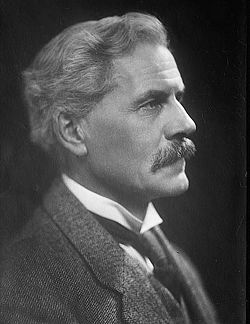
 Ramsay MacDonald | |
| Date formed | 5 June 1929 |
| Date dissolved | 24 August 1931 |
| People and organisations | |
| Monarch | George V |
| Prime Minister | Ramsay MacDonald |
| Prime Minister's history | 1929–1935 |
| Deputy Prime Minister | [note 1] |
| Total no. of members | 86 appointments |
| Member party | Labour Party |
| Status in legislature | Minority dependent on Liberal support |
| Opposition party | Conservative Party |
| Opposition leaders |
|
| History | |
| Election | 1929 general election |
| Legislature terms | 35th UK Parliament |
| Predecessor | Second Baldwin ministry |
| Successor | First National Government |
The second MacDonald ministry was formed by Ramsay MacDonald on his reappointment as prime minister of the United Kingdom by King George V on 5 June 1929. It was the second time the Labour Party had formed a government; the first MacDonald ministry held office in 1924.
Background
[edit]The 1929 general election resulted in a hung parliament, with no party achieving a substantial number of seats to form a parliamentary majority. Labour was the largest party with 287 seats, while the Conservative Party won the largest number of votes overall. This discrepancy between seat count and popular vote was caused by the electoral system of first-past-the-post, and also the constituency boundaries, which were largely unchanged since the Representation of the People Act 1918. Nonetheless, King George V invited Ramsay MacDonald back to form a government.
The defeat of the Conservative Party has been attributed to its failure to reduce high unemployment,[1] criticism of its handling of the General Strike, and the animosity caused by the Trade Disputes and Trade Unions Act 1927.[2] For Labour, the election results were significant in that it not only became the largest party for the first time, but made inroads in county seats (an outcome not seen as highly expected), while also capturing seats in London that it hadn’t held before like Acton and Romford.[3] Altogether, Labour gained 28 seats in Greater London. It also performed well in Lancashire and Cheshire, with its representation increasing from 26 to 44 seats.[4]
Both MacDonald and Baldwin shared a dislike for David Lloyd George,[5] with the two of them agreeing during the election campaign while crossing at Crewe that it was desirable “to keep the Welshman (Lloyd George) out.”[6] Despite this, Lloyd George agreed to support the government, but noted that "the very hour the Ministry becomes a Socialist administration its career ends."[7]
In what was described as a “novel publicity stunt,” MacDonald named his team in front of talkie cameras that had been admitted into the garden at Downing Street.[8]
Ideologically, the cabinet MacDonald appointed was for the most part a moderate one,[9] with only one left-winger (George Lansbury) appointed.[10] Its makeup was also similar to the 1924 cabinet, with 12 out of 19 cabinet ministers having served in the first, while four had held minor office in 1924.[11]
Social policy
[edit]The government faced practical enforcement difficulties with its legislation, such as the Coal Mines Act 1930 (20 & 21 Geo. 5. c. 34), which provided for a 71⁄2-hour daily shift in mines. Owners were guaranteed minimum coal prices through compulsory production quotas among collieries, thus doing away with cut-throat competition. This solution was introduced to prevent a fall in miners' wages.[12] The act introduced a philanthropic cartel replacing the coal merchants' oligopoly to allocate production quotas by control of a central council, while a Mines Reorganisation Commission was established to encourage efficiency through amalgamations. Many mine owners variously offended these provisions due to Labour's lack of enforcement powers.[13]
The Land Utilisation Bill of 1931 would have given ministers sweeping powers to purchase land nationwide (to be run by local authorities and other such bodies). It was mauled by the House of Lords and had no backing from the Treasury so reduced to limited powers to improve agricultural productivity and provide and subsidise smallholdings to the unemployed and agricultural workers, as the Agricultural Land (Utilisation) Act 1931 (21 & 22 Geo. 5. c. 41).[14] Other legislation introduced include the Agricultural Marketing Act 1931 (21 & 22 Geo. 5. c. 42) (which established a board to fix prices for produce),[12] Greenwood's Housing Act 1930 (20 & 21 Geo. 5. c. 39) (which provided subsidies for slum clearance[15]) and the London Transport Bill 1931 — this was passed by a subsequent National government as the London Passenger Transport Act 1933 (23 & 24 Geo. 5. c. 14). The Housing Act 1930 resulted in the demolition of 245,000 slums by 1939,[16] and the construction of 700,000 new homes.[17] The Housing Act 1930 also allowed local authorities to set up differential rent schemes, with rents related to the incomes of the tenants concerned.[18]
Immediate measures carried out by the government upon taking office included the Development (Loan Guarantees and Grants) Act 1929 (20 & 21 Geo. 5. c. 7) authorising grants up to £25 million and a further £25 million in guarantees for public works schemes designed to reduce unemployment, the parallel Colonial Development Act 1929 (20 & 21 Geo. 5. c. 5) authorising grants up to £1 million a year for schemes in the colonies, a measure continuing at the existing levels the subsidies under the Housing Acts, which the Conservatives had threatened to reduce, and a removal of the appointed Guardians whom the Conservatives had put in office in place of the elected Boards in Bedwellty, Chester-le-Street, and Westham.[19]
Expenditure on the insurance fund was raised as a means of ensuring that unemployed persons would not be reduced so quickly to poor relief.[20] The Unemployment Insurance Act 1929 (20 & 21 Geo. 5. c. 3) scrapped the "genuinely seeking work" clause in unemployment benefit, increased dependants' allowances, extended provision for the long-term unemployed, relaxed eligibility conditions, and introduced an individual means test.[13] The Unemployment Insurance Act 1930 (20 & 21 Geo. 5. c. 16) re-drafted the terms of benefit, so as to remove the major part of the grievance relating to the disqualification of persons alleged to be "not genuinely seeking work", which led to greater numbers of people acquiring unemployment assistance.[21] It also increased insurance benefits for certain classes of unemployed who had been on a very low scale, and included a provision that (except in trade disputes) claims for benefits could no longer be disallowed except on the authority of a Court of Referees. Altogether, an estimated 170,000 people were brought into benefit by the combined exchanges in the act.[14] As a result of the changes made by the government to unemployment benefit provision, the number of people on transitional benefits (payments given to those who had either exhausted their unemployment insurance benefits or did not qualify for them)[22] rose from 120,000 in 1929 to more than 500,000 in 1931.[23]
A scheme for training unemployed workers who had little chance of being reabsorbed into their previous occupations was extended, while arrangements were made whereby youths who were helping to support their families out of unemployment pay could live at either the training centres (or lodgings in the vicinity) and have a special remittance of 9 shillings a week made to their homes. In addition, the provision of instruction for unemployed boys and girls between the ages of 14 and 18 was extended.[14] To improve safety standards at sea, an international conference was convened by the Labour President of the Board of Trade, which led to 27 governments signing a convention establishing for the first time uniform safety rules for all the cargo ships throughout the world. Conditions for soldiers were improved, while the death penalty for certain offences was abolished. A seven-year limit in connection with war pensions was also removed, while a programme for afforestation was increased.[14]
The Widows', Orphans' and Old Age Contributory Pensions Act 1925 (15 & 16 Geo. 5. c. 70) was amended to cover some hundreds of thousands of additional pensioners, under improved conditions,[19] with the inclusion of widows between the ages of 55 and 70.[15] Other measures carried out in 1929–30 included the Road Traffic Act 1930 (20 & 21 Geo. 5. c. 43) (which introduced third-party insurance to compensate for property damage and personal injury, made better provisions for road safety,[24] provided greater freedom to municipalities to run omnibus services, the principle of the Fair Wage Clause was applied to all employees on road passenger services, and placed a statutory limit on the working hours of drivers[14]), the Land Drainage Act[25] (which provided some degree of progress in river management[26]), the Public Works Facilities Act 1930 (20 & 21 Geo. 5. c. 50) (conferring easier borrowing powers), the Workmen's Compensation (Silicosis and Asbestosis) Act 1930 (20 & 21 Geo. 5. c. 29) (which established disability compensation for asbestos[27]) and the Mental Treatment Act 1930 (20 & 21 Geo. 5. c. 23).
A town and country planning act gave local authorities more power to control local and regional planning,[15] while the Housing (Rural Authorities) Act 1931 (21 & 22 Geo. 5. c. 39) provided a sum of £2 million to help the poorer rural districts which were willing but unable to fulfil their housing responsibilities. In addition, an act passed by the previous Conservative government providing assistance towards the improvement of privately owned cottages for land workers was extended for another five years.[28] To protect farm workers from exploitation, additional inspectors were appointed in 1929 to investigate "cases of refusal to pay minimum wages," and as a result of the work carried out by these investigators, wage arrears were recovered for 307 workers with the space of a few months. In addition, levels of support for war veterans and family members were expanded.[29]
In education, various measures were introduced to promote equality and opportunity. More generous standards of school-planning were secured, while special attention was given to the provision of adequate accommodation for practical work. The number of "black-listed" schools was reduced from about 2,000 to about 1,500. From 1929 to 1931, the number of certified teachers in service was increased by about 3,000, while the number of classes with more than 50 children was reduced by about 2,000. Capital expenditure on elementary school building approved by the Board of Education during 1930–1931 stood at over £9 million, more than double the amount approved during 1928–29, the Conservative government's last year in office.[14] In addition, an annual grant to the universities was increased by £250,000.[29] Various military reforms were carried out, with the raising of the minimum age of enrolment into Officers' Training Corps from 13 to 15, the abolition of the death penalty for certain offences, and the modification of the disciplinary code "in the direction of clemency."[30]
A circular was issued that urged the need for an expansion of provisions for the health and welfare of children under the compulsory school age by the development of nursery schools and other services, and by April 1931, the amount of accommodation available in nursery schools was doubled. The number of staff in the school medical services was increased, while about 3,000 new places were provided in day and residential special schools for crippled or blind children and in open-air schools for delicate children. There was also a large increase in the number of meals supplied to school children, while support given by the government to the National Milk Publicity Council's scheme for supplying milk to children resulted in 600,000 children benefiting daily from this service. Technical education was developed and arrangements were made for co-operation between technical colleges and industry, while new regulations facilitated an expansion of adult education.[14] In addition, the government increased the number of free places that local education authorities could offer to 50%.[31]
The National Health Insurance (Prolongation of Insurance) Act 1930 (21 & 22 Geo. 5. c. 5) extended provision of health insurance to unemployed males whose entitlement had run out, while the Poor Prisoners' Defence Act 1930 (20 & 21 Geo. 5. c. 32) introduced criminal legal aid for appearances in magistrates' courts. The Housing (Scotland) Act 1930 (20 & 21 Geo. 5. c. 40).[13] A number of measures were also introduced to improve standards of health and safety in the workplace. As a means of improving industrial hygiene, regulations were introduced on 1 June 1931 that prescribed measures of hygiene for establishments engaged in electrolytic chromium plating, while regulations introduced on 28 April 1931 dealt with conditions in the refractory materials industries. On 24 February 1931, special regulations were issued by the Home Office for the prevention of accidents in the shipbuilding industry.[32] The Hairdressers' and Barbers' Shops (Sunday Closing) Act 1930 (20 & 21 Geo. 5. c. 35) (which came into force in January 1931) provided for the compulsory closing of hairdressers and barbers shops on Sundays and with certain exceptions provided that "no person may carry on the work of a hairdresser on Sunday." An order of February 1930 prescribed protective measures for cement workers, while an order of May 1930 contained provisions concerning the protection of workers in tanneries.[33]
The Poor Law Act 1930 (20 & 21 Geo. 5. c. 17) also encouraged local authorities (in the words of one study) "to work with a local voluntary group to find suitable employment for deaf people."[34] The lid was kept on the (then) ever present risk of a naval arms race, while the system of naval officer recruitment was reformed to make it less difficult for working-class sailors to secure promotion from the ranks.[35] George Lansbury, the First Commissioner of Works, sponsored a "Brighter Britain" campaign and introduced a number of facilities in London parks such as mixed bathing, boating ponds,[36] and swings and sandpits for children.[37] A number of other initiatives were undertaken by the Office of Works, including extensions in the amenities of the parks and palaces under its charge, and the spending of thousands of pounds on various improvements for the preservation of memorials across the country, as characterised by the restoration of a castle at Porchester near Portsmouth.[30]
In Scotland, various welfare initiatives were carried out by the Scottish Office. Medical services in the Highlands and Islands were extended and stabilised, while limits imposed by a previous Conservative administration on the scale of Poor Law relief were scrapped, along with a system of offering the Poor House "as test for able-bodied men who have been out of work for a long period."[29]
Foreign policy
[edit]During Labour's time in office several foreign policy initiatives were undertaken. In 1929, the government signed the Statute of the Permanent Court of International Justice, pledging (as noted by one study) “to restore most disputes to court’s arbitration.” Diplomatic relations with the Soviet Union, which the previous Conservative government broke, were restored, and in 1930 a commercial agreement with that nation was signed. The government also agreed to the Young Plan on German reparations after a guaranteed £2 million payment to Britain was negotiated.[38] Under this plan, German reparations were cut by 20%. In addition, the government evacuated British troops from the Rhineland.[39] A Boxer Indemnity dispute with China was settled, and a treaty with Iraq was made that provided for self-government for the latter and its admission as a League of Nations member.[40] MacDonald also paid a visit to the States which did much (as noted by one historian) “to heal the rift caused by disagreements over Britain’s war debts to the U.S.A.”[41]
A policy of disarmament was pursued, with the government convening a naval disarmament conference in London. A three-power agreement was reached between Britain, America and Japan in which the latter, according to one study, “had the right to build up to 70 per cent of British or American total tonnage in cruisers, destroyers and submarines, with parity at a low level in the latter.”[42] The conference resulted in the five-part London Naval Treaty.[43] The first part of the Treaty provided for what was termed a “holiday” in the building of battle ships between 1931 and 1936 while the second part laid down various restrictions on the building of submarines. The third part contained the three-power agreement between Britain, America and Japan, and included (as noted by one authority) “an escape clause allowing them to build more if their national security were threatened by the building of any other power.” Restrictions were placed on submarine warfare by the fourth part, while the fifth part provided for the Treaty to remain in force until December 1936.[44] In the spirit of general disarmament, the government suspended work on a base in Singapore.[45] MacDonald summed up what he regarded as the achievements of the conference, in a speech before the signing ceremony:
We have stopped the replacement of battleships and reduced their numbers. We have limited the tonnage of auxiliary craft. We have shown how the equipment, the building and the replacement of fleets can be brought within the realm of international order. We have proved how, when the world likes, the menace of arms can be removed by treaties regulating their development. True, the work has been but partially done, but all great advances of this kind must be in stages, and we have gone much further than has as yet been possible…We must just go on strengthening the new mentality of peace and applying it, step by step, in further and further reductions.[46]
MacDonald also had a particular interest in India’s problems, where there was not only disorder but a growth in nationalist sentiment. He was supportive of India being granted Dominion status, although this was in contrast with several Indian political figures who favoured independence.[47] Following the 1930 Salt March, the Indian colonial administration jailed Mahatma Gandhi, the president of the Indian Congress Party and 54,000 other participants in the belief that the disorder would cease as a result. In November 1930, MacDonald convened the first of three Round Table conferences in London to speak about the future of India’s government. As noted by one historian, however, “Congress party members refused to attend it while many of their comrades still languished in jail.” In the Second Round Table Conference held the following fall, however, Gandhi and the Congress took part; agreeing to end the civil disobedience campaign while the government for its part pledged (as noted by one study) “to release the remaining prisoners, to cease prosecutions of nonviolent protestors, and to remove ordinances targeting the Congress’s activities.” Weeks before the Conference started, however, the Labour government fell.[48]
Economic policy
[edit]A number of progressive economic measures were also undertaken under Labour. The 1930 budget provided for largely increased expenditure, contained measures to prevent tax evasion, raised the standard rate of income tax as well as the surtax while making concessions to the smaller taxpayer.[19] Changes were made to the taxation system that resulted in the poor paying less tax and the rich paying more,[49] protective duties were reduced together with expenditure on armaments, while an extra graduated surtax on large incomes was applied and death duties on large estates increased.[50] These measures, however, along with the government's numerous social reforms, were arguably overshadowed by the government's failure to tackle the effects of the Great Depression, which left mass unemployment in its wake. The cabinet had 3 potential options for tackling the Depression, including safeguarding the home markets via the imposition of a tariff on imports to Britain, big investment in public works to boost employment and raise tax revenues, or lowering the budget deficit via deflation while also reducing unemployment benefit.[51]
Spending on public works was accelerated, although this proved to be inadequate in dealing with the problem. By January 1930, 1.5 million people were out of work, a number which reached almost 2 million by June, and by December it topped 2.5 million.[52] The Lord Privy Seal J. H. Thomas, who was put in charge of the problem of unemployment, was unable to offer a solution,[53] while Margaret Bondfield also failed to come up with an imaginative response.[54] Other members of the cabinet, however, put forward their own proposals for dealing with the Depression.
George Lansbury proposed land reclamation in Great Britain, a colonising scheme in Western Australia, and pensions for people at the age of sixty, while Tom Johnston pushed for national relief schemes such as the construction of a road round Loch Lomond (Johnston was successful in getting a coach road from Aberfoyle to the Trossachs rebuilt). These and similar schemes, however, failed in the Unemployment Committee (a group composed of Thomas and his assistants Johnston, Lansbury, and Oswald Mosley to develop a solution to the unemployment problem), where the four ministers received negative responses to their proposals from the top civil servants from the various government departments.[55] Frustrated by the government's economic orthodoxy (a controversial policy upheld by the fiscally conservative Chancellor, Philip Snowden), Mosley submitted an ambitious set of proposals for dealing with the crisis (aimed mainly at combating unemployment) to the Labour Cabinet in what became known as "Mosley's Memorandum". These included developing social services[56] such as through the provision of allowances for children, a tax on luxuries,[57] a higher school-leaving age,[58] much greater use of credit to finance development through the public control of banking, rationalisation of industry under public ownership, British agricultural development, import restrictions and bulk purchase agreements with foreign (particularly Imperial) producers, protection of the home market by tariffs, and higher pensions and allowances to encourage earlier retirement from industry and to increase purchasing power.[55] As noted by one observer, Mosley also called for Cabinet reform, “favouring a small but powerful executive, to be assisted by a ‘think tank’ of key economists and scientists.”[59] Although MacDonald was sympathetic to some of Mosley's proposals, they were rejected by Snowden and other members of the Cabinet, which led Mosley to resign in frustration in May 1930.[52]One criticism of the Memorandum was that it would impose (as noted by one observer) “a central bureaucracy on the democratic traditions of local government.”[60]
Snowden rejected the Memorandum on what he saw as its abandonment of Free Trade, the inconsistency of its banking policy with gold standard economics, and its cost.[61] A fear also existed amongst ministers, as noted by one historian, “that any scheme such as widespread public works which increased expenditure and therefore the budget deficit would only make it harder to maintain the exchange value of the pound.”[62] Snowden, as noted by one historian,
believed fanatically that a balanced budget was the greatest contribution which a government could make to overcoming the Depression, and did not hesitate at the resistance this would provoke in his own party-indeed, he relished the prospect of being again an unpopular and heroic figure.[63]
MacDonald didn’t agree with Snowden’s ‘’hard dogmatism expressed in words & tones as hard as the ideas,’’ but at the same time was not in accord with ‘’all this humbug of curing unemployment by Exchequer grants.’’[64] The government continued to adhere to an orthodox economic course,[52] as characterised by the controversial decision of Margaret Bondfield to push through Parliament an Anomalies Act, aimed at stamping out apparent "abuses" of the unemployment insurance system. This legislation limited the rights of short-time, casual and seasonal workers and of married women to claim unemployment benefit, which further damaged the reputation of the government amongst Labour supporters.[65] Bondfield was caught between the financial orthodoxy of Snowden, the critics of cuts on Labour's backbenches and the baying for even more cuts on the Opposition benches, and in the end she ended up satisfying none of them.[66]
Fall of the government
[edit]In the summer of 1931, the government was gripped by a political and financial crisis as the value of the pound and its place on the gold standard came under threat over fears that the budget was unbalanced. A run on gold began when the May Report estimated that there would be a deficit of £120 million by April 1932, and recommended reductions in government expenditure and higher taxes.[67]
MacDonald's cabinet met repeatedly to work out the necessary cutbacks and tax rises, while at the same time seeking loans from overseas. It later became clear that the bankers in New York would only provide loans if the government carried out significant austerity measures, such as a 10% reduction in unemployment benefits.[68] Although MacDonald asserted to the press that the administration was ‘of one mind’ in balancing the budget,[69] the Cabinet struggled to produce budget amendments that were politically acceptable but proved unable to do so without causing mass resignations and a full-scale split in the party. The particular issue on which the split occurred was the vote of the cabinet after much discussion to reduce benefit paid to unemployed people. The Cabinet was unable to reach an agreement on this controversial issue, with nine members opposing the reduction in the dole and eleven supporting it.[70] MacDonald subsequently stated that he would see the king and request a conference of party leaders, and after collecting the resignations of everyone’s signature headed off to see him.[71] MacDonald reflected on this final Labour cabinet discussion as follows:
Consternation when I reported, but in the meantime news of terrible run on Bank. It was plain that I should be left almost alone with Snowden, Thomas, Sankey. “Finis” is being written. They chose the easy path of irresponsibility & leave the burden to others. Henderson I knew, but as regards some others, I have once more experienced weak human nature.[72]
Although MacDonald intended to resign, the King made an appeal to him to stay on and head a multiparty coalition which MacDonald agreed to; believing this would be a temporary arrangement. Returning to Downing Street, MacDonald attended what would be the Labour cabinet’s last meeting, informing members of what had been discussed.[73] Herbert Morrison later reflected on this meeting as such:
The Cabinet had been called & waited for the Prime Minister to return to No. 10 Downing Street. We were standing around the Cabinet Room, silent, each of us with our own thoughts. The big double doors which ensure absolute secrecy for Cabinet deliberations made it impossible for us to hear approaching footsteps, with the result that before we knew it the Prime Minister was in the room…without preamble and hardly waiting for us to take our places, he calmly informed us that the King had invited him to form a National government, or a government of the personalities in which he was to be the Prime Minister. He brusquely told us that he had accepted His Majesty’s commission. He added to his nonplussed colleagues that the National government would not last long. He said that they would confine themselves within quite a short period to rectification of the financial situation, to effecting the necessary economies, & then they would resign. We were all shocked & those of us who had no intention of going along with MacDonald felt we had been badly let down.[74]
The Second Labour Government was succeeded by the First National Ministry, also headed by Ramsay MacDonald and made up of members of Labour, the Conservatives and Liberals, calling itself a National Government. Viewed by many Labour supporters as a traitor, MacDonald was subsequently expelled from the Labour Party. In a private letter, Sidney Webb expressed his belief that MacDonald had not only had the idea of a National Government in his mind for some time, but had come “to dislike almost every section of the Labour party, for one or other reason.” In reality, MacDonald believed his had put national needs above his party’s needs, and that without the austerity cuts the foreign loans would not arrive, thus ruining the nation to the detriment of both those in work and out of work. MacDonald expected that once the crisis had passed he would return to Labour but this didn’t happen.[75] He remained a hated figure within the Labour Party for many years thereafter, despite his great services to his party earlier in his life.[76]
The circumstances surrounding the downfall of the Second Labour Government, together with its replacement by the National Government and its failure to develop a coherent economic strategy for dealing with the effects of the Great Depression, remained controversial amongst historians for many years.
Cabinet
[edit]June 1929 – August 1931
[edit]- Ramsay MacDonald – Prime Minister and Leader of the House of Commons
- Lord Sankey – Lord Chancellor
- Charles Cripps, 1st Baron Parmoor – Lord President of the Council and Leader of the House of Lords
- J. H. Thomas – Lord Privy Seal
- Philip Snowden – Chancellor of the Exchequer
- J. R. Clynes – Home Secretary
- Arthur Henderson – Foreign Secretary
- Sidney Webb, 1st Baron Passfield – Secretary of State for the Colonies and Secretary of State for Dominion Affairs
- Thomas Shaw- Secretary of State for War
- William Wedgwood Benn – Secretary of State for India
- Christopher Birdwood Thomson, 1st Baron Thomson – Secretary of State for Air
- William Adamson – Secretary of State for Scotland
- A. V. Alexander – First Lord of the Admiralty
- William Graham – President of the Board of Trade
- Sir Charles Trevelyan, 3rd Baronet – President of the Board of Education
- Noel Buxton – Minister of Agriculture
- Margaret Bondfield – Minister of Labour
- Arthur Greenwood – Minister of Health
- George Lansbury – First Commissioner of Works
Changes
[edit]- June 1930 – J.H. Thomas succeeds Lord Passfield as Dominions Secretary. Passfield remains Colonial Secretary. Vernon Hartshorn succeeds Thomas as Lord Privy Seal. Christopher Addison succeeds Noel Buxton as Minister of Agriculture
- October 1930 – Lord Amulree succeeds Lord Thomson as Secretary of State for Air
- March 1931 – H.B. Lees-Smith succeeds Sir C.P. Trevelyan at the Board of Education. Herbert Morrison enters the cabinet as Minister of Transport. Thomas Johnston succeeds Hartshorn as Lord Privy Seal
List of ministers
[edit]Members of the Cabinet are in bold face.
- Notes
- ^ Retained post during Macdonald's National Government.
- ^ Entered the Cabinet 19 March 1931.
- ^ Created Baron Ponsonby of Shulbrede on 17 January 1930.
Notes
[edit]- ^ J. R. Clynes never acquired the title of Deputy Prime Minister of the United Kingdom. He did however serve as deputy leader of the Labour Party.
References
[edit]- ^ Short History of the British Working Class Movement (1937) Volume 3 By G. D. H. Cole, 2021, P.x
- ^ Britain in the Twentieth Century, 1900-1964 By Ernest Edwin Reynolds, N. H. Brasher, 1966, P.138
- ^ A History of British Elections Since 1689 By Chris Cook, John Stevenson, 2014, P.140
- ^ A History of the Labour Party from 1914 By G. D. H. Cole, 2018
- ^ David Lloyd George Great Britain By Alan Sharp, 2006
- ^ Chronicle of the 20th Century, Editor-in-Chief: Derrik Mercer, Chronicle Communications Ltd, First published: 1988 – Reprint 5, 1993, ‘Labour comes to power’ June 7. 1929, P.379
- ^ Divided Kingdom A History of Britain, 1900 to the Present By Pat Thane, 2018, P.112
- ^ Chronicle of the 20th Century, Editor-in-Chief: Derrik Mercer, Chronicle Communications Ltd, First published: 1988 – Reprint 5, 1993, ‘Labour comes to power’ June 7. 1929, P.379
- ^ Access to History: Britain 1900-57 Second Edition By Michael Lynch, 2015
- ^ Mastering Modern British History By Norman Lowe, 2017, P.379
- ^ A History of the Labour Party from 1914 By G. D. H. Cole, 2018
- ^ a b Hodge, B.; Mellor, W. L. Higher School Certificate History.
- ^ a b c Harmer, Harry. The Longman Companion to The Labour Party 1900–1998.
- ^ a b c d e f g The Record of the Second Labour Government. The Labour Party. October 1935.
- ^ a b c Tanner, Duncan; Thane, Pat; Tiratsoo, Nick. Labour's First Century.
- ^ "Changing Britain (1760–1900)". www.bbc.co.uk. Retrieved 5 September 2019.
- ^ "Council housing". UK Parliament. Retrieved 5 September 2019.
- ^ Scott, Peter. The Making of the Modern British Home: The Suburban Semi and Family Life between the Wars.
- ^ a b c Cole, G. D. H. A History of the Labour Party from 1914.
- ^ Derry, T. K.; Jarman, T. L. Modern Britain: Life and Work through Two Centuries of Change.
- ^ Hopkins, Eric. Industrialisation and society: a social history, 1830–1951.
- ^ The welfare state: an economic and social history of Great Britain from 1945 to the present day by Pauline Gregg
- ^ The Coming of the Welfare State by Maurice Bruce
- ^ Ellacott, S. E. Wheels on the Road.
- ^ Dallas, George, WHAT LABOUR HAS DONE FOR AGRICULTURE, P.3-4
- ^ Hassan, John. A history of water in modern England and Wales.
- ^ Castleman, Barry I.; Berger, Stephen L. (2005). Asbestos: Medical and Legal Aspects. Aspen Publishers. ISBN 9780735552609.
- ^ Party, Labour, The Record of the Second Labour Government Published in October 1935, P.10 [1]
- ^ a b c What the Labour Government Has Done. The Labour Party. 1932 – via Florida Atlantic University Digital Library.
- ^ a b Two Years of Labour Rule. The Labour Party. 1931 – via Florida Atlantic University Digital Library.
- ^ Townsend, Peter; Bosanquet, Nicholas (eds.). Labour and inequality: sixteen Fabian essays.
- ^ The ILO Yearbook 1931 (PDF). International Labour Office.
- ^ Annual Review 1930 (PDF). International Labour Office.
- ^ Hampton, Jameel. Disability and the welfare state in Britain. Changes in perception and policy 1948–79.
- ^ Serving the People: Co-operative Party History from Fred Perry to Gordon Brown.
- ^ Jones, Stephen G. Sport, Politics and the Working Class: Organized Labour and Sport in Inter-war Britain.
- ^ Mercer, Derrik (ed.). Chronicle of the Second World War.
- ^ The Longman companion to The Labour Party, 1900-1998 by Harry Harmer, p.63
- ^ The Labour Party and the World, Volume 1 By Rhiannon Vickers, 2013
- ^ THE RECORD OF THE SECOND LABOUR GOVERNMENT, PUBLISHED BY THE LABOUR PARTY, October, 1935, p.4
- ^ Mastering Modern British History By Norman Lowe, 2017, P.379
- ^ THE NEW CAMBRIDGE MODERN HISTORY VOLUME XII THE SHIFTING BALANCE OF WORLD FORCES 1898-1945 Edited by C.L. Mowat, CAMBRIDGE AT THE UNIVERSITY PRESS, 1968. P.239
- ^ The Fatal Fortress The Guns and Fortifications of Singapore 1819–1953 By Bill Clements, 2016
- ^ Ramsay MacDonald By David Marquand, Johnathan Cape Ltd., 1977, P.516-517
- ^ The Fatal Fortress The Guns and Fortifications of Singapore 1819–1953 By Bill Clements, 2016
- ^ Ramsay MacDonald By David Marquand, Johnathan Cape Ltd., 1977, P.516-517
- ^ RAMSAY MACDONALD A Labour Tragedy? By Duncan Watts, Hodder & Stoughton, 2002 Edition, P.92
- ^ The Global 1930s The International Decade By Marc Matera, Susan Kingsley Kent, 2017, P.73
- ^ "Philip Snowden: Biography". Archived from the original on 10 October 2011. Retrieved 14 November 2011.
- ^ Mr. SNOWDEN AT THE EXCHEQUER: Labour Principles in Practice By JOHN WILMOT, p.15
- ^ The People’s Party: the history of the Labour Party by Tony Wright & Matt Carter, Thames and Hudson, 1997, p.49
- ^ a b c Wright, Tony; Carter, Matt. The People's Party: the History of the Labour Party.
- ^ The Social History of the English Working Classes 1815-1945 by Eric Hopkins, Hodder & Stoughton, First published 1979, Ninth impression 1992, p.251
- ^ Vaizey, John. Social Democracy.
- ^ a b Mowat, Charles Loch. Britain between the wars: 1918–1940.
- ^ A History of the Labour Party from 1914 By G. D. H. Cole, 2018
- ^ Mosley and British Politics 1918-32 Oswald’s Odyssey By D. Howell, 2014
- ^ Twentieth Century British History A Teaching Resource Book By William Simpson, 2005, P.282
- ^ Labour in Crisis The Second Labour Government 1929-1931 By Neil Riddell, 1999, P.152
- ^ George Lansbury At the Heart of Old Labour By John Shepherd, 2002, P.263
- ^ A History of the Labour Party from 1914 By G. D. H. Cole, 2018
- ^ RAMSAY MACDONALD A Labour Tragedy? By Duncan Watts, Hodder & Stoughton, 2002 Edition, P.100
- ^ English History, 1914-1945 By A. J. P. Taylor, 1992 paper edition, P.286
- ^ J. Ramsay MacDonald By Austen Morgan, Manchester University Press, 1987, P.163-164
- ^ Worley, Matthew. Labour Inside the Gate: A History of the British Labour Party between the Wars.
- ^ Judge, Tony (2018). Margaret Bondfield: First Woman in the Cabinet.
- ^ The Social History of the English Working Classes 1815-1945 by Eric Hopkins, Hodder & Stoughton, First published 1979, Ninth impression 1992, p.251
- ^ The Social History of the English Working Classes 1815-1945 by Eric Hopkins, Hodder & Stoughton, First published 1979, Ninth impression 1992, p.252
- ^ Ramsay MacDonald By David Marquand, Johnathan Cape Ltd., 1977, P.615
- ^ The Social History of the English Working Classes 1815-1945 by Eric Hopkins, Hodder & Stoughton, First published 1979, Ninth impression 1992, p.252
- ^ RAMSAY MACDONALD A Labour Tragedy? By Duncan Watts, Hodder & Stoughton, 2002 Edition, P.106
- ^ The Social History of the English Working Classes 1815-1945 by Eric Hopkins, Hodder & Stoughton, First published 1979, Ninth impression 1992, p.252
- ^ RAMSAY MACDONALD A Labour Tragedy? By Duncan Watts, Hodder & Stoughton, 2002 Edition, P.106-7
- ^ RAMSAY MACDONALD A Labour Tragedy? By Duncan Watts, Hodder & Stoughton, 2002 Edition, P.107
- ^ The Social History of the English Working Classes 1815-1945 by Eric Hopkins, Hodder & Stoughton, First published 1979, Ninth impression 1992, p.252-253
- ^ The Social History of the English Working Classes 1815-1945 by Eric Hopkins, Hodder & Stoughton, First published 1979, Ninth impression 1992, p.253
Further reading
[edit]- Butler, David. Twentieth Century British Political Facts 1900–2000
- Carlton, David. MacDonald versus Henderson: The Foreign Policy of the Second Labour Government (2014).
- Heppell, Timothy, and Kevin Theakston, eds. How Labour Governments Fall: From Ramsay Macdonald to Gordon Brown (Palgrave Macmillan, 2013).
- Howell, David MacDonald's Party. Labour Identities and Crisis, 1922–1931, Oxford: OUP 2002; ISBN 0-19-820304-7
- Marquand, David Ramsay MacDonald, (London: Jonathan Cape 1977); ISBN 0-224-01295-9; the standard scholarly biography; favourable
- Marquand, David. "MacDonald, (James) Ramsay (1866–1937)", Oxford Dictionary of National Biography, Oxford University Press, 2004; online edn, Oct 2009 accessed 9 Sept 2012; doi:10.1093/ref:odnb/34704
- Morgan, Austen: J. Ramsay MacDonald, 1987; ISBN 0-7190-2168-5
- Morgan, Kevin. Ramsay Macdonald (2006)excerpt and text search
- Mowat, C. L. "Ramsay MacDonald and the Labour Party," in Essays in Labour History 1886–1923, edited by Asa Briggs, and john Saville, (1971)
- Mowat, Charles Loch. Britain Between the Wars, 1918–1940 (1955). online
- Owen, Nicholas. "MacDonald's Parties: The Labour Party and the 'Aristocratic Embrace' 1922–31," Twentieth Century British History (2007) 18#1 pp 1–53.
- Riddell, Neil. Labour in Crisis: The Second Labour Government, 1929–31 (1999).
- Rosen, Greg (ed.) Dictionary of Labour Biography, London: Politicos Publishing 2001; ISBN 978-1-902301-18-1
- Shepherd, John. The Second Labour Government: A reappraisal (2012).
- Skidelsky, Robert. Politicians and the Slump: The Labour Government of 1929–1931 (1967).
- Taylor, A.J.P. English History: 1914–1945 (1965)
- Williamson, Philip : National Crisis and National Government. British Politics, the Economy and the Empire, 1926–1932, Cambridge: CUP 1992; ISBN 0-521-36137-0
- Wrigley, Chris. "James Ramsay MacDonald 1922–1931," in Leading Labour: From Keir Hardie to Tony Blair, edited by Kevin Jefferys, (1999)
Primary sources
[edit]- Barker, Bernard (ed.) Ramsay MacDonald's Political Writings, Allen Lane, London 1972
- Cox, Jane A Singular Marriage: A Labour Love Story in Letters and Diaries (of Ramsay and Margaret MacDonald), London: Harrap 1988; ISBN 978-0-245-54676-1
- MacDonald, Ramsay The Socialist Movement (1911) online
- MacDonald, Ramsay Labour and Peace, Labour Party 1912
- MacDonald, Ramsay Parliament and Revolution, Labour Party 1919
- MacDonald, Ramsay Foreign Policy of the Labour Party, Labour Party 1923
- MacDonald, Ramsay Margaret Ethel MacDonald, 1924

.svg)

Second MacDonald ministry
View on GrokipediaThe Second MacDonald ministry was the government of the United Kingdom led by Labour Prime Minister Ramsay MacDonald from 5 June 1929 to 24 August 1931.[1] Formed as a minority administration after the Labour Party secured the largest number of seats in the 1929 general election without an overall majority, it depended on tacit support from the Liberal Party to govern.[1] Notable for appointing Margaret Bondfield as the first female cabinet minister in British history, the ministry prioritized addressing unemployment through measures such as the Unemployment Act and the establishment of Unemployment Assistance Boards, alongside regional aid via the Special Areas Act.[1] Despite these initiatives, the government grappled with escalating economic turmoil triggered by the Great Depression, which doubled unemployment rates and strained public finances.[1] Policy efforts to mitigate the crisis, including attempts at international economic coordination, proved insufficient amid global trade collapse and domestic fiscal pressures.[2] The ministry's defining controversy arose in 1931 during a severe budgetary crisis, when irreconcilable cabinet divisions over proposed cuts to unemployment benefits—opposed by Labour's socialist principles but deemed essential by MacDonald to avert financial collapse—led to its resignation.[3] MacDonald then formed a National Government with Conservative and Liberal figures, a move that resulted in his expulsion from the Labour Party and a landslide electoral defeat for Labour in the ensuing general election.[1][3] This episode highlighted tensions between ideological commitments and pragmatic responses to economic exigency, marking a pivotal fracture in early Labour governance.[2]
Formation and Context
The 1929 General Election
The 1929 general election was held on 30 May, amid widespread dissatisfaction with Stanley Baldwin's Conservative government, which had governed since 1924 but struggled to address persistent economic challenges following the post-war boom and bust.[4] Key voter concerns included high unemployment, which had risen to over 1.1 million by early 1929, and acute housing shortages exacerbated by wartime destruction and population growth, fueling perceptions of governmental inaction despite initiatives like Neville Chamberlain's housing acts.[4] Ramsay MacDonald, leading Labour, campaigned on moderate socialist reforms while emphasizing pragmatic governance to appeal beyond the party's core, avoiding radical pledges that might alienate middle-class or rural voters, in contrast to the Conservatives' defensive "Safety First" slogan that critics derided as uninspired.[4][5] Labour achieved its largest seat total to date, gaining 136 seats from 151 in 1924 to secure 287, making it the largest party in the 615-seat House of Commons but falling 21 short of an outright majority.[6] The Conservatives lost 126 seats, dropping to 260, while the Liberals under David Lloyd George recovered to 59 seats after heavy defeats in 1924.[6] Voter turnout reached 76.1 per cent, with Labour's vote share at 37.1 per cent (8.37 million votes), narrowly behind the Conservatives' 38.1 per cent (8.66 million), but benefiting from tactical Liberal splits that prevented Conservative majorities in key marginals.[6] This parliamentary arithmetic positioned Labour to form a minority government only with Liberal confidence-and-supply support, constraining its legislative freedom from inception against a strong Conservative opposition.[6] Labour's advances were concentrated in its urban working-class strongholds, particularly industrial regions of northern England, Scotland, and Wales, where economic distress amplified anti-Conservative sentiment among miners, factory workers, and trade unionists.[5] Efforts to broaden appeal to rural and female voters yielded limited gains, as the party prioritized consolidating metropolitan bases over risking dilution of its class-based identity, though Liberal revivals in some agricultural areas indirectly aided Labour by diluting Conservative votes.[5] Overall, the election reflected fragmented progressive forces enabling Labour's ascent without dominance, setting the stage for coalition dependencies that would test MacDonald's leadership.[4]| Party | Seats | Vote Share (%) | Votes (millions) |
|---|---|---|---|
| Labour | 287 | 37.1 | 8.37[6] |
| Conservative | 260 | 38.1 | 8.66[6] |
| Liberal | 59 | 23.6 | 5.31[6] |
Initial Cabinet Composition and Challenges
The second MacDonald ministry was formed on 5 June 1929, when King George V reappointed Ramsay MacDonald as Prime Minister after Labour secured the largest number of seats in the general election.[7] The initial cabinet featured key figures such as Philip Snowden, appointed Chancellor of the Exchequer for his commitment to fiscal orthodoxy and balanced budgets, and Arthur Henderson, named Foreign Secretary to handle international relations.[8] Other prominent appointments included Lord Sankey as Lord Chancellor and Lord Parmoor as Lord President of the Council, reflecting a blend of legal expertise and party loyalty.[8] As a minority government with 287 seats against the Conservatives' 260 and Liberals' 59, the ministry depended on Liberal abstentions or occasional support to pass legislation, constraining its ability to enact bold socialist reforms.[9] This parliamentary weakness amplified internal ideological tensions, with MacDonald's preference for gradualism and compromise clashing against demands from the Labour left for more radical measures on unemployment and nationalization.[10] From the outset, the government faced high expectations from its working-class base for addressing poverty and industrial woes, yet these were quickly undermined by the onset of economic downturn following the Wall Street Crash in October 1929, which exacerbated unemployment and strained public finances before major policies could take effect.[11] The combination of minority status and emerging global crisis highlighted the ministry's structural vulnerabilities, limiting its scope for independent action.[12]Domestic Agenda
Social and Housing Reforms
The Second MacDonald ministry advanced housing policy primarily through the Housing Act 1930, steered by Minister of Health Arthur Greenwood, which compelled local authorities to survey and clear slum dwellings while subsidizing the construction of replacement accommodations to rehouse evicted tenants.[13][14] The legislation targeted overcrowded and dilapidated urban structures, such as back-to-back terraces in northern industrial cities, enabling councils to demolish unfit properties and erect modern equivalents with government grants covering part of the costs for low-income rehousing.[13][15] Initial implementation yielded tangible results, including accelerated slum clearances that exceeded prior efforts under earlier acts, though the program's pace was hampered by the deepening economic depression, which inflated material costs and deterred investment.[11][16] Complementing housing efforts, the ministry enacted adjustments to widows' pensions in 1929, broadening eligibility and increasing benefits under the contributory scheme to provide targeted support for bereaved families amid persistent poverty.[17] In health, initiatives emphasized maternal welfare, including enhanced clinic services and preventive measures against infant mortality, though these were constrained by budgetary limits and yielded only marginal reductions in rates during the government's tenure.[18] Educational reforms proved more aspirational than substantive; while the Labour manifesto pledged to raise the school leaving age to 15 with maintenance allowances for working-class pupils, fiscal orthodoxy and parliamentary opposition prevented full legislation, resulting in limited expansions of secondary access via local grants rather than systemic overhaul.[19] These measures marked incremental steps toward alleviating interwar deprivation, with slum clearances addressing acute sanitation issues and pension tweaks offering relief to vulnerable groups, yet critics highlighted their inadequacy against surging needs from unemployment exceeding 2 million by 1930.[11][20] Fiscal caution, prioritizing budget balance over deficit spending, alongside resistance from trade unions to proposed means-testing in welfare expansions, curtailed scalability, leaving underlying structural deficiencies in housing stock and social services unaddressed as the crisis intensified.[18][10]Industrial and Labour Policies
The Second MacDonald ministry's industrial and labour policies sought to redress worker grievances from the 1926 general strike through targeted concessions, particularly in coal mining, while operating as a minority government reliant on Liberal support for passage of measures. These policies highlighted tensions between the Labour Party's socialist commitments to union interests and the pragmatic necessities of economic viability, often resulting in reforms that prioritized immediate relief over structural overhaul.[21] A flagship initiative was the Coal Mines Act 1930, enacted on 13 November 1930, which shortened the standard underground shift from eight to seven and a half hours, fulfilling long-standing demands from the Miners' Federation of Great Britain to restore pre-strike conditions.[21][11] The Act incorporated district-level wage agreements to standardize pay across regions and a compulsory marketing scheme regulating output quotas and minimum prices to safeguard earnings amid falling coal demand and prices.[22][23] Despite these provisions, the legislation conspicuously sidestepped mandatory rationalization—such as pit closures, amalgamations, and mechanization—to address the coal industry's chronic overcapacity and low productivity, issues identified in contemporary reports as prerequisites for restoring profitability.[24] Critics, including parliamentary opponents and industry observers, decried the Act as shortsighted, arguing it entrenched inefficiencies by acceding to union resistance against job reductions without incentivizing output improvements or cost controls.[24][25] Labour relations more broadly reflected deference to trade union influence, with the government eschewing confrontations akin to 1926 under Trades Union Congress leaders like Walter Citrine, who maintained close advisory roles.[26] This manifested in resistance to wage flexibility or productivity-driven reforms, sustaining rigid district bargaining that preserved local customs over national efficiency. Such union-centric stances secured relative industrial calm but drew accusations of subordinating commercial imperatives to political loyalty, fostering stagnation in export-dependent heavy industries.[27][25] Overall, substantive achievements were confined to piecemeal concessions like the Coal Mines Act, yielding limited gains against entrenched sectoral decline.Economic Management
Adherence to Gold Standard and Fiscal Orthodoxy
The Second MacDonald ministry, under Chancellor Philip Snowden, maintained Britain's commitment to the gold standard at the pre-war parity of $4.86 per pound sterling, a rate restored in 1925 and retained despite emerging deflationary strains from the global economic downturn.[28] This policy choice emphasized preserving creditor confidence and international financial credibility over domestic adjustment, aligning with Snowden's adherence to classical economic principles that viewed the fixed exchange rate as essential for monetary stability.[29] Empirical data from the period show that this parity rendered the pound overvalued relative to post-war productivity realities, contributing to persistent balance-of-payments deficits and gold reserve outflows as early as 1929.[30] In the 1930 budget, presented on April 29, Snowden projected a modest surplus based on optimistic recovery assumptions, avoiding new taxation or borrowing while upholding balanced-budget orthodoxy; however, actual revenues fell short amid rising unemployment and contracting trade, yielding a £14.5 million deficit against the planned surplus.[31] The 1931 budget, delivered on April 27, introduced tax increases—including a rise in the standard income tax rate to 4s 6d in the pound and surtaxes on higher incomes exceeding £2,000—to close an estimated £23 million gap, rejecting proposals for devaluation or deficit financing as incompatible with sound finance.[31] These measures reflected Snowden's ideological resistance to expansionary policies, prioritizing fiscal retrenchment to defend the gold parity even as industrial output stagnated and exports declined by over 20% from 1929 levels.[32] From a causal standpoint, retention of the overvalued currency exacerbated deflationary pressures by constraining monetary expansion and rendering British goods uncompetitive internationally, as evidenced by the sharp contraction in export volumes and the failure of domestic demand to rebound under orthodox constraints.[33] This approach delayed economic stabilization, with real GDP falling 5.6% between 1929 and 1931, in contrast to the policy shift post-abandonment in September 1931, which enabled devaluation and subsequent export-led recovery.[34] Economic analyses attribute these outcomes to the gold standard's transmission of global deflation to Britain, underscoring how ideological fidelity to pre-Depression norms hindered adaptive responses like exchange rate flexibility.[35]Unemployment and Public Finance Responses
Upon taking office in June 1929, the Second MacDonald ministry confronted rapidly escalating unemployment, which stood at approximately 1.1 million insured workers at the start of the year and climbed to 2.7 million by 1931 amid the deepening Great Depression.[36] The government's primary fiscal response emphasized extensions to unemployment insurance benefits, including the Unemployment Insurance Act 1929, which eliminated the "genuinely seeking work" requirement and augmented dependants' allowances, thereby broadening access to the dole without corresponding incentives for job-seeking or skill development.[37] These measures sustained short-term relief but failed to incorporate structural reforms such as large-scale retraining programs, which empirical analyses indicate could have mitigated long-term dependency by aligning labor skills with emerging sectors like light manufacturing.[38] Public works initiatives received modest acceleration, including some road and housing projects, yet these remained localized and underfunded relative to the crisis scale, with expenditures deemed inadequate to dent the unemployment tide or stimulate demand through multiplier effects.[39] Fiscal orthodoxy constrained deficit-financed infrastructure expansion, prioritizing balanced budgets over counter-cyclical spending that might have broken the deflationary spiral by creating jobs in unproductive but immediate employment schemes.[40] Instead, reliance on benefit prolongations—such as the 1930 extension of transitional payments for those exhausting standard insurance—exacerbated budget strains without addressing root causes like industrial export declines, as evidenced by the absence of causal shifts in employment trajectories during the ministry's tenure.[41] Controversies over means-testing further highlighted policy inertia, with the government delaying stringent application to transitional benefits amid opposition from trade unions and party ranks, who argued it would impose undue hardship on working-class families.[42] This hesitation preserved uncapped payouts, fostering moral hazard by subsidizing prolonged idleness over work incentives, as claimants received support irrespective of household assets or alternative income, a dynamic critiqued in contemporary economic assessments for prolonging labor market detachment without empirical evidence of reemployment gains.[38][30] Overall, these responses, while averting immediate destitution for some, empirically extended the Depression's grip by channeling public funds into consumption subsidies rather than productivity-enhancing reforms, yielding no observable break in the unemployment cycle prior to the 1931 crisis.[2]Foreign and Imperial Affairs
Disarmament Initiatives
The Second MacDonald ministry pursued naval disarmament through the London Naval Conference, convened from January 21 to April 22, 1930, involving Britain, the United States, Japan, France, and Italy to extend the 1922 Washington Naval Treaty by regulating additional warship categories such as cruisers, destroyers, and submarines.[43] The resulting treaty, signed on April 22, 1930, established tonnage ratios—5:5:3 for Britain, the US, and Japan respectively in heavy cruisers, with global limits on submarine tonnage at 52,000 for Britain and auxiliary craft displacement caps—and imposed a qualitative ban on battleship construction until 1936, which Prime Minister Ramsay MacDonald hailed as a pragmatic step to avert an escalating arms race amid post-World War I fiscal strains.[43] MacDonald personally engaged in preparatory talks, including a September 1929 meeting with US President Herbert Hoover at Rapidan Camp, and led the British delegation in London, viewing the agreement as a diplomatic success that preserved Britain's naval parity without unilateral concessions.[43] Foreign Secretary Arthur Henderson advanced broader disarmament via the League of Nations, advocating for a multilateral conference on general arms reduction as part of Labour's internationalist agenda; in 1930, he coordinated British preparations for what became the Geneva Disarmament Conference, emphasizing qualitative limits on weapons and national defense budgets tied to security needs.[44] However, these efforts faced constraints from US non-membership in the League, which isolated Britain from fully integrating American commitments into European frameworks, and from French insistence on linking disarmament to binding security guarantees absent in the treaty.[43] While the London Treaty provided modest stability by curbing immediate naval expenditures—saving Britain an estimated £10-15 million annually in projected builds—it overlooked emerging aggressors like Japan's expanding ambitions in Asia, which prompted Tokyo's 1934 denunciation of the pact, and offered no domestic economic relief, as armament cuts did not meaningfully address Britain's 2.5 million unemployed by mid-1930.[44] Henderson's League initiatives similarly yielded preparatory drafts but no binding reductions before the ministry's collapse, underscoring the limits of diplomatic pragmatism against geopolitical asymmetries.[43]Relations with Dominions and Empire
The 1930 Imperial Conference, convened in London under Prime Minister Ramsay MacDonald from 1 October to 15 November, addressed constitutional relations within the British Empire, building on the 1926 Balfour Declaration's assertion of Dominion equality. The conference, attended by representatives from the United Kingdom, Canada, Australia, New Zealand, Newfoundland, South Africa, the Irish Free State, and India, produced a report recommending statutory confirmation of Dominion legislative autonomy, free from UK parliamentary interference except by their own consent. This culminated in the Statute of Westminster, enacted by the UK Parliament on 11 December 1931, which removed the remaining colonial restrictions on Dominion laws, such as those under the Colonial Laws Validity Act 1865.[45][46] While the MacDonald ministry facilitated the conference and supported the bill's passage amid its final months, the push for formalization stemmed primarily from prior Dominion advocacy and interwar momentum toward self-governance, rendering the government's direct contributions incremental rather than initiatory.[47] On economic fronts, the ministry prioritized maintaining open imperial markets without tariff concessions that might strain metropolitan finances or contradict its free-trade orthodoxy, despite the global depression eroding UK exports. Discussions at the 1930 conference touched on trade cooperation, but yielded no agreements on imperial preference systems, as Chancellor Philip Snowden vetoed protectionist proposals favored by some Dominions like Canada and Australia seeking safeguards for their primary products. UK exports to the Empire, which accounted for about 45% of total exports in 1929, declined by over 20% in value by 1931 amid falling demand and commodity prices, with little policy offset from London beyond diplomatic appeals for reciprocal access.[48] This stance reflected Labour's ideological commitment to multilateral free trade, viewing tariffs—even intra-Empire—as distortions that could provoke retaliatory barriers elsewhere. Critics, including Conservative opponents and Dominion exporters, faulted the ministry for neglecting the Empire as an economic bulwark, arguing that adherence to free-trade dogma exacerbated unemployment and fiscal strain by forgoing preferential tariffs that might have redirected trade flows inward during the slump. Empirical data showed Empire markets absorbing a rising share of Britain's diminished exports (from 42% in 1929 to 48% by 1931), yet absolute volumes fell, underscoring the limits of symbolic unity without material incentives. Achievements lay in reinforcing the Empire's federal character through constitutional parity, which MacDonald framed as a voluntary partnership of equals, though this proved insufficient to counter centrifugal economic pressures or prevent subsequent shifts toward protectionism under the 1932 Ottawa Conference.[48][49]Crisis and Dissolution
The 1931 Financial Emergency
The financial crisis intensified in May 1931 following the collapse of the Creditanstalt bank in Austria on 11 May, which triggered contagion across European financial markets and prompted substantial gold outflows from the United Kingdom's reserves as investors sought safety.[50] By mid-1931, the Bank of England's gold stock had declined markedly, exacerbating pressure on the pound sterling under the gold standard regime.[30] Concurrently, domestic public finances deteriorated, with unemployment insurance expenditures surging amid persistent high joblessness rates exceeding 20% in industrial regions.[51] In response to these strains, the government appointed the Committee on National Expenditure, chaired by Sir George May, in April 1931 to assess prospective budgetary shortfalls. The committee's report, published on 31 July, projected a deficit of £120 million for the 1932–33 fiscal year, attributing it largely to rigid expenditures on unemployment benefits and other social outlays unresponsive to revenue contraction. It recommended immediate economies totaling £96 million, including substantial reductions in unemployment payments—estimated at around 10% for standard benefits—to restore fiscal balance and reassure international creditors.[30][51] Chancellor Philip Snowden and Prime Minister Ramsay MacDonald, adhering to fiscal orthodoxy, insisted on implementing these austerity measures to defend the gold standard, avert default on foreign debts, and stem further capital flight, arguing that unbalanced budgets would erode investor confidence irreparably.[52] However, the Labour Cabinet majority resisted, particularly on benefit cuts, citing the party's 1929 election commitments to safeguard unemployment insurance and binding assurances to trade unions against reductions that would impose hardship on the working class during deflationary conditions.[53] This ideological commitment to preserving social expenditures, rooted in Labour's foundational opposition to orthodox deflationary policies, precluded consensus despite the empirical imperatives of mounting deficits and reserve drains.[51] The impasse eroded market stability, amplifying speculative pressures as the May Report's stark disclosures fueled perceptions of fiscal insolvency. On 21 September 1931, amid accelerating outflows and liquidity strains, the Bank of England raised its discount rate to 6%—the sharpest such hike in its history—as a desperate expedient to deter gold withdrawals and support sterling, though it failed to halt the crisis momentum.[54]Party Split and National Government Formation
On 24 August 1931, Prime Minister Ramsay MacDonald tendered the resignation of his second Labour ministry to King George V after the cabinet failed to agree unanimously on austerity measures recommended by the May Committee to balance the budget amid a severe financial crisis, including a run on the pound and demands from international creditors.[55] [56] The Labour cabinet had split primarily over cuts to unemployment benefits, with a majority rejecting them as politically untenable despite evidence of fiscal insolvency threatening national solvency.[57] King George V, prioritizing governmental continuity to avert economic collapse, intervened by consulting opposition leaders and reappointing MacDonald to form a multiparty National Government incorporating Conservatives and Liberals, a decision MacDonald accepted as a pragmatic necessity transcending party loyalty to safeguard the country's financial integrity against ideological intransigence.[3] Only four Labour figures—MacDonald, Chancellor Philip Snowden, Lord Chancellor John Sankey, and junior minister William Lunn—joined the new administration, while the Labour majority rebelled, resigning en masse and denouncing the move as capitulation to orthodox economics over working-class interests.[55] [56] The Labour Party executive promptly branded MacDonald's choice a betrayal of socialist commitments, expelling him and his adherents, which entrenched a view within the party of his actions as disloyalty driven by elite pressures rather than realistic assessment of causal fiscal imperatives.[3] MacDonald dissolved Parliament and called a general election for 27 October 1931 to seek a mandate for the National Government; the official Labour Party, led by Arthur Henderson, secured just 52 seats—a collapse from 287—reflecting voter prioritization of crisis stabilization over partisan opposition to retrenchment.[6]Cabinet Dynamics
Key Figures and Roles
Ramsay MacDonald, as Prime Minister, led the second Labour government from 5 June 1929 until its collapse in August 1931, steering a minority administration reliant on Liberal support amid rising economic pressures. His background as a founding Labour figure positioned him as a bridge between socialist ideals and pragmatic governance, yet contemporaries and historians noted his increasing detachment from party militants, prioritizing national stability over ideological purity. This personal style contributed to internal tensions, as MacDonald's preference for consensus-seeking often delayed decisive action in cabinet deliberations.[1][2] Philip Snowden served as Chancellor of the Exchequer, enforcing fiscal orthodoxy through budget balancing measures that emphasized retrenchment over expansive spending, reflecting his pre-war Liberal influences despite his socialist credentials. Snowden's rigidity in adhering to gold standard principles provided continuity with prior administrations but exacerbated divisions within Labour, as his aversion to deficit financing clashed with calls for bolder interventions from colleagues. His role underscored a commitment to sound finance, yet it highlighted a flaw in inflexibility amid global downturns.[58][59] Arthur Henderson, Foreign Secretary, brought a staunch pacifist outlook shaped by his Methodist roots and trade union experience, advocating multilateral disarmament efforts that earned him the Nobel Peace Prize in 1934 for prior League of Nations work extended into this term. However, his ideological commitments to arbitration over power politics limited pragmatic alliances, and his refusal to endorse deeper public sector cuts in 1931 precipitated his resignation, revealing a tension between principled internationalism and domestic exigencies. Henderson's tenure exemplified how personal convictions could amplify policy inertia by resisting compromises needed for governmental survival.[60] J. H. Thomas, as Lord Privy Seal and Minister of Employment, leveraged his National Union of Railwaymen leadership to focus on unemployment mitigation, coordinating initiatives tied to labor movement priorities. His union affiliations fostered loyalty among working-class bases but constrained reformist impulses, as deference to trade union vetoes hindered structural changes, illustrating how entrenched personal and organizational ties perpetuated status quo approaches in key portfolios.[61][62]| Key Figure | Role | Notable Contribution | Principal Flaw |
|---|---|---|---|
| Ramsay MacDonald | Prime Minister | Navigated minority government through parliamentary alliances | Detachment from party base, fostering indecisiveness |
| Philip Snowden | Chancellor of the Exchequer | Maintained fiscal discipline via orthodox budgeting | Inflexible adherence to deflationary policies |
| Arthur Henderson | Foreign Secretary | Advanced disarmament diplomacy | Ideological rigidity blocking fiscal compromises |
| J. H. Thomas | Lord Privy Seal & Minister of Employment | Championed unemployment focus with union input | Union loyalties impeding bold reforms |