Hubbry Logo
Shin Song-moShin Song-moMain
Open search
Shin Song-mo
Community hub
Shin Song-mo
logo
8 pages, 0 posts
0 subscribers
Be the first to start a discussion here.
Shin Song-mo
Shin Song-mo
from Wikipedia

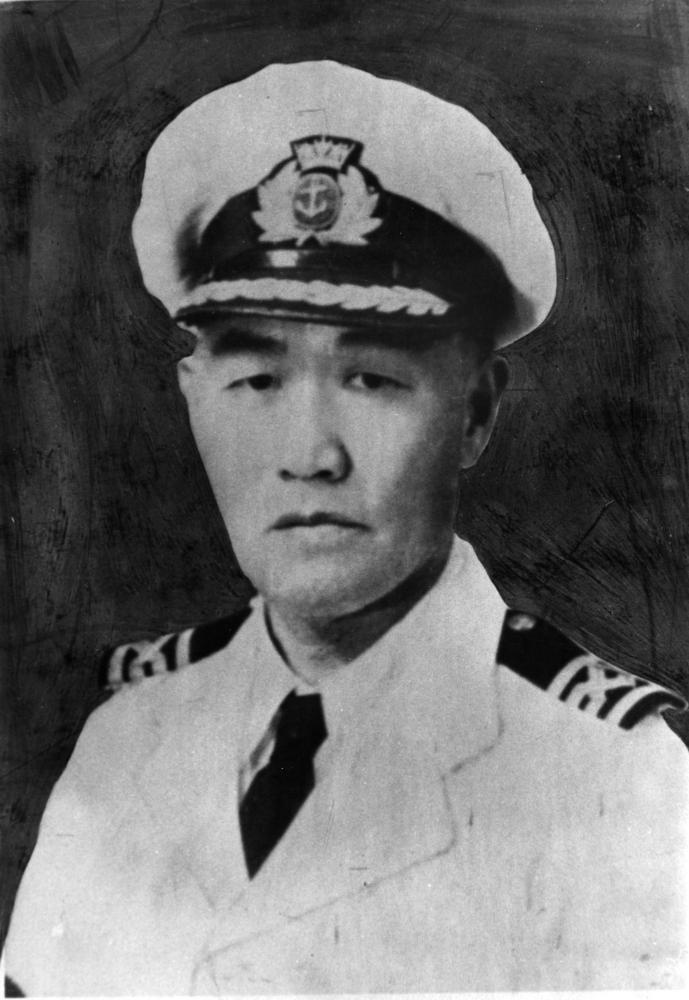
Shin Song-mo or Shin Sung-mo (Korean신성모; Hanja申性模; October 20, 1891 – May 29, 1960)[2] was a Korean independence activist and South Korean politician. He was an acting prime minister in 1950 following the first prime minister of South Korea, Lee Beom-seok. He served as a Defence Minister during the Korean War.[1]

Key Information

Biography

[edit]

Early life

[edit]

In 1891, he was born in Uiryeong, Gyeongsang Province, Joseon, as the son of Yi Chaerok. In 1907, he entered the night class at the Department of Law at Bosung College, and graduated from Boseong Law College in 1910 (4 years in Yonghee). In August 1910, he fled to Vladivostok and joined into the anti-Japanese independence movement under the guidance of Shin Chae-ho and his hometown leader, Ahn Hee-je.

From 1930, he became the captain of a regular ferry to and from London and India. When the Korean Liberation Army was established in September 1940, the Provisional Government of the Republic of Korea made a special appointment to him as a military commissioner. During World War II, it was known in Korea that he was surviving around May 1948 after giving up his return and taking office as an adviser to an Indian merchant ship company.

Political activity

[edit]

He returned to Korea in 1948. On December 19, 1949, he was invited to the Supreme Council of the Korean Youth.[3] After that, he served as the head of the Korea Youth Team and advisory committee of the Ministry of Transportation, in 1949 he served as the second Minister of Home Affairs (Korean: 대한민국 내무부). On March 21, 1949 he became the second Minister of Defense (Korean: 대한민국 국방부) a position he held until 5 May 1951. Syngman Rhee preferred a person who spoke English well and Shin was said to be fluent in English while studying in London.

Upon returning, he is given the title Admiral. At the time, he served as the captain of a British merchant ship, advisor and director of an Indian merchant ship, but received military training in China and was adjutant to the Chinese Navy Admiral Sal Jinbing, the Korean Provisional Government's Korean Liberation Army Being a member of the military was recognized for his career, he was given the rank of lieutenant general of the Navy, and he was called Admiral Holy Mother.

On July 17, 1949, while as Minister of National Defense, he said, "The military is waiting for orders from the President, and with orders, it can completely take over Pyongyang or Wonsan within a day." When the remarks became a problem, he explained that his remarks were misunderstood, but in early September of that year, he insisted, "I just wait for the time to come and I'm ready to push."

As Lee Beom-seok resigned from his post as prime minister, Shin was inaugurated as acting prime minister on April 21, 1950, and worked until November 22.

Korean War

[edit]
Defense Minister Shin Song-mo with Deputy Minister of Defense Jang Kyung-geun [ko], and Director Chung Il-kwon (from left), standing side by side at the Naval Headquarters after the 3rd Army Operation Agreement. Chung Il-kwon was shortly after being issued by the Commander-in-chief of the Army, Naval and Air Force.

The Korean War broke out and in the beginning of the war, at the State Council meeting held at 4:00AM on June 27, 1950, Shin Song-mo who was Minister of Defense said that he had no knowledge of the situation.[4]

He was a member of the Provisional Government Military Committee, but unlike Lee Beom-seok, Chi Ch'ŏngch'ŏn, Kim Hong-il and others, he had no experience in direct combat with the army as he was engaged in maritime vessel-related work, communication-related, and interpretation-related work before the repatriation. As a member of the State Council of the Republic of Korea, he showed a completely different attitude from his position to take care of the safety of the people.[5] At the time of the Korean War, he served as Chairman of the Joint Chiefs of Staff.

Regarding the massacre of the Geochang massacre in 1951, he was criticized by the National Assembly that it was rationalizing the case with Kim Jong-won (Korean: 김종원), who was then martial arts commander. It was found that some of the gold was used as political funds for Syngman Rhee. At this time, Shin Song-mo resigned as Minister of National Defense while trying to avoid it. In 1951, he worked as the fifth chief executive officer of Japan.

At this time, Chough Pyung-ok who was the Minister of Home Affairs (Korean: 대한민국 내무부) and the Prime Minister's office disagreed over his appointment as the Japanese public official, and the Democratic National Party's top member, Yun Posun, also objected by mentioning his morality over the National Defense Force and Geochang massacre, but President Syngman Rhee kneels on their backlash and mocked Shin Song-mo Japan Corporation jobs were passed.

After the ceasefire

[edit]

From November 28, 1956, he served as the Dean of the Maritime University. He died of a cerebral hemorrhage at Uiryeong on May 29, 1960. After being buried in Seonyeong, Yongdeok-myeon, Uiryeong-gun, South Gyeongsang Province, his remains were later transferred to the Daejeon National Cemetery.

References

[edit]
Revisions and contributorsEdit on WikipediaRead on Wikipedia
from Grokipedia
Shin Sung-mo (Korean: 신성모; , , ) was a Korean independence activist and Korean who participated in anti-Japanese activities after the annexation, including to where he collaborated with figures like Shin Chae-ho. Following liberation in , he held key administrative roles under President , including Minister of Affairs in and Minister of National Defense from to May 1951. As defense minister, his tenure coincided with the North Korean invasion on June 25, 1950, amid criticisms of military unpreparedness. He also acted as prime minister from April 21 to November 22, 1950, during the early chaos of the war. Known for his emotional disposition—earning the nickname "crying minister" for tearing up during Rhee's speeches—Shin advocated for naval development in his youth but faced postwar scrutiny over events like the Geochang civilian massacre. He died of a cerebral hemorrhage in Seoul.

Early Life and Independence Activism

Birth and Family Background

Shin Song-mo was born on May 26, 1891, in Garye-myeon, Uiryeong County, South Gyeongsang Province, during the Joseon Dynasty. He belonged to the Goryeong Shin clan (고령 신씨), specifically the Jeong-eun-gong branch. Shin was the only son (외아들) of his father, Shin Jae-rok (申載祿), a member of the clan's 20th generation Rok hangryeol, and his mother, who was from the Kimhae Kim clan (김해 김씨). His direct paternal lineage followed a pattern of being only sons without siblings, tracing back through ancestors including a fifth-generation forebear, Shin Seong-je (申聖濟).

Education and Early Influences

Shin Song-mo attended Boseong College (now ) in , enrolling in the night classes of the Department in 1907 and completing his studies in 1910, shortly after Japan's formal of Korea that year. This , established by Korean reformers to promote modern independent of Japanese control, exposed him to Western legal principles and nationalist ideas amid rising anti-colonial sentiment. His early inclinations toward resistance were shaped by participation in the Daedong Youth Group, a clandestine founded by independence activist An Hee-je, which emphasized opposition to Japanese rule through and secret activities in the late 1900s. This involvement, predating his later , reflected the influence of Joseon's deteriorating and the ferment among educated , channeling traditional Confucian values of toward national preservation efforts.

Involvement in Independence Movement

Shin Song-mo participated in early anti-Japanese activities by joining the Daedong Youth Party (대동청년당), a secret youth organization formed in 1909 by approximately 80 members including Yoon Se-bok, Seo Sang-il, and An Hee-je to conduct underground resistance against Japanese encroachment in the Gyeongsang region. Following Japan's annexation of Korea in August 1910, he fled to Vladivostok, where he aligned with independence activists under the guidance of historian Shin Chae-ho and regional leader An Hee-je, engaging in efforts to organize opposition to colonial rule. In 1912, Shin relocated to Shanghai, completing coursework at the Wusong Merchant Marine School and Nanjing Naval Academy to acquire skills potentially useful for independence operations, such as maritime logistics. By 1921, he attended the Beijing Military Unification Conference as a member of the Unification Party, where he signed and helped deliver a petition to Shanghai authorities criticizing Syngman Rhee's proposal for a League of Nations mandate over Korea, reflecting internal debates among exiles on strategies for sovereignty. He also contributed to funding mechanisms, including associations like Baeksan Trading Company, which channeled resources to anti-Japanese causes during the colonial period. These efforts culminated in his service on the military committee of the Provisional Government of the Republic of Korea, supporting armed and logistical preparations against Japanese forces. Shin's pre-liberation earned posthumous recognition in with the for National Foundation (Patriot ), affirming his in the broader struggle amid systemic suppression by Japanese authorities.

Pre-Republic Career and

Experiences

Following his from Boseong in , Shin Song-mo engaged in anti-Japanese activities, which prompted his to and subsequent involvement in the of the of Korea as a member of its military committee. He then pursued formal training in maritime and naval fields in China, attending the Wusong Merchant Marine School in Shanghai around 1913 and the Nanjing Naval Academy, where he received military instruction and served briefly as a second lieutenant in the Republic of China Navy. These experiences laid the foundation for his professional shift toward merchant shipping amid ongoing to evade Japanese authorities. In the early 1920s, Shin transitioned to international maritime service, studying navigation and obtaining a first mate qualification from the King Edward VII Nautical in by 1923. He worked as an on British vessels and later captained regular passenger-cargo ships operating between and . By 1939, he had earned a full captain's license and relocated to Bombay (now Mumbai), where he served as a consultant and director for an Indian shipping company, advising on operations while continuing discreet support for Korean independence efforts, including fundraising that led to his arrest and imprisonment by Japanese police in Korea. Released in the mid-1920s, Shin resumed nautical studies and shipping roles, leveraging his expertise in routes and developed during his pre-war . This maritime background, distinct from pure , positioned him as a technically skilled who applied practical seafaring to sustain himself abroad until Korea's liberation in 1945.

Exile in Vladivostok and Maritime Service

In August 1910, following Japan's annexation of Korea via the Japan-Korea Annexation Treaty, Shin Song-mo fled to Vladivostok in the Russian Empire to evade persecution for his independence activism. There, he aligned with prominent Korean exiles, including historian Shin Chae-ho and leader Ahn Hee-je, participating in anti-Japanese organizations and efforts to sustain the independence movement abroad amid harsh Russian winter conditions and limited resources. His activities in Vladivostok focused on networking with diaspora communities and evading Japanese surveillance, though specific operational details remain sparse in primary records. By the 1930s, Shin transitioned into a maritime career, securing a position as of British vessels operating regular routes between and . This role leveraged his navigational expertise and provided cover for continued low-profile independence work, including military training in China while serving as an advisor and director for an Indian shipping company. During World War II, he commanded ships under British military oversight as a reserve in the Royal Navy, earning recognition for operational competence in wartime convoys despite the risks of U-boat attacks and Allied requisitioning. Shin's attainment of the British Empire's "Super Master" certificate underscored his proficiency, distinguishing him among officers. This maritime service not only sustained Shin financially during prolonged exile but also built practical command experience that later informed his defense roles in post-liberation Korea, though it drew no direct combat involvement. He returned to Korea after Japan's surrender on August 15, 1945, ending over three decades of overseas activities.

Establishment of the Republic of Korea

Appointment to Key Government Roles

Shin Sung-mo returned to Korea in November 1948 after years in exile, having been recognized for his independence activism and maritime activities in Russia. Shortly thereafter, on December 24, 1948, he was appointed as the second Minister of the Interior (내무부 장관) in the newly established Republic of Korea government under President Syngman Rhee. This role involved overseeing domestic administration, including security and local governance, amid the challenges of post-liberation state-building and insurgencies such as the Jeju Uprising. His tenure lasted until March 20, 1949, during which he conducted inspections of regional administrations, including Jeju Island, to address local unrest and administrative issues. On March 21, 1949, Shin was transferred and appointed as the second Minister of National Defense (국방부 장관), succeeding the initial appointee and serving until May 5, 1951. The appointment followed recommendations from key military advisors, including Kim Seok-won and Lim Young-sin, who valued his experience and loyalty. President Rhee specifically preferred Shin due to his fluency in English, which facilitated coordination with U.S. military advisors and aid providers essential for building South Korea's armed forces under the U.S. Military Government in Korea's legacy structures. This positioned Shin to oversee the transition of constabulary forces into the , amid ongoing tensions with . These appointments marked Shin's rapid elevation to core executive roles, reflecting Rhee's strategy to integrate independence activists with practical administrative and defense needs in the fragile early republic. Despite limited domestic political base, Shin's naval background and international exposure—gained from Vladivostok operations—were deemed assets for national security priorities.

Role as Second Minister of National Defense

Shin Sung-mo assumed the role of the second Minister of National Defense on March 21, 1949, succeeding Lee Beom-seok and marking the first appointment of a civilian to the position. With a background as a merchant marine captain rather than a military officer, Shin prioritized coordination with U.S. military advisors to counter entrenched factionalism among domestic army elites, which stemmed from competing groups including Japanese-trained officers and independence activists. This approach aimed to foster a more unified and professionalized Republic of Korea Army amid ongoing tensions with North Korea. Under Shin's , the Defense Ministry focused on bolstering readiness through structural reforms and acquisitions supported by American . He advocated for strategic appointments, such as elevating Byong-deok to command two reserve divisions in for potential northward advances, reflecting pre-war about offensive capabilities despite warnings of North Korean . These efforts included expanding the to approximately 98,000 troops by mid-1950, though shortages and internal divisions persisted. The outbreak of the on , , tested Shin's tenure as North Korean forces rapidly overran southern defenses. As minister, he coordinated initial responses, including a radio broadcast on announcing the invasion's severity and urging civilian evacuations from , while the declared . Concurrently serving as acting from to , , Shin integrated defense operations with broader wartime administration, though command ultimately fell to field generals under U.S. oversight following UN intervention. His role emphasized logistical support and alliance-building with American forces, contributing to the stabilization of the Pusan Perimeter by August 1950.

Acting Prime Ministership

Ascension Following Lee Beom-seok

Following the resignation of Lee Beom-seok on , 1950, President Syngman Rhee nominated Yi Yun-yong to serve as . However, the rejected Yi's , with the vote resulting in 68 in favor, 84 against, and 3 abstentions on , 1950. As a consequence, Shin Sung-mo, who had assumed the role of Minister of National Defense in March 1949, was appointed (국무총리 서리) on April 21, 1950. He concurrently managed both positions until November 22, 1950, when Chang Myon succeeded him. This interim leadership came at a critical juncture, as South Korea faced escalating tensions with North Korea, though Shin's prior experience in maritime affairs and limited military background compared to Lee's had drawn some scrutiny within government circles. The dual role underscored the fragility of early republican institutions, where acting appointments bridged gaps amid assembly disputes and executive maneuvers.

Key Decisions During Tenure

During his tenure as Acting Prime Minister from April 21 to November 22, 1950, Shin Song-mo maintained a concurrent role as Minister of Defense, prioritizing and matters amid inter-Korean tensions. This dual position facilitated integrated focused on defense enhancements, including troop deployments and fortifications along the 38th parallel, though detailed pre-invasion administrative reforms under his direct oversight remain sparsely recorded in primary accounts. The outbreak of the North Korean invasion on , , prompted immediate executive actions under Shin's chairmanship of cabinet proceedings. That afternoon, at a 2:00 p.m. session, he briefed attendees on invasion reports from channels, initiating coordinated assessments of the threat's scale. On , , Shin presided over a pre-dawn cabinet meeting convened at approximately 4:00 a.m. by President Syngman Rhee, where deliberations centered on the rapidly deteriorating front lines; Shin conveyed that detailed tactical updates were not yet available to him, underscoring communication gaps in early intelligence flow. This session contributed to the cabinet's resolution to evacuate key government functions from Seoul as enemy advances threatened the capital, enabling continuity of operations southward. In the ensuing weeks, Shin submitted daily handwritten reports developments to Rhee from to , 1950, detailing troop movements, logistical strains, and U.S. intervention prospects, which informed presidential directives on resource allocation and alliances. These efforts highlighted his role in bridging administrative stability with during the government's transitional phase.

Involvement in the Korean War

Pre-War Military Preparations and Policies

Shin Sung-mo was appointed as the second Minister of National Defense on March 21, 1949, succeeding the previous incumbent amid efforts to align the Republic of Korea Armed Forces (ROKA) more closely with U.S. advisory influence. Lacking formal military command experience—his prior service limited to maritime roles in the British merchant marine—he was selected by President Syngman Rhee for his loyalty, English proficiency, and administrative background as an independence activist. Under his leadership, the Defense Ministry prioritized integration with the Korean Military Advisory Group (KMAG), a U.S.-led entity established to train and organize ROK forces, reflecting a policy shift toward professionalization and reduced reliance on politically affiliated officers from prior independence movements or Kuomintang exiles. Key policies emphasized defensive posture and internal security, constrained by U.S. restrictions on heavy weaponry to avert southward ; accordingly, ROKA focused on light infantry , with no tanks or significant provided despite requests. Shin endorsed KMAG recommendations, fostering reforms that purged or sidelined older officers (aged –50s) in favor of a younger cadre (), including the appointment of Byong-duk as to centralize command and enhance . These changes aimed to build a stable, apolitical officer corps, dismissing figures like Kim Suk-won from divisional commands to curb factionalism, though they prioritized loyalty to Rhee over combat readiness against external threats. By June 1950, these efforts had expanded ROKA to approximately 98,000 personnel, organized into eight infantry divisions and a cavalry regiment, with training emphasizing counterinsurgency amid ongoing domestic unrest like the Jeju and Yeosu-Suncheon rebellions. However, the force remained lightly armed—equipped primarily with small arms and limited mortars—lacking an effective air force or armored units, as U.S. policy under the Truman administration viewed Korea as peripheral to primary Cold War fronts in Europe. Shin's tenure thus solidified U.S.-ROK military interdependence but left the army ill-equipped for conventional invasion, with preparations skewed toward policing rather than frontier defense.

Defense During North Korean Invasion

The North Korean People's Army (KPA) initiated its invasion of South Korea on June 25, 1950, at approximately 4:00 a.m., launching coordinated assaults across the 38th parallel with an estimated initial force of over 135,000 troops supported by 150 Soviet-supplied T-34 tanks and heavy artillery, overwhelming Republic of Korea Army (ROKA) positions in multiple sectors. As Minister of National Defense, Shin Sung-mo bore responsibility for the ROKA's readiness, which comprised roughly 98,000 lightly armed infantry divisions oriented toward internal security rather than conventional warfare, lacking tanks, recoilless rifles in sufficient numbers, and adequate anti-tank capabilities due to prior U.S. military advisory constraints emphasizing counter-guerrilla operations over armored defense. Despite these limitations, Shin had issued a public warning of an imminent northern invasion on May 10, 1950, highlighting intelligence of KPA buildups, though subsequent reinforcements and fortifications remained insufficient amid political debates over escalation risks. Initial ROKA responses under Shin's oversight involved hasty mobilizations and counterattacks, including engagements by the 1st Division in the , where forces held briefly before being isolated and destroyed, and efforts by the Capital Division near , which buckled under KPA tank assaults by . Shin assessed the invading KPA strength at around 50,000 troops on , underestimating the scale while acknowledging vulnerabilities in Korea's defensive lines, which relied on outdated fixed positions and minimal reserves. By , with KPA advances threatening the capital, Shin participated in State deliberations, contributing to decisions for governmental relocation southward as faced imminent capture, which occurred on after minimal urban resistance. The ROKA's early-phase defense faltered rapidly, incurring over casualties in the first week and ceding 90% of by mid-July, compelling a to the Pusan Perimeter; Shin's ministry initiated a national manpower drive to expand forces, though and equipping lagged behind operational needs, exacerbating command disarray reported by U.S. observers embedded with ROK units. This phase underscored causal factors in the , including doctrinal mismatches to armored tactics and delayed U.S. intervention, rather than isolated ministerial errors, though Shin's pre-war boasts of repelling northern aggression drew postwar scrutiny for overconfidence amid evident gaps.

Strategic Responses and Challenges

Following the North Korean on , , Shin Sung-mo, as Minister of National Defense, faced immediate strategic imperatives to stabilize collapsing front lines, including orders for phased retreats to consolidate forces southward while awaiting U.S. intervention authorized by President Truman on 27. ROK units, under Chae Byung-deok's operational command but Shin's oversight, abandoned by and fell back toward the Han , prioritizing preservation of remnants over static defense against superior North Korean mechanized forces. Shin's daily situation reports to President Syngman Rhee from to 12 documented these maneuvers, emphasizing the need for rapid and logistical rerouting to southeastern ports. Key challenges included stark matériel disparities: the ROK possessed only 27 armored and minimal anti-tank capabilities against 242 North Korean T-34 tanks, 168 self-propelled guns, and 59 armored , exacerbating infantry vulnerabilities to armored breakthroughs and . Shin's lack of —having been a administrator parachuted into the —contributed to delayed integration and mobilization inefficiencies, with reports indicating he professed of frontline developments at the June 27 cabinet meeting despite pre-war incidents. Desertions, supply shortages, and command fragmentation further hampered responses, as North Korean forces exploited these to encircle and destroy several ROK divisions by mid-July. By early , strategic focus shifted to the Pusan Perimeter, where Shin oversaw integration of surviving ROK units—such as the 3rd Division—into UN Command defenses along the Naktong , a 140-mile line holding against repeated North Korean assaults until the Inchon . This entailed reallocating reserves for counterattacks and coordinating with U.S. Eighth , though persistent challenges like shortages and low . Shin's tenure highlighted tensions between national and reliance on foreign , with critics attributing initial routs to underestimation of threats despite U.S. warnings, though constrained options absent heavy armament.

Controversies and Resignation

Geochang Massacre and Accountability

The Geochang massacre occurred between February 9 and 11, 1951, when elements of the South Korean Army's 11th Division, specifically the 3rd Battalion of the 9th Regiment, executed approximately 719 civilians, including 364 children under 15, in Geochang County, South Gyeongsang Province, during counter-guerrilla operations against suspected communist sympathizers and collaborators. As Minister of National Defense, Shin Song-mo oversaw the military's broader anti-partisan campaigns in the region, which involved directives for aggressive suppression of leftist elements amid ongoing North Korean incursions and internal unrest, though no direct order from Shin authorizing the specific killings has been documented in primary records. Public and legislative scrutiny intensified after reports emerged, prompting the National Assembly to dispatch investigation teams in May 1951; the second team confirmed South Korean Army involvement in the civilian deaths, contradicting initial government claims of eliminating only "communist bandits." Shin downplayed the incident publicly, attributing the actions to necessary eliminations of insurgents rather than acknowledging indiscriminate killings, a stance aligned with the Rhee administration's emphasis on security over immediate accountability amid wartime chaos. This response drew criticism for evading ministerial responsibility, as the operations fell under his command structure. Facing mounting from the and , Shin resigned as Defense Minister in mid-1951, a move reportedly requested by President to mitigate political , after which Ki-bung was appointed as replacement. No criminal charges were filed against Shin at the time, with trials focusing on lower-level officers involved in the executions rather than high command; for instance, battalion Choe Hyo-gi and others faced courts-martial, but convictions were and some later pardoned. Subsequent inquiries, including the 1996 Geochang Special Act and Truth and Reconciliation Commission reviews in the 2000s, reaffirmed the massacre's illegality and implicated systemic policies under Shin's tenure, yet he faced no posthumous sanctions, having died in 1960.

Allegations of Pro-North Sympathies

Some Korean commentators have alleged that Shin Song-mo harbored pro-North Korean sympathies, particularly citing his of the Han bridges' demolition on , , during the early phase of the North Korean invasion. The premature explosion, occurring at approximately 2: a.m., severed Korean communications lines by destroying vital on the bridges and trapped thousands of civilians and retreating troops north of the Han River, contributing to heavy estimated to thousands and accelerating Seoul's fall within hours. Critics speculate this action aligned with North Korean interests, potentially under covert directives, as it neutralized Korean defensive assets without direct enemy intervention. However, these claims lack verifiable , such as documents or testimonies linking Shin to communist agents, and are dismissed by mainstream historical analyses as unsubstantiated rooted in hindsight of errors. Contemporary accounts attribute the decision to operational and flawed amid the invasion's surprise, with Shin on reports of imminent North Korean crossings rather than . Shin's pre-war in suppressing communist uprisings, including the 1948 Yeosu-Suncheon , and his appointment by anti-communist President Syngman further undermine notions of ideological alignment with the North, positioning such allegations as fringe interpretations rather than empirically supported fact. No formal investigations or trials substantiated pro-North leanings, and Shin's post-resignation recognition as an independence merit figure reflects repudiation of such views.

Resignation as Defense Minister

Shin Sung-mo was dismissed as Minister of National Defense on May 5, 1951, primarily to address accountability for the Geochang massacre earlier that year. The incident, occurring between February 9 and 11 in Geochang County's Sinwon-myeon, involved the ROK Army's 11th Division's 3rd Battalion, 9th Regiment, executing over 700 civilians—many women, children, and elderly—in sweeps against suspected communist sympathizers amid the Korean War's counterinsurgency efforts. National Assembly probes, initiated in March 1951 by lawmaker Shin Chung-mok, uncovered evidence of indiscriminate killings and attempts to conceal the scale, prompting widespread condemnation of military excesses under Shin's oversight. President Syngman Rhee publicly assumed ultimate responsibility for the massacre to deflect broader criticism of the government, but proceeded to remove Shin as a direct concession to parliamentary demands for high-level repercussions. Shin's initial defense of the operations as targeted eliminations of "communist bandits" rather than civilian atrocities had fueled accusations of rationalization and inadequate command, exacerbating the political fallout during a period of strained U.S.-ROK relations and domestic instability. The dismissal aligned with parallel scrutiny over other wartime irregularities, such as the National Defense Corps incident, though Geochang remained the focal trigger. Post-resignation, Shin was promptly appointed as the fifth chief consul to Japan in 1951, a diplomatic posting that distanced him from Seoul's intensifying war-related controversies and investigations. This reassignment preserved his stature as an independence activist while insulating the administration from further immediate blame.

Post-War Period and Legacy

Activities After the Ceasefire

Following the Korean War armistice on July 27, 1953, Shin Song-mo continued his advisory and leadership roles in South Korea's maritime development, building on his prior appointment as chairman of the presidential advisory Maritime Affairs Committee in November 1952. In this capacity, he advocated for policies enhancing coastal security and shipping infrastructure, including the establishment of the Maritime Police Force through the separation of naval assets on December 23, 1953, aimed at bolstering non-military maritime enforcement amid postwar recovery. Shin also served as president of the Daehan starting , where he directed efforts to revive domestic shipbuilding capabilities damaged by the , focusing on commercial vessel production to support and economic stabilization in the mid-1950s. In November 1956, he assumed the of Korea Maritime , prioritizing the of seafarers and naval personnel to shortages in skilled maritime labor following the conflict's disruptions to and . His emphasized practical curricula aligned with national reconstruction needs, though his profile remained subdued due to lingering over wartime decisions.

Death and Recognition as Independence Merit Figure

Shin Song-mo, who had been serving as the eighth president of Korea Maritime University since 1956, fell ill and resigned from the position before succumbing to a cerebral hemorrhage on May 29, 1960, at the age of 68. His death occurred at Ewha Womans University Affiliated Dongdaemun Hospital in Jongno-gu, Seoul, shortly after the April Revolution prompted President Syngman Rhee's resignation on April 26, 1960, an event that reportedly caused him significant distress. Initially buried in his hometown of Uiryeong, Gyeongsangnam-do, his remains were later exhumed and relocated. In acknowledgment of his early involvement in the independence movement—fleeing to in 1910 to join anti-Japanese activities under figures like Shin Chae-ho—Shin was posthumously recognized as an independence merit figure (독립유공자). On August 15, 1990, the of Korea awarded him the Geun-guk Hoonjang Aegyukjang ( for National Foundation, Patriot ) for his contributions. In October 1993, his was reinterred at the Merit Patriots' Section (Section 2) of the National Hyunchungwon , affirming his status among those honored for pre-liberation patriotic efforts.

Assessments of Achievements and Criticisms

Shin Sung-mo's tenure as Minister of National Defense from March 1949 to May 1951 is frequently assessed as a period of significant shortcomings in military leadership, attributed to his lack of professional military experience and reliance on political patronage under President Syngman Rhee. As a former merchant marine captain with no formal military training, he was the first civilian appointee to the role, often described as a "parachute" placement to sideline more competent officers like Lee Beom-seok. Critics, including military historians, argue that his policies contributed to the South Korean army's rapid disintegration during the North Korean invasion on June 25, 1950, with inadequate equipment, training, and strategic foresight leaving forces unprepared against a mechanized assault. Rhee's preference for a non-threatening figure like Shin, dubbed "Captain Shin" by foreigners, prioritized loyalty over expertise, exacerbating vulnerabilities exposed in the war's early phase. Despite these failings, some evaluations credit Shin with modest contributions to institutional foundations, such as early advocacy for naval development during his maritime career in the 1920s–1930s, which aligned with long-term needs for a balanced force structure amid Japan's colonial legacy. His brief acting premiership from April to November 1950 provided continuity during the government's relocation southward, and post-resignation, his designation as an independence-merit figure in 1962 recognized pre-1945 activities, including anti-colonial efforts that supported Korea's provisional government abroad. However, these positives are overshadowed by accountability issues; he defended actions in the Geochang civilian massacre of early 1951, prompting National Assembly condemnation for rationalizing extrajudicial killings, and the National Defense Corps scandal later that year, involving embezzlement and over 200 deaths from starvation, which directly precipitated his dismissal on May 5, 1951. Overall scholarly consensus, drawn from declassified reports and postwar inquiries, portrays Shin's leadership as emblematic of First Republic dysfunction, where civilian oversight without domain knowledge hindered professionalization and invited catastrophe, though Rhee's overarching control mitigates sole attribution of blame. No major defensive innovations or victories are credibly linked to his initiatives, with the military's survival creditable to U.S. intervention rather than domestic preparations.

References

Add your contribution
Related Hubs
User Avatar
No comments yet.