Hubbry Logo
Shubert familyShubert familyMain
Open search
Shubert family
Community hub
Shubert family
logo
8 pages, 0 posts
0 subscribers
Be the first to start a discussion here.
Shubert family
Shubert family
from Wikipedia

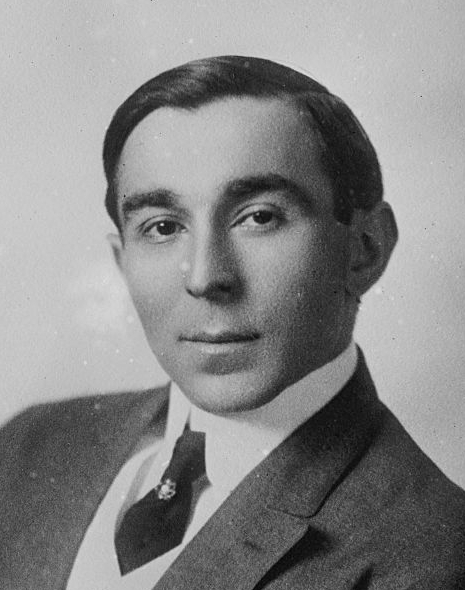
Brothers (from left) Lee Shubert, Sam S. Shubert, and Jacob J. Shubert

The Shubert family, of brothers Lee, Sam, and Jacob, was a central force in the establishment and expansion of both the legitimate theatre and vaudeville in the United States in the first half of the 20th century. By 1924, the Shubert Organization they founded controlled 75 percent of all American theatres, producing 25 percent of all plays, triggering the creation of Actor's Equity as a performing arts labor union in backlash. The organization's dominance resulted in a mid-1950s Supreme Court antitrust ruling forcing the brothers to partially divest their empire.

As of 2024, the Shubert Organization owns 17 Broadway theaters in New York City's Theater District, still the hub of the theatre industry in America, as well as off-Broadway venues and theatres in Boston and Philadelphia.

History

[edit]
Herald Square Theatre in 1907
Shubert Theatre (Broadway) in 2006
Shubert Theatre (Boston) in 2008

The family's history in America began when Duvvid Schubart (transliterated to "Shubert") and his wife Katrina (Gitel) Helwitz left their native town of Vladislavov in the Russian Empire (now Kudirkos Naumiestis, Lithuania) with their eight children, two of whom died after the journey. They arrived in New York City from Hamburg, via England, on June 12, 1881[1] on the S.S. Spain. They then settled in Syracuse, New York.[2][3]

Due to their father's alcoholism, the three Shubert sons (Lee Shubert, Sam S. Shubert, and Jacob J. Shubert) had to give up much of their formal education and instead go to work when they were still children. Lee and Sam sold newspapers outside the Bastable Theatre, and David Belasco took notice of Sam and cast him in a small role in a play. Sam became enamored with the theatrical arts and went on to be promoted through a series of managerial jobs in Syracuse theatres, including program boy at the Bastable, assistant treasurer at the Grand Opera House, and treasurer of the Weiting. Lee and Jacob also began working in management roles in local theatres, and by 1900, the trio had acquired ownership of the Grand Opera House in Syracuse and the Herald Square Theatre in Manhattan.[2][4]

The three brothers broke the monopoly on the theatre-management industry (represented by the Theatrical Syndicate under Abe Erlanger and Mark Klaw) in the founding of their agency, known today as The Shubert Organization.[2] By 1924, they owned 86 theatres in the United States,[2] and operated, managed, or booked hundreds more.[5] By 1942, they owned, leased, or managed 20 of New York City's approximately 40 legitimate theatres and controlled some 15 in other cities.[6] By 1953, they had produced 600 shows under their credits and had booked 1,000 shows into their numerous theatres.[2] In 1950, the federal government took the Shuberts to court, alleging that their business practices violated antitrust laws. In 1955, the U.S. Supreme Court ruled that they were subject to and in violation of antitrust laws, so they sold 12 theatres in six cities and gave up the booking business, which, until then, had been the heart of their enterprise.[4] As of 2024, the Shubert Organization owns 17 Broadway theatres in New York City, including the Winter Garden Theatre, the Shubert Theatre, and the Imperial Theatre. They also own two theatres outside of New York, the Shubert Theatre in Boston and the Forrest Theatre in Philadelphia. Additionally, they own and operate two off-Broadway facilities in New York City, Stage 42 and a 5-stage facility called New World Stages.[7] They also managed the National Theatre in Washington, D.C. until 2013.[8]

Jerry Stagg[who?] identifies Lee Shubert as the key partner in the business, telling of how he built the most successful theatrical empire in history. Stagg characterizes the trio as vulgar and uneducated but acknowledges that they made a personal monopoly amassing millions of profits in the process. Entertainment and popular taste were the goals, rather than the enhancement of the dramatic arts. The Shuberts opened new theatre districts in many major American cities, employing thousands of people over the years. By 1924, they controlled 75 percent of all American theatres, producing 25 percent of all plays. In response, their actors created Actor's Equity as a labor union to counterbalance the Shuberts' power. When the Great Depression caused the bankruptcy of the Shuberts' corporate empire in 1933, their advisors urged them to retire and enjoy their accumulated wealth. Instead, the Shuberts sustained their business by pouring their own money into the venture. Thus, according to Stagg, the Shubert family almost single-handedly kept legitimate theatre alive in America.[4]

Notable productions

[edit]

Musical comedies

[edit]
  • Chinese Honeymoon (1902)
  • Winsome Winnie (1903)
  • The Babes and the Baron (1905)
  • The Dancing Duchess (1914)

Revues

[edit]
  • Pioneer Days (1906) featuring Indians, cavalry, baby elephants, and chorus girls, directed by Lee Shubert
  • The Passing Show (1912–24), annual musical revue, rivaling Florenz Ziegfeld's Follies.

Operettas

[edit]

Family

[edit]

The Shubert[1] children:

  1. Fannie Shubert (1868–1928). From her first marriage to Isaac Isaacs, she had three sons: Jesse Isaacs (1893–1904), Larry Shubert (1894–1965), and Milton Isaacs Shubert (1901–1967). Her second husband was William Weissager.
  2. Sarah Shubert (1870–1934). Married to Edward Davidow. No children.
  3. Lee Shubert (1871–1953), theatre owner/operator, producer. Married to Marcella Swanson (1900–1973). No children.
  4. Sam S. Shubert (1878–1905), producer, writer, director, and theatre owner/operator; died in a Pennsylvania train accident
  5. Jacob J. Shubert (1879–1963), producer, director, and theatre owner/operator. From his first marriage to Catherine Dealy, he had a son John Jason Shubert (1908–1962).
  6. Dora (Debora) Shubert (1880–1951). From her marriage to Milton Wolf (1881–1955), she had a daughter, Sylvia Wolf Golde (1910–1981)

References

[edit]

Further reading

[edit]
[edit]
Revisions and contributorsEdit on WikipediaRead on Wikipedia
from Grokipedia

The Shubert brothers—Sam, Lee, and Jacob J.—were Lithuanian immigrants who founded the in 1900 in , initially managing theaters before expanding into production and venue ownership across the . Starting from modest operations in , they challenged the dominant Theatrical Syndicate, acquiring theaters and producing shows that propelled them to control over 1,000 venues by the 1920s, including constructing landmark Broadway houses such as the Winter Garden and Imperial Theatres.
Sam Shubert's death in a 1905 railroad accident left Lee and J. to lead the enterprise, which became the nation's preeminent theater managers by , producing over 500 plays and musicals that shaped American legitimate theater. Their aggressive expansion drew antitrust scrutiny, culminating in a 1950 U.S. Department of Justice suit accusing them of monopolizing production, booking, and presentation, resulting in a 1956 that required divesting booking operations and selling certain theaters to foster competition. Despite economic setbacks like the and post-suit restructuring, the organization endured, reorganizing in 1973 and today owning 17 Broadway theaters as America's oldest professional theater company.

Origins and Formative Years

Immigration and Family Background

The Shubert brothers—Samuel S. (Sam), Jacob J. (J.J.), and Levi Yitzhak (Lee)—were born in the 1870s to a poor Jewish in Kalvaria, , then part of the . Their parents, David (originally Duvvid Schubart or Szemanski) and Catherine (Katrina or Gitel Helwitz), lived in straitened circumstances, with David working as an itinerant peddler unable to reliably support the household due to chronic . The family's original surname, anglicized to Shubert upon , reflected common adaptations among Eastern European Jews fleeing pogroms and economic stagnation. In 1882, the Shuberts immigrated to the , settling in , where a community of Jewish immigrants offered modest networks but no systemic support. David's intensified their penury, compelling the brothers—even as children—to labor selling newspapers, delivering goods, and running small errands to supplement the family's income. These unassisted struggles, devoid of welfare mechanisms or subsidies in the immigrant context, forged a pragmatic self-reliance and aversion to dependency that causally underpinned their subsequent ascent from poverty to theatrical dominance. The brothers later obscured their foreign birth by claiming U.S. nativity, possibly to evade nativist prejudices in the theater industry, though immigration records confirm their 1882 entry from . As the primary male siblings in a family of limited means, Sam, J.J., and emerged as the entrepreneurial core, their early hardships contrasting with the paternal unreliability that necessitated such precocity.

Initial Ventures in Syracuse

In the 1890s, the Shubert brothers—Sam, Lee, and Jacob—entered Syracuse's theater scene through entry-level positions that honed their operational skills. Lee handled bookkeeping duties for local venues, including the Bastable Theatre and Wieting Opera House, providing financial oversight amid fluctuating box office receipts. Sam advanced to manage the Bastable Theatre starting December 14, 1897, where he oversaw daily operations and booking decisions independently of larger syndicates. Jacob, the youngest, gained experience working at the Wieting Opera House, controlled by the Theatrical Syndicate, exposing him to established touring circuits. Lacking inherited wealth as recent immigrants from a modest family, the brothers built initial capital by leasing theaters and presenting affordable touring productions, emphasizing hands-on management to minimize costs and maximize local attendance. They focused on low-stakes acts and stock companies, which required repertory performances by resident troupes rather than high-profile stars, allowing them to demand in Syracuse's competitive environment. This approach exploited gaps left by the Syndicate's monopoly pricing at venues like the Wieting, where the brothers offered alternative programming at the Bastable to attract working-class audiences seeking variety entertainment without premium costs. Their incremental risk-taking—rooted in direct oversight of bookings, staffing, and finances—demonstrated practical acumen in regional markets, enabling profitability through volume of modest shows rather than reliance on external favoritism or . By coordinating across Syracuse houses, they pooled resources for shared expenses like and transportation, laying groundwork for sustainable operations without initial access to elite networks.

Expansion and Empire Building

Entry into New York Theater

In 1900, Sam and Lee Shubert relocated from Syracuse to , securing a lease on the Theatre at Broadway and 35th Street with borrowed funds. This venue became their initial foothold in , where they presented attractions such as Richard Mansfield's production of , drawing audiences despite the theater's prior struggles. The brothers' strategy emphasized direct management and booking, circumventing the dominant Theatrical Syndicate led by Klaw and Erlanger, which controlled performer access and venue bookings across major theaters. To erode the Syndicate's monopoly, the Shuberts pursued independent productions and aggressive pricing, offering lower ticket rates and innovative scheduling to attract stars unwilling to adhere to Syndicate terms. Their tactics included forming alliances with other producers and leveraging publicity through high-profile engagements, prioritizing market competition over appeals to regulators. By controlling both booking and presentation, they initiated , combining venue operation with show production to reduce reliance on external syndicates. The death of Sam Shubert on May 13, , from injuries sustained in a train collision near , on May 11, marked a turning point, yet propelled and to intensify operations. At the time, the brothers managed 13 theaters nationwide, but Sam's passing shifted dynamics, with Lee handling production and Jacob focusing on expansion. This accelerated their integration of production and ownership, yielding early successes like varied legitimate theater offerings at , solidifying their challenge to established powers through relentless venue acquisitions and self-produced hits.

Nationwide Growth and Theater Acquisitions

Following their consolidation in New York, the Shubert brothers pursued aggressive expansion across the during the and , acquiring and constructing theaters to form a coast-to-coast network. By the fall of 1910, they owned 73 theaters outright and held booking contracts for additional venues, enabling control over touring productions. This rapid scaling continued, with the brothers converting the former American Horse Exchange into the in 1911, a venue designed to evoke an outdoor garden setting and host large-scale revues. They also developed the Sam S. Shubert Theatre on Broadway, which opened in 1913 as a key asset in their growing portfolio of purpose-built houses. By 1924, the Shuberts owned 86 theaters in the United States alone, alongside operations extending into , reflecting substantial infrastructure investments that underpinned their dominance in the legitimate theater sector. These acquisitions included strategic purchases in major cities, transforming local playhouses into nodes of a national circuit that facilitated efficient booking and revenue generation. Profits from operations were systematically reinvested into holdings, providing a buffer against industry volatility through asset appreciation and steady rental income, in contrast to competitors reliant on transient performance earnings. This approach yielded control over approximately 60% of American legitimate theaters by the mid-1920s, employing thousands in production, , and support roles during the pre-Depression expansion. The brothers briefly diversified into motion pictures, with Lee Shubert serving on the board of , but quickly refocused on live theater as their core competency, leveraging owned venues for sustained value creation over speculative film ventures. By the mid-1920s, their portfolio encompassed over 1,000 houses through ownership, operation, management, or booking arrangements nationwide, solidifying a vertically integrated empire resilient to economic fluctuations via tangible property investments.

Theatrical Innovations and Productions

Pioneering Vaudeville and Legitimate Theater

In the early 1900s, the Shubert brothers mounted a direct challenge to the Theatrical Syndicate, a dominant group led by figures like Abraham Erlanger that controlled booking and production in American legitimate theater, by independently leasing venues and presenting shows outside the syndicate's network. This defiance extended into vaudeville, where they allied with independent managers to compete against monopolistic circuits such as B.F. Keith's, thereby opening opportunities for diverse performers previously restricted by exclusive contracts. Their approach emphasized promoting a broad spectrum of acts, including comedians, acrobats, and singers, which disrupted the centralized control that limited artistic variety and performer mobility. The Shuberts innovated by developing integrated circuits of theaters that supported continuous performance schedules, a hallmark of that allowed audiences flexible entry times and kept prices low—often ranging from 10 to 50 cents—to attract working-class patrons previously underserved by elite dramatic offerings. This model not only to but also provided performers with predictable touring routes and steady , countering narratives of exploitation by demonstrating how scaled operations generated mutual economic benefits through higher volume of engagements. Empirical evidence from their rapid acquisition of over a dozen theaters by 1907 underscores the causal link between their competitive expansion and the democratization of live performance, as independent acts gained leverage against trusts. Transitioning from vaudeville's variety format, the Shuberts pivoted to legitimate theater by producing original scripts and musicals tailored for Broadway's emerging ecosystem, constructing purpose-built venues like the in 1911 to host extended runs. This shift enabled the cultivation of scripted narratives and composer collaborations, prioritizing market-driven content over syndicate-imposed restrictions, which fostered innovations in dramatic structure and audience engagement. Their vertically integrated system—from booking to production—facilitated scalability, as evidenced by the production of hundreds of shows that employed thousands of artists annually, establishing Broadway as a hub for sustainable theatrical enterprise rather than sporadic bookings.

Major Productions Across Genres

The Shubert brothers oversaw the production of more than 600 shows across multiple genres, including revues, operettas, and musical comedies, with their output peaking in the amid expanding theater holdings. These efforts generated substantial , reaching about $1 million weekly in ticket sales by , reflecting robust audience engagement and the creation of thousands of jobs in production, performance, and operations. While some contemporaries critiqued the formulaic elements in their star-driven vehicles and spectacle-heavy formats, the of extended runs and box-office returns validated their approach, prioritizing commercial viability over niche artistic preferences. In revues, the Shuberts launched The Passing Show series in 1912 at the , producing annual editions through 1924 as a direct rival to Ziegfeld's ; these featured lavish costumes, topical sketches, and music by , introducing performers like and sustaining audience interest through iterative spectacle. Editions such as The Passing Show of 1915 ran for approximately 145 performances, contributing to the genre's popularity by blending humor, dance, and current events in accessible entertainment. Operettas formed a cornerstone of their output, exemplified by Blossom Time (1921), which adapted melodies from composer with Romberg arrangements and a libretto evoking the composer's life; presented under J.J. Shubert's direction at the Ambassador Theatre, it achieved 592 performances through January 1923, securing second place among 1920s Broadway long-runners and affirming the enduring appeal of melodic romance amid post-World War I . The production's dual-company road tours extended its reach, amplifying revenue streams beyond initial New York engagement. Musical comedies under Shubert auspices included early successes like The Chinese Honeymoon (1902), which toured extensively and helped establish their production model of lightweight plots paired with catchy songs to drive repeat attendance. By the , this evolved into vehicles emphasizing star power and ensemble numbers, bolstering overall profitability as documented in corporate reports showing net earnings exceeding $1.6 million in from combined theatrical activities. Such hits underscored the Shuberts' role in popularizing accessible, revenue-generating formats that sustained the industry through economic fluctuations.

Key Family Members

Sam S. Shubert

Samuel S. Shubert, born circa 1878 in Syracuse, New York, to immigrant parents from the Russian Empire, entered the theater business as a teenager by securing merchant funding to present touring productions in upstate New York venues. By December 1897, at around age 19, he assumed management of the Bastable Theatre in Syracuse, marking the start of the family's control over local playhouses and laying groundwork for broader operations. Shubert emerged as the driving force behind the brothers' expansion into around 1900, leveraging his reputation as a shrewd negotiator to obtain advantageous leases from theater owners wary of established syndicates. His aggressive deal-making and visionary risk-taking positioned the fledgling enterprise to challenge dominant theatrical trusts, securing footholds in legitimate theater despite limited capital. On May 12, 1905, Shubert sustained fatal injuries in a train derailment near , dying the following day at age 26 without reaching his 28th birthday. His abrupt death, amid rapid growth to oversight of about 13 theaters, thrust his younger brothers into full leadership, yet the organization's momentum persisted, underscoring Shubert's foundational role in establishing operational continuity. Shubert's legacy endures as an emblem of audacious entrepreneurship in American theater, honored through multiple venues named in his memory, including the Sam S. Shubert Theatre in New Haven, Connecticut, built posthumously by his brothers to commemorate his pioneering energy.

Lee Shubert

Lee Shubert, born around 1873 in Lithuania, served as the eldest of the Shubert brothers and specialized in the financial and booking operations of the family enterprise. Following Sam Shubert's death in a 1905 train accident, Lee co-managed the organization alongside Jacob J. Shubert, overseeing finances, publicity, advertising, straight plays, and nontheatrical real estate ventures until his own death on December 25, 1953, at approximately age 80. His longevity in leadership positioned him to guide the firm through major disruptions, including World War I, the Great Depression, and World War II, prioritizing operational continuity and asset preservation over expansive risks. Shubert's pragmatic approach manifested in decisive responses to economic pressures, such as during the 1929 crash when the organization sold theaters and curtailed productions to mitigate losses. In 1931, amid proceedings, he was named co-receiver and facilitated the repurchase of key assets for $400,000 in 1933, reestablishing the entity as Select Theatres Corp. and ensuring survival through fiscal restraint. This focus on profitability extended to diversification into non-theatrical properties, bolstering revenue streams amid fluctuating theatrical demand. In labor matters, Shubert resisted union encroachments perceived as inefficient, notably during the 1919 Actors' Equity strike, where the Shuberts employed non-union performers and understudies to maintain operations, reflecting a commitment to cost-effective management backed by the organization's sustained output of productions. His managerial style was characterized by shrewdness and frugality, operating with separate staffs from his brother to enforce disciplined oversight, which contributed to the firm's expansion into over 60 legitimate theaters nationwide.

Jacob J. Shubert

Jacob J. Shubert (August 15, 1880 – December 26, 1963), the youngest of the Shubert brothers, played a pivotal role in the operational and creative oversight of the family's theatrical enterprises, particularly emphasizing production and the development of enduring shows. After the death of his brother in 1953, Shubert assumed leadership of the Shubert Organization, guiding it through a transition toward leasing theaters and while maintaining involvement in select productions until his death at age 83. Shubert's approach prioritized long-running attractions to maximize profitability, exemplified by his oversight of hits like Hellzapoppin' (1938), which achieved 1,404 performances and became one of Broadway's most successful revues. His focus on talent scouting and out-of-town tryouts honed shows for Broadway viability, contributing to the empire's sustained output amid competitive pressures. During the following the 1929 , Shubert, alongside Lee, navigated financial strains by persisting with productions despite widespread industry contraction, demonstrating operational resilience through cost controls and selective investments. Known for an autocratic , Shubert's dictatorial oversight—often centralized in decision-making—enabled decisive actions that preserved the organization's dominance, countering inefficiencies in more collaborative models through evidence of prolonged theatrical runs and empire longevity. This hierarchical method, while critiqued in later eras, aligned with the brothers' business-first ethos, yielding consistent results in an adversarial field dominated by syndicates and economic volatility.

Business Challenges and Controversies

Antitrust Actions and Government Intervention

In 1950, the U.S. Department of Justice initiated a civil antitrust action against and J.J. Shubert, their affiliated entities including Select Theatres Corporation, and various booking organizations, alleging violations of Sections 1 and 2 of the Sherman Act. The complaint, filed on February 21, 1950, in the U.S. District Court for the Southern District of New York, claimed that the defendants engaged in a conspiracy to monopolize the interstate booking and presentation of legitimate theatrical attractions by controlling key New York booking offices—handling about 80% of non-Shubert productions—and leveraging ownership or leases of numerous theaters to coerce producers into exclusive use of Shubert services, thereby excluding rivals. Specific practices cited included conditioning theater availability on booking through Shubert channels, non-compliant producers, and coordinating with affiliates to fix terms and suppress competition in try-out towns and major cities. The district court initially dismissed the suit in 1951, ruling that the legitimate theater industry fell outside Sherman Act jurisdiction as not sufficiently involving interstate commerce, but the Supreme Court reversed this in United States v. Shubert (348 U.S. 222, 1955), holding that the complaint adequately stated a claim of restraint of trade in interstate commerce and remanding for trial. Rather than proceeding to full litigation, the parties reached a consent decree on February 17, 1956, which required divestiture of the centralized booking operations—separating presentation and booking interests for 25 years—and the sale of 12 theaters to reduce holdings, while prohibiting coercive tying of bookings to theater leases or discriminatory favoritism toward affiliated productions. The decree preserved Shubert ownership of approximately 17 Broadway theaters and ancillary properties, allowing continued operation as landlords but curtailing vertical integration in booking that had facilitated coordinated production pipelines. Critics of the monopoly allegations, including the Shuberts' defenses, contended that their market dominance stemmed from operational efficiencies—such as streamlined corporate structures that outcompeted prior syndicates—rather than exclusionary , evidenced by their rise from immigrant entrepreneurs managing a single Syracuse theater in to controlling efficient networks amid industry depressions that eliminated less adaptable rivals. The 1956 decree's focus on dismantling booking centralization overlooked these efficiencies, which reduced transaction costs in matching productions to venues, yet empirical outcomes post-decree showed no industry contraction; Broadway attendance and production volume expanded through the , with Shubert venues hosting enduring hits and contributing to economic vitality without evident anticompetitive harm from retained theater ownership. Rival producers and independent bookers had accused the Shuberts of favoritism, often amid union pressures and fragmented , but the intervention disregarded the causal role of superior in their ascent, prioritizing structural remedies over proven value creation via property accumulation and risk-bearing investments.

Internal and Financial Strains

The Shubert Organization experienced acute financial pressures during the , which began with the October 1929 and resulted in the shuttering of two-thirds of Broadway playhouses, drastically reducing audiences and revenues across the industry. The organization faced severe strain but persisted in producing shows under Lee and J.J. Shubert's leadership, albeit with significant difficulties amid widespread economic contraction. World War II imposed additional operational disruptions on the theater sector, including material shortages for sets and costumes, fuel rationing that hampered touring productions, and shifts in public priorities toward war efforts, though the Shuberts maintained core Broadway operations without total cessation. Following J.J. Shubert's death on December 14, 1963, internal family succession challenges emerged, exacerbated by longstanding disputes among heirs over estate control and management rights. These tensions, rooted in the complex inheritance structures from earlier generations, led to a 13-year legal rift settled in December 1967 via an $18 million payment from J.J. Shubert's estate to Lee's estate, with most funds already disbursed by that point. The absence of capable family successors prompted a transition to professional non-family executives; by 1972, the organization effectively ceased being a family affair, with Lawrence Shubert Lawrence's influence waning after assuming interim power post-1963. This leadership vacuum coincided with post-World War II fiscal woes intensifying in the 1970s, as declining attendance and rising costs plagued Broadway amid urban decay and competition from television and film. The Shubert empire reported approximately $2 million in losses for the 1971-72 season ending June 1972, amid mounting debt and operational inefficiencies. Under Gerald Schoenfeld, who assumed the chairmanship in 1972 alongside Bernard B. Jacobs, the organization implemented private restructurings, culminating in a May 1976 settlement to buy out public stockholders in the operating company, thereby resolving shareholder suits alleging financial irregularities without invoking government bailouts or taxpayer assistance. These measures stabilized the firm through internal efficiencies and revenue-focused strategies, preserving thousands of jobs in theater production and operations while countering critiques of the family's prior monopolistic aggressiveness by demonstrating net contributions to industry continuity.

Legacy and Enduring Impact

Philanthropic Efforts and Preservation

The Shubert Foundation, established in 1945 by Jacob J. Shubert and Levi "Lee" Shubert to honor their deceased brother Sam S. Shubert, has directed substantial profits from the family's theatrical enterprises toward nonprofit organizations. Following Jacob J. Shubert's death in 1963, his will—filed for in January 1964—allocated the bulk of his estate, valued at approximately $60 million by 1972 (equivalent to over $450 million in contemporary terms), to the foundation, thereby channeling for-profit revenues into unrestricted for theaters and companies without reliance on public subsidies. This structure, reinforced by a 1979 Internal Revenue Service ruling permitting post-tax flows from the Shubert Organization to the foundation, exemplifies how accumulated private capital has empirically sustained hundreds of nonprofit venues, distributing over $40 million annually by 2024 to 653 recipients across urban and rural areas. Grants from the foundation, typically ranging from $15,000 to $325,000, prioritize professional nonprofit theaters, enabling operational stability and artistic continuity independent of governmental mandates or intervention. For instance, in 2023, it awarded $37.9 million to groups, including regional and experimental entities, demonstrating a pattern of broad, non-ideological support that has preserved diverse theatrical traditions amid economic pressures. This model underscores voluntary redistribution of market-generated wealth, contrasting with coerced or state-driven alternatives, and has positioned the foundation as the largest dedicated funder of U.S. nonprofit theater. Complementing these efforts, the Shubert Archive—founded in and housed in the Lyceum Theatre—serves as a repository for over six million documents spanning business , production designs, scripts, correspondence, and publicity materials from the Shubert Brothers' operations. Its mission emphasizes unfiltered preservation and scholarly access, countering potential revisionism by maintaining primary sources that document the raw commercial and creative dynamics of early 20th-century Broadway, including contracts, financial ledgers, and artistic artifacts untouched by later narrative sanitization. This archival commitment ensures verifiable historical continuity, supporting research into the causal mechanisms of theatrical innovation without deference to prevailing cultural orthodoxies.

Modern Shubert Organization and Broadway Influence

The Shubert Organization maintains ownership of 17 Broadway theaters, including the , Booth, and , representing a significant portion of the district's 41 venues. Under the leadership of Robert E. Wankel as Chairman and CEO since 2020, with Jeff T. Daniel appointed President in March 2025, the entity has prioritized operational efficiency and strategic partnerships. This structure has enabled the organization to host major productions, such as the 2024 musical adaptation of at the and Hell's Kitchen at the Shubert Theatre, contributing to Broadway's recovery from pandemic disruptions. In response to industry shifts, the Shubert Organization has advanced digital ticketing through its Telecharge platform, incorporating integrations, real-time sales , and private-label to enhance and capture streams. Post-COVID resilience stemmed from internal capital reserves and targeted reopenings, allowing theaters to resume operations without relying on extensive public subsidies, unlike some competitors. This approach facilitated a return to pre-pandemic attendance levels in key venues by 2023, underscoring the benefits of privately held assets in navigating regulatory and economic volatility. The organization's theaters underpin Broadway's annual gross revenue, which exceeded $1.8 billion in ticket sales for the 2023-2024 season, generating broader economic multipliers through and . By controlling over 40% of performance spaces, Shubert influences production decisions and scheduling, fostering a market where private investment sustains long-term viability amid fluctuating demand. In October 2025, it announced a 50/50 with Trafalgar Entertainment to reopen London's Olympia Theatre by 2027, marking an expansion beyond New York while preserving core operational independence. This evolution exemplifies how enduring private stewardship has outpaced historical antitrust constraints, prioritizing profitability and innovation over fragmented public interventions.

References

Add your contribution
Related Hubs
User Avatar
No comments yet.