Hubbry Logo
Batting (cricket)Batting (cricket)Main
Open search
Batting (cricket)
Community hub
Batting (cricket)
logo
8 pages, 0 posts
0 subscribers
Be the first to start a discussion here.
Batting (cricket)
Batting (cricket)
from Wikipedia

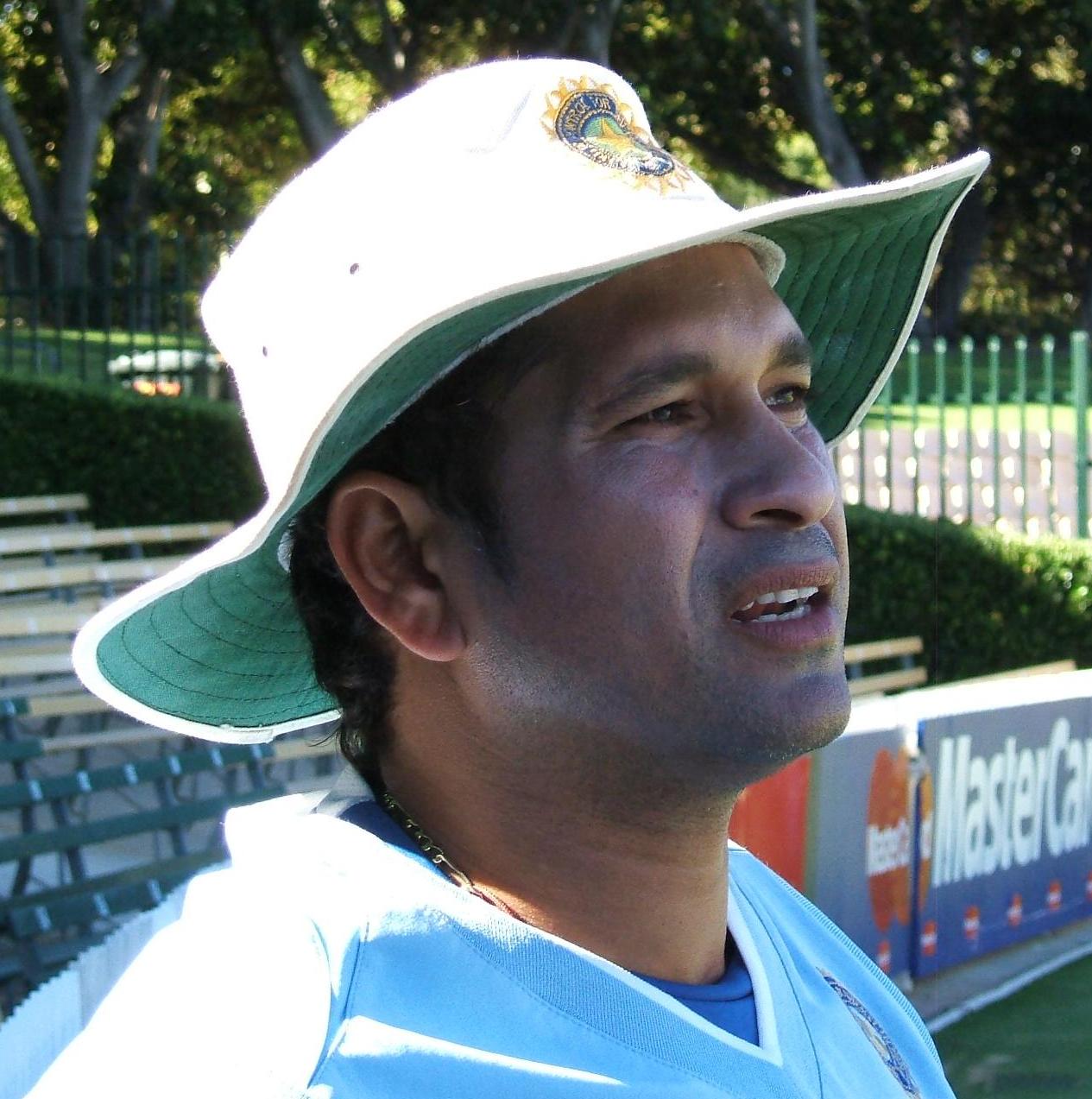
Sachin Tendulkar is the highest run scorer in men's international cricket
Mithali Raj is the highest run scorer in women's international cricket
Jack Hobbs is the highest run scorer in first-class cricket

In cricket, batting is the act or skill of hitting the ball with a bat to score runs and prevent the loss of one's wicket. Any player who is currently batting is, since September 2021, officially referred to as a batter regardless of whether batting is their particular area of expertise. Historically, batsman and batswoman were used, and these terms remain in widespread use. Batters have to adapt to various conditions when playing on different cricket pitches, especially in different countries; therefore, as well as having outstanding physical batting skills, top-level batters will have quick reflexes, excellent decision-making skills, and be good strategists.[1]

During an innings two members of the batting side are on the pitch at any time: the one facing the current delivery from the bowler is called the striker, while the other is the non-striker. When a batter is out, they are replaced by a teammate. This continues until the end of the innings, which in most cases is when 10 of the team members are out, whereupon the other team gets a turn to bat.

Batting tactics and strategy vary depending on the type of match being played as well as the current state of play. The main concerns for the batters are not to lose their wicket and to score as many runs as quickly as possible. These objectives generally conflict—to score quickly, risky shots must be played, increasing the chance that the batter will be dismissed, while the batter's safest choice with a careful wicket-guarding stroke may be not to attempt any runs at all. Depending on the situation, batters may abandon attempts at run-scoring in an effort to preserve their wicket, or may attempt to score runs as quickly as possible with scant concern for the possibility of being dismissed. Unlike various other bat-and-ball sports, cricket batters may hit the ball in any direction to score runs, and can use creative shots to do so.

As with all other cricket statistics, batting statistics and records are given much attention and provide a measure of a player's effectiveness. The main statistic for batting is a player's batting average. This is calculated by dividing the number of runs they have scored by the number of times they have been dismissed (not by the number of innings they have played).

Terminology

[edit]

Any player, regardless of their area of special skill, is referred to as a "batter" (historically as a "batsman" or "batswoman") while they are batting. The batter's act of hitting the ball is called a "shot" or "stroke". A player who is selected for the team mainly for their batting skill is often referred to as simply a batter, regardless of whether they are currently batting, or sometimes as a specialist batter. A specialist bowler or wicket-keeper, on the other hand, would only be referred to as a batter when they are actually batting.

In 2021 the Laws of Cricket were amended to officially use the term "batter" for gender neutrality,[2] and this is increasingly the preferred term in some media outlets.[3]

Orthodox technique and stroke play

[edit]
Names of orthodox cricket shots and the directions in which they are hit for a right-handed batter. The batter is standing at the center point facing south. The positions are mirrored for left-handers.

Over time a standard batting technique has been developed which is used by most batters. Technique refers to the batter's stance before the ball is bowled as well as the movement of the hands, feet, head, and body in the execution of a cricket stroke. Good technique is characterized by quickly getting into the correct position to play the shot, especially getting one's head and body in line with the ball, one's feet placed next to where the ball would bounce and then swinging the bat at the ball to make contact at the precise moment required for the particular stroke being played.

The movement of the batter for a particular delivery depends on the shot being attempted. Front-foot shots are played with the weight on the front foot (left foot for a right-hander) and are usually played when the ball is pitched up to the batter, while back-foot shots are played putting the weight onto the back foot, usually to bowling that is pitched short. Shots may also be referred to as vertical or straight-bat shots, in which the bat is swung vertically at the ball (e.g. when playing a drive or leg glance), or horizontal or cross-bat shots, in which the bat is swung horizontally at the ball (e.g. when playing the pull or cut shot).

While a batter is not limited in where or how they may hit the ball, the development of good technique has gone hand in hand with the development of a standard or orthodox cricket shots played to specific types of deliveries. These "textbook" shots are standard material found in many coaching manuals.

The advent of limited overs cricket, with its emphasis on rapid run-scoring, has led to increasing use of unorthodox shots to hit the ball into gaps where there are no fielders. Unorthodox shots are typically—but not always—more high-risk than orthodox shots due to some aspects of good batting technique being abandoned.

Bill Woodfull's stance.

Stance

[edit]

The stance is the position in which a batter stands to have the ball bowled to them. An ideal stance is "comfortable, relaxed and balanced",[citation needed] with the feet 40 centimetres (16 in) apart, parallel and astride the crease. Additionally, the front shoulder should be pointing down the wicket, the head facing the bowler, the weight equally balanced and the bat near the back toe.[4] A slight crouch is adopted in order to be in a more effective striking posture whilst also isometrically preloading the muscles; this allows the stroke to be played more dynamically. As the ball is about to be released, the batter will lift their bat up behind in anticipation of playing a stroke and will shift their weight onto the balls of their feet. By doing this they are ready to move swiftly into position to address the ball once they see its path out of the bowler's hand.

Although the textbook, side-on stance is the most common, a few international players, such as Shivnarine Chanderpaul and Steve Smith, use an "open" or "square on" stance.

Backlift

[edit]
A right-handed batter lifts his bat in preparation for hitting the ball.

Backlift is how a batter lifts his bat in preparation for hitting the ball.[5] While the bat should be raised as vertically as possible, coaching manuals often suggest that correct technique is for the bat to be slightly angled from the perpendicular; a common instruction is to point the face of the bat in the direction of first or second slip.[5] Some players (notably, in recent times, Brian Lara, Virender Sehwag)[6][failed verification] have employed an exaggerated backlift. Others, who have employed the more unorthodox open stance, such as Peter Willey, had a more abbreviated backlift.

Forward and back

[edit]

Depending upon the path of the ball, the batter will either move forward or back in his attempt to intercept it. A forward movement is designated a front foot shot, whereas a backward movement is designated a back foot shot. A front foot shot is typically used to address a ball arriving at between ankle and thigh height. The batter will step forward towards the ball, bending their front knee to bring the bat down to the anticipated height of the ball. By moving forward, the batter is also able to intercept the ball immediately after it has pitched, thus nullifying any potentially dangerous lateral movement. A back foot shot is typically used to address a ball arriving at between thigh and head height. The batter will step back and, if necessary, stand on their tiptoes to raise the bat to the height of the ball. By stepping back towards the wicket, the batter also receives the advantage of having an extra small amount of time to react to any unexpected lateral movement or variation in bounce.

Cricket shots

[edit]

Vertical-bat strokes

[edit]

Vertical-bat or straight-bat shots can be played off either the front foot or the back foot depending upon the anticipated height of the ball at the moment it reaches the batter. The characteristic position of the bat is a vertical alignment at the point of contact. Vertical-bat shots are typically played with the batter's head directly above the point of contact so he is able to accurately judge the line of the ball. At this point, the bat can either be stationary and facing straight back down the wicket – known as a block or defensive shot; angled to one side – known as a glance or deflection; or travelling forwards towards the bowler – known as a drive.

Defensive shot

[edit]

Having taken a long stride, a batter blocks the ball with a forward defensive shot.

A block stroke is usually a purely defensive stroke designed to stop the ball from hitting the wicket or the batter's body. This shot has no strength behind it and is usually played with a light or "soft" grip (commentators often refer to "soft hands") and merely stops the ball moving towards the wicket. A block played on the front foot is known as a forward defensive, while that played on the back foot is known as a backward defensive. These strokes may be used to score runs, by manipulating the block to move the ball into vacant portions of the infield, in which case a block becomes a "push". Pushing the ball is one of the more common ways batters manipulate the strike.

Leaving and blocking are employed much more often in first-class cricket (including Test matches), as there is no requirement to score runs as quickly as possible, thus allowing the batter to choose which deliveries to play.

A leg glance is a delicate straight-batted shot played at a ball aimed slightly on the leg side, using the bat to flick the ball as it passes the batter, and requiring some wrist work as well, deflecting towards the square leg or fine leg area. The stroke involves deflecting the bat-face towards the leg side at the last moment, head and body moving inside the line of the ball. This shot is played "off the toes, shins or hip". It is played off the front foot if the ball is pitched up at the toes or shin of the batter, or off the back foot if the ball bounces at waist/hip height to the batter. Although the opposite term off glance is not employed within cricket, the concept of angling the bat face towards the offside to deflect the ball away from the wicket for the purpose of scoring runs through the off side is a commonly used technique. This would commonly be described instead as "running (or steering) the ball down to the third man".

Leave
[edit]
The leave. Note the batter's head focussed on where the ball had bounced. The bat and hands are held well out of the way of the ball.

The leave is sometimes considered a cricket shot, even though the batter physically does not play at or interfere with the ball as it passes him. The leave is often used by a batter during the first few balls he receives, to give himself time to judge the conditions of the pitch and the bowling before attempting to play a shot. Leaving a delivery is a matter of judgement and technique. The batter still has to watch the ball closely to ensure that it will not hit him or the wicket; he also has to ensure that his bat and hands are kept out of the path of the ball so that it cannot make accidental contact and possibly lead to him being out caught. Batters only leave the ball when they are certain that it will not hit the stumps.

Straight Drive

[edit]
Ellyse Perry plays an off drive off the front foot. Note her stance and position of her hands, legs, body and head.

A drive is a straight-batted shot, played by swinging the bat in a vertical arc through the line of the ball, hitting the ball in front of the batter along the ground. It is one of the most common shots in a batter's armory and often the first shot taught to junior cricketers. Depending on the direction the ball travels, a drive can be a cover drive (struck towards the cover fielding position), an off drive (towards mid-off), straight drive (straight past the bowler), on drive (between stumps and mid-on) or square drive (towards point). A drive can also be played towards midwicket, although the phrase "midwicket drive" is not in common usage. Drives can be played both off the front and the back foot, but back-foot drives are harder to force through the line of the ball. Although most drives are deliberately struck along the ground to reduce the risk of being dismissed caught, a batter may decide to play a lofted drive to hit the ball over the infielders and potentially even over the boundary for six.

Flick

[edit]

A flick shot is a shot played on the leg side by flicking a full-length delivery using the wrists. The shot is played with the bat coming through straight as for the on drive, but the bat face is angled towards the leg side. It can be played both off the front foot or the back foot, either off the toes or from the hips. The shot is played between the mid-on and square leg region. Typically played along the ground, the flick can also be played by lofting the ball over the infield.

Horizontal-bat shots

[edit]

The second class of cricket stroke comprises the horizontal-bat shots, also known as cross-bat shots: the cut, the square drive, the pull, the hook, and the sweep. Typically, horizontal bat shots have a greater probability of failing to make contact with the ball than vertical bat shots and therefore are restricted to deliveries that are not threatening to hit the stumps, either by dint of being too wide or too short. The bat is swung in a horizontal arc, with the batter's head typically not being perfectly in line with the ball at the point of contact.

Cut

[edit]

A cut is a cross-batted shot played at a short-pitched ball, placing it wide on the off side. The batter makes contact with the ball as it draws alongside or passes him and therefore requires virtually no effort on his part as he uses the bowler's pace to divert the ball. A square cut is a shot hit into the off side at near to 90 degrees from the wicket (towards point). A late cut is played as or after the ball passes the batter's body and is hit towards the third man position. The cut shot is typically played off the back foot but is also sometimes played off the front foot against slower bowling. The cut should be played with the face of the bat rolling over the ball to face the ground thus pushing the ball downwards. A mistimed cut with an open-faced bat (with the face of the bat facing the bowler) will generally lead to the ball rising in the air, giving a chance for the batter to be caught.

Square drive

[edit]

Although confusingly named a drive, the square drive is actually a horizontal bat shot, with identical arm mechanics to that of the square cut. The difference between the cut and the square drive is the height of the ball at contact: the cut is played to a ball bouncing waist high or above with the batting batter standing tall, whereas the square drive is played to a wide ball of shin height with the batter bending his knees and crouching low to make contact.

Pull and hook

[edit]
Ricky Ponting playing a pull shot.

A pull is a cross-batted shot played to a ball bouncing around waist height by swinging the bat in a horizontal arc in front of the body, pulling it around to the leg side towards mid-wicket or square leg. The term hook shot is used when the shot is played against a ball bouncing at or above chest high to the batter, the batter thus "hooking" the ball around behind square leg, either along the ground or in the air. Pull and hook shots can be played off the front or back foot, with the back foot being more typical.

Sweep

[edit]
A left-handed batter plays a sweep shot.

A sweep is a cross-batted front foot shot played to a low bouncing ball, usually from a slow bowler (However, players like Mal Loye also play the sweep against fast bowlers),[7] by kneeling on one knee, bringing the head down in line with the ball and swinging the bat around in a horizontal arc near the pitch as the ball arrives, sweeping it around to the leg side, typically towards square leg or fine leg. A paddle sweep shot is a sweep shot in which the ball is deflected towards fine leg with a stationary or near-stationary bat extended horizontally towards the bowler, whereas the hard sweep shot is played towards square leg with the bat swung firmly in a horizontal arc. Typically the sweep shot will be played to a legside delivery, but it is also possible for a batter to sweep the ball to the leg side from outside off stump. Attempting to sweep a full straight delivery on the stumps is generally not recommended because of the risk of lbw.

Unorthodox strokeplay

[edit]

Since a batter is free to play any shot to any type of delivery as he wishes, the above list is by no means a complete list of the strokes that batters choose to play. Many unorthodox, typically high-risk, shots have been used throughout the history of the game. The advent of limited overs cricket has seen the increased use of unorthodox shots to hit the ball into gaps where there are no fielders placed. Unorthodox shots are rarely used in first-class cricket as the pace of the game is slower and it is relatively more important to keep one's wicket than to try to score runs off every ball.

A few unorthodox shots have gained enough popularity or notoriety to have been given their own names and entered common usage.

Reverse sweep

[edit]

A reverse sweep is a cross-batted sweep shot played in the opposite direction to the standard sweep, thus instead of sweeping the ball to the leg side, it is swept to the off side, towards a backward point or third man. The batter may also swap his hands on the bat handle to make the stroke easier to execute. The batter may also bring his back foot to the front, therefore, turning the shot into a switch-hit and making it more like a traditional sweep. The advantage of a reverse sweep is that it effectively reverses the fielding positions and thus is very difficult to set a field to. It is also a risky shot for the batter as it increases the chance of lbw and also is quite easy to top edge to a fielder.

It was first regularly played in the 1970s by the Pakistani batter Mushtaq Mohammad, though Mushtaq's brother Hanif Mohammad is sometimes credited as the inventor. Cricket coach Bob Woolmer has been credited with popularising the stroke. The most famous example of a reverse sweep backfiring was in the case of Mike Gatting of England against Allan Border of Australia in the 1987 Cricket World Cup Final. With England on course for victory, Gatting attempted a reverse sweep off the first delivery bowled by Border, top-edged the ball and was caught by wicketkeeper Greg Dyer. England subsequently lost momentum and eventually lost the match.

Because of the unorthodox nature of hand and body position, it is often difficult to get a lot of power behind a reverse sweep; in many situations, the intention is to glance or cut the ball to the back leg area. However, on rare occasions, players have been able to execute reverse sweeps for a six. Kevin Pietersen, who pioneered switch-hitting, is adept at this, but one could argue[original research?] that the resulting shot is basically a sweep rather than a reverse sweep. A more classic example of such a shot would be Yusuf Pathan's six off Robin Peterson. South Africa's AB de Villiers is well known for his ability to hit sixes with the reverse sweep at ease and Glenn Maxwell also often plays the reverse sweep.

Slog and slog sweep

[edit]

A slog is a powerful pull shot played over mid-wicket, usually, hit in the air in an attempt to score a six. A shot would be referred to as a slog when it is typically played at a delivery that would not ordinarily be pulled. A slog can also be described as hitting the ball to "cow corner". This phrase is designed to imply that the batter is unsophisticated in their stroke play and technique by suggesting they would be more at home playing on more rudimentary cricket fields in which there may be cows grazing along the boundary edge. The slog can be an effective shot because all the batter's power and body weight can be put into swinging the bat at the ball.

A slog sweep is a slog played from the kneeling position used to sweep. Slog sweeps are usually directed over square-leg rather than to mid-wicket. It is almost exclusively used against reasonably full-pitched balls from slow bowlers, as only then does the batter have time to sight the length and adopt the kneeling position required for the slog sweep. The front leg of the shot is usually placed wider outside leg stump to allow for a full swing of the bat.

Upper cut

[edit]

An upper cut is a shot played towards third man, usually hit when the ball is pitched outside the off stump with extra bounce. It is a dangerous shot which can edge the ball to keeper or slips if not executed correctly. The shot is widely used in modern cricket. The shot is advantageous on fast bouncy tracks and is seen commonly in Twenty20 cricket. Notable players who used the upper cut include Sachin Tendulkar, Virender Sehwag and Brendan Taylor.

Switch hit

[edit]

A switch hit is a shot where a batter changes their handedness and posture to adopt a stance the mirror image of their traditional handedness while the bowler is running in to bowl. As a fielding team cannot manoeuvre fielders while the bowler is in their run-up, the fielding side is effectively wrong-footed with the fielders out of position. The shot was pioneered by Kevin Pietersen, first performed off the bowling of Muttiah Muralitharan in England's 2006 home series against Sri Lanka. It was subsequently used in the New Zealand series in England in 2008 when Pietersen performed the shot twice in the same over against Scott Styris on his way to making an unbeaten century. David Warner, the Australian opener, is also a frequent user of the switch hit and used it to great effect against the Indian off-spinner Ravichandran Ashwin in the first Twenty20 of the Indian cricket team's tour to Australia 2012. Glenn Maxwell and Ben Stokes also play the switch hit.

The legality of the switch hit was questioned when first introduced but cleared by the International Cricket Council as legal. The shot is risky because a batter is less proficient in the other handedness and is more likely to make a mistake in the execution of the shot.

Scoop / ramp

[edit]

A scoop shot has been used by a number of first-class players. It is played to short-pitched straight balls that would traditionally be defended or, more aggressively, pulled to the leg side. To play a scoop shot, the batter is on the front foot and aims to get beneath the bounce of the ball and hit it directly behind the stumps, up and over the wicket-keeper.

This shot, though risky in the execution, has the advantage of being aimed at a section of the field where a fielder is rarely placed – particularly in Twenty20 and One Day International cricket where the number of outfielders is limited. However, the Marillier shot is played over the batter's shoulder to fine leg, but the basis of the scoop stroke is for the batter to go down on one knee to a good length or slightly short-of-length delivery off a fast or medium paced bowler and scoop the ball over the head of the wicket-keeper. The scoop shot is a risky shot to play as the improper execution of this shot may lead to a catch being offered. A version of the scoop stroke called the Dilscoop was developed by Sri Lankan right-handed batter Tillakaratne Dilshan during the 2009 ICC World Twenty20.

Helicopter shot

[edit]

The helicopter shot is the act of hitting the ball by means of a wristy flick, using the bottom-hand as the dominant force. The shot gets its name from the flourish completing the stroke, with the bat being circled overhead. It has been considered an unconventional and innovative stroke which, when hit executed effectively, can be used to score boundaries, even against good yorkers or fuller-length deliveries,[8] which have traditionally been used by faster bowlers towards the end of limited-overs matches because it is difficult to hit such balls to the boundary.[9] The shot got its fame through MS Dhoni,[10] who played it on a regular basis as a way to score boundaries against full and yorker length deliveries.

French cut

[edit]

The French cut is a stroke where the ball is hit with the inside edge of the bat, meaning it is directed between the batter and the stumps, and moves away in the direction of the fine leg fielding position. The stroke is very difficult to play intentionally, and is more often a mistake by the batter. It is a risky stroke, and can easily result in the batter playing on to their stumps, resulting in the batter being dismissed as bowled.[11]

Strategy of batting

[edit]

The fundamental aim of each batter is to find a means of safely scoring runs against each bowler he faces. To do this, the batter must take into consideration the bowler's strategy, the position of the fielders, the pitch conditions, and his own strengths and weaknesses. The strategy he will decide on will incorporate a number of preconceived attacking responses to the various deliveries he may anticipate receiving, designed specifically to score runs with minimal risk of being dismissed. The success of this strategy will be dependent upon both the accuracy of its conception and the technical ability with which it is carried out. A key aspect of the strategy of batting is the trade-off between the level of aggression (trying to score) and the risk involved of being dismissed. An optimal batting strategy balances several considerations: the number of wickets left, the target that has been set (if batting last) and how the risk of losing a wicket increase when increasing the strike rate.[12] These strategies depend on the match situation and on the match format. Strategies therefore vary greatly between the three forms of international cricket: Test, One Day International and T20 cricket.

Test cricket

[edit]

In Test cricket, the usual aim is to score as high a total as possible. As the overs are unlimited, a batter can take his time to score runs. In general, 90 overs have to be bowled per day in Test match cricket. The openers or the starting players in Test cricket are often chosen for their sound technique and ability to defend their wicket, because the first 1–2 hours of an innings, especially if it begins in the morning, are usually characterized by good conditions for bowling, specifically in terms of the pace and bounce of the pitch and the lateral movement of the ball in the air.

The first-drop batter is usually also chosen for his sound technique, so as to stabilize his end in case an opener gets out. The middle order of a batting team in Test matches usually includes its most skilled batters in terms of shot-playing ability, because during the middle overs of a day batting is relatively easier than in the initial stages of the innings. If the batting innings of a team begins after the last half-hour of the day, the team might employ a nightwatchman to bat after a dismissal.

The nightwatchman is usually a lower-order player, able to protect his wicket primarily by defending dangerous balls and leaving non-dangerous ones rather than looking to produce a large number of runs for his team, but not a complete rabbit, liable to expose other players late in a day. This move prevents a regular players from having to face the last few overs left in the day or bat early the following morning; however, some teams do not employ nightwatchmen for various reasons, including a belief that middle-order player should be able to protect their wicket in poor conditions as well as good, or a lack of defensively minded lower-order batters.

In the third innings, the batting team may score quickly to set a large target to the opposition. This scenario usually occurs on the fourth day's play. The batting captain decides how many overs he is prepared to allow the opposition to chase the batting team's total in their fourth innings. The captain usually declares his team's innings at a predetermined time on the fourth day so they can bowl at least 20 overs on that day and 90 overs on the last day. A good number of overs to bowl at the opposition team in the fourth innings is essential because usually on the fourth and fifth days of a Test match conditions are good for bowling (especially slow bowling), with the pitch having experienced a fair degree of wear and tear. Thus, to make the target as difficult as possible, the batting side speeds up the run rate (runs per over) until the captain declares.

If, however, a batting team is significantly behind the opposition in terms of runs going into the fourth day of a Test match, a typical strategy by the batting team involves playing defensively to avoid losing their wickets. This ensures that they occupy the most time until the match draws to a close on the fifth day, because if a team's innings does not end on the fifth day then the match is drawn, or a stalemate is reached. However, in trying to do so, if the batting team manages to overhaul its deficit and gain a substantial lead (an excess of runs) over the opposition, the captain may consider declaring the innings so they can "force" a victory on the final day, depending on the size of the lead, the readiness of the bowlers, and the state of the pitch.

One-Day International cricket

[edit]

As One Day International matches have a limited set of overs, batters try to score quickly. Doing so, batters should aim for a higher run rate than the one which would maximize their expected personal score. It is optimal for batters to take the risk of being dismissed and being replaced by another teammate. This higher risk strategy makes the best of the limited number of overs.[13] Scoring quickly typically means trying to score at least one run per ball bowled. Most batter manage to score at an average of four runs an over (i.e. four runs in the six ball over). The optimal level of risk should vary depending on different factors.[12] It should be higher when the team has more wickets left as they provide of a cushion of security (against the risk of ending all out). It should be higher when the pitch provides good conditions for batting, making it easier to score without great risk of being dismissed. It should increase towards the end of the innings when the number of overs left is small (there is not much to lose in taking the risk of ending all out). Research has shown that teams broadly follow these principles. A noticeable exception is when batters face the possibility of scoring a personal milestone (e.g. century), in that case, they tend to decrease their risk-taking below what is optimal for the team in order to increase their chance of reaching the milestone.[13]

Before the ball reaches a batter (left) the bat is held in a high backlift, before stepping forward and swinging through for a forward drive (right).

When a team goes out to bat, the best players bat first. The first three batters (number 1, 2, 3) are known as the top order; the next four (numbers 4, 5, 6 and possibly 7) form the middle order, and the last four (numbers 8, 9, 10 and 11) are the lower order or tail.

The specialist batters of a team usually bat near the top of the order, so as to score more runs. The openers or opening batter are the first two players to take the crease. They are not necessarily the best batters, but are expected to negotiate the new ball and not lose wickets until the shine on the ball is considerably diminished (a hard and shiny ball bounces and swings more and is more difficult for the batter to face). In addition, they are supposed to play quick innings (more runs in fewer balls), reflecting the fact that the fielding side is subject to restrictions on the placement of fielders in the first 15 overs which makes it easier to score runs. In a recent amendment [1] to the rules of ODI cricket, fielding captains are given mandatory fielding restrictions for the first 10 overs and then two chunks of 5 overs each, also known as power-play overs, which they may impose at any stage of their choice within the stipulated 50 overs.

Following the openers is the No. 3 or first-drop batter. Their job is to take over from the openers and typically play a careful and prolonged innings, effectively tying up one end of the batting. This brings in some stability in the batting, as new batters find it difficult to settle down and it helps to have a settled player at the other end. The best batter of the team is usually put at number 3 or 4, to protect them from the difficulties of batting against the best bowlers on a fresh pitch and to allow them to play long innings.

The middle order is often considered the most valuable asset of a batting line-up in One-Day Internationals because its members are responsible for consolidating the batting team's position through the middle part of the 50 overs. Characteristic of middle-order batting is the practice of taking many singles (or ones) and 'twos', with only the occasional boundary (a four or a six), as opposed to the more flamboyant openers who score primarily in boundaries. This is because the fielding restrictions on the opposition are lifted in the middle overs so that the percentage of boundaries scored decreases. Middle-order players are often chosen for the ability to run hard and fast between the wickets (to maximize the number of runs not scored from boundaries) and for their endurance and patience. The middle order typically sets the stage for an aggressive assault on the bowling in the final 10 overs of the match. To achieve this assault, two things are necessary – a number of hard-hitting players yet to bat or not out and a number of wickets in hand (since aggression means a greater likelihood of losing wickets). The last 10 overs of a one-day cricket match innings is often the most exciting part of the innings, because of a large number of boundaries scored and wickets taken. During the last ten overs of an ODI, batters often use shots that are riskier than shots played at the beginning of the innings.

Examples of risky shots include the reverse sweep and the paddle-scoop. These shots are used to achieve a boundary which would not be possible when playing a safer, more orthodox shot. Finally, the lower order consists of the bowlers of the team, who are not known for their batting prowess and so bat as low down the order as possible.

However, there are no real restrictions to the batting positions. Captains have been known to experiment with the batting line-up to gain specific advantages. For example, a lower-order player is sometimes sent in at number 3 with instructions to pinch-hit (playing aggressively in an attempt to score more runs in fewer balls – a term borrowed from baseball) to score quick runs and shield better players, as their wicket (as a less accomplished, lower-order, player) is less valuable anyway.

Running between the wickets

[edit]

When batting, a batter has to balance opportunities to score runs by running between the popping creases with the risk of being run out (or even stumped, if batting outside his crease). Batting partners must agree on each run they take, or else one of them is likely to be out of their ground and thus run out.

Sometimes batters take risks by running even when the fielder has the ball in hand, and is in a position to throw the ball at the wicket; this is known as "taking on the arm of the fielder". This can occasionally lead to overthrows.

Batters often slide headfirst with their bat outstretched to make their ground. Being able to run faster to score more runs, as well as improve endurance so as to not be fatigued by running a lot throughout a long innings (which could disrupt the concentration or strength needed for batting), is part of the athletic training for batters.

See also

[edit]

References

[edit]
[edit]
Revisions and contributorsEdit on WikipediaRead on Wikipedia
from Grokipedia
Batting in is the core offensive of the game, involving two batsmen from the batting who take position at opposite ends of the pitch to face deliveries from the bowler and score runs while protecting their wickets from dismissal. The batsman currently receiving the is termed the striker, who uses a wooden to hit the , while the other, known as the non-striker, stands at the opposite crease and may run to add to the score if the striker hits the safely. The objective of batting is to accumulate as many runs as possible during an , which begins when the first two batsmen enter the field and ends when ten batsmen are out, the captain declares the innings closed, or in limited-overs formats, the allocated overs are completed. Runs are scored primarily by the batsmen exchanging ends after the striker hits the ball into gaps in the fielding side's positions, with each completed crossing counting as one run; if the ball reaches the boundary rope, four runs are awarded for a ground hit or six for one that clears it without bouncing. Common methods of dismissal include being (when the ball hits the stumps and dislodges the bails), (if a fielder catches the ball before it bounces after being struck), (if the ball would have hit the stumps but strikes the batsman's leg first), (if a batsman is out of their crease when the stumps are broken by the fielders), and others such as or hit . Batting technique emphasizes footwork, shot selection, and concentration, with the striker adopting a balanced stance to react to the bowler's pace, swing, or spin. Effective batsmen build patiently, rotating the strike to the non-striker to maintain momentum, and accelerate against weaker or in chases. Protective equipment, including helmets (mandatory when facing pace bowlers), , gloves, and thigh guards, is used in professional play to mitigate injury risks from fast or bouncy deliveries. In governed by the (ICC), batting strategies vary by format—defensive accumulation in Tests, aggressive power-hitting in T20s—highlighting the skill's adaptability across conditions like pitch type and .

Terminology and Fundamentals

Key Terms and Definitions

In cricket, the player tasked with scoring runs by striking the ball with a is referred to as the batsman or batter; the term "batter" has become the preferred gender-neutral usage in modern contexts, as adopted in the official by the (). An constitutes one team's complete turn at batting, during which they aim to score as many runs as possible until ten batters are dismissed (), the declares, or other termination conditions apply under Law 13 of the . A batter who has not been dismissed by the conclusion of their team's is recorded as , allowing them to resume batting from that point in subsequent if applicable. Specialized batting roles include the opener, who occupies the first two positions in the batting order and faces the initial deliveries of the innings to build a foundation for the team's score. The nightwatchman is typically a lower-order bowler promoted up the order late in a day's play in multi-day matches, serving to protect a more valuable top-order batter overnight and minimize early wickets. A declaration occurs when the batting captain proactively ends the innings before ten dismissals, strategically setting a target for the opposing team, as permitted under Law 15.1 of the MCC Laws. The fundamental unit of scoring in cricket is the run, awarded when batters exchange ends between the wickets or when the ball reaches the boundary; runs contribute directly to the team's total and individual batter statistics. A boundary is scored when the struck ball reaches the perimeter rope encircling the field, with fours awarded if the ball touches the ground before or upon crossing the boundary (four runs) and sixes if it clears the boundary without touching the ground (six runs), per Law 19 of the MCC Laws. Extras represent runs added to the batting team's total without credit to an individual batter, stemming from bowler or fielder errors; relevant to batting are no-balls (one extra run for an illegal delivery, such as overstepping the crease, under Law 21) and wides (one extra run for a delivery too wide for the batter to reach, under Law 22), both of which also result in an additional ball being bowled. Batter handedness distinguishes right-handed and left-handed players based on which hand dominates the grip and stance; a right-handed batter stands with the left side facing the bowler, while a left-handed batter mirrors this with the right side facing. This orientation affects fielding terminology, with the off-side being the half of the field away from the batter's body (right for right-handers, left for left-handers) and the leg-side (or on-side) the opposite half, creating mirror-image configurations for left-handers relative to standard right-handed setups. The terminology of "batting" traces its origins to 18th-century English cricket, evolving from earlier rural games where players used a "bat" (derived from Old English batt, meaning a club or staff) to strike the ball; as the sport formalized around the 1740s with standardized rules, the act of using the bat became known as batting, distinguishing the striker from the bowler.

Role and Objectives of Batting

The primary objective of batting in cricket is to accumulate as many runs as possible for the team while avoiding dismissal, thereby building a substantial innings total that contributes to the overall match strategy. Batsmen achieve this by hitting the ball to score boundaries or running between the wickets after each delivery, continuing until ten dismissals occur or the innings concludes based on the format's rules. This dual focus on scoring and survival ensures the team sets a competitive target in their innings or successfully chases one set by the opposition. Within the team, batsmen fulfill distinct roles depending on their position in the batting order, which helps structure the effectively. Openers, batting at positions one and two, are responsible for laying the foundation by facing the initial deliveries, often the most challenging phase with a new ball, to allow subsequent batsmen to build on a solid platform. The middle order, typically positions three to seven, steps in to either stabilize the following early losses or accelerate scoring to maximize the total, adapting to the match situation. Lower-order batsmen, from positions eight to eleven and often including bowlers, provide support by contributing additional runs or holding firm to protect the score in defensive scenarios. Batsmen must constantly balance defensive techniques to protect their wicket—avoiding modes of dismissal such as , , or —with attacking intent to exploit scoring opportunities, a delicate equilibrium that defines successful . Central to this is the concept of building partnerships, where the two batsmen on the pitch collaborate by rotating the strike, communicating, and supporting each other to prolong their stay and steadily increase the score, often wearing down the attack over time. Effective partnerships prevent collapses and enable the team to post higher totals. The performance of the batting side profoundly influences the match outcome across formats, as a strong can secure victories by overwhelming the opposition with a high score or enable successful chases under pressure. In longer formats like Tests, robust batting may force a draw by denying the opposition a win, while in limited-overs games, it directly determines whether the team wins by runs or wickets. Ultimately, the runs amassed and wickets preserved by batsmen dictate the game's direction and result.

Basic Technique

Stance, Grip, and Backlift

The batting stance forms the foundational posture from which all subsequent movements originate, positioning the batsman to react effectively to the incoming delivery. In the , adopted by most right-handed batsmen, the body faces the bowler side-on, with feet approximately shoulder-width apart, knees slightly bent, and weight balanced on the balls of the feet to facilitate quick adjustments. This setup ensures optimal alignment of the head and shoulders toward the bowler's end, promoting balance and visibility of the ball. A closed stance variation angles the front foot (left for right-handers) inward toward the stumps, which can aid in playing to the but may restrict off-side access; conversely, an open stance rotates the front foot outward, enhancing visibility against by allowing better sight of the ball's release from the bowler's hand. Adjustments for pace versus spin often involve widening the stance slightly against for stability, while a more open configuration against spin facilitates earlier judgment of turn and drift. The grip determines how the batsman controls the , influencing both precision and power generation. The standard V-grip involves both hands forming a "V" shape with the thumb and aligned along the back of the bat's handle, pointing toward the splice (the join between and handle), approximately halfway between the spine and . This positioning ensures the bat face remains to the ground at rest, allowing for straight-bat shots. For precision in defensive or placement play, the top hand (left for right-handers) maintains a firmer hold to guide the bat, while a bottom-hand dominant grip—where the lower hand exerts more pressure—facilitates power hitting by accelerating the bat through the downswing, though it risks loss of control if overemphasized. The backlift, or backswing, prepares the for the downswing by raising it vertically behind the batsman, coiling the body for explosive release. In the conventional vertical backlift (VBL), the is lifted straight up using the top-hand , reaching a height aligned with or slightly above the , with the face pointing toward the sky to maximize speed and ensure the full engages the . Timing is synchronized with the bowler's approach, beginning as the bowler loads and completing just before release to maintain readiness without tension. Biomechanical studies indicate that the lateral backlift (LBBT), which swings the toward second slip, is more prevalent among elite batsmen and may enhance energy transfer and shot diversity, while the vertical backlift (VBL) remains a conventional approach emphasized in . Common faults in these fundamentals often cascade into broader technical breakdowns. A loose grip can lead to mishits or edges by failing to secure the bat during impact, while an overly tight hold restricts fluidity; similarly, an incorrect stance—such as feet too close together or the head leaning forward—causes imbalance, reducing the ability to transfer weight effectively into footwork. An inadequate backlift height, either too low (limiting power) or too high (causing overextension), disrupts timing and exposes the batsman to lbw dismissals. Addressing these through targeted drills restores the setup's integrity, integrating seamlessly with subsequent footwork movements.

Footwork and Body Position

Effective footwork is essential in cricket batting, enabling the batsman to position the feet dynamically in response to the bowler's delivery, thereby optimizing body alignment and balance for shot execution. This movement begins from the initial stance and involves precise steps to either advance or retreat, ensuring the batsman can reach the ball's pitch while protecting the . Coaching manuals emphasize that good footwork minimizes the risk of lbw dismissals and edges by allowing the batsman to play the ball under the eyes rather than reaching excessively. Forward footwork typically entails a lunge of the front foot towards the line of the ball for full-length deliveries, pressing from the back foot to transfer weight forward while utilizing the crease to keep the shot played away from the body. This technique ensures the front knee flexes appropriately, allowing the bat to meet the ball with a straight blade and reducing the chance of playing across the line. In contrast, for shorter-length balls directed at the off stump, the batsman executes a back and across movement, shifting the back foot laterally towards the off side to align the body parallel to the stumps, maintaining a stable base and facilitating defensive or attacking options. Weight transfer during these movements is critical, with an even distribution initially shifting dynamically to the front or back foot as needed for balance. Key principles of body position during footwork include keeping the head still and eyes level to track the ball's accurately, which promotes better and timing. The knees should remain bent to lower the center of , enhancing for quick adjustments and preventing the batsman from becoming static or top-heavy. This athletic posture, with the body leaning slightly forward from the hips, supports efficient weight transfer and rotational power without compromising stability. Adaptations in footwork and body position vary by bowling type; against spin, batsmen often play back to the ball's length with smaller, quicker steps to counter variable bounce and turn, maintaining a bent-knee position for lateral movement. For fast bowling, the focus shifts to decisive forward presses or minimal adjustments to leave wide deliveries, with the body positioned more upright and head steady to judge seam movement at high speeds. These principles, rooted in biomechanical efficiency, underscore the importance of practice drills to ingrain responsive footwork.

Orthodox Strokes

Vertical-Bat Strokes

Vertical-bat strokes in involve aligning the bat perpendicular to the ground and parallel to the ball's , promoting controlled, straight-line contact that emphasizes defense and precise scoring along the line of the pitch. These shots rely on the bat's vertical plane to meet the head-on, reducing the risk of deviation and enabling batsmen to play safely against seam or swing movement. Proper execution demands balanced footwork to position the body behind the line of the , allowing the hands to guide the through a straight path. The defensive shot, often executed with a "dead bat" technique, is a fundamental vertical-bat used to neutralize threatening deliveries by dropping the softly near the batsman's feet. This method involves relaxing the bottom hand to create "soft hands," which absorb the 's impact without imparting , thereby minimizing carry to fielders and the risk of edges or catches. By presenting the full face of the vertically and close to the body, the batsman ensures the dies immediately upon contact, a tactic particularly vital against fast bowlers or in seaming conditions. Soft hands in this context refer to a loose grip that allows the to yield slightly, distinguishing it from rigid "hard hands" that can propel the perilously. The straight drive exemplifies an attacking vertical-bat , played against full-length deliveries pitching in line with the stumps. The batsman employs a full forward press, stepping the front foot towards the ball's pitch to transfer weight onto it, while keeping the bat face fully open and pointing towards the bowler for direct contact down the ground. The bat descends in a vertical arc, accelerating through the line with elbows high and locked, culminating in a high follow-through where the face points skyward to maintain balance and control. This shot's elegance lies in its purity, often piercing mid-on or extra cover gaps when timed well, and it serves as a benchmark for classical batting technique. The flick is a wristy vertical-bat deflection played to balls angling into the or leg stump, redirecting pace to the with minimal backlift for quick scoring. Executed off the front or back foot, it involves a subtle roll of the wrists to angle the face towards fine leg or , using the bowler's momentum rather than forcing the shot. The on-drive variant targets fuller deliveries on middle or leg stump, whipping the ball through mid-on or midwicket with a closed face and pronounced hip rotation for added power. Both rely on precise timing to avoid looping catches, making the flick a high-reward option against inswingers or slower bowlers. Effective technical execution of vertical-bat strokes hinges on maintaining a vertical bat angle throughout the downswing to align with the ball's path, followed by a balanced follow-through that keeps the head over the point of contact. Common errors, such as playing across the line—where the bat arcs horizontally instead of descending straight—expose the batsman to leg-before-wicket dismissals or thick edges, as the pad intervenes when the front foot fails to cover the stumps. Correcting this involves drills emphasizing straight-bat presentation and early foot movement to the ball's line, preventing misalignment that compromises the stroke's inherent safety.

Horizontal-Bat Strokes

Horizontal-bat strokes in cricket are aggressive shots executed with the bat held perpendicular to the bowler's line, primarily to capitalize on short-pitched or wide deliveries that offer width or bounce. These strokes enable batsmen to score quickly on either side of the , particularly against pace or , by redirecting the ball horizontally rather than playing it straight. Proper body position, with balanced footwork, is essential for maintaining control and power in these shots. The cut shot is a short-arm jab played to short and wide balls outside the off stump, allowing the batsman to exploit width for boundary opportunities. The back foot moves back and across towards the , transferring body weight onto it while the arms extend fully to meet the ball at full length in front of the body. The bat descends from a high backlift with the full face, striking the ball square of the on the , often with a wrist roll to keep it grounded. Variants include the upper cut, which is lofted over the slips for aerial placement, and the lower cut, a safer ground shot through point or cover. The square drive serves as a fuller-length of the cut, targeted at deliveries pitched up but still wide outside the off stump, blending elements of drive and cut for controlled ground shots. Played predominantly off the front foot, the batsman steps forward with the head aligned over the ball, angling the horizontal slightly downward to direct it square of the through point or cover. The top hand dominates for power while the bottom hand guides placement, ensuring the shot remains low and along the ground to minimize risk against pace. Pull and hook shots are horizontal-bat responses to short balls directed at the body or leg stump, designed to pull the ball to the using the bowler's pace. The pull is executed off the back foot to deliveries short but not excessively rising, with the batsman pivoting the torso and swinging the horizontally across the line to midwicket or , keeping the ball along the ground. In contrast, the targets higher bouncers rising above waist height, often over the slips or to fine , involving a more vertical hook motion with the bat to redirect the ball aerially while maintaining balance. Both require precise judgment of to avoid mishits, with the front shoulder leading the rotation for stability. The sweep is an orthodox horizontal-bat stroke primarily against , involving a kneeling or crouching position to paddle the ball across the line to the . The batsman drops to one knee, aligning the head over the ball's pitch, and sweeps from a low stance with the bat horizontal, using the bottom hand for control to direct it fine or square behind in line with the spin. This execution exploits the ball's turn without advancing down the pitch, providing an angle for scoring when straight shots are restricted. These strokes carry inherent risks, including top-edging the ball to fielders in the deep if the is misjudged or the bat speed is insufficient. Improper assessment of bounce can lead to catches at slip or for cuts and hooks, while poor footwork may result in loss of balance and missed connections, increasing dismissal chances against pace or variable spin.

Unorthodox and Advanced Strokes

Reverse and Switch Strokes

The reverse sweep is an unorthodox cross-batted stroke where the batsman reverses the orientation of the bat across the body to direct a leg-side delivery towards the , typically behind square. This variation inverts the traditional sweep shot, which plays balls pitching on the to the leg side, allowing the batsman to exploit field placements set for conventional play. Originating in 1964, the shot was pioneered by Pakistani during a club match in against a club side, where he executed it off spinner to counter restrictive leg-side fields. The switch hit, in contrast, involves the batsman changing their handedness mid-delivery by reversing their stance and grip on the bat after the bowler commences their run-up, effectively treating an off-side ball as a leg-side delivery from the opposite perspective. Popularized by England's in a 2008 ODI against , where he struck two sixes off by switching to a left-handed stance, the shot gained prominence for its audacity and scoring potential. The (MCC), custodians of the , swiftly clarified its legality in June 2008, ruling that the batsman's initial stance determines off-side and leg-side for umpiring decisions like lbw and wides, preventing bowlers from adjusting fields post-switch. Executing these strokes presents significant technical challenges, including reversed footwork that demands precise timing to avoid mishits, as well as heightened dismissal risks such as being if the ball sneaks under the bat or trapping the batsman lbw on variable bounce. The switch hit amplifies these difficulties by requiring rapid reconfiguration of body position and hand dominance, often leading to loss of balance or poor connection, while the reverse sweep's fixed stance exposes the batsman to direct hits from straight deliveries. Both shots can confuse fielders by targeting vacant areas, but their premeditated nature increases vulnerability to bowlers varying pace or line. These strokes evolved prominently in the T20 era, where limited-overs formats encouraged aggressive innovation to accelerate scoring against . While the reverse sweep gained traction in the among top-order batsmen, the switch hit's adoption surged post-2008, with players such as , , and refining it into a high-impact weapon in T20 leagues. This development reflects broader adaptability in modern batting, transforming unorthodox techniques from occasional risks into strategic essentials.

Power and Aerial Strokes

Power and aerial strokes in represent high-risk maneuvers designed to accelerate scoring, particularly in limited-overs formats where boundaries and sixes are prioritized over defensive play. These shots involve lofting the ball into the air, often with a cross-line swing or deliberate , to clear fielders and reach the boundary rope. Unlike ground-based orthodox strokes, they demand precise timing, power generation from the core and wrists, and an acceptance of potential dismissal modes such as catches or mishits. They are typically employed against short-pitched or full-length deliveries when the batsman seeks to dominate the attack. The slog and slog sweep are aggressive, cross-line shots aimed at short or medium-length deliveries, especially from spinners, to propel the ball high over the leg-side infield for boundaries or sixes. In the slog, the batsman swings the horizontally across the line in a wild, powerful arc, transferring weight onto the front foot while keeping the head still to maintain balance. The slog sweep variant adopts a stance similar to a conventional sweep but incorporates greater and force, directing the ball over rather than along the ground; this is achieved by rolling the wrists at impact for while generating bat speed through hip rotation. These shots offer high boundary potential but require strong bottom-hand dominance to avoid under-edging. The upper cut is a deliberate lofted deflection played against bouncers or short rising deliveries outside off stump, angling the bat face upward to guide the ball over the slips or third man region. The technique involves a slight back-and-across foot movement to align the body, followed by a short-arm jab with the bat held high and opening the face progressively to impart elevation; weight remains on the back foot for quick adjustment to pace. Popularized and mastered by through extensive net practice against express pace, it counters aggressive short bowling by turning potential threats into scoring opportunities, though it demands exceptional hand-eye coordination to evade the keeper or slips. The scoop or ramp shot flicks full-length or deliveries over the wicketkeeper's head toward fine leg, exploiting the fine third man or short fine area for boundaries. Execution begins with the batsman shuffling across to the early, bending low into a crouch to expose the back of the bat or a flat face, then using a deft roll to deflect the ball aerially with minimal backlift; the head stays over the ball's line to ensure control. This unorthodox , akin to but distinct from foundational horizontal pulls in its premeditated redirection, is effective against yorkers but relies on anticipating the bowler's to avoid gloving to the keeper. This shot was popularized by , who named it the 'Dil-scoop' and used it effectively in limited-overs . The is a powerful, straight-bat loft executed against full or yorker-length balls, whipping the wrists in a 360-degree to launch the ball over long-on or long-off for sixes. Popularized by , the technique features a slight shift onto the back foot for an open stance, followed by lifting the overhead with shoulder involvement, then a forceful bottom-hand jerk at contact to generate elevation and distance; the follow-through mimics a due to the bat's circular path. It builds on wristy flicks but amplifies power through core , making it ideal for countering slower full deliveries in pressure situations. The French cut, while not a deliberate , arises accidentally in unorthodox contexts as an inside edge off a defensive or cut attempt, sending the ball fine down the past the stumps. It occurs when the bat face closes unintentionally on a ball outside off, deflecting it perilously close to the ; though unintended, it can yield boundaries but is often viewed as a lucky escape rather than skill. These power and aerial strokes carry significant risks, including being by deep fielders or mishit to lob simple chances, as the elevated exposes the ball to wind and larger boundaries in longer formats. dismissals from under-edges are common due to the cross-line nature, and in limited-overs like T20Is and ODIs, their high-risk profile leads to frequent s during aggressive phases, as noted by coaches emphasizing the need for selective use to avoid collapses. They are best suited to shorter formats where quick scoring outweighs preservation of .

Batting Strategy

In Test Cricket

In , batting strategy emphasizes endurance and methodical accumulation over five days, allowing batsmen to build through patience and adaptation to evolving conditions. Unlike shorter formats, the focus is on and partnerships to set or chase substantial totals, often prioritizing a draw as a viable outcome when victory is uncertain. This approach requires batsmen to defend rigorously in the early stages, gradually accelerating as the progresses, while conserving energy for potential multi-day efforts. Batsmen typically structure their innings session by session, starting with a defensive in the first session to negotiate the new ball and establish a foundation. The target is often 30-50 runs at a conservative rate of 1.5-2 runs per over, emphasizing completion of overs and minimizing risks through solid defensive strokes like the forward defense. In the middle sessions, acceleration occurs by rotating the strike and targeting loose deliveries for boundaries, aiming to build momentum while maintaining partnerships. Late in the day or , consolidation takes precedence, with batsmen focusing on seeing off the final overs to carry on overnight or protect a lead, avoiding expansive shots that could lead to dismissals. Adapting to pitch conditions is crucial, as surfaces deteriorate over time, initially favoring swing and seam movement under or on pitches, before transitioning to spin dominance in later on wearing tracks. Early on, batsmen must counter lateral movement by playing close to the body and leaving balls across them, while later, they adjust footwork to handle variable bounce and turn by getting forward or using their against spin. Pitch wear, including cracks and rough patches, demands heightened concentration to avoid edges or lbw dismissals as the ball grips the surface. Key strategies include leaving deliveries outside the off stump to frustrate bowlers and preserve the , particularly against seamers probing that corridor, while rotating the strike through quick singles on the or deflections to maintain scoring pressure without undue risk. Early avoidance of flashy shots, such as drives at wide balls, is essential to survive the new ball's shine, allowing batsmen to settle and force errors from the attack. Defensive play forms the , enabling batsmen to occupy the crease and wear down bowlers over long spells. Historically, such strategies have produced monumental performances, exemplified by Don Bradman's unparalleled batting average of 99.94 across 52 matches from 1928 to 1948, achieved through relentless accumulation and technical mastery that redefined endurance batting. The rule amplifies strategic caution, permitting the leading team to enforce the opposition's second innings immediately after a first-innings deficit of 200 runs or more, compelling batsmen to bat again under fatigue and pressure, often leading to collapses if the initial innings falters. This rule underscores the importance of avoiding large deficits, influencing captains to bat defensively to stay in the contest. In contrast to limited-overs cricket's emphasis on power hitting and high strike rates, Test batting values patience and wicket preservation to force draws or build unassailable leads, where survival through attritional play often trumps aggressive boundary-seeking.

In Limited-Overs Formats

In limited-overs formats such as One Day Internationals (ODIs) and Twenty20 Internationals (T20Is), batting strategies prioritize accelerating the to meet or exceed targets within fixed overs, typically aiming for 4.5 to 5.5 runs per over (RPO) in ODIs and over 8 RPO in T20Is, with adjustments downward for wickets lost to preserve partnerships. These targets reflect the format's emphasis on scoring efficiency; for instance, a first-innings total of 170 in T20Is provides a 90% win probability for the batting side, equating to roughly 8.5 RPO, while in modern ODIs, competitive totals often range from 250-300 runs at 5-6 RPO. Captains and batters dynamically recalibrate based on pitch conditions, opposition bowling, and remaining resources, favoring aggressive accumulation over defensive play to exploit fielding restrictions. The introduction of the impact player rule in T20 leagues since 2023 has further encouraged aggressive batting by allowing specialist substitutions, contributing to rising s in limited-overs cricket as of 2025. The innings is divided into distinct phases that dictate tactical shifts. During the Powerplay— the first 10 overs in ODIs and 6 overs in T20Is—batters adopt a cautious yet opportunistic approach, capitalizing on restrictions limiting fielders outside the to just two, which facilitates boundaries but carries risks from the new ball's movement. In the middle overs (11-40 in ODIs, 7-15 in T20Is), the focus shifts to rotation of strike and steady scoring to build a platform, minimizing dot balls while avoiding excessive risk to maintain momentum toward the required rate. The death overs (final 10 in ODIs, last 5 in T20Is) demand outright aggression, with batters targeting yorkers and slower balls for sixes and fours, often elevating the to 10+ RPO to close gaps or set challenging totals. The advent of T20 cricket in 2003, pioneered by the and first played internationally in 2005, revolutionized limited-overs batting by promoting high-risk, high-reward play across 360 degrees of the field, unhindered by traditional lines. This evolution introduced tighter field restrictions throughout T20Is—only five fielders outside the circle after the Powerplay—encouraging innovative shot-making like ramps, scoops, and switches to access all angles, a stark contrast to earlier ODI conservatism. Such changes have permeated ODIs, blending T20's flair with longer-innings depth, resulting in overall run rates rising 9% between 2007 and 2015. Specialized player roles have emerged to optimize these strategies, particularly "finishers" who accelerate in the death overs using unorthodox shots for maximum sixes. exemplified this as the premier finisher, amassing a of 233.97 in T20 death overs through 360-degree improvisation, enabling teams like Royal Challengers Bangalore to chase improbable totals. These players often reference advanced strokes briefly to counter packed fields, prioritizing aerial power over ground shots. However, these aggressive tactics heighten risks, including sudden batting collapses from failed high-risk shots, where losing 3-4 wickets in quick succession can derail chases despite a solid platform. Environmental factors like in evening games further complicate second-innings pursuits, as slicks the , reducing bowlers' grip and swing while aiding batters' timing, often significantly favoring teams chasing and leading captains to adjust strategies and targets accordingly. Batters must adapt by promoting left-right combinations or other tactical shifts when is anticipated.

Running Between Wickets

Running Techniques

Running between the wickets requires precise coordination and physical execution to safely and efficiently complete runs after striking the . The non-striker, positioned at the opposite end, employs a backing-up technique by standing just outside their batting crease with the touching the ground inside the , facing the bowler to monitor the delivery. As the is released, the non-striker begins a controlled walk forward toward the striker's end, positioning themselves to respond immediately to a potential run opportunity, thereby reducing the distance to cover and enabling quicker acceleration. For straight-line running during a single, both batsmen sprint directly toward the opposite crease in a low, balanced posture to maximize speed, with the held in the trailing hand to facilitate a full stride. Upon reaching the end, the arriving batsman grounds the behind the crease while the departing one begins their run, ensuring a seamless handover without hesitation. In quick singles, the priority is explosive initial acceleration off the mark, covering the first few meters as rapidly as possible before settling into a controlled sprint, while avoiding overrunning the crease to prevent vulnerability to direct hits. Turning at the ends for additional runs demands efficient technique to maintain . Batsmen approach the crease low to the ground, transferring the to one hand—typically the inside hand—for better balance, then slide the across the popping crease while pivoting on the foot closest to the . The optimal turn involves rotating toward the batsman's stronger side, keeping the body facing the direction of the ball to avoid blind turns, which can save up to 0.1 seconds per run according to biomechanical analysis. This one-handed hold and side-specific turning has been identified as the fastest method for completing distances between wickets. To execute multi-run paths for twos or threes, batsmen deviate from straight lines into gentle curved arcs, allowing them to track the ball's trajectory and monitor fielders' positions for retrieval and throws. This curved running provides better visibility of ground fielding efforts, enabling adjustments to path or speed mid-run to evade potential attempts. Awareness of fielder locations is critical, as batsmen must anticipate throws and adjust their arc to create separation from the between wickets. Calling conventions are integral to coordinated running, with the batsman at the "danger end"—the one nearer the ball or potential throw—initiating clear, loud calls of "yes" or "no" to signal intent and prevent hesitation. These binary calls, supplemented occasionally by "wait" for uncertainty, ensure both batsmen align their movements, minimizing collision risks during overlapping paths or sudden changes in direction. Early and decisive calling allows for synchronized acceleration and turning, reducing the chance of mid-pitch mix-ups. In high-pressure situations, dive techniques come into play to safely ground the bat in the crease. Batsmen extend the bat fully forward while diving, often with the body sliding feet-first or sideways to reach the line, ensuring the bat crosses the crease before the body for a valid run. This maneuver demands core strength and flexibility to absorb impact without injury. The physical demands of running between wickets emphasize anaerobic sprint capacity for explosive bursts over (20 meters), repeated multiple times per , alongside aerobic to sustain over extended batting periods. Elite batsmen can reach sprint speeds of around 8-9 meters per second during these efforts, but can degrade technique, increasing error rates. risks include hamstring strains from rapid accelerations and turns, as well as abrasions or impacts from dives, with run-outs being a notable cause of dismissal, often exacerbated by poor execution under physical duress.

Risk Assessment and Decisions

In cricket, the decision to run between the wickets involves a rapid assessment of multiple factors to balance the potential gain of additional runs against the risk of a dismissal. The non-striker typically initiates the call based on the ball's trajectory and initial fielding response, while the striker evaluates the shot's outcome and fielder positions; miscommunication or hesitation can amplify risks, leading to collisions or failed runs. Key considerations include the ball's placement relative to fielders, the speed and bounce of the pitch, the batsmen's sprinting abilities, and the overall situation, such as the or remaining wickets. Experienced batsmen prioritize "safe" singles in low-pressure scenarios but may opt for riskier quick runs when building partnerships or accelerating scoring. Risk assessment is inherently probabilistic, with batsmen weighing the likelihood of completing a run against the cost of losing a , which can shift momentum dramatically. Coaching guidelines emphasize conservative principles, such as "a run is never worth a " and avoiding runs when in doubt, to minimize errors, particularly for less experienced players. In contrast, elite batsmen like David Warner have been analyzed for aggressive running styles; data from early career analysis shows lower relative risk but elevated scoring efficiency through higher activity rates, gaining approximately 7 extra runs per compared to conservative peers. Decisions evolve with the game's format and context. In , where endurance is key, batsmen favor low-risk running to preserve partnerships, often declining marginal calls to avoid exposing the tail. Limited-overs formats, however, encourage bolder assessments, with players like exemplifying a balanced risk-reward ratio—his career false shot rate is around 15%, enabling high strike rates without excessive dismissals. frameworks highlight perceptual-motor skills in these choices, where batsmen use advance cues like fielder and ball speed to anticipate outcomes within 0.2-0.5 seconds post-shot. Over-reliance on aggressive running can lead to fatigue-induced errors, as from repeated high-stakes decisions impairs judgment after 50-60 overs. Empirical studies underscore the impact of these decisions on innings outcomes. Run-outs account for a varying percentage of dismissals across formats, typically lower in Tests (around 4-6%) and higher in limited-overs cricket (up to 10-12% as of 2023). Coaches train players using drills that simulate scenarios, fostering intuitive risk calibration—such as "doubles" games where pairs attempt two runs per ball to hone judgment under pressure. Ultimately, masterful risk assessment transforms running from a mere technique into a strategic weapon, enabling teams to convert singles into boundaries-worth of value while safeguarding innings stability.

References

Add your contribution
Related Hubs
User Avatar
No comments yet.