Hubbry Logo
Shivnarine ChanderpaulShivnarine ChanderpaulMain
Open search
Shivnarine Chanderpaul
Community hub
Shivnarine Chanderpaul
logo
8 pages, 0 posts
0 subscribers
Be the first to start a discussion here.
Shivnarine Chanderpaul
from Wikipedia

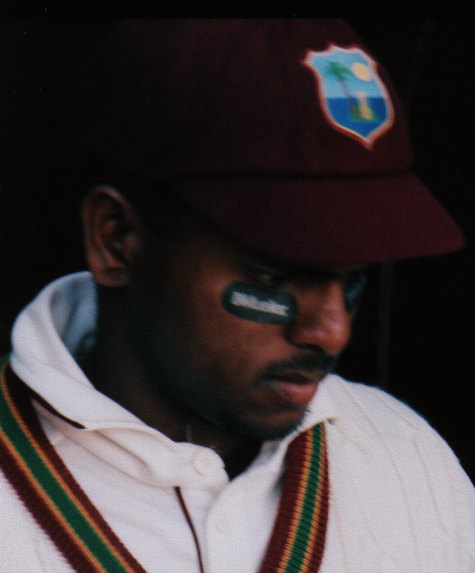
Shivnarine Chanderpaul CCH (born 16 August 1974) is a Guyanese cricket coach and former captain of the West Indies cricket team. Considered one of the greatest batsmen of his era,[1] Chanderpaul is the 10th highest run scorer of all time in International cricket and the 9th highest in Test cricket. Chanderpaul was a member of the West Indies team that won the 2004 ICC Champions Trophy, and in the 2004 ICC Champions Trophy Final, he had the highest contribution for West Indies with the bat, scoring 47 runs.

Key Information

Chanderpaul captained West Indies in 14 Tests and 16 One Day Internationals.[2] A left-handed batsman, Chanderpaul is well known for his unorthodox batting stance, which has been described as crab-like. He scored 20,000 runs in international cricket, and in 2008 he was named as one of the five Cricketers of the Year by the Wisden Cricketers' Almanack, and awarded Sir Garfield Sobers Trophy (ICC Cricketer of the Year) by the International Cricket Council.

He made his international debut at the age of 19, but did not score a century in international cricket for three years, prompting some criticism. Early in his career, he was plagued by injuries, and was even dubbed a hypochondriac until he had a piece of floating bone removed from his foot in 2000. After that he enjoyed consistent form, scoring over 11,000 runs in Test cricket and is the 8th highest run scorer of all time in the format.[3] Chanderpaul was dropped from the West Indies squad in 2015. He announced his retirement from international cricket in 2016, without a farewell, at the age of 41.[4][5]

He is currently serving as head coach of the USA senior women's and the USA Under-19 women's teams.[6] In November 2022, he was inducted to the ICC Hall of Fame.[7] He was also awarded the Cacique's Crown of Honour, the second highest award in the Order of Service of Guyana, in 2009.[8]

Early life and domestic career

[edit]

Shivnarine Chanderpaul was born to Hindu Indo-Guyanese parents Kamraj and Uma Chanderpaul in Unity Village, Guyana on 16 August 1974. His father, Kamaraj Chanderpaul, helped to nurture his cricketing ability as a youngster. His ancestors emigrated from India to British Guiana as indentured labours under the Indian indenture system. By the age of eight, Chanderpaul was playing for his village's cricket team, and would frequently bat for hours, being bowled at by various members of his family. His father initially took him to the Everest club in Georgetown, but there was not a place for him at the club, and so he instead joined the Demerara Cricket Club. He appeared for the club's under-16 side while only ten. He was later given an opportunity at the Georgetown Cricket Club.[9]

He made his first-class cricket debut for Guyana at the age of 17, facing Leeward Islands in the 1991–92 Red Stripe Cup.[10] He was run out for a duck in his first innings, but scored 90 runs in the second.[11] His List A debut followed a few days later, against Barbados, in which Chanderpaul did not get a chance to bat in a match with no result.[12] He achieved his maiden first-class century in April 1993, playing for the West Indies Board President's XI against the touring Pakistanis. After taking four wickets in the Pakistanis' innings, Chanderpaul was one of three West Indians to score a century, scoring 140 runs, and remaining not out.[13]

During this time, he achieved the highest first-class score of his career, in a 1995–96 Red Stripe Cup match against Jamaica. In the first-innings of the match, which was eventually drawn, he scored 303 not out from 478 deliveries.[14] In 2007, he subsequently joined Durham as an overseas player, and helped the club collect its first major honour by top-scoring in their 2007 Friends Provident Trophy final win.[15]

In March 2008, Chanderpaul caused some controversy when, after batting for Guyana on the first day of a Carib Beer Series match, he left to attend the WIPA awards, and did not arrive to play the following day. He was 78 not out when he left the match, without notifying his team's manager or coach. He was recorded as retiring out on the scorecard, and later returned on the third day.[16] At the ceremony, Chanderpaul was very successful, winning three awards as the international, Test and ODI cricketer of the year.[17]

International career

[edit]

During the English summer of 1993, Chanderpaul travelled with the West Indies Under-19 cricket team to England. He was the team's most successful batsman during the Test series, scoring 372 runs at a batting average of 124.00, including a score of 203 not out in the first Test, at Trent Bridge in Nottingham.[18] In the 1993–94 Red Stripe Cup, Chanderpaul was near the top of the batting averages,[19] and, according to the Wisden Cricketers' Almanack, he was a "contentious selection" for the subsequent Test series against England, in which he was picked as an all-rounder who could bowl leg breaks as well as bat.[20] He bowled 16 overs in England's first innings without taking a wicket, and scored 62 runs in the West Indies reply.[21] Chanderpaul played four Tests during his debut series, and was third amongst West Indian batsmen in terms of both runs scored and batting average, getting 288 runs at 57.60.[22]

Over the following couple of years, Chanderpaul was in and out of the West Indian Test side, missing a visit by Australia altogether.[citation needed]

Dominating the arena

[edit]

In his first 18 Test matches, Chanderpaul scored 1,232 runs at an average of 49.28, but despite scoring thirteen half-centuries, his highest score was 82;[23] a Test century eluded him. He reached the milestone in his nineteenth Test, scoring 137 against India. Just over a month later, he repeated the feat in One Day International cricket, striking his maiden century in the format, scoring 109 runs, also against India.[24]

Chanderpaul scored a further century in each of 1998, in a Test match against England, and 1999, in an ODI against South Africa. In the latter match, Chanderpaul and Carl Hooper were the only West Indian batsmen to reach double figures while batting – Chanderpaul scored 150, and Hooper reached 108. Their partnership of 226 was, at the time, a record in ODIs for the West Indies,[25] and Chanderpaul's individual total is his highest in ODIs.[26] During this early period of his international career, Chanderpaul suffered with a negative reputation. Along with his failure to convert half-centuries into centuries, he had a tendency to miss matches which was perceived as hypochondria.[27] He was also in the news for late-night partying; on one occasion in 1999, he shot a policeman in the mistaken belief that he was a thief.[28] His career took a turn for the positive in 2000, when he had surgery on his foot to remove a floating bone.[29]

Free of his foot injury, Chanderpaul enjoyed the best series of his career to that point when he scored centuries in three of the five Test matches against India. In addition to his centuries, he also scored three half-centuries, and batted for a record 1,513 minutes between dismissals.[9] The following year, against Australia, Chanderpaul scored a century from 69 balls – which at the time was the third fastest Test century.[a][31] Later in that same series, the two sides scored exactly the same total in their respective first innings, and Australia then reached 417 in their second, leaving West Indies requiring 418 runs to win. No side had ever successfully chased that many runs to win in a Test previously; writing for Cricinfo, Andrew Miller reported at the end of the third day that "Victory [for the West Indies] is as unlikely as ever, but it remains a remote possibility."[32] On the final two days, Ramnaresh Sarwan and Chanderpaul—batting with a broken finger—both reached centuries, and the West Indies completed the record run-chase with three wickets remaining.[33] He subsequently suffered what ESPNcricinfo described as "an indifferent run";[24] despite scoring centuries against South Africa and Bangladesh, he averaged just over 35 across eighteen innings, of which six were against either Bangladesh or Zimbabwe.[34] Facing England at Lord's, Chanderpaul narrowly missed out on a century in both innings in July 2004. He remained not out on each occasion, scoring 128 runs in the first innings, and 97 in the second, but the West Indies were beaten by over 200 runs in the contest.[35]

Captaincy

[edit]
Chanderpaul took over the captaincy of the West Indies from Brian Lara (pictured) for just under a year, and is adjudged to have flourished when Lara retired.

In late 2004, Digicel began a sponsorship deal with the West Indies cricket team, and caused division within the squad. Initially, Chanderpaul was one of five players who did not attend a training camp due to disagreements about resulting commercial issues.[36] For the following series against South Africa, seven of the West Indies best players were omitted from the squad due to contractual issues, but Chanderpaul had resolved his differences, and was named as captain in place of Lara, who was one of the missing players.[37] In the first match of the series, Chanderpaul became only the second player, after Graham Dowling, to score a double century on his debut as captain in Test cricket. He remained 203 not out when he declared the West Indies innings closed;[38] the joint-highest score of his Test career.[26] Only a resolute batting performance from Jacques Kallis rescues a draw for South Africa in the match, although Chanderpaul was criticised for both the timing of his declaration,[39] and later, negative field placings.[40] For the second Test of the series, the West Indies were back to full-strength after the seven missing players cancelled their contracts with Cable & Wireless. Despite the return of Lara, Chanderpaul retained the captaincy.[41] The second and third Tests of the series were both won by South Africa, before a high scoring draw in the fourth Test. Responding to South Africa's 588 for six declared, West Indies scored 747, in which Chanderpaul was one of four players to score a century.[42]

Less than a year after taking on the captaincy, Chanderpaul resigned the position, citing a desire to concentrate on his batting. Although his batting average during his captaincy was only slightly less than his career average,[43] the West Indies only won one Test match and two ODIs out of thirty matches under his charge. The former West Indian bowler, Colin Croft suggested that Chanderpaul "was filling a space until some else could take over the mantle."[44] Chanderpaul's stint as captain was generally criticised in the press; Nagraj Gollapudi, writing for ESPNcricinfo described his style as unconvincing,[45] while Ian Chappell claimed that the West Indies needed a "father figure", rather than Chanderpaul, who he thought was "predictable and reactive".[46]

Chanderpaul's results in international matches[47]
  Matches Won Lost Drawn Tied No result
Test[48] 164 39 77 48 0
ODI[49] 268 110 144 1 13
T20I[50] 22 9 11 2

Post captaincy

[edit]

In early 2007, Chanderpaul recorded his second highest score in ODI cricket, hitting 149 not out in a losing cause against India.[24] Later that year, he was the top-scorer for the West Indies during their series against England, aggregating 446 runs in three Tests at an average of almost 150. His achievements during the series earned him the man of the series accolade,[51] and saw him named as one of the five Cricketers of the Year by the Wisden Cricketers' Almanack. He was especially praised by Wisden for his third instance of batting for 1,000 or more minutes without being dismissed, and for his century in the third Test on a difficult pitch.[9] He scored another century in the fourth match of the series, and was named as the man of the match, despite an England victory.[52] His performances throughout 2007 resulted in him being one of four players short-listed for the ICC Player of the Year award,[53] which was eventually won by Ricky Ponting.

In 2008 Chanderpaul continued in his form during the Sri Lankan and Australian tours of the Caribbean. During the 2008 season he rose to be ranked 5th in the Test batting rankings. By the end of the third test against Australia, Chanderpaul became the fourth West Indian batsman to accomplish 8,000 runs in Test cricket as well as rising in the ranks to 2nd of the ICC test rankings, just 4 points shy of becoming the world's number 1 ranked batsman. In the Test match series against the Australians, Chanderpaul had amassed 442 runs in 6 innings, in 3 of which he had remained not out, at an average of 147.33, including two centuries and three half-centuries. From the West Indies second innings in the first Test, he was not dismissed until the final day of the series – more than 1,000 minutes of batting without losing his wicket – the fourth time he has achieved this feat in Test cricket. Chanderpaul eventually picked as part of the 2008 ICC test team of the year and bestowed with the 2008 ICC Cricketer of the Year award.[54]

In December 2013, Chanderpaul scored his 29th test century against New Zealand in the 3rd test match at Hamilton to equal Donald Bradman's number of centuries. In the process, Chanderpaul also became the sixth highest run-scorer in Test matches, overtaking Allan Border's 11,174 runs.[55] This was also his 17th unbeaten test ton, a new record – one more than Indian legend Sachin Tendulkar(16 unbeaten tons).[56][57]

Late career

[edit]

In July 2014, he played for the MCC side in the Bicentenary Celebration match at Lord's.[58] During the Third Test against New Zealand, he was out stumped by BJ Watling, the first time in his 20-year career that he had ever done so in any form of the game. In a test series against Bangladesh in 2014, Chanderpaul continued to show his durability by achieving scores of 85*, 84* and 101*.

"I was very disappointed that Shiv was not allowed a couple of more Test matches, not necessarily to break the record but to have a proper send-off. Something I think he is very disappointed [about] and unfortunately that did not happen," Lara said."That guy with the most Test matches for the West Indies, playing for over 20 years, I don't think people in the West Indies understand exactly his contribution."

On 23 January 2016, Chanderpaul announced his retirement from international cricket.[5] Aged 41 at the announcement, Chanderpaul did not play for West Indies since May 2015,[60] and his subsequent exclusion was cited to be a result of poor performances in the home series against England, in which he averaged 15.33 in 3 matches.[61] He was also dropped from the WICB contract in December 2015, signalling the selectors' intention to move forward with younger players, despite the fragility of the West Indies middle order.

Personality and style

[edit]

Chanderpaul is well known for his unorthodox batting stance, in which he stands facing the bowler, as opposed to most batsmen who stand side-on. He adopts this stance in order to see the ball clearly with both eyes, something he developed as a child when facing hostile fast bowling.[62] Despite this, when he began playing Test cricket, he had a reasonably traditional stance, with his feet only angling slightly forwards. After a year of playing international cricket, he had eliminated the forward angle, and his feet pointed square of the feet in a classical stance. Between 2000 and 2005, he started to rotate his feet forwards, until they eventually pointed almost directly down the wicket, a position he has maintained since.[63] While he faces forwards, his bat is angled towards square-leg, prompting Scyld Berry to describe his stance as "perfectly orthodox... provided the bowler delivers from next to the umpire at square-leg, not the one at the bowler’s end."[64] Chanderpaul's stance has frequently been described as "crab-like",[65][66] and his batting has been labelled as ugly.[67] It has been suggested that these factors have resulted in him being underrated as a batsman.[65] When the ball is delivered, Chanderpaul moves into a more traditional position to play the ball.[68]

As his stance has developed throughout his time playing international cricket, his batting aggression has undergone a similar transformation. He was first selected for the West Indies based on his attacking style of play; he cites Rohan Kanhai as one of his early influences. It was from Kanhai that Chanderpaul took his nickname, "Tiger". He maintained this style during the early part of his international career, but as the batting of the West Indies side around him grew weaker, he developed a more defensive style of play, and turned himself into what ESPNcricinfo's Vaneisa Baksh described as "the anchor of the team, the solid man."[29] The Australian spin bowler Shane Warne described Chanderpaul as "a bloke you needed to crowbar away from the crease,"[68] and he is often labelled as "limpet-like."[69]

After retirement

[edit]

On 27 January 2017, Chanderpaul signed a Kolpak deal with Lancashire.[70] Following a successful campaign with the club in 2017 – a season in which he scored three centuries – Chanderpaul decided to extend his contract with Lancashire by signing a one-year deal for the 2018 season.[71] He is also still committed to playing First Class cricket for his native Guyana for the foreseeable future.[72] In a 2022 YouTube documentary by Vice Media, Jamaican musician Sean Paul stated that one of his signature rap lyrics people assumed to be "Sean De Paul", was actually "Chanderpaul" in reference to Shivnarine, a sporting idol of his.[73]

Coaching career

[edit]

In January 2022, he was appointed as head Coach of franchise Jamaica Tallawahs for CPL 2022 edition.[74][75]

In July 2022, Chanderpaul was appointed head coach of the United States women's national cricket team.[76] He resigned from USA Cricket after coaching the USA under-19 women to the 2023 ICC Under-19 Women's T20 World Cup.[77]

International centuries

[edit]

Chanderpaul scored 30 Test centuries, including two double centuries, and reached the 100-mark 11 times in One Day International matches. He scored 77 first-class centuries.

Achievements and statistics

[edit]
  • As of October 2016 holds the record of achieving the most times the feat of scoring fifty runs or more in both the innings of a test and remain unbeaten (or not out) (4 times).[78]
  • Most career runs in test cricket when batting at number 5 position with 6,883 runs.[79]
  • He was chosen as the most handsome man in Guyana by Guyana Malayali Samajham.[citation needed]
  • Chanderpaul along with Stuart Williams holds the record for registering the highest opening runstand for West Indies in ODIs (200*)[80]
  • In 2018 Chanderpaul was granted an Honorary Doctorate of Laws from the University of the West Indies at St Augustine.[81]

Notes

[edit]

References

[edit]
[edit]
Revisions and contributorsEdit on WikipediaRead on Wikipedia
from Grokipedia
Shivnarine Chanderpaul (born 16 August 1974) is a retired Guyanese cricketer who represented the internationally from 1994 to 2015, primarily as a left-handed batsman noted for his defensive resilience and unorthodox technique. He played 164 Test matches, scoring 11,867 runs at an average of 51.37, including 30 centuries and 66 half-centuries, making him the second-highest run-scorer for after . In One Day Internationals (ODIs), he featured in 268 matches, accumulating 8,778 runs at an average of 41.60 with 11 centuries, while also contributing as a part-time leg-spinner with 14 wickets in ODIs (and 9 in Tests). Inducted into the ICC Hall of Fame in 2022, Chanderpaul's career exemplified endurance, as he remained unbeaten on 49 occasions in Tests and faced over 25,000 deliveries, one of only six players to achieve this feat. Chanderpaul made his Test debut on 17 March 1994 against at in , scoring 62 in a comfortable victory for the . Over his 21-year international career, he became a cornerstone of the West Indies batting lineup during a transitional era, often anchoring with his compact, side-on stance that prioritized survival against pace and spin. His highest Test score was an unbeaten 203 against in 2005, and he reached the 10,000-run milestone in 2012 during a series against , where he scored 346 runs across five . Chanderpaul's consistency peaked in the late 2000s; between 2007 and 2014, he averaged 71.71 in Tests with 16 centuries in 57 matches, earning him the No. 1 ICC Test batting ranking for seven months from 2008 to 2009. In ODIs, Chanderpaul's aggressive opening or middle-order role yielded highlights like his unbeaten 149 against in 2007, though his style suited longer formats more. He also played 22 T20Is, scoring 343 runs at an average of 20.17. Beyond playing, Chanderpaul's work ethic influenced his post-retirement coaching roles, including with the Women's Under-19 team at the 2023 ICC ; in recent years, he has continued playing in veteran leagues and taken up coaching roles, including head coach for Bolts in the 2025 . Retiring after a final Test against in May 2015, he left a legacy as one of ' most prolific and tenacious batsmen, with a career of 43.31 in Tests reflecting his methodical approach.

Early life and domestic career

Family and upbringing

Shivnarine Chanderpaul was born on 16 August 1974 in Unity Village, a small coastal community on Guyana's East Coast Demerara, to Indo-Guyanese parents Khemraj and Uma Chanderpaul. His father, Khemraj—affectionately known as "Cowfly"—worked as a fisherman and played cricket as an amateur, often participating in local village matches that pitted teams like the Unity Cricket Club against rivals such as Young Stars. Uma contributed to the family by selling fish in the community, reflecting the modest economic realities of their household amid Guyana's challenging 1980s landscape under economic scarcity and political transition following Forbes Burnham's regime. Growing up in this rural, resource-limited environment near the Atlantic Ocean and Mahaica River, Chanderpaul developed an early affinity for cricket through informal play on village grounds. At around age eight, he began training under his father's guidance, using improvised equipment such as cut-down pads and bats reinforced with bamboo due to the lack of proper gear. Khemraj, recognizing his son's potential amid the "nonsense" of inconsistent local coaching, took a hands-on role in honing his skills, fostering a foundation built on perseverance and self-reliance. Chanderpaul's Indo-Caribbean heritage, rooted in the descendants of 19th-century Indian indentured laborers, instilled values of and resilience that permeated his approach to the sport and life in a multi-ethnic society like . This cultural backdrop, combined with the communal spirit of , shaped his initial passion, setting the stage for his transition into more structured youth competitions.

Youth cricket and domestic debut

Chanderpaul's introduction to organized came early, with his talent recognized at age 10 when he joined the Cricket Club's under-16 team. By age 14, he had advanced to under-19 , and at 15, after a brief period with the East Coast Police club, he moved to the Everest Cricket Club in Georgetown, where he honed his skills in club matches. With encouragement from his family, particularly his father Khemraj, who provided initial coaching, Chanderpaul balanced his burgeoning commitments with in . His youth representative career progressed swiftly, as he earned selection for Guyana's under-19 team and later played for the under-19 side on their 1993 tour of . During that tour, he demonstrated his potential with an unbeaten 203 against under-19s, showcasing both batting prowess and occasional leg-spin bowling. These performances at the age-group level solidified his reputation within Guyanese circles. Chanderpaul made his first-class domestic debut for at age 17 in the 1991–92 Red Stripe Cup, facing at , Georgetown, where he scored 90 in the second innings after a first-innings . In the subsequent season, he notched his maiden first-class century, an unbeaten 140 against a touring team, marking consistent contributions that propelled him toward broader regional opportunities.

Key domestic performances

Chanderpaul holds the record as Guyana's leading run-scorer in , accumulating 5,746 runs at an average of 63.14 across his domestic career for the side, which included 17 centuries. A pinnacle of his Guyana performances was an unbeaten 303 against in the 1995-96 Shell Shield, a marathon knock from 478 deliveries that remains the highest individual score in Guyanese history and helped secure a draw for his team. Chanderpaul's domestic prowess extended to English , where he represented from 2001 to 2006 and enjoyed a standout 2002 season with more than 1,000 runs in the . He later joined Durham for the 2007 and 2008 seasons, played briefly for in 2008, and returned to county action with in 2012 and 2013, contributing consistent middle-order stability across these spells. Beyond traditional first-class competitions, Chanderpaul made appearances in the in 2008. After retiring from international cricket in 2015, he continued featuring for in domestic tournaments until 2019, including a remarkable 210-run T20 innings that year.

International career

Debut and early struggles

Shivnarine Chanderpaul made his debut for the on 17 October 1994 against at Nahar Singh Stadium in , though he did not bat as his team secured a nine-wicket victory chasing a modest target. He got his first opportunity to bat in the second ODI on 20 October 1994 at in , where he scored 22 runs off 39 balls before being , in a match reduced by rain that West Indies lost by eight runs under the adjusted target. Chanderpaul's Test debut arrived earlier, on 17 March 1994 against at in , during the second Test of the series. Batting at No. 7, he scored 62 runs in the first innings off 163 balls, helping to a dominant total of 564, and added 14 in the second innings as his team won by an innings and 64 runs. This promising start showcased his potential as a resilient middle-order batsman, but his unorthodox technique—characterized by a closed stance facing the bowler and minimal foot movement—drew early criticism from coaches and commentators who questioned its long-term viability against top-class pace attacks. Throughout the mid-1990s, Chanderpaul faced several hurdles in establishing himself in the international arena. Despite accumulating 1,232 runs at an average of 49.28 in his first 18 Tests, including 13 half-centuries, he struggled to convert starts into centuries, enduring a three-year wait for his maiden Test hundred, which fueled doubts about his consistency under pressure. Injuries hampered his progress, limiting his participation in key series, while his distinctive style continued to invite scrutiny, with some observers labeling it as too defensive and awkward for the demands of . He was dropped and recalled multiple times between 1998 and 2000, including an omission for the 2000 tours to and amid reports of disciplinary issues within the team environment. Chanderpaul's resilience shone through during the 1998-99 home series against , a high-stakes contest against the world's dominant side. In the third Test at , , he scored 69 in the first , anchoring the middle order on a tricky pitch, and in the fourth Test at , Kingston, he remained unbeaten on 82 in the first , playing a pivotal role in ' dramatic two-wicket victory that leveled the series 2-2. These marked a turning point, demonstrating his ability to adapt and endure against elite bowling, and helped solidify his position as a key player for the during a transitional era.

Rise to prominence

Chanderpaul's emergence as a cornerstone of the batting lineup occurred during the 2003 home series against , highlighted by his explosive 100 off just 69 balls in the first at Georgetown—the third-fastest Test century at the time—which helped West Indies post 489 and take a first-innings lead. In the decisive fourth Test at St. John's, he anchored the historic chase of 418 with an unbeaten 104, forming a crucial 123-run fifth-wicket partnership with to secure victory and set a then-record for the highest successful run-chase in . This momentum carried into limited-overs cricket, where Chanderpaul played a key role in ' 2004 ICC Champions Trophy triumph—their first global title in over 20 years—with a steady 47 in the final against at , supporting the lower order in a tense two-wicket win while chasing 161. His consistency in Tests during this era solidified his reputation, as he averaged above 50 from 2004 to 2008, delivering match-defining knocks like 128 not out against at in 2004 to draw the first Test and an unbeaten 203 against at Georgetown in 2005. Amid ' overall decline in the , Chanderpaul frequently rescued fragile from No. 3 or No. 5, amassing over 3,000 runs in this period alone and earning the ICC Cricketer of the Year award in 2008 for 819 runs at an average of 91.00 across eight matches, including three centuries. His resilience provided vital stability, contributing to a career aggregate of 11,867 runs—the second-most by a —often in challenging conditions that tested the team's depth.

Captaincy and leadership

Shivnarine Chanderpaul was appointed captain of the team in late 2004 ahead of the home Test series against , a move prompted by a sponsorship dispute that resulted in the omission of seven players, including , from the squad. He assumed full leadership responsibilities across formats. Over his tenure from 2005 to 2006, Chanderpaul led the side in 14 Test matches, achieving 1 win, 10 losses, and 3 draws, while in ODIs he captained 16 matches with 2 wins and 14 losses. His captaincy began with the 2004–05 home series against , a four-Test affair that won 2–0, with the remaining two matches drawn; Chanderpaul himself excelled individually, scoring 450 runs including twin centuries in the drawn third Test. This was followed by a morale-boosting 1–0 series win over at home (with one draw) in late 2004–05, marking his sole Test victory as captain. However, subsequent tours proved challenging: a 0–2 whitewash in in 2005, a 0–2 loss in in 2005–06 (with one draw in a three-Test series), and a 0–2 defeat in in early 2006, underscoring the team's struggles against stronger opponents. In ODIs, results were similarly dismal, with the team securing just two victories amid a broader pattern of inconsistency. Chanderpaul's leadership occurred during a turbulent era for West Indies cricket, exacerbated by ongoing contract disputes between players and the West Indies Cricket Board (WICB), which had initially fueled his appointment. Despite his personal resilience—averaging 47.18 with the bat in Tests as captain, including a career-best 203* against —the team failed to reverse its decline, hampered by a lack of cohesion and depth. He resigned with immediate effect on 12 April 2006, citing a desire to concentrate on his batting for greater overall contribution and expressing that he had "served his time" in the role, amid reports of board interference. Though his record reflected the period's difficulties, Chanderpaul was viewed as a steadying influence in a fractious environment, prioritizing team stability over transformative success.

Later international phase and retirement

Following his resignation from the West Indies captaincy in 2006, Chanderpaul continued to anchor the batting lineup with characteristic resilience through the late 2000s and early , often carrying the team in challenging conditions. In the 2009 home series against , he scored 201 runs across five matches, including an unbeaten 147 in the decisive fifth at , which helped post 544 and force a draw, underscoring his role as a stabilizing force amid a struggling side. His consistency persisted, culminating in April 2012 when he became the second West Indian after to reach 10,000 runs during the third against at , achieving the milestone with a score of 13 in the second innings. By this point, Chanderpaul had played 140 Tests, highlighting his longevity in an era of decline. As Chanderpaul entered his late 30s, selection challenges mounted due to his age and the team's push for younger talent, leading to frequent omissions despite his enduring contributions. His last Test century came in December 2013 against at Hamilton, where he scored 118 in the third Test, equaling Don Bradman's record of 29 Test hundreds at the time and helping secure an innings victory. However, form dips and board decisions saw him dropped for the tour of —though the series was ultimately abandoned due to a player payment dispute—and more definitively omitted from the 2015 home series against after averaging just 14.50 in the preceding series. These setbacks exemplified the precarious team context, with Chanderpaul enduring multiple comebacks and drops over his final years, yet facing over 25,000 deliveries in Tests—placing him among only six players to achieve this feat and reflecting his defensive mastery. Chanderpaul's international career concluded without a formal farewell, as he announced his from all formats in 2016 at age 41, having played 164 s and amassed 11,867 runs at an average of 51.37. His last appearance was in May 2015 against at , where he scored 2 in a losing cause. In ODIs, he featured in 268 matches until his final outing in December 2011 against in , retiring with 8,778 runs at 41.60, including 11 centuries. This phase cemented his legacy as a tenacious survivor who outlasted ' post-dominant era, often batting for hours to salvage draws or prolong resistance.

Playing style and personality

Batting technique

Shivnarine Chanderpaul, a left-handed batsman, was renowned for his distinctive "crab stance," characterized by a crouched, front-on position where he faced the bowler directly with his chest open, feet spread wide and pointing down the pitch, and the bat resting behind his legs. This unorthodox setup evolved from his early training in , where he frequently fell over while attempting a more conventional side-on stance, prompting him to adopt a lower, more stable crouch for better balance against . As Chanderpaul explained, "I used to fall over a lot, so because of balance, I try to be in a more stable position, a better position to play the ball without falling over," refining it over years through rigorous practice with cork balls on concrete and beach surfaces to enhance reflexes and anticipation. The stance's primary strengths lay in its defensive solidity against pace attacks, allowing Chanderpaul to maintain a still head and constant visibility of the ball, transitioning to a perfect side-on alignment at the point of contact to rarely be beaten by speed or movement. His soft hands and canny deflections further bolstered this resilience, enabling precise control and minimal risk. Against spin, quick trigger movements and footwork provided extra time for shot selection, with a low grip and loose hold facilitating subtle adjustments like flicks to the on-side or kneeling half-sweeps. This combination proved highly effective, contributing to his reputation as a tenacious accumulator despite the unconventional form. Chanderpaul's technique underwent a notable , beginning with an aggressive youth style—evident in feats like a 69-ball Test century against in —before shifting to an ultra-defensive approach in his later years, prioritizing survival and attrition on challenging pitches. This adaptation aligned with his role as West Indies' anchor, yielding a Test of 51.37 across 164 matches. In contrast, his ODI average of 41.60 reflected a more restrained style suited to longer formats. Critics often viewed the stance as negative and quirky, particularly in limited-overs , where it contributed to slow scoring rates and inconsistent pacing, with many featuring strike rates below 65. Early perceptions dismissed it as unconventional or even flawed, though it later earned recognition for its technical ingenuity in sustaining high-level performance over two decades.

On-field demeanor and mindset

Shivnarine Chanderpaul was known for his quiet and reserved demeanor on the field, often shying away from the media spotlight due to past negative experiences with interviews. Despite his shy personality, he earned the nickname "Tiger" from legend , reflecting his fierce competitiveness and unyielding determination in matches. This contrast between his off-field reticence and on-field tenacity became a hallmark of his presence in the setup. Chanderpaul's mental resilience was evident in his ability to endure physical pain and prolonged pressure, often prioritizing needs over personal comfort. In the 2003 fourth Test against in , he batted through a sustained while taking a catch, contributing scores of 63 and an unbeaten 140 to help chase a world-record 418-run target. His emphasized digging in during adversity, as he thrived on challenges that required and focus, a trait honed from his rural upbringing where survival in demanded toughness. Within the team, Chanderpaul served as a mentor to younger players, using his vast experience to guide them on correcting batting errors and building resilience. He was respected for his and team-first approach, as seen in his support for teammates like during key innings, always emphasizing collective success over individual glory. This interpersonal role solidified his status as a stabilizing figure in the dressing room. Off the field, Chanderpaul maintained a family-oriented reputation, with his Tagenarine following in his footsteps as a professional er, highlighting his dedication to passing on values beyond the game. His contributions were recognized regionally, including the Cacique's Crown of Honour from in 2009, underscoring his broader impact and humility.

Post-retirement activities

Continued playing in leagues

Following his retirement from in 2015, Shivnarine Chanderpaul continued to participate in domestic and franchise competitions to maintain his fitness and mentor emerging talent. In January 2017, Chanderpaul signed a one-year Kolpak deal with for the season, marking his return to the county where he had previously played from 2010 to 2014. During the 2017 campaign, he accumulated 831 runs across 13 matches at an average of 51.93, including a highest score of 182, contributing significantly to Lancashire's runners-up finish in Division One. Chanderpaul remained active in Guyanese domestic through 2019, representing the Guyana Jaguars in regional tournaments such as the 2017-18 Regional Super50, where he featured alongside his Tagenarine in notable father-son performances. His final notable appearance came in April 2019, when he scored an unbeaten 210 off 76 balls in a local T20 tournament organized by the Adam Sanford Cricket4Life foundation at the Caribe Lumber Ballpark. These outings allowed him to stay match-ready while supporting grassroots development in by inspiring and guiding younger players. In franchise leagues, Chanderpaul had limited involvement with the (CPL), playing just two matches for the in 2013 and scoring 11 runs before withdrawing from the inaugural edition due to prior commitments. Chanderpaul returned to competitive cricket in 2025 as part of the Champions squad in the of Legends (WCL) held in , expressing joy at reuniting with former teammates and contributing through his experience. This participation underscored his ongoing commitment to the game and staying physically active at age 50.

Coaching roles

Following his retirement from international cricket in 2015, Shivnarine Chanderpaul transitioned into , leveraging his extensive playing experience to mentor emerging talents. In 2022, he was appointed head coach of the for the (CPL), guiding the team to victory in that season. The following year, in 2021, Chanderpaul joined the coaching setup as the U-19 batting consultant, working under head coach Floyd Reifer to refine young players' techniques ahead of international commitments. In July 2022, Chanderpaul took on a significant role with , becoming of both the senior women's team and the U-19 women's team. He led the U-19 side to the 2023 ICC Women's Under-19 T20 in , where the team gained valuable exposure despite exiting in the group stage. Chanderpaul resigned from these positions immediately after the tournament, citing a desire to pursue other opportunities while expressing satisfaction with the developmental progress made during his tenure. Chanderpaul's coaching career continued to expand in franchise leagues. In August 2024, he was named head coach of the & Falcons for their inaugural CPL season, focusing on building team cohesion and strategic batting approaches. He was replaced by for the 2025 edition. More recently, in October 2025, Chanderpaul was appointed head coach of the Janakpur Bolts, the defending champions of the Nepal Premier League, ahead of the second edition of the tournament. Throughout his coaching roles, Chanderpaul has emphasized inspiring the next generation of , drawing on his own career's lessons in resilience and technical proficiency to foster disciplined growth in players.

Personal life and legacy

Shivnarine Chanderpaul is married to Amy Chanderpaul, with whom he has two sons, the eldest being , who made his Test debut for the in 2022 against . The father and son played together in 11 first-class matches for over five years, with Tagenarine scoring his maiden first-class century in their final appearance in 2018. Post-retirement, Chanderpaul purchased a ranch in , where he resides with his family, as highlighted in recent profiles of his life away from the game. Chanderpaul's contributions to cricket have earned him significant honors, including induction into the in 2022 as the 107th member, recognizing his 21-year international career and status as a mainstay of the batting lineup. He became the second batter after to reach 10,000 Test runs in 2012, a achieved during a match against . In 2009, he received Guyana's Cacique's Crown of Honour (CCH), the nation's third-highest civilian award, for his achievements and role as a sporting ambassador. Chanderpaul's legacy endures as a symbol of perseverance, particularly for Indo-Caribbean cricketers, having served as a defensive for the during a period of team decline while amassing over 11,800 runs with an average above 51. His unorthodox, resilient batting style—marked by a closed stance and ability to remain unbeaten in 49 innings—influenced paradigms of defensive play, frustrating bowlers and embodying in the face of adversity. As of 2025, the semi-retired Chanderpaul focuses on family life while occasionally providing commentary on major series and participating in legends tournaments, such as the World Championship of Legends.

Career statistics and honors

International centuries

Shivnarine Chanderpaul amassed 30 centuries in over his 21-year international , establishing himself as one of the most reliable middle-order batsmen for . His first Test century came in March 1997 against at , , where he scored an unbeaten 137 to help secure a draw. Of these 30 tons, 21 were scored after the year 2000, reflecting his peak form during West Indies' challenging phase against stronger opponents. Chanderpaul's centuries often played a crucial role in stabilizing innings, frequently featuring in significant partnerships, such as his 146-run stand with in the 2002 series against . Notable among his Test centuries were two double tons: an unbeaten 203 against at , Georgetown, in April 2004, which anchored to a draw; and another 203 not out against at The Wanderers, , in January 2005, marking his debut as and contributing to a rare victory. He repeated the 203* feat against at Mirpur in 2012, underscoring his consistency against varying attacks. A milestone came in December 2008 during the second Test against at , Napier, where his 118 became his 20th Test century, briefly elevating him to the top of the ICC Test rankings. Chanderpaul's final Test century was an unbeaten 101 against at in September 2014, a gritty knock that highlighted his enduring quality at age 40. In One Day Internationals, Chanderpaul scored 11 centuries across 268 matches, demonstrating his adaptability in the limited-overs format. His ODI centuries spanned from 1997 to 2010, with his highest being 150 against at in January 1999. These knocks often came in high-pressure situations, including unbeaten innings that guided to victories.
No.DateOpponentVenueScoreResult
103/05/1997, 109* won by 17 runs
224/01/1999, 150 won by 5 wickets
308/06/2002Beausejour , 108* won by 7 wickets
416/12/2006101 won by 11 runs
521/01/2007, 149* won by 5 wickets
623/03/2007, 102* won by 9 wickets
704/07/2007, Birmingham116* won by 3 wickets
830/11/2007, 127* won by 5 wickets (DLS method)
914/11/2008Sheikh Zayed , 107* won by 7 wickets
1022/03/2009, Providence112* won by 5 wickets (DLS method)
1113/04/2010, Kingston101 won by 179 runs

Overall achievements and records

Shivnarine Chanderpaul played 164 Test matches for , scoring 11,867 runs at an average of 51.37, including 30 centuries. His highest score was 203 , and he faced 27,393 balls in Tests, ranking fourth overall for most balls faced in . In One Day Internationals (ODIs), Chanderpaul featured in 268 matches, accumulating 8,778 runs at an average of 41.60 with 11 centuries. His contributions extended to limited-overs cricket where he provided stability in the middle order. In Internationals (T20Is), he played 22 matches, scoring 343 runs at an average of 20.18. Chanderpaul's standout achievements include being named the ICC Cricketer of the Year in 2008, recognizing his pivotal role in ' performances that year. He was also selected as one of Wisden's Cricketers of the Year in 2008 for his resilient batting displays. Additionally, he was part of the team that won the , contributing key innings during the tournament. In 2022, Chanderpaul was inducted into the .
FormatMatchesRunsAverageCenturiesNotable Record/Achievement
Tests16411,86751.37304th most balls faced (27,393)
ODIs2688,77841.6011Key middle-order stabilizer
T20Is2234320.180Limited exposure in shortest format

References

Add your contribution
Related Hubs
User Avatar
No comments yet.