Hubbry Logo
Interpersonal tiesInterpersonal tiesMain
Open search
Interpersonal ties
Community hub
Interpersonal ties
logo
8 pages, 0 posts
0 subscribers
Be the first to start a discussion here.
Interpersonal ties
Interpersonal ties
from Wikipedia

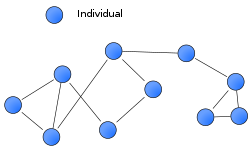
Nodes (individuals) and ties (connections) in social networks.

In social network analysis and mathematical sociology, interpersonal ties are defined as information-carrying connections between people. Interpersonal ties, generally, come in three varieties: strong, weak or absent. Weak social ties, it is argued, are responsible for the majority of the embeddedness and structure of social networks in society as well as the transmission of information through these networks. Specifically, more novel information flows to individuals through weak rather than strong ties. Because our close friends tend to move in the same circles that we do, the information they receive overlaps considerably with what we already know. Acquaintances, by contrast, know people that we do not, and thus receive more novel information.[1]

Included in the definition of absent ties, according to the American sociologist Mark Granovetter, are those relationships (or ties) without substantial significance, such as "nodding" relationships between people living on the same street, or the "tie", for example, to a frequent vendor one would buy from. Such relations with familiar strangers have also been called invisible ties since they are hardly observable, and are often overlooked as a relevant type of ties.[2] They nevertheless support people's sense of familiarity and belonging.[3] Furthermore, the fact that two people may know each other by name does not necessarily qualify the existence of a weak tie. If their interaction is negligible the tie may be absent or invisible. The "strength" of an interpersonal tie is a linear combination of the amount of time, the emotional intensity, the intimacy (or mutual confiding), and the reciprocal services which characterize each tie.[4]

History

[edit]

One of the earliest writers to describe the nature of the ties between people was German scientist and philosopher, Johann Wolfgang von Goethe. In his classic 1809 novella, Elective Affinities, Goethe discussed the "marriage tie". The analogy shows how strong marriage unions are similar in character to particles of quicksilver, which find unity through the process of chemical affinity.

In 1954, the Russian mathematical psychologist Anatol Rapoport commented on the "well-known fact that the likely contacts of two individuals who are closely acquainted tend to be more overlapping than those of two arbitrarily selected individuals". This argument became one of the cornerstones of social network theory.

In 1973, stimulated by the work of Rapoport and Harvard theorist Harrison White, Mark Granovetter published The Strength of Weak Ties.[5][4] This paper is now recognized as one of the most influential sociology papers ever written.[6]

To obtain data for his doctoral thesis, Granovetter interviewed dozens of people to find out how social networks are used to land new jobs. Granovetter found that most jobs were found through "weak" acquaintances. This pattern reminded Granovetter of his freshman chemistry lesson that demonstrated how "weak" hydrogen bonds hold together many water molecules, which are themselves composed of atoms held together by "strong" covalent bonds.

In Granovetter's view, a similar combination of strong and weak bonds holds the members of society together.[6] This model became the basis of his first manuscript on the importance of weak social ties in human life, published in May 1973.[4] According to Current Contents, by 1986, the Weak Ties paper had become a citation classic, being one of the most cited papers in sociology.

In a related line of research in 1969, anthropologist Bruce Kapferer, published "Norms and the Manipulation of Relationships in a Work Context" after doing field work in Africa. In the document, he postulated the existence of multiplex ties, characterized by multiple contexts in a relationship.[7][8] In telecommunications, a multiplexer is a device that allows a transmission medium to carry a number of separate signals. In social relations, by extrapolation, "multiplexity" is the overlap of roles, exchanges, or affiliations in a social relationship.[9]

Research data

[edit]
Friends, painting by Hanna Pauli

In 1970, Granovetter submitted his doctoral dissertation to Harvard University, entitled "Changing Jobs: Channels of Mobility Information in a Suburban Community".[10] The thesis of his dissertation illustrated the conception of weak ties. For his research, Dr. Granovetter crossed the Charles River to Newton, Massachusetts where he surveyed 282 professional, technical, and managerial workers in total. 100 were personally interviewed, in regards to the type of ties between the job changer and the contact person who provided the necessary information. Tie strength was measured in terms of how often they saw the contact person during the period of the job transition, using the following assignment:

  • often = at least once a week
  • occasionally = more than once a year but less than twice a week
  • rarely = once a year or less

Of those who found jobs through personal contacts (N=54), 16.7% reported seeing their contact often, 55.6% reported seeing their contact occasionally, and 27.8% rarely.[10] When asked whether a friend had told them about their current job, the most frequent answer was "not a friend, an acquaintance". The conclusion from this study is that weak ties are an important resource in occupational mobility. When seen from a macro point of view, weak ties play a role in affecting social cohesion.

Social networks

[edit]

In social network theory, social relationships are viewed in terms of nodes and ties. Nodes are the individual actors within the networks, and ties are the relationships between the actors. There can be many kinds of ties between the nodes. In its simplest form, a social network is a map of all of the relevant ties between the nodes being studied.

Weak tie hypothesis

[edit]

The "weak tie hypothesis" argues, using a combination of probability and mathematics, as originally stated by Anatol Rapoport in 1957, that if A is linked to both B and C, then there is a greater-than-chance probability that B and C are linked to each other:[11]

That is, if we consider any two randomly selected individuals, such as A and B, from the set S = A, B, C, D, E, ..., of all persons with ties to either or both of them, then, for example, if A is strongly tied to both B and C, then according to probability arguments, the B–C tie is always present. The absence of the B–C tie, in this situation, would create, according to Granovetter, what is called the forbidden triad. In other words, the B–C tie, according to this logic, is always present, whether weak or strong, given the other two strong ties. In this direction, the "weak tie hypothesis" postulates that clumps or cliques of social structure will form, being bound predominately by "strong ties", and that "weak ties" will function as the crucial bridge between any two densely knit clumps of close friends.[12]

It may follow that individuals with few bridging weak ties will be deprived of information from distant parts of the social system and will be confined to the provincial news and views of their close friends. However, having a large number of weak ties can mean that novel information is effectively "swamped" among a high volume of information, even crowding out strong ties. The arrangement of links in a network may matter as well as the number of links. Further research is needed to examine the ways in which types of information, numbers of ties, quality of ties, and trust levels interact to affect the spreading of information.[5]

Strong ties hypothesis

[edit]

According to David Krackhardt,[13] there are some problems in the Granovetter definition. The first one refers to the fact that the Granovetter definition of the strength of a tie is a curvilinear prediction and his question is "how do we know where we are on this theoretical curve?". The second one refers to the effective character of strong ties. Krackhardt says that there are subjective criteria in the definition of the strength of a tie such as emotional intensity and the intimacy. He thought that strong ties are very important in severe changes and uncertainty:

"People resist change and are uncomfortable with uncertainty. Strong ties constitute a base of trust that can reduce resistance and provide comfort in the face of uncertainty. This it will be argued that change is not facilitated by weak ties, but rather by a particular type of strong tie."

He called this particular type of strong tie philo and define philos relationship as one that meets the following three necessary and sufficient conditions:

  1. Interaction: For A and B to be philos, A and B must interact with each other.
  2. Affection: For A and B to be philos, A must feel affection for B.
  3. Time: A and B, to be philos, must have a history of interactions with each other that have lasted over an extended period of time.

The combination of these qualities predicts trust and predicts that strong ties will be the critical ones in generating trust and discouraging malfeasance. When it comes to major change, change that may threaten the status quo in terms of power and the standard routines of how decisions are made, then trust is required. Thus, change is the product of philos.

Positive ties and negative ties

[edit]

Starting in the late 1940s, Anatol Rapoport and others developed a probabilistic approach to the characterization of large social networks in which the nodes are persons and the links are acquaintanceship. During these years, formulas were derived that connected local parameters such as closure of contacts, and the supposed existence of the B–C tie to the global network property of connectivity.[11]

Moreover, acquaintanceship (in most cases) is a positive tie. However, there are also negative ties such as animosity among persons. In considering the relationships of three, Fritz Heider initiated a balance theory of relations. In a larger network represented by a graph, the totality of relations is represented by a signed graph.

This effort led to an important and non-obvious Structure Theorem for signed graphs,[14] which was published by Frank Harary in 1953. A signed graph is called balanced if the product of the signs of all relations in every cycle is positive. A signed graph is unbalanced if the product is ever negative. The theorem says that if a network of interrelated positive and negative ties is balanced, then it consists of two subnetworks such that each has positive ties among its nodes and negative ties between nodes in distinct subnetworks. In other words, "my friend's enemy is my enemy".[15] The imagery here is of a social system that splits into two cliques. There is, however, a special case where one of the two subnetworks may be empty, which might occur in very small networks.

In these two developments, we have mathematical models bearing upon the analysis of the structure. Other early influential developments in mathematical sociology pertained to process. For instance, in 1952 Herbert A. Simon produced a mathematical formalization of a published theory of social groups by constructing a model consisting of a deterministic system of differential equations. A formal study of the system led to theorems about the dynamics and the implied equilibrium states of any group.

Absent or invisible ties

[edit]

In a footnote, Mark Granovetter defines what he considers as absent ties:

Included in 'absent' are both the lack of any relationship and ties without substantial significance, such as a 'nodding' relationship between people living on the same street, or the 'tie' to the vendor from whom one customarily buys a morning newspaper. That two people 'know' each other by name need not move their relation out of this category if their interaction is negligible. In some contexts, however (disasters, for example), such 'negligible' ties might usefully be distinguished from non-existent ties. This is an ambiguity caused by substitution, for convenience of exposition, of discrete values for an underlying continuous variable.[4]

The concept of invisible tie was proposed to overcome the contradiction between the adjective "absent" and this definition, which suggests that such ties exist and might "usefully be distinguished" from the absence of ties.[2] From this perspective, the relationship between two familiar strangers, such as two people living on the same street, is not absent but invisible. Indeed, because such ties involve only limited interaction (as in the case of 'nodding relationships'), if any, they are hardly observable, and are often overlooked as a relevant type of ties.[2] Absent or invisible ties nevertheless support people's sense of familiarity and belonging.[3]

Latent tie

[edit]

Adding any network-based means of communication such as a new IRC channel, a social support group, a Webboard lays the groundwork for connectivity between formerly unconnected others. Similarly, laying an infrastructure, such as the Internet, intranets, wireless connectivity, grid computing, telephone lines, cellular service, or neighborhood networks, when combined with the devices that access them (phones, cellphones, computers, etc.) makes it possible for social networks to form. Such infrastructures make a connection available technically, even if not yet activated socially. These technical connections support latent social network ties, used here to indicate ties that are technically possible but not yet activated socially. They are only activated, i.e. converted from latent to weak, by some sort of social interaction between members, e.g. by telephoning someone, attending a group-wide meeting, reading and contributing to a Webboard, emailing others, etc. Given that such connectivity involves unrelated persons, the latent tie structure must be established by an authority beyond the persons concerned. Internet-based social support sites contain this profile. These are started by individuals with a particular interest in a subject who may begin by posting information and providing the means for online discussion.[16]

The individualistic perspective

[edit]

Granovetter's 1973 work proved to be crucial in the individualistic approach of the social network theory as seen by the number of references in other papers.[17] His argument asserts that weak ties or "acquaintances",[4][12] are less likely to be involved within the social network than strong ties (close friends and family). By not going further in the strong ties, but focusing on the weak ties, Granovetter highlights the importance of acquaintances in social networks. He argues, that the only thing that can connect two social networks with strong ties is a weak tie: "… these clumps / [strong ties networks] would not, in fact, be connected to one another at all were it not for the existence of weak ties.[4]: 1363 [12]: 202 

It follows that in an all-covering social network individuals are at a disadvantage with only a few weak links, compared to individuals with multiple weak links, as they are disconnected with the other parts of the network. Another interesting observation that Granovetter makes in his work is the increasing specialization of individuals creates the necessity for weak ties, as all the other specialist information and knowledge is present in large social networks consisting predominately of weak ties.[4]

Cross et al., (2001) confirm this by presenting six features which differentiate effective and ineffective knowledge sharing relations: "1)knowing what other person knows and thus when to turn to them; 2) being able to gain timely access to that person; 3) willingness of the person sought out to engage in the problem solving rather than dump information; 4) a degree of safety in the relationship that promoted learning and creativity; 5) the factors put by Geert Hofstede; and 6) individual characteristics, such as openness" (pp 5). This fits in nicely with Granovetter's argument that "Weak ties provide people with access to information and resources beyond those available in their own social circle; but strong ties have greater motivation to be of assistance and are typically more easily available."[12]: 209 

This weak/strong ties paradox is elaborated by myriad authors. The extent in which individuals are connected to others is called centrality. Sparrowe & Linden (1997) argue how the position of a person in a social network confer advantages such organizational assimilation, and job performance (Sparrowe et al., 2001); Burt (1992) expects it to result in promotions, Brass (1984) affiliates centrality with power and Friedkin (1993) with influence in decision power. Other authors, such as Krackhardt and Porter (1986) contemplate the disadvantages of the position is social networks such as organizational exit (see also Sparrowe et al., 2001) and Wellman et al.,(1988) introduce the use of social networks for emotional and material support. Blau and Fingerman, drawing from these and other studies, refer to weak ties as consequential strangers, positing that they provide some of the same benefits as intimates as well as many distinct and complementary functions.[18]

Labour market

[edit]

In the early 1990s, US social economist James D. Montgomery contributed to economic theories of network structures in the labour market. In 1991, Montgomery incorporated network structures in an adverse selection model to analyze the effects of social networks on labour market outcomes.[19] In 1992, Montgomery explored the role of "weak ties", which he defined as non-frequent and transitory social relations in the labour market.[20][21] He demonstrated that weak ties are positively correlated with higher wages and higher aggregate employment rates.[citation needed]

See also

[edit]

References

[edit]
[edit]
Revisions and contributorsEdit on WikipediaRead on Wikipedia
from Grokipedia
Interpersonal ties are the fundamental connections between individuals that enable the flow of , resources, and emotional support within social structures. In and , these ties are characterized as information-carrying links between people, varying in strength according to the amount of time spent together, emotional intensity, intimacy through mutual confiding, and the provision of reciprocal services. A key distinction in the study of interpersonal ties lies between strong ties and weak ties, as outlined in foundational sociological research. Strong ties typically involve close relationships, such as those with family members or longtime friends, where frequent interaction fosters deep emotional bonds and reliable support but often limits exposure to diverse perspectives. In contrast, weak ties connect individuals across different social circles, such as acquaintances or colleagues met occasionally, and play a pivotal role in bridging separated groups to disseminate novel information and opportunities. This bridging function makes weak ties particularly valuable for processes like job acquisition, where they provide access to external networks beyond one's immediate circle, thereby enhancing social mobility and innovation diffusion. Beyond their structural roles, interpersonal ties form the core of , representing the collective resources accessible through sustained networks of relationships. According to , social capital consists of "the aggregate of the actual or potential resources which are linked to possession of a durable network of more or less institutionalized relationships of mutual acquaintance and recognition," allowing individuals to leverage connections for benefits like economic advantages or social credentials. These ties require ongoing to maintain, as their value depends on the of the network and the types of capital (economic, cultural, or symbolic) held by those connected. In broader societal contexts, interpersonal ties influence outcomes ranging from community cohesion to individual well-being, underscoring their significance in understanding and .

Fundamentals

Definition and Characteristics

Interpersonal ties refer to the dyadic relationships between individuals that serve as the foundational connections in social networks, facilitating the transmission of information, the diffusion of influence, and the shaping of behaviors and social structures. These ties represent direct, personal bonds that link people in ways that affect their interactions, decisions, and access to resources, distinguishing them from more abstract or institutional affiliations. The core characteristics of interpersonal ties are captured by their strength, which Granovetter defines as a probabilistic function of several dimensions: the amount of time individuals spend interacting, the emotional intensity of their connection, the level of intimacy or mutual confiding, and the extent of reciprocal services exchanged. These attributes vary across ties, with stronger ties typically involving frequent, emotionally charged interactions and deeper trust, while weaker ties feature sporadic contact and limited personal disclosure. This multidimensional framework underscores how ties function not just as static but as dynamic conduits that influence social cohesion and outcomes. In practice, interpersonal ties manifest differently based on these characteristics; for example, bonds often embody high emotional intensity and intimacy, fostering strong support systems, whereas connections with acquaintances involve lower duration and reciprocity, serving primarily as bridges for novel information. Unlike broader social relationships that may encompass large groups or societal norms, interpersonal ties emphasize these focused, pairwise or small-group dynamics, which are essential to understanding micro-level social processes.

Types of Ties

Interpersonal ties are commonly classified based on their strength, which refers to the degree of closeness and interaction frequency between individuals. Strong ties are characterized by frequent communication, emotional intensity, mutual confiding, and reciprocal services, often involving close members, friends, or partners. In contrast, weak ties involve infrequent interactions and peripheral connections, such as acquaintances or colleagues encountered sporadically, yet they play a crucial role in bridging diverse social circles. Ties can also be categorized by valence, reflecting their emotional or relational quality. Positive ties denote supportive and beneficial relationships, such as friendships that foster and within social networks. Negative ties, conversely, represent antagonistic or harmful connections, like enmities that introduce tension or conflict, often forming sparse and disconnected subgraphs in networks. Beyond these primary dimensions, other variants include absent ties and invisible ties. Absent ties occur when no relational information exists between individuals, representing non-edges in a where neither presence nor absence of connection is confirmed, complicating network analysis and blockmodeling. Invisible ties describe unacknowledged yet influential connections with "known strangers"—individuals repeatedly observed but not directly interacted with, building familiarity through accumulated, impersonal knowledge of habits or appearances, as seen in urban residential settings. Additionally, latent ties represent potential connections enabled by , such as platforms where technical exists but social has not yet occurred, allowing for the possibility of transforming into stronger relations through use.

Historical Development

Early Concepts

The concept of interpersonal ties has roots in , where distinguished three types of friendships in his : friendships of utility, based on mutual benefit; friendships of pleasure, arising from shared enjoyment; and friendships of virtue, grounded in mutual admiration of character and aimed at the good life. These categories highlighted how social bonds serve practical, emotional, and ethical functions, influencing later understandings of relational dynamics. In the 19th century, Johann Wolfgang von Goethe's 1809 novel introduced a chemical for social bonds, portraying human relationships as attractions akin to molecular affinities that draw individuals together irresistibly, often disrupting existing ties. This literary work metaphorically extended scientific ideas of affinity to interpersonal connections, emphasizing their involuntary and transformative nature. By the early 20th century, advanced these ideas in his 1908 work Soziologie: Untersuchungen über die Formen der Vergesellschaftung, exploring dyadic interactions—bonds between two individuals—as the fundamental units of social life, distinct from larger . Simmel also examined social circles, where overlapping memberships create webs of ties that shape individual identity and social forms. Émile Durkheim, in The Division of Labor in Society (1893), emphasized social solidarity as maintained through interpersonal ties, contrasting mechanical solidarity in traditional societies—rooted in shared beliefs and dense kinship bonds—with organic solidarity in modern ones, sustained by interdependent professional and functional connections. This framework underscored how ties foster cohesion amid societal change. Robert E. Park, a key figure in the Chicago School, integrated ties into in works like his 1926 essay "The Concept of Position in Sociology," viewing social connections as spatial phenomena that organize urban life through , accommodation, and succession in ecological niches. Park's approach treated ties as mechanisms linking individuals to their physical and social environments. The transition to systematic network analysis emerged in the 1930s with Jacob L. Moreno's , introduced in his 1934 book Who Shall Survive?, which pioneered quantitative measurement of interpersonal attractions and repulsions through sociograms—diagrams mapping group ties to reveal social structures. Moreno's methods laid groundwork for empirical study of ties beyond qualitative description.

Modern Evolution

In the mid-20th century, research on interpersonal ties began shifting toward formal models of relational dynamics, particularly through Fritz Heider's balance theory. Initially articulated in a 1946 paper, the theory posited that individuals seek cognitive consistency in their attitudes toward others, represented by positive or negative valences in dyadic and triadic relations. Heider expanded this framework in his 1958 book, emphasizing how balanced triads—where all ties are positive or two are negative and one positive—promote stability, while imbalanced configurations generate tension and motivate attitude change. This work laid foundational concepts for analyzing tie polarities, influencing subsequent quantitative approaches to network equilibrium. The 1970s marked a pivotal breakthrough in the study of interpersonal ties with Mark Granovetter's seminal 1973 paper, which introduced the concept of tie strength as a multidimensional construct encompassing time spent, emotional intensity, intimacy, and reciprocal services. Granovetter argued that weak ties, despite lower emotional investment, serve as critical bridges between social clusters, facilitating the of novel information and opportunities that strong ties, embedded in dense networks, often fail to provide. This perspective highlighted the structural role of ties in broader social processes, establishing 1973 as a turning point toward quantitative . Building on these ideas, the 1980s and 1990s saw expansions into tie brokerage and organizational contexts. Ronald Burt's 1992 book developed the theory of , positing that individuals who bridge non-redundant ties across disconnected network segments gain competitive advantages through access to diverse resources and information flows. Complementing this, David Krackhardt's 1992 chapter explored the value of strong ties in organizations, introducing the notion of "philos"—close confidants who provide reliable support and influence during change or crises, countering the overemphasis on weak ties. By the 1990s, labor market studies increasingly applied these frameworks, demonstrating how weak ties aid job mobility while strong ties offer sustained support, further solidifying the quantitative turn in interpersonal ties research. Empirical validations of these developments, such as network surveys, have confirmed their in real-world settings.

Theoretical Frameworks

Strong and Weak Ties

The distinction between strong and weak ties forms a foundational dichotomy in social network theory, emphasizing how the intensity of interpersonal connections influences and . Strong ties refer to close, frequent relationships such as those with or close friends, characterized by high emotional investment and mutual support. Weak ties, in contrast, denote more peripheral acquaintances with lower interaction frequency and emotional depth, yet they play a crucial role in connecting disparate social circles. Mark Granovetter's seminal theory posits that weak ties are instrumental in bridging between otherwise disconnected social clusters, thereby facilitating the of novel information and opportunities. For instance, individuals often secure new jobs through casual acquaintances rather than close contacts, as weak ties link people to diverse networks beyond one's immediate circle. This hypothesis underscores that weak ties serve as conduits for non-redundant information, enhancing access to resources and ideas that strong ties, embedded within homogeneous groups, cannot provide. Complementing this, David Krackhardt's "strength of strong ties" concept, developed in the early 1990s, highlights the benefits and limitations of intense bonds, particularly in organizational contexts. Strong ties foster emotional support, trust, and cohesion among closely knit groups—termed "philos" relationships—enabling reliable collaboration and stability. However, they often convey redundant information, as connected individuals share similar perspectives, thereby limiting exposure to innovative or diverse viewpoints. Granovetter operationalized tie strength through four key dimensions: the amount of time spent together, emotional intensity, intimacy (or mutual confiding), and reciprocal services exchanged between parties. He described tie strength as a (probably linear) combination of these elements, with higher values indicating stronger ties. Structurally, weak ties reduce network redundancy by spanning clusters, promoting broader connectivity and resilience in social systems. In contrast, strong ties enhance local cohesion but can create echo chambers, reinforcing existing bonds at the expense of external linkages.

Positive, Negative, and Other Tie Variants

Positive ties represent supportive interpersonal relations that foster cooperation, trust, and mutual benefit within social networks. These ties are characterized by positive sentiments, such as liking or friendship, which encourage information sharing and collective action. In theoretical terms, positive ties play a key role in maintaining network stability, as outlined in Heider's balance theory, where a triad consisting of three positive relations (e.g., mutual liking among three individuals) results in a balanced, tension-free structure. Negative ties, in contrast, denote antagonistic or hostile relations that introduce conflict and tension into social structures. These ties, often marked by dislike or enmity, disrupt harmony and can lead to fragmentation in groups. Harary's signed extends structural balance to account for such ties by assigning positive or negative signs to edges in a graph, defining balance when the product of signs around any cycle is positive; tension arises in imbalanced configurations, such as a triad with two positive ties connecting to a single negative tie, where the cycle product is negative: σ(C)=eCs(e)=1\sigma(C) = \prod_{e \in C} s(e) = -1 Here, σ(C)\sigma(C) is the sign of cycle CC, and s(e)s(e) is the sign of edge ee, indicating structural strain. Absent ties refer to the absence of connections in a social network, where no relation is observed or reported between actors, potentially signaling opportunities for forming new links or reflecting structural holes. In network analysis, these non-links are treated as distinct from positive or negative ties, often arising from missing data or deliberate non-interaction, and their presence can influence blockmodeling outcomes by altering equivalence classes among actors. Invisible ties capture hidden or unmeasured influences that subtly shape interpersonal dynamics without overt connections, such as implicit obligations or cultural norms that guide indirectly. These ties highlight the limitations of observable network data, emphasizing relational perspectives where unseen bonds contribute to urban coexistence and social cohesion. Latent ties describe dormant interpersonal connections that exist in potential but remain inactive until triggered by external factors, such as shifts in communication opportunities. Haythornthwaite conceptualized these ties as preexisting relations among individuals who know of each other but lack ongoing interaction, positioning them as a bridge between weak ties and potential strong ties in evolving networks.

Empirical Research

Key Studies

One of the foundational empirical investigations into interpersonal ties was Mark Granovetter's 1973 survey of 282 professional, technical, and managerial workers in a suburb, which examined how individuals obtained job information through personal contacts. The study revealed that 56 percent of job leads came from weak ties, such as acquaintances, compared to only 28 percent from strong ties like close family or friends, underscoring weak ties' role in providing information beyond redundant strong-tie networks. Building on this, James D. Montgomery's 1992 econometric analysis modeled labor market dynamics using equilibrium frameworks to assess tie strength's impact on outcomes. The models demonstrated that weak ties facilitate better job matches, resulting in higher wages compared to hires through strong ties or formal channels, as weak ties connect individuals to diverse opportunities outside their immediate circles. In organizational contexts, David Krackhardt's 1992 study of a manufacturing plant analyzed "philos"—defined as strong-tie friendships—versus casual contacts in . Surveying 139 employees, the found that strong ties (philos) transmitted information more completely and accurately within dense clusters, aiding in the accurate of , while casual contacts spread information more broadly but with less fidelity, highlighting strong ties' utility for cohesive internal communication over weak ties' bridging function. More recent longitudinal data from the Panel Study of Income Dynamics (PSID), spanning over five decades since 1968, has illuminated interpersonal ties' contributions to . Analyses of PSID waves through the 2020s show that diverse social networks, including weak ties, enhance intergenerational income mobility by providing access to educational and job resources, with individuals reporting broader ties exhibiting higher upward mobility rates than those reliant on kin-based strong ties. Key datasets have further advanced empirical research on ties. The General Social Survey (GSS), through its core discussion network modules since 1985, maps "tie cores"—the small sets of confidants individuals discuss important matters with—revealing average network sizes of 2-3 ties in the U.S., with declining diversity over time correlating to reduced . Internationally, the European Social Survey (ESS) has provided cross-national data on tie diversity since 2002, using modules to assess variations in interpersonal connections across 30+ countries. ESS findings indicate that tie diversity—measured by the mix of kin, friends, and colleagues—positively predicts social trust and , with higher diversity in Northern European nations (e.g., 40-50 percent non-kin ties) compared to Southern ones (around 30 percent).

Methodological Approaches

Qualitative methods play a foundational role in studying by capturing the nuanced, subjective aspects of relationships, such as intimacy and emotional depth. Interviews allow researchers to elicit detailed narratives about social connections, revealing how ties form and evolve in context-specific ways. Ethnographic approaches, involving prolonged observation and immersion in social settings, further enable the documentation of tie dynamics through participant interactions and cultural practices. A key tool in this domain is the name generator technique, which prompts respondents to list specific contacts (e.g., those discussed important matters with) to map personal networks and assess tie intimacy. Quantitative network analysis provides structured ways to measure and model the presence and patterns of interpersonal ties across populations. Sociomatrices, binary or valued matrices representing ties between actors, serve as the core data structure for encoding relational data, where rows and columns denote individuals and entries indicate tie strength or existence. This representation facilitates computational analysis of network properties like density and centrality. For inferring tie formation probabilities, exponential random graph models (ERGMs) are widely used, modeling the likelihood of a tie as a function of network statistics and covariates; for instance, the probability of a tie can be expressed as p(tie)=11+exp(βX)p(\text{tie}) = \frac{1}{1 + \exp(-\beta X)} where XX are covariates influencing tie formation and β\beta are parameters estimated from data. Survey tools offer efficient means to quantify tie diversity and access to resources. The position generator, developed by Ronald Burt, asks respondents whether they know individuals in specific occupational or positional roles, thereby measuring the breadth and status diversity of ties without naming individuals directly. In contrast, the name generator, associated with Christopher McCarty, elicits explicit lists of contacts based on relational criteria (e.g., frequency of interaction), providing deeper insights into the composition and closeness of ties but requiring more respondent effort. These tools differ in focus: position generators emphasize structural opportunities, while name generators prioritize actual relationships. Advanced techniques extend these methods to dynamic and large-scale analyses of tie evolution. Longitudinal tracking through egocentric networks—focusing on an individual's ties and their alters over time—employs repeated surveys or to observe changes in tie strength and network reconfiguration. Computational simulations, such as agent-based models, replicate tie formation and dissolution by defining rules for agent interactions, allowing researchers to test hypotheses on network evolution under varying conditions. In the 2020s, approaches leverage digital traces from platforms (e.g., communication logs) to analyze vast tie structures, incorporating for scalable pattern detection while addressing computational demands. Despite these advances, methodological challenges persist in studying interpersonal ties. Recall bias in self-reports can distort tie reporting, as respondents may inaccurately remember or selectively recall connections due to memory limitations or social desirability. Ethical issues surrounding tie privacy are also prominent, particularly when inferring relationships from indirect data sources, raising concerns about consent, confidentiality, and potential harm from unintended disclosures in networked contexts.

Applications

Labor Market Dynamics

Interpersonal ties play a pivotal role in shaping labor market outcomes by facilitating access to opportunities, influencing job mobility, and affecting . In particular, the structure and strength of these ties determine how individuals navigate job searches, secure positions, and maintain employment stability. highlights that while weak ties often bridge individuals to novel information and external opportunities, strong ties contribute to internal progression and retention within organizations. Weak ties, characterized by acquaintances rather than close relationships, are instrumental in job searches because they connect individuals to diverse networks and previously inaccessible information about vacancies. Mark Granovetter's seminal 1973 study of professional, technical, and managerial workers in the Boston area found that 56% of jobs were obtained through personal contacts, with weak ties accounting for 55% of these referrals compared to 28% from strong ties; moreover, jobs secured via weak ties had an average occupational prestige score of 39.5, higher than the 37.6 for strong ties, indicating access to better-quality positions. James D. Montgomery's 1994 equilibrium analysis further formalized this, demonstrating that weak ties enhance employment probabilities by providing broader information flows, reducing unemployment duration, and yielding approximately 18% higher expected wages through exposure to superior job offers. These findings underscore how weak ties act as bridges to new social circles, amplifying job search effectiveness beyond the redundant information typically available from strong ties. In contrast, strong ties—such as those with family, close friends, or colleagues—predominantly support job retention and internal mobility through referrals and promotions. Employee referral programs, often leveraging strong ties, have been shown to improve hiring matches and longevity; for instance, studies indicate that referred hires exhibit lower turnover rates in the first year compared to non-referred hires, attributing this to the trust and cultural fit fostered by close networks. Similarly, research on internal labor markets indicates that strong ties facilitate promotions by providing endorsements and insider knowledge. This retention effect stems from the emotional and informational support strong ties offer, helping individuals navigate workplace challenges and secure stable career paths. Interpersonal ties also perpetuate labor market inequalities by reinforcing social capital disparities, particularly through homophilous (similar-to-similar) connections. Nan Lin's 2001 theory posits that individuals from advantaged backgrounds access higher-status ties that reproduce inequality, as homogeneous networks limit exposure to diverse opportunities and embed status attainment in existing hierarchies; for example, those with high-status contacts are more likely to secure elite positions, widening wage and mobility gaps. Empirical extensions confirm that weak ties can mitigate some disparities by broadening access, but strong, insular ties among privileged groups sustain them, with studies showing that low-income workers rely more on family-based strong ties, resulting in lower job quality compared to cross-class weak ties. Contemporary evidence from digital platforms reinforces these dynamics while extending them to new labor contexts. Analysis of LinkedIn data from over 20 million users between 2015 and 2019 revealed that moderately weak ties boosted job transmissions by 27%, making job switches 2.6 times more likely than with strong ties, due to their role in disseminating timely, non-redundant opportunities. In the gig economy, interpersonal ties enhance freelance matching on platforms like Upwork, where repeat collaborations and referrals through weak professional connections help stabilize income for independent workers, as evidenced by surveys of freelancers emphasizing network-driven task allocation over algorithmic matching alone.

Social Support and Cohesion

Interpersonal ties play a central role in building , which enhances community stability and facilitates resource sharing. In his analysis of American civic , Putnam distinguishes between bonding social capital, derived from ties within homogeneous groups that foster internal cohesion and mutual , and bridging social capital, stemming from weak ties across diverse groups that promote broader connectivity and access to new resources. Bonding ties act as a form of "sociological superglue," reinforcing in close-knit communities, while bridging ties serve as "sociological ," enabling the lubrication of interactions beyond immediate circles to reduce and encourage . Strong ties within dense networks contribute to cohesion by mitigating isolation and promoting informal . For instance, research on structure demonstrates that robust local social ties, such as friendships and neighborly supervision, significantly lower crime rates by enhancing collective efficacy and monitoring in neighborhoods. In a study of British communities, higher levels of social ties were associated with reduced rates of violent and crimes, underscoring how interconnected groups deter deviance and maintain order without relying solely on formal institutions. This mechanism highlights the stabilizing effect of strong ties in fostering resilient communities capable of self-regulation. Weak ties, conversely, are vital for resource mobilization and the diffusion of innovations across networks. Everett Rogers' diffusion of innovations theory posits that information and ideas spread through social systems via communication channels, where weak ties bridge structural holes to accelerate adoption and resource flow. By connecting disparate groups, these ties enable the rapid dissemination of knowledge and opportunities, as seen in applications where weak connections facilitate the spread of agricultural techniques or public health practices, thereby supporting collective action in diverse settings. Empirical evidence illustrates these dynamics in real-world crises and civic processes. During in 2005, pre-existing social ties were crucial for aid distribution and recovery, with survivors leveraging strong community networks for immediate support and evacuation assistance. Similarly, in civic engagement, recruitment through interpersonal networks significantly boosts participation; Verba, Schlozman, and Brady's analysis shows that individuals asked to join activities via personal connections are far more likely to contribute to political and community efforts, thereby enhancing societal cohesion and democratic vitality. As of 2025, emerging research highlights how AI and remote work platforms may alter tie dynamics, with algorithms sometimes substituting weak ties in job matching and support networks, though human connections remain essential for trust and cohesion.

Individualistic and Psychological Perspectives

Personal Impacts

Interpersonal ties serve as extensions of the self, shaping individual identity through social interactions and perceptions from others. Charles Horton Cooley's concept of the "looking-glass self," introduced in 1902, posits that individuals develop their self-concept by imagining how they appear to others, interpreting those reactions, and forming self-feelings accordingly, with ties acting as the reflective "mirror" in this process. In contemporary social network terms, this perspective extends to how embedded connections within networks reinforce or modify personal identity, as individuals internalize feedback from their relational web to construct a coherent sense of self. Strong ties, characterized by frequent and intimate interactions, exert significant influence on behavior by enforcing social norms and expectations. For instance, during , peer pressure from close friends often leads to in behaviors such as risk-taking or academic effort, as strong ties provide emotional and social validation that guide individual actions. In contrast, weak ties—less intimate but bridging diverse social circles—facilitate the expansion of worldviews by exposing individuals to novel information and perspectives beyond their immediate environment. Mark Granovetter's seminal 1973 analysis highlights how these ties serve as conduits for diverse ideas, enhancing and in personal . Throughout the life course, interpersonal ties play a pivotal role in , particularly in shaping long-term choices like paths. Studies from the , such as Martin Kilduff's 1992 research, demonstrate that networks act as resources, where the structure and dispositions within these ties moderate influences on organizational and professional selections, embedding trajectories within social contexts. The interplay between interpersonal ties and individual agency reveals a tension between dependence and autonomy. Barry Wellman's 2001 framework of "networked individualism" describes how modern ties enable personalized networking, allowing individuals to balance embeddedness in relationships with greater personal control over their social connections, fostering independence amid relational interdependence.

Mental Health Implications

Interpersonal ties exert significant influence on mental health outcomes, with strong ties serving as a primary buffer against stress and related disorders. The buffering hypothesis, proposed by Cohen and Wills in 1985, posits that social support from close relationships mitigates the adverse effects of stressors on psychological well-being by providing emotional, informational, and instrumental aid during times of high stress. This protective role is evidenced in meta-analyses, where higher levels of social support are associated with a 26% reduced odds of depression among adults (pooled OR = 0.74, 95% CI 0.72–0.76). Conversely, negative or toxic interpersonal ties can exacerbate vulnerabilities, heightening anxiety and physiological stress responses. Studies from the 2010s indicate that negative social interactions, such as or conflict in relationships, correlate with elevated anxiety symptoms, as seen in analyses of U.S. adults where social negativity independently predicted poorer mood and increased anxiety beyond positive support factors. Physiologically, exposure to social strain from such ties is linked to dysregulated patterns, with midlife adults showing heightened levels in response to frequent negative exchanges, contributing to and anxiety amplification. The diversity of interpersonal ties, particularly the inclusion of weak ties, plays a crucial role in alleviating , a key risk factor for decline. Research from the early 2020s, examining social networks during the , demonstrates that the erosion of weaker ties—such as acquaintances providing casual support—led to heightened feelings of isolation, with practical helper networks (often weaker connections) declining by over 10-12% and directly contributing to increased across age groups. Maintaining diverse networks, encompassing both strong and weak ties, thus counters isolation by broadening access to varied social resources and interactions. Interventions aimed at fostering interpersonal ties have shown promise in enhancing mental health, particularly through structured programs like social prescribing. Initiated as a core element of the UK's National Health Service in 2019, social prescribing connects individuals with community-based activities and groups to address non-medical needs, reducing symptoms of depression and anxiety by promoting tie-building and support networks. Longitudinal evidence from the UK Biobank further supports these benefits, revealing that stronger social connections—measured via frequency of visits, telephone contacts, and group participation—are associated with a 7.2% overall mortality rate over 12.6 years, with low social connection independently raising all-cause mortality risk by up to 30% compared to high-connection groups.

Contemporary Extensions

Digital and Online Ties

Digital platforms have significantly transformed the evolution of latent ties, which are potential connections that exist technically but remain socially inactive until activated. Caroline Haythornthwaite's seminal work introduced the concept of latent ties in the context of , arguing that tools like and early services enable the activation of these dormant relationships by providing low-cost communication channels that bridge previously unconnected individuals. In the , the rise of platforms such as further exemplified this activation, allowing users to reconnect with weak ties from past contexts like school or work, thereby converting latent ties into active weak ones through features like friend suggestions and messaging. Online interpersonal ties often exhibit distinct characteristics compared to offline ones, featuring higher frequency of interaction but generally lower levels of intimacy and emotional depth. indicates that while digital communication enables more frequent contact—such as daily likes, comments, or shares—it tends to prioritize breadth over depth, with users reporting shallower relational quality in high-volume exchanges. For instance, a 2011 Pew survey found that 61% of social networking site users connected with important discussion network members , facilitating maintenance of weak ties that might otherwise fade due to distance or time constraints. The impacts of digital ties include enhanced bridging social capital, particularly through platforms like Twitter, where weak ties disseminate information rapidly during activism campaigns, connecting disparate groups and amplifying collective action. However, these platforms also pose risks of echo chambers, where algorithms and user preferences limit exposure to diverse viewpoints, reinforcing homophily and potentially exacerbating polarization. During the COVID-19 pandemic in the 2020s, research on video conferencing tools like Zoom revealed mixed effects: interactions with strong ties via these platforms increased social connectedness and positive affect, while engagements with weak ties often led to heightened stress and lower perceived connection, highlighting the limitations of virtual formats in sustaining deeper bonds. As of 2025, post-pandemic trends show a resurgence in hybrid interactions, blending digital and in-person ties, alongside the emergence of AI-mediated companions that simulate emotional support but raise questions about authenticity in relational depth. Measuring the strength of digital ties commonly relies on interaction logs from platforms, employing algorithms that quantify reciprocity, , and response latency to infer relational closeness. For example, studies on data use metrics like mutual attention and interaction duration to compute tie strength, with models such as trained on these logs to predict strong versus weak connections. These approaches, building on Granovetter's framework, enable scalable analysis of vast online networks by operationalizing tie strength through observable digital behaviors like message exchanges and shared content.

Cross-Cultural Variations

Interpersonal ties exhibit significant variations across cultural contexts, particularly when contrasting collectivist and individualist societies as delineated by Hofstede's cultural dimensions framework. In collectivist cultures, prevalent in many Asian societies such as and , strong ties—especially within and in-group networks—are prioritized for maintaining social harmony and mutual obligations, reflecting a high emphasis on interdependence and . This contrasts with individualist cultures, like those and much of , where personal autonomy and looser affiliations predominate, leading to networks that are more fluid and less binding. Empirical comparisons reveal that strong-tie rationalities, which favor deep relational bonds for and support, are more prevalent in collectivistic settings; for instance, a study of over 1,200 participants across , , , and the found stronger endorsement of such ties in the former three societies compared to the U.S., underscoring cultural moderation of network preferences. Weak ties, often instrumental for accessing novel information and opportunities like job searches, also differ culturally. In Western individualist contexts, weak ties are more utilitarian, facilitating diverse connections in professional networks as theorized in Granovetter's strength-of-weak-ties paradigm, with showing their role in bridging social gaps for employment. Conversely, in non-Western settings, such as West African communities, strong ties within networks tend to dominate job acquisition and transitions, reducing reliance on weak connections and emphasizing communal reciprocity over individualistic networking. These patterns highlight how cultural norms shape the functional utility of ties, with individualist societies leveraging weak links for innovation and mobility, while collectivist ones prioritize relational depth for stability. Distinct cultural practices further illustrate these variations through institutionalized forms of interpersonal connections. In , compadrazgo represents a where godparents (compadres) form enduring supportive bonds with a child's , extending beyond blood relations to provide social and economic , thereby expanding network resilience in community-oriented societies. Similarly, in the , wasta functions as a of connection-based and favoritism, where personal networks influence access to resources and opportunities, often rooted in tribal or familial affiliations and reinforcing hierarchical social structures. Recent cross-national research, drawing on large-scale surveys from 28 countries in the International Social Survey Programme (ISSP) 2017, links cultural norms to the effects of interpersonal ties on outcomes. For example, negative social ties show stronger associations with and depression in individualist environments compared to collectivist ones, indicating greater vulnerability to negative ties in individualist settings and potential cultural buffering in collectivist contexts. Such findings, informed by frameworks like the World Values Survey's measures of social trust and support, indicate that cultural emphasis on interdependence can modulate the psychological impacts of ties.

References

Add your contribution
Related Hubs
User Avatar
No comments yet.