Hubbry Logo
logo
Spatial frequency
Community hub

Spatial frequency

logo
0 subscribers
Read side by side
from Wikipedia
Green Sea Shell image
Spatial frequency representation of the Green Sea Shell image
Image and its spatial frequencies: Magnitude of frequency domain is logarithmically scaled, and zero frequency is in the center. Notable is the clustering of the content on the lower frequencies, a typical property of natural images.

In mathematics, physics, and engineering, spatial frequency is a characteristic of any structure that is periodic across position in space. The spatial frequency is a measure of how often sinusoidal components (as determined by the Fourier transform) of the structure repeat per unit of distance.

The SI unit of spatial frequency is the reciprocal metre (m−1),[1] although cycles per meter (c/m) is also common. In image-processing applications, spatial frequency is often expressed in units of cycles per millimeter (c/mm) or also line pairs per millimeter (LP/mm).

In wave propagation, the spatial frequency is also known as wavenumber. Ordinary wavenumber is defined as the reciprocal of wavelength and is commonly denoted by [2] or sometimes :[3] Angular wavenumber , expressed in radian per metre (rad/m), is related to ordinary wavenumber and wavelength by

Visual perception

[edit]

In the study of visual perception, sinusoidal gratings are frequently used to probe the capabilities of the visual system, such as contrast sensitivity. In these stimuli, spatial frequency is expressed as the number of cycles per degree of visual angle. Sine-wave gratings also differ from one another in amplitude (the magnitude of difference in intensity between light and dark stripes), orientation, and phase.

Spatial-frequency theory

[edit]

The spatial-frequency theory refers to the theory that the visual cortex operates on a code of spatial frequency, not on the code of straight edges and lines hypothesised by Hubel and Wiesel on the basis of early experiments on V1 neurons in the cat.[4][5] In support of this theory is the experimental observation that the visual cortex neurons respond even more robustly to sine-wave gratings that are placed at specific angles in their receptive fields than they do to edges or bars. Most neurons in the primary visual cortex respond best when a sine-wave grating of a particular frequency is presented at a particular angle in a particular location in the visual field.[6] (However, as noted by Teller (1984),[7] it is probably not wise to treat the highest firing rate of a particular neuron as having a special significance with respect to its role in the perception of a particular stimulus, given that the neural code is known to be linked to relative firing rates. For example, in color coding by the three cones in the human retina, there is no special significance to the cone that is firing most strongly – what matters is the relative rate of firing of all three simultaneously. Teller (1984) similarly noted that a strong firing rate in response to a particular stimulus should not be interpreted as indicating that the neuron is somehow specialized for that stimulus, since there is an unlimited equivalence class of stimuli capable of producing similar firing rates.)

The spatial-frequency theory of vision is based on two physical principles:

  • Any visual stimulus can be represented by plotting the intensity of the light along lines running through it.
  • Any curve can be broken down into constituent sine waves by Fourier analysis.

The theory (for which empirical support has yet to be developed) states that in each functional module of the visual cortex, Fourier analysis (or its piecewise form [8]) is performed on the receptive field and the neurons in each module are thought to respond selectively to various orientations and frequencies of sine wave gratings.[9] When all of the visual cortex neurons that are influenced by a specific scene respond together, the perception of the scene is created by the summation of the various sine-wave gratings. (This procedure, however, does not address the problem of the organization of the products of the summation into figures, grounds, and so on. It effectively recovers the original (pre-Fourier analysis) distribution of photon intensity and wavelengths across the retinal projection, but does not add information to this original distribution. So the functional value of such a hypothesized procedure is unclear. Some other objections to the "Fourier theory" are discussed by Westheimer (2001)[10]). One is generally not aware of the individual spatial frequency components since all of the elements are essentially blended together into one smooth representation. However, computer-based filtering procedures can be used to deconstruct an image into its individual spatial frequency components.[11] Research on spatial frequency detection by visual neurons complements and extends previous research using straight edges rather than refuting it.[12]

Further research shows that different spatial frequencies convey different information about the appearance of a stimulus. High spatial frequencies represent abrupt spatial changes in the image, such as edges, and generally correspond to featural information and fine detail. M. Bar (2004) has proposed that low spatial frequencies represent global information about the shape, such as general orientation and proportions.[13] Rapid and specialised perception of faces is known to rely more on low spatial frequency information.[14] In the general population of adults, the threshold for spatial frequency discrimination is about 7%. It is often poorer in dyslexic individuals.[15]

Spatial frequency in MRI

[edit]

When spatial frequency is used as a variable in a mathematical function, the function is said to be in k-space. Two dimensional k-space has been introduced into MRI as a raw data storage space. The value of each data point in k-space is measured in the unit of 1/meter, i.e. the unit of spatial frequency.

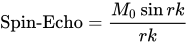
It is very common that the raw data in k-space shows features of periodic functions. The periodicity is not spatial frequency, but is temporal frequency. An MRI raw data matrix is composed of a series of phase-variable spin-echo signals. Each of the spin-echo signal is a sinc function of time, which can be described by Where Here is the gyromagnetic ratio constant, and is the basic resonance frequency of the spin. Due to the presence of the gradient G, the spatial information r is encoded onto the frequency . The periodicity seen in the MRI raw data is just this frequency , which is basically the temporal frequency in nature.
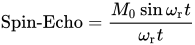

In a rotating frame, , and is simplified to . Just by letting , the spin-echo signal is expressed in an alternative form

Now, the spin-echo signal is in the k-space. It becomes a periodic function of k with r as the k-space frequency but not as the "spatial frequency", since "spatial frequency" is reserved for the name of the periodicity seen in the real space r.

The k-space domain and the space domain form a Fourier pair. Two pieces of information are found in each domain, the spatial information and the spatial frequency information. The spatial information, which is of great interest to all medical doctors, is seen as periodic functions in the k-space domain and is seen as the image in the space domain. The spatial frequency information, which might be of interest to some MRI engineers, is not easily seen in the space domain but is readily seen as the data points in the k-space domain.

See also

[edit]

References

[edit]
[edit]
Revisions and contributorsEdit on WikipediaRead on Wikipedia
from Grokipedia
Spatial frequency is a fundamental concept in signal processing and visual science that quantifies the rate at which a pattern or signal intensity varies across space, typically measured in cycles per unit distance, such as cycles per millimeter or cycles per degree of visual angle.[1] It represents the number of complete cycles (e.g., repetitions of a sine wave or grating pair) occurring within a given spatial interval, analogous to temporal frequency in time-domain signals but applied to two-dimensional images or scenes.[2] Low spatial frequencies capture broad, coarse structures like overall shapes, while high spatial frequencies encode fine details such as edges and textures.[3] In human visual perception, spatial frequency plays a central role in how the brain analyzes images, with the visual system organized into selective channels that respond preferentially to specific frequency bands, as demonstrated in foundational psychophysical experiments using sinusoidal gratings.[4] These channels enable parallel processing of visual information, where the contrast sensitivity function—a measure of the minimum contrast detectable at each frequency—typically peaks at intermediate frequencies around 2–4 cycles per degree and declines sharply at higher frequencies, limiting visual acuity to about 50–60 cycles per degree under optimal conditions.[5] This frequency-based decomposition underlies phenomena like the visibility of patterns and the integration of low-frequency global context with high-frequency local details in scene recognition.[3] Beyond vision, spatial frequency is essential in image processing and computer vision, where Fourier analysis decomposes images into frequency components to facilitate tasks like filtering, compression, and feature extraction.[1] In biomedical applications, techniques such as spatial frequency domain imaging (SFDI) exploit these principles to non-invasively map tissue optical properties by modulating light patterns and analyzing their frequency-domain responses.[6] Overall, the concept bridges optics, neuroscience, and engineering, influencing advancements in display technology, medical diagnostics, and artificial intelligence for visual tasks.

Fundamentals

Definition and units

Spatial frequency is defined as the number of cycles, or complete repetitions, of a spatially periodic pattern occurring per unit distance, serving as the spatial analog to temporal frequency in time-varying signals.[1] This measure quantifies the periodicity or repetition rate of variations in a signal or image across space, such as the alternating bright and dark bands in a sinusoidal grating.[7] Physically, low spatial frequencies represent coarse, gradual changes or broad patterns, such as the overall shape of an object, while high spatial frequencies capture fine details, sharp transitions, or rapid variations, like edges and textures.[8] For instance, in an image, the low-frequency components convey the general structure, whereas high-frequency components encode intricate features that contribute to perceived sharpness.[9] The standard units for spatial frequency are cycles per unit length, such as cycles per millimeter (cycles/mm) or cycles per meter (cycles/m), depending on the scale of the application.[7] In the context of human vision, it is often expressed in angular terms as cycles per degree (cpd) of visual angle, accounting for the observer's distance from the pattern.[2] To convert linear spatial frequency to angular spatial frequency in cycles per degree, multiply the linear frequency by the viewing distance (in units matching the linear frequency's inverse) and by approximately 0.0175 (the radians per degree, π/180). A practical example is a black-and-white grating pattern with five complete cycles (alternating dark and light bars) spanning 1 centimeter, yielding a spatial frequency of 5 cycles/cm.[8] If viewed from 57 cm away—where 1 degree of visual angle corresponds to about 1 cm on the pattern—this equates to approximately 5 cpd.[2] The concept of spatial frequency emerged in the mid-20th century within Fourier optics and gained prominence in the 1960s through applications in visual perception.[9]

Mathematical representation

Spatial frequency in one dimension is fundamentally defined for a periodic signal $ s(x) $, where the spatial frequency $ f $ represents the number of cycles per unit distance and is given by $ f = \frac{1}{\lambda} $, with $ \lambda $ denoting the spatial period or wavelength.[10] This measure arises in the context of sinusoidal variations along a single spatial axis $ x $. A pure sinusoidal signal can thus be expressed as
s(x)=Acos(2πfx+ϕ), s(x) = A \cos(2\pi f x + \phi),
where $ A $ is the amplitude modulating the signal's intensity, and $ \phi $ is the phase shift determining the offset of the waveform.[11] For analytical purposes, particularly in Fourier analysis, the equivalent complex exponential form $ e^{i 2\pi f x} $ serves as the basis function, enabling the decomposition of arbitrary signals into sums of these harmonics.[12] The concept of spatial frequency emerges directly from the Fourier transform, which projects the signal onto these exponential basis functions. The continuous Fourier transform of $ s(x) $ is defined by the integral
S(f)=s(x)ei2πfxdx, S(f) = \int_{-\infty}^{\infty} s(x) e^{-i 2\pi f x} \, dx,
where $ S(f) $ captures the amplitude and phase contributions at each frequency $ f $, revealing how spatial frequency components contribute to the overall signal structure.[12] This formulation underscores that spatial frequency quantifies the rate of oscillation in the spatial domain, analogous to temporal frequency in time-domain signals. In two dimensions, applicable to images or planar fields $ s(x, y) $, spatial frequency is characterized by orthogonal components $ f_x $ and $ f_y $, representing cycles per unit length along the $ x $- and $ y $-axes, respectively.[13] These components combine to yield the radial (or magnitude) frequency $ f = \sqrt{f_x^2 + f_y^2} $, which indicates the overall oscillation rate, and the orientation angle $ \theta = \tan^{-1}(f_y / f_x) $, specifying the direction of the frequency vector.[13] A two-dimensional sinusoid then takes the form $ s(x, y) = A \cos(2\pi (f_x x + f_y y) + \phi) $, extending the one-dimensional representation to account for directional variations. For discrete signals, such as those in digital imaging, spatial frequency is normalized in cycles per pixel, reflecting the sampling grid's influence. The highest representable frequency, known as the Nyquist limit, is 0.5 cycles per pixel, beyond which aliasing occurs due to undersampling.[14] This limit ensures that each frequency component can be uniquely reconstructed, mirroring the continuous case but constrained by the pixel resolution.

Signal Processing Applications

Fourier transform in spatial domains

The spatial Fourier transform provides a mathematical framework for decomposing a two-dimensional spatial signal $ s(x,y) $ into its constituent frequency components in the frequency domain $ S(f_x, f_y) $, where $ f_x $ and $ f_y $ represent spatial frequencies along the respective axes.[11] The forward transform is given by the integral
S(fx,fy)=s(x,y)ei2π(fxx+fyy)dxdy, S(f_x, f_y) = \iint_{-\infty}^{\infty} s(x,y) \, e^{-i 2\pi (f_x x + f_y y)} \, dx \, dy,
which converts the spatial domain representation into a complex-valued spectrum.[11] The inverse transform reconstructs the original signal via
s(x,y)=S(fx,fy)ei2π(fxx+fyy)dfxdfy, s(x,y) = \iint_{-\infty}^{\infty} S(f_x, f_y) \, e^{i 2\pi (f_x x + f_y y)} \, df_x \, df_y,
ensuring perfect reversibility under ideal conditions.[11] This decomposition reveals the spatial frequency content, where low frequencies correspond to gradual variations and high frequencies to rapid changes in the signal.[15] In the frequency domain, the magnitude $ |S(f_x, f_y)| $ quantifies the amplitude or energy at each spatial frequency pair $ (f_x, f_y) $, providing insight into the strength of periodic components, while the phase $ \arg(S(f_x, f_y)) $ encodes information about spatial shifts and alignments necessary for accurate reconstruction.[11] Several properties of the Fourier transform are particularly relevant to spatial frequency analysis: linearity, which states that the transform of a linear combination of signals is the linear combination of their transforms, $ \mathcal{F}{a s_1(x,y) + b s_2(x,y)} = a S_1(f_x, f_y) + b S_2(f_x, f_y) $; the shift theorem, indicating that a spatial translation by $ (x_0, y_0) $ introduces a phase shift, $ \mathcal{F}{s(x - x_0, y - y_0)} = S(f_x, f_y) e^{-i 2\pi (f_x x_0 + f_y y_0)} $; and the convolution theorem, where spatial convolution corresponds to multiplication in the frequency domain, $ \mathcal{F}{s_1(x,y) * s_2(x,y)} = S_1(f_x, f_y) \cdot S_2(f_x, f_y) $.[11] These properties facilitate efficient analysis of spatial patterns without direct computation in the spatial domain.[11] For digital images, which are discrete spatial signals, the continuous transform is approximated by the two-dimensional discrete Fourier transform (DFT), defined as
S(u,v)=x=0N1y=0M1s(x,y)ei2π(ux/N+vy/M), S(u,v) = \sum_{x=0}^{N-1} \sum_{y=0}^{M-1} s(x,y) \, e^{-i 2\pi (u x / N + v y / M)},
where $ u $ and $ v $ are discrete frequency indices, and the inverse DFT reconstructs the image with appropriate normalization.[11] The fast Fourier transform (FFT) algorithm computes the DFT efficiently in $ O(NM \log (NM)) $ time for an $ N \times M $ image, making it practical for large-scale spatial frequency analysis.[15] To prevent aliasing artifacts, where high spatial frequencies masquerade as lower ones, the sampling must satisfy the spatial Nyquist-Shannon theorem: the sampling rate in the spatial domain must exceed twice the maximum spatial frequency present in the signal.[11] A practical example of this decomposition is applied to a grayscale photograph, where the low-frequency components in the Fourier spectrum capture smooth tonal gradients and overall structure, such as broad sky areas, while high-frequency components represent fine details like edges and textures in foliage or fabric patterns.[15] Isolating these components via the transform allows visualization of how spatial frequencies contribute to perceived image content.[15]

Spatial filtering techniques

Spatial filtering techniques in the frequency domain involve modifying the Fourier transform of an image or signal to selectively alter specific spatial frequencies, followed by an inverse transform to return to the spatial domain. The process begins by computing the 2D Fourier transform $ S(f_x, f_y) $ of the input signal $ s(x, y) $. This spectrum is then multiplied pointwise by a filter function $ H(f_x, f_y) $, yielding the filtered spectrum $ S'(f_x, f_y) = S(f_x, f_y) \cdot H(f_x, f_y) $. Finally, the inverse 2D Fourier transform of $ S'(f_x, f_y) $ produces the filtered output $ s'(x, y) $. This approach leverages the frequency representation to achieve effects that are computationally efficient for certain operations compared to direct spatial manipulation.[16] A classic example is the ideal low-pass filter, defined as $ H(f) = 1 $ for $ |f| < f_c $ and $ H(f) = 0 $ otherwise, where $ f_c $ is the cutoff frequency. This filter attenuates high spatial frequencies, effectively removing fine details and noise while preserving the overall structure dominated by low frequencies. In practice, such abrupt cutoffs are rarely used due to their undesirable side effects, but they serve as a foundational model for understanding frequency attenuation.[16] Filters are categorized by their frequency response. Low-pass filters, like the ideal or Butterworth variants, smooth images by suppressing high frequencies, which blurs edges and reduces noise but can obscure important details. High-pass filters, conversely, emphasize high frequencies to sharpen images and enhance edges, often amplifying noise in the process. Band-pass filters allow a specific range of frequencies to pass, useful for isolating textures or patterns, while notch filters target and remove narrow bands of unwanted periodic noise, such as interference patterns from electrical sources.[16][17] These frequency domain operations have direct equivalents in the spatial domain via the convolution theorem, which states that multiplication in the frequency domain corresponds to convolution in the spatial domain. Thus, applying a filter $ H(f_x, f_y) $ is equivalent to convolving the input $ s(x, y) $ with the inverse Fourier transform of $ H(f_x, f_y) $, often implemented as a kernel. For instance, a Gaussian low-pass filter in the frequency domain corresponds to convolution with a Gaussian kernel in the spatial domain, providing a smooth transition that avoids sharp cutoffs. This duality allows practitioners to choose between domains based on computational needs, with frequency domain preferred for large kernels.[16] Key design considerations include the transition band, which defines how gradually the filter attenuates frequencies around the cutoff to minimize artifacts. Sharp transitions in ideal filters lead to ringing artifacts, known as the Gibbs phenomenon, where overshoots and oscillations appear near discontinuities in the signal, reaching up to about 9% of the jump magnitude. To mitigate this, filters like Butterworth or Gaussian are designed with smoother roll-offs. Practical implementations are available in software libraries; for example, MATLAB's Image Processing Toolbox supports frequency domain filtering via functions like fft2 and ifft2 combined with custom filter matrices, while OpenCV provides cv::dft for similar operations in C++ or Python.[16][18][19][20] As an illustrative example, applying a low-pass filter to a noisy image involves computing its Fourier transform, multiplying by a circular low-pass mask centered at the origin with radius $ f_c $, and inverse transforming the result. This preserves low-frequency components representing the image's broad shapes and textures while attenuating high-frequency noise, resulting in a cleaner version suitable for further analysis without excessive blurring of structural elements.[19]

Visual Perception

Spatial-frequency theory

The spatial-frequency theory of vision posits that the human visual system decomposes complex images into a series of sinusoidal gratings, each characterized by specific spatial frequencies, amplitudes, and phases, processed through a linear systems approach. This framework originated in the application of Fourier optics to visual processing during the 1950s, where mathematical techniques for analyzing optical imaging were developed to describe spatial filtering properties. By the 1960s, these concepts were extended to psychophysics, with early studies examining the eye's resolution limits using sinusoidal stimuli. Seminal work by Campbell and Green in 1965 analyzed the spatial resolution of the human eye through contrast sensitivity to gratings, laying groundwork for frequency-based models. The theory was formalized by Campbell and Robson in 1968, who proposed that the visual system acts as a bank of independent, linearly operating mechanisms tuned to narrow bands of spatial frequencies, enabling the decomposition of any image into its Fourier components for analysis.[21][22] Evidence for this Fourier-based decomposition comes from both psychophysical and electrophysiological studies demonstrating retinal and cortical processing as frequency-tuned filters. In psychophysics, measurements of contrast thresholds for sinusoidal gratings—expressed in cycles per degree (cpd) of visual angle—reveal band-pass characteristics, with peak sensitivity around 2-4 cpd and reduced sensitivity at very low or high frequencies. Key experiments on grating thresholds showed that visibility of complex patterns, such as square waves, is primarily determined by their fundamental Fourier component at low contrasts, supporting independent channel processing. Adaptation experiments further corroborated this, where prolonged exposure to a high-contrast grating at one spatial frequency (e.g., 5 cpd) selectively elevates detection thresholds for test gratings near that frequency, producing aftereffects like perceived distortions in spatial frequency, while sparing others. Electrophysiological evidence from visual evoked potentials (VEPs) in humans confirmed the existence of independent channels, as VEPs elicited by superimposed gratings of different frequencies or orientations showed additive responses only when channels were non-overlapping, with selectivity as narrow as 15 degrees in orientation.[23] These findings indicate that early visual processing, from retina to cortex, functions like a multi-channel analyzer.[22] Despite its foundational role, the theory's assumption of linearity in early visual processing holds primarily for low-contrast stimuli but breaks down at high contrasts due to compressive nonlinearities in retinal ganglion cells and cortical neurons. For instance, at contrasts above 20-30%, responses saturate or show gain control, violating the superposition principle essential to linear Fourier analysis and leading to interactions between channels. This limitation highlights that while the theory excels in modeling threshold detection and low-amplitude signals, higher-contrast scenes require extensions incorporating nonlinear rectification or normalization. The 1960s-1970s psychophysical applications built on these insights, integrating findings from cat and monkey physiology to refine models of human vision.[21][24]

Contrast sensitivity and channels

The contrast sensitivity function (CSF) describes the human visual system's ability to detect sinusoidal gratings of varying spatial frequencies as a function of the minimum contrast required for detection. It exhibits an inverted U-shaped curve, with peak sensitivity occurring at intermediate spatial frequencies of approximately 2-4 cycles per degree (cpd), and sensitivity declining at both low frequencies below 0.5 cpd and high frequencies up to the acuity limit of around 50 cpd.[25] This function is typically measured using psychophysical methods, such as forced-choice detection tasks with gratings presented at different contrasts and frequencies.[25] An approximate mathematical representation of the CSF is given by the equation
S(f)=afbecf, S(f) = a f^b e^{-c f},
where S(f)S(f) is the sensitivity at spatial frequency ff (in cpd), aa scales the overall sensitivity, bb determines the low-frequency rise, and cc controls the high-frequency roll-off, thereby capturing the peak location and bandwidth of the function. This model aligns with empirical data showing band-pass characteristics in human vision under photopic conditions. Evidence for multiple independent spatial frequency channels in human vision comes from masking experiments, where a masking grating elevates detection thresholds for a test grating most strongly when their spatial frequencies are similar, indicating selective interference within channels. These channels include mechanisms tuned to low frequencies around 1 cpd and higher ones around 10 cpd, supporting parallel processing of different spatial scales. At the neural level, cells in the lateral geniculate nucleus (LGN) and primary visual cortex (V1) exhibit tuning to specific spatial frequencies and orientations, as demonstrated by recordings from simple cells in cat and monkey V1. The parvocellular pathway preferentially processes higher spatial frequencies and fine details, while the magnocellular pathway favors lower frequencies and motion, contributing to the channel architecture. Clinically, alterations in the CSF are observed in conditions such as amblyopia, where deficits primarily affect higher spatial frequencies, reducing overall sensitivity across the curve.[26] Similarly, multiple sclerosis often leads to selective losses in contrast sensitivity, particularly at mid-to-high frequencies due to optic nerve demyelination.[27] These impairments are assessed using tools like the Pelli-Robson chart, which measures letter recognition at progressively lower contrasts to quantify functional deficits.[28]

Medical Imaging Applications

Spatial frequency in MRI

In magnetic resonance imaging (MRI), spatial frequency is fundamentally represented in the k-space domain, where raw signal data is acquired as a function of spatial frequencies rather than directly as an image. K-space serves as the Fourier transform domain of the object's magnetization distribution, with each point in k-space encoding a specific combination of spatial frequency and phase information from the entire imaged volume. This formalism was introduced in the 1970s through early two-dimensional Fourier transform methods for NMR imaging, pioneered by Kumar, Welti, and Ernst in their seminal work on NMR Fourier zeugmatography.[29] The coordinates in k-space, denoted as k\mathbf{k}, are determined by the applied magnetic field gradients G(t)\mathbf{G}(t) during signal acquisition, according to the relation k=γG(t)dt\mathbf{k} = \gamma \int \mathbf{G}(t) \, dt, where γ\gamma is the gyromagnetic ratio of the imaged nucleus (typically hydrogen protons). This integral accumulates the phase accrued by spins at different spatial positions due to the gradient-induced frequency shifts, effectively mapping the signal to specific spatial frequency locations in k-space. The central region of k-space, corresponding to low spatial frequencies (small k|\mathbf{k}|), primarily encodes low-frequency information that determines overall image contrast and coarse structure, while the peripheral regions (high spatial frequencies) capture fine details and edges, contributing to spatial resolution.[30][31] Image reconstruction from k-space data relies on the inverse Fourier transform, yielding the spatial domain image ρ(r)\rho(\mathbf{r}) via
ρ(r)=ρ~(k)ei2πkrdk, \rho(\mathbf{r}) = \int \tilde{\rho}(\mathbf{k}) \, e^{i 2\pi \mathbf{k} \cdot \mathbf{r}} \, d\mathbf{k},
where ρ~(k)\tilde{\rho}(\mathbf{k}) is the complex signal in k-space and r\mathbf{r} is the position in the image space. This transform assumes complete sampling of k-space to satisfy the Nyquist-Shannon sampling theorem, which requires a minimum sampling density to avoid aliasing artifacts—wrap-around distortions where undersampled high-frequency components fold into the low-frequency domain, violating the Nyquist criterion and degrading image fidelity.[31][32] To accelerate MRI scans while mitigating aliasing from undersampling, parallel imaging techniques exploit spatial sensitivity profiles of multi-coil receiver arrays to reconstruct full k-space from reduced data sets, often undersampling high-frequency peripheral regions. Sensitivity encoding (SENSE) unfolds aliased images in the spatial domain using coil sensitivity maps, enabling acceleration factors up to the number of coils while preserving resolution.[33] GeneRalized Autocalibrating Partial Parallel Acquisition (GRAPPA), in contrast, synthesizes missing k-space lines directly from acquired neighboring data via kernel-based interpolation calibrated from central low-frequency lines, reducing acquisition time without explicit sensitivity mapping.[34] Post-acquisition filtering in k-space, such as apodization, applies window functions to taper the data edges, suppressing high-frequency noise and truncation artifacts like Gibbs ringing—oscillatory overshoots near sharp intensity transitions caused by finite k-space sampling. For instance, a Fermi or Hanning window smooths the k-space periphery, reducing ringing at the cost of slight resolution blurring, thereby enhancing overall image quality in clinical applications.[35]

Spatial frequency in other modalities

In computed tomography (CT), spatial frequency is central to image reconstruction via filtered back-projection (FBP), where projections obtained through the Radon transform are filtered and back-projected to form cross-sectional images. The ramp filter, defined in the frequency domain as proportional to $ |f| $, compensates for the low-pass blurring effect of back-projection by amplifying higher spatial frequencies, thereby sharpening the reconstructed image. This filtering enhances edge details but can amplify noise at high frequencies if not apodized. Spatial resolution in CT is fundamentally limited by detector spacing, which determines the maximum recoverable frequency and prevents aliasing in the sampled projections.[36] In ultrasound imaging, spatial frequency influences beamforming algorithms that focus acoustic waves to form images, as well as the generation of speckle patterns arising from interference of backscattered echoes across frequency bands. Higher spatial frequencies correspond to finer axial and lateral resolution, enabling detection of small structures, but these frequencies attenuate rapidly in tissue due to absorption and scattering, limiting penetration depth.[37] To mitigate speckle noise—which obscures fine details—compounding techniques average multiple low-correlation images; frequency compounding subdivides the transducer bandwidth to combine sub-bands with shifted speckle patterns, while spatial compounding uses steered beams from different angles.[38] For X-ray imaging and related optical systems, the modulation transfer function (MTF) quantifies the system's ability to preserve spatial frequencies from object to image, typically plotted as contrast transfer versus cycles per millimeter. The MTF decreases at higher frequencies due to blur from finite focal spot size, geometric unsharpness, or detector pixelation, resulting in loss of detail for small, high-contrast features like microcalcifications.[39] Across these modalities, common challenges include frequency-dependent noise, where higher spatial frequencies exhibit elevated noise power spectra due to quantum mottle in X-ray or speckle variance in ultrasound, degrading signal-to-noise ratio (SNR) for fine structures. Super-resolution techniques, such as patch-based reconstruction or deep learning networks, address this by extrapolating high-frequency components from low-resolution data, improving effective resolution without additional hardware, though they risk introducing artifacts if priors are mismatched to the modality.[40] In comparison to MRI's direct gradient-encoded sampling of k-space, CT reconstruction from indirect projection data via FBP is more susceptible to frequency aliasing in sparse sampling scenarios, such as low-dose protocols with fewer projections, leading to streaking artifacts that mimic high-frequency distortions unless mitigated by iterative methods.[41]

References

User Avatar
No comments yet.