Hubbry Logo
Steven HollSteven HollMain
Open search
Steven Holl
Community hub
Steven Holl
logo
8 pages, 0 posts
0 subscribers
Be the first to start a discussion here.
Steven Holl
Steven Holl
from Wikipedia

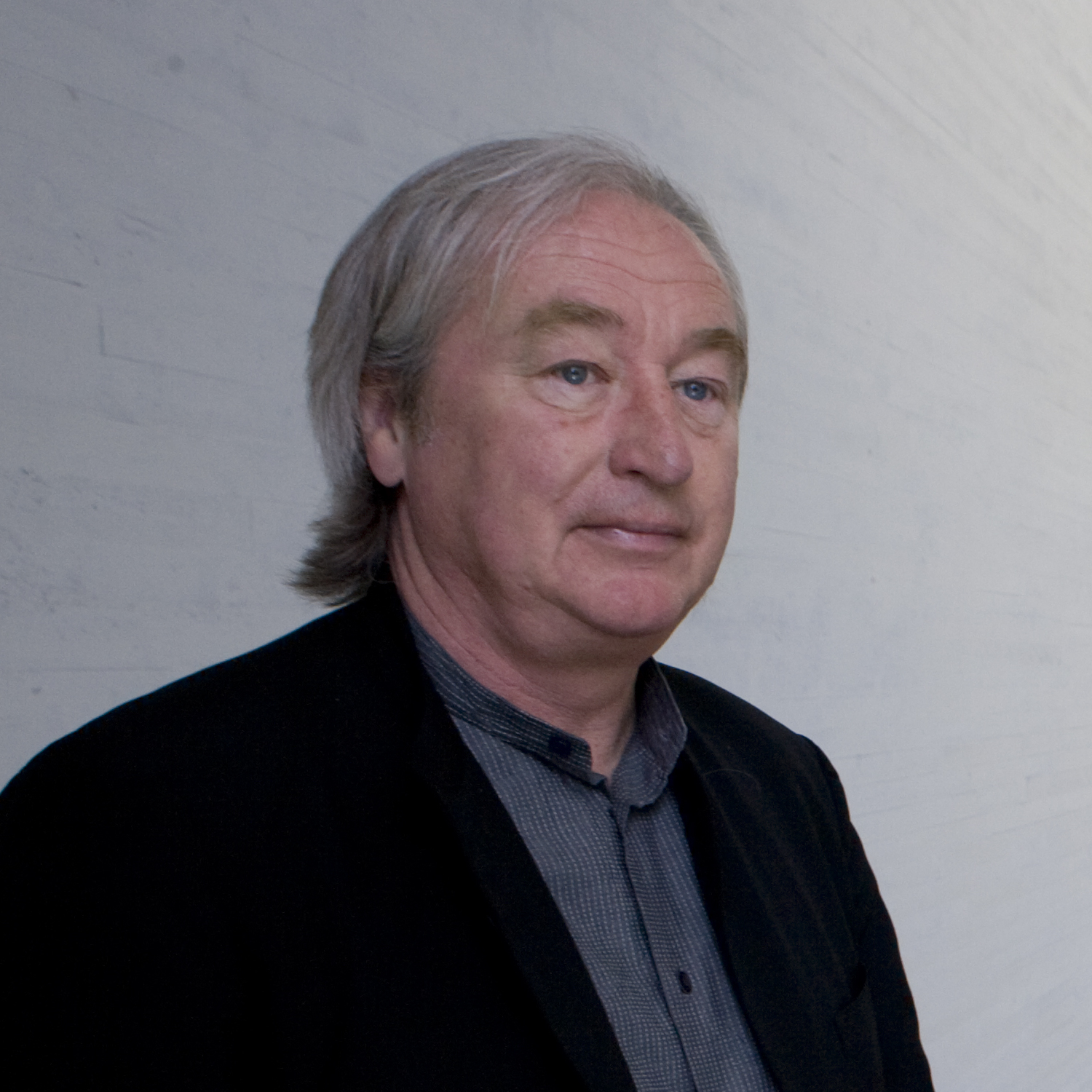
Steven Holl (born December 9, 1947) is a New York–based American architect and watercolorist.

Key Information

His work includes the 2022 Rubenstein Commons at the Institute for Advanced Study; the 2020 Campus expansion of the Museum of Fine Arts Houston including the Nancy and Rich Kinder Building and Glassell School of Art; the 2019 REACH expansion of the John F. Kennedy Center for the Performing Arts;[1] the 2019 Hunters Point Library in Queens, New York;[2] the 2007 Bloch Building addition to the Nelson-Atkins Museum of Art in Kansas City, Missouri;[3] and the 2009 Linked Hybrid mixed-use complex in Beijing, China.[3]

Career

[edit]
Steven Holl's design for Simmons Hall of MIT won the Harleston Parker Medal in 2004.
Bloch Addition to the Nelson-Atkins Museum of Art, 2007.

Family and education

[edit]

Holl was born on December 9, 1947, and grew up in Bremerton and Manchester, Washington.[4] He is the son of Myron Holl of Washington state and Helen Mae Holl of Alabama.[5] He has described his father as "full blooded Norwegian".[6] Holl received a Bachelor of Arts from the University of Washington (department of architecture) in 1971,[7][8] pursuing architectural studies in Rome in 1970 under Astra Zarina.[9]

1960s and early '70s, he landed a job at Lawrence Halprin's[10] before heading to London's vaunted Architectural Association. "He was doing private projects, trying to be an architect, looking for work," recalls bookseller-publisher William Stout, who shared an apartment with Holl on Telegraph Hill. Holl also was the first (very part-time) employee at Stout's architectural bookshop in Jackson Square.[11]

In 1976, he did postgraduate work at the Architectural Association in London, where he came in contact with architects such as Rem Koolhaas, Leon Krier, Charles Jenks, Elia Zenghelis, Zaha Hadid, and Bernard Tschumi.[12]

Recognition and awards

[edit]

In 1998, Holl was awarded the Alvar Aalto Medal. In 2000, Holl was elected to the American Academy of Arts and Letters. In July 2001, Time named Holl America's Best Architect, for "buildings that satisfy the spirit as well as the eye." Other awards and distinctions include the best architectural design in New York for The Pace Collection showroom in 1986 from the American Institute of Architects, the New York American Institute of Architects Medal of Honor (1997), the French Grande Médaille d’Or (2001), the Smithsonian Institution's Cooper-Hewitt National Design Award in Architecture (2002), Honorary Fellow of the Royal Institute of British Architects (2003), the Arnold W. Brunner Prize in Architecture from the American Academy of Arts and Letters, and the 2008 BBVA Foundation Frontiers of Knowledge Award in the Arts category.[13] In 2007, Steven Holl Architects received the AIA Institute Honor Award and the AIA New York Chapter Architecture Merit Award for Art Building West for the School of Art and Art History (University of Iowa, Iowa City). The Higgins Hall Insertion at Pratt Institute (Brooklyn, New York) and the New Residence at the Swiss Embassy both received the AIA New York Chapter Architecture Honor Award in 2007. In 2010, Herning Museum of Contemporary Art, (Herning, Denmark) was awarded the RIBA International Award. The Horizontal Skyscraper-Vanke Center received the 2011 AIA Institute National Honor Award, as well as the AIA NY Honor Award. In 2011, he was named a Senior Fellow of the Design Futures Council.,[14] and Holl was named the 2012 AIA Gold Medal winner.[15] In 2014, Holl was awarded the Praemium Imperiale Prize for Architecture.[16] In 2016, Holl received The Daylight Award in Architecture, presented by the foundations VILLUM FONDEN, VELUX FONDEN and VELUX STIFTUNG.[17][18] In 2017, Holl was awarded the Distinguished Alumni Award from the University of Washington.[19] Steven Holl Architects was awarded the AIA New York President’s Award in 2019.[20] In 2022, the Chapel of St. Ignatius was awarded the Twenty-Five Year Award by the American Institute of Architects.[21]

Teaching

[edit]

Holl is a tenured professor at Columbia University, where he has taught since 1981[22] with Dimitra Tsachrelia.[23] He has also taught on the relationship between music and architecture.[24]

'T' Space

[edit]

In 2010, Holl founded 'T' Space, a multidisciplinary arts organization in Rhinebeck, New York. The organization runs a summer exhibition series and an emerging architects summer residency.[25] The 'T' Space Synthesis of the Arts Series presents 2 to 3 exhibitions annually. As of 2019, it has exhibited architects José Oubrerie, Tatiana Bilbao, and Neil Denari,[26] as well as artists such as Ai Weiwei, Pat Steir, and Brice Marden.[27] In 2017, 'T' Space began a summertime residency program for young architects and artists.[28] Program participants work on purpose-built architecture with a curriculum on ecological outcomes of design, and take part in pin-ups, field trips, and a public lecture series by invited architects, including Holl.[29][30] In addition to its arts and educational programming, 'T' Space maintains a publication program and a 30-acre nature reserve with outdoor installations. In 2019, construction was completed on 'T' Space's architectural archive and research library, which houses Holl's watercolors, models and drawings from his practice.[31]

Public events and lectures

[edit]

Exhibitions

[edit]

Works

[edit]

Early works

[edit]
Kiasma, Helsinki, 1993-1998

During his early years in New York, Holl, along with architect and book collector William Stout, launched the experimental publication series Pamphlet Architecture. Pamphlet Architecture quickly developed into one of the most important publications of its kind, with authors like Lebbeus Woods, Zaha Hadid, and Alberto Sartoris.[61][62]

Holl received one of three first prizes in the 1988 invited competition for an addition to Berlin's Amerika-Gedenkbibliothek (American Memorial Library).[63] The scheme was not realized following German reunification.[64] In 1989 the Museum of Modern Art in New York presented the exhibition Emilio Ambasz/Steven Holl: Architecture (February 9–April 4).[65] MoMA also holds models and drawings by Steven Holl Architects in its collection.[66] In the 1992 international competition for Helsinki's new museum of contemporary art, Holl's proposal Chiasma was selected as the winner and the museum, named Kiasma, opened to the public in 1998.[67] The name Kiasma derives from the Greek chiasma, meaning "crossing".[68]

Holl designed the Chapel of St. Ignatius (built 1994–1997), a Jesuit chapel at Seattle University. The building is sited in the center of a former street and elongates the plan to create new campus quadrangles to the north, west and south, with a future quadrangle planned to the east.[69] In 1997, the plan of the chapel won a design award in the American Institute of Architects of New York. Holl designed the chapel around St. Ignatius's vision of the inner spiritual life, "seven bottles of light in a stone box", by creating seven volumes of different light. Each volume represents a different part of Jesuit Catholic worship, and has differently colored glass so that various parts of the building are marked out by colored light. Light sources are tinted both in this way and by indirect reflection from painted surfaces, and each is paired with its complementary color. In 2022, the American Institute of Architects bestowed the Chapel of St. Ignatius, Seattle, WA, with the Twenty-five Year Award.[70]

Selected Projects

[edit]
Work Location Completed
Hybrid Building[71] Seaside, Florida 1988
Void Space/Hinge Space Housing, Nexus World[72] Fukuoka, Japan 1991
Stretto House [73][74] Dallas, Texas 1991
Storefront for Art and Architecture[75] New York, New York 1993
Cranbrook Institute of Science[76] Bloomfield Hills, Michigan 1998
Chapel of St. Ignatius at Seattle University Seattle, Washington 1997
Kiasma, Museum of Contemporary Art Helsinki, Finland 1998
Sarphatistraat Offices[77] Amsterdam, Netherlands 2000
Bellevue Arts Museum Bellevue, Washington 2001
Simmons Hall, Massachusetts Institute of Technology Cambridge, Massachusetts 2002
Linked Hybrid Beijing, China 2009
Knut Hamsun Centre (Hamsunsenteret) Nordland, Norway 2009
Herning Museum of Contemporary Art Herning, Denmark 2009
Cite de l'Ocean et du Surf, in collaboration with Solange Fabiao Biarritz, France 2011
Daeyang Gallery and House Seoul, South Korea 2012
Campbell Sports Center at Columbia University New York, New York 2013
Maggie's Centres Barts London, United Kingdom 2017
Student Performing Arts Center, University of Pennsylvania[78] Philadelphia, Pennsylvania Under Construction

Selected publications

[edit]

Along with Pallasmaa and Alberto Perez-Gomez, Holl wrote essays for a 1994 special issue of the Japanese architectural journal A+U under the title "Questions of Perception: Phenomenology of Architecture." The publication was reissued as a book in 2006.

Notes

[edit]

References

[edit]
[edit]
Revisions and contributorsEdit on WikipediaRead on Wikipedia
from Grokipedia
Steven Holl (born December 9, 1947) is an American architect renowned for his innovative, site-specific designs that emphasize the interplay of , , and materials to create experiential . Born in , Holl earned a from the in 1971 and studied in in 1970 as part of that program, later joining the Architectural Association in in 1976. In 1977, he founded Steven Holl Architects in , where he serves as principal alongside partners including Dimitra Tsachrelia and Noah Yaffe; the firm, with additional offices in and the , employs around 25 designers and focuses on projects in , , , and . Holl's philosophy centers on as " in space, , and ," prioritizing contextual resonance and human over mere functionality, often beginning designs with watercolor sketches to explore phenomenological qualities. His practice has pioneered translucent and porous structures, such as the ventilated curtain wall of over 1,000 glass half-tubes on the Museum of Fine Arts Houston's Kinder Building (2020). Notable projects include Simmons Hall (2002) at MIT, a featuring a porous "sponge" facade that integrates public and private spaces; Linked Hybrid (2009) in , a mixed-use complex awarded for best tall building by the Council on Tall Buildings and Urban Habitat; the Sliced Porosity Block (2012) in , , which carves urban voids to enhance porosity and daylight; the expansion of the (2007) in Kansas City, known for its luminous LED "blades"; and the Rubenstein (2022) at the Institute for Advanced Study. Throughout his career, Holl has received architecture's highest honors, including the Alvar Aalto Medal (1998), Grande Médaille d'Or from the Académie d'Architecture (2001), AIA Gold Medal (2012), Praemium Imperiale (2014), VELUX Daylight Award (2016), Architizer A+ Award (2025), and THE PLAN Award (2025); he was also named "America’s Best Architect" by Time magazine in 2001. A tenured professor at Columbia University's Graduate School of Architecture, Planning and Preservation since 1981, Holl has lectured globally and published extensively on architectural theory.

Early life and education

Family and upbringing

Steven Holl was born on December 9, 1947, in . He grew up in the working-class towns of and , Washington, amid the natural beauty of and the industrial bustle of the local naval . From a family of modest socioeconomic roots, including parents Myron Holl and Helen Mae Holl, his early environment fostered a deep sensitivity to his surroundings. As a child, he developed an early fascination with , , and industrial forms, frequently sketching ships in the and observing the interplay of on the waves during ferry rides across the . These formative experiences in the sparked his interest in architecture, prompting a transition to formal academic pursuits.

Academic background

Steven Holl earned his from the in 1971, where his studies were influenced by the region's distinctive natural light, a factor rooted in his upbringing that sparked an enduring fascination with in . In 1970, as part of his undergraduate program, Holl studied architecture in , immersing himself in the city's historical fabric through direct engagement with classical sites, notably frequent visits to the Pantheon to examine its structural and luminous qualities. In 1976, he attended the Architectural Association in London as a postgraduate student, focusing on advanced and gaining deeper insights into contemporary architectural . These educational experiences, combined with travels across , provided Holl with early exposure to modernism's spatial innovations and the principles of phenomenology, laying the groundwork for his later emphasis on experiential architecture.

Architectural philosophy and approach

Phenomenological influences

Steven Holl's architectural philosophy draws heavily from Maurice Merleau-Ponty's , which posits the body as the primary site of knowing the world through sensory and embodied experience rather than detached abstraction. Holl interprets Merleau-Ponty's ideas of perceptual intertwining—the reciprocal relation between body and environment—as central to design, where facilitates an active, lived engagement with that transcends visual representation. This influence manifests in Holl's emphasis on how buildings can evoke a heightened of and movement, aligning with the physical act of inhabiting form. Holl further incorporates Juhani Pallasmaa's advocacy for haptic architecture, which critiques ocularcentrism and promotes multi-sensory immersion through touch, texture, and materiality to foster emotional and existential depth. Complementing this, Christian Norberg-Schulz's concept of genius loci—the inherent spirit of place—informs Holl's situational approach, where architecture amplifies environmental qualities to cultivate a sense of belonging and orientation. Together, these thinkers guide Holl toward designs that engage not just sight but all senses, countering the dominance of functional or stylistic determinism in modern architecture. By the 1980s, Holl shifted from early typological explorations to a fully phenomenological framework, prioritizing how structures interact with human over predefined forms or categories. This evolution underscores his view of as a poetic medium of space, light, and , where sensory phenomena create immersive narratives distinct from postmodern irony or modernist utility. As Holl articulates, becomes an active , transforming ordinary interactions—like entering a light-filled —into profound experiential moments.

Design process and tools

Steven Holl's design process emphasizes intuitive and tactile methods to explore spatial and atmospheric qualities, beginning with extensive watercolor sketching as a primary tool for ideation. He has maintained a practice of creating watercolor sketches on 5x7-inch pads since the late 1970s, viewing them as a rapid means to conceptualize volumes, shadows, and effects without the constraints of prolonged drafting. These sketches serve as a form of "thought," allowing Holl to intuitively capture ephemeral ideas related to and spatial dynamics, often producing hundreds per project to refine concepts iteratively before advancing to more developed forms. Over his career, this has resulted in an archive exceeding 30,000 sketches, underscoring their centrality to his workflow. Complementing sketches, Holl relies on physical models constructed from varied materials to test experiential aspects of , particularly the of and continuity of spatial flow. Early in his practice, he avoided heavy dependence on digital tools, favoring hands-on modeling with elements like translucent glass to simulate interactions and material transparencies in three dimensions. His New York office maintains numerous such models at different scales, which facilitate collaborative refinement and ensure that designs evolve through tangible exploration rather than abstract computation alone. This approach aligns with his phenomenological emphasis on sensory experience as a guiding principle, prioritizing how users perceive and movement. Holl's methodology is inherently iterative, commencing with detailed to integrate natural elements such as , , and into the project's core. Each design responds uniquely to the site's physical and contextual conditions, ensuring experiential and site-specific outcomes that enhance environmental harmony. This process involves ongoing in-house critiques, where initial concepts may be revisited or restarted to align with program requirements and cultural nuances. Consequently, Holl eschews signature styles, treating every project as a distinct response shaped by its specific circumstances, cultural context, and programmatic needs, rather than recurring motifs.

Professional career

Firm establishment and early projects

After relocating to New York City on New Year's Eve 1976, Steven Holl established his architectural practice, initially operating as a sole proprietor. In 1977, he formally founded Steven Holl Architects, marking the beginning of his independent professional career in a city that became central to his development. In the late and , Holl's firm secured its first commissions, primarily small-scale residential and experimental projects that tested innovative spatial concepts amid modest budgets. Notable among these was the Hybrid Building in , constructed between 1984 and 1988, which integrated retail, offices, and apartments to form a continuous public arcade around the town square. These early works emphasized multifunctional and laid the groundwork for Holl's emerging approach to site-specific design. Holl's initial foray into international projects came with the Void Space/Hinged Space Housing in Fukuoka, , developed from 1989 to 1991 for Fukuoka Jisho Co. This residential complex featured 28 unique apartments with flexible, hinged interiors and communal void spaces for pools or play areas, introducing recurring themes of and porous spatial connections. The early years of Holl's practice were marked by significant challenges, including severe financial constraints that led him to sleep on a shelf in his office for the first decade while showering at a nearby . With limited resources, he focused extensively on theoretical architectural s to refine and publicize his ideas, entering numerous entries that honed his bold conceptual framework before securing larger built opportunities.

International commissions and evolution

Following the establishment of Steven Holl Architects in in 1977, the firm expanded its global reach in the 2000s by opening an office in to support a growing portfolio of Asian projects. This move facilitated large-scale urban developments in , such as mixed-use complexes that integrated public spaces and countered privatized urban growth, allowing the practice to tackle ambitious civic-scale commissions across continents. Over time, Holl's practice evolved from designing intimate, site-specific structures to undertaking expansive civic and institutional projects that emphasize experiential qualities like light and landscape. This shift incorporated sustainable materials and technologies, such as recycled content and energy-efficient systems, while prioritizing community collaboration from the initial design phases to ensure inclusivity and ecological responsiveness. As of 2025, Steven Holl Architects operates as a unified firm with a team of 25 designers across offices in , the , and , maintaining an international outlook through diverse collaborators and global clients. The firm continues to handle significant institutional works, including the 2022 Rubenstein Commons at Princeton's , which exemplifies this matured approach to integrated, site-rooted design. In ongoing developments through 2025, Holl serves on the jury for the Vision Awards, evaluating conceptual and representational innovations in architecture. The firm's priorities have adapted to post-pandemic contexts by reinforcing the integration of air, light, and greenspace in designs, drawing from earlier projects to inform resilient, health-focused urban environments.

Notable works

Early works

Steven Holl's early works from the and explored experimental themes of , space, and materiality on intimate scales, often through residential and institutional projects that challenged conventional boundaries. These designs emphasized phenomenological experiences, where mediates sensory perceptions of environment and user interaction. The Void Space/Hinged Space Housing in Fukuoka, , completed between 1989 and 1991, exemplifies Holl's innovative approach to public-private interfaces in multi-unit residential . Comprising 28 apartments arranged around shared void spaces—such as pools and play areas—the project features porous facades that blur distinctions between individual units and communal realms, fostering fluid social connections. Interiors incorporate "hinged spaces," movable partitions inspired by traditional Japanese screens, allowing residents to reconfigure layouts for multifunctional use. This design prioritized spatial over rigid zoning, using frames and elements to create layered transparencies that invite into interstitial areas. In the late , projects like the Autonomous Artisans Housing of 1985 demonstrated Holl's focus on affordability and material ingenuity for modest-scale dwellings. This conceptual housing scheme employed prefabricated components and exposed industrial materials, such as corrugated metal and timber, to achieve cost-effective construction without sacrificing spatial quality. The modular units were designed to adapt to urban infill sites, promoting economical yet expressive that integrated everyday functionality with subtle volumetric play. The Chapel of St. Ignatius at , built from 1994 to 1997, represents a pinnacle of Holl's early experimentation with as a sculptural and spiritual medium. The structure employs seven "bottles of "—protruding volumes clad in colored glass—that filter and direct natural illumination into the interior, creating immersive phenomenological effects inspired by St. Ignatius of Loyola's . East-facing apertures capture dawn for contemplative spaces, while west-facing elements introduce dramatic evening glows, with the main worship area balancing opposing sources to evoke a sense of gathering and transcendence. Holl tested these dynamics through physical models during the design process, ensuring the chapel's spatial immersion. The use of tinted glass and curved walls further enhances the tactile interplay of color and shadow, transforming the 6,100-square-foot space into a dynamic vessel for ritual. Holl's Museum of Contemporary Art in , , constructed from 1992 to 1998, extended these themes to an urban institutional context through curved forms and strategic daylighting. The building's sinuous aluminum-clad envelope intertwines with the city's , creating a 130,000-square-foot structure that mediates between interior galleries and the surrounding landscape. Daylight penetrates via a curved roof system that deflects horizontal light downward through central slots and secondary skylights, adapting to 's variable seasonal illumination to illuminate artworks without glare. This approach links the museum's programmatic spaces—exhibition halls, auditoriums, and public areas—to the urban fabric, using ramps and atria to foster continuous movement and perceptual continuity. The design's emphasis on as a connective element underscores Holl's early commitment to as an experiential bridge between and environment.

Later works

Holl's later works, building on his early experimental themes of , , and phenomenology, expanded into large-scale international projects that integrate urban connectivity, , and contextual dialogue, particularly in institutional and cultural settings from the onward. The Linked Hybrid in , completed in 2009, exemplifies Holl's vision of a "city within a " through a 220,000-square-meter mixed-use complex of eight towers connected by sky bridges at the 20th floor, fostering social interaction and pedestrian flow. The design incorporates geothermal wells for heating and cooling, achieving energy efficiency while featuring public amenities like shops, a cinema, and a clustered around a central with water features that enhance communal spaces adjacent to Beijing's historic wall site. Sky bridges not only link the residential, commercial, and hotel components but also create elevated public realms, promoting and countering isolated urban development in . The expansion of the in , opened in 2007, introduces 165,000 square feet of new gallery space through five interconnected glass-and-steel pavilions that blend seamlessly with the existing neoclassical building and Donald Judd's . These pavilions are topped with 36 luminous LED "blades of light," which project shifting patterns onto the landscape at night, integrating art, architecture, and environment into a dynamic visitor experience. The design avoids a monolithic addition, instead creating a luminous underground connection to the original structure, allowing natural light to filter into galleries while preserving the site's sculptural landscape. Holl's Horizontal Skyscraper, the Vanke Center in , , completed in 2009 with phases extending into subsequent years, challenges conventional verticality by elevating a 381-meter-long mixed-use structure on piers up to 15 meters high, spanning offices, residences, and a over landscaped public gardens. This hovering form, oriented to capture breezes and views of mountains and lakes, incorporates sustainable features like rainwater collection and natural ventilation, earning certification as one of China's early green high-rises. By freeing the ground plane for pedestrian use and native groves, the project reimagines density in a subtropical context, with its jagged roofline diffusing light and shadow across the site. In recent years, Holl has turned to memorial and architecture in , including the Ghetto Museum in the , a 2022 competition winner in the design phase, with construction planned for completion by 2026, which extends the existing fortress with a prismatic "Tower of " entrance that refracts daylight into rainbows symbolizing hope amid remembrance. The design, developed in collaboration with SKUPINA Studio, integrates new exhibition spaces underground and a rooftop to evoke the site's traumatic history while providing contemplative public areas within the 18th-century military fortress. Similarly, the Ostrava Concert Hall, also in the , advances from its 2019 competition win with groundbreaking in 2024 and construction ongoing to 2027, encasing a 1,300-seat within and above an existing 20th-century cultural center to optimize acoustics through vine-wrapped forms that filter natural light and sound. This project, partnering with Architecture Acts, positions the hall as a musical for the Janáček Philharmonic, with a terraced foyer connecting old and new structures for enhanced urban integration.

Teaching and academic contributions

University positions

Steven Holl began his academic career shortly after completing his architectural studies in the 1970s, taking on adjunct and visiting teaching roles at several institutions. These included positions at the , where he had earned his in 1971, the , and in New York. In 1981, Holl was appointed as a tenured Professor of Architecture at Columbia University's Graduate School of Architecture, Planning and Preservation (GSAPP), a position he has held continuously. At Columbia, he has focused on advanced studios and seminars that emphasize innovative design methodologies, including the long-running course "Architectonics of Music," introduced in 1986, which explores cross-disciplinary connections between music, phenomenology, and architectural form to foster experiential and perceptual awareness in design. This pedagogical approach has influenced GSAPP's curriculum by integrating practical studio work with theoretical explorations of space, light, and human experience, reflecting Holl's broader philosophical commitments. Throughout his tenure, Holl has balanced his academic responsibilities with leading Steven Holl Architects, a firm he founded in 1977, allowing teaching to serve as a laboratory for conceptual development that informs professional projects, while involving students in collaborative studio environments that mirror real-world design challenges.

Lectures and mentorship

Steven Holl has been a frequent guest lecturer at prominent architectural institutions, sharing insights into his design philosophy and built works. In November 2024, he delivered the lecture "Color, Light, and Time" at the University of Pennsylvania's Weitzman School of Design, exploring the interplay of these elements in architecture through examples from his recent projects. In 2025, Holl received an honorary doctorate from the University of Patras in Greece on June 4, where he also delivered a lecture during the award ceremony. Earlier that year, on April 7, he lectured at Columbia GSAPP's Kenneth Frampton Symposium on "Housing and Domesticity." On November 5, he presented "Imaginary Causes" at SCI-Arc in Los Angeles. Similarly, on November 12, 2025, Holl participated in a conversation with Peter Eisenman as part of Cornell University's AAP Island Editions series at the Gensler Family AAP NYC Center, discussing his career trajectory and innovative approaches to urban design. Beyond formal talks, Holl engages in through studio visits, workshops, and direct collaborations with emerging architects, often emphasizing intuitive as a foundational tool for conceptual development. In these interactions, he encourages young designers to use watercolor sketches and rapid ideation to capture spatial ideas intuitively, drawing from his own practice where morning drawings serve as meditative explorations of form and light. His studio at Steven Holl Architects actively integrates new talent, fostering collaborative environments that prioritize equity and shared creative processes. Holl's lectures have significantly influenced architectural discourse by bridging disciplines, particularly through explorations of "architectonics of music," where he examines rhythmic and harmonic parallels between sound and built space. In July 2024, he co-presented on this theme with Dimitra Tsachrelia at the Colours of Ostrava Festival in the , highlighting cross-disciplinary inspirations from composers like to inform phenomenological . These talks inspire attendees to integrate sensory and artistic elements into design, extending his influence beyond visual . In 2025, Holl continues to nurture global mentorship networks through jury duties and educational events, such as serving on the Architizer Vision Awards jury, evaluating innovative submissions from young professionals worldwide, and delivering a lecture on December 10 at the Yacademy high-level training course in Bologna, Italy, focused on architecture for exhibitions. His tenure at Columbia University provides a platform for these broader outreach efforts.

Awards and recognition

Early honors

Steven Holl's early honors in the and marked his emergence as a leading figure in , particularly for his innovative approaches to light, space, and urban integration that drew from phenomenological principles. These accolades, often tied to projects like the Museum of Contemporary Art in , underscored his growing international reputation beyond the . In 1998, Holl received the Medal from the Finnish Association of Architects, recognizing his contributions to architecture inspired by Nordic traditions, specifically for the project, which exemplified his ability to blend building forms with urban landscapes through dynamic geometries. The medal, awarded on the centenary of Aalto's birth, highlighted Holl's mastery in creating experiential spaces that engage light and movement, positioning him as a bridge between and European sensibilities. Holl also earned multiple Progressive Architecture Awards during this period, signaling early validation of his unbuilt and conceptual designs. Notable among these was the 1996 award for the Knut Hamsun Center in , praised for its vertical twisting form that responded to the site's dramatic landscape, and earlier citations in 1986 and 1988 for housing projects that explored void spaces and hinged geometries. These honors from Architectural Record's prestigious annual competition affirmed Holl's theoretical innovations and propelled his firm's profile in global architectural discourse. In 1997, the New York Chapter bestowed upon Holl the , its highest distinction for professional achievement, acknowledging his body of work including the late-1990s commission that advanced his signature watercolor-based design process. This recognition solidified his standing within the New York architectural community and facilitated international commissions. By 2008, Holl's theoretical and built innovations culminated in the BBVA Foundation Frontiers of Knowledge Award in , the inaugural edition honoring his humanistic approach to design that integrated architecture with philosophy and sensory experience. The jury lauded his progressive evolution from conceptual sketches to realized structures, such as those emphasizing and spatial continuity, which expanded the boundaries of architectural practice. This award encapsulated the decade's trajectory, affirming Holl's transition from emerging talent to influential global architect.

Major and recent awards

In 2012, Steven Holl received the , the organization's highest honor for lifetime achievement in architecture, recognizing his innovative contributions to design theory and practice. This accolade built upon earlier honors for projects such as Linked Hybrid, affirming his influence on urban and experiential architecture. The , awarded to Holl in 2014 by the Japan Art Association, stands as one of the world's most prestigious arts prizes and is often regarded as Japan's equivalent to the , specifically honoring his architectural body of work that integrates phenomenology and site-specific innovation. In 2016, Holl was bestowed the Daylight Award in Architecture by the VELUX Foundation, celebrating his pioneering use of to enhance human well-being and environmental harmony in built environments, as exemplified in projects that prioritize daylight as a core design element. More recently, in 2025, Holl joined the jury for the Architizer Vision Awards, contributing his expertise to evaluate visionary architectural designs and visualizations amid a panel of global luminaries. His firm's Hudson L-House was shortlisted as of October 2025 for the Awards 2025 in the house-urban category, highlighting ongoing recognition for sustainable and contextually responsive residential architecture. Additionally, in November 2025, Hudson L-House won the THE PLAN Award in the house/completed category, and 'Z' Space won in the culture/future category. Projects like the Concert Hall, under construction as of November 2025, continue to garner acclaim for their sustainable features, including recyclable cladding and energy-efficient design integrated with the site's industrial landscape.

Publications

Theoretical books

Steven Holl has authored and co-authored several theoretical books that articulate his , emphasizing , spatial dynamics, and environmental integration. These works draw from phenomenological principles, exploring how engages human experience through , material, and context. One of his seminal collaborations is Questions of Perception: Phenomenology of Architecture (1994), co-authored with and Alberto Pérez-Gómez, and published initially as a special issue of a+u Architecture and Urbanism before a 2007 edition by Publishers. The book comprises three interconnected essays that investigate the sensory dimensions of , arguing that buildings should evoke embodied rather than abstract rationality, with Holl's contribution focusing on and texture as mediators of existential space. In Anchoring: Selected Projects 1975-1988 (1989, Princeton Architectural Press; later editions in 1991 and 1998), Holl presents theoretical essays alongside early projects to demonstrate how must be rooted in its specific site, using concepts of light, time, and materiality to create grounded, experiential forms that respond to natural and cultural contexts. The text posits that effective design "anchors" abstract ideas to physical reality, avoiding placeless through deliberate engagement with environmental forces. Building on these ideas, Intertwining (1996, Princeton Architectural Press) extends Holl's exploration of urban and spatial relationships, theorizing as an "intertwining" of body, space, and time that fosters dynamic dialogues between built forms and their surroundings. Through essays and project analyses from 1988 to 1995, the book emphasizes and continuity in design, advocating for structures that blur boundaries to enhance perceptual depth and social interaction. Holl's later works continue to evolve these themes. Scale: An Architect's Sketch Book (2011, Lars Müller Publishers) examines proportion and perceptual scale through over 200 watercolor sketches and annotations, illustrating how varying scales—from intimate details to urban expanses—shape human understanding and emotional response in . It underscores the intuitive role of scale in bridging abstract theory with tangible experience. Similarly, Color Light Time (2012, Lars Müller Publishers) delves into the interplay of color, , and , presenting theoretical reflections and visual studies that reveal how these elements construct atmospheric depth and narrative in built environments. The book argues for as a temporal medium, where 's movement and color's modulation create evolving sensory narratives aligned with phenomenological inquiry.

Essays and collaborations

Steven Holl has extended his theoretical inquiries through a series of essays and collaborative publications, emphasizing phenomenological aspects of such as sensory perception, materiality, and urban dynamics. These shorter writings often build on themes from his broader oeuvre, offering concise explorations of how interacts with , , and human experience. In Architecture Spoken (2007), Holl presents essays accompanying 24 projects, drawing analogies between musical structures and architectural to argue that buildings can orchestrate experiential rhythms akin to compositions, as seen in discussions of projects like the Bloch Building addition to the . The volume, published by Rizzoli, provides uncensored insights into his design process, highlighting how auditory metaphors inform spatial sequences. Holl's (2000), issued by Princeton Architectural Press, compiles essays tracing evolving concepts of matter's chemistry and light's pressure, illustrating their manifestation in built forms through sketches and theoretical reflections that position as a parallax view of phenomena. Collaborative efforts include Urban Hopes: Made in China by Steven Holl Architects (2013), edited with Christoph Kumpusch and published by Lars Müller Publishers, which features Holl's essays on city planning alongside contributions from international architects, examining in projects like the Linked Hybrid in . More recently, Holl contributed to discussions in The Brooklyn Rail (2023), where he elaborated on interdisciplinary influences in an interview, and the journal featured his 'T' Space project in a 2024 essay on architectural-sculptural dialogues, underscoring its role in cultural . Holl has also penned forewords for monographs, such as those in the 2020s editions of works by contemporaries, reinforcing shared phenomenological themes up to 2025 publications.

'T' Space and foundation

Project description

'T' Space was established in 2010 by the Steven Myron Holl Foundation, a 501(c)(3) , on a 4-acre site in the woodlands of Rhinebeck, New York. The project centers around a minimalist wooden "T"-shaped gallery structure, elevated on nine columns and proportioned according to the (1:1.618), which floats gently over the landscape. This gallery is positioned near a stone "U"-shaped house built in 1952 and a "L"-shaped addition constructed in 2001, creating a cohesive ensemble of forms that emphasize simplicity and material authenticity. The design incorporates wooden windows, doors, and skylights to diffuse at 25 foot-candles, with no reliance on electricity or , and features a large pivoting south wall and a rain skin of natural cedar cladding for seamless integration with the surrounding terrain. Programmatically, 'T' Space serves as a venue for exhibitions, housing an architectural archive that documents over four decades of design trends from 1977 onward. The Architectural Archive and , opened in 2020, contains over 3,700 volumes, 1,200 models, and 20,000 watercolor drawings. It also hosts residencies for emerging architects, offering intensive 25-day studios to foster and innovative solutions in design. Additionally, the site supports a performance series that includes readings, musical events, and lectures by international and emerging artists, promoting a synthesis of arts, , and . In 2014, the foundation acquired an adjacent 28-acre parcel, transforming it into the 'T' Space to preserve the natural landscape and habitats. This expansion includes a 1.5-mile installation trail opened in 2017, featuring site-responsive artworks that interact with the ecology, such as sculptures by Richard Nonas. The reserve enhances the project's experiential focus, allowing visitors to engage with amid the forested environment.

Cultural and ecological impact

'T' Space serves as a vital hub for cultural exchange in the , fostering interdisciplinary engagement among artists, architects, and the public through its nonprofit programming. Founded in 2010 by the Steven Myron Holl Foundation, it hosts residencies for emerging architects and artists, exhibitions of and , readings, and musical performances that draw international talent and local communities alike. The Architectural Archive, established to preserve Steven Holl's extensive collection of drawings, models, and documents, provides public access for research and educational tours, promoting critical discourse on and its humanistic dimensions. Additionally, the 'T' Space Installation Trail features site-specific artworks by creators such as Richard Nonas and Oscar Tuazon, integrating with the surrounding landscape to revive the legacy of the by emphasizing nature's role in artistic inspiration. Ecologically, 'T' Space exemplifies sustainable preservation on its 28-acre reserve in Rhinebeck, New York, which was acquired in 2014 to avert a proposed subdivision into five suburban lots, thereby protecting a contiguous forested area bordering a 270-acre and adjacent to the 29-acre Round Pond. The site's , documented in a 2023 Hudsonia assessment, includes 211 taxa with 81% , among them rare finds like false hop sedge and chinquapin , supporting a rich dominated by red . Architectural elements prioritize minimal environmental intrusion: the elevated gallery structure uses nine steel columns and a natural cedar rain skin, with skylights delivering 25 foot-candles of daylight to eliminate electrical lighting needs, while supporting structures incorporate geothermal systems, green roofs, and rainwater ponds using local and recycled materials. The intertwined cultural and ecological mandates of 'T' Space cultivate a holistic vision of , where and converge to address pressing environmental concerns. Programs like the 1.5-mile trail, laid out in 2017, guide visitors through topological variations with interactive installations that highlight ecological themes, such as Steven Holl's "" exhibition exploring preservation through watercolors and models. In 2025, activities included the premiere of a on the in and the annual Virtual Summer Architecture Residency, with final reviews in July, alongside new exhibitions such as Susan Wides' "Voice of Silence" installation. This approach not only educates on but also amplifies the foundation's mission to connect arts, education, and , influencing regional practices by demonstrating architecture's potential to enhance rather than disrupt natural systems.

References

Add your contribution
Related Hubs
User Avatar
No comments yet.