Hubbry Logo
SoltaniyehSoltaniyehMain
Open search
Soltaniyeh
Community hub
Soltaniyeh
logo
8 pages, 0 posts
0 subscribers
Be the first to start a discussion here.
Soltaniyeh
Soltaniyeh
from Wikipedia

Soltaniyeh (Persian: سلطانيه)[a] is a city in the Central District of Soltaniyeh County, Zanjan province, Iran, serving as capital of both the county and the district.[5]

Key Information

History

[edit]
Soltaniyeh map by Matrakçı Nasuh, circa 1550

Soltaniyeh, located some 240 kilometres (150 mi) to the north-west of Tehran, was built as the capital of Mongol Ilkhanid rulers of Iran in the 14th century. Its name which refers to the Islamic ruler title sultan translates loosely as "the Regal". Soltaniyeh was visited by Ruy González de Clavijo, who reported that the city was a hub of silk exportation.[6]

In 2005, UNESCO listed Soltaniyeh as one of the World Heritage Sites. The road from Zanjan to Soltaniyeh extends until it reaches to the Katale khor cave.

William Dalrymple notes that Öljaitü intended Soltaniyeh to be "the largest and most magnificent city in the world" but that it "died with him" and is now "a deserted, crumbling spread of ruins."[7]

Demographics

[edit]

Population

[edit]

At the time of the 2006 National Census, the city's population was 5,864 in 1,649 households,[8] when it was capital of the former Soltaniyeh District of Abhar County.[9] The following census in 2011 counted 7,116 people in 2,013 households.[10] The 2016 census measured the population of the city as 7,638 people in 2,319 households,[3] by which time the district had been separated from the county in the establishment of Soltaniyeh County. Soltaniyeh was transferred to the new Central District as the county's capital.[5]

Ecclesiastical history

[edit]
Sultaniyya, Friday Mosque, built by Uljaytu. A possible prototype of the Bibi-Khanym Mosque. François Préault in 1808.[11]

On 1 April 1318, due to the progress of the Persian missions of the Dominican and Franciscan orders, pope John XII established the archdiocese of Soltania and separated it from the archdiocese of Khanbalik.[12][13] In 1329, the Latin Diocese of Samarcanda became its suffragan for the Chagatai Khanate, at least until Tamerlane (founder of the Timurids) swept its see Samarkand. The archdiocese was suppressed as residential see around 1450.[citation needed]

Residential archbishops

[edit]
Metropolitan Archbishops of Soltania
  • Francesco da Perugia, Dominican Order O.P. (1318.08.01 – ?)
  • Guillaume Adam, O.P. (1322.10.06 – 1324.10.26); previously Archbishop of Smirna (Smyrna) (Asian Turkey, now İzmir) (1318 – 1322.10.06); later Metropolitan Archbishop of Bar (Montenegro) (1324.10.26 – death 1341)
  • Giovanni di Cori, O.P. (1329.08.09 – ?)
  • Guglielmo, O.P. (? – ?)
  • Giovanni di Piacenza, O.P. (1349.01.09 – ?)
  • Tommaso, O.P. (1368.02.28 – ?)
  • Domenico Manfredi, O.P. (1388.08.18 – ?)
  • Giovanni di Gallofonte, O.P. (1398.08.26 – ?)
  • Nicolò Roberti (1401.01.24 – ?); previously Bishop of Ferrara (Italy) (1393.02.04 – 1401.01.24)
  • Thomas Abaraner, O.P. (1425.12.19 – ?)
  • Giovanni, O.P. (1425.12.19 – ?)

Titular see

[edit]
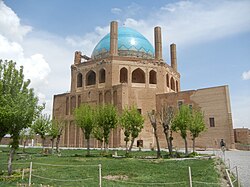
Dome of Soltaniyeh, Zanjan Province, Iran

Transformed at its suppression as residential see in 1450 into a Latin Titular archbishopric, which was itself suppressed in 1926:

See also

[edit]

Media related to Soltaniyeh at Wikimedia Commons

flag Iran portal

Notes

[edit]
[edit]

Further reading

[edit]

Notes

[edit]

References

[edit]
Revisions and contributorsEdit on WikipediaRead on Wikipedia
from Grokipedia
Soltaniyeh is a historic city in , northwestern , approximately 240 kilometers west of , renowned as the former capital of the Ilkhanid dynasty and home to the monumental , a inscribed in 2005. Established as the political and cultural center of the Mongol Ilkhanid Empire in the early under the rule of Öljaitü (also known as Muhammad Khudabanda), Soltaniyeh served as a key hub for administrative, religious, and architectural innovation during a pivotal era in Persian and Islamic history. The city's prominence stemmed from Öljaitü's decision to relocate the capital from nearby , transforming a vast plain once used for hunting and recreation into a thriving metropolis that symbolized the dynasty's power and cultural synthesis of Mongol, Persian, and Islamic influences. At the heart of Soltaniyeh stands the , constructed between 1302 and 1312 as the mausoleum for , who converted to and intended it as a potentially housing the tombs of and Husayn, though it ultimately served as his own burial site. This architectural masterpiece features an octagonal base supporting a towering double-shelled dome reaching 50 meters in height, clad in turquoise-blue tiles, flanked by eight slender minarets, and adorned internally with intricate glazed tiles, , marquetry, , and frescoes. Recognized as an early example of such engineering in , it represents an outstanding achievement in Persian architecture, bridging the Seljuk and Timurid periods while exemplifying advancements in Islamic monumental design. The site's inscription on the World Heritage List highlights its criteria (ii), (iii), and (iv): as an essential link in the development of , an exceptional testimony to 13th- and 14th-century Iranian history, and a pinnacle of Persian architectural innovation. Though the surrounding complex has largely fallen into ruins, the mausoleum remains remarkably intact in form and materials, protected under Iranian laws and managed by the Iranian Cultural Heritage, Handicrafts and Tourism Organization, preserving its authenticity and serving as a testament to the Ilkhanid legacy.

Geography

Location and Setting

Soltaniyeh is situated in the province of Zanjan in northwestern , serving as the capital of Soltaniyeh County and the Central District within it. The city lies at geographic coordinates of approximately 36°26′N 48°48′E, at an elevation of 1,880 meters above . It is positioned 40 kilometers southeast of Zanjan city and approximately 240 kilometers northwest of , placing it in a strategic location along historical trade and migration routes in the region. The settlement occupies a flat plain characterized by fertile pasture lands, historically renowned for their suitability for horse breeding due to the soil's ability to retain rainwater and form rich meadows. This expansive grassland area, spanning about 35 square kilometers (roughly 20 km long and 2 km wide), is often referred to as the "Prairie of the Alezans" or "Falcon’s Hunting Ground," providing a verdant setting amid the broader northwestern Iranian landscape. The plain is bordered by low-lying hills, contributing to its open and accessible topography. Soltaniyeh's position places it near the foothills of the Soltaniyeh and Tarom Mountains, which shape the surrounding terrain and drainage patterns. Additionally, the regional geography is influenced by nearby , located about 150 kilometers to the west; as of 2025, the lake has largely dried up due to prolonged , intensifying ecological challenges such as dust storms and altered hydrology across . This setting underscores Soltaniyeh's role as a historically significant site in a diverse topographic zone of plains, pastures, and proximate lacustrine features.

Climate and Environment

Soltaniyeh experiences a classified under the Köppen system as BSk, characterized by cold winters and moderate summers due to its high of 1,880 meters in the of northwestern . Average temperatures reach lows of around -5°C in , the coldest month, while , the warmest, sees highs up to 30°C. Annual totals between 300 and 400 mm, with the majority occurring during spring months, contributing to a dry overall environment that supports limited agricultural activity. The region's environmental features include arid plains dominated by steppe vegetation, such as species from the family, adapted to the semi-desert conditions prevalent in northwestern Iran's highlands. Occasional dust storms arise from the dry, windy conditions, exacerbating in these open landscapes. Soltaniyeh's location near active fault zones, including the Soltanieh fault, heightens its vulnerability to seismic activity, as the area lies within the seismically active Alpine-Himalayan belt formed by the convergence of the Arabian and Eurasian tectonic plates. Water resources in Soltaniyeh rely heavily on traditional qanats—underground aqueducts that tap into aquifers to deliver water across arid terrains—as well as seasonal tributaries of the Zanjan River, which provide intermittent surface flow primarily during wetter periods. These systems have sustained settlement in the region for millennia, mitigating the challenges of low rainfall and evaporation rates.

History

Ancient and Pre-Mongol Periods

The region encompassing Soltaniyeh in , northwestern , shows evidence of human occupation dating back to the first millennium BCE, as indicated by archaeological findings at the site. Nearby excavations have uncovered five Achaemenid-era tepes (mounded settlements) approximately 500 meters from the modern town, dating to the Achaemenid period (550–330 BCE) and suggesting the area served as a minor outpost along regional trade routes. During the Median period (8th–6th centuries BCE), the broader Zanjan area experienced cultural influences tied to the Median kingdom's expansion, though specific settlements at Soltaniyeh remain sparsely documented. Local traditions and historical accounts refer to the site by ancient names such as Aribad or Arsas, possibly linked to Median-era usage as a or administrative locale, though archaeological confirmation is limited. Under Achaemenid and subsequent Sassanid rule (224–651 CE), the location likely functioned as a peripheral on overland routes connecting central to the , benefiting from its fertile plains suitable for and , but without evidence of major urban development or fortifications. Following the Islamic conquest of in the CE, the area underwent gradual Islamization, integrated into the Abbasid Caliphate's provincial administration (750–1258 CE), with the surrounding region falling under Buyid influence (934–1062 CE) as part of their control over western . Archaeological remains from this era are scarce at Soltaniyeh itself, consisting primarily of scattered and minor structural fragments indicative of rural settlements, rather than prominent mosques or defensive works; the site's obscurity persisted, with no recorded major events, battles, or notable rulers tied directly to it. The arrival of Mongol forces in the 13th century catalyzed significant transformation, elevating the modest locale into a prominent center.

Ilkhanid Capital and Construction

Soltaniyeh was established as the capital of the Ilkhanid dynasty in 1305 CE by (r. 1304–1316 CE), who relocated the administrative center from to this central location in northwestern to consolidate power and leave a lasting legacy associated with his name. The city's founding marked a significant phase in Ilkhanid urban development, transforming a previously modest settlement into a planned metropolis designed to reflect the dynasty's imperial ambitions. Construction efforts, spanning approximately nine years until 1313 CE, involved extensive that encompassed palaces, mosques, schools, hospitals, markets, baths, and a central complex intended as Öljaitü's tomb. The scale of these projects was immense, drawing engineers and craftsmen from across the empire. Öljaitü's personal conversion to in 1309 CE profoundly shaped the city's layout, emphasizing religious structures that promoted this newly adopted faith, such as Shi'i-inspired mosques and the , which briefly referenced architectural innovations like its double-shelled dome. Politically, the capital's development facilitated diplomatic engagements, including ties with —evidenced by the construction of a church following papal directives—and cultural exchanges with , underscoring Soltaniyeh's role as a hub in the Ilkhanid realm. Soltaniyeh served as the until 1335 CE, when administrative focus shifted elsewhere amid dynastic transitions. At its zenith, the city was a thriving political and economic center before the 's fragmentation.

Decline and Modern Era

Following the death of the last Ilkhanid ruler Abu Sa'id in 1335 CE, the fragmented into rival successor states, leading to Soltaniyeh's rapid abandonment as a capital amid political instability and invasions by regional powers such as the Jalayirids, Muzaffarids, and Kara Koyunlu. Timur's forces sacked the city in 1384 CE, though the was spared, and further destruction occurred under his son by 1393 CE, accelerating the site's decay into ruins. During the Safavid period in the 16th and 17th centuries, Soltaniyeh continued its gradual decline, reduced to a small rural village amid the ruins of its former grandeur, as noted by European travelers such as Jean Chardin in 1671 and in 1679. Neglect persisted into the Qajar era (late 18th to early 20th centuries), where the site served primarily as a ground on its expansive plain; repurposed materials from the ruins for a in 1809, while initiated limited restorations to the in the mid-19th century. In the 19th and early 20th centuries, Soltaniyeh remained a modest rural settlement, with European explorers like Charles Texier (1839–40) and Jane Dieulafoy (1881) documenting its dilapidated state, reflecting broader provincial stagnation under Qajar rule. The establishment of the in 1925 integrated the area into modern Iran's centralized administrative framework, though it saw little development until post-World War II efforts. The 1979 Islamic Revolution had minimal direct impacts on Soltaniyeh, with no recorded disruptions to the site's archaeological remains or ongoing scholarly interest. Restoration initiatives, begun in 1969 with an Italian archaeological team focusing on structural stabilization of the mausoleum (1969–1979), continued under the Iranian Cultural Heritage Organization (ICHO) from 1994 onward. In recent decades, Soltaniyeh's status was elevated when it became the capital of Soltaniyeh County in 2013, enhancing local governance and infrastructure ties within . The site's inscription as a in 2005 recognized its architectural significance and spurred renewed preservation efforts, including ICHO-funded projects for maintenance, research, and site management. As of 2025, ongoing restorations target the southern gate and surrounding complex, with phase two of the southern gate project expected to conclude by November 2025.

Architecture and Monuments

Dome of Soltaniyeh

The , constructed between 1302 and 1312 CE under the orders of the Ilkhanid ruler (also known as Sultan Mohammad Khodabandeh), served primarily as his mausoleum and a monument to his conversion to Shi'ism. , the eighth ruler of the Mongol Ilkhanid dynasty, relocated the capital to Soltaniyeh and initiated the project to create a grand tomb that reflected his religious and imperial ambitions, incorporating Shi'i theological elements. The structure exemplifies the transitional phase in , bridging Seljuk and Timurid styles through innovative engineering and decorative synthesis. Architecturally, the dome features a double-shelled design, marking it as the earliest extant example of this technique in and one of the largest domes constructed in the medieval period, with an interior diameter of 25 meters, an exterior diameter of 38 meters, and a total height of 50 meters. The octagonal base rises through vaulted galleries and () cornices to support the massive dome, which is clad in turquoise-blue tiles that gleam against the skyline, while eight slender minarets—originally 15.5 meters tall—frame the structure, though several have partially collapsed over centuries due to seismic activity and erosion. These elements draw from Persian-Islamic traditions but incorporate Mongol and potentially Chinese motifs in the tilework and proportions, reflecting the Ilkhanid court's multicultural influences from across the empire. The drum walls, 7 meters thick, and robust arches (7.62 meters thick) underscore the advanced construction techniques employed to achieve stability without extensive scaffolding. The interior spans over 9,000 square meters of richly ornamented surfaces, featuring glazed tiles, brickwork, , decorations, and frescoes in vibrant blues, golds, and reds. A subterranean (sardāb) houses Öljaitü's , with small niches and rooms. Öljaitü intended the mausoleum to serve as a for the relics of Imams and Husayn, though this was not realized; the space includes niches and inscriptions in quoting Quranic verses and Shi'i hadiths. While primary inscriptions are in , decorative elements show traces of Mongol script influences, highlighting the era's linguistic diversity, though no verified Chinese text has been documented in the . The overall aesthetic creates a luminous, ethereal atmosphere, with light filtering through the dome's oculus to illuminate the theological motifs. In 2005, the was inscribed on the World Heritage under criteria (ii), (iii), and (iv) for its role as an essential link in the evolution of , as exceptional testimony to 13th-14th century Ilkhanid history, and as an outstanding exemplar of Persian architectural achievement. Structural challenges have persisted, including the severe degradation of exterior tiles and partial collapses, prompting major restorations from 1969 to 1979 and ongoing efforts since 1994 to address integrity issues without altering the original form. As of 2025, phase two of the restoration project on the southern gate is underway.

Surrounding Complex and Other Sites

The original Ilkhanid complex in Soltaniyeh encompassed an enclosed layout featuring the Dar-e palace, a , and a khanqah, forming the core of the ancient capital established by the Mongol rulers between 1302 and 1312. This expansive ensemble served as the administrative and religious heart of the Ilkhanid dynasty, integrating royal residences with spiritual and communal structures to support the city's role as a political center. Much of the complex was devastated by earthquakes in the and subsequent looting, leaving only fragmented remnants by the . Surviving elements include ruins of minarets, iwans, and underground vaults, which hint at the original scale and sophistication of the . Additionally, fragments from the 14th-century Friday Mosque persist, alongside other vestiges uncovered through excavations that reveal the complex's former grandeur. Nearby sites within the broader Ilkhanid landscape include caravanserais and Qajar-era bathhouses, which complement the historical fabric of the area. Archaeological digs have yielded Mongol-era artifacts, such as ceramics, providing insights into daily life and trade during the Ilkhanid period. Conservation efforts, including partial reconstructions using traditional materials to preserve authenticity, with the entire site integrated into a buffer zone spanning 790 hectares for enhanced protection, continue as of 2025 with a new season of excavations uncovering additional artifacts. These initiatives, overseen by the Iranian , Handicrafts and Organization, emphasize sustainable management to safeguard the ruins against further degradation.

Demographics

Soltaniyeh's population has shown steady growth in recent decades, reflecting broader trends in . According to the 2006 Iranian national conducted by the Statistical Centre of Iran, the city's stood at 5,864 residents in 1,649 households. The 2011 recorded 7,116 residents in 2,013 households. By the 2016 , this figure had increased to 7,638 residents in 2,319 households, representing an overall growth of approximately 30% from 2006 to 2016. The annual population growth rate for Soltaniyeh between 2006 and 2016 averaged about 2.7%, calculated as the compound annual growth rate (CAGR) using the formula (76385864)1/1010.027\left( \frac{7638}{5864} \right)^{1/10} - 1 \approx 0.027, or 2.7%. This rate aligns closely with urban growth patterns in Zanjan Province, where Soltaniyeh's expansion contributed to regional increases. Rural-to-urban migration has supported this modest expansion. In terms of urban-rural distribution within the broader (established in 2013), the 2016 recorded a total county of 29,480, with the comprising roughly 26% of this figure, indicating a predominantly rural administrative area but concentrated urban settlement in Soltaniyeh proper. The latest available detailed data for the is from 2016. Historically, Soltaniyeh experienced significant decline from its Ilkhanid-era prominence as a to a small settlement by the mid-20th century, with the 1956 capturing a notably low amid post-dynastic depopulation, though exact figures for that period remain sparsely documented in available records. Modern recovery has been gradual, with post-1979 migration patterns aiding stabilization through tourism-related development.

Ethnic and Linguistic Composition

Soltaniyeh's ethnic composition is dominated by , who form the primary ethnic group in and reflect the broader demographic patterns of northwestern . This group constitutes the majority of the local population. Smaller minorities include , , and Tats, contributing to the town's cultural mosaic. Linguistically, Azerbaijani Turkish is the predominant spoken language among the population, used in daily interactions, festivals, and traditional practices such as local cuisine preparation. Persian serves as the for administrative, educational, and governmental purposes, fostering widespread bilingualism among residents who navigate both tongues seamlessly in professional and social contexts. Azerbaijani cultural influences are evident in Soltaniyeh's communal life, including seasonal festivals that feature traditional music and , as well as culinary traditions centered on dishes like and kebabs adapted to local ingredients. Historical legacies from the Mongol Ilkhanid era persist in genealogical narratives among some families, underscoring the town's role as a former capital that blended diverse influences. Recent migration patterns have introduced a modest influx of from , primarily for employment in heritage preservation and tourism-related roles, adding to the ethnic diversity without significantly altering the Azerbaijani majority.

Religion and Ecclesiastical History

Islamic Religious Sites

Soltaniyeh's Islamic religious heritage is deeply rooted in the Ilkhanid era, particularly through the efforts of Sultan Öljaitü, who converted to Twelver Shi'ism in 1309 CE and actively promoted it as the state religion. This shift influenced the city's religious landscape by encouraging the construction of Shi'ite-oriented structures and inviting prominent Shia scholars to establish educational institutions. Öljaitü's initiatives included plans to create shrines for Imam Ali and Imam Hussein within the larger architectural complex of the city, symbolizing reverence for the foundational figures of Shi'ism, although these plans were ultimately abandoned due to opposition from Shia clergy. Remnants of the 14th-century Friday Mosque, part of the original Ilkhanid complex centered around the , represent one of the earliest enduring Islamic religious sites in Soltaniyeh. Constructed during Öljaitü's reign (1304–1316 CE), the mosque served as a congregational space for communal prayers and reflected the transition to Shi'ite practices under his patronage. Though the main structure was demolished over time, surviving elements such as foundational ruins and associated prayer areas highlight the integration of religious functions into the of the Ilkhanid capital. These remnants underscore the historical role of Soltaniyeh as a center for Shi'ite worship and architectural innovation. The promotion of Twelver Shi'ism by Öljaitü also fostered local madrasas for , with Shia scholars playing a pivotal role in their development between 1303 and 1316 CE. These institutions provided instruction in Islamic , , and traditions centered on the , embedding Shi'ite doctrine into the community's fabric. Today, this legacy continues through annual processions, where residents commemorate the martyrdom of Hussein with mourning rituals, processions, and gatherings that emphasize themes of resistance and devotion—practices that trace back to the city's Ilkhanid-era Shi'ite foundations. In the modern era, following the 1979 Islamic Revolution, several mosques in Soltaniyeh and the surrounding have been constructed or expanded with funding from provincial religious endowments (awqaf), supporting Shi'ite imams and community worship. These additions, often incorporating traditional Persian-Islamic designs, serve as hubs for daily prayers, , and events like observances, reinforcing the enduring influence of established since 1309 CE.

Latin Catholic Archdiocese

The Latin Catholic Archdiocese of Soltania was established on April 1, 1318, by as a metropolitan see of the Latin Rite in the Ilkhanid capital of Soltania (modern ), serving as a hub for Catholic efforts in the Mongol territories of Persia. This creation reflected broader papal initiatives to organize ecclesiastical structures amid the Ilkhans' earlier sympathies toward , though by 1318 had solidified as the dominant faith following Khan's conversion in 1295. The archdiocese oversaw a limited suffragan network, including the short-lived of Quilon in from 1329, and supported Latin missions aimed at converting Mongol rulers and serving scattered Christian communities, with both Franciscan and Dominican friars actively involved in the region. The initial residential archbishop was the Dominican friar Francesco di Perugia, appointed in 1318 to lead the see in Tatary (Persia). He was succeeded by Guillaume Adam, O.P., who served as metropolitan archbishop from October 6, 1322, to October 26, 1324, before transferring to the Archdiocese of Bar. Later incumbents included Tommaso Marcapesci, metropolitan archbishop from January 24, 1401, and Thomas Abaraner (Aparaner), O.P., appointed on December 19, 1425. These appointments, primarily from the , underscored the ' central role in sustaining the mission despite political instability and the waning influence of Latin in the . The archdiocese functioned briefly as a residential see until its suppression around 1450, coinciding with the decline of Catholic presence due to the entrenched Islamization of the Ilkhans and subsequent regional upheavals. It was then revived as a titular episcopal see, with appointments including Francisco Salazar, O.F.M. (1548), Bernardino de Carmona (1551), and Albert Bitter as titular archbishop from October 9, 1922, to December 19, 1926. The was fully suppressed in 1926, with no incumbents since and no current revival.

Economy and Infrastructure

Local Economy

Soltaniyeh's local economy is primarily anchored in , which dominates employment and production in the surrounding rural areas of . Key crops include , , , and and other crops, cultivated on irrigated and rainfed lands that support the livelihoods of many residents. Small-scale industries complement this sector, focusing on traditional handicrafts like silverwork, copperware, and , often produced for local markets and visitors. Tourism has emerged as a vital economic driver since the Dome of Soltaniyeh's inscription as a World Heritage Site in , generating major benefits for local communities through heritage site visits, guided tours, and sales of handicrafts. Visitor numbers have shown a steady increase, fostering income and seasonal employment opportunities tied to the site's management and related services. This sector enhances the overall economy by promoting ancillary activities, such as accommodation and local transport, while contributing to the preservation of cultural assets that attract both domestic and international tourists. Employment trends reflect the rural-agricultural focus, with reporting an unemployment rate of approximately 6.7% in 2022, lower than the national average due to opportunities in farming and emerging roles. Average incomes in Soltaniyeh remain below the national level, influenced by its rural ties and reliance on seasonal agricultural yields, with monthly salaries in the province lower than the national of approximately $254 USD. The economy faces challenges from , which increasingly impacts through reduced availability and constraints in the Zanjan Plain. To mitigate these issues, the Iranian government provides subsidies for agricultural inputs and practices, supporting crop production and farmer resilience amid environmental pressures.

Transportation and Development

Soltaniyeh is primarily connected to the regional road network via a 42-kilometer route to the provincial capital of Zanjan, facilitating access for residents and visitors. This road links to broader highways, including the Zanjan-Qazvin and Zanjan-Tabriz freeways, enabling connectivity to major cities. The city is approximately 50 kilometers from Zanjan Airport, providing air travel options for longer journeys, while local bus services operate to , with travel times around 4 hours depending on traffic and route conditions. Following the establishment of Soltaniyeh County in , urban development has emphasized sustainable housing expansions to accommodate while preserving historical sites. These efforts include architectural designs that integrate modern residential needs with the town's heritage landscape, promoting social through community participation and eco-friendly planning. In the 2020s, regional initiatives in have incorporated elements, such as solar installations, to support sustainable urban infrastructure, though specific projects in Soltaniyeh remain limited. The transportation network aids the local economy by enabling efficient agricultural , though it primarily serves road-based . Key infrastructural projects include upgrades to the , which enhances regional connectivity, with sections completed in phases during the 2010s. Railway proposals, such as the Zarrin Dej-Soltaniyeh line, aim to link the city to and enhance freight and passenger access, though implementation remains in planning stages. enhancements in involve pipelines from local dams to address scarcity, supporting urban expansion without direct ties to distant sources like Taleghan Dam. Despite these advancements, Soltaniyeh faces challenges including limited rail access, relying heavily on roads for connectivity. Post-2003 , Iran adopted stricter seismic-resistant building codes under Standard No. 2800, influencing new constructions in seismic-prone areas like Soltaniyeh to incorporate reinforced designs for vulnerability mitigation.

Culture and Tourism

Cultural Heritage

Soltaniyeh's cultural heritage is deeply rooted in the traditions of the Azerbaijani region of , where and dances form a vital part of community life. Azerbaijani , characterized by its rhythmic melodies and instruments like the and , reflects a blend of Turkic, Persian, and Caucasian influences that have been preserved through generations in northwestern . Local celebrations, particularly —the Persian New Year—feature vibrant dances. Culinary traditions in Soltaniyeh emphasize hearty, yogurt-based dishes suited to the region's climate, with standing out as a staple. This tangy , made from , , chickpeas, and fresh herbs like and mint, is a nourishing commonly prepared in households across Iran's province, often garnished with fried onions and served during colder months. Its preparation and communal sharing underscore the area's emphasis on family gatherings and seasonal rituals. The Ilkhanid legacy, with Soltaniyeh as the dynasty's capital under , profoundly shaped Persian artistic traditions, particularly in miniature painting and tilework. During this period, artists in the region introduced Chinese-inspired motifs such as dragons and lotuses into Persian miniatures, creating an eclectic style that blended Islamic, Persian, and Eastern elements and influenced subsequent schools like the Timurid. Similarly, innovative luster-painting techniques on tiles, developed in Ilkhanid workshops, advanced overglaze methods that became foundational to later Persian . The local maintains this legacy by exhibiting Ilkhanid-era artifacts, such as vessels and decorative tiles, which provide tangible links to Öljaitü's time and foster with historical narratives.

Tourism and Preservation Efforts

Soltaniyeh's primary is the UNESCO-listed , where guided tours allow visitors to explore the mausoleum's interior and surrounding grounds, highlighting its architectural features and historical significance. Recent archaeological excavations at the site have uncovered an Ilkhanid royal adjacent to the dome, including skeletal remains, , and architectural elements, offering additional interpretive opportunities for tourists interested in the site's layered history. These excavations, ongoing as of 2025, are integrated into site management to enhance visitor education without compromising structural integrity. Visitor numbers to the Dome have shown steady growth, with approximately 2,689 foreign tourists recorded in the first six months of the Iranian year 1398 (March-September 2019), indicating an annual influx of several thousand international visitors pre-pandemic. Domestic tourism contributes significantly to overall attendance, though exact totals remain variable due to seasonal fluctuations; numbers peak during spring (March-May) and autumn (September-November) when milder weather facilitates outdoor exploration, contrasting with reduced visits in the colder winter months. Post-COVID recovery has aligned with national trends, where Iran's international tourism grew over 300% year-on-year in 2022, supporting a rebound in site visits as travel restrictions eased; as of the Iranian year ending March 2025, Zanjan Province recorded 171% growth in domestic tourism. Preservation efforts emphasize scientific and traditional methods to safeguard the site's authenticity. In 2025, phase two of a restoration project on the southern gate commenced, focusing on structural reinforcement and conservation of original materials. A collaborative Iranian-Italian initiative under the DOMES project (2016-2025) has advanced research and restoration of the dome's glazed tiles and decorations, employing analytical techniques to match historical compositions and prevent further deterioration. UNESCO provides ongoing monitoring, particularly for seismic vulnerabilities, given the site's location in a high-hazard zone with historical earthquake records; vulnerability assessments using finite element modeling guide reinforcement strategies to mitigate risks from potential tremors. Protection is enshrined in Iran's Law on the Conservation of National Monuments (1982), which mandates state oversight and prohibits unauthorized alterations, ensuring long-term safeguarding. Key challenges include environmental threats like and from , which have accelerated the decline of exterior tiles, compounded by gradual urban encroachment nearby. While tourism pressure remains low, increasing visitor footfall necessitates balanced management to avoid cumulative wear on and pathways. primarily derives from the national budget allocated through the Iranian Cultural Heritage, Handicrafts and Organization, supporting annual maintenance and research; no major international grants have been received specifically for Soltaniyeh to date. These efforts contribute to broader economic benefits, such as localized revenue from that bolsters regional infrastructure.

References

Add your contribution
Related Hubs
User Avatar
No comments yet.