Hubbry Logo
DNA supercoilDNA supercoilMain
Open search
DNA supercoil
Community hub
DNA supercoil
logo
8 pages, 0 posts
0 subscribers
Be the first to start a discussion here.
DNA supercoil
DNA supercoil
from Wikipedia

Supercoiled structure of circular DNA molecules with low writhe. The helical nature of the DNA duplex is omitted for clarity.
Supercoiled structure of linear DNA molecules with constrained ends. The helical nature of the DNA duplex is omitted for clarity.

DNA supercoiling refers to the amount of twist in a particular DNA strand, which determines the amount of strain on it. A given strand may be "positively supercoiled" or "negatively supercoiled" (more or less tightly wound). The amount of a strand's supercoiling affects a number of biological processes, such as compacting DNA and regulating access to the genetic code (which strongly affects DNA metabolism and possibly gene expression). Certain enzymes, such as topoisomerases, change the amount of DNA supercoiling to facilitate functions such as DNA replication and transcription.[1] The amount of supercoiling in a given strand is described by a mathematical formula that compares it to a reference state known as "relaxed B-form" DNA.

Overview

[edit]

In a "relaxed" double-helical segment of B-DNA, the two strands twist around the helical axis once every 10.4–10.5 base pairs of sequence. Adding or subtracting twists, as some enzymes do, imposes strain. If a DNA segment under twist strain is closed into a circle by joining its two ends, and then allowed to move freely, it takes on different shape, such as a figure-eight. This shape is referred to as a supercoil. (The noun form "supercoil" is often used when describing DNA topology.)

The DNA of most organisms is usually negatively supercoiled. It becomes temporarily positively supercoiled when it is being replicated or transcribed. These processes are inhibited (regulated) if it is not promptly relaxed. The simplest shape of a supercoil is a figure eight; a circular DNA strand assumes this shape to accommodate more or few helical twists. The two lobes of the figure eight will appear rotated either clockwise or counterclockwise with respect to one another, depending on whether the helix is over- or underwound. For each additional helical twist being accommodated, the lobes will show one more rotation about their axis.[2]

Lobal contortions of a circular DNA, such as the rotation of the figure-eight lobes above, are referred to as writhe. The above example illustrates that twist and writhe are interconvertible. Supercoiling can be represented mathematically by the sum of twist and writhe. The twist is the number of helical turns in the DNA and the writhe is the number of times the double helix crosses over on itself (these are the supercoils). Extra helical twists are positive and lead to positive supercoiling, while subtractive twisting causes negative supercoiling. Many topoisomerase enzymes sense supercoiling and either generate or dissipate it as they change DNA topology.

In part because chromosomes may be very large, segments in the middle may act as if their ends are anchored. As a result, they may be unable to distribute excess twist to the rest of the chromosome or to absorb twist to recover from underwinding—the segments may become supercoiled, in other words. In response to supercoiling, they will assume an amount of writhe, just as if their ends were joined.

Supercoiled DNA forms two structures; a plectoneme or a toroid, or a combination of both. A negatively supercoiled DNA molecule will produce either a one-start left-handed helix, the toroid, or a two-start right-handed helix with terminal loops, the plectoneme. Plectonemes are typically more common in nature, and this is the shape most bacterial plasmids will take. For larger molecules it is common for hybrid structures to form – a loop on a toroid can extend into a plectoneme. If all the loops on a toroid extend then it becomes a branch point in the plectonemic structure. DNA supercoiling is important for DNA packaging within all cells, and seems to also play a role in gene expression.[3][4]

Intercalation-induced supercoiling of DNA

[edit]

Based on the properties of intercalating molecules, i.e. fluorescing upon binding to DNA and unwinding of DNA base-pairs, in 2016, a single-molecule technique has been introduced to directly visualize individual plectonemes along supercoiled DNA[5] which would further allow to study the interactions of DNA processing proteins with supercoiled DNA. In that study, Sytox Orange (an intercalating dye) was used to induce supercoiling on surface tethered DNA molecules.

Using this assay, it was found that the DNA sequence encodes for the position of plectonemic supercoils.[6] Furthermore, DNA supercoils were found to be enriched at the transcription start sites in prokaryotes.

Functions

[edit]

Genome packaging

[edit]

DNA supercoiling is important for DNA packaging within all cells. Because the length of DNA can be thousands of times that of a cell, packaging this genetic material into the cell or nucleus (in eukaryotes) is a difficult feat. Supercoiling of DNA reduces the space and allows for DNA to be packaged. In prokaryotes, plectonemic supercoils are predominant, because of the circular chromosome and relatively small amount of genetic material. In eukaryotes, DNA supercoiling exists on many levels of both plectonemic and solenoidal supercoils, with the solenoidal supercoiling proving most effective in compacting the DNA. Solenoidal supercoiling is achieved with histones to form a 10 nm fiber. This fiber is further coiled into a 30 nm fiber, and further coiled upon itself numerous times more.

DNA packaging is greatly increased during mitosis when duplicated sister DNAs are segregated into daughter cells. It has been shown that condensin, a large protein complex that plays a central role in mitotic chromosome assembly, induces positive supercoils in an ATP hydrolysis-dependent manner in vitro.[7][8] Supercoiling could also play an important role during interphase in the formation and maintenance of topologically associating domains (TADs).[9]

Supercoiling is also required for DNA/RNA synthesis. Because DNA must be unwound for DNA/RNA polymerase action, supercoils will result. The region ahead of the polymerase complex will be unwound; this stress is compensated with positive supercoils ahead of the complex. Behind the complex, DNA is rewound and there will be compensatory negative supercoils. Topoisomerases such as DNA gyrase (Type II Topoisomerase) play a role in relieving some of the stress during DNA/RNA synthesis.[10]

In many bacterial species, barriers to supercoil diffusion divide the genome into a series of topologically isolated supercoil domains (SDs).[11] These SDs play a major role in organizing the nucleoid. SDs negatively supercoiled on average but can sometimes be positively supercoiled as well. The degree of supercoiling can vary in response to different forms of stress and influences the binding of different nucleoid associated proteins (NAPs) that further organize the bacterial genome.[12] For example, Dps from E. coli has been shown to bind supercoiled DNA much more rapidly that torsionally relaxed DNA.[13]

Gene expression

[edit]

Specialized proteins can unzip small segments of the DNA molecule when it is replicated or transcribed into RNA. But work published in 2015 illustrates how DNA opens on its own.[3][4]

Simply twisting DNA can expose internal bases to the outside, without the aid of any proteins. Also, transcription itself contorts DNA in living human cells, tightening some parts of the coil and loosening it in others. That stress triggers changes in shape, most notably opening up the helix to be read. Unfortunately, these interactions are very difficult to study because biological molecules morph shapes so easily. In 2008 it was noted that transcription twists DNA, leaving a trail of undercoiled (or negatively supercoiled) DNA in its wake. Moreover, they discovered that the DNA sequence itself affects how the molecule responds to supercoiling.[3][4]

For example, the researchers identified a specific sequence of DNA that regulates transcription speed; as the amount of supercoil rises and falls, it slows or speeds the pace at which molecular machinery reads DNA.[3] It is hypothesized that these structural changes might trigger stress elsewhere along its length, which in turn might provide trigger points for replication or gene expression.[3][4] This implies that it is a very dynamic process in which both DNA and proteins each influences how the other acts and reacts.[3]

Gene expression during cold shock

[edit]

Almost half of the genes of the bacterium E. coli that are repressed during cold shock are similarly repressed when Gyrase is blocked by the antibiotic Novobiocin.[14] Moreover, during cold shocks, the density of nucleoids increases, and the protein gyrase and the nucleoid become colocalized (which is consistent with a reduction in DNA relaxation). This is evidence that the reduction of negative supercoiling of the DNA is one of the main mechanisms responsible for the blocking of transcription of half of the genes that conduct the cold shock transcriptional response program of bacteria. Based on this, a stochastic model of this process has been proposed. This model is illustrated in the figure, where reactions 1 represent transcription and its locking due to supercoiling. Meanwhile, reactions 2 to 4 model, respectively, translation, and RNA and protein degradation.[14]

Illustration of how cold shock affects the supercoiling state of the DNA, by blocking the activity of Gyrase. The signs ' − ' and '+' represent negative and positive supercoiling, respectively. Also shown is a stochastic model of gene expression during cold shock as a function of the global DNA supercoiling state. The transition from ON to OFF of the promoter (P) causes the locking of transcription (i.e. RNA production). When ON, the promoter can produce RNA, from which proteins can be produced. RNA and proteins are always subject to degradation or dilution due to cell division.

Mathematical description

[edit]
Drawing showing the difference between a circular DNA chromosome (a plasmid) with a secondary helical twist only, and one containing an additional tertiary superhelical twist superimposed on the secondary helical winding.

In nature, circular DNA is always isolated as a higher-order helix-upon-a-helix, known as a superhelix. In discussions of this subject, the Watson–Crick twist is referred to as a "secondary" winding, and the superhelices as a "tertiary" winding. The sketch on the left indicates a "relaxed", or "open circular" Watson–Crick double-helix, and, next to it, a right-handed superhelix. The "relaxed" structure on the left is not found unless the chromosome is nicked; the superhelix is the form usually found in nature.

For purposes of mathematical computations, a right-handed superhelix is defined as having a "negative" number of superhelical turns, and a left-handed superhelix is defined as having a "positive" number of superhelical turns. In the drawing (shown at the right), both the secondary (i.e., "Watson–Crick") winding and the tertiary (i.e., "superhelical") winding are right-handed, hence the supertwists are negative (–3 in this example).

The superhelicity is presumed to be a result of underwinding, meaning that there is a deficiency in the number of secondary Watson–Crick twists. Such a chromosome will be strained, just as a macroscopic metal spring is strained when it is either overwound or unwound. In DNA which is thusly strained, supertwists will appear.

DNA supercoiling can be described numerically by changes in the linking number Lk. The linking number is the most descriptive property of supercoiled DNA. Lko, the number of turns in the relaxed (B type) DNA plasmid/molecule, is determined by dividing the total base pairs of the molecule by the relaxed bp/turn which, depending on reference is 10.4;[15] 10.5;[16][17] 10.6.[18]
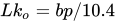
Lk is the number of crosses a single strand makes across the other, often visualized as the number of Watson–Crick twists found in a circular chromosome in a (usually imaginary) planar projection. This number is physically "locked in" at the moment of covalent closure of the chromosome, and cannot be altered without strand breakage.

The topology of the DNA is described by the equation below in which the linking number is equivalent to the sum of Tw, which is the number of twists or turns of the double helix, and Wr, which is the number of coils or "writhes." If there is a closed DNA molecule, the sum of Tw and Wr, or the linking number, does not change. However, there may be complementary changes in Tw and Wr without changing their sum:

Tw, called "twist," is the number of Watson–Crick twists in the chromosome when it is not constrained to lie in a plane. We have already seen that native DNA is usually found to be superhelical. If one goes around the superhelically twisted chromosome, counting secondary Watson–Crick twists, that number will be different from the number counted when the chromosome is constrained to lie flat. In general, the number of secondary twists in the native, supertwisted chromosome is expected to be the "normal" Watson–Crick winding number, meaning a single 10-base-pair helical twist for every 34 Å of DNA length.

Wr, called "writhe," is the number of superhelical twists. Since biological circular DNA is usually underwound, Lk will generally be less than Tw, which means that Wr will typically be negative.

If DNA is underwound, it will be under strain, exactly as a metal spring is strained when forcefully unwound, and that the appearance of supertwists will allow the chromosome to relieve its strain by taking on negative supertwists, which correct the secondary underwinding in accordance with the topology equation above.

The topology equation shows that there is a one-to-one relationship between changes in Tw and Wr. For example, if a secondary "Watson–Crick" twist is removed, then a right-handed supertwist must have been removed simultaneously (or, if the chromosome is relaxed, with no supertwists, then a left-handed supertwist must be added).

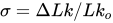
The change in the linking number, ΔLk, is the actual number of turns in the plasmid/molecule, Lk, minus the number of turns in the relaxed plasmid/molecule Lko:

If the DNA is negatively supercoiled, . The negative supercoiling implies that the DNA is underwound.

A standard expression independent of the molecule size is the "specific linking difference" or "superhelical density" denoted σ, which represents the number of turns added or removed relative to the total number of turns in the relaxed molecule/plasmid, indicating the level of supercoiling.
The Gibbs free energy associated with the coiling is given by the equation below[19]

The difference in Gibbs free energy between the supercoiled circular DNA and uncoiled circular DNA with N > 2000 bp is approximated by:

or, 16 cal/bp.

Since the linking number L of supercoiled DNA is the number of times the two strands are intertwined (and both strands remain covalently intact), L cannot change. The reference state (or parameter) L0 of a circular DNA duplex is its relaxed state. In this state, its writhe W = 0. Since L = T + W, in a relaxed state T = L. Thus, if we have a 400 bp relaxed circular DNA duplex, L ~ 40 (assuming ~10 bp per turn in B-DNA). Then T ~ 40.

  • Positively supercoiling:
    T = 0, W = 0, then L = 0
    T = +3, W = 0, then L = +3
    T = +2, W = +1, then L = +3
  • Negatively supercoiling:
    T = 0, W = 0, then L = 0
    T = -3, W = 0, then L = -3
    T = -2, W = -1, then L = -3

Negative supercoils favor local unwinding of the DNA, allowing processes such as transcription, DNA replication, and recombination. Negative supercoiling is also thought to favour the transition between B-DNA and Z-DNA, and moderate the interactions of DNA binding proteins involved in gene regulation.[20]

Stochastic models

[edit]

Some stochastic models have been proposed to account for the effects of positive supercoiling buildup (PSB) in gene expression dynamics (e.g. in bacterial gene expression), differing in, e.g., the level of detail. In general, the detail increases when adding processes affected by and affecting supercoiling. As this addition occurs, the complexity of the model increases.

For example, in [21] two models of different complexity are proposed. In the most detailed one, events were modeled at the nucleotide level, while in the other the events were modeled at the promoter region alone, and thus required much less events to be accounted for.

Stochastic, prokaryotic model of the dynamics of RNA production and transcription locking at the promoter region, due to PSB.

Examples of stochastic models that focus on the effects of PSB on a promoter's activity can be found in:.[22][23] In general, such models include a promoter, Pro, which is the region of DNA controlling transcription and, thus, whose activity/locking is affected by PSB. Also included are RNA molecules (the product of transcription), RNA polymerases (RNAP) which control transcription, and Gyrases (G) which regulate PSB. Finally, there needs to be a means to quantify PSB on the DNA (i.e. the promoter) at any given moment. This can be done by having some component in the system that is produced over time (e.g., during transcription events) to represent positive supercoils, and that is removed by the action of Gyrases. The amount of this component can then be set to affect the rate of transcription.

Effects on sedimentation coefficient

[edit]
Figure showing the various conformational changes which are observed in circular DNA at different pH. At a pH of about 12 (alkaline), there is a dip in the sedimentation coefficient, followed by a relentless increase up to a pH of about 13, at which pH the structure converts into the mysterious "Form IV".

The topological properties of circular DNA are complex. In standard texts, these properties are invariably explained in terms of a helical model for DNA, but in 2008 it was noted that each topoisomer, negative or positive, adopts a unique and surprisingly wide distribution of three-dimensional conformations.[4]

When the sedimentation coefficient, s, of circular DNA is ascertained over a large range of pH, the following curves are seen. Three curves are shown here, representing three species of DNA. From top-to-bottom they are: "Form IV" (green), "Form I" (blue) and "Form II" (red).

"Form I" (blue curve) is the traditional nomenclature used for the native form of duplex circular DNA, as recovered from viruses and intracellular plasmids. Form I is covalently closed, and any plectonemic winding which may be present is therefore locked in. If one or more nicks are introduced to Form I, free rotation of one strand with respect to the other becomes possible, and Form II (red curve) is seen.

Form IV (green curve) is the product of alkali denaturation of Form I. Its structure is unknown, except that it is persistently duplex, and extremely dense.

Between pH 7 and pH 11.5, the sedimentation coefficient s, for Form I, is constant. Then it dips, and at a pH just below 12, reaches a minimum. With further increases in pH, s then returns to its former value. It doesn't stop there, however, but continues to increase relentlessly. By pH 13, the value of s has risen to nearly 50, two to three times its value at pH 7, indicating an extremely compact structure.

If the pH is then lowered, the s value is not restored. Instead, one sees the upper, green curve. The DNA, now in the state known as Form IV, remains extremely dense, even if the pH is restored to the original physiologic range. As stated previously, the structure of Form IV is almost entirely unknown, and there is no currently accepted explanation for its extraordinary density. About all that is known about the tertiary structure is that it is duplex, but has no hydrogen bonding between bases.

These behaviors of Forms I and IV are considered to be due to the peculiar properties of duplex DNA which has been covalently closed into a double-stranded circle. If the covalent integrity is disrupted by even a single nick in one of the strands, all such topological behavior ceases, and one sees the lower Form II curve (Δ). For Form II, alterations in pH have very little effect on s. Its physical properties are, in general, identical to those of linear DNA. At pH 13, the strands of Form II simply separate, just as the strands of linear DNA do. The separated single strands have slightly different s values, but display no significant changes in s with further increases in pH.

A complete explanation for these data is beyond the scope of this article. In brief, the alterations in s come about because of changes in the superhelicity of circular DNA. These changes in superhelicity are schematically illustrated by four little drawings which have been strategically superimposed upon the figure above.

Briefly, the alterations of s seen in the pH titration curve above are widely thought to be due to changes in the superhelical winding of DNA under conditions of increasing pH. Up to pH 11.5, the purported "underwinding" produces a right-handed ("negative") supertwist. But as the pH increases, and the secondary helical structure begins to denature and unwind, the chromosome (if we may speak anthropomorphically) no longer "wants" to have the full Watson–Crick winding, but rather "wants", increasingly, to be "underwound". Since there is less and less strain to be relieved by superhelical winding, the superhelices therefore progressively disappear as the pH increases. At a pH just below 12, all incentive for superhelicity has expired, and the chromosome will appear as a relaxed, open circle.

At higher pH still, the chromosome, which is now denaturing in earnest, tends to unwind entirely, which it cannot do so (because Lk is covalently locked in). Under these conditions, what was once treated as "underwinding" has actually now become "overwinding". Once again there is strain, and once again it is (in part at least) relieved by superhelicity, but this time in the opposite direction (i.e., left-handed or "positive"). Each left-handed tertiary supertwist removes a single, now undesirable right-handed Watson–Crick secondary twist.

The titration ends at pH 13, where Form IV appears.

See also

[edit]

References

[edit]
Revisions and contributorsEdit on WikipediaRead on Wikipedia
from Grokipedia
DNA supercoiling refers to the topological state in which a closed-loop DNA molecule is twisted beyond its relaxed helical configuration, resulting in either over-winding (positive supercoiling) or under-winding (negative supercoiling) that forms superhelical structures. This phenomenon is quantified by the linking number (Lk), an integer representing the total number of times one DNA strand winds around the other, which remains constant in closed circular DNA and decomposes into the twist (Tw) (helical turns) and writhe (Wr) (superhelical coiling). Negative supercoiling, the more prevalent form in cellular DNA, underwinds the helix and generates right-handed superhelices, placing torsional stress on the molecule to facilitate processes requiring strand separation. In biological systems, DNA supercoiling plays a crucial role in compacting the , regulating , and driving essential transactions such as transcription, replication, and repair. Negative supercoiling lowers the energy barrier for unwinding DNA strands, thereby promoting the initiation and progression of during transcription and activity in replication forks. It also aids in DNA decatenation and unknotting by type II topoisomerases, preventing tangles in replicated chromosomes and maintaining genomic stability, particularly in where supercoiling levels are tightly controlled. Positive supercoiling, conversely, arises ahead of transcribing polymerases and must be actively relaxed to avoid stalling cellular processes. Supercoiling is dynamically managed by enzymes called topoisomerases, which alter DNA topology by creating transient breaks in the strands. In bacteria, DNA gyrase introduces negative supercoils using ATP hydrolysis, while topoisomerase I relaxes excess negative supercoiling to prevent hyper-activation of promoters. These mechanisms ensure that superhelical density—typically around -0.06 in Escherichia coli—remains optimal for cellular function, with disruptions targeted by antibiotics like quinolones that inhibit gyrase. First observed in polyoma virus DNA in the 1960s, supercoiling has since been recognized as a universal feature of DNA organization across prokaryotes and eukaryotes.

Fundamentals of DNA Supercoiling

Definition and Types

DNA supercoiling refers to the over- or under-winding of the DNA double helix beyond its relaxed B-form state, which introduces torsional stress and alters the molecule's topology. This structural feature is particularly prominent in closed circular DNA molecules, such as bacterial plasmids and viral genomes, where the ends are covalently sealed, preventing rotation and thus trapping the superhelical tension. The concept of DNA supercoiling was first elucidated in the 1960s by Jerome Vinograd and colleagues through sedimentation velocity experiments on polyoma viral DNA, which revealed distinct fast-sedimenting twisted circular forms compared to relaxed open circles. These studies demonstrated that supercoiling arises from deviations in the helical winding, leading to compensatory changes in the DNA's three-dimensional configuration to relieve strain. Supercoiling manifests in two primary types: negative and positive, distinguished by the direction of winding relative to the relaxed state. Negative supercoiling, characterized by underwinding (a deficit in helical turns), predominates in vivo across bacteria and eukaryotes, promoting DNA unwinding to facilitate essential processes like transcription initiation. For instance, in Escherichia coli, genomic DNA maintains a negative superhelical density of approximately −0.06, corresponding to about one negative superhelical turn every 175 base pairs. In contrast, positive supercoiling involves overwinding (an excess of helical turns) and typically arises transiently, such as in the region ahead of RNA polymerase during active transcription or at replication forks, where it must be rapidly relieved to prevent structural impediments. These types are topological properties, with negative supercoiling generally stabilizing open promoter complexes and positive supercoiling favoring compact chromatin-like states in certain contexts.

Topological Properties

The topological properties of DNA supercoils are characterized by three key invariants that describe the configuration of closed circular DNA molecules: the (Lk), twist (Tw), and writhe (Wr). The Lk quantifies the total number of times one strand of the DNA double winds around the other in a closed, circular , remaining constant unless altered by specific enzymatic action. Twist (Tw) measures the number of helical turns within the DNA double itself, reflecting the local helical winding of the base pairs, while writhe (Wr) captures the coiling of the DNA's central axis in space, independent of the internal . These quantities are related by the equation Lk=Tw+WrLk = Tw + Wr, which partitions the overall into local helical deformation and global axis geometry. In the relaxed state, where no supercoiling is present, the DNA adopts the standard B-form conformation with approximately 10.5 base pairs per helical turn, yielding a reference linking number Lk0_0 that corresponds to the natural helical winding without torsional stress. The degree of supercoiling is then quantified by the superhelical density σ=LkLk0Lk0\sigma = \frac{Lk - Lk_0}{Lk_0}, a dimensionless parameter that indicates the relative under- or overwinding of the molecule; negative values of σ\sigma denote underwinding (negative supercoiling), which is prevalent in cellular DNA. In vivo, superhelical densities typically range from -0.03 to -0.06 in bacterial cells, reflecting a constrained yet dynamic topological state that influences DNA structure. Supercoiled DNA manifests these topological invariants through distinct structural forms, primarily plectonemic and toroidal supercoils. Plectonemic supercoils involve the interwinding of the DNA duplex around itself in a side-by-side, branched configuration, where negative supercoiling produces right-handed plectonemes and positive supercoiling yields left-handed ones, allowing the writhe to absorb much of the topological stress. In contrast, toroidal supercoils feature the DNA axis wrapping around a virtual toroidal core in a solenoid-like manner without intersegmental crossing, distributing the writhe more uniformly along the . These geometries represent alternative partitions of writhe, with plectonemes favored under low conditions and toroids under higher crowding or wrapping scenarios.00896-2)

Mechanisms Generating Supercoiling

Enzymatic Processes

Enzymatic processes play a central role in the active management of DNA supercoiling, primarily through the action of topoisomerases, which regulate the (Lk) of DNA to prevent topological stress during replication, transcription, and other cellular activities. Type I topoisomerases, such as TopoI in Escherichia coli, relax supercoils by creating a transient single-strand break in the DNA backbone, allowing the intact strand to pass through and thereby reducing torsional strain without requiring ATP hydrolysis.00178-2) In contrast, type II topoisomerases, including DNA gyrase and topoisomerase IV, introduce double-strand breaks and pass another double-stranded DNA segment through the break, altering Lk by steps of ±2; this mechanism is ATP-dependent and enables both relaxation and the introduction of supercoils.00055-1) DNA gyrase, a type II topoisomerase unique to bacteria, actively introduces negative supercoils into DNA, counteracting the positive supercoils generated ahead of replication and transcription forks. The enzyme wraps DNA in a right-handed manner around its core, forming a positive node that is then resolved through strand passage, with ATP binding and hydrolysis providing the energy to drive this thermodynamically unfavorable process against the natural tendency toward relaxation.01179-1) This ATP-driven mechanism allows gyrase to maintain a steady level of negative supercoiling, which is the predominant form in most cellular contexts, facilitating DNA unwinding for essential processes.00896-2) In hyperthermophilic organisms, reverse gyrase, a specialized type IA topoisomerase, introduces positive supercoils into DNA, enhancing thermal stability under extreme temperatures.00896-2) Found predominantly in and some , reverse gyrase uses to promote positive supercoiling, which compacts DNA and protects it from denaturation in high-heat environments. In vivo, supercoiling levels are dynamically balanced by the opposing activities of gyrase, which promotes negative supercoiling, and relaxing topoisomerases like TopoI and TopoIV, ensuring topological amid fluctuating cellular demands.90140-X) This regulation is crucial in E. coli, where gyrase activity is modulated by supercoiling-sensitive promoters, and imbalances lead to compensatory adjustments in expression to restore equilibrium.

Non-Enzymatic Induction

Non-enzymatic induction of DNA supercoiling occurs through passive physical and chemical perturbations that alter the topological state of DNA without the involvement of enzymes such as topoisomerases. Intercalating agents, like ethidium bromide (EtBr), are prototypical molecules that insert between adjacent base pairs of the DNA double helix, causing local unwinding of the helical structure. This intercalation reduces the twist (Tw) by approximately 26 degrees per bound EtBr molecule, as the planar aromatic rings of the intercalator stack parallel to the bases, elongating and unwinding the DNA locally.90304-3) In covalently closed circular DNA, where the linking number (Lk) is fixed, this decrease in Tw is compensated by an increase in writhe (Wr), leading to positive supercoiling that relaxes preexisting negative supercoils or induces positive writhe. The binding affinity of EtBr is higher for negatively supercoiled DNA than for relaxed forms, facilitating titration experiments to quantify superhelical density.90304-3) This mechanism of intercalation-induced topological change has been instrumental in experimental analyses of DNA supercoiling. In agarose gel electrophoresis, EtBr is commonly added to visualize and separate topoisomers, as the dye's binding alters migration patterns based on superhelical states: negatively supercoiled DNA binds less EtBr initially and migrates faster, while progressive relaxation occurs with increasing dye concentration until a point of minimal supercoiling, after which positive supercoils form. Such in vitro probing allows precise determination of superhelical turns without enzymatic intervention, providing insights into DNA topology under controlled conditions. Other intercalators, such as daunomycin or actinomycin D, operate similarly by unwinding the helix and modulating Wr, though with varying unwinding angles and binding specificities.80004-1) A major non-enzymatic mechanism for generating supercoils arises during transcription and replication, where the progress of or along the creates torsional stress. According to the twin-domain model, the advancing polymerase induces positive supercoiling ahead of the transcription bubble and negative supercoiling behind it, as the rotation relative to the fixed Lk overwinds the DNA in front and underwinds it behind. This process, independent of topoisomerases, diffuses superhelical tension over domains and influences and process efficiency until relieved by relaxing enzymes. Beyond chemical agents, environmental factors like fluctuations can non-enzymatically influence DNA supercoiling by affecting the intrinsic helical twist. The helical pitch of B-DNA increases with rising , increasing the number of base pairs per turn and thus decreasing Tw; conversely, cooling enhances twist, making the helix more tightly wound. In closed circular DNA with invariant Lk, a temperature decrease (e.g., cold shock from 37°C to 15°C) therefore increases negative supercoiling, as the augmented Tw necessitates more negative Wr for compensation. This physical response has been observed in plasmid DNA, where cold exposure transiently heightens negative superhelical density before potential enzymatic adjustments.

Biological Roles

Chromatin Organization

In eukaryotic cells, negative supercoiling plays a crucial role in facilitating the wrapping of DNA around histone octamers to form nucleosomes, the basic unit of chromatin. Each nucleosome typically incorporates approximately 147 base pairs of DNA wrapped in about 1.7 left-handed superhelical turns, which constrains negative supercoils and promotes the initial compaction of the genome. This wrapping not only stabilizes the nucleosome core particle but also enables the formation of higher-order DNA loops, where unconstrained supercoils can drive the folding of chromatin fibers into more compact structures. Supercoiling further contributes to the organization of into distinct domains, such as topologically associating domains (TADs), where supercoils are often constrained within loops anchored by insulator proteins like . These -bound loops help delineate territories, preventing inappropriate interactions between distant genomic regions and facilitating territorial organization that supports cellular functions like replication and repair. By localizing torsional stress within these bounded loops, supercoiling maintains structural integrity across large-scale architectures. Enzymatic processes, such as those mediated by , help sustain the appropriate levels of negative supercoiling necessary for this organization. In , supercoiling is essential for the extreme compaction of the , reducing the effective length of the by approximately 1000-fold to fit within the cell. Negative supercoils induce the formation of plectonemic structures, where DNA strands intertwine to create right-handed superhelices that further condense the . Histone-like proteins such as HU and IHF bind to these supercoiled regions, stabilizing plectonemes and bridging DNA segments to enhance overall compaction and organization. A key quantitative role of supercoiling in organization involves absorbing torsional stress generated during processes like replication progression, where unwinding of ahead of the produces positive supercoils that could otherwise stall machinery. In contexts, arrays effectively absorb these supercoils, buffering mechanical stress and allowing smoother progression of the replication without widespread denaturation.

Transcriptional Control

During transcription, the advancement of along the DNA template generates torsional stress, leading to the formation of positive supercoils ahead of the enzyme and negative supercoils behind it, as described by the twin-supercoiled-domain model. This model posits that the unwinding of DNA at the transcription bubble necessitates a compensatory , which, in the absence of free , results in over-winding (positive supercoiling) in the forward domain and under-winding (negative supercoiling) in the backward domain. Topoisomerases, such as DNA topoisomerase I and II, are essential for relieving this accumulated superhelical tension, preventing stalling of the and maintaining transcriptional . Negative supercoiling facilitates the initiation of transcription by promoting the melting of the promoter DNA double helix, thereby enhancing the binding and open complex formation of RNA polymerase. In bacterial systems, this effect is particularly evident in promoters like the lac operon of Escherichia coli, where increased negative superhelical density lowers the energy barrier for promoter unwinding, resulting in higher transcription initiation rates compared to relaxed DNA templates. In eukaryotes, DNA supercoiling contributes to by facilitating long-range interactions between enhancers and promoters through DNA looping. Negative supercoils stabilize these looped configurations, bringing distal regulatory elements into proximity with the transcription start site and thereby augmenting activation. In vitro transcription assays using supercoiled templates have demonstrated that negative supercoiling increases activation rates by up to several fold for bacterial promoters, with the effect diminishing or reversing under excessive superhelical tension. These experiments, conducted in the presence of purified and topoisomerases, confirm the mechanistic link between supercoiling levels and transcriptional output, highlighting the role of torsional stress in modulating elongation efficiency.

Stress Response Adaptation

In response to cold shock, such as a sudden decrease in temperature from 37°C to 10–15°C in Escherichia coli, the DNA double helix experiences an increase in twist due to the stabilization of the B-form structure at lower temperatures, prompting compensatory negative supercoiling to maintain topological equilibrium. This transient increase in negative supercoiling, observed in plasmid DNA via agarose gel electrophoresis with chloroquine, is mediated by enhanced activity of DNA gyrase and involvement of the nucleoid-associated HU protein, as evidenced by its abolition with nalidixic acid (a gyrase inhibitor) and reduced effect in HU-deficient mutants. The altered balance between gyrase and topoisomerase I facilitates the upregulation of cold-induced genes, such as those encoding cold shock proteins (e.g., CspA), by promoting accessible promoter conformations for RNA polymerase binding and transcription initiation. During heat shock, elevated temperatures cause thermal unwinding of the DNA helix, leading to a rapid relaxation of negative supercoils and a relative buildup of positive supercoiling in E. coli. This topological shift, transient and reverting within minutes, is driven by reduced gyrase activity and increased topoisomerase I function, with contributions from heat shock-induced proteins like GroEL and DnaK that stabilize supercoiling dynamics. The resulting positive supercoiling activates the expression of heat shock proteins (e.g., via the σ^{32} regulon), enhancing cellular protection against protein denaturation and misfolding by facilitating stress-specific promoter recognition and transcription. Osmotic and oxidative stresses also induce dynamic changes in DNA supercoiling that influence recruitment for stress activation in E. coli. Under hyperosmotic conditions, increased negative supercoiling promotes the induction of like osmE through enhanced promoter activity, independent of but synergistic with the stationary-phase RpoS (σ^S), as shown in mutants where supercoiling alterations via topA or gyrase inhibition disrupt osmotic responsiveness. Similarly, from causes a transient decrease in negative supercoiling (relaxation), which signals through proteins like Fis to activate I expression and broader stress responses, while DNA relaxation from such stresses is processed by the C-terminal domain of σ^S to recruit to general stress . These supercoiling-mediated adjustments amplify the recruitment of alternative , such as RpoS for osmotic and adaptation, ensuring coordinated under adverse conditions. In thermophilic organisms, adaptations to chronic high-temperature stress involve reverse gyrase, a unique ATP-dependent type I that maintains positive supercoiling to enhance DNA stability. Found exclusively in hyperthermophiles like Archaeoglobus fulgidus (optimal growth >80°C), reverse gyrase introduces positive supercoils by unwinding and re-passaging DNA strands via its helicase-like N-terminal domain and topoisomerase C-terminal domain, counteracting thermal denaturation and stabilizing the double helix against melting. This positive supercoiling prevents aberrant secondary structures, supports replication and transcription fidelity, and is essential for viability at extreme temperatures, as deletion mutants exhibit growth defects above 70°C.

Quantitative Descriptions

Linking Number Formalism

The (Lk) serves as a fundamental topological invariant that quantifies the intertwining of the two strands in a closed circular DNA molecule. For two oriented, closed curves representing the DNA strands, Lk is defined by the Gauss linking integral: Lk=14π(r1r2)(dr1×dr2)r1r23,Lk = \frac{1}{4\pi} \oint \oint \frac{ (\mathbf{r}_1 - \mathbf{r}_2) \cdot (d\mathbf{r}_1 \times d\mathbf{r}_2) }{ |\mathbf{r}_1 - \mathbf{r}_2|^3 }, where r1\mathbf{r}_1 and r2\mathbf{r}_2 are position vectors along the two curves. This integral yields an integer value for closed curves, reflecting the fixed number of times one strand links through the other, independent of deformations that do not break the strands. In the relaxed state of closed circular DNA, where the double helix adopts its natural B-form conformation without supercoiling, the linking number Lk0Lk_0 equals the twist number Tw0Tw_0, given by Lk0=N/hLk_0 = N / h, with NN the number of base pairs and hh the helical repeat of approximately 10.5 base pairs per turn. This value arises from the intrinsic helical structure of B-DNA in solution. Supercoiling is characterized by the deviation from this relaxed state, defined as the change in linking number ΔLk=LkLk0\Delta Lk = Lk - Lk_0. The superhelical density σ\sigma, a normalized measure of supercoiling extent, is then derived as σ=ΔLk/Lk0\sigma = \Delta Lk / Lk_0, providing a dimensionless parameter that indicates the degree of underwinding (negative σ\sigma) or overwinding (positive σ\sigma) relative to the relaxed topology. DNA topoisomerases modulate supercoiling by altering Lk through transient strand breaks. Type I topoisomerases change Lk by units of ±1\pm 1 by nicking one strand and allowing rotation before resealing, while Type II topoisomerases change Lk by units of ±2\pm 2 by passing one double-stranded segment through another.

Energetics and Dynamics

The free energy associated with DNA supercoiling arises primarily from torsional stress and is approximated by the quadratic form G=K2(ΔLk)2G = \frac{K}{2} (\Delta Lk)^2, where ΔLk\Delta Lk is the linking difference relative to the relaxed state, and KK is an effective elastic constant with a value of approximately 1100 RTRT for DNA molecules longer than 2000 base pairs. This formulation captures the harmonic approximation of the energy stored in deviations from the equilibrium linking number, treating supercoiling as an elastic deformation analogous to a twisted rod. For negatively supercoiled DNA, this energy drives conformational changes, with the total free energy scaling with the square of the superhelical density σ=ΔLk/Lk0\sigma = \Delta Lk / Lk_0, where Lk0Lk_0 is the linking number of relaxed B-DNA. In supercoiled DNA, the linking difference ΔLk\Delta Lk partitions between changes in twist (ΔTw\Delta Tw) and writhe (WrWr), such that ΔLk=ΔTw+Wr\Delta Lk = \Delta Tw + Wr. For long DNA molecules, there is an energetic preference for writhe over twist because writhe accommodates superhelical stress through geometric coiling with lower torsional penalty compared to uniform twisting along the , which incurs higher and electrostatic costs. This partitioning is more pronounced in negatively supercoiled states, where plectonemic writhe forms branched supercoils that minimize overall strain energy, as supported by theoretical models and simulations showing writhe fractions increasing with DNA length and superhelical density. The dynamics of supercoiling involve rapid interconversions between twist and writhe, governed by and , with characteristic timescales on the order of milliseconds for twist propagation and seconds for writhe reconfiguration in micron-scale DNA. Ionic conditions significantly influence these rates; for instance, divalent cations like Mg²⁺ reduce electrostatic repulsion between phosphate backbones, facilitating faster writhe formation and interconversion by lowering the energy barrier for bending. In low-salt environments, interconversion slows due to heightened repulsion, whereas physiological Mg²⁺ concentrations (around 1-10 mM) accelerate dynamics, enabling responsive adaptation to cellular processes. Supercoiled DNA exhibits stability thresholds where accumulated torsional energy triggers phase transitions, such as the B-to-Z conformation change in susceptible sequences like poly(dG-dC). The critical superhelical density for this transition is approximately σ0.01\sigma \approx -0.01 under low mechanical tension, though it rises to σ0.06\sigma \approx -0.06 to -0.09 in standard physiological conditions, reflecting the energy relief provided by left-handed in absorbing negative superhelicity. This transition is cooperative and sequence-dependent, with the free energy of supercoiling providing the driving force once the critical density is exceeded, stabilizing alternative helical forms.

Modeling Approaches

Modeling approaches for DNA supercoiling primarily rely on computational frameworks that capture the 's elastic properties and topological constraints to simulate conformational dynamics in biological contexts. The (WLC) model serves as a foundational framework, treating DNA as a semi-flexible with bending rigidity and torsional , while incorporating supercoiling through constraints on twist and writhe to predict equilibrium structures under torsional stress. This model has been extended to the twistable (TWLC) to account for both bending and twisting deformations, enabling simulations of supercoiled configurations where excess leads to plectonemic or toroidal forms. Stochastic models, such as (MC) simulations, are widely used to explore the ensemble of possible conformations for supercoiled DNA, efficiently sampling configurations that minimize while satisfying topological invariants. In these simulations, plectoneme formation is modeled as branched, interwound structures that absorb negative supercoils, with MC moves like rotations and slithering allowing rapid equilibration of chain segments to reveal how supercoiling density influences writhe partitioning and overall compactness. Additionally, MC methods simulate the of supercoils along the DNA chain by tracking twist propagation through rotational fluctuations, highlighting how barriers like protein binding can impede or facilitate this process. Brownian dynamics (BD) simulations build on these elastic models by incorporating hydrodynamic interactions and thermal noise to predict time-dependent behaviors of supercoiled DNA, such as the relaxation of torsional stress. These simulations treat DNA as a chain of rigid segments connected by flexible joints, evolving under Langevin equations to compute diffusion properties, including the propagation of supercoils along the molecule. BD predictions yield supercoil diffusion coefficients on the order of 10^5 bp^2/s in vivo conditions, reflecting the rapid redistribution of twist that influences gene regulation processes. Advanced models integrate supercoiling dynamics with positioning to simulate fiber organization, where act as topological barriers that constrain writhe and influence higher-order folding. For instance, mesoscale simulations couple TWLC representations of with beads, demonstrating how supercoiling modulates array compaction into or structures, with periodic spacing optimizing torsional stress absorption. These approaches use energetics of twist and bend as input parameters to predict how supercoiling-driven repositioning facilitates accessibility during transcription.

Experimental Characterization

Sedimentation Analysis

Sedimentation analysis, particularly through , provides a key method for detecting DNA supercoiling by measuring differences in sedimentation behavior between supercoiled and relaxed forms. The (s), corrected to standard conditions (s20,w), quantifies the rate at which DNA molecules sediment under centrifugal force, reflecting their hydrodynamic properties. Supercoiled DNA, due to its compact plectonemic structure, exhibits a higher than relaxed or nicked circular DNA, typically sedimenting 20-30% faster; for example, polyoma virus DNA shows s20,w values of approximately 21 S for the supercoiled form compared to 16 S for the nicked form. In cesium chloride (CsCl) density gradient ultracentrifugation, supercoiled DNA demonstrates buoyant density shifts, particularly when intercalating agents like ethidium bromide are added. These agents bind preferentially to supercoiled DNA, altering its topology and causing it to band at a higher buoyant density than relaxed forms; for instance, supercoiled polyoma DNA bands at about 1.784 g/cm³ versus 1.766 g/cm³ for the slower-sedimenting form in CsCl-ethidium bromide gradients. This technique was pivotal in the historical discovery and characterization of supercoiled DNA during the 1960s, as demonstrated by Vinograd and colleagues, who used velocity and buoyant density analyses to distinguish the twisted, supercoiled form I from relaxed and nicked forms in polyoma virus DNA, establishing supercoiling as a fundamental topological feature of closed circular DNA. Despite its utility, sedimentation analysis has limitations, including high sensitivity to , which modulates DNA conformation and thus alters sedimentation coefficients—for supercoiled plasmids, increasing salt concentrations can shift s20,w by up to 20% due to changes in electrostatic repulsion. Additionally, intercalators used in density gradients can introduce artifacts by relaxing supercoils or perturbing DNA structure, complicating interpretation of results.

Structural Visualization

Atomic force microscopy (AFM) enables the high-resolution imaging of supercoiled DNA molecules adsorbed on surfaces, such as or bilayers, where plectonemic structures appear as interwound helices with visible branch points that manifest the writhe of the supercoil. Under high salt concentrations or surface charges that screen electrostatic repulsion, negatively supercoiled plasmids form compact, branched plectonemes, with AFM revealing irregular shapes and junctions where superhelical segments intersect. These observations highlight how ionic conditions modulate the 2D projection of 3D supercoiling, with branch points indicating sites of topological complexity. Electron microscopy (EM), particularly through metal shadowing or , provides detailed views of supercoil crossings in viral DNA, such as in bacteriophage phiX174 replicative form I, where plectonemic nodes are resolved as interwinding points along the circular . Cryo-EM and spectroscopic further capture supercoiled configurations in protein-DNA complexes, showing compact gyres and compensatory supercoils introduced by factors like , with outer diameters around 12 nm for ~188 segments. In low , EM images display reduced nodes (1-2 per molecule) in negatively supercoiled DNA, contrasting with ~15 nodes at higher salt, underscoring the role of cations in stabilizing writhe. Single-molecule techniques, including magnetic tweezers coupled with fluorescence microscopy, allow real-time observation of dynamic supercoil formation under applied tension, where DNA buckling leads to plectoneme extrusion visible as shortened, fluorescently labeled segments. At forces below 0.6 pN and superhelical densities up to σ = -2.5, these methods track plectoneme growth and melting, revealing transitions from relaxed B-DNA to interwound structures. Such visualizations demonstrate the mechanical response of DNA to torsional stress, with plectonemes forming rapidly upon negative supercoiling. Key findings from these approaches include the observation of branched plectonemes in negatively supercoiled DNA, where EM and AFM confirm multiple superhelical arms emanating from junction points to distribute writhe and minimize energy. Branching frequency increases with superhelical density and DNA length, as seen in Monte Carlo simulations validated by imaging, providing insight into how topological writhe accommodates unconstrained twists.

Supercoiling Measurement Techniques

is a cornerstone biochemical method for quantifying DNA supercoiling by separating topoisomers based on differences in their (Lk). In one-dimensional , supercoiled DNA migrates faster than relaxed or linear forms due to its compact , but resolution of individual topoisomers is limited without intercalators. To enhance separation, , a DNA intercalating agent, is incorporated into the gel and running buffer; it unwinds the DNA , altering the writhe and allowing better distinction of highly supercoiled . For even higher resolution, particularly in samples with a broad distribution of topoisomers, two-dimensional (2D) is employed: the first dimension runs without or with low to separate based on size and basic , followed by a second dimension perpendicular to the first with higher concentration to resolve topoisomers by their altered electrophoretic mobility. The resulting arc-shaped patterns on the gel enable direct counting of topoisomer bands relative to relaxed standards, providing a precise measure of superhelical density (σ = (Lk - Lk₀)/Lk₀). This technique has been instrumental in assessing supercoiling changes induced by topoisomerases or cellular stresses, with band intensities quantified via for population-level analysis. Topoisomerase relaxation assays offer a functional measure of residual supercoiling by exploiting the enzymes' ability to remove torsional stress. In these assays, isolated DNA (e.g., plasmid) is incubated with excess type I or type II topoisomerase under conditions that permit complete relaxation, converting supercoiled forms to a ladder of relaxed topoisomers differing by ±1 Lk. The extent of relaxation is then assessed by gel electrophoresis, where incomplete conversion indicates persistent superhelical tension resistant to the enzyme, often due to protein binding or sequence-specific barriers. For instance, bacterial topoisomerase I relaxes negative supercoils at rates up to 5 links per minute but halts at σ ≈ -0.05 in vivo-like conditions, revealing steady-state supercoiling levels. This method is particularly useful for comparing supercoiling in wild-type versus mutant cells, as the shift in the topoisomer distribution post-treatment quantifies the initial superhelical content. Variations include time-course incubations to derive relaxation kinetics, providing insights into enzyme efficiency under different supercoiling states. Psoralen photoreactivity assays detect superhelical stress through the enhanced intercalation and covalent crosslinking of psoralen derivatives (e.g., 4,5',8-trimethylpsoralen) to underwound DNA upon UV irradiation. In supercoiled DNA, negative torsional tension increases the helix unwinding, promoting psoralen binding at AT-rich sites and subsequent photoadduct formation at rates proportional to the superhelical density; relaxed DNA shows minimal reactivity. For in vitro measurements, purified DNA is treated with psoralen and exposed to 365 nm light, followed by quantification of crosslinks via Southern blotting or qPCR, where adduct frequency inversely correlates with σ (e.g., up to 2-3 fold higher in highly supercoiled plasmids). In vivo applications involve adding psoralen to intact cells, lysing post-irradiation, and mapping crosslinks genome-wide via sequencing, revealing domain-specific supercoiling patterns with resolutions down to kilobase scales. This probe's sensitivity to unconstrained supercoils has quantified average chromosomal superhelical densities around σ = -0.06 in bacteria, highlighting regional variations driven by transcription. In vivo supercoiling is indirectly quantified using reporter plasmids harboring supercoiling-sensitive promoters fused to quantifiable outputs like or GFP expression. These constructs, such as the E. coli tetA promoter, exhibit modulated transcription rates with supercoiling: negative supercoils facilitate open complex formation, increasing expression up to 10-fold at σ = -0.06, while relaxation represses it. Plasmids are introduced into cells, and supercoiling perturbations (e.g., via gyrase inhibitors like ) alter reporter activity, measured by or enzymatic assays; expression levels inversely correlate with superhelical density, calibrated against direct measurements. This proxy has revealed supercoiling in mutants lacking topoisomerases, with promoter sensitivity tied to AT-content and discriminator sequences. Seminal studies using such reporters demonstrated that supercoiling mirrors chromosomal levels, fluctuating with growth phase or stress.

References

Add your contribution
Related Hubs
User Avatar
No comments yet.