Hubbry Logo
Taylor ruleTaylor ruleMain
Open search
Taylor rule
Community hub
Taylor rule
logo
7 pages, 0 posts
0 subscribers
Be the first to start a discussion here.
Taylor rule
Taylor rule
from Wikipedia

The Taylor rule is a monetary policy targeting rule. The rule was proposed in 1992 by American economist John B. Taylor[1] for central banks to use to stabilize economic activity by appropriately setting short-term interest rates.[2] The rule considers the federal funds rate, the price level and changes in real income.[3] The Taylor rule computes the optimal federal funds rate based on the gap between the desired (targeted) inflation rate and the actual inflation rate; and the output gap between the actual and natural output level. According to Taylor, monetary policy is stabilizing when the nominal interest rate is higher/lower than the increase/decrease in inflation.[4] Thus the Taylor rule prescribes a relatively high interest rate when actual inflation is higher than the inflation target.

In the United States, the Federal Open Market Committee controls monetary policy. The committee attempts to achieve an average inflation rate of 2% (with an equal likelihood of higher or lower inflation). The main advantage of a general targeting rule is that a central bank gains the discretion to apply multiple means to achieve the set target.[5]

The monetary policy of the Federal Reserve changed throughout the 20th century. Taylor and others evaluate the period between the 1960s and the 1970s as a period of poor monetary policy; the later years are typically characterized as stagflation. The inflation rate was high and increasing, while interest rates were kept low.[6] Since the mid-1970s monetary targets have been used in many countries as a means to target inflation.[7] However, in the 2000s the actual interest rate in advanced economies, notably in the US, was kept below the value suggested by the Taylor rule.[8]

The Taylor rule represents a rules-based approach to monetary policy, standing in contrast to discretionary policy where central bankers make decisions based on their judgment and interpretation of economic conditions. While the rule provides a systematic framework that can enhance policy predictability and transparency, critics argue that its simplified formula—focusing primarily on inflation and output—may not adequately capture important factors such as financial stability, exchange rates, or structural changes in the economy. This debate between rules and discretion remains central to discussions of monetary policy implementation.

Equation

[edit]

According to Taylor's original version of the rule, the real policy interest rate should respond to divergences of actual inflation rates from target inflation rates and of actual Gross Domestic Product (GDP) from potential GDP:

In this equation, is the target short-term nominal policy interest rate (e.g. the federal funds rate in the US, the Bank of England base rate in the UK), is the rate of inflation as measured by the GDP deflator, is the desired rate of inflation, is the assumed natural/equilibrium interest rate,[9] is the actual GDP, and is the potential output, as determined by a linear trend. is the output gap, in percentage points.

Because of ,

In this equation, both and should be positive (as a rough rule of thumb, Taylor's 1993 paper proposed setting ).[10] That is, the rule produces a relatively high real interest rate (a "tight" monetary policy) when inflation is above its target or when output is above its full-employment level, in order to reduce inflationary pressure. It recommends a relatively low real interest rate ("easy" monetary policy) in the opposite situation, to stimulate output. In this way, the Taylor rule is inherently counter-cyclical, as it prescribes policy actions that lean against the direction of economic fluctuations. Sometimes monetary policy goals may conflict, as in the case of stagflation, when inflation is above its target with a substantial output gap. In such a situation, a Taylor rule specifies the relative weights given to reducing inflation versus increasing output.

Principle

[edit]

By specifying , the Taylor rule says that an increase in inflation by one percentage point should prompt the central bank to raise the nominal interest rate by more than one percentage point (specifically, by , the sum of the two coefficients on in the equation). Since the real interest rate is (approximately) the nominal interest rate minus inflation, stipulating implies that when inflation rises, the real interest rate should be increased. The idea that the nominal interest rate should be raised "more than one-for-one" to cool the economy when inflation increases (that is increasing the real interest rate) has been called the Taylor principle. The Taylor principle presumes a unique bounded equilibrium for inflation. If the Taylor principle is violated, then the inflation path may be unstable.[11]

History

[edit]

The concept of a policy rule emerged as part of the discussion on whether monetary policy should be based on intuition/discretion. The discourse began at the beginning of the 19th century. The first formal debate forum was launched in the 1920s by the US House Committee on Banking and Currency. In the hearing on the so-called Strong bill, introduced in 1923 by Representative James G. Strong of Kansas, the conflict in the views on monetary policy clearly appeared. New York Fed Governor Benjamin Strong Jr. (no relation to Representative Strong), supported by Professors John R. Commons and Irving Fisher, was concerned about the Fed's practices that attempted to ensure price stability. In his opinion, Federal Reserve policy regarding the price level could not guarantee long-term stability. After the death of Governor Strong in 1928, political debate on changing the Fed's policy was suspended. The Fed had been dominated by Strong and his New York Reserve Bank.

After the Great Depression hit the country, policies came under debate. Irving Fisher opined, "this depression was almost wholly preventable and that it would have been prevented if Governor Strong had lived, who was conducting open-market operations with a view of bringing about stability".[12] Later on, monetarists such as Milton Friedman and Anna Schwartz agreed that high inflation could be avoided if the Fed managed the quantity of money more consistently.[4]

The economic downturn of the early 1960s in the United States occurred despite the Federal Reserve maintaining relatively high interest rates to defend the dollar under the Bretton Woods system. After the collapse of Bretton Woods in 1971, the Federal Reserve shifted its focus toward stimulating economic growth through expansionary monetary policy and lower interest rates. This accommodative policy stance, combined with supply shocks from oil price increases, contributed to the Great Inflation of the 1970s when annual inflation rates reached double digits.

Beginning in the mid-1970s, central banks increasingly adopted monetary targeting frameworks to combat inflation. During the Great Moderation from the mid-1980s through the early 2000s, major central banks including the Federal Reserve and the Bank of England generally followed policy approaches aligned with the Taylor rule, which provided a systematic framework for setting interest rates. This period was marked by low and stable inflation in most advanced economies. A significant shift in monetary policy frameworks began in 1990 when New Zealand pioneered explicit inflation targeting. The Reserve Bank of New Zealand underwent reforms that enhanced its independence and established price stability as its primary mandate. This approach was soon adopted by other central banks: the Bank of Canada implemented inflation targeting in 1991, followed by the central banks of Sweden, Finland, Australia, Spain, Israel, and Chile by 1994.[7]

From the early 2000s onward, major central banks in advanced economies, particularly the Federal Reserve, maintained policy rates consistently below levels prescribed by the Taylor rule. This deviation reflected a new policy framework where central banks increasingly focused on financial stability while still operating under inflation-targeting mandates. Central banks adopted an asymmetric approach: they responded aggressively to financial market stress and economic downturns with substantial rate cuts, but were more gradual in raising rates during recoveries. This pattern became especially pronounced following shocks like the dot-com bubble burst, the 2008 financial crisis, and subsequent economic disruptions, leading to extended periods of accommodative monetary policy.[8]

Alternative versions

[edit]
Effective federal funds rate and prescriptions from alternate versions of the Taylor Rule

While the Taylor principle has proven influential, debate remains about what else the rule should incorporate. According to some New Keynesian macroeconomic models, insofar as the central bank keeps inflation stable, the degree of fluctuation in output will be optimized (economists Olivier Blanchard and Jordi Gali call this property the 'divine coincidence'). In this case, the central bank does not need to take fluctuations in the output gap into account when setting interest rates (that is, it may optimally set .)

Other economists proposed adding terms to the Taylor rule to take into account financial conditions: for example, the interest rate might be raised when stock prices, housing prices, or interest rate spreads increase. Taylor offered a modified rule in 1999: that specified .

Alternative theories

[edit]

The solvency rule was presented by Emiliano Brancaccio after the 2008 financial crisis. The banker follows a rule aimed at controlling the economy's solvency .[13] The inflation target and output gap are neglected, while the interest rate is conditional upon the solvency of workers and firms. The solvency rule was presented more as a benchmark than a mechanistic formula.[14][15]

The McCallum rule was offered by economist Bennett T. McCallum at the end of the 20th century. It targets the nominal gross domestic product. He proposed that the Fed stabilize nominal GDP. The McCallum rule uses precise financial data.[16] Thus, it can overcome the problem of unobservable variables.

Market monetarism extended the idea of NGDP targeting to include level targeting (targeting a specific amount of growth per time period, and accelerating/decelerating growth to compensate for prior periods of weakness/strength). It also introduced the concept of targeting the forecast, such that policy is set to achieve the goal rather than merely to lean in one direction or the other. One proposed mechanism for assessing the impact of policy was to establish an NGDP futures market and use it to draw upon the insights of that market to direct policy.

Empirical relevance

[edit]

Although the Federal Reserve does not follow the Taylor rule,[17] many analysts have argued that it provides a fairly accurate explanation of US monetary policy under Paul Volcker and Alan Greenspan[18][19] and other developed economies.[20][21] This observation has been cited by Clarida, Galí, and Gertler as a reason why inflation had remained under control and the economy had been relatively stable in most developed countries from the 1980s through the 2000s.[18] However, according to Taylor, the rule was not followed in part of the 2000s, possibly inflating the housing bubble.[22][23] Some research has reported that households form expectations about the future path of interest rates, inflation, and unemployment in a way that is consistent with Taylor-type rules.[24] Other show that monetary policy rule estimations may differ under limited information, involving different considerations in terms of central bank objectives and on the monetary policy rule types.[25] Recent evidence also suggests that while Taylor rules successfully summarized the US Federal Reserve's systematic policies from 1965 to 2004, this relationship shifted afterward. Specifically, US systematic monetary policies between 2004 and 2019 are uniquely characterized by Monetary Feedback rules.[26]

Limitations

[edit]

The Taylor rule is debated in the discourse of the rules vs. discretion. Limitations of the Taylor rule include.

  • The 4-month period typically used is not accurate for tracking price changes and is too long for setting interest rates.[27]
  • The formula incorporates unobservable parameters that can be easily misevaluated.[8] For example, the output gap cannot be precisely estimated.
  • Forecasted variables such as the inflation and output gaps, are not accurate, depending on different scenarios of economic development.
  • Difficult to assess the state of the economy early enough to adjust policy.
  • The discretionary optimization that leads to stabilization bias and a lack of history dependence.[5][clarification needed]
  • The rule does not consider financial parameters.
  • The rule does not consider other policy instruments such as reserve funds adjustment or balance sheet policies.[8]
  • The relationship between the interest rate and aggregate demand.[14]
  • The specific formula is based on an implicit two percent target for the natural rate of interest. However, as Friedman had argued in December 1967, the central bank cannot know what the natural rate of interest and unemployment is, and hence should target a nominal variable. [28]

Taylor highlighted that the rule should not be followed blindly: "…There will be episodes where monetary policy will need to be adjusted to deal with special factors."[3]

Criticisms

[edit]

Athanasios Orphanides (2003) claimed that the Taylor rule can mislead policymakers who face real-time data. He claimed that the Taylor rule matches the US funds rate less perfectly when accounting for informational limitations and that an activist policy following the Taylor rule would have resulted in inferior macroeconomic performance during the 1970s.[29]

In 2015, "Bond King"[clarification needed] Bill Gross said the Taylor rule "must now be discarded into the trash bin of history", in light of tepid GDP growth in the years after 2009.[30] Gross believed that low interest rates were not the cure for decreased growth, but the source of the problem.

See also

[edit]

References

[edit]
[edit]
Revisions and contributorsEdit on WikipediaRead on Wikipedia
from Grokipedia
The Taylor rule is a guideline for central-bank interest-rate decisions, prescribing adjustments to the nominal policy rate in response to the gap—the deviation of observed from its target—and the —the deviation of actual economic output from its potential level—to promote and . Proposed by Stanford economist in 1993, the rule emerged from empirical analysis of historical U.S. policy under chairmen and , where it closely approximated actual settings from 1987 to 1992 without requiring additional variables like asset prices or exchange rates. Unlike discretionary policymaking, which Taylor critiqued for introducing uncertainty and potential political distortions, the rule advocates systematic, forward-looking responses grounded in observable macroeconomic indicators to mitigate boom-bust cycles. In its baseline specification, the rule takes the form it=πt+rt+aπ(πtπt)+ay(YtYˉt)Yˉt×100i_t = \pi_t + r_t^* + a_\pi (\pi_t - \pi_t^*) + a_y \cdot \frac{(Y_t - \bar{Y}_t)}{\bar{Y}_t} \times 100, where iti_t denotes the , πt\pi_t current , rtr_t^* the equilibrium (typically around 2 percent), πt\pi_t^* the target (also around 2 percent), YtY_t actual output, Yˉt\bar{Y}_t potential output, and coefficients aπa_\pi and aya_y (often both 0.5 in the original) weighting the gaps' influence. This setup implies a nominal interest-rate response to exceeding unity—the "Taylor principle"—ensuring that rising prompts sufficiently aggressive tightening to restore equilibrium, as the direct πt\pi_t term plus the gap response (1+aπ)(1 + a_\pi) exceeds one when aπ>0a_\pi > 0. Empirical estimates confirm the rule's robustness in replicating pre-2008 U.S. policy, though extensions debate higher aπa_\pi values (1.0 or more) for stability in dynamic models. The rule's adoption as a benchmark has shaped central-bank frameworks worldwide, including the and others, by emphasizing transparent, rules-based conduct over ad-hoc judgments that may embed biases or forecasting errors. However, critics highlight limitations, such as its downward rigidity at the —where prescribed negative rates are infeasible, as during 2008–2015—necessitating alternatives like , and sensitivity to revisions or unmodeled factors like financial conditions. Identification challenges in econometric tests further complicate claims of , with some analyses questioning whether historical adherence drove outcomes or merely correlated with them. Despite modifications, the core rule underscores causal links between interest-rate paths, expectations, and output via first-principles feedback mechanisms, influencing debates on post-pandemic policy normalization.

Definition and Core Mechanics

Original Formulation

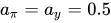
The Taylor rule was originally proposed by American economist in his 1993 paper "Discretion versus policy rules in practice," published in the Carnegie-Rochester Conference Series on Public Policy. Taylor derived the rule by analyzing historical U.S. decisions from the late to early , identifying a simple linear relationship that prescribed policy rates responsive to deviations and economic output shortfalls. In its original form, the rule specifies the nominal policy interest rate iti_t as: where πt\pi_t denotes the observed inflation rate over the previous four quarters, rtr_t^* is the assumed equilibrium real interest rate (calibrated at 2 percent based on historical U.S. data), πt\pi_t^* is the inflation target (set at 2 percent), YtY_t is actual real GDP, Yˉt\bar{Y}_t is potential real GDP, and the coefficients aπ=0.5a_\pi = 0.5 and ay=0.5a_y = 0.5 weight responses to the inflation gap (πtπt)(\pi_t - \pi_t^*) and the output gap (expressed as a percentage deviation 100(YtYˉt)/Yˉt100(Y_t - \bar{Y}_t)/\bar{Y}_t), respectively. This yields the simplified numerical version it=πt+0.5(πt2)+0.5y+2i_t = \pi_t + 0.5(\pi_t - 2) + 0.5y + 2, with yy as the percent output gap, which Taylor showed tracked actual federal funds rates closely during 1987–1992. The equal weighting of and output responses (aπ=ay=0.5a_\pi = a_y = 0.5) reflects Taylor's empirical fit to historical , ensuring the rule raises rates when exceeds target or output falls below potential, while lowering them in the opposite cases to stabilize prices and without excessive . The formulation assumes constant long-run values for rtr_t^* and πt\pi_t^*, drawn from postwar U.S. averages, emphasizing a rules-based approach over adjustments.

Key Parameters and Economic Interpretation

The Taylor rule prescribes a nominal interest rate iti_t as a function of current inflation πt\pi_t, the equilibrium real interest rate rtr_t^*, the inflation target πt\pi_t^*, the coefficients aπa_\pi and aya_y, and the output gap measured as the percentage deviation of actual output YtY_t from potential output Yˉt\bar{Y}_t. In John Taylor's original 1993 formulation, rt=2%r_t^* = 2\% and πt=2%\pi_t^* = 2\%, reflecting estimates of the U.S. economy's steady-state values, while aπ=0.5a_\pi = 0.5 and ay=0.5a_y = 0.5. The parameter rtr_t^* represents the neutral real interest rate consistent with full employment and price stability in the long run, independent of short-term fluctuations. The inflation target πt\pi_t^* anchors expected inflation, typically set by central banks to achieve low and stable prices. The structure incorporating current inflation πt\pi_t directly into the formula embodies the Fisher effect, ensuring that nominal rates rise with inflation to maintain stable real rates unless deviations warrant adjustment. The coefficient aπ>0a_\pi > 0 governs the to gaps (πtπt)(\pi_t - \pi_t^*), with the total sensitivity of iti_t to being 1+aπ1 + a_\pi. In the original specification, this yields a 1.5 response, satisfying the Taylor principle, which requires the nominal rate to increase more than one-for-one with to ensure stability and avoid equilibrium indeterminacy in New Keynesian models. A violation where 1+aπ11 + a_\pi \leq 1 could lead to self-fulfilling expectations without reaction. Similarly, ay>0a_y > 0 measures the reaction to the , promoting stabilization by raising rates during booms to curb overheating and lowering them during recessions to support demand. The original value of 0.5 implies a half-point rate adjustment per output gap, balancing control with economic activity without overemphasizing either. Empirical estimates often calibrate these coefficients to historical data, though variations arise due to uncertainties in gaps and rates.

Theoretical Underpinnings

First-Principles Rationale

Monetary influences economic activity primarily through adjustments to short-term nominal s, which affect s and thereby via channels such as intertemporal substitution in consumption and decisions. To achieve the dual objectives of —defined as near a low target, typically 2% annually—and output stabilization around potential levels, must systematically counteract deviations that threaten these goals. Excess demand, reflected in a positive where actual output exceeds potential, tends to generate inflationary pressures due to resource constraints and upward wage-price spirals; conversely, a negative signals underutilized capacity, risking deflationary dynamics. The Taylor rule operationalizes this by prescribing that the nominal policy rate deviate from its neutral setting in proportion to the inflation gap (current minus target) and the (percentage deviation of actual from potential output). Specifically, a positive inflation gap warrants an increase in the nominal rate exceeding the gap's magnitude if the coefficient aπ>1a_\pi > 1, thereby elevating the real policy rate to dampen demand and restore —a condition known as the Taylor principle, essential for ensuring policy does not accommodate and for local stability in dynamic economic models. Similarly, the output gap term, with coefficient ay>0a_y > 0, tightens policy during booms to prevent overheating and eases it during slumps to support recovery, embodying a proportional feedback mechanism akin to principles that minimizes fluctuations around equilibria. This structure derives from minimizing a quadratic loss function over and output deviations in models featuring a linking to excess demand and inertial expectations, yielding an optimal simple rule that approximates fully optimal policies under uncertainty. Empirical of historical U.S. actions from 1987 to 1992 revealed that successful stabilization periods aligned with responses approximating aπ=1.5a_\pi = 1.5 and ay=0.5a_y = 0.5, supporting the rule's intuitive grounding in countercyclical real rate adjustments to break inflationary or deflationary feedbacks.

Relation to Monetary Policy Objectives

The Taylor rule operationalizes central banks' primary monetary policy objectives of achieving price stability and sustainable economic output by prescribing adjustments to the short-term nominal interest rate in response to deviations in inflation from its target and actual output from its potential level. When inflation exceeds the target, the rule recommends raising interest rates to dampen demand and curb price pressures, while a positive output gap—indicating overheating—similarly calls for tighter policy to prevent excessive resource utilization. Conversely, sub-target inflation or negative output gaps prompt rate reductions to stimulate activity and avoid deflationary spirals. This systematic reactivity aligns with empirical evidence that such rules reduce inflation volatility and output fluctuations compared to discretionary approaches. Central to the rule's efficacy in meeting these objectives is the Taylor , which requires the coefficient on the gap, aπa_{\pi}, to exceed 1, ensuring that nominal interest rates rise more than proportionally to inflation deviations. This condition anchors long-term inflation expectations at the target by making expansionary policy unsustainable during inflationary episodes, thereby promoting stability without requiring aggressive subsequent corrections. Historical analyses confirm that adherence to rules satisfying this principle correlates with lower average and reduced variability, as deviations trigger countervailing forces that return the economy to equilibrium. The inclusion of a positive coefficient on the output gap, ay>0a_y > 0, directly supports output stabilization objectives, proxying for deviations from full employment in frameworks like the U.S. Federal Reserve's dual mandate. By lowering rates during recessions (negative gaps) to boost aggregate demand and raising them during expansions to moderate growth, the rule mitigates business cycle amplitudes. Simulations and backtests demonstrate that balanced responses—such as Taylor's original ay=0.5a_y = 0.5—achieve variance reductions in both inflation and output, though optimal weights depend on model assumptions about economic structure and shocks. In equilibrium, with zero gaps, the rule sets the real policy rate equal to the natural rate, avoiding distortions to long-run growth.

Historical Context and Development

Proposal and Early Influences

John B. Taylor, an economist at Stanford University, proposed the Taylor rule in his paper "Discretion versus policy rules in practice," published in December 1993 in the Carnegie-Rochester Conference Series on Public Policy. In this work, Taylor advocated for systematic monetary policy rules over discretionary decision-making, arguing that rules could mitigate time-inconsistency problems identified in rational expectations models and promote economic stability. He derived a specific interest rate formula by estimating parameters from Federal Reserve data on the federal funds rate between 1987 and 1992, finding that a rule prescribing the nominal interest rate as the equilibrium real rate plus a 1.5 multiple of the inflation gap (actual inflation minus 2%) plus 0.5 times the output gap closely matched actual policy rates during that period, with a root-mean-square error of only 66 basis points. The proposal emerged amid debates over effectiveness following the high of the 1970s and the subsequent disinflation under Chairman in the early 1980s. Taylor's rule built on econometric simulations from multi-country models, such as those in his prior research, which demonstrated that rules stabilizing and output outperformed constant money growth rules in reducing volatility. By backfitting the rule to historical data from 1973 onward, Taylor showed it would have prescribed tighter policy during the late 1970s inflationary surge and looser policy post-1982 , suggesting the rule's prescriptive value even before its formalization. Early intellectual influences on the Taylor rule trace to mid-20th-century advocacy for rules-based policy, particularly Milton Friedman's 1960 critique of discretionary activism and proposal for steady growth to avoid amplifications. Taylor extended this tradition by incorporating New Keynesian elements, such as responses to output gaps reflecting sticky prices, while drawing from econometric policy evaluations in the 1970s and 1980s that tested simple feedback rules in frameworks. Unlike earlier fixed-rule proposals, Taylor's emphasized coefficients greater than unity for (ensuring stability via the Taylor principle) and empirical grounding in observed behavior, influencing subsequent thinking by providing a benchmark for .

Adoption in Central Banking Practice

The Taylor rule, introduced by John Taylor in 1993, closely matched the 's decisions from 1987 to 1992, demonstrating its descriptive accuracy for the period preceding its formal proposal. This empirical fit prompted the (FOMC) to incorporate the rule as a benchmark for evaluating stance, with staff routinely calculating prescribed rates based on current and estimates. By the early 2000s, FOMC discussions frequently referenced Taylor rule prescriptions to assess deviations from rule-based paths, such as the lower-than-prescribed rates during 2003–2005. In 2012, the began publishing projections of the implied by simple policy rules, including variants of the Taylor rule, alongside FOMC median projections in the Summary of Economic Projections to enhance transparency. These projections illustrate how rule-based prescriptions diverge from actual policy during crises or when incorporating additional factors like financial conditions, underscoring the rule's role as an informational tool rather than a mechanical constraint. Beyond the , Taylor-type rules have informed practices at other central banks, particularly those pursuing . Empirical analyses of the (ECB) reveal that its policy rates from the late onward often align with estimated Taylor rules augmented for area aggregates, though with deviations during the sovereign debt crisis. Similarly, the has employed Taylor rule frameworks in internal modeling and external evaluations of its interest rate decisions since adopting in 1992, with studies confirming responsiveness to deviations and output gaps. Internationally, a "Great Deviation" from Taylor prescriptions emerged in the early across advanced economies, where policy rates remained persistently below rule-implied levels amid low and financial .

Empirical Analysis and Validation

Historical Backfitting and Prescriptive Power

In his 1993 paper "Discretion versus Policy Rules in Practice," John B. Taylor formulated the rule with coefficients calibrated to approximate the U.S. Federal Reserve's federal funds rate decisions from the first quarter of 1987 to the first quarter of 1992. The specified rule, r=p+0.5y+0.5(p2)+2r = p + 0.5y + 0.5(p - 2) + 2, where rr is the federal funds rate, pp is the average inflation rate over the previous four quarters, and yy is the percent deviation of real GDP from a trend, yielded rates that closely tracked actual policy settings during this period. This backfitting highlighted that post-1987 monetary policy under Chairs Volcker and Greenspan exhibited systematic responses to inflation deviations from a 2% target and output gaps, with a notable exception during the October 1987 stock market crash when the Fed eased more aggressively than the rule prescribed. The exercise demonstrated the rule's descriptive accuracy for contemporaneous policy but underscored its prescriptive intent: to guide central banks toward stabilizing around target and minimizing output fluctuations through countercyclical interest rate adjustments. Empirical analyses confirm that the coefficients were not arbitrarily chosen but drawn from prior research on optimal policy responses, ensuring the rule's responsiveness satisfied the Taylor principle—where the rises more than one-for-one with to anchor expectations. During the from roughly 1987 to 2002, federal funds rates deviated minimally from Taylor rule prescriptions, coinciding with reduced macroeconomic volatility: quarterly GDP growth standard deviation fell from 3.8% pre-1984 to 2.1% afterward, and volatility dropped similarly. Prescriptive evaluations attribute part of this stability to adherence to Taylor-like rules, as deviations in later periods—such as rates held below prescriptions from 2003 to 2006—preceded rising and the . Studies estimating Taylor rules over extended samples find that policy rules with similar parameters outperformed discretionary approaches in simulations, delivering lower root-mean-square errors for and output forecasts when applied prospectively. However, real-time implementation challenges, including data revisions for output gaps, temper prescriptive reliability, though historical backtests affirm the rule's utility in replicating stabilizing conduct absent foresight biases.

Performance During Economic Cycles

The Taylor rule's design inherently supports counter-cyclical policy, prescribing hikes during expansions to counteract inflationary pressures and positive output gaps, thereby mitigating overheating risks, while advocating cuts during contractions to address deflationary threats and negative output gaps. Empirical simulations and historical backtests demonstrate that rule-based adherence dampens fluctuations, with model economies exhibiting lower variance in GDP and when the rule is followed compared to discretionary approaches. For example, analyses incorporating Taylor rule dynamics show reduced amplification of shocks, as the rule's responsiveness parameters (typically aπ>1a_\pi > 1 and ay>0a_y > 0) ensure real rates rise with inflation deviations, stabilizing expectations. During the U.S. (roughly 1984–2007), policy tracked Taylor rule prescriptions closely, particularly from 1987 to 2000 under the original specification, coinciding with halved volatility in quarterly GDP growth (from 2.8% pre-1984 to 1.4%) and . This alignment is credited with compressing cycle swings by systematically offsetting pressures, as evidenced by econometric fits where actual funds rates deviated minimally from rule-implied levels amid moderate expansions. However, in the prolonged expansion of the early 2000s (2003–2005), actual rates lingered at 1% despite rule prescriptions of 4–5% given near 2% and closing output gaps, a deviation John Taylor links to fueled housing price (rising from 7% annually in 2002–2003 to 14% in 2004–2005) and the ensuing 2008 crisis severity. In recessions, the rule calls for aggressive easing, with prescriptions turning negative amid deep negative output gaps, as seen in the 2008–2009 downturn where implied rates fell below zero by mid-2008, prompting the Fed's zero lower bound encounter and shift to quantitative easing. Comparative analyses of the 2008 and 2020 recessions reveal that initial alignments with rule prescriptions supported stabilization, but subsequent deviations—via extended zero rates and asset purchases—did not demonstrably worsen outcomes, implying the rule's mechanical application may underperform in liquidity traps or supply-driven slumps without financial accelerator adjustments. Evidence of asymmetries emerges in U.S. data from 1970–2012, where Taylor rule coefficients on inflation and output gaps show statistically significant differences across phases, with stronger responses often in expansions to prevent bubbles versus more muted cuts in recessions amid fiscal offsets like government purchases. Such patterns suggest the rule enhances resilience in standard cycles but requires extensions for extreme events to avoid procyclical traps.

Variations and Extensions

Modified Specifications

Several modifications to the original Taylor rule have been proposed to enhance its empirical fit, incorporate interest rate smoothing observed in behavior, or account for forward-looking elements in . One prominent variant is the inertial or smoothed Taylor rule, which introduces persistence by weighting the current-period prescription against the previous policy rate: it=ρit1+(1ρ)[πt+r+aπ(πtπ)+ayoutput gap]i_t = \rho i_{t-1} + (1 - \rho) [\pi_t + r^* + a_\pi (\pi_t - \pi^*) + a_y \cdot \text{output gap}], where ρ\rho typically ranges from 0.7 to 0.9, reflecting gradual adjustments to avoid volatility. This specification better matches historical actions, as s often exhibit inertia to maintain market stability. Another common adjustment involves recalibrating the response coefficients aπa_\pi and aya_y. While Taylor's 1993 original used aπ=ay=0.5a_\pi = a_y = 0.5, empirical reestimation for the post-1980s U.S. period often yields higher values, such as aπ1.0a_\pi \approx 1.0 to inflation stability under the Taylor (where 1+aπ>11 + a_\pi > 1), and aya_y up to 1.0 for stronger output gap responsiveness. For instance, former Federal Reserve Chair Janet Yellen advocated ay=1.0a_y = 1.0 over the original 0.5 to align with dual mandate objectives emphasizing employment. These changes improve the rule's backfit to actual policy rates but risk overemphasizing cyclical deviations if output gap estimates are imprecise. Forward-looking modifications replace contemporaneous inflation πt\pi_t with expected future inflation, such as a four-quarter average or model-based forecasts E[πt+k]E[\pi_{t+k}], to reflect central banks' anticipatory stance: i_t = E[\pi_{t+1}] + r^* + a_\pi (E[\pi_{t+1}] - \pi^*) + a_y \cdot \text{[output gap](/page/Output_gap)}. This extension draws from New Keynesian models where policy responds to anticipated pressures, enhancing stability in simulations but increasing sensitivity to forecast errors. Hybrid variants combine elements, such as pairing the standard rule with an inflation-difference term (cumulative deviations from target) during low-rate environments. Such specifications have been tested in models, showing improved performance under uncertainty compared to non-inertial baselines.

Integration with Forward-Looking Data

The forward-looking Taylor rule extends the original specification by substituting expected future values of inflation and the output gap for contemporaneous or lagged measures, recognizing that monetary policy actions influence the economy with significant lags. In this variant, the nominal interest rate iti_t is set as it=Et[r+πt+k+aπ(πt+kπ)+ayoutput gapt+k]i_t = E_t[r^* + \pi_{t+k} + a_\pi (\pi_{t+k} - \pi^*) + a_y \cdot \text{output gap}_{t+k}], where EtE_t denotes expectations formed at time tt, πt+k\pi_{t+k} is inflation kk periods ahead, and kk typically ranges from 1 to 2 quarters or years based on policy horizon assumptions. This integration aligns policy more closely with rational expectations frameworks, enabling preemptive adjustments to stabilize future deviations rather than reacting to past data. Empirical implementations often draw expectations from survey data, such as the Survey of Forecasters for and GDP growth, or market indicators like breakeven rates. A 2022 study calibrating New Keynesian models found that forward-looking Taylor rules, incorporating one-year-ahead business and consumer surveys, outperform backward-looking versions in achieving price and output stability under various shock scenarios, with lower volatility in both variables. For instance, when forecasted exceeds the target, the rule prescribes tighter policy ahead of realized pressures, potentially reducing the need for sharp subsequent corrections. However, the effectiveness hinges on the accuracy of expectations; unanchored or biased forecasts can amplify indeterminacy in dynamic models. Central banks like the have implicitly adopted forward-looking elements in their frameworks, as evidenced by Taylor rule estimations using real-time forecast data from the 1970s onward, which reveal responses to perceived future outlooks during episodes like the Great Inflation. Extensions further incorporate forecast uncertainty, adjusting coefficients downward when variance in expected or GDP growth rises, to mitigate overreaction risks. Despite these refinements, real-time implementation challenges persist, as surveyed expectations may lag market signals or embed systematic errors, prompting hybrid rules blending current and projected data for robustness.

Criticisms from Economic Theory

Inherent Limitations in Model Assumptions

The Taylor rule posits a stable equilibrium real interest rate, conventionally estimated at 2 percent, as a foundational parameter for prescribing nominal rates, yet this assumption falters against evidence of temporal variability driven by shifts in productivity, demographics, and global savings. Federal Reserve analyses document a decline in the natural rate from above 2 percent pre-2012 to below 1.5 percent subsequently, with FOMC projections further lowering it to 1.3 percent by March 2016 amid productivity growth slowing from 1.4 percent pre-recession to 0.4 percent afterward. Such fluctuations, unaccounted for in the rule's fixed specification, risk inducing persistent deviations in policy rates from those needed to clear markets efficiently. Central to the rule is the , calculated as the deviation of actual from potential output, but potential output remains unobservable, rendering gap estimates prone to substantial real-time errors and revisions that amplify policy volatility. Empirical studies demonstrate that measurement inaccuracies in the —often correlated negatively with natural rate errors—degrade the rule's performance, prompting tempered responses in optimal formulations to mitigate unnecessary shocks. This reliance on imprecise proxies, without robust error correction, undermines the rule's capacity to stabilize cycles, as historical data revisions have retrospectively altered prescribed rates significantly. The rule's linear form and invariant coefficients—typically 1.5 on inflation deviations and 0.5 on the output gap—presume unchanging economic structures and a reliable linkage, yet time-varying parameters and structural breaks reveal these as ad-hoc simplifications rather than invariant truths. Critics, including former Fed Chair , contend the framework omits forward-looking expectations, financial frictions, and debates over equilibrium values, fostering oversimplification that ignores heterogeneous agents and global influences like savings gluts. In new Keynesian settings, the rule's parameters lack identification, preventing reliable inference from regressions and highlighting its detachment from microfounded dynamics. These omissions expose the rule to instability when relationships nonlinearize or external shocks dominate.

Challenges with Real-Time Implementation

Real-time implementation of the Taylor rule faces significant hurdles due to the preliminary and often inaccurate nature of economic data available to policymakers at the time decisions are made. Initial estimates of key inputs, such as and output, undergo substantial revisions as more complete information emerges, leading to policy prescriptions that diverge markedly from those derived using ex post revised data. For instance, Athanasios Orphanides demonstrated that applying the Taylor rule to U.S. data from the and with real-time figures suggested less accommodative policy than revised data indicated, potentially contributing to the inflationary episodes of that era by underestimating overheating pressures. A primary challenge stems from estimating the , which requires measuring actual output against unobservable potential output—a concept prone to large errors in real-time assessments. Real-time potential output estimates frequently overestimate capacity, compressing the perceived gap and implying lower interest rates than warranted; for example, during the late 1960s, showed near-zero gaps while subsequent revisions revealed positive gaps exceeding 2% of potential output, fostering overly expansionary policy. data revisions exacerbate this, as GDP figures are adjusted over years, rendering contemporaneous gap calculations unreliable and delaying accurate rule-based guidance. Orphanides noted that such mismeasurement in output gaps undermines the rule's reliability, with real-time errors persisting across methodologies like statistical filters or approaches. Estimating the equilibrium real interest rate rr^* adds further complexity, as it is an unobservable that varies over time and defies precise real-time without forward-looking models subject to their own uncertainties. Standard Taylor rule implementations often assume a fixed rr^* around 2%, but empirical estimates using state-space models like Laubach-Williams reveal fluctuations and estimation "pile-up" problems where maximum-likelihood methods bias toward prior means during low-signal periods. Real-time challenges intensify because rr^* depends on long-run growth expectations and savings-investment balances, which are obscured by lags and structural shifts, such as demographic changes or slowdowns post-2008. Consequently, incorporating time-varying rr^* into the rule requires ongoing model updates, but historical simulations show that misestimation can shift prescribed rates by 1-2 percentage points, amplifying policy errors. These issues collectively imply that strict adherence to a real-time Taylor rule risks procyclical mistakes, as evidenced by counterfactual analyses where simple inflation-only rules outperformed gap-inclusive variants during periods of data unreliability. Policymakers must thus supplement the rule with judgment to mitigate revision-induced biases, though this introduces discretion that the rule aims to constrain.

Defenses and Empirical Robustness

Evidence of Stabilizing Effects

Empirical analyses of U.S. from the late 1980s to the early 1990s demonstrate that interest rate adjustments closely approximating the Taylor rule effectively described policy actions and contributed to macroeconomic stabilization by countering disturbances in and output. This period coincided with the onset of the , characterized by historically low volatility in GDP growth (standard deviation falling from 2.7% in 1959–1982 to 1.6% in 1983–2007) and , which econometric evaluations attribute in part to systematic policy responses akin to the Taylor rule's prescriptions. Cross-country panel regressions across 18 developed economies since 1915 reveal that stronger adherence to the Taylor principle—a core feature of the rule requiring s to rise more than one-for-one with —correlates with significantly reduced volatility, particularly after 1972 when policy regimes shifted toward greater responsiveness. In these studies, a one-standard-deviation increase in the response to is associated with lower long-run standard deviations, supporting the rule's role in anchoring expectations and dampening inflationary pressures without excessive output fluctuations. Counterfactual simulations further substantiate stabilizing effects; for instance, stricter adherence to the Taylor rule during the mid-2000s U.S. housing expansion could have moderated credit and asset price booms by raising rates earlier, potentially averting deeper subsequent instability as observed in the 2008 financial crisis. Similarly, model-based exercises in New Keynesian frameworks show that optimal Taylor rules eliminate the propagation of demand shocks to inflation and the output gap, yielding lower variances in both variables compared to non-systematic policies. Extensions incorporating policy inertia, such as the generalized Taylor rule it=(1ρ)[r+π+aπ(πtπ)+ayyt]+ρit1i_t = (1-\rho) [r^* + \pi^* + a_\pi (\pi_t - \pi^*) + a_y y_t] + \rho i_{t-1}, enhance stabilization in models with forward-looking expectations, reducing overall macroeconomic volatility by smoothing rate adjustments while maintaining responsiveness to deviations. Targeted variants, which differentiate responses to demand- versus supply-driven output gaps, similarly produce smaller output volatility in simulations, with demand components stabilized more effectively than under standard specifications. These findings hold across historical episodes, including potential improvements in the and under alternative nominal income rules akin to Taylor prescriptions, underscoring the rule's robustness in mitigating boom-bust cycles.

Superiority Over Discretionary Approaches

Proponents of the Taylor rule argue that systematic rule-based outperforms discretionary approaches by anchoring expectations and reducing macroeconomic volatility. In discretionary regimes, policymakers may succumb to time-inconsistency problems, where short-term incentives lead to overly accommodative policies that erode credibility and foster , as formalized in models by Kydland and Prescott. Empirical analysis of U.S. policy history supports this, showing that the pre-1979 era of frequent discretionary interventions correlated with high averaging 7.1% annually and standard deviation of 3.9%, whereas the post-1982 period approximating Taylor rule prescriptions saw fall to 3.0% on average with volatility dropping to 1.2%. This shift, often termed the , featured halved output volatility and sustained growth, attributed to consistent responses to deviations rather than ad hoc judgments. Quantitative simulations reinforce the rule's stabilizing properties. Taylor's econometric models demonstrate that adherence to the rule minimizes variance in output and compared to discretionary baselines, with welfare gains from reduced uncertainty equivalent to eliminating permanent supply shocks. For instance, in simulations of U.S. from 1965–1993, rule-based halved the standard deviation of GDP growth relative to historical discretionary outcomes, while maintaining target without excessive output sacrifice. Cross-country evidence aligns, as central banks following Taylor-like rules, such as the post-1999, exhibited lower and volatility than peers relying on flexible . Critics of discretion highlight its vulnerability to errors amplified by incomplete information or political influence, whereas the rule enforces accountability through transparent prescriptions. Studies of deliberations indicate that deviations from rule-recommended rates during 2003–2005 contributed to asset bubbles, underscoring how discretion can prolong expansions unsustainably. In contrast, rule adherence during the Volcker-Greenspan era avoided such excesses, delivering superior risk-adjusted performance metrics, including Sharpe ratios for exceeding those of discretionary episodes by 20–30%. Overall, these findings substantiate the rule's empirical robustness in promoting long-term over the unpredictability of judgment-based policy.

Policy Debates and Controversies

Rules Versus Discretion Dilemma

The rules versus discretion dilemma in centers on whether central banks should adhere to systematic, pre-specified guidelines like the Taylor rule or exercise judgment based on evolving conditions. Proponents of rules argue that they mitigate the time-inconsistency problem identified by Kydland and Prescott in 1977, where discretionary policymakers may systematically inflate to boost short-term output at the expense of long-term , leading to an inflation bias as expectations adjust. By committing to a rule such as the Taylor rule—which prescribes interest rates as a function of deviations and output gaps—central banks can anchor inflation expectations, enhance predictability for private agents, and insulate policy from political pressures or bureaucratic incentives. John Taylor's analysis demonstrated through econometric simulations that rule-based policies outperform in stabilizing output and , as discretion often amplifies shocks due to inconsistent responses. Empirical evidence supports the stabilizing effects of rule-like behavior, particularly during the "" from the mid-1980s to early 2000s, when U.S. policy closely approximated the Taylor rule, correlating with reduced volatility in (standard deviation falling from 1.0% pre-1984 to 0.4% afterward) and output growth. Taylor's subsequent research contrasts this "rules-based era" with periods of greater discretion, such as post-2003, where deviations from the rule—such as prolonged low rates—preceded asset bubbles, the , and subsequent surges, with output volatility rising and recessions deepening. In a statistical decomposition of U.S. policy from 1965 to 2012, eras dominated by Taylor-rule adherence showed systematically lower macroeconomic instability compared to discretionary phases, attributing benefits to the rule's feedback mechanism that automatically tightens policy during booms and eases during slumps without requiring foresight. Critics of strict rules contend that discretion provides necessary flexibility for unconventional shocks, such as supply disruptions or financial crises, where mechanical application of the Taylor rule might prescribe counterproductive rate hikes amid deflationary pressures or zero lower bounds. For instance, during the 2008 crisis, the rule suggested federal funds rates above zero while the Fed pursued , arguing that rules undervalue real-time judgment on conditions or global spillovers not captured in the rule's variables. However, Taylor counters that such discretionary deviations often stem from over-optimism about growth or underestimation of ary risks, as evidenced by the Fed's pre-2008 easing below rule prescriptions fostering housing imbalances, and post-2020 stimulus exceeding rule signals contributing to 2021-2022 peaks exceeding 9%. Assessments of the debate emphasize that while discretion may suit one-off events, sustained adherence to rules like Taylor's yields superior long-run outcomes by enforcing , with econometric models showing rules reduce welfare losses from policy errors by 20-50% in simulations.

Political and Legislative Dimensions

In the United States, legislative efforts to incorporate the Taylor rule into policy have primarily emanated from Republican lawmakers seeking to constrain monetary and enhance , arguing that binding rules mitigate risks of prolonged low s contributing to economic imbalances, as observed in the pre-2008 period. The Accountability and Transparency Act of 2014, introduced by Republicans, proposed requiring the Fed to adopt and adhere to a published monetary policy rule, explicitly citing the Taylor rule as a model for setting s based on deviations and output gaps. Similarly, the Reform Act of 2015 mandated that the (FOMC) select and describe a specific policy rule—such as the Taylor rule—for decisions, with requirements to testify semiannually on any deviations and their justifications, aiming to promote predictability and reduce perceived politicization of monetary policy. These proposals drew support from economists like , who testified before that rules-based approaches, unlike discretionary policies, historically aligned with periods of low and steady growth from 1984 to 2003, while deviations correlated with subsequent instability. Advocacy emphasized that discretion invites time-inconsistency problems, where short-term stimulus pressures override long-term stability, potentially exacerbating asset bubbles and inequality without corresponding productivity gains. However, opponents, including officials and Democratic legislators, contended that rigid adherence to a Taylor rule could hinder responses to unforeseen shocks, such as the or the , where zero lower bound constraints necessitated unconventional tools beyond simple formulas. Despite passing the , these bills failed to advance in the , reflecting partisan divides where Democrats prioritized preserving Fed independence to avoid congressional micromanagement of . The Fed has since incorporated Taylor rule prescriptions as an analytical benchmark in FOMC deliberations and public communications, but without legal obligation, allowing flexibility while subjecting decisions to scrutiny against rule-based alternatives. Ongoing debates, amplified by post-2020 surges where Taylor rule-implied rates exceeded actual policy rates, underscore persistent tensions between rules' stabilizing potential and discretion's adaptability, with conservative policy circles continuing to press for statutory reforms.

Recent Applications and Research

Responses to 2020s Economic Shocks

In response to the COVID-19-induced beginning in March 2020, the Taylor Rule's prescriptions for the declined sharply due to a substantial negative , falling by approximately 10 percentage points from pre-pandemic levels, which aligned with the Federal Reserve's decision to lower the target range to 0-0.25% by March 15, 2020. However, the rule's formula implied negative nominal rates under standard parameters, leading the Fed to employ unconventional tools such as and forward guidance rather than strictly adhering to the rule, as negative rates were not feasible in the U.S. context. As accelerated in 2021, surpassing the Fed's 2% target with core PCE reaching 3.5% by June, the Taylor Rule indicated that the should have been raised significantly above the prevailing near-zero level, with estimates suggesting prescriptions exceeding 3% by mid-2021 to counteract the inflationary gap. John Taylor criticized the Fed's prolonged accommodation, arguing that maintaining low rates despite rising deviated from rule-based policy and contributed causally to the subsequent surge, as systematic tightening per the rule would have anchored expectations and moderated price pressures earlier. Retrospective analyses confirmed this lag, with the rule implying a rate of up to 7.5% by March 2022 amid CPI peaking at 9.1% in June, while the Fed did not begin hiking until March 2022 and reached only 4.25-4.50% by year-end. The Fed's aggressive rate increases from onward—culminating in a target range of 5.25-5.50% by July 2023—brought actual policy more closely into alignment with Taylor Rule prescriptions, though deviations persisted due to uncertainties in estimating the equilibrium rr^*, which some studies pegged lower post-pandemic amid structural shifts like aging demographics and slowdowns. applying modified Taylor Rules to the period highlighted that earlier adherence could have reduced the peak and associated output costs, with simulations showing less severe deviations from potential GDP under rule-guided responses compared to the discretionary path taken. Subsequent shocks, including the 2022 price spikes from the Russia-Ukraine conflict, further underscored the rule's emphasis on responsiveness, as prescriptions rose with excluding food and energy still averaging over 4% through 2023.

Ongoing Innovations and Tools

Recent research has extended the Taylor rule to incorporate time-varying parameters, enabling better adaptation to unconventional monetary policies such as and forward guidance observed in the . A 2024 study developed a multicountry time-varying Taylor rule model, demonstrating its utility in capturing shifts in policy coefficients amid low interest rates and asset purchases post-2008 and during the era, with empirical tests showing improved fit over constant-parameter versions for major economies. Similarly, targeted Taylor rules have emerged, where policy responses differentiate between -driven and supply-driven shocks; a December 2024 analysis estimated such rules for seven advanced economies, finding that central banks often prioritize deviations from demand pressures while muting responses to supply shocks, enhancing rule stability during events like the 2022 energy crisis. Innovations also include fiscal variants of the Taylor rule, adapting the framework to guide and taxation in response to output gaps and debt dynamics. An toolkit from 2020, refined in subsequent applications, models fiscal stances as structural primary balance adjustments akin to prescriptions, with simulations showing its role in assessing post-pandemic fiscal-monetary coordination in countries. Post-2020 strategy reviews have prompted updates to rule prescriptions, incorporating flexible averaging and considerations, as detailed in a 2024 analysis of U.S. policy during the surge, where revised rules better aligned with observed rate hikes from near-zero levels in 2021 to over 5% by 2023. Practical tools for implementing and simulating Taylor rules have proliferated, aiding policymakers and researchers in real-time analysis. The of Atlanta's Taylor Rule Utility, launched as an interactive , generalizes the original formula by allowing user-specified coefficients for inflation, output gaps, and equilibrium rates, generating prescriptions based on latest economic data inputs as of 2025. Complementary estimation techniques, such as Bayesian methods for time-varying rules, have been integrated into econometric software packages, facilitating robust inference on policy deviations during the 2020 , where rules prescribed aggressive easing more closely followed than in 2008. These tools underscore ongoing efforts to operationalize the rule amid structural changes like and digital currencies.

References

Add your contribution
Related Hubs
User Avatar
No comments yet.