


Community hub
Recent from talks
Contribute something
Nothing was collected or created yet.
Troy, Alabama
View on Wikipedia
Troy is a city in and the county seat of Pike County,[4] Alabama, United States. It was formally incorporated on February 4, 1843.[5]
Key Information


Between 1763 and 1783, the area where Troy sits was part of the colony of British West Florida.[6] After 1783, the region fell under the jurisdiction of the newly created United States of America.
As of the 2020 census, its population was 17,727, down from 18,033 in 2010. The 2022 estimated population was 17,774.[1] The City of Troy had previously been considered one of the fastest-growing cities in Alabama.[7] Troy is home to Troy University, the fourth-largest university in total enrollment in Alabama.
History
[edit]Before the Civil War
[edit]
For many centuries, the area around Troy was settled by different tribes of Native Americans, but became primarily known for its Muskogee Creek presence. Most Creek tribes lived along rivers or streams at that time. Near the Troy area, many Native Americans settled around the Conecuh River and the Pea River.
With the coming of European explorers and colonists, the area of present-day Alabama was claimed by Spain, France, and Great Britain, although very few Europeans settled in the inland parts. After being swapped among those three powers in the course of the 18th century, the United States acquired the region from Spain with the Treaty of Madrid (1795) and created the Mississippi Territory in 1798, including most of the present-day states of Mississippi and Alabama. In 1819, the State of Alabama was admitted to the Union and was soon organized into counties. Pike County, founded in 1821, was one of the first counties established in Alabama. It comprised a large tract of country, so large that it was called the "State of Pike", which included parts of what are now Crenshaw, Montgomery, Macon, Bullock, and Barbour Counties, and extended to the Chattahoochee River on the east.[8]
After Pike County's borders were resized, the land that later became Troy was settled in the early 1830s. Originally known as Deer Stand Hill (an Indian hunting ground), which was first settled about 1824, it was later known as Zebulon and then Centreville before being renamed Troy in 1838. Troy became the county seat that same year after a new county courthouse was built in the city, replacing the previous county seat town of Monticello. The court met in local stores until the courthouse was built in 1839. In 1880, this structure was torn down and rebuilt as an opera house, which was also eventually torn down. A brick courthouse was erected in 1880.[9] A hotel and taverns along with small mercantile stores were soon created, quickly making the new town the social center of the county. Unfortunately, the town of Troy completely burned down in 1901 after a devastating fire, and had to be rebuilt. The courthouse, originally in the center of the town square, was demolished because of fire damage and relocated one block away just outside of the town square.
To promote movement of settlers and to speed mail from Washington City to New Orleans, the Federal Road was laid out after 1805. In 1824, a military road was laid out from Fort Barrancas in Pensacola, Florida, and ran on top of the ridges to Fort Mitchell in Russell County, Alabama, and connected to the Federal Road. Captain Daniel E. Burch of the U.S. Army marked the route using three notches on trees for a crew under Lt. Elias Phillips to follow. The route was eventually cleared in 1824 at a cost of $1,130. It followed the ridge dividing the watersheds of the Conecuh River to the northwest, and the Yellow River and Pea River to the southeast. This road became known as the Three Notch Road and ran through Troy and Pike County. While never being highly needed as a military supply road, it became a boon to the settlers who used it to move into south-central and southeast Alabama and into northwest Florida.
During this time, tensions began to rise between the local Creek Indians and the European settlers who were moving into the area. As settlers began to force their way onto Creek lands and push the Indians out, the Creeks began to retaliate, first in small factions, then in larger ones. During this time, the Second Indian War was beginning in the Southeastern United States.
Battle of Hobdy's Bridge
On February 10, 1837, the Battle of Hobdy's Bridge occurred after a force of over 100 American militiamen under Captain Jack Cooper intercepted about 75 Creeks making their way to Florida. After locating the site of the Creek camp, the militia divided into two groups to converge on the refugees by surprise.
A brief fight ensued upon their approach, which centered around two fallen trees the Creeks had used as a natural breastwork. The Creeks, being extremely low on ammunition, fired nails instead of bullets from the muskets they possessed. The militiamen eventually overran their position and captured the camp, wherein they found items recently plundered from area plantations. Exact casualties are unknown, but it is believed four or five Creeks and perhaps one American were killed. Though stripped of their supplies, the Creeks managed to continue their flight even as they continued to skirmish with other American troops. Near the Florida border, they retaliated by killing two American settlers.[10]
Battle of Pea River
In one of the last battles of the Second Creek War, on March 27, 1837, the Battle of Pea River occurred roughly 17 miles to the east of Troy, where the Pea River and Pea Creek converge near Hobdy's Bridge. A force of over 250 combined Alabama and Georgia militiamen led under General William Wellborn tracked a party of about 400 Creek fugitives that included men, women, and children. The Creeks, angry that the land that had been promised to them was being taken from them by local settlers by violent force, responded by burning local homes and plantations along the Pea River swamp. The Three Notch Trail that traversed through Troy was also considered dangerous at this point, as local Creek Indians around the area were turning violent and burning and looting houses along the stretch. The path of the Creeks had become easy to find due to the several looted and burned plantations they had left behind them as they moved south. After finding their temporary camp in a nearby swamp, General Wellborn divided his command into two wings to encircle the Creeks. He personally commanded one wing, and placed the other under Colonel Jefferson Buford. The Creeks detected the approach, however, and attacked and scattered Buford's wing.
When Wellborn's command neared the camp, trudging through waist-high water, gunfire could be heard erupting further down the river. Wellborn ordered his men through the mud and water at a full run. Upon encountering the Creeks downstream, a fierce four-hour battle began on opposite sides of a nearby lagoon. The Creek warriors, many of whom were later found to have been using bullets made of melted pewter plates, made several unsuccessful charges on the militia's line before being overrun. Records from some of the participants in the battle reported that some of the Creek women and children also took up arms to fight, raining showers of rifle balls and arrows on the militiamen. In one case, two of the Creek women attacked a member of the militia with knives. Unable to defeat the desperate Creeks with gunfire alone, Wellborn finally ordered a direct charge on their lines. The tactic worked, as many of the Creeks fled to their encampment to carry off their children, some even swimming the river to flee. The fighting then devolved into a massacre in which at least 50 Creek men, women and children were killed and an unknown number captured. The Creek survivors continued their flight south in small groups. According to some reports, some of the captured Creeks were enslaved by local planters. Only five Americans were killed, among them General Wellborn's teenage son, James H. Wellborn.[10]
In winning the Battle of Pea River & Pea Creek, Wellborn had defeated the refugee Creeks but had failed to surround and capture all of them as he had hoped. Instead they fled south down the Pea River to its confluence with the Choctawhatchee and continued across the line into Florida. Furious at their treatment, they continued to battle the Whites for years to come.[11]
During Civil War
[edit] |
At the outbreak of the American Civil War in 1861, the small village of Troy had a population around 600. The 57th Alabama Infantry Regiment of Troy was formed in 1863. The group of soldiers from that regiment fought at the Battle of Peachtree Creek on July 20, 1864.
Troy was mostly spared from the ravages of the war, except that its sons were dying on battlefields throughout the South. On April 26, 1865, a brigade of Union cavalry under the command of General Benjamin Henry Grierson camped outside of Troy. These soldiers moved on to Louisville, Clayton, and Eufaula the next day without incident. However, roughly 20 miles east of Troy at the Pike County border, the Skirmish at Hobdy's Bridge, what some consider the last battle of the Civil War, took place on May 19, 1865.
Skirmish at Hobdy's Bridge
A detachment of Union soldiers from the 1st Florida U.S. Cavalry had been sent from Montgomery to Eufaula to escort a mail shipment through the unsettled regions of eastern Alabama. General Robert E. Lee had already surrendered and Wilson's Raid had just devastated the region, but many former Confederate soldiers were still drifting through the region trying to get home, which presented a threat.
A mail escort, commanded by Lt. Joseph Carroll of the Union Army, left Montgomery on May 11, 1865, and reached Eufaula without difficulty. The total strength of the detachment was only 25 men, but because all seemed quiet, Carroll decided to spend a few days in Eufaula to rest his horses. Since some of his men were natives of the area, he granted them short leaves to go to visit their families. The entire detachment was to reassemble at Hobdy's Bridge over the Pea River on May 19, 1865.
After many of his men dispersed to their homes, however, Carroll learned that a party of pro-Confederate "guerrillas" had been seen in the area. The identity of this unit, if it had an identity, is unknown, but at about the same time, General Alexander Asboth in Pensacola reported that several companies of cavalry made up of "unrepentant rebels" were still active in the Alabama and Florida borderlands.
Upon receiving this intelligence, Carroll decided to return to Montgomery as quickly as possible and crossed Hobdy's Bridge with the main body of his detachment two days before the appointed rendezvous. The other men of his command, at home and visiting their families, had no way to know of his decision to leave early or of the danger they faced.
According to military records, the remaining Union soldiers gathered at Hobdy's Bridge as ordered on the morning of May 19, 1865, only to learn that Carroll and the main body were already gone. Turning their horses onto the long wooden bridge over Pea River, the cavalrymen started off to follow their commander's route. Unfortunately, they rode straight into a group of Confederate rebel guerillas.
Three Confederate soldiers were wounded in the fight, and one Union soldier was killed, identified as Corporal John W. Skinner of Company C, 1st Florida U.S. Cavalry. He was killed in action six days after Private John J. Williams of the 34th Indiana, who died at Battle of Palmito Ranch, and is generally said to have been the last man killed in the Civil War. That sad distinction actually belongs to Corporal Skinner, who died on the wooden planks of Hobdy's Bridge in Alabama.
After the war
[edit]


During the Reconstruction Era after the end of the Civil War, Troy began to have new railroads and roads converging into the city. After the completion of the Mobile & Girard Railroad (later part of the Central of Georgia Railway) in 1870, Troy had a quick spike in population. One of the many to have made the journey to Troy was Jeremiah Augustus "Gus" Henderson. Having owned a large store in nearby Gainers Store (now known as Henderson), he found it difficult to transport and receive shipments by wagon. In 1869, Henry moved his mercantile store to nearby Troy to be closer to the Mobile and Girard Railroad. One of his sons, Charles Henderson, would soon be the governor of Alabama and a large contributor to Troy.
Troy had a quick period of growth in the following years. By 1890, the Alabama Midland Railway (later part of the Atlantic Coast Line Railroad) was completed from Montgomery to Bainbridge, Georgia, via Troy. Rapid growth outside of the Troy downtown square consisted of factories, churches, stores, and Victorian-style houses. Many of the early houses, churches, and cemeteries dating back to this era can still be found in the College Street Historic District, just on the edge of historic downtown Troy. Many of the buildings in the two-block area date from as early as the 1870s. The district was added to the National Register of Historic Places on August 13, 1976.
In 1887, a group of local educators and prominent citizens of Troy joined to acquire a state normal school (teacher training school) for Troy. Thanks mostly to the efforts of Ariosto A. Wiley, a powerful state senator who was born in Troy, the city won the education prize over Lowndesboro, Alabama, which had also wanted a normal school. The school, which was to be known as Troy Normal School, was eventually constructed and completed in 1887 in downtown Troy on a four-acre campus.
This school, which went on to become Troy University, had a stormy early history and was lucky to have survived in its cramped downtown location. Its survival was assured when the third president of the college, Edward Madison Shackelford, led the movement from downtown to its present site starting in 1924. In 1929, the name was changed to Troy State Teacher's College. The name was again changed in 1957 to Troy State College to reflect the expanded educational offerings of the school. The school was still segregated at that time. The college underwent yet another name change in 1967, being called Troy State University until reaching its current name, Troy University, in 2005.
During the late 1800s into the early 1900s, Troy experienced steady growth thanks to the railroads, multiple factories, and the college.
Geography
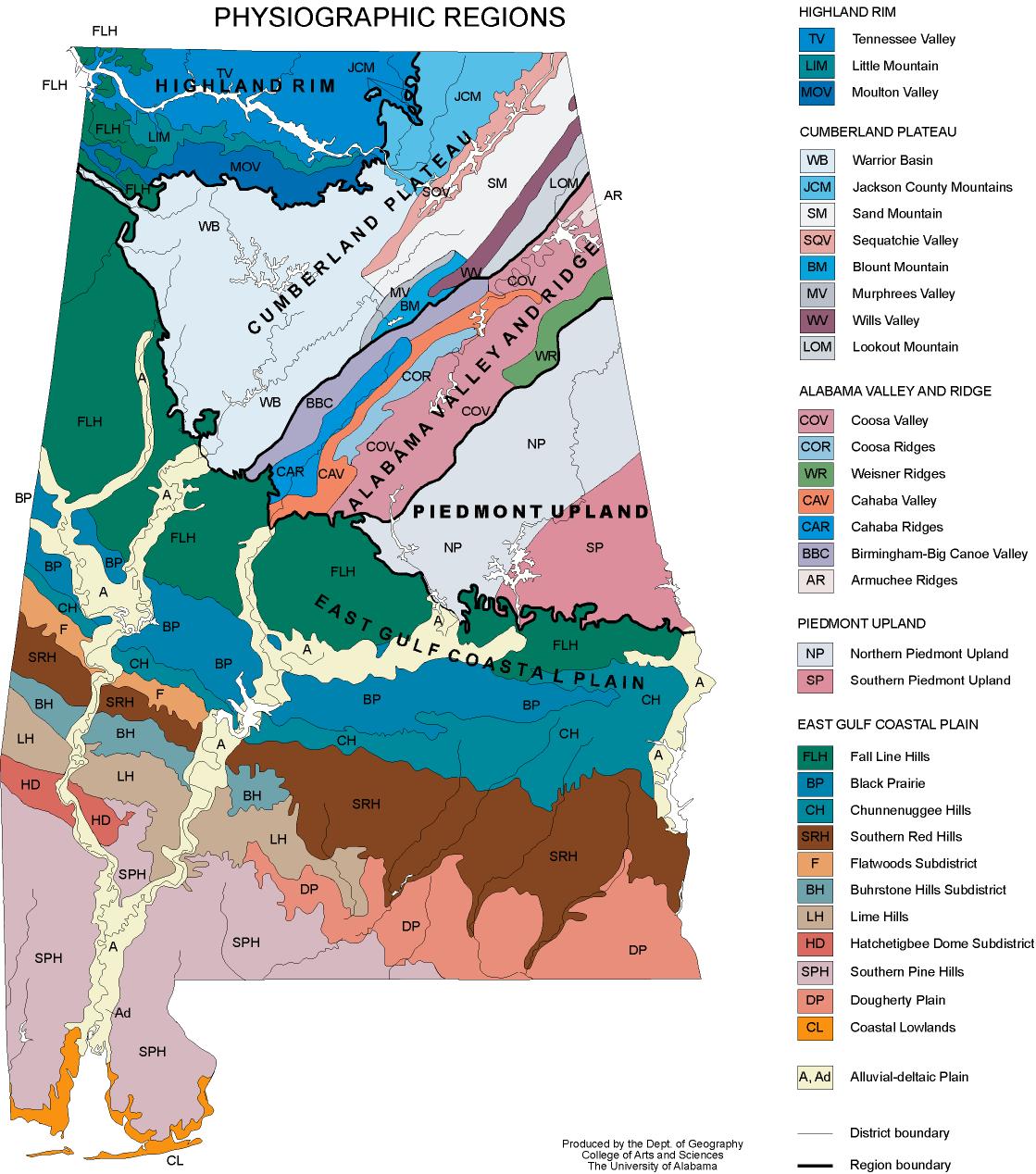
[edit]Troy is in the East Gulf Coastal Plains region of Alabama. It is located along the Troy Cuesta ridge, which runs across the state from east to west and is the boundary that separates the Chunnenuggee Hills and Southern Red Hills geographical boundaries. Elevations commonly reach 400 feet (120 m) in these hills and can reach up to 500 feet (150 m) in some areas. About 40 miles (64 km) north of Troy near the Montgomery area, the Chunnenuggee Hills region ends and the flat Black Prairie region begins, commonly known as the Black Belt region. About 60 miles (97 km) south of Troy in the Dothan area, the Southern Red Hills region ends and the Dougherty Plains region begins. Map
Much of the region consists of pine forests. Most tree species found in the area are pine, hickory, oak, pecan, and poplar. The 231-mi-long Conecuh River flows at the northern end of Troy. A 45-acre (18 ha) lake called Pike County Lake is located at the southern end of Troy.
According to the U.S. Census Bureau, the city has a total area of 26.3 square miles (68 km2), of which 26.2 square miles (68 km2) are land and 0.1 square miles (0.26 km2) (0.34%) is covered by water.
Climate
[edit]
Troy's climate is described as humid subtropical using Köppen climate classification. It is typical of areas along the Gulf of Mexico in that it has hot, humid summers and mild winters. (See table below for average temperatures for Troy.)
During the summer and fall, Troy is occasionally affected by tropical storms and hurricanes. The most recent major hurricanes to affect Troy have been Hurricane Opal, Hurricane Ivan, Hurricane Katrina, and Hurricane Sally. Thunderstorms occur throughout the summer, but are most severe in the spring and fall, when destructive winds and tornadoes occasionally occur.
The late winter occasionally brings very small sleet/snow showers, with a significant snow storm happening rarely. Deep winter is occasionally accompanied by a tornado touching down in the county. The last deep-winter tornado touched down in the county on Christmas Day, 2012. The last two big snow events to affect Troy were part of the 2010 Southern Snow event and 1993 Storm of the Century.
| Climate data for Troy, Alabama (1991–2020 normals, extremes 1908–present) | |||||||||||||
|---|---|---|---|---|---|---|---|---|---|---|---|---|---|
| Month | Jan | Feb | Mar | Apr | May | Jun | Jul | Aug | Sep | Oct | Nov | Dec | Year |
| Record high °F (°C) | 83 (28) |
85 (29) |
92 (33) |
97 (36) |
102 (39) |
108 (42) |
107 (42) |
107 (42) |
108 (42) |
103 (39) |
89 (32) |
82 (28) |
108 (42) |
| Mean maximum °F (°C) | 73.0 (22.8) |
77.1 (25.1) |
82.4 (28.0) |
86.1 (30.1) |
92.0 (33.3) |
94.7 (34.8) |
96.0 (35.6) |
95.8 (35.4) |
93.3 (34.1) |
88.0 (31.1) |
80.9 (27.2) |
75.6 (24.2) |
97.0 (36.1) |
| Mean daily maximum °F (°C) | 58.1 (14.5) |
62.6 (17.0) |
69.9 (21.1) |
76.8 (24.9) |
83.8 (28.8) |
88.6 (31.4) |
90.6 (32.6) |
89.9 (32.2) |
86.6 (30.3) |
78.1 (25.6) |
67.9 (19.9) |
60.7 (15.9) |
76.1 (24.5) |
| Daily mean °F (°C) | 47.6 (8.7) |
51.5 (10.8) |
58.0 (14.4) |
64.6 (18.1) |
72.5 (22.5) |
78.7 (25.9) |
80.9 (27.2) |
80.3 (26.8) |
76.4 (24.7) |
66.9 (19.4) |
56.3 (13.5) |
50.2 (10.1) |
65.3 (18.5) |
| Mean daily minimum °F (°C) | 37.1 (2.8) |
40.5 (4.7) |
46.1 (7.8) |
52.5 (11.4) |
61.1 (16.2) |
68.7 (20.4) |
71.1 (21.7) |
70.7 (21.5) |
66.3 (19.1) |
55.6 (13.1) |
44.8 (7.1) |
39.8 (4.3) |
54.5 (12.5) |
| Mean minimum °F (°C) | 20.6 (−6.3) |
24.7 (−4.1) |
29.3 (−1.5) |
38.2 (3.4) |
46.8 (8.2) |
61.1 (16.2) |
65.4 (18.6) |
64.3 (17.9) |
54.8 (12.7) |
40.6 (4.8) |
30.0 (−1.1) |
25.3 (−3.7) |
18.4 (−7.6) |
| Record low °F (°C) | −1 (−18) |
9 (−13) |
13 (−11) |
29 (−2) |
38 (3) |
47 (8) |
54 (12) |
54 (12) |
37 (3) |
26 (−3) |
12 (−11) |
4 (−16) |
−1 (−18) |
| Average precipitation inches (mm) | 4.54 (115) |
3.91 (99) |
4.83 (123) |
4.60 (117) |
3.54 (90) |
5.11 (130) |
5.33 (135) |
4.92 (125) |
3.91 (99) |
3.34 (85) |
3.80 (97) |
4.96 (126) |
52.79 (1,341) |
| Average snowfall inches (cm) | 0.0 (0.0) |
0.0 (0.0) |
0.0 (0.0) |
0.0 (0.0) |
0.0 (0.0) |
0.0 (0.0) |
0.0 (0.0) |
0.0 (0.0) |
0.0 (0.0) |
0.0 (0.0) |
0.0 (0.0) |
0.1 (0.25) |
0.1 (0.25) |
| Average precipitation days (≥ 0.01 in) | 9.0 | 8.0 | 7.2 | 6.5 | 6.8 | 9.3 | 10.6 | 9.3 | 6.6 | 5.1 | 6.6 | 9.0 | 94.0 |
| Average snowy days (≥ 0.1 in) | 0.0 | 0.0 | 0.0 | 0.0 | 0.0 | 0.0 | 0.0 | 0.0 | 0.0 | 0.0 | 0.0 | 0.0 | 0.0 |
| Source: NOAA (snow/snow days 1981–2010)[12][13][14] | |||||||||||||
Demographics
[edit]| Census | Pop. | Note | %± |
|---|---|---|---|
| 1850 | 600 | — | |
| 1870 | 1,058 | — | |
| 1880 | 2,294 | 116.8% | |
| 1890 | 3,449 | 50.3% | |
| 1900 | 4,097 | 18.8% | |
| 1910 | 4,961 | 21.1% | |
| 1920 | 5,696 | 14.8% | |
| 1930 | 6,814 | 19.6% | |
| 1940 | 7,055 | 3.5% | |
| 1950 | 8,555 | 21.3% | |
| 1960 | 10,234 | 19.6% | |
| 1970 | 11,482 | 12.2% | |
| 1980 | 13,124 | 14.3% | |
| 1990 | 13,051 | −0.6% | |
| 2000 | 13,935 | 6.8% | |
| 2010 | 18,033 | 29.4% | |
| 2020 | 17,727 | −1.7% | |
| U.S. Decennial Census[15] | |||
2020 census
[edit]| Race | Num. | Perc. |
|---|---|---|
| White (non-Hispanic) | 9,054 | 51.07% |
| Black or African American (non-Hispanic) | 7,028 | 39.65% |
| Native American | 62 | 0.35% |
| Asian | 509 | 2.87% |
| Pacific Islander | 3 | 0.02% |
| Other/Mixed | 610 | 3.44% |
| Hispanic or Latino | 461 | 2.6% |
As of the 2020 United States census, there were 17,727 people, 6,853 households, and 3,227 families residing in the city.[1]
2010 census
[edit]As of the census of 2010, 18,003 people, 7,844 households, and 3,187 families were residing in the city. The population density was 531.1 inhabitants per square mile (205.1/km2). The 6,436 housing units averaged 245.3 per sq mi (94.7/km2). The racial makeup of the city was 55.00% White, 39.01% African American, 0.40% Native American, 3.36% Asian, 0.82% from other races, and 1.38% from two or more races. About 1.97% of the population were Hispanics or Latinos of any race.
Of the 7,844 households, 20.34% had children under the age of 18 living with them, 36.6% were married couples living together, 17.2% had a female householder with no husband present, and 42.9% were not families. About 33.4% of all households were made up of individuals, and 11.1% had someone living alone who was 65 years of age or older. The average household size was 2.28, and the average family size was 2.98.
In the city, the age distribution was 18.30% under 18, 21.97% from 20 to 24, 12.30% from 25 to 34, 14.04% from 35 to 49, 13.68% from 50 to 64, and 10.05% who were 65 or older. The median age was 27 years. For every 100 females, there were 86.0 males. For every 100 females age 18 and over, there were 81.8 males. Of the reported population, 78.2% were born in Alabama. The percentage of foreign-born residents was 2.8%, and 16.2% of those individuals were naturalized citizens.
The median income for a household in the city was $25,352, and for a family was $39,601. Males had a median income of $29,190 versus $20,368 for females. The per capita income for the city was $15,589. About 17.7% of families and 23.5% of the population were below the poverty line, including 27.5% of those under age 18 and 19.8% of those age 65 or over.
Education
[edit]
Primary and secondary schools
[edit]Public schools
[edit]- Charles Henderson High School
- Charles Henderson Middle School
- Troy Elementary School
- Troy-Pike Center for Technology
Private schools
[edit]- Pike Liberal Arts School
- Covenant Christian School
- Collegedale Christian School
- New Life Christian Academy
Higher education
[edit]Culture
[edit]Troy was selected as the 2010 Corporate Investment and Community Impact Award Winner by Trade and Industry Development, describing Troy as being on the cutting edge of economic development.
Troy was also listed as one of "The Top 50 Best College Towns to Live in Forever" by CollegeRanker.com in 2016.[17]
TroyFest
[edit]Originally called the Jean Lake Memorial Art Show, this arts festival was started in 1982 and has been an annual attraction since. Named for Jean Lake, a popular Southern artist who was from Troy, the festival is held in the downtown square of Troy yearly, combining local art shows and showcasing the region's best artists. In 2001, TroyFest was named the "Official Year of Alabama Art Event." Today, the festival continues to be recognized as a top emerging art show by many art show review publications and is a "Top 10 Event by the Alabama Bureau of Travel and Tourism." The artwork of Jean Lake is still exhibited all over the world today. She continues to be recognized as the namesake of the festival and the exclusive scholarship that is awarded each year to a high-school senior pursuing the arts.[18]
Troy Pioneer Days
[edit]Every year, the Pioneer Museum of Alabama hosts Troy Pioneer Days. This event features horse and wagon rides, trips on the Pioneer Express, and Native American camps with demonstrations of candlemaking, spinning, weaving, quiltmaking, blacksmithing, drum, and dance.[19]
Pike Piddlers Storytelling Festival
[edit]Started in 2006, the festival traditionally features some of the top storytellers in the country. Performers who have routinely taken part in the annual festival include nationally known Donald Davis, Kevin Kling, Carmen Agra Deedy, Elizabeth Ellis, Andy Offutt Irwin, Bil Lepp, and Kathryn Tucker Windham. The Pike Piddlers Storytelling Festival features preshow music by traditional musicians prior to each storytelling concert, featuring different genres such as bluegrass, country, jazz, and Southern gospel music. The festival opens at the We Piddle Around Theater in Brundidge, Alabama before moving to the Trojan Center Theater on the campus of Troy University for three storytelling concerts.[20]
Alabama Torch Run for Special Olympics
[edit]The Alabama Law Enforcement Torch Run is held every May to coincide with the Alabama Special Olympics State Games. The run starts out in north Alabama on Thursday and then makes its way south, stopping in the Birmingham area overnight and then on to Montgomery and Troy. The State Games Opening Ceremony convenes on Friday evening in Troy University's Veterans Memorial Stadium. The event features the Flame of Hope being carried into the stadium by members of the agencies that participate in the Cops on Top fund-raising campaign. Over 50 uniformed officers and deputies form a rank along the front of the stage as the flame passes through.
Economy
[edit] | This section needs additional citations for verification. (July 2020) |
The largest employers in the Troy micropolitan area are Troy University, Lockheed Martin, Sikorsky Aircraft, CGI Group, the Wal-Mart distribution center in nearby Brundidge, Alabama, and the various branches of Sanders Lead, Wiley Sanders Truck Lines, and KW Plastics operations. Troy University's main campus, located in Troy, employs about 700 faculty and staff.
Major employers
[edit]- Troy University
- Walmart Distribution Center
- City of Troy
- CGI Group
- Lockheed Martin Operations Facility
- Sikorsky Aircraft Corporation
- Wayne Farms
- AirTek Inc.
- Troy Regional Medical Center
- Horn Beverage Company, a Budweiser distribution facility
- HB&G Architectural Columns
- Sanders Lead Company
- Wiley Sanders Truck Lines, Inc.
- KW Plastics
- Golden Boy Foods, Ltd.
- Southern Classic Food Group
- Supreme Oil Company
- TroyCable
- Kimber Firearms Manufacturing (headquarters)
- Rex Lumber Company
- Conecuh Ridge Whiskey Distillery
Government
[edit]
Troy operates under a mayor-council government system. The city is served by a mayor, who is elected at-large, and a five-member city council, which is composed of five single-member districts. Former mayor Jimmy C. Lunsford was elected to his first term in 1985. He won re-election each year since, until his retirement in 2012, and is the longest-serving mayor in Troy history.
Infrastructure
[edit]
Medical centers
[edit]- Troy Regional Medical Center
- Charles Henderson Child Health Center
- SARHA Doctors Center
- Pike Internal Medicine
Transportation
[edit]Bus services
[edit]Troy and Pike County offer various bus transportation services:
- Greyhound Lines Bus Station
- Pike County Transportation System (operates on weekdays by reservation only)
- Troy University Transportation System (for university students and employees only)
Airports
[edit]
About 5 miles north of Troy is the Troy Municipal Airport, which can accommodate general aviation, but not commercial flights. Most travelers use the nearby Montgomery Regional Airport, which is located 51 miles to the north and is served by two commercial airlines, or the Dothan Regional Airport, which is located 50 miles to the southeast and is served by one commercial airline. Troy is about 2.5 hours north by highway from the major Northwest Florida Beaches International Airport, and about 3 hours southwest by highway from the major Hartsfield–Jackson Atlanta International Airport.
The airport was originally opened in 1942 during World War II as an auxiliary air field to Maxwell Air Force Base in nearby Montgomery. The air field has since been designated as a general-aviation airport. The tower and radar facilities are currently run by U.S. Army air traffic controllers. The airport allows for private jets to fly in, and is dominated by student pilots flying TH-67 helicopters from nearby Fort Novosel.
Highways
[edit]The nearest interstates to Troy are Interstate 65, which is located 40 miles west of Troy, and Interstate 85, which is 45 miles north. U.S. highway 231 is the city's main thoroughfare, which connects nearby Montgomery, Alabama to Panama City Beach, Florida. U.S. 29, which travels through downtown Troy, is known as Historic Three Notch Street. Troy is served by three state routes - Alabama Highways 87, 167, and 10.
U.S. Routes:


State Routes:


Rail
[edit]Rail service for freight is provided by Conecuh Valley Railroad and CSX.
Media
[edit]In popular culture
[edit]Troy was the filming location of the Kid Rock song "Redneck Paradise", featuring Hank Williams Jr. Both music artists have residences in Troy. The bar scene in the music video was shot at the Double Branch Bar in Troy, which has existed for over 50 years.
During the early years of the bar, Hank Williams Sr.'s band, the Drifting Cowboys, could be seen there. In the 1960s, Billboard Hot 100 artist Bobby Purify of James & Bobby Purify took the stage at the Double Branch. Dean Daughtry from Classics IV and the Atlanta Rhythm Section was seen playing the bar in the 1970s, among other well-known artists.[citation needed]
Newspaper
[edit]- Troy Messenger (one of the oldest newspapers in Alabama, established 1866)
- The Tropolitan (Troy University paper)
Radio stations
[edit]- WTBF (FM)/94.7 Talk/Personality/Oldies
- WZHT (FM)/105.7 Urban Contemporary/Hip-Hop
- WAXU (FM)/91.1 Christian
- WTSU (FM)/89.9 Classical music
- WTBF (AM)/970 Talk/Personality
Television stations
[edit]- WIYC
- Troy TrojanVision
- Studio 52
Notable people
[edit]
- Wes Allen, Alabama Secretary of State
- Robert H. Bennett, politician
- J. Richard Blankenship was a United States Ambassador to the Bahamas.
- Major General Gwen Bingham was commander of the White Sands Missile Range.
- John Crawley, jurist
- Willie Davenport, Olympic medalist sprinter
- William J. Dyess, former U.S. Assistant Secretary of State for Public Affairs and United States Ambassador to the Netherlands
- Jesse Hill Ford, Southern literature writer
- George M. Grant, former U.S. Congressman for the 2nd District of Alabama [21]
- Cornelius Griffin, former NFL defensive tackle
- Charles Henderson, 35th governor of Alabama
- Fox Henderson, businessman and banking entrepreneur
- Fred Nall Hollis, artist
- Manuel H. Johnson, economist
- John Lewis, American civil rights leader and former U.S. Representative[22]
- William Lundy is claimed to be one of the last living Confederate veterans of the American Civil War.
- C. Steven McMillan, CEO of Sara Lee Corporation from 2000 to 2005
- Brian Meadows, Major League Baseball player
- Max Rafferty, academic
- Jean Sasson, author
- Clarence "Pine Top" Smith, inventor of boogie woogie music, pianist
- Art Stringer, former linebacker for the Houston Oilers
- Henry A. Wiley, Commander-in-Chief, United States Fleet, 1927-1929
- Oliver C. Wiley, U.S. Representative
- A. N. Worthy, doctor and state legislator[23]
Points of interest
[edit]

- Troy University
- College Street Historic District
- Troy University Arboretum and Pocosin Nature Preserve
- Pioneer Museum of Alabama
- National Band Association Hall of Fame
- Conecuh River Depot Military Museum
- God's Way Baptist Church
- Johnson Center for the Arts
- Troy University International Art Center
- Pike County Lake and Fishing Dock
- Heart of Dixie Trail Ride
- Town Square Confederate Memorial Monument
- Troy-Pike Cultural Arts Center
- Troy Recreation Center
- Troy SportsPlex
- Bicentennial Park
- Murphree Park
Gallery
[edit]-
 A view of historic downtown Troy
 -
 A Norman Rockwell painting on the side of Byrd Drugs in downtown Troy
 -
 The Johnson Center for the Arts
 -
 The old Adams General Store at the Pioneer Museum
 -
 A Bell AH-1 SuperCobra in Bicentennial Park
 -
 A view of Veterans Memorial Stadium


References
[edit]- ^ a b c "Quick Facts - Troy City, Alabama". Retrieved February 19, 2024.
- ^ a b c U.S. Geological Survey Geographic Names Information System: Troy, Alabama
- ^ "2020 U.S. Gazetteer Files". United States Census Bureau. Retrieved October 29, 2021.
- ^ "Find a County". National Association of Counties. Retrieved June 7, 2011.
- ^ "Troy". Encyclopedia of Alabama.
- ^ The Economy of British West Florida, 1763–1783 by Robin F. A. Fabel (University of Alabama Press, 2002)
- ^ "These Are The 10 Fastest Growing Cities in Alabama". homesnacks.net. December 10, 2018.
- ^ Owen, Thomas McAdory (1921). History of Alabama and Dictionary of Alabama Biography. Vol. II. Chicago: S. J. Clarke Publishing Company. p. 1126.
- ^ "Pike County". Encyclopedia of Alabama.
- ^ a b "The Battles of Hobdy's Bridge and Pea River – Louisville – AL – US". Historical Marker Project.
- ^ "The Battle of Hobdy's Bridge and Pea River and Pea Creek: An Indiscriminate Slaughter (2014)". Pike County Historical, Genealogical & Preservation Society.
- ^ "NowData - NOAA Online Weather Data". National Oceanic and Atmospheric Administration. Retrieved June 7, 2021.
- ^ "Station: Troy, AL". U.S. Climate Normals 2020: U.S. Monthly Climate Normals (1991-2020). National Oceanic and Atmospheric Administration. Retrieved June 7, 2021.
- ^ "U.S. Climate Normals Quick Access – Station: Troy, AL (1981–2010)". National Oceanic and Atmospheric Administration. Retrieved March 2, 2023.
- ^ United States Census Bureau. "Census of Population and Housing". Retrieved August 10, 2013.
- ^ "Explore Census Data". data.census.gov. Retrieved December 13, 2021.
- ^ "The 50 Best College Towns to Live in Forever". collegeranker.com. November 3, 2015.
- ^ "troyfest – ABOUT US". troyfest.
- ^ "Alabama's Official Travel Guide – Alabama.Travel – Local Tips for Your Alabama Vacation". Alabama's Official Travel Guide.
- ^ "Brundidge Historical Society". piddle.org.
- ^ Jones, Mason (July 7, 2023). "George McInvale Grant". Encyclopedia of Alabama. Retrieved February 23, 2026.
- ^ Barone, Michael; Ujifusa, Grant (1987). The Almanac of American Politics 1988. National Journal. p. 300.
- ^ "Historian once spoke of old history of Pike County at Kiwanis meeting". July 24, 2024.
External links
[edit]Municipalities and communities of Pike County, Alabama, United States | ||
|---|---|---|
| Cities |  | |
| Towns | ||
| Unincorporated communities | ||
| International | |
|---|---|
| National | |
| Geographic | |
| Other | |

Troy, Alabama
View on GrokipediaHistory
Founding and Early Settlement
The area encompassing modern Troy was originally part of Creek Indian territory in what became Pike County, established on December 17, 1821, following the cession of lands through treaties such as the 1814 Treaty of Fort Jackson.[6] European-American settlement began in the vicinity after the forced removal of the Creeks under the 1832 Treaty of Cusseta, with the earliest documented arrivals in Pike County occurring between 1826 and 1829, including William Burt and Jane O. Park Allred, who established a homestead six miles south of the future town site along the Three Notch Road.[7] The specific site of Troy, atop a hill known as Deer Stand Hill—an elevated Native American hunting ground—was sparsely settled by the early 1830s, initially under informal names such as Zebulon and Centreville before adopting "Troy" in a land deed dated October 9, 1838.[8] In 1838, as Pike County's population grew and the need for a more centrally located seat of government arose, landowners John Hanchey and John Coskrey donated 80 acres at Deer Stand Hill to relocate the county seat from the peripheral village of Monticello, facilitating the formal platting and naming of Troy.[8] [9] This strategic move capitalized on the hill's defensibility and visibility, drawing initial commerce and residences amid the broader influx of settlers from Georgia and the Carolinas seeking fertile Wiregrass Region soils for cotton cultivation. Early infrastructure included rudimentary log structures and a courthouse, with the town's layout oriented around a public square that persists today.[10] Troy achieved formal municipal incorporation on February 4, 1843, under Alabama state law, enabling organized governance and taxation to support basic services like road maintenance and a jail.[9] By the mid-1840s, the population numbered around 500, sustained by agriculture and small-scale trade, though growth was gradual due to limited transportation and the predominance of subsistence farming among early families of Scots-Irish and English descent.[7] The establishment of churches, such as the Methodist Episcopal congregation in 1843 on land donated by Ann Dowdell Love, marked the community's social consolidation.[11]Antebellum Period and Civil War Involvement
The land comprising modern Troy was initially settled in the early 1830s after the cession of Creek Indian territories under the 1814 Treaty of Fort Jackson, which opened the region to white settlement. The first documented settler, William Soles, arrived in 1835, establishing the community initially known as Deer Stand Hill, a former Native American hunting ground. On October 9, 1838, the settlement was renamed Troy and designated the seat of Pike County, supplanting the earlier location at Louisville; formal incorporation followed on February 4, 1843. Early infrastructure included a courthouse constructed in 1839 and a federal post office established in 1842, facilitating trade along the Three Notch Road, a key route connecting the area to Montgomery and other markets.[12] Economically, antebellum Troy and surrounding Pike County relied on modest-scale enterprises rather than expansive agriculture. Activities encompassed textile mills, cattle herding, and general stores serving local needs, with the thin, sandy soils limiting crop yields to subsistence levels after initial cultivation depleted fertility. Unlike Alabama's fertile Black Belt counties, Pike County lacked large plantations and heavy reliance on enslaved labor; farming centered on small family-operated holdings producing corn, hogs, and other staples for self-sufficiency rather than cash crops like cotton on a grand scale. The 1860 U.S. Census recorded Pike County's total population at 24,435, reflecting a rural, yeoman-dominated society with limited elite planter influence.[13][6] At the Civil War's onset in April 1861, Troy remained a modest village with a population estimated under 1,000, drawing primarily from Pike County's agrarian base. Local men enlisted in Confederate service across multiple units, including elements of the 1st Alabama Infantry Regiment, which mustered early in 1861. In March 1863, the 57th Alabama Infantry Regiment was organized directly in Troy under Colonel John P. Amerine, comprising recruits from Pike and adjacent counties as part of General James H. Clanton's brigade; this late-war formation, often filled with older men and youths, was deployed to defend Mobile and nearby Pollard against Union threats. The 58th Alabama Infantry, also mustered at Troy in 1863 with Pike County enlistees, similarly guarded coastal defenses. Pike County soldiers participated in campaigns ranging from Tennessee to the Gulf, enduring high casualties in battles such as Nashville, with postwar records documenting widespread service and losses that impoverished some farmsteads through property destruction and conscription burdens. No major engagements occurred locally, but the war strained the county's resources, contributing to postwar economic hardship.[12][14][15][16]Reconstruction and Late 19th-Century Challenges
Following the Civil War, Troy and Pike County grappled with widespread poverty and disruption to the agricultural economy, as Confederate defeat led to the emancipation of enslaved people—who comprised a significant portion of the pre-war labor force—and the destruction of infrastructure and capital. Reports from 1865 documented numerous indigent families across Alabama counties including Pike, highlighting acute food shortages and the need for relief distributions organized by county commissioners through special taxes.[17] The Freedmen's Bureau established sub-agencies in Alabama to oversee labor contracts, protect freedmen from exploitation, and distribute aid, though operations in rural southeast Alabama like Pike County were hampered by limited resources and local resistance from ex-Confederates.[18] Politically, Alabama's Reconstruction began under federal military rule after the 1867 Reconstruction Acts invalidated the state's 1865 constitution for restricting black suffrage, leading to a new 1868 constitution that enfranchised African Americans and expanded public education. In Troy, as county seat, local governance shifted temporarily to Republican control, including some black officeholders statewide, but faced violent opposition from Democratic paramilitary groups like the Ku Klux Klan, which intimidated voters and suppressed black political participation.[19] By 1874, Alabama Democrats, styling themselves Redeemers, recaptured the legislature through electoral violence and fraud, as seen in statewide riots like Eufaula, effectively ending Reconstruction and restoring white supremacist policies such as poll taxes and literacy tests to curtail black voting.[20] Pike County mirrored this pattern, with no large-scale plantations to fuel radical upheaval but persistent racial tensions over land and labor shares. Economic recovery in the late 1870s and 1880s was uneven, driven initially by the completion of the Mobile and Girard Railroad in 1870, which Troy's first recorded mayor, Urban Louis Jones, incentivized by guaranteeing bonds to route the line through the town, facilitating cotton exports and spurring commercial development.[12] Pike County's population rose modestly from 17,423 in 1870 to 20,640 by 1880, with African Americans numbering 6,272, reflecting migration for rail-related jobs but also the entrenchment of sharecropping, where freedmen often fell into debt peonage amid falling cotton prices that averaged 9 cents per pound in the 1870s.[21] Agricultural challenges persisted, including soil depletion from intensive cotton monoculture in the sandy Wiregrass soils, prompting early but limited adoption of fertilizers and terracing to combat erosion. A brick courthouse was constructed in Troy in 1880, symbolizing civic investment amid fiscal strains from war debts and low tax revenues.[13] The era's hardships extended to education and public services, culminating in the Alabama Legislature's establishment of the Troy State Normal School in 1887 to train teachers for the state's underfunded rural schools, addressing literacy gaps exacerbated by the war and segregation.[11] Despite these developments, Troy remained a small market town, vulnerable to national economic downturns like the Panic of 1873, which contracted credit and deepened farmer indebtedness, while the absence of diversified industry left the local economy tied to volatile commodity cycles until the New South push for manufacturing gained traction later.[22]20th-Century Industrialization and Growth
In the early 20th century, Troy's economy remained predominantly agricultural, centered on cotton production and related processing facilities such as gins and warehouses, which expanded with improved rail connectivity from the late 19th century. The arrival of the Mobile and Girard Railroad in 1870 had laid the groundwork for commerce, but lumber milling emerged as a notable non-agricultural activity in the surrounding Wiregrass region, including Pike County, where portable sawmills processed vast pine forests, employing local labor and contributing to modest urban expansion. Population figures reflect this gradual shift: from 4,097 residents in 1900, Troy grew at an average annual rate of about 1.39% between 1910 and 1920, reaching approximately 4,792 by 1920, driven partly by timber-related jobs and agricultural trade rather than large-scale factories.[23][24][25] By mid-century, diversification accelerated with the growth of food processing and light manufacturing, alongside the expansion of educational institutions. Troy State Teachers College, established in 1929 from the earlier normal school, evolved into a regional hub, boosting enrollment and local employment; by 1949, it became Troy State College, fostering population increases amid postwar economic recovery. Annual growth rates hovered around 1.81% from 1950 to 1960, with the city reaching 8,246 residents by 1960, supported by emerging poultry and peanut processing operations that capitalized on Alabama's agricultural base. Timber continued as a key sector, with statewide lumber output peaking in value terms during this era, though Troy's scale remained smaller than northern Alabama's heavy industries like steel.[23][26][27] Late 20th-century efforts focused on attracting manufacturing through infrastructure improvements, including municipal power generation tied to the Pea River system, which supported small-scale factories in textiles and assembly. Population growth quickened post-1960, averaging 1.16% annually to 1970 and stabilizing thereafter, culminating in 13,996 residents by 1990, as the city positioned itself as an education-driven economy with ancillary industries like food production. Unlike Alabama's coal and iron belts, Troy's industrialization emphasized service-oriented and agro-processing sectors, with limited heavy industry due to geographic constraints and resource availability.[23][27]Post-2000 Economic and Demographic Shifts
The population of Troy grew rapidly from 14,045 in 2000 to 18,033 in 2010, reflecting a 28.6% increase driven primarily by the expansion of Troy University, which attracted students and faculty, bolstering local services and housing demand.[28][29] This growth peaked at approximately 19,221 residents around 2016 before declining to 17,727 by the 2020 census and further to 17,733 in recent estimates, amid broader stagnation in rural Alabama counties due to out-migration of younger workers and limited industrial diversification.[28][30] Demographically, the city maintained a majority White population (around 53% as of recent data) with a significant Black or African American share (41%), alongside a small but growing Asian component (3.35%) linked to international students at the university; foreign-born residents constitute about 3.8% of the total, indicating modest diversification but persistent low immigration relative to urban Alabama centers.[31][4] Economically, Troy's post-2000 shifts emphasized education and healthcare over traditional manufacturing, with Troy University serving as the dominant employer and economic anchor, contributing to enrollment-driven service sector jobs and positioning the city as a regional hub for southeast Alabama.[29][32] Defense-related manufacturing, including facilities tied to Sikorsky and Lockheed Martin, provided stable employment amid statewide manufacturing declines since 2000, though overall labor force participation hovered around typical rural levels with vulnerabilities exposed during the 2008 recession.[33][34] Median household income rose to $47,595 by 2023 from prior lows, marking a roughly 23% year-over-year gain but remaining below the state median of $62,212, reflecting gradual recovery in service-oriented wages.[4][35] Poverty rates persisted at elevated levels, around 26.1% in recent years, higher than the regional average and indicative of structural challenges like limited high-skill job creation outside education.[36][31]| Year | Population | Change from Prior Decade |
|---|---|---|
| 2000 | 14,045 | - |
| 2010 | 18,033 | +28.6% |
| 2020 | 17,727 | -1.7% |
Physical Environment
Geography and Topography
Troy is located in Pike County in southeastern Alabama, approximately 50 miles (80 km) southeast of Montgomery.[2] The city's geographic coordinates are 31.8088°N 85.9700°W.[37] It lies within the East Gulf Coastal Plain physiographic region, which dominates much of southern Alabama and features low-relief landscapes formed by sedimentary deposits.[38] The average elevation of Troy is 541 feet (165 meters) above sea level.[37] The local topography consists of gently rolling hills and broad ridges typical of the coastal plain, with sandy soils predominant on these elevated divides between river watersheds.[39] The area around Troy includes undulating terrain with rounded hills, contributing to a landscape of moderate relief without significant escarpments or valleys immediately adjacent to the city.[40] To the west of Troy, the Conecuh River forms a key hydrological feature, draining southward toward the Gulf of Mexico, with a USGS gauging station situated near the city at an elevation of approximately 313 feet (95 meters).[41] This river and its tributaries influence local drainage patterns, though Troy itself occupies higher ground away from major floodplains.[42]Climate Characteristics
Troy, Alabama, features a humid subtropical climate under the Köppen classification Cfa, marked by long, hot summers, mild winters, high humidity year-round, and abundant precipitation without a distinct dry season.[43] This regime results from its inland position in the southeastern U.S., influenced by Gulf of Mexico moisture and continental air masses, leading to frequent convective thunderstorms in warmer months and frontal systems in cooler ones.[44] Temperatures typically range from average lows of 37.1°F in January to highs of 90.9°F in July, with an annual mean of about 65.7°F based on 1991–2020 normals from the nearby Troy weather station.[45] [46] Summers (June–August) often exceed 90°F with heat indices above 100°F due to humidity, while winters rarely drop below freezing for extended periods, though occasional cold snaps occur.[47] Annual precipitation totals average 52.79 inches, fairly evenly distributed but peaking at 6.6 inches in December and 5.4 inches in July, driven by thunderstorms that account for much of the summer rainfall.[45] Snowfall is minimal, averaging near 0 inches annually, though rare events have deposited up to 6 inches in a single storm and 11 inches in a year (1973 record).[48] The region lies in "Dixie Alley," heightening risks of severe thunderstorms and tornadoes; records show at least 80 tornadoes of EF-2 magnitude or higher near Troy since systematic tracking began.[49]| Month | Avg. High (°F) | Avg. Low (°F) | Avg. Precip. (in) |
|---|---|---|---|
| Jan | 58.2 | 37.1 | 4.8 |
| Feb | 62.5 | 40.3 | 5.0 |
| Mar | 70.7 | 47.2 | 4.6 |
| Apr | 77.4 | 53.5 | 5.1 |
| May | 83.9 | 61.4 | 4.1 |
| Jun | 89.8 | 69.3 | 4.7 |
| Jul | 90.9 | 71.1 | 5.4 |
| Aug | 90.7 | 71.1 | 5.2 |
| Sep | 87.4 | 66.5 | 3.6 |
| Oct | 78.9 | 56.1 | 3.4 |
| Nov | 67.9 | 44.7 | 3.7 |
| Dec | 61.7 | 41.3 | 6.6 |
A rare snow event in 2010 highlights occasional winter extremes in an otherwise snow-scarce climate.
Demographics
Population Trends and Projections
The population of Troy grew substantially during the late 20th century, driven by expansions in education and local government, reaching 19,949 residents according to the 2000 decennial census.[1] This marked a period of sustained influx, with the city benefiting from the establishment and growth of Troy University (formerly Troy State Normal School), which attracted students and faculty, contributing to a cumulative increase of over 40% from 1980 levels. However, growth reversed after 2000, with the population falling to 18,033 by the 2010 census—a decline of approximately 9.6% over the decade—and further to 17,727 in 2020, reflecting broader rural depopulation patterns in southeastern Alabama characterized by net outmigration of working-age residents seeking opportunities in urban centers like Montgomery or Atlanta.[1] Annual estimates post-2020 show continued contraction, with the population at 17,774 in 2022 and 17,733 in 2023, equating to a -0.135% change year-over-year.[4] This stagnation aligns with Pike County's slight decline from 33,009 in 2020 to 32,953 in 2023, where Troy comprises roughly half the county's residents but experiences similar pressures from low birth rates (below replacement levels) and limited industrial retention.[50] The university's enrollment, peaking around 7,000-8,000 students in recent years, provides a temporary demographic buffer through non-permanent residents, but does not offset permanent household losses tied to economic factors like below-state-average wages and agriculture-dependent employment.[1] Projections for Troy vary modestly due to uncertainties in migration and university dynamics, with one model estimating 17,950 residents by 2025 under a 0.32% annual growth assumption, potentially from inbound students or minor commuter gains.[31] An alternative forecast predicts 17,647 by 2025, assuming persistent -0.5% annual decline consistent with 2020-2023 trends and regional patterns of natural decrease (deaths exceeding births).[51] Long-term outlooks, informed by cohort-component models for Alabama counties, suggest no robust rebound without diversification beyond education and government sectors, as rural areas like Pike County face structural headwinds from aging infrastructure and competition from metropolitan growth poles.[52]| Census Year | Population | Decade Change (%) |
|---|---|---|
| 2000 | 19,949 | - |
| 2010 | 18,033 | -9.6 |
| 2020 | 17,727 | -1.7 |
Racial, Ethnic, and Socioeconomic Composition
As of the 2020 United States Census, Troy's population of 17,727 residents exhibited a racial and ethnic composition dominated by non-Hispanic Whites at 51.1% and Blacks or African Americans at 39.6%, with Asians comprising 2.9%, Hispanics or Latinos (of any race) 2.6%, and other groups including Native Americans and multiracial individuals making up the remainder.[53] 2023 estimates from the American Community Survey show minor shifts, with non-Hispanic Whites at approximately 52% and Blacks at 41%, reflecting stability amid ongoing out-migration and university-related population fluctuations.[4] [31]| Race/Ethnicity | Percentage (2020 Census) |
|---|---|
| White (non-Hispanic) | 51.1% |
| Black or African American | 39.6% |
| Asian | 2.9% |
| Hispanic or Latino (any race) | 2.6% |
| Two or more races | 2.4% |
| American Indian/Alaska Native | 0.4% |
| Other | 1.0% |
Household Income, Poverty, and Migration Patterns
The median household income in Troy was $34,842 according to the 2018–2022 American Community Survey (ACS), substantially lower than the Alabama statewide median of $59,609 for the same period.[1] Per capita income stood at $22,055, reflecting the influence of a large transient student population affiliated with Troy University, where many residents are non-earning or low-earning undergraduates.[1] Household income distribution skews toward lower brackets, with approximately 40% of households earning under $25,000 annually, driven by factors including part-time employment among students and limited high-wage local industries beyond education and retail. Poverty rates in Troy reached 33.0% of the population in the 2018–2022 ACS, more than double Alabama's 16.0% rate, with 7,614 individuals and 1,135 families affected.[1] This elevated rate correlates with the demographics of a college town, where student households often qualify under poverty thresholds despite potential future earning potential; excluding students, effective poverty among working-age non-students aligns closer to rural Alabama norms around 20%.[1] Persistent structural factors, such as reliance on low-skill service jobs and agricultural support roles in Pike County, exacerbate vulnerability, though targeted university-linked programs have marginally reduced family poverty since 2010.[55] Migration patterns in Troy exhibit high turnover, with approximately 19.7% of residents aged one year and over having moved within the past year per recent ACS estimates, exceeding the state average of 12.2% and indicative of influxes for higher education followed by outflows.[36] Net domestic migration for Pike County, which encompasses Troy, has been negative, recording a net loss of around 164 residents in recent annual components of population change, primarily driven by post-graduation departures of young adults seeking employment in larger metros like Montgomery or Atlanta. In-migration sources include nearby rural counties and states like Georgia for affordable education, while out-migration targets urban centers offering better job prospects in manufacturing and professional services, contributing to stagnant or slightly declining city population since 2020 despite university enrollment stability.[1]Government and Politics
Local Government Structure
Troy, Alabama, operates under a mayor-council form of government, featuring a mayor elected at-large by the city's voters and a five-member city council elected from single-member districts.[56] This structure, with the council commencing operations in 1985, divides executive authority with the mayor and legislative powers with the council.[57] The mayor functions as the chief executive officer, enforcing municipal ordinances, overseeing administrative departments, and often presiding over council meetings.[58] City council members represent specific districts and handle legislative duties, including ordinance adoption, budget approval, and policy formulation. Current council composition includes:- District 1: Sharon McSwain-Holland
- District 2: Greg Meeks
- District 3: Max Davis
- District 4: Stephanie Baker
- District 5: Wanda Howard Moultry[57]
Political Landscape and Voter Affiliations
Troy, Alabama, operates within a political framework dominated by conservative leanings, mirroring the Republican stronghold typical of rural Pike County and south Alabama. In the 2020 U.S. presidential election, Pike County recorded 8,042 votes for Donald Trump and 5,636 for Joe Biden, yielding a 59% to 41% margin for the Republican candidate amid a total of 13,678 votes cast.[61] This outcome underscores the county's consistent support for Republican presidential contenders, a pattern reinforced in the 2024 election where Alabama statewide delivered a decisive victory for Trump, consistent with historical voting data from non-metropolitan areas.[62] Local governance in Troy features nonpartisan municipal elections, as mandated by Alabama law for most cities, which precludes formal party labels on ballots but does not erase underlying voter preferences. Mayor Jason Reeves, serving since November 2012 following 16 years on the city council, secured re-election without opposition in the August 2025 municipal contest, joined by four incumbent council members in uncontested races.[60] Such unopposed victories for long-term incumbents signal broad local consensus on fiscal conservatism, infrastructure priorities, and limited government intervention, though the university town's student population—contributing to a median resident age of 24.7—may introduce episodic progressive influences in national contests.[4] Voter affiliations in Pike County align with Alabama's statewide profile, where Republicans constitute 55% of registered voters, Democrats 36%, and unaffiliated 9%, figures that reflect decades of demographic stability favoring traditional values over urban liberal shifts observed elsewhere.[63] Election turnout in county-wide races remains moderate, with presidential years drawing higher participation due to national polarization, yet local nonpartisan dynamics prioritize pragmatic governance over ideological battles.[64]Economy
Primary Industries and Major Employers
The primary industries in Troy, Alabama, encompass manufacturing, educational services, retail trade, and healthcare, reflecting the city's role as a regional hub in Pike County. In 2023, manufacturing employed 2,258 residents, the largest sector, followed by retail trade with 1,992 workers; educational services and healthcare/social assistance also sustain substantial employment, bolstered by institutional anchors like Troy University and regional medical facilities.[65] Aerospace and defense contribute through specialized operations, leveraging proximity to highways and a skilled workforce for logistics and technical assembly.[66] Troy University serves as the predominant employer, with approximately 2,339 total personnel—including 1,337 full-time and 1,002 part-time employees—as of fall 2020 data, supporting its operations as Alabama's second-largest public university.[67] Lockheed Martin's Pike County Operations facility, focused on missile final assembly for systems like Javelin and THAAD, employs nearly 750 workers across 52 buildings on 4,000 acres, driving defense-related economic activity since its expansion.[68] [69] Other significant employers include CGI's onshore delivery center, established in 2010 for IT and business process services, which draws from the local talent pool; the Walmart Distribution Center, a key logistics node; and Sikorsky Aircraft support services, integrated under Lockheed Martin for vertical lift and helicopter maintenance.[70] [5] [71] Healthcare entities, such as Troy Regional Medical Center, further bolster employment in patient care and support roles, aligning with broader sector trends.[65]Recent Business Expansions and Incentives
In 2025, the City of Troy secured a state SEEDS (Site Evaluation Economic Development Strategy) grant to enhance two industrial sites, improving infrastructure such as utilities and access roads to attract manufacturing investments.[72][73] This funding, part of Alabama's broader $23.5 million allocation for site development, targets rural areas like Troy to position them for large-scale projects by addressing site readiness barriers.[74] Small business growth has been bolstered by Troy University's IDEA Bank, which since 2024 has supported 66 local ventures through mentoring and resources, including $17,000 in pitch funding to six innovators and generating $14,000 in early revenue for participants.[75] A notable example is Rike's Tacos, a family-owned Mexican restaurant that expanded in August 2025 to a larger facility at 106 Plaza Loop, enabling extended services like weekend authentic preparations and increased capacity.[76] This move was facilitated by guidance from the Alabama Small Business Development Center at Troy University, which assisted with permits and licensing.[77] Troy participates in state incentives under the Alabama Jobs Act, offering performance-based cash rebates up to 3% of annual payroll and investment tax credits for qualifying expansions or new facilities creating jobs above average wages.[66] Local efforts through the Pike County Economic Development Corporation include site preparation in the Troy Industrial Park and incubator support for startups.[78] In January 2025, federal funding of $724,912 was awarded for electric vehicle charging infrastructure, aiming to support logistics and distribution businesses.[79] These measures build on prior retail developments, such as the 2021 opening of Trojan Marketplace—anchored by Hobby Lobby and TJ Maxx—with Pike County contributing $800,000 to infrastructure.[80]Persistent Economic Hurdles
Despite the presence of Troy University as a major employer, Troy's economy grapples with elevated poverty rates, with 26.1% of residents living below the federal poverty line in 2023, exceeding Alabama's statewide rate of approximately 16%. Median household income stood at $47,595 that year, lagging behind the national median of over $74,000 and reflecting limited wage growth in dominant sectors like education, retail, and agriculture. In Pike County, child poverty affects 36.8% of those under 18, underscoring intergenerational transmission of economic disadvantage rooted in low-skill job prevalence and inadequate local investment.[4][81][82] Structural barriers exacerbate these issues, including heavy reliance on seasonal and low-diversity employment, which fails to retain Troy University graduates amid Alabama's broader "brain drain" where the state ranks among the worst for keeping college-educated talent due to scarce high-wage opportunities. Rural depopulation compounds this, with Pike County's population trends showing net outmigration of working-age residents, diminishing the tax base and straining public services. Infrastructure deficits, such as inconsistent high-speed internet access and aging housing stock—evident in blighted areas requiring rehabilitation—hinder business attraction and remote work viability, perpetuating a cycle of underdevelopment in this Black Belt-adjacent region.[83][84] Persistent underinvestment in workforce training and industrial diversification sustains these hurdles, as historical patterns in rural Alabama reveal higher-than-average unemployment legacies (e.g., Black Belt counties averaged 3.7% in late 2023 versus the state's 3.8%) tied to agricultural dependence and limited manufacturing inflows. Local assessments highlight financial constraints and a scarcity of retail options as ongoing weaknesses, impeding consumer-driven growth despite incentives for expansion. While recent unemployment has dipped to 3.2% in Pike County, these metrics mask underemployment and do not address root causes like skill-job mismatches, fostering skepticism toward short-term policy fixes without broader causal reforms.[85][86][87]Education
Public and Private K-12 Schools
Troy City Schools operates as the primary public school district for the city, encompassing five schools from pre-kindergarten through grade 12 and serving 1,763 students as of the 2023-2024 school year.[88] The district earned a "B" grade of 84 on Alabama's 2022-2023 state report card, reflecting improvements in academic progress and graduation metrics.[89] Key institutions include Troy Elementary School (pre-K to grade 6, 503 students), which focuses on foundational education in a city-central location.[90] Charles Henderson Middle School (grades 7-8) and Charles Henderson High School (grades 9-12, 525 students) form the upper levels, with the high school reporting a 92% four-year graduation rate, an average ACT score of 22, and an average SAT score of 850 among test-takers.[91] [92] Charles Henderson High ranks 115th among Alabama high schools, placing it in the bottom half statewide for overall test proficiency, with math and reading scores below state averages.[93] [92] The district also maintains Troy Alternative Learning Center for at-risk students.[94] Pike County Schools, the countywide district overlapping Troy's rural edges, enrolls over 2,000 students across seven schools, including Pike County High School (grades 9-12 in nearby Brundidge) with an 87% average graduation rate and a district-wide "B" score of 84 on the 2022-2023 report card.[95] [96] [89] Schools like Banks Middle School serve portions of the Troy area, emphasizing a 1:20 teacher-student ratio and dual enrollment opportunities.[96] Private K-12 options in Troy include New Life Christian Academy (pre-K to 12, 160 students), which integrates Christian education with core academics.[97] Pike Liberal Arts School (K-12) prioritizes rigorous academics in a structured environment, while Covenant Christian School (pre-K to 6) emphasizes biblical principles alongside standard curricula.[98] [99] These institutions collectively provide alternatives to public schooling, often with smaller class sizes but limited enrollment compared to district averages.[97]| School Type | Key Institutions | Enrollment (approx.) | Notable Metrics |
|---|---|---|---|
| Public (Troy City) | Charles Henderson High | 525 (9-12) | 92% graduation; ACT 22[91] |
| Public (Pike County) | Pike County High | Varies | 87% district graduation[95] |
| Private | New Life Christian Academy | 160 (PK-12) | Faith-based focus[97] |