Recent from talks
Nothing was collected or created yet.
Tutzing
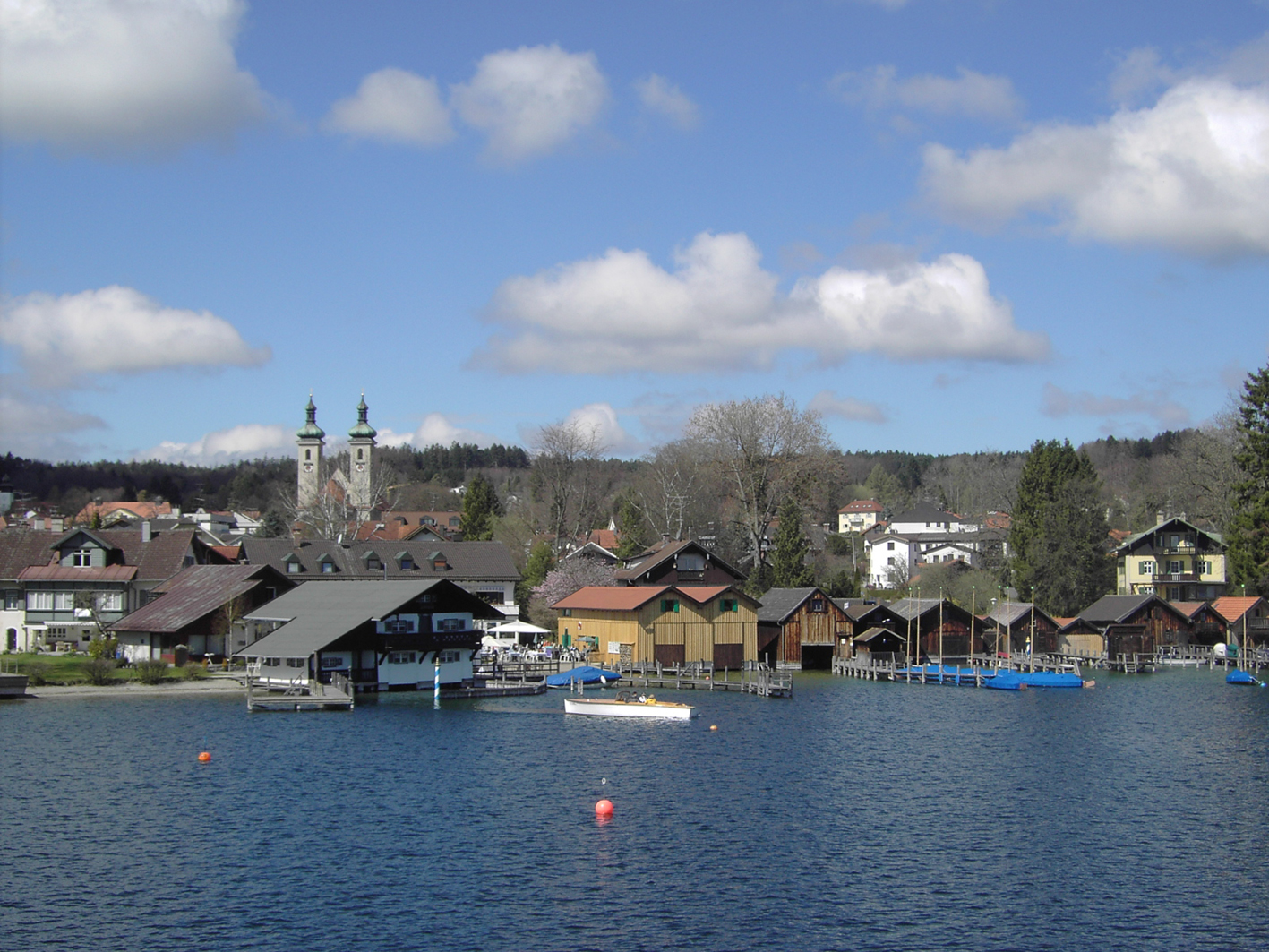
View on WikipediaTutzing (German pronunciation: [ˈtʊtsɪŋ]) is a municipality in the district of Starnberg in Bavaria, Germany, on the west bank of the Starnberger See. Just 40 km south-west of Munich and with good views of the Alps, the town was traditionally a favourite holiday spot for those living in the city.
Key Information
In 1873 Johannes Brahms spent four summer months in Tutzing, completing his String Quartets Opus 51 and writing the Haydn Variations. A small lakeside park is dedicated to him, and a plaque stands near the large house where he lived and worked.
The town of 10,000 is home to many commuters to Munich, as well as to retirees. Tutzing station is both a terminus of Munich's S-Bahn rail network and a regional train hub serving Innsbruck, Mittenwald, Garmisch-Partenkirchen, Reutte, Kochel and Oberammergau.
Tutzing has a regional hospital and various clinics. It hosts the conference centre Evangelische Akademie Tutzing, founded in 1947.
Tutzing has been home to various German celebrities, including the former president of the Federal Constitutional Court Hans-Jürgen Papier, musicians Peter Maffay, Leslie Mándoki, and Elly Ney, the late Guido Dessauer, and the military general and theorist Erich Ludendorff, who died and is buried in the town.
During the Nazi period, Trutskirch-Tutzing (Dornier), a forced-labour factory for the Dornier-Werke GmbH aircraft concern, was a sub-camp of Dachau Concentration Camp.[3] The town was also a stop on the "trail of tears" of inmates forcibly marched south in 1945; a plaque at the town hall commemorates them.
Personalities related to Tutzing
[edit]

- Georg Ebers (1837–1898), Egyptologist and writer
- Heinz Engelmann (1911–1996), actor and synchronsprecher, lived and died in Tutzing
- Peter Hamm (1937-2019), poet, author, journalist, editor, and literary critic.
- Marianne Koch (born 1931), actress and a doctor
- Gitta Lind (1925–1974), musician
- Sabine Leutheusser-Schnarrenberger (born 1951), politician (FDP),(deputy bureau in Tutzing, lives in Feldafing)
- Erich Ludendorff (1865–1937), general of World War I, politician, and agitator for the ethnic movement
- Mathilde Ludendorff (1877–1966), teacher, doctor and writer (her third husband was Erich Ludendorff)
- Peter Maffay (born 1949), musician
- Leslie Mandoki (born 1953), musician and music producer
- Christof Mauch (born 1960), historian
- Elly Ney (1882–1968), pianist
- Eugen Ott (1889–1977), German ambassador to Japan during the early years of World War II, died in Tutzing
- Hans-Jürgen Papier (born 1943), until March 2010 President of the Federal Constitutional Court
- Vajiralongkorn (born 1952), current King of Thailand, who owns a villa in the town.[4]
- Prince Waldemar of Prussia (1889–1945) (1889–1945), died in Tutzing and buried
- Sabina Sesselmann (1936–1998), actress, lived and died in Tutzing
- Michael Roll (born 1961), theater and television actor
- Gert Wilden (1917–2015), composer
References
[edit]- ^ Liste der ersten Bürgermeister/Oberbürgermeister in kreisangehörigen Gemeinden, Bayerisches Landesamt für Statistik. Retrieved 13 June 2024.
- ^ "Alle politisch selbständigen Gemeinden mit ausgewählten Merkmalen am 31.12.2023" (in German). Federal Statistical Office of Germany. 28 October 2024. Retrieved 16 November 2024.
- ^ "Full Listing of Concentration Camps".
- ^ "Thailand's king should not reign from German soil, Berlin says". Deutsche Welle. Archived from the original on October 19, 2020.
Since 2007, the Thai king has spent long periods of time in Bavaria in southern Germany. He owns a villa in the lakeside town of Tutzing, but recently also sojourned at the Sonnenbichl Hotel in Garmisch-Partenkirchen. The king's 15-year-old son even goes to school in Bavaria.
External links
[edit]- Official Website
- Pictures of Tutzing Archived 2012-07-02 at the Wayback Machine
Tutzing
View on GrokipediaTutzing is a municipality in the Starnberg district of Upper Bavaria, Germany, situated on the western shore of Lake Starnberg approximately 40 kilometers southwest of Munich.[1] With a population of 9,926 as of 2024, it spans an area of 35.65 square kilometers and functions primarily as a resort town leveraging its picturesque lakeside location for tourism and recreation.[2] Originally a modest fishing village first documented in the 11th century, Tutzing evolved into a favored summer retreat in the 19th century, attracting composers such as Johannes Brahms, who resided there in 1873 while completing significant works including his String Quartets Op. 51.[3] The town hosts prominent institutions like the Evangelische Akademie Tutzing, established in 1947 within the historic Schloss Tutzing as a Protestant conference and education center focused on interdisciplinary dialogues, including post-war reconciliation efforts and awards such as the Tolerance Prize.[4] Additionally, it serves as the motherhouse for the Missionary Benedictine Sisters of Tutzing, a congregation founded in 1885 dedicated to monastic and missionary activities.[5] Tutzing's defining characteristics include its role as the second-largest community on Lake Starnberg, offering access to hiking, water sports, and cultural sites amid the Alpine foothills, while maintaining a balance between residential tranquility and commuter convenience via S-Bahn connections to Munich.[6]
Geography
Location and topography
Tutzing occupies the western shore of Lake Starnberg (Starnberger See) in the Starnberg district of Upper Bavaria, Germany, roughly 34 kilometers southwest of Munich as measured in a straight line.[7] This positioning places it within the Five Lakes Region, encompassing Lake Starnberg alongside Ammersee, Wörthsee, Pilsensee, and Weßlinger See, a glacial-formed area known for its interconnected waterways and scenic appeal.[8] The local topography consists of undulating terrain in the northern foothills of the Bavarian Alps, with elevations starting at the lake surface of 584 meters above sea level and rising to approximately 595–611 meters in the town and adjacent hills.[9] [10] Glacial processes from the Ice Age molded the landscape, resulting in a mix of forested slopes, open meadows, and shoreline zones that enhance biodiversity through varied habitats for flora and fauna.[1] Direct lakefront access further defines the setting, facilitating natural corridors for ecological connectivity and outdoor pursuits amid the pre-alpine environment.[11]Climate and environment
Tutzing features a humid continental climate (Köppen classification Dfb), characterized by cold winters and mild summers, with temperatures typically ranging from an average low of -4°C in January to a high of 23°C in July.[12] The nearby Lake Starnberg exerts a moderating influence, reducing temperature extremes by storing heat in summer and releasing it in winter, resulting in slightly milder conditions compared to inland Bavarian areas. Annual precipitation averages approximately 1,000 mm, distributed relatively evenly but with peaks in summer months, contributing to a landscape supportive of temperate vegetation. Environmental management in Tutzing emphasizes protection of the lake ecosystem, including monitoring for nutrient pollution from urban runoff and stormwater, which can lead to algal blooms and oxygen depletion in Lake Starnberg. Local and regional efforts align with Bavaria's broader nature conservation strategies, such as wetland preservation and restrictions on development near shorelines to maintain water quality under the EU Water Framework Directive. Macrophyte and phytobenthos assessments in the lake indicate generally good ecological status, though pressures from nearby urban areas persist.[13] Since 2000, climate trends in Bavaria, including Tutzing, show an increase in heatwave frequency and intensity, with more days exceeding 30°C—six of the eleven most extreme heatwaves from 1951 to 2015 occurring post-2000—driven by regional warming of about 1.5–2°C above pre-industrial levels. These shifts have prompted local adaptations, such as enhanced water resource planning. Tutzing contributes to sustainability through hosting the annual Tutzing Symposium, including the 2024 event on phytoextraction, which explores plant-based remediation of contaminated soils as a nature-based solution for environmental restoration.[14][15][16]History
Origins and medieval development
Archaeological evidence indicates human activity in the Tutzing area dating back to the Stone Age, with the region serving as a settlement zone due to its proximity to Lake Starnberg and fertile lands. Bronze Age and Iron Age tumuli have been identified near the town, suggesting burial practices and community presence during these periods, though no extensive settlements from these eras have been excavated directly within modern Tutzing boundaries.[17] The place name Tutzing derives from the noble Huosi family, specifically members Tozzo and Tozzi, implying the site's occupation as early as the 6th century, likely as a modest agrarian outpost amid Bavarian tribal territories.[17][18] The first documentary reference to Tutzing appears in 742 AD, recording a land donation by a local proprietor to the Benedictine monastery of Benediktbeuern, establishing ecclesiastical oversight and highlighting the area's value for agriculture and fishing.[17][19] This early medieval phase saw Tutzing evolve as a small fishing and farming village, sustained by Lake Starnberg's resources, which facilitated local exchange of fish, timber, and crops with neighboring Bavarian communities under monastic administration.[17] By the high Middle Ages, control shifted to secular nobility, including ministeriales serving the Counts of Andechs, reflecting broader feudal hierarchies where vassals managed Hofmark estates for tribute and labor.[20] Medieval structures underscore this development, with the parish church of St. Nikolaus on the Ilka Heights originating around 1400, as chronicled for hosting early Christmas services, symbolizing the community's integration into Christian feudal networks.[21] The site's Hofmark status implied basic fortifications tied to noble residences, precursors to later Schloss Tutzing, prioritizing defense against regional conflicts while centering economic output on lake-based fishing and land tenure under lords answerable to higher Bavarian counts. These elements positioned Tutzing as a peripheral yet stable node in medieval Bavaria's agrarian economy, without evidence of significant trade hubs or urban growth.[22]Early modern period and industrialization
During the early modern period, Tutzing remained primarily an agrarian and fishing settlement, with its economy centered on local farming and Lake Starnberg fisheries, reflecting the broader rural character of Upper Bavaria under the Wittelsbach dynasty.[17] The Thirty Years' War (1618–1648) severely disrupted this stability, as Swedish and imperial-Spanish troops devastated the Hofmark Tutzing between 1632 and 1634, burning the castle, parish church, brewery, tavern, and several farmsteads, contributing to regional depopulation and economic stagnation typical of Bavaria's experience in the conflict.[17][23] Recovery occurred gradually under Bavarian absolutism in the late 17th and 18th centuries, with reconstruction of key structures like the church by 1739 and persistence of feudal land management, though the settlement retained its modest, village-scale operations without significant shift to proto-industrial activities.[24] The 19th century marked a transition influenced by improved connectivity to Munich, as the railway extension from Starnberg to Tutzing opened on October 16, 1865, facilitating commuter access and spurring secondary economic changes.[25] This infrastructure development accelerated villa construction along the Starnberger See, attracting Munich's bourgeois elite—including merchants, intellectuals, and industrialists—who built summer residences and country estates from the mid-century onward, transforming peripheral areas into extensions of urban leisure space while preserving the lakeside's aesthetic appeal over aggressive commercialization.[26][27] Industrialization in Tutzing remained limited, focusing instead on lake-oriented trades such as boatbuilding and nascent tourism rather than factories or heavy manufacturing, which would have conflicted with the site's emerging role as a refined retreat amid Bavaria's uneven regional industrialization patterns.[17][28]20th century: World Wars and interwar era
During World War I, Tutzing, as a non-industrial rural municipality in Bavaria, avoided direct combat or occupation, experiencing primarily indirect effects such as resource shortages and the loss of local men to military service, consistent with broader wartime strains across southern Germany.[29] Economic pressures from inflation and postwar reparations further impacted the town's agrarian economy in the early interwar years.[30] In the interwar period, Tutzing hosted a small communist cell that conducted anti-fascist agitation, including public debates and recruitment attempts, persisting into the early Nazi years until approximately 1938 despite suppression by local National Socialist authorities.[30] The town also became the residence of Erich Ludendorff, the prominent World War I general, who lived there from the late 1920s and maintained a critical stance toward Adolf Hitler after their 1923 Beer Hall Putsch collaboration soured.[29] Rural Bavaria, including Tutzing, generally exhibited compliance with rising Nazi influence, with limited organized resistance beyond isolated leftist groups. Under the Nazi regime, Tutzing's military barracks, established earlier, were renamed Krafft-von-Dellmensingen-Kaserne in 1937 after a Bavarian World War I general, and served as a hub for troop deployments and prisoner-of-war transits during World War II.[29] Local resistance remained marginal, reflecting the regime's strong hold in conservative Bavarian communities, where dissent was rare and often confined to suppressed communist remnants rather than widespread opposition networks.[30] World War II brought indirect consequences to Tutzing due to its proximity to Munich, approximately 40 kilometers north, which endured heavy Allied bombing; the town accommodated refugees and bombed-out evacuees, straining housing in former tourist facilities, but escaped significant direct aerial attacks owing to its lack of strategic industries or infrastructure.[29] U.S. forces liberated Tutzing in early May 1945 with negligible destruction, coinciding with the rescue of thousands of emaciated prisoners from Dachau's death marches, including survivors halted near the town on May 1 and May 3.[31][32]Post-1945 reconstruction and modern growth
Following World War II, Tutzing experienced relatively limited physical destruction compared to urban centers, allowing for swift recovery amid Bavaria's broader absorption of approximately 1.9 million ethnic German expellees by 1950, which strained housing but spurred local expansion and labor integration.[33] The establishment of the Evangelische Akademie Tutzing in 1947 within the historic Schloss Tutzing transformed the town into an intellectual and ecumenical hub, hosting annual conferences on theology, politics, and society that drew participants from across West Germany and facilitated post-war reconciliation efforts under the Protestant Church's initiative led by Bishop Hans Meiser.[34][35] During the 1950s Wirtschaftswunder, Tutzing's economy diversified through lakeside tourism on the Starnberger See, leveraging its scenic appeal for visitors, while enhanced rail connectivity as the terminus of Munich's S6 line enabled daily commuting to the metropolitan job market, positioning the town as a desirable semi-rural extension of urban Bavaria.[36] This suburban dynamic accelerated in subsequent decades, with population rising steadily to support residential development without heavy industrialization, though reliant on external employment hubs like Munich.[37] The academy gained prominence in foreign policy discourse, notably hosting Foreign Minister Hans-Dietrich Genscher's January 31, 1990, speech outlining the "Tutzing formula" for German reunification—a gradualist approach embedding unity in a transformed European architecture, including NATO's shift toward political cooperation and non-expansion eastward to assuage Soviet sensitivities.[38] This framework, while advancing diplomatic momentum toward absorption of the East German state, faced conservative critiques for prioritizing accommodation over assertive anti-communist demands, potentially prolonging the regime's legitimacy rather than hastening its collapse through unyielding pressure.[39] Into the 21st century, Tutzing sustained measured growth as a commuter enclave, reaching around 9,900 residents by the mid-2020s, driven by Munich's expansive labor draw and regional infrastructure, yet tempered by zoning to safeguard Bavarian vernacular building styles and lakeside ecology against unchecked urbanization.[40] The academy continued as a steady anchor, accommodating over 12,000 annual attendees for events emphasizing ethical and policy continuity amid socioeconomic shifts.[41]Demographics
Population trends
The population of Tutzing grew steadily from 5,973 residents in 1900 to 7,777 in 1950, reflecting post-World War II influxes including refugees and displaced persons that boosted numbers by over 11% from 1939 levels.[42] This expansion continued through the mid-20th century, reaching 9,149 by 1970 amid suburbanization trends attractive to families seeking proximity to Munich.[42] By 2021, the figure stabilized at 9,933, with the municipality spanning 35.63 km² for a density of approximately 279 inhabitants per km².[42][43] Contemporary trends show low natural increase, with birth rates at 7.2 per 1,000 in 2021 compared to death rates of 9.1 per 1,000, characteristic of demographic patterns in rural Bavarian locales.[42] Net migration has provided counterbalance, including gains from urban commuters drawn to Tutzing's lakeside location and S-Bahn connectivity to Munich, though annual balances fluctuate—negative by 77 in 2021 due to 644 inflows against 721 outflows.[42] Overall, these dynamics have maintained population stability around 9,900–10,000 since the 1980s.[42] Projections from Bavarian state statistics forecast modest growth to 10,300 residents by 2039, a 3.4% rise from 2019 baselines, driven by sustained but tempered migration amid low fertility.[44] The population is aging, with a median age of 46.9 years in 2019 expected to hold near 47.0 by 2039; the proportion aged 65 and over is projected to increase 15.7%, elevating the old-age dependency ratio to 57.9 per 100 working-age individuals.[44] Youth cohorts under 18 may grow 12.1%, but structural aging persists, aligning with broader Bavarian patterns of below-replacement fertility and longer lifespans.[44]Ethnic and religious composition
Tutzing's residents are predominantly ethnic Germans, with German nationals accounting for 89.4% of the population as of December 31, 2021, while foreigners constituted 10.6% (1,052 individuals).[42] This level of foreign-born or non-German nationality presence remains modest relative to Germany's urban centers, aligning with patterns in rural Bavarian locales where immigration has historically been limited and integration unproblematic, without documented ethnic conflicts.[42] Religiously, the town reflects Bavaria's traditional Catholic predominance, though with a sustained Protestant minority atypical for the region. As of December 31, 2021, 48.4% of residents (4,813 persons) were Roman Catholic church members, and 18.8% (1,869 persons) were Evangelical Lutheran, totaling about 67% affiliated with major Christian denominations and the remainder unaffiliated or adhering to other faiths.[42] These figures indicate a decline from 2011 (53.2% Catholic, 26.5% Protestant) and 1987 (59.3% Catholic, 26.9% Protestant), mirroring broader German secularization trends driven by demographic shifts and reduced church participation.[42] The Protestant share, stable around 20-25% over decades, owes partly to the Evangelische Akademie Tutzing, a Protestant institution founded in 1947 that draws Lutheran participants and staff to the area, countering Bavaria's post-Reformation Catholic uniformity where Protestant communities remained marginal until modern times.[45]Economy and infrastructure
Economic sectors
Tutzing's economy is dominated by the service sector, which comprises 63.6% of local employment as of 2020, including professional services, administration, and tourism-related activities.[46] Trade, hospitality, and transport account for 16.3% of jobs, with tourism leveraging the town's lakeside position on Lake Starnberg to attract visitors for boating, hiking, and villa sightseeing.[46] [47] A significant share of residents function as commuters to Munich, with 2,697 out-commuters recorded in 2020 against 1,807 in-commuters, reflecting a net outflow that sustains high local incomes through employment in Munich's technology, finance, and professional sectors.[46] Of these, 1,185 Tutzing residents specifically commuted to Munich in 2022. This pattern limits local manufacturing to 19.3% of employment, prioritizing environmental preservation over industrial expansion.[46] The Landkreis Starnberg, encompassing Tutzing, records Germany's highest per capita purchasing power at €33,102 as of recent analyses, exceeding Bavaria's average due to commuter-driven affluence and restrained development.[48] Agriculture and viticulture occupy a marginal 0.7% of jobs, supplemented by small-scale traditions evident in the annual Wine Festival held on June 14, 2025.[46] [49] Emerging opportunities in scientific services are highlighted by events such as the 61st Tutzing Symposion on Phytoextraction, hosted November 3–6, 2024, at the Evangelische Akademie Tutzing, which convened experts to explore biotech applications from plant-based resource extraction.[50]Transportation and connectivity
Tutzing is connected to the Munich metropolitan area primarily via the S6 line of the Munich S-Bahn network, which operates from Tutzing station on the Munich–Garmisch-Partenkirchen railway and provides service every 20 minutes to central Munich, with typical journey times of around 40 minutes to Munich Hauptbahnhof.[51] The station handles approximately 50 S-Bahn trains daily alongside regional and occasional ICE services, facilitating Tutzing's role as a commuter town for Munich workers.[52] Local bus lines, such as MVV's 977 and 979 introduced in December 2023, supplement rail access within the town and to nearby areas like Unterzeismering and Diemendorf.[51] Road connectivity relies on Bundesstraße B2, which runs along the eastern shore of Lake Starnberg through Tutzing, linking it northward to Starnberg (about 9 km) and Munich (under 40 km to Marienplatz) and southward toward Weilheim.[51] Access from the A95 autobahn involves the Starnberg junction and A952 feeder to B2, supporting vehicular commuting but prone to disruptions from maintenance closures, as seen in June 2025 when sections south of Starnberg were fully blocked for resurfacing.[53] Tourism-related traffic on B2 exacerbates seasonal congestion, prompting local advocacy for alternatives like enhanced public transit over road expansions.[54] Water transport on Lake Starnberg includes seasonal ferry services by Bayerische Seenschifffahrt, operating from Tutzing's dock from Easter to mid-October with multiple daily departures to ports like Starnberg, Possenhofen, and Bernried, enabling cross-lake travel and tourist excursions.[55] A dedicated line crosses to the eastern shore, with seven daily sailings reported as of April 2022.[56] Cycling infrastructure features extensive paths around the lake and regional trails of 15–50 km suitable for day tours, integrating with broader networks in Starnberg district for recreational and commuter use.[57] Munich Airport lies approximately 40 km northeast, reachable by S6 to Munich center followed by S1 or S8 S-Bahn, with total travel times of 1 hour 15 minutes to 1 hour 24 minutes.[58]Government and administration
Local governance
Tutzing operates under the Gemeindeordnung für den Freistaat Bayern, which mandates a dual executive-legislative structure consisting of a directly elected Erster Bürgermeister (first mayor) and a Gemeinderat (municipal council) of 20 members, both serving six-year terms with the mayor chairing council meetings and representing the municipality externally.[59] The system emphasizes local autonomy in areas like zoning, budgeting, and public services, with decisions requiring council approval for major expenditures or ordinances, fostering consensus-driven processes aligned with Bavaria's tradition of decentralized, community-focused administration.[60] As of October 2025, Ludwig Horn of the CSU (Christian Social Union) serves as Erster Bürgermeister, a position he has held through re-election and plans to contest again in the March 2026 communal elections, exemplifying the CSU's longstanding dominance in rural Bavarian municipalities where it typically secures over 40% of council seats.[61][62][63] This center-right orientation reflects regional voter preferences for fiscal prudence and cultural preservation, with the 2020 elections showing CSU leading alongside smaller shares for Freie Wähler, Greens, and SPD, and voter turnout exceeding 60% in line with Bavarian averages for towns of Tutzing's size.[64] Local policies prioritize environmental safeguards for Lake Starnberg, including restrictions on shoreline development to maintain water quality and biodiversity, alongside tourism promotion through events and infrastructure that leverage the town's scenic assets without encouraging mass overbuilding.[60] The 2025 budget, closing with approximately 29.5 million euros in administrative revenues, relies heavily on property taxes from high-value lakeside villas and estates, which constitute a significant portion of municipal income amid efforts to balance infrastructure maintenance with debt avoidance.[65][66] Resistance to expansive urbanization is evident in council deliberations favoring compact growth and green space preservation, consistent with conservative stewardship of Tutzing's heritage as a lakeside retreat.[67]Administrative divisions
Tutzing comprises ten Ortsteile: Deixlfurt, Diemendorf, Kampberg, Monatshausen, Neuseeheim, Obertraubing, Oberzeismering, Rößlberg, Traubing, and Unterzeismering, alongside the central town area.[68] In the course of Bavaria's 1978 municipal reform, the districts of Deixlfurt, Obertraubing, and Traubing were integrated into the municipality, expanding its administrative scope.[17] The municipality lacks formal parishes but features informal neighborhood identities, often differentiated by topography such as upland regions akin to Oberbayern styles and lakefront zones along the Starnberger See. Management of communal resources, including the shared Starnberger See, occurs through inter-municipal coordination within the Starnberg district to address water usage, environmental protection, and infrastructure. Tutzing's coat of arms, divided per fess into red over silver, displays a left-facing silver fish in the chief representing the lake's significance, and in the base a blue bend charged with three golden six-pointed stars from the medieval Dichtl von Tutzing noble family's escutcheon, emblematic of local historical lordship.[69][70]Culture and landmarks
Architectural and historical sites
The Schloss Tutzing, a three-story three-wing structure with hipped roofs, originated as a baroque edifice constructed between 1693 and 1696 before undergoing later remodeling into a classicist form overlooking Lake Starnberg, complete with English-style gardens.[71][72] The site, once encompassing a farm, mill, and associated holdings documented around 1480, exemplifies the town's layered building history amid its transition to institutional use post-1947.[3] Tutzing maintains 45 structures under official monument protection, predominantly comprising residential houses, farmsteads, villas, estates, and agricultural outbuildings that reflect 19th- and early 20th-century lakeside development during the Wilhelmine period.[73] Notable among these is the Brahms-Pavillon, an octagonal late-classicist pavilion erected in 1871 directly on the Starnberg lakefront and designated as a protected heritage site for its architectural integrity.[74] Preservation initiatives emphasize maintaining the ensemble's historical fabric against contemporary urban pressures, with local efforts praised for exemplary stewardship of these assets.[73] The Katholische Pfarrkirche St. Joseph, a neo-baroque parish church designed by Munich architect Richard Steidle, was completed in 1928–1929 as Tutzing's primary Catholic place of worship, featuring characteristic ornate detailing and spatial planning.[75] Complementing the built environment are linear lakeside promenades and parks, such as the approximately 800-meter Brahmspromenade, which integrate historical landscaping with the town's shoreline topography while adhering to heritage guidelines.[76]Cultural institutions and events
Tutzing hosts several annual festivals that reflect its Bavarian lakeside traditions, including the Wine Festival on the Lake held on June 14, 2025, featuring local wines, lake views, and community gatherings organized by local clubs.[49] The town also features Christmas markets, such as the Tutzinger Adventsmarkt on November 29, 2025, along the main street, and events at the Midgardhaus with artisans, children's activities, and seasonal crafts, drawing residents and visitors for holiday traditions.[77][78] Sailing regattas on Lake Starnberg form a core part of Tutzing's summer cultural calendar, leveraging the Deutscher Touring Yacht Club's facilities for events like the Bavarian RS Aero Open in October 2025, which attracted international competitors with consistent winds and club hospitality, and the SAILING Champions League in August 2020, involving 54 races across European teams.[79][80] These competitions emphasize precision sailing heritage tied to the lake's geography, fostering community participation beyond elite athletes. Music events highlight Tutzing's connection to Johannes Brahms, who composed key works there in the 1870s; the annual Brahms Days concert series, established post-2012, features symphony performances like Brahms's Symphony No. 4 with the Munich Symphony Orchestra in 2022, gaining national prominence through collaborations with broadcasters and ensembles.[81][82] The Kurtheater serves as a key cultural institution, providing a venue for theater productions that support both professional artists and emerging talents, promoting artistic exchange in a community setting.[83] The Evangelische Akademie Tutzing contributes to intellectual cultural life through seminars and debates on political and ethical themes, including historical reflections on Ostpolitik originating from Egon Bahr's 1963 speech there, which articulated "change through rapprochement" as a foundational policy principle amid Cold War divisions.[45][84] These events, open to diverse viewpoints, facilitate discussions on democracy and policy legacies, such as in podium debates and workshops addressing post-reunification Europe.[85]Education and research
Schools and higher education
Tutzing maintains a network of public and private schools serving its approximately 10,000 residents, emphasizing preparation for academic and vocational pathways in line with Bavaria's standardized education system. The Gymnasium Tutzing, established in 1951, operates as a secondary school specializing in economics and languages, enrolling students from grades 5 to 13 and focusing on Abitur qualification for university entry.[86] Primary and middle education is provided by the Grund- und Mittelschule Tutzing, located at Greinwaldstraße 12, which combines elementary grades 1-4 with secondary levels up to grade 10, serving local children with a curriculum aligned to state standards.[87] Complementing this, the Benedictus-Realschule Tutzing offers intermediate secondary education through grade 10, with pathways toward vocational training or further schooling, and is operated under Catholic auspices.[88] An international option exists via Create Schools Tutzing, a private institution at Ziegeleistraße 12 providing multilingual education from grades 1 to 12, culminating in Cambridge A-Levels for expatriate and local families seeking global qualifications.[89] Vocational training in Tutzing draws on regional apprenticeships in tourism, trades, and services, often coordinated through Realschule completions and nearby Berufsschulen, reflecting the town's lakeside economy without dedicated local facilities.[88] Higher education access relies on commuting to institutions in Munich or Starnberg, with Gymnasium graduates typically advancing to Bavarian universities; state-wide data indicate over 40% tertiary attainment among 25-34-year-olds, supported by Tutzing's stable, affluent demographics. Environmental themes, linked to Lake Starnberg ecology, appear in school gardens and local projects at institutions like the Gymnasium, fostering awareness of regional conservation.[86]Evangelische Akademie Tutzing and scientific symposia
The Evangelische Akademie Tutzing, established in 1947 as a Protestant conference and educational center in the former Schloss Tutzing manor, has functioned as a hub for interdisciplinary discourse, including scientific symposia that prioritize empirical inquiry into technical challenges.[34] Its location on Lake Starnberg facilitates focused gatherings away from urban distractions, enabling detailed examinations of data-driven topics in fields such as chemistry, physics, and materials science.[90] The academy annually hosts the Tutzing Symposium, a series dedicated to advancing practical applications of scientific research; the 61st edition in November 2024 addressed phytoextraction, exploring plants' role in sustainably extracting metals for products like pharmaceuticals and electronics, with discussions on scalable biotechnologies and environmental impacts grounded in field trial data.[50] Looking ahead, the 2025 e-conversion conference, scheduled for September 15–18, will convene experts on electrochemical processes for energy storage and conversion, emphasizing verifiable efficiencies in catalyst design and reactor scaling over speculative modeling.[91] In October 2024, the academy hosted the JCNS Workshop on Trends and Perspectives in Neutron Scattering: Functional Interfaces, organized by the Jülich Centre for Neutron Science, which brought together over 100 researchers to present experimental results from neutron-based techniques probing molecular interfaces in materials like batteries and catalysts.[92] Sessions highlighted causal mechanisms, such as interfacial dynamics influencing charge transfer, underscoring the academy's facilitation of debates rooted in reproducible scattering data rather than theoretical assumptions constrained by policy agendas.[90] Historically, the venue hosted Egon Bahr's July 1963 speech outlining "change through rapprochement" (Wandel durch Annäherung) toward the German Democratic Republic, which informed Willy Brandt's Ostpolitik by advocating economic ties to erode division gradually.[93] Proponents credit it with de-escalating tensions that enabled the 1989–1990 revolutions, yet critics, including figures in the Christian Democratic Union and later analysts, contend it prolonged Soviet influence by conferring legitimacy on the East German regime, delaying decisive Western pressure for systemic collapse in favor of incremental accommodation.[94] This episode illustrates the academy's role in hosting pivotal discussions, though outcomes reflect the tension between pragmatic engagement and principled confrontation with authoritarian structures.Notable people and associations
Residents and long-term inhabitants
Hans-Jürgen Papier (born July 6, 1943), a German constitutional law scholar, served as president of the Federal Constitutional Court from 2002 to 2010 and resides in Tutzing.[95] During his presidency, the court affirmed Bavaria's policy of displaying crucifixes in public school classrooms, ruling in 2010 that such measures did not violate religious neutrality under the German Basic Law, thereby supporting longstanding state practices rooted in regional Christian heritage. Peter Maffay (born August 30, 1949), a German singer, musician, and producer known for over 50 years of recording hits and albums exceeding 50 million sales worldwide, maintains his residence in Tutzing.[96] Through the Peter Maffay Foundation, established in the region, he supports youth welfare programs, including a children's holiday home and encounter center at Gut Dietlhofen near Tutzing since 2015.[97] Georg Moritz Ebers (1837–1898), a German Egyptologist renowned for acquiring the Ebers Papyrus in 1875—one of the oldest medical documents—and authoring historical novels with over 20 works, spent his later years in Tutzing, where he wrote his final novel Arachne at Villa Ebers before his death on August 7, 1898.[98] Erich Ludendorff (1865–1937), a German general who co-led military strategy during World War I as Quartermaster General from 1916 to 1918, retired to Tutzing in his final years and died there on December 20, 1937, at age 72 from cancer.[99]Visitors and temporary associations
Johannes Brahms resided temporarily in Tutzing during the summer of 1873, utilizing the serene lakeside setting to complete his String Quartets, Op. 51 and compose the Variations on a Theme by Haydn.[76] This period of creative productivity inspired local commemorations, including an annual Brahms festival and a dedicated promenade along the shore.[81] On July 15, 1963, Egon Bahr, a key architect of West Germany's Ostpolitik, delivered his seminal speech "Wandel durch Annäherung" (Change through Rapprochement) at the Evangelische Akademie Tutzing, advocating pragmatic engagement with Eastern Bloc states to foster gradual transformation amid Cold War divisions.[100] The address, emphasizing realism over confrontation, laid foundational ideas for subsequent détente policies under Willy Brandt.[101] The Evangelische Akademie has hosted numerous transient political and intellectual figures for conferences and lectures, leveraging Tutzing's isolated location for focused discourse. Historical royals, including King Ludwig II and Empress Elisabeth, visited the Lake Starnberg vicinity for leisure and retreats, drawn by its natural seclusion, though direct ties to Tutzing proper remain tied to broader regional associations rather than extended stays.[1]References
- https://de.wikivoyage.org/wiki/Tutzing

