Hubbry Logo
Union organizerUnion organizerMain
Open search
Union organizer
Community hub
Union organizer
logo
8 pages, 0 posts
0 subscribers
Be the first to start a discussion here.
Union organizer
Union organizer
from Wikipedia

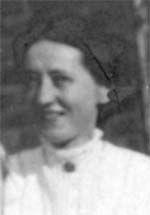
Leonora O'Reilly, a trade union organizer and founding member of the Women's Trade Union League

A union organizer (or union organiser in Commonwealth spelling) is a specific type of trade union member (often elected) or an appointed union official.

In some unions, the organizer's role is to recruit groups of workers under the organizing model. In other unions, the organizer's role is largely that of servicing members and enforcing work rules, similar to the role of a shop steward. In some unions, organizers may also take on industrial/legal roles such as making representations before Fair Work Commission, tribunals, or courts.

In North America, a union organizer is a union representative who "organizes" or unionizes non-union companies or worksites. Organizers primarily exist to assist non-union workers in forming chapters of locals, usually by leading them in their efforts.

Methodology

[edit]
Organizers in Portland marching on May Day

Organizers employ various methods to secure recognition by the employer as being a legitimate union, the ultimate goal being a collective bargaining agreement. The methods can be classified as being either top-down organizing or bottom-up organizing.[1]

Top-down organizing focuses on persuading management through salesmanship or pressure tactics. The salesmanship may include offering access to resources such as to a well-trained and skilled supply of labor or access to union cartels. Pressure tactics may include picketing with the intention of embarrassing management or disrupting business, as well as assisting the government in investigating employment law and labor law violations.[2] A strict enforcement of these laws might result in fines and might serve to hurt the violator's chances in a competitive bidding process. Top-down organizing is generally considered easier than bottom-up and is practiced more in the construction industry.[3]

Bottom-up organizing focuses on the workers and usually involves a certification process, normally overseen by a labor relations board such as the NLRB in the U.S. The process entails either a secret ballot election or, in some cases, a card-signing effort (called card check). In either case, should a majority of the employees agree to union representation, the results bind the company to recognize and negotiate with the union. Normally, both sides are given a chance to campaign for or against unionization, though management has a decided advantage due to their greater access to the employees, as well as management's inherent ability to discipline or terminate employees. It is in this electioneering model where the organizer really organizes: arranging meetings, devising strategy, and developing an internal structure known as an organizing committee. It is from the pool of activists recruited to the organizing committee that the union typically later draws its shop stewards. Though some mistake organizing as strictly being a recruitment effort, numerous obstacles emerge which require more than simple enlistment and promotion of the union. During organizing, management has greater means to reward or punish workers, far overshadowing methods available to the union.[4][5] For this reason, in most countries, laws such as the U.S. National Labor Relations Act, guarantee the rights of workers to seek union membership and forbid management's use of undue influence such as bribes or threats. Nonetheless, such charges are hard to prove and the labor movement believes the entire process to be slanted against them in enforcement and interpretation of labor laws.[4][6] Sometimes, organizing involves legal wrangling over issues such as voter eligibility. In such cases, issues are often settled by appeal to the Labor Board who serves, essentially, as a referee during the process. Intrigue during heated campaigns is not uncommon. In various cases, one or both sides have used spying and information-gathering techniques tantamount to industrial espionage.

Cause within a cause

[edit]

Within the labor movement, organizing is the cause within the cause. In most industrialized nations, there has been a steady decline in union membership and in the influence of organized labor since the 1950s. A response to this decline has been a renewed organizing effort. The heads of unions are well aware of the problem. In the U.S., many labor activists have blamed John Sweeney, the former (1995–2009) President of the AFL–CIO, for not doing enough to organize.[7] In fact, this has been cited[citation needed] as the genesis of the split within the American labor movement that led to the formation of the Change to Win Federation (a rival umbrella organization of North American unions set up as an alternative to the AFL–CIO in 2005), by Change to Win advocates at least. Many unions see organizing as a way to ensure the future of their organization. Unions who emphasize organizing and are expansionist are said to have the "organizing model." By contrast, other unions are said to have the "servicing model," spending most of their resources on providing services to the existing membership (i.e., non-expansionist).

Controversies

[edit]

Within the labor movement, there is some resistance to organizing, though more in deed than in word. Organizing can be seen as a drain on scarce resources with insignificant returns and with results tenuous.[8] In transient industries such as construction, an increase in the supply of labor from newly organized shops may cause the supply of jobs to dwindle below what an increased membership can absorb.[9]

Most disputes between unions are jurisdictional (territorial). Union jurisdiction is based on geographic scope, craft, industry, historical claim, and compromise. Unions have overlapping jurisdictions. Critics within the labor movement have blamed the movement itself for the fractious effects of union-on-union competition and perceived issues of raiding. Expansionism and the scramble for members in organizing programs bring to light these border issues.

Opponents of organizing, mainly in management and business, argue that unionization divides employees against their employer and results in increased costs. Such accusations are not entirely without foundation: Indeed, a successful organizing campaign usually demonstrably benefits the labor at the expense of management. Critics will often circulate horror stories about plant closures and retaliatory firings to discourage union activity and uptake among the workers. Real or imagined, such horror stories are taken as warnings and have a chilling effect on voting. Though illegal,[10] retaliatory terminations remain a problem for organizers to overcome.[11] Fear is the leading obstacle to organizing.[12]

Counter organizing

[edit]

In bottom-up organizing, management and labor are pitted against each other and management often schedules retaliatory, aggressive tactics in an effort to break the chapter, called "union-busting." The intention of such union-busting may be to "nip it in the bud" before getting locked into a costly collective bargaining agreement. Management may feel that the organizing campaign encourages and capitalizes upon worker disobedience and perceived disloyalty.[13] For this reason, management may hire anti-union consultants or lawyers known as "union-busters" or "union avoidance consultants." With the goal of thwarting organizing, union-busters typically have a two-pronged approach: firstly, management will cut deals with individual workers to betray the union and secondly, to exploit loopholes in labor law in an effort to derail or sandbag the election process. The emergence of union-busting as an industry is a relatively new phenomenon and is described in Martin Levitt's book Confessions of A Union Buster.[14] Prior to the emergence of the union-avoidance industry, practitioners were mainly "goon squads" also used for strike-breaking.[15] In the U.S., the largest and most well-known "goon squad" for hire was the Pinkerton Detective Agency,[16] still active today, though in a different capacity. William W. Delaney's "My Father Was Killed By Pinkerton Men" is a song about the violence that often surrounded early American labor strife.

[edit]

The most famous movie about organizing is the 1979 factually based film Norma Rae, the story of a Jewish organizer from New York City who came to the American South to organize a textile mill. He recruits Norma Rae, played by Sally Field. Norma becomes a key union activist who defies management at great personal risk.

The 1987 production of Matewan is another factually based story of an organizer who visits a small mining town in West Virginia and who is able to unite rival ethnic groups against a common enemy: the company.

Both of these stories feature outsiders entering rural company towns and stirring workers up against exploitative management. This is a common theme in organizing. The workers are cast as simple commoners being oppressed by powerful managers cast in the role of villains. The organizer is portrayed as a liberator. There is some truth in these stories since companies did, in fact, historically hire armed thugs to break up organizing drives through unethical and oppressive means.[5] Modern unions work within the existing system, rather than against it, through sophisticated political action programs. Most unions have reinvented themselves as streamlined, professional machines.[17]

10,000 Black Men Named George, released in 2002, is a movie based on the true story of A. Philip Randolph, the famous black organizer who organized the railroad company's largely black Pullman Porters.

The film Bread and Roses (2001) depicts the Service Employees International Union's "Justice for Janitors" campaign to organize cleaners. The story is also a love story between an idealistic young organizer and a female Hispanic immigrant among those he is organizing.

Both of these stories incorporate pro-union messages with ethnic determination. In the case of the Pullman Porters, Randolph is remembered as a civil rights hero. The Justice for Janitors campaign is about immigrants' rights, as many of the organized janitors are from Spanish-speaking or Slavic countries. The status of the characters as minorities paints a picture of them as being outside of, or on the margins of, the American Dream, thus further casting workers and activists as underdogs. The underdog theme is an inspirational archetype in myth.

In the 2005 action movie Four Brothers, one of the characters is a former union activist who turns the bad guy's henchmen against him by informally organizing them against their boss based on the common organizing themes of a greater share in the profits and respect on the job.

In the 1997 action movie Grosse Pointe Blank, Dan Aykroyd's villainous character pursues fellow assassin John Cusack in order to include him in a ridiculous assassins' union.

These latter two movies use organizing as a plot device, though they involve black market businesses and are far-fetched for this reason. Nonetheless, they demonstrate how, absent a union's presence, the same issues arise in any vocation. Also, both of the movies take place in the Detroit, Michigan area, a city which has produced some great organizers.

The 1992 production Hoffa, starring Jack Nicholson as famed labor leader Jimmy Hoffa of the Teamsters, begins the story where Hoffa's career began: organizing truck drivers and warehouse workers in and around Detroit. Jimmy Hoffa went on to become one of the most powerful labor leaders in U.S. history.

The 1978 movie F.I.S.T, tells the same story of Hoffa's beginnings as an organizer and of his rise to power, albeit with more liberties taken. Sylvester Stallone plays Hoffa as a man with good intentions, dogged on all sides, and by both sides of the law.

Both Hoffa stories feature Hoffa as a tough "man of the people" and chronicle how his organizing swelled the ranks of the Teamsters. Hoffa was notorious for taking an "ends justifies the means" approach to organizing. Hoffa's legacy remains: his son, James P. Hoffa, is the current general president of the Teamsters.

In an episode of the popular American sit-com The Office, the characters hold an organizing meeting that ends with a manager threatening to fire everyone involved. The character played by comedian Patrice O'Neal tells the boss, "This isn't over."

The Fred Savage sitcom Working had an episode where the main character organizes his fellow workers into a union and tells management it is because he really cares about the well-being of his coworkers, exhibiting solidarity.

The song "Solidarity Forever" by Ralph Chaplin has become the anthem of large parts of the labor movement such as those in North America.

See also

[edit]

People

[edit]

Notes

[edit]

References

[edit]
[edit]
Revisions and contributorsEdit on WikipediaRead on Wikipedia
from Grokipedia
A union organizer is a representative or staff member of a labor union tasked with leading efforts to recruit workers and establish union representation in non-unionized workplaces, typically through identifying target employers, building employee support networks, and filing petitions for representation elections under laws such as the National Labor Relations Act. These professionals often employ tactics like "salting," where union-affiliated individuals seek employment at target companies specifically to agitate for unionization from within, a method that has sparked legal and ethical debates over deception and disruption of operations. Historically rooted in the industrial-era labor movements of the late 19th and early 20th centuries, union organizers played pivotal roles in high-profile strikes and campaigns that secured foundational worker protections, such as the eight-hour workday and safer conditions, though empirical analyses attribute much of the decline in union density—from over 20% of U.S. workers in 1983 to under 10% by 2024—to structural economic shifts including globalization, technological automation, and the expansion of service-sector jobs that favor individual flexibility over collective bargaining. In practice, organizers coordinate internal committees of sympathetic employees, conduct one-on-one outreach to highlight grievances like wages or scheduling, and navigate employer countermeasures, with success rates varying widely based on industry and region; for instance, private-sector organizing wins have hovered below 60% in National Labor Relations Board elections amid employer resistance strategies. Defining characteristics include a focus on mobilization over top-down mandates, yet controversies persist around aggressive tactics such as paid or pressure campaigns that can border on , as evidenced by reports of disruptions and NLRB cases involving union representatives. While organizers have achieved notable gains in sectors like and public services, the overall trajectory reflects causal factors like worker disillusionment with union bureaucracies and preferences for direct in dynamic economies, underscoring the tension between power and agency in modern .

Definition and Role

Core Responsibilities

Union organizers primarily focus on engaging non-union workers to foster collective action, beginning with identifying potential supporters through targeted outreach. This involves conducting one-on-one meetings with employees to build trust, listen to workplace grievances such as low wages or unsafe conditions, and assess their interest in union representation. These personal interactions allow organizers to map internal dynamics, recruit committed insiders to form an organizing committee, and lay the groundwork for broader mobilization without alerting management prematurely. A key duty is educating workers on the advantages of unionization, including improved bargaining power for wages, benefits, and job security, as well as their legal protections under statutes like the National Labor Relations Act (NLRA) of July 5, 1935, which safeguards the right to organize and engage in concerted activities. Organizers explain the unionization process, potential risks such as employer opposition, and mechanisms like secret-ballot elections overseen by the National Labor Relations Board (NLRB), emphasizing empirical evidence from successful campaigns where unionized workers averaged 10.2% higher wages than non-union counterparts in similar roles as of 2023 data. This education often occurs in small group house meetings or via printed materials to counter misinformation and build informed consent among participants. Organizers coordinate the collection of signed authorization cards, which workers use to designate a union as their representative, requiring at least 30% support to petition the NLRB for an election or, in voluntary recognition cases, a majority to compel employer bargaining. This phase demands meticulous tracking to achieve over 50% participation for certification success, involving committee members in discreet solicitation during breaks or off-site to evade surveillance, with cards serving as verifiable proof of interest rather than mere petitions. Throughout, organizers sustain momentum by addressing doubts and reinforcing solidarity, aiming to transition from informal support to formal union structure.

Required Skills and Background

Effective union organizers possess robust interpersonal skills, including exceptional communication, public speaking, and the ability to build trust and rapport with diverse groups of workers, which are honed through direct engagement and persuasion efforts. Leadership capabilities, team-building proficiency, negotiation techniques, and conflict resolution expertise are indispensable for guiding campaigns and resolving workplace disputes. These attributes enable organizers to empathize with employees' concerns while motivating collective action, often requiring resilience in high-pressure, adversarial environments. A foundational knowledge of labor laws, regulatory frameworks, and employer anti-union strategies is essential, allowing organizers to navigate legal constraints and counter opposition effectively. Proficiency in data-driven approaches, such as analyzing workplace social networks to identify influencers and leverage peer support, underpins successful recruitment and mobilization. Organizers must also grasp economic and political factors influencing industries to tailor arguments that resonate with workers' material interests. Typical backgrounds include prior experience as rank-and-file union members, community activists, or participants in grassroots movements, providing practical insight into worker dynamics. Many hold bachelor's degrees in fields like political science, sociology, labor studies, or social work, with such education appearing in nearly all surveyed positions. Formal training often occurs through union-sponsored programs, such as the AFL-CIO Organizing Institute, established in 1989 to recruit and develop organizers via intensive workshops on campaign fundamentals. Similarly, the AFSCME Organizer-in-Training program offers a year-long apprenticeship combining fieldwork with mentorship to build core competencies. These pathways emphasize hands-on apprenticeships over purely academic preparation, prioritizing demonstrated commitment and adaptability.

Historical Context

Origins in Industrial Era

The emergence of dedicated union organizers coincided with the intensification of industrialization in the United States during the mid-19th century, as factories and mines aggregated large numbers of workers under exploitative conditions that incentivized collective resistance. Workers endured shifts of 10 to 12 hours daily in environments lacking ventilation, safety guards on machinery, and sanitation, resulting in frequent injuries and respiratory ailments from dust and fumes. Child labor was pervasive, with children as young as five or six employed in textiles and mining to supplement family incomes amid wages insufficient for subsistence. These causal pressures—stemming from employers' profit maximization without regulatory constraints—prompted skilled artisans and disillusioned laborers to act as itinerant recruiters, disseminating ideas of solidarity through clandestine meetings and public agitation. A pivotal early organization was the Knights of Labor, founded on December 28, 1869, in Philadelphia by Uriah S. Stephens and a group of garment cutters whose prior trade union had collapsed amid economic downturns. Unlike craft-exclusive guilds, the Knights welcomed all producers—skilled, unskilled, women, and even some employers—into local assemblies, with organizers traveling regionally to charter new units in industries like textiles, railroads, and coal mining. By 1886, membership swelled to approximately 700,000, fueled by campaigns against wage reductions and for an eight-hour workday, as organizers educated workers on boycotts and cooperatives to counter employer blacklists and divide-and-rule tactics. In textiles, early efforts included supporting strikes like the 1836 Lowell mill walkout, where female operatives protested wage cuts, while in mining, Knights-backed actions in Pennsylvania anthracite fields addressed ventilation hazards and company scrip systems. Success proved elusive due to the absence of legal safeguards, with courts often deeming unions as conspiracies under common law, enabling injunctions, private militias like the Pinkertons, and state troops to dismantle strikes. Data from the era indicate that while the Knights orchestrated hundreds of local actions, most faltered, with union density remaining below 5% of the non-agricultural workforce by 1890, as organizers faced arrests, firings, and mob violence. The Haymarket Affair exemplified this volatility: on May 4, 1886, in Chicago, a bomb exploded during a Knights-endorsed rally protesting police violence against strikers demanding shorter hours, killing seven officers and prompting a crackdown that executed four labor radicals and implicated the organization in anarchy, accelerating its fragmentation. Such suppressions, rooted in employers' alliances with government to preserve industrial order, underscored the high risks for early organizers operating without protections later enshrined in 20th-century legislation.

Peak and Decline in the 20th Century

The National Labor Relations Act of 1935, commonly known as the Wagner Act, provided legal protections for union organizing by prohibiting employer interference, unfair labor practices, and discrimination against union activities, which catalyzed a surge in union membership. Union organizers played a pivotal role in this expansion, particularly through the Congress of Industrial Organizations (CIO), formed in 1935 to pursue industrial unionism in mass-production sectors like auto, steel, and rubber. These organizers led aggressive campaigns, such as the United Auto Workers' sit-down strikes in 1936–1937, successfully unionizing hundreds of thousands of workers and establishing collective bargaining as a norm. By 1954, union membership reached its historical peak, covering approximately 35% of non-self-employed U.S. workers, with private-sector density reflecting the CIO's gains in manufacturing. From the onward, union density began a structural decline, dropping to under 7% in the by 2023 according to data. Key factors included the spread of right-to-work laws, which by prohibiting mandatory weakened financial incentives for organizing and reduced membership rates by about 4 percentage points within five years of adoption. and employer resistance further eroded organizing efficacy, as firms shifted production to low-wage countries amid rising labor costs; manufacturing employment, a union stronghold, fell from 19.4 million jobs in 1979 to 12.8 million by 2010. Private-sector aversion intensified with legal and corporate tactics post-Taft-Hartley Act amendments in 1947, making elections more adversarial and limiting organizers' leverage. Empirical studies indicate unions secured wage premiums of 10–20% for members, elevating labor costs relative to non-union competitors and incentivizing offshoring and automation as firms sought cost efficiencies. This dynamic, rooted in basic economic pressures where higher fixed labor expenses reduce competitiveness, contributed to fewer viable organizing targets, as industries automated routine tasks—replacing up to 20% of manufacturing jobs by the 1980s—and relocated operations abroad, diminishing the pool of potential recruits for organizers.

Post-2000 Developments and Resurgence Attempts

In the early 2000s, the Service Employees International Union (SEIU) revived elements of its Justice for Janitors campaign, targeting low-wage cleaning contractors with strikes and negotiations in cities like Denver and Houston, securing wage increases of up to 20% in some contracts by 2004. These efforts aimed to counter subcontracting's erosion of standards but yielded uneven results, with membership growth concentrated in public-sector allied fields rather than broad private-sector revival. By the 2010s, similar drives persisted, including SEIU Local 32BJ's 2023 campaign for 20,000 New York City janitors, focusing on healthcare and full-time jobs amid ongoing contractor resistance. Pandemic-era organizing surged, exemplified by Starbucks Workers United's campaigns starting in 2021, which secured National Labor Relations Board (NLRB) certifications at over 300 stores by 2024 through petitions at hundreds of locations, though many elections faced challenges and only a fraction—about 12% of new union-covered private workers—stemmed from these drives. Amazon faced parallel efforts, with the Amazon Labor Union winning a narrow 2022 vote at a Staten Island warehouse (2,654-2,131), upheld in 2024, but suffering decisive losses elsewhere, including Alabama reruns ordered due to interference claims and a 2025 North Carolina defeat (829-2,447). These high-profile pushes highlighted tactical innovations like social media mobilization but mixed NLRB outcomes, with union win rates rising to 70.3% in elections from 2021-2024 yet failing to scale nationally. Union density reflected limited resurgence, reaching 10.1% overall in 2022 amid labor shortages but falling to 9.9% by 2024, with private-sector rates stagnant at approximately 6%, over five times below public-sector levels of 32.2%. The gig economy exacerbated this, as independent contractor models—comprising platforms like Uber and DoorDash—resist traditional organizing due to worker classification disputes and low bargaining leverage, contributing to private-sector stagnation where flexibility often trumps collective structures. Empirical patterns suggest worker preferences favor individual flexibility over mandatory , as evidenced by membership rates of 5.0% in pre-2010 right-to-work states—where dues and membership are fully voluntary—compared to 14.3% in non-right-to-work states enforcing agency fees. Surveys reinforce this, with majorities prioritizing workplace flexibility as a core compensation element, potentially deterring in dynamic sectors where rigid rules limit . These trends indicate that while organizer efforts persist, structural shifts and voluntary opt-outs constrain broad revival absent policy changes.

Organizing Processes and Tactics

Initial Assessment and Recruitment

Union organizers conduct an initial workplace assessment to evaluate organizability, systematically mapping departments, shifts, informal networks, and communication channels through charts and diagrams. This process identifies key grievances, such as pay disparities, hazards, and inconsistent scheduling, by gathering via anonymous surveys and one-on-one conversations with employees to ensure issues resonate with the majority. Organizers also assess supervisor influence, noting patterns of favoritism, disciplinary practices, and relationships that could sway worker allegiance or enable anti-union monitoring. Recruitment begins discreetly with sympathetic insiders, often via quiet discussions to gauge interest and recruit natural leaders respected across demographics and shifts. To embed support without detection, unions employ salting tactics, dispatching paid organizers or affiliates to apply for jobs at the target employer, where they agitate internally by highlighting issues and building coalitions among coworkers. These insiders help form a core organizing committee, typically comprising 10-15% of the workforce and representative of all areas, to lead early outreach. To secure commitments and avoid workplace surveillance, organizers conduct house calls—structured 30- to 40-minute home visits post-shift—and off-site meetings, focusing on issue education, countering potential employer objections, and obtaining signed union authorization cards. These tactics target at least 30% card signatures from the proposed bargaining unit, the minimum showing of interest required by the National Labor Relations Board to file for a representation election petition. Early efforts emphasize building 65% informal support before escalating, prioritizing face-to-face interactions over public actions to minimize backlash.

Campaign Execution and Mobilization

During the campaign execution and mobilization phase, union organizers intensify efforts to build support among undecided workers through structured tactics such as forming workplace organizing committees composed of employee leaders who conduct peer-to-peer persuasion within departments and shifts. These committees facilitate one-on-one conversations at work sites to address concerns and counter employer anti-union messaging, often leveraging data from initial surveys to target swing voters likely to be swayed by evidence of potential wage improvements or job protections. Home visits, or house calls, supplement these efforts by allowing organizers to engage workers privately off-site, fostering personal commitments and mitigating workplace intimidation, with rank-and-file involvement proven effective in overcoming employer resistance. Mobilization escalates via public rallies and collective actions designed to demonstrate solidarity and apply pressure on employers, including job actions like work-to-rule or informational pickets that highlight grievances without full strikes, gradually increasing leverage to influence undecided employees. Media amplification, through press releases and social media, disseminates worker testimonials and counters corporate narratives, aiming to sway public opinion and indirectly pressure management. National Labor Relations Board data indicate union win rates in representation elections have hovered around 70% in recent years, with fiscal year 2024 seeing pro-union votes at 70.42% through July, reflecting the efficacy of these targeted mobilization strategies amid heightened employer opposition. Post-2010 adaptations incorporate digital tools for mobilizing dispersed workforces, particularly gig and remote workers, via online communities and platforms that enable anonymous information sharing, virtual meetings, and coordinated actions, enhancing solidarity where traditional in-person tactics are infeasible. These tools, including apps for secure communication and data stewardship, have supported organizing in platform economies by improving perceptions of union instrumentality through frequent digital interactions among workers. Such innovations address causal challenges like geographic fragmentation but face hurdles from employer surveillance and algorithmic management.

Certification and Negotiation Phases

The certification phase begins once a union demonstrates sufficient employee support, typically 30% of workers in the proposed bargaining unit via signed authorization cards, prompting a petition to the National Labor Relations Board (NLRB) for a representation election. The NLRB then supervises a secret-ballot election among eligible employees, where a simple majority vote in favor certifies the union as the exclusive bargaining representative. Under the NLRB's 2014 amendments to representation procedures, reinstated in substantial form via the 2023 final rule, elections are expedited to occur within approximately 21 to 42 days from the petition filing date, minimizing pre-election delays through streamlined hearings and limited opportunities for extensive litigation. Employers or unions may file objections to election conduct or challenge individual ballots post-vote, potentially triggering investigations or hearings, though the NLRB resolves most such disputes within weeks to certify results promptly if no substantial irregularities are found. Following certification, union organizers transition to supporting initial collective bargaining, where the certified union and employer must negotiate in good faith over mandatory subjects including wages, hours, and working conditions, as required by the National Labor Relations Act. Organizers often assist in drafting proposals, mobilizing member ratification, and countering employer tactics such as surface bargaining or unfair labor practices that prolong talks. Negotiations prioritize securing baseline improvements in compensation and benefits, but in economically distressed sectors like manufacturing or retail, unions frequently concede on issues such as wage increases or job security guarantees to avert closures or layoffs. Empirical data indicate that while approximately 90% of certified private-sector unions eventually secure a first contract, the process averages 1 to 2 years due to protracted sessions, strikes, or legal disputes, with only about one-third achieving agreement within the initial year. These delays are exacerbated by employer-initiated unfair labor practices, which studies link to extended bargaining timelines in over 40% of cases.

United States Regulations

The National Labor Relations Act (NLRA), signed into law on July 5, 1935, provides core protections for union organizers by safeguarding employees' rights under Section 7 to self-organize, form or join labor organizations, bargain collectively, and engage in concerted activities for mutual aid or protection. These rights enable employee solicitation and distribution of union materials during non-working time in non-working areas, subject to employers' maintenance of production and discipline, while Section 8(a) deems employer interference, coercion, or discrimination against such activities unfair labor practices. Non-employee union organizers, however, possess no statutory access rights to private employer property absent voluntary employer consent or exceptional circumstances like inaccessibility of employees outside work, limiting organizers' tactics to off-site or employee-facilitated efforts. The Labor Management Relations Act of 1947, commonly known as the Taft-Hartley Act and enacted on June 23, 1947, amended the NLRA to impose curbs on union conduct, including Section 8(b)(4)'s prohibition on secondary boycotts, which restrict unions from pressuring neutral secondary employers to cease business with a primary employer amid disputes. This provision aims to prevent escalation of labor conflicts beyond the immediate parties, thereby protecting third-party businesses from indirect coercion via strikes, pickets, or other restraints. Taft-Hartley further mandated unions to file annual financial reports with the Department of Labor, including details on receipts, salaries, and loans, to promote transparency and mitigate corruption risks identified in congressional investigations of union mismanagement. In 2023, the National Labor Relations Board (NLRB), under a Democratic majority, broadened interpretations of protected concerted activity in decisions such as Home Depot U.S.A., Inc., where a single employee's public complaint about workplace conditions qualified as concerted because it sought to induce group action, overruling prior restrictions requiring explicit group involvement. Similarly, McLaren Macomb invalidated severance agreement provisions like non-disparagement clauses that could deter employees from discussing labor issues or assisting organizers, deeming them overbroad interferences with Section 7 rights applicable even post-employment. These rulings, reversing Trump-era precedents, expand the terrain for organizer-facilitated discussions but remain subject to NLRB shifts with changes in presidential appointments, reflecting the agency's politicized enforcement dynamics.

International Variations

In Germany, works councils—elected bodies representing employees in firms with five or more workers—fulfill roles akin to union organizers by negotiating workplace conditions, monitoring compliance with laws, and participating in decisions on hiring, dismissals, and operational changes, often without requiring full unionization. These councils, mandated by the Works Constitution Act since 1952, coexist with unions that handle sectoral bargaining, contributing to collective bargaining coverage exceeding 50% despite union density around 16% as of 2023. This dual structure enhances organizer efficacy by embedding representation at the firm level, contrasting with enterprise-focused union drives elsewhere, and supports higher overall worker engagement through co-determination rights. Across , sectoral bargaining—where unions negotiate industry-wide agreements extended to non-union firms—bolsters union density to 20-25% on average, far above the U.S. rate of about 10%, by reducing the need for workplace-specific organizing campaigns. In nations like and , extension mechanisms ensure broad coverage (over 80%), amplifying the impact of organizers through centralized wage-setting and minimizing employer resistance at individual sites. This approach aligns with (ILO) Convention 98, promoting voluntary yet effective , though implementation varies; weaker U.S. enforcement of similar recognition processes correlates with lower densities, as organizers face protracted challenges without mandatory extensions. In Canada, union certification mirrors U.S. election-based models but features provincial variations, such as card-check provisions in and allowing automatic recognition if over 65% of workers sign cards, bypassing votes and streamlining organizer efforts compared to federal or vote requirements. Union density hovers at 28% nationally, sustained by these mechanisms in and public sectors, though efficacy dips in right-of-center provinces like with stricter vote thresholds. Australia's post-2005 Work Choices reforms, which curtailed pattern bargaining and union access to workplaces, precipitated a sharp decline in organizing success, with union density falling from 25% in 2000 to 13% by 2019 amid restricted entry rights and individualized contracts. Repeal via the 2009 Fair Work Act partially reversed this, yet density remains below pre-reform levels, highlighting how policy shifts prioritizing flexibility over recognition impede organizer roles, diverging from ILO emphases on protecting bargaining rights.

Achievements and Positive Impacts

Successful High-Profile Campaigns

The United Auto Workers (UAW) achieved a landmark victory through the Flint sit-down strike against General Motors from December 30, 1936, to February 11, 1937, where over 2,000 workers occupied plants, halting production and forcing GM to recognize the union and sign a collective bargaining agreement that included wage increases and seniority rights. This campaign, organized by UAW leaders like Robert Travis, boosted union membership from 30,000 in October 1936 to 400,000 by October 1937, demonstrating the effectiveness of direct action tactics in overcoming employer resistance. Building on this, UAW organizers secured Ford Motor Company's recognition in 1941 after a strike at the Rouge Plant, culminating in the first contract signed on June 20, which established the union as the bargaining agent for the last major non-unionized automaker. In a modern parallel, UAW persistent organizing efforts succeeded at Volkswagen's Chattanooga, Tennessee plant, where workers voted 2,628 to 985 (73% in favor) on April 19, 2024, to join the union—the first such win at a foreign-owned automaker in the U.S. South—following years of targeted recruitment amid prior defeats. The United Farm Workers (UFW), led by Cesar Chavez, orchestrated the Delano grape strike and nationwide boycott starting in 1965, which pressured growers into signing the first contracts by 1970, yielding wage hikes from sub-$1.40 per hour baselines to improved scales alongside better conditions for thousands of migrant laborers. Across organized sectors, union campaigns have empirically linked to premiums of 10-15%, with covered workers earning 10.2-12.8% more than comparable non-union peers after controlling for factors like education and occupation, per analyses of labor data.

Measurable Benefits to Workers

Unionized workers earn an average premium of 10 to 20 percent compared to non-unionized counterparts in similar roles, with recent analyses estimating around 15 percent after controlling for factors like age and year effects. This premium arises from that standardizes pay scales and ties compensation to or metrics, though causal attribution remains debated due to worker self-selection into unionized environments. Employer-provided health insurance coverage reaches 79 to 96 percent among union members, significantly higher than the 68 percent rate for non-union workers, reflecting negotiated plans that often include employer contributions averaging 78 to 89 percent of premiums for family coverage. Similarly, access to retirement benefits exceeds 90 percent in union settings, compared to lower non-union rates, as organizers secure defined-benefit pensions or enhanced 401(k) matches through contracts. Workplace safety metrics improve in unionized firms, with empirical studies documenting lower occupational injury and illness rates, particularly in manufacturing, where union presence correlates with reduced incidence rates by enabling worker reporting and joint safety committees. Regression discontinuity analyses around union elections show decreased fatality risks post-certification, attributable to heightened OSHA compliance and grievance mechanisms, though some evidence indicates no average effect on case rates without shifts in distribution tails. Unionization reduces wage inequality within organized firms by compressing pay differentials across skill levels and demographics, with declining membership explaining 10 to 20 percent of the rise in overall U.S. wage dispersion since the late 1970s. These effects hold where bargaining leverages firm-specific productivity gains to sustain higher labor costs without displacing employment, as evidenced in sectors like public universities where unionization raised faculty salaries without evident offsets in hiring. However, benefits accrue primarily through voluntary worker-majority support, with coerced organizing potentially eroding long-term cooperation and enforcement efficacy.

Failures, Criticisms, and Limitations

Common Reasons for Organizing Failures

Union organizing campaigns often fail due to strategic missteps by organizers, such as inadequate building of internal support structures and overreliance on ineffective communication methods. In the 2017 United Auto Workers (UAW) drive at Nissan's Canton, Mississippi assembly plant, workers rejected unionization by a vote of 2,244 to 1,987, partly because organizers failed to develop a strong shop-floor committee capable of demonstrating tangible union-like actions and instead adopted a timid approach that did not sufficiently engage or mobilize the workforce. Similar errors, including waiting passively for worker initiative rather than proactively conducting one-on-one outreach, or prioritizing social media over direct personal contact, have been identified as recurrent pitfalls that erode momentum and alienate potential supporters. Worker reticence, manifested in low election turnout and hesitation to commit publicly, compounds these organizer shortcomings. Turnout in National Labor Relations Board (NLRB) certification elections frequently falls below 80%, allowing even slim opposition majorities to prevail when core supporters abstain due to perceived risks. This fear of personal repercussions, independent of overt employer actions, stems from employees' prioritization of job security amid economic uncertainty, leading to a conservative "don't rock the boat" mentality observed in southern U.S. plants. Broader structural disillusionment arises when workers in regions with histories of stagnant union density or unfulfilled promises view new drives skeptically, associating unions with obligatory dues absent proportional gains in wages or conditions. Empirical assessments of private-sector organizing highlight how such prior exposures foster resistance, particularly in right-to-work states where membership is voluntary but perceptions of underdelivery persist. Overall, while NLRB election win rates for unions have averaged around 60% in held votes since the 1990s, the inclusion of withdrawn petitions—often due to faltering internal support—elevates effective failure rates closer to 50% across attempted campaigns.

Economic Drawbacks and Unintended Consequences

Union wage premiums, typically estimated at 10-20% in the , have been associated with reduced in unionized firms and sectors, as higher labor costs incentivize substitution toward capital or non-union labor. Empirical analyses of matched employer-employee indicate that leads to significant declines in and levels, with establishment survival rates also decreasing due to these cost pressures. Causal estimates from large-scale further suggest that unions contribute to failures and worker displacement, as elevated wages exceed marginal in competitive markets. Union-imposed restrictions on operational flexibility, such as seniority rules and resistance to workforce adjustments, elevate firms' cost of equity capital and prolong bankruptcy proceedings by complicating negotiations over labor contracts. In the case of Hostess Brands, a 2012 strike by the Bakery, Confectionery, Tobacco Workers and Grain Millers International Union (BCTGM) against proposed concessions amid Chapter 11 proceedings led to the company's liquidation, resulting in the closure of 33 plants and layoffs of over 18,000 workers. Such events illustrate how union militancy can accelerate firm insolvency when concessions are rejected, prioritizing short-term member gains over long-term viability. Over the longer term, unionized manufacturers in the U.S. have faced eroded competitiveness against non-union domestic rivals and foreign producers with lower labor costs, contributing to trends in sectors like apparel and from the onward. Studies attribute part of this shift to unions' upward pressure on wages and work rules, which reduced growth and profitability relative to non-union peers, hastening to right-to-work states or abroad. This dynamic has been empirically linked to broader declines, as union density correlated with slower to global competition.

Employer Responses and Counter-Organizing

Defensive Strategies

Employers facing union organizing campaigns often employ legal defensive strategies centered on communication, supervisor training, and proactive employee incentives to highlight the potential drawbacks of unionization and foster direct employer-employee relations. These approaches aim to educate workers on union dues, strikes, and loss of individualized negotiations while emphasizing existing or enhanced company benefits, all within the bounds of the National Labor Relations Act (NLRA). Such tactics have contributed to union election loss rates exceeding 50% in many years, though recent NLRB shifts have curtailed some methods. One core strategy involves captive audience meetings, where employers convene non-supervisory employees to discuss the realities of union representation, including financial costs and historical strike outcomes. These mandatory sessions, permissible under NLRB precedent for over 75 years until 2024, allowed employers to counter union messaging without direct threats or promises. On November 14, 2024, however, the NLRB's 3-1 decision in Valley Hospital Medical Center d/b/a Desert Springs Hospital overturned this longstanding allowance, deeming captive audience meetings inherently coercive and violative of Section 7 rights to refrain from union activity, as they compel attendance and limit employees' free choice in timing and medium of response. The ruling, effective immediately, requires employers to provide advance notice of meeting topics and permits employee opt-outs, reflecting a policy shift under the Democratic-majority Board toward greater restrictions on employer speech during organizing drives. To bolster defenses, employers frequently retain specialized union-avoidance consultants who conduct compliance training for supervisors, script anti-union communications, and monitor organizing signs to avoid unfair labor practice charges. These firms, numbering in the thousands, charge fees averaging $1,200–$2,500 daily and help navigate NLRA rules on interrogation and surveillance. Employers collectively spend over $400 million annually on such services, with consultants reporting success rates above 95% in thwarting certification elections through tailored campaigns that amplify union risks like prolonged negotiations or job losses. Additionally, firms may implement voluntary wage adjustments, benefit expansions, or employee stock ownership plans (ESOPs) prior to an election filing to underscore direct avenues for worker gains, circumventing perceptions of union necessity. Under NLRA Section 8(a)(1), such pre-petition improvements are generally lawful if not timed to coerce votes against unionization, allowing employers to retain flexibility in rewarding loyalty without third-party intermediation. For instance, ESOPs have been adopted in non-union settings to align employee interests with company performance, potentially reducing organizing appeal by distributing equity stakes that yield average annual returns of 8–10% historically, though post-election implementations require union negotiation to avoid interference claims. These measures, when data-driven and consistently applied, empirically correlate with lower union support in surveys of affected workforces.

Alternative Employee Engagement Models

Non-union employee engagement models encompass mechanisms such as internal works councils, profit-sharing schemes, and employee stock ownership plans (ESOPs), which enable direct worker input into workplace decisions without intermediary representation. These approaches prioritize individualized incentives and collaborative problem-solving, allowing employers to tailor benefits like performance-based bonuses or flexible scheduling to specific firm needs, fostering a sense of ownership among employees. In contrast to union structures, which introduce formalized bargaining and potential adversarial dynamics, these models emphasize voluntary participation and adaptability, often yielding comparable or superior outcomes in worker retention and productivity. Empirical surveys indicate that non-union workers frequently report job satisfaction levels matching or surpassing those in unionized settings. For instance, Gallup data analyzed in 2022 revealed higher overall job satisfaction among non-union employees compared to their unionized counterparts, attributing this to greater perceived autonomy and responsiveness from management. Similarly, a 2011 Gallup poll across private and public sectors found union members less satisfied with elements like compensation flexibility and promotion opportunities than non-union peers. Tech sector examples underscore this trend; companies like NetApp and Cisco, which operate largely without unions, consistently rank high in employee satisfaction metrics, with NetApp scoring low on negative feedback in 2024 reviews aggregating over 1,800 responses. These firms achieve engagement through high base wages—often exceeding union scales in competitive markets—and equity grants, enabling workers to opt for direct financial alignment over collective negotiation. Direct employer-employee relations in non-union frameworks support innovation by minimizing bureaucratic layers that can rigidify decision-making. Research on small and medium enterprises shows that direct voice mechanisms, such as suggestion systems or joint task forces, positively correlate with product and process innovations, as they facilitate rapid feedback loops unencumbered by external contracts. Profit-sharing plans exemplify this causality: by linking pay to firm performance, they incentivize discretionary effort and idea-sharing, with studies documenting sustained productivity gains in adopting non-union firms. Workers exercising choice in these models—evident in low unionization rates despite organizing drives—demonstrate preference for environments where personal agency drives outcomes, rather than standardized union protocols that may constrain firm-specific adaptations.

Controversies and Ethical Issues

Allegations of Coercion and Intimidation

Union organizers have been accused of employing coercive tactics, including threats and peer pressure, to secure authorization cards during organizing drives. The National Labor Relations Board (NLRB) prohibits unions under Section 8(b)(1)(A) of the National Labor Relations Act from restraining or coercing employees in the exercise of their Section 7 rights, such as refraining from union activities. Instances of alleged misconduct include high-pressure solicitation where workers report feeling compelled to sign cards due to harassment or intimidation by fellow employees or organizers. In one documented case involving the Service Employees International Union (SEIU) Local 49, healthcare workers described a coercive "card check" campaign involving repeated visits and peer pressure that led to involuntary signings. During the Starbucks unionization efforts in the early 2020s, the company publicly alleged that union organizers engaged in "intimidation, bullying, and harassment" against employees and managers, including aggressive tactics to pressure participation. Such claims highlight concerns over tactics that blur voluntary support, with NLRB General Counsel noting that employees often face peer pressure or coercion in non-secret ballot processes like card check. Historically, union enforcement of strikes has involved violence to intimidate non-participants, as seen in the 1970 Teamsters wildcat strike, where striking drivers in the Midwest resorted to physical confrontations to halt freight operations by non-strikers, resulting in scattered violent incidents across multiple states. These actions contributed to broader patterns of racketeering in unions like the Teamsters, culminating in RICO prosecutions in the 1980s that targeted organized crime infiltration involving threats of violence to control labor activities. Empirical observations indicate that coercive methods, such as those in card-signing drives, often yield signed majorities that do not reflect genuine, uncoerced preference, potentially eroding union legitimacy over time as workers perceive representation as imposed rather than chosen. Congressional testimony has underscored how union intimidation tactics, including home visits and family threats, undermine free choice and can lead to backlash, with secret ballot elections preferred to mitigate such risks and foster sustainable support.

Corruption and Internal Union Abuses

In response to widespread embezzlement, racketeering, and ties to organized crime in unions like the International Brotherhood of Teamsters during the 1950s and 1960s, Congress enacted the Labor-Management Reporting and Disclosure Act (LMRDA) in 1959, requiring unions to file annual financial disclosures to prevent misuse of member dues and promote internal democracy. Under Teamsters president Jimmy Hoffa, convicted in 1964 of mail fraud, wire fraud, and conspiracy for diverting over $2 million from the union's Central States Pension Fund to benefit associates, such corruption exemplified how union assets were siphoned for personal gain, often through fraudulent loans and kickbacks. Hoffa's subsequent 1967 conviction for jury tampering and bribery further highlighted leadership abuses that prioritized self-enrichment over member interests. LMRDA-mandated filings, such as Form LM-2 reports, continue to expose dues misappropriation, with Department of Labor audits revealing patterns of officers falsifying records to conceal personal expenditures. For instance, in 2025, a former financial secretary of a Pennsylvania union pleaded guilty to embezzling $14,695 in union funds for unauthorized personal use, including gambling and purchases, detected through discrepancies in financial statements. Similarly, the 2017-2020 United Auto Workers scandal involved top officials embezzling millions in dues for luxury items like cigars, golf outings, and Scotch, culminating in a federal settlement requiring governance reforms after convictions for fraud and racketeering. These internal abuses erode member trust, as disclosures under LMRDA often uncover failures in financial oversight that enable organizers and officers to divert resources tied to membership dues, which fund salaries and operations. A 2024 congressional probe into 12 unions documented recent convictions for embezzlement and fraud, including cases where officials used union credit cards for non-union expenses exceeding $100,000, underscoring persistent vulnerabilities despite disclosure requirements. In Philadelphia, former union president John Dougherty was convicted in 2024 on 70 counts of fraud and embezzlement for schemes involving over $600,000 in kickbacks and unauthorized transfers from dues-funded accounts. Such patterns reflect systemic incentives where growth in membership—directly boosting dues revenue—can pressure organizers to overlook or enable irregularities to sustain expansion.

Notable Figures

Pioneering Organizers

Samuel Gompers, a Dutch-born cigar maker who immigrated to the United States in 1863, founded the American Federation of Labor (AFL) on December 8, 1886, in Columbus, Ohio, by uniting craft unions separated from the Knights of Labor. As the AFL's first and long-serving president until his death in 1924, Gompers advocated a strategy centered on craft unions representing skilled workers, prioritizing collective bargaining for higher wages, shorter hours, and better conditions over broader political reforms or industrial unionism. This approach yielded tangible gains, such as Gompers' lobbying efforts contributing to the Clayton Antitrust Act of 1914, which exempted labor unions from certain antitrust provisions and limited federal injunctions against strikes, a victory Gompers hailed as "Labor's Magna Carta." However, the AFL's craft focus under Gompers drew criticism for excluding unskilled laborers, immigrants, and racial minorities, often deferring to local affiliates' discriminatory practices and opposing Chinese immigration to protect white skilled workers' jobs, thereby limiting the federation's reach and fostering internal divisions. Mary Harris Jones, known as Mother Jones, emerged as a prominent organizer in the 1890s after personal tragedies including the deaths of her husband and four children in 1867 and the Great Chicago Fire of 1871, which radicalized her involvement in labor causes. Specializing in coal mining regions, she organized for the United Mine Workers (UMW) in Pennsylvania and West Virginia strikes, employing confrontational tactics such as leading marches of women and children to shame strikebreakers, delivering fiery speeches to rally workers, and enduring arrests to highlight exploitative conditions. Her efforts contributed to partial successes, like organizing in the Paint Creek-Cabin Creek strikes of 1912-1913 in West Virginia, though broader victories remained elusive amid violent employer resistance. Active into the 1920s, Jones' legacy lies in mobilizing disparate workers through personal charisma and direct action, contrasting Gompers' institutional focus, yet her methods often prioritized white male miners and faced charges of sensationalism that alienated some allies.

Modern Influencers

Christian Smalls, a former Amazon employee, founded the Amazon Labor Union (ALU) and spearheaded the successful union vote at a Staten Island warehouse (JFK8) on April 1, 2022, marking the first union win at a U.S. Amazon facility with 2,654 votes in favor against 2,131 opposed, as certified by the National Labor Relations Board (NLRB). This victory highlighted grassroots organizing in the warehouse sector, though subsequent ALU efforts faced setbacks, including a loss at another Staten Island site in 2022 and legal challenges from Amazon alleging election interference. In contrast, Retail, Wholesale and Department Store Union (RWDSU) campaigns at Amazon's Bessemer, Alabama facility (BHM1) failed twice, with 1,798 votes against unionization in March 2021 (later adjusted to a narrow majority against after recounts and mail-in ballot disputes) and a decisive defeat in 2022, underscoring challenges in Southern retail and logistics organizing despite leadership from figures like president Stuart Appelbaum and on-site spokespeople such as Jennifer Bates. NLRB data from the 2020s show unions winning about 65-70% of representation elections overall, but retail sector outcomes lag behind manufacturing, with auto industry drives achieving higher success rates amid established structures. Shawn Fain, elected UAW president in March 2023 as the first directly chosen by members, orchestrated "Stand-Up Strikes" against General Motors, Ford, and Stellantis, securing tentative agreements by November 2023 that included 25% wage increases over four years, cost-of-living adjustments, and reduced tiered pay systems for over 400,000 workers—described as the union's strongest contracts in decades. These gains in the auto sector contrast with broader retail and gig economy struggles, where employer resistance and NLRB filings for unfair labor practices often prolong or derail drives. Despite such targeted successes, modern organizers operate amid U.S. private-sector union density at 9.9% in 2024—the lowest since tracking began—down from 20.1% in 1983, limiting systemic leverage as workers increasingly encounter barriers like rapid employer responses and voluntary recognition avoidance, even as surveys indicate majority public approval of unions. This decline reflects structural shifts toward service and gig work, where individual negotiation via apps or direct employee-employer models often supplants collective efforts, reducing organizers' aggregate influence despite episodic wins.

Depictions in Culture and Media

Film and Literature Representations

The 1979 film Norma Rae, directed by Martin Ritt and starring Sally Field in an Academy Award-winning role, portrays a Southern textile worker evolving into a resolute union organizer amid hazardous factory conditions and employer opposition. The story dramatizes tactics such as distributing literature and rallying coworkers, culminating in a union certification victory modeled after the 1963–1974 J.P. Stevens campaign, presenting organizers as transformative heroes undeterred by personal costs. This depiction emphasizes moral righteousness over operational complexities, including potential disruptions from strikes or negotiations that could elevate production costs by documented margins of 10–20% in unionized textile sectors during the era. Salt of the Earth (1954), directed by Herbert J. Biberman and featuring non-professional actors from New Mexico mining communities, chronicles a zinc miners' strike where Mexican-American workers and spouses organize against discriminatory wages and safety violations, inspired by the 1950–1952 Empire Zinc dispute. Produced by blacklisted talent amid McCarthy-era scrutiny, the film shifts focus to women's picketing leadership after male arrests, framing union efforts as a unified stand against corporate intransigence while evading scrutiny of strike durations averaging 15 months that halved local incomes in similar historical cases. Its neorealist style amplifies underdog resilience, contributing to its suppression in over 90% of U.S. theaters upon release due to perceived subversive advocacy. Upton Sinclair's novel The Jungle (1906) illustrates Lithuanian immigrants' descent into Chicago meatpacking drudgery, positioning union affiliation and socialist agitation as essential counters to unsanitary abuses and wage suppression, with protagonist Jurgis Rudkus radicalized through strike participation. Serialized in 1905 before book publication on February 26, 1906, it spurred immediate federal responses like the Meat Inspection Act of June 30, 1906, yet subordinates analysis of union-induced rigidities, such as those correlating with 5–10% productivity lags in early 20th-century packinghouses per labor economics reviews. Sinclair's avowed socialist lens, evident in his 100+ works promoting collective ownership, shapes perceptions by prioritizing exploitation narratives over causal factors like market competition driving industry relocation post-unionization. Such portrayals recurrently idealize organizers as altruistic catalysts for justice, engendering audience sympathy that empirical surveys link to heightened approval ratings for unions by 15–25 percentage points among viewers of pro-labor media, though this often exceeds evidence-based assessments of net wage gains averaging 10–15% offset by elevated unemployment risks in organized sectors. Critiques highlight how these heroic framings, prevalent in leftist-leaning productions, sideline verifiable downsides including organizer coercion allegations in 20–30% of certification drives per National Labor Relations Board data from the mid-20th century, fostering an imbalanced view detached from broader economic trade-offs like firm value declines of 10–15% following union elections.

Broader Cultural Narratives

In contemporary left-leaning media, union organizers are often depicted as heroic underdogs resisting entrenched corporate interests, a framing that emphasizes solidarity and empowerment while downplaying internal union dynamics. This romanticized view persists despite data indicating voluntary declines in membership, with U.S. private-sector unionization dropping to 6% by 2020 amid workers' growing preference for individualized employment terms over collective obligations, as evidenced by sustained low participation rates even in sympathetic demographics. Business-oriented critiques, prevalent in right-leaning economic analyses, adopt a more skeptical stance, portraying organizers' methods as reliant on coercive pressures facilitated by legal frameworks that compel worker involvement, potentially undermining free choice and firm efficiency. These perspectives argue that such tactics contribute to organizational rigidity, contrasting with empirical trends where non-union sectors have outpaced unions in wage growth and adaptability since the 1980s. Following the 2020 economic disruptions, public discourse experienced a temporary uptick in union advocacy, with high-profile organizing drives gaining visibility, yet Gallup polling reveals enduring worker disinterest, as union approval hovered at 68% in 2025 while only 9% of workers belonged to unions and willingness to join among non-members remained below 30%, signaling barriers like perceived dues burdens and contract inflexibility over ideological enthusiasm. This gap underscores a cultural realism: broad sympathy coexists with practical apathy, challenging narratives of inevitable resurgence.

References

Add your contribution
Related Hubs
User Avatar
No comments yet.