


Community hub
Recent from talks
Contribute something
Nothing was collected or created yet.
Verka Serduchka
View on Wikipedia
Key Information


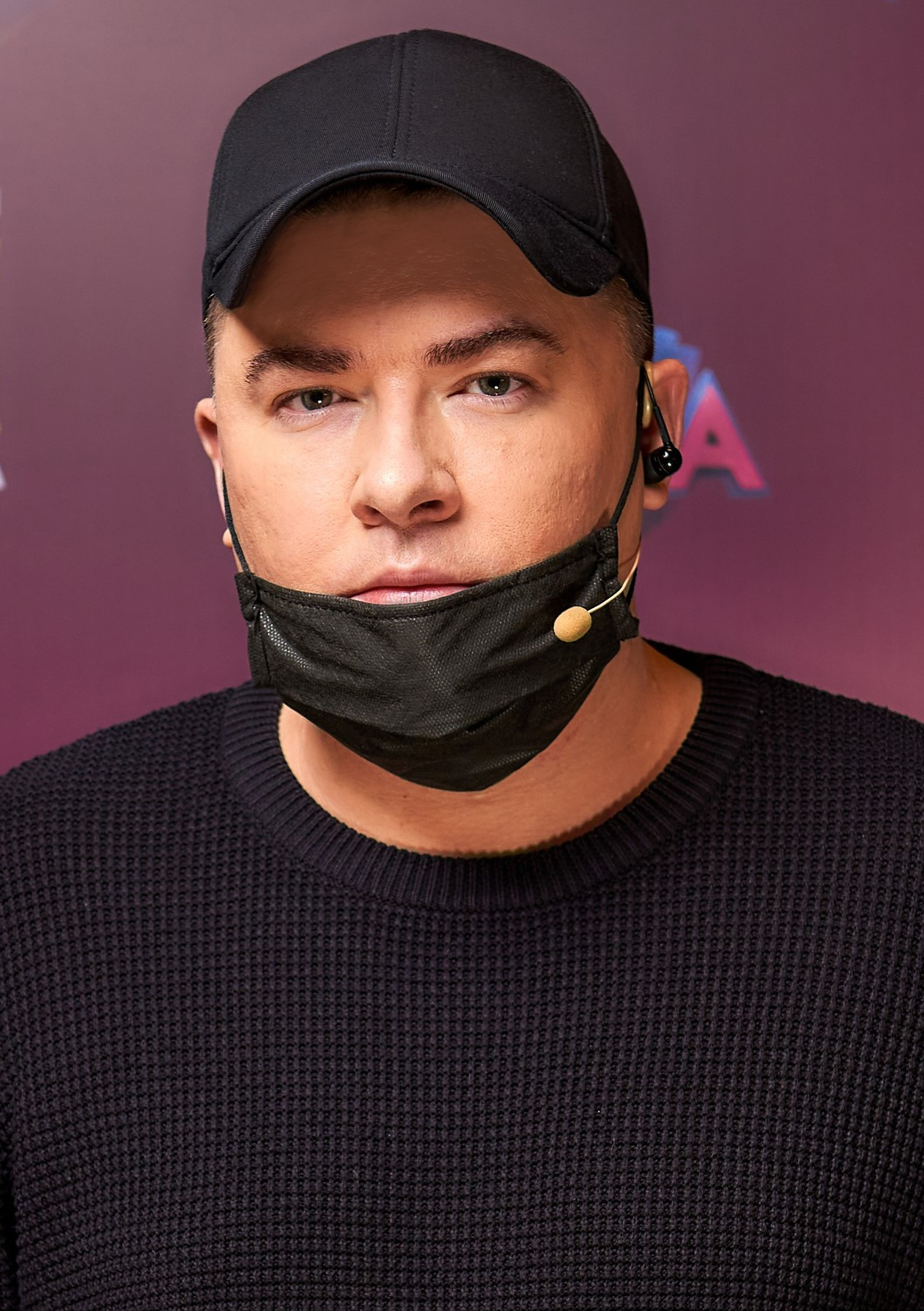
Andriy Mykhailovych Danylko[a] (Ukrainian: Андрі́й Миха́йлович Дани́лко; born 2 October 1973), better known as his drag persona Verka Serduchka (Ukrainian: Вєрка Сердючка, romanized: Vierka Serdiuchka, IPA: [ˈwʲɛrkɐ serˈdʲutʃkɐ]; Russian: Верка Сердючка, romanized: Verka Serdyuchka, IPA: [ˈvʲerkə sʲɪrˈdʲʉtɕkə]), is a Ukrainian comedian, actor, and singer. He represented Ukraine in the Eurovision Song Contest 2007 as Verka with the song "Dancing Lasha Tumbai", finishing in second place. He has sold over 600,000 records. He has appeared in films, most notably a cameo as Verka in the American comedy film Spy (2015).
Early life
[edit]Andriy Mykhailovych Danylko was born to a working-class family in Poltava on 2 October 1973. His mother, Svitlana Volkova, came from the noble Khomentovsky family, who were friends with the artist Ilya Repin.[1] In 1980, at the age of seven, he lost his father to lung cancer. Since childhood, he had a talent for drawing and music, and he entered art school in 1984.[2] His talents were manifested in other areas as well; he was the captain of the KVN school team, played as a schoolboy for the CPTU No. 30 team, and performed annually on the stage in the summer children's camp. In addition, he became interested in theater and entered the local theater studio in the seventh grade, where he was engaged in a studio called Grotesque and was part of the theater group Compote.[3] In 1991, he graduated from Poltava Secondary School No. 27, and later graduated from the Kyiv State College of Circus and Variety Arts.
Career
[edit]Early career
[edit]In 1990, Danylko began to create the character of Verka Serduchka, a flamboyant middle-aged woman from a rural family, working as a railroad sleeping car attendant. He presented Serduchka publicly for the first time in a Poltava comedy competition on 4 January 1991. He invented the character's name by combining the randomly picked first name Verka and the last name of a former school classmate, Anna Serduk.[4][5] Danylko later gave his Serduchka character a "mother," played by actress Inna Bilokin, who had been Danylko's close friend since school.
In 1995 Verka Serduchka debuted on Ukrainian television in an advertisement for PrivatBank. Danylko's persona achieved great popularity, and soon he started touring Ukraine and even took part in concerts organized by the Ukrainian government.[6]
In the late 1990s and early 2000s, Danylko hosted a talk show called "SV-show" ("SV" is an abbreviation for Ukrainian: Спальний Вагон, "Spalnyy Vagon", which means sleeping car), which debuted on 1+1[7] and was later broadcast on various Ukrainian television channels.[8] In 2001, Danylko made his first appearance in one of several musicals produced for television, mostly in female comic portrayals based on the Serduchka character (see Filmography). Several of these productions were shown in the New Year's Eve broadcasts of Russia-1 television.
After Verka Serduchka, Danylko created other characters, such as a police officer, a soldier, and a female ballet dancer. He established a troupe called the Danylko Theater to tour Ukraine and Russia. In 2002, Danylko, along with his group, toured in the CIS and Baltic countries with the program "I Am a Revolution" for the whole year.[9] The following year he was awarded the title of Honored Artist of Ukraine soon after the Danylko Theater concert tour "I Was Born for Love".
Apart from pop and dance performances as Serduchka, Danylko has also performed ambient musical compositions under his real name, including the 2005 album После тебя (Posle tebya: After you).
Eurovision Song Contest 2007
[edit]
The National Television Company of Ukraine (NTU) –through a national final– selected Verka Serduchka to represent Ukraine at the Eurovision Song Contest 2007, with the song "Dancing Lasha Tumbai".[10] One of Ukraine's nationwide FM radio stations organized a protest action in February 2007 to express their disapproval of the selection.[11] Some Ukrainians and even members of the Ukrainian Parliament also expressed their disapproval, viewing the character of Serduchka as "grotesque and vulgar".[12][13]
Serduchka's song "Dancing Lasha Tumbai" was sung in two languages: German and English. The invented words "lasha tumbai" caused some controversy after the performance, as many people noted the phrase's similarity to "Russia goodbye". In early publicity appearances, Serduchka explained that "lasha tumbai" was a Mongolian expression for "whipped cream." His statement was denied by several Mongols who gave the correct phrase on a talk show broadcast by Channel One (Russia) just before the Eurovision Song Contest 2007.[14] The Mongolian embassy in Moscow also said that "lasha tumbai" was total gibberish.[15]
In the final, "Dancing Lasha Tumbai" came in second with 235 points. The "Dancing Lasha Tumbai" single reached No. 6 in the French charts and went on to be No. 28 on The Official UK Singles Chart on 20 May 2007. This was the first time a non-UK, non-winning Eurovision entry had made UK charts since 1974.
Danylko later made a brief phone-in appearance on the BBC's The Graham Norton Show, in which his comments made no sense whatsoever. Another call was made, but with a translator in the audience. In this instance, he appeared to tell guest Andrew Lloyd Webber he was "rubbish". However, in an interview with Metro's Andrew Williams, Danylko clarified his meaning:
AW: Why did you call Andrew Lloyd Webber ‘rubbish’ on The Graham Norton Show?
AD: Someone interpreted Serduchka wrongly. I meant I watched "Cats: the Musical" on TV. It was boring. You should watch a musical on the stage. Don't watch "Cats" on TV.[16]
In the same interview, he stated that "lasha tumbai" was a somewhat made-up phrase that sounds like the Mongolian phrase for "milkshake" and that many Russians nevertheless managed to interpret it as saying "Russia goodbye!".[16]
In 2011, a writer from British newspaper The Guardian described "Dancing Lasha Tumbai" as the "best song never to win Eurovision" before going on to describe Serduchka as "an oven-ready Christopher Biggins".[17]
Later career and personal life
[edit]
Danylko announced in 2007 that he would front a new political party, "For Ours!", to run in that year's Ukrainian parliamentary election, but he later abandoned the idea. A public opinion poll in July 2007 placed "For Ours! Verka Serduchka" at 2% overall support.[18] Serduchka had planned to participate in the Ukrainian national selection for the Eurovision Song Contest 2011. He automatically qualified for the final,[19] but withdrew his nomination in October 2010.[20]
In January 2013, Andriy Danylko bought a 1974 Rolls-Royce, once owned by Freddie Mercury, at the Autosport International Show in Birmingham with the intention of donating it to a museum. This idea fell through over the years because there was no suitable museum on the subject in Ukraine. The deal was made over the phone and he paid £75,000 for the car.[21]
Danylko has said in interviews that he does not engage in transvestism outside of his public performances, with a distinction between his stage persona and his personal life.[22] He is reluctant to discuss his private affairs beyond this, though he has stated in interviews that he had a difficult relationship with a woman with whom he lived for eight years.[23] In January 2015, photos of Danylko kissing actress Inna Bilokin were posted online by a friend.[24]
Danylko appeared as the character Verka Serduchka in a cameo role in the 2015 American action comedy movie Spy, which premiered 22 May 2015 in New York City and 4 June 2015 in Ukraine. In the scene, set in Paris, Serduchka's open-air performance of "Dancing Lasha Tumbai" is interrupted by CIA agents Susan Cooper (Melissa McCarthy) and Rick Ford (Jason Statham).[25]
Since 2016, Andriy has been a constant judge at Vidbir, Ukraine's National Selection for the Eurovision Song Contest. In the Eurovision Song Contest 2016, Serduchka announced the results from the Ukrainian jury. Bilokon, portraying Serduchka's mother, accompanied Danylko.[26]
From 2016 to 2019, he was member of the jury on the talent show X-Factor on STB.[27]
For the Eurovision Song Contest 2017 hosted in Ukraine, a series of short video clips, titled "Verkavision", were produced that chronicled the fictional back story of the character of Verka Serduchka and her journey as a Eurovision "star".[28] Verka also appeared on stage during the final, and opened the televote.
In May 2017, Andriy Danylko announced that he had decided to "bury" Verka Serduchka's stage image.[29] The actor stated that he no longer wants to perform on the big stage in such a role. Despite this, Andriy continued his active concert activity.[30]
On 28 June 2017, on the Constitution Day of Ukraine, he gave a big free solo concert in Kyiv, as part of the Atlas weekend festival.[31] The event gathered a record number of spectators – more than 100 thousand people came to the square in front of the stage.[32]
On 18 May 2019, Verka appeared in the Eurovision Song Contest 2019 final hosted in Tel Aviv, Israel, singing the previous year's winning song, "Toy" by Netta Barzilai, as part of the "Switch Song" interval act.[33]
In 2020, Verka released the EP Sexy. The authors and producers of the album were Swedish producers Andreas Öhrn, Cris Wahle and Peter Boström (Bassflow).[34]
In 2021, he became a judge on Mask, the Ukrainian adaptation of The Masked Singer.[35][36] Also in 2021, as Verka Serduchka, he hosted an anniversary episode of the travel show Oryol i Reshka with Vera Brezhneva.[37][38]
In March 2022, after Russia invaded Ukraine, Danylko repeatedly condemned Vladimir Putin's actions on Instagram and many interviews.[39][40][41][42] During the Kyiv offensive, he refused to leave Kyiv, where he lives.[43]
On 10 June 2022, he gave a concert as Verka for Ukrainian soldiers in Kyiv metro.[44][45]
On 21 June 2022, he performed as Verka at the international charity TV marathon “Embrace Ukraine - #StrivingTogether”, arranged in support of Ukraine with the participation of former Eurovision winners. The event took place at the Museum Square in Amsterdam with an objective to raise funds for purchasing medical equipment for health care facilities that assist wounded and injured people during the war in Ukraine.[46][47]
In the fall of 2022, he put his previously purchased Rolls-Royce Silver Shadow 1974, which belonged to Freddie Mercury, up for the Sotheby’s auction to help support the construction of a modern rehabilitation and prosthesis center in Ukraine.[48][49] On 5 November 2022, the car was auctioned off by WhiteBIT CEO and co-founder Volodymyr Nozov for £250,000 (11 million hryvnias).[50] The auction house waived the usual fees, so the buyer's premium of £36,250 also went to the Superhumans Center project - a total of £286,250.[51][52]
On 13 May 2023, Verka performed "Dancing Lasha Tumbai" during the flag parade of the Eurovision Song Contest 2023 final in Liverpool, United Kingdom.
In mid-June 2025, police authorities in the Riga region launched an investigation into a complaint by TV presenter Viktor Dyachenko of the NGO "Ukrainian Language." They discovered a post while monitoring social media reporting that the singer had performed songs in the occupier's language at a concert in the Boryspil district on June 13. This was a violation of Articles 23 and 29 of the Law "On Ensuring the Functioning of the Ukrainian Language as the State Language." Furthermore, there has been an official moratorium on the public use of Russian-language music in Kyiv since 2023.[53][54]
Image
[edit]
Danylko's visual image as Verka Serduchka is characterized by his persona's grotesque costumes, absurdly large breasts (according to Danylko himself, created with the help of inflated condoms) and the use of surzhyk. His initial popularity was amplified by the use of colloquial phrases and mentions of simple life situations, as well as a great talent for improvisation. After the beginning of Danylko's television and music career, Serduchka's visual appearance underwent a slight change, with railway uniform being replaced with a sparkle-covered jacket, and the inflated bust becoming even larger. The new image was finalized with torn tights, a green boa scarf and high-platformed shoes and can be seen as a parody on contemporary post-Soviet show business. Verka's provocative behaviour during interviews contributes to this effect.[55]
Awards and recognition
[edit]In 2003, Danylko was honored with the title People's Artist of Ukraine.[56] In 2007, Verka Serduchka received the Barbara Dex Award for worst outfit in the Eurovision Song Contest 2007.[57]
Verka Serduchka's performance with the song "Dancing Lasha Tumbai" is one of the eight brightest numbers in the history of Eurovision.[58][59]
In 2016, Serduchka's costume from the performance at "Eurovision-2007" went to the ABBA The Museum (Stockholm), where in honor of the 60th anniversary of the competition was an interactive exhibition "Good Evening, Europe!"[60][61]
In 2020, the song "Dancing Lasha Tumbai" was heard in the BBC America thriller series Killing Eve in the episode "Are You from Pinner?", where the character Villanelle dances to the song at a harvest festival while visiting her rural Russian hometown.[62]
In August 2022, by Decree of the President of Ukraine, Danylko was awarded the Order of Merit Third Class.[63]
Discography
[edit]- Studio albums
- Kha-ra-sho! (2003)
- Chita Drita (2003)
- Posle tebya (2005) (released under the name Danilko: instrumental music)
- Tralli-Valli (2006)
- Doremi Doredo (2008)
Filmography
[edit]As performer
[edit]- (2001): Vechera na khutore bliz Dikanki, a musical remake of the 1961 movie of the same name: Danylko portrayed "Serduchka, the Village Moonshiner" and performed Horilka.[64]
- (2003): Zolushka (Cinderella): the wicked stepsister Brunhilda. Songs included Ya ne ponyala ("I don't understand"), performed together with the pop trio VIA Gra.
- (2003): The Crazy Day or The Marriage of Figaro, a musical remake of the Beaumarchais play: Cherubino (a male character).
- (2004): The Fair at Sorochyntsi (Sorochinskaya yarmarka), an adaptation of Gogol's story. Songs included "Ti napivsya yak svinya" ("You're drunk as a pig") and "Ne kupish lyubov" ("You can't buy love").
- (2004): Za dvumya zaytsami ("Chasing two hares"), a musical remake of a 1961 comedy: a double role as "Svetlana Markovna" and "Anton the Maniac".
- (2005): "Три мушкетера" ("The Three Musketeers").
- (2006): "The Adventures of Verka Serduchka".
- (2007): "Очень новогоднее кино, или Ночь в музее" ("New Year's Movie; or Night at the Museum").
- (2010): "Морозко" ("Jack Frost").
- (2011): "The New Adventures of Aladdin", starring Oscar Kucera and Ani Lorak: "the Genie".
- (2012): "Красная шапочка" ("Little Red Riding Hood"): the title role.
- (2013): "Три богатыря" ("Three Warriors").
- (2015): Spy, a cameo appearance as Verka Serduchka.
As composer
[edit]- (2009): Весельчаки (Veselchaki): a comedy about performers at a drag club.
Notes
[edit]- ^ Also transliterated as Andrii by the national standard
References
[edit]- ^ tv.ua (27 December 2012). "Андрей Данилко ищет свои дворянские корни (ФОТО)". tv.ua (in Russian). Retrieved 26 May 2021.
- ^ "Андрей Данилко именинник: украинскому артисту 44". Joinfo Новости (in Russian). 2 October 2017. Retrieved 26 May 2021.
- ^ "Мама Андрея Данилко: «Когда сын начинал карьеру, я могла помочь ему разве что… старой юбкой, в которой он вышел на сцену в образе Сердючки". showbiz.fakty.ua (in Ukrainian). Retrieved 26 May 2021.
- ^ "Danylko become Serduchka because of school girlfriend". kp.ru (in Russian). 4 December 2003.
- ^ Ryzancheva, Elena. "Interview with Verka Serduchka-Danylko" (in Russian).
- ^ Герої та знаменитості в українській культурі. 1999. p. 341. ISBN 9669539455.
- ^ Герої та знаменитості в українській культурі. 1999. p. 342. ISBN 9669539455.
- ^ "Danylko's biography" (in Russian).
- ^ "Народний улюбленець, актор, політик та просто красунчик: як Андрій Данилко став успішним Полтава". 5 September 2022.
- ^ "Verka Serduchka went to the Eurovision-2007 song contest". Podrobnosti.ua (in Russian). Retrieved 17 March 2007.
- ^ ""No to Euroserduchka!" – protest action of an FM radio station" (in Ukrainian). NTN. Archived from the original on 8 June 2007. Retrieved 10 May 2007.
- ^ Fawkes, Helen (2 April 2007). "Eurovision act angers Ukrainians". BBC News. Retrieved 11 May 2007.
- ^ "Eurovision: Verka Serduchka will disgrace Ukraine" (in Ukrainian). Korrespondent. Archived from the original on 20 March 2007. Retrieved 11 May 2007.
- ^ "Russian Channel One Takes Offence at Verka Serduchka". Ukrainian Newspaper (in Ukrainian). Archived from the original on 20 May 2007. Retrieved 21 May 2007.
- ^ "Ukrainian drag queen a front-runner at Eurovision". Agence France-Presse. 12 May 2007. Archived from the original on 16 July 2011. Retrieved 14 December 2009.
- ^ a b "60 Seconds: Verka Serduchka". Metro. UK. 30 July 2007.
- ^ Raeside, Julia (10 May 2011). "Six to watch: memorable Eurovision moments". The Guardian. London.
- ^ "Socialists Lose Their Rating". Ukrayinska Pravda. 31 July 2007. Archived from the original on 30 September 2007. Retrieved 18 August 2007.
- ^ (in Ukrainian) "Gogol Bordello" не буде на "Євробаченні", а Сердючка вже у фіналі, Табло ID (20 August 2010)
- ^ (in Ukrainian) Сердючка передумала їхати на "Євробачення", Табло ID (13 October 2010)
- ^ "Ukrainian pop-idol star buys Freddie Mercury's Rolls-Royce". 28 January 2013. Retrieved 8 October 2022.
- ^ Данилко обижается, когда его считают извращенцем (in Russian). 1+1 channel. Retrieved 15 July 2013.
- ^ "Andriy Danylko: "I had a difficult experience living together with a woman..."" (in Russian). Gay.ru. Retrieved 13 May 2007.
- ^ "Данилка заскочили за пристрасним поцілунком з "мамою" Сердючки. ФОТО". ТаблоID (in Ukrainian).
- ^ Lewis, Pete (27 April 2014). "Ukraine: Verka hits Hollywood in spy movie". esctoday.com.
- ^ "All the Jury votes of the 2016 Eurovision Song Contest". 14 May 2016. Archived from the original on 15 December 2021 – via www.youtube.com.
- ^ "Х-фактор» по-новому: мочите всех!". МедиаНяня – таблоид для и про медиа. Retrieved 26 May 2021.
- ^ "Verkavision Part II at the second Semi-Final of the 2017 Eurovision Song Contest". Eurovision.tv.
- ^ "У Києві прощатимуться з Вєркою Сердючкою". ФАКТИ ICTV (in Ukrainian). 25 May 2017. Retrieved 26 May 2021.
- ^ "Kartina.TV Концерт 10-летия | Bilet.kartina.tv". archive.is. 5 May 2018. Archived from the original on 5 May 2018. Retrieved 26 May 2021.
- ^ "Зірка із зіркою: Вєрка Сердючка влаштувала третій Майдан на Atlas Weekend". OBOZREVATEL NEWS (in Ukrainian). 29 June 2017. Retrieved 26 May 2021.
- ^ "Верка Сердючка на Atlas Weekend: "Друзья, я хочу випить за всіх вас. Якби не ви, не жила б я на Хрещатику" (фото)". showbiz.fakty.ua (in Ukrainian). Retrieved 26 May 2021.
- ^ "- YouTube". www.youtube.com. Archived from the original on 5 August 2021. Retrieved 5 August 2021.
- ^ "Verka Serdyuchka presented her new mini-album Sexy". 24tv.ua (in Ukrainian). 4 September 2020. Retrieved 20 June 2023.
- ^ "Данилко став четвертим детективом у шоу "Маска"". gordonua.com. 8 December 2020. Retrieved 26 May 2021.
- ^ Цомкало, Анастасія (8 December 2020). "Андрій Данилко буде розплутувати загадки проекту "МАСКА"". Tochka.net (in Ukrainian). Retrieved 26 May 2021.
- ^ "Брежнєва і Вєрка Сердючка стали ведучими шоу "Орел і решка"". gordonua.com. 10 March 2021. Retrieved 26 May 2021.
- ^ "Вера Брежнева и Верка Сердючка с мамой стали ведущими шоу «Орел и Решка". viva.ua (in Russian). Retrieved 26 May 2021.
- ^ "VERKA SERDUCHKA OFFICIAL".
- ^ "Danylko called Putin a war criminal and debunked the occupant's lies". obozrevatel.com (in Ukrainian). 9 March 2022. Retrieved 10 March 2022.
- ^ "RUSSIA GOODBYE: ANDRIY DANYLKO CHANGED A LINE IN HIS SCANDALOUS HIT". tsn.ua (in Ukrainian). 7 March 2022. Retrieved 10 March 2022.
- ^ "This is the end! Andriy Danylko announced the worst-case scenario for Russia, which is to blame for the deaths of Ukrainians". segodnya.ua. 10 March 2022. Retrieved 10 March 2022.
- ^ (in Ukrainian) ANDRIY DANYLKO: I CLOSED THE DOOR TO RUSSIA COMPLETELY FOR MYSELF Tablo ID (5 April 2022)
- ^ "Danylko in the image of Serdyuchka in a military uniform sang in the subway for military". unian.ua (in Ukrainian). 11 June 2022. Retrieved 14 November 2022.
- ^ "VERKA SERDUCHKA GAVE A CONCERT IN THE METRO – FOR THE FIRST TIME SINCE THE BEGINNING OF THE WAR". 11 June 2022. Retrieved 10 November 2022.
- ^ "Embrace Ukraine: the main thing about the lineup of the international TV marathon in Amsterdam". tsn.ua (in Ukrainian). 21 June 2022. Retrieved 27 June 2022.
- ^ "Kalush Orchestra, Conchita Wurst, Verka Serdyuchka. A TV marathon in support of Ukraine was held in Amsterdam". nv.ua (in Ukrainian). 22 June 2022. Retrieved 27 June 2022.
- ^ "Andrii Danylko put up Freddie Mercury's Rolls-Royce at the Sotheby's auction". obozrevatel.com (in Ukrainian). 2 November 2022. Retrieved 9 November 2022.
- ^ "Danylko is selling a unique Rolls-Royce. It became known where the money will go". rbc.ua (in Ukrainian). 1 November 2022. Retrieved 9 November 2022.
- ^ "Freddie Mercury's car auctioned by Andriy Danylko was sold in London: an incredible amount". rbc.ua (in Ukrainian). 5 November 2022. Retrieved 9 November 2022.
- ^ "Freddie's Rolls Royce Sold in Aid of Superhumans Hospital". 5 October 2022. Retrieved 5 October 2022.
- ^ "Andriy Danylko sold Freddie Mercury's Rolls-Royce at a charity auction". focus.ua (in Ukrainian). 6 November 2022. Retrieved 9 November 2022.
- ^ Spaliek, Mariia (15 June 2025). "Police conduct check due to Russian language at Serdyuchka's concert". LIGA.net. Retrieved 18 September 2025.
- ^ Sirak, Jana (15 June 2025). "Пісні російською на концерті Сердючки: поліція Київщини проводить перевірку" [Songs in Russian at Serdyuchka's concert: Kyiv region police conduct inspection]. Radio Hromadske (in Ukrainian). Retrieved 18 September 2025.
- ^ Герої та знаменитості в українській культурі. 1999. pp. 343–345. ISBN 9669539455.
- ^ Sabrine Jaszi. "Verka Serduchka". AllMusic. Retrieved 3 August 2016.
- ^ Floras, Stella (21 May 2007). "Verka wins 2007 Barbara Dex Award". ESCToday. Retrieved 26 May 2018.
- ^ "Евровидение-2019: интересные факты и лучшие выступления". Tandem – Speak Any Language. 26 April 2019. Retrieved 26 May 2021.
- ^ Миловидова, Настя (21 March 2013). "Верка Сердючка стала международным термином". Новости в 'Час Пик' (in Russian). Retrieved 26 May 2021.
- ^ "Костюм Верки Сердючки назвали одним из самых ценных вещей "Евровидения"". viva.ua (in Russian). Retrieved 26 May 2021.
- ^ "У Стокгольмі відкрилася виставка про Євробачення". ua.korrespondent.net (in Russian). Retrieved 26 May 2021.
- ^ "Вот это прикол: Верка Сердючка звучит в нашумевшем британском сериале «Убивая Еву". viva.ua (in Russian). Retrieved 26 May 2021.
- ^ "Koshovoy, Danylko, Mogilevska. Which Ukrainian stars Zelenskyy rewarded for the Independence Day". apostrophe.ua (in Ukrainian). 29 August 2022. Retrieved 20 June 2023.
- ^ "Andrey Danylko". IMDb. Retrieved 7 August 2016.
External links
[edit]
- Official website
- Official video channel on YouTube
- Andriy Danylko's 2011 TV appearance for the "Poza Ochi" interview show, uploaded to the Ukrainian "Inter" TV's official YouTube channel on YouTube
- Unofficial Verka Serduchka blog Archived 13 December 2010 at the Wayback Machine (in Russian)
- "The two faces of Verka Serduchka". Public Radio International. 7 April 2010.
- Verka Serduchka discography at Discogs
| Studio albums |
|
|---|---|
| Compilations |
|
| EPs |
|
| Singles | |
| Other albums |
|
| Related topics | |

| International | |
|---|---|
| National | |
| Artists | |
| Other | |

Verka Serduchka
View on GrokipediaEarly Life and Persona Origins
Childhood in Poltava
Andriy Mykhailovych Danylko was born on October 2, 1973, in Poltava, Ukrainian SSR, to a working-class family facing modest living conditions.[5][6] His father, Mykhail Semenovych Danylko, died of lung cancer in 1980, when Andriy was seven years old, leaving the family in a single-parent household.[6][7] His mother, Svitlana Ivanyvna Volkova (née Biba), supported them by working at a local factory amid the economic constraints of late Soviet Ukraine.[5][7] These circumstances coincided with broader hardships in the Poltava region during the 1980s, including resource shortages and the eventual Soviet dissolution in 1991, which exacerbated low-income struggles for many families like Danylko's.[4] From early childhood, Danylko displayed an affinity for performance, participating in amateur creative activities such as school theater productions.[8] He later recalled a persistent desire to take the stage during school events and summer camps, reflecting an innate draw toward entertainment amid personal and regional challenges.[4]Education and Initial Creative Influences
Danylko completed his secondary education at Poltava Secondary School No. 27 in 1991, after which he pursued specialized training in performance arts. He enrolled at the Kyiv State College of Circus and Variety Arts, graduating from the institution that emphasized skills in variety shows, clowning, and comedic improvisation. This formal education in the early 1990s equipped him with foundational techniques for stage presence and character development, drawing from circus and vaudeville traditions adapted to post-Soviet contexts.[9][6] Key creative influences stemmed from regional Ukrainian satire and the linguistic hybridity of surzhyk, a dialect blending Ukrainian and Russian elements common in rural and working-class settings. This dialectal play, reflecting post-Soviet cultural transitions, informed early experiments with exaggerated speech patterns to highlight social pretensions and everyday absurdities. Soviet comedic styles, characterized by observational humor on provincial life and authority figures, further shaped his approach to parodying unrefined ambition and cultural dislocation.[2][10] In amateur sketches during his college period, Danylko tested female impersonation to satirize the aspirations of provincial women navigating economic hardship and social mobility in the 1990s Ukraine. These initial portrayals mocked traits like ostentatious glamour and naive opportunism, using costume and dialect to underscore the gap between rural origins and urban dreams without delving into fully realized characters.[11]Creation of the Verka Serduchka Character
Andriy Danylko first publicly presented the Verka Serduchka character on January 4, 1991, during a comedy competition in his hometown of Poltava, Ukraine.[9] [12] The persona was conceived as a flamboyant, middle-aged woman from a rural background, working as a railroad sleeping car attendant, featuring defining traits such as garish, mismatched outfits, an exaggeratedly optimistic demeanor, and comedic use of broken phrases mimicking foreign languages to convey naive ambition.[4] These elements drew from observations of everyday post-Soviet life, portraying Verka as a hustler peddling goods and dreams amid economic transition. Danylko constructed Verka as a comedic satire rooted in post-Soviet realism, lampooning the collapse of Soviet ideals and the chaotic absurdities of emergent capitalism, where ordinary individuals pursued opportunistic survival with unbridled, often illusory positivity.[13] [14] The character's cross-dressing served humorous exaggeration of gender stereotypes for parody, not as promotion of gender fluidity or broader ideological advocacy, aligning with Danylko's broader repertoire of satirical figures critiquing societal foibles without prescriptive intent.[15] In early Ukraine, Verka resonated with audiences by encapsulating the archetype of the resourceful "hustler" navigating post-independence hardships, evoking laughter through relatable depictions of resilience amid scarcity.[16] However, conservative and nationalist viewers often met the persona with mixed or negative reception, criticizing the drag elements and vulgar parody as degrading to traditional Ukrainian dignity and national image.[13] [14]Professional Career
Debut Performances and Local Success
Andriy Danylko first introduced the Verka Serduchka character in live performances at the Poltava Drama Theater in 1991, followed by exposure to a larger audience at the Poltava Humorina competition in 1993.[17] These early stage appearances featured the persona as a flamboyant train conductor using Surzhyk dialect, laying the groundwork for comedic sketches centered on rural, working-class life. In 1997, Danylko launched the "SV-Show" on Ukraine's 1+1 television channel, a talk-show format where Verka interviewed celebrities through improvised, satirical interactions that highlighted dialect humor and everyday absurdities, attracting a dedicated domestic audience from 1997 to 2002.[11] [18] The program's success established Verka's niche in Ukrainian entertainment, fostering a cult following among viewers drawn to its unpolished, relatable comedy over 1997–2000.[19] That same year, Verka's inaugural concert, "Verka Serdyuchka's Christmas Meetings," occurred on December 13 in Kyiv, marking the transition from television to live events with interactive elements emphasizing audience engagement.[17] Subsequent tours via the Danylko Theater troupe across Ukraine in the late 1990s and early 2000s, including shows like "Titanic or Floating Country" premiering in 1999, reinforced local popularity through dialect-driven humor tailored to regional demographics.[17] The 2003 release of the album Chita Drita integrated music into Verka's acts, featuring dance tracks that complemented the character's comedic style and broadened appeal within Ukraine before wider ventures.[20]Expansion into Television and Russian Markets
In the late 1990s, Andriy Danylko, performing as Verka Serduchka, hosted the talk show SV-show ("Spalnyy Vagon" or "Sleeping Car"), which aired on Ukrainian television channels from 1997 to 2000 and featured comedic sketches, celebrity guests, and musical segments centered on the Verka character.[21] The program's format, blending satire with post-Soviet cultural references like provincial mannerisms and bilingual wordplay, appealed to audiences familiar with shared regional tropes.[9] From autumn 1998, SV-show was simultaneously broadcast on the Russian channel TV-6, marking an initial crossover into the Russian media market and significantly increasing Verka's visibility beyond Ukraine. Episodes often included Russian celebrities as guests, such as pop singer Philipp Kirkorov, whose appearances highlighted collaborative opportunities and the character's adaptability to entertainers from neighboring cultural spheres.[4] This dual-market airing facilitated revenue from syndication deals and advertising, driven by the show's ratings in Russian-speaking regions. By the early 2000s, Danylko expanded into television musicals and specials portraying Verka in comic female roles, several of which were featured in Russia-1's New Year's Eve broadcasts, a high-viewership slot that underscored demand for the persona's campy, festive content.[22] These productions, emphasizing exaggerated provincial humor and light-hearted absurdity, aligned with post-Soviet entertainment preferences and generated substantial exposure, evidenced by Verka's status as a recurring fixture in Russian holiday programming until around 2013.[23] The cross-border television presence translated into economic viability through performance fees and media contracts, reflecting audience affinity for Verka's satirical take on everyday life tropes common to Ukraine and Russia.Eurovision Song Contest 2007 Participation
Ukraine selected Verka Serduchka internally as its representative for the Eurovision Song Contest 2007, bypassing a public national final due to the country's automatic qualification to the grand final stemming from its top-10 finish in 2006.[24] The entry, performed by Andriy Danylko in his drag persona, featured the song "Dancing Lasha Tumbai," a multilingual track blending English, Ukrainian, and invented phrases in a campy, satirical style.[25] The performance took place during the grand final on May 12, 2007, at the Hartwall Arena in Helsinki, Finland, following Ukraine's exemption from the semi-final on May 10.[26] Serduchka appeared in an extravagant drag outfit resembling a metallic spacesuit, accompanied by five backup singers and dancers clad in silver and gold attire, incorporating props like oversized champagne bottles to emphasize themes of excess and celebration.[27] The song's chorus included the repeated phrase "Lasha Tumbai," which Danylko described as a Mongolian expression meaning "whipped cream," but critics and observers noted its phonetic similarity to "Russia goodbye," sparking immediate debate over intentional subtext amid Ukraine-Russia tensions.[28] [29] This interpretation fueled controversy, though Danylko maintained the lyrics were nonsensical and apolitical in origin.[30] In the voting, "Dancing Lasha Tumbai" amassed 235 points, securing second place behind Serbia's winning entry "Molitva" with 268 points; Ukraine received twelve points from eight countries, including Moldova, Latvia, and Lithuania.[26] This runner-up finish marked Ukraine's strongest Eurovision result to date, highlighting the act's broad appeal despite domestic divisions over its selection and provocative elements.[3]Subsequent Tours, Music, and Media Ventures
Following the Eurovision Song Contest 2007, Andriy Danylko, performing as Verka Serduchka, released the compilation album The Best on May 26, 2008, which included tracks such as "Dancing Lasha Tumbai," "Vso Budet Horosho," and "Gop-Gop," adhering to the established dance-pop style with humorous, high-energy productions.[31] This release served as a post-Eurovision recap, emphasizing prior hits rather than new studio material, with no major original albums documented in the immediate years after.[32] Serduchka's touring schedule in the late 2000s and early 2010s focused on live performances in Europe, leveraging the second-place Eurovision finish to draw audiences for theatrical shows blending comedy, music, and drag elements.[33] These tours featured elaborate stage setups and setlists dominated by upbeat dance numbers, though specific attendance or revenue figures remain undocumented in public records. Activity tapered after 2014 amid logistical challenges limiting access to former key markets, shifting emphasis to sporadic domestic and select international engagements.[34] In media ventures, Danylko reprised the Serduchka persona in the 2015 American comedy film Spy, appearing in a scene performing "Dancing Lasha Tumbai" to comedic effect during an outdoor sequence.[35] He also took on hosting-adjacent roles, including serving as a jury member for Ukraine's Eurovision national selection process in 2017, evaluating entries for the Vidbir competition.[36] By 2024, Danylko opted out of further jury duties for the national selection, citing personal reasons without detailing plans for new media projects.[37] No verified voice acting credits in animations were identified post-2007, with diversification primarily through live and occasional film cameos rather than sustained television hosting.Political Controversies and Stances
Pre-2014 Performances in Russia and Backlash
Andriy Danylko, under his Verka Serduchka persona, frequently performed in Russia between the early 2000s and 2013, capitalizing on the shared post-Soviet cultural space where the character's surzhyk-inflected humor and exaggerated provincial stereotypes resonated with audiences. These appearances included invitations to at least five New Year's musical productions aired on Russian state television channels like Russia-1, often in Moscow venues, which provided substantial income amid limited domestic opportunities in Ukraine.[38] The Russian market's scale—encompassing corporate events, TV specials, and live shows—accounted for a significant portion of Serduchka's earnings during this period, reflecting economic incentives tied to linguistic and comedic overlaps rather than political alignment.[39] Tensions escalated after Ukraine's 2004 Orange Revolution, which highlighted pro-Western shifts against Russian-influenced politics, leading to scrutiny of Serduchka's cross-border activities. The 2007 Eurovision Song Contest entry "Dancing Lasha Tumbai" intensified this, with Russian audiences and media interpreting the nonsensical chorus as a veiled "Russia goodbye" (rasputye)—a phonetic stand-in for anti-Russian sentiment—and references to the Orange Revolution as provocative, prompting public outrage and demands for boycotts. Despite such backlash, performances continued, underscoring the pull of financial gains from Russia's entertainment infrastructure. In Ukraine, conservative and nationalist groups protested Serduchka's Eurovision selection in early 2007, decrying the drag act as emblematic of moral erosion and incompatible with emerging national identity amid post-Soviet nation-building efforts. Demonstrators burned an effigy of the character on March 7, 2007, outside Kyiv's Olympic Stadium, viewing the persona's campy subversion of gender norms as a tarnish on Ukraine's international image during a phase of asserting cultural distinctiveness from Russian influences.[40] These objections, rooted in traditionalist concerns over sexuality and propriety, contrasted with the character's commercial viability but highlighted early frictions over performative styles in public representation.Responses to 2014 Crimea Annexation and Ongoing Conflict
Following the 2014 annexation of Crimea by Russia, Andriy Danylko publicly expressed bewilderment at the Ukrainian government's lack of military resistance, stating in a January 2018 interview that "Crimea was annexed, and I never understood why it wasn't fought for—I think Crimea was given away."[41][42] He reiterated this view in contemporaneous remarks, questioning how Ukrainian territory could be "taken and given" without confrontation, while framing the event as a failure of resolve rather than solely attributing agency to Russian aggression.[43] These statements, which implied internal Ukrainian complicity or weakness, prompted media accusations in Ukraine of insufficient patriotism and equivocation amid the hybrid conflict with Russia, though Danylko did not endorse the annexation itself.[44] Danylko maintained that he halted all performances in Russia immediately after the March 2014 referendum in Crimea, asserting in multiple interviews that his last appearance there occurred in Moscow's Crocus City Hall in 2013, prior to the annexation.[45][46] He confirmed avoiding engagements in occupied Crimea post-annexation, noting in February 2016 that he had not been invited and would not participate.[47] Despite these denials, Russian media and State Duma deputy Yevgeny Marchenko accused him in July 2022 of concealing post-2014 activities, including after 2016, alleging earnings from Russian audiences over the subsequent eight years; however, no independently verified public concert records from 2015 to 2021 substantiate these claims, suggesting any ties were limited or private if they occurred.[48][49] Throughout 2014–2021, Danylko prioritized an apolitical stance in public discourse, emphasizing Verka Serduchka's role as escapist entertainment disconnected from geopolitical tensions, as articulated in interviews where he deferred to his artistic persona over direct commentary on the Donbas conflict or sanctions dynamics.[41] Cultural analysts critiqued the character's enduring appeal in Russian markets—stemming from pre-2014 corporate events exploiting shared Soviet stereotypes—as potentially undermining Ukrainian narratives of cultural sovereignty by reinforcing post-Soviet commonality rather than differentiation.[39] This perception fueled calls for boycotts among Ukrainian nationalists, who viewed sustained Russian familiarity with Serduchka as tacit normalization of hybrid war influences, though Danylko's output remained focused on domestic Ukrainian media without overt pro-Russian signaling.[50]2022 Invasion Condemnations and Post-War Scrutiny
Following the Russian invasion of Ukraine on February 24, 2022, Andriy Danylko, performing as Verka Serduchka, issued public statements of support for Ukraine on social media starting that same day and continued with regular posts thereafter.[51] These declarations positioned his artistic output as a means to sustain national morale amid the conflict, emphasizing humor as a respite from wartime hardships rather than direct combat involvement.[4] In subsequent interviews, Danylko described his persona as inherently antagonistic to Russian aggression, citing reinterpretations of earlier works—like adapting a 2004 sketch into memes proclaiming "Russia goodbye"—as symbolic protests that provoked backlash from Russian audiences.[4] He characterized himself as among Russia's foremost artistic adversaries, leveraging Serduchka's satirical style to underscore Ukrainian resilience without engaging in frontline activism akin to peers such as Boombox frontman Andriy Khyvnyuk or Antytila vocalist Taras Topolya, who joined territorial defense units.[51][4] Post-invasion scrutiny in Ukraine highlighted contrasts between Danylko's morale-focused approach and more immediate militant responses from other entertainers, with some media timelines noting his social media advocacy as less tangible than enlistment or fundraising drives by contemporaries.[51] This perception persisted alongside questions about his pre-2014 popularity in Russia, where Serduchka had drawn large crowds and hosted television programs, prompting debates over the sincerity and timeliness of his wartime pivot despite explicit anti-Russian reframings.[4] Ukrainian authorities imposed restrictions on his international travel and performances, citing security risks tied to those historical engagements, though Danylko maintained that his communicative use of regional dialects and humor remained apolitical in intent.[4]2025 Language Law Disputes and Mobilization Threats
In February 2025, Ukrainian media reported discussions on the potential mobilization of Andriy Danylko into the Armed Forces of Ukraine (APU), conditioned on evaluations of his insufficient patriotic activities, such as limited support for war efforts through performances.[52] Travel restrictions were imposed, permitting departures only for concerts explicitly aiding Ukraine's defense, amid broader mobilization laws targeting men aged 25-60.[53] On March 7, 2025, Ukraine's Ministry of Culture denied Danylko authorization to exit the country for international tours, leading to the cancellation of scheduled gigs abroad and highlighting scrutiny over artists' compliance with wartime mobility rules tied to national loyalty metrics.[54] [55] During a June 13, 2025, concert at the Osocor Residence in Kyiv under the Verka Serduchka persona, Ukrainian Language Commissioner Taras Kremin filed a police complaint alleging violations of language laws through the performance of Russian-language songs and surzhyk (a Ukrainian-Russian dialect mix).[56] [57] Danylko's representatives rejected the claims, asserting that any non-standard speech reflected Poltava regional surzhyk rather than prohibited Russian usage.[58] [59] Kyiv police launched an investigation into the event for potential breaches of post-2022 de-Russification policies mandating Ukrainian primacy in public spheres, including entertainment.[59] The venue operator faced a fine of 425 hryvnias from authorities for allowing Russian-language content, underscoring enforcement against cultural Russification amid ongoing conflict.[60] [61] Separate critiques arose from Danylko's interviews conducted in Russian, viewed by advocates of linguistic purification as undermining state efforts to eradicate Russian influence in media and public discourse following the 2022 invasion.[62] Danylko defended retaining Russian for professional interactions, such as with Latvian singer Laima Vaikule, prioritizing artistic networks over strict monolingual mandates.[62] These episodes intensified debates on balancing cultural heritage with wartime identity policies enforced by ombudsmen and ministries.Artistic Analysis and Cultural Reception
Satirical Style and Character Construction
Verka Serduchka's persona embodies an exaggerated parody of a provincial Ukrainian woman driven by opportunistic materialism, characterized by over-the-top femininity and props that underscore unfulfilled social aspirations.[11] Initial portrayals in the early 1990s depicted her as a crass, plainly dressed saleswoman or train attendant, using garish outfits and accessories later to symbolize tacky attempts at upward mobility amid post-Soviet economic flux.[11] These elements critiqued the commodification of identity in transitional societies, where rural figures chase urban glamour through consumerism but remain mired in vulgarity.[2] Linguistically, the character employs surzhyk, a hybrid dialect blending Ukrainian and Russian prevalent among rural and working-class populations, to mock the linguistic ambiguities of post-Soviet bilingualism.[2] This evolved into innovative mixes, such as surzhyk-infused pseudo-German phrases in performances, highlighting cultural hybridity and the commodified allure of Western integration.[63] By the 2000s, as Ukraine shifted toward greater bilingual standardization, Serduchka's dialect refined from raw rural patois to a more accessible, performative vernacular, adapting to broader audiences while retaining satirical bite against identity commodification.[2] The persona's construction progressed from unpolished 1990s sketches—rooted in Danylko's 1991 Poltava humor contest debut—to refined 2000s spectacles incorporating feedback-driven polish, such as synchronized dances and elaborate staging that amplified the parody of aspirational excess.[11] This evolution reflected empirical audience responses, transitioning from local derision of provincial crudeness to nationwide embrace of the character's escapist critique of materialism's failures.[2]Critiques on Gender Roles and Sexuality Portrayal
Danylko's portrayal of Verka Serduchka, featuring exaggerated feminine attire and mannerisms, has drawn criticism from conservative and traditionalist circles in Ukraine for subverting conventional gender roles and potentially eroding family-oriented values. In the context of Ukraine's predominantly Orthodox Christian society, where traditional gender norms emphasize distinct male and female roles within the family unit, such drag performances are viewed by some as promoting gender ambiguity that conflicts with scriptural interpretations of creation and marital complementarity.[64] The 2007 Eurovision selection of Serduchka as Ukraine's entrant sparked significant backlash in conservative media and public discourse, with detractors arguing that the act's campy femininity mocked masculine ideals and familial stability central to post-Soviet Ukrainian identity.[65] These objections align with broader traditionalist concerns that drag entertainment, even when comedic, normalizes fluidity in gender expression, thereby challenging the binary foundations of heterosexual family life upheld by institutions like the Ukrainian Orthodox Church. Critics, including nationalist commentators, have rejected Serduchka's character as a parody that trivializes ethnic and moral norms, potentially weakening societal cohesion around pro-natalist and patriarchal structures.[11] However, Danylko has consistently denied any intent to advocate for non-heteronormative lifestyles, describing Verka as a satirical caricature of provincial absurdity rather than a vehicle for sexuality or identity politics; in multiple interviews, he has affirmed his own heterosexuality and distanced the persona from LGBTQ+ associations, likening it to non-queer comedic archetypes like Dame Edna Everage.[66][67] Empirical examination of Serduchka's output reveals no explicit promotion of homosexuality or gender transition; lyrics and sketches center on humorous exaggerations of everyday Soviet-era tropes, such as bureaucratic inefficiency and consumerist excess, without ideological endorsements of sexual minorities.[68] This comedic framing has allowed the act to navigate taboos through absurdity rather than activism, earning acclaim for defusing tensions via laughter while avoiding deeper subversion of traditional values, as evidenced by its broad appeal in heteronormative post-Soviet audiences despite initial conservative resistance.[15]Achievements in Comedy and Entertainment
Andriy Danylko's portrayal of Verka Serduchka gained prominence through television sketches and hosting roles in Ukraine and Russia starting in the late 1990s, capitalizing on the character's exaggerated depiction of a provincial Ukrainian woman to deliver satirical commentary on everyday absurdities, which resonated widely in the post-Soviet entertainment landscape.[68] The persona's blend of slapstick humor, broken language, and flamboyant costumes attracted substantial viewership, establishing Serduchka as a staple of regional comedy programming before transitioning to broader musical and stage formats.[69] Serduchka's international breakthrough occurred at the Eurovision Song Contest 2007 in Helsinki, where the entry "Dancing Lasha Tumbai" earned 235 points, securing second place among 24 finalists and receiving the maximum 12 points from seven countries, demonstrating the comedic style's capacity to engage diverse audiences through infectious energy and visual spectacle.[24] This performance served as empirical validation of the character's appeal, boosting visibility and leading to expanded tours across Europe and North America that filled arenas with fans drawn to the escapist levity amid regional uncertainties.[3] Commercial metrics further highlight these achievements, with over 600,000 records sold across albums integrating comedic elements with pop-dance tracks, reflecting sustained popularity in entertainment markets.[70] In recognition of contributions to Ukrainian arts, Danylko received the People's Artist of Ukraine title in 2003, an honor typically reserved for established performers whose work has demonstrably influenced cultural output.[71] While the formulaic repetition of the Serduchka archetype drew some critiques for prioritizing accessibility over innovation, its broad transcendence of linguistic and cultural borders provided consistent entertainment value, evidenced by recurring sold-out engagements and media crossovers including a cameo in the 2015 film Spy.[68]Criticisms of Commercialism and Artistic Depth
Following the peak visibility from the 2007 Eurovision Song Contest entry "Dancing Lasha Tumbai," which secured second place and broad post-Soviet recognition, Verka Serduchka's career trajectory has faced scrutiny for prioritizing commercial viability through formulaic repetition over artistic innovation.[16] Critics, including cultural historian Serhii Yekelchyk, characterize the performer's output as "mostly cheesy and derivative pop," emphasizing a dependence on surzhyk-inflected humor and visual spectacle that echoes early 1990s stage acts without significant thematic or stylistic advancement.[16] This approach, while yielding sustained touring revenue—particularly in Russian markets prior to geopolitical shifts—has been faulted for substituting depth with kitsch elements, such as exaggerated folk stereotypes and repetitive musical hooks, to maintain audience familiarity.[72][39] Post-2007 releases and live shows, including albums like Veselye Kolbasy (2008) and subsequent revues, have drawn reviews highlighting a plateau in creative risk-taking, with performances often recycling the drag conductor persona's core gags and melodies from prior decades.[16] For instance, contemporaneous critiques of signature tracks note their "repetitive and very annoying" structure, underscoring a formula that favors immediate entertainment value over evolving narrative or sonic complexity.[73] This reliance on nostalgia-driven acts, evident in corporate events and theater runs through the 2010s, is seen by some analysts as exploiting post-Soviet cultural clichés—such as the "country bumpkin" archetype—for profit, sidelining opportunities for substantive commentary on identity or society.[39][16] Defenders of the approach counter that such consistency reflects realistic adaptation to volatile regional markets, where audience demand for escapist familiarity sustains viability amid economic and political instability, rather than unproven experimentation.[16] Nonetheless, the absence of major discographic breakthroughs or genre shifts post-Eurovision—contrasted with earlier rapid persona development from 1990s provincial revues to international pop—lends empirical weight to claims of commercial pragmatism eclipsing artistic growth.[16]Personal Life and Identity
Family Background and Relationships
Andriy Mykhailovych Danylko was born on October 2, 1973, in Poltava, Ukrainian SSR, to a working-class family.[74][75] His father, Mykhail Semenovych Danylko, died of lung cancer in 1980 when Andriy was seven years old.[7][74] Following his father's death, Danylko was raised primarily by his mother, Svitlana Volkova (also referred to as Svitlana Ivanyvna), who supported the household through factory work amid financial hardship.[5][75] His mother's efforts in Poltava shaped his early environment, though no specific artistic influences from her are documented beyond general familial nurturing.[5] Danylko has no publicly known siblings, spouses, or children as of October 2025.[76] In a May 2025 interview, he expressed a lifelong absence of desire for marriage or parenthood, emphasizing personal choice over societal expectations.[76] He has described his relational life as isolated, relying more on professional collaborators than intimate personal ties, consistent with reports of his guarded privacy.[76]Danilko's Views on Persona vs. Personal Reality
Andriy Danylko has described the Verka Serduchka persona as a purely performative role centered on comedy and satire, distinct from his personal identity and everyday life. He has stated that Serduchka represents "always a fun party, a celebration," a characterization he paused during Ukraine's 2013 Euromaidan protests to avoid trivializing national turmoil with escapist entertainment.[68] This separation underscores Danylko's view of the character as a professional construct for audience amusement, not a lifestyle or self-expression. Danylko emphasizes empirical boundaries between the persona and reality by adopting female attire and mannerisms solely on stage, while presenting as a conventionally masculine figure off-stage, thereby rejecting interpretations that equate Verka with transgender identity or personal gender nonconformity. Academic analysis confirms that "Danylko does not identify himself as a drag queen in real life; Verka Serduchka is purely a stage image," highlighting the intentional detachment to preserve the comedic detachment from biographical reality.[77] In private, Danylko exhibits heterosexual behaviors consistent with cultural norms, such as traditional relationships, while guarding details to prevent media fusion of role and self.[15] This stance counters speculative readings of the persona as indicative of non-heteronormative orientation, framing Verka instead as a satirical vehicle unmoored from Danylko's authentic circumstances.Works and Output
Discography Highlights
Verka Serduchka's discography consists of four studio albums released between 2003 and 2008, characterized by upbeat dance-pop tracks infused with comedic and satirical elements typical of the persona's novelty style. Early albums such as Kha-ra-sho! (2003) and Chita Drita (2003) were distributed primarily on CD and cassette formats through labels like Mamamusic. Subsequent releases, including Tralli-Valli (2006), maintained this energetic Europop sound, supporting live performances and television appearances. The 2007 Eurovision entry "Dancing Lasha Tumbai" stands as a discographic highlight, achieving second place in the contest and peaking at number 28 on the UK Official Singles Chart with two weeks in the Top 75.[78] Released as a single amid the Helsinki event on May 12, 2007, it exemplified the fusion of catchy melodies and humorous lyrics, contributing to over 600,000 total record sales across the catalog.[79] Later albums like Doremi Doredo (2008) incorporated digital download formats, reflecting industry shifts post-2010 toward online distribution.| Album Title | Release Year | Label |
|---|---|---|
| Kha-ra-sho! | 2003 | Mamamusic |
| Chita Drita | 2003 | Mamamusic |
| Tralli-Valli | 2006 | Mamamusic |
| Doremi Doredo | 2008 | Mamamusic |
Filmography and Television Roles
Andriy Danylko first portrayed the Verka Serduchka character in the Ukrainian sketch comedy television series SV-Show, which aired on the 1+1 channel from 1997 to 2000, where the persona debuted as an eccentric, foul-mouthed train conductor in satirical sketches blending Surzhyk dialect and absurd humor.[80] In film, Danylko appeared as Verka Serduchka in The Adventures of Verka Serduchka (2004), a Ukrainian comedy depicting the character's rise from rural obscurity to stardom through a Cinderella-like narrative of ambition and performance.[81] He followed with cameo roles in musical adaptations, including Cinderella (2003) and Three Musketeers (2004? wait, adjust), but primary verified acting credits center on lead or featured comedic portrayals.[81] Danylko reprised Verka in the 2015 American action-comedy Spy, directed by Paul Feig, performing a brief outdoor musical number during a chase sequence that highlighted the character's flamboyant stage presence amid international espionage.[35] In 2016, he made a cameo as Verka in the Ukrainian political satire Servant of the People 2, appearing in a corporate party scene to inject comic relief into the presidential storyline.[82] No verified composer credits for animations under the Serduchka persona were identified in primary production records.| Year | Title | Role | Medium | Description |
|---|---|---|---|---|
| 1997–2000 | SV-Show | Verka Serduchka | Television series | Lead in sketches originating the train conductor character.[80] |
| 2004 | The Adventures of Verka Serduchka | Verka Serduchka | Film | Protagonist in comedic biopic-style origin story.[81] |
| 2015 | Spy | Verka Serduchka | Film | Cameo performer in musical sequence.[35] |
| 2016 | Servant of the People 2 | Verka Serduchka | Film | Cameo at event for satirical effect.[83] |