Hubbry Logo
Wingfield ManorWingfield ManorMain
Open search
Wingfield Manor
Community hub
Wingfield Manor
logo
8 pages, 0 posts
0 subscribers
Be the first to start a discussion here.
Wingfield Manor
Wingfield Manor
from Wikipedia

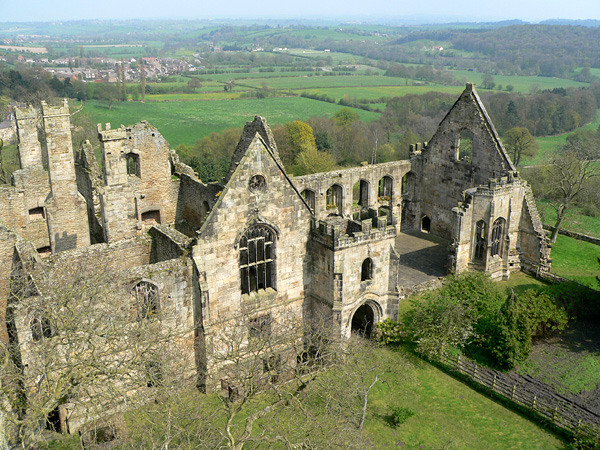
Wingfield Manor is a Grade I listed[1] ruined manor house left deserted since the 1770s, near the village of South Wingfield and some four miles (6.4 km) west of the town of Alfreton in the English county of Derbyshire. There is a working farm that forms part of the old manor.

Key Information

It is now in the care (but not ownership) of English Heritage, listed on Historic England's Heritage at Risk Register, and is not open currently to the public.[2][3] Derbyshire Historic Buildings Trust has expressed an interest in acquiring the site from its private owner.[4]

History

[edit]

Construction of the manor began in 1439 for Treasurer to Henry VI, Sir Ralph Cromwell, though the building was not completed until after his death when John Talbot, the second Earl of Shrewsbury, bought the property. His family maintained the manor within the property for nearly two hundred years.[5] After which, Parliament decreed that the manor be dismantled and allowed to fall into ruin, and parts were taken for building materials, leaving behind the present ruins.[5] It is also considered to house the first flushing toilet, built in 1596.[6]

Mary, Queen of Scots, at Wingfield

[edit]

The sixth Earl of Shrewsbury was entrusted with the care of Mary, Queen of Scots, when she was detained from 1569 onward, in his various houses around Derbyshire, Wingfield among them. In August 1569 the Earl was anxious to move Mary from Wingfield. He wanted to take her to Sheffield because Wingfield needed cleaning. There were over 240 people in residence and the manor "waxed unsavoury." At Sheffield, the Earl had two houses, Sheffield Castle and Sheffield Manor and could easily move the queen between them when cleaning was necessary.[7] Mary was still at Wingfield at the time of the Rebellion of the North in November 1569. The Earl of Shrewsbury heard of a plot to release Mary at that time. The Earl of Northumberland and his wife had come to stay nearby at Wentworth House. The alleged escape plan involved the Countess of Northumberland pretending to be a nurse and coming to attend Christine Hogg, the pregnant wife of the embroiderer Bastian Pagez. The Countess was "something like the queen in personage" and would take Mary's place while she escaped.[8][9]


Queen Elizabeth wrote to the Earl of Shrewsbury on 14 March 1570 giving permission for him to move Mary back to Wingfield because the water supply at Tutbury Castle was inadequate. The Earl had hoped to take Mary to Chatsworth House and also made preparations there.[10]

Mary was back at Wingfield in 1584 and Ralph Sadler described in October how the "castle" was guarded by soldiers armed with pistols, muskets and halberds, and the difficult terrain nearby which would deter escape. Sometimes Mary was allowed to walk in the Great Chamber for exercise, and Sadler's assistant John Somers reported her conversations to Francis Walsingham. Sadler wrote about the unsatisfactory conditions in November, when Mary was to move to Tutbury Castle. Mary's bedchamber at Wingfield was too close to the kitchens and the "smoke and scent of meat" from below, despite being the best lodging in the house.[11]

Anthony Babington, whose family lived at Dethick nearby, organised the abortive Babington Plot, a Recusant Catholic plot against Elizabeth I. The walnut tree in the north courtyard is reputed to have grown from a seed left when Anthony Babington smeared walnut juice over his face to disguise himself and enter the castle to see Mary, Queen of Scots. However, the tree is not old enough for this story to be true. Also, Babington did not meet Mary at Wingfield.

The Civil War

[edit]

At the time of the English Civil War (1642–48), the manor was in the hands of Philip Herbert, 4th Earl of Pembroke, a Parliament supporter. The manor was taken by the Royalists in 1643 and then, after a short siege (albeit interrupted by the Battle of Marston Moor), retaken by Parliament in August 1644, after several large siege engines had destroyed part of the western curtain wall. Wingfield Manor located in what was then a strategic position near a main north-south artery of the country and also a key east-west link at the southern end of the Pennines. It was partially demolished at the end of the Civil War on instructions from Parliament in order that it could never be used again for defensive purposes - not that it was built as a castle in the first place.

Along the curtain walls and on the towers can still be seen the damage caused by cannonballs. One in particular on the north wall, shows by its shape, the direction of fire, indicating the direction of the cannons used in the 1644 siege, four 32 pounders, borrowed for the occasion. Initially these cannon were positioned on the hill to the east, the site of an old Roman fort, but the distance was too great and the only damage incurred was to a half moon battery outside the main gate, which is overgrown but still visible. The guns were moved to the west, to manor top, and it was from here that the southern part of the west curtain wall was demolished, after which the Royalists surrendered. After the war the manor was deliberately ruined so it would never again be used for defence. The Great Hall of the manor was renovated some years later for Immanuel Halton, an astronomer. In the 18th Century it was abandoned (apart from the farmhouse in the centre) and then further damaged when stone was taken for building Wingfield Hall, in the valley below.

Current remains

[edit]

The remains include a usable tower, part of a greater tower that included, before the English Civil War, one of the earliest flushing systems in England. A cistern of water, positioned at the top of the tower, was emptied through the toilet area into the moat. The remains of the great hall, once one of the largest in the country, contains an oriel window, where light would once have shone through coloured glass and illuminated the high table. The undercroft below the great hall was used for the storage of wine, beer and food, and had stairs on each corner going up to the great hall. The kitchens were connected to the great hall by a passageway. The remains of two bread ovens can be seen, along with two large fireplaces. There is also a great stone barn, notable for the internal timbering; and the gate above the entrance to the north court contains a carved representation of moneybags, the symbol of the exchequer, Lord Cromwell.

See also

[edit]

References

[edit]
[edit]
Revisions and contributorsEdit on WikipediaRead on Wikipedia
from Grokipedia
Wingfield Manor is a Grade I listed ruined late medieval situated near the village of South Wingfield in , , originally constructed between 1439 and 1455 by Ralph, Lord Cromwell, Treasurer of England under Henry VI, as a fortified residence exemplifying 15th-century aristocratic opulence and defensive architecture. The manor's double-courtyard layout, featuring a , gatehouses, towers, and vaulted , represents one of the finest surviving examples of a mid-15th-century English , influencing subsequent designs at sites such as and . After Cromwell's death without heirs in 1456, the estate passed through various hands before being acquired by the Talbot family, Earls of , who held it for over two centuries. Notably, Wingfield served as a for during her English captivity, first in 1568–1569 and again in 1584–1585 under the custody of George Talbot, 6th Earl of Shrewsbury, from where conspirators including plotted her escape, contributing to the that precipitated her execution. During the , the manor was garrisoned for the Royalists, besieged by Parliamentarian forces in 1644, and subsequently slighted in 1646 to prevent further military use, marking the onset of its decline; partial occupation continued into the 18th century until abandonment in the 1770s. Today, the stands as a testament to and Tudor intrigue, though currently closed to visitors pending conservation due to structural instability.

Construction and Architectural Significance

Origins and Builder

Ralph, Lord Cromwell (c. 1393–1456), Treasurer of England under King Henry VI, acquired the site for Wingfield Manor in in 1439 and initiated its construction as a grand residence to reflect his accumulated wealth and political influence. As a high-ranking royal administrator who managed the king's finances, Cromwell invested in the project during a period of relative Lancastrian stability before the outbreak of the Wars of the Roses in 1455, using proceeds from his estates and offices to fund what became one of the most ambitious private fortified houses of the era. The chosen location near South Wingfield offered a strategically elevated position with oversight of surrounding valleys, facilitating estate oversight and providing natural defensibility without the urban constraints of . This rural setting aligned with Cromwell's broader landholdings, emphasizing agricultural productivity and isolation from court intrigues while maintaining accessibility to via established routes. Archaeological evidence from the site's upstanding remains confirms the mid-15th-century origins, with foundational phases tied directly to Cromwell's patronage rather than earlier medieval structures on the manor lands. Construction progressed through the 1440s but remained incomplete at Cromwell's death in 1456, likely due to his failing health and the scale of the endeavor, which exceeded typical projects in ambition and resource allocation. Heirs oversaw final phases, but the manor's inception as a underscores Cromwell's role in pioneering large-scale, courtyard-planned residences for non-royal elites, distinct from purely military fortifications.

Design and Key Features

Wingfield Manor employs a double- layout typical of high-status medieval great houses, with a smaller inner courtyard to the north housing principal family quarters and a larger outer courtyard to the south accommodating service buildings and staff areas. The design integrates defensive features, including gatehouses with square turrets, buttressed walls, and an encircling bank and ditch adapted from the . Constructed primarily from local stone, the manor showcases detailing and elements, such as traceried windows, emphasizing prestige through architectural sophistication rather than solely . The north range features a prominent undercrofted , with a vaulted functioning as a servants' hall below the main chamber, which includes a traceried and a two-storey entrance porch. At the southwest corner stands a five-storey High Tower rising approximately 22 metres, combining residential spaces with defensive attributes like garderobes and integrated fireplaces. Archaeological surveys from 1978-1980 have identified underlying 14th-century structures and confirmed the manor's evolution across building phases, supporting the interpretation of its layered defensive and domestic functions. These elements reflect structural innovations prioritizing status display, such as the elevated hall tower integration, over pure military utility.

Historical Ownership and Early Use

Ralph Cromwell's Tenure

Ralph Cromwell acquired the site of Wingfield Manor following a protracted legal dispute over land ownership and commenced its construction as a fortified residence around 1439, completing major phases by the early 1450s. The manor functioned primarily as a power base for Cromwell, who leveraged it as an administrative center to manage his extensive estates, including the holding of manorial courts in the to dispense and oversee local tenancies. Its elevated position and surrounding deer parks also positioned it as a lodge, facilitating leisure activities integral to noble patronage networks while enabling surveillance of regional economic outputs such as and estate revenues. Cromwell's tenure exemplified the causal links between personal political advancement and fortified estate-building under Lancastrian rule, as his appointments—including Treasurer of England from 1433 to 1443—stemmed from demonstrated loyalty to Henry VI, evidenced by his service on the and military contributions from Agincourt onward. The manor's grandeur hosted royal visits, notably by Henry VI, who utilized its accommodations, thereby integrating Wingfield into crown affinity circuits and amplifying Cromwell's influence amid factional court dynamics. This role underscored the estate's utility in fostering alliances, with the great hall's raised dais accommodating both ceremonial hospitality and pragmatic governance over manorial obligations. Cromwell died childless on 4 January 1456 at the manor itself, leaving no direct from his marriage to , which triggered the of Wingfield and associated lands to under prevailing feudal tenure laws requiring reversion absent legitimate succession. This outcome, rather than any romanticized tale, illustrates the precariousness of noble landholding dependent on royal grant and progeny, as Cromwell's will directed resources toward pious foundations like College rather than perpetuating familial control of the estate.

Post-Cromwell Ownership

Following the death of Ralph, Lord Cromwell, in 1456 without direct heirs, Wingfield Manor was sold to John Talbot, the second , who integrated it into his family's estates. The , elevated to earldom in 1442, maintained the property as one of their principal seats alongside holdings like Manor, employing it for residential and administrative purposes amid their roles in regional governance and national affairs. Ownership remained with the Earls of Shrewsbury through successive generations, passing via despite the family's involvement in costly military engagements and court expenditures post-Wars of the Roses, which strained but did not immediately disrupt estate management. By the late , under George Talbot, the sixth , the manor served as a functional gentry-style residence integrated with surrounding agricultural lands, evidenced by its role in estate oversight rather than primary palatial display. Upon the death of Gilbert Talbot, the seventh , in February 1616/17, who left no surviving legitimate male heirs, the manor escheated through claims and passed to the Earls of Pembroke via marital ties to the Talbot line, marking the transition from Shrewsbury control after approximately 160 years. This shift reflected broader patterns of noble estate consolidation amid fiscal pressures from disputes and reduced feudal revenues, though the property continued as a secondary holding without major documented repairs or leases altering its core use during this period.

Tudor Era Imprisonments

Confinement of Mary, Queen of Scots

Mary, Queen of Scots, was first confined at Wingfield Manor from February 1569 to July 1569, under the custodianship of George Talbot, 6th Earl of Shrewsbury, following her transfer from the draftier Tutbury Castle to afford her greater comfort during winter conditions. This period coincided with heightened English concerns over potential Catholic uprisings, prompting the relocation to the more secure and spacious manor, where Shrewsbury maintained a household for Mary including servants, physicians, and guards numbering around 200 to prevent escapes. Annual upkeep costs exceeded £1,000, largely borne by Shrewsbury, covering provisions, repairs, and security measures such as patrolled walls and restricted visitor access, though Mary retained privileges like hawking and limited correspondence under surveillance. Subsequent shorter confinements occurred in 1583–1584 and 1584–1585, driven by intelligence reports of assassination plots against Elizabeth I and fears of Mary's involvement in Catholic intrigues, including early contacts with figures like Anthony Babington, whom she met at the manor during these stays. These episodes featured intensified precautions, with armed soldiers equipped with pistols and muskets stationed around the site, as noted by custodian Ralph Sadler in October 1584, reflecting escalating scrutiny amid Throckmorton Plot fallout and premonitions of the 1586 Babington Plot. Wingfield's robust fortifications, including its high walls and moated approaches, deterred escape attempts, though Mary's agents probed weaknesses; no successful breaches occurred, but the site's role in hosting plot-related communications contributed to the evidentiary chain leading to her 1586 trial and 1587 execution. These imprisonments strained Anglo-Scottish relations by underscoring Elizabeth's regime's reliance on domestic custody over , fueling Scottish resentment and Catholic portraying Mary as a victim, while empirically documenting her persistent intrigue through intercepted letters and guard logs that justified tightened controls. Shrewsbury's accounts reveal logistical burdens, including £4,000 in cumulative debts from 1569 onward, highlighting the fiscal and administrative toll of containment without resolution. The manor's repeated use as a "gilded " thus exemplified causal pressures toward Mary's elimination, as repeated lapses—like lax oversight during her 1584 stay—amplified perceptions of her as an ongoing threat.

English Civil War and Destruction

Royalist Defense and Parliamentary Siege

During the , Wingfield Manor was initially held by Parliamentarian forces before being captured by s under , Marquess of Newcastle, following a twelve-day that concluded on 19 December 1643. The s established a of up to 200 men there, transforming the fortified manor into a raiding post and supply depot from which mounted troops conducted sorties against Parliamentary positions in . These operations involved documented skirmishes, leveraging the manor's elevated position and defensive architecture to harass enemy supply lines and local garrisons, though specific casualty figures from these engagements remain sparse in contemporary records. Parliamentary forces, led by Sir John Gell, responded with a in mid-1644, recapturing the manor in July after sustained pressure that compelled the garrison to surrender. The site briefly served Parliamentary interests before strategic considerations prompted its ; in June 1646, Parliament issued orders to dismantle key fortifications to deny its potential reuse by Royalists amid the war's shifting fortunes. Sir John Gell oversaw the , which focused on roofs and outer walls through targeted blasting and manual destruction, rendering the structure militarily untenable without excessive loss of life—accounts indicate minimal fatalities, prioritizing neutralization over punitive measures. Archaeological evidence, including musket balls and cannon damage remnants, corroborates the extent of structural harm, underscoring the operation's efficiency in applying pragmatic military logic to secure regional control.

Decline, Reuse, and Preservation Efforts

Post-War Decline and Modern Uses

By the , Wingfield Manor had been abandoned as a residence and repurposed for agricultural functions, serving as barns and sheds integrated into the surrounding operations. Throughout the 18th and 19th centuries, the structure underwent modifications to support farming activities, such as the addition of utilitarian features for storage and management, prioritizing economic utility over architectural integrity. During , the ruins functioned as a strategic munitions storage site, leveraging the site's secluded and defensible location for wartime logistics. Subsequent deterioration stemmed from chronic exposure to weather and minimal maintenance, attributable to the cost-benefit realities of agricultural tenancy rather than any targeted vandalism or ideological rejection of the past.

20th and 21st Century Status

Wingfield Manor was designated a on 30 November 1926 and holds Grade I status for its ruins. The outer portions of the site entered state guardianship in 1960, with assuming management responsibilities, while the central area remains under private ownership integrated into a working farm. Public access to the manor was suspended around 2016 owing to imminent risks from unstable and potential collapses, as identified in structural surveys. The site subsequently appeared on Historic England's Heritage at Risk Register, highlighting ongoing deterioration from vegetation encroachment and weathering despite periodic interventions. By 2025, preservation efforts escalated amid empirical evidence of accelerating decay, prompting the Historic Buildings Trust to advocate for immediate stabilization to avert irreversible loss. A parliamentary petition initiated in May by MP Linsey Farnsworth, supported by the Trust, amassed over 3,000 signatures by July, culminating in debates on 22 July and 16 September urging government intervention for repairs and restored public access. Private owners signaled intentions to sell the property, citing unsustainable upkeep expenses, which described as prohibitive for comprehensive conservation despite £100,000+ invested in maintenance since 2015. Stabilization demands, informed by surveys revealing high-risk elements like the High Tower, underscore a cost-benefit imbalance: initial outlays for safety consolidation could enable revenue from the site's draw as a Tudor-era , yet bureaucratic shifts—from state to charitable oversight—have protracted resolution, with heritage advocates decrying delayed action despite statutory duties. from comparable ruin preservations indicate multimillion-pound investments yield long-term viability through visitor fees, contrasting current inaccessibility that forfeits economic returns while risks compound.

References

Add your contribution
Related Hubs
User Avatar
No comments yet.