
Wolbachia
View on Wikipedia
| Wolbachia | |
|---|---|

| |
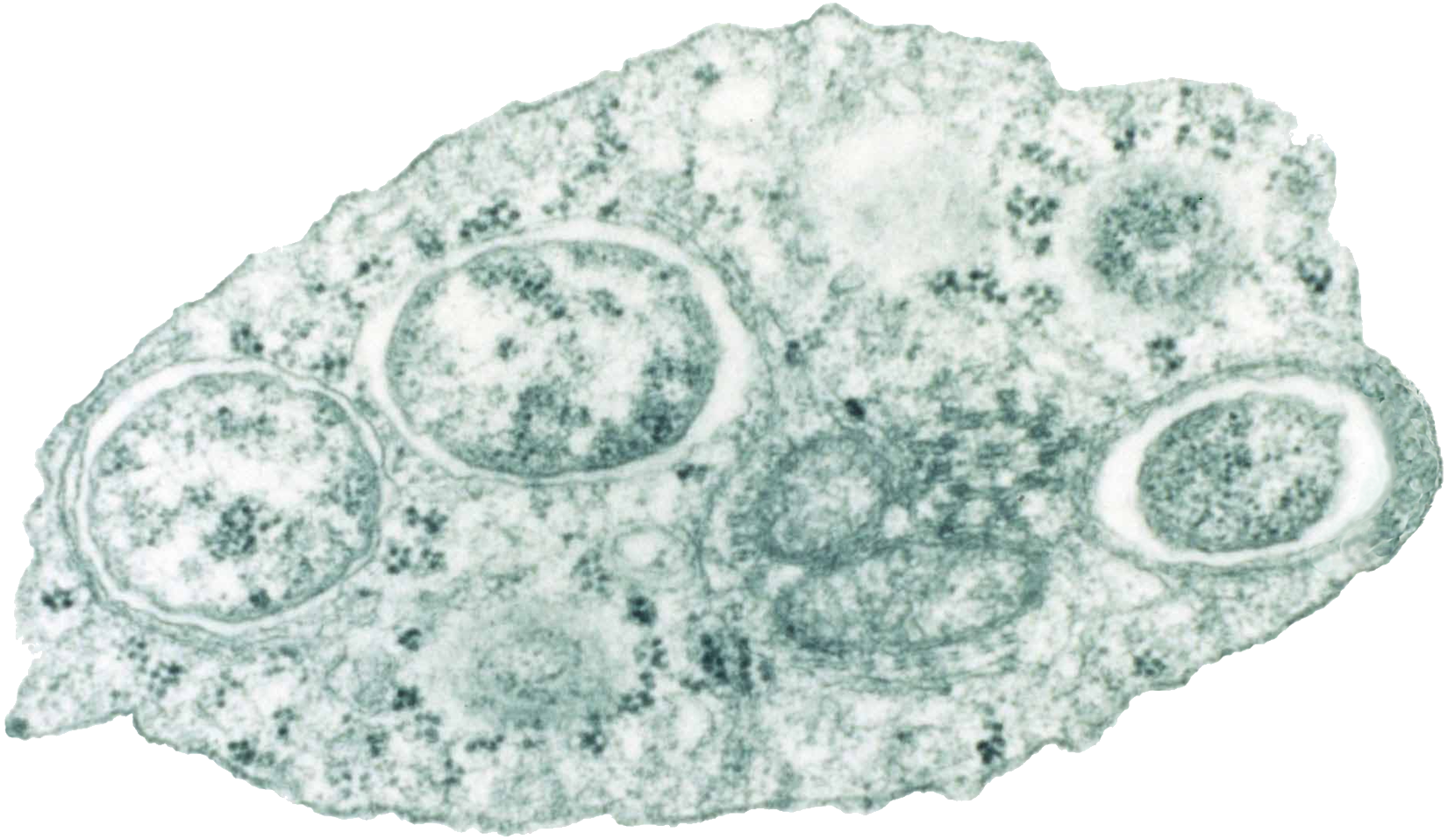
| Transmission electron micrograph of Wolbachia within an insect cell Credit:Public Library of Science / Scott O'Neill | |
Scientific classification 
| |
| Domain: | Bacteria |
| Kingdom: | Pseudomonadati |
| Phylum: | Pseudomonadota |
| Class: | Alphaproteobacteria |
| Subclass: | "Rickettsidae" |
| Order: | Rickettsiales |
| Family: | Ehrlichiaceae |
| Genus: | Wolbachia Hertig 1936 (Approved Lists 1980) |
| Species | |
| |
Wolbachia is a genus of gram-negative bacteria infecting many species of arthropods and filarial nematodes.[1][2] The symbiotic relationship ranges from parasitism to obligate mutualism. It is one of the most common parasitic microbes of arthropods, and is possibly the most widespread reproductive parasite bacterium in the biosphere.[3] Its interactions with hosts are complex and highly diverse across different host species. Some host species cannot reproduce, or even survive, without Wolbachia colonisation. One study concluded that more than 16% of neotropical insect species carry bacteria of this genus,[4] and as many as 25 to 70% of all insect species are estimated to be potential hosts.[5]
History
[edit]The first organism classified as Wolbachia was discovered in 1924 by Marshall Hertig and Simeon Burt Wolbach in the common house mosquito. They described it as "a somewhat pleomorphic, rodlike, Gram-negative, intracellular organism [that] apparently infects only the ovaries and testes".[6] Hertig formally described the species in 1936, and proposed both the generic and specific names: Wolbachia pipientis.[7]
Research on Wolbachia intensified after 1971, when Janice Yen and A. Ralph Barr of UCLA discovered that Culex mosquito eggs were killed by a cytoplasmic incompatibility when the sperm of Wolbachia-infected males fertilized infection-free eggs.[8][9]
Since, a large number of bacteria with close phylogenetic affinity to the originally detected W. pipientis have been discovered in a variety of hosts spanning over the Arthropoda and Nematoda phyla. The taxonomic classification of the various discovered groups remains a subject of debate, with no consensus on whether these groups of Wolbachia pipientis-like organisms should be categorized as the same or different species. Therefore, the strains are collectively referred to as Wolbachia, with the various groups of phylogenetically closely related strains designated as supergroups rather than distinct species. In general, each supergroup corresponds to a specific host or group of hosts.[10] The genus Wolbachia is of considerable interest today due to its ubiquitous distribution, its many different evolutionary interactions, and its potential use as a biocontrol agent.
Phylogenetic studies have shown that the closest relatives to Wolbachia are the genera Francisella[11][12][13][14] and Bartonella.[15][16][17] Unlike Wolbachia, which needs a host cell to multiply, relatives belonging to these genera can be cultured on agar plates.[18][17]
Method of sexual differentiation in hosts
[edit]Wolbachia can infect many different types of organs, but are most notable for the infections of the testes and ovaries of their hosts altering the reproduction abilities of these. Wolbachia species are ubiquitous in mature eggs, but not mature sperm. Only infected females, therefore, pass the infection on to their offspring. Wolbachia bacteria maximize their spread by altering the reproductive capabilities of their hosts, in favour for the infected females. Several different phenotypes have been observed, including:
- Male killing occurs when infected males die during larval development, which increases the rate of born, infected females.[19]
- Feminization results in infected males that develop as females or infertile pseudofemales. This is especially prevalent in Lepidoptera species such as the adzuki bean borer (Ostrinia scapulalis).[20]
- Parthenogenesis is reproduction of infected females without males. Some scientists have suggested that parthenogenesis may always be attributable to the effects of Wolbachia,[21] though this is not the case for the marbled crayfish.[22] An example of parthenogenesis induced by presence of Wolbachia are some species within the Trichogramma parasitoid wasp genus,[23] which have evolved to procreate without males due to the presence of Wolbachia. Males are rare in this genus of wasp, possibly because many have been killed by that same strain of Wolbachia.[24]
- Cytoplasmic incompatibility is the inability of Wolbachia-infected males to successfully reproduce with uninfected females or females infected with another Wolbachia strain. This reduces the reproductive success of those uninfected females and therefore promotes the infecting strain. In the cytoplasmic incompatibility mechanism, Wolbachia interferes with the parental chromosomes during the first mitotic divisions to the extent that they can no longer divide in synchrony.[25]
Effects of sexual differentiation in hosts
[edit]Several host species, such as those within the genus Trichogramma, are so dependent on sexual differentiation of Wolbachia that they are unable to reproduce effectively without the bacteria in their bodies, and some might even be unable to survive uninfected.[26]
One study on infected woodlice showed the broods of infected organisms had a higher proportion of females than their uninfected counterparts.[27]
Wolbachia, especially Wolbachia-caused cytoplasmic incompatibility, may be important in promoting speciation.[28][29][30] Wolbachia strains that distort the sex ratio may alter their host's pattern of sexual selection in nature,[31][32] and also engender strong selection to prevent their action, leading to some of the fastest examples of natural selection in natural populations.[33]
The male killing and feminization effects of Wolbachia infections can also lead to speciation in their hosts. For example, populations of the pill woodlouse, Armadillidium vulgare which are exposed to the feminizing effects of Wolbachia, have been known to lose their female-determining chromosome.[34] In these cases, only the presence of Wolbachia can cause an individual to develop into a female.[34] Cryptic species of ground wētā (Hemiandrus maculifrons complex) are host to different lineages of Wolbachia which might explain their speciation without ecological or geographical separation.[35][36]
Effect on aromatase
[edit]The enzyme aromatase is found to mediate sex-change in many species of fish. Wolbachia can affect the activity of aromatase in developing fish embryos.[37]
Mechanism of host transfer
[edit]Step 1: Physical transfer
[edit]Predator-prey interactions
[edit]Wolbachia may transfer from prey to predator through the digestive system. To do so, Wolbachia needs to first survive through the lumen secretion and then enter the host tissue through the gut epithelium.[38] This route does not seem to occur frequently due to little evidence.[39]
Host–parasitoid/parasite interactions
[edit]This may be one of the most common routes of Wolbachia host shifts. Compared to predator-prey interactions, the physical association between the host and parasites typically lasts longer, occurs at various developmental stages, and enables Wolbachia to directly contact various tissues.
Since this interaction may expose both sides to microbial exchange, one strategy for understanding the direction of transfer is to assess Wolbachia's presence in close relatives on both sides, as the donor side generally has a larger diversity of infection.[40]
One parasitoid species can infect multiple shared hosts, and one host species can infect multiple parasitoids. For instance, parthenogenesis-inducing Wolbachia can spread between Trichogramma parasitoid wasps sharing host eggs.[41]
Parasites can also serve as a vector between infected and uninfected hosts without being infected. When the mouthparts and ovipositors of aphelinid parasitoid wasps become contaminated through feeding Wolbachia-infected Bemisia tabaci, it can infect the next host.[42]
Shared plant and other food sources
[edit]This route applies to microbes that can survive either within or on the surface of the food. Experiments demonstrated that the Wolbachia wAlbB strain can survive extracellularly for up to 7 days,[43] and up to 50 days for some strains in cotton leaf phloem vessels.[44]
Plants are one of the best platforms for this route. By physical contact between arthropod mouthparts and plant tissue, the Wolbachia inhabiting the salivary glands of some insects may be transferred to the plants.[45] As a result, arthropod species feeding on the same plants may share common Wolbachia strains.
Other insect food sources may also mediate Wolbachia horizontal transfer, such as the sharing of dung patches between two Malagasy dung beetle species.[46]
Step 2: Survival and proliferation in the new host
[edit]The pathogen-associated molecular patterns (PAMPs) in the bacteria, such as peptidoglycan, can activate the host's innate immune responses.[47][48] In response, some Wolbachia strains have a unique functional peptidoglycan amidase (AmiDwol) that cleaves its bacterial cell wall so that it can escape from immune responses.[49][50] Besides the peptidoglycans, cell-to-cell movements of Wolbachia can also cause oxidative stress to the host and trigger the host's immune response.[51] Therefore, Wolbachia has a triple-layer vacuole that acts as a mechanical shield to protect it from cellular immune responses.[38]
Step 3: Vertical transmission
[edit]Vertical transmission requires Wolbachia to reach germ line cells and maintain in the zygote. Wolbachia may initially occupy somatic stem cells as a stable reservoir[52] and then use the host's vitellogenin transovarial transportation system to enter the oocyte.[53] Once Wolbachia enter the zygote, they need to reach important host tissues without disrupting the embryo's development. This can be achieved using the host cytoskeleton, by bundling Wolbachia protein WD0830 to host actin filaments. They can also increase the division rate of germ-line stem cells to localize and increase their titer.[54][55][56] Under natural conditions, successful vertical transmission of Wolbachia is challenging.
Step 4: Spread within the host population
[edit]Invasion of a new population likely stems from specific phenotypic effects, including reproductive manipulations and/or providing direct fitness benefits to their female hosts.[57][58][59][60]
Upon transferring into a new host, Wolbachia may retain its original phenotypic effects, induce a different phenotype, or have no detectable effect. For instance, a strain that induces male killing in the moth Cadra cautella induced cytoplasmic incompatibility in a novel moth host Ephestia kuehniella.[61]
Fitness advantages by Wolbachia infections
[edit]Wolbachia infection has been linked to viral resistance in Drosophila melanogaster, Drosophila simulans, and mosquito species. Flies, including mosquitoes,[62] infected with the bacteria are more resistant to RNA viruses such as Drosophila C virus, norovirus, flock house virus, cricket paralysis virus, chikungunya virus, and West Nile virus.[63][64][65]
In the common house mosquito, higher levels of Wolbachia were correlated with more insecticide resistance.[66]
In leafminers of the species Phyllonorycter blancardella, Wolbachia bacteria help their hosts produce green islands on yellowing tree leaves, that is, small areas of leaf remaining fresh, allowing the larvae to continue feeding while growing to their adult forms. Larvae treated with tetracycline, which kills Wolbachia, lose this ability and subsequently only 13% emerge successfully as adult moths.[67]
Muscidifurax uniraptor, a parasitoid wasp, also benefits from hosting Wolbachia bacteria.[68]
In the parasitic filarial nematode species responsible for elephantiasis, such as Brugia malayi and Wuchereria bancrofti, Wolbachia has become an obligate endosymbiont and provides the host with chemicals necessary for its reproduction and survival.[69] Elimination of the Wolbachia symbionts through antibiotic treatment therefore prevents reproduction of the nematode, and eventually results in its premature death.
Some Wolbachia species that infect arthropods also provide some metabolic provisioning to their hosts. In Drosophila melanogaster, Wolbachia is found to mediate iron metabolism under nutritional stress[70] and in Cimex lectularius, the Wolbachia strain cCle helps the host to synthesize B vitamins.[71]
Some Wolbachia strains have increased their prevalence by increasing their hosts' fecundity. Wolbachia strains captured from 1988 in southern California still induce a fecundity deficit, but nowadays the fecundity deficit has been replaced in the wild with a fecundity advantage such that infected Drosophila simulans produces more offspring than the uninfected ones.[72]
Life-history consequences of Wolbachia infection
[edit]Wolbachia often manipulates host reproduction and life-history in a way that favours its own propagation. In the Pharaoh ant, Wolbachia infection correlates with increased colony-level production of reproductives (i.e., greater reproductive investment), and earlier onset of reproductive production (i.e., shorter life-cycle). Infected colonies also seem to grow more rapidly.[73] There is substantial evidence that the presence of Wolbachia that induce parthenogenesis have put pressure on species to reproduce primarily or entirely this way.[74]
Additionally, Wolbachia has been seen to decrease the lifespan of Aedes aegypti, carriers of mosquito-borne diseases, decreasing their efficacy of pathogen transmission because older mosquitoes are more likely to have become carriers of one of those diseases.[75] This has been exploited as a method for pest control.
Genomics
[edit]The first Wolbachia genome to be determined was that of strain wMel, which infects D. melanogaster fruit flies.[76] This genome was sequenced at The Institute for Genomic Research in a collaboration between Jonathan Eisen and Scott O'Neill. The second Wolbachia genome to be determined was of strain wBm, which infects Brugia malayi nematodes .[69] Since the development and release of high-throughput sequencing technologies in the mid-2000s, the number of published Wolbachia genomes has grown significantly, driven by both the decreased cost of sequencing and the expanding interest in studying this bacterium.
The genetic background to the reproductive parasitism has been extensively studied in different host systems. A key factor for the alteration of host reproduction is the presence of the bacteriophage WO,[77] which harbours the CI inducing genes cifA and cifB, contributing to the phenotypic expression of altered reproductive success observed in infected hosts.[78][79]
Horizontal gene transfer
[edit]Comparative sequence analyses of bacteriophage WO[80] offer some of the most compelling examples of large-scale horizontal gene transfer between Wolbachia coinfections in the same host.[81] It is the first bacteriophage implicated in frequent lateral transfer between the genomes of bacterial endosymbionts. Gene transfer by bacteriophages could drive significant evolutionary change in the genomes of intracellular bacteria that were previously considered highly stable or prone to loss of genes over time.[81]
Wolbachia also transfers genes to the host. A nearly complete copy of the Wolbachia genome sequence was found within the genome sequence of the fruit fly Drosophila ananassae and large segments were found in seven other Drosophila species.[82]
In an application of DNA barcoding to the identification of species of Protocalliphora flies, several distinct morphospecies had identical cytochrome c oxidase I gene sequences, most likely through horizontal gene transfer (HGT) by Wolbachia species as they jump across host species.[83] As a result, Wolbachia can cause misleading results in molecular cladistical analyses.[84] It is estimated that between 20 and 50 percent of insect species have evidence of HGT from Wolbachia—passing from microbes to animal (i.e. insects).[85]
Small RNA
[edit]The small non-coding RNAs WsnRNA-46 and WsnRNA-59 in Wolbachia were detected in Aedes aegypti mosquitoes and Drosophila melanogaster. The small RNAs (sRNAs) may regulate bacterial and host genes.[86] Highly conserved intragenic region sRNA called ncrwmel02 was also identified in Wolbachia pipientis. It is expressed in four different strains in a regulated pattern that differs according to the sex of the host and the tissue localisation. This suggested that the sRNA may play important roles in the biology of Wolbachia.[87]
Relation to human-related infections
[edit]Role in parasites
[edit]Outside of insects, Wolbachia infects a variety of isopod species, spiders, mites, and many species of filarial nematodes (a type of parasitic worm), including those causing onchocerciasis (river blindness) and elephantiasis in humans, as well as heartworms in dogs. Not only are these disease-causing filarial worms infected with Wolbachia, but Wolbachia also seems to play an inordinate role in these diseases.
A large part of the pathogenicity of filarial nematodes is due to host immune response toward their Wolbachia. Elimination of Wolbachia from filarial nematodes generally results in either death or sterility of the nematode.[88] Consequently, current strategies for control of filarial nematode diseases include elimination of their symbiotic Wolbachia via the simple doxycycline antibiotic, rather than directly killing the nematode with often more toxic antinematode medications.[89]
Disease prevention
[edit]
Naturally existing strains of Wolbachia have been shown to be a route for vector control strategies because of their presence in arthropod populations, such as mosquitoes.[90][91] Due to the unique traits of Wolbachia that cause cytoplasmic incompatibility, some strains are useful to humans as a promoter of genetic drive within an insect population. Wolbachia-infected females are able to produce offspring with uninfected and infected males; however, uninfected females are only able to produce viable offspring with uninfected males. This gives infected females a reproductive advantage that is greater the higher the frequency of Wolbachia in the population. Computational models predict that introducing Wolbachia strains into natural populations will reduce pathogen transmission and reduce overall disease burden.[92] An example includes a life-shortening Wolbachia that can be used to control dengue virus and malaria by eliminating the older insects that contain more parasites. Promoting the survival and reproduction of younger insects lessens selection pressure for evolution of resistance.[93][94]

In addition, some Wolbachia strains are able to directly reduce viral replication inside the insect. For dengue they include wAllbB and wMelPop with Aedes aegypti, wMel with Aedes albopictus[95] and Aedes aegypti.[96]
Wolbachia has also been identified to inhibit replication of chikungunya virus (CHIKV) in A. aegypti. The wMel strain of Wolbachia pipientis significantly reduced infection and dissemination rates of CHIKV in mosquitoes, compared to Wolbachia uninfected controls and the same phenomenon was observed in yellow fever virus infection converting this bacterium in an excellent promise for YFV and CHIKV suppression.[97]
Wolbachia also inhibits the secretion of West Nile virus (WNV) in cell line Aag2 derived from A. aegypti cells. The mechanism is somewhat novel, as the bacteria actually enhances the production of viral genomic RNA in the cell line Wolbachia. Also, the antiviral effect in intrathoracically infected mosquitoes depends on the strain of Wolbachia, and the replication of the virus in orally fed mosquitoes was completely inhibited in wMelPop strain of Wolbachia.[98]
The effect of Wolbachia infection on virus replication in insect hosts is complex and depends on the Wolbachia strain and virus species.[99] While several studies have indicated consistent refractory phenotypes of Wolbachia infection on positive-sense RNA viruses in Drosophila melanogaster,[100][101] the yellow fever mosquito Aedes aegypti[102] and the Asian tiger mosquito Aedes albopictus,[103][104] this effect is not seen in DNA virus infection[101] and in some cases Wolbachia infection has been associated or shown to increase single stranded DNA[105] and double-stranded DNA virus infection.[106] There is also currently no evidence that Wolbachia infection restricts any tested negative-sense RNA viruses[107][108][109][110] indicating Wolbachia would be unsuitable for restriction of negative-sense RNA arthropod borne viruses.
Wolbachia infection can also increase mosquito resistance to malaria, as shown in Anopheles stephensi where the wAlbB strain of Wolbachia hindered the lifecycle of Plasmodium falciparum.[111]
However, Wolbachia infections can also enhance pathogen transmission. Wolbachia has enhanced multiple arboviruses in Culex tarsalis mosquitoes.[112] In another study, West Nile virus (WNV) infection rate was significantly higher in Wolbachia (strain wAlbB)-infected C. tarsalis compared to controls.[113]
Wolbachia may induce reactive oxygen species–dependent activation of the Toll (gene family) pathway, which is essential for activation of antimicrobial peptides, defensins, and cecropins that help to inhibit virus proliferation.[114] Conversely, certain strains actually dampen the pathway, leading to higher replication of viruses. One example is with strain wAlbB in Culex tarsalis, where infected mosquitoes actually carried the West Nile virus (WNV) more frequently. This is because wAlbB inhibits REL1, an activator of the antiviral Toll immune pathway. As a result, careful studies of the Wolbachia strain and ecological consequences must be done before releasing artificially-infected mosquitoes in the environment.[113]
Techniques and deployments
[edit]Strain wMel, mixed-sex
[edit]The World Mosquito Program (WMP) uses Wolbachia strain wMel to infect Aedes mosquitos. The mixed-sex mosquitos are intended to infect the local population with wMel, giving them transmission resistance.[115]
In 2014, WMP released infected mosquitos in Townsville, an Australia city with 187,000 inhabitants plagued by dengue. For four years after introduction, no cases of dengue were reported.[116] Trials in much smaller areas had been carried out, but a larger area had not been tested. No environmental ill-effects were reported. The cost was A$15 per inhabitant, but it was hoped that it could be reduced to US$1 in poorer countries with lower labor costs.[117]
In 2016, WMP scientist Scott Ritchie proposed using wMel mosquitos to combat the spread of the Zika virus.[118] A study reported that Wolbachia wMel has the ability to block Zika in Brazil.[119] In October 2016, it was announced that US$18 million in funding was being allocated for the use of Wolbachia-infected mosquitoes to fight Zika and dengue viruses. Deployment was slated for early 2017 in Colombia and Brazil.[120]
Between 2016 and 2020, WMP conducted its first randomized controlled trial in Yogyakarta, an Indonesian city of about 400,000 inhabitants. In August 2020, the trial's Indonesian lead scientist Adi Utarini announced that the trial showed a 77% reduction in dengue cases compared to the control areas. This trial was the "strongest evidence yet" for the technique.[121][122]
In 2017–2019, WMP released mosquitos in Niterói, Brazil.[123]
In March 2023, Brazil's Oswaldo Cruz Foundation signed an agreement with WMP to provide funds for a large "mosquito factory" producing infected insects.[124]
Male incompatibility
[edit]Another method to use Wolbachia in mosquitos exploits the cytoplasmic incompatibility between infected males and uninfected females. If an uninfected female mates with an infected male, her eggs become infertile. With enough infected males released, the mosquito population would be reduced temporarily.[125]
Verily, the life sciences arm of Google's parent company Alphabet Inc., uses this method. In July 2017, it announced a plan to release about 20 million Wolbachia-infected male Aedes aegypti mosquitoes in Fresno, California, in an attempt to combat the Zika virus.[125][126] Singapore's National Environment Agency has teamed up with Verily to come up with an advanced, more efficient way to release male Wolbachia mosquitoes for Phase 2 of its study to suppress the urban Aedes aegypti mosquito population and fight dengue.[127]
On November 3, 2017, the US Environmental Protection Agency (EPA) registered Mosquito Mate, Inc. to release Wolbachia strain "ZAP"-infected male mosquitoes in 20 US states and the District of Columbia.[128]
See also
[edit]- Intragenomic conflict
- Quorum sensing
- Delftia tsuruhatensis a bacterium that naturally prevent malaria.
- Serratia a genus of bacteria that can be genetically modified to prevent malaria.
References
[edit]- ^ "Genome Sequence of the Intracellular Bacterium Wolbachia". PLOS Biology. 2 (3) e76. March 2004. doi:10.1371/journal.pbio.0020076. PMC 368170.
- ^ Taylor MJ, Bordenstein SR, Slatko B (November 2018). "Microbe Profile: Wolbachia: a sex selector, a viral protector and a target to treat filarial nematodes". Microbiology. 164 (11): 1345–1347. doi:10.1099/mic.0.000724. PMC 7008210. PMID 30311871.
- ^ Duron O, Bouchon D, Boutin S, Bellamy L, Zhou L, Engelstädter J, et al. (June 2008). "The diversity of reproductive parasites among arthropods: Wolbachia do not walk alone". BMC Biology. 6 (1) 27. doi:10.1186/1741-7007-6-27. PMC 2492848. PMID 18577218.
- ^ Werren JH, Windsor D, Guo LR (1995). "Distribution of Wolbachia among neotropical arthropods". Proceedings of the Royal Society B. 262 (1364): 197–204. Bibcode:1995RSPSB.262..197W. doi:10.1098/rspb.1995.0196. S2CID 86540721.
- ^ Kozek WJ, Rao RU (2007). "The Discovery of Wolbachia in Arthropods and Nematodes – A Historical Perspective". Wolbachia: A Bug's Life in another Bug. Issues in Infectious Diseases. Vol. 5. pp. 1–14. doi:10.1159/000104228. ISBN 978-3-8055-8180-6.
- ^ Hertig M, Wolbach SB (March 1924). "Studies on Rickettsia-Like Micro-Organisms in Insects". The Journal of Medical Research. 44 (3): 329–374.7. PMC 2041761. PMID 19972605.
- ^ Hertig M (October 1936). "The Rickettsia, Wolbachia pipientis (gen. et sp. n.)". Parasitology. 28 (4): 453–486. doi:10.1017/S0031182000022666. S2CID 85793361.
- ^ Yen JH, Barr AR (August 1971). "New hypothesis of the cause of cytoplasmic incompatibility in Culex pipiens L". Nature. 232 (5313): 657–658. Bibcode:1971Natur.232..657Y. doi:10.1038/232657a0. PMID 4937405. S2CID 4146003.
- ^ Bourtzis K, Miller TA (2003). "14: Insect pest control using Wolbachia and/or radiation". In Bourtzis K, Miller TA (eds.). Insect Symbiosis. Taylor & Francis. p. 230. ISBN 978-0-8493-4194-6.
- ^ Lo N, Paraskevopoulos C, Bourtzis K, O'Neill SL, Werren JH, Bordenstein SR, et al. (2007). "Taxonomic status of the intracellular bacterium Wolbachia pipientis". International Journal of Systematic and Evolutionary Microbiology. 57 (3): 654–657. doi:10.1099/ijs.0.64515-0. ISSN 1466-5034.
- ^ Forsman M, Sandström G, Sjöstedt A (January 1994). "Analysis of 16S ribosomal DNA sequences of Francisella strains and utilization for determination of the phylogeny of the genus and for identification of strains by PCR". International Journal of Systematic Bacteriology. 44 (1): 38–46. doi:10.1099/00207713-44-1-38. PMID 8123561.
- ^ Noda H, Munderloh UG, Kurtti TJ (October 1997). "Endosymbionts of ticks and their relationship to Wolbachia spp. and tick-borne pathogens of humans and animals". Applied and Environmental Microbiology. 63 (10): 3926–3932. Bibcode:1997ApEnM..63.3926N. doi:10.1128/AEM.63.10.3926-3932.1997. PMC 168704. PMID 9327557.
- ^ Niebylski ML, Peacock MG, Fischer ER, Porcella SF, Schwan TG (October 1997). "Characterization of an endosymbiont infecting wood ticks, Dermacentor andersoni, as a member of the genus Francisella". Applied and Environmental Microbiology. 63 (10): 3933–3940. Bibcode:1997ApEnM..63.3933N. doi:10.1128/AEM.63.10.3933-3940.1997. PMC 168705. PMID 9327558.
- ^ Larson MA, Nalbantoglu U, Sayood K, Zentz EB, Cer RZ, Iwen PC, et al. (March 2016). "Reclassification of Wolbachia persica as Francisella persica comb. nov. and emended description of the family Francisellaceae". International Journal of Systematic and Evolutionary Microbiology. 66 (3): 1200–1205. doi:10.1099/ijsem.0.000855. PMID 26747442.
- ^ Dumler JS, Barbet AF, Bekker CP, Dasch GA, Palmer GH, Ray SC, et al. (November 2001). "Reorganization of genera in the families Rickettsiaceae and Anaplasmataceae in the order Rickettsiales: unification of some species of Ehrlichia with Anaplasma, Cowdria with Ehrlichia and Ehrlichia with Neorickettsia, descriptions of six new species combinations and designation of Ehrlichia equi and 'HGE agent' as subjective synonyms of Ehrlichia phagocytophila". International Journal of Systematic and Evolutionary Microbiology. 51 (Pt 6): 2145–2165. doi:10.1099/00207713-51-6-2145. PMID 11760958.
- ^ Lo N, Paraskevopoulos C, Bourtzis K, O'Neill SL, Werren JH, Bordenstein SR, et al. (March 2007). "Taxonomic status of the intracellular bacterium Wolbachia pipientis". International Journal of Systematic and Evolutionary Microbiology. 57 (Pt 3): 654–657. doi:10.1099/ijs.0.64515-0. PMID 17329802.
- ^ a b Maggi RG, Kosoy M, Mintzer M, Breitschwerdt EB (January 2009). "Isolation of Candidatus Bartonella melophagi from human blood". Emerging Infectious Diseases. 15 (1): 66–68. doi:10.3201/eid1501.081080. PMC 2660712. PMID 19116054.
- ^ Öhrman C, Sahl JW, Sjödin A, Uneklint I, Ballard R, Karlsson L, et al. (January 2021). "Reorganized Genomic Taxonomy of Francisellaceae Enables Design of Robust Environmental PCR Assays for Detection of Francisella tularensis". Microorganisms. 9 (1): 146. doi:10.3390/microorganisms9010146. PMC 7826819. PMID 33440900.
- ^ Hackett KJ, Lynn DE, Williamson DL, Ginsberg AS, Whitcomb RF (1986). "Cultivation of the Drosophila Sex-Ratio Spiroplasma". Science. 232 (4755): 1253–1255. doi:10.1126/science.232.4755.1253. PMID 17810745.
- ^ Fujii Y, Kageyama D, Hoshizaki S, Ishikawa H, Sasaki T (April 2001). "Transfection of Wolbachia in Lepidoptera: the feminizer of the adzuki bean borer Ostrinia scapulalis causes male killing in the Mediterranean flour moth Ephestia kuehniella". Proceedings. Biological Sciences. 268 (1469): 855–859. doi:10.1098/rspb.2001.1593. PMC 1088680. PMID 11345332.
- ^ Tortora GJ, Funke BR, Case CL (2007). Microbiology: an introduction. Pearson Benjamin Cummings. ISBN 978-0-8053-4790-6.
- ^ Vogt G, Tolley L, Scholtz G (September 2004). "Life stages and reproductive components of the Marmorkrebs (Marbled crayfish), the first parthenogenetic decapod crustacean". Journal of Morphology. 261 (3): 286–311. doi:10.1002/jmor.10250. PMID 15281058. S2CID 24702276.
- ^ Knight J (July 2001). "Meet the Herod bug". Nature. 412 (6842): 12–14. Bibcode:2001Natur.412...12K. doi:10.1038/35083744. PMID 11452274. S2CID 205018882.
- ^ Murray T. "Garden Friends & Foes: Trichogramma Wasps". Weeder's Digest. Washington State University Whatcom County Extension. Archived from the original on 2009-06-21. Retrieved 16 July 2009.
- ^ Breeuwer JA, Werren JH (August 1990). "Microorganisms associated with chromosome destruction and reproductive isolation between two insect species". Nature. 346 (6284): 558–560. Bibcode:1990Natur.346..558B. doi:10.1038/346558a0. PMID 2377229. S2CID 4255393.
- ^ Werren JH (February 2003). "Invasion of the Gender Benders: by manipulating sex and reproduction in their hosts, many parasites improve their own odds of survival and may shape the evolution of sex itself". Natural History. 112 (1): 58. ISSN 0028-0712. OCLC 1759475.
- ^ Rigaud T, Moreau J, Juchault P (October 1999). "Wolbachia infection in the terrestrial isopod oniscus asellus: sex ratio distortion and effect on fecundity". Heredity. 83 (# (Pt 4)): 469–475. doi:10.1038/sj.hdy.6885990. PMID 10583549. However, the broods also often consisted of fewer eggs than the broods of the uninfected Oniscus asellus.
- ^ Bordenstein SR, O'Hara FP, Werren JH (February 2001). "Wolbachia-induced incompatibility precedes other hybrid incompatibilities in Nasonia". Nature. 409 (6821): 707–710. Bibcode:2001Natur.409..707B. doi:10.1038/35055543. PMID 11217858. S2CID 1867358.
- ^ Zimmer C (May 2001). "Wolbachia. A tale of sex and survival". Science. 292 (5519): 1093–1095. doi:10.1126/science.292.5519.1093. PMID 11352061. S2CID 37441675.
- ^ Telschow A, Flor M, Kobayashi Y, Hammerstein P, Werren JH (August 2007). Rees M (ed.). "Wolbachia-induced unidirectional cytoplasmic incompatibility and speciation: mainland-island model". PLOS ONE. 2 (8) e701. Bibcode:2007PLoSO...2..701T. doi:10.1371/journal.pone.0000701. PMC 1934337. PMID 17684548.
- ^ Charlat S, Reuter M, Dyson EA, Hornett EA, Duplouy A, Davies N, et al. (February 2007). "Male-killing bacteria trigger a cycle of increasing male fatigue and female promiscuity". Current Biology. 17 (3): 273–277. Bibcode:2007CBio...17..273C. doi:10.1016/j.cub.2006.11.068. PMID 17276921. S2CID 18564109.
- ^ Jiggins FM, Hurst GD, Majerus ME (January 2000). "Sex-ratio-distorting Wolbachia causes sex-role reversal in its butterfly host". Proceedings. Biological Sciences. 267 (1438): 69–73. doi:10.1098/rspb.2000.0968. PMC 1690502. PMID 10670955.
- ^ Charlat S, Hornett EA, Fullard JH, Davies N, Roderick GK, Wedell N, et al. (July 2007). "Extraordinary flux in sex ratio". Science. 317 (5835): 214. Bibcode:2007Sci...317..214C. doi:10.1126/science.1143369. PMID 17626876. S2CID 45723069.
- ^ a b Charlat S, Hurst GD, Merçot H (April 2003). "Evolutionary consequences of Wolbachia infections". Trends in Genetics. 19 (4): 217–223. doi:10.1016/S0168-9525(03)00024-6. PMID 12683975.
- ^ Bridgeman B, Morgan-Richards M, Wheeler D, Trewick SA (2018-04-25). "First detection of Wolbachia in the New Zealand biota". PLOS ONE. 13 (4) e0195517. Bibcode:2018PLoSO..1395517B. doi:10.1371/journal.pone.0195517. PMC 5918756. PMID 29694414.
- ^ Taylor-Smith BL, Trewick SA, Morgan-Richards M (October 2016). "Three new ground wētā species and a redescription of Hemiandrus maculifrons". New Zealand Journal of Zoology. 43 (4): 363–383. doi:10.1080/03014223.2016.1205109. ISSN 0301-4223. S2CID 88565199.
- ^ Cormier Z (2014). "Fish are the sex-switching masters of the animal kingdom". Our Blue Planet. British Broadcasting System (BBC). Archived from the original on 2017-12-01.
- ^ a b Sicard M, Dittmer J, Grève P, Bouchon D, Braquart-Varnier C (December 2014). "A host as an ecosystem: W olbachia coping with environmental constraints". Environmental Microbiology. 16 (12): 3583–3607. Bibcode:2014EnvMi..16.3583S. doi:10.1111/1462-2920.12573. ISSN 1462-2912. PMID 25052143.
- ^ Sanaei E, Charlat S, Engelstädter J (April 2021). "Wolbachia host shifts: routes, mechanisms, constraints and evolutionary consequences". Biological Reviews. 96 (2): 433–453. doi:10.1111/brv.12663. hdl:10072/417945. ISSN 1464-7931. PMID 33128345.
- ^ Johannesen J (February 2017). "Tracing the history and ecological context of Wolbachia double infection in a specialist host (Urophora cardui )—parasitoid (Eurytoma serratulae) system". Ecology and Evolution. 7 (3): 986–996. Bibcode:2017EcoEv...7..986J. doi:10.1002/ece3.2713. ISSN 2045-7758. PMC 5288247. PMID 28168034.
- ^ Huigens ME, Luck RF, Klaassen RH, Maas MF, Timmermans MJ, Stouthamer R (May 2000). "Infectious parthenogenesis". Nature. 405 (6783): 178–179. Bibcode:2000Natur.405..178H. doi:10.1038/35012066. ISSN 0028-0836. PMID 10821272.
- ^ Ahmed MZ, Li SJ, Xue X, Yin XJ, Ren SX, Jiggins FM, et al. (2015-02-12). Hurst G (ed.). "The Intracellular Bacterium Wolbachia Uses Parasitoid Wasps as Phoretic Vectors for Efficient Horizontal Transmission". PLOS Pathogens. 11 (2) e1004672. doi:10.1371/journal.ppat.1004672. ISSN 1553-7374. PMC 4347858. PMID 25675099.
- ^ Rasgon JL, Gamston CE, Ren X (November 2006). "Survival of Wolbachia pipientis in Cell-Free Medium". Applied and Environmental Microbiology. 72 (11): 6934–6937. Bibcode:2006ApEnM..72.6934R. doi:10.1128/AEM.01673-06. ISSN 0099-2240. PMC 1636208. PMID 16950898.
- ^ Li SJ, Ahmed MZ, Lv N, Shi PQ, Wang XM, Huang JL, et al. (2017-04-01). "Plant–mediated horizontal transmission of Wolbachia between whiteflies". The ISME Journal. 11 (4): 1019–1028. Bibcode:2017ISMEJ..11.1019L. doi:10.1038/ismej.2016.164. ISSN 1751-7362. PMC 5364347. PMID 27935594.
- ^ Dobson SL, Bourtzis K, Braig HR, Jones BF, Zhou W, Rousset F, et al. (February 1999). "Wolbachia infections are distributed throughout insect somatic and germ line tissues". Insect Biochemistry and Molecular Biology. 29 (2): 153–160. Bibcode:1999IBMB...29..153D. doi:10.1016/S0965-1748(98)00119-2. PMID 10196738.
- ^ Miraldo A, Duplouy A (2019-05-08). "High Wolbachia Strain Diversity in a Clade of Dung Beetles Endemic to Madagascar". Frontiers in Ecology and Evolution. 7. doi:10.3389/fevo.2019.00157. ISSN 2296-701X.
- ^ Zaidman-Rémy A, Hervé M, Poidevin M, Pili-Floury S, Kim MS, Blanot D, et al. (April 2006). "The Drosophila Amidase PGRP-LB Modulates the Immune Response to Bacterial Infection". Immunity. 24 (4): 463–473. doi:10.1016/j.immuni.2006.02.012. PMID 16618604.
- ^ Otten C, Brilli M, Vollmer W, Viollier PH, Salje J (January 2018). "Peptidoglycan in obligate intracellular bacteria". Molecular Microbiology. 107 (2): 142–163. doi:10.1111/mmi.13880. ISSN 0950-382X. PMC 5814848. PMID 29178391.
- ^ Eleftherianos I, Atri J, Accetta J, Castillo JC (2013). "Endosymbiotic bacteria in insects: guardians of the immune system?". Frontiers in Physiology. 4: 46. doi:10.3389/fphys.2013.00046. ISSN 1664-042X. PMC 3597943. PMID 23508299.
- ^ Wilmes M, Meier K, Schiefer A, Josten M, Otten CF, Klöckner A, et al. (2017-08-04). "AmiD Is a Novel Peptidoglycan Amidase in Wolbachia Endosymbionts of Drosophila melanogaster". Frontiers in Cellular and Infection Microbiology. 7: 353. doi:10.3389/fcimb.2017.00353. ISSN 2235-2988. PMC 5543032. PMID 28824885.
- ^ White PM, Pietri JE, Debec A, Russell S, Patel B, Sullivan W (April 2017). Drake HL (ed.). "Mechanisms of Horizontal Cell-to-Cell Transfer of Wolbachia spp. in Drosophila melanogaster". Applied and Environmental Microbiology. 83 (7). Bibcode:2017ApEnM..83E3425W. doi:10.1128/AEM.03425-16. ISSN 0099-2240. PMC 5359480. PMID 28087534.
- ^ Frydman HM, Li JM, Robson DN, Wieschaus E (May 2006). "Somatic stem cell niche tropism in Wolbachia". Nature. 441 (7092): 509–512. Bibcode:2006Natur.441..509F. doi:10.1038/nature04756. ISSN 0028-0836. PMID 16724067.
- ^ Guo Y, Hoffmann AA, Xu XQ, Mo PW, Huang HJ, Gong JT, et al. (2018-08-28). "Vertical Transmission of Wolbachia Is Associated With Host Vitellogenin in Laodelphax striatellus". Frontiers in Microbiology. 9: 2016. doi:10.3389/fmicb.2018.02016. ISSN 1664-302X. PMC 6127624. PMID 30233514.
- ^ Pietri JE, DeBruhl H, Sullivan W (December 2016). "The rich somatic life of Wolbachia". MicrobiologyOpen. 5 (6): 923–936. doi:10.1002/mbo3.390. ISSN 2045-8827. PMC 5221451. PMID 27461737.
- ^ Landmann F (2019-04-12). Cossart P, Roy CR, Sansonetti P (eds.). "The Wolbachia Endosymbionts". Microbiology Spectrum. 7 (2). doi:10.1128/microbiolspec.BAI-0018-2019. ISSN 2165-0497. PMC 11590423. PMID 30953430.
- ^ Guo Y, Gong JT, Mo PW, Huang HJ, Hong XY (July 2019). "Wolbachia localization during Laodelphax striatellus embryogenesis". Journal of Insect Physiology. 116: 125–133. Bibcode:2019JInsP.116..125G. doi:10.1016/j.jinsphys.2019.05.006. PMID 31128084.
- ^ Werren JH (January 1997). "BIOLOGY OF WOLBACHIA". Annual Review of Entomology. 42 (1): 587–609. doi:10.1146/annurev.ento.42.1.587. ISSN 0066-4170. PMID 15012323.
- ^ Stouthamer R, Breeuwer JA, Hurst GD (October 1999). "Wolbachia Pipientis: Microbial Manipulator of Arthropod Reproduction". Annual Review of Microbiology. 53 (1): 71–102. doi:10.1146/annurev.micro.53.1.71. ISSN 0066-4227. PMID 10547686.
- ^ Fenton A, Johnson KN, Brownlie JC, Hurst GD (September 2011). "Solving the Wolbachia Paradox: Modeling the Tripartite Interaction between Host, Wolbachia, and a Natural Enemy". The American Naturalist. 178 (3): 333–342. doi:10.1086/661247. hdl:10072/40897. ISSN 0003-0147. PMID 21828990.
- ^ Zug R, Hammerstein P (February 2015). "Bad guys turned nice? A critical assessment of Wolbachia mutualisms in arthropod hosts". Biological Reviews. 90 (1): 89–111. doi:10.1111/brv.12098. ISSN 1464-7931. PMID 24618033.
- ^ Sasaki T, Kubo T, Ishikawa H (2002-11-01). "Interspecific Transfer of Wolbachia Between Two Lepidopteran Insects Expressing Cytoplasmic Incompatibility: A Wolbachia Variant Naturally Infecting Cadra cautella Causes Male Killing in Ephestia kuehniella". Genetics. 162 (3): 1313–1319. doi:10.1093/genetics/162.3.1313. ISSN 1943-2631. PMC 1462327. PMID 12454075.
- ^ Johnson KN (November 2015). "The Impact of Wolbachia on Virus Infection in Mosquitoes". Viruses. 7 (11): 5705–5717. doi:10.3390/v7112903. PMC 4664976. PMID 26556361.
In contrast [to natural infection], stable transinfection of Wolbachia into heterologous mosquito hosts clearly produces antiviral effects against arboviruses including DENV [dengue virus], WNV [West Nile virus], YFV [yellow fever virus] and CHIKV [Chikungunya virus]....as adaption occurs these effects may decrease
- ^ Teixeira L, Ferreira A, Ashburner M (December 2008). Keller L (ed.). "The bacterial symbiont Wolbachia induces resistance to RNA viral infections in Drosophila melanogaster". PLOS Biology. 6 (12) e2. doi:10.1371/journal.pbio.1000002. PMC 2605931. PMID 19222304.
- ^ Hedges LM, Brownlie JC, O'Neill SL, Johnson KN (October 2008). "Wolbachia and virus protection in insects". Science. 322 (5902): 702. Bibcode:2008Sci...322..702H. doi:10.1126/science.1162418. PMID 18974344. S2CID 206514799.
- ^ Glaser RL, Meola MA (August 2010). "The native Wolbachia endosymbionts of Drosophila melanogaster and Culex quinquefasciatus increase host resistance to West Nile virus infection". PLOS ONE. 5 (8) e11977. Bibcode:2010PLoSO...511977G. doi:10.1371/journal.pone.0011977. PMC 2916829. PMID 20700535.
- ^ Berticat C, Rousset F, Raymond M, Berthomieu A, Weill M (July 2002). "High Wolbachia density in insecticide-resistant mosquitoes". Proceedings. Biological Sciences. 269 (1498): 1413–1416. doi:10.1098/rspb.2002.2022. PMC 1691032. PMID 12079666.
- ^ Kaiser W, Huguet E, Casas J, Commin C, Giron D (August 2010). "Plant green-island phenotype induced by leaf-miners is mediated by bacterial symbionts". Proceedings. Biological Sciences. 277 (1692): 2311–2319. doi:10.1098/rspb.2010.0214. PMC 2894905. PMID 20356892.
- ^ Zchori-Fein E, Gottlieb Y, Coll M (May 2000). "Wolbachia density and host fitness components in Muscidifurax uniraptor (Hymenoptera: pteromalidae)". Journal of Invertebrate Pathology. 75 (4): 267–272. Bibcode:2000JInvP..75..267Z. doi:10.1006/jipa.2000.4927. PMID 10843833.
- ^ a b Foster J, Ganatra M, Kamal I, Ware J, Makarova K, Ivanova N, et al. (April 2005). "The Wolbachia genome of Brugia malayi: endosymbiont evolution within a human pathogenic nematode". PLOS Biology. 3 (4) e121. doi:10.1371/journal.pbio.0030121. PMC 1069646. PMID 15780005.
- ^ Brownlie JC, Cass BN, Riegler M, Witsenburg JJ, Iturbe-Ormaetxe I, McGraw EA, et al. (April 2009). "Evidence for metabolic provisioning by a common invertebrate endosymbiont, Wolbachia pipientis, during periods of nutritional stress". PLOS Pathogens. 5 (4) e1000368. doi:10.1371/journal.ppat.1000368. PMC 2657209. PMID 19343208.
- ^ Nikoh N, Hosokawa T, Moriyama M, Oshima K, Hattori M, Fukatsu T (July 2014). "Evolutionary origin of insect-Wolbachia nutritional mutualism". Proceedings of the National Academy of Sciences of the United States of America. 111 (28): 10257–10262. Bibcode:2014PNAS..11110257N. doi:10.1073/pnas.1409284111. PMC 4104916. PMID 24982177.
- ^ Weeks AR, Turelli M, Harcombe WR, Reynolds KT, Hoffmann AA (May 2007). "From parasite to mutualist: rapid evolution of Wolbachia in natural populations of Drosophila". PLOS Biology. 5 (5) e114. doi:10.1371/journal.pbio.0050114. PMC 1852586. PMID 17439303.
- ^ Singh R, Linksvayer TA (May 2020). "Wolbachia-infected ant colonies have increased reproductive investment and an accelerated life cycle". The Journal of Experimental Biology. 223 (Pt 9) jeb.220079. doi:10.1242/jeb.220079. PMID 32253286. S2CID 215409488.
- ^ Gottlieb Y, Zchori-Fein E (2001). "Irreversible thelytokous reproduction in Muscidifurax uniraptor". Entomologia Experimentalis et Applicata. 100 (3): 271–278. Bibcode:2001EEApp.100..271G. doi:10.1046/j.1570-7458.2001.00874.x. ISSN 1570-7458. S2CID 54687768.
- ^ Hoffmann AA, Montgomery BL, Popovici J, Iturbe-Ormaetxe I, Johnson PH, Muzzi F, et al. (August 2011). "Successful establishment of Wolbachia in Aedes populations to suppress dengue transmission". Nature. 476 (7361): 454–457. Bibcode:2011Natur.476..454H. doi:10.1038/nature10356. PMID 21866160. S2CID 4316652.
- ^ Wu M, Sun LV, Vamathevan J, Riegler M, Deboy R, Brownlie JC, et al. (March 2004). "Phylogenomics of the reproductive parasite Wolbachia pipientis wMel: a streamlined genome overrun by mobile genetic elements". PLOS Biology. 2 (3) E69. doi:10.1371/journal.pbio.0020069. PMC 368164. PMID 15024419.
- ^ Masui S, Kamoda S, Sasaki T, Ishikawa H (2000-11-01). "Distribution and Evolution of Bacteriophage WO in Wolbachia, the Endosymbiont Causing Sexual Alterations in Arthropods". Journal of Molecular Evolution. 51 (5): 491–497. doi:10.1007/s002390010112. ISSN 1432-1432.
- ^ LePage DP, Metcalf JA, Bordenstein SR, On J, Perlmutter JI, Shropshire JD, et al. (March 2017). "Prophage WO genes recapitulate and enhance Wolbachia-induced cytoplasmic incompatibility". Nature. 543 (7644): 243–247. doi:10.1038/nature21391. ISSN 0028-0836. PMC 5358093. PMID 28241146.
- ^ Beckmann JF, Ronau JA, Hochstrasser M (2017-03-01). "A Wolbachia deubiquitylating enzyme induces cytoplasmic incompatibility". Nature Microbiology. 2 (5) 17007. doi:10.1038/nmicrobiol.2017.7. ISSN 2058-5276. PMC 5336136. PMID 28248294.
- ^ Masui S, Kamoda S, Sasaki T, Ishikawa H (November 2000). "Distribution and evolution of bacteriophage WO in Wolbachia, the endosymbiont causing sexual alterations in arthropods". Journal of Molecular Evolution. 51 (5): 491–497. Bibcode:2000JMolE..51..491M. doi:10.1007/s002390010112. PMID 11080372. S2CID 13558219.
- ^ a b Kent BN, Salichos L, Gibbons JG, Rokas A, Newton IL, Clark ME, et al. (2011). "Complete bacteriophage transfer in a bacterial endosymbiont (Wolbachia) determined by targeted genome capture". Genome Biology and Evolution. 3: 209–218. doi:10.1093/gbe/evr007. PMC 3068000. PMID 21292630.
- ^ Dunning Hotopp JC, Clark ME, Oliveira DC, Foster JM, Fischer P, Muñoz Torres MC, et al. (September 2007). "Widespread lateral gene transfer from intracellular bacteria to multicellular eukaryotes". Science. 317 (5845): 1753–1756. Bibcode:2007Sci...317.1753H. CiteSeerX 10.1.1.395.1320. doi:10.1126/science.1142490. PMID 17761848. S2CID 10787254.
- ^ Whitworth TL, Dawson RD, Magalon H, Baudry E (July 2007). "DNA barcoding cannot reliably identify species of the blowfly genus Protocalliphora (Diptera: Calliphoridae)". Proceedings. Biological Sciences. 274 (1619): 1731–1739. doi:10.1098/rspb.2007.0062. PMC 2493573. PMID 17472911.
- ^ Johnstone RA, Hurst GD (1996). "Maternally inherited male-killing microorganisms may confound interpretation of mitochondrial DNA variability". Biological Journal of the Linnean Society. 58 (4): 453–470. doi:10.1111/j.1095-8312.1996.tb01446.x.
- ^ Yong E (2016-08-09). I contain multitudes: the microbes within us and a grander view of life (First U.S. ed.). New York, NY. p. 197. ISBN 978-0-06-236859-1. OCLC 925497449.
{{cite book}}: CS1 maint: location missing publisher (link) - ^ Mayoral JG, Hussain M, Joubert DA, Iturbe-Ormaetxe I, O'Neill SL, Asgari S (December 2014). "Wolbachia small noncoding RNAs and their role in cross-kingdom communications". Proceedings of the National Academy of Sciences of the United States of America. 111 (52): 18721–18726. Bibcode:2014PNAS..11118721M. doi:10.1073/pnas.1420131112. PMC 4284532. PMID 25512495.
- ^ Woolfit M, Algama M, Keith JM, McGraw EA, Popovici J (2015-01-01). "Discovery of putative small non-coding RNAs from the obligate intracellular bacterium Wolbachia pipientis". PLOS ONE. 10 (3) e0118595. Bibcode:2015PLoSO..1018595W. doi:10.1371/journal.pone.0118595. PMC 4349823. PMID 25739023.
- ^ Hoerauf A, Mand S, Fischer K, Kruppa T, Marfo-Debrekyei Y, Debrah AY, et al. (November 2003). "Doxycycline as a novel strategy against bancroftian filariasis-depletion of Wolbachia endosymbionts from Wuchereria bancrofti and stop of microfilaria production". Medical Microbiology and Immunology. 192 (4): 211–216. doi:10.1007/s00430-002-0174-6. PMID 12684759. S2CID 23349595.
- ^ Taylor MJ, Makunde WH, McGarry HF, Turner JD, Mand S, Hoerauf A (2005). "Macrofilaricidal activity after doxycycline treatment of Wuchereria bancrofti: a double-blind, randomised placebo-controlled trial". Lancet. 365 (9477): 2116–2121. doi:10.1016/S0140-6736(05)66591-9. PMID 15964448. S2CID 21382828.
- ^ Xi Z, Dean JL, Khoo C, Dobson SL (August 2005). "Generation of a novel Wolbachia infection in Aedes albopictus (Asian tiger mosquito) via embryonic microinjection". Insect Biochemistry and Molecular Biology. 35 (8): 903–910. Bibcode:2005IBMB...35..903X. doi:10.1016/j.ibmb.2005.03.015. PMC 1410910. PMID 15944085.
- ^ Moreira LA, Iturbe-Ormaetxe I, Jeffery JA, Lu G, Pyke AT, Hedges LM, et al. (December 2009). "A Wolbachia symbiont in Aedes aegypti limits infection with dengue, Chikungunya, and Plasmodium". Cell. 139 (7): 1268–1278. doi:10.1016/j.cell.2009.11.042. PMID 20064373. S2CID 2018937.
- ^ Hancock PA, Sinkins SP, Godfray HC (April 2011). "Strategies for introducing Wolbachia to reduce transmission of mosquito-borne diseases". PLOS Neglected Tropical Diseases. 5 (4) e1024. doi:10.1371/journal.pntd.0001024. PMC 3082501. PMID 21541357.
- ^ McMeniman CJ, Lane RV, Cass BN, Fong AW, Sidhu M, Wang YF, et al. (January 2009). "Stable introduction of a life-shortening Wolbachia infection into the mosquito Aedes aegypti". Science. 323 (5910): 141–144. Bibcode:2009Sci...323..141M. doi:10.1126/science.1165326. PMID 19119237. S2CID 12641881.
- ^ "'Bug' could combat dengue fever". BBC News. British Broadcasting Corporation. 2 January 2009.
- ^ Blagrove MS, Arias-Goeta C, Failloux AB, Sinkins SP (January 2012). "Wolbachia strain wMel induces cytoplasmic incompatibility and blocks dengue transmission in Aedes albopictus". Proceedings of the National Academy of Sciences of the United States of America. 109 (1): 255–260. Bibcode:2012PNAS..109..255B. doi:10.1073/pnas.1112021108. PMC 3252941. PMID 22123944.
- ^ Hoffmann AA, Iturbe-Ormaetxe I, Callahan AG, Phillips BL, Billington K, Axford JK, et al. (September 2014). "Stability of the wMel Wolbachia Infection following invasion into Aedes aegypti populations". PLOS Neglected Tropical Diseases. 8 (9) e3115. doi:10.1371/journal.pntd.0003115. PMC 4161343. PMID 25211492.
- ^ van den Hurk AF, Hall-Mendelin S, Pyke AT, Frentiu FD, McElroy K, Day A, et al. (2012). "Impact of Wolbachia on infection with chikungunya and yellow fever viruses in the mosquito vector Aedes aegypti". PLOS Neglected Tropical Diseases. 6 (11) e1892. doi:10.1371/journal.pntd.0001892. PMC 3486898. PMID 23133693.
- ^ Hussain M, Lu G, Torres S, Edmonds JH, Kay BH, Khromykh AA, et al. (January 2013). "Effect of Wolbachia on replication of West Nile virus in a mosquito cell line and adult mosquitoes". Journal of Virology. 87 (2): 851–858. doi:10.1128/JVI.01837-12. PMC 3554047. PMID 23115298.
- ^ Johnson KN (November 2015). "The Impact of Wolbachia on Virus Infection in Mosquitoes". Viruses. 7 (11): 5705–5717. doi:10.3390/v7112903. PMC 4664976. PMID 26556361.
- ^ Hedges LM, Brownlie JC, O'Neill SL, Johnson KN (October 2008). "Wolbachia and virus protection in insects". Science. 322 (5902): 702. Bibcode:2008Sci...322..702H. doi:10.1126/science.1162418. PMID 18974344. S2CID 206514799.
- ^ a b Teixeira L, Ferreira A, Ashburner M (December 2008). "The bacterial symbiont Wolbachia induces resistance to RNA viral infections in Drosophila melanogaster". PLOS Biology. 6 (12) e2. doi:10.1371/journal.pbio.1000002. PMC 2605931. PMID 19222304.
- ^ Moreira LA, Iturbe-Ormaetxe I, Jeffery JA, Lu G, Pyke AT, Hedges LM, et al. (December 2009). "A Wolbachia symbiont in Aedes aegypti limits infection with dengue, Chikungunya, and Plasmodium". Cell. 139 (7): 1268–1278. doi:10.1016/j.cell.2009.11.042. PMID 20064373. S2CID 2018937.
- ^ Raquin V, Valiente Moro C, Saucereau Y, Tran FH, Potier P, Mavingui P (2015). "Native Wolbachia from Aedes albopictus Blocks Chikungunya Virus Infection In Cellulo". PLOS ONE. 10 (4) e0125066. Bibcode:2015PLoSO..1025066R. doi:10.1371/journal.pone.0125066. PMC 4414612. PMID 25923352.
- ^ Bishop C, Parry R, Asgari S (February 2020). "Effect of Wolbachia wAlbB on a positive-sense RNA negev-like virus: a novel virus persistently infecting Aedes albopictus mosquitoes and cells". The Journal of General Virology. 101 (2): 216–225. doi:10.1099/jgv.0.001361. PMID 31846415.
- ^ Parry R, Bishop C, De Hayr L, Asgari S (February 2019). "Density-dependent enhanced replication of a densovirus in Wolbachia-infected Aedes cells is associated with production of piRNAs and higher virus-derived siRNAs". Virology. 528: 89–100. doi:10.1016/j.virol.2018.12.006. PMID 30583288. S2CID 58572380.
- ^ Graham RI, Grzywacz D, Mushobozi WL, Wilson K (September 2012). "Wolbachia in a major African crop pest increases susceptibility to viral disease rather than protects" (PDF). Ecology Letters. 15 (9): 993–1000. Bibcode:2012EcolL..15..993G. doi:10.1111/j.1461-0248.2012.01820.x. PMID 22731846. S2CID 18513535.
- ^ Parry R, Asgari S (September 2018). "Aedes Anphevirus: an Insect-Specific Virus Distributed Worldwide in Aedes aegypti Mosquitoes That Has Complex Interplays with Wolbachia and Dengue Virus Infection in Cells". Journal of Virology. 92 (17). doi:10.1128/JVI.00224-18. PMC 6096813. PMID 29950416.
- ^ Schultz MJ, Tan AL, Gray CN, Isern S, Michael SF, Frydman HM, et al. (May 2018). "Wolbachia wStri Blocks Zika Virus Growth at Two Independent Stages of Viral Replication". mBio. 9 (3). doi:10.1128/mBio.00738-18. PMC 5964347. PMID 29789369.
- ^ Dodson BL, Andrews ES, Turell MJ, Rasgon JL (October 2017). "Wolbachia effects on Rift Valley fever virus infection in Culex tarsalis mosquitoes". PLOS Neglected Tropical Diseases. 11 (10) e0006050. doi:10.1371/journal.pntd.0006050. PMC 5693443. PMID 29084217.
- ^ Parry R, de Malmanche H, Asgari S (November 2021). "Persistent Spodoptera frugiperda rhabdovirus infection in Sf9 cells is not restricted by Wolbachia wMelPop-CLA and wAlbB strains and is targeted by the RNAi machinery". Virology. 563: 82–87. doi:10.1016/j.virol.2021.08.013. PMID 34492433. S2CID 237442034.
- ^ Bian G, Joshi D, Dong Y, Lu P, Zhou G, Pan X, et al. (May 2013). "Wolbachia invades Anopheles stephensi populations and induces refractoriness to Plasmodium infection". Science. 340 (6133): 748–751. Bibcode:2013Sci...340..748B. doi:10.1126/science.1236192. PMID 23661760. S2CID 206548292.
- ^ Rasgon JL (2017). "Wolbachia-induced enhancement of human arboviral pathogens". Penn State. Retrieved 5 May 2020.
- ^ a b Dodson BL, Hughes GL, Paul O, Matacchiero AC, Kramer LD, Rasgon JL (July 2014). "Wolbachia enhances West Nile virus (WNV) infection in the mosquito Culex tarsalis". PLOS Neglected Tropical Diseases. 8 (7) e2965. doi:10.1371/journal.pntd.0002965. PMC 4091933. PMID 25010200.
- ^ Pan X, Zhou G, Wu J, Bian G, Lu P, Raikhel AS, et al. (January 2012). "Wolbachia induces reactive oxygen species (ROS)-dependent activation of the Toll pathway to control dengue virus in the mosquito Aedes aegypti". Proceedings of the National Academy of Sciences of the United States of America. 109 (1): E23 – E31. Bibcode:2012PNAS..109E..23P. doi:10.1073/pnas.1116932108. PMC 3252928. PMID 22123956.
- ^ "Our Wolbachia method". World Mosquito Program.
- ^ O'Neill SL, Ryan PA, Turley AP, Wilson G, Retzki K, Iturbe-Ormaetxe I, et al. (2018). "Scaled deployment of Wolbachia to protect the community from dengue and other Aedes transmitted arboviruses". Gates Open Research. 2: 36. doi:10.12688/gatesopenres.12844.3. PMC 6305154. PMID 30596205.
- ^ Boseley S (1 August 2018). "Dengue fever outbreak halted by release of special mosquitoes". The Guardian.
- ^ Gale J (4 February 2016). "The Best Weapon for Fighting Zika? More Mosquitoes". Bloomberg.com.
- ^ Dutra HL, Rocha MN, Dias FB, Mansur SB, Caragata EP, Moreira LA (June 2016). "Wolbachia Blocks Currently Circulating Zika Virus Isolates in Brazilian Aedes aegypti Mosquitoes". Cell Host & Microbe. 19 (6): 771–774. doi:10.1016/j.chom.2016.04.021. PMC 4906366. PMID 27156023.
- ^ Schnirring L (26 October 2016). "Wolbachia efforts ramp up to fight Zika in Brazil, Colombia". CIDRAP News.
- ^ Callaway E (August 2020). "The mosquito strategy that could eliminate dengue". Nature. doi:10.1038/d41586-020-02492-1. PMID 32855552. S2CID 221359975.
- ^ "Nature's 10: ten people who helped shape science in 2020". 15 December 2020. Retrieved 2020-12-19.
- ^ Pinto SB, Riback T, Sylvestre G, Costa G, Peixoto J, Dias F, et al. (July 2021). "Effectiveness of Wolbachia-infected mosquito deployments in reducing the incidence of dengue and other Aedes-borne diseases in Niterói, Brazil: A quasi-experimental study". PLOS Neglected Tropical Diseases. 15 (7) e0009556. doi:10.1371/journal.pntd.0009556. PMC 8297942. PMID 34252106.
- ^ "Brazil to build mosquito factory to fight dengue, Zika, chikungunya". Agência Brasil. 31 March 2023.
- ^ a b Buhr S (14 July 2017). "Google's life sciences unit is releasing 20 million bacteria-infected mosquitoes in Fresno". TechCrunch. Oath Inc. Retrieved 14 July 2017.
- ^ Mullin E. "Verily Robot Will Raise 20 Million Sterile Mosquitoes for Release in California". MIT Technology Review. Retrieved 17 July 2017.
- ^ Goh C (18 September 2018). "NEA, Alphabet Inc's Verily team up to fight dengue with AI". Channel NewsAsia. Archived from the original on 19 September 2018. Retrieved 2019-02-02.
- ^ "EPA Registers the Wolbachia ZAP Strain in Live Male Asian Tiger Mosquitoes". U.S. Environmental Protection Agency (EPA). 7 November 2017. Retrieved 8 November 2017.
Further reading
[edit]- Werren JH (1997). "Biology of Wolbachia". Annual Review of Entomology. 42: 587–609. doi:10.1146/annurev.ento.42.1.587. PMID 15012323.
- Klasson L, Westberg J, Sapountzis P, Näslund K, Lutnaes Y, Darby AC, et al. (April 2009). "The mosaic genome structure of the Wolbachia wRi strain infecting Drosophila simulans". Proceedings of the National Academy of Sciences of the United States of America. 106 (14): 5725–5730. Bibcode:2009PNAS..106.5725K. doi:10.1073/pnas.0810753106. PMC 2659715. PMID 19307581.
External links
[edit]- Virtual Museum of Bacteria Archived 2008-09-22 at the Wayback Machine
- Wolbachia research portal at the National Science Foundation
- "One Species' Genome Discovered Inside Another's—Bacterial to Animal Gene Transfers Now Shown to be Widespread, with Implications for Evolution and Control of Diseases and Pests". University of Rochester. 30 August 2007. Retrieved 27 November 2007.
- "Wolbachia". The Encyclopedia of Life.
- The Wolbachia Project at Vanderbilt University
- Images of Wolbachia
| Authority control databases: National |
|---|

