Hubbry Logo
XanthomaXanthomaMain
Open search
Xanthoma
Community hub
Xanthoma
logo
8 pages, 0 posts
0 subscribers
Be the first to start a discussion here.
Xanthoma
Xanthoma
from Wikipedia
Xanthoma
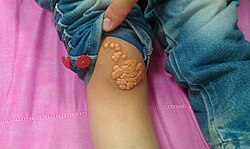
A patient's knee showing multiple xanthoma tuberosum[1]
SpecialtyGastroenterology, dermatology Edit this on Wikidata

A xanthoma (pl. xanthomas or xanthomata) (condition: xanthomatosis) is a deposition of yellowish cholesterol-rich material that can appear anywhere in the body in various disease states.[2] They are cutaneous manifestations of lipidosis in which lipids accumulate in large foam cells within the skin.[2] They are associated with hyperlipidemias, both primary and secondary types.[citation needed]

Tendon xanthomas are associated with type II hyperlipidemia, chronic biliary tract obstruction, primary biliary cirrhosis, sitosterolemia and the rare metabolic disease cerebrotendineous xanthomatosis. Palmar xanthomata and tuberoeruptive xanthomata (over knees and elbows) occur in type III hyperlipidemia.[citation needed]

Etymology

[edit]

The term xanthoma stems from Greek ξανθός (xanthós) 'yellow', and -ωμα -oma, a suffix forming nouns indicating a mass or tumor.[citation needed]

Types

[edit]

Xanthelasma

[edit]
Histology picture of xanthoma showing lipid-laden foam cells with large areas of cholesterol clefts, 10 × magnification, eosin and hematoxylin stain[1]

A xanthelasma is a sharply demarcated yellowish collection of cholesterol underneath the skin, usually on or around the eyelids. Strictly, a xanthelasma is a distinct condition, being called a xanthoma only when becoming larger and nodular, assuming tumorous proportions.[3] Still, it is often classified simply as a subtype of xanthoma.[4]

Xanthoma tuberosum

[edit]

Xanthoma tuberosum (also known as tuberous xanthoma) is characterized by xanthomas located over tuberosity of the joints.[2]: 530 

Xanthoma tendinosum

[edit]

Xanthoma tendinosum (also tendon xanthoma or tendinous xanthoma[5]) is clinically characterized by papules and nodules found in the tendons of the hands, feet, and heel.[2]: 531  Also associated with familial hypercholesterolemia (FH).[6]

Eruptive xanthoma

[edit]

Eruptive xanthoma (ILDS E78.220) is clinically characterized by small, yellowish-orange to reddish-brown papules surrounded by an erythematous halo that appear suddenly all over the body, especially the hands, buttocks, and the extensor surfaces of the extremities.[2]: 531  It tends to be associated with elevated triglycerides.[7]

Xanthoma planum

[edit]

Xanthoma planum (ILDS D76.370), also known as plane xanthoma, is clinically characterized by bands or rectangular plates (macules) and plaques in the dermis spread diffusely over large areas of the body.[2]: 531 

Palmar xanthoma

[edit]

Palmar xanthoma is clinically characterized by yellowish plaques that involve the palms and flexural surfaces of the fingers.[2]: 531  Palmar xanthomas are characterised by yellowish to orange, flat macules or slightly elevated plaques, often with a central white area which may be localised or generalised. They often arise in the skin folds, especially the palmar creases. They occur in hyperlipoproteinaemia type III and type IIA, and in association with biliary cirrhosis. The presence of palmar xanthomata, like the presence of tendinous xanthomata, is indicative of hypercholesterolaemia.[citation needed]

Tuberoeruptive xanthoma

[edit]

Tuberoeruptive xanthoma (ILDS E78.210) is clinically characterized by red papules and nodules that appear inflamed and tend to coalesce.[2]: 532  Tuberous xanthomata are considered similar, and within the same disease spectrum as eruptive xanthomata.[5]

Other types

[edit]

Other types of xanthoma identified in the Medical Dictionary include:[8]

See also

[edit]

References

[edit]
[edit]
Revisions and contributorsEdit on WikipediaRead on Wikipedia
from Grokipedia
Xanthomas are benign lesions characterized by the localized deposition of , primarily , within macrophages in the skin and other tissues, often manifesting as yellowish plaques, nodules, or tumors. These deposits result from altered and are frequently a visible indicator of underlying systemic disorders, such as hyperlipidemias, though they can occasionally occur in normolipemic states due to local factors like tissue injury or . The primary causes of xanthomas are linked to elevated blood lipid levels, including high cholesterol (hypercholesterolemia) or triglycerides (), which may stem from genetic conditions like or secondary factors such as diabetes mellitus, , , , or certain medications including cyclosporine and estrogens. In rare cases, xanthomas arise without , as seen in normolipemic plane xanthoma or verruciform xanthoma associated with epithelial damage. These lesions are composed of foam cells—macrophages engorged with lipid droplets—and can develop in various sites, including the eyelids (), tendons, palms, or buttocks, typically appearing in adulthood but sometimes earlier in genetic disorders. Xanthomas are classified into several types based on morphology, location, and associated abnormalities: eruptive xanthomas present as small, itchy, red-yellow papules on extensor surfaces and are tied to acute ; tuberous xanthomas form firm, red-yellow nodules on pressure areas like elbows and knees, often with type II hyperlipoproteinemia; tendinous xanthomas appear as subcutaneous nodules along tendons, particularly the Achilles or hands, and are highly specific for , affecting about 75% of elderly patients with this condition; and planar (or plane) xanthomas include flat, yellow patches on creases or diffusely, as in xanthelasma palpebrarum around the s, which comprise roughly 6% of benign eyelid tumors and may signal type III dyslipoproteinemia or . typically involves clinical examination, profiling, and sometimes to confirm lipid-laden macrophages, while management focuses on treating the underlying disorder with statins, fibrates, or lifestyle changes, alongside surgical excision for cosmetic or symptomatic relief.

Etymology and Definition

Etymology

The term "xanthoma" derives from the Greek roots xanthos (ξανθός), meaning "yellow," and -oma (-ωμα), a suffix denoting a tumor, mass, or swelling, alluding to the characteristic yellowish hue of the lipid-laden deposits observed in these lesions. This etymology captures the visible clinical feature that prompted its adoption in medical nomenclature. The term first appeared in during the , with the earliest documented use in 1869 within the Journal of Cutaneous Medicine, where it was applied to describe cholesterol-rich cutaneous . Prior descriptions of similar yellow eyelid lesions date back to 1835, but the specific term "xanthoma" emerged later to standardize reference to these deposits. Terminological evolution in the late 19th and early 20th centuries clarified distinctions, with "xanthoma" reserved for the singular and "xanthomatosis" denoting the systemic condition involving widespread or multiple such lesions, often linked to underlying disorders.

General Characteristics

Xanthomas are benign lesions characterized by the localized deposition of within macrophages, forming cells that accumulate extracellularly in tissues such as the skin or subcutaneous layers. These yellowish deposits arise from and other , often signaling underlying systemic disturbances in , though they themselves are non-neoplastic and harmless. The term "xanthoma" derives from the Greek "," meaning yellow, which reflects the characteristic coloration of these lesions. Xanthomas typically manifest as papules, plaques, or nodules on the skin, tendons, or mucous membranes, with common sites including the eyelids, elbows, knees, , and extensor tendons like the Achilles. Their size varies widely, ranging from small millimeter-sized papules to larger lesions several centimeters in , depending on the extent of accumulation and chronicity. Epidemiologically, xanthomas are closely associated with dyslipidemias and metabolic disorders, exhibiting a that mirrors the incidence of these conditions worldwide. They occur across all ages but are more frequent in adults over 40 years, with an overall equal distribution between males and females, although certain presentations may show a slight female predominance. Global occurrence is influenced by factors such as diet, , and the rising of in populations. Most xanthomas are asymptomatic, causing no pain or functional impairment, though they often lead to cosmetic concerns due to their prominent visibility. In occasional cases, particularly when located in friction-prone areas, they may provoke mild pruritus or tenderness.

Pathophysiology

Lipid Metabolism Abnormalities

Xanthomas arise from disruptions in , particularly hyperlipidemias characterized by elevated levels of (LDL), very-low-density lipoprotein (VLDL), or chylomicrons, which promote the accumulation of in tissues and subsequent formation. In normal lipid transport, dietary are packaged into chylomicrons, while the liver synthesizes VLDL, which is hydrolyzed by (LPL) to form (IDL); IDL is then either taken up by the liver via LDL receptors or converted to LDL, delivering to peripheral tissues. Dysregulation in these pathways, such as impaired clearance of atherogenic lipoproteins, leads to their leakage into extravascular spaces, where they are taken up by macrophages, resulting in lipid-laden s that characterize xanthomas. Specific genetic defects exemplify these abnormalities; in (FH), mutations in the () gene—over 3,500 variants identified, classified into five functional classes (null, transport defective, binding defective, internalization defective, and recycling defective)—severely impair hepatic uptake and degradation of , leading to markedly elevated plasma levels and increased risk of accumulation in tissues. Similarly, type III hyperlipoproteinemia involves pathogenic variants in the () gene, particularly the homozygous ε2 allele (E2/E2) with an arginine-to-cysteine substitution at position 176, which reduces binding to and proteoglycans, causing accumulation of triglyceride-rich remnant lipoproteins like IDL and β-VLDL, with elevated and triglycerides in a characteristic 2:1 molar ratio. These defects disrupt the normal conversion and clearance of VLDL to , fostering lipid deposition. The cholesterol ester transfer protein (CETP) plays a in remodeling by facilitating the exchange of cholesteryl esters from HDL to VLDL or LDL in return for triglycerides, maintaining balance; however, dysregulation or inhibition of CETP can alter this equilibrium, potentially enriching apoB-containing lipoproteins with cholesteryl esters and exacerbating in susceptible individuals. Beyond lipid-specific issues, non-lipid factors contribute via scavenger receptors, such as scavenger receptor A (SR-A), which mediate the unregulated uptake of modified (e.g., oxidized) lipoproteins by macrophages, bypassing normal pathways and driving intracellular cholesterol ester accumulation to form foam cells even in normolipemic states. These primary genetic causes of hyperlipidemias are detailed further in related sections.

Lesion Formation Mechanisms

The formation of xanthomas begins with the migration of monocytes from the bloodstream into affected tissues, such as the , subcutaneous layers, or tendons, in response to systemic abnormalities. These monocytes differentiate into tissue macrophages upon infiltration, driven by chemotactic signals from accumulated lipoproteins. The macrophages then phagocytose excess , primarily cholesterol esters from modified low-density lipoproteins (LDL), via scavenger receptors like and SR-A, leading to the accumulation of intracellular droplets and transformation into characteristic foam cells. As lipid uptake exceeds the macrophages' clearance capacity, extracellular lipid deposition occurs, forming pools of free and triglycerides in the interstitial space. This overwhelms local lipid handling mechanisms, promoting the release of pro-inflammatory cytokines such as interleukin-1β and tumor factor-α from activated cells, which initiate an inflammatory response. In chronic lesions, persistent inflammation recruits additional immune cells and stimulates fibroblasts, resulting in that encapsulates the lipid deposits and contributes to nodule firmness. Histologically, xanthomas exhibit distinctive features, including clusters of foam cells interspersed with multinucleated giant cells formed by fusion, needle-shaped clefts representing dissolved crystal deposits, and giant cells—large, ring-like structures with a central lipid-laden core surrounded by a histiocytic rim—that are for these lesions. These elements arise from the coalescence of lipid-overloaded histiocytes and extracellular precipitation. The progression of xanthoma lesions occurs in stages, starting with early infiltration by lipid-laden histiocytes that form loose aggregates of foam cells in the tissue interstitium. Over time, as extracellular accumulate and intensifies, the lesions evolve into organized nodules with surrounding proliferation, , and sclerosis, stabilizing the structure while potentially enlarging the deposit. In mature stages, the balance between influx, activity, and fibrotic encapsulation determines lesion persistence and clinical appearance.

Causes

Primary Hyperlipidemias

Primary hyperlipidemias encompass a group of inherited disorders characterized by abnormalities in metabolism, leading to elevated plasma and the formation of xanthomas as a hallmark cutaneous manifestation. These conditions are primarily genetic, often following patterns, and are classified using the Fredrickson-WHO system based on electrophoretic patterns of lipoproteins. Xanthomas arise due to the deposition of lipid-laden macrophages in tissues, with specific types of hyperlipidemia associating with distinct xanthoma morphologies, serving as clinical clues for diagnosis. Type IIa hyperlipidemia, also known as familial hypercholesterolemia (FH), is an autosomal dominant disorder caused predominantly by mutations in the LDLR gene, which encodes the low-density lipoprotein receptor responsible for hepatic uptake of LDL cholesterol. These mutations impair LDL clearance, resulting in markedly elevated LDL levels (often >190 mg/dL in heterozygotes and >500 mg/dL in homozygotes). Tendon xanthomas, particularly on the Achilles tendons and hand extensors, are a classic feature, appearing in up to 75% of untreated heterozygous cases and nearly all homozygous cases, often by adolescence. Less commonly, mutations in APOB or PCSK9 genes contribute to the phenotype. FH affects approximately 1 in 250 individuals worldwide and significantly increases premature cardiovascular disease risk. Type IIb hyperlipidemia, or (FCHL), represents a common inherited with an autosomal dominant pattern and variable , characterized by elevations in both LDL and triglycerides, often with increased levels. The genetic basis is polygenic, involving multiple susceptibility loci such as USF1 on 1q, rather than a single monogenic defect, and environmental factors like diet exacerbate the . Affected individuals may exhibit mixed with total >250 mg/dL and triglycerides >200 mg/dL. Tuberous xanthomas on the elbows and knees, as well as eruptive xanthomas, can occur, though rarely, signaling underlying lipid dysregulation. FCHL prevalence is estimated at 1-2% in the general population, making it a leading genetic contributor to early . Type III hyperlipidemia, termed familial dysbetalipoproteinemia or broad-beta disease, results from homozygosity for the apoE2 isoform (encoded by APOE gene variants like Arg158Cys), which impairs remnant clearance by the liver, leading to accumulation of intermediate-density lipoproteins (IDL). This recessive condition manifests as mixed with elevated total and triglycerides (typically 300-600 mg/dL each) and a characteristic "floating beta" pattern on . Palmar xanthomas, presenting as orange-yellow creases on the palms, are and occur in 30-50% of cases, alongside tuberoeruptive xanthomas on the and elbows. The disorder affects about 1 in 5,000-10,000 individuals, with higher cardiovascular risk when secondary factors like are present. Types IV and V hyperlipidemias involve primary elevations in very low-density lipoproteins (VLDL) and chylomicrons, respectively, classified as familial . These autosomal recessive or polygenic disorders stem from mutations in genes regulating triglyceride hydrolysis, such as LPL (), APOC2 (its cofactor), APOA5, GPIHBP1, or LMF1, leading to severe (>500 mg/dL, often >1,000 mg/dL in type V). Eruptive xanthomas, small pruritic papules on the extensor surfaces, trunk, and , are a prominent feature, resolving with lowering. Type IV is more common (prevalence ~1%), while type V is rarer and prone to . These conditions highlight the role of impaired in lipid deposition. Rare syndromes like cerebrotendinous xanthomatosis (CTX) represent atypical primary hyperlipidemias due to biallelic mutations in the CYP27A1 gene, encoding sterol 27-hydroxylase, which disrupts synthesis and causes accumulation of cholestanol and in tissues. This autosomal recessive disorder leads to tendon xanthomas, particularly on the Achilles tendons, appearing in childhood or early adulthood, alongside progressive neurologic symptoms like and cataracts. Plasma may be normal or mildly elevated, but cholestanol levels are markedly increased. CTX prevalence is <1 in 100,000, with over 100 CYP27A1 mutations identified, emphasizing early therapy to halt progression.

Secondary Causes

Secondary causes of xanthoma encompass a range of acquired conditions that disrupt , leading to elevated or triglycerides and subsequent deposition in tissues. These differ from genetic disorders by being reversible upon treatment of the underlying disease, often involving secondary hyperlipidemias that impair clearance or increase production. Metabolic disorders represent common secondary triggers, particularly uncontrolled mellitus, where insulin deficiency promotes and eruptive xanthomas through increased hepatic very-low-density lipoprotein synthesis. similarly contributes by reducing (LDL) receptor activity and hepatic LDL clearance, resulting in hypercholesterolemia and tendinous or tuberous xanthomas. Liver and diseases also play a significant role, with (PBC) frequently causing planar xanthomas due to -induced lipoprotein-X accumulation, a cholesterol-rich particle that deposits in skin creases like the palmar lines. Generalized from various etiologies exacerbates this by impairing excretion and elevating serum lipids, leading to widespread xanthomatous eruptions. Additional conditions include , where and urinary protein loss trigger compensatory hepatic lipid overproduction, yielding hypercholesterolemia and xanthomas on the eyelids or extremities. Chronic alcohol consumption can lead to and eruptive xanthomas by increasing hepatic synthesis. Certain medications, such as estrogens or oral contraceptives, provoke by enhancing hepatic synthesis, while retinoids like similarly elevate and precipitate eruptive forms. Normolipemic xanthomas occur infrequently without overt , often linked to paraproteinemias or monoclonal gammopathies such as , where immunoglobulin-lipid complexes promote formation and plane xanthomas independent of serum levels. factors, including diets high in saturated fats, can exacerbate underlying secondary risks by increasing intestinal absorption and production, thereby worsening hyperlipidemias in susceptible individuals.

Types

Xanthelasma

Xanthelasma, also known as xanthelasma palpebrarum, presents as soft, yellowish plaques typically located on the eyelids, particularly in the periorbital region near the inner canthi. These lesions are often bilateral and symmetrical, involving the upper and lower eyelids, and can vary in texture from soft and semisolid to slightly . As the most common type of cutaneous xanthoma, has a prevalence of approximately 1-2% in the general adult population, with a higher incidence in women (around 1.1-1.2%) compared to men (0.3%). The condition predominantly affects individuals aged 30-50 years, though it can occur across a broader age range. Approximately 50% of cases are associated with hypercholesterolemia or other abnormalities, while the remaining up to 50% occur in normolipemic individuals. Even in normolipemic patients, is linked to an elevated cardiovascular risk comparable to that in hyperlipidemic cases, potentially indicating subclinical . These associations often stem from broader disruptions in , as explored in the Causes section. Xanthelasma lesions tend to progress slowly, with gradual enlargement over months or years, potentially coalescing or becoming more raised. Due to their prominent location on the eyelids, these plaques frequently cause significant cosmetic concerns, prompting patients to seek evaluation despite being otherwise asymptomatic.

Tuberous Xanthoma

Tuberous xanthomas are characterized by firm, painless, red-yellow nodules that typically develop over pressure-prone areas such as the extensor surfaces of the elbows, knees, and . These lesions often appear in groups or coalesce into larger, multilobulated tumors, measuring several millimeters to centimeters in size, and are composed of lipid-laden macrophages known as foam cells. They are subcutaneous or deep dermal in location and do not typically involve mucosal surfaces. These xanthomas are strongly associated with severe dyslipidemias, particularly (FH, type IIa hyperlipoproteinemia) and (type IIb), where elevated cholesterol levels promote lipid deposition in tissues. In homozygous FH, they serve as a hallmark of uncontrolled , while in type IIb, they may accompany mixed hyperlipidemia with both elevated cholesterol and triglycerides. Their presence indicates underlying severe requiring urgent evaluation and management to mitigate cardiovascular risk. Onset in genetic cases like FH often occurs in childhood or the second decade of life, with lesions progressively enlarging over time in untreated individuals. In secondary causes, such as acquired from conditions like or , development can be more rapid, though less common than in primary disorders. Complications from the lesions themselves are rare, with ulceration occurring infrequently despite their location over trauma-prone sites; however, they signal the need for aggressive lipid-lowering therapy to prevent associated systemic issues like premature . Surgical excision may be considered for symptomatic or cosmetically concerning cases, but recurrence is possible without addressing the underlying .

Tendinous Xanthoma

Tendinous xanthomas are characterized by the deposition of in tendons, manifesting as firm, nontender subcutaneous nodules that typically develop along the s, extensor tendons of the hands, or patellar tendons. These lesions appear as slowly enlarging papules or nodules firmly attached to the underlying tendon structures, often bilateral and symmetrical, with the being the most common site due to its prominence and load-bearing role. They serve as a hallmark clinical feature of (FH), particularly the heterozygous form classified as type IIa hyperlipidemia, resulting from mutations in the receptor (LDLR) gene that impair clearance. In homozygous FH, tendinous xanthomas exhibit early onset during childhood or adolescence, contrasting with the later appearance in heterozygous cases, and are nearly universal in this severe genetic variant. Although for FH, these xanthomas are rare in the general population, with an overall influenced by FH incidence, which varies globally but can be higher in founder populations, such as approximately 1 in 270 among or 1 in 100 among . Within genetically confirmed FH patients, tendon xanthomas occur in 20% to 80% of cases, with frequency increasing with age up to the sixth decade. Large tendinous xanthomas can impose functional limitations, particularly on the , by thickening the structure and restricting joint mobility, , and flexibility, potentially leading to discomfort during walking or other activities. In severe instances, such as those in homozygous FH, these deposits contribute to mechanical weakening of the tendon, increasing risk and necessitating surgical intervention for symptomatic relief. Their presence underscores the cardiovascular risks associated with FH, independent of specific LDLR mutations, prompting urgent lipid management to mitigate progression.

Eruptive Xanthoma

Eruptive xanthoma presents as an acute dermatological manifestation characterized by the sudden appearance of numerous small yellowish papules, often with a surrounding erythematous halo, typically 1 to 4 mm in diameter, linked to severe hypertriglyceridemia. These lesions commonly erupt in crops on the extensor surfaces of the extremities, buttocks, thighs, abdomen, thorax, and occasionally the back or trunk, and are frequently pruritic, particularly in early stages, accompanied by tenderness. The inflammatory nature distinguishes them from other xanthoma variants, often leading to a koebnerization where new lesions appear at sites of trauma. This condition is closely associated with severe , most commonly types IV and V hyperlipoproteinemias, where serum levels exceed 1000 mg/dL, often surpassing 1500 mg/dL in affected individuals. The rapid accumulation of in the triggers macrophage infiltration and formation, resulting in the characteristic lesions. Onset typically occurs within days to weeks following a marked elevation in triglycerides, frequently precipitated by secondary factors such as uncontrolled diabetes mellitus or excessive alcohol intake, which exacerbate underlying lipid abnormalities. Resolution of eruptive xanthomas depends on effective control of through dietary modifications, fibrate therapy, or other lipid-lowering interventions, leading to spontaneous regression of lesions over several weeks to months as lipid levels normalize. In cases where triglycerides are promptly reduced, partial improvement may begin within 4 weeks, with complete clearance often requiring additional time, and recurrence is uncommon with sustained management.

Plane Xanthoma

Plane xanthoma, also known as planar xanthoma, presents as flat, yellow-orange macules or plaques that are typically non-palpable and may appear slightly elevated in some cases. These lesions often occur in creases and flexural areas, such as the palms, interdigital webs, , or other sites, forming diffuse or circumscribed patches without significant induration. Plane xanthoma is strongly associated with type III hyperlipoproteinemia (familial dysbetalipoproteinemia), where palmar and interdigital lesions are particularly characteristic, and with cholestatic liver diseases such as or , leading to secondary hypercholesterolemia from lipoprotein X accumulation. It is less commonly linked to other hyperlipidemias like type II or IV, but these associations underscore the role of disordered in lesion formation. Histologically, these xanthomas feature foam cells with clefts, though detailed analysis is covered in sections. Variants include intertriginous plane xanthoma, confined to , and generalized or diffuse plane xanthoma, which can involve large body areas. A notable normolipemic variant occurs in patients with normal lipid levels but underlying paraproteinemia, such as or , where immune complexes may promote lipid uptake. These cases highlight non-lipid-driven mechanisms in xanthoma development. Epidemiologically, plane xanthoma is relatively uncommon compared to other xanthoma types, typically manifesting in middle-aged adults during the fourth to fifth decades of life, with equal across sexes and often tied to the onset of underlying metabolic or hepatic conditions. It rarely presents in younger individuals unless associated with severe or genetic dyslipidemias.

Palmar Xanthoma

Palmar xanthoma, also known as palmar striated xanthoma or , manifests as yellow-orange discolorations confined to the creases of the palms, appearing as linear deposits along the lines. These lesions are characterized by their striated pattern, which follows the natural folds of the palmar skin without extending beyond the palm surfaces. This form of xanthoma is strongly associated with dysbetalipoproteinemia (type III hyperlipoproteinemia), a disorder involving accumulation of remnant lipoproteins due to mutations in the gene, such as the apoE2 variant. It is rare in other hyperlipidemic conditions, though occasional cases have been reported in with partial . The presence of palmar xanthoma exhibits high specificity for remnant lipoprotein disorders like dysbetalipoproteinemia, serving as a clinical sign that prompts targeted lipid profiling. Onset typically occurs in adulthood, with lesions developing symmetrically on both palms and lacking associated pruritus or inflammation. This diagnostic value underscores the importance of examining the palms in patients with suspected lipid abnormalities, as the lesions can precede overt cardiovascular complications.

Other Variants

Tuberoeruptive xanthomas represent a hybrid form combining features of tuberous and eruptive xanthomas, typically manifesting as inflamed, nodular lesions on the extensor surfaces of the extremities, buttocks, or trunk. These lesions are strongly associated with type III hyperlipoproteinemia (familial dysbetalipoproteinemia), where elevated levels of intermediate-density lipoproteins lead to cholesterol and triglyceride accumulation in macrophages. Patients often present with reddish-yellow, pruritic nodules that may ulcerate, distinguishing them from purely tuberous or eruptive forms by their mixed inflammatory and proliferative characteristics. Verruciform xanthomas are rare, benign, wart-like proliferations characterized by a verrucous surface and lipid-laden within elongated rete ridges, primarily affecting the but also occurring on genital or anogenital skin. Unlike dyslipidemic xanthomas, they arise in normolipemic individuals and are often linked to local epithelial trauma, chronic irritation, or human papillomavirus (HPV) , which may promote formation through extravasation and infiltration. Lesions appear as small, sessile, yellow-white papules or plaques, with a predilection for sites of or , and they exhibit no systemic abnormalities. Normolipemic plane xanthomas, including suborbital variants, present as diffuse, yellowish macules or plaques on the eyelids, face, neck, or flexural areas without underlying , often in association with paraproteinemias such as or . These lesions result from the deposition of lipids bound to abnormal immunoglobulins, leading to accumulation in the , and may mimic but extend beyond periorbital regions. In cases linked to myeloma, the xanthomas can be widespread and progressive, reflecting the underlying lymphoproliferative disorder rather than metabolic causes. Systemic xanthomas occur in rare histiocytic disorders such as Hand-Schüller-Christian disease (a form of ), where lipid-laden infiltrate multiple organs, including orbital tissues causing , corneal structures, and visceral sites like the liver or lungs. These xanthomatous deposits arise from disordered and proliferation, often accompanied by bone lesions, , and cutaneous eruptions, distinguishing them from localized cutaneous forms by their multisystem involvement and potential for life-threatening complications. Orbital and corneal xanthomas in this syndrome may lead to vision impairment, while visceral involvement contributes to organ dysfunction.

Diagnosis

Clinical Evaluation

The clinical evaluation of xanthoma begins with a detailed history to identify potential underlying dyslipidemias and associated risk factors. Patients should be queried about family history of lipid disorders, such as , which is strongly linked to the development of tendinous xanthomas in approximately 75% of affected geriatric individuals. Dietary habits, including consumption of -rich foods, should be assessed as they may contribute to secondary . Symptoms such as pruritus are particularly common in eruptive xanthomas, while other presentations may be asymptomatic. The onset and progression of lesions provide key clues: eruptive xanthomas often appear rapidly over weeks and may resolve spontaneously, whereas tendinous or tuberous variants develop gradually over months to years. A history of cardiovascular events like or may also be elicited, signaling systemic involvement. Physical examination focuses on thorough and to characterize the lesions. Xanthomas typically present as yellowish, well-demarcated plaques, papules, or nodules, with colors ranging from pale yellow to orange-red depending on inflammation. Common sites include the eyelids (), extensor surfaces like elbows and knees (tuberous xanthomas), and tendons such as the Achilles or patellar regions (tendinous xanthomas). reveals the firmness of lesions, which are often solid and non-tender in tuberous and tendinous types, contrasting with softer, more mobile subcutaneous involvement in some variants. Differential diagnosis includes benign and inflammatory conditions that mimic xanthomas. Lipomas appear as soft, doughy subcutaneous masses without the yellow hue, while rheumatoid nodules are firm, subcutaneous, and typically located over pressure points like the . Granulomatous disorders, such as or foreign body reactions, may present with similar nodular lesions but often involve systemic symptoms or . Moreover, the sudden appearance of papules or cutaneous nodules on the abdomen and thorax may correspond to eruptive xanthomas (yellowish papules with an erythematous halo, linked to hypertriglyceridemia) or other conditions such as Sweet syndrome (abrupt tender erythematous plaques or nodules, often with fever and trunk involvement including chest and abdomen), erythema multiforme, or drug reactions. Evaluation by a dermatologist is essential for accurate diagnosis and to assess for underlying systemic issues. The distinct yellow coloration and lipid-laden appearance on exam help differentiate xanthomas, though type-specific morphologies (as detailed in the Types section) further refine the assessment. Red flags during evaluation include the rapid eruption of multiple pruritic lesions, which strongly suggests acute as an underlying cause requiring urgent attention. Such presentations warrant prompt systemic evaluation to mitigate risks like .

Laboratory Investigations

Laboratory investigations for xanthoma primarily focus on identifying underlying through blood tests, as these lesions often signal elevated levels. A comprehensive lipid panel is essential, measuring total , low-density lipoprotein (LDL) , high-density lipoprotein (HDL) , and , with fasting samples recommended for accuracy in triglyceride assessment. Abnormal results, such as markedly elevated LDL or , guide further evaluation for primary hyperlipidemias like (FH). Advanced testing may be warranted based on initial findings. Lipoprotein can detect type III hyperlipoproteinemia by identifying elevated remnant lipoproteins, particularly in cases with tuberoeruptive or palmar xanthomas. ApoE is useful in suspected type III , where homozygosity for the E2 (apoE2/E2) confirms the to remnant accumulation. To rule out secondary causes, additional laboratory tests assess associated conditions. Fasting glucose or hemoglobin A1c (HbA1c) evaluates for diabetes mellitus, a common trigger for eruptive xanthomas via . Thyroid-stimulating hormone (TSH) screening detects , which can exacerbate lipid abnormalities. Liver function tests (LFTs), including (ALT) and aspartate aminotransferase (AST), investigate cholestatic as a potential contributor. Imaging is selectively employed, primarily for tendon xanthomas to measure thickness and confirm deposits in suspected FH, though it is not routine for cutaneous lesions.

Histopathological examination via is indicated for xanthomas presenting with atypical clinical features or occurring in normolipemic patients to confirm the and rule out alternative conditions. In such cases, tissue sampling provides definitive microscopic evidence of deposition, distinguishing xanthomas from other granulomatous or neoplastic processes. The hallmark microscopic finding in xanthomas is the presence of foam cells, which are lipid-laden macrophages or histiocytes containing multiple vacuoles of and esters within the or subcutis. These foam cells often surround needle-shaped clefts resulting from extracellular lipid crystallization, accompanied by a mild chronic inflammatory infiltrate of lymphocytes and occasional multinucleated giant cells. Special stains, such as on frozen sections, confirm the nature by staining the vacuoles red, while hematoxylin and eosin highlights the clefts and cellular architecture. Histological variations depend on the xanthoma subtype and chronicity. Eruptive xanthomas typically show superficial dermal involvement with foamy histiocytes, admixed neutrophils, giant cells (characterized by a central lipid-laden wreath around nuclei), and extracellular lipid pools. In contrast, chronic tendinous xanthomas exhibit deeper subcutaneous extension with prominent , scattered giant cells, and dense collagen entrapment of foam cells. Differential diagnosis on microscopy includes juvenile xanthogranuloma, which features more numerous Touton giant cells, spindle-shaped histiocytes, and Touton cells without abundant clefts or extensive vacuoles. Necrobiotic xanthogranuloma is distinguished by extensive zones of necrobiosis, palisading histiocytes, lymphoid aggregates, and plasma cells surrounding clefts, often with systemic paraproteinemia.

Treatment

Lipid-Lowering Therapy

Lipid-lowering therapy represents the cornerstone of managing xanthomas associated with underlying by addressing the lipid abnormalities that drive deposition in tissues. This approach aims to normalize serum lipid levels, thereby promoting regression of existing lesions and preventing new ones, particularly in conditions like (FH) and severe . Treatment is tailored to the specific lipid abnormality, with regular monitoring to assess efficacy and adjust regimens. For xanthomas occurring in normolipemic states, lipid-lowering therapy is not applicable, and management focuses on local interventions as described below. For patients with FH-associated xanthomas, such as tendinous or tuberous types, statins like or are first-line agents, inhibiting to reduce cholesterol (LDL-C) levels. Guidelines recommend targeting LDL-C below 100 mg/dL in adults without established to mitigate xanthoma progression and cardiovascular risk. Sustained statin therapy has been shown to decrease lesion size over months to years, with combination regimens enhancing outcomes. In eruptive xanthomas linked to elevated triglycerides, fibrates such as fenofibrate are preferred, activating proliferator-activated receptor-alpha to lower triglycerides by 20-50% and increase cholesterol. Niacin may be added for mixed , further reducing triglycerides and LDL-C while raising HDL-C. These agents typically lead to rapid resolution of lesions within weeks once triglycerides fall below 1000 mg/dL. For refractory FH where statins alone are insufficient, PCSK9 inhibitors like are highly effective, monoclonal antibodies that block proprotein convertase /kexin type 9 to enhance recycling and achieve additional LDL-C reductions of 50-70%. Clinical studies demonstrate tendon xanthoma regression with PCSK9 inhibition added to maximal and ezetimibe therapy, with measurable decreases in lesion thickness after 1-3 years. sequestrants, such as , serve as adjuncts by binding in the intestine to interrupt , modestly lowering LDL-C by 15-30% and supporting overall lipid control. Lifestyle modifications complement , including a restricting saturated fats to less than 7% of calories and incorporating omega-3-rich foods, alongside at least 150 minutes of moderate weekly to improve profiles. panels should be monitored every 3-6 months to guide adjustments and confirm sustained control. With consistent management, 50-70% of patients experience partial to complete xanthoma regression, underscoring the importance of early intervention.

Surgical Interventions

Surgical interventions for xanthomas are primarily employed for cosmetic improvement or to alleviate functional impairment caused by large lesions, rather than as a primary treatment for the underlying disorders. These procedures are most commonly indicated for palpebrarum due to its visible location on the eyelids, where patients seek aesthetic correction, and for tendinous xanthomas that cause mechanical issues such as reduced mobility or pain from bulky deposits on tendons like the Achilles. For eruptive xanthomas, is reserved for persistent remnants after lipid-lowering therapy, typically using less invasive methods to address scattered papules. In normolipemic xanthomas, such as certain plane variants or without abnormalities, surgical options represent the mainstay of treatment. Common surgical methods include excision, , chemical peels, and . Surgical excision involves removing the with scalpel or scissors, often followed by primary closure or for larger defects, particularly effective for where it achieves high clearance rates with minimal sessions. , such as with CO2 or Er:YAG lasers, vaporizes the xanthomatous tissue layer by layer, offering precise control and good cosmetic outcomes for superficial s like , with ultrapulse CO2 lasers showing over 99% clearance in smaller grades. (TCA) peels at 50-100% concentration chemically cauterize the lesions, providing a non-invasive option for with 83% clearance rates, while is suitable for small papules in eruptive or plane variants due to its minimal scarring. For tendinous xanthomas, excision reduces mass size while preserving function, often combined with repair techniques like the Krackow suture. In xanthelasma treatment, recurrence rates are notably high at approximately 40% following primary excision without concurrent management, rising to 60% after secondary procedures, though some surgical series report rates under 5% with adjunctive . Ablative lasers like CO2 demonstrate recurrence around 22-24% at 12-25 months follow-up, comparable to Er:YAG, while non-ablative options may have lower but reduced . serves as an essential adjunct to minimize regrowth across all xanthoma types with associated . Potential risks of these interventions include scarring, postinflammatory , in procedures, , and delayed healing, with pigmentation changes more common in and chemical treatments affecting up to 7% of cases. These methods are not first-line for lesions with significant functional involvement, such as deep tendinous xanthomas risking , where conservative management is preferred initially. Alternatives for eruptive xanthoma remnants include for precise coagulation or to freeze small lesions, both offering low recurrence when underlying is controlled.

Prognosis

Associated Health Risks

Xanthomas, particularly tendinous and tuberous variants, serve as clinical markers of underlying dyslipidemias such as (FH), which substantially elevate the risk of and (CVD). In patients with FH, the presence of xanthomas is independently associated with a threefold increase in CVD risk, reflecting shared pathogenic mechanisms involving prolonged exposure to elevated cholesterol levels. Tendon xanthomas specifically correlate with accelerated progression, contributing to premature and other atherosclerotic events independently of specific low-density lipoprotein receptor gene mutations. For instance, without treatment, approximately 50% of men with FH develop coronary heart disease by age 50, and 30% of women by age 60, underscoring the need for early lipid management to mitigate these outcomes. Beyond cardiovascular implications, xanthomas arising from severe , such as eruptive xanthomas, signal an elevated risk of , a potentially life-threatening complication driven by levels often exceeding 1,000 mg/dL. This association arises because extreme promotes pancreatic through mechanisms like chylomicron-induced ischemia and lipase-mediated free toxicity. In cholestatic liver diseases, such as , plane xanthomas result from lipoprotein-X accumulation and correlate with disease severity, indicating progression toward advanced or due to impaired flow and chronic lipid dysregulation. Normolipemic xanthomas, which occur without overt lipid abnormalities, exhibit a notable association with underlying malignancies, particularly multiple myeloma and monoclonal gammopathies, where paraproteins may facilitate foam cell formation and lipid deposition. Over half of reported cases of diffuse plane normolipemic xanthoma involve hematologic disorders, with multiple myeloma implicated in approximately 23% of instances, highlighting the importance of oncologic screening in such presentations. Long-term, chronic xanthomatous lesions can evolve into fibrotic or calcified nodules, particularly in tendinous forms, potentially leading to mechanical complications like weakening or rare ulceration due to pressure or trauma. These changes, though uncommon, may exacerbate functional impairment and necessitate vigilant monitoring to prevent secondary issues such as or rupture in affected sites like the .

Response to Treatment

The response to treatment for xanthomas primarily depends on addressing the underlying through lipid-lowering therapies, such as statins or fibrates, which promote regression by normalizing lipid levels. Eruptive xanthomas typically show complete resolution within 4-12 weeks of initiating systemic treatment, as lipid normalization rapidly reduces accumulation in the skin. In contrast, tuberous xanthomas often exhibit partial regression over several months, while tendinous xanthomas may only partially improve or require years for noticeable changes, even with sustained therapy. Recurrence rates for xanthomas are high without ongoing lipid-lowering , due to persistent driving new lipid deposits. Following surgical interventions, such as excision of tendinous or tuberous lesions, recurrence is common, particularly if partial resection is performed or if underlying conditions like remain unmanaged; complete en bloc excision combined with medical can mitigate this risk. Post-treatment monitoring is essential to assess treatment efficacy and prevent complications, typically involving annual lipid panels to track cholesterol levels and cardiovascular risk assessments, including imaging for atherosclerosis progression. Physical examination and imaging, such as ultrasonography, should also evaluate xanthoma size and new lesion formation to guide adjustments in therapy. The prognosis for xanthomas is generally benign with early intervention, allowing for lesion regression and reduced cardiovascular burden when underlying dyslipidemias are controlled promptly. However, if the primary condition, such as , goes unmanaged, outcomes worsen significantly, with homozygous forms leading to high mortality rates before age 30 due to accelerated .

References

Add your contribution
Related Hubs
User Avatar
No comments yet.