Hubbry Logo
RosaceaRosaceaMain
Open search
Rosacea
Community hub
Rosacea
logo
8 pages, 0 posts
0 subscribers
Be the first to start a discussion here.
Rosacea
Rosacea
from Wikipedia

Rosacea
Other namesAcne rosacea
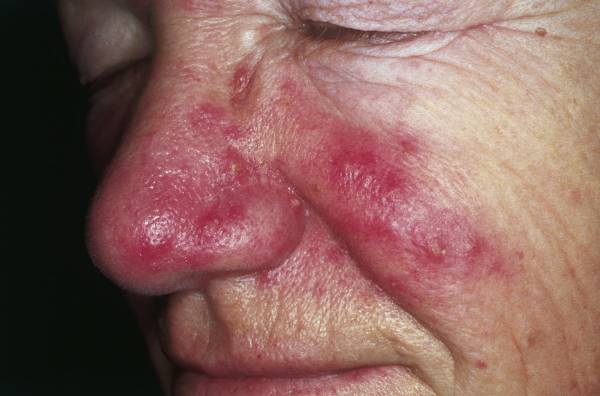
Rosacea over the cheeks and nose[1]
Pronunciation
SpecialtyDermatology
SymptomsFacial redness, swelling, and small and superficial dilated blood vessels[2][3]
ComplicationsRhinophyma[3]
Usual onset30–50 years old[2]
DurationLong term[2]
TypesErythematotelangiectatic, papulopustular, phymatous, ocular[2]
CausesUnknown[2]
Risk factorsFamily history[3]
Diagnostic methodBased on symptoms[2]
Differential diagnosisAcne, perioral dermatitis, seborrhoeic dermatitis, dermatomyositis, lupus[2]
MedicationAntibiotics either by mouth or applied to the skin[3]
Frequency~5%[2]

Rosacea is a long-term skin condition that typically affects the face.[2][3] It results in redness, pimples, swelling, and small and superficial dilated blood vessels.[2] Often, the nose, cheeks, forehead, and chin are most involved.[3] A red, enlarged nose may occur in severe disease, a condition known as rhinophyma.[3]

The cause of rosacea is unknown.[2] Risk factors are believed to include a family history of the condition.[3] Factors that may potentially worsen the condition include heat, exercise, sunlight, cold, spicy food, alcohol, menopause, psychological stress, or steroid cream on the face.[4] Diagnosis is based on symptoms.[2]

While not curable, treatment usually improves symptoms.[3] Treatment is typically with metronidazole, doxycycline, minocycline, or tetracycline.[5] When the eyes are affected, azithromycin eye drops may help.[6] Other treatments with tentative benefit include brimonidine cream, ivermectin cream, and isotretinoin.[5] Dermabrasion or laser surgery may also be used.[3] The use of sunscreen is typically recommended.[3]

Rosacea affects between 1% and 10% of people.[2] Those affected are most often 30 to 50 years old and female.[2] Fair-skinned people seem to be more commonly affected.[7] The condition was described in The Canterbury Tales in the 1300s, and possibly as early as the 200s BC by Theocritus.[8][9]

Signs and symptoms

[edit]
Commonly affected zones[10]

Rosacea typically begins with reddening (flushing) of the skin in symmetrical patches near the center of the face.[11] Common signs can depend on age and sex: flushing and red swollen patches are common in the young, small and visible dilated blood vessels in older individuals, and swelling of the nose is common in men.[11] Other signs include lumps on the skin (papules or pustules) and swelling of the face.[11] Many people experience stinging or burning pain, and rarely itching.[11]

Rosacea is often triggered or worsened by specific stimuli. The exact risk factors vary from person to person, and some people with rosacea may not be able to identify any consistent factors. Common triggers are ultraviolet light, temperature of weather and/or food, spicy foods, exercise, and emotional stress.[11][4]

Erythematotelangiectatic rosacea

[edit]

Erythematotelangiectatic rosacea[12] (also known as "vascular rosacea"[12]) is characterized by prominent history of prolonged (over 10 minutes) flushing reaction to various stimuli, such as emotional stress, hot drinks, alcohol, spicy foods, exercise, cold or hot weather, or hot baths and showers.[13]

Glandular rosacea

[edit]

In glandular rosacea, men with thick sebaceous skin predominate, a disease in which the papules are edematous, and the pustules are often 0.5 to 1.0 cm in size, with nodulocystic lesions often present.[13]

Cause

[edit]
Topical steroid-induced rosacea (left); after steroid withdrawal and photobiomodulation therapy (right)

The exact cause of rosacea is unknown.[2] Triggers that cause episodes of flushing and blushing play a part in its development. Exposure to temperature extremes, strenuous exercise, heat from sunlight, severe sunburn, stress, anxiety, cold wind, and moving to a warm or hot environment from a cold one, such as heated shops and offices during the winter, can each cause the face to become flushed.[2] Certain foods and drinks can also trigger flushing, such as alcohol, foods, and beverages containing caffeine (especially hot tea and coffee), foods high in histamines, and spicy foods.[14]

Medications and topical irritants have also been known to trigger rosacea flares. Some acne and wrinkle treatments reported to cause rosacea include microdermabrasion and chemical peels, as well as high dosages of isotretinoin, benzoyl peroxide, and tretinoin.

Steroid-induced rosacea is caused by topical use of steroids,[15] which are often prescribed for seborrheic dermatitis. Dosage should be slowly decreased and not stopped abruptly to avoid a flare-up.

Cathelicidins

[edit]

In 2007, Richard Gallo and colleagues noticed that patients with rosacea had high levels of cathelicidin, an antimicrobial peptide,[16] and elevated levels of stratum corneum tryptic enzymes (SCTEs). Antibiotics have been used in the past to treat rosacea, but they may only work because they inhibit some SCTEs.[16]

Demodex folliculitis and Demodex mites

[edit]

Studies of rosacea and Demodex mites have revealed that some people with rosacea have increased numbers of the mite,[14] especially those with steroid-induced rosacea. Demodex folliculitis (demodicidosis, also known as "mange" in animals) is a condition that may have a "rosacea-like" appearance.[17]

A 2007, National Rosacea Society-funded study demonstrated that Demodex folliculorum mites may be a cause or exacerbating factor in rosacea.[18] The researchers identified Bacillus oleronius as a distinct bacterium associated with Demodex mites. When analyzing blood samples using a peripheral blood mononuclear cell proliferation assay, they discovered that B. oleronius stimulated an immune system response in 79 percent of 22 patients with subtype 2 (papulopustular) rosacea, compared with only 29% of 17 subjects without the disorder. They concluded, "The immune response results in inflammation, as evident in the papules (bumps) and pustules (pimples) of subtype 2 rosacea. This suggests that the B. oleronius bacteria found in the mites could be responsible for the inflammation associated with the condition."[18]

Intestinal bacteria

[edit]

Small intestinal bacterial overgrowth (SIBO) was demonstrated to have a greater prevalence in rosacea patients, and treating it with locally acting antibiotics led to rosacea lesion improvement in two studies. Conversely, in rosacea patients who were SIBO-negative, antibiotic therapy had no effect.[19] The effectiveness of treating SIBO in rosacea patients may suggest that gut bacteria play a role in the pathogenesis of rosacea lesions.

Diagnosis

[edit]

Most people with rosacea have only mild redness and are never formally diagnosed or treated. No test for rosacea is known. In many cases, a simple visual inspection by a trained healthcare professional is sufficient for diagnosis. In other cases, particularly when pimples or redness on less-common parts of the face are present, a trial of common treatments is useful for confirming a suspected diagnosis. The disorder can be confused with or co-exist with acne vulgaris or seborrheic dermatitis. The presence of a rash on the scalp or ears suggests a different or co-existing diagnosis because rosacea is primarily a facial diagnosis, although it may occasionally appear in these other areas.

Classification

[edit]
Rosacea on the face
Micrograph showing rosacea as enlarged, dilated capillaries and venules located in the upper dermis, angulated telangiectasias, perivascular and perifollicular lymphocytic infiltration, and superficial dermal edema[20]

Four rosacea subtypes exist,[21] and a patient may have more than one subtype:[22]: 176 

  1. Erythematotelangiectatic rosacea exhibits permanent redness (erythema) with a tendency to flush and blush easily.[14] Also small, widened blood vessels visible near the surface of the skin (telangiectasias) and possibly intense burning, stinging, and itching are common.[14] People with this type often have sensitive skin. Skin can also become very dry and flaky. In addition to the face, signs can also appear on the ears, neck, chest, upper back, and scalp.[23]
  2. Papulopustular rosacea presents with some permanent redness with red bumps (papules); some pus-filled pustules can last 1–4 days or longer. This subtype is often confused with acne.
  3. Phymatous rosacea is most commonly associated with rhinophyma, an enlargement of the nose. Signs include thickening skin, irregular surface nodularities, and enlargement. Phymatous rosacea can also affect the chin (gnathophyma), forehead (metophyma), cheeks, eyelids (blepharophyma), and ears (otophyma).[24] Telangiectasias may be present.
  4. In ocular rosacea, affected eyes and eyelids may appear red due to telangiectasias and inflammation, and may feel dry, irritated, or gritty. Other symptoms include foreign-body sensations, itching, burning, stinging, and sensitivity to light.[25] Eyes can become more susceptible to infection. About half of the people with subtypes 1–3 also have eye symptoms. Keratitis is a rare complication that is characterized by blurry vision and vision loss as the cornea is affected.[25][26]

Variants

[edit]

Variants of rosacea include:[27]: 689 

  • Pyoderma faciale, also known as rosacea fulminans,[27] is a conglobate, nodular disease that arises abruptly on the face.[12][27]
  • Rosacea conglobata is a severe rosacea that can mimic acne conglobata, with hemorrhagic nodular abscesses and indurated plaques.[27]
  • Phymatous rosacea is a cutaneous condition characterized by overgrowth of sebaceous glands.[12] Phyma is Greek for swelling, mass, or bulb, and these can occur on the face and ears.[27]: 693 

Treatment

[edit]

The type of rosacea that a person has will indicate the choice of treatment.[28] Mild cases are often not treated at all, or are simply covered up with normal cosmetics.

Therapy for the treatment of rosacea is not curative and is best measured in terms of a reduction in the amount of facial redness and inflammatory lesions, a decrease in the number, duration, and intensity of flares, and concomitant symptoms of itching, burning, and tenderness. The two primary modalities of rosacea treatment are topical and oral antibiotic agents.[29] Laser therapy has also been classified as a form of treatment.[29] While medications often produce a temporary remission of redness within a few weeks, the redness typically returns shortly after treatment is suspended. Long-term treatment, usually 1–2 years, may result in permanent control of the condition for some patients.[29][30] Lifelong treatment is often necessary, although some cases resolve after a while and go into permanent remission.[30] Other cases, if left untreated, worsen over time.[31] Some people have also reported better results after changing diet. This is not confirmed by medical studies, even though some studies relate the histamine production to outbreak of rosacea.[32]

Behavior

[edit]

Certain behavioral changes may improve the symptoms of rosacea or prevent exacerbations. Keeping a symptoms diary to document potential symptom triggers and avoiding those triggers is recommended.[26] Common exacerbating triggers include ultraviolet light and irritant cosmetics, therefore it is recommended that those with rosacea wear sunscreen (with a sun factor protection (SPF) of 30 or greater) and avoid cosmetics.[26] If using cosmetics or makeup is desired, then oil-free foundation and concealer should be used.[26] Skin astringents, products that can dry the skin and impair the skin barrier, including products with alcohol, menthol, peppermint, camphor, or eucalyptus oil, should generally be avoided. People should avoid using exfoliating skin scrubs, cosmetics, or soaps containing sodium laureth sulfate, or waterproof makeup on the affected area, as these products can compromise the skin barrier protection and be difficult to remove.[26] Using soap-free cleansers and non-oily moisturizers is preferred if used on the affected area. Many skin care products have been specifically formulated for those with sensitive skin or those with conditions such as rosacea.[26] Ocular rosacea may be treated with daily gentle eyelid washing using warm water, and artificial tears to lubricate the eye.[26]

Managing pre-trigger events, such as prolonged exposure to cool environments, can directly influence warm-room flushing.[33]

Medications

[edit]

Medications with good evidence include topical metronidazole,[34][4] ivermectin,[4] brimonidine,[4] and azelaic acid.[35] Good evidence medications taken by mouth include brimonidine, doxycycline, and isotretinoin,[35] with tetracyclines such as doxycycline representing the oral medications preferred by most clinicians.[4] Lesser evidence supports tetracycline by mouth.[35] Isotretinoin and tetracycline antibiotics, which may be used in more severe cases of inflammatory rosacea, are absolutely contraindicated in women who are pregnant, may become pregnant, or are lactating as they are highly teratogenic (associated with birth defects). Contraception is required for women of childbearing age who are using these medications.[26]

Metronidazole is thought to act through anti-inflammatory mechanisms, while azelaic acid is thought to decrease cathelicidin production. Oral antibiotics of the tetracycline class, such as doxycycline, minocycline, and oxytetracycline, are also commonly used and thought to reduce papulopustular lesions through anti-inflammatory actions rather than through their antibacterial capabilities.[14]

Topical minocycline applied as foam is a newer treatment option for rosacea that the FDA has approved. Minocycline shows a targeted approach for managing inflammatory lesions of rosacea while minimizing systemic side effects commonly associated with oral antibiotic use. It is available in foam formulation and is applied to the affected areas once daily. Minocycline belongs to the tetracycline family of antibiotics and exhibits antimicrobial properties and anti-inflammatory activity, similar to other members of this class, such as doxycycline. Topical minocycline reduces inflammatory lesions associated with rosacea; however, rare adverse events such as folliculitis have been reported.[34]

Topical metronidazole is a commonly used treatment for rosacea; it is available in various formulations such as creams, gels, or lotions and applied to clean, dry skin once or twice daily. Topical metronidazole has been shown to effectively reduce inflammatory lesions and perilesional erythema associated with rosacea by inhibiting both microbial growth and pro-inflammatory mediators generated by neutrophils. Benefits of topical metronidazole include its effectiveness in reducing symptoms, extensive clinical experience supporting its use, and generally good tolerability with minimal systemic side effects; still, some patients may experience mild local irritation upon initial use, and it may have limited impact on persistent facial redness (erythema).[34]

Topical azelaic acid is available in gel or cream formulations; it exerts its effects by reducing inflammation through its activity on the cathelicidin pathway, which is upregulated in rosacea-affected skin; it also reduces inflammatory lesions and improves overall symptoms of rosacea; it has been well-studied and shown to be effective in clinical trials; still, some patients may experience mild local irritation during the first few weeks of use.[34]

Oral Beta-blockers are often used for those with flushing due to rosacea. These include nadolol, propranolol or carvedilol. The possible adverse reactions of the oral beta-blockers include low blood pressure, low heart rate, or dizziness.[26] The oral α-2 adrenergic receptor agonist clonidine can also be used for flushing symptoms.[26] The flushing and blushing that typically accompany rosacea may also be treated with the topical application of alpha agonists such as brimonidine which has vasoconstrictor activity and achieves maximal symptom improvement 3–6 hours after application, other topicals used for flushing or erythema include oxymetazoline or xylometazoline.[14]

Topical ivermectin is a treatment option for rosacea that targets Demodex mites, which are associated with inflammation in the skin of patients with rosacea; the cream is applied once daily to clean, dry skin. Topical ivermectin has been shown to reduce Demodex mite density and improve cutaneous inflammatory markers in clinical studies; overall, it decreases Demodex mite density and improves the symptoms of inflammation associated with rosacea; however, some patients may experience transient burning or itching upon application. Topical ivermectin offers a targeted approach for managing rosacea by addressing the role of Demodex mites in the disease process.[34] A review found that ivermectin was more effective than alternatives for the treatment of papulopustular acne rosacea.[36][37] An ivermectin cream has been approved by the FDA, as well as in Europe, for the treatment of inflammatory lesions of rosacea. The treatment is based upon the hypothesis that parasitic mites of the genus Demodex play a role in rosacea.[38] In a clinical study, ivermectin reduced lesions by 83% over 4 months, as compared to 74% under a metronidazole standard therapy.[39] Quassia amara extract at 4% demonstrated to have clinical efficacy for rosacea.[40]

Cyclosporin eye drops have been shown to reduce symptoms in those with ocular rosacea. Cyclosporin should not be used in those with an active ocular infection.[26] Other options include topical metronidazole cream or topical fusidic acid applied to the eyelids, or oral doxycycline in more severe cases of ocular rosacea. If papules and pustules persist, then sometimes isotretinoin can be prescribed.[41]

Systemic doxycycline modified-release capsules are commonly used for the treatment of rosacea. The capsules are taken orally once daily, usually in a low dose, to achieve anti-inflammatory effects.[34] Doxycycline acts by inhibiting inflammation, reducing the production of reactive oxygen species, matrix metalloproteases and kallikrein 5[42] The benefits of systemic doxycycline include its effectiveness in reducing inflammatory lesions, improving erythema, and controlling symptoms related to ocular involvement in rosacea patients; it is also well-tolerated at lower doses compared to traditional higher-dose regimens used for other indications. However, potential cons include gastrointestinal side effects such as nausea or abdominal pain, photosensitivity reactions that require sun protection measures during treatment, and rare instances of antibiotic-associated diarrhea or bacterial resistance development with long-term use.[34]

Encapsulated benzoyl peroxide (E-BPO) cream, a newly FDA-approved topical agent for inflammatory lesions of rosacea, utilizes porous silica microcapsule technology to slow the absorption of benzoyl peroxide and diminish potential irritation.[34]

Phototherapy

[edit]

Nd:YAG lasers, intense pulsed light, and pulsed dye lasers are techniques for phototherapy of rosacea. Typically, they are used to reduce the appearance of telangiectasias, which are abnormal surface-level blood vessels. These therapies cause selective photothermolysis of hemoglobin in the local vessels, resulting in their destruction without causing vessel ruptures and bruising.[43][44]

Outcomes

[edit]

The highly visible nature of rosacea symptoms is often psychologically challenging for those affected. People with rosacea can experience issues with self-esteem, socializing, and changes to their thoughts, feelings, and coping mechanisms.[11]

Epidemiology

[edit]

Rosacea affects around 5% of people worldwide.[11] Incidence varies by ethnicity, and is particularly prevalent in those of Celtic heritage.[11] Men and women are equally likely to develop rosacea.[11]

See also

[edit]

References

[edit]
[edit]
Revisions and contributorsEdit on WikipediaRead on Wikipedia
from Grokipedia
Rosacea is a common, chronic inflammatory that primarily affects the face, causing persistent redness, flushing, visible blood vessels (), and sometimes small, pus-filled bumps resembling . These symptoms typically appear on the cheeks, , , and , and they can flare up episodically, lasting for weeks or months before subsiding. Rosacea is not contagious and is most prevalent in adults aged 30 to 50, particularly those with fair skin that burns easily, though it can occur in people of any skin tone. The condition is classified into four main subtypes based on predominant features: erythematotelangiectatic rosacea (marked by flushing and persistent redness), papulopustular rosacea (involving acne-like breakouts), phymatous rosacea (leading to thickened, bumpy , often on the in a form called ), and (affecting the eyes with symptoms like dryness, irritation, and swelling). While the exact cause remains unknown, contributing factors likely include , immune system responses, abnormalities in the 's , and overabundance of commensal microscopic mites such as (normally present on human skin) or certain bacteria. Common triggers that exacerbate symptoms include sun exposure (including ultraviolet radiation from tanning beds), extreme temperatures, stress, poor sleep quality, spicy foods, alcohol, and hot beverages. Sun exposure ranks as one of the most common rosacea triggers in patient surveys, and tanning beds emit ultraviolet (UV) radiation, particularly UVA, similar to sunlight, exacerbating symptoms such as redness, flushing, and photosensitivity. Indoor tanning is not safer than natural sun exposure and can significantly aggravate preexisting rosacea. The American Academy of Dermatology and the National Rosacea Society recommend avoiding tanning beds to prevent flare-ups and reduce risks like skin cancer. Poor sleep quality can contribute to flare-ups through increased inflammation and stress, and research indicates a bidirectional relationship in which rosacea can also lead to poorer sleep quality. Although there is no cure for rosacea, it can be effectively managed through a combination of lifestyle modifications (such as avoiding known triggers including sun exposure and tanning beds), topical medications (such as or creams), oral antibiotics (like for inflammatory flares), and laser therapy for visible blood vessels. Early by a dermatologist is crucial to prevent complications, such as permanent thickening or chronic eye issues that could lead to vision problems if is untreated. With appropriate care, most individuals experience significant symptom relief and improved quality of life.

Clinical Presentation

Facial Manifestations

Rosacea predominantly affects the central face, with persistent appearing on the cheeks, nose, chin, and forehead as a primary clinical feature. This redness often originates as transient flushing episodes, characterized by sudden increases in facial blood flow, which can last from 5 minutes to 5 hours and may be triggered by common factors such as or sun exposure. Over time, these episodic flares tend to evolve into fixed, nonblanching that does not resolve spontaneously, marking disease progression. Telangiectasias, or visible dilated small blood vessels, frequently develop alongside the and serve as a hallmark of the erythematotelangiectatic subtype, contributing to the mottled appearance of the skin. These vascular changes are most prominent on the central facial areas and can intensify with ongoing inflammation. In the papulopustular subtype, inflammatory lesions such as small red papules and pustules emerge on the central face, often resembling acne vulgaris but distinguished by the absence of comedones. These papules and pustules typically arise episodically, fluctuating in number and severity during flares, and are confined to the facial skin without involving deeper cystic structures. Phymatous changes represent a later-stage manifestation, involving thickening due to and , which develops gradually over years. The most common form is , featuring irregular, bulbous enlargement of the nose with pitted texture and enlarged pores, though similar changes can affect the cheeks, , , or ears. These alterations occur more frequently in men and result in a coarsened, leathery texture.

Ocular Manifestations

Ocular rosacea manifests primarily through symptoms affecting the ocular surface and eyelids, including a foreign body sensation, burning, stinging, dryness, and . Patients may also experience redness, irritation, itching, epiphora (excessive tearing), and , which can vary in intensity and often worsen with environmental triggers like wind or heat. These symptoms arise due to of the ocular adnexa and surface, distinguishing from isolated by its association with eyelid margin changes and potential for deeper corneal effects. Clinical signs commonly include blepharitis, characterized by eyelid inflammation with collarettes (cylindrical dandruff-like debris at lash bases) or scaling along the lid margins, alongside conjunctival injection presenting as diffuse redness of the bulbar . (MGD) is a hallmark feature, leading to gland clogging, thickened meibum, and recurrent chalazia (chronic granulomatous lumps) or hordeola (acute styes). These signs frequently coexist with facial rosacea but can occur in isolation, aiding differentiation from or seborrheic through the presence of telangiectasias and meibomian orifice plugging. mites are often detected on eyelashes in these patients, contributing to cylindrical dandruff and as a brief clinical correlate. Corneal involvement occurs in severe cases, featuring punctate (scattered epithelial defects), peripheral neovascularization (new vessel growth into the ), and rarely ulceration or scarring that may lead to perforation. These changes affect approximately 33-41% of cases and can cause reduced in up to 40% of patients with complications. has a prevalence of 50-60% among individuals with rosacea, often preceding or occurring alongside cutaneous symptoms, though it may present independently. The condition follows a chronic course with episodic flares, potentially progressing to vision-threatening complications like or the need for keratoplasty in untreated severe instances if persists. Early recognition of these manifestations is crucial, as they align with diagnostic subtypes of rosacea that include ocular involvement.

Pathophysiology

Genetic and Immune Dysregulation

Rosacea exhibits a , with up to 50% of patients reporting a positive history, indicating significant familial clustering. Twin studies further support a estimate of approximately 46%, underscoring the role of inherited factors in disease susceptibility. Genome-wide association studies (GWAS) have identified associations with variants in (HLA) alleles, including HLA-DRB103:01, HLA-DQB102:01, and HLA-DQA1*05:01, which are involved in and linked to autoimmune conditions. Central to rosacea's immune dysregulation is the overproduction of like cathelicidins and the kallikrein 5 (KLK5), which process the cathelicidin precursor hCAP18 into the active form LL-37. Elevated LL-37 levels in rosacea lesions promote excessive by inducing recruitment, leukocyte , and , mimicking disease features when injected into mouse skin. This aberrant processing correlates with disease severity, as higher KLK5 activity leads to increased LL-37 bioavailability and sustained inflammatory cascades. Toll-like receptor 2 (TLR2), a key pattern recognition receptor, is overexpressed in the epidermis of rosacea patients, amplifying immune responses to skin stimuli. TLR2 activation enhances KLK5 release from keratinocytes in a calcium-dependent manner, further driving cathelicidin-mediated inflammation and distinguishing rosacea from other dermatoses like atopic dermatitis. Immune skewing toward Th1 and Th17 phenotypes exacerbates this process, with CD4+ T cells infiltrating perivascular and perifollicular areas to produce cytokines such as interferon-gamma (IFN-γ), TNF-α, and interleukin-17 (IL-17). These cytokines upregulate matrix metalloproteinase-9 and LL-37, promoting tissue remodeling and persistent erythema. Mast cell degranulation, triggered by LL-37 via receptors like MRGPRX2 and TLR2, releases histamine and tryptase, increasing vascular permeability and contributing to flushing and telangiectasia. Recent advances as of 2025 have refined understanding through GWAS identifying single-nucleotide polymorphisms (SNPs) in immune-related genes, such as rs763035 near HLA-DRA/BTNL2 and rs57390839 in HLA-DMA/DMB, which associate with rosacea risk and severity across populations. These genetic variations link to heightened innate immune activation and Th17-driven inflammation, informing potential precision therapies. Poor sleep quality is strongly associated with rosacea, with patients exhibiting significantly poorer sleep quality and higher Pittsburgh Sleep Quality Index scores compared to controls, alongside a bidirectional relationship where rosacea symptoms disrupt sleep and sleep deprivation exacerbates disease. In mouse models, sleep deprivation aggravates rosacea-like phenotypes by increasing expression of key inflammatory mediators including matrix metalloproteinase-9 (MMP-9), Toll-like receptor 2 (TLR2), cathelicidin antimicrobial peptide, and vascular endothelial growth factor (VEGF), aligning with established dysregulated pathways in rosacea. Genetic polymorphisms in sleep-regulating genes such as hydroxytryptamine receptor 2A (HTR2A) and adrenoceptor β1 (ADRB1) have also been associated with rosacea susceptibility.

Microbial and Environmental Factors

Microbial factors play a significant role in rosacea pathogenesis, particularly through the overabundance of mites in hair follicles. These mites are found in significantly higher densities in rosacea patients compared to healthy individuals, with studies reporting up to a 5-fold increase, contributing to and triggering immune reactions. The association is further linked to the bacterial load carried by , such as Bacillus oleronius, which acts as a co-pathogen by stimulating inflammatory responses in the skin. Additionally, prevalence increases with age, correlating with the higher incidence of rosacea in middle-aged and older adults. Demodex mites are commensal organisms that form part of the normal skin microbiome, residing in hair follicles and sebaceous glands in nearly all adults without causing symptoms in most individuals. While their presence is ubiquitous, higher densities are strongly associated with rosacea, potentially contributing to inflammation through mechanisms such as immune stimulation by mite-associated bacteria (e.g., Bacillus oleronius), mechanical obstruction, or direct triggers, though the exact causal role remains debated and rosacea is multifactorial. There is no reliable evidence that Demodex mites from environmental sources such as bedding cause or transmit rosacea; primary transmission occurs via close personal contact, and regular hygiene measures like washing bedding may reduce mite loads but do not address causation. The gut-skin axis represents another microbial pathway implicated in rosacea, where alterations in intestinal microbiota contribute to . (SIBO) is notably more common in rosacea patients, with one study finding them 13 times more likely to have SIBO than controls. Similarly, infection has been associated with rosacea flares through increased production of pro-inflammatory cytokines. Treatment targeting these gut dysbioses, such as antibiotics for SIBO eradication, has led to rosacea remission in multiple cases, with sustained improvement observed in follow-up studies. Recent sequencing studies, including those from 2024 and 2025, have revealed in the skin of rosacea patients, characterized by reduced bacterial diversity and overgrowth of pathogenic species. This imbalance is closely tied to immunological changes that exacerbate disease progression, with shifts in fungal and bacterial communities observed across facial sites. Such findings underscore the role of microbial communities in amplifying local , distinct from genetic immune defects. Environmental factors are well-established triggers that exacerbate rosacea by promoting and flushing. Common precipitants include (UV) , heat, wind, spicy foods, alcohol, emotional stress, and poor sleep quality, which can provoke transient or persistent symptoms in susceptible individuals. Poor sleep quality may contribute to rosacea exacerbation through mechanisms such as heightened systemic inflammation, impaired skin barrier function, and alterations in the skin microbiome. These triggers often activate transient receptor potential vanilloid 1 () channels on sensory nerves, leading to neurogenic inflammation and enhanced . For instance, capsaicin in spicy foods and in alcohol directly stimulate , while UV exposure induces that heightens vascular reactivity. Vascular abnormalities in the facial skin further contribute to the persistence of in rosacea, involving neurovascular dysregulation and structural changes in blood vessels. These include dilated capillaries and increased permeability, which sustain redness even after initial triggers subside. Such changes amplify responses to environmental stimuli, creating a cycle of and visible .

Epidemiology and Risk Factors

Prevalence and Demographics

Rosacea affects approximately 5% of the worldwide, with estimates ranging up to 10% in certain regions based on recent epidemiological analyses. A 2024 meta-analysis estimated a global of 3.22%, with variations by : 4.3% in mixed, 3.3% in , 3.1% in Asian, and lower in populations. This prevalence is notably higher among individuals of fair-skinned descent, particularly those of Celtic or Northern European origin, where rates can reach up to 14% in Ireland and higher in some Northern European populations such as (22%). The condition typically manifests between the ages of 30 and 50 years, though some studies indicate peak prevalence in the 25- to 39-year-old group at around 3.7%. It is more prevalent in women than men, with a ratio of approximately 1.5:1 in recent global studies, although men tend to experience more severe forms, such as phymatous rosacea. Geographic and ethnic variations show lower prevalence in populations with darker types, estimated at 1-2% among African and Asian groups, partly due to underdiagnosis stemming from atypical presentations that differ from classic erythematous features. As of , increased recognition of rosacea has been facilitated by the expanded use of tele-dermatology, particularly following the , leading to higher detection rates. In the United States alone, an estimated 16 million adults are affected, with prevalence rising in aging populations. Overall trends indicate no substantial change in incidence, but improved reporting has been driven by awareness campaigns in the 2020s, such as the National Rosacea Society's annual Rosacea Awareness Month initiatives.

Predisposing Conditions

Rosacea is associated with several systemic comorbidities that may predispose individuals to its development or exacerbate its course. Patients with rosacea exhibit a 2- to 4-fold increased risk of , with meta-analyses reporting pooled odds ratios around 1.96 for this association. Similarly, occurs more frequently in rosacea patients, with studies indicating up to a 1.75-fold higher compared to controls. Gastrointestinal disorders, including (IBD) and (SIBO), are notably elevated, with SIBO reaching approximately 36-50% in rosacea cases versus lower rates (around 9%) in the general population. Metabolic syndrome components, such as and , also show higher rates, correlating with systemic inflammation in rosacea. Certain dermatological conditions co-occur with rosacea, heightening susceptibility. Seborrheic dermatitis accompanies rosacea in approximately 26% of cases, often sharing inflammatory pathways. Acne vulgaris is similarly associated, with overlapping features like papules and pustules complicating . Family history represents a key predisposing factor, with heritability estimates ranging from 10-40% based on twin studies showing genetic influences accounting for about 46% of variance. Hormonal factors contribute to rosacea risk, particularly in women. Postmenopausal status elevates vulnerability due to fluctuations, while phymatous rosacea links to elevated levels, such as testosterone, promoting . Recent studies, including those from 2025, affirm bidirectional associations between rosacea and conditions, with odds ratios of 1.5-2.0 for anxiety and depression. Lifestyle elements like appear protective in some cohorts, reducing rosacea risk, whereas alcohol consumption exacerbates symptoms and increases incidence. Occupational exposures to extreme temperatures, such as in outdoor or high-heat professions, heighten rosacea risk by triggering vascular dilation.

Diagnosis

Clinical Evaluation

The clinical evaluation of rosacea commences with a detailed history to establish chronicity and identify contributing factors. Persistent central facial erythema must last at least three months to differentiate rosacea from transient conditions such as infections or allergic . Clinicians inquire about flushing triggers, including sun exposure, , spicy foods, alcohol, and emotional stress, which commonly exacerbate symptoms. A family history is routinely assessed, as genetic factors increase susceptibility, with studies showing higher prevalence among first-degree relatives. This history also helps exclude acute causes like or medication . Physical examination focuses on the central face, inspecting for persistent , papules, pustules, and telangiectasias, which are hallmark signs. identifies inflammatory lesions such as papules and pustules, while dermoscopy enhances visualization of telangiectasias and detects mites, often elevated in rosacea patients. For suspected ocular involvement, referral to an ophthalmologist is recommended if symptoms like dryness or are reported. Diagnosis relies on clinical criteria established by the National Rosacea Society, where persistent central facial serves as a primary diagnostic feature, supported by additional signs such as papules, pustules, or telangiectasias. Secondary features, including burning or stinging sensations, further corroborate the when present with a primary feature. Differential diagnosis is crucial to distinguish rosacea from mimicking conditions. vulgaris is differentiated by the absence of comedones in rosacea and presence of bacterial porphyrins under Wood's lamp, which fluoresce coral-red in but not rosacea. may present with a but involves systemic symptoms and antinuclear antibodies, unlike rosacea. Seborrheic typically affects the nasolabial folds and scalp with greasy scales, while causes episodic, widespread flushing due to neuroendocrine tumors. is rarely indicated but, if performed for cases, reveals nonspecific perivascular lymphohistiocytic without granulomas in early stages. Ancillary tools aid confirmation and differentiation. Wood's lamp examination highlights the lack of fluorescence in rosacea, aiding exclusion of . As of 2025, AI-assisted systems, such as interpretable deep-learning models analyzing facial photographs, enable early detection with high accuracy, improving diagnostic precision in ambiguous presentations. Exam findings may inform subtype classification, as detailed separately.

Subtype Classification

Rosacea is traditionally classified into four primary subtypes based on predominant clinical features: erythematotelangiectatic, papulopustular, phymatous, and ocular. This system, originally proposed by the National Rosacea Society (NRS) in 2002, relies on identifying one or more primary characteristics (such as flushing, nontransient , papules/pustules, or telangiectasias) to establish the , followed by subtype assignment according to the most prominent manifestations. In 2017, the NRS Expert Committee introduced an updated phenotype-based classification to better reflect the disease's heterogeneous and overlapping nature, emphasizing observable traits linked to pathophysiology rather than rigid subtypes. This was further refined by the 2019 global ROSacea COnsensus (ROSCO) panel, which extends recommendations for phenotype-based diagnosis and classification. Under this framework, diagnosis requires at least one diagnostic phenotype (persistent centrofacial erythema or phymatous changes) or two major phenotypes (e.g., papules/pustules, telangiectasia, or ocular abnormalities), with secondary phenotypes (e.g., burning, edema) providing additional context. This approach, which remains the clinical standard in 2025, acknowledges that phenotypes often coexist and evolve, facilitating more tailored management. Erythematotelangiectatic rosacea features fixed central , episodic flushing, and visible telangiectasias, often with sensations of burning or stinging. Diagnostic criteria include persistent redness lasting more than , typically on convex areas, without significant inflammatory papules or pustules. Papulopustular rosacea presents with persistent overlaid by multiple inflammatory papules and pinpoint pustules, resembling but lacking comedones. Criteria emphasize the presence of these transient lesions on the central face, often triggered by environmental factors, distinguishing it from infectious or acneiform conditions. Phymatous rosacea involves thickened, irregular due to , most commonly affecting the nose () but also the chin, forehead, ears, or eyelids. Diagnostic criteria focus on palpable surface irregularities and nodular contours, representing an advanced, fibrotic progression. Ocular rosacea manifests as inflammation of the eyelids (), , or meibomian glands, with symptoms of irritation, dryness, or sensation. Criteria require ocular signs such as lid margin telangiectasias or conjunctival injection alongside compatible symptoms, even in the absence of prominent involvement. Overlaps between subtypes are common, with many patients exhibiting features from multiple categories simultaneously or sequentially, reflecting rosacea's inflammatory continuum. Rare variants include granulomatous rosacea, characterized by firm, yellow-brown papules or nodules without prominent , often on the cheeks or periorificial areas, and more prevalent in individuals of African or Asian descent. Steroid-induced rosacea, an iatrogenic form, arises from prolonged topical use and features perioral or facial papulopustules, telangiectasias, and rebound upon discontinuation.

Treatment

Lifestyle Modifications

Lifestyle modifications play a crucial role in managing rosacea by identifying and mitigating personal triggers that exacerbate symptoms, thereby reducing flare-ups and supporting long-term remission. According to surveys by the National Rosacea Society (NRS), up to 81% of patients report sun exposure as a trigger, with 79% citing emotional stress and 75% noting hot weather, highlighting the high prevalence of identifiable environmental and behavioral factors. Implementing these strategies can significantly improve , as evidenced by patient reports of fewer flare-ups after trigger avoidance. Trigger avoidance is a foundational approach, tailored to individual sensitivities tracked via tools like the NRS Rosacea Diary. Sun protection is paramount, with recommendations to use broad-spectrum with SPF 30 or higher containing physical blockers like zinc oxide or , applied daily regardless of weather, and to wear wide-brimmed hats or seek shade during peak hours (10 a.m. to 4 p.m.). Patients are also advised to avoid tanning beds and indoor tanning facilities, as they emit UVA radiation similar to natural sunlight—a major rosacea trigger—and can exacerbate symptoms such as redness, flushing, and photosensitivity while increasing skin cancer risk. Other common triggers include hot beverages, which cause flushing due to heat rather than ; patients are advised to allow drinks to cool before consumption. Spicy foods containing , such as those with chili peppers or cinnamon, should be minimized or substituted with milder alternatives to prevent . Alcohol, particularly (a trigger for 76% of surveyed patients), warrants moderation—limiting intake to one or two diluted drinks—or complete avoidance if it provokes symptoms. Extreme temperatures also contribute; strategies include avoiding hot baths or saunas, using scarves or masks in cold/windy conditions, and maintaining a cool environment during exercise. A gentle skincare routine helps preserve the skin barrier and minimize . These recommendations align with current guidelines from the American Academy of Dermatology (AAD) and National Rosacea Society (NRS), with no major changes noted in 2025-2026. The routine includes cleansing the face gently twice daily (upon waking and before bed) with a mild, fragrance-free, non-soap cleanser applied with fingertips in circular motions; rinse with lukewarm water (some prefer a simple water rinse in the morning), and pat dry gently rather than rubbing to avoid stripping natural oils. Apply any prescribed topical medications (such as metronidazole or azelaic acid) as directed after cleansing. Moisturize with a soothing, barrier-supporting product, often containing ceramides or emollients, applied immediately after cleansing or topicals (waiting 5-30 minutes as needed) to lock in hydration and reduce sensitivity. Apply broad-spectrum mineral sunscreen (SPF 30+ containing zinc oxide and/or titanium dioxide) every morning, even on cloudy days. If using makeup, choose minimal, fragrance-free, water-based or powder options; test new products on the neck or inner arm first to ensure no irritation. Harsh ingredients like astringents, exfoliants, , , alcohol, sodium lauryl , glycolic acid, lactic acid, or urea must be avoided, as they can provoke burning or redness; avoid scrubbing, rubbing, washcloths, or facial sponges and use fingertips only. In line with 2025 updates emphasizing skin microbiome support, microbiome-friendly products incorporating prebiotics or (e.g., or strains) may help modulate and strengthen the barrier, though further clinical validation is ongoing. Behavioral tips complement avoidance strategies by addressing stress and physical factors. Stress management techniques, effective for the 79% of patients affected, include practices like or , alongside regular low-impact exercise such as walking or in cooled environments to prevent overheating. Gentle facial , using light upward strokes for 5-10 minutes daily, can alleviate swelling by promoting lymphatic drainage, though it should be performed with clean hands and non-irritating oils if needed. Dietary recommendations focus on an approach, though evidence remains mixed and individualized. Patients may benefit from reducing histamine-rich foods (e.g., aged cheeses, processed meats, fermented items) and adopting a high-fiber, Mediterranean-style diet rich in omega-3s from , fruits, and to curb . Probiotic-rich foods like or could support gut-skin axis health, potentially easing symptoms via modulation, but consultation with a healthcare provider is advised to tailor intake. A 1998 National Rosacea Society survey found that 96% of patients who identified and avoided their personal triggers reported a reduction in flare-ups.

Pharmacological Options

Pharmacological treatments for rosacea primarily target , microbial factors, and vascular changes, with options tailored to severity and subtype, such as papulopustular or erythematotelangiectatic rosacea. First-line therapies for mild to moderate cases typically involve topical agents, which achieve response rates of 50-70% in reducing inflammatory lesions after 12 weeks of use. These medications are often combined with modifications for optimal outcomes, though provides the core therapeutic effect. Topical treatments form the cornerstone for managing papulopustular rosacea and associated . Metronidazole, available as 0.75% or 1% , cream, or lotion, is applied once or twice daily and reduces papules, pustules, and bacteria through anti-inflammatory and antimicrobial actions. 15% foam or , applied twice daily, targets inflammation and may lessen persistent redness by inhibiting and microbial growth. 1% cream, used once daily, addresses mite infestation and inflammation, leading to significant lesion reduction in moderate cases. Encapsulated benzoyl peroxide 5% cream (e.g., EPSOLAY), applied once daily, is another FDA-approved option for reducing inflammatory papules and pustules in papulopustular rosacea, with clinical trials demonstrating significant lesion clearance and improved tolerability due to microencapsulation that minimizes irritation. For transient , brimonidine 0.33% or 1% cream, applied once daily, induces to fade redness for up to 12 hours, though rebound flushing may occur with overuse. Recent approvals include topical foam 1.5%, applied once daily, which reduces inflammatory lesions in papulopustular rosacea with a favorable safety profile. Oral medications are reserved for moderate to severe or refractory rosacea unresponsive to topicals. Low-dose , such as 40 mg modified-release capsules taken once daily, provides benefits without significant effects, allowing long-term use to control papulopustular lesions and ocular symptoms. For severe, refractory cases, low-dose (e.g., 0.3-0.5 mg/kg/day) may prevent skin thickening, but requires close monitoring due to risks like teratogenicity, contraindicating use in . Ocular rosacea, affecting up to 50% of patients, benefits from targeted alongside lid hygiene. Cyclosporine 0.05% ophthalmic emulsion , instilled twice daily, alleviate dry eye symptoms by inhibiting T-cell activation and reducing inflammation. Omega-3 fatty acid supplements (e.g., 720 mg EPA/DHA daily) improve tear film stability and function after 6 months, offering adjunctive relief for meibomianitis. Emerging therapies as of 2025 include anti-interleukin-17 (IL-17) inhibitors like , investigated in clinical trials for severe papulopustular rosacea due to IL-17's role in driving inflammation, with case reports showing marked improvement. These agents represent a targeted immunomodulatory approach, though larger randomized trials are ongoing to establish efficacy and safety.

Procedural Therapies

Procedural therapies for rosacea encompass light-based, , and surgical interventions primarily targeting vascular abnormalities, persistent , and structural changes such as phymatous rosacea. These treatments are typically performed by dermatologists or specialists and are recommended for moderate to severe cases refractory to conservative measures, offering targeted reduction of visible blood vessels, flushing, and tissue hypertrophy. While effective, they require multiple sessions and carry risks of temporary side effects like or pigmentation alterations. Pulsed dye laser (PDL) , operating at wavelengths of 585-595 nm, is a cornerstone for addressing telangiectasias and in erythematotelangiectatic rosacea. It selectively targets in dilated vessels, leading to and vessel collapse. Clinical studies show significant clearance of telangiectasias and , with many patients achieving over 50% improvement after 3-6 sessions. Typically, 3-6 sessions spaced 4-6 weeks apart are required, with downtime ranging from 1-7 days due to potential or mild swelling. Risks include transient and pigmentation changes, particularly in darker types. Intense pulsed light (IPL), utilizing broad-spectrum wavelengths (500-1200 nm), effectively treats diffuse , flushing, and telangiectasias across rosacea subtypes. Vascular filters, such as 530-650 nm, cover blood hemoglobin absorption peaks (approximately 540 nm and 577 nm), precisely targeting superficial telangiectasias and flushing. By filtering light to target vascular chromophores, IPL induces vessel closure and reduces , with meta-analyses showing reduction in in 80% of patients and flushing in 78%. Protocols often involve 3 sessions at monthly intervals, followed by maintenance, with minimal downtime—typically resolving within hours to days. Adverse effects are generally mild, such as transient redness, making IPL suitable for skin types I-III. Photodynamic therapy (PDT) involves topical application of (ALA) or methyl aminolevulinic acid, activated by light sources like red light or IPL, to treat papulopustular rosacea by reducing inflammation and proliferation. Systematic reviews indicate satisfactory clinical responses, with significant clearance in most patients after 1-3 sessions, though follow-up data up to 25 months show sustained benefits. However, PDT is less commonly used due to potential irritation, including temporary pain, burning, dryness, and , which resolve within days but may exacerbate rosacea flares in sensitive individuals. For phymatous rosacea, particularly , surgical options focus on reshaping thickened nasal tissue. Electrosurgery employs cautery tips to layer-by-layer ablate hypertrophic skin, providing precise contouring and in a single session, with healing to normal pigmentation by 4 weeks. using CO2 or Er:YAG lasers vaporizes excess tissue effectively for moderate cases, while smooths surfaces post-excision in severe instances. Tangential excision is reserved for advanced , minimizing scarring through controlled removal. Recent advancements as of 2025 include fractional lasers (e.g., CO2 and Er:YAG), which improve skin texture and reduce scarring in phymatous changes by creating microthermal zones for collagen remodeling, often combined with vascular lasers for comprehensive outcomes. These procedures are frequently adjunctive to pharmacological therapies for optimal results.

Prognosis

Disease Course

Rosacea typically begins with episodic flushing and transient erythema, often triggered by environmental factors such as heat or stress, before evolving into persistent central facial redness and visible telangiectasias in the erythematotelangiectatic subtype. Over time, many patients progress to the papulopustular subtype, characterized by inflammatory papules and pustules, while a smaller proportion develop phymatous changes, such as skin thickening and sebaceous gland hyperplasia, particularly affecting the nose (rhinophyma); these occur in approximately 7% of cases, often after several years of disease. This progression is not universal, as subtypes can overlap or fluctuate, but untreated cases may lead to irreversible tissue changes. The disease follows a pattern of flare-remission cycles, with flares often lasting from days to several months and occurring 1-4 times annually, influenced by triggers like sun exposure (81% of patients) or emotional stress (79%). occurs in approximately 21% of patients without intervention, while the condition remains chronic in the majority of cases, with a mean duration spanning 10-20 years or longer in many individuals. Longitudinal observations indicate that patients may experience shifts between subtypes over time, such as from erythematotelangiectatic to papulopustular, highlighting the dynamic nature of the disease course. Recent advances in treatment, including novel topical therapies and anti-inflammatory agents, have improved long-term management and reduced progression risks as of 2025. Factors influencing the course include early therapeutic intervention, which can slow progression and reduce flare frequency, whereas untreated ocular involvement—present in 50-75% of cases—may result in corneal scarring or vision impairment. Severe, unmanaged rosacea carries risks of complications such as secondary bacterial infections or rare persistent lymphoedema (Morbihan disease), leading to facial swelling and .

Psychosocial Impact

Rosacea significantly impairs patients' quality of life, as measured by the (DLQI), with mean scores typically ranging from 5 to 12, indicating moderate to severe effects. Visible symptoms such as persistent facial redness and flushing often lead to and , prompting avoidance of social situations and reduced participation in daily activities. The condition is associated with heightened risks of mental health issues, including anxiety and depression, with prevalence rates among rosacea patients estimated at 30-50% for each disorder, particularly in women and those with severe disease. These comorbidities contribute to social withdrawal, feelings of isolation, and diminished interpersonal relationships, exacerbating the emotional toll. Economically, rosacea imposes a substantial burden in the United States, contributing to the broader $75 billion annual cost of diseases (as of 2013) through direct medical expenses, prescription treatments, and indirect losses from reduced and . Patients often incur additional healthcare costs averaging $285 per treatment episode for combination therapies, alongside opportunity costs from workplace limitations. Recent surveys highlight the pervasive impact on , with approximately 86-91% of patients reporting lowered due to their appearance, and up to 20% experiencing constant effects. Participation in support groups, such as those offered by the National Rosacea Society, aids coping by fostering community and reducing isolation through shared experiences and resources. Stigma is particularly pronounced in professions requiring high visibility, such as public-facing roles, where symptoms can hinder job performance and interactions, leading to perceived disadvantages in employment opportunities. Over the long term, chronic from these impacts can worsen rosacea flares by promoting neurogenic , creating a cycle of symptom exacerbation and emotional distress.

References

Add your contribution
Related Hubs
User Avatar
No comments yet.