Hubbry Logo
ZhiliZhiliMain
Open search
Zhili
Community hub
Zhili
logo
8 pages, 0 posts
0 subscribers
Be the first to start a discussion here.
Zhili
Zhili
from Wikipedia
Zhili
Capital: Beiping (Beijing) or Baoding
Traditional Chinese直隸
Simplified Chinese直隶
Literal meaningDirectly Ruled [Region]
Transcriptions
Standard Mandarin
Hanyu PinyinZhílì
Wade–GilesChih2-li4

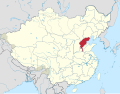
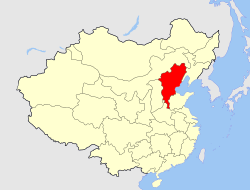
Zhili, alternately romanized as Chihli, was a northern administrative region of China since the 14th century that lasted through the Ming dynasty and Qing dynasty until 1911, when the region was dissolved, converted to a province, and renamed Hopei in 1928. The capital city of Imperial China, Beijing, was located within Zhili.

History

[edit]

The name Zhili means "directly ruled" and indicates regions directly ruled by the imperial government of China.[1] Zhili province was first constituted during the Ming dynasty when the capital of China was located at Nanjing along the Yangtze River. In 1403, the Ming Yongle Emperor relocated the capital to Beiping, which was subsequently renamed Beijing.[2] The region known as North Zhili was composed of parts of the modern provinces of Hebei, Henan, Shandong, including the provincial-level municipalities of Beijing and Tianjin. There was another region located around the "reserve capital" Nanjing known as South Zhili that included parts of what are today the provinces of Jiangsu and Anhui, including the provincial-level municipality of Shanghai.

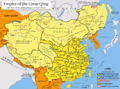
During the Qing dynasty, Nanjing lost its status as the "second capital" and Southern Zhili was reconstituted as a regular province, Jiangnan, while Northern Zhili was renamed Zhili Province. In the 18th century the borders of Zhili province were redrawn and spread over what is today Beijing, Tianjin and the provinces of Hebei, Western Liaoning, Northern Henan, and the Inner Mongolia Autonomous Region.[citation needed]

After the collapse of Qing dynasty, in 1911, the National Government of the Republic of China converted Zhili into a province as Zhili Province. In 1928 the National Government assigned portions of northern Zhili province to its neighbors in the north and renamed the remainder Hebei Province.

See also

[edit]
[edit]

References

[edit]
[edit]
Revisions and contributorsEdit on WikipediaRead on Wikipedia
from Grokipedia
Zhili (直隶; Zhílì) was a province in northern China under direct central government control during the Ming (1368–1644) and Qing (1644–1912) dynasties. Its name denoted "directly ruled" status that bypassed provincial intermediaries to ensure imperial oversight near the capital Beijing. The province's territory encompassed Beijing as its political core, along with Baoding as administrative seat. It extended across areas now forming Hebei province, Tianjin municipality, and portions of adjacent regions, including twenty prefectures and subprefectures by the Qianlong to Guangxu eras. As the metropolitan heartland surrounding the throne, Zhili bore critical strategic weight for dynastic defense, revenue collection, and governance. The Viceroy of Zhili wielded influence over foreign affairs and military matters in the late Qing period. Its proximity to power also positioned it at the forefront of modernization initiatives, such as industrial projects in Baoding, amid broader empire-wide transformations. Following the 1911 Revolution, Zhili persisted into the Republican era until its dissolution in 1928, amid warlord conflicts that highlighted its enduring political volatility.

Etymology

Name and historical designations

The term Zhili (直隶; Zhílì) literally translates to "directly ruled" or "directly subordinate" in Chinese, denoting territories placed under the immediate administrative control of the imperial court, bypassing regional governors or intermediate bureaucratic layers to ensure centralized authority. This underscored the strategic importance of the area surrounding the capital, where direct oversight facilitated rapid implementation and resource mobilization for the . During the (1368–1644), the northern region was formally designated Beizhili (北直隶; Běizhílì), meaning "Northern Directly Ruled," to differentiate it from Nanzhili (南直隶; Nánzhílì), or "Southern Directly Ruled," which encompassed areas around , the initial Ming capital. This bifurcation reflected the dual-capital system after the relocated the primary seat of power to in 1421, yet retained Nanjing's symbolic status. The Zhili label thus emphasized not regional autonomy but the emperor's unmediated governance over core heartlands. Under the Qing dynasty (1644–1912), with Beijing as the undisputed capital, the northern entity was simply termed Zhili Province (直隶省; Zhílǐ Shěng), dropping the directional prefix while maintaining the connotation of direct imperial attachment; the former Nanzhili had been reorganized into Jiangsu and Anhui provinces by 1667. Western cartographers romanized it as "Chihli" or "Pe-tche-li," as seen in 18th- and 19th-century maps, preserving the phonetic rendering of its administrative significance without altering its etymological roots in centralist hierarchy.

Geography

Territorial boundaries and extent

Zhili Province, as the directly administered territory surrounding the Qing capital at , encompassed an area roughly equivalent to the core of modern Province, including and but excluding western and eastern peripheral districts that were later organized separately, such as Rehe and Chahar. This territory spanned approximately 130,000 square kilometers, centered on the . Its northern boundaries extended into regions now part of , with jurisdictional overlaps involving Mongol leagues under the Lifan Yuan. To the south, the province bordered along the . The eastern extent reached the , facilitating maritime access near . Western limits followed the , abutting Province. Due to Zhili's status as a directly controlled under the imperial court, its borders remained somewhat fluid throughout the Qing era, subject to administrative reallocations for strategic or fiscal purposes, as documented in 19th-century gazetteers and official maps. These adjustments prioritized central oversight over fixed provincial demarcation, distinguishing Zhili from outer provinces.

Physical geography and climate

Zhili Province occupied a central position on the , a vast alluvial expanse formed by sediment deposits from the and its tributaries, featuring deep, fertile and soils that supported intensive , particularly wheat and millet cultivation. This lowland terrain, averaging 50 meters above sea level, extended across much of the province's interior, fostering dense rural populations but limiting topographic diversity. To the west, the rose sharply as a fault-block range, attaining elevations of 1,000 to 1,200 meters and serving as a watershed divide between the plain and the drier loess plateau beyond, while narrower coastal plains fringed the eastern seaboard along the Bohai Gulf, incorporating tidal flats and estuaries suitable for salt production. The province's drainage was centered on the system, a network of five principal tributaries—the Yongding River from the Taihang foothills, the Chao River from the Yan Mountains to the north, the Ziya and rivers from the south, and segments of the Grand Canal—converging near before emptying into the . These waterways, fed by seasonal rains and , enabled and via the canal's northern branches but amplified flood hazards through and channel shifts, as documented in Qing-era flood records. Settlement concentrated along these fertile valleys, though the flat topography offered scant natural flood barriers, contributing to recurrent inundations that disrupted agrarian economies. Zhili's followed a temperate pattern, marked by cold, arid winters with Beijing-area averages near -5°C and hot, humid summers peaking at 30°C in July, driven by the East Asian monsoon that delivered 60-70% of annual (approximately 600 mm) between and . Historical reconstructions reveal decadal swings exceeding 1°C in the during the Qing period, intensifying crop failures amid variable rainfall. The region suffered frequent extremes, including prolonged droughts like the 1876-1879 North China Famine, which devastated Zhili's harvests through arid conditions and locust plagues, killing millions, and floods spilling into Hai tributaries, as chronicled in imperial gazetteers and relief memorials. Such vulnerabilities stemmed from the plain's reliance on precise seasonal rains, with deficiencies or excesses routinely triggering famines and migrations.

History

Origins and early establishment

The region comprising Zhili emerged during the (1271–1368) as the core administrative zone surrounding the capital Dadu (modern ), established by in 1272 to centralize control over conquered Chinese territories and facilitate Mongol oversight of the empire's southern domains. This area, encompassing parts of modern , , and , prioritized direct imperial administration to manage taxation, military garrisons, and communication routes, reflecting the Yuan's hierarchical structure where the capital region operated under the Zhongshu Sheng secretariat without intermediate provincial layers. With the founding of the in 1368, the northern territory was reorganized under direct central authority, initially as part of the Beiping administrative setup before being formalized as Beizhili (North Zhili) in 1407 during the Yongle Emperor's reign (1402–1424), distinguishing it from Nanzhili around and underscoring its role as the metropolitan hub after Beijing's designation as capital in 1421. This structure bypassed delegated provincial governance, placing prefectures like Shuntian (Beijing) and under the immediate jurisdiction of the Six Ministries in the capital to ensure efficient resource allocation and loyalty in the politically sensitive northern frontier. Baoding, as a key secondary center, supported early , with Ming household registrations indicating dense settlement patterns driven by agricultural productivity and proximity to the capital. Following the Qing conquest of in 1644, the Manchu rulers retained Zhili's direct-governed status, as affirmed in Shunzhi-era edicts (1644–1661), to secure the vulnerable capital against Han resistance and Mongol threats, maintaining centralized military and fiscal control without appointing a full viceroy akin to outer provinces. This continuity emphasized causal priorities of regime stability, with the region's strategic encirclement of necessitating undivided imperial oversight rather than regional autonomy.

Administration and role in the Qing dynasty


Zhili Province was governed through a centralized structure under the Viceroy of Zhili (Zhili Zongdu), a position established to oversee military, civil, and political affairs directly subordinate to the imperial throne. This viceroy managed the core region encompassing modern Hebei, Beijing suburbs, and Tianjin, ensuring tight control over the capital's environs following the Qing conquest of Beijing in 1644. The role's prestige stemmed from its proximity to the Forbidden City, positioning it as the most influential among Qing viceroys, with responsibilities extending at times to adjacent provinces like Shandong and Henan for coordinated defense and administration.
Tax collection and grain tribute formed a cornerstone of Zhili's administrative duties, channeling resources to sustain the court and its vast bureaucracy. The province's fertile enabled substantial agricultural output, including rice and wheat, which supported local levies and supplemented the southern grain tribute transported via the Grand Canal. Records from the Qing period highlight Zhili's role in the caoliang system, where grain was amassed for imperial needs, with the supervising distribution to prevent shortages in the capital amid fluctuating harvests. This integration underscored the province's economic primacy, as land taxes in silver and grain directly funded military garrisons and palace expenditures. Zhili's strategic location facilitated rapid imperial responses to internal threats, exemplifying effective centralized command. During the Eight Trigrams uprising of , linked to White Lotus sects, rebels infiltrated the while unrest spread across Zhili, , and ; the mobilized nearby troops to quell the disorder within months, minimizing disruption to core governance. Such proximity to elite forces, including the stationed in , allowed for swift suppression compared to distant provinces, reinforcing Zhili's function as the dynasty's defensive bulwark. This administrative model prioritized causal linkages between imperial oversight and regional stability, averting broader escalations through preemptive action.

Late Qing developments and industrialization

During the late 19th century, Zhili Province underwent targeted modernization initiatives under Viceroy Li Hongzhang, who held the position intermittently from 1870 to 1895 and leveraged it as a base for the Self-Strengthening Movement's industrial experiments. Li prioritized military-industrial development, establishing facilities like the Tianjin Machine Bureau in 1867 to manufacture artillery, rifles, and ammunition using Western techniques, which by the 1880s produced thousands of modern weapons annually despite reliance on foreign expertise. These efforts challenged assumptions of Qing-wide stagnation, as Zhili's output contributed to regional self-sufficiency in armaments, though bureaucratic corruption and skill gaps limited scalability. A cornerstone of Zhili's industrialization was the Kaiping Mines, initiated in 1877 under Li's auspices by Tang Tingshu in Tongshan County, representing China's inaugural large-scale mechanized operation with steam engines and rail haulage. Production ramped up from initial trials to 187,000 tons of per year by 1892, fueling steamships and factories while spurring ancillary infrastructure like the Tangshan-to-Lüjütuo railway (completed 1881), the mainland's first such line at 10 kilometers. and telegraph developments followed, with Li overseeing the installation of domestic telegraph networks linking , , and coastal ports by the mid-, enhancing administrative coordination amid foreign treaty pressures. Empirical records from these enterprises show incremental growth— yields doubling in the —but inefficiencies, including foreign engineer dependencies and graft, tempered broader economic transformation before 1911. Complementary civil engineering included flood mitigation along the Yongding and Hai Rivers, where late Qing officials under Li's oversight reinforced dikes and reservoirs, averting major inundations in the 1880s-1890s through empirical surveys rather than ritualistic approaches. These measures, verified in provincial gazetteers and treaty port logs, stabilized agriculture in flood-prone northern plains, supporting modest industrial inputs like for nascent mills near . While critics highlight the movement's failure to foster systemic innovation—evident in stalled railway expansion post-Boxer —Zhili's verifiable outputs, such as Kaiping's tonnage, demonstrate localized efficacy against narratives of total inertia.

Abolition and transition to the Republic

![Zhili during the Republican era](./assets/Republic_of_China_edcp_location_map_disputedterritoriesdisputed_territories Following the Xinhai Revolution of 1911, which ended the , Zhili Province initially persisted under the nominal authority of the in the early Republic of China, though its governance fragmented amid the rise of regional . The , centered on military figures like and , exerted dominant control over the province and during the early 1920s, engaging in conflicts such as the Zhili-Anhui War of 1920 and the First Zhili-Fengtian War of 1922. This period saw repeated shifts in power, with the under briefly allying then clashing with Zhili forces, leading to unstable administration despite the province's formal retention. The , launched by the in July 1926 under , decisively undermined warlord dominance in northern , including Zhili, by defeating key Beiyang factions and capturing in June 1928. This campaign, aimed at unifying the country under Nationalist rule, progressed northward from , overcoming alliances of warlords like and , thereby eroding Zhili's fragmented control structures. By mid-1928, Nationalist forces had secured the region, paving the way for reforms that addressed Zhili's unique status as the capital's direct province. On June 20, 1928, coinciding with Nanjing's designation as the Republic's capital, the Nationalist government formally abolished Zhili Province and redesignated its territory as Hebei Province, reflecting the shift away from Beijing's centrality. Beijing itself was renamed Beiping ("Northern Peace") to diminish its symbolic imperial and political prominence, stripping Zhili of its longstanding role as the "directly ruled" heartland. Despite these upheavals, local administrative units such as prefectures and counties exhibited continuity, as evidenced by ongoing gazetteer compilations that preserved Qing-era subdivisions under the new provincial framework. This transition marked the end of Zhili's two-century existence, integrating its territories into the Republican administrative system while subordinating them to Nanjing's authority.

Government and Administration

Central governance structure

Zhili Province operated under a unique central governance framework in the , characterized by direct subordination to the imperial court rather than the standard provincial (xunfu) system prevalent in other regions. The Viceroy of Zhili, also known as the Governor-General of Zhili, held supreme authority over civil, military, and fiscal administration, reporting directly to the emperor and bypassing intermediate layers of provincial bureaucracy. This arrangement stemmed from Zhili's strategic position encircling the capital , necessitating tight imperial control to safeguard the throne and streamline decision-making. Fiscal oversight was integrated through the Board of Revenue (Hubu), which maintained direct influence over Zhili's tax collection and resource allocation due to the province's economic centrality, including salt administration and land revenues that funded the court. This direct linkage reduced administrative delays, enabling quicker enforcement of edicts compared to peripherally governed provinces, where multi-tiered approvals often slowed responses. The viceroy's office in served as the administrative hub, coordinating with central ministries while maintaining autonomy in local execution. At the provincial level, Zhili's subdivisions followed a hierarchical outlined in the official gazetteer Da Qing Yitong Zhi, comprising (circuits) under the , followed by fu (prefectures), zhou (departments or subprefectures), and (counties). Unlike standard provinces, certain zhou and ting (special departments) reported directly to the provincial apparatus without intermediate prefectural oversight, enhancing operational efficiency. By the mid-Qing, this included eight principal fu, such as Shuntian Fu incorporating , with adjustments over time to accommodate urban growth and imperial needs.

Key officials and viceroys

The of Zhili held paramount authority over the province's military, civil administration, and foreign relations, given its proximity to the imperial capital, with the provincial seat at serving as the operational hub for policy execution. This position often concentrated power in individuals who leveraged personal patronage networks, enabling rapid decision-making but fostering dependency on elite alliances rather than institutionalized processes, as evidenced by the career trajectories of key holders who advanced through ties within the Qing . Li Hongzhang exemplified this role, serving as of Zhili for a cumulative 25 years during the late , including appointments starting in 1870, during which he directed northern coastal defenses, negotiated with foreign powers amid unequal treaties, and sponsored early industrial initiatives like arsenals and shipping yards to bolster self-strengthening efforts. From , Li coordinated responses to crises such as the (1884–1885), prioritizing pragmatic modernization over ideological purity, though his reliance on loyalists highlighted the viceroy's informal sway through clientelist structures rather than uniform imperial directives. Yuan Shikai emerged as another pivotal figure, appointed of Zhili in November 1901 following Li's death, a post he held until 1908 while expanding the New Army's influence in the region. Earlier, in 1898, as commander of the emerging modern forces near under Li's Beiyang apparatus, Yuan played a decisive role in thwarting the by alerting to reformers' plans, enabling her coup that arrested Guangxu and executed key advocates, thereby demonstrating how Zhili-based officials could pivot imperial power balances through military leverage and selective loyalty shifts. This episode underscored the viceroys' outsized policy impact, often hinging on opportunistic networks amid central court factionalism, with Yuan's actions preserving conservative dominance at the expense of systemic overhaul.

Administrative subdivisions

Zhili Province was subdivided into ten prefectures (): , , Yongping, Hejian, , Zhengding, Shunde, Guangping, Xuanhua, and Daming; and six directly governed departments (zhílì zhōu): Zunhua, Yizhou, Jizhou, Zhaozhou, Shenzhou, and Dingzhou. These second-level divisions oversaw a network of counties (xiàn) and subprefectures (tīng), totaling over 100 county-level units by the mid-Qing period. Baoding Prefecture served as the administrative seat for the viceroy of Zhili, facilitating centralized oversight of provincial affairs outside the capital region. Beijing, encompassing Shuntian Prefecture, operated as a special metropolitan area directly under the imperial court's Ministries of Personnel and Rites, exempt from routine provincial governance. County-level gazetteers from the Qianlong era (1735–1796) indicate population concentrations in the eastern plains prefectures, such as and Daming, where fertile alluvial soils supported higher densities of up to 200 persons per square li, compared to sparser mountainous western areas like Xuanhua. This distribution reflected Zhili's role as a demographic core, with aggregate provincial population exceeding 26 million by 1811 per official tallies.

Economy

Agricultural base

Zhili Province's agricultural economy rested primarily on the fertile loess soils of the North China Plain, where smallholder family farms cultivated staple grains including winter wheat, setaria millet, and sorghum in rotation, supplemented by cotton as the leading cash crop. These crops supported dense populations through intensive labor practices, with farm units typically comprising 5-10 mu per household, enabling basic self-sufficiency in grain production amid limited land availability. Qing-era grain price records from Zhili memorials document consistent local surpluses, as evidenced by market integration in wheat, millet, and sorghum prices across subregions from 1738 to the early 20th century, which facilitated trade and buffered against periodic shortages despite the plain's vulnerability to drought. The Grand Canal enhanced Zhili's agrarian role by serving as the primary conduit for tribute grain shipments from southern provinces like to , with annual quotas stabilizing at around 4 million shi (or dan) of by the mid-Qing period, directly sustaining the capital's requirements and indirectly stimulating northern logistics and storage infrastructure. Agricultural surveys and price data underscore the province's resilience, contradicting narratives of inherent proneness; for instance, millet and yields sustained output growth into the , supported by rudimentary from wells and canals that leveraged the plain's alluvial fertility for double-cropping in favorable years. Family-based operations minimized feudal extractions, prioritizing output for household consumption and local markets over demands, which were lighter in Zhili compared to southern regions.

Emerging industries and trade

In the late Qing period, Zhili province experienced nascent industrialization driven by state-sponsored enterprises under the . The coal mines, established in 1877 by , marked one of 's earliest successful adoptions of Western mining technology on a large scale, with the first shaft sunk in 1879 near . These operations supplied coal to steamships via the China Merchants' Steam Navigation Company and supported regional industry, producing thousands of tons annually by the 1880s despite initial reliance on foreign expertise and eventual British acquisition in 1901, which critics argued exemplified unequal foreign dominance but undeniably scaled output beyond traditional methods. Tianjin, opened as a treaty port under the 1858 Treaty of Tianjin following the Second Opium War, emerged as a hub for proto-industrial activities, including the establishment of modern mills and machine factories during the 1870s–1890s. Facilities like the Machine Factory, founded amid Self-Strengthening efforts, produced machinery that indirectly bolstered production, while foreign concessions facilitated imports of spinning equipment, enabling exports of goods through the port's maritime trade networks. These developments shifted some local economies from agrarian dependence, though output remained modest compared to coastal rivals like , with ventures often blending state oversight and merchant capital to mitigate risks of foreign monopolization. Railway construction further catalyzed internal trade, exemplified by the Beijing–Hankou line, initiated in 1897 and completed in segments by 1906 under Belgian financing with French backing. Traversing northern Zhili, this 1,214-kilometer route linked the capital to , reducing transport costs for , grains, and manufactures, thereby enhancing provincial despite controversies over foreign loans and rights recovery demands post-Boxer Rebellion. Overall, these initiatives, while critiqued for entrenching foreign influence, introduced mechanized production and infrastructure that laid groundwork for modern , with fiscal records indicating rising non-agricultural revenues from and likin taxes on industrial goods by the early .

Society and Culture

Population and demographics

Zhili Province exhibited high during the , particularly in the environs of , reflecting its status as the political and administrative core of the empire. Official records indicate a of approximately 14 million in 1749, with estimates rising to around 20 million by the late amid broader demographic expansion driven by agricultural improvements and relative stability. The province's inhabitants were overwhelmingly , comprising the vast majority, while Manchu bannermen and their dependents formed concentrated garrisons in under the system, numbering in the hundreds of thousands but representing a small fraction—less than 2%—of the total provincial populace. Migration patterns featured substantial rural-to-urban flows toward , fueled by demand for labor in , services, and imperial administration, though restricted by the household registration system that tied most peasants to their native locales. This influx contributed to urban concentration, with 's population swelling to over 1 million by the mid-18th century, exacerbating pressures on resources in the capital region. labor obligations, which primarily drafted able-bodied men for state projects such as maintenance and fortifications, temporarily skewed local sex ratios in rural areas, often leaving higher proportions of women and children behind during peak mobilization periods. Demographic shocks, notably the North China Famine of 1876–1879 triggered by prolonged drought, inflicted massive mortality in Zhili, with estimates of 2.5 million deaths in the province alone amid a regional toll exceeding 9 million. This catastrophe, compounded by inadequate relief infrastructure and infestations, reversed prior growth trends and highlighted vulnerabilities in the densely settled northern plains. Recovery was gradual, sustained by resumed agricultural productivity, but the event underscored the fragility of Zhili's human composition to environmental stressors.

Cultural institutions and martial traditions

Zhili's martial traditions, centered in , originated during the Western (206 BCE–24 CE), prioritizing functional methods derived from military training over later mythological attributions common in some narratives. Baoding's role as the capital of Zhili Province from 1669 onward solidified its position as a regional center for these practices, which emphasized combat efficacy in response to local security needs rather than esoteric or ritualistic elements. Confucian temples and academies in Zhili reinforced orthodox scholarship, serving as key venues for ritual veneration and intellectual preparation amid the province's proximity to the imperial capital. The in , constructed in 1302 and repeatedly repaired through the Qing era (1644–1912), hosted sacrifices and housed ancestral tablets of sages, promoting state-aligned Confucian ethics without syncretic religious deviations. Clan temples and private academies (shuyuan) further supported this framework by offering tuition-based education to local elites, focusing on classical texts to groom candidates for . These institutions contributed to Zhili's outsized influence in the system, where the province's strategic location facilitated higher participation and logistical advantages for metropolitan-level testing in , though overall pass rates remained under 1% empire-wide due to the system's selectivity. The Lianchi Academy in , established in the , exemplified this by nurturing scholars who achieved renown in classical learning and examination success. Folk cultural expressions, including regional opera performances and seasonal festivals, were documented in local gazetteers as community rituals tied to agrarian cycles, often staged at temple grounds to blend Confucian moral instruction with vernacular entertainment.

Military Significance

Strategic importance in imperial defense

Zhili Province, directly encircling , served as the Qing Dynasty's primary buffer against internal and northern threats to the imperial throne, with its territory providing immediate defensive depth. The province hosted extensive garrisons, the Manchu elite forces tasked with safeguarding the capital, which occupied prime lands to ensure rapid deployment and loyalty to the emperor. These units, numbering tens of thousands by the early , formed the core of the empire's rapid-response capabilities, leveraging Zhili's central rail and road networks—developed from Grand Canal extensions—for efficient supply from southern granaries. Key fortifications, including the Gubeikou pass along the Great Wall in eastern Zhili, anchored northern defenses against potential Mongol unrest or spillover from Inner Asian frontiers, despite the Qing's nominal control over those regions. This strategic positioning allowed for layered barriers, with and emplacements enabling early warning and concentrated firepower; historical records note over 100 battles at Gubeikou prior to the Qing, underscoring its enduring role in repelling raids. Zhili's flat terrain and proximity to facilitated swift maneuvers, contrasting with more rugged peripheral provinces. During the Taiping Rebellion (1850–1864), Zhili's defenses proved vital when rebel forces under briefly penetrated its borders in 1855, prompting urgent reinforcements that contained the incursion before it threatened the capital. Similarly, in the prelude to the Boxer Uprising of 1900, local garrisons in Zhili mobilized against proto-Boxer militias spreading from , demonstrating the province's efficacy in quelling grassroots unrest through coordinated banner and actions. These episodes highlighted Zhili's logistical primacy, as central edicts could deploy 20,000–30,000 troops within days, preserving dynastic stability amid widespread provincial revolts.

The Zhili Clique in the warlord era

The coalesced in the late 1910s from remnants of the , with and emerging as key leaders following Feng Guozhang's tenure, establishing a power base centered on the former Zhili Province encompassing and adjacent territories. This regional foundation provided a claim to legitimacy in the fragmented Republic of China, where cliques invoked provincial ties to assert control over central institutions amid the collapse of unified authority after Yuan Shikai's death in 1916. , a traditionally educated officer, commanded disciplined forces that emphasized Confucian moral rhetoric to differentiate from rivals, though governance relied on military coercion rather than broad institutional reform. The clique's ascendancy accelerated with victory in the Zhili-Anhui War of July 1920, where Wu Peifu's troops decisively defeated the Anhui Clique's forces under near , securing dominance over northern rail lines and the capital. This success enabled temporary control of the national government, but internal fissures surfaced, including Cao Kun's controversial election as president in through of parliamentarians costing an estimated 30 million yuan in silver dollars. Despite such authoritarian measures, the clique repelled the in the First Zhili-Fengtian War of April-July 1922, consolidating influence over , , and provinces by mid-decade. Peak power unraveled during the Second Zhili-Fengtian War starting September 1924, as initial advances toward Shanhaiguan were undermined by Feng Yuxiang's defection via the Coup on October 23, 1924, which imprisoned and dispersed Zhili units. Wu Peifu retreated southward, preserving remnants in , but escalating conflicts with southern warlords and the National Revolutionary Army's from 1926 eroded further holdings. By April 1927, forces under captured key positions from Wu's army in , and the clique's dissolution was complete by June 1928 when fell, marking the end of its pretensions to national unification through fragmented military dominance rather than effective governance.

Legacy

Influence on modern Hebei province

In 1928, during the Nationalist government's administrative reforms, Zhili Province was dissolved and reorganized as Province, incorporating the bulk of its territory while excluding and , which were designated as special municipalities. This redesignation preserved much of Zhili's provincial boundaries, with retaining its role as a historical administrative center, having served as the capital of Zhili and early until Shijiazhuang's elevation in 1958. Segments of the Grand Canal traversing Zhili's territory continue to support and in , forming a core element of the province's water infrastructure that facilitated agricultural stability into the Republican and eras. Early railways, such as the 1881 Tangshan to Kaiping line in northern Zhili, initiated networks that expanded into Hebei's modern rail system, connecting major cities and underpinning industrial development as documented in late Qing records. Hebei's population maintains strong demographic continuity with Zhili, dominated by groups whose settlement patterns and urban concentrations—centered on nuclei like and surrounding Beijing-Tianjin—persist from Qing-era migrations and densities exceeding 400 million nationwide by 1850. , detached as a in 1928 but originating as a Zhili , exemplifies this urban legacy, with its population growth tied to pre-Republican trade hubs.

Historical evaluations of governance effectiveness

Scholars have evaluated Zhili's governance as particularly effective due to its central position surrounding the imperial capital, enabling rigorous direct oversight by the and central , which minimized bureaucratic drift observed in peripheral provinces. This proximity facilitated frequent audits and imperial interventions, contributing to higher tax retention rates and lower incidence of compared to distant regions like or , where local officials faced less scrutiny. from eighteenth-century fiscal records indicates that core northern provinces, including Zhili, remitted up to 20-30% more revenue to per capita than southern counterparts, attributable to reduced leakage from corrupt practices. In the mid-Qing era, this centralized model supported adaptive , as seen in the efficient famine relief during the 1743-1744 , where Zhili authorities mobilized reserves and transport networks to avert mass , sustaining over 1 million affected households through coordinated grain distribution under direct court supervision. Evaluations highlight how such proximity allowed for real-time policy adjustments, contrasting with slower responses in remote areas; for instance, imperial edicts reached Zhili viceroys within days, enabling preemptive measures that limited mortality to under 5% of the in affected circuits. Late Qing criticisms often portray Zhili's administration as rigid and unresponsive amid national decline, yet data under viceroys like (1870-1895) rebut this with measurable advancements in . Li oversaw the establishment of textile mills and arsenals in the province, boosting output to over 10,000 spindles by 1890 and generating annual revenues exceeding 2 million taels from state-supervised enterprises, which outperformed stagnant sectors in less centralized provinces. These metrics underscore causal links between direct central and policy innovation, as viceroys balanced imperial directives with local experimentation, fostering resilience against uniform narratives of dynastic decay.

References

Add your contribution
Related Hubs
User Avatar
No comments yet.