


Community hub
Recent from talks
Contribute something
Nothing was collected or created yet.
Angiotensin-converting enzyme 2
View on Wikipedia


Angiotensin-converting enzyme 2 (ACE2)[5] is an enzyme that can be found either attached to the membrane of cells (mACE2) in the intestines, kidney, testis, gallbladder, and heart or in a soluble form (sACE2).[6][7][8] Both membrane bound and soluble ACE2 are integral parts of the renin–angiotensin–aldosterone system (RAAS) that exists to keep the body's blood pressure in check. mACE2 is cleaved by the enzyme ADAM17 in a process regulated by substrate presentation. ADAM17 cleavage releases the extracellular domain creating soluble ACE2 (sACE2).[9] ACE2 enzyme activity opposes the classical arm of the RAAS by lowering blood pressure through catalyzing the hydrolysis of angiotensin II (a vasoconstrictor peptide which raises blood pressure) into angiotensin (1–7) (a vasodilator).[8][10][11] Angiotensin (1-7) in turns binds to MasR receptors creating localized vasodilation and hence decreasing blood pressure.[12] This decrease in blood pressure makes the entire process a promising drug target for treating cardiovascular diseases.[13][14]
mACE2 also serves as the entry point into cells for some coronaviruses, including HCoV-NL63, SARS-CoV, and SARS-CoV-2.[5] While mACE2's function is not that of a biological receptor, because of its receptor-like interaction with viruses it is also referred to as the ACE2 receptor.[15] The human version of the enzyme can be referred to as hACE2.[16]
Tissue distribution
[edit]mACE2 is attached to the cell membrane of mainly enterocytes of the small intestine and duodenum, proximal tubular cells of the kidneys, glandular cells of the gallbladder, as well as Sertoli cells and Leydig cells of the testis.[6] The expression profile of mACE2 in the human body was recently thoroughly evaluated by the Human Protein Atlas team using a large-scale multiomics approach combining several different methods for analysis of gene expression, including a stringent immunohistochemical analysis using two independent antibodies.[6][17] In addition to the above-mentioned issues, mACE2 expression was also seen in endothelial cells and pericytes of blood vessels within certain tissues, cardiomyocytes in heart tissue, and a smaller subset of cells within the thyroid gland, epididymis, seminal vesicle, pancreas, liver and placenta. Despite the fact that the respiratory system is the primary route of SARS-CoV-2 infection, very limited expression is seen, both at protein and mRNA level. The expression within the respiratory system is mainly restricted to the upper bronchial and nasal epithelia, especially in the ciliated cells.[18]
Structure
[edit]| Angiotensin-converting enzyme 2 | |||||||||
|---|---|---|---|---|---|---|---|---|---|
| Identifiers | |||||||||
| EC no. | 3.4.17.23 | ||||||||
| Databases | |||||||||
| IntEnz | IntEnz view | ||||||||
| BRENDA | BRENDA entry | ||||||||
| ExPASy | NiceZyme view | ||||||||
| KEGG | KEGG entry | ||||||||
| MetaCyc | metabolic pathway | ||||||||
| PRIAM | profile | ||||||||
| PDB structures | RCSB PDB PDBe PDBsum | ||||||||
| |||||||||
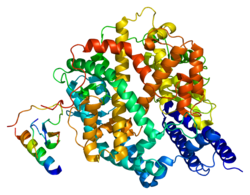
Membrane bound angiotensin-converting enzyme 2 (mACE2) is a zinc-containing metalloenzyme located on the surface of intestinal enterocytes, renal tubular cells and other cells.[6][19] mACE2 protein contains an N-terminal peptidase M2 domain and a C-terminal collectrin renal amino acid transporter domain.[19]
mACE2 is a single-pass type I membrane protein, with its enzymatically active domain exposed on the surface of cells in the intestines and other tissues.[6][7] The extracellular domain of mACE2 can be cleaved from the transmembrane domain by another enzyme known as ADAM17 a member of the sheddase enzyme family, during the protective phase of RAAS, the Renin–Angiotensin–Aldosterone System, which regulates our body's blood pressure. The resulting cleaved protein is known as soluble ACE2 or sACE2. It is released into the bloodstream where one of sACE2's functions is to turn excess angiotensin II into angiotensin 1-7 which binds to MasR receptors creating localized vasodilation and hence decreasing blood pressure. Excess sACE2 may ultimately be excreted in the urine.[20][21]
Function
[edit]As part of the renin–angiotensin–aldosterone system (RAAS) protective phase, soluble ACE2's (sACE2) important function is to act as a counterbalance to the angiotensin-converting enzyme (ACE). ACE cleaves angiotensin I hormone into the vasoconstricting angiotensin II which causes a cascade of hormonal reactions which is part of the body's harmful phase of RAAS, which ultimately leads to an increase in the body's blood pressure. ACE2 has an opposing effect to ACE, degrading angiotensin II into angiotensin (1-7), thereby lowering blood pressure.[22][23]
sACE2, as part of RAAS's protective phase, cleaves the carboxyl-terminal amino acid phenylalanine from angiotensin II (Asp-Arg-Val-Tyr-Ile-His-Pro-Phe) and hydrolyses it into the vasodilator angiotensin (1-7) (H-Asp-Arg-Val-Tyr-Ile-His-Pro-OH), which binds to Mas Receptors and ultimately leads to a decrease in blood pressure.[24][19] sACE2 can also cleave numerous peptides, including [des-Arg9]-bradykinin, apelin, neurotensin, dynorphin A, and ghrelin.[19]
mACE2 also regulates the membrane trafficking of the neutral amino acid transporter SLC6A19 and has been implicated in Hartnup's disease.[25][26][27]
Research in mice has shown that ACE2 (whether it is the membrane bound version or soluble is inconclusive) is involved in regulation of the blood glucose level but its mechanism is yet to be confirmed.[28][29]
Clinical significance
[edit]Coronavirus entry point
[edit]As a transmembrane protein, mACE2 is the main entry receptor for several coronaviruses, including HCoV-NL63,[5] SARS-CoV (the cause of SARS),[30][31][32] and SARS-CoV-2 (the cause of COVID-19).[33][34][35][36][37][38] The binding of the viral spike S1 protein to the enzymatic domain of mACE2 on host cells initiates endocytosis and translocation of both virus and enzyme into endosomes.[39][40] Blocking endocytosis in culture traps virus particles on the cell surface.[41] The spike protein itself can also damage the endothelium through downregulation of ACE2.[42] The receptor-binding domain (RBD) of the spike protein specifically attaches to ACE2, enabling viral entry and replication,[38] while surfactant proteins SP-A and SP-D may reduce the strength of this interaction.[38]
Binding of SARS-CoV and SARS-CoV-2 through mACE2 in cardiac tissue has been linked to myocarditis. During the SARS outbreak, viral RNA was detected in heart specimens from 35% of fatal cases,[43] and diseased hearts express higher levels of mACE2 than healthy hearts.[44] Entry also requires priming of the spike protein by host serine protease TMPRSS2, a potential therapeutic target,[45][18] and disruption of spike glycosylation strongly impairs viral entry.[46] In mice, spike binding reduces mACE2 through internalization and degradation, contributing to lung injury.[47][48] By contrast, sACE2 protects against lung injury by promoting formation of angiotensin 1–7, a vasodilator, and may also neutralize coronavirus spikes by binding them.[37] Even low mACE2 levels can allow entry if TMPRSS2 is present.[49]
Rodent studies have shown that ACE inhibitors and angiotensin II receptor blockers (ARBs) upregulate mACE2, raising concern they might worsen infections.[50][51] However, a 2012 systematic review and meta-analysis found ACE inhibitors reduced pneumonia risk by 34% and lowered pneumonia-related mortality.[52] A 2020 study in Hubei Province reported lower mortality in hypertensive COVID-19 patients taking ACE inhibitors or ARBs (3.7%) compared to those not taking them (9.8%).[53] Despite debate over discontinuation,[54] professional societies recommend continuing ACE inhibitors and ARBs in COVID-19 patients.[55][56][57] High plasma ACE2 levels predict worse COVID-19 outcomes, and are elevated in patients with hypertension and heart disease.[58]
Because ACE2 is the entry receptor for SARS-CoV-2, genetic variation may influence susceptibility to infection. Several studies report that ACE2 missense variants alter spike-binding affinity[59][60][61] and susceptibility to pseudovirus entry.[62] Rare variants may even confer complete resistance.[61] Expression levels of ACE2 at the cell surface also influence susceptibility and tissue tropism,[62][63] since SARS-CoV-2 distribution depends on ACE2 expression across tissues.[64] A variant on the X chromosome (rs190509934:C) lowers ACE2 expression by 37% and has been associated with protection against severe COVID-19 outcomes.[65]
Recombinant ACE2
[edit]Recombinant human ACE2 (rhACE2) is being developed as an enzymatically active, soluble "decoy" that both binds the SARS-CoV-2 spike protein to block cell entry and converts angiotensin II to angiotensin-(1–7), thereby rebalancing the renin–angiotensin system. This dual mechanism underpins its proposed use in viral pneumonias and lung or vascular injury.[66][67] In humans, rhACE2 has a half-life of ~10 hours, an onset of action of about 30 minutes, and a duration of ~24 hours,[68] and may be useful for patients intolerant to classic RAS inhibitors or in conditions with elevated circulating angiotensin II.[68]
Preclinical studies have demonstrated protective effects in lung injury. In a piglet model of lipopolysaccharide-induced acute respiratory distress syndrome (ARDS), rhACE2 improved pulmonary blood flow and oxygenation.[68] Clinical-grade human recombinant soluble ACE2 (hrsACE2) also reduced SARS-CoV-2 recovery from vero cells by 1,000–5,000-fold in vitro, whereas the mouse ortholog had no such effect, consistent with a decoy mechanism.[69] Engineered ACE2 mutants with enhanced affinity for the viral Spike protein neutralised SARS-CoV-2 in vitro,[70] and a triple-mutant (sACE2.v2.4) with nanomolar Spike binding[70] blocked pseudovirus entry in lung cell lines and prevented SARS-CoV-2–induced ARDS in ACE2-humanized mice.[71] Novel formats such as Fc-fusions, multimers, and affinity-enhanced constructs are being designed to prolong half-life and broaden neutralization against immune-evasive variants, positioning ACE2 decoys as a potentially variant-agnostic antiviral strategy.[67]
Clinically, intravenous rhACE2 (also termed APN01/GSK2586881) has been tested in ARDS,[72] pulmonary arterial hypertension (PAH), and severe COVID-19, including studies of nebulized or inhaled formulations for direct airway exposure.[67][73] Early trials showed acceptable safety and pharmacodynamic changes (decreased Ang II, increased Ang-(1–7)), and the agent progressed to phase II testing in COVID-19.[74] Nonetheless, reviews emphasize that clinical efficacy remains unproven, and further randomized studies are needed to clarify optimal dosing, delivery routes, and whether catalytic activity should be preserved versus "decoy-only" constructs.[67] Overall, rhACE2 and next-generation ACE2 decoys remain promising host-targeted therapeutics, particularly as monoclonal antibody antivirals lose potency against new SARS-CoV-2 variants.[66]
See also
[edit]References
[edit]- ^ a b c GRCh38: Ensembl release 89: ENSG00000130234 – Ensembl, May 2017
- ^ a b c GRCm38: Ensembl release 89: ENSMUSG00000015405 – Ensembl, May 2017
- ^ "Human PubMed Reference:". National Center for Biotechnology Information, U.S. National Library of Medicine.
- ^ "Mouse PubMed Reference:". National Center for Biotechnology Information, U.S. National Library of Medicine.
- ^ a b c "Gene: ACE2, angiotensin I converting enzyme 2". National Center for Biotechnology Information (NCBI). U.S. National Library of Medicine. 2020-02-28.
- ^ a b c d e Hikmet F, Méar L, Edvinsson Å, Micke P, Uhlén M, Lindskog C (July 2020). "The protein expression profile of ACE2 in human tissues". Molecular Systems Biology. 16 (7) e9610. doi:10.15252/msb.20209610. PMC 7383091. PMID 32715618.
- ^ a b Hamming I, Timens W, Bulthuis ML, Lely AT, Navis G, van Goor H (June 2004). "Tissue distribution of ACE2 protein, the functional receptor for SARS coronavirus. A first step in understanding SARS pathogenesis". The Journal of Pathology. 203 (2): 631–637. doi:10.1002/path.1570. PMC 7167720. PMID 15141377.
- ^ a b Donoghue M, Hsieh F, Baronas E, Godbout K, Gosselin M, Stagliano N, et al. (September 2000). "A novel angiotensin-converting enzyme-related carboxypeptidase (ACE2) converts angiotensin I to angiotensin 1-9". Circulation Research. 87 (5): E1 – E9. doi:10.1161/01.RES.87.5.e1. PMID 10969042.
- ^ Lambert DW, Yarski M, Warner FJ, Thornhill P, Parkin ET, Smith AI, et al. (August 2005). "Tumor necrosis factor-alpha convertase (ADAM17) mediates regulated ectodomain shedding of the severe-acute respiratory syndrome-coronavirus (SARS-CoV) receptor, angiotensin-converting enzyme-2 (ACE2)". The Journal of Biological Chemistry. 280 (34): 30113–30119. doi:10.1074/jbc.M505111200. PMC 8062222. PMID 15983030.
- ^ Keidar S, Kaplan M, Gamliel-Lazarovich A (February 2007). "ACE2 of the heart: From angiotensin I to angiotensin (1-7)". Cardiovascular Research. 73 (3): 463–469. doi:10.1016/j.cardiores.2006.09.006. PMID 17049503.
- ^ Wang W, McKinnie SM, Farhan M, Paul M, McDonald T, McLean B, et al. (August 2016). "Angiotensin-Converting Enzyme 2 Metabolizes and Partially Inactivates Pyr-Apelin-13 and Apelin-17: Physiological Effects in the Cardiovascular System". Hypertension. 68 (2): 365–377. doi:10.1161/HYPERTENSIONAHA.115.06892. PMID 27217402. S2CID 829514.
- ^ Chamsi-Pasha MA, Shao Z, Tang WH (March 2014). "Angiotensin-converting enzyme 2 as a therapeutic target for heart failure". Current Heart Failure Reports. 11 (1). Springer Science and Business Media LLC: 58–63. doi:10.1007/s11897-013-0178-0. PMC 3944399. PMID 24293035.
The discovery of ACE2 and its role in counteracting the effect of Ang-II through Ang(1-7) formation ... An imbalance in ACE2/Ang-(1–7) and ACE/Ang-II axes is critical in the development of cardiovascular diseases. The central role of ACE2, therefore, appears to counter ACE activity by reducing Ang-II bioavailability and increasing Ang(1-7) formation ... The use of RAS-modulating agents and molecules as novel therapeutic agents in hypertension and cardiovascular therapeutic research.
- ^ Chamsi-Pasha MA, Shao Z, Tang WH (March 2014). "Angiotensin-converting enzyme 2 as a therapeutic target for heart failure". Current Heart Failure Reports. 11 (1). Springer Science and Business Media LLC: 58–63. doi:10.1007/s11897-013-0178-0. PMC 3944399. PMID 24293035.
Studies with recombinant human ACE2 (rhACE2) have shown beneficial cardiac effects [18, 36]. rhACE2 has anti-fibrotic properties and can attenuate effect on systolic and diastolic dysfunction, presumably via Ang-II inhibition.
- ^ Mascolo A, Urbanek K, De Angelis A, Sessa M, Scavone C, Berrino L, et al. (March 2020). "Angiotensin II and angiotensin 1-7: which is their role in atrial fibrillation?". Heart Failure Reviews. 25 (2). Springer Science and Business Media LLC: 367–380. doi:10.1007/s10741-019-09837-7. PMID 31375968. S2CID 199388175.
the possibility of using the A1-7 or ACE2 analogues, to enlarge current therapeutic options for AF, may represent an important field of research.
- ^ Sriram K, Insel P, Loomba R. "What is the ACE2 receptor?". www.asbmb.org. Retrieved 2025-05-25.
- ^ Kasmi Y, Khataby K, Souiri A (2019). "Coronaviridae: 100,000 Years of Emergence and Reemergence". In Ennaji MM (ed.). Emerging and Reemerging Viral Pathogens: Fundamental and Basic Virology Aspects of Human, Animal and Plant Pathogens. Vol. 1. Elsevier. p. 135. ISBN 978-0-12-819400-3.
- ^ "ACE2 protein expression summary". The Human Protein Atlas. Retrieved 12 May 2021.
- ^ a b Jackson CB, Farzan M, Chen B, Choe H (January 2022). "Mechanisms of SARS-CoV-2 entry into cells". Nature Reviews. Molecular Cell Biology. 23 (1): 3–20. doi:10.1038/s41580-021-00418-x. PMC 8491763. PMID 34611326.
- ^ a b c d Turner AJ (2015). "Chapter 25: ACE2 Cell Biology, Regulation, and Physiological Functions". In Unger T, Ulrike M, Steckelings UM, dos Santos RA (eds.). The Protective Arm of the Renin Angiotensin System (RAS): Functional Aspects and Therapeutic Implications. Academic Press. pp. 185–189. doi:10.1016/B978-0-12-801364-9.00025-0. ISBN 978-0-12-801364-9. PMC 7149539. S2CID 88645177.
{{cite book}}:|journal=ignored (help) - ^ Lambert DW, Yarski M, Warner FJ, Thornhill P, Parkin ET, Smith AI, et al. (August 2005). "Tumor necrosis factor-alpha convertase (ADAM17) mediates regulated ectodomain shedding of the severe-acute respiratory syndrome-coronavirus (SARS-CoV) receptor, angiotensin-converting enzyme-2 (ACE2)". The Journal of Biological Chemistry. 280 (34): 30113–30119. doi:10.1074/jbc.M505111200. PMC 8062222. PMID 15983030.
- ^ Patel VB, Clarke N, Wang Z, Fan D, Parajuli N, Basu R, et al. (January 2014). "Angiotensin II induced proteolytic cleavage of myocardial ACE2 is mediated by TACE/ADAM-17: a positive feedback mechanism in the RAS". Journal of Molecular and Cellular Cardiology. 66: 167–176. doi:10.1016/j.yjmcc.2013.11.017. PMID 24332999.
- ^ Hu Y, Liu L, Lu X (2021). "Regulation of Angiotensin-Converting Enzyme 2: A Potential Target to Prevent COVID-19?". Frontiers in Endocrinology. 12 725967. doi:10.3389/fendo.2021.725967. PMC 8569797. PMID 34745001.
- ^ Singh B, Singh D, Verma V, Yadav R, Kumar R (December 2021). "Angiotensin-converting enzyme 2 as a potential therapeutic target for COVID-19: A review". Journal of Pharmaceutical Analysis. 12 (2): 215–220. doi:10.1016/j.jpha.2021.12.003. PMC 8677424. PMID 34934510.
- ^ Santos RA, Simoes e Silva AC, Maric C, Silva DM, Machado RP, de Buhr I, et al. (July 2003). "Angiotensin-(1-7) is an endogenous ligand for the G protein-coupled receptor Mas". Proceedings of the National Academy of Sciences of the United States of America. 100 (14): 8258–8263. Bibcode:2003PNAS..100.8258S. doi:10.1073/pnas.1432869100. PMC 166216. PMID 12829792.
- ^ Kowalczuk S, Bröer A, Tietze N, Vanslambrouck JM, Rasko JE, Bröer S (August 2008). "A protein complex in the brush-border membrane explains a Hartnup disorder allele". FASEB Journal. 22 (8): 2880–2887. doi:10.1096/fj.08-107300. PMID 18424768.
- ^ Fairweather SJ, Bröer A, Subramanian N, Tumer E, Cheng Q, Schmoll D, et al. (October 2015). "Molecular basis for the interaction of the mammalian amino acid transporters B0AT1 and B0AT3 with their ancillary protein collectrin". The Journal of Biological Chemistry. 290 (40): 24308–24325. doi:10.1074/jbc.M115.648519. PMC 4591816. PMID 26240152.
- ^ Yan R, Zhang Y, Li Y, Xia L, Guo Y, Zhou Q (March 2020). "Structural basis for the recognition of SARS-CoV-2 by full-length human ACE2". Science. 367 (6485): 1444–1448. Bibcode:2020Sci...367.1444Y. doi:10.1126/science.abb2762. PMC 7164635. PMID 32132184.
- ^ Niu MJ, Yang JK, Lin SS, Ji XJ, Guo LM (2008). "Loss of angiotensin-converting enzyme 2 leads to impaired glucose homeostasis in mice". Endocrine. 34 (1–3): 56–61. doi:10.1007/s12020-008-9110-x. PMID 18956256. S2CID 46331895.
- ^ Putnam K, Shoemaker R, Yiannikouris F, Cassis LA (March 2012). "The renin-angiotensin system: a target of and contributor to dyslipidemias, altered glucose homeostasis, and hypertension of the metabolic syndrome". American Journal of Physiology. Heart and Circulatory Physiology. 302 (6): H1219 – H1230. doi:10.1152/ajpheart.00796.2011. PMC 3311482. PMID 22227126.
- ^ Fehr AR, Perlman S (2015). "Coronaviruses: an overview of their replication and pathogenesis". Coronaviruses. Methods in Molecular Biology. Vol. 1282. Springer New York. pp. 1–23. doi:10.1007/978-1-4939-2438-7_1. ISBN 978-1-4939-2437-0. PMC 4369385. PMID 25720466.
Many α-coronaviruses utilize aminopeptidase N (APN) as their receptor, SARS-CoV and HCoV-NL63 use angiotensin-converting enzyme 2 (ACE2) as their receptor, MHV enters through CEACAM1, and the recently identified MERS-CoV binds to dipeptidyl-peptidase 4 (DPP4) to gain entry into human cells (See Table 1 for a list of known CoV receptors).
- ^ Li F (October 2013). "Receptor recognition and cross-species infections of SARS coronavirus". Antiviral Research. 100 (1): 246–254. doi:10.1016/j.antiviral.2013.08.014. PMC 3840050. PMID 23994189.
- ^ Kuba K, Imai Y, Rao S, Gao H, Guo F, Guan B, et al. (August 2005). "A crucial role of angiotensin converting enzyme 2 (ACE2) in SARS coronavirus-induced lung injury". Nature Medicine. 11 (8): 875–879. doi:10.1038/nm1267. PMC 7095783. PMID 16007097.
- ^ "What are the official names of the disease and the virus that causes it?". Q&A on coronaviruses. World Health Organization. Archived from the original on 5 March 2020. Retrieved 22 February 2020.
- ^ Zhou P, Yang XL, Wang XG, Hu B, Zhang L, Zhang W, et al. (March 2020). "A pneumonia outbreak associated with a new coronavirus of probable bat origin". Nature. 579 (7798): 270–273. Bibcode:2020Natur.579..270Z. doi:10.1038/s41586-020-2012-7. PMC 7095418. PMID 32015507.
- ^ Xu X, Chen P, Wang J, Feng J, Zhou H, Li X, et al. (March 2020). "Evolution of the novel coronavirus from the ongoing Wuhan outbreak and modeling of its spike protein for risk of human transmission". Science China Life Sciences. 63 (3): 457–460. doi:10.1007/s11427-020-1637-5. PMC 7089049. PMID 32009228.
- ^ Lewis R (2020-02-20). "COVID-19 Vaccine Will Close in on the Spikes". DNA Science Blog. Public Library of Science. Archived from the original on 2020-02-22. Retrieved 2020-02-22.
- ^ a b Zipeto D, Palmeira JD, Argañaraz GA, Argañaraz ER (2020). "ACE2/ADAM17/TMPRSS2 Interplay May Be the Main Risk Factor for COVID-19". Frontiers in Immunology. 11 576745. doi:10.3389/fimmu.2020.576745. PMC 7575774. PMID 33117379.
- ^ a b c Yousefbeigi S, Marsusi F (February 2025). "Structural insights into ACE2 interactions and immune activation of SARS-CoV-2 and its variants: an in-silico study". Journal of Biomolecular Structure & Dynamics. 43 (2): 665–678. doi:10.1080/07391102.2023.2283158. PMID 37982275.
- ^ Wang H, Yang P, Liu K, Guo F, Zhang Y, Zhang G, et al. (February 2008). "SARS coronavirus entry into host cells through a novel clathrin- and caveolae-independent endocytic pathway". Cell Research. 18 (2): 290–301. doi:10.1038/cr.2008.15. PMC 7091891. PMID 18227861.
- ^ Millet JK, Whittaker GR (April 2018). "Physiological and molecular triggers for SARS-CoV membrane fusion and entry into host cells". Virology. 517: 3–8. doi:10.1016/j.virol.2017.12.015. PMC 7112017. PMID 29275820.
- ^ Hansen SB, Yuan Z (March 2023). "Getting in on the action: New tools to see SARS-CoV-2 infect a cell". Cell Chemical Biology. 30 (3): 233–234. doi:10.1016/j.chembiol.2023.02.010. PMC 10018748. PMID 36931249. S2CID 257580098.
- ^ Lei Y, Zhang J, Schiavon CR, He M, Chen L, Shen H, et al. (April 2021). "SARS-CoV-2 Spike Protein Impairs Endothelial Function via Downregulation of ACE 2". Circulation Research. 128 (9): 1323–1326. doi:10.1161/CIRCRESAHA.121.318902. PMC 8091897. PMID 33784827.
- ^ Oudit GY, Kassiri Z, Jiang C, Liu PP, Poutanen SM, Penninger JM, et al. (July 2009). "SARS-coronavirus modulation of myocardial ACE2 expression and inflammation in patients with SARS". European Journal of Clinical Investigation. 39 (7): 618–625. doi:10.1111/j.1365-2362.2009.02153.x. PMC 7163766. PMID 19453650.
- ^ Rathore SS, Rojas GA, Sondhi M, Pothuru S, Pydi R, Kancherla N, et al. (November 2021). "Myocarditis associated with Covid-19 disease: A systematic review of published case reports and case series". International Journal of Clinical Practice. 75 (11) e14470. doi:10.1111/ijcp.14470. PMID 34235815. S2CID 235768792.
- ^ Akhmerov A, Marbán E (May 2020). "COVID-19 and the Heart". Circulation Research. 126 (10): 1443–1455. doi:10.1161/CIRCRESAHA.120.317055. PMC 7188058. PMID 32252591.
- ^ Novokmet M, Baković MP, Lauc G (1 April 2020). "Understanding Glycans in COVID-19 Drug Design". Genetic Engineering and Biotechnology News. Retrieved 2020-05-18.
- ^ Imai Y, Kuba K, Penninger JM (May 2008). "The discovery of angiotensin-converting enzyme 2 and its role in acute lung injury in mice". Experimental Physiology. 93 (5): 543–548. doi:10.1113/expphysiol.2007.040048. PMC 7197898. PMID 18448662.
- ^ Jia H (September 2016). "Pulmonary Angiotensin-Converting Enzyme 2 (ACE2) and Inflammatory Lung Disease". Shock. 46 (3): 239–248. doi:10.1097/SHK.0000000000000633. PMID 27082314. S2CID 3639219.
Once SARS-CoV binds to its receptor, the abundance on the cell surface, mRNA expression and the enzymatic activity of ACE2 are significantly reduced. ... These effects are, in part, due to enhanced shedding/internalizing processes. ... The spike protein binds to ACE2 and subsequently down regulated ACE2 protein expression and resulted in worsened acid aspiration pneumonia
- ^ Harrison AG, Lin T, Wang P (December 2020). "Mechanisms of SARS-CoV-2 Transmission and Pathogenesis". Trends in Immunology. 41 (12): 1100–1115. doi:10.1016/j.it.2020.10.004. PMC 7556779. PMID 33132005.
- ^ Nicholls J, Peiris M (August 2005). "Good ACE, bad ACE do battle in lung injury, SARS". Nature Medicine. 11 (8): 821–822. doi:10.1038/nm0805-821. PMC 7095949. PMID 16079870.
- ^ Diaz JH (May 2020). "Hypothesis: angiotensin-converting enzyme inhibitors and angiotensin receptor blockers may increase the risk of severe COVID-19". Journal of Travel Medicine. 27 (3) taaa041. doi:10.1093/jtm/taaa041. PMC 7184445. PMID 32186711.
- ^ Caldeira D, Alarcão J, Vaz-Carneiro A, Costa J (July 2012). "Risk of pneumonia associated with use of angiotensin converting enzyme inhibitors and angiotensin receptor blockers: systematic review and meta-analysis". BMJ. 345 (jul11 1) e4260. doi:10.1136/bmj.e4260. PMC 3394697. PMID 22786934.
Our results suggest an important role of ACE inhibitors, but not ARBs, in reducing the risk of pneumonia. These data may discourage the withdrawal of ACE inhibitors in some patients with tolerable adverse events (namely, cough) who are at particularly high risk of pneumonia. ACE inhibitors also lowered the risk of pneumonia related mortality, mainly in patients with established disease, but the robustness of the evidence was weaker.
- ^ Zhang P, Zhu L, Cai J, Lei F, Qin JJ, Xie J, et al. (June 2020). "Association of Inpatient Use of Angiotensin-Converting Enzyme Inhibitors and Angiotensin II Receptor Blockers With Mortality Among Patients With Hypertension Hospitalized With COVID-19". Circulation Research. 126 (12): 1671–1681. doi:10.1161/CIRCRESAHA.120.317134. PMC 7265882. PMID 32302265.
- ^ Patel AB, Verma A (May 2020). "COVID-19 and Angiotensin-Converting Enzyme Inhibitors and Angiotensin Receptor Blockers: What Is the Evidence?". JAMA. 323 (18): 1769–1770. doi:10.1001/jama.2020.4812. PMID 32208485.
- ^ "Position Statement of the ESC Council on Hypertension on ACE-Inhibitors and Angiotensin Receptor Blockers". European Society of Cardiology (ESC). 13 March 2020.
- ^ "EMA advises continued use of medicines for hypertension, heart or kidney disease during COVID-19 pandemic". European Medicines Agency (EMA). 27 March 2020.
- ^ "HFSA/ACC/AHA Statement Addresses Concerns Re: Using RAAS Antagonists in COVID-19". American College of Cardiology (ACC). 27 March 2020.
- ^ Kragstrup TW, Singh HS, Grundberg I, Nielsen AL, Rivellese F, Mehta A, et al. (2021). "Plasma ACE2 predicts outcome of COVID-19 in hospitalized patients". PLOS ONE. 16 (6) e0252799. Bibcode:2021PLoSO..1652799K. doi:10.1371/journal.pone.0252799. PMC 8177449. PMID 34086837.
- ^ Suryamohan K, Diwanji D, Stawiski EW, Gupta R, Miersch S, Liu J, et al. (April 2021). "Human ACE2 receptor polymorphisms and altered susceptibility to SARS-CoV-2". Communications Biology. 4 (1) 475. doi:10.1038/s42003-021-02030-3. PMC 8041869. PMID 33846513.
- ^ Santos TM, Lisboa AB, Rodrigues W, Gomes H, Abrahão J, Del-Bem LE (February 2022). "Human variation in the protein receptor ACE2 affects its binding affinity to SARS-CoV-2 in a variant-dependent manner". Journal of Biomolecular Structure & Dynamics. 41 (7): 2947–2955. doi:10.1080/07391102.2022.2042387. PMID 35196964. S2CID 247083671.
- ^ a b MacGowan SA, Barton MI, Kutuzov M, Dushek O, van der Merwe PA, Barton GJ (March 2022). "Missense variants in human ACE2 strongly affect binding to SARS-CoV-2 Spike providing a mechanism for ACE2 mediated genetic risk in Covid-19: A case study in affinity predictions of interface variants". PLOS Computational Biology. 18 (3) e1009922. Bibcode:2022PLSCB..18E9922M. doi:10.1371/journal.pcbi.1009922. PMC 8920257. PMID 35235558.
- ^ a b Shukla N, Roelle SM, Suzart VG, Bruchez AM, Matreyek KA (July 2021). "Mutants of human ACE2 differentially promote SARS-CoV and SARS-CoV-2 spike mediated infection". PLOS Pathogens. 17 (7) e1009715. doi:10.1371/journal.ppat.1009715. PMC 8284657. PMID 34270613.
- ^ Li J, Wang Y, Liu Y, Zhang Z, Zhai Y, Dai Y, et al. (February 2022). "Polymorphisms and mutations of ACE2 and TMPRSS2 genes are associated with COVID-19: a systematic review". European Journal of Medical Research. 27 (1) 26. doi:10.1186/s40001-022-00647-6. PMC 8861605. PMID 35193695.
- ^ Oudit GY, Wang K, Viveiros A, Kellner MJ, Penninger JM (March 2023). "Angiotensin-converting enzyme 2-at the heart of the COVID-19 pandemic". Cell. 186 (5): 906–922. doi:10.1016/j.cell.2023.01.039. PMC 9892333. PMID 36787743. S2CID 256460314.
- ^ Niemi ME, Daly MJ, Ganna A (September 2022). "The human genetic epidemiology of COVID-19". Nature Reviews. Genetics. 23 (9): 533–546. doi:10.1038/s41576-022-00478-5. PMC 9060414. PMID 35501396.
- ^ a b Oudit GY, Wang K, Viveiros A, Kellner MJ, Penninger JM (March 2023). "Angiotensin-converting enzyme 2-at the heart of the COVID-19 pandemic". Cell. 186 (5): 906–922. doi:10.1016/j.cell.2023.01.039. PMC 9892333. PMID 36787743.
- ^ a b c d Li G, Qian K, Zhang S, Fu W, Zhao J, Lei C, et al. (2022). "Engineered soluble ACE2 receptor: Responding to change with change". Frontiers in Immunology. 13 1084331. doi:10.3389/fimmu.2022.1084331. PMC 9891289. PMID 36741399.
- ^ a b c Colafella KM, Uijl E, Danser J (2019). "Interference With the Renin–Angiotensin System (RAS): Classical Inhibitors and Novel Approaches". Encyclopedia of Endocrine Diseases. Elsevier. pp. 523–530. doi:10.1016/b978-0-12-801238-3.65341-2. ISBN 978-0-12-812200-6. S2CID 86384280.
- ^ Monteil V, Kwon H, Prado P, Hagelkrüys A, Wimmer RA, Stahl M, et al. (May 2020). "Inhibition of SARS-CoV-2 Infections in Engineered Human Tissues Using Clinical-Grade Soluble Human ACE2". Cell. 181 (4): 905–913.e7. doi:10.1016/j.cell.2020.04.004. PMC 7181998. PMID 32333836.
- ^ a b Chan KK, Dorosky D, Sharma P, Abbasi SA, Dye JM, Kranz DM, et al. (September 2020). "Engineering human ACE2 to optimize binding to the spike protein of SARS coronavirus 2". Science. 369 (6508): 1261–1265. Bibcode:2020Sci...369.1261C. doi:10.1126/science.abc0870. PMC 7574912. PMID 32753553.
- ^ Zhang L, Dutta S, Xiong S, Chan M, Chan KK, Fan TM, et al. (March 2022). "Engineered ACE2 decoy mitigates lung injury and death induced by SARS-CoV-2 variants". Nature Chemical Biology. 18 (3): 342–351. doi:10.1038/s41589-021-00965-6. PMC 8885411. PMID 35046611.
- ^ Khan A, Benthin C, Zeno B, Albertson TE, Boyd J, Christie JD, et al. (September 2017). "A pilot clinical trial of recombinant human angiotensin-converting enzyme 2 in acute respiratory distress syndrome". Critical Care. 21 (1) 234. doi:10.1186/s13054-017-1823-x. PMC 5588692. PMID 28877748.
- ^ Shah AJ, Beckmann T, Vorla M, Kalra DK (March 2023). "New Drugs and Therapies in Pulmonary Arterial Hypertension". International Journal of Molecular Sciences. 24 (6): 5850. doi:10.3390/ijms24065850. PMC 10058689. PMID 36982922.
- ^ "Apeiron Biologics moves forward with APN01 for treatment of COVID-19". www.thepharmaletter.com. Retrieved 3 April 2020.
External links
[edit]- Human ACE2 genome location and ACE2 gene details page in the UCSC Genome Browser.
- Angiotensin-converting enzyme 2 in Membranome database
- 3D structure of complex of a neurotransmitter sodium symporter B(0)AT1, ACE2, and SARS-CoV-2 receptor-binding domain in OPM database
- Overview of all the structural information available in the PDB for UniProt: Q9BYF1 (Angiotensin-converting enzyme 2) at the PDBe-KB.

