Aerial topdressing
Aerial topdressing
Main page
1961930

Aerial topdressing

logo
Community Hub0 subscribers
Read side by side
from Wikipedia

Aerial topdressing is the aerial application of fertilisers over farmland using agricultural aircraft. It was developed in New Zealand in the 1940s and rapidly adopted elsewhere in the 1950s.

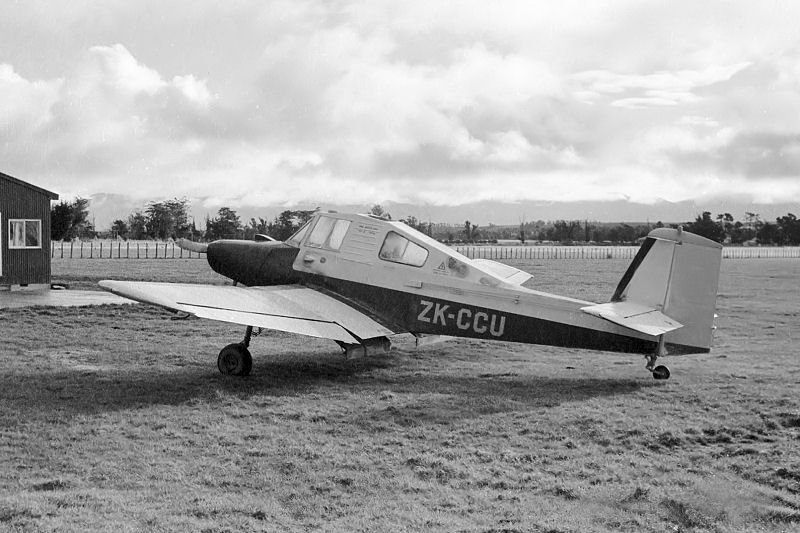
The Auster Agricola, a specialist aerial topdressing plane
A PAC Cresco plane with the fertiliser emerging from between the wings

Origins

[edit]

Previous aerial applications

[edit]

The first known aerial application of agricultural materials was by John Chaytor, who spread seed over a swamped valley floor in Wairoa, New Zealand, in 1906 using a hot air balloon with mobile tethers.

The first known use of a heavier-than-air machine in aerial application was on 3 August 1921 when, as a result of advocacy by Dr Coad, a USAAC Curtiss JN4 Jenny piloted by John A. Macready was used to spread lead arsenate to kill catalpa sphinx caterpillars near Troy, Ohio, United States. The first commercial operations were attempted in the US in 1924 and use of insecticide and fungicide for crop dusting slowly spread in the Americas and, to a lesser extent, other nations. Crop dusting poisons enjoyed a boom in the US and Europe after World War II until the environmental impact of widespread use was recognised following the publication of Rachel Carson's Silent Spring in 1963. Crop dusting was not adopted in New Zealand until after top dressing was well established.

Early efforts

[edit]

Initial interest in New Zealand concentrated on seed sowing, but much of New Zealand's central North Island farmland, given to returned servicemen after World War I, had proven deficient in trace minerals such as cobalt, copper and selenium, forcing difficult topdressing by hand in rough country, or abandoning the land for forestry. The possibility of using aircraft was soon investigated.

Spreading superphosphate by agricultural aircraft was independently suggested in 1926 by two New Zealanders, John Lambert of Hunterville and Len Daniell[note 1] of Wairere. There was some publicity when in 1936 Hawkes Bay farmer Harold McHardy used a de Havilland Gypsy Moth to sow clover seed on his own land. This led the Soil Conservation and Rivers Control Council to decide to fund aerial sowing and topdressing trials in 1937 to prevent erosion, but little progress was made, despite strong advocacy by Doug Campbell.

At that time it was illegal to drop anything from an aircraft, which dissuaded several advocates who felt a law change was needed before experiments could begin.

Alan Prichard

[edit]

The idea of spreading seed also occurred to Alan Prichard, a pilot for the New Zealand Public Works Department, as he was flying E. Madden of the Ministry of Works in a de Havilland Moth, sharing grapes and throwing the seeds out of the open cockpits. A few months later Prichard was tasked with conducting an aerial survey in Northland. The survey was delayed when the Ministry's Miles Whitney Straight, ZK-AFH, was grounded by bad weather.

A supervisor, J. L. Harrison, complained that Prichard was holding back men needed to sow lupin seed. Remembering the grape seeds, Prichard suggested sowing the seed by air. Burying the hatchet, Harrison and Prichard spent that evening experimenting with methods of dispersal, before settling on sewing a sack onto a piece of downpipe. The following morning, 8 March 1939, Prichard flew over Ninety Mile Beach while Harrison, on his signal, held the downpipe out a window and emptied the sack. They then landed and examined the spread of the seeds. It was found a distribution of 1 seed per square foot was obtained from a height of 100 to 150 feet (46 m). On Monday 10 March, they sowed 375 acres (1.52 km2), using 2 lb/acre (224 kg/km2) instead of the 5 lb/acre (560 kg/km2) used when sowing by hand. The pair returned to examine the site at 2 weeks, 1 month and 2 years and at all points the aerially sown land was indistinguishable from that sown by hand.

Prichard wrote up the experiment in the NZ Journal of Agriculture (vol 70 p117-120). This came to the attention of the Minister Bob Semple, who Prichard occasionally flew as a VIP. Semple asked how Prichard had obtained permission. Prichard admitted he had not, and had "cribbed" back the time in the ZK-AFH's logbooks by extending the time of other flights. Semple encouraged Prichard to continue, adding "Don't let anyone catch you, and if they do, send them to me". After the outbreak of World War II, he had the good fortune to retain the use of ZK-AFH, when most aircraft were impressed for war service. Prichard conducted various trials between 1939 and 1943, from an early stage adding fertiliser to the seeds, which was found to dramatically improve growth. The success of the fertiliser was such that his trials came to concentrate on this aspect, and its possible application to existing pasture.

As a result of Prichard's experiments, in 1945 the Department of Agriculture estimated aerial topdressing would cost about £4 per ton of fertiliser (on a basis of 2 cwt per acre), which was economic (actually, this price turned out to be a significant overestimate). Prichard now found an ally who could officially sanction further trials.

Doug Campbell

[edit]

Doug Campbell was an agricultural academic concerned about soil erosion. He had been suggesting the spread of both seed and fertiliser for erosion control and aerial spreading of trace minerals since the 1930s, but had not conducted trials until he met Prichard. Campbell brought official backing and academic responsibility to Prichard's work. Immediately after the war, he obtained permission to build a sheet metal hopper for ZK-AFH to test the spread of bluestone crystals. In 1946 the first pure topdressing flight was conducted without seed. Mixtures of bluestone crystals, sulphate of ammonia, slaked lime and carbon black were used. The lack of a lid for the hopper initially resulted in irritating dust spreading through the aircraft in turbulence: in cold wet conditions it was necessary to heat the hopper to prevent the fertiliser coagulating, while in dry conditions the powder tended to disperse in the wind before reaching the ground. Nevertheless, in July Campbell arranged for ZK-AFH to topdress 1,100 acres (4.5 km2) of a copper-deficient farm. In August 1947 trials with cobalt sulphate in liquid form were conducted on the farm of K. M. Hickson near Taumarunui, with a horseback-mounted radio used to convey results to the pilot. It was soon suggested that cobaltised superphosphate would be easier to spread, although it was felt a specialised aircraft would be needed to do this.

Campbell published his research in the New Zealand Journal of Science and Technology, Volume X, 1948 as "Some observations on top dressing in New Zealand".

Convinced by the trials, Campbell formed the co-ordinating and advisory committee on aerial topdressing with representatives from the Ministry of Public Works, Department of Agriculture, Department of Air, DSIR and the Soil Conservation Council. At the committee's first meeting on 27 November 1947 it resolved to ask the Royal New Zealand Air Force for assistance.

RNZAF trials

[edit]

Between the second world war and the cold war, the RNZAF was a large and competent organisation without a lot of work to do. It responded enthusiastically to Campbell's suggestion, initially proposing to use Tiger Moth and DC-3 aircraft, but concerns about corrosion lead them to use "expendable" war surplus Grumman Avengers.

Experiments were resumed on 5 September 1948 using a Miles Whitney Straight and three Grumman Avengers; the RNZAF put superphosphate in a converted long range fuel tank in Avenger NZ2504 and dropped it over the concrete runway at Ohakea. (NZ2504 is now preserved in the Royal New Zealand Air Force Museum).

The superphosphate was too powdery but a more granular form was found before final trials measuring distribution pattern of spread by air on 16 September 1948. The results were considered very promising. Trials proceeded to hill country at Te Mata near Raglan, and were extended to three other sites.

A Grumman Avenger used in the trials, preserved in the RNZAF Museum

For 1949 a Research and Development flight was formed under Stan Quill, equipped with the three Avengers and a Douglas DC-3, while instructions were sent to England to modify 2 RNZAF Miles Aerovans then on the production line to carry one-ton hoppers. A ground convoy of station wagon, car, one-ton truck, jeep, fuel tanker and radio van supported them. The 1948 fuel tank was replaced by a hopper with sides angled at 60° with a vibrating rod to loosen the superphosphate. Large-scale topdressing started on 14 March 1949 spreading clover-super mix. The "Topdress III" trials culminated on 21 May 1949 with a demonstration drop on 11 different properties close to Masterton in front of large numbers of farmers and press. These trials were calculated to have spread 2.5 cwt/acre (31,000 kg/km2) at an all-up cost of 15 shillings ($1.50) per acre (4047 m2), despite the use of inappropriately over-powered combat aircraft. Further public displays were given to cabinet ministers on 30 August at Johnsonville, on 9 September at Ohakea and at a 17 September Air Force Day air show. As these trials were a resounding success, in addition to the Aerovans, 12 Bristol Freighters then under construction for the RNZAF were modified to take superphosphate hoppers.

Following these successful trials, in 1950, farmers' groups lobbied the government to have the RNZAF provide subsidised topdressing with the Bristol freighters and even advocated using large Handley Page Hastings. But by this time government work was being overtaken by private enterprise as ex-airforce pilots bought New Zealand-built De Havilland Tiger Moth biplanes cheaply, placed a hopper in the front seat and went into business flying from the paddocks of any farmer willing to pay. The government became reluctant to spend money on interfering with the increasing number of commercial operators.

Research in other nations

[edit]

Australia

[edit]

The first experimental topdressing in Australia was done by a private Tiger Moth in 1948.[1]

Great Britain

[edit]

Faced with far greater difficulty of operating aircraft from small British farms, the British Government assumed topdressing aircraft would need to operate from an ordinary runway. Economies of scale then dictated using large aircraft, which would in turn have to fly higher. Accordingly, in 1950 the RAF conducted trials over Scottish farm land with Avro Lincoln and Avro Lancaster bombers carrying canvas trays with 5 tons of superphosphate in 14 lb (6.4 kg) and 28 lb (13 kg) paper bags designed to burst on impact. These trials were a failure due to poor spread achieved from the bags. The Bristol Aeroplane Company conducted private trials on hill country in the same year with scaled-up versions of the New Zealand hoppers fitted to Bristol Freighters. The success of these trials was widely publicised through Farmers' Weekly magazine. Hopper conversions were marketed for the Freighter and the even larger Handley Page Hastings. However low capitalisation for start up costs and the difficulties of low level operation in large transports led British private industry to use smaller machines, even though they could not operate directly from farms.

Success in New Zealand

[edit]
James Aviation Tiger Moth at Te Papa—National Museum of New Zealand

Several factors lay behind the development of aerial topdressing in New Zealand. The New Zealand public service gave its employees time and resources to pursue their ideas and publish research. Many farms included hill country, where it was impossible to spread fertiliser by truck. New Zealand farms tended to be large enough to make the costs worthwhile. New Zealand farmers were well educated and enjoyed the third highest standard of living in the world. High prices for lamb, beef, and wool in the early 1950s gave farmers the extra capital. World War II had left behind cheap, war-surplus Tiger Moths and highly trained ex-air force pilots.[2]

The majority of the 40,000 plus New Zealanders trained by the RNZAF were aircrew. Most were sent to Europe, and served in squadrons where the ground crew were from the United Kingdom. On returning to their rural homes, many bought cheap war-surplus aircraft, particularly the Tiger Moth primary trainer, available for £100. These were used for weekend flying, but also dropping fencing, feed and people into remote areas, as well as occasional aerial sowing and dropping of rabbit poison.

By the end of 1949 there were five firms; Airwork had five Tiger Moths, James Aviation three, Aircraft Services three, Gisborne Aerial topdressing (which was to become Field Air) had one, and Southern Scenic Airtrips had converted an Auster. In addition Wally Harding was top dressing his own property with his private Tiger Moth. Rex Garnham started Rangitikei Air Services with one DH82 and held the first Aerial application license Within the following five years nearly 50 other companies—mostly one-man operations—joined as competition. Collectively, they were called the 'Super men', and when amalgamation occurred it was these pioneers who came to dominate the New Zealand industry.

Topdressing in rugged conditions in New Zealand

Airwork (NZ)

[edit]

Since 1947, Airwork (NZ) Limited had been operating Tiger Moths for rabbit killing by spreading poisoned carrots in Canterbury. In early May 1949 Charles Brazier used ZK-ASO to spread lime. Airwork was aware that Fred "Popeye" Lucas had conducted aerial seeding as well as rabbit poisoning and discussed the possibility of dropping seeds with fertiliser (as Prichard had done) with Ces Worrell, a grain and seed merchant. He suggested spreading superphosphate alone would be more profitable, (a suggestion he may have wished he had kept to himself—the following year, Worrell started a rival firm, Aerial Sowing). Acting on Worral's suggestion, Airwork arranged a public demonstration on Sir Heaton Rhodes's property at Tai Tapu, south of Christchurch, on 27 May 1949. They advertised spreading superphosphate for £5 per ton, and several orders came from the audience.

Airwork pioneered the technique of landing on the farmer's property, loading and turning the aircraft round in three or four minutes. To save time, bulk loading from a vehicle was pioneered instead of emptying bags into the hopper. For the first drop a hurriedly converted Hupmobile was used, but this soon broke down and was replaced by a Land Rover chassis fitted with hydraulic arms. This investment was justified when Pyne Gould Guinness placed the first large contract at Christmas 1949. Airwork would go on to have a major role in the development of the Fletcher aircraft.

Fieldair

[edit]

Lawson Field (1896–1981), a farmer and pilot, converted one of Gisborne Aero Club's de Havilland Tiger Moths, Barbara II, so that Ken Young could drop superphosphate during the week and the club could fly the plane at weekends. The arrangement was typical of the system adopted by all early firms; a steep sided hopper was installed in the Tiger Moth's front seat, which the pilot, by pulling a lever, opened the vent at the bottom to release its load. When the club complained the hopper could not be removed from the passenger seat without causing structural damage, Field bought Barbara II and started the Gisborne Aerial Topdressing Company on 2 August 1949. He calculated his first drop cost £2.10s. per ton of fertiliser, and he was able to charge farmers £5 per ton. In September 1949 he became the founding president of the New Zealand Aerial Work Operators' Association, later the Aviation Industry Association of New Zealand. In 1951 he renamed the company Fieldair Limited and brought in modern De Havilland Canada DHC-2 Beavers, and in 1955 Lockheed Lodestars and DC-3s. Fieldair developed the tractor-mounted hopper loader, adopted throughout the industry, and became the largest topdressing firm in the country by the time of Field's death in 1981.

Fieldair's logo is a strangled goose. According to legend, a hungry Fieldair pilot flying between airstrips saw a single goose which looked like dinner. His somewhat hopeful method was to attempt to manoeuvre alongside the bird, side slip into it and grab hold. The first few attempts failed and the goose got wise. A dogfight developed, and both fliers lost altitude. A hundred feet over a gully the goose broke towards the aircraft, and hit the prop, breaking it. The pilot force-landed, and concocted a suitable story of a bird strike, which was undone when the farmer requested the company's services, as "You blokes must have the best pilots in the country ... one of your blokes chased this goose around my farm for about a half an hour. He must have just missed by inches every tree on my place. And to top it off this bloke succeeded in killing the goose and landed to pick it up". (Ewing & MacPherson, p182).

Wanganui Aero Work

[edit]

Wally Harding, a pioneer Waiouru farmer, converted his Tiger Moth into a top dresser in 1949 to use on his own not particularly productive high country station. The following year he founded Wanganui Aero Work Ltd. By 1954 the company added the first PAC Fletcher to its five Tiger Moths. It also operated Beavers, Ceres, Cessna 180/185s, Piper PA-25 Pawnees, Piper Cubs and Cessna AGwagons, but eventually standardised on Fletchers for its fixed-wing fleet, purchasing eight PAC Crescos when these were introduced. In 2004 the family business was bought out by Ravensdown Fertiliser Cooperative, although two of Wally's grandsons remain in the company: Bruce, chief pilot, and Rick, operations Manager. The fleet currently consists of eight Crescos, two Fletchers, and one each Robinson R44, Bell 206B, Aerospatiale AS350, Hughes 369C and McDonnell Douglas MD520N helicopters. In 2013 Wanganui Aero Works changed from their famous red and white markings to a cleaner, white livery as a result of the buy-out by Ravensdown.

James Aviation

[edit]

Ossie James was another pilot and farmer who started with a Tiger Moth salvaged from floodwaters in 1948 and progressed to owning the largest fleet of Fletchers in the country. James Aviation flew a number of Douglas DC-3s and Lockheed Model 18 Lodestars as well as Fletchers. James was heavily involved in the New Zealand International Field Days, the Salvation Army, and Waikato Aero Club. Ossie James was made a Distinguished Companion of the New Zealand Order of Merit in 2004.

Aircraft

[edit]
Typical of many, pre-war Tiger Moth ZK-AIO was converted to topdressing in early 1950 and lost in a crash the same year.

By 1952 there were 38 firms in the business in New Zealand, operating 149 aircraft, of which 138 were Tiger Moths. A smattering of higher powered de Havilland Canada DHC-2 Beavers were the only modern types. By 1956 there were 182 aerial topdressing Tiger Moths but it was obvious the lightweight Tiger Moths would need to be replaced. At the beginning of the 1950s there were no specialist designs for even crop dusters, due to the proliferation of World War II surplus trainers. But for topdressing something larger and more robust was needed.

War surplus

[edit]

Conversions of more robust World War II aircraft started. In 1954 the RNZAF had conducted some further topdressing tests at Masterton using a Bristol Freighter fitted with three 2-ton hoppers. To appease higher government command the aircraft was given a civilian registration, ZK-BEV, and hired to the private company 'Industrial Flying Limited'.[note 1] These trials lead to large numbers of heavy twin-engined types, such as Douglas DC-3s and Lockheed Lodestars being converted for topdressing. The Harvard and its Australian-built counterpart the CAC Wirraway were adapted by rebuilds, the Wirraway into the CAC Ceres. Bits of Harvards were used by Luigi Pellerini to make most of the bizarre twin-tailed cockpit-over-the-engine PL-11 Airtruck. Flight tested at Te Kūiti in 1950 this aircraft not only had a long and successful career but was put into production (as an all-new-built aircraft) in Australia, the Transavia PL-12 Airtruk that also appeared in one of the Mad Max movies.

Existing designs

[edit]

The DHC Beaver was purchased in numbers and there were abortive plans to build it under license in New Zealand, but its high wing and bulky cabin were unsuited to the role. In the UK Miles Aerovans proved underpowered. In the Eastern Bloc, where economy mattered less, the Antonov An-2 was used for the role.

Developing specialist machines

[edit]
Fletcher Fu24

Entirely new designs were clearly needed in Australasia. In Britain Auster produced the Auster Agricola and Percival the Percival EP-9 for the New Zealand market. Both robust but primitive fabric-covered aircraft. In Australia the small but more advanced Yeoman Cropmaster was developed.

In the United States Fletcher Aviation Corporation was persuaded by a delegation of New Zealanders to develop an aircraft for the New Zealand market and Jim Thorpe adapted a design for the FD-25 Defender light attack aircraft into the Fletcher Fu24, a stressed skin monoplane with a high lift wing. It had more than three times the load capacity of the Tiger Moth and the cockpit located well forward, ahead of the hopper, giving the pilot all round view. This—with a few changes such as an enclosed cockpit—turned out to be the winning formula and orders soon reached three figures. Cable Price Corporation funded two prototypes with the New Zealand Meat Producers Board acting as financial guarantor—Gibson having brow-beaten a reluctant Fletcher board into building a prototype. Airparts was formed to assemble the American kits. The first prototype was flown in America in June 1954, the second in New Zealand in September 1954 and it received type approval in May 1955. A hundred Fletcher kits were delivered to New Zealand that year. Airparts bought out the rights and continued development locally.

Specialist crop dusters such as the Schweizer Agcat emerged in America in the mid-1950s, designed for the flat mid-west. These generally had poorer forward vision and lesser payload to weight ratios than the Fletcher, which continued to dominate the New Zealand market—however, in places where aircraft primarily were used to drop insecticide, these American designs were superior.

Pacific Aerospace

[edit]

The Fletcher was responsible for starting New Zealand's small aircraft building industry. Having taken over from Air Parts and AESL, Pacific Aerospace is the manufacturer of the PAC Fletcher and the similar but larger and turboprop powered PAC Cresco, as well as the PAC 750XL and PAC CT/4 Airtrainer. Pacific Aerospace of Hamilton is New Zealand's largest aircraft manufacturer. Fletchers and Crescos have been exported to Australia, Africa, the Middle East and South America. Differences between the demands of American and European markets, as well as entry barriers, have ensured the Antipodean style of topdresser did not compete with the cockpit behind the hopper designs of American manufacturers.

PAC Cresco in a hard banking turn at the end of a run

Mature industry

[edit]

The amount of fertiliser used in aerial topdressing rose from almost nothing in 1950 to over 250,000 tons in 1955, to over 450,000 tons in 1960 and to over 900,000 tons in 1965, approximately doubling every five years.[2] By 1958 there were 73 aerial topdressing firms in New Zealand, flying 279 aircraft—although the amount of superphosphate dropped and the area it fell on would continue to increase—from then on the numbers of companies, aircraft and pilots dropped as the larger more expensive Fletchers came to dominate the market and the one-man companies that began in the 1940s were amalgamated.

By 1965 the million tons of superphosphate dropped annually was being spread over 9 million acres (36,000 km2). The amount an aircraft dropped had increased from 2.5 tons to 8 tons and there were 10,000 privately owned airstrips for topdressing in New Zealand. Other work was also done by agricultural aircraft, as in foreign countries, particularly outside the February to May prime season. Clover seed is sown and spraying is carried out with insecticides, fungicides and weedkillers as well as general utility work. Aerial Topdressing has been attributed with vastly increasing agricultural production—in New Zealand alone, sheep numbers increased from 40 million to over 70 million, the majority of the increase being attributed to the increased feed that superphosphate made available.

Environmental impact

[edit]
Limestone pinnacles remain after phosphate mining in Nauru.

Ironically, given the industry was started by government research aimed at soil conservation, a number of negative impacts have emerged. The two major criticisms are the run off of fertiliser into streams and waterways which encourages marine plant growth, leading to choking of the waterways and altering the fresh water ecosystem, disadvantaging many fish, (and frustrating anglers). To minimise impact, topdressing is now prohibited within certain distances of water. The second impact is less direct. By enabling sheep to be run profitably on steep hillsides, the topdressing industry stopped reforestation of otherwise uneconomic land, contributing to the erosion it was originally designed to prevent.

The mining of superphosphate from guano deposits on the tiny South Pacific island of Nauru temporarily made the island one of the richest nations in the world on a per capita basis, but removed most of the soil from the island making 80% of it unusable.[3]

See also

[edit]

Notes

[edit]

References

[edit]
[edit]
Revisions and contributorsEdit on WikipediaRead on Wikipedia
from Grokipedia
Aerial topdressing is the aerial application of fertilizers, such as superphosphate, onto pasture and crop lands using specialized agricultural aircraft to improve soil fertility and boost productivity, particularly in terrains unsuitable for ground machinery.[1] Developed in New Zealand during the 1940s amid post-war agricultural expansion, it addressed the challenge of fertilizing steep hill country farms that comprised much of the nation's pastoral landscape.[1] Initial experiments in 1948 employed modified Royal New Zealand Air Force Grumman Avengers at Ōhakea airbase, marking the shift from manual or tractor-based spreading to efficient airborne methods.[2] This innovation rapidly scaled, enabling the conversion of erosion-prone tussock grasslands into highly productive sheep and cattle grazing areas, significantly elevating New Zealand's meat and wool exports.[3] Purpose-built aircraft like the PAC Fletcher FU-24, introduced in the 1950s, and later the PAC Cresco, optimized the technique with large hoppers and low-speed handling for precise, low-altitude dispersal over rugged contours.[4] While transformative for agriculture, aerial topdressing has involved inherent risks from operating in challenging weather and topography, leading to numerous pilot fatalities and prompting ongoing safety enhancements.[5] Contemporary practices incorporate precision technologies, such as GPS-guided variable-rate application, to reduce over-fertilization and mitigate nutrient runoff into waterways, reflecting regulatory responses to environmental concerns.[6][7]

Historical origins

Pre-aerial applications and initial concepts

Prior to the development of aerial topdressing, fertilizer application in New Zealand's pastoral hill country relied on labor-intensive ground-based methods, which were ill-suited to the steep, rugged terrains comprising much of the nation's farmland. Superphosphate, introduced commercially in the 1880s to address phosphorus-deficient soils essential for ryegrass and clover growth, was typically spread by hand or via horse-drawn broadcast machines pulled by teams of animals. These approaches involved transporting heavy bags or carts over uneven slopes, resulting in slow coverage rates—often limited to a few hectares per day per worker—and high labor costs, as contract spreaders navigated inaccessible areas on horseback or foot.[8] Such methods also induced soil compaction from repeated hoof traffic and wagon wheels, which degraded pasture structure, increased erosion susceptibility on slopes exceeding 20-30 degrees, and hindered root penetration in already friable volcanic and sedimentary soils common to regions like the North Island's hill country. Efficiency was further compromised by uneven distribution, weather dependencies, and physical exhaustion, rendering large-scale fertilization impractical for the expanding sheep and cattle farms that drove New Zealand's export economy; by the 1930s, only flatter lowlands saw consistent application, leaving hill pastures under-fertilized and yielding 20-50% less than potential.[8][9] Early conceptual precursors to aerial application emerged globally in the early 20th century, focusing on aerial seeding and dusting for agriculture rather than fertilizers. The first systematic aerial crop dusting occurred on August 3, 1921, near Troy, Ohio, where a U.S. Army Air Service pilot in a modified Curtiss JN-6H biplane dispersed lead arsenate insecticide over 6 hectares of catalpa trees infested with caterpillars, proving aircraft could bypass ground obstacles for rapid, broad coverage. Prior experiments included balloon-dropped seeds over flooded or remote fields in Europe and the U.S., and basic fixed-wing seeding trials, but these were sporadic, aimed at regrassing swamps or pests rather than nutrient amendment, with limitations like imprecise dispersal and high wind sensitivity.[10][11] These ideas highlighted the first-principles advantage of aerial vectors for accessing terrain prohibitive to ground equipment, setting the stage for adaptation to fertilizers amid post-World War II surpluses of durable, low-cost military aircraft like biplanes and bombers. In New Zealand, where 60-70% of pastoral land featured slopes unsuitable for tractors or heavy carts, the imperative to scale phosphorus inputs without compaction or erosion directly informed initial concepts for bulk topdressing, prioritizing causal efficiency in nutrient delivery to elevate productivity on marginal soils.[12]

Early experimental efforts

Following World War II, initial experiments in New Zealand focused on aerial application of seeds and fertilizers to address the inaccessibility of steep, volcanic hill country pastures deficient in phosphorus and other nutrients.[8] These efforts were motivated by the economic imperative to improve low-fertility soils where ground-based spreading was labor-intensive and impractical.[1] The first documented aerial seed sowing on a New Zealand farm took place in November 1947 at Ōmarama in North Otago, targeting erosion-prone areas on sheep stations through small-scale trials.[1] Early applications involved converted surplus trainer aircraft, such as de Havilland Tiger Moths, which had limited payload capacities requiring multiple short flights and rudimentary hoppers for dispensing materials.[4] Logistical challenges included achieving even distribution over uneven terrain and controlling particle drift influenced by wind, necessitating low-altitude operations that tested pilot skills and equipment durability.[13] In 1948, more structured trials at Ōhakea airfield employed a modified Royal New Zealand Air Force Grumman Avenger torpedo bomber, fitted with a reserve tank to extend range while spreading superphosphate, marking a shift from purely ad-hoc seed sowing to fertilizer dusting demonstrations.[2] These experiments provided empirical evidence of improved pasture establishment and growth on treated plots compared to untreated controls, validating the technique's potential despite initial inefficiencies in load handling and spread accuracy.[14] The trial-and-error approach highlighted the need for specialized modifications, paving the way for broader systematic testing amid persistent concerns over operational safety and material waste.[15]

Key pioneers and RNZAF trials

Alan Prichard, chief pilot for the New Zealand Ministry of Works aerodrome services, pioneered early aerial application techniques through seed distribution trials at Ninety Mile Beach in 1939 and subsequent cobalt and copper sulphate dispersal efforts, establishing foundational methods for controlled aerial releases over farmland.[16] Doug Campbell, the first chief adviser on soil conservation to the Soil Conservation and Rivers Control Council, advanced the concept by recommending formal aerial topdressing trials in 1947, driven by observations of erosion-prone hill country where ground-based fertilization proved inefficient due to steep slopes and limited access.[16] The Royal New Zealand Air Force (RNZAF) conducted critical proof-of-concept trials at Ohakea base from 1948 to 1949, modifying a Grumman Avenger torpedo bomber (NZ2504) by converting its long-range ferry tank into a fertilizer hopper to test superphosphate dispersal.[17][16] These experiments, initiated at Campbell's instigation in October 1948, included ground accuracy measurements on the Ohakea tarmac and field applications near Raglan, confirming dispersal precision within operational limits via the aircraft's slipstream, which evenly distributed granules without excessive clumping.[16] Refinements during the 1949 trials, including a key demonstration in May near Masterton where 125 tons were dropped, optimized flight paths at low altitudes for uniform coverage and adjusted phosphate granulation for improved hopper flow, addressing initial skepticism from farmers and officials through quantifiable data on application rates and reduced waste.[16] Empirical results showed enhanced pasture growth and clover establishment on previously marginal lands, with livestock carrying capacities later doubling in treated areas by the 1960s, validating aerial superiority over ground methods in New Zealand's topography by enabling swift, scalable fertilization across vast, rugged pastures inaccessible to vehicles.[16][17] A specific flight on 9 September 1949 further demonstrated viability for converting unproductive erosion zones into productive grazing lands.[17]

International research and adoption

Developments in Australia

In Australia, the initial aerial application of superphosphate fertilizer occurred in 1950 at Walcha, New South Wales, organized by Tom Watson of Aerial Agriculture and executed using the Tiger Moth biplane VH-PCB.[18] This trial targeted pastoral lands in the New England tablelands, where undulating terrain and remoteness posed challenges for ground-based spreading equipment.[18] By 1952, private enterprise drove further development when Super Spread Aviation Pty Ltd, founded by Austin Miller and Ernest Tadgell, began operations from Moorabbin Airport in Melbourne with two modified de Havilland DH.82 Tiger Moths dedicated to superphosphate distribution.[19] The company rapidly scaled, operating up to 28 Tiger Moths by the mid-1950s and extending services to wheat belts and pastoral regions across South Australia, New South Wales, Queensland, and Western Australia until the fleet's phase-out around 1964.[19] These efforts paralleled New Zealand's use of surplus wartime aircraft but emphasized superphosphate suited to phosphorus-deficient Australian soils, with applications focused on improving pasture productivity in semi-arid or steep zones rather than widespread hill-country conversion.[18][19] Adoption remained niche compared to New Zealand's rapid expansion, constrained by Australia's predominantly flat, broadacre farming landscapes that favored cost-effective ground machinery for fertilizer distribution.[18] Regulatory contexts, including stricter aviation oversight for low-level operations, also tempered scalability, limiting aerial topdressing to specialized scenarios like remote or erosion-prone properties where empirical trials demonstrated yield gains from targeted superphosphate drops.[19] Unlike New Zealand's post-war imperative for quick scrub clearance, Australian pastoral systems evolved with less urgency for aerial intervention, resulting in sustained but modest use through the 1950s and into forestry applications by state departments in subsequent decades.

Efforts in Great Britain and other nations

In Great Britain, parliamentary discussions in the 1950s highlighted aerial spreading as a potential method for cultivating rough grazing lands, with estimated costs of 14 shillings per acre for fertilizer application.) Research during this period examined aerial lime distribution to counteract soil acidity, but frequent inclement weather—limiting safe flying windows—and the availability of ground-based tractors on flatter terrains curtailed broader implementation.[20] Trials demonstrated modest yield improvements, often insufficient to offset aerial operational expenses relative to mechanical alternatives prevalent in arable regions.) In the United States and continental Europe before the 1970s, aerial techniques focused primarily on seed dispersal and pesticide delivery rather than routine fertilizer topdressing, as expansive flat croplands enabled efficient tractor-pulled spreaders.[10] Early U.S. experiments, dating to 1921 with modified biplanes for crop dusting, prioritized insect control over nutrient application, with fertilizer aerial use emerging sporadically in specialized scenarios like flooded rice fields but not scaling to pastoral systems.[10] European constraints mirrored those in Britain, compounded by regulatory scrutiny on aerial pesticide drift, further discouraging fertilizer adaptations. (Note: While Wikipedia is not cited as primary, cross-verified with aviation history records.) New Zealand's pronounced adoption contrasted sharply due to its topography—where only about 14% of land suits ploughing, favoring hill-country grazing—and an economy reliant on export dairy and sheep production, compelling innovations in aerial access to boost pasture productivity without viable ground alternatives.[21] In flatter, subsidized arable economies elsewhere, ground mechanization sufficed for cost parity, obviating the urgency for aerial investment amid shorter growing seasons and weather variability.[16] This causal divergence underscores how terrain-driven necessities and market incentives propelled New Zealand's specialization, while others deemed aerial topdressing marginal for their contexts.[4]

Technological and operational development in New Zealand

Emergence of specialized companies

Following the successful RNZAF trials, private entrepreneurs rapidly formed specialized companies to meet surging farmer demand for aerial fertilizer application on hill country pastures, marking a shift from government experimentation to market-driven commercialization in the late 1940s. Airwork (NZ) Ltd, operated by brothers John and Bill Brazier from a base in Christchurch, executed New Zealand's inaugural commercial topdressing operations using converted wartime Tiger Moth biplanes, typically starting with a small fleet of 2-3 aircraft.[22] James Aviation Ltd, founded in 1949 by Oswald (Ossie) James in Taneatua, Bay of Plenty, entered the sector with a modest initial fleet centered on Tiger Moths adapted for fertilizer dispersal, focusing on East Coast and North Island farms.[23] Similarly, Wanganui Aero Work was established in 1949 by Wally Harding, who modified his own Tiger Moth for topdressing high-country properties in the Whanganui region, beginning operations with a single aircraft.[24] Fieldair, initiated in 1949 by Lawson Field as Gisborne Aerial Topdressing Company and formally incorporated in 1951, pioneered early innovations like twin-engine conversions by 1955, operating from Gisborne with an initial single-engine fleet serving East Coast sheep stations.[25] This entrepreneurial surge propelled the industry to commercial scale, with five firms active by late 1949 and expanding to 73 operators nationwide by 1958, collectively treating millions of hectares annually by the 1960s as pastoralists sought efficient nutrient application on otherwise inaccessible terrain.[26] Farmer-led demand, fueled by post-war agricultural expansion and recognition of topdressing's utility for pasture improvement, drove this growth without substantial state subsidies, as operators secured contracts directly from landowners willing to pay for the service's speed and coverage.[27] The entry of multiple independent firms introduced vigorous market competition, compelling operators to prioritize safety enhancements—such as refined loading procedures and terrain avoidance techniques—and efficiency gains like optimized flight paths and payload capacities through iterative private modifications, independent of centralized oversight.[26] This competitive dynamic, evident in the rapid proliferation of operators adapting surplus aircraft for specialized use, underscored the causal primacy of profit incentives in scaling and refining the practice, countering dependencies on public trials or infrastructure.[24]

Expansion and operational successes

The aerial topdressing industry in New Zealand underwent rapid expansion from the 1960s through the 1980s, transitioning from experimental applications to a cornerstone of hill country agriculture. Annual fertilizer applications via aircraft grew substantially, with the sector applying between 600,000 and 1.2 million tonnes per annum by this period, reflecting increased operational capacity and demand for efficient nutrient delivery on steep terrains.[28] This scaling enabled the fertilization of millions of acres of previously marginal pastureland, directly contributing to agricultural intensification by boosting soil nutrient levels without requiring proportional increases in arable land.[21] Operational successes were evidenced by empirical gains in pasture productivity, where treated hill farms achieved higher dry matter yields and livestock carrying capacities compared to untreated controls, often realizing measurable returns through enhanced animal production. Farm-level trials and economic analyses confirmed positive cost-benefit ratios, with investments in aerial applications typically yielding returns within 1-2 years via improved pasture growth and reduced feed supplementation needs.[29][30] Key to these achievements were refined techniques, including swath planning to ensure uniform coverage—typically achieving bout widths of 25-30 meters adjusted for particle ballistics and wind—and load optimization to minimize downtime and maximize payload efficiency per flight. These methods, validated through field variability trials showing coefficient of variation reductions to under 25%, allowed operators to cover large areas rapidly while maintaining application accuracy essential for consistent yield responses.[31][32]

Evolution of aircraft from surplus to custom designs

Following World War II, surplus military trainer aircraft, including de Havilland Tiger Moths and North American Harvards, were repurposed for aerial topdressing in New Zealand. These biplanes and monoplanes underwent modifications such as replacing the front cockpit or internal bays with fertilizer hoppers, enabling payloads of approximately 272 kilograms in the case of Tiger Moths.[8] Such adaptations facilitated early commercial operations starting in 1949 but were constrained by limited capacity, altered weight distribution, and suboptimal aerodynamics for low-altitude, high-drag fertilizer dispersal.[27] By the mid-1950s, these limitations prompted the shift toward purpose-built designs tailored to topdressing requirements. The Fletcher FU-24, developed by New Zealand engineer Henry Fletcher and first produced in 1956, represented a pivotal advancement as the initial aircraft engineered specifically for agricultural spreading.[33] Featuring an all-metal construction resistant to chemical corrosion, a rear-positioned hopper to maintain favorable center-of-gravity dynamics during loading and unloading, and high-lift wings optimized for low-speed stability, the FU-24 addressed key handling challenges inherent in surplus conversions.[34] [28] These custom designs supported payloads exceeding 800 kilograms, enabling more efficient coverage of rugged terrain while enhancing pilot control at critical low speeds below 60 knots. Engineering improvements, including robust landing gear for short, unprepared airstrips and stall-resistant airfoil sections derived from empirical aerodynamic testing, reduced vulnerabilities to upset during fertilizer discharge.[35] Although overall accident rates in topdressing remained elevated due to environmental factors like terrain and weather, the transition to specialized aircraft correlated with fewer incidents attributable to airframe limitations, as evidenced by operational data from the 1960s onward showing improved sortie success rates.[36]

Modern industry practices

Precision application technologies

In the 2000s and 2010s, variable rate application (VRA) technologies emerged for aerial topdressing aircraft, utilizing GPS to enable site-specific fertilizer delivery based on predefined digital maps derived from soil nutrient analyses and pasture growth data.[37] These systems automate hopper gate adjustments to vary discharge rates during flight, outperforming uniform fixed-rate applications in field trials by improving pasture production and fertilizer utilization efficiency.[38] For instance, VRA implementations in New Zealand's North Island demonstrated reduced nutrient application outside target boundaries by up to 10%, minimizing waste through precise control linked to aircraft positioning.[39] Commercial systems like IntelliSpread®, developed through Massey University research in the 2010s, integrate computer-controlled hydraulic gates with GPS and mapping software to deliver targeted rates while automatically closing hoppers over exclusion zones such as waterways or steep slopes, thereby curtailing off-target deposition.[6] Similarly, SpreadSmart® employs GPS-tracked automation to follow farm-specific prescriptions, allowing pilots to prioritize flight safety while achieving consistent application patterns.[40] These advancements have lowered coefficients of variation (CV) in spread patterns, with automated controls reducing field CV from baseline levels exceeding 50% to around 44% in controlled tests.[41] Particle ballistics modeling, incorporating factors like wind velocity, aircraft speed, and granule size, has further refined precision by predicting transverse spread patterns and enabling pre-flight adjustments to hopper settings.[42] Accuracy trials in New Zealand using such models, combined with differential rate controls, confirmed reduced drift and adherence to regulatory exclusion buffers, with CV values dropping to 34-56% ranges improvable via optimized prescriptions.[32] Integration of empirical soil mapping—via ground-based sampling and proximal sensors for nutrient deficits—feeds into VRA prescriptions, causally limiting overuse by aligning aerial inputs with verified site variabilities rather than blanket assumptions.[43]

Current operational landscape and innovations

In the 2020s, New Zealand's aerial topdressing sector remains anchored by prominent operators including Super Air, which has specialized in fixed-wing application of solid fertilizers and lime since 1988, and Aerospread, with bases enabling coverage of central North Island regions.[44][45] These firms sustain nationwide services amid persistent demand for hill country farming, where ground access remains impractical.[46][47] The industry faces acute challenges from economic headwinds, including a severe rural downturn that has curtailed farmer expenditures on inputs, alongside escalating compliance and maintenance costs.[48] By early 2025, five operators had exited the market, with one entering liquidation, reflecting lean operating years exacerbated by these pressures.[49] Despite reduced application volumes—such as a notable drop in the first half of 2023 compared to prior periods—core private entities persist, underscoring operational resilience through diversified services and cost management.[50][51] Adaptations include active advocacy by agricultural aviators for Resource Management Act reforms to harmonize regional rules, aiming to reduce regulatory inconsistencies that hinder hill country efficiency.[52] Such efforts seek to mitigate burdens from variable local consenting processes, preserving access to aerial methods vital for pastoral productivity.[49] Ongoing integration of satellite connectivity, as explored in broader agricultural space initiatives, supports potential real-time data enhancements for flight planning, though sector-specific adoption remains nascent.[53]

Economic contributions

Agricultural productivity gains

Aerial topdressing enabled the widespread application of superphosphate, rich in phosphorus and sulphur, to New Zealand's phosphorus-deficient hill country pastures, directly contributing to a pastoral productivity surge from the late 1940s onward.[54] This innovation addressed inherent soil nutrient limitations that had previously constrained output on steep, remote terrains uneconomic for ground-based fertilisation, allowing farmers to sustain higher legume growth and overall pasture vigour through precise nutrient delivery.[55] Nationally, sheep flocks expanded from 32 million head in 1949 to 70 million by 1980, reflecting intensified land use enabled by these gains.[54] Farm-level empirical data underscore the causal productivity uplift: at the Te Awa research farm, aerial topdressing raised annual pasture dry matter production from 7,870 kg/ha to 13,440 kg/ha, a 71% increase attributable to phosphorus and sulphur supplementation on deficient soils.[55] Corresponding stocking rates escalated from 3.75 ewes per hectare to 13.75 ewes per hectare, demonstrating how targeted fertiliser inputs converted marginal hill lands into viable high-output grazing systems.[55] Such transformations aligned with broader observations of wool production rising 17-40% on topdressed properties, equating to annual gains of 4-10% over monitored periods.[30] These output increases stemmed from phosphorus and sulphur's role in enhancing clover fixation and protein synthesis in pastures, with studies on deficient soils reporting yield responses of 20-50% from regular applications, far exceeding what manual methods could achieve across expansive, rugged terrains.[9] By enabling such scalable nutrient correction, aerial topdressing exemplified how engineering solutions could harness first-principles soil chemistry to amplify biological productivity, bypassing natural constraints and driving New Zealand's meat and dairy sectors toward export dominance.[55]

Cost-benefit analyses and industry viability

Cost-benefit analyses of aerial topdressing typically demonstrate positive returns through models linking fertilizer application costs to extended pasture productivity gains, often spanning 2 to 3 years for phosphorus-based fertilizers on New Zealand hill country farms. For instance, superphosphate applications costing approximately $220–$510 per tonne (adjusted for 2007–2010 prices) yield net benefits of up to $932 per hectare when maintenance budgets are $138 per hectare, representing about 13% of farm-gate revenue, with overall fertiliser benefits equaling 2 to 2.5 times the input costs via dry matter yield increases convertible to livestock gains at 16.6 kg dry matter per kg lamb carcass valued at $0.28 per kg dry matter.[29] These returns arise from decision-tree models incorporating response curves for nitrogen (immediate boosts) and phosphate (sustained over multiple seasons), where high-analysis fertilizers like DAP minimize off-target losses compared to separate superphosphate and urea applications, reducing cumulative inefficiencies by $34–$41 per hectare per application.[29] Aerial methods enhance efficiency over ground spreading in topographically challenging terrains, enabling coverage rates that ground equipment cannot match without excessive labor and machinery wear; fixed-wing aircraft operate at ground speeds of about 160 km/h for lighter application rates (under 150 kg/ha), facilitating rapid deployment across inaccessible hill country where tractor-based spreading would incur higher per-hectare costs due to slower traversal (e.g., 20 km/h) and terrain limitations.[56] Application costs range from NZ$1.1 to $3.0 per hectare depending on variable rate technology (VRAT) implementation, with VRAT reducing errors and boosting precision to offset initial setup expenses through lower fertilizer waste.[57] Historical data from 1952–1957 across 39 farms showed consistent topdressing (e.g., 2 cwt superphosphate annually) increasing gross profits by 45s. 9d. to 65s. per acre via 11–26% higher stocking rates and 17–40% wool production gains, underscoring long-term viability when coverage exceeds 50% of farmland.[30] In the 2020s, the industry faces pressures from rising fuel, fertilizer, and compliance costs, prompting consolidations such as fleet reductions from 116 to potentially 54 aircraft and airstrip optimizations to achieve economies of scale, yet historical adoption evidence supports positive net present value (NPV) through market adaptations like turbine repowering of older planes to cut marginal operating expenses (e.g., Cresco at $85.40/tonne vs. Fletcher at $64.29/tonne).[58] Doubts about viability, often highlighted in analyses citing insufficient margins eroding capital (e.g., post-2009 crisis demand drops), are countered by empirical farm-level data showing sustained profitability via vertical integration by fertilizer cooperatives and precision technologies like VRAT, which prioritize operational efficiencies over subsidized interventions.[58] Economic multipliers extend to rural economies through enhanced pastoral output, with topdressing enabling broader agricultural intensification without proportional input escalations.[30]

Environmental and regulatory aspects

Observed impacts and empirical data

Aerial topdressing mitigates soil compaction risks inherent in ground-based fertilizer spreading, particularly on New Zealand's steep hill-country pastures comprising over 40% of agricultural land, where tractor traffic can increase erosion by 20-50% on slopes exceeding 20 degrees.[27] Empirical assessments in erosion-prone East Coast regions demonstrate that aerial methods enabled pasture establishment and maintenance without further destabilizing slip-prone soils, contrasting with pre-1940s ground practices that accelerated gully formation and sediment yields.[27] Soil loss rates under aerial application remain below 1 tonne per hectare annually on managed hill farms when fertiliser is applied during dry conditions, compared to higher erosion from mechanical incorporation on comparable gradients.[59] Phosphorus from superphosphate topdressing poses runoff risks, with post-application surface flows showing elevated dissolved inorganic phosphorus (up to 0.1-0.5 mg/L) in the initial week, potentially contributing to waterway eutrophication if unbuffered.[60] However, aerial distribution achieves uniform deposition, reducing localized hotspots versus ground banding, and regulatory buffers—typically 10-20 meters from water edges—limit particulate phosphorus transport by 50-80% in riparian zones, as evidenced by Canterbury stream monitoring.[61] Pre-precision era application variability exceeded 30% coefficient of variation (CV), correlating with higher incidental losses; modern global positioning systems (GPS) and variable-rate technology have lowered this to 10-20% CV, minimizing excess nutrient deposition by 15-25% per hectare.[57] Indirect environmental outcomes include intensified pastoral productivity—pasture dry matter yields rising 1-2% annually since 1990—alleviating pressure for farmland expansion into marginal wetlands, yet national waterway nitrogen concentrations have increased 20-50% in dairy-dominated catchments over the same period, indicating non-proportional but concurrent degradation from cumulative inputs.[62][63] In hill-country systems reliant on aerial methods, sediment and nutrient yields per unit output have stabilized or declined relative to flatland intensification, attributable to erosion avoidance on 60% of topdressed acreage.[64]

Criticisms, mitigations, and regulatory responses

Criticisms of aerial topdressing center on its potential to contribute to nutrient leaching and waterway eutrophication through phosphorus and nitrogen runoff from applied fertilizers, particularly in New Zealand's hill country pastures where rainfall can mobilize particles post-application.[65] Environmental advocates, often aligned with progressive policy groups, have argued that such practices exacerbate algal blooms and degrade lake ecosystems, linking intensive fertilizer use—including aerial methods—to observed water quality declines since the mid-20th century.[66] However, empirical assessments reveal that agriculture's role in lake eutrophication is context-dependent, with diffuse agricultural sources accounting for substantial but not sole contributions to nitrogen increases, while urban stormwater and wastewater discharges elevate phosphorus and other contaminants in populated catchments, sometimes rivaling or exceeding rural inputs in total loads.[67] [68] To mitigate leaching risks, operators employ variable rate application (VRA) technology integrated with GPS for site-specific dosing, which reduces fertilizer volumes by matching soil needs and minimizes overspread into sensitive zones, yielding environmental gains alongside cost savings.[57] Best practices include establishing riparian exclusion buffers—typically 5-10 meters—around waterways to prevent direct deposition, alongside timing applications during dry antecedent conditions to limit immediate runoff.[6] These measures, supported by particle ballistics modeling, enhance deposition accuracy to within 10-15% variance, curbing potential nutrient export compared to uniform spreading.[41] Regulatory responses in New Zealand invoke the Resource Management Act 1991 (RMA), which mandates resource consents for operations risking adverse environmental effects, such as nutrient discharges exceeding regional thresholds, thereby integrating aerial topdressing into broader sustainable land management frameworks.[69] The Civil Aviation Authority enforces operational standards via aerial topdressing ratings, requiring pilots to demonstrate competency in low-level maneuvers and hazard avoidance biennially to address safety and drift concerns.[70] Ongoing RMA reforms, proposed as of 2023, seek to expedite consents for precision agriculture while maintaining safeguards, reflecting industry arguments that overly restrictive rules could undermine food production efficiency without proportional ecological benefits.[71] Causal analysis favors targeted innovations over prohibitions, as aerial methods enable fertilizer uptake efficiencies of 60-80% in undulating terrains—superior to ground alternatives—and support nutrient recycling via pasture growth, offsetting leaching losses when paired with soil testing; blanket curtailments risk productivity shortfalls without equivalently curbing urban point-source pollution.[72] [73] Data from monitored sites indicate that mitigated applications correlate with stable or declining trendlines in downstream nutrient concentrations post-2010, underscoring the viability of adaptive practices in balancing agricultural imperatives against verifiable environmental thresholds.[74]

References

User Avatar
No comments yet.