Respect all members: no insults, harassment, or hate speech.
Be tolerant of different viewpoints, cultures, and beliefs. If you do not agree with others, just create separate note, article or collection.
Clearly distinguish between personal opinion and fact.
Verify facts before posting, especially when writing about history, science, or statistics.
Promotional content must be published on the “Related Services and Products” page—no more than one paragraph per service. You can also create subpages under the “Related Services and Products” page and publish longer promotional text there.
Do not post materials that infringe on copyright without permission.
Always credit sources when sharing information, quotes, or media.
Be respectful of the work of others when making changes.
Discuss major edits instead of removing others' contributions without reason.
If you notice rule-breaking, notify community about it in talks.
Do not share personal data of others without their consent.
AS350 Rainbow Helicopter in Hawaii, 2021AS350 B2 Ecureuil of Elifly operator in Italy, 2018
The Airbus Helicopters H125, previously the Eurocopter AS350 Écureuil, or Squirrel, is a single-engine light utility helicopter designed and originally manufactured by the French corporation Aérospatiale, later by Eurocopter, which became Airbus Helicopters. In North America, the H125 is marketed as the AStar. The AS355 Ecureuil 2 is a twin-engine variant, marketed in North America as the TwinStar.
The Eurocopter EC130 is a derivative of the AS350 airframe and is considered by the manufacturer to be part of the Écureuil single-engine family.[4]
In the early 1970s, Aérospatiale initiated a development program to produce a replacement for the aging Aérospatiale Alouette II.[5] While the Aérospatiale Gazelle, which had been developed in the 1960s and 1970s, had been met with numerous orders by military customers, commercial sales of the type had been less than anticipated, thus the need for a civil-oriented development was identified.[5]
The development of the new rotorcraft, which was headed by Chief Engineer René Mouille, was focused on the production of an economic and cost-effective aerial vehicle, thus both Aérospatiale's Production and Procurement departments were heavily involved in the design process.[5] One such measure was the use of a rolled sheet structure, a manufacturing technique adapted from the automotive industry; another innovation was the newly developed Starflex main rotor. It was also decided that both civil and military variants of the emergent helicopter would be developed to conform with established military requirements.[5]
On 27 June 1974, the first prototype, an AS350C powered by a Lycoming LTS101turboshaft engine, conducted its maiden flight at Marignane, France; the second prototype, powered by a Turbomeca Arriel 1A, following on 14 February 1975.[5][6] The Arriel-powered version, the AS350B, intended for sale throughout the world except for North America, was certified in France on 27 October 1977, while the Lycoming powered AS350C (or AStar) was certified by the US Federal Aviation Administration on 21 December 1977. In March 1978, deliveries to customers began for the AS350B, deliveries of the AS350C began in April 1978.[7]
Over time, the AS350 Écureuil/AStar has received further development; while the aircraft's design remains broadly similar, aspects such as the rotor system, powerplants, and avionics have been progressively improved. On 6 February 1987, a prototype AS350 flew with a fenestron tail-rotor in the place of its conventional counterpart. On 1 March 1997, the first AS350 B3, equipped with an Arriel 2B engine, performed its first flight.[5]
Conversion programs and addons for AS350s have been produced and are offered by third-party 'aftermarket' aerospace firms in addition to those available directly from the type's prime manufacturer. Variants of the Arriel-powered AS350B, AS350 BA, AS350 B1, AS350 B2, and AS350 B3, were progressively introduced; the later B3 differing from preceding models by the increasing use of digital systems, such as the Garmin-built G500H avionics suite and FADEC engine control system.[8]
Prior to 2013, the type had been manufactured principally at Eurocopter's Marignane facility, near Marseille, France; Eurocopter opted to, as part of a move to disperse its helicopter production activities, begin AS350 production and final assembly activities at its factory in Columbus, Mississippi, for deliveries to U.S. commercial helicopter market. The Astar has been Eurocopter's biggest-selling product in the US commercial market, at one point selling roughly one AS350 every business day.[9][10] In March 2015, the first Columbus-assembled AS350 B3e received its FAA certification.[11] In December 2015, Airbus Helicopters reported their intention to double the rate of AS350 production at Columbus in 2016 over the previous year, and that the facility is capable of producing up to 65 AS350s per year.[12]
A new H125 Final Assembly Line (FAL) will be set up in India, together with Tata Advanced Systems, intended to serve both the local and export markets. The first Made in India helicopter, with EASA-certified quality assurance, is expected to be delivered in 2026.[13][14] Ten helicopters will be assembled each year, potentially increasing to 20, 30, or 50 in the future. As of July 2024, 500 units are expected to be produced in 20 years. The H125 base variant produced in India, will cost above Euro 3.2 million.[15] Initially Airbus initially identified 8 locations to become potential sites for the FAL,[16][17] which was reduced to four by January 2025.[18] In May 2025, it was decided the new site will be erected in the Vemagal Industrial Area of Kolar, Karnataka.[19][20] On 23 July 2024, TASL and Airbus signed the deal for production. The H125's engine and gearbox will come from France, the main airframe from Germany, and the tail boom from Spain. The component assemblies to be done in India include avionics and mission systems, flight controls, hydraulic circuits, fuel system and the engine.[21]
On 28 August, Airbus Helicopters signed a contract with Mahindra Aerostructures Pvt. Ltd. (MAPL) as part of which MAPL will supply the main fuselage of the H125 helicopter. The manufacturing is expected to begin immediately at MAPL's existing plant in Bengaluru with the first unit scheduled to be delivered in 2027.[22] The first helicopter is now expected to be delivered in early 2027.[23][24]
The AS350 is a single engine helicopter, powered either by a Lycoming LTS101 or Turbomeca Arriel powerplant (for twin-engined variants, see Eurocopter AS355), that drives a three-blade main rotor, which is furnished with a Starflex rotor head. The type is known for its high-altitude performance and has seen use by operators in such environments.[8] Both the main and tail rotors make use of composite material and are designed to minimize corrosion and maintenance requirements.[25]
The AS350 was also developed to comply with the noise requirements in place in locations such as national parks; the in-cabin noise levels are such that passengers may also readily converse during flight. The aircraft can also be quickly started up and shut down, which is often useful during emergency medical services roles.[25] It is equipped with hydraulically-assisted flight controls; these controls remain operational, albeit operated with greater physical effort, in the event of a hydraulic failure.[26]
Much of the AS350's avionics are provided by Garmin, such as the GI 106A course-deviation indicator, GNS 430 VHF/VOR/localizer/glideslope indicator/Global Positioning System receiver, GTX 327 Mode A and C transponder, and GMA 340H intercom.[25] The Vehicle and Engine Multifunction Display (VEMD) and the First Limit Indicator (FLI) both serve to increase the aircraft's safety during flight, reducing the number of gauges that need to be monitored by the pilot and thereby reducing their workload.[27] For increased smoothness in flight, which positively affects passenger comfort as well as safety, stability augmentation systems can be installed. Later-production aircraft feature new avionics and systems such as the integration of an Automatic Flight Control System (AFCS) and autopilot, a glass cockpit featuring three liquid-crystal displays (LCDs) and digital avionics, such as the synthetic-vision terrain mapping system and Airbus's Multibloc center console upon which radios may be mounted.[8][28]
The AS350 has proven popular in a range of roles; multiple cabin configurations can be used, between four and six passengers in a typical seating configuration, and large sliding doors can be fitted to either side of the cabin. In some operators' fleets, the furnishings of the cabin has been designed to enable the internal space and/or equipment fit-out to be rapidly reconfigured to enable aircraft to be switched between roles.[8]
Public service operators, such as those in law enforcement, often have forward looking infrared (FLIR) cameras and other mission systems installed on their aircraft. Other optional equipment on offer to operates had included real-timedata links, rescue hoists, underslung cargo hooks, electrical external mirrors, search lights, tactical consoles, night vision goggle-compatibility, moving-map system, internal cabin tie-downs, second battery kit, sand filters, wire strike protection system, 4-channel radio, tail rotor arch, cabin floor windows, and removable seats.[8][27]
Modern aircraft have refinements beyond those featuring on older models; these changes include dual-channel FADEC-equipped engines, increasing use of digital avionics in the cockpit, decreased maintenance costs, a re-designed cabin, and a comfortable Stylence interior (optional).[8][27] Older aircraft often undergo refurbishment programs to install aftermarket features, or for the addition of functionality common to newer production aircraft, such as retrofitting of the glass cockpit.[28]
On 14 May 2005, an AS350 B3 piloted by Eurocopter test pilot Didier Delsalle touched down on the top of Mount Everest, at 8,848 m (29,030 ft),[29][30][31] a record that has been confirmed by the Fédération Aéronautique Internationale.[32] Although Delsalle used a standard version of the Eurocopter, he removed unnecessary elements, such as passenger seats, to reduce the standard weight by 120 kg and increase the fuel range by an additional hour.[33] On 29 April 2010, a stripped-down AS350 B3 rescued three Spanish alpinists, one at a time, from the slopes of Annapurna I, Nepal at an altitude of 6,900 m (22,640 ft); this set a new record for the highest such rescue.[34] The record was increased to 7,800 m (25,590 ft), during the rescue of Sudarshan Gautam between Camps III & IV in Everest's Yellow Band on the morning of 20 May 2013.[35][36][37][38] On 2 June 2014, an AS350 B3e broke a national record in Mexico by successfully landing on the peak of Pico de Orizaba, at 5,636 m (18,490 ft), the nation's tallest mountain.[39]
The AS350 AStar has been successful in the US market, having become the most popular helicopter platform in use with American governmental agencies, law enforcement being a typical use of the type, by 2015.[40] By 1999, the AS350 had become the prime helicopter being used by the United States Customs Service for light enforcement operations;[41] by 2007, the agency had become the single largest operator of the type in the world.[42] By 2012, out of the 3,300 AS350s in operation across the world, 783 of them were in service with American-based operators.[43]
In the Russian market since 2006, the AS350 and other helicopters built by the manufacturer have been sold and supported by wholly owned subsidiary Eurocopter Vostok; UTair Aviation soon emerged as the largest Russian operator of the AS350 B3e with a fleet of at least 20 of the type.[44]
In December 2014, EASA validation was issued for Airbus Helicopters China to conduct training and support activity at their facility in Shenzhen, China; various components of the AS350 (such as the main and tail gearboxes) are now maintained locally.[45] On 9 September 2015, China's first helicopter leasing company, CM International Financial Leasing Corp Ltd (CMIFL), placed an order for 100 Ecureuil-series helicopters, these are to be a mix of H125 and H130 helicopters.[46][47]
An airbus H125 (Eurocoptes As350) operated by Rotortec
Brazil has been an extensive operator of the AS350; by 2011 more than 300 helicopters were operating in the country, including from the flight deck of the Brazilian aircraft carrier São Paulo.[28][48] Since 1984, the Brazilian Navy has used AS350s to support the Brazilian Antarctic Program.[49]Helibras, a wholly owned subsidiary of Eurocopter, operates in the country; of the 600 helicopters it had domestically manufactured for the Brazilian market by 2012, 70% were AS350s.[50] In January 2011, Helibras signed a contract with the Brazilian Army to substantially upgrade and refurbish their existing fleet of 36 AS350 Ecureuils.[51]
Between June 2007 and December 2007, the Danish Air Force operated a deployment of four AS350 helicopters at Basra International Airport, Iraq, to perform liaison and reconnaissance missions in support of coalition forces during the Iraq War.[56] In June 2015, the Argentine Defense Ministry ordered 12 H125s to replace their 1970s era Aérospatiale SA 315B Lamas for para-public support missions, such as search and rescue operations, inside Argentina.[57] By June 2020, 3,663 H125 were operational, the largest number of any type.[58]
In June 1978, Transport Canada (TC) issued the Canadian type certificate for the AS 350 C model, marking it as the first of the AS 350 series certified in Canada. The AS 350 B was added to the type certificate's data sheet in February 1980, and the AS 350 B1 received certification from TC in July 1988. AS350s are widely utilized in Canada for fire suppression and mountain operations. This versatile helicopter is frequently equipped with a Bambi Bucket, capable of carrying up to 1,500 liters of water, making it an effective tool for aerial firefighting. The AS350's agility, power, and ability to operate in challenging terrains, such as dense forests and mountainous regions, make it invaluable for combating wildfires.[59]
Improved version of the original AS350B, which is powered by one Arriel 1D engine, type also fitted with AS355 main rotor blades, AS355 tail rotor with tabs and a tail rotor servo.
AS350 B2
Higher gross weight version powered by one Arriel 1D1 engine over the B1 version with aerodynamic strake fitted to tail boom along the starboard side and angled engine exhaust duct for better yaw control.
AS350 B3
High-performance version, is powered by an Arriel 2B engine equipped with a single channel Digital Engine Control Unit (DECU) with a mechanical backup system. This helicopter is the first ever to land on the summit of Mount Everest. AS350 B3/2B1 variant introduces enhanced engine with dual channel Full Authority Digital Engine Control (FADEC), dual hydraulics and a 2,370 kg (5,225 lb) Maximum Take Off Weight.
AS350 B3e/H125
AS350 B3e (introduced late 2011) equipped with the Arriel 2D engine producing 952 horsepower; AS350 B3e renamed H125.[60]
AS350 BA
Powered by an Arriel 1B engine and fitted with wider chord AS355 main rotor blades and tail rotor servo.
AS350 BB
AS350 B2 variant selected to meet rotary-wing training needs of UK MoD, through its Defence Helicopter Flying School in 1996. Powered by a derated Arriel 1D1 engine to improve the helicopters' life cycle.
Eurocopter Squirrel HT.1
Designation of AS350BB formally operated by the British Military, through the Defence Helicopter Flying School as a training helicopter.
Eurocopter Squirrel HT.2
Designation of AS350BB formally operated by the British Army Air Corps as a training helicopter, based at Middle Wallop. Now retired.
AS350 C
Initial variant of Lycoming LTS-101-600A2 powered version developed for the North American market as the AStar. Quickly superseded by AS350D.
AS350 D
Powered by one Lycoming LTS-101 engine for the North American market as the AStar. At one stage marketed as AStar 'Mark III.'
AS350 L1
Military derivative of AS350 B1, powered by a 510kW (684shp) Turbomeca Arriel 1D turboshaft engine. Superseded by AS350 L2.
AS350 L2
Military derivative of AS350 B2, powered by a 546 kW (732shp) Turbomeca Arriel 1D1 turboshaft engine. Designation superseded by AS550 C2.
HB350 B Esquilo
Unarmed military version for the Brazilian Air Force. Brazilian designations CH-50 and TH-50. Built under licence by Helibras in Brazil.
HB350 B1 Esquilo
Unarmed military version for the Brazilian Navy. Brazilian designation UH-12. Built under licence by Helibras in Brazil.
HB350 L1
Armed military version for the Brazilian Army. Brazilian designation HA-1. Built under licence by Helibras in Brazil.
IH-18
Brazilian Navy designation of the Airbus H125.[61]
The AS350 is in service around the world operated by private individuals, airline and charter operators, emergency medical teams, governments and law enforcement agencies.
Eurocopter AS350 Écureuil F-WOEX at the Musee de l'Aviation Saint Victoret in Bouches-du-Rhon, France. This is the helicopter that Didier Delsalle landed on the summit of Mount Everest in May 2005
On 14 January 1986, the AS-350 used by Dakar Rally organiser Thierry Sabine as his personal transport during the event, crashed into a sand dune in Mali. The helicopter had just taken off again after it had been forced to land in the desert by a sudden sandstorm. All five on board were killed. Among the victims were Thierry Sabine, French singer-songwriter Daniel Balavoine and pilot François-Xavier Bagnoud.
On February 22, 1995, Massachusetts State Police helicopter N20SP carrying two troopers and two AT&T engineers crashed into the yacht club building. All on board died in the crash, which was attributed to significant operating deficiencies within the Police Air Wing which allowed contamination of the fuel bunker to go undetected.[123]
On 13 May 1996, a severe snowstorm took the lives of several climbers and stranded two others high atop Mount Everest. Winds were estimated as gusting up to 70 miles per hour with temperatures down to -50F. Two climbers were frostbitten and near death. Several civil helicopter operators refused the mission, but a Nepalese pilot, Madan Khatri Chhetri, attempted the risky, high-altitude rescue. Climbing nearly 3,000 feet above the service ceiling of the Ecureuil AS350 B2 helicopter, he succeeded at making the highest altitude rescue in a rotary wing aircraft -- not once, but twice.[124]
On 9 June 1999, a Coastal Helicopters Inc. AS-350BA (N6099S) crashed on the Herbert Glacier (20 miles north of Juneau, Alaska) killing all seven on board. The cause of the crash was the pilot's continued VFR flight in adverse weather, spatial disorientation, and failure to maintain aircraft control. At the time it was the deadliest accident involving the AS-350.[125]
On 19 October 2001, a New Mexico State Police AS 350B medical helicopter suffered a mechanical failure and crashed during a training exercise, killing officers Damon Talbott and Ramon Robert Solis.[106][105]
On 8 August 2009, a Piper PA-32Rcollided with an AS350 over the Hudson River, with both aircraft crashing into the Hudson River. There were no survivors.
On 10 June 2012, an AS350 B3e[131] belonging to the Kenya Police Air Wing crashed in Kibiku area in Ngong Forest, west of Nairobi, Kenya, killing at least six people, including Kenya's Interior Security Minister George Saitoti and his deputy Orwa Ojode.[132][133]
On March 30, 2013, an Alaska State Troopers AS350 B3 N911AA impacted terrain while maneuvering during a search and rescue flight near Talkeetna, Alaska. All three onboard died.[134][135]
On 7 June 2014, a Helibrás HB-350BA crashed after takeoff, in Aruanã, Goiás state, Brazil. All on board died, including retired football player Fernandão.[136]
On 9 March 2015, two AS350 B3 collided mid air in La Rioja Province, Argentina, killing all 10 people on board both aircraft. The passengers, including a number of French athletes, were participants in the filming of French reality television program Dropped.
On 3 July 2015, an Airbus Helicopters AS350 B3e helicopter operated by Air Methods Corporation crashed upon take off from Summit Medical Center Heliport, Frisco, Colorado. The pilot was fatally injured, and the two flight nurses were seriously injured.
On 21 November 2015, an AS350BA, registration ZK-HKU, crashed near Fox Glacier, New Zealand, killing all seven people on board a tourist flight. The weather at the time was poor, with low-lying cloud and snow falling near the crash site. The investigation by the New Zealand TAIC revealed that the pilot encountered extremely poor visibility during the descent phase of the flight causing CFIT.[137]
On 11 March 2018, an AS350 N350LH operated by Liberty Helicopters carrying six people (five passengers and a pilot) crashed into New York City's East River after reportedly suffering engine failure. All five passengers were confirmed dead after the aircraft submerged upside down into the water. The pilot was able to free himself and was rescued by a nearby tugboat.[139]
On 27 February 2019, an Air Dynasty AS350 B3e helicopter crashed shortly after takeoff in Taplejung, Nepal, killing all seven people on board, including Tourism and Civil Aviation Minister Rabindra Adhikari.[140]
On 31 August 2019, an AS350 crashed in the mountains of Skoddevarre in Alta Municipality in northern Norway, killing all six occupants.[141] In response to the accident, Airbus made crash-resistant fuel systems part of the standard kit for the aircraft on 1 October.[142]
On February 21, 2022 a Philippine National Police H125 serial RP-9710 crashes in Real, Quezon with 1 Casualty on the way to Balesin Resort to pick up then PNP chief Dionardo Carlos.[145][146][147] GSIS pays P232 million insurance claim for PNP chopper crash in Real, Quezon.[148]
On 1 November 2022, an AS350 B3 operated by Midtnorsk Helikopterservice crashed just outside the centre of Verdal Municipality, Trøndelag, Norway. Two people died, and one person, the pilot, survived.[149]
On 20 December 2023, an AS350 operated by Philadelphia, PA based news channel 6abc and leased from U.S. Helicopters Inc in North Carolina crashed in the pine barrens of NJ near Wharton State Forest in Washington township. Two people died, the pilot and photographer. [citation needed]
On April 21, 2024, the tail rotor of an AS350 struck and killed a passenger after he disembarked from the helicopter on Akimiski Island, Nunavut, Canada.[150]
^Bierling, Billi (October 2013). "The height of folly?". Action Asia Magazine. Archived from the original on 20 June 2015. When he fell at the Yellow Band during his descent, Gautam then set another landmark: for the highest helicopter rescue in the world. The Italian pilot Maurizio Folini took on the daring task and used a 'long line' from 7,800 metres to pull the 30-year-old off the mountain. The rescue may also cost Gautam his place in the Himalayan Database as, according to Hawley's criteria, his climb is not complete.
^"Eurocopter Vostok Delivers First Enhanced AS350 B3e Helicopters for Utair Aviation, Which Will Become the Largest Ecureuil Operator in Russia and CIS." Eurocopter, 12 January 2012.
Board, N. T. S., 2017. Loss of Control at Takeoff, Air Methods Corporation, Airbus Helicopters AS350 B3e, N390LG, Frisco, Colorado, July 3, 2015, Washington, DC: National Transportation Safety Board.
The Eurocopter AS350 Écureuil, known as the AStar in North America and redesignated as the H125 since 2015, is a single-engine light utility helicopter originally developed by the French manufacturer Aérospatiale in the early 1970s as a successor to the Alouette series.[1] Introduced to the market in 1978, it features a three-blade main rotor with a Starflex bearingless hub made from composite materials for reduced weight and maintenance, powered by a Turbomeca Arrielturboshaft engine, and is renowned for its high performance in hot-and-high conditions, maneuverability, and versatility across civil and military roles.[2] With a maximum takeoff weight of 2,250 kg (2,370 kg with dual hydraulics), a cruising speed of 230 km/h, and a range of up to 662 km, the AS350 has achieved notable feats, including the highest helicopter landing on Mount Everest at 8,848 meters in 2005.[3][2]Developed in response to demand for a modern, cost-effective light helicopter, the AS350's first prototype flew on 27 June 1974 with a Lycoming LTS101 engine, followed by the Turbomeca-powered version on 14 February 1975; certification came in late 1977, with initial deliveries starting in 1978.[1] Aérospatiale's design emphasized extensive use of fiberglass and plastics for the airframe, including thermoformed polycarbonate cabin sections for enhanced visibility and spaciousness, accommodating a pilot plus up to five passengers or equivalent cargo.[2] Following the 1992 formation of Eurocopter through the merger of Aérospatiale's helicopter division with Germany's Messerschmitt-Böelkow-Blohm, production continued under the Eurocopter and later Airbus Helicopters banners, with licensed assembly in Brazil by Helibras (as the Esquilo) and in China.[1]Key variants include the initial AS350B with the Arriel 1B engine (introduced 1978), the uprated AS350B2 (also marketed as the SuperStar), the high-performance AS350B3 with Arriel 2B and FADEC (from 1997), and the current AS350B3e/H125 featuring the more powerful Arriel 2D engine and advanced avionics like the Garmin G500H TXi suite.[3][1] Military adaptations, such as the AS550 Fennec for training, observation, and light attack roles, have been adopted by over 70 countries, while civilian applications span aerial work, emergency medical services, law enforcement, news gathering, and tourism.[2] Over 7,200 units of the Écureuil family have been delivered worldwide to more than 2,600 operators as of November 2025, accumulating over 40 million flight hours, making it one of the best-selling helicopters in its class.[3] Production of the H125 continues, with future manufacturing shifting to a final assembly line in India by Tata Advanced Systems starting in 2026, and ongoing developments include hybrid-electric variants for enhanced sustainability.[1][4]
Development
Origins and early development
In the early 1970s, Aérospatiale launched a development program to create a modern single-engine light utility helicopter as a successor to the aging Alouette II, aiming to address limitations in performance and versatility for diverse missions.[5] The initiative, decided upon by company executives in 1971, sought to leverage advancements in turbine technology while maintaining compatibility with existing infrastructure.[5]Key design objectives emphasized enhanced high-altitude capabilities to support operations in challenging terrains, structural simplicity through innovations like the composite Starflex rotor head—which reduced moving parts from dozens to just a few—and overall cost-effectiveness in production and operation for civilian transport, training, and light military roles.[6][7] These goals positioned the helicopter as a reliable, low-maintenance platform capable of future upgrades.[8]Prototype efforts culminated in the AS350C, powered by a Lycoming LTS101 turboshaft engine, achieving its maiden flight on 27 June 1974 at Marignane, France, piloted by test pilot Daniel Bauchart and flight test engineer Bernard Certain.[9] The 40-minute flight included initial hover tests to assess stability and basic forward flight evaluations to verify handling characteristics.[9] A second prototype, the AS350B fitted with a Turboméca Arriel engine, followed on 14 February 1975, enabling comparative testing of powerplant performance and airframe integration during 1974-1975 evaluations.[10]
Certification and production milestones
The AS350B variant received its initial type certification from the French Direction Générale de l'Aviation Civile (DGAC) on 27 October 1977.[11] The AS350C, marketed as the AStar for the North American market and powered by a Lycoming LTS101 engine, followed with Federal Aviation Administration (FAA) certification on 21 December 1977.[12]First customer deliveries of the AS350B commenced in March 1978 to French operators, with AS350C deliveries starting in April 1978; initial production was centered at Aérospatiale's facility in Marignane, France, and achieved an early rate of approximately 20 units annually.[13]Licensed production began in Brazil by Helibras in 1979 (marketed as the Esquilo) and in China by the Harbin Aircraft Manufacturing Corporation in the 1980s.[1] In 1992, following the formation of Eurocopter, the U.S. subsidiary was renamed American Eurocopter, facilitating localized support and assembly for the AStar variant at its facility in Columbus, Mississippi, starting in 2005.[14][15]A significant upgrade came with the AS350 B3, which featured an enhanced Turboméca Arriel 2B engine and performed its maiden flight on 4 March 1997.[16] This variant achieved DGAC certification on 24 December 1997, enabling deliveries to begin in early 1998 and marking a key evolution in performance for high-altitude and hot-temperature operations.[17]By the late 1990s, cumulative production of the AS350 family exceeded 2,000 units, underscoring its commercial success particularly in Europe and North America for utility, aerial work, and emergency services roles.[18]
Rebranding and modern production
In 2014, Eurocopter was rebranded as Airbus Helicopters following the parent company's restructuring from EADS to Airbus Group, with the transition completed by mid-year.[19] As part of this rebranding, the AS350 B3e variant was redesignated the H125, while the overall Écureuil family continued to be marketed internationally as the H125 Écureuil to align with Airbus's unified naming conventions for its rotorcraft lineup.[20]Production of the H125 family remains ongoing at Airbus Helicopters' primary facilities in Marignane, France, and additional sites including the United States, with over 7,200 units delivered globally to date.[3] Approximately 4,200 of these rotorcraft are currently in service worldwide, including around 1,500 of the H125/AS350 B3e models, supporting diverse utility roles across civil, parapublic, and military sectors.[3]A key recent development is the establishment of a new final assembly line (FAL) in India through a partnership with Tata Advanced Systems Limited, announced in 2024 and formalized for operation in Vemagal, Karnataka.[4] This facility, India's first private-sector helicopter FAL, will initially produce 10 H125 units annually with potential for expansion, targeting the domestic market and exports to South Asia; deliveries of the first "Made in India" H125 are now slated for early 2027, delayed from the original 2026 timeline due to site preparation and certification processes.[21][4]To address demands in high-altitude regions, Airbus has emphasized enhancements to the H125's performance, including its proven capability for operations up to 8,848 meters as demonstrated by a 2005 Mount Everest landing record, tailored for markets like India and Brazil where terrain challenges are prevalent.[3][22] Modern safety integrations, such as the Helicopter Terrain Awareness and Warning System (HTAWS), have been incorporated via avionics upgrades like the Genesys Helicopter Suite and Helionix avionics suite, providing pilots with terrain alerts, synthetic vision, and reduced workload in demanding environments.[23][24]
Design
Airframe and rotor system
The airframe of the Eurocopter AS350 Écureuil features a semi-monocoquefuselage construction utilizing composite materials, fiberglass, and thermoformed polycarbonate panels for the cabin, providing structural integrity with a lightweight design optimized for utility operations.[5] The fuselage measures 10.93 meters in length and 3.14 meters in height, incorporating a modular cabin configuration that accommodates one pilot and up to five passengers, with provisions for three luggage holds to enhance versatility in cargo and personnel transport. This semi-monocoque structure utilizes thermoformed polycarbonate panels reinforced with glass fiber in the cabin area, joined via ultrasonic welding for durability and ease of maintenance.[5]The main rotor system employs a three-blade configuration with a Starflex hinged head, which eliminates traditional bearings through the use of elastomeric hinges and laminated composite arms to accommodate flapping, lead-lag, and pitch changes.[25] This design, consisting of a star-shaped epoxyresin body with flexible glass cloth arms, reduces maintenance requirements and weight by approximately 40% compared to earlier articulated systems, while providing fail-safe redundancy via composite materials.[5] The main rotor has a diameter of 10.69 meters, resulting in a disc area of 89.75 square meters that supports efficient lift generation.The tail rotor is a semi-rigid two-blade system with a diameter of 1.86 meters, utilizing fiberglassepoxyresin blades articulated in a see-saw manner via elastomeric bearings for anti-torque and directional control.[5] This configuration achieves significant weight and cost reductions over conventional designs, operating without routine lubrication needs.[5] The standard AS350 employs this open tail rotor setup.The AS350's design includes adaptations for hot-and-high operations, such as a low disc loading that enables effective performance in mountainous environments with service ceilings exceeding 7,000 meters under international standard atmosphere conditions.[26] These features, combined with the lightweight airframe and efficient rotor dynamics, make it particularly suitable for elevated and high-temperature scenarios.[1]Safety enhancements in the airframe encompass a crashworthy structure with energy-absorbing skid-type landing gear to mitigate impact forces during hard landings. Additionally, the fuel tanks are designed for crash resistance, with retrofit options certified to prevent post-impact ruptures and fuel spillage, improving occupant survivability in accidents.[27]
Engine and propulsion
The Eurocopter AS350 Écureuil is powered primarily by the Turbomeca Arriel series of turboshaft engines, which provide reliable single-engine propulsion for the helicopter family.[28] Early variants, such as the AS350B, utilized the Arriel 1B engine rated at approximately 480 kW (632 shp) for takeoff, while later models like the AS350B2 incorporated the more powerful Arriel 1D1 at 546 kW (732 shp).[29] The AS350B3 and subsequent iterations feature the Arriel 2B or 2D variants, delivering up to 632 kW (847 shp), enabling enhanced performance in high-altitude operations.[26] In the North American market, early AStar models (such as the AS350C and D) were alternatively equipped with the Lycoming LTS101-600A turboshaft engine, producing around 442 kW (592 shp), to meet regional certification and market preferences.[10]The propulsion system centers on a single turboshaft engine mounted aft in the fuselage, which drives both the main and tail rotors through a series of gearboxes for torque transmission and speed reduction.[28] The main gearbox, anti-vibration mounted, reduces engine output speed from approximately 6,000 rpm to 390 rpm for the main rotor while directing power via a drive shaft to the tail rotor gearbox for anti-torque control.[5] Standard fuel capacity is 540 liters (143 US gallons) in a single main tank, supporting extended missions with options for auxiliary tanks in specialized configurations.[26] Later Arriel-equipped models integrate a dual-channel Full Authority Digital Engine Control (FADEC) system for automated power management, optimizing fuel efficiency and engine protection during flight.[26] Unlike the twin-engine AS355 variant, the core AS350 maintains a single-engine design for simplicity and cost-effectiveness.[28]Maintenance of the Arriel engines emphasizes modular construction, allowing for rapid module swaps—such as the gas generator or power turbine sections—without full disassembly, which minimizes downtime.[30] Hot-section inspections, focusing on the turbine components, are typically scheduled at intervals of 1,200 hours or four years, whichever occurs first, to ensure longevity up to the engine's time between overhaul (TBO) of around 3,000–4,000 hours depending on the variant.[31] This approach supports the AS350's operational reliability in demanding environments like utility and emergency services.Over the AS350's evolution, the progression from earlier Arriel 1-series to the 2-series engines has significantly improved hover performance at altitude, with power increases of up to 20% enabling operations in hot-and-high conditions without compromising safety margins.[1]
Cockpit and avionics
The cockpit of the Eurocopter AS350 Écureuil features side-by-side seating for one or two pilots, providing unobstructed visibility through large wraparound windows that enhance situational awareness during low-level operations.[3] The flight controls consist of a mechanical system for the cyclic, collective pitch lever, and anti-torque pedals, augmented by hydraulic assistance from three servo actuators to reduce pilot effort and improve precision, with the system designed to remain functional under increased physical input in case of hydraulic failure.[32]Modern AS350 variants, rebranded as the Airbus H125, incorporate a glass cockpit with the Garmin G500H TXi avionics suite as standard, featuring dual touchscreen primary flight displays with synthetic vision technology, navigation displays, and integrated GPS for visual flight rules (VFR) operations.[3][33] This setup includes basic VFR instrumentation such as an attitude indicator, altimeter, airspeed indicator, and heading indicator, all presented digitally to streamline pilot monitoring.[33] The Vehicle and Engine Multifunction Display (VEMD) provides real-time monitoring of engine parameters, rotor speed, and transmission status, reducing workload by consolidating data into a single interface.[3]Optional avionics enhancements include instrument flight rules (IFR) certification with autopilot systems like the Automatic Flight Control System (AFCS) for coupled approaches and altitude hold, enabling all-weather operations.[34] Mission-specific kits, such as forward-looking infrared (FLIR) systems, can be integrated for specialized roles, while four-axis autopilot options further automate hover and navigation tasks.[3]Safety features in the cockpit integrate terrain awareness and warning systems (TAWS) within the Garmin suite to alert pilots of potential obstacles, alongside standard emergency locator transmitters (ELT) for post-accident signaling.[33] Military configurations often include night-vision goggle (NVG)-compatible cockpit lighting and displays to support low-light missions without compromising readability.[1]Avionics have evolved significantly from the AS350's origins, starting with analog electro-mechanical panels in the 1970s for basic VFR navigation, to the introduction of dual flat-panel glass cockpits in the AS350 B3 variant in 1997, and further to the fully digital G500H TXi in production H125 models since 2017, which minimizes pilot distractions and enhances overall safety margins.[1][33] The B3e upgrade in the 2010s added refined digital interfaces and hydraulic system improvements, aligning with modern regulatory standards for reduced workload.[1]
Variants
Core variants
The core variants of the Eurocopter AS350 Écureuil represent the primary factory-produced models, evolving from the baseline design to incorporate engine upgrades for enhanced performance in utility roles such as transport, aerial work, and training.[11]The AS350B, introduced in 1977, served as the initial production model equipped with a Turbomeca Arriel 1B turboshaft engine and a maximum takeoff weight (MTOW) of 1,950 kg, optimized for general utility operations with a three-blade main rotor system.[11][35]Subsequent upgrades addressed hot-and-high performance limitations; the AS350B1, certified in 1986, featured an Arriel 1D engine and increased MTOW to 2,200 kg, while the AS350B2, introduced in 1989, utilized an Arriel 1D1 engine for 2,250 kg MTOW, enabling better operations in demanding environments.[11][35]The AS350BA, certified in 1991, was an enhanced version of the baseline with the Arriel 1B engine and 2,100 kg MTOW, incorporating wider-chord rotor blades for improved lift; similarly, the AS350BB, introduced in 1996, employed the Arriel 1D1 engine at 2,100 kg MTOW, primarily for military training applications.[11][35]For the North American market, the U.S.-specific AStar designation applied to variants like the AS350D, certified in 1978 with a Honeywell LTS101-600A-2 engine and 1,950 kg MTOW, tailored for FAA civilian operations with the Lycoming powerplant to meet regional preferences and certification requirements.[11][8]The advanced AS350B3, debuting in 1997 with the Turbomeca Arriel 2B engine providing approximately 30% more power than earlier models, achieved a 2,250 kg MTOW (upgradable to 2,370 kg) and featured a digital engine control unit for superior hot/high capabilities.[11][35]The current iteration, redesignated as the H125 (specifically the B3e variant) following Airbus Helicopters' 2014 rebranding, was introduced in 2011 with the Arriel 2D engine, dual full-authority digital engine control (FADEC), and upgraded avionics derived from the EC120, including a five-minute power boost mode, while maintaining the 2,250 kg MTOW for versatile civilian and light military use.[11][36]Over 7,200 units of the broader Écureuil family, including these core AS350/H125 models, have been produced as of 2025, with the H125 remaining the active production line supported by Airbus' global network.[3]
Specialized and aftermarket variants
The AS350C was the initial AStar production model for the North American market, equipped with an Avco Lycoming LTS-101 engine.[37] This model paved the way for the AS350D, which featured a more powerful Honeywell LTS101-600A-2 engine to address limitations in high-altitude takeoffs and payloads.[37] Subsequent military adaptations include the AS350 L1 and L2, early utility and training variants based on the AS350B1 with Arriel 1D engines, featuring raised skids, reinforced airframe, and provisions for military equipment.[1]In Brazil, Helibras produced the HB350B Esquilo as a locally assembled version of the AS350B, integrating indigenous avionics and mission systems for compatibility with national defense requirements; it serves primarily with the Brazilian Air Force in utility and training roles, designated as CH-50 or TH-50 depending on configuration.[38]Military adaptations of the AS350 platform include the AS550 Fennec, a single-engine armed scout helicopter with raised skids for ground clearance, reinforced airframe components to withstand combat stresses, and provisions for mounting 20 mm cannons, rocket pods, or anti-tank missiles.[39] The twin-engine AS555 SN Fennec 2 represents a navalized variant for anti-submarine warfare, equipped with folding main and tail rotors, corrosion-resistant materials, a 360-degree search radar, and armament options like torpedoes or sonobuoys for maritime patrol duties.[40][39]Aftermarket conversions extend the AS350's service life through targeted upgrades, such as the Soloy SD1 kit, which replaces the original Turbomeca Arriel engine on AS350BA models with a Honeywell LTS101-600A-3A turboshaft producing 590 shp, enhancing hot-and-high capabilities while retaining the baseline airframe.[41] Power enhancements are also available via Safran Helicopter Engines' upgrades for the AS350 B3e, unlocking up to 10% additional output from the Arriel 2D engine through software recalibration and vehicle/engine multifunction display integration, adding approximately 485 pounds of useful load.[42] Avionics retrofits, like the Garmin G500H glass cockpit system, replace analog instruments with dual primary flight displays and multifunction screens, certified for AS350 B2, B3, and B3e variants to improve situational awareness in VFR operations.[43]The AS355 Écureuil 2 serves as a direct twin-engine extension of the AS350 design, incorporating two Turbomeca Arrius 1A engines for redundancy and increased lift, while sharing the core rotor and fuselage architecture to facilitate common maintenance and pilot training.[1]
Operational history
Commercial and civilian operations
The Eurocopter AS350 Écureuil, now marketed as the Airbus H125, serves a wide array of commercial and civilian roles due to its versatility, performance in high-altitude and hot conditions, and capacity for specialized equipment. In aerial tourism, it is widely employed for scenic flights, such as those over the Grand Canyon, where operators value its low noise profile and spacious cabin for passenger comfort during sightseeing tours. For news gathering, the helicopter's reliability, rapid response, and ability to carry broadcast equipment make it a preferred platform for electronic news operations, enabling real-time aerial coverage of events. In firefighting, the AS350 is equipped with systems like the Bambi Bucket for water drops or sling loads up to 1,400 kg, allowing it to transport heavy external payloads for aerial suppression in remote or rugged terrain.Notable achievements underscore the AS350's capabilities in extreme civilian operations. On 14 May 2005, test pilot Didier Delsalle achieved the first helicopter landing and takeoff at the summit of Mount Everest (8,848 m) using an AS350 B3, demonstrating its high-altitude performance during a demonstration flight in Nepal. In another milestone, on 21 May 2013, a Fishtail Air AS350 B3 conducted the highest long-line rescue operation at 7,800 m on Mount Everest in the Himalayas, evacuating an injured climber and setting a record for emergency medical transport.The AS350 holds significant market dominance in the United States, comprising over 50% of light utility helicopter fleets in law enforcement since the early 2000s, with the Los Angeles Police Department (LAPD) relying on it for air support operations since 1988. Commercial adaptations include VIP transport configurations seating one pilot and four forward-facing passengers in a luxurious cabin setup, as well as sling-load setups for construction tasks like power line installation or material transport. Its integration into surveying missions often complements drone operations for enhanced data collection in remote areas.The helicopter's low variable operating costs, approximately $743 per hour including fuel and maintenance, combined with its proven reliability, have driven widespread adoption, with over 7,200 units of the Écureuil family delivered to more than 2,600 operators across 137 countries.
Military and paramilitary service
The military variants of the Eurocopter AS350 Écureuil, primarily designated as the AS550 Fennec and later H125M, have served in diverse roles including light attack, utility transport, search and rescue (SAR), and reconnaissance for armed forces worldwide.[44] The armed configurations, such as the AS550, can be equipped with anti-tank missiles, rocket pods, and machine guns for ground support and air-to-air combat, while unarmed versions support tactical transport and observation missions.[45] For instance, the Brazilian Navy has operated AS350s since 1984 for utility transport and SAR, including support for the Brazilian Antarctic Program in extreme environments.[46] These helicopters entered service in 1990 and have been noted for their maneuverability and performance in high-altitude operations.[47]In training applications, the Fennec has been a key platform for rotorcraft instruction due to its simplicity and reliability. The French Army Light Aviation (ALAT) utilizes AS550 variants for initial pilot training, emphasizing basic handling and tactical maneuvers.[48] The platform's versatility extends to paramilitary operations, where it supports border patrol and counter-narcotics efforts; the U.S. Customs and Border Protection (CBP) has employed AS350 B2 models since the 1990s for surveillance and interdiction along U.S. borders, leveraging their low noise signature and endurance.[49]The Fennec family has achieved notable success in high-altitude SAR, particularly in the Andes, where Ecuadorian Army AS550 C3 variants have conducted rescues at elevations exceeding 5,000 meters. Exported to militaries in over 30 countries, including Argentina, Colombia, Denmark, and Pakistan, the helicopters have undergone upgrades for enhanced survivability, such as night vision goggle compatibility, armored seats, and advanced avionics.[47][50] However, some operators have phased out older fleets; the British Army retired its AS350BB training helicopters in 2009, replacing them with more modern types.[48]In recent years, the H125M variant has seen continued adoption, with the Brazilian Armed Forces acquiring 27 units in 2022 for various military roles, highlighting its ongoing relevance in modern operations as of 2025.[46]
Operators
Current operators
The H125 family, encompassing the Eurocopter AS350 Écureuil variants, remains in active service with approximately 4,200 units worldwide as of 2025, including around 1,500 specifically designated as the H125 or AS350 B3e models, operated by more than 500 entities across nearly 70 countries.[3][51] These helicopters continue to see demand in emerging markets, particularly in Asia-Pacific regions like India and China, where fleet expansions support utility and high-altitude operations amid regional growth in civil turbine helicopters.[52]
Civilian operators
Civilian use dominates the H125 fleet, with the United States maintaining the largest national inventory of 962 units, over 420 of which support emergency medical services and utility tasks such as oil rig transport and aerial tours.[53] In Canada, operators like Helijet International employ AS350 B2 variants for charter flights, sightseeing tours, and regional connectivity, including services from Vancouver to remote sites.[54] Australian firms, such as Microflite, have expanded their fleets with recent H125 acquisitions, reaching 20 Airbus helicopters by 2025 for utility and training missions.[55]
Government and law enforcement
Government agencies and law enforcement continue to rely on the H125 for surveillance, search and rescue (SAR), and firefighting roles. The Oklahoma City Police Department operates a fleet of two H125 helicopters, equipped with forward-looking infrared systems for aerial support in urban policing and emergency response.[56][57] In the United States, Flagler County Fire Rescue added a new H125 in 2024 specifically for wildfire suppression and rapid incident response.[58] Europe's law enforcement fleets, including France's Gendarmerie Nationale, maintain over 50 helicopters, primarily H145 models following the phase-out of the AS350 Écureuil, with six new H145 acquired as of November 2025 for SAR and patrol duties.[59][60]
Military
Military applications focus on light utility, training, and reconnaissance, with strong regional concentrations in the Americas. The Brazilian Armed Forces operate one of the largest military fleets with approximately 67 Ecureuil family helicopters, many assembled locally by Helibras, which has produced over 400 AS350 variants in total for various operators; in 2022, they acquired 27 new H125s to modernize air force and navytraining units, replacing older AS350 and Bell 206aircraft.[61][46] The Argentine Army continues to use AS350s for light utility tasks in diverse terrains.[8] In Asia, the Nepal Army employs a small fleet of two AS350 B3e units for high-altitude military support and transport.[62][63]The Americas account for about 40% of the global active H125 family fleet, driven by utility and training demands, while Europe emphasizes police and SAR applications, and Asia sees growth in high-altitude civilian and military roles.[53][52]
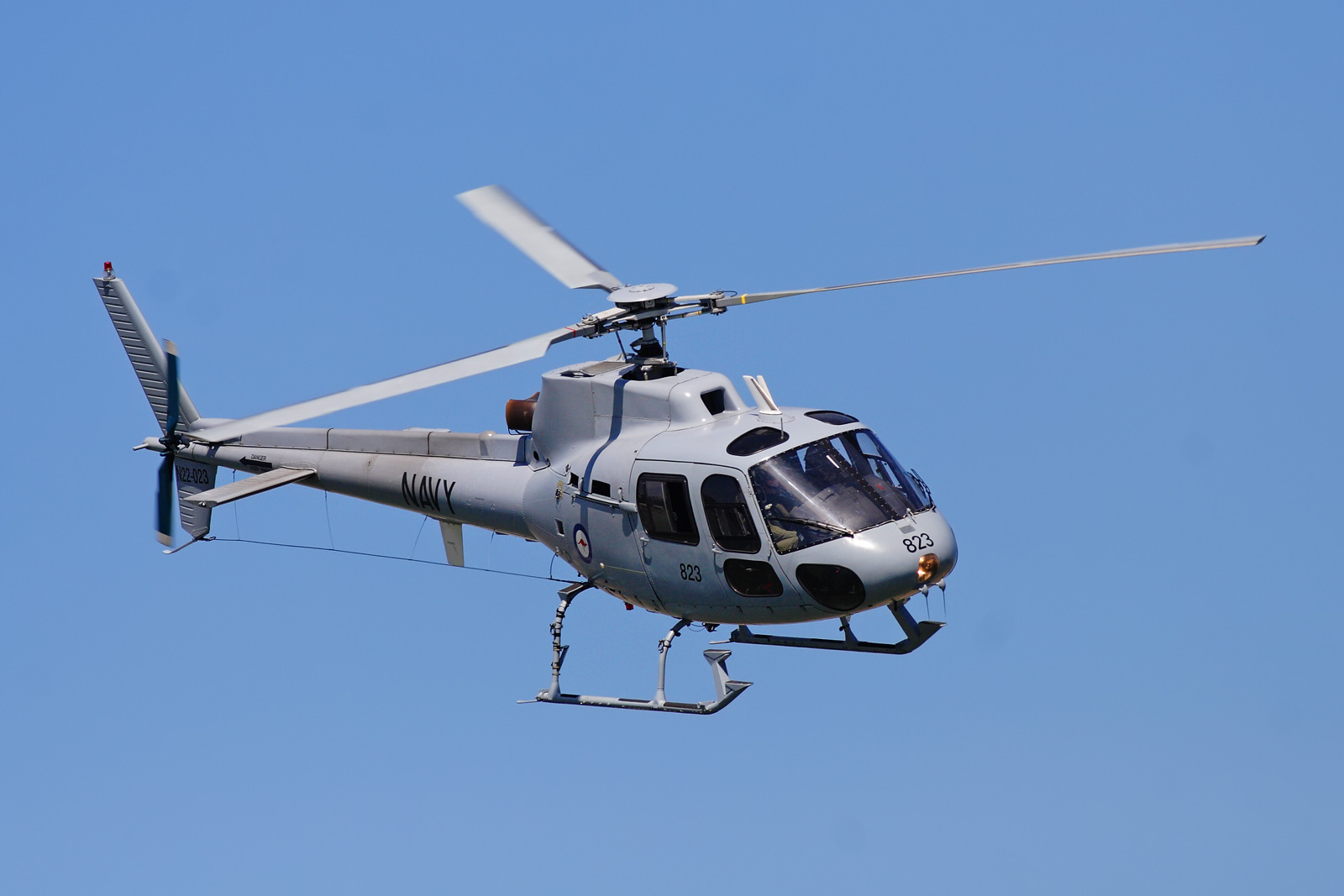
The United Kingdom's Army Air Corps operated the AS350BB variant, designated Squirrel HT.2, for basic helicopter training through the Defence Helicopter Flying School at RAF Shawbury, retiring the fleet in March 2018 after accumulating over 500,000 flight hours since entering service in 1985, primarily to transition to more advanced training helicopters like the Bell 412.[64]The Republic of Singapore Air Force acquired three AS350B helicopters in the early 1980s for basic rotary-wing training with 123 Squadron, retiring them in 2009 alongside the AS550 Fennec to modernize its fleet with twin-engine platforms better suited for operational demands.[1]The Royal Australian Navy utilized 13 AS350BA Squirrels, acquired between 1980 and 2000, for pilot training and utility roles within 723 Squadron, formally retiring the type on December 1, 2017, at HMAS Albatross after 37 years and more than 50,000 flight hours, driven by airframe fatigue and the shift to the Bell 429 for enhanced safety and performance.[65][66]In the United States, various state and local law enforcement agencies have retired older AS350 models amid fleet upgrades emphasizing reliability and safety. The Phoenix Police Department, for instance, phased out its four AS350 B3 helicopters—acquired in 2005—replacing them with five H125 variants delivered between 2022 and 2023 to address maintenance challenges on aging single-engine airframes and improve mission endurance.[67][68] Similarly, agencies like the Suffolk County Police Department have transitioned from legacy AS350 B2s to twin-engine H145s since 2015, reflecting a broader trend toward multi-engine types for reduced risk in public safety operations.[69]Globally, AS350 retirements frequently result from escalating maintenance costs on airframes averaging 20-30 years old, coupled with post-accident regulations prioritizing twin-engine helicopters for commercial and paramilitary roles to enhance redundancy against engine failure.[70] Over 6,000 AS350 family helicopters have been produced since 1978, with several hundred retired worldwide by the mid-2020s, often donated to civilian operators or preserved in museums.[71]
Preserved aircraft
In Australia
Several preserved examples of the Eurocopter AS350 Écureuil, known locally as the Squirrel, are on display in Australian aviation museums, highlighting the helicopter's role in military training and utility operations during the 1980s and beyond. One notable airframe is N22-017 (RAN code 864, constructor number 1744), a former Royal Australian Navy (RAN) light utility helicopter delivered on 24 March 1984. This aircraft served aboard multiple RAN vessels, including HMAS Success during the 1991 Gulf War for surveillance and logistics tasks, and HMAS Anzac in East Timor operations from 1999 to 2000. It is preserved as a static exhibit at the Australian War Memorial in Canberra, where it educates visitors on the evolution of Australian naval aviation and the Squirrel's contributions to conflict zones and humanitarian efforts, such as lifting 25 tonnes of rice for cyclone relief in Vanuatu in 1987.[72]Another significant preserved example is A22-001 (constructor number 1727), the first Squirrel accepted by the Royal Australian Air Force (RAAF) on 28 February 1984 at the manufacturer's facility in Marignane, France. Assigned to No. 5 Squadron at RAAF Base Fairbairn, it supported Army aviation training and utility missions before its retirement. The airframe is maintained as a static display at the RAAF Museum in Point Cook, Victoria, in its original blue-and-white scheme, emphasizing the helicopter's early adoption in joint military training programs across Australian services.[73][74]At the Fleet Air Arm Museum in Nowra, New South Wales, N22-015 (RAN code 862, constructor number 1739) is preserved following its delivery on 9 March 1984 and service with 723 Squadron, including deployment aboard HMAS Adelaide during the 1990 Gulf War. These static displays, all maintained by respective aviation heritage institutions, provide public access to explore the AS350's historical significance in Pacific region operations, such as RAN support during the 2001 Black Christmas bushfires in New South Wales. The preserved aircraft collectively represent the Squirrel's versatility in military and emergency roles, from combat support to disaster response, underscoring its impact on Australian defense aviation history.[74][75][66]
In France
In France, preserved examples of the Eurocopter AS350 Écureuil emphasize the helicopter's origins as a successor to the Aérospatiale Alouette II, reflecting Aérospatiale's shift toward more efficient, single-engine light utility designs in the 1970s to meet civil and military demands for cost-effective operations.[5] Developed to address the Alouette II's aging limitations, the AS350 incorporated advanced turboshaft power and a starflex rotor system, establishing a lineage that prioritized versatility and performance in high-altitude and utility roles.[5]A prominent preserved exhibit is a mock-up of the AS350 B3 F-WQEX (c/n 3934), renowned for setting world records in 2005 by landing and taking off at 8,848 meters on Mount Everest, demonstrating the type's exceptional high-altitude capabilities.[76] This replica, painted in the colors of the actual Everest record-setting helicopter originally used by Eurocopter for testing, is on static display at the Musée de l'Aviation in Saint-Victoret, Bouches-du-Rhône, where it serves as an educational exhibit on the Écureuil family's engineering milestones.[76] The museum's collection, including this example, underscores France's aviation heritage by illustrating the AS350's role in advancing rotorcraft technology from the Alouette era. The actual F-WQEX remains in service as of 2025.[77]At the Airbus Helicopters facility in Marignane, site of the original 1974 first flight, several production-line veterans are preserved to honor the Écureuil's developmental legacy.[78] Notable among them is an AS350 used for Fenestrontail rotor testing between 1987 and 1991, now mounted above the main entrance as a symbol of innovation in noise reduction and safety features.[79] Additionally, the AS350Z prototype, which featured a Fenestrontail rotor but remained developmental, is displayed at the site's entrance, highlighting early experiments that influenced subsequent models like the H130.[80]These artifacts are maintained through institutional efforts to preserve France's rotorcraft history, with many held in static condition for public viewing during museum hours and special aviation events.[81] Some flyable examples participate in national airshows, such as the Paris Air Show, allowing demonstrations of the AS350's enduring operational heritage.[82]
In other countries
In Singapore, a retired Aerospatiale AS550 Fennec variant of the Écureuil family, serial number 210 (c/n 2302), is preserved and displayed at the Republic of Singapore Air Force Museum in Paya Lebar. This aircraft, originally acquired in the 1980s, served the Republic of Singapore Air Force (RSAF) as a light utility and training helicopter before its retirement and transfer to the museum for static exhibition.[83]The preservation of such examples underscores the AS350 Écureuil's widespread export success, with airframes from military and civilian operators worldwide being repurposed for educational displays in aviation institutions across Asia and the Americas. These static exhibits highlight the helicopter's versatility in roles ranging from reconnaissance to transport, contributing to public understanding of rotary-wing aviation history.
Notable accidents and incidents
Major civilian accidents
On August 8, 2009, a sightseeing Eurocopter AS350BA collided mid-air with a Piper PA-32R over the Hudson River near Hoboken, New Jersey, killing all nine people on board both aircraft, including five Italian tourists.[84] The National Transportation Safety Board determined the cause as both pilots' failure to see and avoid each other due to visual limitations and traffic density.[84]On March 9, 2015, two Eurocopter AS350B3 Écureuil helicopters collided mid-air near Villa Castelli, Argentina, during filming of a French reality TV show, killing all ten occupants, including celebrities Florence Arthaud, Alexis Vastine, and Camille Muffat.[85] Argentine authorities attributed the crash to pilot error in maintaining separation.On July 27, 2007, two Eurocopter AS350B2 helicopters operated by local television news stations collided mid-air over Phoenix, Arizona, while covering a police pursuit, resulting in the deaths of all four occupants—two pilots and two photographers.[86] The National Transportation Safety Board determined the probable cause to be both pilots' failure to see and avoid each other, compounded by their divided attention on reporting duties and the absence of standardized electronic news gathering procedures.[86]On January 14, 1986, an Aérospatiale AS350B Écureuil supporting the Paris-Dakar Rally crashed into a dune during a survey flight in Mali after encountering a sudden sandstorm, killing all five people on board, including rally organizer Thierry Sabine and singer Daniel Balavoine.[87] The accident occurred approximately 190 km east of Tombouctou, where the helicopter struck a 30-meter-high dune amid poor visibility from dust and wind.[87]On March 27, 2021, an Airbus Helicopters AS350B3 crashed into a mountainside near Knik Glacier, Alaska, during a heli-skiing trip, killing five of the six occupants, including Czech billionaire Petr Kellner.[88] The National Transportation Safety Board cited the pilot's lack of mountain flying experience and inadequate training as contributing factors.[88]On June 10, 2012, a Kenya Police Air Wing Eurocopter AS350B3e crashed into a forested hill near Ngong, outside Nairobi, during a flight carrying government officials, resulting in six fatalities.[89] A government commission later attributed the crash to pilot error, specifically the pilot's failure to maintain proper altitude and airspeed in hilly terrain.[90]On August 7, 2024, an Air Dynasty Eurocopter AS350B3 crashed in a forest near Kathmandu, Nepal, killing all five people on board during a commercial flight.[91] Initial investigations pointed to possible mechanical failure.[92]The AS350 Écureuil series has maintained a relatively low overall accident rate for light utility helicopters, with U.S. rotorcraft fatal accident rates averaging around 0.5 to 0.7 per 100,000 flight hours in recent fiscal years, though specific model data underscores challenges in visual flight rules operations.[93] Investigations by bodies like the NTSB and FAA have frequently highlighted contributing factors such as weather conditions, maintenance issues, and human factors in civilian AS350 accidents, leading to recommendations for enhanced pilot training and procedural standardization.[86]
Military and other incidents
During military and paramilitary operations, the Eurocopter AS350 Écureuil and its variants, such as the AS550 Fennec, have been involved in several incidents, often highlighting challenges in high-risk environments like search and rescue (SAR) or reconnaissance missions. These events underscore the helicopter's vulnerability in contested areas, where ground fire can compromise airframes despite its lightweight design.[94]On December 16, 2024, a U.S. Customs and Border Protection Eurocopter AS350B3 crashed near Potrero, California, during a border patrol mission, killing the sole pilot on board.[95] The cause remains under investigation by the NTSB as of November 2025.[96]On June 2, 2015, a Nepalese government-contracted AS350B3 (registration 9N-AJP), operated by Mountain Helicopters during earthquake relief efforts in Sindhupalchowk district, crashed after striking unmarked wires while distracted by a passenger requesting directions. The incident resulted in four fatalities, including the pilot, co-pilot, and two medical personnel, amid overload conditions at high altitude that limited performance margins during SAR operations. The Nepal government's accident investigation commission attributed the cause to wire strike following pilot distraction, with fatigue as a contributing factor, and a post-crash fire destroyed the airframe.[97][98]In Pakistan Army Aviation service, AS350 variants have suffered multiple losses. On December 26, 2020, an AS350B3 crashed in the Minimarg area of Astore district while evacuating a deceased soldier's body, killing all four crew members under unknown circumstances, possibly technical failure during high-altitude operations. Similarly, on August 1, 2022, another AS350 Écureuil went down en route from Quetta to Karachi near Windar in Balochistan, resulting in six fatalities; initial reports suggested mechanical issues in adverse weather, with no survivors recovered from the remote crash site. These incidents reflect the demands of operational use in rugged terrain.[99][100][101][102]Combat exposure has also exposed vulnerabilities in armed reconnaissance roles. On March 14, 2024, a Colombian Air Force AS550C3 Fennec (E-384) sustained nine high-caliber hits from ground fire during a drug interdiction operation near the Ecuador-Colombia border but managed to return to base, illustrating the type's limited ballistic protection in low-level tactical missions and prompting evaluations of armored enhancements.[94]Military operators maintain lower incident rates compared to civilian use due to stringent maintenance protocols and pilot training, with post-incident analyses driving upgrades such as improved avionics and engine variants for better hot-and-high performance. For instance, the Brazilian Army's 2011 modernization of its AS350 fleet included glass cockpits and extended service life by over 25 years, enhancing reliability in operational theaters. No major losses involving AS350 variants have been reported in recent conflicts like Ukraine.[103]
Specifications
General characteristics (AS350 B3)
The Eurocopter AS350 B3, also known as the H125 in its current Airbus Helicopters designation, is a single-engine light utility helicopter optimized for high-performance operations in diverse environments, including high-altitude and hot conditions. It features a conventional configuration with a three-blade main rotor and a two-blade tail rotor, designed for versatility in civilian and military roles. The variant emphasizes enhanced power and structural integrity over earlier AS350 models, supporting missions such as transport, aerial work, and emergency services.[3]Standard crew consists of one pilot, with capacity for up to five passengers in a typical cabin layout, though high-density configurations can accommodate six. The useful payload stands at 1,075 kg, enabling effective load-carrying for utility tasks. In military setups, the AS350 B3 includes optional provisions for armament, such as mounting points for machine guns or rocket pods, as seen in armed derivatives like the AS550 C3 Fennec.[78][104][105]Key dimensional and weight parameters define its compact yet robust profile, suitable for operations in confined areas. The powerplant is a single Turbomeca Arriel 2B turboshaft engine, delivering 632 kW (847 shp) at takeoff, with dual-channel FADEC for reliable control and improved safety.[26]
The AS350 B3 demonstrates robust performance within its flight envelope, optimized for utility operations in diverse environments. The never exceed speed (VNE) is 287 km/h (155 kn) at sea level under power-on conditions, decreasing with altitude at a rate of 18 km/h per 1,000 m.[107] Fast cruise speed reaches 258 km/h (140 kn) at maximum takeoff weight (MTOW), while the recommended cruise speed is 235 km/h (127 kn) across operating weights.[26] The maximum rate of climb is 10.0 m/s (600 m/min) at sea level for a gross weight of 2,250 kg under ISA conditions.[108]Range and endurance vary with weight and configuration, but with standard fuel tanks, the helicopter achieves 665 km (359 nmi) at recommended cruise speed and 2,250 kg gross weight, without reserves.[26]Ferry range extends to approximately 722 km with auxiliary fuel provisions. Endurance at recommended cruise is about 2.8 hours under similar conditions, while maximum endurance reaches 4 hours 14 minutes at slower speeds.[26]Operational ceilings include a service ceiling of 7,010 m (23,000 ft), though performance at MTOW limits this to around 5,070 m.[26] The hover ceiling out of ground effect (OGE) is 3,415 m at 2,250 kg under ISA takeoff power, dropping from higher values at lighter weights. Hover in ground effect (IGE) capability is effectively unlimited at sea level.[26]Load capabilities emphasize external operations, with a maximum sling load of 1,400 kg (3,086 lb) supported by the reinforced structure and high power margins.[108] Fuel consumption at recommended cruise speed averages 155 kg/h (342 lb/h) for 2,250 kg gross weight, enabling efficient long-duration flights.[26]




![[icon]](https://en.wikipedia.org/wiki/File:Wiki_letter_w_cropped.svg)

.jpg)

.jpg)

.jpg)


.jpg)


.jpg)


/i.s3.glbimg.com/v1/AUTH_59edd422c0c84a879bd37670ae4f538a/internal_photos/bs/2023/h/W/CZGiEdT02AVuaTBWigkw/terra-yanomami-7-.jpeg)


 Video of World Record-breaking Mount Everest AS350 B3 landing
