Hubbry Logo
Alan Goodrich KirkAlan Goodrich KirkMain
Open search
Alan Goodrich Kirk
Community hub
Alan Goodrich Kirk
logo
8 pages, 0 posts
0 subscribers
Be the first to start a discussion here.
Alan Goodrich Kirk
Alan Goodrich Kirk
from Wikipedia

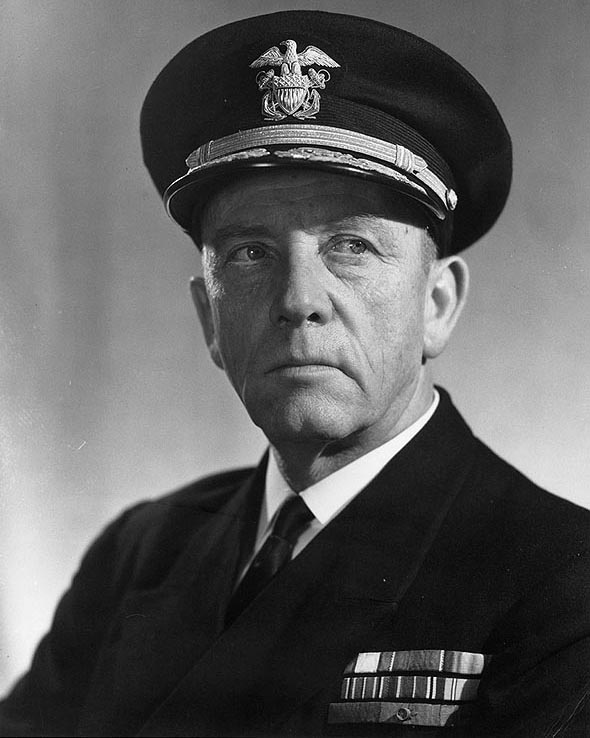
Alan Goodrich Kirk (October 30, 1888 – October 15, 1963) was a United States Navy admiral during World War II who most notably served as the American senior naval commander during the Normandy landings. After the war he embarked on a diplomatic career serving as U.S. ambassador to Belgium, the Soviet Union and the Republic of China (Taiwan).

Key Information

Biography

[edit]

Kirk graduated from the United States Naval Academy in the class of 1909. His classmates included Jesse B. Oldendorf, Olaf M. Hustveldt, and Theodore S. Wilkinson.[1] Kirk served in the United States Navy during World War I and World War II. During his wartime naval service, Kirk became the U.S. naval attaché in London (1939 to 1941). He was Director of the Office of Naval Intelligence from March 1941 but, obstructed and opposed by Rear Admiral Richmond Turner, he was unable to develop the office into an effective center along the lines of the British Royal Naval Operational Intelligence Centre (which he had seen while in London). Eventually, he requested a transfer to an Atlantic destroyer squadron.[2]

Quote, "Deliver for D-Day!"

Kirk served as an amphibious commander in the Mediterranean in 1942 and 1943 (the Allied invasion of Sicily and Italy). In addition, he was the senior U.S. naval commander during the Normandy landings of June 6, 1944 where he commanded the Western Naval Task Force embarked on the heavy cruiser USS Augusta. He served as Commander U.S. Naval Forces in France during 1944 and 1945. He retired from the Navy as a full admiral in 1946. He was decorated with Legion of Honour by the Provisional Government of the French Republic for his World War II service.[3]

Senior officers watching operations from the bridge of USS Augusta (CA-31), off Normandy, June 8, 1944. They are (from left to right): Rear Admiral Alan G. Kirk, Lieutenant General Omar Bradley, Rear Admiral Arthur D. Struble (with binoculars), and Major General William B. Kean.

After retirement from the United States Navy, Kirk embarked on a diplomatic career, and subsequently served in several United States embassies abroad, beginning with the combined posting of U.S. Ambassador to Belgium/U.S. Envoy to Luxembourg (resident in Brussels, Belgium), 1946–49; as U.S. Ambassador to the Soviet Union, July 4, 1949, to October 6, 1951; and finally as United States Ambassador to the Republic of China (Taiwan), June 7, 1962, to January 16, 1963. He served as ambassador to the Soviet Union during the beginning of the Korean War, and expressed concern that the conflict could escalate to World War III, comparing it to proxy conflicts of the 1930s such as the Spanish Civil War and the Soviet–Japanese border conflicts which he believed precipitated World War II.[4]

Admiral Kirk took his post as the second president of American Committee for the Liberation of the Peoples of Russia, in February 1952. As a former U.S. ambassador to the Soviet Union, he oversaw the recruitment of emigres in New York City and Munich, a group that would later form the core of Radio Liberty's staff. Less than a year after taking office, Kirk was forced to resign due to poor health. Also in 1952, he served briefly as Director of the Psychological Strategy Board, which planned for and coordinated government psychological operations.[5]

In 1962 he was portrayed onscreen in the film The Longest Day by Australian actor John Meillon.[6]

Alan Goodrich Kirk died on October 15, 1963 in New York at the age of 74 and was buried at Arlington National Cemetery.[7]

See also

[edit]

References

[edit]

Further reading

[edit]
[edit]
Revisions and contributorsEdit on WikipediaRead on Wikipedia
from Grokipedia
Alan Goodrich Kirk (October 30, 1888 – 1963) was a and career recognized for his command of amphibious operations during , including the invasions of and , and for his ambassadorships to , the amid the early , and . A 1909 graduate of the , Kirk advanced through naval ranks, serving as naval aide to President and director of the Office of Naval Intelligence before taking key operational roles in the European theater. As commander of the Western Naval Task Force, he orchestrated the successful amphibious assault on Omaha and beaches during the D-Day landings on June 6, 1944, coordinating naval gunfire support, bombardment, and troop transport under intense combat conditions. Retiring from active naval duty in 1946 with the rank of , Kirk transitioned to diplomacy, holding posts as U.S. to from 1946 to 1949 and to the from 1949 to 1952, where he navigated tense U.S.-Soviet relations, before a final assignment as ambassador to the Republic of in 1963.

Early Life and Education

Family Background and Upbringing

Alan Goodrich Kirk was born on October 30, 1888, in Philadelphia, Pennsylvania, to William Thompson Kirk, a successful grocer of Quaker descent whose family traced its American roots to 1635, and Harriet Whitney Goodrich, whose lineage included prominent naval figures from Connecticut with ties to the China tea trade. The Goodrich family claimed descent from ancient English aristocracy linked to Goodrich Castle, a connection later debunked during Kirk's 1939 visit to England. His parents belonged to the upper-middle class, affording the family social connections and financial stability that exposed Kirk to influential naval and business circles from an early age. Kirk grew up primarily in Beverly, , a small town near , where his family maintained a home listed as his next of kin in early naval records. He spent portions of his boyhood in , enjoying a "healthy and fine" youth characterized by roaming the countryside and engaging in water-based pursuits such as and , activities that foreshadowed his naval inclinations. Cultural influences included exposure to literature through relatives, such as his Aunt Sally, who introduced him to works like Taine's History of English Literature. Kirk had siblings including a sister, Dorothy Whitney Kirk, whose husband later served as a naval attaché in , and a brother, William Thompson Kirk III. His early interests were shaped by familial naval heritage, particularly stories from his uncle, Caspar F. Goodrich, a founder of the , and the contemporaneous events of the Spanish-American War in 1898, which sparked enthusiasm for military service. These elements, combined with the family's emphasis on discipline and exploration, cultivated Kirk's path toward a naval career amid a stable, connected upbringing.

Formal Education and Entry into Naval Service

Kirk attended Farnum Preparatory School in Beverly, , graduating in the spring of 1905 after studying subjects including Latin, English, , and , with particular emphasis on to prepare for the entrance examination. He captained the school's undefeated , applying strategies from an A.G. Spalding & Co. guidebook. His admission to the Naval Academy was facilitated by a nomination from Congressman John J. Gardner, supported by family friend John W. Hamer, following preparations that included studying naval regulations and guidebooks provided by his uncle, Caspar F. Goodrich, as well as securing recommendation letters from his church minister and school principal. Kirk entered the academy on July 5, 1905, after attending a preparatory cramming school in Annapolis. During his time there, he studied French among other subjects and graduated on June 4, 1909, ranking 44th in a class of 116 midshipmen. Upon graduation, Kirk was commissioned as an ensign in the United States , marking his formal entry into naval service. His initial assignments involved sea duty, beginning with service on battleships, which built on the academy's training in naval operations and gunnery.

Early Assignments and World War I Service

Upon commissioning as an ensign on June 4, 1909, following graduation from the , Kirk undertook initial sea duty aboard the battleship and the collier USS Saratoga. These assignments provided foundational experience in fleet operations and logistics support in the Atlantic and Pacific theaters. Kirk's early career included service in the Philippines and China with the Asiatic Fleet, where he contracted malaria and witnessed the outbreak of World War I in Europe from afar in 1914. By April 20, 1915, as a lieutenant junior grade, he was assigned to the battleship USS Utah (BB-31), serving aboard the vessel through at least early 1918 amid escalating global tensions. With the ' entry into in April 1917, Kirk specialized as an ordnance expert, focusing on gunnery systems and munitions amid the Navy's for escort and deployments to European waters. His technical expertise contributed to enhancements in naval firepower, though specific combat engagements remain undocumented in primary records; the role emphasized preparation and advisory functions rather than direct fleet action. By the in , Kirk had established proficiency in ordnance that would inform his subsequent interwar advancements.

Interwar Period and Pre-World War II Roles

Following World War I, Kirk served as gunnery officer aboard the pre-dreadnought battleship USS Connecticut in 1919, conducting transport duties that included visits to France, and later that year attended ordnance and gunnery courses at the U.S. Naval Academy to update curricula. In early 1920, he acted as assistant fire control officer on the battleship USS Arizona and participated in experimental firings on the Brazilian ship São Paulo near Cuba while temporarily assigned to USS Lebanon. From May 1920, Kirk served as executive officer and navigator on the presidential yacht USS Mayflower during the administrations of Presidents Woodrow Wilson and Warren G. Harding, handling duties in Washington, D.C. That year, he published technical articles on ballistics, including "Trajectories and Their Corrections" in the Proceedings of the U.S. Naval Institute, demonstrating his expertise in gunnery computations. In October 1921, Kirk became gunnery officer on the battleship USS North Dakota, where he led ceremonies for the interment of the Unknown Soldier in November 1921. From May 1922 to 1924, he worked in the supply section of the Bureau of Ordnance in Washington, D.C., focusing on ordnance development, including evaluations of 16-inch guns. Kirk then served as gunnery officer on the battleship USS Maryland from July 1924 to March 1926, participating in Pacific Fleet operations and a cruise to Australia and New Zealand. From September 1926 to 1928, he held staff positions with the Scouting Fleet, including diplomatic interactions with the British fleet in October 1926, and temporarily served on the Fire Control Board aboard USS Texas in March 1927. He was promoted to commander on May 7, 1927. Kirk attended the in , as a student from 1928 to 1929, then served as an instructor there until May 1931. From August 1931 to March 1932, he commanded the destroyer USS Schenck, transitioning it to Pacific Fleet duties. He followed this as on the USS from April 1932 to 1933, earning multiple efficiency awards for the ship's performance. From June 1933 to 1936, Kirk served as assistant director of the Ships Movements Division in the Navy Department, contributing to fleet planning. In December 1934, he handled diplomatic duties aboard USS Trenton, transporting the remains of the Cuban ambassador. In August 1936, Kirk took command of the light cruiser USS Milwaukee, leading a search operation in November 1936 for a downed near and receiving commendations for communication efficiency; he relinquished command on February 15, 1937. That year, he served as operations under Claude on the U.S. Fleet staff and was promoted to on June 3, 1937, after approval in March. From February 1937 to January 1939, Kirk held positions on the flagships USS California and USS Pennsylvania within the Battle Force. In June 1939, Kirk was appointed U.S. naval attaché in London, a role he held until 1941, where he observed the onset of World War II, including the sinking of the Athenia in September 1939 and the Blitz, while fostering Anglo-American military coordination. Concurrently, from June 1939 to October 1941, he directed the Office of Naval Intelligence (ONI) in Washington, D.C., overseeing its expansion amid escalating global tensions, though his attaché duties initially predominated. These positions positioned Kirk at the intersection of intelligence, diplomacy, and operational readiness on the eve of U.S. involvement in World War II.

World War II Command Responsibilities

Alan G. Kirk commanded the during the (Operation Husky) in July 1943, directing the naval support for American landings in the area beginning July 10. His responsibilities encompassed training, embarking, transporting, protecting, and landing U.S. invasion troops, utilizing forces including the amphibious command ship USS Ancon as . Kirk's operated under overall Allied naval command, contributing to the successful establishment of a despite initial Axis air and naval counterattacks. Following Sicily, Kirk continued in amphibious roles in the Mediterranean, supporting landings in during 1943, including operations at in September. In November 1943, he transferred to to assume command of the U.S. Western Naval Task Force preparing for , coordinating with British Admiral Bertram Ramsay's overall naval expeditionary force. This assignment involved planning and executing the American sector of the Normandy invasion, focusing on logistical and tactical naval support for ground forces. On June 6, 1944, Kirk, embarked aboard the USS Augusta, directed the Western Naval Task Force in landing V Corps at and the 4th Infantry Division at , employing over 1,200 vessels in the U.S. assault area. His command managed , , and troop transport amid heavy weather and German defenses, adapting to delays in follow-on waves and providing critical gunfire to mitigate stalemates on Omaha. Kirk's forces remained active through the Normandy campaign, supporting the buildup of Allied forces in . Subsequently, Kirk served as Commander, U.S. Naval Forces, from mid-1944 to 1945, overseeing port operations, logistics, and naval support for the advance into , including the River crossing in March 1945. In this capacity, he coordinated the rapid clearance and utilization of captured Atlantic ports like and Brest to sustain ground operations. His leadership emphasized efficient amphibious and logistical integration, drawing on experience from prior Mediterranean and commands.

Post-War Naval Duties and Retirement

Following the Allied victory in on May 8, 1945, Kirk continued as Commander, U.S. Naval Forces, , focusing on post-combat administration, including the management of liberated port facilities and support for occupation logistics in the European theater. His duties encompassed coordinating the pacification of residual French naval elements, such as operations on Île d'Oléron starting May 2, 1945, and inspecting critical infrastructure at ports like on May 24, 1945, and on June 9, 1945. Additionally, on May 30, 1945, he worked alongside Vice Admiral Robert P. Ghormley in to oversee the disarming and partition of the surrendered , ensuring compliance with Allied directives amid efforts. Kirk's command of U.S. Naval Forces, , formally concluded on August 1, 1945, marking the end of his active operational responsibilities after 40 years, 7 months, and 24 days of continuous naval service. With the war over and the transitioning to peacetime structure, he held no further major commands, instead preparing for civilian roles. On February 11, 1946, Kirk submitted a memorandum to Secretary of the James requesting , citing his long service and intent to pursue a diplomatic appointment as U.S. Ambassador to . His took effect March 1, 1946, at the rank of , accompanied by a to full on the retired list—a customary recognition for senior officers with distinguished wartime records, though he retained . This promotion underscored his contributions to amphibious operations in and , without extending .

Diplomatic Career

Ambassador to Belgium and Luxembourg

Alan Goodrich Kirk was appointed United States Ambassador Extraordinary and Plenipotentiary to on February 1, 1946, following his retirement from the U.S. Navy as a full admiral earlier that year. He presented his credentials to Belgian authorities on April 1, 1946, and concurrently served as Envoy Extraordinary and Minister Plenipotentiary to , with credentials presented there on April 24, 1946; Kirk maintained residence in for both accreditations. His tenure, which lasted until he left post on May 6, 1949, coincided with 's post-World War II reconstruction efforts amid emerging tensions in . During this period, Kirk managed bilateral relations focused on economic recovery and security cooperation, including Belgium's participation in the European Recovery Program (), under which the country received approximately $559 million in U.S. aid from 1948 to 1952 to rebuild infrastructure damaged by Nazi occupation. As a naval veteran with experience in amphibious operations and Allied coordination, Kirk's diplomatic role emphasized strengthening ties with Belgian leaders, such as Foreign Minister , on issues like and responses to Soviet influence. He advocated for U.S. interests in stabilizing the region, including appeals for Belgian support in broader Western alliance-building efforts preceding NATO's founding in 1949, of which became a charter member. Kirk's service in Brussels reflected the Truman administration's priority on containing through economic and military partnerships, though specific achievements are documented primarily through routine embassy reporting rather than high-profile negotiations. No major controversies marred his tenure in or , contrasting with challenges he later faced in . His departure in 1949 paved the way for assignment to the , marking a shift to frontline .

Ambassador to the Soviet Union

Alan Goodrich Kirk was appointed Ambassador to the on May 21, 1949, presented his credentials on July 4, 1949, and served until January 1952. His tenure as a recently retired four-star overlapped with the early Cold War's deepening hostilities, including the 's consolidation of control in and support for communist insurgencies abroad. Kirk's naval background informed his pragmatic approach, emphasizing direct reporting on Soviet military capabilities and intentions amid limited diplomatic reciprocity. Relations deteriorated further with the June 25, 1950, North Korean invasion of South Korea, which Kirk attributed to Soviet encouragement, as evidenced by his cables to the State Department documenting Moscow's indirect backing through arms supplies and strategic approval. Soviet authorities restricted U.S. diplomatic access, enforcing protocols that isolated the embassy and minimized high-level contacts, a pattern Kirk described as bureaucratic obstruction hindering substantive engagement. He frequently reported to Washington on the Soviet regime's opacity, including its atomic energy programs and internal purges, while navigating visa denials and surveillance of American personnel. By mid-1951, escalating frustrations led Kirk to advise President Truman that effective was untenable, citing consistent Soviet disregard for U.S. initiatives since his arrival. His departure in early 1952 marked the end of a posting characterized by informational rather than negotiatory successes, contributing to U.S. policy shifts toward over immediate confrontation. Kirk's dispatches, preserved in Foreign Relations of the volumes, underscored the adversarial dynamic, with viewing American overtures as ideological threats.

Ambassador to the Republic of China

President nominated retired Admiral Alan G. Kirk as Ambassador Extraordinary and Plenipotentiary to the Republic of China on July 5, 1962, succeeding Everett F. Drumright. Kirk's selection, announced publicly in May 1962, emphasized his naval expertise amid persistent military tensions in the , where the maintained a substantial troop presence opposite . The Nationalist government in welcomed the appointment, viewing Kirk's background as an asset for bolstering U.S.-ROC defense coordination. Kirk assumed the post in mid-1962 and focused on monitoring cross-strait developments. In a September 6, 1962, discussion in Taipei, he reported that the Chinese Communist forces' build-up along the Fujian coast had concluded, with deployments in the area now substantially stronger than prior levels, heightening concerns over potential aggression against the offshore islands or Taiwan proper. These assessments informed Washington’s deliberations on U.S. commitments under the 1954 Mutual Defense Treaty, including contingency planning for deterrence without provoking escalation. Kirk's prior diplomatic experience in Moscow and his Kennedy family ties also facilitated discreet communications on broader Asia-Pacific strategy. Kirk's tenure concluded in January 1963, after which Jerauld Wright was appointed as his successor. He returned to the and died on October 15, 1963, in at age 74. His brief service underscored the Kennedy administration's preference for military-savvy envoys in high-stakes postings, though health constraints limited his duration in .

Personal Life and Assessments

Family and Private Interests

Alan Goodrich Kirk was born on October 30, 1888, in , , to William Thompson Kirk Jr., a businessman, and Harriet Goodrich Kirk. His family background reflected Philadelphia's established Protestant elite, with roots in commerce and civic affairs, though specific details on his siblings include a brother, William Thompson Kirk III, and a sister, Dorothy Whitney Kirk. Kirk married Lydia Selden Chapin on an unspecified date in 1918; she was born on September 19, 1896, in Pennsylvania and later became known for her 1952 memoir Postmarked Moscow, detailing life as the wife of the U.S. ambassador to the Soviet Union. The couple had three children: daughters Marian (born circa 1920) and Elizabeth (born June 26, 1922, in Washington, D.C.), and son Roger (born circa 1931). Family life involved frequent relocations due to Kirk's naval and diplomatic postings, including travel requests for Lydia and the children to join him abroad in the 1930s, reflecting the challenges of maintaining domestic stability amid professional demands. Limited public records detail Kirk's private interests beyond his , with no prominent hobbies such as , arts, or explicitly documented in primary accounts; his personal correspondence and oral histories emphasize professional duties over recreational pursuits. Kirk's writings occasionally reference family routines in diplomatic settings, portraying a household focused on adaptation to foreign environments rather than leisure activities. Kirk died on October 15, 1963, in Washington, D.C., at age 74, and was buried in alongside , who survived him until December 2, 1984.

Character Evaluations and Interpersonal Dynamics

Kirk was evaluated by contemporaries as a reliable, experienced, and versatile naval officer, technically proficient in amphibious operations and skilled as a and who navigated inter-allied tensions effectively. Historians such as praised his competence in WWII command roles, while superiors like Admiral Harold R. Stark commended his organizational skill for the Normandy invasion, recommending him for the Distinguished Service Medal on July 1, 1944. described his WWII performance as "gallantly and brilliantly" executed in a February 4, 1951, commendation, reflecting broad respect for his leadership in joint operations. Interpersonal dynamics revealed a delegatory style—favoring initiative among subordinates over , akin to Admiral Raymond Spruance—paired with charm, sociability, and frankness that sometimes strained relations. Kirk formed strong bonds with figures like during amphibious planning, earning mutual regard as a "dynamic duo," and maintained cordial ties with from his naval intelligence days. His diplomatic acumen shone in managing British pride and French negotiations, such as during , where patience and avoidance of partisanship facilitated cooperation. However, Kirk's relationships included notable frictions, particularly with British Admiral during Operation Neptune planning in 1944, where differing approaches—Kirk's delegation versus Ramsay's detail-oriented control—led to disputes over defenses and organizational authority; Ramsay rated Kirk "average" and remarked pettily on American demands for resources. Tensions with Stark escalated post-Normandy over staff assignments, resulting in Kirk's fitness report dropping from 4.0 to 3.5, with Kirk privately viewing Stark as ingenuous; historian Mitchell Simpson critiqued Kirk as self-serving and arrogant in this context. Similar spats occurred with Admiral Richmond Kelly Turner over Japanese threat assessments, potentially impacting promotions. Critics like Simpson portrayed Kirk as petty and obsequious, though such views contrast with predominant praise and may reflect professional rivalries; Kirk self-admitted struggles with persuasion in bureaucratic settings. In , Kirk's suave handling of Soviet postings during the early emphasized anti-communist steadiness without overt confrontation, leveraging his naval-honed patience to sustain U.S. interests amid adversarial dynamics. Overall assessments highlight a lack of vanity and cool-headedness under pressure, though his unvarnished candor occasionally annoyed allies, as noted in British reactions to his directness.

Legacy and Historical Impact

Kirk's enduring historical impact stems from his foundational contributions to amphibious warfare doctrine, which revolutionized joint military operations and enabled key Allied victories in World War II. He commanded the naval task force for the invasions of Sicily (Operation Husky, July 1943), Salerno (Operation Avalanche, September 1943), and Normandy (Operation Neptune, June 6, 1944), where his Western Naval Task Force transported and supported 73,000 troops on Omaha and Utah beaches amid severe weather and defenses, contributing to the breach of Fortress Europe. These successes, executed with meticulous planning for logistics, fire support, and inter-service coordination, established models for large-scale amphibious assaults that influenced subsequent U.S. Navy strategies, including in the Pacific theater and post-war exercises. In diplomacy, Kirk's service as U.S. ambassador to the Soviet Union (1949–1952) during the onset of the Cold War provided critical on-the-ground assessments of Stalinist policies amid the Korean War and Berlin tensions, informing American containment efforts without escalating to direct confrontation. He facilitated the consolidation of ten anti-Soviet exile groups into a unified propaganda network, recruiting emigres in New York and Munich to broadcast dissident messages, which bolstered psychological operations against the USSR. His ambassadorships to Belgium and Luxembourg (1946–1949) and the Republic of China (1952–1955) similarly stabilized U.S. alliances in Europe and Asia, leveraging his naval background for realist evaluations of communist threats. The U.S. Navy's naming of the Knox-class frigate USS Kirk (DE/FF-1087), commissioned on December 13, 1970, and serving until 1993, honors his career, symbolizing recognition of his operational acumen in both and statecraft. Kirk's trajectory from to exemplifies the integration of military precision into foreign policy, though his diplomatic cables reveal a pragmatic toward Soviet intentions that contrasted with more optimistic academic analyses of the era.

References

Add your contribution
Related Hubs
User Avatar
No comments yet.