Hubbry Logo
Albert II (monkey)Albert II (monkey)Main
Open search
Albert II (monkey)
Community hub
Albert II (monkey)
logo
8 pages, 0 posts
0 subscribers
Be the first to start a discussion here.
Albert II (monkey)
Albert II (monkey)
from Wikipedia

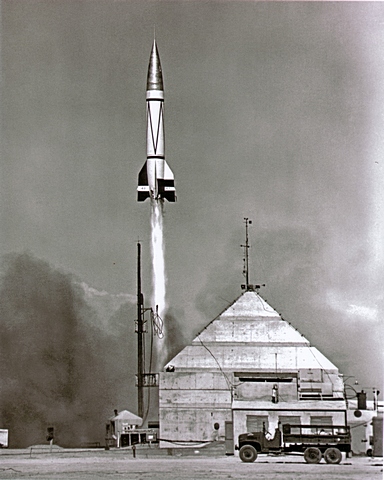
On June 14, 1949, V-2 launch No. 47 at Holloman Air Force Base in New Mexico carried Albert II to become the first primate and first mammal in space.

Albert II was a male rhesus macaque monkey who was the first primate and first mammal to travel to outer space.[1] He flew from Holloman Air Force Base in New Mexico, United States, to an altitude of 83 miles (134 km) aboard Blossom No. 4B, a U.S. V-2 sounding rocket on June 14, 1949. Albert died upon landing after a parachute failure caused his capsule to strike the ground at high speed.[2][3] Albert's respiratory and cardiological data were recorded up to the moment of impact.[4]

Background

[edit]

Animals were launched into space in order to test the survivability of spaceflight, before human spaceflights were attempted. Before Albert II, the only previous known living beings in space were fruit flies, launched by the United States in Blossom 1, a V-2 rocket suborbital flight on February 20, 1947. The flies were recovered alive.

Albert I was a nine-pound monkey who was anesthetized and placed inside a capsule in the nose of Blossom No. 3, a V-2 rocket flight on June 11, 1948.[5] The rocket reached 39 mi (63 km) on a high mesospheric flight and did not reach outer space. Following the likely preflight death of Albert I, the capsule was redesigned to enlarge the cramped quarters.

Albert II's spaceflight

[edit]

Albert II's flight was run by the Alamogordo Guided Missile Test Base and organized with the help of Holloman Air Force Base. Albert was launched into space on June 14, 1949, aboard a V-2 rocket from White Sands, New Mexico. He was connected to equipment that successfully monitored his heartrate and other vitals. The flight reached an altitude of approximately 83 miles (134 kilometers),[6] past the Kármán line, 100 km of altitude generally accepted as the boundary of space.[7] Three minutes after the launch, the space capsule disconnected from the booster, preparing for Albert's descent. Upon re-entry, the ship's parachute failed and Albert II was killed on impact.[8] His crash-landing, occurring approximately six minutes after launch, left a 10-foot crater in the ground.[9]

The flight provided useful data for scientists to prepare for human spaceflight, although the ship's parachute had failed, the vitals data had been successfully transmitted back to ground control on Earth. David Simons, the United States Air Force project officer for V-2 animal studies stated that Albert’s heart rate was “clearly disturbed” by g-forces.[9]

Aftermath

[edit]
Ham the chimpanzee wearing a helmet
Ham, the first great ape in space, who flew in 1961 (over 12 years after Albert II)

After Albert II, several other monkeys named Albert followed. Albert III was killed before he reached space when the V-2 rocket exploded during the ascent. Albert IV met a similar fate as Albert II - he reached space (though several miles lower than II), and died on impact with the ground due to a parachute release malfunction. Following this, NASA switched to using Aerobee rockets, and on April 18, 1951, a monkey, possibly called Albert V, died once again due to parachute failure during descent. Two months after Soviet space dogs Dezik and Tsygan survived a July 1951 spaceflight, Yorick, also called Albert VI, attained a non-space height of 72 km (44.7 mi) but did become the first primate to survive a landing. He died two hours later.

On January 31, 1961, over 12 years after Albert II's flight, Ham, a chimpanzee, became the first great ape in space. He flew a suborbital flight on the Mercury-Redstone 2 mission, part of the U.S. space program's Project Mercury.[10][11] Ham lived for 19 more years after his flight.

See also

[edit]

References

[edit]
Revisions and contributorsEdit on WikipediaRead on Wikipedia
from Grokipedia
Albert II was a male monkey who achieved a historic milestone as the first —and first —to reach , launching aboard a captured German on June 14, 1949, from White Sands, , and attaining an altitude of 83 miles (134 km). This flight was part of a series of early U.S. biomedical experiments conducted by the Air Force Aeromedical Laboratory under Project Hermes, aimed at understanding the physiological effects of high-altitude and conditions on living organisms as a precursor to human space travel. Albert II's mission followed the unsuccessful launch of Albert I in June 1948, where the predecessor monkey died from before reaching space, and preceded further tests with Albert III and IV later that year, all of which ended in the animals' deaths due to technical failures. During the ascent on V-2 Blossom missile 47, Albert II was sedated, instrumented with sensors to monitor vital signs, and secured in a specialized capsule; data transmitted back to ground control confirmed his survival through the suborbital , providing valuable insights into , , and re-entry stresses. Tragically, the monkey did not survive the landing, perishing upon impact after the failed to deploy properly, a recurring issue in these pioneering V-2 tests that highlighted the risks and limitations of early rocketry. Albert II's journey marked a critical step in the ethical and scientific evolution of , underscoring the sacrifices of animal subjects in advancing human knowledge, though it also sparked debates on in research that continue to influence modern standards.

Historical Context

Post-World War II Rocket Development

Following , the initiated , a secret program to recruit over 1,600 German scientists and engineers, including key figures from the Nazi rocket program, to bolster American military and technological capabilities. This effort included the acquisition of components from approximately 300 rail cars captured from German stockpiles, sufficient to assemble about 80 complete rockets, which were transported to the U.S. for study and adaptation. , the chief designer of the V-2, surrendered to American forces in May 1945 and was instrumental in integrating his team into the U.S. Army's Ordnance Department at , , where they contributed to early guided missile development. To facilitate testing of these captured technologies, the —later renamed —was established on July 9, 1945, in as the largest military testing range in the United States. Spanning over 3,200 square miles of desert terrain, it served as the primary launch site for V-2 rockets, with infrastructure like Launch Complex 33 and an Army blockhouse completed by September 1945. The site's remote location and clear weather conditions made it ideal for high-altitude experiments, enabling the U.S. to rapidly advance its rocketry expertise without immediate Soviet competition. In total, 67 V-2 rockets were launched from White Sands between 1946 and 1952. The V-2, originally developed as a supersonic , was repurposed from a weapon of war into a pioneering for probing the upper atmosphere. Powered by a liquid-fueled engine using 75% and 25% water as combined with as the oxidizer, it achieved a maximum range of approximately 320 km and could carry a of up to 1,000 kg. This transformation allowed researchers to instrument the rockets with cameras, spectrographs, and sensors, shifting focus from destruction to data collection on environmental conditions beyond aeronautical limits. Between 1946 and 1948, the U.S. conducted dozens of non-biological V-2 launches from White Sands, with the first launch occurring on April 16, 1946, which failed after reaching only about 5.5 km due to ignition and guidance issues. The first successful flight followed on May 10, 1946, attaining an altitude of approximately 114 km. These missions gathered critical data on upper-atmosphere physics, including the ultraviolet spectrograms, measurements, and air density profiles up to 100 km. A notable achievement came on , 1946, when a V-2 carried a 35-mm camera to 105 km, capturing the first photographs of from space and revealing its curvature. By 1948, over 30 such flights had established foundational knowledge of ionospheric conditions and geomagnetic fields, demonstrating the rocket's reliability for more advanced payloads. These successes naturally extended to biological testing as a means to assess in space-like environments.

Early Biological Experiments in Space

Following , the emerging field of grappled with profound uncertainties regarding human survivability in space, including the impacts of extreme forces during launch, prolonged exposure to microgravity, cosmic radiation, and the near-vacuum conditions of the upper atmosphere and beyond. These concerns, rooted in the physiological stresses of high-speed rocketry and the unknown hazards of extraterrestrial environments, necessitated proxy testing with living organisms to evaluate basic biological tolerances before risking human subjects. The U.S. military, anticipating the strategic importance of space travel amid tensions, prioritized such research to inform pilot training and future manned missions. The U.S. Air Force's School of , later formalized as the Aeromedical Field at in , spearheaded these efforts starting in , leveraging captured German V-2 rockets launched from White Sands Proving Ground. This initiative marked the formal beginning of systematic animal-based space biology research in the United States, focusing on developing for monitoring and recovering specimens to analyze post-flight effects. By integrating aerodynamic and medical expertise, the aimed to quantify how responded to the integrated stressors of rocketry, laying groundwork for more sophisticated studies. Initial experiments eschewed in favor of simpler organisms to establish proof-of-concept for survival and recovery techniques. In February 1947, fruit flies () were launched aboard a to an altitude of 109 kilometers—the first animals to reach space and return alive—yielding data on genetic damage from and resilience to deceleration forces upon reentry. Subsequent flights in 1947 and 1948 confirmed that basic life processes could endure suborbital conditions, highlighting needs for improved life support. These missions prioritized conceptual benchmarks over exhaustive metrics. By late 1948, as experiments demanded closer human analogs, the Aeromedical Field Laboratory selected rhesus monkeys (Macaca mulatta) for their robust physiological parallels to humans, notably in cardiovascular regulation, neurological processing, and overall metabolic responses, which promised more reliable predictions of in . This choice reflected a strategic escalation from invertebrate models, emphasizing species with comparable body sizes and organ systems to better simulate the holistic impacts of stressors.

The Albert Series

Albert I Mission

The Albert I mission was the pioneering effort in the United States to launch a aboard a to evaluate biological responses to the stresses of , including , reduced , and potential radiation exposure. Conducted as part of the U.S. Air Force's Blossom project, the flight took place on June 11, 1948, from in using a modified German . Albert I, a nine-pound male rhesus monkey (Macaca mulatta), served as the test subject due to the species' physiological resemblance to humans, making it suitable for extrapolating data to human astronauts. Prior to launch, Albert I was anesthetized with to prevent movement and distress, then fitted with a custom to maintain internal pressure and protect against the near-vacuum conditions. He was secured in a harness within an instrumented capsule positioned in the rocket's , equipped with an oxygen delivery , environmental controls for and humidity, and sensors to telemeter physiological data such as heart rate, respiration, and body back to ground stations. This setup allowed real-time monitoring during ascent, with the goal of assessing tolerance to g-forces exceeding 10g and the overall viability of for suborbital flight. The mission failed catastrophically shortly after liftoff. Albert I perished approximately 3-4 minutes into the ascent from suffocation, stemming from a malfunctioning mask that restricted oxygen flow, compounded by extreme forces. These issues led to premature capsule separation and structural failures in the , limiting the apogee to just 63 km—well below the 100 km threshold for and insufficient for meaningful studies. The V-2's inherent design limitations, inherited from its wartime origins, exacerbated the problems, as the vehicle was not optimized for biological payloads. Following recovery of the debris, an autopsy on Albert I showed no evidence of significant cosmic , consistent with the low altitude attained, but underscored severe shortcomings in the and ventilation systems. The excessive g-forces had also caused internal trauma, highlighting the urgency for enhanced deceleration mechanisms and more robust harnesses. These revelations directly informed design improvements for the subsequent Albert II mission, prioritizing reliable redundancies and better acceleration tolerance to enable safer flights and pave the way for human .

Albert II Mission

The Albert II mission, conducted by the U.S. Air Force's Aeromedical Laboratory on June 14, 1949, sought to assess the physiological impacts of high-altitude on a , with a primary focus on monitoring , respiration, and body temperature in response to acceleration forces and short periods of . This built on prior efforts to evaluate primate survivability in extreme conditions, providing foundational data for future travel. Albert II, a healthy male sourced from the Air Force's research colony, was selected due to his robust condition and physical similarity to the subject of the preceding experiment, ensuring comparability in size and physiology for accurate result interpretation. Prior to launch, the monkey was anesthetized to minimize stress and movement during the flight. Drawing lessons from the Albert I mission's limitations, particularly issues with confinement and monitoring, the capsule incorporated design upgrades such as a larger interior for reduced cramping, an enhanced oxygen delivery system including a specialized mask, an improved harness to better distribute g-forces across the body, and advanced capable of transmitting real-time cardiovascular and respiratory data to ground stations. These modifications, mounted atop a modified , aimed to enable more reliable collection throughout the ascent. The overall mission profile was designed as a suborbital trajectory, projecting an apogee exceeding 100 km to cross into while allowing for parachute-assisted recovery of the capsule in the desert.

Flight Execution

Pre-Launch Preparation

Albert II, a male rhesus monkey selected for the mission by personnel from the U.S. Air Force Aeromedical Laboratory at Wright Field, underwent physiological conditioning to prepare for the stresses of launch and high-altitude flight. This included acclimation to restraint systems designed to secure the animal during acceleration, drawing on techniques developed for the Albert series to simulate the forces expected in the environment. Medical preparations focused on minimizing stress and enabling real-time monitoring of . Albert II was anesthetized prior to encapsulation to reduce anxiety and movement during the procedure and launch sequence. Electrodes were implanted to record electrocardiogram (ECG) and respiration data, allowing researchers to track cardiovascular and respiratory responses throughout the flight. The monkey was fitted into a custom restraint harness within a pressurized capsule, which included an oxygen supply system capable of sustaining the animal for up to 24 hours, an improvement over the Albert I mission to prevent suffocation during countdown or ascent. The ground team, comprising U.S. Air Force engineers, veterinarians, and scientists from the Aeromedical Laboratory, conducted final health assessments approximately 24 hours before launch to confirm the monkey's fitness. These checks verified stable and proper function of monitoring equipment. The capsule, equipped with batteries to power systems for the duration of the expected flight profile, was then integrated into the of the modified (Launch No. 47) at White Sands Proving Ground in . Systems verification ensured adequate oxygen delivery and secure sealing of the pressurized environment prior to final countdown.

Launch and In-Flight Events

Albert II was launched on June 14, 1949, aboard a V-2 rocket from Launch Complex 33 at the White Sands Missile Range in New Mexico. The monkey had been sedated prior to liftoff to promote stability during the intense ascent. The V-2's engine ignited and burned for approximately 65 seconds, accelerating the vehicle to over Mach 4 at burnout while subjecting Albert II to peak forces of about 5.5 g. Telemetry data captured during this phase showed the monkey's vital signs remaining stable overall, with heart rate and respiration holding steady, indicating no signs of hypoxia. Roughly 3.5 minutes after launch, the mission achieved an apogee of 134 km (83 miles), surpassing the at 100 km and establishing Albert II as the first to reach . During the subsequent coast phase, the monkey experienced approximately 2 minutes of before the descent trajectory began. At burnout, the capsule separated from the body and initiated a spin-stabilized descent, with ongoing telemetry verifying that Albert II's physiological responses had been unaffected by the ascent and brief exposure up to that point.

Outcomes and Impact

Recovery and Analysis

Following the successful ascent and apogee of the on June 14, 1949, the nose cone containing Albert II separated as planned, initiating reentry over the desert near White Sands Proving Ground. However, the parachute recovery system malfunctioned, preventing proper deployment and resulting in a high-speed impact. The capsule was located within hours using its radio beacon near the launch site, where it had created a 10-foot-wide upon striking the ground. Albert II was found dead at the scene, with the failure of the recovery system confirmed as the direct cause of death rather than any in-flight stressors. Post-recovery examination revealed no evidence of physiological damage attributable to the space environment, such as significant radiation exposure, during the suborbital trajectory. Telemetry data transmitted until separation indicated that Albert II had survived the launch and ascent phases, with heart rate, blood pressure, and respiratory functions remaining stable and within normal ranges up to the point of nose cone detachment—contrasting sharply with the suffocation that claimed Albert I. These findings underscored the viability of primates for suborbital spaceflight but highlighted critical deficiencies in recovery mechanisms. Initial analysis, detailed in 1949 U.S. reports from the Aeromedical Field Laboratory at , validated the instrumentation's effectiveness in capturing real-time physiological responses and emphasized the need for robust parachute designs in future missions. The data confirmed that acceleration-induced disturbances to heart rate were transient and did not compromise overall during the powered phase, providing foundational evidence for feasibility. No long-term tissue samples were viable due to the impact trauma, but the mission's outcomes directly informed refinements in bioastronautics protocols.

Scientific and Ethical Legacy

The mission of Albert II marked a pivotal advancement in understanding the physiological impacts of on mammals, providing critical data on acceleration, weightlessness, and reentry stresses that informed the design of systems for subsequent human missions, including elements of NASA's . By demonstrating that a could survive the launch phase and transmit data from an altitude of 83 miles (134 km), the flight validated the use of rhesus macaques as biological analogs for humans, paving the way for additional U.S. experiments such as the Albert III mission later in 1949. These findings accelerated biomedical essential for manned , emphasizing the need for robust environmental controls to mitigate G-forces and microgravity effects. In the context of the emerging , Albert II's success underscored U.S. leadership in biological space testing, prompting intensified Soviet efforts in parallel biomedical experiments; this competitive dynamic contributed to the Soviet Union's suborbital dog launches beginning in , which further advanced global knowledge of orbital habitability for crewed missions. The mission's outcomes highlighted the geopolitical stakes of space biomedical research, where animal tests became a proxy for national prestige and technological superiority, ultimately informing international protocols for human . Ethically, the Albert series, including the 100% mortality rate across early V-2 primate flights due to parachute failures and other technical issues, exemplified the high costs of pioneering space biology and sparked growing scrutiny of animal experimentation in the post-World War II era. This era of unchecked sacrifices influenced the development of the 3Rs principles—Replacement, Reduction, and Refinement—formalized in 1959 by William Russell and Rex Burch, which sought to minimize animal suffering in U.S. research protocols and became foundational to modern biomedical ethics in space programs. Albert II's fatal mission, in particular, symbolized the ethical trade-offs of the time, balancing scientific necessity against welfare concerns and prompting reforms that prioritized non-lethal alternatives where feasible. Culturally, Albert II emerged as an early icon of in American media, portrayed as a brave pioneer in popular accounts that celebrated U.S. ingenuity amid the atomic age's optimism. In contemporary retrospectives, the mission is recognized as a tragic yet indispensable milestone, underscoring the foundational role of in achieving while acknowledging the moral complexities involved.

References

Add your contribution
Related Hubs
User Avatar
No comments yet.