


Community hub
Recent from talks
Contribute something
Nothing was collected or created yet.
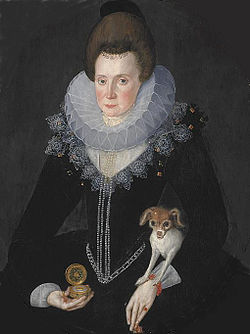
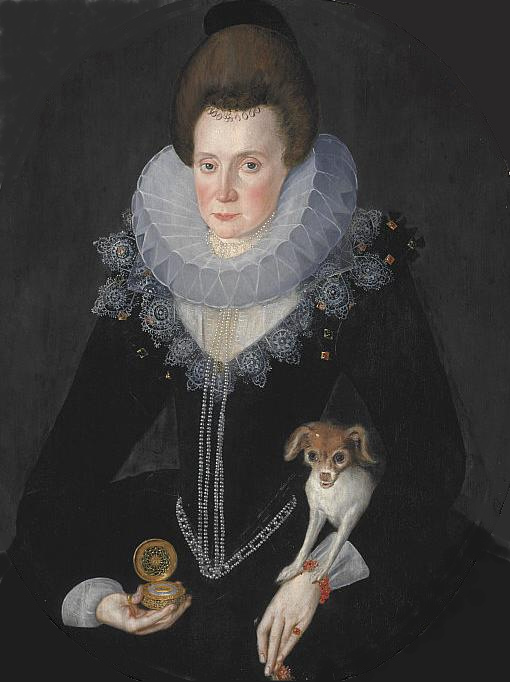
Lady Arbella Stuart
View on WikipediaLady Arbella Stuart (also Arabella, or Stewart; 1575 – 25 September 1615) was an English noblewoman who was considered a possible successor to Elizabeth I. During the reign of James VI and I (her first cousin), she married William Seymour, 2nd Duke of Somerset, another claimant to the English throne, in secret. King James imprisoned Seymour and placed her under house arrest. When she and her husband tried to escape England, she was captured and imprisoned in the Tower of London, where she died at age 39.[1]
Key Information


Descent
[edit]She was the only child of Charles Stuart, 1st Earl of Lennox (of the third creation), by his marriage to Elizabeth Cavendish. She was a grandchild of Matthew Stewart, 4th Earl of Lennox (of the second creation) and Lady Margaret Douglas, the daughter and heiress of Archibald Douglas, 6th Earl of Angus, and of Margaret Tudor, daughter of King Henry VII of England and widow of King James IV of Scotland. Arbella was therefore a great-great-granddaughter of Henry VII and was in line of succession to the English throne, although she did not herself aspire to it.[2]
Her paternal grandparents, the 4th Earl of Lennox and Margaret Douglas, had, of their eight children, two sons who survived childhood: Arbella's father Charles and his older brother Henry Stuart, Lord Darnley, who became the second husband of Mary, Queen of Scots, and the father of Arbella's cousin James VI and I of Scotland, England and Ireland. Her maternal grandparents were Sir William Cavendish and his wife Elizabeth, better known as "Bess of Hardwick".
Childhood
[edit]
Arbella's father died in 1576 when she was an infant. She was raised by her mother Elizabeth Cavendish, Countess of Lennox, until 1582.[3] The death of her mother left seven-year-old Arbella an orphan, whereupon she became the ward of her grandmother Bess, rather than Lord Burghley, the Master of the Court of Wards, as might have been expected.[4]
During most of her childhood she lived in the protective isolation of Hardwick Hall in Derbyshire with her grandmother, who had married George Talbot, 6th Earl of Shrewsbury, in 1568. It seems she enjoyed periodic visits to the court and to London, including court visits during the summers of 1587 and 1588 and one that lasted from November 1591 to July 1592.[5]
Starting in early 1589 or thereabouts "one Morley ... attended on Arbell and read to her", as reported in a dispatch from Bess of Hardwick to Lord Burghley, dated 21 September 1592.[6] Bess recounts Morley's service to Arbella over "the space of three years and a half". She also notes he had hoped for an annuity of £40 a year (equivalent to £14,000 in 2023) from Arbella based on the fact that he had "been so much damnified [i.e. that much out of pocket] by leaving the University". This has led to speculation that Morley was the poet Christopher Marlowe,[7] whose name was sometimes spelt that way.
Heiress to the English throne
[edit]

For some time before 1592, Arbella was considered one of the natural candidates to succeed her first cousin twice removed, Queen Elizabeth I.[8]
Arbella’s exact place in the line of succession was a matter of debate both legally and politically. By strict Primogeniture, she was second behind her cousin James before the birth of his children. However, the Treason Act 1351 from the reign Edward III barred “aliens” from inheriting the English throne which Arbella’s supporters (mainly Catholics who opposed James) argued meant she was first in line as she was born in England and James was not. Further complicating matters was that Henry VIII’s will had bypassed the Stuarts all together to place his niece Frances Grey (daughter of his younger sister Mary) and her descendants behind his own children. Due to the ambiguity surrounding her, Arbella became a key chess piece to the various groups who wanted to use her for their own ends. [9]
However, between the end of 1592 and the spring of 1593, the influential Cecils – Elizabeth's Lord Treasurer, Lord Burghley, and his son, Secretary of State Sir Robert Cecil – turned their attention away from Arbella towards her cousin James VI of Scotland, regarding him as a preferable successor.[10] James had many perceived strengths over Arbella: he was staunchly Protestant while she was of ambiguous religious affiliation, he had proved himself a successful ruler in Scotland, he was a man and she was a woman after two Queens in a row, and he was married and had children which secured his own succession.
Sometimes she was invited to Elizabeth's court, but much of her time she spent away living with her grandmother. Continuing her education into her twenties, she studied several languages and could play the lute, viol and virginals.[11] Elizabeth told Marie de La Châtre, the wife of the French ambassador Guillaume de l'Aubespine de Châteauneuf, about Arbella's skills in speaking Latin, French and Italian.[12]
In 1603 James became James I of England at the Union of the Crowns. Arbella came to court in August 1603.[13] There was plague in London, and the court moved west to Basing House and Winchester in October. Arbella wrote letters to the Earl of Shrewsbury criticising a masque, Prince Henry's Welcome at Winchester produced by Anne of Denmark for her son, Prince Henry, and also the childish singing and games in the queen's household.[14]
In November 1603 those involved in the Main Plot were said to have conspired to overthrow King James and put Arbella on the throne. Arbella had been invited to participate and agree in writing to Philip III of Spain, however, she immediately reported the invitation to the king.[15] In March 1604 the royal family celebrated their Entry to London, which had been delayed because of the plague. There was a procession, and Arbella followed Anne of Denmark in a carriage with some of the queen's maids of honour. This was a public acknowledgement of her royal status.[16]
The Venetian ambassador Nicolò Molin described her in 1607, writing that she was 28 (sic)[17] years old, not very beautiful, but highly accomplished in several languages, with refined manners, and always studying.[18]
Marriage negotiations
[edit]Owing to Arbella's status as a possible heir to the throne, there were discussions of appropriate marriages for her throughout her childhood.
In 1588, it was proposed to James VI of Scotland that Ludovic Stuart, 2nd Duke of Lennox, should be married to Arbella, but nothing seems to have come of this suggestion.[19] James VI was interested in this match but the Countess of Lennox's servant Thomas Fowler discouraged him.[20] Other potential matches were the sons of Alexander Farnese, Duke of Parma, who could claim the English throne as descendants of John of Gaunt. The idea was to secure toleration for English Catholics or even win Arbella for the Catholic faith. However, the eldest son, Ranuccio, was already married, and the younger son, Odoardo, was a Cardinal sworn to priestly celibacy. The Pope was reportedly prepared to absolve Odoardo from his obligations but the resistance of Queen Elizabeth I to such a marriage stopped the plan probably even before Arbella could be approached.[6]
In 1599, an English Catholic, Edmund Ashfield, wrote to James VI on the subject of the succession to the throne of England. He considered the possibility that Elizabeth might allow Arbella Stuart to marry an English husband, and thus "assisted by some domestical match", she might become queen and continue the "sweet pleasing government" of England by a female ruler.[21]
In the closing months of Elizabeth's reign, Arbella fell into trouble through reports that she intended to marry Edward Seymour, a member of the prominent Seymour family. This was reported to the Queen by the supposed groom's father, Edward Seymour, 1st Earl of Hertford. Arbella denied having any intention of marrying without the Queen's permission. In 1604, Sigismund III Vasa, King of Poland, sent an ambassador to England to ask for Arbella to be his wife. This offer was rejected.[22]
Marriage to Lord Beauchamp, imprisonment and death
[edit],_Attributed_to_Gilbert_Jackson_(1622_-_1640).jpg)

Arbella refused to be chief mourner at the funeral of Elizabeth I.[23] She came to the court of James VI and I in August 1603. She was given precedence as a Princess of the Blood. A Venetian diplomat Scaramelli noted that she carried the train of the dress of the queen, Anne of Denmark, when she went to chapel.[24] In March 1608 Anne of Denmark, Prince Henry, and Arbella's friend the courtier John Elphinstone wrote to her at Sheffield to request that her lutenist Thomas Cutting be sent to the queen's brother Christian IV of Denmark. Arbella reluctantly agreed.[25] Cutting soon returned to England but joined Prince Henry's household.[26]
At the end of 1609, Arbella was in trouble for her involvement with an imposter, the "Prince of Moldavia" and other actions deemed suspicious, but she was forgiven, and the King gave her silver plate worth £200 as a New Year's Day gift.[27][28] On 5 June 1610 Arbella danced in Samuel Daniel's masque Tethys' Festival, one of the festivities at the investiture of Prince Henry as Prince of Wales. She followed, in order of precedence, Anne of Denmark and Princess Elizabeth.[29]
Arbella, who was fourth in line to the English throne, was in trouble again in 1610 for planning to marry William Seymour, then known as Lord Beauchamp, who later succeeded as 2nd Duke of Somerset. Lord Beauchamp was seventh-in-line, grandson of Lady Katherine Grey, a younger sister of Lady Jane Grey and a granddaughter of Mary Tudor, younger sister of King Henry VIII and Arbella's ancestor, Margaret Tudor. Under the circumstances, the King wondered whether the marriage was the prelude to an attempt to seize the Crown itself.
Although the couple at first denied that any arrangement existed between them, they later married in secret on 22 June 1610 at Greenwich Palace. For marrying without his permission, King James imprisoned them: Arbella in Sir Thomas Perry's house in Lambeth and Lord Beauchamp in the Tower of London. The couple had some liberty within those buildings, and some of Arbella's letters to Beauchamp and to the King during this period survive. When the King learned of her letters to Lord Beauchamp, however, he ordered Arbella's transfer to the custody of William James, Bishop of Durham. Arbella claimed to be ill, so her departure for Durham was delayed.
The couple used that delay to plan their escape. Arbella raised some money by selling a collection of embroideries made by Mary, Queen of Scots to her aunt for £850.[30] Arbella, who was lodged at Highgate, dressed as a man to escape. This involved putting on French-fashioned hose over her petticoat, a man's doublet, a male wig over her hair, a black hat, black cloak, russet boats with red tops, and wearing a rapier.[31] Imogen, the virtuous, cross-dressed heroine of William Shakespeare's play Cymbeline (1610–1611), has sometimes been read as a reference to Arbella, but the warrant for the couple's arrest is dated 3 June 1611 and Simon Forman recorded seeing a production of that play in April 1611.[32] The black hat and riding safeguard worn by one woman reminded a witness, John Bright, of Moll Cutpurse.[33] Beauchamp also disguised himself to escape from the Tower. Both told some of the servants they left behind that they were going in disguise to meet their partner.[34]
Arbella went by boat on the Thames to Lee (in Kent). She sailed to France before Lord Beauchamp arrived. Beauchamp caught the next ship to Flanders. Arbella's ship was overtaken by King James's men just before it reached Calais. She was returned to England and imprisoned in the Tower of London. She never saw her husband again.
Later in the summer of 1610, Arbella embroidered a pair of gloves for Anne of Denmark and sent them to her lady-in-waiting Jane Drummond. She hoped to regain the queen's favour and kiss her hands again.[35] Arbella expected to be released to attend the marriage of Princess Elizabeth in February 1613 and she bought pearls and a gown embroidered with pearls to wear from the jeweller Abraham der Kinderen.[36] She was not invited and pawned and sold most of the pearls for funds a few months later. Abraham der Kinderen petitioned for the return of the gown after her death.[37]
In her final days as a prisoner in the Tower of London, Arbella Seymour (her married name), refusing to eat, fell ill, and died on 25 September 1615. She was buried in Westminster Abbey on 29 September 1615. In the 19th century, during a search for the tomb of James VI and I, Arbella's lead coffin was found in the vault of Mary, Queen of Scots (her aunt by marriage) and placed directly on top of that of the Scots queen.[38]
Literary legacy
[edit]Over one hundred letters written by Arbella have survived. In 1993, a collection of them was published, edited by Sara Jayne Steen, providing details of her activities and ideas.
Emilia Lanier's 1611 poem Salve Deus Rex Judaeorum is dedicated to Arbella among other aristocratic women, though little read at the time. Lanier recalls a former personal friendship with Arbella that was unrequited; she addresses her as "Great learned Ladie ... whom long I have known but not known so much as I desired".
Felicia Hemans' poem " Arabella Stuart.", published in Records of Women, 1828, is about Arbella, imagining her thoughts as she died in prison.
The English novelist and historical biographer Doris Leslie wrote the book Wreath for Arabella in 1948.
In 2005, Sarah Gristwood published Arbella: England's Lost Queen.[39]
Family tree
[edit]Ancestry
[edit]| Ancestors of Lady Arbella Stuart | |||||||||||||||||||||||||||||||||||||||||||||||||||||||||||||||||||||||||||||||||||||||||||||||||||||||||||||||||||||||||||||||||||||||||||||||||||||||||||||||||||||||||||||||||||||||||||||||||||||||||||||||||||||||||||||||||||||||||||||||||||||||||||||||||||||||||||||||||||||||||
|---|---|---|---|---|---|---|---|---|---|---|---|---|---|---|---|---|---|---|---|---|---|---|---|---|---|---|---|---|---|---|---|---|---|---|---|---|---|---|---|---|---|---|---|---|---|---|---|---|---|---|---|---|---|---|---|---|---|---|---|---|---|---|---|---|---|---|---|---|---|---|---|---|---|---|---|---|---|---|---|---|---|---|---|---|---|---|---|---|---|---|---|---|---|---|---|---|---|---|---|---|---|---|---|---|---|---|---|---|---|---|---|---|---|---|---|---|---|---|---|---|---|---|---|---|---|---|---|---|---|---|---|---|---|---|---|---|---|---|---|---|---|---|---|---|---|---|---|---|---|---|---|---|---|---|---|---|---|---|---|---|---|---|---|---|---|---|---|---|---|---|---|---|---|---|---|---|---|---|---|---|---|---|---|---|---|---|---|---|---|---|---|---|---|---|---|---|---|---|---|---|---|---|---|---|---|---|---|---|---|---|---|---|---|---|---|---|---|---|---|---|---|---|---|---|---|---|---|---|---|---|---|---|---|---|---|---|---|---|---|---|---|---|---|---|---|---|---|---|---|---|---|---|---|---|---|---|---|---|---|---|---|---|---|---|---|---|---|---|---|---|---|---|---|---|---|---|---|---|---|---|---|
| |||||||||||||||||||||||||||||||||||||||||||||||||||||||||||||||||||||||||||||||||||||||||||||||||||||||||||||||||||||||||||||||||||||||||||||||||||||||||||||||||||||||||||||||||||||||||||||||||||||||||||||||||||||||||||||||||||||||||||||||||||||||||||||||||||||||||||||||||||||||||
Bibliography
[edit]- Elizabeth Cooper. The Life and Letters of Lady Arabella Stuart (1866)
- Blanche Christabel Hardy. Arbella Stuart: A Biography (1913)
- P. M. Handover. Arbella Stuart: Royal Lady of Hardwick and Cousin to King James (1957)
- Conyers Read. Lord Burghley and Queen Elizabeth (1960)
- David N. Durant. Arbella Stuart: A Rival to the Queen (1978)
- Ruth Talbot Plimpton. Mary Dyer: Biography of a Rebel Quaker (1994)
- Sarah Jayne Steen, ed. The Letters of Lady Arbella Stuart (1994)
- Sarah Gristwood. Arbella: England's Lost Queen (2003)
- Terry Kilburn. Hardwick's Royal Princess: Arbella Stuart, 1575-1615 (2013, 2015)
References
[edit]- ^ "The Story of Lady Arbella Stuart". National Trust UK. Retrieved 29 March 2020.
- ^ Rosalind K. Marshall, Stuart, Lady Arabella (1575–1615), Oxford Dictionary of National Biography, Oxford University Press, 2004 accessed 3 March 2008
- ^ Antonia Fraser, Mary, Queen of Scots, p. 535
- ^ Gristwood, Sarah (2 July 2015). Arbella: England's Lost Queen. Transworld. p. 49. ISBN 978-1-4481-0983-8.
- ^ David N. Durant, Arbella Stuart: A Rival to the Queen, 1978, pp.41, 51, 61
- ^ a b Blanche C. Hardy, Arbella Stuart: A Biography, Dutton, 1913, pp.64–67
- ^ Charles Nicholl, The Reckoning: The Murder of Christopher Marlowe, 1992, pp.340–342
- ^ Marshall, p.601
- ^ Borman, Tracy (2025). The Stolen Crown: Treachery, Deceit, and the Death of the Tudor Dynasty.
- ^ Handover, The Second Cecil, 55-6; 297; Read, Lord Burghley, 484
- ^ Lovell, Mary S. (2005). Bess of Hardwick, First Lady of Chatsworth. Little, Brown. pp. 408–409.
- ^ Margaret Warrender, Illustrations of Scottish History. Sixteenth Century (Edinburgh: James Stillie, 1889), p. 54.
- ^ Horatio Brown, Calendar State Papers, Venice: 1603-1607, vol. 10 (London, 1900), p. 82 no. 112.
- ^ Sara Jayne Steen, Letters of Arbella Stuart (Oxford, 1994), p. 193.
- ^ Gristwood, pp. 267–269
- ^ Horatio Brown, Calendar State Papers, Venice: 1603-1607, vol. 10 (London, 1900), p. 139 no. 201.
- ^ Being born in 1575, Stewart was, in fact, at least 31 years old in 1607.
- ^ Horatio Brown, Calendar State Papers, Venice: 1603-1607, vol. 10 (London, 1900), p. 514 no. 739.
- ^ Gristwood, p.109
- ^ Calendar State Papers Scotland, vol. 10 (Edinburgh, 1936), p. 17.
- ^ John Duncan Mackie, Calendar State Papers Scotland, 13:2 (London, 1969), pp. 1128-30.
- ^ Gristwood, p. 301–302
- ^ Susan Doran, From Tudor to Stuart: The Regime Change from Elizabeth I to James I (Oxford University Press, 2024), p. 19.
- ^ Horatio Brown, Calendar State Papers Venice, 1603-1607, vol. 10 (London, 1900), p. 82 no. 113.
- ^ Sara Jayne Steen, Letters of Arbella Stewart (Oxford, 1994), pp. 224-7, 284-6.
- ^ Thomas Birch, Life of Prince Henry (London, 1760), p. 467.
- ^ E. K. Purnell & A. B. Hinds, HMC Downshire: 1605-1610, vol. 2 (London, 1936), p. 219.
- ^ Sara Jayne Steen, Letters of Arbella Stuart (Oxford, 1994), pp. 61-2.
- ^ Memorials of Affairs of State from the papers of Ralph Winwood, vol. 3 (London, 1725), p. 181: Roy Strong, Henry Prince of Wales (London, 1986), pp. 155-158.
- ^ Michael Bath, Emblems for a Queen: the Needlework of Mary Queen of Scots (London, 2008), pp. 12-3.
- ^ Memorials of State from the Papers of Ralph Winwood, vol. 3 (London, 1725), p. 279.
- ^ Steen, 96
- ^ Christabel Blanche Hardy, Arbella Stuart: a biography (London, 1913), p. 285.
- ^ Memorials of State from the Papers of Ralph Winwood, vol. 3 (London, 1725), p. 280.
- ^ Sara Jayne Steen, Letters of Arbella Stewart (Oxford, 1994), pp. 245-6.
- ^ Nadine Akkerman, Elizabeth Stuart, Queen of Hearts (Oxford, 2022), p. 73.
- ^ Sara Jayne Steen, Letters of Arbella Stewart (Oxford, 1994), pp. 89, 91-2: Acts of the Privy Council, vol. 34 (London, 1925), pp. 293-4.
- ^ Stanley, A. P. (1886). Westminster Abbey. London: John Murray. p. 499.
- ^ Sharpe, Kevin (2 February 2003). "Review: Biography: Arbella, England's Lost Queen by Sarah Gristwood". The Sunday times. Retrieved 16 February 2018.
Sources
[edit]- Marshall, Rosalind. "Arabella Stuart." Dictionary of National Biography. Oxford: Oxford University Press, 2004.
External links
[edit]- The Correspondence of Lady Arbella Stuart in EMLO
- Arbella's letters on Google Books
- Portrait of Arbella Stuart, identified in 2024: University of Warwick
| International | |
|---|---|
| National | |
| People | |
| Other | |

Lady Arbella Stuart
View on GrokipediaEarly Life and Background
Birth and Royal Descent
Lady Arbella Stuart was born in 1575 at Chatsworth House in Derbyshire, England.[7][8] She was baptized as Arbella (not Arabella) in the nearby village of Edensor later that year.[8] As the only child of her parents, she was orphaned young: her father, Charles Stuart, 5th Earl of Lennox (c. 1555–1576), died in March 1576 from a fever contracted during a journey, while her mother, Elizabeth Cavendish (c. 1554–1582), daughter of the wealthy Bess of Hardwick, succumbed to smallpox in January 1582.[9][3] Following her mother's death, Arbella came under the guardianship of her maternal grandmother, Bess of Hardwick, at properties including Hardwick Hall.[10] Arbella's royal descent derived primarily from her paternal line, making her a significant figure in the Tudor succession. Her father, Charles, was the younger brother of Henry Stuart, Lord Darnley, second husband of Mary, Queen of Scots and father of the future James VI and I; both brothers were sons of Matthew Stewart, 4th Earl of Lennox, and Lady Margaret Douglas.[9] Margaret Douglas was the daughter of Margaret Tudor—sister of Henry VIII and daughter of Henry VII and Elizabeth of York—by her second husband, Archibald Douglas, 6th Earl of Angus.[3][11] Thus, Arbella was the great-granddaughter of Margaret Tudor and great-great-granddaughter of Henry VII, positioning her as a Protestant claimant to the English throne with unassailable Tudor bloodlines, born on English soil.[4] This heritage rendered her first cousin to James VI of Scotland, enhancing her proximity to the crown absent direct heirs.[12]Childhood Upbringing and Education
Lady Arbella Stuart was born in 1575 as the only child of Charles Stuart, Earl of Lennox (c. 1555–1576), and Elizabeth Cavendish (c. 1555–1582), the daughter of the influential Bess of Hardwick.[12] Her father died in August 1576, shortly after her birth, leaving her under her mother's care at various family estates.[9] Elizabeth Cavendish's death in January 1582 orphaned the seven-year-old Arbella, who was then placed under the guardianship of her grandmother, Bess of Hardwick, Countess of Shrewsbury.[13] Bess assumed full responsibility for Arbella's upbringing, relocating her to Hardwick Hall in Derbyshire, where she resided for much of her childhood amid a household emphasizing discipline, royal protocol, and political awareness due to Arbella's Tudor lineage through her great-aunt Margaret Tudor.[14] Bess of Hardwick, a shrewd patron of education and architecture, invested significantly in Arbella's development, viewing her as a potential heir and grooming her for courtly service or queenship.[3] Arbella's education was exceptionally rigorous for an Elizabethan noblewoman, modeled on that of royal princesses, and included classical philosophy, ancient and modern history, and proficiency in multiple languages such as Latin, Greek, French, Italian, and Spanish.[11] [4] She was also instructed in music, mastering instruments like the lute and viol, and scripture, fostering a scholarly disposition that persisted beyond childhood.[15] This curriculum, overseen by private tutors in Bess's Derbyshire establishments including Hardwick and Wingfield Manors, aimed to equip Arbella with the intellectual and cultural acumen befitting her proximity to the throne, though it confined her movements under close supervision to prevent unauthorized alliances.[16]Claim to the English Throne
Status Under Elizabeth I
Lady Arbella Stuart, born on 10 February 1575 at Exeter House in Hackney, London, held a precarious status as a potential successor to Queen Elizabeth I due to her descent from Henry VII through his daughter Margaret Tudor.[4] Her father, Charles Stuart, Earl of Lennox, died shortly after her birth on 19 December 1576, and her mother, Elizabeth Cavendish, succumbed to smallpox in January 1582, leaving Arbella orphaned at age seven and under the guardianship of her maternal grandmother, Bess of Hardwick.[4] Raised primarily at Hardwick Hall in Derbyshire, Arbella received an elite education encompassing classical languages, history, political theory, and music, preparing her for a possible royal role amid the succession crisis.[4][11] As the nearest Protestant heir born in England after James VI of Scotland's line, Arbella was accorded royal precedence at court, addressed as "Your Highness" and taking priority over other noblewomen after the queen.[17][4] Elizabeth I acknowledged her potential in 1587 by describing her as "an eaglet of my own kind" during a dinner conversation, implying a shared royal lineage that could position her for the throne.[1] However, this proximity bred caution; Elizabeth refused to formally name an heir, fostering uncertainty, while Arbella's Catholic connections through her great-aunt Mary Queen of Scots heightened suspicions.[1][17] To mitigate risks of plots exploiting her claim, Elizabeth imposed strict oversight, confining Arbella to Hardwick Hall for approximately ten years from the late 1580s, under Bess of Hardwick's supervision despite Bess's friendship with the queen.[1][11] A 1592 conspiracy to abduct her to Flanders and marry her into Catholic interests was foiled, prompting intensified monitoring of her movements and correspondence.[1] Marriage proposals, including to members of the Italian Farnese family in the 1580s and later European princes, were vetoed to prevent alliances that could bolster her claim or destabilize the realm.[4][17] Arbella made occasional court visits as a teenager, where she was favored by Elizabeth, but her tenure as a lady-in-waiting ended abruptly when her friendship with the queen's favorite, Robert Devereux, Earl of Essex, raised alarms, leading to her return to Derbyshire.[17] By 1602, amid renewed marriage negotiations with Edward Seymour, Elizabeth dispatched Sir Henry Brouncker to interrogate Arbella at Hardwick Hall, enforcing compliance and underscoring the queen's determination to control her ward's prospects until her death in March 1603.[11][1] This regime of isolation and prohibition reflected causal fears of dynastic upheaval, prioritizing regime stability over Arbella's personal agency.[1]Implications Under James I
Upon James I's accession to the English throne on March 24, 1603, Lady Arbella Stuart's position as a claimant shifted dramatically, as her royal descent from Henry VII through Margaret Tudor placed her behind James and his heirs in the line of succession, rendering her primary claim obsolete under the new regime.[12][18] However, her proximity to the throne—positioning her as the next eligible heir after James's children—continued to imbue her with symbolic and political weight, prompting James to regard her as a latent threat rather than a mere relative.[4] This perception manifested in heightened scrutiny, exemplified by the Main Plot of late 1603, wherein conspirators including Henry Brooke, 11th Baron Cobham, and Walter Raleigh allegedly sought to depose James and elevate Arbella, though she publicly denied knowledge or involvement and cooperated with authorities.[1] James's response underscored his wariness: while Arbella was permitted limited court attendance and styled as a "princess of the blood," her movements were monitored to preempt any factional alliances that could revive her claim.[19] The most direct implications arose from James's marriage policies toward her, which prioritized dynastic security over her autonomy; he vetoed multiple suitors, including European princes, fearing that a sanctioned or unsanctioned union could produce offspring with a superior blood claim, potentially destabilizing his rule through rival pretensions or foreign intrigue.[12][4] This control extended to prohibiting independent matrimony, as any legitimate heirs from Arbella would inherit her Tudor-Stuart lineage, outranking collateral branches and echoing historical succession disputes like those preceding Elizabeth I's reign.[1] Consequently, Arbella's unmarried status preserved the status quo but fueled her isolation, transforming her from a prospective queen into a perpetual dynastic contingency under perpetual restraint.Court Involvement and Marriage Policies
Negotiations and Royal Restrictions
Owing to Lady Arbella Stuart's position in the line of succession, Queen Elizabeth I exercised strict control over her potential marriages, viewing them as both diplomatic opportunities and risks to monarchical stability. In 1588, proposals surfaced for Arbella, then aged about 13, to wed Ludovic Stewart, 2nd Duke of Lennox, with input from James VI of Scotland, though no formal agreement materialized due to the queen's oversight and lack of progress.[4] Elizabeth frequently leveraged Arbella's royal blood in foreign policy discussions, tantalizing European nobility with marriage prospects without committing, as a means to secure alliances while neutralizing domestic threats from her lineage.[1] Further negotiations occurred in 1591–1592, when Elizabeth permitted Arbella a rare extended stay at court, partly to facilitate talks for her marriage to Ranuccio Farnese, eldest son of Alessandro Farnese, Duke of Parma, an ally against Spain; these collapsed upon Ranuccio's death from fever in December 1593, after which Arbella was promptly returned to confinement under her grandmother Bess of Hardwick at Hardwick Hall.[16] Elizabeth rejected multiple pleas from Bess to arrange a suitable English match or relocate Arbella for better prospects, insisting on personal supervision to prevent unauthorized unions that could strengthen rival claims to the throne.[20] Such restrictions manifested in limited travel, curtailed social interactions, and constant monitoring, effectively isolating Arbella and frustrating her guardians' ambitions for her establishment.[4] Upon James I's accession in 1603, restrictions endured and arguably intensified, as Arbella ranked immediately behind the king's children in succession, prompting fears of plots elevating her independently. James withheld court funding and declined to broker marriages, leaving her financially strained and diplomatically sidelined despite sporadic attendance at Whitehall.[14] In 1604, Sigismund III Vasa of Poland dispatched an ambassador seeking Arbella's hand to forge a Protestant alliance, but James neither endorsed nor advanced the suit, prioritizing his own dynastic security over her prospects.[21] By royal proclamation and policy, James mandated prior approval for any union, explicitly to avert the creation of a parallel Stuart claimant line capable of attracting Catholic or factional support, thereby perpetuating her de facto house arrest and marital limbo.[1]Political Motivations Behind Constraints
The constraints imposed on Lady Arbella Stuart's marriage arose from her status as a Protestant claimant to the English throne, derived from her descent through Henry VII's daughter Margaret Tudor, which positioned her as a potential rival or pawn in succession politics. Queen Elizabeth I, ruling from 1558 to 1603, refrained from naming Arbella as heir to avert plots coalescing around her, instead leveraging Arbella's royal blood in subtle diplomacy—such as dangling her claim to pressure James VI of Scotland—while subjecting her to surveillance and relocation to prevent unauthorized unions that could forge foreign alliances or domestic factions challenging Elizabethan authority.[1] Elizabeth's privy council monitored suitors closely, rejecting matches like one to Sigismund III of Poland in the 1590s, as any marriage risked elevating Arbella's profile and inviting Catholic intrigue amid ongoing religious tensions.[1] James I's motivations upon ascending in 1603 mirrored and intensified these concerns, despite his own superior Stuart claim; Arbella's childlessness preserved her viability as a fallback heir if James's issue—Prince Henry (born 1594) and Charles (born 1600)—failed, prompting James to enforce perpetual guardianship under figures like his cousin Gilbert Talbot, 7th Earl of Shrewsbury, and prohibit independent marriages to safeguard dynastic control.[22] James viewed marital autonomy for blood relatives as a direct threat to absolutist prerogative, fearing it could spawn legitimized rivals backed by nobility or continental powers; this calculus was rooted in precedents like the 1560s custody battles over Mary Queen of Scots' heirs.[23] The 1610 clandestine marriage to William Seymour, 2nd Duke of Somerset (descended from Edward III), crystallized these risks, as their union merged potent lineages potentially superseding James's, leading to Seymour's imprisonment and Arbella's confinement to preclude any heir's birth that might destabilize the succession.[24][22] These policies reflected broader Stuart realpolitik: unconstrained royal marriages invited factionalism, as evidenced by James's parallel restrictions on his daughter Elizabeth's betrothals to avert Habsburg entanglements, prioritizing lineal purity over individual agency to mitigate civil war risks inherent in England's fragmented nobility and religious divides.[1]Secret Marriage and Immediate Aftermath
Union with William Seymour
In 1610, at the age of 35, Lady Arbella Stuart initiated a clandestine courtship with William Seymour, the 22-year-old son of Edward Seymour, Earl of Hertford, and grandson of Katherine Grey, whose Tudor lineage through Henry VIII's sister Mary provided Seymour with a distant claim to the English throne.[1][4] This connection appealed to Arbella amid her frustration with King James I's longstanding prohibitions on her marrying without royal consent, which stemmed from fears that any union could produce heirs challenging his succession.[1] Their exchanges, likely conducted through private letters and discreet meetings at court, reflected mutual affection and a shared interest in defying restrictions, though surviving correspondence primarily documents Arbella's broader epistolary network rather than direct evidence of their specific communications.[14] On 22 June 1610, Arbella and Seymour wed in a secret ceremony at 4 a.m. within her apartments at Greenwich Palace, having slipped away under cover of darkness to evade detection.[1] The rite, performed without witnesses or official sanction, united two figures with royal pretensions—Arbella through her descent from Henry VII's daughter Margaret Tudor—potentially consolidating rival claims and heightening political risks for James, whose own Stuart lineage was prioritized.[4][1] This act of defiance marked Arbella's assertion of autonomy, bypassing diplomatic negotiations that had previously confined her marital prospects to foreign alliances or approved English nobles.[4]Discovery and Initial Punishments
The clandestine marriage of Lady Arbella Stuart to William Seymour, Marquess of Hertford, took place on 22 June 1610 in her apartments at Greenwich Palace, without the prior consent of King James I.[1] The union came to light on 8 July 1610, when informants revealed the ceremony to the king, prompting his immediate outrage over the defiance of royal authority and the potential dynastic risks posed by offspring from two individuals with proximity to the throne.[22] James I responded swiftly by ordering the separation of the couple to neutralize any succession threat. Seymour was committed to the Tower of London on charges of contempt for contracting a marriage with a lady of royal blood absent permission, marking the initial punitive measure against him.[25] [26] Arbella, meanwhile, faced house arrest at the Lambeth residence of Sir Thomas Parry, where she was confined under guard to restrict her movements and communications.[25] [27] These initial restraints reflected James's prioritization of monarchical control over noble unions with political implications, as the marriage bypassed negotiations intended to safeguard the Stuart line's stability. Interrogations by privy council members followed, during which both parties admitted the union but denied broader conspiracies, though the king's distrust persisted amid fears of Catholic intrigue or rival claimants.[28] By late 1610, Arbella's confinement eased slightly, allowing limited petitioning for leniency, yet Seymour remained incarcerated, underscoring the gendered asymmetry in their punishments—hers more supervisory, his custodial.[29]Imprisonment in the Tower of London
Conditions of Confinement
Arbella Stuart was committed to the Tower of London on 5 June 1611 following her recapture at sea during an attempted escape with her husband, William Seymour, and held there until her death on 25 September 1615.[1] Her confinement was under the authority of the Lieutenant of the Tower, Sir Gervase Helwys from 1610, who oversaw prisoner maintenance but enforced royal directives limiting her privileges.[6] As with other high-status prisoners, she received a basic allowance of bread, beer, and fuel, but was expected to fund additional provisions, furnishings, and attendants from personal resources; the Crown's seizure of her estates, jewels, and income rendered this impossible, leading to petitions for royal subsidies that yielded only sporadic and insufficient aid.[1] [6] The austerity of her circumstances contributed to a swift physical and mental decline. Lacking means for proper diet or comforts, she experienced chronic sickness, including symptoms suggestive of nutritional deficiency and possible porphyria, a hereditary condition documented in the Stuart line.[4] Contemporary observers noted her refusal to eat, mirroring the self-starvation of her relative Katherine Grey during earlier Tower imprisonment, which accelerated emaciation and weakness; she also rejected medical interventions, exacerbating her frailty.[6] [4] Isolation compounded these hardships, with strict controls on visitors and correspondence to prevent further plots; her cousin Mary Talbot reported Stuart as "sick and raving," indicating episodes of delirium and emotional distress, though Talbot's account may reflect familial advocacy rather than impartial diagnosis.[6] Guards monitored her closely, but the Tower's damp, unheated chambers—typical for non-paying inmates—fostered persistent illness, including fevers and melancholy, without evidence of deliberate physical torture, which was reserved for interrogations rather than long-term confinement of nobility.[30] By 1613, her condition had worsened to the point of near incomprehensibility in communications, underscoring the causal link between material deprivation and psychological unraveling in such settings.[6]Attempted Escape and Recapture
On 1 February 1611, William Seymour successfully escaped from the Tower of London by disguising himself as a ghost to deceive the guards, reaching safety on the continent shortly thereafter.[5] Lady Arbella Stuart, held under house arrest at a residence in East Barnet following the discovery of their secret marriage, resolved to follow him to France despite heightened surveillance.[5][31] On 3 June 1611, Arbella evaded her keepers by donning male clothing—a gentleman's riding outfit—and slipping away from the house undetected.[5] She rendezvoused with accomplices, including Gervase Markham, who provided horses for a swift ride southeast to Blackwall on the Thames, where a French-bound vessel awaited.[5] The group boarded under cover of night, intending to cross the Channel to Calais and reunite with Seymour.[27] The escape faltered due to adverse weather and Arbella's seasickness, which delayed the ship and allowed pursuing English forces to overtake it in the Channel.[5][24] Recaptured before reaching French waters, she was conveyed back to England and recommitted to the Tower of London under stricter conditions, marking the end of her freedom.[1][14] Seymour, unaware of the failure, remained abroad until permitted return in 1615, after Arbella's death.Decline, Death, and Medical Speculations
Following her recapture on 3 June 1611 after the attempted escape, Arbella Stuart's health deteriorated markedly during her confinement in the Tower of London. Isolated from her husband William Seymour, who had successfully fled to the continent, she experienced profound despair, compounded by the king's seizure of her jewels and funds, though these were later allocated for her upkeep under orders from James I.[6] By early 1615, her condition had worsened to the point of refusing medical intervention from physicians and rejecting food entirely, behaviors contemporaries attributed to "the grief of her unquiet mind."[1] [6] Stuart died on 25 September 1615, at approximately 40 years of age, in her apartments within the Tower, where a post-mortem examination confirmed emaciation consistent with prolonged starvation.[1] [2] Official accounts and period observers, including Tower records, described her demise as self-induced through willful abstinence from sustenance, paralleling the fatal hunger strikes of earlier royal prisoners like her kinswoman Katherine Grey.[4] This interpretation aligns with causal evidence of psychological distress from indefinite solitary confinement and thwarted autonomy, rather than external coercion, as no contemporary reports indicate forced deprivation of provisions.[6] Medical speculations on her decline have invoked acute porphyria, a hereditary metabolic disorder causing episodic abdominal pain, neurological symptoms, and psychiatric disturbances, given Stuart's Stuart lineage and documented familial precedents of similar afflictions. Editor Sara Jane Steen, analyzing Stuart's correspondence, posits that porphyria attacks could explain her intermittent "feigned" illnesses and final mental unraveling, though diagnostic confirmation remains elusive absent modern testing.[32] Alternative views emphasize situational depression or anorexia nervosa-like self-starvation as primary drivers, exacerbated by captivity's toll, without invoking genetic pathology.[6] These hypotheses underscore the interplay of environmental stressors and potential inherited vulnerabilities, but empirical primacy rests on historical testimony of volitional refusal over speculative toxicology or undetected poisoning, unsubstantiated in primary sources.[1]Writings and Personal Intellect
Literary Output
Lady Arbella Stuart's literary output, excluding her extensive correspondence, is not evidenced by any surviving poems, translations, or prose compositions. Scholarly assessments acknowledge her as a poet based on her classical education in Latin, Greek, Hebrew, and French, which equipped her for such endeavors, yet no manuscripts or printed works attributed to her authorship have been identified or preserved.[33] Her familial milieu, including a grandmother who composed verses, reinforced perceptions of her literary aptitude, but historical records yield no verifiable examples.[34] This paucity underscores a broader pattern in early modern women's writing, where private or uncirculated works often vanished, leaving epistolary forms as the primary testament to intellectual engagement.[35]Key Correspondences and Their Insights
Lady Arbella Stuart's surviving correspondences, totaling over ninety letters authored by her between 1588 and 1611, illuminate her scholarly depth, rhetorical skill, and navigation of personal and political tensions, particularly during her Tower of London imprisonment following her secret 1610 marriage to William Seymour.[14] These epistles, often composed in formal prose blending loyalty to the crown with assertions of individual rights, reveal a woman versed in classical languages, theology, and legal precedents, who leveraged her education to plead her case amid escalating confinement.[36] A pivotal series of letters to King James I, dispatched from the Tower in 1610 and 1611, directly appealed for authorization to cohabit with Seymour, framing the request as consonant with divine and natural law on matrimony while acknowledging royal prerogative.[14] These communications exposed her strategic defiance: Stuart positioned herself as a dutiful subject yet insisted on spousal reunion, highlighting a causal tension between monarchical control over succession and personal agency in alliances that could imply rival claims to the throne.[14] James's responses, including threats of northern exile, underscored the perceived dynastic risk, as her union evoked fears of Catholic plotting or alternative Protestant lines.[14] Correspondence with Robert Cecil, Earl of Salisbury, around the same period sought intercession for mitigated punishment, employing deferential yet incisive arguments that demonstrated her acute awareness of Jacobean court factions and bureaucratic levers.[14] Insights from these letters portray Stuart's intellect as a tool for survival, with her persuasive style—marked by biblical allusions and logical appeals—contrasting the emotional strain of isolation, as evidenced in post-escape missives to London courtiers in February 1611, where she hinted at self-harm and refused repatriation without Seymour.[1] [36] Such writings collectively affirm her commitment to marital fidelity as a principled stand, revealing underlying causal realism in her resistance: obedience to kingly authority clashed irreconcilably with vows she deemed sacramentally binding, precipitating her psychological descent amid unrelenting scrutiny.[36] Later Tower letters, dispatched amid health collapse by 1614, further disclose deteriorating resolve, with pleas blending erudition and desperation, as she abstained from sustenance and articulated visions of mortality, portending her death on September 25, 1615.[1]Historical Legacy and Assessments
Contemporary Perceptions
Prior to James I's accession in 1603, Arbella Stuart was regarded by some English contemporaries as a preferable successor to Elizabeth I due to her English birth, with one observer noting she was "by some thought more capable than he [James], for that she is English born."[1] Her royal lineage positioned her as a strong claimant, though misogynistic views diminished her prospects, as articulated in a contemporary sentiment that "She is a woman, who ought not to be preferred, before so many men as at this time do or may stand for the crown."[1] The Venetian ambassador observed her "very exalted ideas," stemming from upbringing in the belief she would inherit the crown.[1] Under James I's early reign, Stuart enjoyed favor as the court's leading lady and maintained closeness with Queen Anne, reflecting perceptions of her as a high-status figure compatible with the new regime.[37] However, her 1610 secret marriage to William Seymour without royal consent shifted views dramatically; James I denounced it as involving "divers great and heinous offences," interpreting it as a direct challenge to his authority and her dynastic ambitions.[1] This act reinforced her image among royal circles as a political threat, given her proximity to the throne after James's children.[38] During her Tower of London imprisonment from 1611, contemporaries increasingly viewed Stuart as a perilous rival, with the Venetian ambassador labeling her "Omicida della Regina" ("Murderer of the queen") amid fears of her influence.[1] Court letter-writer John Chamberlain reported signs of mental decline by 1613, contributing to perceptions of her as deranged in her final years.[39] Overall, she came to be lamented as "the most wretched and unfortunate creature that ever lived," encapsulating a tragic narrative of unfulfilled potential and royal disfavor.[1]