Hubbry Logo
AstrocytomaAstrocytomaMain
Open search
Astrocytoma
Community hub
Astrocytoma
logo
8 pages, 0 posts
0 subscribers
Be the first to start a discussion here.
Astrocytoma
Astrocytoma
from Wikipedia
Astrocytoma
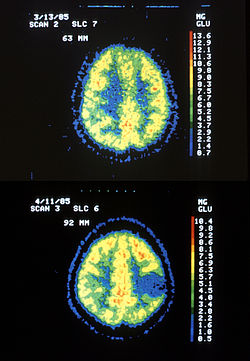
Two PET images—the upper of which shows a normal brain and the lower shows astrocytoma
SpecialtyNeuro-oncology, neurosurgery

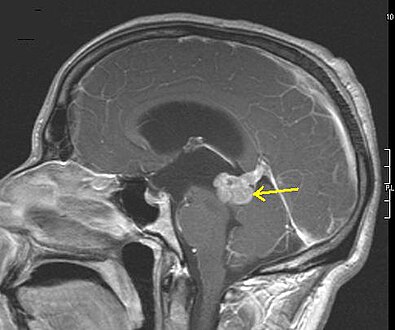
Astrocytoma is a type of brain tumor. Astrocytomas (also astrocytomata) originate from a specific kind of star-shaped glial cell in the cerebrum called an astrocyte. This type of tumor does not usually spread outside the brain and spinal cord, and it does not usually affect other organs. After glioblastomas, astrocytomas are the second most common glioma and can occur in most parts of the brain and occasionally in the spinal cord.[1]

Within the astrocytomas, two broad classes are recognized in literature, those with:

  • Narrow zones of infiltration (mostly noninvasive tumors; e.g., pilocytic astrocytoma, subependymal giant cell astrocytoma, pleomorphic xanthoastrocytoma), that often are clearly outlined on diagnostic images
  • Diffuse zones of infiltration (e.g., high-grade astrocytoma), that share various features, including the ability to arise at any location in the central nervous system, but with a preference for the cerebral hemispheres; they occur usually in adults, and have an intrinsic tendency to progress to more advanced grades.[2]

People can develop astrocytomas at any age. The low-grade type is more often found in children or young adults, while the high-grade type is more prevalent in adults. Astrocytomas in the base of the brain are more common in young people and account for roughly 75% of neuroepithelial tumors.[3]

Pathophysiology

[edit]

Astrocytoma causes regional effects by compression, invasion, and destruction of brain parenchyma, arterial and venous hypoxia, competition for nutrients, release of metabolic end products (e.g., free radicals, altered electrolytes, neurotransmitters), and release and recruitment of cellular mediators (e.g., cytokines) that disrupt normal parenchymal function.[2] Secondary clinical sequelae may be caused by elevated intracranial pressure attributable to direct mass effect, increased blood volume, or increased cerebrospinal fluid volume.[2]

Genetic and Molecular alterations

[edit]

Homozygous deletion of CDKN2A/B is the main feature of high grade astrocytoma. In addition, a genome-wide pattern of DNA copy-number alterations (CNAs) has been uncovered, which is correlated with a patient's survival and response to treatment. This pattern identifies among lower-grade astrocytoma patients a subtype, where the CNA genotype is correlated with an approximately one-year survival phenotype.[4][5]

Diagnosis

[edit]

An X-ray computed tomography (CT) or magnetic resonance imaging (MRI) scan is necessary to characterize the extent of these tumors (size, location, consistency). CT will usually show distortion of third and lateral ventricles with displacement of anterior and middle cerebral arteries. Histologic analysis is necessary for grading diagnosis.[citation needed]

In the first stage of diagnosis the doctor will take a history of symptoms and perform a basic neurological exam, including an eye exam and tests of vision, balance, coordination, and mental status. The doctor will then require a CT scan and MRI of the patient's brain. During a CT scan, X-rays of the patient's brain are taken from many different directions. These are then combined by a computer, producing a cross-sectional image of the brain. For an MRI, the patient relaxes in a tunnel-like instrument while the brain is subjected to changes of magnetic field. An image is produced based on the behavior of the brain's water molecules in response to the magnetic fields. A special dye may be injected into a vein before these scans to provide contrast and make tumors easier to identify.[citation needed]

If a tumor is found, a neurosurgeon must perform a biopsy on it. This simply involves the removal of a small amount of tumor tissue, which is then sent to a neuropathologist for examination and grading. The biopsy may take place before surgical removal of the tumor or the sample may be taken during surgery. Grading of the tumor sample is a method of classification that helps the doctor to determine the severity of the astrocytoma and to decide on the best treatment options. The neuropathologist grades the tumor by looking for atypical cells, the growth of new blood vessels, and for indicators of cell division called mitotic figures.[citation needed]

Grading

[edit]

Of numerous grading systems in use for the classification of tumor of the central nervous system, the World Health Organization (WHO) grading system is commonly used for astrocytoma. Established in 1993 in an effort to eliminate confusion regarding diagnoses, the WHO system established a four-tiered histologic grading guideline for astrocytomas that assigns a grade from 1 to 4, with 1 being the least aggressive and 4 being the most aggressive.[citation needed]

The WHO grading scheme is based on the appearance of certain characteristics: atypia, mitosis, endothelial proliferation, and necrosis. These features reflect the malignant potential of the tumor in terms of invasion and growth rate. Various types of astrocytomas are given these WHO grades:

WHO grade Astrocytomas Description
I Consist of slow-growing astrocytomas, benign, and associated with long-term survival. Individuals with very slow-growing tumors where complete surgical removal by stereotactic surgery is possible may experience total remission.[6] Even if the surgeon is not able to remove the entire tumor, it may remain inactive or be successfully treated with radiation.
II Consist of relatively slow-growing astrocytomas, usually considered benign that sometimes evolve into more malignant or as higher grade tumors. They are prevalent in younger people who often present with seizures. Median survival varies with the cell type of the tumor. Grade 2 astrocytomas are defined as being invasive gliomas, meaning that the tumor cells penetrate into the surrounding normal brain, making a surgical cure more difficult. People with oligodendrogliomas (which might share common cells of origin[7]) have better prognoses than those with mixed oligoastrocytomas, who in turn have better prognoses than patients with (pure) low-grade astrocytomas. Other factors which influence survival include age (younger the better) and performance status (ability to perform tasks of daily living). Due to the infiltrative nature of these tumors, recurrences are relatively common. Depending on the patient, radiation or chemotherapy after surgery is an option. Individuals with grade 2 astrocytoma have a 5-year survival rate of about 34% without treatment and about 70% with radiation therapy.[6] The median survival time is 4 years.[6]
III Consist of anaplastic astrocytomas. It is often related to seizures, neurologic deficits, headaches, or changes in mental status. The standard initial treatment is to remove as much of the tumor as possible without worsening neurologic deficits. Radiation therapy has been shown to prolong survival and is a standard component of treatment. Individuals with grade 3 astrocytoma have a median survival time of 18 months without treatment (radiation and chemotherapy).[6] There is no proven benefit to adjuvant chemotherapy or supplementing other treatments for this kind of tumor. Although temozolomide is effective for treating recurrent anaplastic astrocytoma, its role as an adjuvant to radiation therapy has not been fully tested.
IV
  • Grade 4 Astrocytoma
Consists of grade 4 astrocytoma (as of WHO 2021) that form following high-grade transformation of low-grade astrocytoma. These are more common in younger patients (mean age 45 versus 62 years).[7] Surgical removal remains the mainstay of treatment, provided that unacceptable neurologic injury can be avoided. The extremely infiltrative nature of this tumor makes complete surgical removal impossible. Although radiotherapy rarely cures glioblastoma, studies show that it doubles the median survival of patients, compared to supportive care alone.[8] The prognosis is worst for these grade 4 gliomas. Few patients survive beyond 3 years. Individuals with grade 4 astrocytoma have a median survival time of 17[6] weeks without treatment, 30[6] weeks with radiation, and 37[6] weeks with surgical removal of most of the tumor followed by radiation therapy. Long-term survival (at least five years) falls well under 3%.[9][10]
Diagnosis of diffuse glioma, with astrocytomas mainly being diagnosed under IDH mutant and nuclear ATRX lost.[11]

According to the WHO data, the lowest grade astrocytomas (grade I) make up only 2% of recorded astrocytomas, grade II 8%, and the higher grade anaplastic astrocytomas (grade III) 20%. The highest graded astrocytoma (grade IV GBM) is the most common primary nervous system cancer and second most frequent brain tumor after brain metastasis. Despite the low incidence of astrocytomas compared to other human cancers, mortality is significant, as the higher grades (III & IV) present high mortality rates (mainly due to late detection of the neoplasm).[citation needed]

Prevention

[edit]

There are no precise guidelines because the exact cause of astrocytoma is not known.[citation needed]

Treatment

[edit]
Management of IDH-mutant gliomas, with astrocytomas at center and right.[11]

For low-grade astrocytomas, removal of the tumor generally allows functional survival for many years. In some reports, the 5-year survival has been over 90% with well-resected tumors. Indeed, broad intervention of low-grade conditions is a contested matter. In particular, pilocytic astrocytomas are commonly indolent bodies that may permit normal neurologic function. However, left unattended, these tumors may eventually undergo neoplastic transformation. To date, complete resection of high-grade astrocytomas is impossible because of the diffuse infiltration of tumor cells into normal parenchyma. Thus, high-grade astrocytomas inevitably recur after initial surgery or therapy and are usually treated similarly to the initial tumor. Despite decades of therapeutic research, curative intervention is still nonexistent for high-grade astrocytomas; patient care ultimately focuses on palliative management.[3]

Society and culture

[edit]

Notable cases

[edit]

In March 1990, United States Republican Party political strategist Lee Atwater was diagnosed with astrocytoma after a tumor was found in his right parietal lobe. After undergoing radiation therapy (including the then-new implant radiation treatment), Atwater died the following year at the age of 40.[12]

Long-time U.S. Senator Ted Kennedy (D-MA) died of malignant glioma.[13]

University of Texas sniper Charles Whitman, who killed multiple people during a mass murder event in 1966, was diagnosed with astrocytoma post-mortem. The Connally Commission investigating the shooting disagreed, and identified it as a glioblastoma, and concluded the tumor "conceivably could have contributed to his inability to control his emotions and actions".[14]

Major League pitcher Dan Quisenberry was diagnosed with grade IV astrocytoma in January 1998. He died at the age of 45 in 1998 in Leawood, Kansas.[15]

Richard Burns, winner of the 2001 World Rally Championship, was diagnosed with astrocytoma in 2003. Four years to the day after winning the World Rally Championship, on 25 November 2005, Burns died in Westminster, London,[16] aged 34, after having been in a coma for some days as a result of his brain tumour.[17]

Professional wrestler Matt Cappotelli was diagnosed with a grade 2/3 astrocytoma in December 2005, scuttling plans to promote Cappottelli to the main WWE roster. Cappotelli, who won a contract with WWE through the third season of their reality program Tough Enough, was the Ohio Valley Wrestling Heavyweight Champion at the time of his diagnosis and vacated the title in February 2006[18] after confirming the tumor was cancerous. Cappotelli underwent successful surgery and chemotherapy,[19][20][21] but was unable to return to active wrestling work. He did return to OVW as a trainer in 2013.[22][23] He died on June 29, 2018.[24]

Kelley Mack was an American actress.[25] She played Addy in season 9 of the series The Walking Dead (2018–2019). She also had roles in the films Profile (2018) and Broadcast Signal Intrusion (2021). In January 2025, Mack announced she had been diagnosed with astrocytoma.[26][27] By April 2025, she had completed proton radiation treatment.[25] Mack died in Cincinnati on August 2, 2025, at the age of 33.[28][29][30]

References

[edit]
[edit]
Revisions and contributorsEdit on WikipediaRead on Wikipedia
from Grokipedia
Astrocytoma is a type of tumor that arises from , the star-shaped glial cells responsible for supporting and nourishing neurons in the and . As the most common form of , these tumors are classified by the into four grades based on their aggressiveness, ranging from grade 1 (slow-growing and often benign) to grade 4 (rapidly growing and highly malignant, such as ). Astrocytomas account for approximately 30-40% of all primary tumors, with incidence varying by age—low-grade types more common in children and high-grade in adults over 40—and they can occur anywhere in the or , influencing symptoms and treatment approaches. The classification of astrocytomas has evolved with molecular insights, particularly in the 2021 WHO 5th edition, which integrates genetic markers for precise subtyping; it distinguishes between circumscribed tumors like pilocytic astrocytoma (grade 1, often curable by surgery) and diffuse types such as IDH-mutant astrocytoma (grades 2-4) and IDH-wildtype (grade 4). Key genetic mutations, including IDH1/IDH2 alterations in lower-grade tumors, TP53 mutations in IDH-mutant astrocytomas across grades 2-4, homozygous deletion of CDKN2A/B which upgrades IDH-mutant astrocytomas to WHO grade 4 even without high-grade histological features such as microvascular proliferation or necrosis, and EGFR amplifications in IDH-wildtype glioblastoma, help refine and , with IDH-mutant forms generally associated with better outcomes than wild-type variants. While the exact cause remains unknown, risk factors include prior high-dose radiation exposure to the head or neck and rare genetic syndromes like neurofibromatosis type 1 or Li-Fraumeni syndrome, though most cases are sporadic without clear environmental or lifestyle links. Symptoms of astrocytoma depend on the tumor's location, size, and growth rate but commonly include headaches, seizures, cognitive or personality changes, , vision problems, and motor deficits such as weakness or balance issues. In children, low-grade astrocytomas like pilocytic types may present with gradual-onset headaches or vomiting due to increased , while high-grade tumors in adults often cause more rapid neurological deterioration. Treatment typically involves maximal safe surgical resection followed by and (e.g., ), with targeted therapies like used for symptom control in advanced cases; prognosis varies widely, from potential cure in grade 1 to median survival of 12-15 months in grade 4 despite multimodal therapy.

Overview

Definition and characteristics

Astrocytoma is a that arises from , which are star-shaped glial cells responsible for supporting and nourishing neurons in the . These tumors primarily develop in the but can occasionally occur in the , forming expansile masses that infiltrate surrounding neural tissue. Astrocytomas represent the most prevalent form of , a broader category of tumors originating from glial cells. Histologically, astrocytomas exhibit features reminiscent of normal , with tumor cells displaying variable morphology depending on the subtype. Common variants include fibrillary astrocytomas, characterized by elongated, bipolar cells with fine, fibrillar processes; gemistocytic astrocytomas, featuring large, rounded cells with abundant and short processes; and protoplasmic astrocytomas, composed of stellate cells with plump, ill-defined processes embedded in a mucoid matrix. These variants are typically observed in low-grade forms and contribute to the tumor's diffuse growth pattern. The behavior of astrocytomas varies significantly by grade, as defined by the classification system. Low-grade astrocytomas (grades I and II) are generally slow-growing and well-circumscribed, often amenable to surgical resection, whereas high-grade astrocytomas (grades III and IV) are infiltrative, rapidly proliferating, and associated with and vascular proliferation. This gradation reflects increasing cellular , mitotic activity, and aggressiveness, influencing clinical management.

Classification and types

Astrocytomas are classified according to the 2021 (WHO) of (CNS) tumors, which integrates histological features, immunohistochemical profiles, and molecular genetic criteria to define tumor types and assign grades reflecting their biological behavior and prognosis. This system emphasizes the pivotal role of (IDH) mutation status, distinguishing IDH-mutant tumors—typically associated with better outcomes—from IDH-wildtype tumors, which often exhibit more aggressive characteristics. The divides astrocytomas into circumscribed and diffuse categories, with grades ranging from 1 (least aggressive) to 4 (most malignant), guiding clinical . Grade 1 astrocytomas are circumscribed, low-proliferative tumors, exemplified by pilocytic astrocytoma, a benign entity frequently occurring in children and adolescents. These tumors are well-demarcated, often presenting with Rosenthal fibers and eosinophilic granular bodies histologically, and they rarely progress to higher grades. Molecular alterations, such as BRAF fusions or mutations, support their diagnosis but are not required for grading. Grade 2 astrocytomas represent infiltrative, low-grade diffuse tumors, primarily classified as astrocytoma, IDH-mutant, which harbor point mutations in the IDH1 or IDH2 genes and often show loss and TP53 mutations. These tumors exhibit mild to moderate cellularity and without significant mitotic activity or , predominantly affecting young adults in the cerebral hemispheres. IDH-wildtype counterparts are rare at this grade and may be reclassified based on additional molecular features. Grade 3 astrocytomas, now termed astrocytoma, IDH-mutant, CNS WHO grade 3, display anaplastic features such as increased mitotic activity, cellular pleomorphism, and microvascular proliferation, while retaining the IDH-mutant profile. This category eliminates the prior "" nomenclature, focusing instead on integrated grading to reflect molecular homogeneity with oligodendrogliomas excluded by 1p/19q codeletion absence. Histological assessment alone is insufficient; confirmation of IDH and lack of codeletion is mandatory. Grade 4 astrocytomas encompass the most aggressive forms, with glioblastoma, IDH-wildtype, defined by molecular hallmarks including EGFR amplification, chromosome 7 gain, and chromosome 10 loss, even in cases with lower-grade histology. Primary glioblastomas arise de novo, while secondary forms progress from prior IDH-mutant lower-grade astrocytomas, distinguished by their genetic trajectory. Notably, within IDH-mutant astrocytomas, the presence of homozygous CDKN2A deletion—regardless of histological grade—results in automatic assignment to CNS WHO grade 4, underscoring the prognostic impact of this alteration. This molecular upgrade highlights the classification's shift toward genetics in defining malignancy.

Epidemiology

Incidence and demographics

Astrocytoma accounts for a significant portion of primary tumors, with a global incidence rate of approximately 3-4 cases per annually for malignant forms, though rates vary when including low-grade variants. Higher incidence is observed in developed countries, where rates reach 5.8 per for men and 4.1 per for women, compared to lower figures in less developed regions. These tumors contribute to the broader burden of cancers, which had a global age-standardized incidence of 4.28 per in 2021. Demographically, astrocytoma exhibits a bimodal age distribution, with peaks in childhood and adolescence for lower-grade tumors (grades I-II, such as pilocytic astrocytoma) and in middle-aged to older adults (40-60 years) for higher-grade forms (grades III-IV). The median age at diagnosis for diffuse astrocytoma is around 35 years, with distinct clusters between 6-12 years and 26-46 years. There is a slight predominance overall, with a ratio of approximately 1.2:1, though this increases to 1.5:1 for grade IV astrocytomas like . Geographically, incidence is elevated in and , exemplified by rates up to 14.96 per 100,000 in high-income countries like , while lower rates prevail in and Africa, such as 0.14 per 100,000 in regions like . Incidence trends have remained relatively stable over recent decades, though advancements in have facilitated earlier detection and potentially inflated reported rates for low-grade tumors without a true increase in occurrence.

Risk factors

Astrocytoma development is influenced by a combination of non-modifiable and environmental factors, though the etiology remains largely unknown for most cases. Non-modifiable risk factors include certain genetic syndromes, such as neurofibromatosis type 1 (NF1), which is associated with an increased incidence of low-grade astrocytomas, particularly pilocytic astrocytomas in children. Similarly, Li-Fraumeni syndrome, characterized by germline TP53 mutations, elevates the risk of high-grade astrocytomas and other tumors due to impaired mechanisms. A family history of tumors among first-degree relatives is also linked to a 2- to 3-fold increased for astrocytoma, independent of these syndromes, suggesting a heritable component in a subset of cases. Among environmental exposures, is the only well-established modifiable risk factor for astrocytoma, with prior high-dose radiotherapy to the head or neck—such as for childhood cancers or pituitary adenomas—associated with a increase of up to 8- to 10-fold, depending on dose and latency period. In contrast, current evidence does not support a strong association between astrocytoma risk and exposure to non-ionizing electromagnetic fields, including cell phone use, with multiple epidemiological studies finding no consistent link after accounting for confounding factors. Rare associations exist with , such as in patients, where chronic immune deficiency may contribute to a modestly elevated incidence of primary tumors like astrocytomas, though the exact mechanisms remain unclear. Occupational exposures, particularly to pesticides in farming or agricultural settings, are under active investigation as potential risks, with some case-control studies reporting odds ratios of 1.5- to 4-fold for subtypes including astrocytomas among exposed workers, but results are inconsistent and require further confirmation. No definitive evidence links lifestyle factors such as , alcohol consumption, or dietary habits to astrocytoma risk; large cohort studies have consistently shown null or negligible associations after adjusting for other variables.

Pathophysiology

Cellular origin and development

Astrocytomas arise from neural stem/progenitor cells or mature within the (CNS), with tumors frequently originating in regions such as the cerebral hemispheres. Neural stem cells, particularly those located in the , serve as a primary cell of origin, where inactivation of tumor suppressors like and Nf1 initiates tumorigenesis by transforming these progenitors into malignant cells. Mature astrocytes can also dedifferentiate into tumor-initiating cells under certain conditions, contributing to the glial of the tumor. This dual origin reflects the plasticity of glial lineages in the , allowing astrocytomas to mimic normal astrocytic functions while driving uncontrolled growth. Tumorigenesis begins with triggered by disrupted glial signaling pathways, leading to the accumulation of abnormal cells that form low-grade lesions characterized by . As the tumor expands, these cells acquire invasive properties, infiltrating surrounding through mechanisms involving remodeling and enhancements, which distinguish astrocytomas from more localized tumors. This progression from initial proliferation to diffuse creates a heterogeneous tumor mass that challenges containment. The plays a critical role in sustaining growth, with hypoxia inducing through (VEGF) upregulation to ensure nutrient supply amid rapid expansion. Hypoxic conditions also enable evasion of by stabilizing anti-apoptotic proteins, allowing survival of genetically unstable cells. These interactions foster a permissive niche that supports ongoing proliferation and adaptation. Astrocytoma progression follows a model from low-grade , where cells retain some differentiation, to high-grade states marked by , increased mitotic activity, and pseudopalisading around hypoxic cores. This transformation enhances aggressiveness, with high-grade tumors like exhibiting microvascular proliferation and widespread invasion, ultimately leading to treatment resistance.

Genetic and molecular alterations

Astrocytomas exhibit distinct genetic and molecular alterations that drive tumorigenesis, progression, and classification. These changes primarily involve somatic mutations and epigenetic modifications that disrupt cellular metabolism, , and proliferation control. In lower-grade astrocytomas (WHO grades II-III), mutations predominate, while higher-grade tumors, particularly (grade IV), feature amplifications and losses promoting aggressive growth. IDH1 and IDH2 mutations are a defining feature of grade II and III astrocytomas, occurring in nearly all cases, serving as early initiating events. These mutations alter the enzymes' function, leading to the production of the oncometabolite 2-hydroxyglutarate (2-HG), which inhibits α-ketoglutarate-dependent dioxygenases and causes metabolic reprogramming through increased DNA hypermethylation and modifications. This results in a glioma CpG island methylator phenotype (G-CIMP), blocking and promoting gliomagenesis. TP53 mutations are prevalent in IDH-mutant astrocytomas, occurring concurrently in over 80% of cases and disrupting tumor suppressor functions. These , often at hotspots like R273C (accounting for 20-30% of TP53 alterations in this subtype), impair arrest, , and , allowing unchecked proliferation and genomic instability. In combination with IDH mutations, TP53 alterations enhance tumor invasiveness and are associated with shorter , particularly in males. In (WHO grade IV), EGFR amplification and PTEN loss represent hallmark alterations that drive aggressive behavior. EGFR amplification is present in 30-40% of cases, leading to overexpression of the and activation of downstream pathways like PI3K/AKT, which enhance , survival, and invasion. Concurrent PTEN mutations or deletions, occurring in 25-40% of glioblastomas, further amplify these effects by removing negative regulation of the PI3K pathway, correlating with poorer in older patients. Additional key alterations include mutations, which co-occur with IDH1 and TP53 mutations in nearly all IDH-mutant astrocytomas, leading to loss of and alternative lengthening of telomeres (ALT), thereby sustaining indefinite replication. TERT promoter mutations, though rare in IDH-mutant astrocytomas (typically <5%), are more common in IDH-wildtype cases and drive activation for replicative immortality. promoter methylation, observed in 40-50% of gliomas including astrocytomas, silences the DNA repair gene and predicts enhanced response to , with methylated status associated with improved survival in treated patients. Molecular profiling integrates these alterations with histological features for precise subtyping under the WHO 2021 classification. Astrocytoma, IDH-mutant is defined by IDH1/IDH2 mutations, often with TP53 and alterations, and graded as CNS WHO 2-4 based on features like /B homozygous deletion (upgrading to grade 4). This layered approach—combining , sequencing, and methylation analysis—enables accurate , , and selection, distinguishing it from oligodendrogliomas or IDH-wildtype .

Signs and symptoms

General symptoms

General symptoms of astrocytoma often arise from increased (ICP) and caused by the tumor's growth, which can obstruct (CSF) flow or compress surrounding brain structures. These nonspecific signs typically develop gradually and may mimic other conditions, making early detection challenging. Common manifestations include headaches, , , cognitive alterations, and seizures, which affect a significant proportion of patients regardless of tumor grade. Headaches are among the most frequent initial symptoms, often progressive and worsening in the morning due to overnight accumulation of CSF when the patient is recumbent, exacerbating ICP from obstruction of CSF pathways. These headaches may improve temporarily after or upon assuming an upright position, reflecting the role of positional changes in CSF dynamics. In pediatric cases, such symptoms can be particularly prominent when tumors block ventricular outflow. Nausea and vomiting frequently accompany headaches, resulting from elevated ICP stimulating the vomiting centers in the . These episodes are often projectile in nature, especially in cases of acute buildup, and may occur without relation to food intake, further indicating a central neurological origin rather than gastrointestinal causes. Cognitive changes can manifest subtly as difficulties, impaired concentration, or alterations, particularly with tumors in the , where and emotional regulation reside. Such alterations may include mild forgetfulness or shifts in mood and behavior, often overlooked initially as stress-related. Seizures occur in 20–50% of high-grade astrocytoma cases but are more prevalent in low-grade tumors, affecting 70–90% of patients, and can be focal, involving localized motor or sensory disturbances, or generalized, leading to loss of .

Neurological manifestations

The neurological manifestations of astrocytoma are predominantly focal deficits that correspond to the tumor's location within the , arising from direct compression or infiltration of neural structures. These symptoms can vary widely depending on whether the tumor affects the cerebral hemispheres, , brainstem, cerebellum, or , often progressing gradually as the tumor grows. In tumors, patients commonly experience , characterized by weakness or on the contralateral side of the body due to involvement of motor pathways. Tumors in the dominant (typically left) hemisphere may lead to , impairing language comprehension and expression, while right-hemisphere lesions can cause , where individuals ignore one side of their or body. These deficits highlight the lateralized functional organization of the brain and often emerge insidiously, prompting neurological evaluation. Temporal lobe astrocytomas frequently manifest as memory impairment, particularly affecting short-term recall and learning new information, owing to disruption of the hippocampal formation and associated circuits. Auditory or complex partial seizures may also occur, sometimes presenting as hallucinations involving sounds, smells, or déjà vu sensations, which can be an early indicator of temporal involvement. Astrocytomas in the or produce , manifesting as uncoordinated movements, instability, and , due to interference with cerebellar pathways or vestibular connections. Cranial palsies are common in lesions, leading to issues such as , facial weakness, or , while balance problems exacerbate the risk of falls and mobility limitations. Spinal cord astrocytomas typically result in and motor weakness below the level of the , following a dermatomal or myotomal pattern that reflects the segmental organization of the cord. As the tumor expands, patients may develop bowel and dysfunction, including incontinence or retention, signaling involvement of autonomic pathways. These symptoms often progress to a spastic paraparesis or quadriparesis, depending on the 's rostral extent. In advanced cases, tumor growth can lead to , eliciting Cushing's triad—, , and irregular respirations—as a response to elevated . This triad represents a critical , often accompanied by altered and pupillary changes, necessitating immediate intervention.

Diagnosis

Imaging and clinical assessment

The diagnosis of astrocytoma begins with a detailed clinical history and to evaluate symptom onset, progression, and potential focal deficits suggestive of a . Patients often present with symptoms such as headaches, seizures, or cognitive changes that prompt initial assessment, leading to a comprehensive neurological exam to identify signs like , , or depending on tumor location. The Karnofsky Performance Status (KPS) scale is routinely used to quantify the patient's functional status and ability to perform daily activities, with scores ranging from 0 (death) to 100 (normal, no complaints), aiding in prognostic evaluation and treatment planning. Additionally, the Neurological Assessment in Neuro-Oncology (NANO) scale may be employed to specifically assess neurological impairments caused by the tumor, providing a more targeted measure of beyond general . Magnetic resonance imaging (MRI) serves as the preferred initial imaging modality for suspected astrocytoma due to its superior soft tissue contrast and multiplanar capabilities. On MRI, astrocytomas typically appear as T2-hyperintense lesions with variable T1 isointensity, often following white matter tracts and showing mass effect or edema. In higher-grade tumors, contrast enhancement is common, indicating blood-brain barrier disruption, while low-grade astrocytomas may lack enhancement but exhibit the characteristic T2-FLAIR mismatch sign—homogeneous hyperintensity on T2-weighted images with relative hypointensity on FLAIR sequences—in IDH-mutant cases. Advanced MRI sequences, such as diffusion-weighted imaging (DWI) and perfusion-weighted imaging (PWI), provide grading clues; restricted diffusion suggests high cellularity in aggressive tumors, and elevated relative cerebral blood volume (rCBV) on perfusion imaging correlates with higher-grade astrocytomas and poorer prognosis. Emerging applications of artificial intelligence in MRI analysis, as of 2025, enhance tumor detection and grading accuracy by automating feature extraction and reducing inter-observer variability. Computed tomography (CT) scans are primarily utilized in emergency settings or when MRI is contraindicated, offering rapid assessment for complications like hemorrhage or . Astrocytomas may show hypodense or isodense masses on non-contrast CT, with calcification more evident in pilocytic variants and occasional hemorrhage in higher grades, though CT is less sensitive for detecting low-grade, non-enhancing tumors compared to MRI. Advanced imaging techniques further refine the non-invasive evaluation by assessing tumor metabolism and biochemistry. Magnetic resonance spectroscopy () reveals elevated choline (Cho) peaks indicative of increased turnover in astrocytomas, often with reduced N-acetylaspartate (NAA) reflecting neuronal loss, helping differentiate tumor from treatment effects or . Positron emission tomography (PET) using tracers like 11C-methionine or 18F-FDG highlights metabolic hyperactivity, with increased uptake in high-grade astrocytomas compared to normal tissue, aiding in tumor delineation and guidance. These modalities collectively support preliminary suspicion of astrocytoma prior to confirmatory procedures.

Biopsy and histopathological grading

Biopsy procedures are crucial for obtaining tissue samples to confirm the of astrocytoma and guide treatment. For deep-seated or surgically inaccessible tumors, stereotactic is the preferred method, involving the use of advanced such as MRI or CT to guide a needle precisely to the for tissue sampling without full surgical exposure. In contrast, for superficial or accessible lesions, open surgical resection serves dual purposes by providing diagnostic tissue while attempting tumor removal, allowing for larger samples and immediate histopathological assessment. These procedures carry risks, including , with rates for stereotactic reported at approximately 1% for significant events, though symptomatic complications occur in about 3% of cases overall. Open resection involves higher risks due to the invasiveness, such as neurological deficits, but these are mitigated by intraoperative monitoring. Histopathological evaluation of specimens forms the cornerstone of astrocytoma , focusing on key morphological features as defined by the (WHO) criteria. Pathologists assess cellularity, nuclear (variations in cell size and shape), mitotic activity (indicating proliferation rate), microvascular proliferation (abnormal blood vessel growth), and (tissue death) to characterize the tumor's aggressiveness. For IDH-mutant astrocytomas, grade 2 tumors show low cellularity and minimal without mitoses, while grade 3 exhibits increased mitoses and pleomorphism, and grade 4 demonstrates microvascular proliferation, , or homozygous CDKN2A/B deletion. These features are examined under , often supplemented by immunohistochemical stains like Ki-67 for proliferation indexing, though no strict cutoff distinguishes grades 2 from 3. Molecular testing is integrated with to refine the , particularly distinguishing astrocytoma from other gliomas. Testing routinely includes detection of IDH1/IDH2 (most commonly R132H) via or sequencing, which are hallmark for grades 2-4 astrocytomas, alongside absence of 1p/19q codeletion to exclude . promoter methylation status is also evaluated, typically by methylation-specific PCR or , as it influences treatment response but contributes to the overall molecular profile. Advanced techniques like next-generation sequencing may identify concurrent alterations such as TP53 or , essential for the integrated . Emerging non-invasive approaches, such as liquid biopsies detecting for IDH and other , show promise for monitoring and initial assessment as of 2025, though not yet standard. The grading process assigns CNS WHO grades I-IV based on combined histopathological and molecular findings, with pilocytic astrocytomas typically grade I and diffuse IDH-mutant forms graded 2-4. Grade assignment relies on the presence of adverse features like mitoses for grade 3 or CDKN2A/B deletion for grade 4, even without classic . Challenges include , particularly in stereotactic biopsies where limited tissue may miss heterogeneous areas, with studies reporting diagnostic errors or sampling issues in 10-30% of cases. This underscores the need for multidisciplinary review to ensure accurate classification.

Treatment

Surgical options

Surgery remains a of astrocytoma management, aiming for maximal safe tumor resection to alleviate symptoms, confirm , and potentially improve survival while preserving neurological function. The choice of surgical approach depends on tumor location, grade, and accessibility, with supratentorial tumors typically addressed via open procedures. Craniotomy is the standard surgical technique for supratentorial astrocytomas, involving the removal of a bone flap from the to access and resect the tumor. Modern approaches incorporate neuronavigation systems for precise tumor localization and intraoperative MRI to guide resection in real-time, enhancing the accuracy of tumor removal and reducing damage to surrounding healthy tissue. For infratentorial or spinal astrocytomas, alternative exposures such as suboccipital or are employed, where involves partial removal of the vertebral lamina to access intramedullary spinal cord tumors. Awake craniotomy is particularly utilized for astrocytomas located in or near eloquent areas, such as those controlling , motor function, or , to allow real-time functional mapping and preserve postoperative neurological integrity. During the procedure, patients remain for portions of the , enabling direct cortical and subcortical to identify critical pathways and halt resection if deficits arise, thereby maximizing tumor removal while minimizing morbidity. This technique has demonstrated superior extent of resection and functional outcomes compared to asleep in eloquent regions. The extent of resection is a critical determinant of outcomes, with gross total resection—defined as removal of more than 95% of the enhancing tumor—associated with improved progression-free survival and overall survival, particularly in low-grade astrocytomas. Studies show gross total resection associated with median survival of 13-18 months versus 8-12 months with subtotal resection in high-grade astrocytomas, improving progression-free and overall survival. In inoperable or high-risk tumors, such as those deeply infiltrating vital structures, biopsy alone may be performed to obtain tissue for grading without attempting full removal. Surgical complications for astrocytoma resection include infection rates of 2-5%, neurological deficits such as worsening motor or cognitive function, and less commonly, leaks or seizures. These risks are mitigated through prophylactic antibiotics, meticulous sterile technique, and postoperative monitoring, though rates can vary with tumor grade and patient factors like . In spinal cases, carries additional risks of spinal instability or deformity, often necessitating fusion in pediatric patients.

Nonsurgical therapies

Nonsurgical therapies for astrocytoma primarily include , , targeted agents, tumor treating fields, and investigational immunotherapies, often employed following surgical resection or for inoperable tumors to control tumor growth and alleviate symptoms. remains a cornerstone for grades II through IV astrocytomas, typically delivered as at a total dose of 60 Gy over 6 weeks in 30 fractions of 2 Gy each, administered 5 days per week. This approach targets residual tumor cells post-surgery and is standard for high-grade lesions to improve local control. For select small or recurrent lesions, particularly in lower-grade or pilocytic astrocytomas, stereotactic radiosurgery delivers high-dose radiation precisely to the tumor while sparing surrounding tissue, offering an alternative for focal treatment. Chemotherapy regimens are tailored by grade and molecular profile, often combined with for enhanced efficacy. In (grade IV), is administered orally at 75 mg/m² daily concurrent with radiotherapy, followed by adjuvant cycles of 150-200 mg/m² on days 1-5 every 28 days for up to 6-12 months, alkylating DNA to inhibit tumor proliferation. For IDH-mutant (grade III), adjuvant (150-200 mg/m² days 1-5 every 28 days for 12 months) following is standard per CATNON trial; the PCV regimen—comprising procarbazine (60 mg/m² days 8-21), (110 mg/m² day 1), and (1.4 mg/m² days 8 and 29)—every 6-8 weeks for 6 cycles is an alternative, typically for oligodendroglial tumors. Targeted therapies focus on molecular vulnerabilities, particularly in recurrent or progressive disease. , a inhibiting (VEGF), is FDA-approved for recurrent to block and reduce tumor vascularity, administered intravenously at 10 mg/kg every 2 weeks or 15 mg/kg every 3 weeks. Vorasidenib (40 mg orally daily), approved by FDA in , targets IDH1/2 to restore normal cellular and slow tumor progression in grade 2 astrocytoma or with susceptible IDH1 or IDH2 in patients ≥12 years following . For (grade 4), tumor treating fields (TTFields) delivered via the Optune device (200 kHz, 18+ hours/day) combined with adjuvant is recommended to further extend survival. approaches, such as checkpoint inhibitors, are under investigation but show limited efficacy in astrocytoma due to the central nervous system's , which restricts T-cell infiltration and antitumor responses. Nivolumab, a PD-1 inhibitor given at 3 mg/kg every 2 weeks, has been tested in trials for recurrent high-grade astrocytomas, yielding modest benefits in subsets but overall underwhelming results compared to extracranial tumors. Ongoing studies explore combinations to overcome these barriers.

Prognosis

Survival rates by grade

Astrocytomas are graded by the (WHO) from I to IV using an integrated histomolecular approach as per the 2021 classification, combining histopathological features with molecular markers such as IDH mutation status, with s varying significantly by grade due to differences in tumor aggressiveness and response to treatment. Grade I astrocytomas, primarily pilocytic astrocytomas, have the most favorable prognosis, with a 5-year exceeding 96% and often considered curable through surgical resection alone. For grade II diffuse astrocytomas (IDH-mutant), median ranges from 7 to 8 years, though outcomes are notably better for IDH-mutant subtypes compared to IDH-wildtype (now classified as grade 4), with 5-year rates typically between 46% and 73% depending on age at . Grade III anaplastic astrocytomas (IDH-mutant) carry a median survival of 2 to 5 years, with 5-year survival rates of 15% to 58% across age groups, and combined multimodal therapies have contributed to modest extensions in these durations. Grade IV astrocytomas, including glioblastomas (IDH-wildtype or mutant with other adverse features), have the poorest outcomes, with a median survival of 12 to 15 months and 5-year survival rates under 10%, though rates reach up to 22% in younger patients (ages 20-44). Recent data from the 2020s indicate slight improvements in survival across grades, attributed to advances in molecular-targeted therapies and refined strategies, potentially enhancing outcomes for current patients beyond historical benchmarks.

Influencing factors

Several molecular markers significantly influence the of astrocytoma beyond histopathological grade. (IDH) mutations, particularly in IDH1 or IDH2 genes, are associated with a more favorable outcome in astrocytoma patients compared to IDH-wildtype tumors, as they correlate with slower tumor progression and longer overall survival; under the 2021 WHO classification, IDH-wildtype diffuse astrocytomas are graded as (grade 4) with worse , while IDH-mutant grade 2-3 tumors retain better outcomes, and homozygous CDKN2A/B deletion upgrades IDH-mutant tumors to grade 4. Similarly, O6-methylguanine-DNA methyltransferase () promoter methylation enhances responsiveness to alkylating such as , leading to improved survival in methylated cases, especially in higher-grade astrocytomas. Patient-related factors also play a critical role in modifying astrocytoma . Younger age, specifically under 40 years, is linked to better survival rates across various astrocytoma grades, likely due to enhanced treatment tolerance and fewer comorbidities. A good , defined by a Karnofsky Performance Scale (KPS) score greater than 70, independently predicts longer survival by enabling more aggressive therapeutic interventions and better recovery post-treatment. Tumor characteristics further shape prognostic outcomes. Greater extent of surgical resection, such as gross total removal when feasible, is strongly associated with prolonged independent of other variables like age or grade, as it reduces residual tumor burden. In contrast, multifocal tumors worsen due to challenges in complete resection and higher recurrence risk. Tumor location in non-eloquent areas facilitates more extensive surgical approaches, thereby improving treatment efficacy and overall compared to eloquent regions where resection is limited to avoid neurological deficits. Comorbidities, particularly the extent of symptom burden at diagnosis, adversely affect both quality of life and survival in astrocytoma patients. Higher initial neurological symptom load, including seizures, cognitive impairment, or motor deficits, correlates with poorer outcomes by complicating treatment adherence and accelerating disease progression.

Society and culture

Notable cases

Johnnie Cochran, the prominent American attorney best known for leading the defense team in the O.J. Simpson murder trial, was diagnosed with an inoperable brain tumor in December 2003 and died from glioblastoma, a grade IV astrocytoma, on March 29, 2005, at age 67. Beau Biden, son of then-Vice President Joe Biden and former Attorney General of Delaware, was diagnosed with glioblastoma in August 2013 following seizures during a family vacation and succumbed to the disease on May 30, 2015, at age 46. High-profile athletes have also been affected by astrocytoma, particularly glioblastoma, with several former Philadelphia Phillies players succumbing to the condition from the early 2000s through 2017, including pitcher Tug McGraw in 2004 and catcher Darren Daulton in 2017, prompting investigations into potential environmental links such as artificial turf exposure at Veterans Stadium. Similarly, entertainers like actress Kelley Mack, known for roles in The Walking Dead and Chicago Med, were diagnosed with a rare form of astrocytoma and died in August 2025 at age 33, highlighting how such cases often amplify public discussions on brain tumor awareness.

Public awareness and support

The American Brain Tumor Association (ABTA), established in 1973 as the first national organization dedicated to , offers extensive resources including educational materials, support communities, and for patients with astrocytoma and other brain tumors. The National Brain Tumor Society (NBTS), formed in 2008 through the merger of earlier brain tumor foundations, provides personalized support services, research , and programs to connect patients with clinical resources. These organizations work to reduce stigma by promoting open discussions about brain tumors and offering tools for navigating and treatment. May is recognized as Brain Tumor Awareness Month, with campaigns led by groups like ABTA and NBTS emphasizing early symptom recognition—such as persistent headaches or seizures—and the need for greater research funding to improve outcomes for conditions like astrocytoma. Initiatives during this period include social media drives, events, and fundraising efforts like ABTA's "All in for ABTA" to amplify education and support research advancements. Patient advocacy groups facilitate access to clinical trials through partnerships and databases, helping individuals with astrocytoma explore experimental treatments while addressing the emotional and practical burdens on s. Support systems, including online groups and toolkits from NBTS and ABTA, focus on well-being by providing coping strategies and peer networks to mitigate isolation and stress. Media portrayals of brain tumors in films and television, such as storylines depicting experiences, contribute to public and stigma reduction by humanizing the condition. High-profile celebrity cases have further boosted awareness and donations; for example, endorsements by figures in have supported initiatives like the Glioblastoma Multiforme Research Organization's $50,000 contribution to projects. Notable individuals sharing their stories have similarly spurred in efforts.

References

Add your contribution
Related Hubs
User Avatar
No comments yet.