Hubbry Logo
Bagworm mothBagworm mothMain
Open search
Bagworm moth
Community hub
Bagworm moth
logo
8 pages, 0 posts
0 subscribers
Be the first to start a discussion here.
Bagworm moth
Bagworm moth
from Wikipedia

Bagworm moths
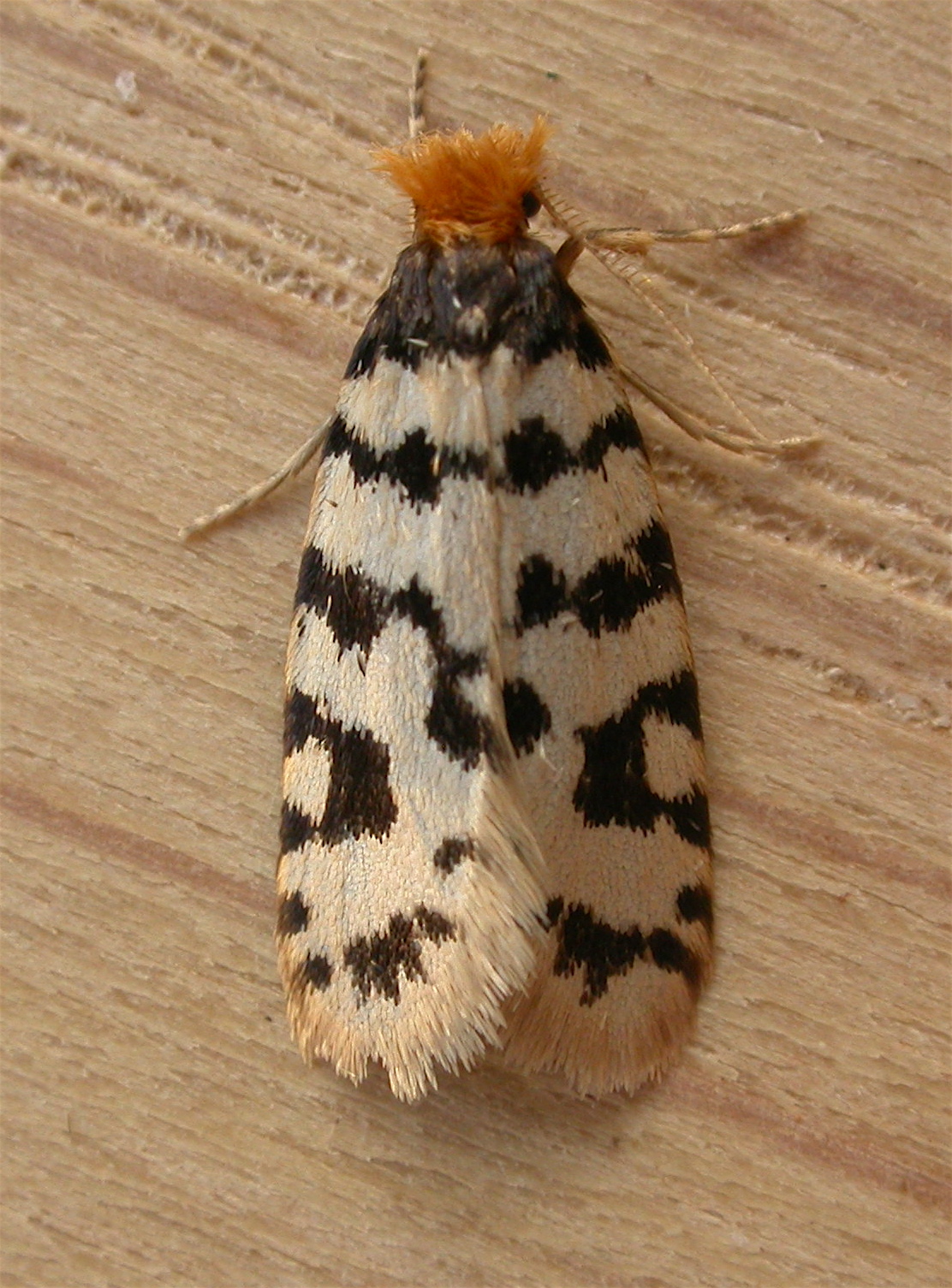
Adult of an undescribed Iphierga species from Aranda (Australia)
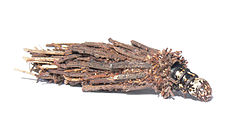
"Bag" of unidentified species
Scientific classification Edit this classification
Kingdom: Animalia
Phylum: Arthropoda
Class: Insecta
Order: Lepidoptera
Superfamily: Tineoidea
Family: Psychidae
Boisduval, 1828
Diversity[1]
10 subfamilies, 241 genera and 1,350 species
Bag of Metura elongatus which can grow to more than 120 mm (4.7 in) in length
Bagworm moth caterpillar locomotion

The Psychidae (bagworm moths, also simply bagworms or bagmoths) are a family of the Lepidoptera (butterflies and moths). The bagworm family is fairly small, with about 1,350 species[2] described. Bagworm species are found globally, with some, such as the snailcase bagworm (Apterona helicoidella), in modern times settling continents where they are not native.

Another common name for the Psychidae is "case moths", but this is just as well used for the case-bearers (Coleophoridae). The names refer to the habits of caterpillars of these two families, which build small protective cases in which they can hide. The bagworms belong to the superfamily Tineoidea, which is a basal lineage of the Ditrysia (as is Gelechioidea, which includes case-bearers). This means that the bagworms and case-bearers are only as closely related to each other as either is to butterflies (Rhopalocera).

Most bagworms are inoffensive to humans and inconspicuous; some are occasional nuisance pests. However, a few species can become more serious pests, and have caused significant damage e.g. to wattle (Acacia mearnsii) in South Africa and orange (Citrus × sinensis) in Florida. If detected early, picking the cases from the trees while in their pupa stage is an effective way to check an infestation; otherwise, insecticides are used. One bagworm species, the fangalabola (Deborrea malgassa) of Madagascar, is in some places encouraged to breed on wattle trees, because its pupae are collected as a protein-rich food.

Description

[edit]

The caterpillar larvae of Psychidae construct cases out of silk and environmental materials such as sand, soil, lichen, or plant materials. These cases are attached to rocks, trees or fences while resting or during their pupa stage, but are otherwise mobile. The larvae of some species eat lichen, while others prefer green leaves. In many species, the adult females lack wings and are therefore difficult to identify accurately. Case-bearer cases are usually much smaller, flimsier, and consist mainly of silk, while bagworm "bags" resemble caddisfly cases in their outward appearance – a mass of (mainly) plant detritus spun together with silk on the inside.

Bagworm cases range in size from less than 1 cm to 15 cm among some tropical species. Each species makes a case particular to its species, making the case more useful to identify the species than the creature itself. Cases among the more primitive species are flat. More specialized species exhibit a greater variety of case size, shape, and composition, usually narrowing on both ends. The attachment substance used to affix the bag to host plant, or structure, can be very strong, sometimes requiring a great deal of force to remove.[citation needed] Body markings are rare. Adult females of many bagworm species are larviform, with only vestigial wings, legs, and mouthparts. In some species, parthenogenesis is known. The adult males of most species are strong fliers with well-developed wings and feathery antennae but survive only long enough to reproduce due to underdeveloped mouthparts that prevent them from feeding. Most male bagworm wings have few of the scales characteristic of most moths, instead having a thin covering of hairs.

Ecology

[edit]

In the larval stage, bagworms extend their head and thorax from their mobile case to devour the leaves of host plants, often leading to the death of their hosts. Trees infested with bagworms exhibit increasingly damaged foliage as the infestation increases until the leaves are stripped bare.[citation needed] Some bagworms are specialized in their host plants (monophagous), while others can feed on a variety of plant species (polyphagous). A few species also consume small arthropods (such as the camphor scale Pseudaonidia duplex, a scale insect).[citation needed] One bagworm species was found to eat an orb-web of Plebs sachalinensis (Araneae, Araneidae) entirely.[3]

Since bagworm cases are composed of silk and the materials from their habitat, they are naturally camouflaged from predators. Predators include birds and other insects. Birds often eat the egg-laden bodies of female bagworms after they have died. Since the eggs are very hard-shelled, they can pass through the bird's digestive system unharmed, promoting the spread of the species over wide areas.[4]

A bagworm begins to build its case as soon as it hatches. Once the case is built, only adult males ever leave the case, never to return, when they take flight to find a mate. Bagworms add material to the front of the case as they grow, excreting waste materials through the opening in the back of the case. When satiated with leaves, a bagworm caterpillar secures its case and pupates.[citation needed] The adult female, which is wingless, either emerges from the case long enough for breeding or remains in the case while the male extends his abdomen into the female's case to breed.[5] Females lay their eggs in their case and die. The female evergreen bagworm (Thyridopteryx ephemeraeformis) dies without laying eggs, and the larval bagworm offspring emerge from the parent's body. Some bagworm species are parthenogenetic, meaning their eggs develop without male fertilization. Each bagworm generation lives just long enough as adults to mate and reproduce in their annual cycle.[6]

Systematics

[edit]

Ten subfamilies[1] and about 240 genera are recognized among the bagworms.

The subfamilies of Psychidae, with some notable genera and species also listed, are:

Applications

[edit]

The silk of bagworm moth larvae is reportedly "more durable than spider silk".[7] Japanese pharmaceutical company Kowa and the National Agriculture and Food Research Organization announced a new textile, Minolon, in 2024, that combined carbon fibers with sheets of bagworm silk. The resulting material was claimed to be environmentally friendly, with Kowa planning to sell it to aircraft, automobile, and sporting good manufacturers.[7]

References

[edit]
[edit]
Revisions and contributorsEdit on WikipediaRead on Wikipedia
from Grokipedia
The bagworm moths, family Psychidae, constitute a diverse group of approximately 1,350 species within the order , renowned for their larvae's construction of protective, spindle-shaped bags woven from and bits of twigs, leaves, or other debris. These bags serve as mobile shelters throughout the larval stage, enabling the caterpillars to feed on a wide array of host plants while remaining concealed from predators. Distributed worldwide, with around 30 species native to north of , bagworm moths exhibit in their adult forms: males are typically winged and moth-like with feathery antennae, while females are often wingless, grub-like, and remain within the pupal bag to lay eggs. Notable species, such as the evergreen bagworm Thyridopteryx ephemeraeformis, are prevalent in eastern and can cause significant defoliation to evergreens like junipers, arborvitae, and cedars, as well as deciduous trees including oaks and maples. The life cycle is univoltine in many temperate species, with eggs overwintering in the female's empty pupal case, larvae hatching in late spring to feed and enlarge their bags through summer, pupating in fall, and adults emerging briefly for before the females perish post-oviposition. Ecologically, bagworms play roles as herbivores that influence plant health and as prey for birds, wasps, and other , though heavy infestations can lead to tree mortality in unmanaged landscapes.

Taxonomy and classification

Family overview

The bagworm moths belong to the family within the order and the superfamily Tineoidea. This placement reflects their position as a basal lineage in the clade, characterized by unique larval case-building behaviors that distinguish them from other tineoid families. The family Psychidae encompasses 11 recognized subfamilies, including Psychinae, where females are typically wingless and remain in their larval cases as adults, and Oiketicinae, noted for diverse case constructions incorporating environmental materials. Other subfamilies, such as Naryciinae and Taleporiinae, exhibit varying degrees of sexual dimorphism and wing reduction in females, contributing to the family's morphological diversity. The etymology of "Psychidae" derives from the Greek word psychē, meaning "soul" or "butterfly," alluding to the type genus Psyche and the protective structures built by the larvae. The taxonomic history of Psychidae began with the first species descriptions by in 1758, initially classified under broader lepidopteran groupings in . Subsequent revisions in the 19th and 20th centuries refined subfamily boundaries based on morphological traits, with modern updates incorporating ; notable recent works include the 2020 revision of the genus Metura and a 2025 catalogue of Indian Psychidae species, enhancing genus-level classifications. Overall, the family includes approximately 1,450 described species worldwide.

Diversity and distribution

The family Psychidae encompasses approximately 1,450 described species across about 240 genera as of 2025. These bagworm moths exhibit a , occurring on all continents except , with the highest species diversity concentrated in tropical regions such as and the Neotropics of the ; in contrast, temperate zones harbor comparatively lower diversity. Notable examples of include Deborrea malgassa, known locally as fangalabola in , where its pupae are harvested and sold as a protein-rich food source. Post-2020 molecular studies, including and phylogenomic analyses, have prompted taxonomic revisions and additions, such as the erection of the new Pharcidopsyche and Pharcidopsychinae in 2025 based on morphological and genetic evidence from Asian specimens.

Physical characteristics

Larval stage and cases

The larvae of bagworm moths in the family function as casebearers, utilizing glands—primarily the labial glands—to spin portable protective cases that incorporate environmental materials such as leaves, twigs, bark fragments, petioles, particles, lichens, and other debris. These cases begin formation shortly after as small conical structures measuring 1–2 mm in length, featuring two openings for the 's head and posterior, and expand incrementally as the grows by adding successive layers of and scavenged items. Case dimensions vary widely, ranging from less than 1 cm in early instars to up to 15 cm in mature individuals of certain tropical species, with shapes commonly spindle-like and tapered at both ends, though specifics differ across taxa. For instance, bags of Eumeta minuscula average 32.4 mm in length, often exceeding 1.5 times the larva's body length. Prior to pupation, the cases are securely fastened to substrates such as tree trunks, branches, or leaves using specialized attachment discs—typically 2–3 mm wide—composed of looped, glue-coated fibers that adhere after abrading the surface for better grip, yielding pull-off forces of 0.60–3.07 N (mean 1.36 N) and safety factors of 151–771 relative to body weight. This robust attachment, combined with the cases' cryptic coloration and textural of surrounding vegetation, enhances against predators while also shielding the larva from physical damage and environmental stressors. Materials for case construction are predominantly sourced from host plants, on which the larvae feed by protruding their heads to chew foliage. Species-specific variations in case architecture facilitate taxonomic identification; for example, certain temperate Psychidae species, such as those studied in , produce bags densely covered in lichens for superior blending with bark or rock surfaces.

Adult morphology

Adult bagworm moths (family Psychidae) exhibit extreme , with males and females differing markedly in form and function. Males are typical moths, possessing fully developed wings that enable flight, while females are often wingless and larviform, retaining a worm-like appearance similar to the larval stage. This dimorphism is a key characteristic of the family, influencing their brief adult lives and strategies. Male adults are small to medium-sized, with a ranging from approximately 8 to 56 mm, though commonly around 25 mm in many species. They have a furry body, typically black or charcoal-colored, with feathery bipectinate antennae that aid in detecting female pheromones. The wings are membranous and transparent or lightly scaled, featuring venation patterns characteristic of Psychidae, such as the origin of R1 near the middle of the discal cell, which assists in taxonomic identification. Males possess reduced mouthparts and do not feed, surviving only 1-2 days primarily to locate and mate with females. Female adults are typically smaller, measuring 6-34 mm in length, and sedentary, often remaining within the pupal case formed from the larval . They are frequently wingless (apterous) or have greatly reduced wings, legless, with vestigial or absent antennae, small or non-functional eyes, and reduced mouthparts that preclude feeding. This neotenic, larviform morphology renders them grub-like and immobile, adapted for staying in place to receive males for ; their lifespan extends up to two weeks. Wing reduction in females occurs in over half of Psychidae , emphasizing the family's dimorphic extremes.

Life cycle

Developmental stages

The bagworm moth life cycle begins with the egg stage, where females deposit 500 to 1,000 eggs inside their pupal case within the protective bag. In temperate regions, these eggs overwinter in , remaining dormant through the cold months until hatching in or . This overwintering strategy ensures survival in varying climates, with hatching typically triggered by warmer temperatures around late May to early June. Upon hatching, larvae emerge as small, blackish caterpillars measuring about 2 mm in length and immediately begin constructing their characteristic -and--material cases. These e undergo 5 to 9 instars, depending on the species and environmental conditions, with the common bagworm (Thyridopteryx ephemeraeformis) typically progressing through 7 instars over 8 to 10 weeks. As the grows, it enlarges its case by adding more and host debris, maintaining protection throughout development; fully mature larvae reach 18 to 25 mm in length by mid- to late summer. Pupation occurs within the completed case, which the mature larva secures to a branch or surface with silk bands, often positioning itself head downward. The pupal stage lasts 7 to 10 days for males and up to 4 weeks overall, during which the insect transforms inside the sealed case; males develop functional wings and emerge as flying adults, while females remain wingless and sedentary within the bag. Most bagworm species are univoltine, completing one generation per year, with the egg diapause in colder climates allowing synchronization with seasonal host availability.

Reproduction

Bagworm moths (family Psychidae) exhibit pronounced in their reproductive strategies, with females typically wingless and neotenic, remaining within their protective larval cases as adults, while males are fully winged and capable of flight. Wingless females emerge from the pupal stage within their cases and release to attract males, often displaying protogyny where females eclose slightly earlier than males to facilitate . Males, upon detecting the pheromones, fly to the female's location and by inserting their extensible through the case opening, a process that can last several minutes; females generally cease pheromone production after copulation. Following mating, females oviposit 500 to over 1,000 eggs directly into their pupal inside the bag, using abdominal contractions to complete deposition within about two days; the female then dies, leaving the eggs protected within the case over winter. varies widely across species, correlating with female body size and often higher in tropical taxa, where resources allocated to egg production can exceed two-thirds of larval . Some Psychidae species reproduce via parthenogenesis, in which unfertilized eggs develop into viable offspring, as observed in genera such as Dahlica, including both diploid and polyploid forms; this mode is not facultative in otherwise sexual species. Egg dispersal occurs indirectly through the hatching larvae, which emerge from the maternal case in spring and balloon on silken threads carried by wind, often traveling short distances to new host plants; cases containing eggs may also be dislodged and transported by wind or inadvertently by birds.

Ecology and behavior

Habitat and feeding habits

Bagworm moths of the family Psychidae occupy diverse habitats worldwide, ranging from temperate forests and gardens to tropical woodlands and urban landscapes. In temperate regions, such as the , species like Thyridopteryx ephemeraeformis predominantly inhabit areas with evergreen hosts, including conifers such as (Juniperus spp.), (Pinus spp.), arborvitae ( spp.), and (Picea spp.). These environments provide suitable foliage and structural support for larval case construction. In contrast, tropical species, including those in the Paleotropics like Metisa plana, are often associated with deciduous trees and palms, such as oil palm (), reflecting higher species diversity in warmer climates. Larvae of bagworm moths are primarily polyphagous herbivores, consuming foliage from a wide array of , which enables them to thrive across varied ecosystems. For instance, T. ephemeraeformis feeds on over 128 across more than 50 plant families, including both trees like (Acer spp.) and (Ulmus spp.) and evergreens, often resulting in significant defoliation. Some also incorporate bark or lichens into their diet, particularly in basal Psychidae subfamilies that exhibit omnivorous tendencies. Although most are herbivorous, rare carnivorous exceptions exist, such as Perisceptis carnivora in Panamanian tropical forests, where larvae prey on spiders and other small arthropods rather than plant material. Feeding activity is closely tied to seasonal patterns, with larvae emerging and becoming active in late spring or early summer in temperate zones, where they voraciously consume host foliage to fuel growth and case enlargement. In tropical habitats, activity may be more asynchronous due to consistent warmth, allowing prolonged feeding periods on available hosts. This voracious summer feeding supports rapid development, with larvae incorporating fragments into their protective cases for and shelter.

Predators and defenses

Bagworm moths, particularly in the larval stage, face significant predation pressure from a variety of natural enemies. Birds are among the primary predators, with species such as sparrows, woodpeckers, and finches actively pecking at and extracting larvae from their protective cases, often consuming the contents entirely. Parasitic wasps, including members of the families Ichneumonidae and Braconidae (e.g., Apanteles carpatus), target larvae by ovipositing eggs through the case walls, leading to parasitism that kills the host before pupation. Spiders and other invertebrates, such as carabid beetles (Calosoma maximoviczi) and ants (Oecophylla smaragdina), also prey on exposed or vulnerable larvae, though less frequently than avian or hymenopteran attackers. The larvae's primary defense is the silken case, constructed from host plant materials like twigs or leaves, which provides by mimicking environmental structures such as branches or foliage, thereby reducing visibility to predators. These cases act as a physical barrier, with their tough composition resisting penetration by predator mandibles; larvae further enhance protection by retracting fully inside the case during attacks, achieving near-complete defense against invertebrate predators like carabid beetles in tests. In some species, such as Eumeta crameri, the addition of decorative elements to the case strengthens its anti-predatory function against , while the overall structure deters parasitoids and contributes to survival against broader threats. Predation and impose high mortality on bagworm larvae, with avian predation alone accounting for up to 98% mortality in observed populations, including 62% full extractions and 36% partial consumption leaving remnants. wasps cause approximately 40% larval mortality across host trees, with no significant difference between and species. Additionally, within the cases of certain bagworms, such as Metisa plana, may deter pathogens and indirectly bolster defenses by maintaining larval health against infections.

Human interactions

Pest status and impacts

The bagworm moth Thyridopteryx ephemeraeformis, commonly known as the , is a significant pest in , particularly targeting ornamental evergreens such as arborvitae, , , and . Its larvae construct protective cases from and plant material while feeding voraciously on foliage, leading to defoliation that weakens and often kills host plants. This species is native to the eastern and , with distribution ranging from and southern southward to and westward to . Severe infestations can result in complete defoliation, causing branch dieback and host mortality, especially among that do not readily produce new leaves. For instance, heavy feeding by larvae turns foliage brown and scorched in appearance, with entire trees succumbing in extreme cases on preferred hosts like arborvitae and . Economically, even low-level damage renders ornamental plants unmarketable; as few as four larvae on a 4-foot arborvitae can make it unsuitable for sale, while consumers tolerate less than 10% defoliation, leading to substantial losses for nurseries and landscapers. Monitoring relies on spotting overwintering egg cases, which are the spindle-shaped bags (1.5–2.5 inches long) attached to branches, serving as key indicators of potential infestations. Intervention thresholds vary by host value but generally recommend action if more than 20 bags or larvae are observed per branch or , particularly on high-value ornamentals, to prevent escalation.

Uses and applications

Bagworm moths, belonging to the family Psychidae, have garnered interest for their , which exhibits exceptional durability and compared to traditional silks. The silk produced by bagworm larvae is renowned for its high tensile strength and toughness, surpassing that of in mechanical properties, making it suitable for advanced applications. In , Japanese pharmaceutical company Kowa Co. commercialized the world's first product from bagworm silk under the brand name Minolon, creating eco-friendly, nonwoven fabrics that combine high elasticity, strength, and biodegradability for use in sustainable clothing and materials. These are produced by rearing bagworms indoors and harvesting their silk threads, which are then processed into sheets tougher and more flexible than or . In certain regions, bagworm larvae serve cultural and nutritional purposes. In , the species Deborrea malgassa, known locally as fangalabola, has its pupae harvested as a protein-rich source, encouraged to breed on wattle trees for this purpose. This practice highlights the edible potential of Psychidae larvae in tropical African contexts, where they contribute to local diets as a sustainable protein option. As pests, bagworm moths are managed through (IPM) strategies emphasizing non-chemical methods. Biological control primarily involves sprays of (Bt) subsp. kurstaki, a bacterium that targets young larvae by disrupting their digestive systems upon ingestion, proving effective when applied to foliage in early infestation stages. Mechanical removal entails hand-picking and destroying bags, particularly in low-population scenarios, by submerging them in soapy water or infested branches during winter or early spring to eliminate overwintering eggs. Chemical insecticides, such as pyrethrins or synthetic pyrethroids, are reserved as a last resort due to their broader environmental impact, applied only when infestations are severe and targeting small larvae for optimal efficacy. Ongoing research explores bagworm moths for biomimicry and genetic applications in pest management. The spiral-patterned structure of their protective cases inspires designs for crush-resistant materials, mimicking the larvae's use of and environmental debris to withstand compression. Genetic studies, including the sequencing of the bagworm , reveal unique genes contributing to silk strength, paving the way for engineered materials and targeted IPM tools like enhanced Bt strains post-2025.

References

Add your contribution
Related Hubs
User Avatar
No comments yet.