Hubbry Logo
Bank failureBank failureMain
Open search
Bank failure
Community hub
Bank failure
logo
8 pages, 0 posts
0 subscribers
Be the first to start a discussion here.
Contribute something
Bank failure
Bank failure
from Wikipedia

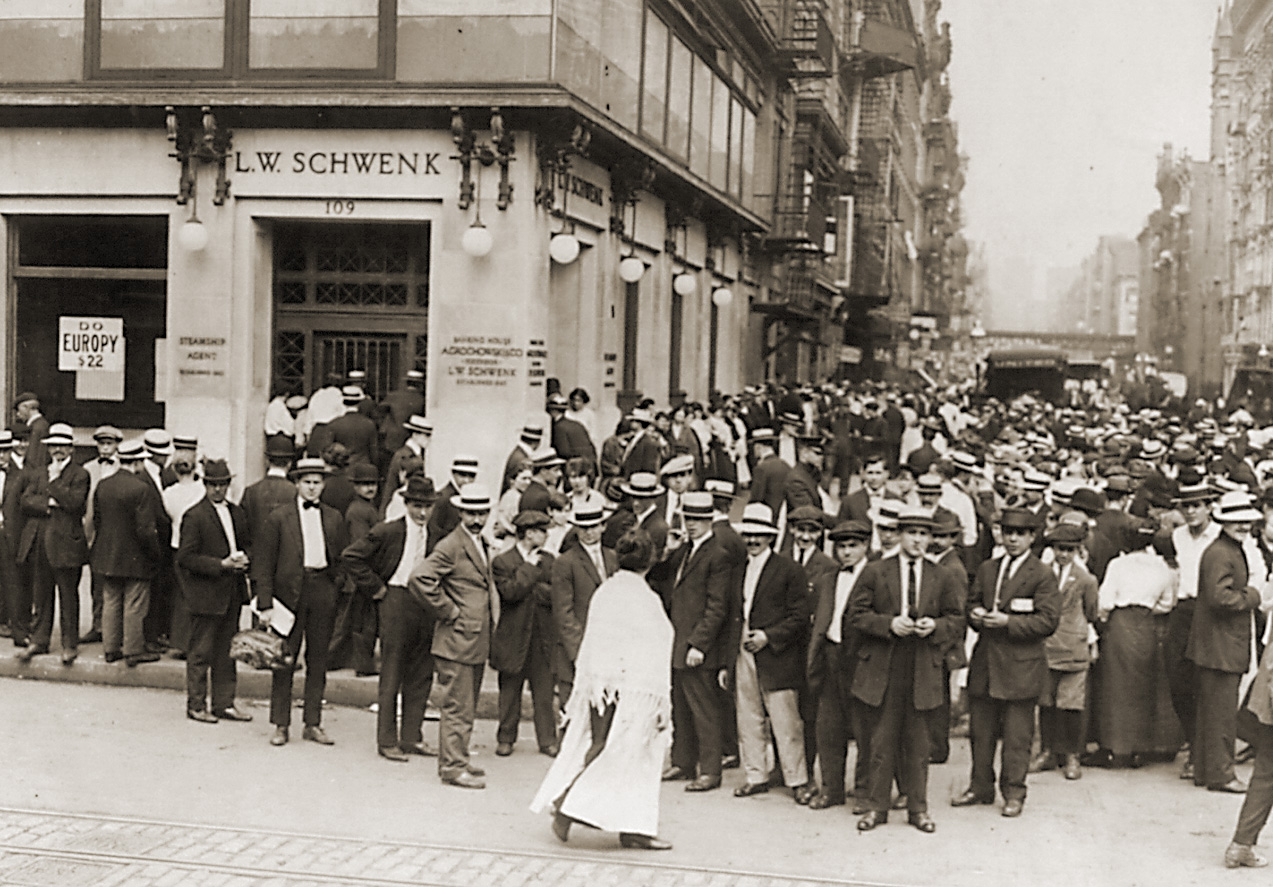
Depositors "run" on a failing New York City bank in an effort to recover their money, July 1914

A bank failure occurs when a bank is unable to meet its obligations to its depositors or other creditors because it has become insolvent or too illiquid to meet its liabilities.[1] Failing banks share commonalities: rising asset losses, deteriorating solvency, and an increasing reliance on expensive noncore funding.[2]

A bank typically fails economically when the market value of its assets falls below the market value of its liabilities. The insolvent bank either borrows from other solvent banks or sells its assets at a lower price than its market value to generate liquid money to pay its depositors on demand. The inability of the solvent banks to lend liquid money to the insolvent bank creates a bank panic among the depositors as more depositors try to take out cash deposits from the bank. As such, the bank is unable to fulfill the demands of all of its depositors on time. A bank may be taken over by the regulating government agency if its shareholders' equity are below the regulatory minimum.

The failure of a bank is generally considered to be of more importance than the failure of other types of business firms because of the interconnectedness and fragility of banking institutions. Research has shown that the market value of customers of the failed banks is adversely affected at the date of the failure announcements.[3] It is often feared that the spill over effects of a failure of one bank can quickly spread throughout the economy and possibly result in the failure of other banks, whether or not those banks were solvent at the time as the marginal depositors try to take out cash deposits from these banks to avoid from suffering losses. Thereby, the spill over effect of bank panic or systemic risk has a multiplier effect on all banks and financial institutions leading to a greater effect of bank failure in the economy. As a result, banking institutions are typically subjected to rigorous regulation, and bank failures are of major public policy concern in countries across the world.[4]

Notable acquisitions of failed banks

[edit]

The following table lists significant acquisitions of failed banks, illustrating the scale and impact of major bank failures. It does not include partial purchases by governments to prevent bank or banking system failures, such as government intervention during the subprime mortgage crisis:

Announcement date Target Acquirer Transaction value
(US$ billion)
Type
1999-11-29[5] United Kingdom National Westminster Bank Plc Scotland Royal Bank of Scotland 42.5
2003-10-27[6] United States FleetBoston Financial United States Bank of America 47
2004-01-15[7] United States Bank One Corporation United States JPMorgan Chase 58
2006-01-01[8] United States MBNA United States Bank of America 34.2
2007-05-20[9] Italy Capitalia Italy UniCredit 29.47
2007-09-28[10] United States NetBank Netherlands ING Group 0.014
2008-02-22 United Kingdom Northern Rock United Kingdom Government of the United Kingdom 41.213
2008-04-01 United States Bear Stearns United States JPMorgan 2.2
2008-07-01 United States Countrywide Financial United States Bank of America 4
2008-07-10 Denmark Roskilde Bank Denmark Nationalbanken (Centralbank of Denmark) 15
2008-07-14 United Kingdom Alliance & Leicester Spain Santander 1.93
2008-08-31 Germany Dresdner Kleinwort Germany Commerzbank 10.812
2008-09-07 United States Fannie Mae and Freddie Mac United States Federal Housing Finance Agency 5,000[dubiousdiscuss] Federal conservatorship with expected return to independent management
2008-09-14 United States Merrill Lynch United States Bank of America 44
2008-09-17 United States Lehman Brothers United Kingdom Barclays 1.3
2008-09-18 United Kingdom HBOS United Kingdom Lloyds TSB 33.475
2008-09-26 United States Lehman Brothers Japan Nomura Holdings 1.3
2008-09-26 United States Washington Mutual United States JPMorgan 1.9
2008-09-28 United Kingdom Bradford & Bingley United Kingdom Government of the United Kingdom Spain Santander 1.838
2008-09-28 Belgium Luxembourg Netherlands Fortis France BNP Paribas 12.356
2008-09-29 United Kingdom Abbey National United Kingdom Government of the United Kingdom Spain Santander 2.298
2008-09-30 Belgium Dexia Belgium France Luxembourg The Governments of Belgium, France and Luxembourg 7.06
2008-10-03 United States Wachovia United States Wells Fargo 15
2008-10-03 Netherlands ABN AMRO

Netherlands Fortis

Netherlands NL Financial Investments [nl] (Ministry of Finance ) 23.3[11] Breakup, nationalization of some components with return to publicly traded company[12]
2008-10-07 Iceland Landsbanki Iceland Icelandic Financial Supervisory Authority 4.192 UK assets seized by UK government; bad assets nationalized by Iceland and retail operations reorganized as Landsbankinn
2008-10-08 Iceland Glitnir Iceland Icelandic Financial Supervisory Authority 3.254
2008-10-09 Iceland Kaupthing Bank Iceland Icelandic Financial Supervisory Authority 1.257
2008-10-13 United Kingdom Lloyds Banking Group United Kingdom Government of the United Kingdom 26.045
2008-10-13 Scotland Royal Bank of Scotland Group United Kingdom Government of the United Kingdom 30.641
2008-10-14 United States Bank of America United States United States Federal Government 45
2008-10-14 United States Bank of New York Mellon United States United States Federal Government 3
2008-10-14 United States Goldman Sachs United States United States Federal Government 10
2008-10-14 United States JP Morgan United States United States Federal Government 25
2008-10-14 United States Morgan Stanley United States United States Federal Government 10
2008-10-14 United States State Street United States United States Federal Government 2
2008-10-14 United States Wells Fargo United States United States Federal Government 25
2009-02-11 Republic of Ireland Allied Irish Bank Republic of Ireland Government of the Republic of Ireland 3.861
2009-02-11 Republic of Ireland Anglo Irish Bank Republic of Ireland Government of the Republic of Ireland 13.57
2009-02-11 Republic of Ireland Bank of Ireland Republic of Ireland Government of the Republic of Ireland 3.861
2009-03-19[13] United States IndyMac United States OneWest Bank unknown
2012-03-13 Greece Alpha Bank Greece Government of Greece 2.096
2012-03-13 Greece Eurobank Greece Government of Greece 4.633
2012-03-13 Greece National Bank of Greece Greece Government of Greece 7.612
2012-03-13 Greece Piraeus Bank Greece Government of Greece 5.516
2012-03-25 Cyprus Laiki Bank Cyprus Bank of Cyprus 10.812
2012-05-25 Spain Bankia Spain Government of Spain 20.962
2012-06-07 Portugal Caixa Geral de Depositos Portugal Government of Portugal 1.78
2012-06-07 Portugal Millennium BCP Portugal Government of Portugal 3.3

Bank failures in the U.S.

[edit]

In the U.S., deposits in savings and checking accounts are backed by the FDIC. As of 1933, each account owner is insured up to $250,000 in the event of a bank failure.[14] When a bank fails, in addition to insuring the deposits, the FDIC acts as the receiver of the failed bank, taking control of the bank's assets and deciding how to settle its debts. The number of bank failures has been tracked and published by the FDIC since 1934, and has decreased after a peak in 2010 due to the 2008 financial crisis.[15]

Since the year 2000, over 500 banks have failed. The 2010s saw the most bank failures in recent memory, with 367 banks collapsing over that decade. However, while the 2010s saw the most banks fail, it wasn't the worst decade in terms of the value of the banks going under. The 2000s saw 192 banks go under with $533 billion in assets ($749 billion in 2023 dollars) compared to the $273 billion ($354 billion) lost in the 2010s.[16]

No advance notice is given to the public when a bank fails.[1] Under ideal circumstances, a bank failure can occur without customers losing access to their funds at any point. For example, in the 2008 failure of Washington Mutual the FDIC was able to broker a deal in which JP Morgan Chase bought the assets of Washington Mutual for $1.9 billion.[17] Existing customers were immediately turned into JP Morgan Chase customers, without disruption in their ability to use their ATM cards or do banking at branches.[18] Such policies are designed to discourage bank runs that might cause economic damage on a wider scale.[citation needed]

Global failure

[edit]

The failure of a bank is relevant not only to the country in which it is headquartered, but for all other nations with which it conducts business. This dynamic was highlighted during the 2008 financial crisis, when the failures of major bulge bracket investment banks affected local economies globally. This interconnectedness was manifested not on a high level, with respect to deals negotiated between major companies from different parts of the world, but also to the global nature of any one company's makeup. Outsourcing is a key example of this makeup; as major banks such as Lehman Brothers and Bear Stearns failed, the employees from countries other than the United States suffered in turn. A 2015 analysis by the Bank of England found greater interconnectedness between banks has led to a greater transmission of stresses during a time of recession.[19]

See also

[edit]

References

[edit]

Further reading

[edit]
[edit]
Revisions and contributorsEdit on WikipediaRead on Wikipedia
from Grokipedia
Bank failure occurs when a federal or state closes a bank due to its inability to meet obligations to depositors, creditors, or other parties, typically arising from —where the bank's liabilities exceed its assets—or severe illiquidity that prevents timely fulfillment of withdrawals. This closure aims to protect the by halting operations of institutions that pose risks to depositors and broader stability, often followed by resolution processes such as asset or transfer to healthier banks. Empirical evidence indicates that bank failures frequently stem from internal factors like excessive risk-taking in lending, particularly in volatile sectors such as commercial real estate, , or , compounded by external economic pressures like recessions or shifts that erode asset values. Fraud, inadequate capitalization, and mismanagement also contribute, as banks leverage deposits to amplify returns but expose themselves to amplified losses when loans default or investments sour. Historical data from the U.S. (FDIC) reveal over 570 failures among insured institutions between 2001 and 2025, with clusters during crises like the 2008 financial meltdown, underscoring how correlated exposures across banks can propagate distress. While and lender-of-last-resort facilities mitigate panic-driven runs, failures can engender systemic risks through contagion, where one institution's collapse erodes confidence in peers, potentially contracting credit availability and amplifying economic downturns via reduced lending and investment. Resolution costs borne by the FDIC, funded ultimately by premiums from surviving banks, highlight ongoing challenges in balancing incentives against the need for robust oversight to prevent failures rooted in imprudent fundamentals rather than mere exogenous shocks.

Fundamentals of Bank Failure

Definition and Mechanisms

A bank failure is formally defined as the closure of a by its supervising regulatory authority due to the bank's inability to fulfill its obligations to depositors, creditors, or counterparties, typically arising from —where the market value of assets falls below liabilities—or acute illiquidity that raises doubts about ongoing viability. In the United States, such closures are executed by agencies like the (FDIC) or the Office of the Comptroller of the Currency (OCC), which seize control to protect insured depositors and minimize systemic disruption. The core mechanism enabling bank vulnerability stems from , wherein institutions hold only a fraction of deposits as liquid reserves while extending the remainder as longer-term loans or investments, creating inherent fragility to sudden withdrawal demands or asset value fluctuations. This maturity mismatch—short-term liabilities funding illiquid, long-duration assets—amplifies risks, as banks must either liquidate holdings prematurely or borrow at elevated costs during stress. Illiquidity crises often manifest as bank runs, where depositor panic prompts mass withdrawals exceeding available reserves, forcing asset sales at discounted "fire-sale" prices that can erode capital and precipitate even if the bank was fundamentally solvent beforehand. Insolvency, by contrast, arises directly from fundamental deteriorations such as defaults, where borrower non-payment reduces asset recoverability, or shocks that diminish the of fixed-income securities held on balance sheets—as evidenced in cases where rising rates in 2022-2023 led to unrealized losses on bond portfolios exceeding 20% of capital for some regional banks. These asset quality declines can compound with operational factors like inadequate or , where misreported exposures mask true losses until regulatory scrutiny or market revelations trigger intervention. Regulators mitigate escalation through frameworks like the FDIC's prompt corrective action, which mandates escalating restrictions as capital ratios breach thresholds (e.g., below 2% triggers conservatorship), culminating in resolution strategies such as purchase-and-assumption agreements to transfer viable assets to healthier institutions. Empirical data from U.S. failures show that between 2001 and 2020, 561 banks closed with aggregate assets of $721 billion, predominantly due to losses and strains rather than isolated .

Types: Illiquidity Versus Insolvency

Illiquidity in banking refers to a situation where a cannot meet its short-term obligations, such as depositor withdrawals or payments, due to a mismatch between the maturity of its assets and liabilities, despite the overall value of its assets exceeding liabilities under normal conditions. This often manifests during , where depositors simultaneously demand their funds, forcing the to liquidate illiquid assets like loans at a discount or seek . Central banks may intervene with lender-of-last-resort facilities to provide temporary , preserving a institution without necessitating resolution. Insolvency, by contrast, occurs when the market value of a bank's assets is less than its liabilities, indicating a fundamental capital shortfall that prevents full repayment of creditors even if all assets were sold immediately. This structural deficiency typically stems from asset quality deterioration, such as loan defaults or investment losses, leading to regulatory intervention like closure or orderly resolution rather than mere support. Empirical analysis of U.S. bank failures shows that while apparent illiquidity triggers many collapses, underlying —evidenced by eroded fundamentals—predates and precipitates most runs. The distinction hinges on time horizons and asset valuation: illiquidity addresses timing under stress, solvable short-term without loss to the balance sheet's , whereas reflects permanent value destruction requiring recapitalization or wind-down. However, prolonged illiquidity can evolve into through fire sales, where rapid asset disposals depress prices, amplifying losses; conversely, insolvent banks may initially appear merely illiquid if asset impairments are hidden. Regulators prioritize assessments to avoid propping up fundamentally unsound institutions, as injections alone fail against .
AspectIlliquidityInsolvency
Core IssueInability to convert assets to cash quickly enough for immediate obligationsAssets' insufficient to cover total liabilities
DurationShort-term, potentially reversible with fundingLong-term, structural capital deficit
Primary TriggerMaturity mismatch, withdrawals (e.g., runs)Credit losses, market declines, overleverage
Resolution Approach liquidity provision, no equity wipeoutCapital raise, resolution authority intervention, possible depositor haircuts

Causes of Bank Failure

Internal Factors: Mismanagement and Asset Quality Deterioration

Mismanagement in banks typically involves failures in , oversight, and strategic by executives and boards, which prioritize short-term gains over long-term stability. Such lapses include inadequate credit underwriting, excessive concentration in high-risk assets, and insufficient diversification, leading to vulnerabilities that precipitate failure even absent external shocks. For instance, the Office of the Comptroller of the Currency (OCC) analysis of failed banks identifies internal practices like aggressive lending without proper as primary drivers, eroding capital through mounting losses. Weak internal controls and board oversight exacerbate these issues, as seen in cases where executives pursued unhedged growth strategies, resulting in solvency threats. Asset quality deterioration, a direct consequence of mismanagement, occurs when loan portfolios accumulate non-performing assets due to flawed origination and monitoring processes. Poor —such as relaxing standards to boost volume—leads to higher default rates, with provisions for loan losses directly impairing and capital. The Federal Reserve's review of failed institutions notes that asset quality problems often stem from internal weaknesses in credit administration, where early warning signs of borrower distress are ignored, amplifying losses. In quantitative terms, banks experiencing rapid credit expansion without risk controls see ratios surge; historical data from U.S. failures show that deteriorating assets accounted for the bulk of resolution costs, often exceeding 50% of total liabilities in severe cases. These internal factors compound through a feedback loop: mismanagement fosters asset impairments, which in turn strain and force reliance on costly funding, hastening . The highlights that weak models, such as over-reliance on collateral without , directly contribute to this cycle, independent of macroeconomic conditions. Empirical studies of bank failures confirm that internal governance failures precede external triggers in most instances, with asset quality metrics like the Texas ratio (problem loans to capital plus reserves) exceeding 100% as a reliable indicator. Effective requires robust internal audits and board-level accountability, though lapses persist due to incentive misalignments favoring tied to growth metrics.

External Factors: Economic Shocks and Policy Influences

Economic shocks, such as recessions and abrupt shifts in asset prices, often trigger widespread loan defaults and liquidity strains that overwhelm banks' capital buffers. During the , the of October 1929 initiated a cascade of failures, with over 9,000 U.S. banks collapsing between 1930 and 1933 amid deflationary pressures and mass withdrawals fueled by panic. Similarly, regional recessions in the , exacerbated by oil price volatility and agricultural downturns, contributed to more than 2,900 bank and thrift failures through 1995, representing assets exceeding $2.2 trillion. These events demonstrate how exogenous downturns amplify default rates, eroding asset quality and prompting depositor runs, with historical data showing bank failure spikes coinciding with major contractions like the panics and the 2007-2009 crisis. Monetary policy decisions, particularly interest rate manipulations, exert causal influence by distorting bank balance sheets over time. Prolonged periods of low rates, as maintained by the from 2008 to 2021, incentivize excessive risk-taking in long-duration securities, building vulnerabilities that materialize during subsequent tightenings. In 2022-2023, rapid rate hikes to combat —lifting the from near zero to over 5%—generated unrealized losses of up to $2 trillion across U.S. bank securities portfolios, directly contributing to failures like on March 10, 2023, where bond devaluations exceeded $15 billion. Such policy reversals highlight how actions can induce mismatches between asset durations and funding structures, with regional banks holding 14% of assets in vulnerable securities proving particularly susceptible. Fiscal and regulatory policies further mediate these risks, though their effects often lag. in the 1980s, including the Garn-St. Germain Act of 1982, expanded thrift lending into commercial real estate amid economic shocks, amplifying failures when sectors contracted. Conversely, post-crisis interventions like expansions mitigate contagion but can by reducing incentives for prudent liquidity management during shocks. Empirical analyses confirm that banking distress from these external pressures persistently depresses output by 2-3% and elevates for years, underscoring the need for policies aligned with underlying economic cycles rather than countercyclical distortions.

Role of Fraud and Asymmetric Information

Asymmetric information, where banks possess superior knowledge about their assets and risks compared to depositors and regulators, exacerbates bank vulnerabilities by enabling and . occurs when banks disproportionately attract high-risk borrowers who conceal their default probabilities, leading to deteriorating loan portfolios that undermine solvency over time. arises post-lending, as bank managers may pursue hidden risky strategies—such as aggressive lending or speculative investments—knowing that depositors bear the downside through potential runs, while upside gains accrue to shareholders or insiders. This dynamic was formalized in models showing how information opacity triggers self-fulfilling bank runs, as depositors, unable to differentiate solvent from insolvent institutions, withdraw funds preemptively to avoid losses. In financial crises, asymmetric amplifies contagion: uncertainty about hidden asset qualities prompts widespread withdrawals, converting strains into insolvencies even for fundamentally sound s. Empirical of historical U.S. banking panics reveals that information asymmetries, rather than pure issues, drove many failures, as depositors' inability to assess true led to panic-driven liquidations of assets at fire-sale prices. schemes, intended to mitigate runs, inadvertently heighten by reducing depositor discipline, encouraging banks to leverage up and invest in opaque, high-yield assets like securitized loans, as seen preceding the 2008 crisis where subprime exposures were underreported. Regulators' lagged access to internal data further entrenches these problems, delaying interventions until failures materialize. Fraud directly exploits asymmetric information, involving deliberate concealment of losses or misrepresentations that erode capital bases undetected until revelation triggers collapse. In the U.S. of the 1980s, insider —such as and fictitious asset valuations—contributed to over 1,000 institutional failures, with losses exceeding $160 billion, as executives hid deteriorating real estate loans from examiners. Empirical studies confirm 's role in failed banks, with supervisory oversight inversely correlated to fraud incidence; weaker monitoring in distressed institutions allows insiders to siphon funds or inflate assets, accelerating . During the 2007-2009 crisis, banks misrepresented mortgage-backed securities' risks to investors and regulators, constituting that masked systemic leverage and precipitated failures like those of in 2008, with $307 billion in assets. Public , intertwined with , heightens failure risks for mid-tier banks, as evidenced by a positive association between regional corruption indices and U.S. bank distress from 2000-2020, where bribe-facilitated lax lending depleted reserves. Recent cases, such as the 2025 failure of Pulaski due to suspected executive , underscore fraud's persistence, costing the FDIC millions in resolutions despite no elevated overall costs compared to non-fraud failures. Mitigating these requires enhanced transparency, like real-time asset disclosure mandates, though trade-offs with persist.

Historical Overview

Pre-20th Century Panics

Banking panics in the pre-20th century era were characterized by sudden waves of depositor withdrawals that overwhelmed fractional-reserve banks lacking a or , often triggered by speculative bubbles, credit expansions, and external shocks. In the , these events recurred due to the decentralized banking system under state charters, which permitted excessive note issuance and land without federal oversight after the Second Bank of the United States ceased operations in 1836. Europe saw similar instabilities, such as the 1825 UK crisis stemming from Latin American and strains, but U.S. panics were particularly acute amid rapid industrialization and westward expansion. The initiated this pattern as the first major U.S. , erupting after wartime credit expansion and public land speculation fueled by state banks' unbacked notes. Credit contraction by the Second Bank of the United States in 1818, aimed at curbing , precipitated widespread bank runs and suspensions, with over 30% of banks failing or restricting redemptions by mid-1819. The ensuing depression lasted until 1824, contracting GDP by approximately 5-10% and triggering bankruptcies, farm foreclosures, and urban exceeding 10% in some areas, while exposing vulnerabilities in unregulated state banking. Subsequent panics amplified these frailties. The arose from real estate overexpansion, Jackson's mandating payments for land, and the Bank War's dismantling of centralized banking, leading to specie drains and over 600 bank failures by 1842. Banks universally suspended specie payments in May 1837, sparking a depression through the mid-1840s with cotton prices halving and national income falling 30%. The followed railroad and land booms, ignited by the Ohio Life Insurance and Trust Company's failure on August 24, 1857, and exacerbated by the SS Central America's loss, causing 1,000+ business insolvencies and banks suspending payments until December. surged to 14% in eastern cities, underscoring interconnectedness with global grain markets and domestic overinvestment. Later 19th-century episodes intensified amid industrialization. The originated in Vienna's stock crash spilling to U.S. railroads, with Jay Cooke's firm collapsing on September 18, 1873, due to overleveraged bonds, prompting 18,000 business failures and 89 railroad bankruptcies by 1879. This initiated the , with U.S. unemployment peaking at 8.25% in 1878 and industrial output contracting sharply. The , the severest before 1930, stemmed from railroad overbuilding, the Sherman Silver Purchase Act's drain on Treasury gold, and agricultural slumps, resulting in over 500 bank failures and 15,000 business collapses within a year. Unemployment reached 12-18% nationally by 1894, with urban riots and farm distress, as the inelastic national banking currency failed to accommodate demands, highlighting persistent risks without elastic money supplies. These panics collectively drove reforms like the National Banking Acts but revealed how asymmetric and contagion amplified illiquidity into across interconnected institutions.

Great Depression and 1930s Failures

The banking panics of the early 1930s marked the most severe wave of bank failures in U.S. history, with approximately 9,000 banks—about one-third of those in operation—collapsing between 1930 and 1933. These failures wiped out billions in deposits, equivalent to roughly $7 billion at the time (over $140 billion in 2023 dollars), and eroded public confidence, triggering widespread runs where depositors withdrew funds en masse fearing total loss without federal insurance. The first major panic erupted in November 1930, centered in the Midwest and , following the collapse of regional banking networks like the Caldwell empire, which controlled dozens of institutions and failed due to overextension in securities and . A pivotal event was the December 11, 1930, failure of the in New York, then the largest U.S. bank collapse with $200 million in deposits, which amplified fears of contagion despite the institution's misleading name implying federal backing. Failures accelerated in 1931–1933 amid deflationary pressures and economic contraction following the 1929 crash, with banks holding illiquid assets like farm loans and speculative securities that lost value as commodity prices plummeted and borrowers defaulted. Rural and small-town banks, often unit banks without diversification, were hit hardest; agricultural distress from falling crop prices and conditions led to loan defaults comprising up to 50% of some banks' portfolios, while urban failures stemmed from ties to speculation and inadequate reserves against withdrawals. Bank runs clustered spatially and temporally, driven by depositor panic rather than isolated , as healthy institutions suspended operations to conserve ; over 2,000 banks failed in 1931 alone, and more than 4,000 in 1933 prior to federal intervention. The lack of a central exacerbated shortages, as the Federal Reserve's tight —prioritizing adherence—failed to provide emergency funding, allowing panics to reduce the money supply by nearly 30% and intensify . These collapses deepened the by curtailing lending and spending; failed banks destroyed deposit money, contracting credit availability and forcing survivors to hoard reserves rather than extend loans, which stifled recovery in agriculture and industry. In March 1933, incoming President declared a four-day national banking holiday on March 6 to stem nationwide runs, followed by the Emergency Banking Relief Act of March 9, which authorized Treasury inspections and permitted only solvent banks to reopen under stricter oversight. The Glass-Steagall Banking Act of June 1933 separated commercial and and established the (FDIC), insuring deposits up to $2,500 initially, which restored confidence and reduced failures to 61 in 1934. While these measures halted the crisis, they did not address underlying fragilities like unit banking restrictions, and some analyses attribute the panics' severity to policy errors rather than inherent instability, emphasizing the Federal Reserve's inaction in supplying reserves.

Savings and Loan Crisis of the 1980s

The emerged in the United States during the 1980s as a of thrift institutions, triggered by acute mismatches and amplified by and inadequate oversight. In 1980, the Federal Savings and Loan Insurance Corporation (FSLIC) insured roughly 4,000 state- and federally chartered savings and loan associations (S&Ls) with total assets of $604 billion, predominantly in long-term, fixed-rate residential mortgages. Rising and policies under Chairman pushed short-term interest rates to peaks above 15% by 1981, eroding S&L profitability as institutions paid competitive deposit rates while earning low yields on pre-existing loans; the industry incurred collective losses of nearly $9 billion in 1981 and 1982. This —depositors shifting funds to funds and other high-yield options—threatened widespread , with net worth negative for about two-thirds of S&Ls by mid-decade. Regulatory reforms aimed to address these strains but inadvertently fueled riskier behavior. The Depository Institutions Deregulation and Monetary Control Act of 1980 (DIDMCA) initiated the phase-out of ceilings on deposits, enabling S&Ls to compete for funds, while expanding federal coverage to $100,000 per account. The Garn-St. Germain Depository Institutions Act of 1982 further liberalized operations by permitting S&Ls to offer adjustable-rate mortgages, issue checking accounts, and diversify into commercial , loans, and up to 10% in junk bonds or other securities, without prior limits. These measures, coupled with regulatory forbearance—allowing undercapitalized thrifts to continue operating without immediate closure—created , as federally insured deposits incentivized speculative investments in volatile assets like and high-risk commercial projects. When regional booms collapsed amid slowing post-1982 , asset values plummeted, exposing weaknesses; by 1986, annual failures surged, with over 200 S&Ls closing or receiving assistance that year alone. Fraud and managerial misconduct compounded the debacle, often exploiting deregulated freedoms and lax enforcement. High-profile cases included Lincoln Savings and Loan in , controlled by , where executives funneled federally insured deposits into unproven real estate ventures and high-yield securities, including $250 million in junk bonds, while engaging in accounting manipulations and insider loans; the institution's 1989 seizure cost taxpayers approximately $3.4 billion. Keating's conviction on 17 counts of in 1991 highlighted systemic vulnerabilities, as similar abuses—such as "land flips" inflating property values and regulatory arbitrage via subsidiaries—occurred in hundreds of thrifts. Overall, between 1980 and 1994, more than 1,000 S&Ls failed or required federal intervention, representing about one-quarter of the industry. Resolution efforts culminated in the Financial Institutions Reform, Recovery, and Enforcement Act (FIRREA) of August 9, 1989, which abolished the FSLIC—already insolvent by $160 billion—and created the to liquidate failed thrifts until 1995. The RTC managed 747 insolvent institutions with $407 billion in assets, incurring direct resolution costs of $87 billion, while earlier FSLIC actions added to the tally; the total federal outlay reached $160 billion, with net taxpayer burden estimated at $124 billion after asset recoveries and interest. FIRREA also centralized oversight under the Office of Thrift Supervision and raised capital requirements, curbing future but at the expense of contributing to a mild contraction in the early 1990s. The crisis underscored the perils of without stringent risk controls, influencing subsequent reforms like the FDIC Improvement Act of 1991's prompt corrective action mandates.

2007-2009 Global Financial Crisis

The 2007-2009 global financial crisis began with liquidity strains in mortgage markets, leading to the first major bank failure in , a British mortgage lender, on September 14, 2007. experienced a as depositors withdrew £1 billion in a single day, prompted by its heavy reliance on short-term and exposure to securitized subprime mortgages, which froze funding markets. The provided emergency liquidity support exceeding £25 billion, but the bank was nationalized in February 2008 after failed private rescue attempts, marking the UK's first bank nationalization since 1975. In the United States, investment banks faced severe pressures first, with collapsing in March 2008 due to $30 billion in toxic mortgage assets and high leverage ratios exceeding 30:1, requiring a Fed-facilitated acquisition by . Lehman Brothers filed for Chapter 11 bankruptcy on September 15, 2008, with $639 billion in assets, the largest in U.S. history, triggered by $85 billion in subprime-related losses and failed merger talks, exacerbating global credit freezes. Commercial bank failures followed, including on July 11, 2008, the largest thrift failure at the time with $32 billion in assets, and on September 25, 2008, with $307 billion in assets seized by the FDIC amid a $16 billion depositor run. The FDIC recorded zero commercial bank failures in 2007, 25 in 2008, and 140 in 2009, totaling 165 failures with combined assets over $200 billion. These failures stemmed primarily from deteriorated asset quality, with non-performing loans rising from 0.7% in 2006 to 5.0% by 2009, driven by real estate exposure—failed banks held 40% more construction and development loans than survivors. High leverage amplified losses, as banks funded long-term illiquid assets with short-term liabilities, leading to insolvency when asset values plummeted 20-30% in residential and commercial real estate markets. Illiquidity runs, fueled by asymmetric information on balance sheet exposures, precipitated many closures, though deposit insurance mitigated retail runs in the U.S. Lehman's failure intensified systemic contagion, causing lending to halt and spreads to widen by 300 basis points, prompting over 100 global bank interventions. Empirical analyses confirm that banks with greater off-balance-sheet exposures and reliance on non-deposit funding were 2-3 times more likely to fail, underscoring vulnerabilities from outpacing . While government policies like low interest rates from 2001-2004 contributed to housing bubbles, direct causes of individual failures were excessive risk-taking in securitized products and inadequate capital buffers, as evidenced by ratios below 6% in most failed institutions.

Recent U.S. Failures (2023-2025)

In early 2023, the experienced a series of high-profile bank failures triggered by rising interest rates, unrealized losses on bond portfolios, and rapid withdrawals of uninsured deposits amid social media-fueled contagion. (SVB), with approximately $209 billion in assets, was closed by the California Department of Financial Protection and Innovation on March 10, 2023, due to a classic case of interest rate risk mismanagement: the bank had invested heavily in long-term Treasury securities and mortgage-backed securities that declined sharply in value as the hiked rates, leading to a $1.8 billion loss announced on March 8 that sparked a depositor run exceeding $40 billion in a single day. The FDIC estimated the cost to the Fund at around $20 billion, though ultimate losses were mitigated by the sale of SVB's assets to . Signature Bank, holding about $110 billion in assets, followed on March 12, 2023, when New York regulators seized it after a similar exacerbated by SVB's collapse; the had pursued rapid, unrestrained growth in commercial real estate and cryptocurrency-related deposits without adequate controls, resulting in $40 billion in outflows over the prior weekend. An FDIC review attributed the failure primarily to poor management and inadequate management, with supervisory lapses contributing due to staffing shortages. In response to these events, the FDIC, , and Treasury invoked the exception under the Federal Deposit Insurance Act, guaranteeing all deposits—not just those insured up to $250,000—to prevent broader contagion. First Republic Bank, with $213 billion in assets, was closed on May 1, 2023, after sustaining $100 billion in deposit outflows since SVB's failure, driven by its of low-rate jumbo mortgages funded by high uninsured deposit concentrations (over 80% of total deposits). The FDIC facilitated its sale to , which acquired substantially all assets and deposits, with the agency absorbing a $13 billion loss on the transaction. These failures highlighted vulnerabilities in midsize banks exempted from enhanced post-2008 stress testing under Dodd-Frank rollbacks, though regulators emphasized institutional mismanagement over systemic policy flaws. Subsequent failures were confined to smaller institutions. In 2024, Republic First Bank in (assets under $7 billion) failed on April 26 due to unrealized securities losses and deposit runs, acquired by Fulton Bank; The First National Bank of Lindsay in followed later that year amid similar pressures. In 2025, Pulaski Savings Bank in closed on January 17 with minimal assets, marking one of two failures that year, both involving localized mismanagement rather than widespread contagion. Overall, these events prompted regulatory scrutiny but no recurrence of 2023-scale disruptions by late 2025.

Resolution Processes

Deposit Insurance and Regulatory Takeovers

Deposit insurance schemes, such as the U.S. established in 1933, guarantee repayment of depositors' funds up to a statutory limit—currently $250,000 per depositor, per insured bank, for each account ownership category—to mitigate bank runs and maintain public confidence during failures. These systems are funded primarily through premiums assessed on member banks, with the serving as the primary resource for covering insured losses without taxpayer bailouts in standard resolutions. Globally, similar mechanisms exist, such as the European Union's Deposit Guarantee Schemes Directive mandating coverage up to €100,000 per depositor, though payout timelines and funding models vary by jurisdiction. Regulatory takeovers occur when banking supervisors determine a institution is insolvent or critically undercapitalized, prompting closure and appointment of a receiver—typically the deposit insurer, like the FDIC in the United States under the Federal Deposit Insurance Act. The FDIC must resolve the failure using the "least costly" method to the Fund, often involving competitive bidding where healthy banks acquire the failed entity's deposits and viable assets via a purchase and assumption (P&A) agreement. In this process, insured deposits are transferred seamlessly to the acquirer, allowing branches to reopen the next with minimal disruption, while the receiver retains and liquidates nonperforming assets, sharing losses with the acquirer under agreements that reimburse a portion (e.g., 80%) of future losses on specified loans. For uninsured deposits exceeding coverage limits, recovery depends on asset liquidation proceeds, which historically average 70-80% recovery rates but can be lower in severe cases; however, in systemic events, regulators may invoke exceptions like the FDIC's systemic risk determination to protect all depositors, as occurred in the 2023 failures of (SVB) on March 10 and [Signature Bank](/page/Signature Bank) on March 12, where full deposit transfers to bridge banks or acquirers prevented broader contagion despite costs exceeding $20 billion to the Fund. 's on , 2023, similarly involved a full asset and liability sale to , backed by a $30 billion FDIC guarantee on unrealized losses, illustrating how takeovers prioritize continuity over strict least-cost mandates during crises. These interventions, while stabilizing, raise concerns by potentially encouraging risk-taking among uninsured depositors, as evidenced by pre-failure deposit outflows dropping post-FDIC era but persisting in uninsured segments. From 2001 to 2025, the FDIC handled over 570 failures with total assets of approximately $800 billion, predominantly via P&A transactions that minimized Fund losses to under 20% of assets on average.

Bailouts: Mechanisms and Immediate Effects

Bank bailouts entail interventions providing fiscal support to distressed banks, primarily through capital injections to address or crises. A key mechanism is the direct purchase of equity or preferred shares, as seen in the U.S. (TARP) enacted on October 3, 2008, which authorized $700 billion and ultimately disbursed about $426.4 billion, with $245 billion allocated to banks via the Capital Purchase Program to recapitalize institutions and absorb losses on troubled assets. Another approach involves guaranteeing liabilities beyond standard , such as the March 2023 invocation of the exception under the Federal Deposit Insurance Act for (SVB) and failures, enabling full payout of uninsured deposits totaling over $160 billion combined. For , resolved on May 1, 2023, the mechanism included a facilitated sale to with the FDIC agreeing to absorb up to $13 billion in losses on a $30 billion asset pool, blending private resolution with public backstop. These mechanisms immediately enhance bank capital ratios and liquidity, averting forced asset fire sales that could exacerbate market downturns. TARP recipients experienced a rapid increase in lending activity post-infusion, with empirical analysis showing statistically significant rises in unsecured borrowing and lending volumes within quarters of receipt, thereby easing freezes. Similarly, the 2023 deposit guarantees halted deposit outflows at SVB and within days, preventing escalation to other regional banks and stabilizing short-term funding markets. Immediate effects also encompass restored confidence and reduced systemic contagion risks, though at the cost of transferring liabilities to taxpayers. TARP's capital bolster reduced overall banking sector leverage, lowering measures of by providing a buffer against defaults in the ensuing months. In 2023, the interventions quelled selling in bank stocks, with the KBW Regional Banking Index rebounding approximately 10% in the week following the SVB resolution announcement, though they prompted immediate debates over implicit guarantees encouraging riskier behavior. Overall, such bailouts yield short-term economic stabilization by sustaining credit provision, but indicates they do not fully eliminate underlying vulnerabilities without accompanying reforms.

Private Acquisitions and Market Resolutions

Private acquisitions involve the purchase of a failed bank's deposits, assets, and liabilities by a healthy private , often facilitated through the U.S. Federal Deposit Insurance Corporation's (FDIC) purchase and assumption (P&A) agreements, which aim to minimize losses to the Fund (DIF) by transferring operations seamlessly to the acquirer. In these market-oriented resolutions, private buyers submit bids to assume insured deposits and selected assets, with the FDIC covering any shortfall on uninsured deposits or losses, prioritizing the least-costly option over or government-funded bailouts. This approach leverages competitive bidding to allocate resources efficiently, imposing losses on equity holders and while protecting insured depositors, thereby promoting market discipline without direct taxpayer exposure beyond the DIF. During the 2008-2013 financial crisis, private acquisitions resolved a significant portion of the 465 bank failures, with acquiring institutions absorbing approximately $700 billion in assets through P&A transactions. Private equity (PE) firms played a notable role, acquiring 13% of failed banks—equivalent to 24% of their total assets—and enabling the FDIC to reduce resolution costs by an estimated $3.63 billion compared to alternative methods. Post-acquisition, PE-backed banks exhibited stronger performance metrics, including higher return on assets and lower non-performing loans, alongside positive spillover effects on local employment and lending in affected communities. These outcomes stemmed from PE firms' expertise in restructuring distressed assets, contrasting with slower recoveries in government-managed resolutions. In the 2023 banking turmoil, market resolutions via private acquisitions addressed high-profile failures efficiently. , closed by regulators on March 10, 2023, with $209 billion in assets, was acquired by through a P&A agreement, assuming all deposits and 16.7% of assets initially, later expanding to more. Similarly, , seized on May 1, 2023, after $100 billion in uninsured deposit outflows, was purchased by , which assumed $30 billion in loss-sharing on assets and all deposits, stabilizing operations without DIF losses exceeding covered amounts. These transactions, completed over weekends, prevented broader contagion by maintaining customer access to funds and demonstrating the speed of involvement when regulatory frameworks enable competitive processes. Empirical evidence indicates that private acquisitions enhance systemic stability by fostering rapid integration and value recovery, with FDIC data showing average resolution costs under 10% of assets for P&A deals versus higher liquidation expenses. They mitigate moral hazard by subordinating shareholders and uninsured creditors to losses, aligning incentives for prudent risk management, though success depends on acquirer capacity and market conditions. In jurisdictions beyond the U.S., such as the European Union's Bank Recovery and Resolution Directive, similar open-bank resolutions encourage private mergers, as seen in the 2017 acquisition of Veneto Banca by Intesa Sanpaolo, underscoring the global applicability of market-driven approaches to minimize fiscal burdens.

Regulatory Frameworks and Their Effects

U.S. Regulations: FDIC and Post-Crisis Reforms

The (FDIC) was established on June 16, 1933, under the Banking Act of 1933 to restore public confidence in the banking system amid widespread failures during the , which saw over 9,000 banks collapse between 1930 and 1933. The FDIC provides for accounts up to $250,000 per depositor, per insured bank, for each account ownership category, funded primarily through premiums paid by member banks rather than taxpayer dollars. This mechanism has successfully protected insured depositors in all bank failures since its inception, with the agency paying out claims promptly—often within days—via direct payouts or transfers to assuming institutions. In resolving failed banks, the FDIC employs a "least-cost" method under the Federal Deposit Insurance Act of 1991, prioritizing options like purchase and assumption agreements where healthy banks acquire assets and assume insured deposits to minimize costs to the Fund. For systemically risky cases, it can invoke exceptions, as seen in the 2023 resolutions of and , where uninsured deposits were fully protected to avert broader contagion, though this drew criticism for potentially undermining resolution incentives. Post-2008 financial crisis reforms, primarily through the Dodd-Frank Reform and Act of 2010, significantly expanded the FDIC's toolkit for handling failures of large or interconnected institutions. Title II introduced the Orderly Liquidation Authority (OLA), empowering the FDIC to serve as receiver for failing systemically important financial companies, including non-banks, with losses imposed first on equity holders and unsecured creditors before accessing a systemic resolution fund backed by industry assessments. Title I mandates annual "living wills"—detailed resolution plans—from banks with over $100 billion in assets (threshold later adjusted) and designated non-banks, submitted to the FDIC and to ensure resolvability without taxpayer support or market disruption. These enhancements aimed to address "" vulnerabilities exposed by the crisis, where ad hoc bailouts like the injected $700 billion into the system, by mandating higher capital and requirements, enhanced , and structured wind-downs to contain contagion. However, partial rollbacks via the 2018 , Regulatory Relief, and Act raised supervision thresholds for mid-sized banks (assets $100–$250 billion), exempting many from rigorous , which some analyses link to increased risk-taking preceding 2023 failures. Empirical data post-Dodd-Frank shows reduced systemic leverage but persistent challenges in rapid failure resolution for complex entities.

Global Regulatory Approaches

Global regulatory approaches to bank failures emphasize international standards for capital adequacy, liquidity management, and orderly resolution to mitigate systemic risks. The , established in 1974 under the , has developed successive , with —finalized in 2010 and implemented progressively from 2013—representing the primary framework for enhancing bank resilience post-2007 . mandates a minimum Common Equity Tier 1 (CET1) capital ratio of 4.5% of risk-weighted assets, supplemented by a 2.5% capital conservation buffer and countercyclical buffers up to 2.5%, aiming to absorb losses and prevent during stress. It also introduces liquidity coverage ratio (LCR) requirements, requiring banks to hold high-quality liquid assets sufficient for 30 days of net cash outflows under stress scenarios, and (NSFR) to promote stable funding over a one-year horizon. Empirical analyses indicate these reforms have reduced bank failure probabilities, with macroeconomic modeling showing a 7.5-9.2 decline in failure rates in regions like the euro area due to higher capital standards. Complementing prudential standards, resolution frameworks focus on managing failures without taxpayer bailouts or contagion. The Board's (FSB) Key Attributes of Effective Resolution Regimes, first endorsed in 2011 and revised in 2024, outline 12 core elements applicable to all systemically important financial institutions, including powers for authorities to seize control, bail-in creditors (converting to equity), transfer assets, and ensure continuity of critical operations. These attributes prioritize minimizing impacts on through recovery planning, resolvability assessments, and cross-border cooperation, particularly for global systemically important banks (G-SIBs). G-SIBs, identified annually by the FSB using indicators like size, interconnectedness, and complexity, face additional loss-absorbing capacity (TLAC) requirements of at least 16% of risk-weighted assets (or 6% of total leverage exposure) by 2019, with external TLAC at 18% from 2022, enforced via long-term instruments writable-off or convertible in resolution. Implementation assessments by the FSB show graded compliance across jurisdictions, with advanced economies generally meeting core standards but emerging markets lagging in bail-in tools. For cross-border operations, which characterize many large banks, global approaches stress college structures for supervision and groups to facilitate information sharing and coordinated action, as embedded in FSB principles. Post-2023 regional bank failures, such as , prompted FSB reviews affirming the frameworks' role in protecting depositors and stability but highlighting needs for enhanced monitoring and resolution preparedness for non-G-SIBs. These standards, while not legally binding, influence national laws—e.g., the EU's Bank Recovery and Resolution Directive (BRRD) and U.S. Dodd-Frank Act—fostering convergence to address from perceived "too-big-to-fail" status. Overall, the regimes shift from ad-hoc bailouts to structured interventions, with evidence from stress tests indicating improved loss absorption since full rollout targeted for 2023 (with extensions to 2028 for ).

Critiques of Regulatory Interventions

Regulatory interventions in bank failures, such as expansions, bailouts, and enhanced oversight under frameworks like the Dodd-Frank Act, have faced criticism for fostering , where institutions engage in riskier behavior expecting government backstops. In the , the (TARP) injected $700 billion into banks, preserving shareholders and executives despite losses, which economists argue incentivized future recklessness by signaling implicit guarantees against failure. Similarly, in March 2023, the FDIC's decision to fully protect uninsured depositors at (SVB) and —totaling over $160 billion—mirrored bailout dynamics, undermining market discipline as depositors anticipated full recovery regardless of risk exposure. Critics contend that post-2008 reforms like Dodd-Frank, enacted in July 2010, failed to prevent subsequent failures despite imposing stringent capital, liquidity, and stress-testing requirements. SVB's collapse on March 10, 2023, exposed supervisory lapses, as examiners identified interest-rate and liquidity risks in 2022 but did not mandate corrective actions robust enough to avert the run, which liquidated $40 billion in deposits in a single day. The Act's complexity—spanning 2,300 pages and generating over 100 rulemaking requirements—has been faulted for enabling regulatory , where banks shift risks to less-scrutinized assets, while burdening smaller institutions with compliance costs that reduced their number by 1,800 since 2010 and curtailed small-business lending by up to 10%. Empirical analyses highlight unintended economic distortions from these interventions, including slowed credit growth and heightened systemic fragility. Dodd-Frank's and enhanced prudential standards correlated with a 20-30% drop in bank lending to non-investment-grade firms post-2010, as institutions prioritized over productive risk-taking. Moreover, by centralizing resolution authority in the , the framework arguably amplified "" perceptions, as evidenced by the 2023 ad hoc guarantee on all SVB and deposits, which critics like John Cochrane argue erodes incentives for prudent management without reforming underlying fractional reserve vulnerabilities. These outcomes suggest that layered regulations often exacerbate the very instabilities they aim to curb, prioritizing bureaucratic expansion over market-driven accountability.

Economic and Systemic Consequences

Impacts on Depositors, Creditors, and the Broader Economy

When a bank fails, depositors with insured accounts typically recover their funds up to the statutory limit, which in the United States is $250,000 per depositor, per insured bank, for each account ownership category, with the (FDIC) aiming to return these amounts within two business days through a or payout process. Uninsured depositors, often holding amounts exceeding this threshold—such as many corporate clients at (SVB) in March 2023—face potential losses, though regulators may invoke exceptions to protect them, as occurred when the FDIC guaranteed all SVB deposits totaling $166 billion to avert broader contagion, ultimately costing the Deposit Insurance Fund an estimated $16.1 billion after asset sales. In historical contexts without such backstops, like pre-1933 U.S. failures, depositors often recovered far less, with average recovery rates below 80% due to asset liquidation shortfalls, exacerbating personal financial distress and eroding public trust. Creditors, including holders of senior unsecured debt and subordinated notes, generally rank below depositors in the payout hierarchy during FDIC-led resolutions, leading to partial recoveries or haircuts; for instance, in the 2023 Signature Bank failure, subordinated debt was fully written down, while senior bondholders received less than after priority claims were settled. This subordination reflects the priority structure under U.S. banking law, where insured and even uninsured deposits are favored to maintain stability, but it imposes losses on creditors who bear higher risk for potentially higher yields, as seen in the Continental Illinois failure of 1984, where large creditors absorbed significant writedowns amid a liquidity crisis. Empirical analyses of failures (1900-1929) indicate that creditor defaults often precipitated bank collapses, with knock-on effects amplifying losses through interconnected lending networks. Bank failures contribute to broader economic contraction by curtailing availability, as surviving institutions tighten lending amid heightened perceived , leading to reduced and consumption; a study of U.S. banking distress episodes from 1870-2020 found that non-systemic failures correlate with a 2-3% persistent decline in output and a 1-2 rise in over subsequent years, driven by disrupted intermediation. Contagion effects amplify this, as evidenced by the 2023 regional bank runs following SVB's collapse, where fear prompted $100 billion in outflows from and pressured other mid-sized lenders, temporarily spiking funding costs and slowing regional economic activity. Historically, clusters of failures during the (over 9,000 banks from 1930-1933) deepened the downturn by contracting the money supply by 30% and halving bank , illustrating how unresolved failures propagate deflationary spirals absent . In aggregate, a 1% shock to system liabilities from failures has been linked to a 6.5% drop in GNP growth within three quarters, underscoring the systemic drag from impaired financial plumbing.

Contagion Risks and Systemic Stability

Bank failures pose contagion risks through direct exposures, where the of one triggers losses for creditors holding its debt or deposits, potentially forcing fire sales of assets and amplifying losses across the network. Empirical studies of historical networks, such as the U.S. National Banking Era (1863–1914), demonstrate that failures in financial center banks led to cascading insolvencies among respondent banks due to unmet deposit obligations, with simulations showing up to 20% of banks failing in dense networks under moderate shocks. In modern contexts, lending freezes, as observed during the 2008 crisis, exacerbated this via risk, where heightened uncertainty caused a near-collapse of short-term funding markets, spreading distress from to global institutions. Indirect channels include correlated asset holdings and confidence erosion, leading to liquidity runs on solvent banks perceived as vulnerable. The 2023 Silicon Valley Bank (SVB) failure illustrated this, with uninsured deposit outflows exceeding 80% within days, triggering similar runs at and due to shared exposures to long-duration bonds and tech-sector deposits, though [Federal Reserve](/page/Federal Reserve) interventions contained broader spillover. Coordination failures among depositors, modeled as global games, show that even small probabilities of can propagate runs if networks exhibit high connectivity, with evidence from ECB simulations indicating contagion probabilities rising nonlinearly beyond 10–15% interbank exposure thresholds. Asset fire sales during panics, as in , depressed prices economy-wide, with mortgage-backed securities losses estimated at $1 trillion propagating via similar portfolio holdings. Systemic stability hinges on and buffers like capital requirements, where core-periphery structures—common in banking—concentrate shocks but can enhance resilience if periphery failures do not overwhelm cores; however, empirical analysis reveals that over-connectedness increases fragility, with 2008 data showing contagion amplified by leverage ratios exceeding 30:1 at major firms. Post-crisis reforms, including higher coverage ratios, have empirically reduced run risks, as evidenced by slower deposit withdrawals in 2023 compared to pre-Dodd-Frank episodes, though vulnerabilities persist in uninsured deposits comprising over 40% at regional banks. Bank failure shocks historically correlate with 1–2% GDP contractions per major event, underscoring the need for credible lender-of-last-resort mechanisms to interrupt transmission without inducing .

Key Debates and Perspectives

Moral Hazard Induced by Government Interventions

Government interventions in banking, such as and bailouts, create by reducing the incentives for banks and their creditors to monitor and constrain excessive risk-taking, as losses are anticipated to be socialized rather than borne privately. schemes like the U.S. (FDIC), established in 1933, guarantee depositor funds up to a limit—currently $250,000 per account—insulating depositors from losses and diminishing their vigilance over bank management decisions. This leads banks to pursue higher-risk investments, knowing that the government ultimately absorbs failures, a dynamic evidenced in empirical studies showing increased bank leverage and asset risk following insurance expansions. Bailout programs exacerbate this hazard by signaling to market participants that systemic institutions will receive extraordinary support during distress, encouraging preemptive risk accumulation. During the , the U.S. , enacted on October 3, 2008, injected $700 billion into banks, which empirical analyses link to heightened as recipient banks exhibited reduced caution in lending and post-intervention. International cross-country data from 2003–2010 similarly reveal that greater government support correlates with elevated bank risk-taking, particularly during the 2009–2010 crisis peak, where supported banks increased leverage by up to 5–10 percentage points relative to unsupported peers. The "" doctrine amplifies through implicit guarantees, where large institutions benefit from lower funding costs due to creditor expectations of rescue, estimated to confer subsidies worth billions annually—e.g., $34 billion for U.S. banks in alone. Historical episodes, such as the U.S. , demonstrate causality: government assistance until 1989 sustained risky portfolios, but its cessation prompted a sharp 20–30% reduction in risk metrics like non-performing loans. While post-crisis reforms like Dodd-Frank aimed to mitigate this via resolution authorities, evidence from emergency lending facilities during 2020–2023 suggests persistent hazard, with banks curtailing private risk controls in anticipation of backstops. Critics of arguments, often from academic circles favoring expansive safety nets, contend that market discipline remains intact absent full guarantees, but this overlooks causal evidence from randomized-like policy shifts showing risk spikes under protection. Overall, these interventions, while stabilizing short-term , foster long-term by distorting incentives, as banks prioritize yield over when downside risks are transferred to taxpayers.

Inherent Risks of Fractional Reserve Banking

Fractional reserve banking permits commercial banks to hold only a of deposits as reserves, typically 10% or less under historical reserve requirements, while extending the as loans or investments with longer maturities. This practice enables credit expansion and through the money multiplier effect but introduces a structural : banks on-demand redeemability of deposits while deploying funds into illiquid assets, creating an inherent mismatch between short-term liabilities and long-term assets. The core liquidity risk arises from this maturity transformation, where depositors can withdraw funds at any time, but banks lack sufficient immediate cash to meet mass demands without selling assets at distressed prices or incurring losses. Bank runs, as seen in historical episodes like the U.S. when over 9,000 banks failed between 1930 and 1933 due to deposit withdrawals exceeding reserves, exemplify how even solvent institutions can collapse from illiquidity alone. In uninsured fractional-reserve systems, this risk propagates via contagion, as depositor fears at one bank trigger runs elsewhere, amplifying panics. Dynamic monetary models reveal that fractional reserve systems foster endogenous , with equilibria prone to cyclic fluctuations, behavior, and growth or , particularly when reserve ratios are low. corroborates this, linking reductions in reserve requirements—such as the U.S. Federal Reserve's elimination of mandatory reserves for many banks in March 2020—to heightened volatility in banking stability metrics. Such mechanisms exacerbate risks, as forced asset fire sales during liquidity crunches convert temporary mismatches into permanent capital losses, even absent initial defaults. Critics, drawing from Austrian economic theory, argue that fractional reserves inherently distort incentives by enabling unchecked credit expansion beyond real savings, fueling asset bubbles and subsequent busts that precipitate widespread failures. This view holds that the system's reliance on confidence rather than full backing renders it fragile to shocks, as evidenced by recurrent crises including the 2007-2008 global financial meltdown, where fractional lending amplified subprime losses into systemic threats. While and lending mitigate but do not eliminate these risks, they introduce , encouraging riskier lending under the fractional framework.

Too Big to Fail and Institutional Concentration

The "too big to fail" (TBTF) doctrine posits that certain financial institutions are so interconnected and critical to the economy that their collapse would cause widespread disruption, prompting implicit or explicit government guarantees against failure. This concept traces its modern origins to the 1970s, with the 1972 bailout of the $1.2 billion Bank of the Commonwealth by regulators who deemed it too large for orderly failure without broader contagion. It gained prominence during the 1984 rescue of Continental Illinois National Bank, the seventh-largest U.S. bank at the time, where federal authorities extended protection to all depositors and creditors to avert systemic panic, marking an early formalization of TBTF policy. The doctrine intensified during the 2007-2008 financial crisis, when institutions like Bear Stearns, AIG, Citigroup, and Bank of America received over $443 billion in government support to prevent cascading failures. Institutional concentration in banking exacerbates TBTF risks by consolidating assets and exposures into fewer entities, amplifying potential systemic impacts from any single failure. In the U.S., and mergers since the have reduced the number of banks while expanding the scale of survivors; by 2023, the five largest banks—, , , , and —controlled combined assets of approximately $10.7 trillion, representing a significant portion of the sector's total. This concentration heightens contagion vulnerabilities, as interconnected balance sheets can propagate shocks across markets, evidenced by the 2008 crisis where failures in large institutions triggered credit freezes and GDP contraction of over 4% in the U.S. TBTF policies foster , where executives and creditors anticipate bailouts, incentivizing riskier behavior such as leveraged expansions or inadequate capital buffers, as protected institutions face lower funding costs than smaller peers. Empirical studies, including analyses of pre-Dodd-Frank eras, show large banks engaging in higher leverage due to perceived nets, increasing probabilities when shocks occur. Post-2008 reforms under the Dodd-Frank Act of 2010 sought to mitigate this through (SIFI) designations, enhanced resolution powers for the FDIC, and , aiming to impose losses on shareholders and creditors first. However, critiques argue these measures have not fully eliminated TBTF perceptions, as evidenced by persistent market reliance on government backstops during the 2023 regional bank like , where implicit guarantees resurfaced amid strains. Addressing concentration requires weighing diversification benefits of scale against unified ; while large banks can spread risks across portfolios, historical indicate concentrated systems experience deeper crises, with failures propagating via shared exposures rather than being contained. Proposals to break up megabanks or impose stricter size caps face trade-offs, as fragmentation could raise operational costs and reduce efficiency, but unchecked growth sustains and elevates taxpayer exposure to future resolutions. Ultimately, TBTF and concentration underscore tensions in fractional reserve systems, where scale amplifies both innovation and fragility absent robust market discipline.

References

Add your contribution
Related Hubs
Contribute something
User Avatar
No comments yet.