Hubbry Logo
BertiogaBertiogaMain
Open search
Bertioga
Community hub
Bertioga
logo
8 pages, 0 posts
0 subscribers
Be the first to start a discussion here.
Bertioga
Bertioga
from Wikipedia

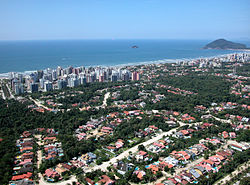
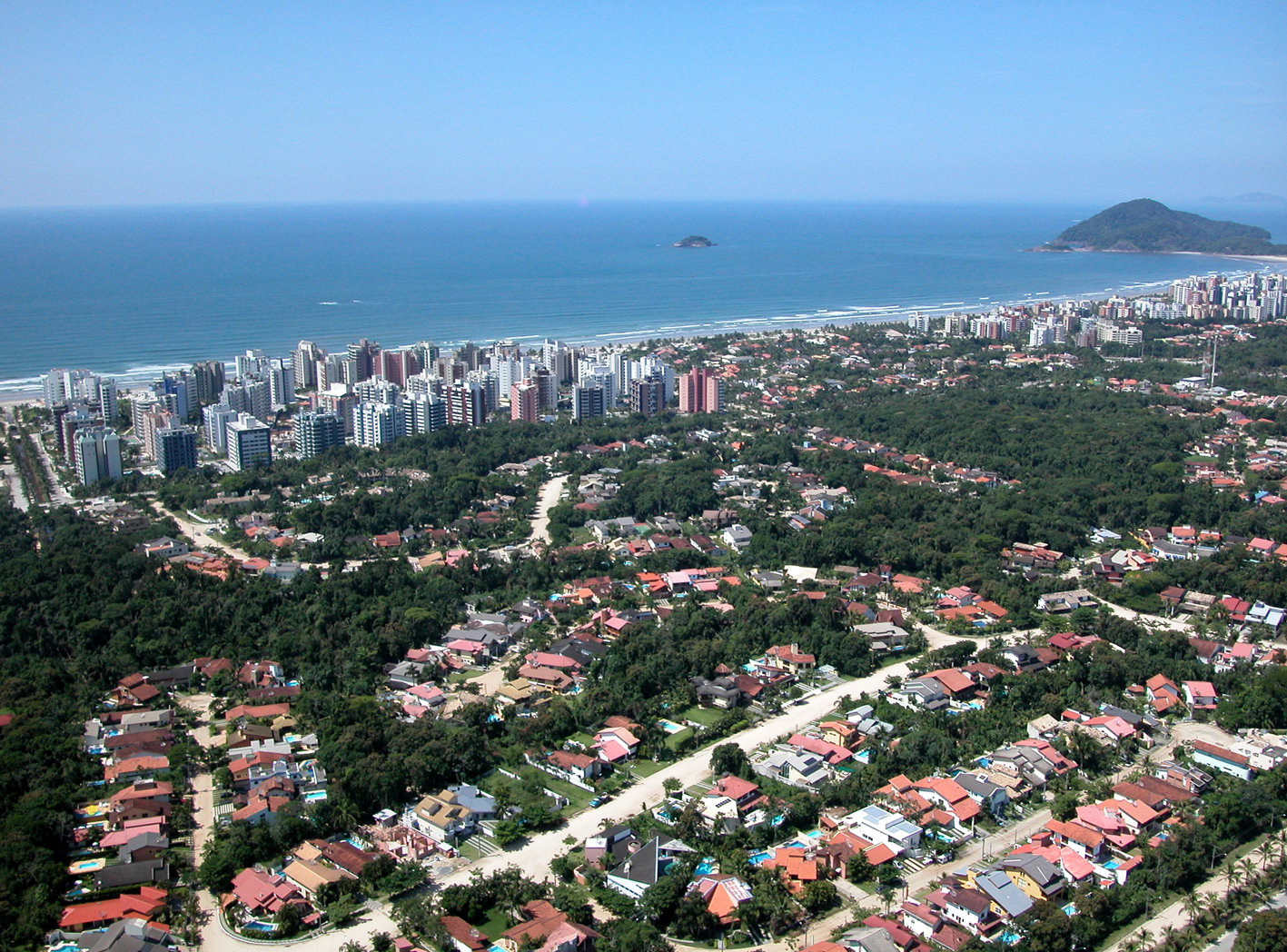
Bertioga is a Brazilian municipality in the state of São Paulo and part of the Baixada Santista Metropolitan Region.[3] Its population is 64,723 (2020 est.) in an area of 490.15 km2.[4] Because it neighbors resort towns, its population fluctuates greatly with the seasons. The more northern parts are densely forested and humanly unpopulated. It was created on 19 May 1991, from a part of Santos.

Key Information

The municipality contains the 9,312 hectares (23,010 acres) Restinga de Bertioga State Park, created in 2010 to protect an area of mangroves, restinga and rainforest.[5] Its limits are Mogi das Cruzes, Biritiba-Mirim and Salesópolis in the north, São Sebastião in the east, Atlantic Ocean to the south with Ilha de Santo Amaro (opposite the city) and Santos in the west.

Media

[edit]

Bertioga was served telecommunications by the Companhia Telefônica Brasileira until 1973, when the Telecomunicações de São Paulo took over.[6] In July 1998, it was acquired by Telefónica, which adopted the Vivo brand in 2012.[7] It now sells and operates cell phones, fixed lines, internet access (fiber optic and 4G) and television reception (satellite and cable).[7]

Historical population
YearPop.±%
200030,039—    
201047,645+58.6%
202264,188+34.7%
Source: [8]

Trivia

[edit]

Bertioga is where Josef Mengele, a Nazi Germany doctor at Auschwitz, drowned in 1979.[9]

See also

[edit]

References

[edit]
[edit]
Revisions and contributorsEdit on WikipediaRead on Wikipedia
from Grokipedia
Bertioga is a coastal in the state of , , situated in the Baixada Santista metropolitan region on the northern litoral of the state. With a population of 64,188 inhabitants according to the 2022 census and an area of 491.546 square kilometers, it features a of 130.58 inhabitants per square kilometer. Renowned for its 33 kilometers of beaches, , , and nautical activities, Bertioga was emancipated as an independent on May 19, 1991, following a plebiscite, after previously being a district of Santos since 1944. Geographically, Bertioga lies within the Atlantic Forest , encompassing diverse ecosystems that support parks with native mammals and promote environmental conservation efforts. The municipality's terrain includes urbanized coastal areas totaling 29.90 square kilometers as of 2019, with its bolstered by as a key pillar, alongside initiatives like local craft and food fairs. Its GDP reached R$ 31,255.51 in 2021, reflecting contributions from 19,708 formal workers in 2022, many engaged in service-oriented sectors. Historically, Bertioga's origins trace back to 1531, when Portuguese explorer Martim Afonso de Sousa established a and initiated construction of Forte São João, the oldest fortress in , completed in phases through 1702 to defend against indigenous Tamoio attacks and French incursions. The site played roles in events like the Tamoio Confederation in 1563 and the founding of Rio de Janeiro in 1565, later supporting 18th-century whaling operations for oil production. Evolving from a in the early , it gained recognition as an estância balneária (beach resort) under state law, emphasizing its appeal for recreational and educational . Today, Bertioga maintains high social indicators, including a 98.4% enrollment rate for children aged 6-14 in 2022 and an rate of 20.18 per 1,000 live births in 2023, underscoring its focus on and . Notable features include the historic Forte São João, now a museum, and attractions like the Praia da Enseada and Guaratuba beaches, which draw visitors for sports, , and biodiversity experiences in the Mata Atlântica. Seasonal population fluctuations occur due to its proximity to major resort areas, enhancing its role as a dynamic coastal destination.

History

Indigenous Peoples and Early European Contact

The coastal region of Bertioga, located in present-day São Paulo state, Brazil, was originally inhabited by Tupi-speaking indigenous groups, primarily the Tupinambá and Tupiniquim tribes, who occupied extensive territories along the Atlantic seaboard during the pre-colonial period. The Tupinambá controlled areas from Cape Frio in Rio de Janeiro northward to approximately Ubatuba in São Paulo, encompassing the Baixada Santista region that includes Bertioga, while the Tupiniquim extended their domain southward from Ubatuba to Cananéia. These groups maintained semi-nomadic lifestyles centered on swidden agriculture, cultivating crops such as cassava and maize, supplemented by fishing, shellfish gathering from coastal mangroves, and hunting in adjacent forests; their societies were organized into villages (aldeias) of 300 to 2,000 people, governed by chiefs (caciques) and emphasizing communal rituals and warfare alliances. A pivotal early European-indigenous encounter in the Bertioga area occurred in 1554, when German soldier , serving as an artilleryman for the at a fort near the Rio Bertioga, was captured by a Tupinambá war party during a raid. In his detailed account, True History of His Captivity (1557), Staden described being taken inland to a Tupinambá village, where he observed daily life, including the preparation of manioc flour, communal feasts, and the ritual practiced on enemies as a form of spiritual vengeance and social prestige; he narrowly escaped execution after nine months by convincing his captors of his non- identity through shared prayers, ultimately being ransomed by a French ship allied with the Tupinambá against the . Staden's narrative, illustrated with woodcuts, provided one of the earliest ethnographic insights into Tupinambá culture, noting their use of bows, poisoned arrows, and body paint, though it also reflected European biases toward portraying indigenous practices as barbaric. Portuguese explorations reached the Bertioga vicinity in the early , beginning with incidental contacts during voyages along the coast but intensifying with Martim Afonso de Sousa's expedition of 1530–1532, which aimed to secure the region against French traders and establish permanent settlements. De Sousa anchored at the Rio Bertioga in late 1531 before proceeding to found the Vila de São Vicente nearby in 1532, the first Portuguese town in , initiating trade in brazilwood and while sparking conflicts with local Tupinambá groups over and captives; these interactions often involved alliances with some indigenous bands against others, but disease introduction and slave raids rapidly decimated populations, reducing coastal Tupi numbers from an estimated 20,000–30,000 in the 1530s to under 5,000 by the 1580s. Archaeological evidence underscores the long-term indigenous presence in Bertioga, with numerous sambaquis—shell mounds accumulated over millennia—attesting to sustained coastal occupations dating back at least 8,000 years before European arrival. Sites in the Baixada Santista, including those near Bertioga and adjacent , reveal layers of mollusk shells, fish bones, tools, and human burials, indicating complex social structures among pre-Tupi groups that transitioned into the historic Tupinambá and ; these middens, some reaching heights of 10–30 meters, served as multifunctional platforms for habitation, refuse disposal, and possibly territorial markers, with confirming continuous use until the colonial era disrupted traditional patterns.

Colonial Period and Fortifications

The Portuguese colonial era in Bertioga marked the establishment of key defensive infrastructure to safeguard the nascent settlements along the coast. In 1532, explorer Martim Afonso de Sousa, under orders from King Dom João III, constructed the initial fortim—a modest wooden outpost—at the mouth of the Bertioga Canal to counter indigenous incursions and secure the Vila de São Vicente from European interlopers, particularly French forces allied with native groups. This structure was destroyed by indigenous attacks in 1537 and rebuilt in 1547 as the Forte São Tiago using stone and , creating a more durable fortress that stands as Brazil's oldest fortification. Further expansions included major in 1710, forming a rectangular polygon, with reforms in 1765 that rebuilt the chapel and renamed it Forte São João da Bertioga, dedicated to São João Batista. Strategically positioned on the western bank of the Bertioga Channel (23°51'18"S, 46°08'04"W), the fort controlled a critical linking Santos Bay to the mainland interior, preventing surprise attacks on the vital and facilitating surveillance of maritime routes. Its architecture adopted a classic colonial design: a rectangular polygonal layout enclosing a terrapleno platform armed with cannons, flanked by guaritas (watchtowers) for sentinels, whitewashed cortina walls for visibility, for troops, and a small dedicated to São João Batista added during 1765 reforms. The fort's military role extended beyond static defense; it served as a staging point for expeditions, including those led by Estácio de Sá in to found Rio de Janeiro, underscoring its broader contributions to Portuguese expansion in southern . Key events highlighted its significance, such as the Confederação dos Tamoios (1554–1567), where it hosted Jesuit negotiations for peace treaties in 1563, and pirate raids in the 16th and 17th centuries that tested its resolve—most notably, English corsair Thomas Cavendish's 1591 assault on Santos, during which the fort's gunners fired ineffectually against the invaders' superior fleet navigating the channel. As a peripheral district within the Captaincy of Santos during the colonial period, Bertioga's economy revolved around subsistence agriculture and coastal fishing, with sesmarias (land grants) allocated for cultivating staples like manioc and maize to supply nearby settlements, while artisanal fishing provided sustenance and limited trade in seafood for the regional market. These activities complemented the fort's operations, as local resources sustained garrisons amid the captaincy's focus on sugar production farther inland. The fort's prominence declined in the as maritime threats from pirates and rivals subsided with strengthened Portuguese naval presence, leading to reduced maintenance; its last active commander was appointed in 1889, and it ceased military operations in 1945 after . By the mid-20th century, it lay in partial ruins, prompting preservation efforts that culminated in a 1958 restoration by the Serviço do Patrimônio Histórico e Artístico Nacional (now IPHAN), which transformed the site into a protected national heritage asset housing the Museu João Ramalho and offering public access to its historical artifacts.

Emancipation and 20th-Century Development

Bertioga's path to municipal began with pro-emancipation movements in and 1979, culminating in a plebiscite on May 19, 1991, where 3,698 of 3,925 voters supported separation from Santos. The legal process advanced through state legislation, officially creating the municipality on December 30, 1991, and designating it an Estância Balneária to emphasize its coastal tourism potential. Initial challenges included establishing independent administrative structures and managing rapid post-independence growth, which strained limited public infrastructure such as and systems, particularly in expanding low-income areas. The first municipal elections occurred on , , electing the inaugural and city council, marking the formal start of . Throughout the , Bertioga experienced significant population growth and , rising from 2,572 residents in 1970 to 11,473 by 1991, fueled by its strategic proximity to and Santos as part of the Baixada Santista metropolitan area. This expansion accelerated after , with annual growth rates reaching 11.21% from 1991 to 2000 and 8.51% from 2000 to 2005, driven by migration (a net saldo migratório of 15,444 between 1991 and 2000) and the appeal of affordable coastal living near major urban centers. manifested through private developments, including loteamentos like Jardim Indaiá in the 1950s and the expansive Riviera de São Lourenço project launched in 1979, which projected capacity for 65,000 inhabitants and transformed coastal areas into residential and vacation zones, though often at the expense of environmental safeguards. A notable incident in Bertioga's modern history occurred on February 7, 1979, when Josef Mengele, the notorious Nazi physician known as the "Angel of Death" for his inhumane experiments at Auschwitz, drowned while swimming at Praia da Enseada under the alias Wolfgang Gerhard. His body was recovered by local police and buried under the false name at Cemitério de Nossa Senhora do Rosário in Embu das Artes, evading detection for years as he had lived reclusively in Brazil since fleeing Europe after World War II. Identification came in May 1985 following intercepted letters by German authorities, prompting Brazilian investigator Romeu Tuma to exhume the remains; forensic analysis by pathologist Daniel Romero Muñoz, later confirmed by DNA in 1992, verified Mengele's identity. This event held profound historical significance as it concluded Mengele's 34-year evasion from justice, symbolizing the eventual accountability for high-profile Nazi fugitives who sought refuge in South America and underscoring Brazil's role in post-war Nazi networks. Post-World War II development in Bertioga accelerated with infrastructure improvements that integrated it into broader regional growth. The inauguration of Rodovia Anchieta's north lanes in 1947 and south lanes in 1953 provided direct highway access from to the coast, facilitating industrial expansion in nearby Cubatão and Santos while enabling easier commuter and leisure travel to Bertioga. This connectivity spurred an early tourism boom starting in the , when elite visitors arrived by boat from Santos, leading to the establishment of the Hotel Lido in 1940 and the founding of the Cia. Urbanística de Bertioga for initial lotting projects. By the 1950s, tourism intensified with the paving of roads to and the development of beachfront neighborhoods like Jardim Indaiá, attracting middle-class families for second homes and weekend escapes amid the region's rising economic prosperity. Further enhancements, such as the 1982 opening of Rodovia Mogi-Bertioga, sustained this momentum into the late , positioning Bertioga as a key balneário destination.

Geography

Location and Topography

Bertioga is situated in the state of , , at geographical coordinates 23°51′00″S 46°08′24″W, with an average elevation of 8 meters above . The encompasses a total land area of 491.546 km², of which about 29.90 km² is urbanized. To the north, Bertioga borders the municipalities of , Biritiba-Mirim, and Salesópolis; to the east, it adjoins São Sebastião; to the west, it meets Santos; and to the south, it fronts the and Ilha de Santo Amaro, an island belonging to the neighboring municipality of . The landscape consists primarily of coastal plains and the steep escarpment of the mountain range along the northern boundary, all within the Atlantic Forest biome. ecosystems thrive along sinuous saltwater channels, notably the Bertioga Canal, which serves as a vital waterway linking Santos Bay to the open . Isolated hills, such as those at Itaguá and da Volta, punctuate the terrain. The Restinga de Bertioga State Park protects key areas of this coastal and forested environment.

Climate and Natural Environment

Bertioga experiences a with average annual temperatures ranging from 18°C to 28°C and persistently high levels. The features a distinct rainy season from to , during which the majority of the approximately 2,523 mm of annual occurs, supporting lush growth while the drier months from April to September see reduced rainfall. The natural environment encompasses remnants of the Atlantic Forest, expansive systems along the coast and estuaries, and characteristic restinga vegetation adapted to sandy soils. These habitats harbor significant , including diverse populations, species in estuarine waters, and numerous endangered animals and plants that thrive in this coastal mosaic. The varied topography further influences local microclimates, enhancing habitat diversity across elevations. The Restinga de Bertioga State Park, created on December 9, 2010, by State Decree No. 56.500 and spanning 9,312 hectares, serves as a critical preserving these ecosystems. It safeguards mangrove forests, restinga formations, and dense lowland ombrophilous forest, home to 44 threatened plant species and 53 bromeliad species—representing one-third of state's total. Fauna includes 117 bird species (37 endemic and 9 threatened), 93 and species (14 threatened), 117 species (with 25 medium-to-large, including endangered jaguars and tapirs), and 69 bat species (6 threatened), alongside fish communities in mangrove-adjacent waters. Conservation initiatives emphasize biodiversity protection through ecological corridor maintenance, control, and provisional administrative restrictions to halt degradation, following extensive public consultations. The park's rich ecological and cultural features, such as ancient sambaquis, offer substantial potential for sustainable visitation. Despite these protections, Bertioga faces environmental challenges from urban expansion encroaching on mangrove ecosystems, leading to and loss of ecological services. Coastal erosion also threatens beaches and restinga areas, exacerbated by development pressures and climate influences.

Demographics

Bertioga's population has exhibited steady growth over the past two decades, reflecting its appeal as a coastal destination within the São Paulo metropolitan region. According to the Brazilian Institute of Geography and Statistics (IBGE), the resident population was recorded at 30,039 in the 2000 census, rising to 47,645 by 2010, 64,188 in the 2022 census, and an estimated 67,436 as of July 2025. This represents an average annual growth rate of approximately 3.24% between 2010 and 2015, the highest in São Paulo state during that period, driven by internal migration and economic opportunities. The population density stood at 130.58 inhabitants per square kilometer in 2022, based on the municipality's total area of 491.546 km², indicating a moderate concentration compared to more urbanized coastal neighbors. Growth has been propelled by migration from the broader metropolis, attracted by Bertioga's natural amenities and proximity to the capital, as well as a substantial seasonal influx from ; during the summer high season, the effective population swells significantly, with around 450,000 visitors expected during the 2023/2024 period, straining local resources but boosting economic activity. Approximately 98% of Bertioga's residents live in urban areas as of the 2010 data, a proportion that has likely persisted given ongoing development, with rural populations comprising less than 2% primarily in peripheral zones. The urban population is concentrated in key neighborhoods such as Centro, which serves as the administrative and commercial hub, and Riviera de São Lourenço, a rapidly developing residential and tourist area along the coastline. This urban-rural divide underscores Bertioga's transition from a sparsely populated to a burgeoning . Historically, population growth remained slow prior to Bertioga's emancipation from Santos in 1991, when it functioned as a rural with limited , recording just 16,707 residents in 1996. Post-emancipation, expansion accelerated due to investments in roads, utilities, and , transforming the area into a viable commuter and destination and fueling a 16.11% annual growth rate in the early .

Socioeconomic and Human Development Indicators

Bertioga's (HDI) in 2010 stood at 0.730, classifying it in the medium to high development category according to the Development Programme's criteria. This value reflected balanced progress across longevity, , and income dimensions, with the overall HDI marking a 15.14% increase from 0.634 in 2000. Improvements since 2010 have been noted in and indicators, driven by expanded access to schooling and healthcare services, though updated municipal HDI figures remain unavailable beyond the 2010 baseline. Income distribution in Bertioga remains uneven, with 31.4% of the population having a nominal monthly per capita income of up to half the minimum wage in 2010. By 2022, the average monthly salary for formal workers had risen to 2.7 minimum wages, indicating moderate gains in formal employment remuneration amid broader economic recovery. The ethnic composition of Bertioga's population according to the 2022 census is predominantly mixed, with pardos (mixed-race) at 45.9% and brancos (white) at 43.3% forming the majority. Pretos (Black) represent 9.6%, amarelos (Asian) 0.7%, and small populations of indigenous peoples at 0.5% (314 individuals), primarily in the local aldeia, and Afro-Brazilian communities contribute to the diversity, though they represent minor shares overall. Poverty and inequality in Bertioga have shown a downward trend since 2000, with the Gini index decreasing from 0.50 to 0.48 by 2010, reflecting reduced income concentration. The proportion of extremely poor residents fell from 2.25% in 2000 to 1.44% in 2010, largely attributable to job creation in the sector. However, seasonal patterns in tourism continue to exacerbate income volatility and inequality for many households.

Economy

Primary and Industrial Sectors

Bertioga's primary economic sectors revolve around traditional and small-scale , which form the foundational extractive activities supporting local communities and markets. The is predominantly artisanal and coastal, focusing on such as (including seven-barred and white varieties), (weakfish), bagre (), and robalo (snook), captured through methods like , gillnets, and beach seining. Between 2018 and 2022, the recorded 10,842 landings, with 99.9% attributed to artisanal fishing and only 0.1% to industrial operations, underscoring the dominance of small-scale, family-based production. Annual catches have fluctuated, reaching 234 tons in 2010 but declining to 110 tons by 2015, representing about 2% of state's total production as of 2018-2022; Bertioga ranked seventh in the state for landings in 2017. Local cooperatives, such as the Colônia de Pescadores Z-23, play a key role in organizing 357 registered members as of 2014, facilitating and sustainable practices amid environmental regulations in areas like the Parque Estadual Restinga de Bertioga. These activities supply regional markets and complement through fresh offerings. Agriculture in Bertioga remains limited and oriented toward subsistence and local consumption, confined to rural pockets amid the Atlantic Forest biome and urban expansion. Small-scale farming covered approximately 51.2 hectares as of 2007, including 15 hectares of perennial crops, 0.5 hectares of temporary crops, and 20 hectares of pastures, with notable production of native products like pupunha (peach palm hearts) on 3 hectares. Efforts emphasize sustainable cultivation of Atlantic Forest fruits and vegetables, such as cambuci (a native berry used in beverages) and other biodiversity-linked items, integrated with conservation initiatives to preserve the biome's remnants. These operations support family livelihoods rather than large-scale export, aligning with municipal plans for environmental recovery, and contribute 0.4% to the municipal GDP. Industrial activities are minor and constrained by stringent environmental protections in Bertioga's coastal and forested areas, preventing development. The sector contributes 7.3% to the municipal GDP (R$ 0.153 billion in recent estimates) but accounts for only 1.64% of formal as of 2010. is limited to light operations, including firms that handle local and agricultural products for regional distribution, as well as small-scale production in electrical materials and communications . No major industrial poles exist, with activities regulated to mitigate impacts on the Restinga and . Formal employment in primary sectors (agriculture, fishing, forestry, and aquaculture) is low, comprising about 0.1% of total jobs in 2010 and 2015, reflecting high informality in these traditional pursuits. With 19,708 formal workers overall in 2022, this equates to roughly 20 individuals in extractive roles, though informal participation likely sustains more households; agriculture alone represents 0.4% of GDP value added. These sectors provide essential local economic stability, briefly intersecting with tourism through ecotourism and fresh produce markets.

Services, Commerce, and Tourism

Bertioga's economy is predominantly driven by the services sector, which accounts for approximately 68.6% of the value added to the gross domestic product (GDP). This sector encompasses a range of activities, including retail commerce, hospitality, and telecommunications, supporting the municipality's role as a key destination in the Baixada Santista region. Retail commerce is exemplified by facilities like the Riviera Shopping, a major center with over 50 stores offering diverse options in fashion, electronics, and dining, catering to both locals and seasonal visitors. Telecommunications infrastructure has seen expansions, such as those by Vivo in the broader São Paulo state during the early 2010s, enhancing connectivity that bolsters service delivery. Tourism plays a pivotal role within the services , attracting hundreds of thousands of visitors annually, with expectations of around 450,000 during peak summer seasons as of 2023/2024, through resorts, beaches, and related services that generate substantial revenue. This influx contributes significantly to local commerce and supports seasonal employment in hotels and eateries, with the tertiary sector historically comprising up to 87% of in earlier assessments. The municipality's GDP stood at R31,255.51in2021,reflectingthescaleofserviceorientedgrowth,whiletotalmunicipalrevenuesreachedR 31,255.51 in 2021, reflecting the scale of service-oriented growth, while total municipal revenues reached R 1.03 billion in 2024, underscoring the financial foundation provided by these activities. provides traditional supplementary support to the but remains secondary to services. In 2024, Bertioga achieved category "A" status in the Brazilian , highlighting its growing national prominence and ongoing investments in and . Despite these strengths, Bertioga faces challenges from over-reliance on , which leads to economic volatility during off-seasons and a prevalence of informal jobs in and retail, affecting stability. Efforts to diversify services continue, but seasonal peaks exacerbate informal labor dynamics, with many workers in temporary roles tied to visitor flows.

Government and Infrastructure

Municipal Administration

Bertioga's municipal government operates under a mayor-council system, with the executive branch led by Mayor Marcelo Vilares of the União Brasil party, who assumed office on January 1, 2025, following his election in October 2024. The legislative branch consists of the Câmara Municipal de Bertioga, comprising 11 vereadores elected for a four-year term from 2025 to 2028, responsible for enacting local laws, overseeing the executive, and representing community interests. The administration is organized into 14 secretarias, including dedicated units for Education under Secretary Rubens Mandetta, Health led by Secretary Fabiana Paviani, and Environment headed by Secretary Fernando Poyatos, which coordinate policies across social, infrastructural, and environmental domains. Since its emancipation as a in 1991, Bertioga's has prioritized development through initiatives like the Plano Diretor de Turismo (PDTUR), approved in 2023, which promotes sustainable , , and nautical activities while integrating urban growth with natural preservation. Environmental conservation efforts emphasize park management and protection, exemplified by the 2024 Plano Municipal de Conservação e Recuperação da Mata Atlântica, which outlines strategies for restoring areas and mitigating urban expansion impacts. policies focus on balanced development, including zoning regulations to protect coastal ecosystems and support residential and commercial expansion without compromising ecological integrity. The municipal budget for , outlined in the Lei Orçamentária Anual (LOA), allocates resources for infrastructure improvements and social programs, with R$ 14.5 million designated for emendas impositivas to fund priority community projects in , , and . Fiscal management includes the REFIS 2025 program, offering up to 100% discounts on fines and interest for debt recovery to enhance revenue for public services, which continued through December . Bertioga collaborates with the Baixada Santista region through shared initiatives on , leveraging regional partnerships to address common challenges like and economic integration. Local elections reflect a multiparty landscape with bipartisan influences, as seen in the 2024 contest where candidates from União Brasil, PL, and PSD secured majorities in both executive and legislative roles. Political discourse emphasizes sustainable growth, with the current administration highlighting and as pillars for long-term prosperity, evidenced by approval ratings reaching 76% in early 2025 surveys focusing on progress in and social welfare, though a September 2025 poll indicated 56.4%.

Transportation and Public Services

Bertioga's transportation infrastructure primarily relies on road networks for connectivity to major urban centers. The municipality is accessible via the Rodovia Anchieta (SP-150) and Rodovia Padre Manoel da Nóbrega (SP-055), which link it directly to , approximately 120 km away, with typical travel times of around 2 hours by car depending on traffic conditions. A service facilitates crossings to Santos across the Santos estuary, taking about 55 minutes by car and providing essential access to the neighboring port city. Local public transportation is managed by Viação Bertioga under the City+ system, featuring multiple bus lines such as 1003, 1004, and 1005 that serve urban and coastal neighborhoods, with real-time tracking available via the Cittamobi app. Bertioga lacks a major airport, with residents and visitors relying on São Paulo's Congonhas (CGH) or (GRU) airports, located roughly 58-60 km inland. Public services in Bertioga are delivered through state and municipal partnerships, ensuring essential utilities and social infrastructure. and are handled by the Companhia de Saneamento Básico do Estado de (Sabesp), which has operated in the area since 1975 and provides near-universal coverage for potable water, though sewage collection and treatment reaches about 68.81% of generated volume. Electricity distribution falls under Neoenergia , which maintains the grid and has implemented technologies like self-healing networks to minimize outages in this coastal region. Health services operate through the (SUS), with multiple facilities including a municipal hospital and several Unidades Básicas de Saúde (UBS) offering , vaccinations, and diagnostics; the rate stood at 20.18 per 1,000 live births in 2023, reflecting ongoing improvements in maternal and child health. Education infrastructure supports fundamental schooling with strong performance metrics. In 2023, the municipality recorded approximately 10,382 enrollments in fundamental across public schools, contributing to an Índice de Desenvolvimento da Educação Básica (IDEB) score of 6.3 for initial years (1st to 5th grade), surpassing state averages and highlighting effective local management. Utilities coverage is robust for and , but faces challenges in coastal zones due to seasonal surges that increase solid waste generation, straining collection and disposal systems during peak periods. Ongoing infrastructure developments aim to enhance accessibility for . Future projects include expansions along the Rodovia Padre Manoel da Nóbrega (SP-055), such as duplications and marginal roads from Bertioga to Santos, part of a R$4.3 billion state initiative to improve traffic flow and support coastal economic growth.

Culture and Tourism

Cultural Heritage and Traditions

Bertioga's cultural heritage is deeply rooted in the ongoing presence of the Guarani Mbya and Nhandeva communities, primarily within the Terra Indígena Ribeirão Silveira, a homologated indigenous spanning approximately 948 hectares along the city's coastal region. This reserve hosts around 457 to 550 individuals across 150 families, who maintain traditional practices central to their identity, including agriculture, fishing, hunting, and artisan crafts such as basketry and wood carvings derived from local forest materials. These communities also preserve performative traditions like communal dances and songs, which serve as expressions of spiritual connection to the and ancestors, often shared through cultural exchanges that highlight their resilient way of life amid environmental pressures. Colonial influences from settlers have shaped Bertioga's traditions, particularly in its caiçara cuisine, which blends European techniques with indigenous and African elements to create seafood-based dishes emblematic of the region's coastal history. Local specialties include peixada, a hearty simmered with tomatoes, onions, peppers, and herbs, reflecting Portuguese seafaring culinary adaptations to abundant Atlantic marine resources. Similarly, moqueca variations incorporate and , honoring the colonial legacy while emphasizing fresh catches like mullet and snapper, prepared in communal feasts that echo historical settlement patterns. In contemporary times, Bertioga's modern thrives through annual events that celebrate its maritime heritage and communal spirit. The Festa da Tainha, held each year, honors the seasonal mullet migration with , dances, and shared meals, drawing residents to participate in rituals that underscore the city's fishing roots. features vibrant beach parades with rhythms and costumed processions along the shoreline, fostering a lively fusion of national festivities with local flavors. Complementing these, the SESC Bertioga cultural center, established in as part of a broader social initiative, has offered programs in theater, , and since the late , evolving to include workshops and performances that promote artistic expression for diverse audiences. Preservation efforts in Bertioga focus on safeguarding both tangible and intangible heritage, with the Forte de São João—briefly noted as a 16th-century colonial fortress now functioning as a historical —undergoing ongoing restoration to maintain its structural integrity and educational role. Local initiatives, including municipal actions for document regularization and social program access, support advocacy, enabling Guarani communities to assert land claims and cultural continuity against challenges. These endeavors, often in collaboration with state agencies, ensure the transmission of traditions to future generations.

Major Attractions and Activities

Bertioga's coastline, stretching approximately 33 kilometers, features several distinctive beaches that draw visitors for their varied landscapes and recreational opportunities. Riviera de São Lourenço, a stretch about 2 kilometers long, is renowned for its calm waters, golden sands, and proximity to resorts, restaurants, and shops, making it ideal for , sunbathing, and . Praia da Enseada, located near the city center, offers an urban vibe with consistent waves suitable for , alongside calm sections for and amid its rustic surroundings. Further along, the secluded Praia de Guaratuba provides expansive sands and tranquility, perfect for leisurely walks and relaxation away from crowds. For a more adventurous experience, Praia de Itaguaré stands out as a wild, less-developed beach accessible via hiking trails, where visitors can enjoy river views, , and natural immersion near the Itaguaré River. The region's natural sites emphasize Bertioga's rich within the Atlantic Forest ecosystem. Restinga de Bertioga encompasses trails such as Trilha d’Água and Trilha do Guaratuba, allowing hikers to explore , restinga vegetation, and diverse wildlife including birds and small mammals. Mangrove boat tours along the Bertioga Canal offer guided excursions through interconnected rivers and estuaries, where participants can observe , flamingos, and the intricate root systems supporting local ecosystems. Hiking in the nearby , part of a larger state park system, provides challenging paths like Trilha Garganta do Gigante, rewarding trekkers with panoramic views of the coastline and forested mountains. Historical attractions center on Bertioga's colonial past, particularly the Forte de São João, constructed in 1532 as a defensive outpost against invasions. Guided tours of the fort reveal its restored walls, cannons, and barracks, while on-site museum exhibits detail its role in Portuguese colonial defense strategies and maritime history. These visits provide insight into the area's early European settlement and interactions with indigenous populations. A range of activities caters to outdoor enthusiasts, including lessons and rentals at beaches like Praia da Enseada and Riviera de São Lourenço. Kayaking is popular along calmer waters near São Lourenço Beach or the Bertioga Canal, often combined with wildlife spotting. Fishing charters depart from local marinas for inshore and offshore trips targeting species like snook in the region's rivers and coastal waters. Visits to the nearby Guarani Mbyá indigenous village in Rio Silveiras allow respectful cultural exchanges, where over 300 residents share aspects of their daily life and traditions through guided tours. From June to October, seasonal whale-watching tours from Bertioga's shores enable sightings of migrating humpback whales during their breeding season along the coast.

References

Add your contribution
Related Hubs
User Avatar
No comments yet.