Hubbry Logo
Bill MarriottBill MarriottMain
Open search
Bill Marriott
Community hub
Bill Marriott
logo
8 pages, 0 posts
0 subscribers
Be the first to start a discussion here.
Bill Marriott
Bill Marriott
from Wikipedia

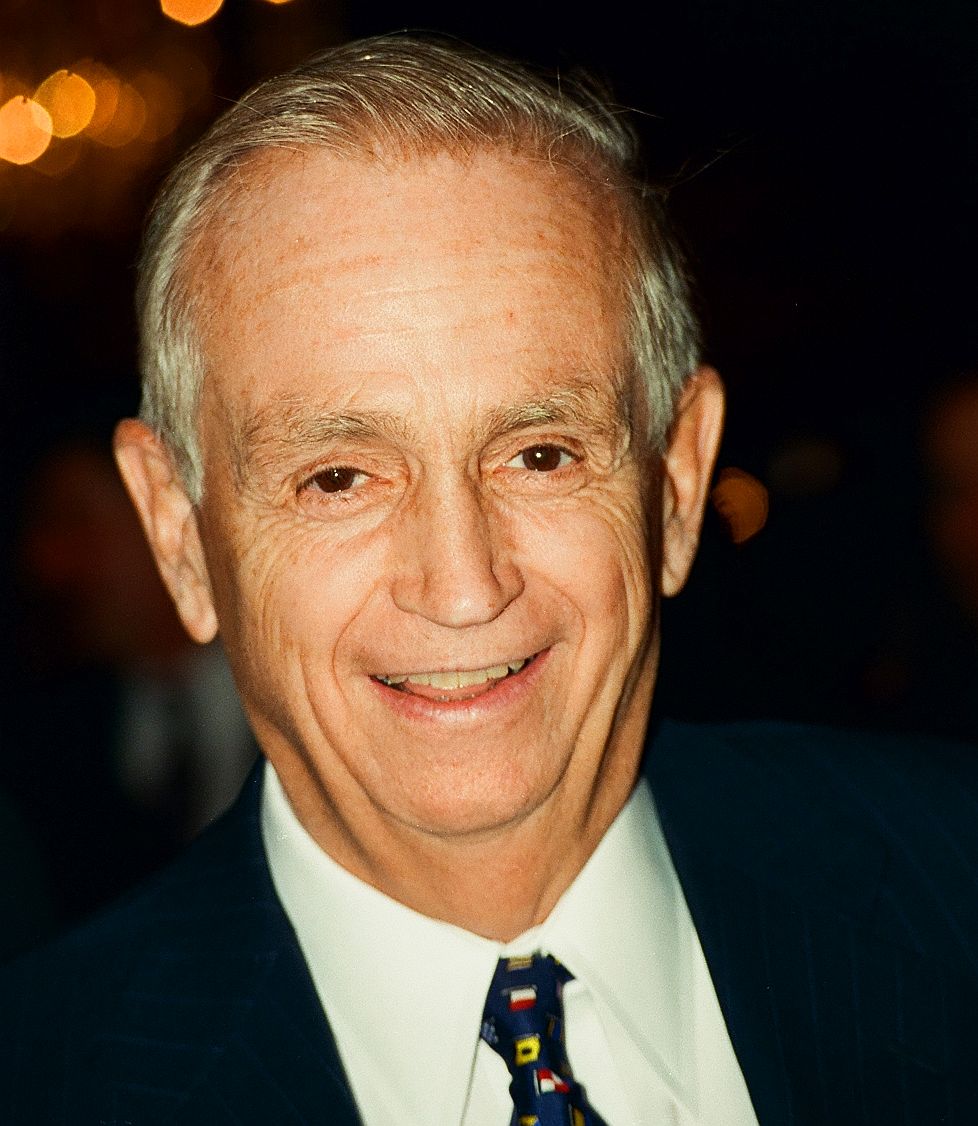
John Willard "Bill" Marriott Jr. (born March 25, 1932) is an American billionaire businessman who is the executive chairman of Marriott International, of which he owns 11.28%.[1]

Key Information

Early life and education

[edit]

Marriott was born in Washington, D.C., the son of Alice Marriott and J. Willard Marriott, the founder of Marriott Corporation. He attended St. Albans School in Washington, D.C.[2] He is also an Eagle Scout and recipient of the Distinguished Eagle Scout Award.[3]

In 1954, Marriott earned a BS in finance from the University of Utah, where he was a member of the Sigma Chi fraternity. There, he met his wife, the daughter of a professor.[4]

Upon graduating, Marriott went to a Navy training school in Georgia.[4] From June 1954 to 1956, he served on the USS Randolph aircraft carrier as a wardroom mess officer in the Navy Supply Corps.[2][5]

In June 1955, Marriott was married at the Salt Lake Temple in Salt Lake City.[4]

Career

[edit]

Marriott joined Marriott Corporation in 1956. He pushed his father, who was wary of taking on debt after experiencing the Great Depression, to expand from the restaurant business into the hotel business.[4]

Marriott was elected executive vice president and member of the board of directors in January 1964,[4] president of the company in November 1964, chief executive officer in 1972, and chairman of the board in 1985. He introduced the practice of revenue management to the hotel industry.[6]

Effective March 31, 2012, Marriott assumed the role of executive chairman of the company and relinquished the role of chief executive officer to Arne Sorenson.[7]

Awards

[edit]

In 2001, Marriott was recognized as The Industry Leader of The Year by Broad College of Business, Michigan State University.[8]

On May 4, 2006, Marriott received an honorary doctorate of humanities from Weber State University and delivered the commencement speech.[9]

On April 2, 2008, Marriott received the International Association of Business Communicators' Excellence in Communication Leadership Award.[10]

On June 2, 2009, Marriott received the Icon of the Industry award from Cornell University School of Hotel Administration.[11]

In 2010, Marriott received the Foreign Language Advocacy Award from the Northeast Conference on the Teaching of Foreign Languages in recognition of programs that provided language instruction to both non-English speaking and English speaking employees.[12]

On November 19, 2016, Ernst & Young named Marriott the National/Overall Entrepreneur of the Year.[13]

In 2018, Marriott received the Distinguished Service Award by the National Maritime Historical Society.[14]

Personal life

[edit]

Marriott has been married to Donna Garff for seventy years and they have four children—all of whom work for Marriott International—fifteen grandchildren, and twenty great-grandchildren.[15] They raised their kids in a brick ranch-style house in Bethesda, Maryland.[16]

In an episode of 60 Minutes aired on April 7, 1996, Marriott was interviewed by Mike Wallace.[17]

In 2018, Bill's son John Marriott III sued both him and his uncle, Richard Marriott, for allegedly cutting John out of the family fortune, in part for divorcing his wife without approval of his father. The lawsuit was settled out of court.[16]

Religion

[edit]

Marriott is an active member of the Church of Jesus Christ of Latter-day Saints. Since 1978, the Marriotts have been supporters of the annual Festival of Lights on the grounds of the Washington D.C. Temple.[18] In 1997, Marriott was called by the church to be an area authority seventy and member of the Fifth Quorum of the Seventy.[19] This was split in 2004 and Marriott joined the newly created Sixth Quorum of the Seventy, serving until his release on October 1, 2011.[20][21]

Boards

[edit]

Marriott is actively involved in various boards and councils including, the U.S. Travel and Tourism Promotional Advisory Board, the executive committee of the World Travel and Tourism Council, the National Business Council, the board of trustees of the National Urban League, a director of the National Geographic Society, and a director of the Naval Academy Endowment Trust. He serves as chairman of the President's Export Council, a group that advises the president on matters relating to export trade, and serves as chairman of the Leadership Council of the Laura Bush Foundation for America's Libraries.

Bibliography

[edit]

References

[edit]
Revisions and contributorsEdit on WikipediaRead on Wikipedia
from Grokipedia
J. Willard "Bill" Marriott Jr. (born March 25, 1932) is an American businessman who serves as Chairman Emeritus of , Inc., having led the company for more than 60 years and transforming it from a chain of 45 restaurants into the world's largest hotel operator with approximately 8,000 properties across 30 brands in 139 countries and territories. Born in Washington, D.C., and educated at St. Albans School before earning a bachelor's degree in banking and finance from the University of Utah, Marriott joined the family business full-time in 1956, following early involvement and service in the U.S. Navy. He ascended to president in 1964, chief executive officer in 1972, and chairman in 1985, overseeing pivotal shifts such as the pivot to hotel management and franchising models in the late 1970s, which accelerated expansion without heavy capital investment in ownership. Under his leadership, the company executed a 1993 spin-off separating lodging operations (Marriott International) from real estate holdings (Host Marriott, now Host Hotels & Resorts), enabling focused growth in branded management. Marriott's tenure emphasized associate empowerment, customer service innovation, and strategic acquisitions, including the 2016 merger with Starwood Hotels & Resorts that solidified Marriott International's market dominance. He retired as executive chairman in May 2022, passing leadership to his son David Marriott, while continuing philanthropic efforts through the J. Willard and Alice S. Marriott Foundation, such as a 2025 $25 million donation to the for hospitality education. Married to Donna Garff Marriott since 1958, he has four children, including successors in the business, and prioritizes family values rooted in his Mormon upbringing.

Early Life

Family Background and Upbringing

J. Willard Marriott Jr., commonly known as Bill Marriott, was born on March 25, 1932, in , to Sr. and Alice Sheets Marriott. His parents, both originating from families with deep ties to The Church of Jesus Christ of Latter-day Saints, had launched their entrepreneurial venture in 1927 with a stand in Northwest Washington, which grew into the Hot Shoppes restaurant chain. The senior Marriott, a hands-on manager influenced by conservative principles, and his wife, a civic leader who supported the business's expansion, instilled values of discipline and self-reliance rooted in their Mormon heritage. Marriott grew up in a devout Mormon household in Wesley Heights, , initially residing in the former home of U.S. Senator , and later in , including a period on a family farm. He had a younger brother, , born in 1939, who later contributed to the family's restaurant operations. From infancy, the family prioritized and , with young Marriott tasked with shining his father's shoes weekly for services—a chore that emphasized perfectionism if not done to exacting standards. His upbringing immersed him early in the , fostering a strong ; by age 14 in 1946, he began menial tasks at Hot Shoppes, including stapling invoices, cooking hamburgers, washing dishes, and mopping floors during school hours. These experiences, combined with his parents' emphasis on operational details, shaped his foundational understanding of and .

Education and Early Influences

J. Willard "Bill" Marriott Jr. attended St. Albans School, a preparatory institution in , during his high school years. He subsequently enrolled at the , where he earned a degree in banking and finance in 1954. Following graduation, Marriott served as a naval officer in the United States Navy, an experience that instilled discipline and leadership skills later applied to business operations. Marriott's early influences were profoundly shaped by his immersion in the family enterprise from adolescence. Born on March 25, 1932, in , as the son of Sr.—founder of the Hot Shoppes restaurant chain—and Alice Sheets Marriott, he grew up observing and participating in the hospitality business amid a devout Mormon family environment that emphasized hard work and During high school and college, he held various operational roles at family outlets, including counter service and management tasks at Hot Shoppes locations, fostering a hands-on understanding of customer service and operational efficiency. These formative experiences, coupled with paternal guidance on principles such as minimizing and prioritizing reliable, presentable employees, cultivated Marriott's pragmatic approach to , prioritizing execution over . His upbringing in a self-made entrepreneurial household, where siblings shared chores like lawn mowing and car washing alongside duties, reinforced values of and incremental growth, setting the foundation for his later emphasis on employee empowerment and service excellence in .

Career

Entry into the Family Business

After completing his degree in banking and finance from the in 1954, J. Willard "Bill" Marriott Jr. joined the family-owned full-time in 1956 as a management trainee. The company, founded by his parents Sr. and Alice Sheets Marriott in 1927 as a stand, had by then expanded into restaurants and its first foray into lodging with the Twin Bridges Motor Hotel under construction in Arlington, . Marriott Jr. had gained early exposure to the operations through teenage jobs, including stapling invoices in the accounting department at age 14 and washing dishes at the family's Hot Shoppes restaurants during high school. These roles instilled foundational knowledge of back-of-house functions, aligning with the company's emphasis on hands-on . Within eight months of his full-time entry, he assumed oversight of the Twin Bridges Motor Hotel, which opened in 1957 as Marriott's inaugural property, marking his initial leadership in the hospitality segment. This transition reflected the senior Marriott's strategy of grooming family successors through operational immersion, prioritizing practical experience over external hires for core expansion decisions. By managing the hotel's launch, Marriott Jr. contributed to early innovations like centralized purchasing and employee training protocols that supported scalable growth amid travel demand.

Ascension to CEO and Key Expansions

In 1972, J. Willard Marriott Jr., commonly known as Bill Marriott, was appointed Chief Executive Officer of , succeeding his father J. Willard Marriott Sr. as the primary leader of the company. He had previously served as president since 1964, during which he oversaw the initial buildup of the company's division following its entry into lodging in 1957. This ascension marked a shift toward intensified focus on over the firm's original root beer stand and operations, with Marriott Jr. emphasizing scalable growth amid rising demand for and in the U.S. . Under Marriott Jr.'s CEO tenure, which lasted until 2012, the company executed key expansions in midscale and extended-stay hotel brands to capture diverse market segments. In 1983, Marriott launched the brand, designed for cost-conscious business travelers with compact rooms and on-site amenities, rapidly growing to become a cornerstone of the portfolio. This was followed by the 1987 acquisition of Residence Inn for $60 million, introducing extended-stay properties tailored for longer-term guests such as relocating professionals. In 1993, the Fairfield Inn brand debuted as an economy option, further broadening accessibility while maintaining operational efficiencies through standardized designs. Marriott Jr. also drove luxury and international advancements through strategic acquisitions and market entries. In 1995, the company acquired a 50% stake in The Ritz-Carlton Hotel Company for $200 million, bolstering its high-end offerings, and opened its first European property in . Subsequent moves included the 1997 merger with Renaissance Hotel Group and a 49% purchase of for $200 million, enhancing global brand diversity. By 2002, Marriott secured full ownership of Ritz-Carlton for $450 million, and in 2006, it entered the with its inaugural hotel, supporting broader overseas pipeline development. These initiatives transformed Marriott from a primarily domestic operator into a multinational powerhouse, with hotel room count expanding from around 45,000 in the early 1970s to over 300,000 by the end of his CEO term.

Global Growth and Strategic Decisions

Under J. W. Marriott Jr.'s leadership as chief executive from 1972 to 2012, prioritized international expansion to diversify beyond , entering new markets through owned, managed, and later franchised properties. A pivotal strategic shift occurred in the late , moving away from heavy investment in toward a - and franchise-focused model, which minimized capital requirements and enabled scalable growth by earning fees from operating third-party-owned hotels. This asset-light approach addressed the financial strains of real estate amid economic challenges like the and , allowing reinvestment in brand development and global outreach. The 1993 corporate restructuring represented a decision, spinning off the hotel management operations into the independent while separating real estate assets into Host Marriott Corporation (later ). This separation freed from ownership burdens, emphasizing contracts for managed and franchised hotels, which propelled international signings and openings. Post-split, the company accelerated entries into emerging regions, leveraging franchise partnerships with local developers to mitigate risks in unfamiliar regulatory and cultural environments. By focusing on standardized service protocols adaptable to local tastes—such as options in the —the strategy supported organic growth without diluting core operational controls. Early global footholds under Marriott Jr. included the 1975 opening of the Marriott Hotel, marking the brand's European debut and first property outside . Expansion into the followed with the 1980 Riyadh Marriott and 1981 Marriott, the latter serving as the entry into . Asia saw its first Marriott in 1989 with the JW Marriott , amid recognition of the region's rising travel demand. The 1997 acquisition of Hotel Group added 36 upscale properties, many international, bolstering presence in and . These moves, combined with the franchise model, drove the portfolio from approximately 100 hotels in the early 1980s to nearly 3,700 in over 70 countries by 2011. This era's decisions emphasized adaptability, such as prioritizing high-growth markets like and the over saturated domestic ones, while maintaining quality through associate training programs tailored for international operations. The resulting global footprint positioned as a leader in managed , with international properties comprising a growing share of revenue by the early 2000s.

Retirement and Succession

J. Willard "Bill" Marriott Jr. served as of for 40 years, from 1972 until stepping down on March 31, 2012, at which point he assumed the role of executive chairman while Arne Sorenson succeeded him as CEO. This transition marked a partial succession in operational , allowing Marriott to retain oversight of strategic direction amid the company's expansion to over 3,700 properties globally by that time. On February 14, 2022, Marriott announced his retirement as executive chairman and chairman of the board, effective May 2022, after more than 60 years with the family-founded enterprise. He did not seek reelection to the board at the annual meeting and transitioned to chairman , a non-executive advisory position. Succession passed to his son, David S. Marriott, who assumed the executive chairman role, ensuring continuity of family involvement in following the founder's in 1985 and Bill Marriott's long tenure. This move aligned with Marriott International's structure as a publicly traded since 1999, balancing professional management under Sorenson (who served as CEO until his in 2021) with familial stewardship. The retirement concluded Bill Marriott's direct influence on a that grew from a root beer stand in 1927 to a giant with annual revenues exceeding $13 billion by 2021, emphasizing merit-based promotions and associate-focused policies in the handover process. David Marriott, previously lead director, brought experience from board service since 1997 and involvement in , facilitating a smooth shift without reported disruptions to ongoing strategies like and enhancements.

Leadership and Business Philosophy

Core Principles and the "Marriott Way"

The "Marriott Way" represents the foundational philosophy developed and championed by J. Willard "Bill" Marriott Jr. during his tenure as CEO and executive chairman of , emphasizing a people-centric approach to that prioritizes employee to deliver superior guest experiences. This philosophy, rooted in the company's origins under his father J. Willard Marriott Sr., evolved under Bill Marriott's leadership to formalize five core values that guided strategic decisions, operational consistency, and cultural cohesion across a rapidly expanding global enterprise. By 1997, when Marriott co-authored The Spirit to Serve: Marriott's Way, these principles were articulated as essential to sustaining growth from a modest U.S.-based chain to an international powerhouse, with the company operating over 1,900 properties by the time of his CEO retirement in 2002. Central to the "Marriott Way" is the principle of put people first, which posits that investing in associates—through profit-sharing (initiated in ), comprehensive training, and recognition programs—enables them to prioritize guest satisfaction, thereby driving repeat business and profitability. Marriott reinforced this by advocating hands-on where managers know employees by name and address concerns proactively, fostering loyalty and reducing turnover in a labor-intensive industry. Complementing this is pursue excellence, demanding relentless in service delivery, facility maintenance, and , such as the development of targeted brands like in 1983 to meet diverse market segments without diluting quality standards. Further principles include embrace change, which encouraged adaptive strategies like international expansion into over 75 countries by the early 2000s while preserving operational uniformity through standardized systems; act with integrity, upholding ethical conduct in dealings with stakeholders to build long-term trust; and serve our world, integrating corporate responsibility such as community involvement and sustainable practices into business operations. These values, unchanged since their formalization, have been credited with Marriott International's resilience, evidenced by its ranking among Fortune's "100 Best Companies to Work For" multiple times during Marriott's , though their efficacy relies on consistent execution amid competitive pressures in .

Innovations in Hospitality Management

Under J. Willard "Bill" Marriott Jr.'s as CEO from 1972 to 2012, transitioned from a primarily ownership-based model to an asset-light strategy emphasizing and , initiated in the late . This shift enabled rapid expansion without heavy capital investment in , growing the company from fewer than 100 hotels in the early to over 1,700 properties worldwide by 2012. In 1993, Marriott further innovated by spinning off hotel ownership into Host Marriott Corporation, while retaining management operations under , a structure that optimized financial flexibility and fueled subsequent growth. Marriott pioneered brand segmentation to target diverse market segments, launching in 1983 as a midscale brand tailored for business travelers with efficient layouts, atrium designs, and streamlined amenities that reduced operational costs while enhancing guest convenience. This model revolutionized limited-service hotels by prioritizing functionality over luxury, achieving rapid success and inspiring industry-wide adoption of segmented branding. Subsequent introductions included Residence Inn in 1987 for extended-stay travelers, offering apartment-style suites with kitchens, and Fairfield Inn that same year for budget-conscious guests seeking reliable basics. In 1984, Marriott entered the timeshare sector with the launch of Marriott Vacation Club International, one of the earliest major forays by a chain into vacation ownership, providing owners with flexible points-based access to resorts and foreshadowing the industry's growth into a multi-billion-dollar market. Complementing these product innovations, the company debuted the Marriott Rewards in 1983, rewarding frequent guests with points redeemable for stays, which boosted repeat business and data-driven personalization. Marriott also maintained a dedicated 10,000-square-foot innovation lab at headquarters to prototype room designs and layouts, discarding outdated elements like flowered drapes in favor of contemporary, guest-focused aesthetics. These efforts collectively positioned Marriott as a leader in adapting to evolving traveler needs and economic realities.

Employee Relations and Organizational Culture

Under J. Willard "Bill" Marriott Jr.'s leadership as CEO from 1964 to 2005, developed a corporate culture centered on the "Marriott Way," a that prioritized associate satisfaction as the foundation for excellence. Marriott articulated that "the way we treat our associates determines how they treat our customers," emphasizing competitive compensation, , and a supportive work environment over mere financial incentives. This approach stemmed from first-hand observations during his early career, where he noted that empowered employees exhibited greater initiative and loyalty, directly correlating with operational efficiency in labor-intensive settings. Key practices included hands-on management, where Marriott personally engaged with frontline staff through regular property visits and open-door policies, fostering to address grievances promptly. The company invested in associate training programs and benefits such as initiatives, which Marriott credited for building a sense of ownership among the workforce, growing from a few thousand employees in the 1960s to over 150,000 by the early 2000s. Unlike industry norms favoring hierarchical control, this model encouraged autonomy, with metrics showing associate retention rates around 18%—significantly below the hospitality sector average of 50-70% during his tenure—attributable to reduced voluntary exits from perceived value and stability. Organizational culture under Marriott reinforced mutual respect, with principles like "put people first" integrated into hiring, promotions, and performance evaluations, yielding measurable gains in and guest satisfaction scores. He advocated for ethical treatment without union dependency, arguing that genuine care preempted labor disputes by addressing root causes like scheduling flexibility and career progression, though this drew scrutiny from organized labor groups favoring . Empirical outcomes included Marriott's consistent ranking among top employers in industry surveys by the late , validating the causal link between associate-centric policies and sustained business performance.

Philanthropy and Public Service

Charitable Initiatives and Foundations

J.W. Marriott Jr. has directed substantial philanthropic efforts through family-established foundations and personal giving, emphasizing , , community services, and youth development. The J. Willard and Alice S. Marriott Foundation, founded by his parents in 1965, primarily supports nonprofits delivering civic and human services in the Washington, D.C. metropolitan area, with a focus on addressing root causes of social challenges through partnerships. Marriott co-leads the foundation's board with his brother Richard E. Marriott. Notable grants from the foundation include a $25 million commitment announced on April 18, 2025, to the for creating the J.W. Marriott, Jr. Institute, aimed at equipping students with practical skills in hospitality management, , and . In February 2021, it endowed with $20 million to launch a center focused on and policy innovation. Marriott also oversees the J. Willard Marriott Jr. Foundation, which prioritizes grants for health initiatives and education, including scholarships for residents who attended local primary or secondary schools. The foundation disbursed approximately $300,800 in grants during 2020. Complementing this, the Bill and Donna Marriott Foundation, a private entity he supports, channels resources to aligned causes, though specific grant details remain limited in . A key personal initiative involves longstanding support for the Boy Scouts of America, where Marriott, an himself, credits the organization with instilling persistence and leadership values essential to his career. His contributions include funding the Marriott Scout Service Center in , for the National Capital Area Council and ongoing aid following the 2013 death of his son , a fellow with disabilities. These efforts extend to promoting youth and anti-substance abuse programs.

Awards and Honors

In 1987, J. W. Marriott Jr. was named CEO of the Year by Chief Executive magazine, recognizing his in expanding Marriott's operations during a period of significant growth in the hospitality sector. Fortune magazine later included him on its list of the 25 Most Fascinating Business Leaders, highlighting his innovative strategies in transforming the into a global powerhouse. Marriott received the Lifetime Achievement Award from the Hospitality Industry Diversity Institute in 2002, honoring his contributions to diversity initiatives within the industry. In 2016, he was selected as the Entrepreneur of the Year for the Mid-Atlantic region, commended for business excellence, , fiscal growth, and . Upon his retirement as executive chairman in 2022, Marriott was awarded the Lifetime Achievement Award by the Asian American Hotel Owners Association (AAHOA), acknowledging his decades-long dedication to the lodging sector and support for franchise partners. That same year, the Washington Business Journal honored him with its Lifetime Achievement Award, citing his role in building into one of the world's largest companies.

Personal Life

Family and Relationships

J. Willard "Bill" Marriott Jr. was born on October 25, 1932, to J. Willard Marriott Sr., founder of the , and Alice Sheets Marriott, who co-founded and managed early family businesses including Hot Shoppes restaurants. He has one brother, Richard E. Marriott, who also became involved in the family business, serving as a director and investor in Marriott-related ventures. Marriott married Donna Garff on June 29, 1955, in , , following a six-month courtship. The couple, who met through family connections in the Latter-day Saint community, have maintained a spanning over 65 years as of 2020, with Donna supporting Marriott's career while raising their family and engaging in . They have four children—three sons (Stephen, John, and David) and one daughter (Deborah)—several of whom pursued careers within , including John W. Marriott III, who held executive roles such as CEO of the company. The family has expanded to include 15 grandchildren and approximately 29 great-grandchildren, reflecting Marriott's emphasis on multigenerational involvement in the business. Despite reported internal family disputes over business succession in the , particularly involving John's departure amid leadership tensions, the core family structure has remained intact, with Marriott crediting his family's support for his professional longevity.

Religious Beliefs and Practices

J. Willard Marriott Jr., commonly known as Bill Marriott, is a lifelong and devout member of The Church of Jesus Christ of Latter-day Saints, with his faith serving as a foundational element of his personal conduct and decision-making. He has emphasized prioritizing spiritual commitments alongside family and professional responsibilities, crediting church teachings for instilling principles of humility, compassion, and hard work that shaped his approach to life. Marriott's church service includes extensive leadership roles in the Washington D.C. area, beginning as a high councilor in the in 1974, followed by serving as of the from 1975 to 1977. He then acted as first counselor in the from 1977 to 1982 and as stake president from 1982 to 1990, during which he focused on community outreach efforts such as integrating congregations through services and reactivating less-active members. These positions demanded significant time, often extending into long Sundays amid his role as CEO of a growing valued at over $732 million by the late 1970s, yet he delegated business tasks to maintain balance and incorporated managerial skills into ecclesiastical duties. A prominent practice stemming from his beliefs is the tradition of placing copies of the Book of Mormon alongside the in every guest room at Marriott hotels, a family-initiated effort that has distributed over one million volumes worldwide. Marriott has maintained daily family devotionals and home-centered religious observance, viewing such routines as essential for spiritual grounding, and has expressed admiration for church leaders like for exemplifying Christlike attributes of service and empathy. His adherence to church doctrines, including and from alcohol and tobacco, aligns with longstanding family values upheld across generations.

Controversies and Criticisms

Tensions Between Faith and Business Practices

The primary tension between Bill Marriott's adherence to the doctrines of the Church of Jesus Christ of Latter-day Saints (LDS Church) and his business practices arose from the requirement to serve alcohol in Marriott hotels, contravening the Word of , which prohibits the consumption of alcohol by members. Early expansions, such as the first three hotels in dry states like in the 1950s, avoided this issue, but the 1960s push into "wet" markets like necessitated bars to remain competitive, as consultant reports emphasized liquor revenue's role in hotel viability. J. Willard Marriott Sr., with input from his son Bill, sought counsel from LDS Church President in the early 1960s before opening the City Line hotel near . McKay, then 87, approved serving alcohol in hotel restaurants if it met customer demands, analogizing it to selling or in stores and emphasizing patrons' autonomy: "If today is an essential part of the service… you’re obliged to sell it to them… it is the patron’s life, his money, his right to decide for himself, not ours." He distinguished this from family-oriented outlets like Hot Shoppes, where alcohol remained absent. This guidance resolved the matter for the family, enabling alcohol service in specialty venues while upholding personal abstinence. Bill Marriott later reflected on the decision as a "tough" one, noting in a 1997 that the viewed it as navigating "in the but not of the ," committing to serve "in good taste" within wholesome environments. Despite the practice, Marriott hotels distributed approximately 50,000 copies of the annually alongside Bibles, aiming to align operations with faith where possible without overstepping as a public corporation. Marriott personally abstained and integrated into his life, serving as a in , and later as a stake president and area seventy, roles that coexisted with the company's policies under church approval. No other significant doctrinal conflicts emerged publicly, with Marriott emphasizing and ethical management—rooted in LDS principles—as mitigators, though the alcohol policy drew occasional criticism from purist observers for perceived inconsistency with strict interpretations of the Word of Wisdom.

Labor and Industry Challenges

During J. Willard "Bill" Marriott Jr.'s tenure as CEO of from 1972 to 2022, the company encountered persistent labor disputes with unions representing hotel workers, primarily over wages, workloads, staffing levels, and . These tensions reflected broader pressures to control costs amid expansion and competition, leading to protracted negotiations and strikes. A major escalation occurred in 2018, when more than 7,500 workers at 23 Marriott-managed hotels across eight U.S. cities initiated strikes organized by the union, beginning in October and continuing into 2019. Strikers protested policies that increased housekeeping workloads—such as requiring room attendants to clean up to 17 rooms per shift—and sought guarantees against subcontracting, higher contributions, and hikes to address inflation and living costs. The action disrupted operations, with allegations that Marriott hired replacement workers, including vulnerable migrants, under conditions that drew scrutiny for potential violations. Settlements were reached hotel-by-hotel through 2019, yielding average increases of 20-25% over contract terms, but not before significant financial and reputational strain. Legal challenges compounded these issues, including lawsuits accusing Marriott of unfair labor practices. In 2013, a former hotel owner filed suit in federal court, claiming Marriott conspired with a union to organize workers aggressively and depress property values, seeking over $400 million in damages; the case highlighted tensions between franchise models and union strategies. Additional wage-and-hour claims arose during strikes, such as 2018 filings by replacement workers alleging unpaid wages under law. These disputes underscored Marriott's historical resistance to , with limited successful organizing efforts prior to the 2010s despite neutrality agreements aimed at facilitating elections without interference. Industry-wide factors intensified labor strains, including chronic high turnover rates—often exceeding 50% annually in and front-line roles—and acute shortages post-economic downturns like the and 2020 pandemic onset. Under Marriott's leadership, the company navigated these by emphasizing associate retention programs, but critics argued that aggressive growth targets and cost efficiencies prioritized profitability over staffing adequacy, contributing to burnout and union militancy. By 2022, as Bill Marriott transitioned to executive chairman, labor shortages were identified as the sector's top challenge, affecting and expansion.

Legacy and Impact

Influence on the Hospitality Industry

Under J. Willard "Bill" Marriott Jr.'s as chief executive from 1972 to 2005, transformed into a global powerhouse, expanding from roughly 100 hotels in the early to nearly 3,700 properties across more than 70 countries by 2011, through strategic acquisitions and organic growth. This scale positioned Marriott as the world's largest hotel operator by room count in several segments, influencing competitors to pursue similar international diversification amid rising global travel demand. Marriott pioneered the asset-light model in the late by shifting from direct hotel ownership to contracts and , minimizing capital expenditures while leveraging owner investments for expansion—a tactic that accelerated growth and became a benchmark for the industry, enabling firms like Hilton and IHG to adopt comparable fee-based structures. In 1993, he executed a pivotal corporate restructuring, spinning off real estate assets into Host Marriott Corporation (now Host Hotels & Resorts) while retaining for operations, which further optimized balance sheets and fueled franchised brands' proliferation. Product innovations under his tenure included the 1983 launch of , designed for efficiency with modular layouts, smaller lobbies, and business-oriented amenities that cut costs by 20-30% compared to full-service hotels, spawning a mid-tier segment copied by rivals like Holiday Inn's . He also advanced extended-stay concepts via Residence Inn (acquired and expanded in the 1980s) and franchise-friendly economy brands like Fairfield Inn, broadening market coverage from luxury to budget travelers. Marriott's emphasis on set enduring standards, with a of "hire friendly and train for technical skills," coupled with internal development programs that promoted from within, yielding low turnover and consistent across properties—principles that elevated industry norms for associate and guest satisfaction metrics. This "put first" , rooted in family-rooted values, correlated with Marriott's high scores and influenced sector-wide adoption of employee-centric to drive revenue per available room.

Family Business Succession and Long-Term Vision

J. Willard "Bill" Marriott Jr. prioritized selecting the most capable leaders for Marriott International's operational roles over strict adherence to family lineage, a decision shaped by his assessment that professional expertise outweighed dynastic continuity in executive positions. In 2012, after initially grooming his son John W. Marriott III as a potential successor, Bill Marriott appointed Arne Sorenson, a non-family executive, as CEO, citing Sorenson's financial acumen and strategic vision as superior for navigating the company's global expansion. This marked the first time in the company's history that the CEO role transitioned outside the founding family, reflecting Bill Marriott's philosophy that "the best person" for the job, regardless of blood ties, ensured long-term viability amid intensifying industry competition. Despite the CEO shift, family oversight persisted through board governance and ownership stakes. Bill Marriott retained the roles of Executive Chairman and Chairman of the Board until March 2022, when he retired at age 85 after 66 years with the company, passing the Executive Chairman position to his son David Marriott. The Marriott family maintains significant control, holding approximately 16% of Marriott International's shares and key board positions, which allows influence over strategic direction without direct operational management. David's son, John "Jay" Marriott, joined the board in March 2021, positioning the fourth generation for potential future leadership in oversight roles. Bill Marriott's long-term vision emphasized perpetual innovation and cultural preservation over short-term gains, advocating divestitures like the 1970s sale of hotel real estate to focus on and , which enabled scalable growth to over 8,000 properties by 2022. He instilled core principles—such as associate , , and guest-centric service—rooted in the company's Mormon-influenced founding , ensuring adaptability while safeguarding family-derived values amid mergers like the 2016 Starwood acquisition that doubled the portfolio. This hybrid model of family stewardship and merit-based operations aimed at sustaining Marriott's dominance in , with Bill Marriott arguing in his 2019 that success demands relentless detail-oriented execution and a forward-looking unburdened by complacency. Succession was not without internal friction; John W. Marriott III, once viewed as , departed the company amid reported disagreements and filed a 2017 against his father, alleging disinheritance and exclusion from trusts, claims that highlighted tensions in balancing familial loyalty with business . Bill Marriott's ultimate framework, however, favored institutional resilience, as evidenced by the seamless transitions post-Sorenson's 2021 death to Anthony Capuano as CEO, underscoring a vision where provides enduring guidance but defers to proven talent for execution.

References

Add your contribution
Related Hubs
User Avatar
No comments yet.