Hubbry Logo
Bingham plasticBingham plasticMain
Open search
Bingham plastic
Community hub
Bingham plastic
logo
8 pages, 0 posts
0 subscribers
Be the first to start a discussion here.
Bingham plastic
Bingham plastic
from Wikipedia
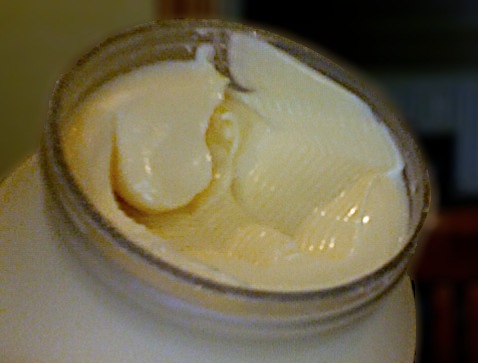
Mayonnaise is a Bingham plastic. The surface has ridges and peaks because Bingham plastics mimic solids under low shear stresses.

In materials science, a Bingham plastic is a viscoplastic material that behaves as a rigid body at low stresses but flows as a viscous fluid at high stress. It is named after Eugene C. Bingham who proposed its mathematical form in 1916.[1]

It is used as a common mathematical model of mud flow in drilling engineering, and in the handling of slurries. A common example is toothpaste,[2] which will not be extruded until a certain pressure is applied to the tube. It is then pushed out as a relatively coherent plug.

Explanation

[edit]
Figure 1. Bingham Plastic flow as described by Bingham

Figure 1 shows a graph of the behaviour of an ordinary viscous (or Newtonian) fluid in red, for example in a pipe. If the pressure at one end of a pipe is increased this produces a stress on the fluid tending to make it move (called the shear stress) and the volumetric flow rate increases proportionally. However, for a Bingham Plastic fluid (in blue), stress can be applied but it will not flow until a certain value, the yield stress, is reached. Beyond this point the flow rate increases steadily with increasing shear stress. This is roughly the way in which Bingham presented his observation, in an experimental study of paints.[3] These properties allow a Bingham plastic to have a textured surface with peaks and ridges instead of a featureless surface like a Newtonian fluid.

Figure 2. Bingham Plastic flow as described currently

Figure 2 shows the way in which it is normally presented currently.[2] The graph shows shear stress on the vertical axis and shear rate on the horizontal one. (Volumetric flow rate depends on the size of the pipe, shear rate is a measure of how the velocity changes with distance. It is proportional to flow rate, but does not depend on pipe size.) As before, the Newtonian fluid flows and gives a shear rate for any finite value of shear stress. However, the Bingham plastic again does not exhibit any shear rate (no flow and thus no velocity) until a certain stress is achieved. For the Newtonian fluid the slope of this line is the viscosity, which is the only parameter needed to describe its flow. By contrast, the Bingham plastic requires two parameters, the yield stress and the slope of the line, known as the plastic viscosity.

The physical reason for this behaviour is that the liquid contains particles (such as clay) or large molecules (such as polymers) which have some kind of interaction, creating a weak solid structure, formerly known as a false body, and a certain amount of stress is required to break this structure. Once the structure has been broken, the particles move with the liquid under viscous forces. If the stress is removed, the particles associate again.

Definition

[edit]

The material is an elastic solid for shear stress , less than a critical value . Once the critical shear stress (or "yield stress") is exceeded, the material flows in such a way that the shear rate, ∂u/∂y (as defined in the article on viscosity), is directly proportional to the amount by which the applied shear stress exceeds the yield stress:

Friction factor formulae

[edit]

In fluid flow, it is a common problem to calculate the pressure drop in an established piping network.[4] Once the friction factor, f, is known, it becomes easier to handle different pipe-flow problems, viz. calculating the pressure drop for evaluating pumping costs or to find the flow-rate in a piping network for a given pressure drop. It is usually extremely difficult to arrive at exact analytical solution to calculate the friction factor associated with flow of non-Newtonian fluids and therefore explicit approximations are used to calculate it. Once the friction factor has been calculated the pressure drop can be easily determined for a given flow by the Darcy–Weisbach equation:

where:

  • is the Darcy friction factor (SI units: dimensionless)
  • is the frictional head loss (SI units: m)
  • is the gravitational acceleration (SI units: m/s²)
  • is the pipe diameter (SI units: m)
  • is the pipe length (SI units: m)
  • is the mean fluid velocity (SI units: m/s)

Laminar flow

[edit]

An exact description of friction loss for Bingham plastics in fully developed laminar pipe flow was first published by Buckingham.[5] His expression, the Buckingham–Reiner equation, can be written in a dimensionless form as follows:

where:

  • is the laminar flow Darcy friction factor (SI units: dimensionless)
  • is the Reynolds number (SI units: dimensionless)
  • is the Hedstrom number (SI units: dimensionless)

The Reynolds number and the Hedstrom number are respectively defined as:

and

where:

  • is the mass density of fluid (SI units: kg/m3)
  • is the dynamic viscosity of fluid (SI units: kg/m s)
  • is the yield point (yield strength) of fluid (SI units: Pa)

Turbulent flow

[edit]

Darby and Melson developed an empirical expression[6] that was then refined, and is given by:[7]

where:

  • is the turbulent flow friction factor (SI units: dimensionless)

Note: Darby and Melson's expression is for a Fanning friction factor, and needs to be multiplied by 4 to be used in the friction loss equations located elsewhere on this page.

Approximations of the Buckingham–Reiner equation

[edit]

Although an exact analytical solution of the Buckingham–Reiner equation can be obtained because it is a fourth order polynomial equation in f, due to complexity of the solution it is rarely employed. Therefore, researchers have tried to develop explicit approximations for the Buckingham–Reiner equation.

Swamee–Aggarwal equation

[edit]

The Swamee–Aggarwal equation is used to solve directly for the Darcy–Weisbach friction factor f for laminar flow of Bingham plastic fluids.[8] It is an approximation of the implicit Buckingham–Reiner equation, but the discrepancy from experimental data is well within the accuracy of the data. The Swamee–Aggarwal equation is given by:

Danish–Kumar solution

[edit]

Danish et al. have provided an explicit procedure to calculate the friction factor f by using the Adomian decomposition method.[9] The friction factor containing two terms through this method is given as:

where

and

Combined equation for friction factor for all flow regimes

[edit]

Darby–Melson equation

[edit]

In 1981, Darby and Melson, using the approach of Churchill[10] and of Churchill and Usagi,[11] developed an expression to get a single friction factor equation valid for all flow regimes:[6]

where:

Both Swamee–Aggarwal equation and the Darby–Melson equation can be combined to give an explicit equation for determining the friction factor of Bingham plastic fluids in any regime. Relative roughness is not a parameter in any of the equations because the friction factor of Bingham plastic fluids is not sensitive to pipe roughness.

See also

[edit]

References

[edit]
Revisions and contributorsEdit on WikipediaRead on Wikipedia
from Grokipedia
A Bingham plastic, also known as a Bingham fluid or viscoplastic material, is a type of that behaves as a rigid solid until the applied exceeds a critical yield stress, beyond which it flows like a viscous fluid with a linear relationship between stress and . This model captures the dual nature of such materials, which resist deformation at low stresses but exhibit plasticity at higher ones, distinguishing them from purely viscous or elastic substances. The Bingham model was originally proposed by Eugene C. Bingham in 1916 through experimental studies on flow in suspensions like kaolin-water mixtures, where he identified a friction constant (yield value) required to initiate flow, followed by a proportional increase in flow rate with excess . Bingham formalized the concept in his 1922 book Fluidity and Plasticity, establishing the foundational equation for the model: τ=τy+μpγ˙\tau = \tau_y + \mu_p \dot{\gamma}, where τ\tau is the , τy\tau_y is the yield stress, μp\mu_p is the , and γ˙\dot{\gamma} is the . This two-parameter framework has since become a cornerstone in , despite its simplifications, as it effectively describes the behavior of many real-world materials under engineering conditions. Bingham plastics are prevalent in industrial applications, including fluids in the and gas sector for suspending cuttings and controlling pressure losses, as well as in (e.g., , ), (e.g., ), and (e.g., slurries and mudflows). The model's yield stress parameter reflects electrochemical interactions or particle effects that enhance suspension stability, while the governs flow resistance at higher shear rates. Although more advanced models like Herschel-Bulkley extend its applicability for broader shear ranges, the Bingham model remains influential due to its simplicity and utility in simulations, diagnostics, and process optimization across chemical, geophysical, and materials fields.

Basic Concepts

Definition and Constitutive Equation

A Bingham plastic is a type of viscoplastic fluid that exhibits a yield stress, below which it behaves as a rigid solid, and above which it flows as a viscous fluid with constant plastic viscosity. This model captures the essential rheological behavior of many suspensions and emulsions, distinguishing it from purely viscous Newtonian fluids. The for a Bingham plastic is piecewise defined in terms of τ\tau and γ˙\dot{\gamma}:
  • For ττ0|\tau| \leq \tau_0, γ˙=0\dot{\gamma} = 0 (no flow, rigid behavior).
  • For τ>τ0|\tau| > \tau_0, τ=τ0sign(γ˙)+μγ˙\tau = \tau_0 \operatorname{sign}(\dot{\gamma}) + \mu \dot{\gamma},
where τ0>0\tau_0 > 0 is the yield stress representing the minimum required to initiate flow, and μ>0\mu > 0 (also denoted μ\mu_\infty) is the plastic that governs the linear relationship between stress and rate once the material has yielded. The sign(γ˙)\operatorname{sign}(\dot{\gamma}) term ensures the yield stress opposes the direction of flow. This formulation extends to general three-dimensional flows via the deviatoric stress tensor, where the magnitude of the stress deviator exceeds τ0\tau_0 for deformation to occur. The model originates from empirical rheological principles, derived by fitting experimental data from viscometers, such as tubes, where plots of applied versus observed reveal a threshold intercept τ0\tau_0 followed by a linear regime with slope μ\mu. Unlike Newtonian fluids, where τ=μγ˙\tau = \mu \dot{\gamma} holds for all stresses with no yield threshold, the piecewise nature of the Bingham equation accounts for the solid-like response at low stresses, based on observations of plastic materials like clay suspensions. This empirical linearization above yield provides a simple yet effective for many real materials. In dimensionless analysis of Bingham plastic flows, particularly in contexts like , the Hedstrom number He=ρD2τ0μ2\mathrm{He} = \frac{\rho D^2 \tau_0}{\mu^2} quantifies the ratio of yield stress effects to viscous forces, where ρ\rho is fluid and DD is a such as pipe ; higher He values indicate stronger yield-dominated .

Physical Interpretation

Bingham plastics exhibit solid-like below the yield stress, where the material resists deformation and maintains its due to the formation of a rigid network composed of particles or molecules. This network arises from weak interparticle forces or attractive interactions that prevent flow until a critical stress is applied, effectively rendering the material elastic or rigid under low shear conditions. In suspensions, such as those of colloidal particles, this solidity is often attributed to , where particles aggregate into a percolating that supports stresses without macroscopic motion. Above the yield stress, the material transitions to viscous flow as the internal network breaks down under shear, allowing particles or molecules to slide past one another, while partial reformation occurs dynamically during flow. This shear-induced disruption leads to a nonlinear response, where the flow curve—plotting against —shows an initial plateau or near-zero slope at low s due to the yield threshold, followed by a linear increase characteristic of plastic viscosity. The , defined as the ratio of stress to , consequently decreases with increasing after yielding, reflecting the progressive alignment and reduced resistance in the microstructure, though it remains elevated at low rates owing to the persistent yield effect. The yield stress and plastic viscosity parameters of the Bingham model can be determined experimentally using rheometers through methods such as stress ramp tests, where stress is incrementally increased until flow initiates, or creep tests, which apply a constant stress and measure the onset of steady deformation. These techniques, often employing controlled-stress rotational rheometers, provide direct observation of the transition and help quantify the yield point by identifying the stress at which becomes measurable. However, real Bingham-like fluids often deviate from the ideal model, exhibiting reduction under shear due to structural breakdown and slow recovery—or minor nonlinearities in flow behavior, which arise from dynamic microstructural rearrangements rather than perfect plasticity. These limitations highlight that while the Bingham captures essential features, actual materials may show aging effects or incomplete network reversibility, complicating precise .

Historical Development

Eugene C. Bingham's Contributions

Eugene C. Bingham (1878–1945) was an American chemist and physicist renowned for his foundational work in . Born on December 8, 1878, in , he graduated from in 1899 and earned his PhD in chemistry from in 1906. After earning his PhD, Bingham served as Professor of Chemistry at Richmond College from 1906 to 1915, then as Assistant Physicist at the National Bureau of Standards from 1915 to 1916, before joining as professor of chemistry in 1916, a position he held until his retirement. His academic and research career focused on the behavior of non-Newtonian fluids, laying the groundwork for modern understanding of plastic flow. In 1916, during his tenure at the National Bureau of Standards, Bingham published "An Investigation of the Laws of Plastic Flow" in the U.S. Bureau of Standards Scientific Paper No. 278 (Bulletin, Vol. 13, pp. 309–353), proposing for materials exhibiting behavior. This seminal work introduced the of a yield stress, the minimum stress required to initiate flow in substances that behave rigidly below this threshold but viscously above it, formalized as τ=τ0+ηγ˙\tau = \tau_0 + \eta \dot{\gamma}, where τ0\tau_0 is the yield stress, η\eta is the viscosity, and γ˙\dot{\gamma} is the . Through capillary viscometer experiments on materials such as clays (e.g., English china clay suspensions at concentrations up to 70% by volume), putties, inks, and metallic alloys, Bingham observed sharp transitions from elastic to regimes, demonstrating that these non-Newtonian fluids, including paints and inks, required overcoming a frictional resistance analogous to a "friction constant" before flowing. His findings emphasized practical implications for suspensions, where mobility decreased nonlinearly with concentration, and additives like alkalies could enhance flow. Bingham's early experiments, conducted amid growing industrial demands during , targeted the rheological properties of paints, inks, and suspensions critical for applications like explosives handling and fluid formulations. These studies revealed yield stress phenomena in real-world materials, such as how printing inks resisted flow until sufficient shear was applied, influencing consistency standards for . His 1921 NBS report on "Cutting Fluids" further extended this to , analyzing how plastic viscosity affected cooling and reduction in , thereby contributing to early of fluid performance metrics for uses. Beyond the Bingham model, Bingham's broader contributions solidified as a discipline. He coined the term "rheology" in 1920, deriving it from the Greek "rheo" (to flow) to encompass the study of deformation and flow in all matter, a concept he elaborated in his 1922 Fluidity and Plasticity. In 1929, Bingham founded the Society of Rheology in , serving as its first president and establishing it as a hub for interdisciplinary research on material flow. These efforts, including his advocacy for precise measurement techniques at NBS and Lafayette, promoted standardized approaches to fluid consistency in industries reliant on non-Newtonian behaviors.

Evolution and Naming of the Model

Following Eugene C. Bingham's initial proposal of the yield stress concept in his 1916 paper on flow laws, the model lacked a formal name and was primarily explored through experiments on suspensions like kaolin-water mixtures. The model was later named the "Bingham " in the late 1940s, following Bingham's foundational work, to characterize materials with a yield stress followed by linear viscous flow, as used in studies of solids such as clays and paints. This terminology distinguished the model's behavior from purely viscous fluids, though usage remained inconsistent, with variants like "Bingham solid" also appearing in literature. By the 1930s, the model attracted interest in engineering contexts, particularly petroleum, where Bingham addressed viscosity measurement standards at the inaugural World Petroleum Congress in 1933, influencing early adoption for drilling fluids. Post-World War II, integration into drilling engineering accelerated, as the oil industry recognized its utility for yield stress in muds and cements to prevent blowouts and control erosion, shifting emphasis from solid-like to fluid-like behaviors in practical applications. In the 1950s, refinements enhanced accuracy for suspensions, exemplified by Howard and Fast's 1950 work on cementing and Binley et al.'s 1958 contributions to pipeline flow modeling in heavy oils, solidifying its role in the oil sector. Bingham's 1916 paper continues to be widely cited in modern , underscoring the model's status as a cornerstone for despite acknowledged limitations in capturing non-linear behaviors, which prompted extensions like the Herschel-Bulkley model introduced in 1926. This enduring recognition reflects the model's foundational impact, with biennial viscoplasticity conferences emerging since 2005 to build on its principles. The evolution from solid-focused origins to fluid applications in industries like oil and gas highlights its adaptability, though terms like "yield stress fluid" have largely supplanted "Bingham plastic" in contemporary usage by the .

Applications and Examples

Industrial and Engineering Uses

Bingham plastics find extensive use in fluids within the and gas industry, where the model's yield stress parameter plays a crucial role in maintaining stability and controlling mud rheology. The yield stress enables the formation of a on porous formations, reducing fluid invasion and loss by providing structural integrity under differential . In water-based muds, such as clay dispersions, the Bingham model characterizes the suspension of cuttings and weighting agents like barite, preventing during static periods and ensuring efficient during circulation. In mining operations, Bingham plastics model the of fine at mid-to-high concentrations, facilitating their handling in storage facilities and discharge processes. The yield stress contributes to resistance by forming an unsheared plug region in the flow, which minimizes particle segregation and enhances overall stability during transport down inclined channels. Similarly, in , Bingham plastic behavior describes the flow of and suspensions, where the yield stress resists of solids, aiding in efficient conveyance and treatment processes. Food processing employs the Bingham model for handling viscous products like and through industrial pipelines, where it predicts the minimum stress required for initiating flow and optimizes pumping requirements. The yield stress ensures these materials remain stable during storage but flow under applied pressure, allowing for controlled transfer without excessive energy input or shear degradation. In paints and coatings, the Bingham plastic model's yield stress prevents sagging on vertical surfaces by resisting gravitational flow until a critical threshold is exceeded, enabling uniform application and film formation. This property is quantified such that the product of the coating's , , and thickness must remain below the yield stress to maintain stability post-application. Quantitative design in contexts, particularly for stability, involves optimizing the yield stress τ0\tau_0 through ratios of yield point to plastic viscosity, as per standards using viscometers like the Fann Model 35, to balance suspension capacity and pressure control while minimizing risks of collapse. Such optimizations ensure thixotropic gels with appropriate 10-second and 10-minute strengths support cuttings transport without excessive equivalent circulating density in deepwater operations.

Everyday and Consumer Examples

Toothpaste exemplifies Bingham plastic behavior in everyday use, remaining rigid on a until sufficient pressure is applied during brushing, at which point it flows smoothly to clean teeth. This yield stress prevents it from dripping prematurely, allowing it to maintain peaks and ridges when squeezed onto the brush, a direct result of its viscoplastic properties. Ketchup and are common condiments that demonstrate similar characteristics, refusing to pour from their containers under alone but flowing readily when shaken or squeezed. Ketchup's yield stress keeps it stationary in bottles, avoiding unwanted spills, while holds its shape in jars until stirred, enhancing portion control and texture in culinary applications. Shaving cream and whipped toppings, such as those used in desserts, rely on their foam structure to exhibit Bingham-like rigidity, preventing collapse under low stress while allowing deformation during application. stays in place on the skin after dispensing, providing a stable lather, whereas maintains stiff peaks on cakes due to its yield stress, contributing to decorative stability. In cosmetics, products like incorporate Bingham plastic traits to preserve form and ease of use; adheres firmly to without smearing under minimal force, thanks to its yield stress. These properties ensure precise application and longevity on the skin. Observable behaviors in these products, such as the persistent ridges in or the stable peaks in cake frosting, highlight the material's ability to resist deformation below the yield point, making it practical for consumer handling and aesthetic appeal in daily routines. Frosting, akin to aerated icings, holds intricate designs on baked goods without slumping, underscoring its viscoplastic nature.

Flow Analysis in Pipes

Laminar Flow and Buckingham-Reiner Equation

For steady, fully developed of a in a circular pipe, the analysis assumes incompressible , no-slip at , axisymmetric flow, and negligible entrance effects, with the pipe D=2RD = 2R and length LL much greater than RR. The for the Bingham plastic, τ=τ0+μγ˙\tau = \tau_0 + \mu \dot{\gamma} for τ>τ0\tau > \tau_0 (where τ0\tau_0 is the yield stress, μ\mu is the plastic , and γ˙\dot{\gamma} is the ), is combined with the balance in cylindrical coordinates. The distribution is linear, τ(r)=ΔPLr2\tau(r) = -\frac{\Delta P}{L} \frac{r}{2}, where ΔP\Delta P is the and the wall is τw=ΔPR2L\tau_w = \frac{\Delta P R}{2L}. Flow occurs only if τw>τ0\tau_w > \tau_0, defining a plug core of radius rp=Rτ0τwr_p = R \frac{\tau_0}{\tau_w} where τ<τ0\tau < \tau_0 and γ˙=0\dot{\gamma} = 0, so the velocity is constant in this unsheared region. In the sheared annular region rprRr_p \leq r \leq R, the shear rate is γ˙=dvzdr=τ(r)τ0μ\dot{\gamma} = -\frac{dv_z}{dr} = \frac{\tau(r) - \tau_0}{\mu}. Integrating with the no-slip boundary condition vz(R)=0v_z(R) = 0 yields the velocity profile: vz(r)=ΔP4μL(R2r2)τ0μ(Rr)v_z(r) = \frac{\Delta P}{4\mu L} (R^2 - r^2) - \frac{\tau_0}{\mu} (R - r) for rprRr_p \leq r \leq R, and vz(r)=vz(rp)v_z(r) = v_z(r_p) (constant) for 0rrp0 \leq r \leq r_p, where vz(rp)=ΔP4μL(R2rp2)τ0μ(Rrp).v_z(r_p) = \frac{\Delta P}{4\mu L} (R^2 - r_p^2) - \frac{\tau_0}{\mu} (R - r_p). This parabolic-like profile in the annulus transitions to a flat plug in the core, with the plug size decreasing as τ0\tau_0 increases relative to τw\tau_w. The volumetric flow rate QQ is obtained by integrating the velocity over the cross-section: Q=0R2πrvz(r)dr=πR4τw8μ[143(τ0τw)+13(τ0τw)4].Q = \int_0^R 2\pi r v_z(r) \, dr = \frac{\pi R^4 \tau_w}{8\mu} \left[ 1 - \frac{4}{3} \left( \frac{\tau_0}{\tau_w} \right) + \frac{1}{3} \left( \frac{\tau_0}{\tau_w} \right)^4 \right]. The average velocity is V=Q/(πR2)V = Q / (\pi R^2), and the generalized is Re=ρVD/μRe = \rho V D / \mu, where ρ\rho is the fluid density. The Darcy friction factor f=2DΔPLρV2f = \frac{2 D \Delta P}{L \rho V^2} for this flow is given implicitly by the Buckingham-Reiner equation: f=64Re(1+He6Re)643He4f3Re8,f = \frac{64}{Re} \left( 1 + \frac{He}{6 Re} \right) - \frac{64}{3} \frac{He^4}{f^3 Re^8}, where the Hedstrom number He=ρτ0D2/μ2He = \rho \tau_0 D^2 / \mu^2 quantifies the yield stress effect. This equation requires iterative solution for ff, reducing to the Newtonian f=64/Ref = 64/Re when τ0=0\tau_0 = 0 (i.e., He=0He = 0). The presence of the yield stress stabilizes the flow, elevating the critical Reynolds number RecRe_c for laminar-turbulent transition above the Newtonian value of approximately 2100; RecRe_c increases with HeHe, often modeled as Rec2100(1+He/(821001))Re_c \approx 2100 \left(1 + \sqrt{He / (8 \cdot 2100 - 1)}\right)
Add your contribution
Related Hubs
User Avatar
No comments yet.