Hubbry Logo
Bobby ShriverBobby ShriverMain
Open search
Bobby Shriver
Community hub
Bobby Shriver
logo
8 pages, 0 posts
0 subscribers
Be the first to start a discussion here.
Bobby Shriver
Bobby Shriver
from Wikipedia

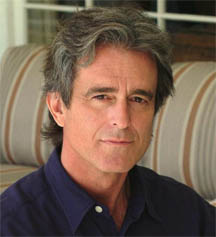
Robert Sargent Shriver III (born April 28, 1954) is an American activist, attorney, and journalist. He was a member of the Santa Monica City Council from 2004 to 2012, serving as mayor pro tem in 2006 and as mayor during part of 2010. A member of the prominent Shriver and Kennedy families, he is a nephew of former U.S. President John F. Kennedy, and former U.S. senators Robert F. Kennedy and Edward M. "Ted" Kennedy.[1][2]

Key Information

Early life and education

[edit]

Shriver was born in Chicago, Illinois, to Sargent Shriver (1915—2011) and Eunice Kennedy Shriver (1921—2009), the first of their five children. His siblings are Maria (born 1955), Timothy (born 1959), Mark (born 1964) and Anthony (born 1965).

Bobby attended Yale University in New Haven, Connecticut, where he was a member of the Scroll and Key Society. He graduated with a B.A. in American studies with cum laude honors. He graduated from Yale Law School with a J.D. in 1981.

Business career and philanthropy

[edit]

After graduating from law school, Shriver clerked for a year for Judge Stephen R. Reinhardt at the U.S. Court of Appeals for the Ninth Circuit, which is headquartered in San Francisco, California.

He then moved to New York City to work in a venture capital business at James D. Wolfensohn, Inc.

Along with father Sarge, Eli Jacobs, and Larry Lucchino, Bobby was an investor from 1989 to 1993 in the Baltimore Orioles, a professional-baseball team based in Baltimore, Maryland.[3]

Shriver is an attorney. He is also president of RSS Inc., a Beverly Hills, California music, film and philanthropic company. (The letters RSS are Shriver's initials.)

In 1987, he produced a prime-time television feature about the Special Olympics, an organization for disabled young people and founded by his mother in 1968. This and subsequent productions have raised in excess of US$55 million[citation needed] for the Special Olympics program.

He has also produced several films, including True Lies (1994), which starred Arnold Schwarzenegger – his then brother-in-law.

In 2002, Shriver was a co-founder – with U2 lead singer Bono – of DATA (Debt, AIDS, Trade in Africa), a multinational, non-government organization whose purpose is to obtain social equality and justice for Africa through debt relief; adjust trade rules which burden Africa; eliminate the African AIDS epidemic; and strengthen democracy with more accountability by the wealthiest nations and African leaders with transparency towards the people.

With Shriver's involvement, DATA, in turn, was one of the founding organizations in 2004 of the ONE Campaign, a U.S.-based, non-partisan, non-profit organization which aims to increase U.S. government funding for and effectiveness of international-aid programs.

In 2006, he and Bono also co-founded (RED) to bring the world's biggest companies into the fight against AIDS and generate money for The Global Fund to Fight AIDS, Tuberculosis and Malaria. To date, (RED) has generated over $700M and impacted over 245 million lives.

Shriver also served as a producer of the 2023 film The Burial, starring Tommy Lee Jones, Jamie Foxx, and Jurnee Smollett.

Political career

[edit]

California State Parks and Recreation Commission

[edit]

After Schwarzenegger became the Governor of California in 2003, he reappointed Shriver as chairman of the California State Park and Recreation Commission overseeing the state's parks and gardens. He had first been appointed by prior California Governor Gray Davis.

In 2005, Shriver, the commission chairman, and Clint Eastwood, the commission vice chairman, led a commission panel in its unanimous opposition to a six-lane, 16-mile (26 km) toll road that would cut through San Onofre State Beach (north of San Diego) that includes Trestles, a collection of surfing spots – one of Southern California's most-cherished. Shriver and Eastwood also supported a 2006 lawsuit to block the toll road and urged the California Coastal Commission to reject the project, which it did in February 2008.[4]

In March 2008, Shriver and Eastwood, whose terms had expired, were not reappointed.[4] The Natural Resources Defense Council (NRDC) asked for a legislative investigation into the decision not to re-appoint Shriver and Eastwood, citing their opposition to the toll-road extension.[5]

Schwarzenegger's press release appointing Alice Huffman and Lindy DeKoven to replace Shriver and Eastwood makes no mention of a reason for the commission change.[6][7]

Santa Monica City Council

[edit]

In November 2004 Shriver ran for, and was elected to, a seat on the Santa Monica City Council. He stated that he decided to run for the seat after a dispute with the city over the height of the hedges at his home.[8] He was one of thirteen candidates for four at-large council seats and received 23,260 votes, or 16.5 percent, of the vote.[9] The other three winning candidates received 16,710, 14,475, and 13,408 votes.[10]

He ran for re-election in 2008, again in a race in which thirteen candidates were running for four open seats. He again received the most votes, although he won by a smaller margin over the candidate receiving the second-most votes. Shriver received 24,298 votes, or 18.56 percent of the vote. The other three winning candidates received 20,232, 19,145, and 17,202 votes. Shriver's second term ended November 2012.[11]

In March 2009 Shriver was reported to be considering becoming a candidate in the 2010 California Attorney General election.[12] He did not run,[13] and Kamala Harris, the Democratic candidate, was elected Attorney General.

Candidacy for Los Angeles County Supervisor

[edit]

On January 21, 2014, the Los Angeles Times reported that Shriver launched his campaign for Los Angeles County supervisor. Shriver was defeated by former state senator Sheila Kuehl.[14]

Personal life

[edit]

Shriver was romantically linked to Princess Caroline of Monaco in the 1970s.[15] In 1989 he had an affair with married director Sondra Locke, who was 10 years his senior.[16] He was dating Lauren Bessette, older sister of Carolyn Bessette Kennedy, the wife of his cousin John F. Kennedy Jr., at the time of their 1999 deaths. Lauren had joined JFK Jr. and Carolyn in his private plane to spend time with Bobby Shriver, along with other friends, on Martha's Vineyard that weekend.

He married Malissa Feruzzi on May 7, 2005.[17][18] They have one daughter, Rosemary Scarlett Shriver (b. 2009).[19] Shriver has a stepdaughter, Natasha Hunt Lee (b. 1997), from his wife's previous marriage.[19][20][21]

Awards

[edit]

In 2007, Shriver received The Advertising Club's Silver Medal Award—also known as the Advertising Person of the Year Award—for his work with (RED).[22] The annual award recognizes those who have made outstanding contributions to the advertising industry, furthering industry standards, demonstrating creative excellence and responsibility in areas of social concern.

In February 2008, he was honored with amfAR, The Foundation for AIDS's Award of Courage for his outstanding contribution to HIV/AIDS research and awareness.

See also

[edit]

References

[edit]
[edit]
Revisions and contributorsEdit on WikipediaRead on Wikipedia
from Grokipedia
Robert Sargent "Bobby" Shriver III (born April 28, 1954) is an American activist, attorney, journalist, and film producer, best known for co-founding global advocacy organizations focused on alleviating , , and infectious diseases in . As the eldest son of Peace Corps founder R. Sargent Shriver Jr. and Special Olympics founder , he is a nephew of U.S. President and Senators and Edward M. Kennedy, embedding him within the influential legacy of public service. Shriver's philanthropic efforts gained prominence through his collaboration with musician Bono, co-founding DATA (Debt, AIDS, Trade, Africa) in 2002, which evolved into the ONE Campaign in 2004 and the (RED) initiative in 2006 to mobilize private sector resources against HIV/AIDS and other crises. These organizations have advocated for increased aid, debt relief, and policy reforms, contributing to billions in commitments for African development and health programs, including U.S. debt forgiveness exceeding $400 million facilitated during the Clinton administration. In recognition of his work on HIV/AIDS awareness and research, Shriver received the amfAR Award of Courage in 2008. He has also served as a lifelong supporter and board member of the Special Olympics, continuing his mother's mission to empower individuals with intellectual disabilities through sports. Beyond global advocacy, Shriver has engaged in local governance as a member of the Santa Monica City Council starting in 2004, reflecting a commitment to community-level public service. His professional background includes legal practice, journalism, and film production, with credits on projects such as True Lies (1994). Shriver's initiatives emphasize data-driven approaches to systemic issues, prioritizing measurable outcomes in health and economic interventions over Africa.

Early Life and Family Background

Upbringing and Kennedy-Shriver Legacy

Robert Sargent Shriver III, known as Bobby Shriver, was born on April 28, 1954, in , Illinois, as the eldest child of R. Sargent Shriver Jr. and . His father, a diplomat and public servant who founded the in 1961 and later served as U.S. Ambassador to France from 1968 to 1970, managed the Kennedy family's in during Shriver's early years. His mother, the fifth child of Joseph P. Kennedy Sr. and , established a summer camp for individuals with intellectual disabilities on the family farm, which evolved into the foundation for the in 1968. Shriver's four younger siblings—Maria (born 1955), Timothy (born 1959), Mark, and —grew up alongside him in an environment emphasizing competitive activities such as , , and , often under the care of nannies due to his parents' demanding public roles. The family relocated from to a 200-acre farm outside Washington, D.C., in during Shriver's childhood, where the household included livestock and exotic pets like a named LBJ acquired by his father from . At age seven, Shriver witnessed the election of his uncle as president while still in first grade in , immersing him early in the Kennedy family's political orbit. By age 14, the family moved to following Sargent Shriver's appointment as , exposing young Shriver to international life as he learned French and explored the city on a motor scooter before returning to the . These transitions reflected the peripatetic nature of his upbringing, shaped by his father's diplomatic and administrative duties rather than a fixed locale. The Kennedy-Shriver legacy profoundly influenced Shriver's formative years, blending the Kennedys' tradition of political leadership—exemplified by uncles , , and Edward M. Kennedy—with the Shrivers' focus on and direct service. As a grandson of , Shriver participated in family gatherings like football games on , fostering bonds with Kennedy cousins amid the era's national tragedies, including the assassinations of JFK in 1963 and RFK in 1968. His parents instilled a commitment to addressing societal challenges through institutions like the and , prioritizing program-building over electoral politics, which later informed Shriver's own pursuits in activism and philanthropy. This heritage, rooted in empirical efforts to promote human potential rather than ideological agendas, emphasized personal responsibility and measurable impact in public service.

Education and Initial Influences

Shriver attended , a preparatory school in , during his high school years. He then enrolled at in , where he majored in and became a member of the Society. Shriver graduated cum laude with a degree, reflecting his academic focus on U.S. history, culture, and institutions, which aligned with the public service-oriented ethos of his family background. Following graduation, Shriver pursued as an initial career path, working as a reporter for the Annapolis Evening Capital in , an experience that honed his skills in investigative reporting and public affairs coverage. This early professional step, bridging his academic training in to practical engagement with societal issues, was influenced by his parents' legacies—Sargent Shriver's leadership in the and programs, and Eunice Kennedy Shriver's founding of the —which emphasized service, advocacy, and direct action against social challenges. Shriver later transitioned to , enrolling at and earning a in 1981, further equipping him for roles in policy, business, and philanthropy.

Professional Career

Shriver commenced his career in journalism after earning a in cum laude from . He served as a reporter for the Annapolis Evening Capital in , later advancing to roles at the Chicago Daily News and the Los Angeles Herald-Examiner. Shriver then pursued legal education at , graduating with a in 1981. Following law school, he clerked for one year for Judge Stephen R. Reinhardt of the United States Court of Appeals for the Ninth Circuit in . He was admitted to the on August 5, 1983, and maintained an address associated with legal practice in .

Media Production and Business Ventures

Shriver initiated his media production efforts in 1987 with the production of the first primetime television special covering the Special Olympics World Games, aired on ABC. In the same year, he co-produced the debut A Very Special Christmas album, the initial entry in a series of nine such records—including two recorded live at the White House—that collectively generated over $100 million for Special Olympics initiatives. Shriver's film production credits include the 1994 action film , directed by and starring . He produced the NBC television movie , as well as the 1998 action film Black Cat Run. Additionally, Shriver served as a producer on the 2023 legal drama The Burial, which starred , , and . Shriver heads RSS Inc., a Beverly Hills company engaged in music, film, and philanthropic projects. Prior to deeper involvement in media, Shriver pursued business opportunities in at James D. Wolfensohn, Inc. in . In December 1988, he participated in a syndicate led by that purchased the Baltimore Orioles franchise for $70 million from the estate of ; Shriver exited the investment group in January 1989.

Philanthropic Initiatives

Fundraising for Special Olympics

In 1987, Shriver co-produced the inaugural album in the A Very Special Christmas series alongside Jimmy and of , compiling holiday tracks from prominent artists such as , , and , with 100% of proceeds directed to programs worldwide. The series, spanning nine albums including two recorded live at the , has generated over $100 million in funding, marking it as the most successful benefit recording initiative in music history and supporting athlete training, competitions, and global expansion efforts. That same year, Shriver produced the first primetime television broadcast of the World Summer Games for ABC, airing coverage from the event in , which drew broad audience viewership and heightened public awareness to bolster organizational and participation. As a lifelong advocate and son of founder , his media productions leveraged involvement to channel resources directly into programs for individuals with disabilities, emphasizing sustainable revenue streams over one-off donations.

Founding Organizations for African Aid

In 2002, Bobby Shriver co-founded (Debt, AIDS, , ), a multinational , alongside frontman and activists from the campaign, with the aim of pressuring wealthy nations to increase aid for combating , forgive African , and improve policies to foster . 's advocacy efforts focused on lobbying leaders and the U.S. for commitments, such as the $15 billion U.S. President's Emergency Plan for AIDS Relief (PEPFAR) signed into law in 2003, which allocated funds specifically for antiretroviral treatment and prevention in . Building on DATA's momentum, Shriver and Bono established the ONE Campaign in 2004 as a U.S.-based, non-partisan advocacy group to mobilize grassroots support for anti-poverty measures in Africa, including demands for 0.7% of national gross domestic product in foreign aid from developed countries. ONE emphasized debt cancellation and health funding, growing to millions of members by petitioning policymakers and raising awareness through celebrity endorsements and events. In 2008, DATA merged operations into ONE, consolidating efforts under a single entity dedicated to ending extreme poverty and preventable diseases by 2030, with Africa as a primary focus. In 2006, Shriver and launched , a private-sector initiative partnering with global brands like Apple, Nike, and Gap to direct a portion of sales from specially branded products toward the Global Fund to Fight AIDS, and , targeting AIDS relief in . By 2023, (RED) had generated over $700 million in contributions, funding treatments that reached more than 240 million people in sub-Saharan for programs. Shriver served as chairman, emphasizing market-driven over traditional charity models to sustain long-term funding flows.

Political Involvement

Appointed Roles in State Government

In 2001, California Governor appointed Robert Sargent "Bobby" Shriver III to the California State Parks and Recreation Commission, a body responsible for overseeing the management, preservation, and development of the state's parks, recreation areas, and historical sites. Shriver assumed the role of chairman, where he advocated for environmental protections, notably opposing a proposed six-lane that threatened coastal habitats. Following the 2003 recall of Davis and the election of as governor, Shriver—Schwarzenegger's brother-in-law through marriage to —was reappointed to a four-year term on the commission in March 2004, alongside figures such as . This reappointment extended his influence on policies amid debates over infrastructure expansion and conservation priorities. Shriver's tenure emphasized balancing public access with ecological integrity, though specific outcomes from his chairmanship remain tied to broader commission decisions rather than individual initiatives.

Service on Santa Monica City Council

Shriver was elected to the Santa Monica City Council on November 2, 2004, receiving the highest percentage of votes of any candidate in the city's 120-year history. He assumed office on December 7, 2004, defeating six other candidates and securing a victory margin described as the largest in 20 years. Shriver served two terms from 2004 to 2012, focusing on local issues including reduction, , and municipal efficiency. During his tenure, Shriver prioritized addressing chronic through targeted programs and policy refinements, contributing to broader city efforts that included adopting an in 2008 to guide interventions. He supported initiatives to clean up by backing measures to reduce pollution and improve water quality. Shriver also advocated for infrastructure self-sufficiency, including the development of systems enabling the city to supply 70% of its own water by the end of his service. Shriver held leadership positions as mayor pro tem in 2006 and for part of 2010, during which he pushed for streamlining processes, such as shortening meetings to enhance efficiency. He was re-elected in 2008, continuing his emphasis on cutting bureaucratic to facilitate local development and services. Shriver did not seek re-election in 2012, concluding eight years of service marked by a pragmatic approach to urban challenges, though some local commentary described his overall accomplishments as moderate.

2014 Campaign for Los Angeles County Supervisor

Bobby Shriver announced his candidacy for the Los Angeles County Board of Supervisors 3rd District seat on January 21, 2014, at Will Rogers State Beach, aiming to replace term-limited Supervisor Zev Yaroslavsky, whose district encompassed approximately 2 million residents across the Westside and San Fernando Valley. He positioned himself as an outsider intent on "shaking things up" in county government, citing chronic issues such as homelessness, traffic congestion, environmental degradation, and a dysfunctional foster care system. Shriver drew on his Kennedy family heritage— as the son of Sargent and Eunice Shriver and nephew of President John F. Kennedy—to underscore a tradition of public service and problem-solving. Throughout the campaign, Shriver emphasized reforming county inefficiencies, criticizing the lengthy timelines for projects that often spanned 8 to 10 years and advocating for acceleration to 2 to 3 years. His proposed solutions included reducing traffic gridlock, constructing a new jail for under $1 billion, and overhauling foster care through innovative approaches and greater private sector flexibility to introduce efficiency and creativity absent in bureaucratic processes. He rejected a proposed $1.4 million campaign spending cap, planning to raise around $2 million, including $300,000 from personal funds, and highlighted his executive experience from eight years on the Santa Monica City Council over the legal backgrounds of opponents. Shriver received endorsements from business-oriented groups like the L.A. Jobs PAC and the Los Angeles Daily News, as well as significant fundraising from Hollywood figures, though his opponent Sheila Kuehl outpaced him overall with substantial support from public employee unions. In the June 3, 2014, primary election, Shriver advanced to the runoff alongside former state legislator , as neither secured a in the multi-candidate field. The November 4, 2014, runoff proved contentious, with the candidates collectively spending $9.5 million; Kuehl's campaign benefited from union-backed resources, while Shriver's ads faced fact-checking scrutiny over claims about his rival's record. Kuehl emerged victorious in a close contest, propelled by labor support, securing the seat on the influential board overseeing a $25 billion .

Controversies and Criticisms

Local Political Disputes

Shriver's involvement in Santa Monica politics originated from a direct conflict with city enforcement of a municipal code limiting hedge, fence, and wall heights to 42 inches in front yards, a regulation dating to the aimed at preserving views and street aesthetics. In November 2003, city officials issued Shriver a notice citing his residential hedges for exceeding the limit, threatening fines of up to $25,000 per day—penalties originally designed for aviation noise violations at rather than landscaping issues—escalating to a potential maximum of $500,000. This enforcement action, affecting multiple high-profile residents, prompted Shriver to challenge the ordinance's rigidity and launch a successful City Council campaign in , framing it as government overreach on . Once elected, Shriver prioritized reforming the hedge rule amid ongoing resident backlash against citations. In May 2005, the City Council voted to revise the ordinance, easing restrictions by permitting taller front-yard barriers in zones without view impacts and clarifying exemptions for hedges. By July 2005, further amendments allowed hedges up to 6 feet in front yards if setbacks were maintained, with Shriver arguing that existing safety laws sufficed without height caps, countering concerns from council members like Herb Katz who favored retaining strict limits to avoid visual clutter. These changes effectively nullified many prior citations, including Shriver's, but drew criticism for prioritizing homeowner privacy over public sightlines in a coastal city prone to development tensions. Shriver's council tenure also involved interpersonal and procedural frictions with colleagues. Former Councilmember Gleam Davis, in a 2014 opinion piece, accused him of fostering discord through rudeness, frequent interruptions of speakers and peers, and inadequate preparation, which she claimed undermined despite his initial campaign pledges of civility. Davis further highlighted Shriver's attendance issues from 2009 to 2012, alleging he missed 46 of 230 meetings (roughly 20%), arrived up to two hours late to 102 others, departed early from many, and was punctual and present for only 39% overall, often skipping public comments. These critiques, voiced during Shriver's bid for County Supervisor, portrayed him as disengaged on local matters beyond personal grievances, though Shriver's supporters countered that his focus on initiatives like homeless housing justified selective priorities.

Scrutiny of Philanthropic Approaches

The (RED) campaign, co-founded by Shriver and Bono in 2006 to direct a portion of consumer product sales toward the Global Fund to Fight AIDS, Tuberculosis and Malaria, has drawn scrutiny for its "compassionate consumption" model, which ties philanthropy to corporate profits rather than traditional donations. Critics, including commentators in The Nation, have termed it "vanity philanthropy," contending that it primarily enhances brand images for participating companies like Gap and Apple while contributing minimal percentages of sales—often 1% to 5%—to anti-AIDS efforts in Africa, potentially fostering consumer complacency over substantive policy changes. Early performance metrics fueled this debate: by September 2007, partners had invested about $50 million in advertising, slightly exceeding the $45 million raised for the Global Fund, raising questions about net efficacy versus marketing overhead. Shriver has countered that the approach harnesses private-sector incentives to generate sustained funding unavailable through government aid or sporadic donations alone, explicitly distinguishing it from direct giving and urging the latter for those preferring it. In a 2007 Contribute Magazine interview, he emphasized its focus on keeping "funds flowing to fight AIDS in " by appealing to market dynamics, though detractors argue it promotes as a for systemic issues like and deficits. A 2008 New York Times analysis highlighted broader concerns, including opaque fund allocation and the risk that branded charity dilutes urgency around core humanitarian needs. Shriver's involvement in the , evolving from his co-founding of (Debt, AIDS, Trade, Africa) in 2002, has faced parallel critiques regarding advocacy-heavy strategies over verifiable on-the-ground impact. While ONE has mobilized billions in pledges for African aid and , empirical evaluations of such -driven reveal mixed outcomes, with some aid economists questioning long-term dependency effects and the opacity of lobbying expenditures relative to direct interventions. Shriver's emphasis on policy influence—such as U.S. legislative pushes for increased foreign assistance—prioritizes causal levers like governance reform, yet lacks granular, peer-reviewed tying ONE's efforts to sustained reductions in African mortality rates from targeted diseases. In fundraising, Shriver's production of high-profile TV specials in the 1980s and 1990s generated significant revenue but encountered isolated legal challenges, including a accusing him, as head of Special Olympics Records, of and unfair advantage in appropriating a musical concept for promotional purposes; the case underscored tensions in leveraging and media for nonprofit ends but did not derail overall operations. Overall, Shriver's approaches reflect a first-principles bet on scalable, private-market mechanisms, empirically validated by (RED)'s cumulative raising of over $650 million by 2020 for Global Fund programs that have supported 24 million people on AIDS treatment, though skeptics maintain that unadjusted metrics overlook opportunity costs and alternative aid models' potential superior returns.

Personal Life

Marriage and Immediate Family

Robert Sargent Shriver III, known as Bobby Shriver, married Malissa Feruzzi on May 7, 2005. The couple resides in Santa Monica, California. Shriver and Feruzzi have one daughter together, Rosemary Scarlett Shriver, born in 2009.) Shriver is also stepfather to Feruzzi's daughter from a previous marriage, Natasha Hunt Lee, whom he has helped raise since the marriage. In a 2010 oral history interview, Shriver described Feruzzi as his only wife and noted Natasha's integration into the family at a young age.

Extended Family Dynamics

Bobby Shriver grew up immersed in the Kennedy family's public service tradition, as the nephew of President , Senator , and Senator Edward M. Kennedy. He shared close interactions with Uncle Robert, including family football games in the 1960s, which were disrupted by the 1968 assassination that profoundly affected him at age 14. With Uncle Edward, Shriver maintained affectionate ties, exemplified by a 2009 Hyannis Port gathering where Ted arrived by , engaged in light-hearted sibling sailing rankings to uplift the ailing , and fostered laughter amid family gossip—memories Shriver described as embodying love and fun shortly before both Eunice's and Ted's deaths. Shriver's dynamics with Kennedy cousins reflected the clan's competitive ethos, particularly with first cousin The two spent summers at the Hyannis Port compound, bonding over touch football where Shriver prized victories against the Kennedy side. In 1970, at age 16, they were arrested together for marijuana possession, but Shriver's path diverged due to his father Sargent Shriver's intervention, which shielded him from lasting repercussions unlike Kennedy Jr., whose father had been assassinated two years prior. This incident underscored the Shriver branch's emphasis on stability and service, distinguishing it from some Kennedy cousins' trajectories amid family tragedies and personal struggles. In adulthood, Shriver's relations with extended family highlighted both continuity and rifts, particularly over politics and health policy. He publicly opposed Kennedy Jr.'s 2024 presidential campaign, criticizing a Super PAC advertisement that featured images of their late uncle Sr. and Shriver's mother Eunice without permission, stating she would be "appalled" by Kennedy Jr.'s views on and , which clashed with her commitment to and equity. This stance aligned with broader family divisions, including endorsements of opposing candidates by Shriver's siblings, reflecting ideological strains within the extended Kennedy-Shriver network while preserving the philanthropic legacy of figures like Eunice.

Recognition and Enduring Impact

Awards and Honors

In 2007, Shriver received the Advertising Club of New York's Silver Medal Award, also designated as the Advertising Person of the Year, recognizing his leadership in founding (PRODUCT) RED, an initiative partnering with brands to direct a portion of sales toward combating AIDS in Africa. In February 2008, he was awarded amfAR's Award of Courage for outstanding contributions to HIV/AIDS research and awareness through his philanthropic efforts. Shriver graduated from with a B.A. in , earning cum laude honors in 1977.

Long-Term Contributions to Policy and Society

Shriver co-founded the advocacy organization (Debt, AIDS, Trade, ) in 2002 alongside Bono, focusing on pressuring governments for debt cancellation, increased foreign aid, and fairer trade policies to address crises in . This effort contributed to policy shifts, including U.S. debt-relief measures that freed resources for health initiatives in affected countries. In 2004, DATA evolved into the , a global coalition that mobilized millions to lobby for commitments like the U.S. PEPFAR program, which by 2023 had supported over 25 million people on treatment. ONE's advocacy emphasized measurable outcomes, such as tracking aid effectiveness to combat and preventable diseases, with goals aligned to UN targets by 2030. In 2006, Shriver launched (RED), a private-sector initiative partnering with brands like Apple and Gap to donate a portion of from designated products to the Global Fund to Fight AIDS, and . By 2024, (RED) had generated over $700 million for the Global Fund, funding treatments that averted an estimated 44 million AIDS-related deaths worldwide. These mechanisms shifted toward market-driven models, influencing policies and demonstrating causal links between consumer spending and health outcomes in low-income regions. Shriver's initiatives extended to data-driven tools, including ONE's 2022 launch of data.one.org, which aggregates economic and social metrics to inform on African development challenges like sustainability and reforms. His work, rooted in empirical tracking of impacts, has sustained pressure on policymakers for transparent, results-oriented international assistance, though critics argue such campaigns sometimes prioritize awareness over rigorous local capacity-building. Locally, during his Santa Monica City Council tenure from 2004 to 2012, Shriver advanced environmental , including bay cleanup efforts that reduced pollution levels and informed broader strategies.

References

Add your contribution
Related Hubs
User Avatar
No comments yet.