


Community hub
Recent from talks
Contribute something
Nothing was collected or created yet.
Shower gel
View on Wikipedia | This article needs additional citations for verification. (July 2018) |

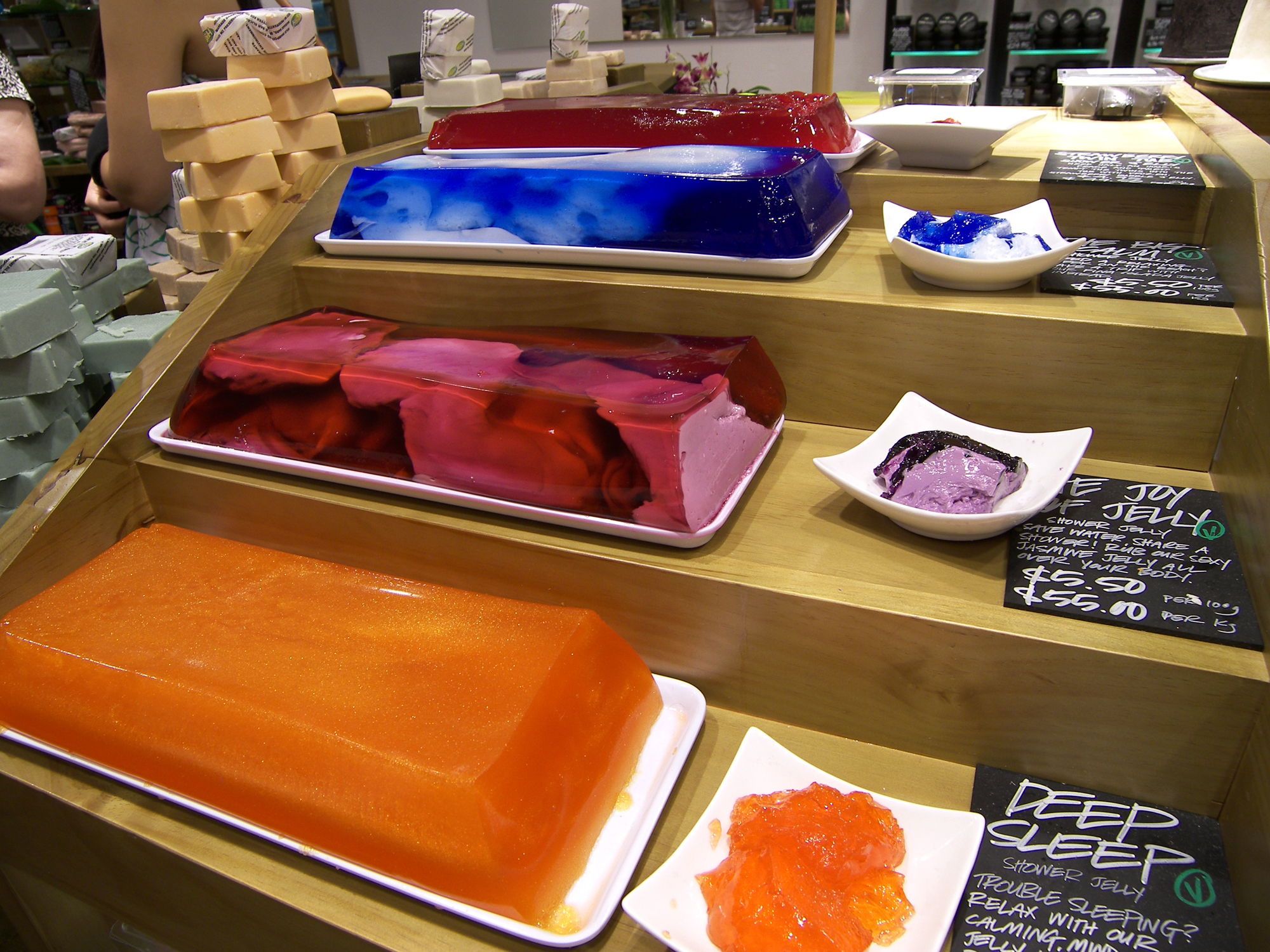
Shower gel (also called body wash) is a specialized liquid product used for cleaning the body during showers. Not to be confused with liquid soaps, shower gels, in fact, do not contain saponified oil. Instead, it uses synthetic detergents derived from either petroleum or plant sources.
Body washes and shower gels have a lower pH value than the traditional soap, which is also known to feel less drying to the skin. In certain cases, sodium stearate is added to the chemical combination to create a solid version of the shower gel.
History
[edit]Shower gel is a derivative invention of the liquid soap, which first appeared in the 1800s. In 1865, William Shepphard patented the formula behind the liquid soap,[1] but the product gained eventual popularity with the rise of Palmolive soap in 1898, by B.J. Johnson.[2]
Over time, the formula was adjusted to be less harsh and more skin suitable.[3] This eventually led to tailored body products such as shower gel. The switch from traditional bar soaps to liquid soaps picked up in the 1950's due to modernized fragrance and packaging options and convenience.[4]
Safety, Ingredients, and the Environment
[edit]Shower gels are known to contain water, a surfactant (typically Sodium laureth sulfate), moisturizers, and fragrance. Some ingredients are known to cause irritation, allergic reactions, and/or harm to the environment. A 2024 article details the toxicological risks linked with the chemicals in the beauty and personal care products observed.[5] This resulted in the cosmetics industry's transition into cleaner formulations and sustainable packaging. A 2022 study on sustainability in cosmetics also spotlights the shift to becoming eco-friendly as some manufacturers now offer refill stations and sustainable packaging.[6]
Properties
[edit]The main difference between the two soap products lie in its surfactants - compounds known to lower the surface tension between substances, which helps in the emulsification and the washing away of oily dirt. The surfactants of shower gels do not come from saponification, that is by reacting a type of oil or fat with lye. Instead, it uses synthetic detergents for surfactants derived from either plant-based sources or petroleum. This gives the product a lower pH value than soap[7] and might also feel less drying to the skin.[8] Some people have likened the effect to feeling less squeaky clean, however.[9]
Surfactants can make up as much as 50 percent of the shower gel content, with the remaining proportion being made up of a combination of water and ingredients to thicken, preserve, emulsify, add fragrance, and color.[10][11] Multiple surfactants are often used to achieve desired product qualities. A primary surfactant can provide good foaming ability and cleaning effectiveness, while a secondary surfactant can add qualities of mildness to prevent irritation or over-drying of the skin. To prevent shower gel ingredients from separating, emulsifiers such as diethanolamine are added.[12][dead link] Conditioning agents may also be added to moisturize the skin during and after product use.[13] They are also available in different colours and scents.[14] Ingredients, like scent in the form of essential oils or fragrance oils[10] and colorant in the form of water-soluble dyes are common in shower gels.[13]
Microbeads were commonly used in shower gels until recently. Microbeads are tiny spheres of plastic that were added to a variety of cosmetic products for their exfoliating qualities.[15] They are too small to filter out of water systems and end up in waterways and oceans, potentially passing toxins to animal life and humans.[16] Following the legislative actions of other countries, the United States passed the Microbead-Free Waters Act in 2015, which bans microbeads in the U.S. incrementally starting in 2017, with full implementation set for 2019.[17] It has been banned from production and use in cosmetics in the U.S. since July 1, 2017, and in the UK since October 1, 2018.
Shower gels for men may contain the ingredient menthol, which gives a cooling and stimulating sensation on the skin, and some men's shower gels are also designed specifically for use on the hair and body. Shower gels contain milder surfactant bases than shampoos, and some also contain gentle conditioning agents in the formula. This means that shower gels can also be used as an effective and acceptable substitute to shampoo, even if they are not labelled as a hair and body wash. Washing hair with shower gel should give approximately the same result as using a moisturising shampoo.[citation needed]
Culture and Usage
[edit]In the Western Hemisphere, shower gel has largely replaced traditional bar soap. Alternatively, in other regions, bar soap is still popular due to cost, accessibility, and tradition. Some brands use advertising to appeal to customers regionally by showcasing local popular scents or skin concerns. The brand "Fa" by Henkel is an example of this as it is marketed across over 100 countries today.
Marketing
[edit]Like shampoo and bubble bath products, many are marketed directly towards children. These often feature scents intended to appeal to children, such as fruit scents, or cookies or cotton candy scents. Many bottles feature popular characters from children's television or movies.
Shower gels are also often marketed based on gender preferences.[18] Women targeted products tend to highlight moisturizing ingredients, fruity or floral scents, and light or bright colored packaging, while those designed for men tend to use darker packaging and fresh or "sporty" scents.
Future Direction
[edit]Due to rising concern with chemicals and the demand for "clean" beauty products, manufacturers are reformulating and relabeling products. Competitors are advertising soap bars as "all natural", and under resourced areas are reverting back to bar soaps due to the lower price tags. Market research predicts growth, but tentative success caused by ingredients, sustainability, and price.[19]
References
[edit]- ^ "On This Day – August 22: The first patent for liquid soap was issued to William Sheppard on this day in 1865- Learn Chemistry". www.rsc.org. Retrieved 2018-08-01.
- ^ "The Cleanest Inventions: Soaps and Detergents". ThoughtCo. Retrieved 2018-08-01.
- ^ "The World of Soap Bars in the 1950s". Peak Soap. 2024-08-09. Retrieved 2025-10-14.
- ^ "History of Liquid Soap and Shower Gel". SoapHistory.net. Retrieved 2025-10-14.
- ^ Alnuqaydan, Abdullah M. (2024-08-26). "The dark side of beauty: an in-depth analysis of the health hazards and toxicological impact of synthetic cosmetics and personal care products". Frontiers in Public Health. 12 1439027. Bibcode:2024FrPH...1239027A. doi:10.3389/fpubh.2024.1439027. PMC 11381309. PMID 39253281.
- ^ Panyakaew, Siriporn; Moolkum, Sasiwimon; Raksakulthai, Natthida; Boonmee, Chanon (2022). "The use of sustainable surfactants in personal care products: Environmental and health perspectives". Environmental Advances. 7 100149. Elsevier. doi:10.1016/j.envadv.2022.100149 (inactive 15 October 2025).
{{cite journal}}: CS1 maint: DOI inactive as of October 2025 (link) - ^ Pai, Deanna (November 23, 2016). "Please Help Me Understand Why You Still Use Bar Soap". Glamour. Retrieved July 25, 2018.
- ^ "Try these 11 expert tips for a better shower; your skin will thank you". NBC News. Retrieved 2018-08-01.
- ^ "Why you shouldn't *actually* want to be squeaky-clean after a shower". Well+Good. 27 January 2018. Retrieved 2018-08-01.
- ^ a b Hornsey, Sally (2014). How to Make Your Own Soap. London, England: Constable & Robinson. pp. 24, 198. ISBN 978-1-908974-23-5.
- ^ Flick, Ernest (1992). Cosmetic and Toiletry Formulations, Second Edition, Volume 2. Park Ridge, New Jersey: Noyes Publications. ISBN 0-8155-1306-2.
- ^ Boyd, Christopher (4 August 2014). "EXAMINE THE CHEMISTRY OF BODY WASH". www.chemservice.com. Retrieved 2018-10-21.
- ^ a b "Cosmetic Formulations – Body Wash". chemistscorner.com. 19 September 2012. Retrieved 2018-10-21.
- ^ Guarnieri, Anne-Marie (January 6, 2014). "Bar soap vs. shower gel: A brief look at the history of how we bathe". Fashion. Retrieved July 25, 2018.
- ^ DeWeerdt, Sarah (20 June 2017). "Tiny biodegradable spheres could replace plastic microbeads". Retrieved 2019-06-28.
- ^ Han, Esther (2016-08-16). "Microbeads are leaching toxic chemicals into fish, sparking public health fears". The Sydney Morning Herald. Retrieved 2019-06-28.
- ^ Bailey Bischoff Staff (18 April 2018). "How the world made macro strides in curbing microbeads". Christian Science Monitor – via MAS Ultra - School Edition.
- ^ Millar, Katherine (2020). "Gendered Scents: Marketing and the Symbolism of Hygiene Products". Journal of Consumer Culture. 20 (3): 489–505. doi:10.1177/1469540519838423 (inactive 15 October 2025).
{{cite journal}}: CS1 maint: DOI inactive as of October 2025 (link) - ^ "Body Wash and Shower Gel Market Size, Forecast". Verified Market Research. Retrieved 2025-10-14.
Further reading
[edit]
- Chang, Katie (April 25, 2017). "Bar Soap Vs. Body Wash". Ask Men. Retrieved July 25, 2018.
Shower gel
View on GrokipediaShower gel is a viscous liquid cleanser formulated for body washing during showers, primarily composed of water, surfactants such as sodium lauryl sulfate or sodium laureth sulfate, and additives including fragrances, preservatives, and moisturizers that enable foaming to remove dirt, oils, and impurities from the skin.[1][2][3]
Originating as a modern derivative of liquid soap patented by William Shepphard in 1865, shower gel gained widespread popularity in the late 20th century as a convenient alternative to solid bar soap, offering easier dispensing and often enhanced sensory experiences through scents and textures.[4][5]
In terms of efficacy, shower gels provide comparable cleansing to bar soaps by disrupting the skin's lipid barrier to eliminate bacteria and debris, though they may include more emollients for hydration, potentially benefiting dry skin, while bar soaps are noted for longevity and reduced packaging waste.[6][7]
Safety profiles indicate general low toxicity for common ingredients like cocamidopropyl betaine, but surfactants such as sulfates can cause irritation or dryness in sensitive individuals, prompting formulation variations with milder alternatives.[8][9]
Definition and Characteristics
Composition
Shower gels are liquid cleansing products primarily composed of water, which forms the aqueous base constituting about 70% of the formulation, surfactants for cleansing action around 20%, and minor additives such as thickeners, humectants, preservatives, and fragrances.[10] Surfactants, the key active ingredients, lower surface tension to emulsify oils and dirt, enabling removal from the skin; they are categorized as anionic (e.g., sodium laureth sulfate or SLES, and sodium lauryl sulfate or SLS for high foaming), amphoteric (e.g., cocamidopropyl betaine or CAPB to enhance mildness and foam stability), and non-ionic (e.g., decyl glucoside or coco glucoside in natural formulations for gentleness).[11][12] Thickeners like xanthan gum, guar gum, or salts (e.g., sodium chloride) adjust viscosity to achieve the gel-like consistency, typically at 1-2% concentration, while humectants such as glycerin (often 2-5%) prevent drying by retaining moisture.[13][14] Preservatives including parabens, EDTA, or phenoxyethanol (at 0.1-1%) inhibit microbial growth in the water-rich medium, and pH adjusters like citric acid or sodium hydroxide maintain a skin-friendly pH of 5-7.[13] Fragrances and colorants, such as limonene or synthetic dyes, comprise less than 1% but can include skin sensitizers requiring patch testing for sensitive users.[9] Formulations vary by market segment: conventional products favor cost-effective synthetics like SLES for abundant foam, whereas "natural" variants prioritize plant-derived surfactants like alkyl glucosides to minimize irritation potential, though efficacy depends on total active matter (typically 10-15% for mildness).[11][15] All ingredients must comply with regulations like those from the FDA or EU Cosmetics Regulation, ensuring concentrations below thresholds for safety (e.g., SLES capped to avoid dioxane contamination).[12]Physical and Functional Properties
Shower gels are formulated as viscous, translucent to opaque liquids with a gel-like consistency, typically exhibiting specific gravities around 0.9 to 1.0 g/cm³ and high water solubility to facilitate dilution and rinsing during use.[16] Their pH values generally range from 5.0 to 7.0, aligning closely with the skin's natural acidity (approximately 5.5) to reduce potential irritation and maintain the skin's barrier function compared to alkaline bar soaps.[17] [18] Viscosity, a key physical attribute, spans 1,000 to 60,000 centipoise, achieved through thickeners like salts or polymers interacting with surfactants, which ensures the product clings to the skin for even application without excessive drip.[19] Functionally, shower gels derive their cleansing efficacy from anionic and amphoteric surfactants, such as sodium laureth sulfate or cocamidopropyl betaine, which lower surface and interfacial tension between water, oils, and skin debris, enabling emulsification and removal of lipids and dirt.[14] [20] These surfactants adsorb onto soiled surfaces, penetrate dirt-skin interfaces, and disperse contaminants into rinse water, with foaming capacity—often enhanced by secondary agents—serving as a visual indicator of cleaning performance and aiding in even distribution.[21] Foam stability, measured by height retention over time, correlates with surfactant blend ratios; for instance, combinations yielding 2-3 cm stable foam height post-rinsing are common in mild formulations.[22] Additional properties include mild antimicrobial effects from certain amphoteric surfactants, which disrupt bacterial membranes without broad cytotoxicity, and rinseability, where low residue levels (under 0.5% post-wash) prevent skin tackiness due to optimized surfactant hydrophile-lipophile balance.[23][24]Historical Development
Early Innovations in Liquid Cleansers
The earliest innovations in liquid cleansers emerged in the mid-19th century as efforts to overcome the rigidity and inconvenience of solid soap bars, which had dominated personal and industrial cleaning since ancient times. Prior attempts to create fluid soaps often resulted in unstable mixtures that separated or lacked durability, restricting their practicality. A pivotal advancement occurred on August 22, 1865, when William Sheppard of New York secured U.S. Patent No. 49,561 for an "Improved Liquid Soap," establishing one of the first viable formulations for a homogeneous liquid detergent.[25] [26] Sheppard's process entailed dissolving roughly one pound of ordinary solid soap in approximately one hundred pounds of spirits of ammonia (also known as hartshorn), yielding a thick, molasses-like liquid with purportedly superior cleansing efficacy for both household and manufacturing uses.[25] The ammonia acted as a solvent to achieve uniformity and viscosity, allowing the product to be stored and applied more fluidly than bar soaps, though proportions could be adjusted for varying concentrations.[25] This method represented a chemical innovation in solubilizing fats and alkalis without immediate precipitation, addressing key stability concerns in nascent liquid variants. Despite its novelty, Sheppard's liquid soap faced practical constraints, including reliance on ammonia—which imparted a pungent odor and potential irritancy—and tendencies toward eventual separation in storage, confining early adoption largely to industrial or institutional contexts rather than everyday personal hygiene.[26] Subsequent refinements in the late 19th century built on this foundation by exploring alternative solvents and stabilizers, gradually paving the way for more consumer-oriented liquid cleansers, though mass-market viability remained decades away.[27]Commercialization and Popularization
The commercialization of shower gel traces back to advancements in liquid soap formulations, with William Shepphard patenting a liquid soap method in 1865 that laid foundational technology for viscous cleansers.[4] Commercial viability expanded in 1898 when B.J. Johnson introduced Palmolive, a liquid soap that achieved significant market penetration by emphasizing purity and mildness derived from palm and olive oils.[4] However, these early products were primarily thin liquids for handwashing; dedicated shower gels—thicker, pH-balanced emulsions optimized for body use under shower conditions—did not emerge until the mid-20th century, coinciding with post-World War II consumer shifts toward convenience-oriented personal care. The 1970s marked the debut of the first commercial liquid body washes, positioning shower gels as hygienic, mess-free alternatives to bar soaps amid rising demand for moisturizing formulas that minimized skin dryness.[28] Popularization surged in the 1980s, as aggressive marketing by multinational firms highlighted attributes like lather stability, fragrance variety, and perceived superiority in preventing bacterial transfer compared to shared bars.[29] By 1989, the category had evolved terminologically to "body wash," reflecting broader acceptance and product differentiation through added emollients and surfactants.[30] This era saw shower gels capture growing shelf space in retail, driven by empirical consumer preferences for pump dispensers that reduced waste and contamination risks. Into the 1990s and 2000s, adoption accelerated among younger demographics, with bar soap usage declining as liquids appealed to perceptions of modernity and skin-friendliness; by 2016, approximately 60% of adults over 65 still favored bars, versus higher liquid preference among under-65s.[31] Major brands like Unilever's Dove and Axe fueled this through targeted campaigns, contributing to category expansion where U.S. bath and shower product sales reached $9 billion by 2023.[32] Globally, the shower gel segment has sustained growth, valued at $29.37 billion in 2024 with a projected CAGR of 6.8% through 2032, underscoring its entrenched position despite intermittent bar soap revivals tied to sustainability concerns.[33]Formulation and Production
Key Ingredients and Their Roles
Shower gels are aqueous-based formulations where water serves as the primary solvent, typically comprising 70-80% of the total composition to dissolve and disperse active components.[34] Surfactants form the functional core, accounting for 10-25% of the product and enabling cleansing by lowering surface tension, emulsifying sebum and dirt for removal during rinsing. Anionic surfactants, such as sodium laureth sulfate (SLES) (typically 15-20%), act as the main cleansing and foaming agents due to their high detergency and ability to generate stable lather, which improves perceived efficacy despite potential for skin irritation from lipid and protein denaturation.[35][34] Amphoteric co-surfactants like cocamidopropyl betaine (CAPB) (typically 5-10%) enhance mildness by reducing anionic surfactant irritation through charge neutralization and foam stabilization, while non-ionic options such as decyl glucoside contribute gentle cleansing with lower irritation profiles.[35][34] Humectants, notably glycerin (typically 2-5%), attract atmospheric moisture to the skin, mitigating dryness from surfactant action, though much is rinsed away.[34][35] Emollients including petrolatum or liquid triglyceride oils replenish extracted lipids, preserving the skin barrier by limiting water loss post-application.[35] Thickeners such as sodium chloride or polymers like hydroxypropyl methylcellulose (up to 10%) elevate viscosity for gel consistency, facilitating controlled dispensing without altering core cleansing.[34] Fragrance (typically 1-2%) imparts scent to the product. Preservatives, e.g., phenoxyethanol (typically 0.5-1%), inhibit bacterial and fungal growth in the water-rich matrix, ensuring shelf stability.[34]| Ingredient Category | Examples | Primary Role | Typical Range |
|---|---|---|---|
| Surfactants (Anionic) | Sodium laureth sulfate (SLES) | Cleansing, foaming | 15-20% |
| Surfactants (Amphoteric/Non-ionic) | Cocamidopropyl betaine, Decyl glucoside | Mildness enhancement, foam stability | 5-10% |
| Humectants | Glycerin | Moisture retention | 2-5% |
| Thickeners | Hydroxypropyl methylcellulose, Sodium chloride | Viscosity adjustment | Up to 10% |
| Preservatives | Phenoxyethanol | Microbial control | 0.5-1% |
Manufacturing Processes
The manufacturing of shower gel, a surfactant-based liquid cleanser, predominantly employs batch processing in industrial settings to ensure uniformity, stability, and compliance with quality standards. Production begins with heating purified water via reverse osmosis systems to remove impurities that could affect product efficacy or shelf life, followed by dissolving salt and glycerin to adjust viscosity and provide humectancy.[36] A basic mixing sequence for formulations using sodium laureth sulfate (SLES) and cocamidopropyl betaine (CAPB) involves slowly adding SLES to the heated water to minimize excessive foaming, then incorporating CAPB for mildness, with subsequent mixing of fragrance and preservatives before final pH adjustment to 5-6 using citric acid.[14] [36] Separate phases are then formulated: the water phase incorporates primary surfactants such as sodium laureth sulfate (typically 10-20% of the formulation for cleansing and foaming), secondary surfactants like cocamidopropyl betaine for mildness, thickeners, and preservatives, which are dissolved under controlled heating (often 40-60°C) and gentle agitation in stainless steel tanks to prevent foaming or separation.[14] [36] The oil phase, containing emollients and conditioning agents, is prepared similarly but at lower volumes to maintain the product's primarily aqueous nature.[36] Emulsification follows by combining the phases in mixing vessels equipped with high-shear homogenizers or rotor-stator mixers, which generate intense mechanical energy to disperse oils into the aqueous surfactant matrix, achieving a stable, opaque or pearlized emulsion with consistent viscosity.[37] [36] Powdered additives, such as electrolytes for viscosity adjustment (e.g., sodium chloride), are incorporated via high-speed powder injection to avoid agglomeration, a critical step for rheological control in surfactant systems.[37] The mixture is then cooled under slow agitation to around 30-40°C, stabilizing the emulsion and preventing phase separation driven by thermal gradients.[36] Heat-sensitive components like fragrances, dyes, and active ingredients are added post-cooling to preserve volatility and efficacy.[14] [36] pH is adjusted to 5.0-6.5 using citric acid or sodium hydroxide to optimize surfactant performance and skin compatibility, followed by in-process quality controls including viscosity measurement, pH verification, and microbial testing to ensure batch consistency and safety.[14] [36] The finished product is transferred to holding tanks before automated filling into bottles or pumps, capping, and labeling, with final inspections for fill accuracy and seal integrity.[36] Continuous processes are less common for shower gels due to the need for precise surfactant blending, though some high-volume facilities adapt inline mixing for scalability.[37]Usage and Practical Benefits
Application Techniques
To apply shower gel effectively, begin by thoroughly wetting the skin with lukewarm water, as hot water can strip natural oils and compromise the skin barrier, leading to dryness or irritation.[38][39] Dermatologists recommend limiting the entire shower to 5-10 minutes to minimize moisture loss while ensuring adequate cleansing.[38][39] Dispense a small amount of shower gel—typically coin-sized or quarter-sized—directly into the hands or onto a clean tool such as a soft washcloth or mesh pouf, avoiding excessive product to prevent residue buildup.[40] Hands are preferred by dermatologists for direct application, as they allow gentle gliding without over-exfoliation or bacterial transfer risks associated with shared tools.[39][41] If using a pouf or sponge, select one that dries quickly, clean it regularly, and replace every 6-8 weeks to reduce microbial growth.[39] Lather the gel lightly by rubbing between palms or on the tool, then massage gently onto the skin in circular motions, prioritizing high-sweat areas like armpits, groin, and feet for optimal hygiene without aggressive scrubbing, which can cause micro-abrasions or acne mechanica.[39][38] Shower gels, being liquid formulations, produce a quick lather suitable for oily or normal skin types, but avoid creating thick foam to preserve skin's natural lipids.[40][38] Rinse completely with lukewarm water to remove all residue, as incomplete rinsing can lead to irritation or clogged pores.[40] Pat the skin dry immediately rather than rubbing, and apply a moisturizer within 3 minutes to lock in hydration, supporting the skin's barrier function post-cleansing.[38][39] For sensitive or dry skin, dermatologists advise fragrance-free, pH-balanced gels applied sparingly to maintain equilibrium.[41][40]Hygiene and Skin Care Advantages
Shower gels effectively cleanse the skin by utilizing surfactants that emulsify and remove dirt, sebum, and transient microorganisms, thereby reducing microbial load and supporting hygiene.[42] These formulations typically achieve comparable pathogen removal to traditional soaps through similar mechanisms of disrupting the skin's lipid layer to lift contaminants.[6] In terms of skin care, many shower gels incorporate synthetic detergents (syndets) rather than alkali-based soaps, which can be formulated to minimize disruption to the skin's acid mantle and natural barrier function.[42] Syndet-based products often exhibit lower irritation potential compared to conventional soaps, preserving stratum corneum integrity during repeated use.[42] pH-balanced shower gels, typically adjusted to around 5.5 to match the skin's natural acidity, help maintain barrier homeostasis and reduce transepidermal water loss, thereby supporting hydration and preventing dryness.[43] Clinical evaluations have shown that such formulations can enhance skin hydration, with one study demonstrating significant improvements from glycerin-enriched variants post-application.[44] Additional skin care advantages arise from the inclusion of humectants, emollients, and conditioning agents, which counteract cleansing-induced moisture loss and promote post-wash suppleness, particularly beneficial for dry or sensitive skin types.[6] This contrasts with harsher alkaline cleansers that may elevate skin pH and compromise lipid barriers.[45]Comparisons to Alternatives
Versus Bar Soap: Efficacy and User Experience
Both bar soap and shower gel effectively cleanse the skin by employing surfactants that emulsify oils, dirt, and microbes, allowing them to be rinsed away with water.[6][46] Scientific assessments indicate no significant difference in their capacity to remove transient bacteria from the skin surface, as mechanical action from lathering and rinsing predominates over formulation type in pathogen elimination.[6][47] Traditional bar soaps, often alkaline with a pH of 9-10, can disrupt the skin's natural acidic mantle (pH around 4.5-5.5) more than pH-balanced shower gels, potentially leading to increased transepidermal water loss and dryness after repeated use.[48][42] In contrast, many shower gels incorporate syndet (synthetic detergent) bases that maintain neutrality or acidity, preserving the skin barrier with less protein denaturation or lipid stripping observed in histological studies of repeated washing.[42] User experiences diverge based on practical factors such as texture, dispensing, and longevity. Bar soap users report superior economy, with a single bar often lasting 3-4 times longer than an equivalent volume of shower gel, reducing per-use costs and material waste.[49] However, shower gel consumption varies significantly depending on the amount applied per shower, typically ranging from 5 to 10 ml (equivalent to a quarter-sized dollop) for a full-body wash, which influences the number of uses per bottle and thus its longevity and associated packaging needs.[50][51] Shower gel is frequently preferred for its ease of application via pump or squeeze bottles, minimizing direct hand-to-product contact and perceived messiness from slippery bars in humid environments.[52] Surveys reveal generational splits in preferences, with older adults (over 50) favoring bar soap for familiarity and efficacy on oily skin, while younger users opt for shower gel's lather variety and hydration additives like glycerin, which enhance post-wash feel without residue.[31] Dermatologists note that individuals with dry or sensitive skin report better tolerance to shower gel's milder formulas, avoiding the irritation from bar soap's higher alkalinity, though both can suffice for normal skin types when rinsed thoroughly.[53][54]| Aspect | Bar Soap | Shower Gel |
|---|---|---|
| Cleaning Efficacy | Equivalent surfactant action; effective for oil/sebum removal on oily skin[55] | Equivalent; often gentler on barrier for dry skin[42] |
| Skin Feel Post-Use | Potentially drying due to pH imbalance[48] | More moisturizing with emollients; less stripping[52] |
| Hygiene Perception | Low bacterial transfer risk despite surface growth myths[47] | Preferred for no-touch dispensing[52] |
| Longevity/Cost | Lasts longer; lower cost per wash[49] | Varies significantly; often shorter duration but depends on usage amount (typically 5-10 ml per shower)[50][49] |