Hubbry Logo
search
logo
2098937

Boltzmann machine

logo
Community Hub0 Subscribers
Read side by side
from Wikipedia
A graphical representation of an example Boltzmann machine.
A graphical representation of an example Boltzmann machine. Each undirected edge represents dependency. In this example there are 3 hidden units and 4 visible units. This is not a restricted Boltzmann machine.

A Boltzmann machine (also called Sherringtonโ€“Kirkpatrick model with external field or stochastic Ising model), named after Ludwig Boltzmann, is a spin-glass model with an external field, i.e., a Sherringtonโ€“Kirkpatrick model,[1] that is a stochastic Ising model. It is a statistical physics technique applied in the context of cognitive science.[2] It is also classified as a Markov random field.[3]

Boltzmann machines are theoretically intriguing because of the locality and Hebbian nature of their training algorithm (being trained by Hebb's rule), and because of their parallelism and the resemblance of their dynamics to simple physical processes. Boltzmann machines with unconstrained connectivity have not been proven useful for practical problems in machine learning or inference, but if the connectivity is properly constrained, the learning can be made efficient enough to be useful for practical problems.[4]

They are named after the Boltzmann distribution in statistical mechanics, which is used in their sampling function. They were heavily popularized and promoted by Geoffrey Hinton, Terry Sejnowski and Yann LeCun in cognitive sciences communities, particularly in machine learning,[2] as part of "energy-based models" (EBM), because Hamiltonians of spin glasses as energy are used as a starting point to define the learning task.[5]

Structure

[edit]
A graphical representation of an example Boltzmann machine with weight labels.
A graphical representation of a Boltzmann machine with a few weights labeled. Each undirected edge represents dependency and is weighted with weight . In this example there are 3 hidden units (blue) and 4 visible units (white). This is not a restricted Boltzmann machine.

A Boltzmann machine, like a Sherringtonโ€“Kirkpatrick model, is a network of units with a total "energy" (Hamiltonian) defined for the overall network. Its units produce binary results. Boltzmann machine weights are stochastic. The global energy in a Boltzmann machine is identical in form to that of Hopfield networks and Ising models:

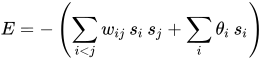
Where:

  • is the connection strength between unit and unit .
  • is the state, , of unit .
  • is the bias of unit in the global energy function. ( is the activation threshold for the unit.)

Often the weights are represented as a symmetric matrix with zeros along the diagonal.

Unit state probability

[edit]

The difference in the global energy that results from a single unit equaling 0 (off) versus 1 (on), written , assuming a symmetric matrix of weights, is given by:


This can be expressed as the difference of energies of two states:

Substituting the energy of each state with its relative probability according to the Boltzmann factor (the property of a Boltzmann distribution that the energy of a state is proportional to the negative log probability of that state) yields:

where is the Boltzmann constant and is absorbed into the artificial notion of temperature . Noting that the probabilities of the unit being on or off sum to allows for the simplification:

whence the probability that the -th unit is given by

where the scalar is referred to as the temperature of the system. This relation is the source of the logistic function found in probability expressions in variants of the Boltzmann machine.

Equilibrium state

[edit]

The network runs by repeatedly choosing a unit and resetting its state. After running for long enough at a certain temperature, the probability of a global state of the network depends only upon that global state's energy, according to a Boltzmann distribution, and not on the initial state from which the process was started. This means that log-probabilities of global states become linear in their energies. This relationship is true when the machine is "at thermal equilibrium", meaning that the probability distribution of global states has converged. Running the network beginning from a high temperature, its temperature gradually decreases until reaching a thermal equilibrium at a lower temperature. It then may converge to a distribution where the energy level fluctuates around the global minimum. This process is called simulated annealing.

To train the network so that the chance it will converge to a global state according to an external distribution over these states, the weights must be set so that the global states with the highest probabilities get the lowest energies. This is done by training.

Training

[edit]

The units in the Boltzmann machine are divided into 'visible' units, V, and 'hidden' units, H. The visible units are those that receive information from the 'environment', i.e. the training set is a set of binary vectors over the set V. The distribution over the training set is denoted .

The distribution over global states converges as the Boltzmann machine reaches thermal equilibrium. We denote this distribution, after we marginalize it over the hidden units, as .

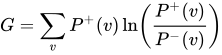
Our goal is to approximate the "real" distribution using the produced by the machine. The similarity of the two distributions is measured by the Kullbackโ€“Leibler divergence, :

where the sum is over all the possible states of . is a function of the weights, since they determine the energy of a state, and the energy determines , as promised by the Boltzmann distribution. A gradient descent algorithm over changes a given weight, , by subtracting the partial derivative of with respect to the weight.

Boltzmann machine training involves two alternating phases. One is the "positive" phase where the visible units' states are clamped to a particular binary state vector sampled from the training set (according to ). The other is the "negative" phase where the network is allowed to run freely, i.e. only the input nodes have their state determined by external data, but the output nodes are allowed to float. The gradient with respect to a given weight, , is given by the equation:[2]

where:

  • is the probability that units i and j are both on when the machine is at equilibrium on the positive phase.
  • is the probability that units i and j are both on when the machine is at equilibrium on the negative phase.
  • denotes the learning rate

This result follows from the fact that at thermal equilibrium the probability of any global state when the network is free-running is given by the Boltzmann distribution.

This learning rule is biologically plausible because the only information needed to change the weights is provided by "local" information. That is, the connection (synapse, biologically) does not need information about anything other than the two neurons it connects. This is more biologically realistic than the information needed by a connection in many other neural network training algorithms, such as backpropagation.

The training of a Boltzmann machine does not use the EM algorithm, which is heavily used in machine learning. By minimizing the KL-divergence, it is equivalent to maximizing the log-likelihood of the data. Therefore, the training procedure performs gradient ascent on the log-likelihood of the observed data. This is in contrast to the EM algorithm, where the posterior distribution of the hidden nodes must be calculated before the maximization of the expected value of the complete data likelihood during the M-step.

Training the biases is similar, but uses only single node activity:

Problems

[edit]

Theoretically the Boltzmann machine is a rather general computational medium. For instance, if trained on photographs, the machine would theoretically model the distribution of photographs, and could use that model to, for example, complete a partial photograph.

Unfortunately, Boltzmann machines experience a serious practical problem, namely that it seems to stop learning correctly when the machine is scaled up to anything larger than a trivial size.[citation needed] This is due to important effects, specifically:

  • the required time order to collect equilibrium statistics grows exponentially with the machine's size, and with the magnitude of the connection strengths[citation needed]
  • connection strengths are more plastic when the connected units have activation probabilities intermediate between zero and one, leading to a so-called variance trap. The net effect is that noise causes the connection strengths to follow a random walk until the activities saturate.

Types

[edit]

Restricted Boltzmann machine

[edit]
Graphical representation of an example restricted Boltzmann machine
Graphical representation of a restricted Boltzmann machine. The four blue units represent hidden units, and the three red units represent visible states. In restricted Boltzmann machines there are only connections (dependencies) between hidden and visible units, and none between units of the same type (no hidden-hidden, nor visible-visible connections).

Although learning is impractical in general Boltzmann machines, it can be made quite efficient in a restricted Boltzmann machine (RBM) which does not allow intralayer connections between hidden units and visible units, i.e. there is no connection between visible to visible and hidden to hidden units. After training one RBM, the activities of its hidden units can be treated as data for training a higher-level RBM. This method of stacking RBMs makes it possible to train many layers of hidden units efficiently and is one of the most common deep learning strategies. As each new layer is added the generative model improves.

An extension to the restricted Boltzmann machine allows using real valued data rather than binary data.[6]

One example of a practical RBM application is in speech recognition.[7]

Deep Boltzmann machine

[edit]

A deep Boltzmann machine (DBM) is a type of binary pairwise Markov random field (undirected probabilistic graphical model) with multiple layers of hidden random variables. It is a network of symmetrically coupled stochastic binary units. It comprises a set of visible units and layers of hidden units . No connection links units of the same layer (like RBM). For the DBM, the probability assigned to vector ฮฝ is

where are the set of hidden units, and are the model parameters, representing visible-hidden and hidden-hidden interactions.[8] In a DBN only the top two layers form a restricted Boltzmann machine (which is an undirected graphical model), while lower layers form a directed generative model. In a DBM all layers are symmetric and undirected.

Like DBNs, DBMs can learn complex and abstract internal representations of the input in tasks such as object or speech recognition, using limited, labeled data to fine-tune the representations built using a large set of unlabeled sensory input data. However, unlike DBNs and deep convolutional neural networks, they pursue the inference and training procedure in both directions, bottom-up and top-down, which allow the DBM to better unveil the representations of the input structures.[9][10][11]

However, the slow speed of DBMs limits their performance and functionality. Because exact maximum likelihood learning is intractable for DBMs, only approximate maximum likelihood learning is possible. Another option is to use mean-field inference to estimate data-dependent expectations and approximate the expected sufficient statistics by using Markov chain Monte Carlo (MCMC).[8] This approximate inference, which must be done for each test input, is about 25 to 50 times slower than a single bottom-up pass in DBMs. This makes joint optimization impractical for large data sets, and restricts the use of DBMs for tasks such as feature representation.

Spike-and-slab RBMs

[edit]

The need for deep learning with real-valued inputs, as in Gaussian RBMs, led to the spike-and-slab RBM (ssRBM), which models continuous-valued inputs with binary latent variables.[12] Similar to basic RBMs and its variants, a spike-and-slab RBM is a bipartite graph, while like GRBMs, the visible units (input) are real-valued. The difference is in the hidden layer, where each hidden unit has a binary spike variable and a real-valued slab variable. A spike is a discrete probability mass at zero, while a slab is a density over continuous domain;[13] their mixture forms a prior.[14]

An extension of ssRBM called ฮผ-ssRBM provides extra modeling capacity using additional terms in the energy function. One of these terms enables the model to form a conditional distribution of the spike variables by marginalizing out the slab variables given an observation.

In mathematics

[edit]

In more general mathematical setting, the Boltzmann distribution is also known as the Gibbs measure. In statistics and machine learning it is called a log-linear model. In deep learning the Boltzmann distribution is used in the sampling distribution of stochastic neural networks such as the Boltzmann machine.

History

[edit]

The Boltzmann machine is based on the Sherringtonโ€“Kirkpatrick spin glass model by David Sherrington and Scott Kirkpatrick.[15] The seminal publication by John Hopfield (1982) applied methods of statistical mechanics, mainly the recently developed (1970s) theory of spin glasses, to study associative memory (later named the "Hopfield network").[16]

The original contribution in applying such energy-based models in cognitive science appeared in papers by Geoffrey Hinton and Terry Sejnowski.[17][18][19] In a 1995 interview, Hinton stated that in 1983 February or March, he was going to give a talk on simulated annealing in Hopfield networks, so he had to design a learning algorithm for the talk, resulting in the Boltzmann machine learning algorithm.[20]

The idea of applying the Ising model with annealed Gibbs sampling was used in Douglas Hofstadter's Copycat project (1984).[21][22]

The explicit analogy drawn with statistical mechanics in the Boltzmann machine formulation led to the use of terminology borrowed from physics (e.g., "energy"), which became standard in the field. The widespread adoption of this terminology may have been encouraged by the fact that its use led to the adoption of a variety of concepts and methods from statistical mechanics. The various proposals to use simulated annealing for inference were apparently independent.

Similar ideas (with a change of sign in the energy function) are found in Paul Smolensky's "Harmony Theory".[23] Ising models can be generalized to Markov random fields, which find widespread application in linguistics, robotics, computer vision and artificial intelligence.

In 2024, Hopfield and Hinton were awarded Nobel Prize in Physics for their foundational contributions to machine learning, such as the Boltzmann machine.[24]

See also

[edit]

References

[edit]

Further reading

[edit]
[edit]
Revisions and contributorsEdit on WikipediaRead on Wikipedia
from Grokipedia
A Boltzmann machine is a stochastic neural network consisting of symmetrically connected units that operate in binary states, modeling joint probability distributions over data through an energy-based framework inspired by statistical mechanics.[1] These networks feature visible units that interface with external data and hidden units that capture underlying patterns, with connections governed by weights that represent pairwise interactions.[2] The state of the network evolves via probabilistic updates using Gibbs sampling, converging to an equilibrium distribution analogous to the Boltzmann distribution, where the probability of a configuration is proportional to the exponential of the negative energy divided by temperature.[1] Introduced in 1985 by David H. Ackley, Geoffrey E. Hinton, and Terrence J. Sejnowski, Boltzmann machines were developed to address learning in parallel distributed processing systems, building on earlier work like Hopfield networks to solve constraint satisfaction problems and perform unsupervised learning.[1] Hinton shared the 2024 Nobel Prize in Physics with John J. Hopfield for these foundational discoveries and inventions in machine learning with artificial neural networks.[3] The core learning algorithm adjusts connection weights to minimize the divergence between the model's distribution and the data distribution, using a stochastic approximation based on co-occurrence statistics during clamped (data-driven) and free-running phases.[1] This approach enables the network to learn internal representations without supervision, making it suitable for tasks such as pattern completion, dimensionality reduction, and generative modeling.[2] A prominent variant, the restricted Boltzmann machine (RBM), imposes a bipartite structure by eliminating intra-layer connections, which simplifies inference and training while retaining the generative capabilities of the full model; RBMs have become foundational in deep belief networks and modern deep learning architectures.[2] Despite computational challenges in full Boltzmann machines due to the need for extensive sampling, their theoretical elegance has influenced fields like probabilistic graphical models and energy-based learning, with ongoing research exploring scalable approximations.[2]

Fundamentals

Definition and Overview

A Boltzmann machine is a type of Markov random field consisting of symmetrically connected binary stochastic units that learn a probability distribution over binary input data.[4][1] It features visible units that interface with external data and hidden units that capture underlying patterns, with all connections being bidirectional and symmetric to enforce undirected dependencies.[1] The model is named after the Boltzmann distribution in statistical mechanics, developed by physicist Ludwig Boltzmann, which describes the equilibrium probabilities of states in physical systems.[1][5] The primary purposes of Boltzmann machines include unsupervised feature learning, where the network discovers latent representations from unlabeled data, and pattern association, enabling the completion of partial inputs based on learned constraints.[1] They are particularly valuable in machine learning for modeling joint probability distributions over variables, supporting tasks like data generation and density estimation.[4] In cognitive science, they provide a framework for simulating associative memory and constraint satisfaction processes inspired by neural computation.[1] As an energy-based model, the Boltzmann machine shares conceptual similarities with Hopfield networks, which also use energy minimization for associative recall, but extends this by incorporating hidden units and probabilistic state updates to enable generative capabilities and escape from local minima.[4][1] This stochastic nature allows the model to sample from complex distributions, making it suitable for unsupervised learning scenarios where deterministic approaches fall short.[4]

Relation to Statistical Physics

Boltzmann machines draw a direct analogy from statistical physics, particularly the Ising model, where network units correspond to magnetic spins that can take binary states (up or down, analogous to 1 or 0), and the interactions between units represent coupling strengths between spins, favoring aligned or anti-aligned configurations based on the sign and magnitude of these couplings.[1] This resemblance extends to spin-glass systems, such as the Sherrington-Kirkpatrick (SK) model, a mean-field approximation of disordered magnetic alloys where spins interact via random, symmetric couplings across all pairs, leading to frustrated states with multiple local energy minima that mimic the complex optimization landscapes in Boltzmann machines. In these physical systems, the goal is to find low-energy configurations amid frustration, paralleling how Boltzmann machines seek probabilistic states that satisfy constraints through stochastic dynamics.[6] Central to this foundation are prerequisite concepts from statistical mechanics, including the Boltzmann distribution, which describes the equilibrium probability of a system configuration $ s $ with energy $ E(s) $ as
P(s)=1Zexpโก(โˆ’E(s)T), P(s) = \frac{1}{Z} \exp\left(-\frac{E(s)}{T}\right),
where $ Z $ is the partition function normalizing the probabilities over all configurations, and $ T $ is a temperature parameter that modulates the randomness of state selectionโ€”high $ T $ promotes exploration of higher-energy states, while low $ T $ biases toward minima, akin to annealing processes in physics.[1] Entropy, measuring the disorder or multiplicity of accessible states ($ S = k \ln \Omega $, with $ k $ as Boltzmann's constant and $ \Omega $ the number of microstates), interacts with energy in the free energy $ F = E - T S $, providing a thermodynamic potential that guides the system's equilibrium; in Boltzmann machines, this framework underpins the probabilistic nature of unit activations and the Gibbs measure, the general probability distribution over configurations induced by the energy function, ensuring that sampled states reflect the Boltzmann form at thermal equilibrium.[1] Historically, the physical motivation for Boltzmann machines arose from efforts to model disordered systems like spin glasses, which exhibit phase transitions between ordered and chaotic phases under varying temperature, offering insights into collective behavior in frustrated networks. This inspiration was adapted by researchers in computational neuroscience to simulate parallel processing in neural-like systems, where stochastic units emulate the thermal fluctuations of physical particles, enabling the modeling of associative memory and constraint satisfaction without deterministic rules.[1]

Model Components

Network Structure

A Boltzmann machine is composed of a collection of interconnected units that are partitioned into two primary categories: visible units and hidden units. The visible units, often denoted as $ V $, serve as the interface between the network and the external environment, handling input data and generating output representations. In contrast, the hidden units, denoted as $ H $, function to capture underlying latent structures or constraints within the data, enabling the model to learn complex patterns without direct environmental connections. All units in the network, whether visible or hidden, operate in a binary fashion, assuming states of either 0 (off) or 1 (on), which allows the model to represent discrete hypotheses or features in a probabilistic manner.[1] The connectivity of a Boltzmann machine forms a fully connected undirected graph, where every pair of distinct units is linked by bidirectional connections. These connections are characterized by symmetric weights $ w_{ij} = w_{ji} $, ensuring that the influence between units $ i $ and $ j $ is mutual and of equal strength in both directions; weights can be positive, negative, or zero to indicate excitatory, inhibitory, or absent interactions, respectively. Importantly, no self-connections exist, meaning a unit does not connect to itself, which prevents trivial feedback loops. This architecture supports the network's ability to model joint dependencies across all units through a symmetric interaction topology.[1] To account for inherent preferences in unit activation, each unit $ i $ is equipped with an individual bias term $ \theta_i $ (or equivalently $ b_i $), which acts as an additional input akin to a connection from a perpetually active reference unit. This bias shifts the tendency of the unit toward one state over the other, independent of inter-unit influences. Graphically, the Boltzmann machine is typically illustrated as a fully connected graph, with visible and hidden units often distinguished by shape or positioning (e.g., visible units on one side and hidden on the other), underscoring the stochastic, probabilistic nature of state transitions in contrast to deterministic neural activations.[1]

Energy Function and Parameters

The energy function of a Boltzmann machine defines the scalar potential that governs the probability distribution over network states, drawing inspiration from the Hamiltonian in statistical physics. For a network with visible units v=(v1,โ€ฆ,vn)\mathbf{v} = (v_1, \dots, v_n) and hidden units h=(h1,โ€ฆ,hm)\mathbf{h} = (h_1, \dots, h_m), where each unit state siโˆˆ{0,1}s_i \in \{0, 1\} for iโˆˆVโˆชHi \in V \cup H, the energy E(v,h)E(\mathbf{v}, \mathbf{h}) is given by
E(v,h)=โˆ’โˆ‘iโˆˆVโˆชHฮธisiโˆ’โˆ‘i<jwijsisj, E(\mathbf{v}, \mathbf{h}) = -\sum_{i \in V \cup H} \theta_i s_i - \sum_{i < j} w_{ij} s_i s_j,
with ฮธi\theta_i denoting the bias for unit ii and wijw_{ij} the symmetric weight between units ii and jj (i.e., wij=wjiw_{ij} = w_{ji}).[1] This formulation ensures that configurations satisfying strong positive interactions (high wijw_{ij} when both si=sj=1s_i = s_j = 1) or aligning with biases (high ฮธi\theta_i when si=1s_i = 1) yield lower energy values.[1] Lower energy corresponds to higher-probability configurations under the model's stochastic dynamics, as the joint probability follows a Boltzmann distribution P(v,h)โˆexpโก(โˆ’E(v,h)/T)P(\mathbf{v}, \mathbf{h}) \propto \exp(-E(\mathbf{v}, \mathbf{h}) / T), where T>0T > 0 is a temperature parameter that scales the energy landscape.[1] The symmetry of the weights enforces undirected interactions, meaning the influence between connected units is bidirectional and reciprocal, which is essential for modeling symmetric constraints in constraint satisfaction tasks.[1] At the standard operating temperature T=1T = 1, the distribution directly reflects the energy differences without additional scaling, facilitating equilibrium sampling during inference.[1] The parameters play distinct roles in capturing the underlying data structure: biases ฮธi\theta_i encode the marginal tendencies of individual units to activate, effectively learning the average activation probabilities for each unit in isolation.[1] In contrast, the weights wijw_{ij} model pairwise dependencies, adjusting to represent correlations or anticorrelations between units based on their co-activation patterns in the training environment.[1] Together, these parameters allow the Boltzmann machine to approximate the joint distribution of observed data by minimizing discrepancies between model-generated and empirical statistics.[1]

Stochastic Behavior

Unit State Probabilities

In Boltzmann machines, units are assumed to take binary states, either 0 (off) or 1 (on), to model stochastic binary decision-making analogous to spin variables in statistical physics, facilitating tractable probabilistic computations.[1] This binary assumption simplifies the derivation of conditional distributions while capturing excitatory and inhibitory interactions among units. Although extensions to multi-state units exist, such as in higher-order models, the standard formulation retains binary states for core analyses.[1] The state of an individual unit $ s_i $ is updated stochastically according to its conditional probability given the states of all other units $ \mathbf{s}_{-i} $. Specifically, the probability that unit $ i $ is on is
P(si=1โˆฃsโˆ’i)=ฯƒ(ฮ”EiT), P(s_i = 1 \mid \mathbf{s}_{-i}) = \sigma\left( \frac{\Delta E_i}{T} \right),
where $ \sigma(x) = \frac{1}{1 + e^{-x}} $ is the logistic sigmoid function, $ T > 0 $ is the temperature parameter controlling the degree of randomness (with $ T = 1 $ often used in practice), and $ \Delta E_i = \theta_i + \sum_{j \neq i} w_{ij} s_j $ represents the local field or effective input to unit $ i $.[1] Here, $ \theta_i $ is the bias term for unit $ i $, biasing it toward being on if positive, and $ w_{ij} $ are the symmetric connection weights, with positive values encouraging unit $ i $ to match the state of unit $ j $ and negative values promoting opposite states.[1] This local update rule arises from the underlying energy-based model, where the probability reflects the relative energy change associated with flipping the state of unit $ i $. The bias $ \theta_i $ sets an intrinsic activation tendency independent of other units, while the weighted sum $ \sum_{j \neq i} w_{ij} s_j $ aggregates influences from neighboring units, determining the likelihood of activation based on the current network configuration.[1] To simulate the stochastic dynamics, units are updated asynchronously via Gibbs sampling, where each unit $ i $ is sequentially selected and its state resampled from the above conditional distribution, or in parallel with randomized blocking to approximate the equilibrium process without introducing excessive correlations.[1] This procedure ensures that the network explores configurations probabilistically, with the temperature $ T $ modulating the sharpness of the sigmoidโ€”lower $ T $ yields more deterministic updates, while higher $ T $ increases exploration.[1]

Equilibrium Distribution and Sampling

In a Boltzmann machine, the joint probability distribution over the visible units v\mathbf{v} and hidden units h\mathbf{h} at equilibrium is given by the Boltzmann-Gibbs distribution:
P(v,h)=1Zexpโก(โˆ’E(v,h)T), P(\mathbf{v}, \mathbf{h}) = \frac{1}{Z} \exp\left(-\frac{E(\mathbf{v}, \mathbf{h})}{T}\right),
where E(v,h)E(\mathbf{v}, \mathbf{h}) is the energy of the joint state, TT is the temperature parameter (often set to 1 for simplicity), and ZZ is the partition function defined as Z=โˆ‘vโˆ‘hexpโก(โˆ’E(v,h)/T)Z = \sum_{\mathbf{v}} \sum_{\mathbf{h}} \exp\left(-E(\mathbf{v}, \mathbf{h})/T\right), which normalizes the distribution over all possible configurations.[1][4] This form ensures that states with lower energy are more probable, mirroring principles from statistical mechanics.[1] The system reaches this equilibrium distribution through stochastic dynamics modeled as a Markov chain Monte Carlo (MCMC) process, where asynchronous updates of individual units drive the network toward the stationary distribution after sufficient iterations.[1][4] To escape local minima during sampling and improve exploration of the state space, simulated annealing can be applied by gradually decreasing the temperature TT from a high value (promoting random exploration) to a low value (favoring low-energy states), effectively transitioning the stochastic process toward a deterministic optimization akin to a Hopfield network at T=0T=0.[1][4] Computing the partition function ZZ exactly is intractable for large networks due to the exponential number of configurations, rendering direct normalization computationally infeasible.[1] Instead, approximations rely on sampling methods like MCMC to estimate ZZ or its logarithm, often through techniques such as annealed importance sampling that bridge between tractable auxiliary distributions and the target Boltzmann distribution.[4] These approximations are essential for practical inference, as they enable the evaluation of probabilities without enumerating all states.[1]

Learning Procedures

Training Objective

The primary training objective for a Boltzmann machine is to maximize the log-likelihood of the observed data under the model's joint probability distribution over visible units, thereby learning a generative model that captures the underlying data distribution.[1] This objective is mathematically equivalent to minimizing the Kullback-Leibler (KL) divergence between the empirical data distribution $ Q(\mathbf{v}) $ and the model's equilibrium distribution $ P(\mathbf{v}) $, defined as
DKL(QโˆฅP)=โˆ‘vQ(v)lnโกQ(v)P(v), D_{\text{KL}}(Q \parallel P) = \sum_{\mathbf{v}} Q(\mathbf{v}) \ln \frac{Q(\mathbf{v})}{P(\mathbf{v})},
where the summation is over all possible visible configurations $ \mathbf{v} $, and $ P(\mathbf{v}) = \frac{1}{Z} \sum_{\mathbf{h}} e^{-E(\mathbf{v}, \mathbf{h})} $ with $ Z $ as the partition function.[1] Achieving this ensures the model assigns high probability to observed data while penalizing mismatches with the environment's constraints.[7] To compute the gradient of the log-likelihood with respect to the connection weights, training alternates between two phases: the positive phase and the negative phase. In the positive phase, the visible units are clamped to specific data vectors drawn from the environment, fixing their states to reflect observed inputs; expectations of pairwise unit co-occurrences (or state correlations) are then calculated over the resulting conditional distribution of hidden units, providing a data-driven estimate of the positive gradient term.[1] This phase aligns the model's parameters with empirical statistics by encouraging connections that frequently co-occur in the data.[8] Conversely, the negative phase involves allowing all units to evolve freely according to the model's current parameters, sampling from the unconditional equilibrium distribution to estimate the negative gradient term, which approximates the expectations needed for the partition function $ Z $ or free-running correlations.[1] These samples help subtract off over-represented or implausible configurations, refining the model to reduce discrepancies.[7] The difference between positive and negative phase estimates yields the stochastic gradient update for weights, directly descending the KL divergence.[1] This alternating procedure can be interpreted through a wake-sleep lens, where the positive (wake) phase learns generative weights by associating data-driven states, and the negative (sleep) phase consolidates recognition of the model's internal representations by sampling freely.[1] Such duality supports unsupervised learning of latent features without explicit supervision.[9]

Algorithms for Optimization

Training Boltzmann machines relies on stochastic gradient descent to maximize the log-likelihood of the data, where the gradient for each weight $ w_{ij} $ is approximated as $ \frac{\partial \log P}{\partial w_{ij}} \approx \langle s_i s_j \rangle_{\text{data}} - \langle s_i s_j \rangle_{\text{model}} $.[1] This approximation arises from two phases: the positive phase, which computes the expectation $ \langle s_i s_j \rangle_{\text{data}} $ by clamping visible units to data samples and sampling or averaging over the resulting equilibrium distribution of hidden units; and the negative phase, which estimates $ \langle s_i s_j \rangle_{\text{model}} $ by allowing the network to evolve freely from an initial state (often the positive phase configuration) until reaching thermal equilibrium under the model's distribution.[1] In practice, the full equilibrium in the negative phase requires extensive Markov chain Monte Carlo (MCMC) sampling via Gibbs steps, which is computationally prohibitive for large networks, as each update involves running long chains to mix well.[1] Due to these challenges, full Boltzmann machines are rarely trained on large datasets in practice, with restricted variants often preferred for scalability. To address this, contrastive divergence (CD-kk) approximates the negative phase by performing only kk steps of Gibbs sampling instead of full MCMC, yielding a biased but efficient gradient estimate that still drives learning toward a good approximation of the true maximum likelihood objective.[10] Introduced for products of experts and particularly efficient for bipartite structures like restricted Boltzmann machines, CD-kk can be adapted for full Boltzmann machines but requires more complex sampling procedures; the update rule becomes $ \Delta w_{ij} \propto \langle s_i s_j \rangle_{\text{data}} - \langle s_i s_j \rangle_{k} $, where $ \langle \cdot \rangle_{k} $ denotes the expectation after kk steps, reducing training time significantly while maintaining effective density modeling.[10] Persistent contrastive divergence (PCD) further accelerates training by maintaining a set of persistent Markov chains across gradient updates, rather than restarting them each iteration, which reduces variance in the negative phase estimates and improves sample quality without increasing per-iteration cost.[11] In PCD, chains are updated with a single Gibbs step per mini-batch using the current parameters, leveraging the slow evolution of weights to keep samples near the model distribution; this contrasts with standard CD by avoiding reinitialization overhead and poor mixing from data points, leading to superior performance in high-dimensional settings.[11] Other accelerations, such as momentum on weight updates or adaptive learning rates, can be combined with PCD to stabilize gradients.[11] Biases in Boltzmann machines are updated analogously to weights, treated as connections from a perpetually active bias unit, with gradients $ \frac{\partial \log P}{\partial b_i} \approx \langle s_i \rangle_{\text{data}} - \langle s_i \rangle_{\text{model}} $ computed via the same positive and negative phases.[1] Implementation typically involves mini-batch processing for efficiency, with stochastic approximations averaged over multiple chains (e.g., 10-100) to lower noise; convergence is monitored by tracking the average log-likelihood on validation data, halting training when it plateaus (e.g., changes <0.1% over 10 epochs) to avoid overfitting or divergence in the approximations.[1]

Challenges

Computational Complexity

The computation of the partition function $ Z $ in a Boltzmann machine, defined as the sum over all $ 2^N $ possible configurations of $ N $ units, requires exponential time in $ N $ for exact evaluation, rendering it intractable for networks beyond a few dozen units. This fundamental challenge arises because each term in the sum involves exponentiating the energy function, which itself depends on pairwise interactions among all units. As a result, exact maximum likelihood training, which relies on gradients involving $ \log Z $, is computationally prohibitive even for moderate-sized models.[12] Approximate inference and learning rely on Markov chain Monte Carlo (MCMC) methods, such as Gibbs sampling, to estimate expectations under the equilibrium distribution; however, in fully connected Boltzmann machines, the MCMC mixing time scales poorly with network size due to the dense interconnections creating highly multimodal energy landscapes that hinder rapid exploration of the state space. Dense connections exacerbate slow convergence to equilibrium, often necessitating thousands of iterations per sample, which compounds the temporal overhead during training. Early experiments confirmed this limitation, restricting practical implementations to small networks (e.g., 4-2-4 units) on sequential hardware, where even modest annealing cycles proved time-intensive.[12][1] Space requirements further constrain scalability, as the weight matrix for $ N $ units demands $ O(N^2) $ storage for the fully connected symmetric parameters, becoming prohibitive for large $ N $ (e.g., millions of parameters for image datasets like MNIST). These combined hurdlesโ€”exponential-time exact computations, poor MCMC mixing, and quadratic spaceโ€”explain why full Boltzmann machines are rarely deployed beyond toy problems or small-scale demonstrations today, with most applications shifting to more tractable variants.[12][1]

Practical Limitations

One significant practical limitation of Boltzmann machines arises during the learning process, where the stochastic nature of the gradient estimatesโ€”derived from differences in sampled expectations under clamped conditionsโ€”introduces substantial noise. This noise causes the connection strengths to perform a random walk, a phenomenon known as the variance trap, until the unit activities saturate, leading to unstable training and poor convergence.[1] In full Boltzmann machines with bidirectional connections between all units, this issue is exacerbated compared to restricted variants, as the complex interactions amplify the variance in equilibrium statistics, often requiring very small learning rates to mitigate random drifting.[4] Relatedly, during inference and sampling, Boltzmann machines are prone to trapping in low-probability states or poor local minima of the energy landscape, which hinders their ability to capture the multimodality inherent in real-world data distributions. The stochastic updates via Gibbs sampling or Metropolis-Hastings help escape such traps in principle, but in practice, the full connectivity results in slow mixing times and persistent occupation of suboptimal modes, reducing the diversity of generated samples.[1] This mode-seeking behavior fails to adequately represent complex, multi-peaked probability distributions, limiting the model's generative utility without additional techniques like simulated annealing.[13] In unsupervised learning settings, the high dimensionality of hidden units grants Boltzmann machines considerable expressive power, but this often leads to overfitting, where the model memorizes idiosyncrasies of the training data rather than learning generalizable features. Without regularization mechanisms such as noisy clampingโ€” which introduces probabilistic variations to prevent infinite weights on rare patternsโ€”the network tends to overfit noise, particularly in high-dimensional spaces where the number of parameters scales quadratically with units.[1] Empirical studies on small-scale tasks, like pattern completion with 40-10-40 networks, demonstrate reasonable performance (e.g., 98.6% accuracy), but scaling to larger, real datasets reveals diminished generalization due to this memorization tendency.[1] Boltzmann machines exhibit high sensitivity to hyperparameters, notably the temperature parameter $ T $ and learning rate $ \epsilon $, which critically influence training stability and outcome. High $ T $ accelerates equilibrium but biases toward higher-energy states, while low $ T $ favors low-energy configurations at the cost of slower convergence; optimal performance often requires annealing schedules that gradually decrease $ T $ to balance exploration and exploitation.[1] Similarly, the learning rate must be tuned finelyโ€”typically small values like $ 10^{-3} $ times the weight magnitudeโ€”to counteract gradient noise without stalling progress, with deviations leading to divergence or entrapment in suboptimal solutions; the rate's efficacy is further modulated by temperature, narrowing the viable parameter window.[13][14] Overall, these behavioral and statistical pitfalls manifest in empirical observations of poor performance on real datasets without approximations or architectural restrictions, as the unmitigated full connectivity and stochastic dynamics yield unreliable models that motivate the development of variants like restricted Boltzmann machines. For instance, early experiments on encoding tasks succeeded only after thousands of cycles on modest networks, underscoring the impracticality for larger-scale applications.[1]

Variants

Restricted Boltzmann Machines

The restricted Boltzmann machine (RBM) is a variant of the Boltzmann machine designed to mitigate the computational challenges associated with learning in fully connected networks by imposing a specific architectural constraint.[4] Introduced by Paul Smolensky in 1986 as part of harmony theory, the RBM features a bipartite graph structure consisting of two layers: a visible layer representing input data and a hidden layer capturing latent features. Crucially, there are no intra-layer connections within the visible or hidden units; connections exist only between the visible and hidden layers, which eliminates the "explaining away" effects that complicate inference in general Boltzmann machines.[15] This bipartite architecture leads to significant mathematical simplifications in the model's energy function and probability distributions. The energy of an RBM is given by
E(v,h)=โˆ’aโŠคvโˆ’bโŠคhโˆ’vโŠคWh, E(\mathbf{v}, \mathbf{h}) = -\mathbf{a}^\top \mathbf{v} - \mathbf{b}^\top \mathbf{h} - \mathbf{v}^\top \mathbf{W} \mathbf{h},
where v\mathbf{v} and h\mathbf{h} are the visible and hidden unit states, a\mathbf{a} and b\mathbf{b} are bias vectors, and W\mathbf{W} is the weight matrix between layers.[4] Due to the absence of intra-layer interactions, the conditional distributions factorize: the hidden units are independent given the visible units, and vice versa. Specifically, the conditional probability for a hidden unit is
P(hj=1โˆฃv)=ฯƒ(bj+โˆ‘iwijvi), P(h_j = 1 \mid \mathbf{v}) = \sigma\left(b_j + \sum_i w_{ij} v_i\right),
and similarly for the visible units given the hidden:
P(vi=1โˆฃh)=ฯƒ(ai+โˆ‘jwijhj), P(v_i = 1 \mid \mathbf{h}) = \sigma\left(a_i + \sum_j w_{ij} h_j\right),
where ฯƒ(x)=(1+eโˆ’x)โˆ’1\sigma(x) = (1 + e^{-x})^{-1} is the logistic sigmoid function.[16] This structure also allows the partition function ZZ to be expressed such that the sum over hidden states factorizes as a product over individual hidden units for fixed visible states, facilitating more efficient approximations despite ZZ remaining intractable in general.[4] The tractable conditionals enable efficient training procedures, particularly through block Gibbs sampling, where the network state is alternately sampled from P(hโˆฃv)P(\mathbf{h} \mid \mathbf{v}) and P(vโˆฃh)P(\mathbf{v} \mid \mathbf{h}) in closed form, yielding exact samples conditional on the other layer.[17] For optimization, contrastive divergence with one step (CD-1), introduced by Geoffrey Hinton in 2002, approximates the gradient of the log-likelihood by performing a single Gibbs sampling step from the data-driven visible states and updating weights via simple mean-field expectations rather than full MCMC chains.[17] This addresses the computational complexity of training general Boltzmann machines by reducing the need for prolonged sampling.[4] RBMs gained prominence for their role in layer-wise pretraining of deep neural networks, where multiple RBMs are stacked such that the hidden layer of one serves as the visible layer for the next, enabling unsupervised feature learning before supervised fine-tuning.[15] In Hinton's seminal 2006 work, this greedy stacking approach demonstrated effective initialization for deep belief networks, achieving state-of-the-art performance on tasks like digit recognition by learning hierarchical representations from unlabeled data.[15]

Deep and Other Extensions

Deep Boltzmann machines (DBMs), introduced in 2009 by Ruslan Salakhutdinov and Geoffrey Hinton, extend the restricted Boltzmann machine architecture by incorporating multiple hidden layers with undirected connections between adjacent layers, enabling the modeling of more complex hierarchical representations.[18] Unlike stacked RBMs, which treat layers as independent during pretraining, DBMs allow bidirectional interactions across layers, defined by an energy function
E(v,h(1),โ€ฆ,h(L))=โˆ’bvโŠคvโˆ’โˆ‘l=1LblโŠคh(l)โˆ’โˆ‘l=0Lโˆ’1h(l)โŠคW(l+1)h(l+1), E(\mathbf{v}, \mathbf{h}^{(1)}, \dots, \mathbf{h}^{(L)}) = -\mathbf{b}_v^\top \mathbf{v} - \sum_{l=1}^L \mathbf{b}_l^\top \mathbf{h}^{(l)} - \sum_{l=0}^{L-1} \mathbf{h}^{(l)\top} \mathbf{W}^{(l+1)} \mathbf{h}^{(l+1)},
where h(0)=v\mathbf{h}^{(0)} = \mathbf{v}, bv\mathbf{b}_v is the visible bias vector, bl\mathbf{b}_l are the hidden biases for layer ll, and W(l+1)\mathbf{W}^{(l+1)} are the weights between layers ll and l+1l+1.[19] This structure enhances expressivity, allowing DBMs to capture intricate statistical dependencies in higher layers that single-layer RBMs cannot.[18] Inference in DBMs is approximated using mean-field variational methods, which iteratively compute expectations over hidden layers to estimate data-dependent statistics, as exact inference remains intractable due to the fully connected nature across layers.[18] Learning typically begins with layer-wise pretraining via RBMs, followed by fine-tuning with persistent contrastive divergence or similar approximations for the full model.[18] Compared to single-layer RBMs, DBMs offer greater representational power but incur higher computational costs, with inference scaling exponentially in the number of hidden units without approximations.[18] Spike-and-slab RBMs, proposed by Liam Courville, James Bergstra, and Yoshua Bengio in 2011, address limitations of standard RBMs in handling real-valued data by hybridizing hidden units with a binary spike variable hiโˆˆ{0,1}h_i \in \{0,1\} that gates a continuous slab variable siโˆˆRKs_i \in \mathbb{R}^K, drawn from a Gaussian distribution.[20] The energy function incorporates this structure as E(v,s,h)=12vTฮ›vโˆ’โˆ‘i(vTWisihi+12siTฮฑisi+bihi)E(\mathbf{v}, \mathbf{s}, \mathbf{h}) = \frac{1}{2} \mathbf{v}^T \Lambda \mathbf{v} - \sum_i \left( \mathbf{v}^T \mathbf{W}_i \mathbf{s}_i h_i + \frac{1}{2} \mathbf{s}_i^T \alpha_i \mathbf{s}_i + b_i h_i \right), enabling the model to capture both sparse binary features (spikes) and continuous variations (slabs) for inputs like natural images.[20] This design improves upon Gaussian RBMs by allowing diagonal covariances in slabs, facilitating efficient block Gibbs sampling for learning and inference.[20] Other extensions include Gaussian-Bernoulli RBMs, which model continuous visible units with Gaussian distributions while keeping hidden units binary, suitable for data like grayscale images where visible variances are fixed or learned. Temporal variants, such as the recurrent temporal RBM (RTRBM), incorporate recurrent hidden-to-hidden connections to process sequential data, enabling exact inference via deterministic state updates and backpropagation through time for applications like motion capture modeling.[21] These extensions generally trade off increased model expressivityโ€”such as better covariance modeling or temporal dependenciesโ€”for elevated inference and training complexity relative to basic single-layer RBMs.[18] More recent extensions as of 2025 include neural Boltzmann machines for conditional generation and semi-quantum restricted Boltzmann machines integrating quantum computing elements.[22][23]

Applications and Impact

Historical and Foundational Uses

Boltzmann machines were initially applied to optimization problems, drawing on their roots in statistical mechanics to solve combinatorial challenges such as the traveling salesman problem through simulated annealing techniques that allowed escape from local minima.[24] This approach modeled the problem as an energy minimization task, where the network iteratively adjusted states to find low-energy configurations representing optimal routes.[24] In neuroscience-inspired contexts, they served as associative memory models, storing patterns as local energy minima to enable robust recall and completion of incomplete inputs, mimicking neural storage mechanisms.[1] In cognitive science, Boltzmann machines facilitated modeling of decision-making processes via stochastic units that extended perceptron-like elements with probabilistic activation, allowing networks to balance speed and accuracy in interpreting ambiguous data.[1] The seminal work by Ackley, Hinton, and Sejnowski in 1985 demonstrated how these networks could learn internal representations for perceptual inference, linking computational models to brain-like distributed processing.[1] These early applications bridged statistical physics and artificial intelligence by adapting Boltzmann distributions for energy-based learning, pioneering unsupervised paradigms that extracted features from unlabeled data prior to the widespread adoption of backpropagation for supervised tasks.[1] By enabling networks to discover hidden structures without explicit supervision, Boltzmann machines laid groundwork for generative modeling in AI.[1] Foundational experiments in the 1980s focused on small-scale binary data modeling, such as encoder-decoder architectures (e.g., 4-2-4 or 8-3-8 configurations) that learned to compress and reconstruct patterns with high fidelity, achieving up to 98.6% accuracy in completion tasks on noisy binary inputs.[1] These tests illustrated practical utility in pattern recognition, where partial inputs were completed by minimizing network energy, serving as proofs-of-concept for cognitive and optimization applications.[1]

Modern Developments

In the mid-2000s, Boltzmann machines played a pivotal role in revitalizing deep learning through their integration into deep belief networks (DBNs). Geoffrey Hinton and colleagues introduced a greedy layer-wise training algorithm in 2006, stacking restricted Boltzmann machines (RBMs) to form DBNs, which enabled efficient unsupervised pretraining of deep neural networks by learning hierarchical feature representations from unlabeled data.[15] This breakthrough addressed the vanishing gradient problem in earlier deep architectures and demonstrated superior performance on tasks like image classification, achieving error rates as low as 1.25% on the MNIST dataset when fine-tuned with backpropagation, thus influencing the resurgence of deep learning.[25] The approach's success in capturing complex data dependencies without supervision laid foundational groundwork for modern neural network pretraining strategies.[26] Contemporary generative modeling has seen Boltzmann machines evolve as energy-based models (EBMs) offering alternatives to generative adversarial networks (GANs) by directly modeling joint probability distributions via energy functions, avoiding adversarial training instabilities.[27] Post-2020 advancements have extended these principles to diffusion models for protein design, where techniques like ExEnDiff generate Boltzmann-weighted structural ensembles by simulating folding processes that approximate equilibrium distributions with minimal computational overhead.[28] For instance, such models have produced protein configurations aligning with experimental free energy landscapes, enhancing applications in drug discovery and biomolecular simulation.[29] Implementations of Boltzmann machines in modern frameworks like TensorFlow and PyTorch have facilitated scalable training through optimized contrastive divergence algorithms and GPU acceleration, enabling handling of large-scale datasets.[30] These libraries also bridge Boltzmann machines to variational autoencoders (VAEs) by incorporating energy-based priors into latent space modeling, improving generative capabilities for complex data like images and molecules.[31] The 2024 Nobel Prize in Physics, awarded to John Hopfield and Geoffrey Hinton, recognized their foundational contributions to machine learning via physical models like Boltzmann machines, catalyzing renewed research interest in 2025, including quantum-enhanced variants and hybrid EBM-diffusion systems.[3] This accolade has spurred explorations into energy-efficient AI architectures inspired by statistical physics.[32]

History

Origins in Physics

The Boltzmann machine draws its foundational concepts from statistical physics, particularly models developed in the early to mid-20th century to describe magnetic systems and disordered materials.[33] A key precursor is the Ising model, introduced by Wilhelm Lenz in 1920 and analytically solved by Ernst Ising in 1925, which models ferromagnetism through interacting binary spins on a lattice, capturing cooperative behavior akin to atomic magnetic moments aligning in a material.[34][35] This model provided an early framework for understanding phase transitions in ordered systems, where thermal energy competes with interaction strengths to determine macroscopic magnetization.[36] Building on the Ising model, the Sherrington-Kirkpatrick (SK) model, proposed in 1975, extended these ideas to disordered systems known as spin glasses, featuring random interactions among spins to mimic frustrated magnetic alloys with competing ferromagnetic and antiferromagnetic bonds.[37] The SK model introduced infinite-range interactions and Gaussian-distributed couplings, enabling exact solvability via mean-field approximations and revealing complex energy landscapes with multiple metastable states, which challenged traditional notions of equilibrium in glassy materials.[38] These disordered configurations highlighted phenomena like replica symmetry breaking, providing a theoretical basis for non-convex optimization problems later relevant to computational models.[39] The adaptation of these physics models to computational paradigms began with simulated annealing, developed by Scott Kirkpatrick and colleagues in 1983, which borrowed the Metropolis-Hastings algorithm from statistical mechanics to explore energy minima in optimization landscapes by gradually cooling a system from high "temperature" states.[40] This method directly inspired probabilistic neural networks by demonstrating how thermal fluctuations could escape local optima, paving the way for stochastic sampling in machine learning architectures.[41] Central to these origins are imported physics concepts, including the Hamiltonian as an energy function defining system states, thermal fluctuations that introduce stochasticity via Boltzmann distributions, and phase transitions marking shifts between ordered and disordered regimes, all serving as metaphors for learning dynamics in probabilistic models.[33] Early theoretical work connected Boltzmann machines explicitly to mean-field theory in glassy systems, such as through extensions of the SK model, where variational approximations simplified inference over correlated variables in high-dimensional spaces.[42] These links, explored in foundational papers on spin glass thermodynamics, underscored the machines' ability to model frustrated interactions analogous to physical frustration.[43]

Key Developments and Recognition

The Boltzmann machine was formally introduced in 1985 by David H. Ackley, Geoffrey E. Hinton, and Terrence J. Sejnowski in their seminal paper, which proposed a stochastic neural network model inspired by statistical mechanics for parallel distributed processing and unsupervised learning of feature representations.[7] This work established the model's ability to learn internal representations through a learning algorithm based on minimizing the difference between observed and model-generated data distributions, marking a key milestone in early neural network research.[1] During the late 1980s and 1990s, advancements in Boltzmann machines included their application to practical problems and integration with other learning paradigms, such as backpropagation in hybrid architectures for improved training efficiency.[44] Notably, early applications demonstrated the model's utility in speech recognition, where Boltzmann machines were trained to model phonetic patterns and achieved 85% accuracy in distinguishing 11 steady-state English vowels.[45] These developments positioned Boltzmann machines as a foundational tool in connectionist approaches, though computational challenges limited widespread adoption until later refinements. The 2000s saw a revival of interest in Boltzmann machines through Geoffrey E. Hinton's work on restricted Boltzmann machines (RBMs), which simplified the architecture by removing intra-layer connections to enable faster approximate inference via contrastive divergence, facilitating scalable pre-training of deep networks. This innovation underpinned the 2006 introduction of deep belief networks, where stacked RBMs provided an unsupervised initialization method that overcame vanishing gradient issues in deep learning, sparking the modern deep learning revolution. In 2024, John J. Hopfield and Geoffrey E. Hinton received the Nobel Prize in Physics for their foundational contributions to machine learning, including the Boltzmann machine as a key invention enabling artificial neural networks to process and generate patterns akin to physical systems.[3] Following the award, research on Boltzmann machines experienced renewed momentum by 2025, with increased funding from agencies like the NSF supporting extensions into quantum and photonic implementations, such as semi-quantum RBMs for enhanced generative modeling and hardware accelerators for optimization tasks.[46][23] This resurgence has led to theoretical advancements, including evolved quantum Boltzmann machines for variational quantum optimization, building on the model's probabilistic framework to address contemporary AI challenges.[47]

References

User Avatar
No comments yet.