


Community hub
Recent from talks
Contribute something
Nothing was collected or created yet.
Box braids
View on Wikipedia

Box braids are a type of hair-braiding style that is predominantly popular among African people and the African diaspora. This type of hairstyle is a "protective style" (a style which can be worn for a long period of time to let natural hair grow and protect the ends of the hair) and is "boxy", consisting of square-shaped hair divisions. Box braids are generally installed by using synthetic hair which helps to add thickness as well as helping the natural hair that is in the braid. Because they are not attached to the scalp like other similar styles such as cornrows, box braids can be styled in a number of different ways. The installation process of box braids can be lengthy, but once installed they can last for six to eight weeks. They are known for being easy to maintain.[2][3]
History
[edit]Hair-braiding styles were used to help differentiate tribes, locations, and also possibly a symbol of wealth and power due to the amount of effort that went into styling braids.[4] Box braids were not given a specific name until the 1990s when popularized by R&B musician Janet Jackson, but have been used for years. This style of braiding comes from the Eembuvi braids of Namibia or the chin-length bob braids of the women of the Nile Valley from over 3,000 years ago.[4] In the Mbalantu tribe of Namibia, braiding was an important social practice. Older women would gather with their girls and teach them how to braid.[5] Box braids are also commonly worn by the Khoisan people of South Africa[6] and the Afar people in the horn of Africa.[7][8] In Africa, braid styles and patterns have been used to distinguish tribal membership, marital status, age, wealth, religion and social ranking.[9] In some countries of Africa, the braids were used for communication.[10] In some Caribbean islands, braid patterns were used to map routes to escape slavery.[11][12] Layers of finely chopped tree bark and oils can be used to support the hairstyle. Human hair was at one point wefted into fiber wig caps made of durable materials like wool and felt for reuse in traditional clothing as well as different rituals.[4] Cowry shells, jewels, beads and other material items adorned box braids of older women alluding to their readiness to have daughters, emulation of wealth, high priesthood and any other classifications.[4]
Cultural association and value
[edit]Hair was and is a very important and symbolic part of different African communities. Africans believed that hair could help with divine communication as it was the elevated part of one's body. Hair styling was entrusted only to close relatives, as it was explained that if a strand fell into the hands of an enemy, harm could come to the hair's owner.[13] Members of royalty would often wear elaborate hairstyles as a symbol of their stature, and those in mourning, usually women, would pay some attention to their hair during the period of grieving. Hair was seen as a symbol of fertility, as thick, long tresses and neat, clean hair symbolised ability to bear healthy children.[13] Elaborate patterns were done for special occasions like weddings, social ceremonies or war preparations. People belonging to a tribe could easily be identified by another tribe member with the help of a braid pattern or style.[14]
Box braids in the US military
[edit]The U.S. Army has strong regulations and restrictions on hairstyles for both men and women. In 2014, the army updated its policies because the old regulations were too restrictive for African-American women. Army policy originally considered African American women's natural hair "not neat" and deemed protective hairstyles "unprofessional". In the newer regulations, "twists, cornrows and braids can be up to 1⁄2 inch [13 mm] in diameter. The previous maximum was a diameter of approximately 1⁄4 inch [6 mm]".[15] This gives more opportunity to wear protective styles.
Box braids can be worn by members of the US Army as long as they show no more than 3⁄8 of the scalp. The parting must be square or rectangular shape. The ends of the braids must be secured. Once the newly grown natural hair outside of the braid, also known as new growth, reaches 1⁄2 inch [13 mm], the style must be redone.
Similar regulations apply for styles like dreadlocks, flat twists, and braids with natural hair. The hairstyles must not interfere with the wear of uniform or covers (uniform hats).[16] Though synthetic hair for box braids exists in multiple colors, the military dictates that enlisted women must have box braids in natural hair colors without any additional jewelry like hairclips or beads.
Medium box braids
[edit]Medium box braids are a popular hairstyle within the African and African American communities. They involve parting the hair into individual square-shaped sections, and then each section is braided from the scalp to the ends. These braids are termed 'medium' due to their thickness, which is typically about the width of a pencil to that of a felt tip marker.[17]
Characteristics
[edit]The medium size of these braids strikes a balance between the delicate appearance of smaller braids and the more pronounced look of jumbo braids. They are versatile in length, often extending just beyond the wearer's natural hair length, and can be styled in various ways including buns, ponytails, and more.
Styling and maintenance
[edit]As a protective hairstyle, medium box braids can safeguard the hair from environmental factors and styling stress. They require routine maintenance, including scalp hydration and proper cleansing, to maintain the health of the hair and scalp. These braids can be kept in for several weeks before they need to be redone.
Difficulties
[edit]Tight or heavy hairstyles, such as long box braids, can also cause an external-traction headache, previously called a ponytail headache.[18] Overly tight braids may cause traction alopecia.[19] Looser braids have a lower risk than tight braids or other styles, such as cornrows and dreadlocks.[20]
See also
[edit]References
[edit]- ^ Badger, Marsha (11 February 2021). "Here Are 5 Times Brandy Norwood's Braids Were Hair Goals". hellobeautiful.com. Retrieved 1 May 2023.
- ^ Terryn, Kelly. "What Are Box Braids?". LoveToKnow. Retrieved 2019-05-14.
- ^ "20 Badass Box Braids Hairstyles That You Can Wear Year-Round". HuffPost. 2015-08-31. Retrieved 2019-05-14.
- ^ a b c d "6 POPULAR BRAIDING STYLES & THEIR TRUE ORIGIN". ONCHEK. Archived from the original on 2021-02-25. Retrieved 2019-05-14.
- ^ Nxumalo, Lethabo (2018-01-14). "Your all-you-need-guide on How to do Box Braids". Black Hair Spot. Retrieved 2019-05-14.
- ^ "Khoi-San woman".
- ^ "Afar woman".
- ^ "Shift in Ethiopia's Afar culture emblematic of modernising mood". The Irish Times.
- ^ "History of Braids: More Than Just a Hairstyle". Genesis Career College. Retrieved 28 March 2025.
- ^ Tucker, Ashley. "The Art of Healing: A Nostalgic Ode to Black Hair Braiding". Library of Congress. Library of Congress. Retrieved 28 March 2025.
- ^ "Did Braiding Maps in Cornrows Help Black Slaves Escape Slavery?". www.snopes.com. Retrieved 28 March 2025.
- ^ "Ziomara Asprilla García Hair braider and stylist, Istmina". Smithsonian Folklife. Smithsonian Institution. Retrieved 29 March 2025.
- ^ a b Matshego, Lebo (2017-05-30). "A History Of African Women's Hairstyles". Africa.com. Retrieved 2019-05-14.
- ^ Venkitesh, Deepa (2011-07-09). "African Tribes and the Cultural Significance of Braiding Hair". Bright Hub Education. Retrieved 2019-05-14.
- ^ "Army releases latest policies on female hairstyles, tattoos". www.army.mil. Retrieved 2020-04-08.
- ^ "Uniform board decision updates hair regulations". United States Marine Corps Flagship. Retrieved 2020-04-08.
- ^ "The Ultimate Guide to Medium Box Braids". Meechi. Retrieved 2023-12-13.
- ^ Hensel, Ole; Kraya, Torsten (January 2025). "Primary Headache Attributed to External Compression or Traction to the Head: A Narrative Review". Brain and Behavior. 15 (1) e70202. doi:10.1002/brb3.70202. ISSN 2162-3279. PMC 11685174. PMID 39740198.
- ^ Billero, Victoria; Miteva, Mariya (2018). "Traction alopecia: the root of the problem". Clinical, Cosmetic and Investigational Dermatology. 11: 149–159. doi:10.2147/CCID.S137296. ISSN 1178-7015. PMC 5896661. PMID 29670386.
- ^ Haskin, Alessandra; Aguh, Crystal (September 2016). "All hairstyles are not created equal: What the dermatologist needs to know about black hairstyling practices and the risk of traction alopecia (TA)". Journal of the American Academy of Dermatology. 75 (3): 606–611. doi:10.1016/j.jaad.2016.02.1162. ISSN 0190-9622. PMID 27114262.
- "The Ultimate Guide to Medium Box Braids". Meechi. Retrieved 2023-12-13.
External links
[edit] Media related to Box braids at Wikimedia Commons


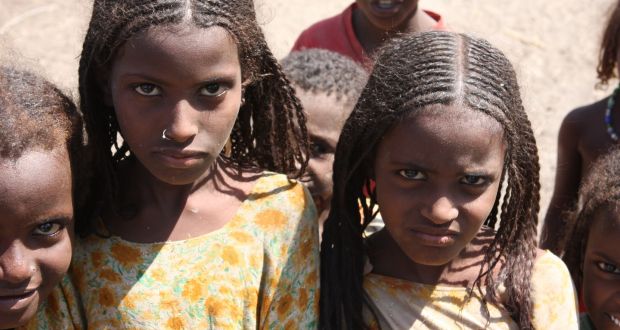
Box braids
View on GrokipediaDefinition and Characteristics
Physical Description
Box braids are a hairstyle formed by parting the natural hair into square or rectangular sections on the scalp, with each section tightly braided from the roots to the ends using a three-strand plaiting technique.[2][10] The partings create a distinctive grid-like pattern of "boxes" visible on the scalp, giving the style its name and a neat, structured appearance.[11][12] The braids themselves are cylindrical in shape, typically uniform in thickness within a given style, and extend downward freely, often reaching lengths from shoulder to waist or beyond when extensions are added.[13][14] Variations in braid diameter range from fine micro braids, measuring under 0.5 cm in width, to thicker jumbo braids exceeding 1 cm, influencing the overall density and weight of the hairstyle.[15][2] This construction results in a protective encasement for the natural hair strands, minimizing exposure to environmental damage while presenting a sleek, elongated silhouette.[10][11] The ends of the braids may be left loose, sealed with dipping agents, or adorned with beads or cuffs for added aesthetic detail.[13]Materials and Construction
Box braids are constructed by sectioning the natural hair into small, square-shaped partitions on the scalp, known as "boxes," which determine the braid size and density.[16] Each section is then braided using a three-strand technique, incorporating synthetic or human hair extensions folded in half and secured at the root to add length and volume, with the braids extending freely downward rather than adhering flat to the head.[17] This process typically requires tools such as a fine-toothed comb for parting, clips for holding sections, and sometimes gel or mousse to smooth the base and reduce frizz.[18] The primary materials consist of the individual's natural hair combined with extensions, most commonly synthetic fibers like kanekalon, a modacrylic variant engineered for heat resistance, texture mimicry of human hair, and reduced flammability compared to earlier synthetics.[19] Kanekalon, often sold in packs of 20-24 inches for medium box braids, provides durability and affordability, costing $5-20 per pack, while alternatives such as nylon or acrylic-based synthetics offer similar tensile strength but may tangle more readily or shine excessively due to silicone coatings.[20][21] Human hair extensions, derived from 100% virgin sources, enable coloring and heat styling but increase costs to $149-209 per pack and demand gentler handling to prevent matting.[21][22] Variations in construction include traditional knotting, where extensions are knotted at the scalp for immediate security, versus knotless methods that progressively feed in extension hair during the initial stitches to minimize root tension and scalp irritation, often taking 6-8 hours for a full head depending on braid count (e.g., 24-50 medium-sized braids).[23] Pre-parting extensions into smaller bundles streamlines assembly, ensuring even distribution and reducing mid-process adjustments.[24]Historical Origins
Prehistoric and Ancient Evidence
The earliest known depiction of hair braiding appears in the Venus of Willendorf, a Paleolithic limestone figurine unearthed in Austria and dated to approximately 28,000–25,000 BCE, which shows parallel incisions interpreted as braided or bundled hair arranged over the figure's head.[25] This European artifact provides indirect evidence of prehistoric braiding practices, likely for practical reasons such as managing long hair or deterring lice, though preservation of actual hair from this era is rare due to organic decay.[26] In ancient Africa, particularly along the Nile Valley, archaeological evidence from mummified remains demonstrates sophisticated braiding techniques by the New Kingdom period (circa 1550–1070 BCE). A female mummy from Amarna, dated to around 1350 BCE, preserved a complex hairstyle with over 70 extensions integrated into her natural hair via braiding, using materials like date-palm fibers, resins, and threads to create wavy and straight sections bound tightly.[27] Similar plaited hairstyles appear on other Egyptian skulls from roughly 3,000 years ago, indicating routine use of extensions and tight weaves for both aesthetic and possibly social signaling purposes.[28] These Egyptian practices, which involved parting hair into sections and incorporating synthetic lengths—hallmarks akin to box braiding—extend to related styles in the broader region, such as chin-length bob braids documented among Nile Valley women over 3,000 years ago. Further sub-Saharan evidence includes 3,000-year-old remnants of weave extensions unearthed in African archaeological sites, underscoring the antiquity of extension-based braiding on the continent, though direct prehistoric (pre-3000 BCE) hair preservation remains elusive.[29] Terracotta figures from the Nok culture in Nigeria (circa 1000 BCE) also depict scalp-close braids resembling cornrows, a foundational technique influencing later individual styles like box braids.[26]Traditional African Practices
In traditional African societies, hair braiding practices, including those akin to box braids with neatly parted sections, served protective, social, and ritual functions, with evidence tracing such techniques back to at least 3500 BCE in regions like South Africa and the Nok culture of Nigeria, where terracotta sculptures depict figures with structured braided styles.[29][3][30] These early methods emphasized parting the hair into geometric sections—often squares or rectangles—to create individual plaits that shielded tightly coiled hair from environmental damage, such as sun exposure and dust, while facilitating manageability in agrarian and nomadic lifestyles.[31] Among groups like the Himba and Mbalantu in Namibia, single-strand braids resembling box styles, termed eembuvi, were integral to female initiation rites, symbolizing transition to adulthood and requiring communal effort over extended periods.[25] Socially, these braiding practices encoded identity markers, with variations in parting, thickness, and adornments (such as beads or fibers) indicating age, marital status, tribe, wealth, and rank; for instance, elaborate sectional braids among the Maasai of Kenya and Tanzania denoted warrior status or eligibility for marriage, while simpler styles marked youth or labor roles.[32][33] Techniques relied on manual dexterity, using fingers to interweave three or more strands without tools or extensions, often incorporating natural materials like animal hair, plant fibers, or clay for cohesion and decoration; sessions could last 6-8 hours or more, fostering community bonds as elders or specialists performed the work.[3][34] In West African cultures, such as among the Yoruba and Igbo, similar parted braids extended these roles, intertwining spiritual elements where hairstyles invoked ancestral protection or fertility rites, underscoring hair as a non-verbal lexicon of cultural continuity.[35][36] These practices persisted across diverse ethnic groups, from the cornrow-adjacent sectional plaits in ancient Egyptian-influenced Nubian art to sub-Saharan traditions, prioritizing functionality and symbolism over aesthetics alone, though regional variations adapted to hair texture, climate, and available resources.[37] Empirical accounts from early European explorers, such as Pieter de Marees in 17th-century Benin, corroborate braided styles with decorative tying and partial shaving, affirming their pre-colonial ubiquity without reliance on imported materials.[5] While modern box braids often incorporate synthetic extensions, traditional forms emphasized organic durability, with braids lasting weeks or months before ritual removal or re-braiding.[34]Influence of the Transatlantic Slave Trade
Enslaved Africans transported during the transatlantic slave trade, which forcibly displaced over 12 million individuals from the 16th to 19th centuries, carried braiding knowledge from diverse West and Central African ethnic groups, adapting these techniques in the Americas despite systemic cultural erasure. Upon capture and during the Middle Passage, traders routinely shaved captives' heads to dehumanize them, facilitate body inspections, and mitigate disease spread in cramped ship holds, severing immediate ties to ancestral hairstyling.[38][5] In plantation societies across the Americas, braiding reemerged among enslaved women as a practical adaptation to labor demands, where elaborate African styles gave way to efficient, tight cornrows or plats—flat braids sectioned against the scalp resembling field rows, from which modern box braids derive their structured parting.[7] These protective hairstyles secured coiled hair away from sweat, debris, and machinery during fieldwork, compensating for limited time, combs, or oils under enslavement's constraints.[31] Enslavers often tolerated such styles for hygiene and productivity but punished ornate variations as signs of defiance, reflecting tensions between utility and suppressed identity.[5] Beyond functionality, braiding enabled subtle resistance and knowledge preservation; West African women occasionally wove rice seeds or grains into braids to safeguard cultivars for planting, contributing to rice cultivation's establishment in regions like colonial Brazil and the Carolina Lowcountry, as documented in historical accounts of maternal ingenuity amid separation.[39] In maroon communities and escape networks, particularly in South America, braided patterns reportedly encoded directional cues or signals, though these uses rely on oral histories with limited contemporary documentation.[40] Such practices underscore how the slave trade, while disruptive, seeded braided traditions' endurance in the African diaspora, evolving from survival tools to symbols of continuity.[41]Cultural and Social Significance
Role in African Societies
In traditional African societies, braided hairstyles, including partitioned styles akin to box braids, functioned as markers of identity and hierarchy, conveying information about an individual's tribe, family lineage, age, marital status, wealth, religion, and social rank through specific patterns and materials.[42][34] For instance, among various ethnic groups, intricate braiding techniques unique to clans or tribes allowed immediate recognition of affiliation, with elders or warriors distinguished by exclusive designs symbolizing strength, wisdom, or authority.[43][44] These practices predated colonial influences, rooted in communal grooming rituals that reinforced kinship ties and cultural continuity.[29] Braiding also played a pivotal role in rites of passage and social cohesion, as older women in communities like the Mbalantu of Namibia gathered to instruct younger girls in techniques, embedding lessons of patience, skill, and heritage during extended sessions that could last days.[45] Such gatherings served practical purposes, protecting hair from environmental elements while fostering intergenerational knowledge transfer and group bonding, often accompanied by storytelling or spiritual invocations to ward off misfortune.[46] In agrarian or nomadic tribes, braids incorporated natural fibers or ochre for durability, signaling occupation or readiness for labor, and their maintenance reflected personal discipline and communal investment in appearance as a form of non-verbal communication.[47][48] While spiritual dimensions varied by region—such as elevated knots in some South African groups symbolizing connection to the divine—braids generally embodied resilience and adaptation, with patterns evolving to denote life stages like puberty or widowhood, ensuring social order without reliance on written records.[29][49] These roles underscore braiding's utility in pre-literate societies for efficient signaling of complex social data, though interpretations from ethnographic accounts must account for observer biases in early colonial documentation.[3]Symbolism in the African Diaspora
In communities of the African diaspora, including African Americans and Afro-Caribbeans, box braids symbolize a persistent link to ancestral African practices disrupted by the transatlantic slave trade, serving as a form of cultural preservation and identity affirmation. Enslaved individuals encoded practical information, such as escape routes or communication signals, into braided patterns, allowing discreet transmission of knowledge despite prohibitions on cultural expression.[4] This adaptation transformed braids from markers of tribal affiliation, age, or status in pre-colonial African societies into tools of survival and subtle resistance in the Americas.[41] Post-emancipation, box braids evolved as emblems of Black pride and rejection of imposed Eurocentric aesthetics, particularly during the mid-20th-century natural hair movement aligned with civil rights activism. By the 1990s, their visibility surged through cultural touchstones like Janet Jackson's box-braided style in the 1993 film Poetic Justice, reinforcing their role in expressing autonomy and heritage amid ongoing discrimination against textured hair.[50] In ethnographic studies, such hairstyles facilitate "diasporic transindividuation," where shared visual cues across continents underscore collective Black interconnectedness and negotiation of belonging in host societies.[51] Contemporary scholarship from institutions like the Smithsonian highlights braided styles, including box braids, as enduring signifiers of status, resilience, and communal bonding in diaspora contexts, often braided in social settings to transmit intergenerational knowledge.[35] Despite commodification in global beauty industries, their adoption persists as a deliberate assertion of ethnic specificity, countering historical devaluation of African-derived aesthetics.[52]Modern Identity and Expression
In the mid-20th century, box braids experienced a resurgence within African American communities during the Black Power movement of the 1960s and 1970s, serving as emblems of racial pride and deliberate rejection of Eurocentric beauty ideals that favored straightened hair.[31][53] This period marked the first widespread natural hair movement in the United States, where braided styles like box braids symbolized cultural reclamation and resistance to assimilation pressures post-Civil Rights era.[7] By the 1990s, box braids gained broader visibility in mainstream media through African American celebrities, enhancing their role in personal and collective identity expression. Actress Janet Jackson wore box braids in the 1993 film Poetic Justice, portraying them as integral to urban Black femininity, while singer Brandy popularized the style on the television series Moesha from 1996 to 2001, associating it with youthful self-assurance and cultural authenticity.[54] These depictions reinforced box braids as versatile mediums for artistic individuality, often customized with beads or extensions to reflect personal narratives within communal heritage. In contemporary society, box braids continue to embody empowerment and heritage connection for women in the African diaspora, functioning as visible assertions of self-love and defiance against professional and social biases favoring conforming hairstyles.[55] They symbolize strength, resilience, and freedom, allowing wearers to navigate modern environments while honoring ancestral practices, with stylistic variations enabling unique expressions of identity amid globalized fashion influences.[54][56] Despite persistent double standards—where such styles face scrutiny in workplaces for Black individuals but are celebrated as trendy elsewhere—box braids persist as tools for cultural preservation and personal agency.[54]Techniques and Variations
Basic Braiding Methods
Box braids are formed by dividing the hair into square-shaped sections on the scalp and securing each with a three-strand braid that extends downward.[18][16] The process begins with preparation to facilitate even sectioning and tension control: hair is washed using a sulfate-free shampoo and conditioned, then detangled section by section with a wide-tooth comb, moisturized with leave-in conditioner or oil, and optionally stretched via blow-drying to reduce shrinkage and bulk.[57][16] Tools such as a rat-tail comb for precise parting, sectioning clips, and optionally synthetic or human hair extensions cut to desired length are essential.[16][57] Sectioning follows a systematic grid pattern to achieve the characteristic "box" shape, typically starting from the nape and working upward in quadrants.[18][16] A horizontal line is drawn across the head with the rat-tail comb, followed by vertical lines to form squares approximately 1 inch in size, depending on desired braid density; unused sections are clipped aside to maintain organization.[18] This geometric parting ensures uniform braid placement and scalp visibility, promoting a neat appearance.[57] The core braiding technique is the traditional three-strand method, applied to each parted section.[16][18] The section is divided into three equal strands; if extensions are used, they are folded in half and positioned such that the natural hair sits between the two halves, effectively creating three interwoven parts.[18] Braiding proceeds by crossing the right strand over the middle strand, then the left strand over the new middle, repeating alternately while maintaining consistent tension to secure the braid close to the scalp without excessive pulling.[16][57] The process continues down the length until the ends, where the braid is secured with a small elastic band or dipped in hot water to seal synthetic fibers.[57] This method yields durable, straight-hanging braids that can last 4 to 8 weeks with proper care.[57]- Divide the selected square section into three strands, incorporating extensions if desired by blending them evenly.
- Label strands as left, middle, and right.
- Cross the right strand over the middle to form a new middle.
- Cross the left strand over the new middle.
- Repeat steps 3–4, picking up additional hair from the section as needed until fully incorporated, then continue with pure braiding motion.
- Secure the end firmly.[16][18]
Common Variations
Box braids exhibit variations primarily in partition size, influencing installation time, visual density, and maintenance. Jumbo box braids employ larger square sections, typically 1-2 inches wide, allowing for faster braiding—often completed in 4-6 hours—and a chunkier, more dramatic silhouette suitable for shorter wear periods of 4-6 weeks.[58] In contrast, medium box braids use partitions around 0.5-1 inch, balancing density and durability for 6-8 weeks of wear, while micro or small box braids feature partitions under 0.5 inches, yielding a finer, fuller appearance that can last 8-10 weeks but requires 8-12 hours to install due to the increased number of braids.[58] [59] Knotless box braids differ from traditional knotted versions by gradually feeding in extension hair without an initial scalp knot, minimizing tension and reducing risks of traction alopecia; this technique, popularized in the early 2020s, often incorporates lighter synthetic hair for a seamless, tapered finish.[58] [60] Length variations range from bob-style box braids, severed at shoulder or chin level for reduced weight and easier management, to waist-length or longer extensions that add volume using kanekalon or marley hair.[59] [61] Additional modifications include boho box braids, which integrate curly or wavy extensions for a textured, undone effect, and colored or ombré variants achieved by pre-dyed synthetic strands during braiding.[62] Beaded ends, affixed post-braiding, provide weight for swing and aesthetic appeal but necessitate periodic checks to prevent tangling.[62] These adaptations maintain the core protective function while accommodating diverse aesthetic preferences and hair types.[60]Installation and Removal Processes
The installation of box braids begins with preparing the natural hair through washing, conditioning, detangling, and often blow-drying or stretching to minimize shrinkage and facilitate even sectioning.[18] [17] Hair is then parted into square or rectangular sections using a rat-tail comb, typically starting from the perimeter and working inward to ensure symmetry, with clips securing unbraided portions.[16] Synthetic extensions, such as kanekalon or toyokalon hair, are prepared by measuring lengths (often 18-24 inches for medium-sized braids) and sometimes soaked in a mixture of apple cider vinegar and water (1:3 ratio) for 30 minutes to reduce scalp irritation from chemical residues.[63] For each section, a small amount of natural hair is divided into three strands at the root; an extension bundle—folded or split for even distribution—is incorporated by crossing it under the natural strands and braiding downward in a three-strand plait, pulling tightly at the base for secure attachment while gradually loosening tension to prevent traction alopecia.[16] [64] Braiders often dip fingertips in water, gel, or oil during the process to smooth flyaways and enhance grip, with the full installation requiring 4-12 hours or more depending on braid size (e.g., small jumbo braids may take two days for 300-500 braids).[65] Professional installation prioritizes scalp health by avoiding excessive tightness, which can exceed 1-2 pounds of pull force per braid and lead to follicle damage, and may include cornrow bases for added structure in some variations.[24] Removal starts with applying a generous amount of oil (e.g., coconut or olive) to the braid ends and knots to loosen buildup and reduce friction, followed by carefully unraveling from the tip upward using fingers, a crochet hook, or seam ripper to separate extensions without pulling on the roots.[66] [67] Extensions are detached by snipping close to the knot if unraveling proves difficult, but full unbraiding preserves natural hair length; the process demands patience, often spanning several hours for medium-density styles, to minimize breakage rates that can reach 20-30% with hasty methods.[68] [66] Post-removal, the hair is gently detangled in sections with a wide-tooth comb or fingers under running water, followed by a clarifying shampoo and deep conditioning treatment to address accumulated residue, with retention of up to 90% of pre-installation length achievable through methodical takedown.[67] Professional removal is recommended for tightly installed braids to avoid scalp trauma, as DIY efforts increase risks of uneven shedding if tension exceeds natural hair tensile strength (approximately 0.5-1 gram per strand).[66]Health and Practical Considerations
Benefits as a Protective Hairstyle
Box braids function as a protective hairstyle by encasing natural hair strands within braided extensions, thereby limiting direct exposure to mechanical stress and environmental factors that contribute to breakage in textured hair types. Dermatologist Ellen Marmur has noted that braids shield the dry ends of natural hair, reducing friction and tangling that occur during daily combing or styling.[10] This minimization of manipulation aligns with observations that excessive handling accounts for significant hair loss in coily and curly hair, where breakage often exceeds shedding as the primary limiter of length retention.[69] When installed without excessive tension, box braids promote length retention by protecting ends from splitting and abrasion against clothing or bedding, allowing hair to grow out with less apparent trimming needs. Hair care experts report that such styles can retain moisture by reducing evaporation and wash frequency, potentially preserving curl integrity and shaft smoothness over weeks.[70] Proper execution avoids traction forces that could otherwise lead to follicular stress, with studies on frequent braiders indicating that looser techniques correlate with less cuticle damage compared to tight installations.[71] Empirical support for these benefits derives primarily from clinical observations in dermatology rather than large-scale randomized trials, underscoring that outcomes depend on factors like braid size, extension weight, and individual scalp health. For instance, medium-sized box braids (incorporating 3-5 strands per section) balance protection with reduced pull on roots, facilitating up to 6-8 weeks of wear before potential buildup issues arise.[15] Users with type 4 hair textures, prone to shrinkage and knotting, report measurable retention gains—such as 1-2 inches of visible length per cycle—attributed to decreased shedding from environmental drying or UV exposure.[72] However, benefits accrue only with adjunctive practices like pre-braiding deep conditioning and periodic scalp oiling to mitigate dryness-induced fragility.[73]Potential Health Risks
Tight braiding techniques used in box braids can exert prolonged mechanical tension on hair follicles, leading to traction alopecia, a form of hair loss characterized by thinning or bald patches primarily along the hairline and temples.[74] [75] This condition arises from repeated pulling that damages follicles, with risk increasing with the tightness of braids, duration of wear (often exceeding 6-8 weeks), and frequency of installation; studies indicate significant hairline thinning in individuals wearing cornrows or similar styles within the past year.[76] If untreated by ceasing traction styles, the damage can progress to scarring alopecia, rendering regrowth impossible due to fibrosis of affected follicles.[77] Scalp irritation and folliculitis may occur from friction, occlusion, or tension at braid bases, manifesting as painful pustules or inflammation in high-tension areas.[78] Poor hygiene during installation or maintenance heightens vulnerability to bacterial infections, though evidence links most inflammatory responses directly to mechanical stress rather than microbial invasion alone.[79] In rare instances, excessive tension has caused subgaleal hematomas or full-thickness scalp necrosis, particularly in pediatric cases or with weaves, due to shearing forces or compromised vascular supply.[80] Dermatologists recommend monitoring for tenderness, redness, or breakage, and avoiding styles that cause pain to mitigate these issues.[77] Synthetic extensions commonly used in box braids have been found to contain hazardous chemicals, including carcinogens like benzene, heavy metals such as lead, and volatile organic compounds (VOCs), detected in 100% of tested popular brands by independent lab analysis in 2025.[81] Prolonged scalp contact may lead to allergic dermatitis, irritation, or systemic absorption risks, with VOCs potentially exacerbating respiratory conditions like asthma in vulnerable populations.[82] [83] Experts advise selecting human hair alternatives or verified low-chemical synthetics and limiting exposure, though long-term epidemiological data on cancer links remains limited.[84]Maintenance Requirements
Proper maintenance of box braids focuses on scalp hygiene, moisture retention, and minimizing tension to prevent issues like buildup, dryness, or traction alopecia. The scalp should be cleansed periodically using a diluted, sulfate-free shampoo applied directly to the roots, followed by gentle massaging to avoid loosening the braids; washing every 1-2 weeks is recommended rather than daily to preserve the style's integrity while removing excess oil and debris.[85][86] Daily moisturizing of the scalp with lightweight oils, such as jojoba or tea tree oil, or water-based sprays helps combat dryness and itchiness without weighing down the braids.[1][65] To protect the hairstyle during sleep and reduce frizz, wearing a satin or silk bonnet or scarf is advised, as these materials minimize friction compared to cotton, which can cause breakage and tangling.[87] Activities involving sweat, such as exercise, necessitate prompt scalp drying with a microfiber towel to prevent moisture buildup that could lead to fungal issues or odor.[88] Tight styling of the braids into ponytails or buns should be avoided, as this exacerbates pull on the hairline.[79] Box braids should be removed after 6 weeks at most to mitigate risks of traction alopecia, a condition caused by prolonged tension that can lead to scarring and permanent hair loss if unaddressed; dermatological guidelines emphasize reinstallation no longer than every 6-8 weeks, interspersed with rest periods for the scalp.[79][89] Professional touch-ups for loose sections may be needed midway, but over-manipulation can introduce damage.[90] Prior to reinstallation, a clarifying shampoo and protein treatment on the natural hair are essential to remove residue and strengthen strands.[1][91]Adoption and Controversies
Integration into Mainstream Fashion
Box braids transitioned into mainstream fashion primarily through the influence of hip-hop and R&B culture in the 1990s, when artists such as Brandy Norwood popularized micro box braids in music videos and public appearances, rendering the style a symbol of urban chic accessible beyond its African roots.[92][93] This era marked a shift as braided hairstyles, previously marginalized in Western beauty standards, appeared in broader media, with box braids specifically surging in visibility by the decade's end due to their practicality and aesthetic versatility.[94] Preceding this, cornrows—a foundational braided technique akin to box braids—received widespread non-Black attention following Bo Derek's portrayal in the 1979 film 10, where her beaded cornrows ignited a commercial boom in beauty products and salons catering to the style, described as a "cross-cultural craze" that expanded braided looks into suburban and white consumer markets.[95][96] By the early 2000s, male athletes like David Beckham adopted similar braids for the 2003 season, further embedding them in global sports and fashion discourse, with tabloids amplifying the trend's crossover appeal.[97] In high fashion contexts, box braids featured prominently in editorial spreads and red carpet styling from the 2010s onward, as seen in Vogue's explorations of braids as cultural narratives and runway elements, with celebrities like Zoe Kravitz styling micro box braids for elegant updos at events.[53][98][99] Publications such as British Vogue and Vogue India highlighted braided variations, including box styles, as timeless trends for diverse hair textures, reflecting their evolution into versatile, low-maintenance options for fashion-forward consumers.[100][101] This integration peaked in the 2020s, with box braids appearing in protective style guides and celebrity endorsements across ethnic lines, solidifying their status in contemporary wardrobes despite ongoing debates over origins.[102][103]Military Regulations and Debates
In 2014, the U.S. Army faced criticism for grooming standards that prohibited multiple cornrows and small twists, styles commonly used by Black female soldiers to protect natural hair textures; advocacy groups and service members argued these rules disproportionately affected minority women by forcing damaging straightening or cutting, prompting a petition with over 15,000 signatures that labeled the policy racially biased.[104][105] In response, the Army revised Army Regulation 670-1 on August 15, 2014, to permit cornrows, braids, and twists as long as they were neat, uniform, and no wider than 1/4 inch, explicitly aiming to accommodate diverse hair types while maintaining professional appearance.[104] Subsequent updates expanded allowances: by 2021, the Army permitted ponytails, multiple braids, twists, and locs for women in all uniforms, provided they did not interfere with headgear or safety equipment, reflecting efforts to boost retention among Black servicewomen who reported hair-related discipline issues under prior rules.[106][107] Box braids, a variant involving square-parted sections often used for protective styling, fell under these braid provisions but required uniformity in size and neatness to avoid protrusion or bulk that could snag on gear.[107] Debates persisted, with proponents of relaxation citing empirical evidence from surveys showing such styles reduced hair breakage and improved morale without compromising combat readiness, while critics maintained that excessive variety undermined unit cohesion and the military's emphasis on standardized grooming for discipline.[106] As of September 15, 2025, Army Directive 2025-18 reinstated stricter standards, limiting female soldiers to no more than two braids, twists, locs, or cornrows per hairstyle, each no wider than 2 inches, and mandating a "uniformly styled" and "cohesive" appearance to ensure neatness under helmets and in formation; box braids exceeding these dimensions or appearing non-uniform are prohibited, as are any for male soldiers.[108][109][110] These changes, which also ban non-natural hair colors and designs, prioritize operational functionality—such as preventing interference with chemical, biological, radiological, and nuclear (CBRN) masks—over prior inclusivity measures, though some observers question if the rollback disproportionately impacts servicewomen with tightly coiled hair reliant on bulkier protective styles like box braids.[111][110] Similar regulations apply across branches, with the Navy and Air Force echoing limits on braid quantity and styling to align with uniformity, amid ongoing discussions on balancing equity with the military's core mandate for rapid deployability and helmet compatibility.[112]Cultural Appropriation Claims
Claims that the adoption of box braids by individuals outside African descent constitutes cultural appropriation emerged prominently in the mid-2010s, often centered on Western celebrities. In July 2015, actress Amandla Stenberg publicly criticized Kylie Jenner for wearing cornrows—a style akin to box braids—arguing it exemplified appropriation of Black culture without genuine engagement or acknowledgment of its historical significance in protecting textured hair or signifying identity.[113] Similarly, in October 2016, actress Vanessa Hudgens faced backlash after posting Snapchat images of her box braids, with critics labeling it as insensitive to the hairstyle's roots in African traditions dating to around 3500 B.C., where braids served practical, social, and communicative roles in civilizations like the Nok.[114][30] Proponents of these claims contend that box braids, originating in African contexts for utility against harsh climates and as markers of status or marital eligibility, carry deep cultural weight for Black communities, particularly amid histories of marginalization where such styles faced ridicule or bans, as in U.S. schools until recent policy shifts.[30][115] When non-Black figures like Kim Kardashian rebranded similar styles as "boxer braids" in 2016, it was decried as commodification that erases origins while profiting from trends without crediting sources, exacerbating perceptions of unequal power dynamics in cultural borrowing.[116] Critics of appropriation accusations, however, emphasize that braiding techniques predate exclusive associations with any single ethnicity, with archaeological evidence of plaited hair in ancient European contexts from the Iron Age and earlier, as well as in Asian and other global traditions, suggesting diffusion through migration and trade rather than ownership.[9] They argue that labeling hairstyle adoption as appropriation imposes racial gatekeeping unsupported by historical exclusivity, potentially stifling mutual cultural exchange evident in how African braiders adapted styles post-slavery in the Americas.[117] Mainstream media amplification of such claims, often from activist viewpoints, has been noted for overlooking these broader timelines, prioritizing narrative over empirical cross-cultural precedents.[117]Contemporary Developments
Commercial and Celebrity Influence
Janet Jackson's portrayal of Justice in the 1993 film Poetic Justice, released on July 16, featured prominent box braids, which became known as "Poetic Justice braids" and significantly boosted their visibility in popular culture.[92][118] This appearance is credited with influencing subsequent adoptions by other celebrities and contributing to the style's mainstream appeal in the 1990s.[119] Brandy Norwood frequently sported box braids during the 1990s, including at the Essence Awards on April 4, 1997, where her styled braids exemplified the era's trend toward intricate protective hairstyles in entertainment.[120][121] Her consistent use helped normalize box braids in music and television, aligning with broader commercial interest in Black hair aesthetics.[122] In the 2010s and 2020s, celebrities such as Beyoncé, Zoe Kravitz, Zendaya, and Rihanna further propelled box braids into high-fashion contexts, appearing at events like the Met Gala and Oscars, which correlated with increased demand for professional braiding services.[103][123] These endorsements drove market expansion, with hair braiding services, including box braids, seeing prices range from $75 to $500 per installation depending on length and complexity.[124] The global hair braiding market, encompassing styles like box braids, was valued at $529.3 million in 2022 and projected to reach $625.30 million by 2032, growing at a 3% CAGR, partly fueled by celebrity-driven trends and synthetic hair product sales.[125] Commercial availability of pre-packaged synthetic braiding hair, such as Model Model's medium box braids, supports at-home and salon applications, reflecting sustained economic impact from popularized styles.[126]Evolving Trends and Innovations
In recent years, knotless box braids have emerged as a significant innovation, featuring a technique where extensions are fed in gradually from the root rather than knotted at the scalp, distributing tension more evenly and reducing the risk of traction alopecia compared to traditional methods.[127][128] This approach, popularized around 2020 and gaining traction by 2025, allows for a sleeker, more natural appearance while maintaining the protective benefits of the style.[58] Bohemian box braids represent another evolving trend, incorporating loose, curly synthetic or human hair extensions woven into the braids for a textured, effortless aesthetic inspired by festival and beach vibes.[129][130] By 2025, this variation has trended toward medium lengths with subtle color highlights, such as caramel or ash tones, enhancing versatility for both casual and formal settings.[58][127] Shorter iterations like bob-length box braids have also innovated the style's adaptability, cropping traditional lengths to shoulder or chin level for a modern, low-maintenance option suitable for active lifestyles.[131] These evolutions often integrate accessories such as wooden beads, cuffs, or metallic threads, with 2025 styles emphasizing customizable elements like ombre effects or mixed braid sizes (jumbo at the crown tapering to micro at the ends) for dimensional appeal.[58][132] Overall, these developments prioritize scalp health, aesthetic diversity, and ease of installation, reflecting a broader shift in protective styling toward sustainability and personalization.[127]References
- https://commons.wikimedia.org/wiki/File:Brandy_Essence_Awards.jpg